

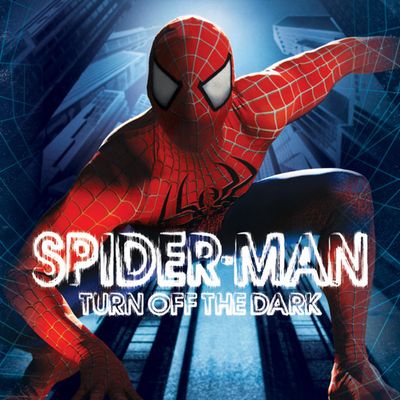
The creative team of SPIDER-MAN: TURN OFF THE DARK often referred to their musical as a "rock & roll circus drama," but there's no way they knew how accurate a description that would become... Read More
From the show: A Musical Theatre Podcast
Featured Shows
About
The creative team of SPIDER-MAN: TURN OFF THE DARK often referred to their musical as a "rock & roll circus drama," but there's no way they knew how accurate a description that would become. This week Jeff is joined by his incredibly talented friend Andrew Madsen to discuss the strangest creative journey that ever got to Broadway, stayed for three years, and still managed to be considered a failure. Get ready to "rise above!"
Follow Andrew on Instagram for plenty of eye candy and workout inspiration.
Take one moment to rate and follow "A Musical Theatre Podcast" wherever you may be listening and share us with your friends!
Join us on Instagram, TikTok and X for more great content. For bonus episodes, subscribe to PATREON! for only $1 a month. And don't forget about our TeePublic Store, our proceeds from which we donate to Broadway Cares/Equity Fights AIDS.
Above all, thank you for being part of this wonderful podcasting community.
Transcript
This transcript was automatically generated and might contain errors.
[0:00] Jeffrey Scott Parsons: Do you know the term schadenfreude?
[0:03] Andrew Madsen: Yes. Well, I'll be honest with you. I've heard that term my whole life, and at one point, I was like, yeah, I know what that means, but I need to be refreshed.
[0:11] Jeffrey Scott Parsons: Yeah, no, that's fine. I did too. I'm not afraid to admit that.
[0:16] Andrew Madsen: It's a little refresher. So the term schadenfreude refers to this phenomenon where we as humans gain pleasure from seeing other people suffer.
[0:24] Jeffrey Scott Parsons: Mm-hmm.
[0:27] Andrew Madsen: In doing an episode about Spider-Man, Turn Off the Dark, I wanted to make sure that I wasn't creating an episode where we just celebrate someone else's failure. And that's something I've run into a lot in the New York theater community with a lot of out-of-work actors. It's their lifeblood is like feeding on tearing down working professionals, and I just can't participate in that. I mean, we're all guilty of it.
[0:56] Jeffrey Scott Parsons: Well, yeah, because we're all actors.
[0:58] Andrew Madsen: Exactly. We all can't help but talk a lot, but I try to not give way to that.
[1:05] Jeffrey Scott Parsons: Yeah. Let's be clear.
[1:06] Andrew Madsen: It's hard enough just to get something made. Like, come on.
[1:14] Jeffrey Scott Parsons: No, for sure. There has to be so much more to the conversation than just, I would have done it so much better.
[1:20] Andrew Madsen: Right. That being said, Spider-Man was a hot mess, but we're also talking about Julie Taymor behind it all, who oversaw the highest grossing musical of all time, and the rock band U2, who is one of the most successful collaborations that rock music has ever seen. I mean, most rock bands fall apart within six years, and they've been 30 years strong. There's more to it than that, and we're going to get into it. Are you ready?
[1:50] Jeffrey Scott Parsons: I'm ready.
[1:51] Andrew Madsen: Let's do it.
[2:03] Jeffrey Scott Parsons: Welcome, everybody, to a musical theater podcast where we discuss the cultural and emotional impact of some of our favorite musicals in theater history. My name is Jeffrey Scott Parsons. You can call me Jeff. Today, we are talking about Spider-Man, Turn Off the Dark, and the person I invited to talk about it with me is essentially the person that I always think of when I think of this musical. Did you know that?
[2:29] Andrew Madsen: I did not, but I'm flattered, I think.
[2:34] Jeffrey Scott Parsons: It's my dear friend, Andrew Madsen, the talented and ridiculously good-looking Andrew Madsen.
[2:40] Andrew Madsen: Thank you, Jeff. It's a delight to be here.
[2:42] Jeffrey Scott Parsons: I'm so grateful you're here. We've known each other much longer than our careers.
[2:48] Andrew Madsen: Yes, I would say like 16 years, 15 years, something like that.
[2:52] Jeffrey Scott Parsons: Yes, and I still think of you as one of my dearest friends, even though we don't always talk that often and I never see you, but I've also realized that that's part of being friends with me.
[3:03] Andrew Madsen: Oh, absolutely. That's a requirement for me. You have to be low-maintenance.
[3:07] Jeffrey Scott Parsons: It's the only way that we'll be friends. I make friends in recent years that want to see and hang out with me every week, and I'm like, oh, this isn't going to last. We're going to burn out real quick.
[3:20] Andrew Madsen: No, we're in it for the long haul.
[3:22] Jeffrey Scott Parsons: Absolutely. So thank you for all of your support and love that you've given to me over the years. I was one of the, maybe because of the whole schadenfreude thing, I didn't pay attention to Spider-Man when it happened. People started getting hurt, and then I was like, I'm out. I'm not going to be giving my attention to it. Then I get a phone call from you, and it's basically like, I just auditioned for Spider-Man. Can I talk to you about it?
[3:49] Andrew Madsen: If only this podcast had been around back then. It would have been so fresh.
[3:55] Jeffrey Scott Parsons: So talk to me about, was the show already open? I can't remember.
[3:59] Andrew Madsen: Well, I auditioned for that show over every version of it.
[4:06] Jeffrey Scott Parsons: Oh, I don't think I remember that.
[4:08] Andrew Madsen: I think I auditioned over 10 times.
[4:10] Jeffrey Scott Parsons: Oh my gosh. That's crazy.
[4:12] Andrew Madsen: Yeah. I would never, ever, obviously never booked it. Let's be clear. We should start the interview that I was not ever in the show. I'm not an alum.
[4:22] Jeffrey Scott Parsons: This is not one of those situations where you auditioned 10 times and then you finally got it.
[4:28] Andrew Madsen: No, absolutely. Spoiler alert to everyone. I never got it.
[4:31] Jeffrey Scott Parsons: Okay. So let's think about this. All right. So 2008 was my very first audition for it. And that was the original creative team, which was Danny Ezrelo, Daniel Ezrelo as the choreographer. And he and Julie had worked together frequently in opera productions. And their most high profile collaboration was the film Across the Universe. He was the choreographer on that film.
[4:58] Andrew Madsen: Which were you a fan?
[5:00] Jeffrey Scott Parsons: I was.
[5:02] Andrew Madsen: I feel like that would be like a young Andrew.
[5:05] Andrew Madsen: Yes, it was. It was one of those like, oh, because it actually shot the summer I moved here. And I just wasn't in the scene yet and didn't have the connections. And had I just gotten here like, because every single dancer of my generation was in that movie. And I just got here like, as they were shooting. So I missed it. I don't think that was like a huge hit that movie, but it was, it was.
[5:28] Jeffrey Scott Parsons: It had its fans.
[5:29] Andrew Madsen: It had its fans and the moments. Okay, so the moments in Across the Universe that worked, worked. And then there was some other moments that were there too. And so like, anyway, so went in for that. I remember the temperature in the audition room amongst all the dancers, everyone just kind of looking at each other sideways. Like, this is for real. We're auditioning for Spider-Man the musical. Like it was a joke. But like, at the same time, as self-righteous as like, New York talent likes to be like, they will do anything for free. So like, sure enough, we're all it's it is there's nothing like more equalizing than the equity chorus call. Like, especially nowadays, like in the days of like Instagram fame, and like people feeling like they're this and that. And it's like, yeah, that's that's cute. But I saw you yesterday at that ECC.
[6:21] Jeffrey Scott Parsons: Across the floor. No, you're exactly right. Where you're rolling your eyes at Spider-Man, but also like, gosh, I hope I get it. Yeah, but we're here. So yeah. And also just, you know, this was the time though, like the economy was booming, there was big, incredible productions happening left and right, not just in New York, but in Vegas, all over the world. And so it was just this exciting time that I kind of appreciate more in hindsight, it was like very common, you would just go to like a final callback for a huge show at 10am, and then go to a final callback for another huge show at 2pm. And it was just like, that's what you do. And now it's now it's a little different. Anyway, okay. So that was 2008.
And I was in a show at the time on tour. And so I was flying in for these things, and then we're going to fly back out to the road. And so it was always a lot of drama, a lot of stress, like a lot of like leaving a performance, going straight to the airport with like your show garb still on something you do in your young 20s, where you just don't sleep, you like take a red eye, go straight to the callback, and then goes back to tour. Anyway, so that happened. That happened for about a year, I would say about four times in a year.
[7:35] Andrew Madsen: Wow.
[7:36] Jeffrey Scott Parsons: And then I had left the tour and was full time back in the city. So now we're in 2009. And then I would say I got brought in probably two or three more times that year. Anyway, so the closest it ever got was, it was the 2.0 version. So I never saw the 1.0 version.
[7:55] Andrew Madsen: Okay, pre opening opening.
[7:58] Jeffrey Scott Parsons: Yeah, the preview period that lasted 182 performances and had to shut down for four weeks to make 2.0. Once it was up and running, and all the injuries started happening, it's a very, especially back then a very tight knit community of dancers that were in their lower to mid 20s that had a certain body type that could do acrobatics and could do what the show required. There were very few of us. So we were fully aware that people were getting hurt. And it was my first time ever seeing masses of guys mid combination and the audition to say no and leave. Because we were all veterans, like we'd all been in shows and knew what is required eight times a week. And what this audition combination required had a lot of like capoeira and martial arts and like very difficult, stunty, tricky stuff.
I don't know if it was a matter of I can't do that. It was like, I don't want to do that. It's not worth it. And so, but me being still quite young and very hungry, and I had not yet had a Broadway credit at this point. So I was just on this mission to get a Broadway credit. I'd had touring credits, but I really wanted that credit. And this show just for whatever reason, kept calling me back. And I just was someone with very low self worth. I was just like, yeah, let's do this. But okay, so then cut to, I happen to have a lovely gig where I got to perform at the Kennedy Center for the Kennedy Center Honors in November of 2011. And by now it is the new choreographer. It's 2.0, new choreographer.
[9:40] Andrew Madsen: Yeah, Chase Brock. And just in attendance, there was Chase Brock, and he happened to come sit at our table. And we just started chatting each other up. And then a week later, I had a final callback for Spider-Man. So I have no idea. I have no idea if they were connected. They actually probably are not, because it wasn't just me. There was like 20, it was the same 20 of us that keep getting called in. But okay, so that was like the long preamble.
[10:07] Jeffrey Scott Parsons: This was the one, this was the phone call, right?
[10:10] Andrew Madsen: I think this was the one because this is the one where it was serious, because there was this custom rig built throughout the entire space that had its own crew that are the best in the world at doing these high wire flying rigs. So we're in the space because there's no rehearsal space to do this. And you're all weighed, you're all measured, you're all given a costume fitting, essentially, because they have to build everything from scratch. And those Spider-Man suits were gorgeous. These things were anatomically flattering, beautiful, high quality. And what kid wouldn't want to be in a superhero costume like that? It was pretty cool.
[10:50] Jeffrey Scott Parsons: So you're in, you're getting all fitted, you're all in front of each other. You know that scene in Jurassic Park where they're feeding the cow to the raptor, and they're all just watching this cow get hoisted up in a crane. And they're all just kind of watching, kind of interested, but also what's going to happen? So we're all just taking turns watching each other get hoisted up and weighed in the air, and we're just keeping it light. It was just so strange. And there is no marking it. They've screened all these guys. So we'd sit in the seats like the audience would, and we'd see from the very, very, very top balcony, the stunt guy and the thing. They're like, okay, so you're going to make sure that when you take off, your knees are bent, and then you're just going to go.
And the guy's flying like 30 miles an hour around the arena, and you have to hit all these different landing pods that are planted everywhere throughout the space. And then you just watch it once or twice. This is like Ninja Warrior.
[11:52] Andrew Madsen: It was a bit, but none of us were frightened though. We were all just like, okay.
[11:59] Jeffrey Scott Parsons: Wow. That's the dancer life, truly, in a nutshell. You're like, we're excited to do it.
[12:05] Andrew Madsen: Yeah, this sounds cool. And so we watch it a few times, and then one at a time, you have to walk up as if you were an audience member to the top floor of the largest theater on Broadway. If you're like us, and you've been on a budget, you're in the top balcony, and you're sometimes in the front row of the very top balcony, and there's that guardrail to not fall over into the auditorium. So you go up there, and you step over it, and you walk out to this little plank, and you get put in a harness, and then you fly. And it was actually, it was really fun. I've never been afraid of heights. And then I had to leave right after that to go to a final callback for another show. And I ended up booking that show, and I just went with that show. And so that was the end of my Spider-Man journey.
[12:51] Jeffrey Scott Parsons: Oh, so then cut two, after I had gone and completed the run of the other show.
[12:57] Andrew Madsen: How to Succeed.
[12:58] Jeffrey Scott Parsons: Yes, the 2011 revival. So that ended, and I was like, all right, let's just go see this thing. Yeah, so I went and saw it. And it was interesting to see it, knowing how the combination from the auditions had evolved over four years, and how, even though I was never in it, I keep meticulous notes. I record every combination I've ever done.
[13:31] Andrew Madsen: I never ever was able to observe it just the way a tourist would, because I felt so invested in it, and I was so connected to so many people that were in it, and they would feed me all the stories. You know, pretty early on in the process, they stopped calling it a musical. Like, anytime the creatives would talk to the media, they would call it a rock-and-roll circus drama. And the more that I hear you talk about it, the more I kind of think they were right, because even walking into a theater where you've seen Ragtime, it didn't feel like what the entire community was used to. Absolutely, and I think that is what drew me to it in the first place, because I always feel that duality. I'm not a traditional musical theater purist, like I didn't grow up with it, and I love it.
I do love the Golden Age of Musical Theater for what it is, but I love when people mix things up and try to turn something on its head while still paying respect to the art form. The jury is out if that was accomplished with this production, but it's indisputable that the form was being challenged in ways that it never had before with the use of technology and just the intellectual property. Again, everybody scoffed and rolled their eyes when they first heard it. They thought it was a joke. Maybe I would have been one of those scoffers, but because it was coming from the Julie Taymor world, I was like, well, I have to see what this is. It's got to at least be interesting.
[15:01] Jeff Parsons: Yeah, and that's what I absolutely love and respect about that woman is that she's so brilliant and brave. I've never seen someone that has established such an aesthetic. They can tell so much story with a visual tableau that is breathtaking. She's voraciously unapologetic about her passions and just goes for it. Uncompromising vision. That's what everyone always says.
[15:27] Andrew Madsen: Uncompromising vision, Julie Taymor. Anyway, like I said, I didn't have any interest in it, so I didn't listen to any of the music. But then, just a little podcast history, a few months ago, I did an episode on Merrily We Roll Along. Famous flop from the 1980s. Hal Prince directed it. Legendary director, Hal Prince. And then the following week, we covered Cabaret. And it suddenly occurred to me, oh, like this amazing director, this auteur of musical theater, created both of these pieces. Both of these shows that had completely opposite trajectories came from the same artistic mind. And that's what got me thinking about possibly doing Lion King and Spider-Man, which is when this comes out. The last week will have been all about Lion King.
And it's like, okay, we have these two properties, literally the exact opposite trajectories. One is the highest grossing musical of all time. One is the musical that lost the most money of all time. And they both come from the same artistic mind. Now, in the case of Spider-Man, which of course is part of the Marvel franchise, things got off on the wrong foot almost immediately. In that, with Lion King, that huge budget, because it was a very expensive show, was funded by Disney. And you think about Shrek, was funded by DreamWorks. And Wicked was funded by Universal. All of these big budget Broadway spectacles had a big company fitting the bill. In the case of Spider-Man, Marvel gave the go ahead to turn it into a musical, but they were not interested in putting money into it.
So you got this one guy named Tony Adams, who's going to be raising all of this money through individual investors. He thinks that he has all of the money ready to go. Then he dies. I don't laugh because of his death. I laugh because, like, talk about a bad omen. Well, no, it's so poetic, especially in hindsight, that that happened right off the bat. It is ironic.
[17:50] Jeff Parsons: No, to say the least. Now, before he passes away, however, he assembles a pretty awesome creative team. First and foremost is Julie Taymor, who, you know, we've talked about plenty in terms of being from Lion King. And I think it's very easy, like you said, to scoff off this entire idea of creating a Spider-Man musical. But when you start to look at it through the eyes of Julie Taymor, I think you go, I see how this is coming from this artist's mind. First and foremost, comic books. The beautiful thing about a comic book is that the story is told so succinctly in these different pictures, in these different tableaus. And when you look at the work of Julie Taymor, as interesting and creative and extravagant as you may think, it's actually also very minimal.
You can't have somebody who loves puppetry as much as she does without going in that minimalist direction. I mean, Kermit the Frog, perfect example. That is like green felt and a hand in it. And that's about it. And yet we believe that it's alive. The magic of puppetry isn't creating something so realistic. It's about creating the magic of believing that this thing that doesn't have life is in fact alive. And she did that beautifully with Lion King, so you could see how that craft of hers would fit right in in the comic book world. People that only know her from her Broadway musical direct, they forget that she has a decades-long established career directing Shakespeare and opera. This woman knows she's used every tool in the book and knows how to do it brilliantly to produce these mass melodramatic spectacles, using mostly visuals that inform the story. Because most people don't speak all the languages that opera are sung in, and a lot of people have a hard time following Shakespeare, but she knows how to deliver it for everyone.
[19:52] Andrew Madsen: I think once she realizes that maybe her aesthetic would be great for a comic book, she starts reading them. And she gets to, I think, the first edition of The Ultimate Spider-Man. And in that first story, the Green Goblin, before he became the Green Goblin, recounted the legend of Arachne, which is a Greek myth. It's not a part of the entire story at all, but in one frame, he talks about this very famous myth, which is that there was this woman, and she was an amazing weaver, to the point that it angered the gods. And long story short, Athena destroys her art, and so Arachne decides to kill herself. And before she can kill herself, Athena turns her immortal by making her a spider, and thus the birth of the Arachnid.
Forever, there will always be a spider weaving her web in the dark shadows of the world. And so, Julie Taymor, classical theater royalty, sees this myth planted in the Spider-Man universe and says, boom, there's my ticket. That's how we're going to tell this story. The connection between the superhero Spider-Man and the Greek myth Arachne. And immediately, Marvel's like, absolutely not. And Julie Taymor is like, well, if Arachne's not part of this show, then I'm walking. So, they make a compromise about how it's going to fuse together. They bring on a book writer who had worked with her composing partner, Elliot Goldenthal, by the name of Neil Jordan, who has written a lot of films. He does a treatment of this whole concept that she wants to tackle with Spider-Man.
He says, by the way, I'm good friends with Bono. Let's see if he's interested. They meet with Bono and The Edge, his songwriting partner. Like I said, they've been together for years, and they both sign off. Julie then reads Neil Jordan's treatment of Spider-Man and hates it, and so he gets fired. So, now they're looking for a new book writer, and it becomes obvious that she's going to need to have a say in the script. And who they end up picking is Glenn Berger. Now, after this entire experience gets done, he writes a book about creating Spider-Man the musical. And I read it over the last two weeks. So, my first interaction with this musical is reading his book. And then, after I read the book, then I listened to the music, and then I looked at the bootleg that's online. So, I kind of did this reverse thing, and I'm really interested to see how our two perspectives of it line up because of that.
[23:02] Jeff Parsons: So, we've got this creative team. They've got the money. They've got the script. They've got the creative team. They've got the money. Then, at some point, they don't have the money. Some investors start walking away. They are, at this point, completely cast using a lot of the people from across the universe, including movie star Evan Rachel Wood. Alan Cumming was supposed to be the Green Goblin. Everybody has been cast. They also have the theater at that point, and it's in renovations. So, when those millions fall aside, that theater sits dark for quite some time until they can raise more money, which means that the budget gets more and more and more because they are paying Alan Cumming because he was supposed to start rehearsals yesterday.
They're paying for the theater in terms of rental space, so on and so forth. That is ultimately what makes the budget of Spider-Man as big as it became. There was a huge space of time where they had to raise more funds, and while they were raising more funds, they were spending more money. And all on display. None of this was behind closed doors. A lot of films, we don't know about a lot of their turmoil because it's behind closed doors. This was happening on display for the whole world and the press to pick apart. There must have been some mole. I don't know who it was that kept on talking to the press, but there was one gossip colonist from the New York Post who kept writing about it every week, and then other media sources would pick up that story and run it. So, there was really only one guy who kept on spilling all the dirt.
[24:45] Andrew Madsen: Interesting. It was not me. For the record, it was not me.
[24:49] Jeff Parsons: So, they get the money. They're back in it. Marvel finally does step in, I believe. Of course, Alan Cumming has already left because he's doing something else. Evan Rachel Wood has already left. They have to recast the thing because now all this time has gone by, which is probably why you're still going to calls eight and nine. It finally goes into rehearsals in fall of 2010, and that's when they start realizing how ambitious this tech is. I remember the book writer Glenn Berger talking about how he went into the theater the first time to see them trying to create the aerial stuff, and there's a sandbag attached on the wire. They're like, all right, let's try it. The sandbag just gets slammed into the proscenium wall, and you're like, oh, wow, that could have been a person.
It was. Many people were slammed into that proscenium, and so then it takes another hour to reprogram that one flight pattern for the sandbag. That's even before a person gets on it. The tech rehearsal, I believe they were doing 10 seconds per hour, something like that. It takes forever. They finally have their first preview in November of 2010. Throughout this period, people start getting injured. Somebody breaks both of their wrists. Somebody fractures their foot, and then during the preview period, they have the really bad one where one of the guys wasn't properly anchored, and he falls onto his back and fractures his spine in several places. These are all in performances. This isn't in rehearsals.
This is with an audience witnessing people getting hurt. Last week, our guest was Turan. He was talking about Lion King and how there were a lot of injuries in there, and that he was really upset that the producers hadn't stepped in to look out for the performers. There could have been steps taken to protect people. I know that that is part of theater. It's part of my experience, and I'm sure that's probably happened to you as well, working with production companies.
[27:00] Andrew Madsen: So, where do you think the line is? Obviously, one person getting injured is too many, but at what point do you see the writing on the wall with all of these going on? And it's not just a matter of, well, everybody gets hurt. It's like, no, let's do something different. I don't know. I don't know if it's just being young and fearless and not really weighing the magnitude of how dangerous it really was. But producers and Julie Taymor, they're not young and fearless, you know?
[27:30] Jeff Parsons: Oh, yeah. I absolutely cannot speak for them or what their attitudes were towards that. But I was just saying from the perspective, because it does beg the question, why were people still wanting to do it? But it's like, have you ever met a theater performer? And I was on a mission to get a Broadway credit, and this just seemed like the quickest one, because it was the only one that was regularly calling me. So, I was like, all right, well, this is bound to happen at some point. I was like, I'll get it.
[27:58] Andrew Madsen: Wow, that's fascinating. The reason that there are so many auditions is because so many people keep getting injured. But you're like, well, this is my best. This is one of the best options I have.
[28:08] Jeff Parsons: Oh, yeah. Yeah, I'm not a mathematician, but I could factor enough probability to be like, well, this has the highest turnover, and they keep calling me in. I'll just go in, get my credit, get out. I had this goal that I was going to get a credit on Broadway, and thank goodness I did get it. But it was not in that show, which, as it turns out, was probably a blessing. I'm just wondering, in terms of empowering theater to be sustainable, I worry so much about this art form that I love so much, about it even being a viable concept in the future, COVID aside. And so, when we talk about a show like this, is it up to actors? Is it up to our union? Is it up to producers? Who needs to step up and make sure that we have theater in the future? That we don't just all bankrupt ourselves and then maim ourselves in the process?
[29:03] Andrew Madsen: I don't know. No, it's a very valid question. I don't want to be cynical, and I don't want to be negative, but it is a business. It is something that I think, in this time, we can reevaluate, because Broadway shows rarely go on strike. The Musicians Union and the local one have, at times, they have very strong unions, but the age-old fear is that the producers will just say, "Well, we'll find somebody else."
[29:33] Jeff Parsons: Yeah, well, you're all fired, and we're going non-union, because it is up to their discretion. And so, as long as that power is in place, and I must say, every production I've ever been in, I've never felt exploited to the point where my life was at risk. I would hope that I wouldn't put myself in a situation like that. And I'm not saying that any of the guys that signed up for Spider-Man were doing that. I think they were just excited to be part of something epic and excited to have a job, and I really hope they're okay. So, until the patterns are changed, I don't think we're going to see any different results, when at the end of the day, everyone's trying to make money.
[30:15] Andrew Madsen: All right. So, the show, at this point, is divided into two stories. The first act was all about Spider-Man versus the Green Goblin, and the first act would end with the Green Goblin being defeated. Then, act two would come back, and it was like, "Oh, everything's great. Spider-Man doesn't have any enemies." Oh, wait, he does. It's Arachne. And then, act two was all about him defeating Arachne, who wasn't even part of the Spider-Man universe. She was just this myth that was briefly mentioned and then kind of blown up into an entire plot point. Not just any plot point, like the entire second half of the show. Because it's like, "Oh, wow, that's all well and good. I feel like that's an example of being like, 'Wow, thank you for educating us and exposing us to this.
This is really interesting. I don't remember this from the movie, though. Can we just do the movie? Because I feel like that was the consensus. It was just like, 'Okay, very cool. We all really appreciate you bringing culture to us. I don't remember Tobey Maguire saying that. Let's just do that.'"
[31:19] Jeff Parsons: Right. Not only that, but you run the risk of pissing off a lot of comic book fans.
[31:25] Andrew Madsen: Right. They are a hefty bunch. Just like any diehard fans of anything. But you see how she was trying to meet ancient myth with modern myth. Superheroes are our mythical creatures. And so to take an ancient Greek myth and then Spider-Man and see how they're connected is 100% Julie Taymor storytelling. And then on top of it, you look at this character who is punished by the gods for being too uncompromising in her art. And you're like, "Oh, my gosh, Julie Taymor is Arachne." You know, like this, as much as it's about Spider-Man, this is also about her, you know, and as any piece of art needs to be personal.
[32:16] Jeff Parsons: Yeah, that's really well put.
[32:18] Andrew Madsen: Oh, well, thank you. In any case, people weren't having it. And the more that people wouldn't have it, the more personally attacked she felt. Until finally, the producer steps in and says, "We're closing down before we even open." Because up until this point, they've still been in previews. There are audiences coming, they're making millions of dollars a week, but it's still not open.
[32:47] Jeff Parsons: Right. And the New York critics completely rebel against that because it's not fair to all of the other shows who did open and are, you know, making money or not making money based on their reviews. It's not fair that Spider-Man doesn't have the same issues to work with. So they all go see the show before opening, which is a big, big no-no in terms of Broadway, New York theater, right? The producer sees all of this negative press and realizes they got to shut down. When they shut down, they asked Julie to take a leave of absence. She goes to Mexico, and they bring in a new director. And the director is named Philip William McKinley. And his only other Broadway show was the Hugh Jackman, Going Down to Rio.
[33:28] Andrew Madsen: The Boy From Oz. Boy From Oz. Thank you. And so everyone's like, "Why would he be the new director?" The reason is, is because he also directed Barnum and Bailey for years. And so it's like, "Oh, maybe he should be the one if he really does have experience with circuses, both metaphorically and literally speaking, maybe he should be the one to go into Spider-Man." They go in, they bring another book writer to work with Glenn. And what they do is take out most of the Arachne stuff in terms of her becoming a villain in the second act, and have her become this like, angel.
[34:06] Jeff Parsons: Yeah, she was like the good angel on your shoulder. That's the version I saw. So like the opening visual of the show was the female ensemble were wrapped in silk, and they were hoisted upstage in a single line. And then they were on a queue while the tale of Arachne was being told, you know, voiceover, they were released kind of like a swing, like the if anyone saw Matilda, the way they would swing out into the audience. So they would swing. And as they would swing forward, a silk would come up from the floor and raise up, and then they'd swing back, and then they'd swing forward and another silk would come up. So it was creating a full size life size proscenium woven fabric being woven in front of you with human.
[34:59] Andrew Madsen: Incredible. So that's what the whole experience was with these beautiful artistic moments that were beautiful to look at. And then a book scene, and then a cardboard cut out, you know, recycled dialogue version from the film, and then into this beautiful, artistic, abstract moment, and then back to like a high school musical, not not the show, but like an actual high school musical. Yeah, like a reverse engineered, let's perform a Frankenstein surgery of stitching together these mammoth things that we've invested three years of money and time into and try to make them pay off and be relevant to this more palatable story for the tourists. That's what I saw. And by doing that, I was like, these poor performers are just holding on for dear life to something that I don't think anyone in this building has ever had a firm hold on with the clock ticking and the bills piling up.
[35:54] Jeff Parsons: I will be so honest with you. I don't have any memory of the book. I have no memory of the score. If you asked me what my thoughts were on the score, I don't have any because I don't remember. I remember Reeve, the actor that played Spider-Man was fantastic vocals, like he has a fantastic rock voice. And he definitely had this Bono-esque delivery and he sounded great. And I was really impressed. And I'm always impressed by Patrick Page as the Green Goblin because he... Talk about fallout. He did not hold back at all and just went for it. And I was actually just delighted by it because I was like, he knows what he is in. He knows what is being thought of him for being in this. And he's like, he's going to double down and go for it. And he's using it. And you know, like that old adage of like, use it, use it to make your performance better. That's exactly what he did.
[36:48] Andrew Madsen: Oh my goodness. He did. And that voice is so unmistakable. And he was funny. It was like he was not a villain at all. He was like the most comforting thing on that stage. Wow. Those are my only memories. Other than that, I was just watching all of my all of the sequences being like, "OK, could I do that eight times?" Like, I'm just watching.
[37:04] Jeff Parsons: Right. Strictly. Mathematics. Yeah. Now, real quick, I'll give you the rundown of what it was in 1.0. OK. Act two starts and Arachne is like, "Spider-Man, you're amazing. Marry me and we'll be together forever." And he's like, "No, Mary Jane, love her." And so then she loses her and tries to destroy Spider-Man. It gets really confusing because in her web, she creates the image of villains. So then Spider-Man shows up to fight these villains, but they're not actually real. They're just reflections that she created in her web. And then there's this epic battle where they fight each other instead of killing her. He forgives her, which changes her heart and allows her to finally ascend into heaven. So he killed her with kindness, basically.
[38:07] Andrew Madsen: OK. Based on that synopsis of act two, people would leave the theater pretty excited about act one and then really either annoyed or confused by act two. And at least with 2.0, the general audience was giving an enthusiastic standing ovation by the end because I think it was at least coherent and something familiar to what they already knew the Spider-Man story to be. And that's what they were more interested in than anything.
[38:33] Jeff Parsons: Right. Which then takes us to opening. So the show opens 2.0. The Tony Award nominations come out the next year and Spider-Man is pretty much totally forgotten except for costume design and scenic design. It wins neither. Patrick Page doesn't get nominated. They don't win for scenic design once is the musical that wins for best scenic design. It's definitely a message that they were sending to the musical. Interesting. The other thing that happens right around that time, I believe, is there's another really horrible injury. One of the Spider-Men is supposed to be coming out of what was the orchestra pit. Right. But being lifted out of on hydraulics and his foot was a little too far forward and it gets crushed as it's coming up.
And they didn't bring it back down. They just put up a screen to kind of cut him out while the audience is there because they were afraid if they brought the lift back down, it would cause even more damage. So because of that injury, they were going to need to add yet another safety thing that was going to cost way too much money. And at that point, they weren't going to be recouping unless they ran successfully for five years. So the writing on the wall, they end up just closing. They were going to open another production in Vegas that got canceled. They were going to do an arena tour that got canceled at this point. I think they're still trying to maybe make a buck with it, but it's kind of impossible to see the way forward.
[40:15] Jeff Parsons: Wow. What a mess. Right. OK, so I read the book, read this whole story, which is really fascinating. And then listen to the album that Bono put out. It's just called Music from Spider-Man. It's actually the song.
[41:31] Andrew Madsen: It made me a little sad because I knew how much, not to the extent that you've researched, but I knew just from being in the peripheral of it for so long, I knew just what a battle it was to get this thing made. So when I finally did go see it, I don't want to say I wasn't impressed, but there's something I hate to call upon Wicked, but I'm going to. When Elphaba flies, she does not fly. She's on a cherry picker that is brilliantly lit, and the mechanics are cloaked by a piece of fabric that the ensemble, out of the audience's eye, is in the back, shaking up and down. Like you're in elementary school. Yeah, like the parachute. That's exactly what it is. And it is absolutely thrilling. All she does is elevate probably about 12 to 15 feet off of the ground and at a sustained little speed while singing the climax of that song.
And it's absolutely thrilling. And then stand that next to highly intricate, dangerous, in your face, high wire flying combat. And I felt nothing. Isn't that fascinating? That's the power of theater. And I have to add, as someone who was a dancer at the time, I knew all of these boys, not in the biblical sense, but I knew their bodies. I know their bodies. So even though they're all in the Spider-Man suit and have masks on their face, I know who is who. And that also bothered me. And maybe that was intentional to just be overwhelming. From what I understand, it was intentional. It was meant to be more theatrical, to say, look, we know you can see the wires. We know that you know that there's more than one Spider-Man up here.
So we're just going to embrace it and go further with it. But what I think that that did in all of these different arenas was create overstimulation where then people just kind of max out and don't care anymore. And I think that that has taught me a lot about what is powerful about theater. It's the Kermit sock. It's the parachute in Wicked. It's those moments that transcend beyond what they actually are to create a feeling, a communal feeling for this audience in a theater. Like that's magic. Absolutely. So we're going to go through the show really quickly and just hit the plot points and some of the major numbers so that people get an idea for what the storytelling was based in. One of the things that they also cut out of the first version were the geeks.
You would bounce back and forth between the story of Spider-Man and then this group of geek Spider-Man fans who were actively creating the story we were seeing. The geek chorus. Oh my gosh. See, exactly. One of those other ancient things Julie was trying to bring into modern day. Which is like great, but no thank you. Yeah, exactly. So in 2.0, the geek chorus is gone, but we still start, like you said, with Arachne. It just so happens Peter Parker is giving a book report on her and the myth. You know, there was one lyric that I find really telling. My art is dead, so what good is my thread? When you see her mourning what has become of her art, I just think of Julie Taymor watching Spider-Man 2.0.
I don't think she did. She was there opening night. You're kidding me. She showed up and she didn't think she was going to, but she felt like she wanted for the cast to show up and show her support for their work that they were doing, which is very, very kind. The producer didn't even pull her a ticket because he didn't want her to show up. That's insane. She shows up and like uses the ticket of like a music supervisor who worked on the show and was very gracious despite everything. So with as uncompromising as she can be, that was a pretty big feat of forgetting your own ego, in my opinion. I had no idea. That's really wild. Good for her.
[45:48] Jeffrey Scott Parsons: So he's presenting it to the class. We see it all happening, and when it's over, the teacher is very impressed and so then gives the entire class more homework, which just makes everyone mad. And so now all of his bullies continue to bully him after class because now they have more homework. And there's this whole number called Bullying by Numbers. After Peter gets beat up, he goes home to his aunt and uncle who he's been living with. And on the way home, he talks to his childhood friend, Mary Jane. There's kind of an immediate attraction. In 1.0 there wasn't, but they really wanted to drive this thing home that they want to be together and should end up together right from the get-go. And they have a lot in common because he feels completely out of place in his life because he keeps getting beaten up.
She has an abusive father and they sing this really gorgeous song called No More. The next day, the school goes to a science trip to the Osborne Laboratory. Dr. Norman Osborne, who tells everybody of his latest work, which is to speed up evolution. They all sing the song called DIY World. I remember it now. I haven't thought about this in 10 years, but as you said, I remember as I was watching it, I was like, what does this sound like? And what it sounded like was that number from Chess that goes, now I'm here. I want to be in whom I want to be. And I was like, you're exactly right. You're exactly right. And it's in three, four time. Oh my gosh. You're so right. That's brilliant. Now, when he's teaching the kids about all of this stuff that he's doing, he unveils his greatest creation, which is the spider.
But the spider has gone missing. Oh no. Cue this big spider coming down from the top of the proscenium. That's like as big as Peter Parker's head and like biting him on the neck. No one sees it. Yeah. The people in the back row got to see this spider. Of course. So he gets bit by the spider. Next day happens. He wakes up. Of course. Now he doesn't need his glasses. He's got muscles and he's completely transformed. He sings this song called Bouncing Off the Walls, where he's like in a harness and then like going from wall to wall, like he's Fred Astaire, but he has to sing while he's doing it anyway. I don't know. Am I being too harsh? No, it looks, no, it looks, I think you have to understand as you're retelling this, I'm digging like a decade into my memory because I really don't remember a lot of it because it didn't. I love that.
I judge my theatrical experiences by how I felt. And I'm sad to say there's been a lot of shows where like two hours later, I'm like, what did I do tonight? And I can't even remember. No, because I can't remember. But then there are shows that I can't stop thinking about for a week, whether it was good or bad. I can't stop thinking about it for a week. And then there are shows that like literally later that night, I'm like, I know I did something today. What did I? And I can't like, oh, I went and saw a show. And that's not a criticism on the show. It's like I just clearly didn't connect to it, you know? Yeah. So how many times did you see Patti LuPone in Gypsy? Five. Five full price orchestra.
Not a shame. I will forever praise you for that. And I did the Broadway production of Hedwig as many times as well. That's right. Hedwig was your other one. Yes. Changed my life anyway. OK, but back to Spider-Man. Yes, but back to Bouncing Off the Walls. You don't remember this thing at all, even though he was literally upside down. But as you're telling it, I'm it's coming back to me like this is like a very interesting psychiatric analysis because I'm bringing back things I did anyway. So I do remember him and I remember thinking, oh, poor guy. Yeah. Right. Yeah. And also it wasn't because there was also crew members because they were holding up fake walls that were like closing in on him and expanding.
And you could see them moving the set piece back and forth. And so I was like, this is one of those things that looks like it probably took a week to tech. And I'm not and I don't care and I don't care. And poor Reeves. Yeah. Interesting. So with his new powers, he beats up his bullies, Capoeira style, and then realizes that in order to impress Mary Jane, he's going to buy a car. So he goes to this like underground wrestling match and ends up beating the guy who's been dominating for a very long time, who the only way to describe what this thing looks like is like an inflatable pool toy. When he like jumped on him, it looked like he bounced on him, you know? Okay. Anyway, I'll take your word for it.
But he wins. He wins the money. He goes back home. He finds out his uncle has been shot, which is devastating. And the thing that sticks in his mind is what his uncle has always told him, which is that he must rise above whatever is happening around him. And he sings kind of the theme, the big anthemic called Rise Above. He sounded great. It's a beautiful, beautiful song. It is. And in it, Arachne appears. And it's kind of this first time where she's like, you are realizing the power that you have. And she kind of instructs him what colors his suit should be made out of. And she really is kind of... Look, kid, here's your color palette. You got red, you got blue. Your life's going to change overnight.
And so she really does become his mentor into this moment of realization that he needs to use his powers for good. The more good that he does around the city while this like crazy U2 underscoring is playing, the more he gets in the newspapers. And we are then introduced to what's that newspaper called? Daily Bugle. Daily Bugle. Yeah. With J. Jonah Jameson. Now, when we go to the Bugle, this is the first moment where I'm like, wait, are we in 2013 or are we in 1950s? Because like the ladies are wearing like little pillbox hats and like have the Jackie Onassis flip do. And he's in like pinstripes, like he's in How to Succeed. And now I'm not sure what time period we're in. Go figure. But obviously, Spider-Man has become a huge story for him.
He's looking for pictures. Enter Peter Parker, who can get a job as a photographer because he has an in with the old superhero guy. But with all of this media representation, Osborne, the scientist, sees this sped up gene experiment in the embodiment of Spider-Man and believes that his technology has been stolen. And so now he needs to speed up his research. All of the people on his team are like, no, no, we're not ready. We're not ready. He says, yes, we are. And so he tests it on himself. In the process, he kills his wife and turns into the Green Goblin. All the while, Mary Jane and Peter Parker are like connecting and they sing this song that sounds like it's a beautiful day. And that's how the first act ends.
Who played his wife? Oh, that was in the movie. Okay. I was like, yeah, that was Spider-Man two. Right. They combined those two storylines because Julie Taymor really liked the idea of something really emotional, throwing him into madness. Yeah. And the Green Goblin doesn't really have that. I can absolutely relate to that. 2020 right here. And so then they took the wife thing from the sequel and put it into.
[54:01] Andrew Madsen: Act 2 starts. Green Goblin has come up with a plan to assert dominion. He brings back all of the people on his team that were like, no, no, we can't, and forces them to go through a mutation themselves in order to create this, like, army of mutants. And it's this crazy song called A Freak Like Me Needs Company. And it's, like, super queer-friendly when you listen to it. It's about as, like, I think that this song could work in a pride parade. I'm not going to lie.
[54:44] Andrew Madsen: Absolutely. And I remember that number. They performed it on Letterman, too.
[54:48] Jeff: Did they really? Oh my gosh.
[54:50] Andrew Madsen: And fun fact is that whenever you were called in for this show, you had a lot of tasks that, a lot of boxes you had to tick. And it all came down to your height and weight a lot of the time because of the flying sequences, because you doubled not only for Spider-Man, but for the Goblin. And then you had to fit these incredibly expensive costumes that they had built. I think they were called the Sinister Six.
[55:16] Jeff: Yeah, yeah, the Sinister Six. Very good memory. I can't, I love how this is all coming back.
[55:22] Andrew Madsen: Well, because that would, because that would be in the breakdown. I'd get the breakdown of what my audition was, and it said you had to do this and cover one of those Sinister Six, which just meant you had to fit that costume. And I believe one of them, I don't remember all of them, but they were beautiful, crazy costumes. And I believe one of them was very, in the breakdown, was explicitly stated as trans.
[55:48] Andrew Madsen: Really?
[55:49] Andrew Madsen: It said that like, so-and-so is a trans, either a non-binary or trans. I think it was the one that had scissors or blades, maybe.
[55:57] Andrew Madsen: Yeah, looked a little Starlight Express.
[55:59] Andrew Madsen: But I thought that was interesting at the time.
[56:02] Andrew Madsen: That's really cool. That these non-speaking parts that were only referenced in passing in one number, even though they were villains.
[56:08] Andrew Madsen: Some sort of representation.
[56:09] Andrew Madsen: Yeah, even though they were villains, but you know what I mean.
[56:12] Andrew Madsen: At this point, I think everyone's favorite part of the show are the villains.
[56:16] Andrew Madsen: Absolutely.
[56:17] Andrew Madsen: So...
[56:18] Andrew Madsen: I mean, villains are always more interesting than heroes.
[56:21] Andrew Madsen: Yeah. So the Sinister Six go on this rampage through New York, and Spider-Man comes and quickly defeats all of them, as well as the Green Goblin. He thinks that the Green Goblin's gone. He's not.
[56:33] Andrew Madsen: Ooh, that old trope.
[56:35] Andrew Madsen: That old thing. He actually escaped. He wasn't destroyed. Instead, the Goblin goes to the Daily Bugle, and it's this scene where he's actually calling the Daily Bugle on a cell phone, and he's being all fabulous villain, getting ready to say,
[56:53] Andrew Madsen: You all better do exactly as I say!
[56:56] Andrew Madsen: And he's interrupted by a machine that says,
[56:58] Andrew Madsen: Please pay attention, because our menu has changed.
[57:01] Andrew Madsen: It's this five-minute scene of the Green Goblin trying to figure out the menu at the Daily Bugle via cell phone.
[57:09] Andrew Madsen: Yeah, he becomes a comedic character.
[57:11] Andrew Madsen: Yeah. Once again, Patrick Page, totally delivering, and the audience is eating it up. But he also calls because he's taking credit for Spider-Man, saying that it's his technology, the thing that made him who he is, made Spider-Man who he is. So now the Daily Bugle starts spreading the word that Spider-Man is evil, just like the Green Goblin, which makes Peter feel horrible, because that's obviously not what his intention was. And he has this dream that night of Arachne coming to him, and he floats up to this, I think this is one of those tableaus that you were talking about, where he flows up to her, she reminds him of his destiny. And that's where the song Turn Off the Dark comes. And whenever Arachne sings, it's this almost monk-like, I think they were going for a Gregorian chant, Bulgarian sort of sound. It's really global in the way that it sounds. Very, very cool and very... I remember it being very pretty.
[58:19] Andrew Madsen: Yeah, it's a vibe. It's a vibe more than anything. So even though he has that experience with Arachne, he's really turned off by all of the media, not to mention he missed Mary Jane's opening night of her play, and realizes that... Sometimes saying things out loud makes me laugh. Time management. How can I have it all?
[58:44] Andrew Madsen: So he decides to take some time away from the Spidey suit. Now it's just kind of teenage drama. She suggests that they take a break from their relationship. He's like, well, fine, if I don't have her, then I'm going to go back to being Spider-Man. But then he proposes to marry Jane randomly at a nightclub. And while they're there, the Green Goblin intercepts the TV channel and tells Spider-Man that if he doesn't show up at a certain time, he's going to start threatening his loved ones, which then means he calls off the engagement because he wants to protect Mary Jane. And then he has his big 11 o'clock number called The Boy Falls from the Sky. Just in time.
[59:27] Andrew Madsen: Just in time to find the Green Goblin sitting at a piano on the top of the Chrysler building.
[59:36] Jeff: What?
[59:37] Andrew Madsen: Now, apparently, this is the scene that won the book writer the job because he was the only one who thought up something as bizarre as the Green Goblin singing an old jazz standard at the top of the Chrysler building with a piano.
[59:52] Andrew Madsen: Yeah, it was hilarious because it was like, OK, this was a lot. I don't care. And then if you've stayed with it this long, it was like you were rewarded with this, like breaking the fourth wall without breaking the fourth wall. It's like, don't worry, I know. Something self-aware about it.
[1:00:10] Andrew Madsen: It was self-aware and it was so ridiculous, like this incredible actor of our time dressed in this enormous Green Goblin suit and sitting at a piano tickling the ivories and then turning his head to the audience like he's Billy Joel, just like talking to us while on this very impressive set piece of the Chrysler building, which is like a pop-up book that's unfolded into the house. But again, what an actor. He would, he'd make it work.
[1:00:43] Jeff: That's amazing.
[1:00:44] Andrew Madsen: So not enough to make me want to go see it again, but like, I was like, God bless that man. That's amazing. He is the MVP of the show.
[1:00:53] Jeff: Yeah.
[1:00:55] Andrew Madsen: So Spider-Man arrives ready to fight, but then the Goblin unmasks him. So now he knows his identity. There's this huge battle that takes place, which like goes into the house, right? Happening over the audience, which seems crazy and I think was probably somewhat impressive.
[1:01:16] Jeff: Yeah. I mean, it was, I'm, I'm, I'm a personality type that if I'm being told to like, feel a certain way, I'm not gonna. And so it was just so clear that, and, and bless their hearts, they'd worked so hard to get to this point, but it, everything was telling me like, all right, here it is. And so I get that though. I totally get that.
[1:01:42] Andrew Madsen: And it didn't, it didn't like launch organically into it. They were clearly was like a change out from Patrick Page to stuntman Goblin. And he even like, you saw him getting hoisted into his rig on a runway up center stage. And then he flies out into the house and then they do their battle. And, and while that was a very impressive aerial feat, there's voiceover of dialogue happening while they're fighting from off stage. And it's so disconnected.
[1:02:09] Jeff: They're like, please keep your arms and legs inside the ride at all times.
[1:02:15] Andrew Madsen: Yeah. So it was just so difficult to get into it when you were so aware and it was being force fed to you that like, this is an event.
[1:02:23] Jeff: Right. Interesting. Like you have to do all of this in order for it to be safe, but then by the time it's safe, you don't really care anymore.
[1:02:30] Andrew Madsen: Well, yeah, cause well, danger is what's thrilling.
[1:02:33] Jeff: Wow. Interesting. Let's just say the ending. So if anyone's still listening at this point, right.
[1:02:42] Andrew Madsen: Spider-Man, little to Green Goblin's knowledge, attaches him to the piano and shoves the piano off the Chrysler building. And there goes the Green Goblin.
[1:02:53] Andrew Madsen: Also Spider-Man saves Mary Jane, the end.
[1:02:56] Jeff: Oh, and then they're like, and you will rise above the big, the big leave them inspired at the end.
[1:03:04] Andrew Madsen: Yeah. Which I always appreciate.
[1:03:07] Jeff: Oh, that's Spider-Man turn off the dark, everybody. Where can I get a ticket?
[1:03:14] Andrew Madsen: This is very interesting for me because I haven't worked in musical theater in quite some time. And this was so long ago. And when you approached me about doing this, I had so much apprehension because again, all these fear-based beliefs that like, it wasn't okay to talk about my experience for the fear of someone in the business hearing. And that was like, for me on a personal level, this was very fun. Cause it's like, oh, I'm allowed to just like, talk about something that happened that is true. And that's okay. And that fear is not there that like, oh, I'm not going to get called in by the show again if they hear me say, so it's like, no, it's, it's, it's okay. And I actually, at the end of the day, like I, my hat is off to anyone that can get anything made.
And aside from the people that were injured and I hope they have recovered. Cause I don't know. I didn't, I didn't follow up with all these acquaintances, but like my biggest question is when is Julie's book coming out about this? Cause I want to hear from her.
[1:04:16] Andrew Madsen: I'm actually highly intrigued to read Glenn Berger's book now. I think that would be something to add to my quarantine queue of reading.
[1:04:24] Andrew Madsen: It's a great read. It's really fun.
[1:04:26] Andrew Madsen: I want to, I would love to hear, juxtapose, I would like to hear it with Julie's perspective as well. They had asked her to direct, I think Hamlet. And what she ended up doing was M Butterfly instead. And she said, as much as I would love to do Hamlet, because I know a thing or two about treason.
[1:04:43] Jeff: Hmm. Interesting.
[1:04:46] Andrew Madsen: What I do want to say though, is that this musical was not a flop. Even though it lost millions and millions of dollars, it ran for three years, people.
[1:04:55] Jeff: Wow.
[1:04:55] Andrew Madsen: It was the, one of the highest grossing musicals when it was open. And it's right. Cause I think it was 2012 is when equity passed that or gave away and said that, said producers could enforce a nine show week a few times a year, whenever they wanted based on market research of how the tourists were going to be that week. So like you could get all of a sudden on your schedule and be like, oh, and we're going to do nine shows. I guess I'm doing nine. And that's, and my union supports that. And that's what it is. And so I think the gross is showed that during one of those weeks of Spider-Man, during a nine show week, it set the record for the highest grossing week in Broadway history at the time.
[1:05:36] Andrew Madsen: It has since been long shattered by like Hamilton and all those others, but sure. For better or worse, people had to see, well, I got to see what happens here, you know?
[1:05:45] Jeff: Exactly.
[1:05:45] Andrew Madsen: I was one of them and I had a very unique perspective at it without ever having to put myself in severe danger.
[1:05:54] Jeff: Right.
[1:05:54] Andrew Madsen: You know, and I feel in hindsight, grateful for that.
[1:05:57] Jeff: Well, thank you so much for discussing this with.
[1:05:59] Andrew Madsen: Thank you for, thank you for reminding me what I saw. Remember most of it.
[1:06:05] Andrew Madsen: I do think that we can learn a lot from the show. And there are some things even to really enjoy with 2020 hindsight, pun intended. It's an unusual experience that will, I'm sure will never happen again.
[1:06:19] Jeff: As always, if you have recommendations for shows you'd like us to cover on a musical theater podcast, you can always email me at amusicalpodcast@gmail.com. Don't forget to subscribe, rate and review. I'm always so bad at reminding y'all to do that, but please do so. And follow us on Instagram and Twitter at amusicalpodcast for more great content. And if you want to do one more awesome thing, then head over to our TeePublic store, where we have designs based on favorite moments of episodes, past and present.
[1:06:48] Andrew Madsen: How can we follow you and everything you're up to?
[1:06:51] Andrew Madsen: You can find me on Instagram at Drew from the gym.
[1:06:55] Andrew Madsen: And that's it.
[1:06:56] Jeff: And if the mail form is a turnoff to you, it's not for you.
[1:07:01] Andrew Madsen: It's a gorgeous mail form, though.
[1:07:04] Jeff: Thank you.
[1:07:05] Andrew Madsen: Just so everyone knows.
[1:07:07] Andrew Madsen: And that's it. Everybody, take a moment to rise above. Love you, Jeff.
© Broadway Podcast Network, All Rights Reserved