

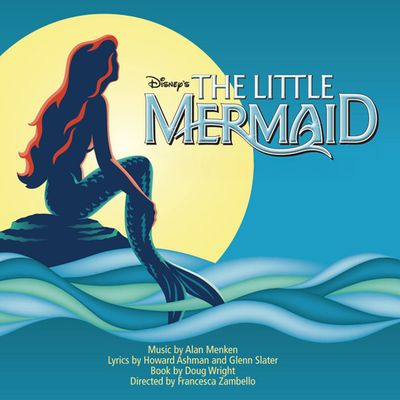
This week we get to be part of "her" world. Broadway Ariel, Chelsea Morgan Stock joins us for a conversation about the stage adaptation of Disney's game changing film THE LITTLE MERMAID. Tune in as Chelsea reveals the complexities of being an understudy, dancing in Heelys, and staging a certain villain's demise... Read More
From the show: A Musical Theatre Podcast
Featured Shows
About
This week we get to be part of "her" world. Broadway Ariel, Chelsea Morgan Stock joins us for a conversation about the stage adaptation of Disney's game changing film THE LITTLE MERMAID. Tune in as Chelsea reveals the complexities of being an understudy, dancing in Heelys, and staging a certain villain's demise.
Be sure to follow Cheslea on Instagram @chelsmstock
Take one moment to follow "A Musical Theatre Podcast" wherever you may be listening and share us with your friends!
Join us on Instagram, TikTok and X for more great content. For bonus episodes, subscribe to PATREON! for only $1 a month. And don't forget about our TeePublic Store, our proceeds from which we donate to Broadway Cares/Equity Fights AIDS.
Above all, thank you for being part of this wonderful podcasting community.
Transcript
This transcript was automatically generated and might contain errors.
[0:00] Jeffrey Scott Parsons: All right, I want to start out with a little bit of a pop quiz for you. In front of me, I have the lyrics of "Under the Sea," and I want to see if you can still do the rap verse, like the verse with all the crazy rhymes.
[0:16] Chelsea Morgan Stock: The ray he can play that one?
[0:18] Jeffrey Scott Parsons: Yeah, yeah, yeah.
[0:21] Chelsea Morgan Stock: Um, okay, let me think. The ray he can play, the, the lings on the strings, the sprout. Shoot. It's crazy. I would never want to try to do this. The smell and the sprout, they know where it's at. Something, something, something roar. So no, the answer is no, I cannot. I, this would stress me the freak out every single show. Like, I can't imagine doing this. Starting with like what Sebastian does. The new play the flute, the carp play the harp, the place play the bass, and they sound in sharp. The bass play the brass, the chub play the tub. The fluke is the Duke. Like crazy. I can't.
[1:07] Jeffrey Scott Parsons: Oh my god. You can be honest with me. Did Titus ever go up on the lyrics?
[1:13] Chelsea Morgan Stock: Not that I remember.
[1:14] Jeffrey Scott Parsons: That's impressive.
[1:17] Chelsea Morgan Stock: Pretty remarkable. And like, oh my god, and like hitting those notes every night. It's like, who are you? Superhuman.
[1:36] Jeffrey Scott Parsons: Welcome everybody to A Musical Theatre Podcast where we discuss the cultural and emotional impact of some of our favorite musicals in theatre history. My name is Jeffrey Scott Parsons. You can call me Jeff. Today we're talking The Little Mermaid and my guest is the amazing, the incredible, the original cast member, Chelsea Stock. Is that what I should call you? Like, what is your, what is your name now?
[2:04] Chelsea Morgan Stock: Well, I feel like I have lots of names. My professional name is Chelsea Morgan Stock.
[2:09] Jeffrey Scott Parsons: Okay.
[2:09] Chelsea Morgan Stock: That's how like you would see it. But my married name is Chelsea Piggott. So, you know.
[2:15] Jeffrey Scott Parsons: Oh, okay. Okay. So, I honestly thought that Chelsea Morgan was your maiden name and Chelsea Morgan Stock was your married name.
[2:25] Chelsea Morgan Stock: So, that's not, that's not even including hubby.
[2:28] Jeffrey Scott Parsons: No, no, no. You know, when I did like my first professional show when I was a teenager, they just like used my whole name. So, they used Chelsea Morgan Stock. And so, I just like, I stuck with it. It's kind of funny because a lot of people have to do that, you know, in equity if someone else has the same name. And so, everyone asked me that and I was like, uh, no, I just did it.
[2:46] Chelsea Morgan Stock: That's just what it was.
[2:50] Jeffrey Scott Parsons: For me, it was either do Jeff Parsons or Jeffrey Scott Parsons. I didn't like Jeffrey Parsons. It felt like grading to me. So, then I went, I went, I was like, you know what, Dad, you gave me all three names. So, I'm going to use all three names.
[3:04] Chelsea Morgan Stock: Exactly, right? When else do you get to use all three names?
[3:08] Jeffrey Scott Parsons: Thank you. My dad, he would only use my all three names when he was proud of me.
[3:13] Chelsea Morgan Stock: I think a lot of people have the opposite, like when you get in trouble, and I'd bring home a report card and he'd be, well, Jeffrey Scott Parsons.
[3:24] Jeffrey Scott Parsons: That's cute.
[3:25] Chelsea Morgan Stock: Yeah, super cute. You live in Los Angeles like me. And yet you have all of these amazing New York credits on Broadway, like The Little Mermaid, like Something Rotten, like Sister Act as well. Am I missing anything?
[3:42] Chelsea Morgan Stock: Baby, It's You. Most people don't really know about it.
[3:46] Jeffrey Scott Parsons: I forgot about Baby, It's You.
[3:49] Chelsea Morgan Stock: Yes.
[3:50] Jeffrey Scott Parsons: With the amazing Beth Lovell.
[3:53] Chelsea Morgan Stock: Oh, yeah. She's incredible.
[3:55] Jeffrey Scott Parsons: So, what brought you out to the West Coast? I'm always interested to hear because I ended up here.
[4:01] Chelsea Morgan Stock: Yeah. I mean, so many factors, but probably the biggest thing is that I'm from the West. I'm from Northern California.
[4:11] Jeffrey Scott Parsons: Really?
[4:12] Chelsea Morgan Stock: Yeah, I'm from San Jose. And so, I was ready to come out and be closer to family. I think that was the number one thing. I was also a little burnt out. I was in Something Rotten at the time, and I kind of kicked myself now going, what the heck did I do? Why did I leave that show? But, eight shows a week and my husband, who wasn't my husband at the time, but we were together and I didn't see him. And I was just ready for a change.
[4:40] Jeffrey Scott Parsons: Absolutely.
[4:41] Chelsea Morgan Stock: And he was going to start his small business. And so, we were like, well, where are we going to do that? We have to pick where we're going to be. And so, we said, let's go to LA.
[4:48] Jeffrey Scott Parsons: And what is your business?
[4:50] Chelsea Morgan Stock: We have a small coffee company called Tectonic Coffee.
[4:54] Jeffrey Scott Parsons: So, do you provide coffee for different sellers?
[4:59] Chelsea Morgan Stock: Yeah, we're a coffee roaster. So, we wholesale. So, we travel. My husband does more of the traveling. I've gotten to do a little bit, but we travel to the farms as much as we can, bring it in, and then we roast it and sell it wholesale to the cafes and restaurants and also direct to consumer online. So, someday we're crossing our fingers, we'll be able to open a cafe, but we're slowly building the business. So, yeah. Yeah, I mean, I've learned a lot about coffee. I'm still not the coffee expert.
[5:29] Jeffrey Scott Parsons: As a LDS Utah boy, I'm afraid you know a lot more about coffee than I do.
[5:36] Chelsea Morgan Stock: Yeah, probably. Yeah.
[5:39] Jeffrey Scott Parsons: I will walk down the coffee aisle just to be like, oh, that smells nice at the grocery store through my mask. So, when did you get involved with The Little Mermaid? Were you there from like the get-go?
[5:51] Chelsea Morgan Stock: Yeah. So, my story is it was my Broadway debut. I was going to the Boston Conservatory for college, and while I was there, it was my senior year, and they were looking for an Ariel. And at the time, they couldn't find what they were looking for. So, they reached out to one of my teachers. Well, an agent reached out to one of my teachers. And so, she gave a few of our names. And so, everything just kind of lined up. Nothing in my life has ever lined up like this since then. But I happened to be in New York at the time, and this audition came up, and they're like, okay, great. Can you send us your headshot? And I had a black and white headshot. And they're like, well, that's okay. That's okay.
We'll just get you into the next audition. And there was something in my gut that was like, no, I need to go in for this. So, anyway, I went in for Ariel, and I was like immediately in final callbacks, like by the end of the week for Ariel. And there was like a few of us there, Sierra included. And then I went back to college. And then they called me back to come back to New York and do some ensemble stuff and some dancing. And then a few days later, I got the call. So, my second half of senior year, I knew I was going to be in The Little Mermaid. And so, then it literally timed out that I got to do my showcase. I got to do my graduation, and then I started rehearsals. That's what I mean. Nothing in my life has ever worked out like that since then.
I was extremely lucky to be in that position and to be prepared. So, anyway, that's my journey. I originated Andrina, the sister, one of the Mer sisters, and I understudied Ariel. And then I took over for Ariel later on.
[7:34] Jeffrey Scott Parsons: Incredible. Congratulations. I remember you telling me that we were talking about what show you might want to talk about, and you said Mermaid Has Your Heart.
[7:42] Chelsea Morgan Stock: Yeah, for sure. Forever. It's so interesting because I feel like I'm in this time in my life now, I'm sure you might feel the same, where you think back and you're like, huh, I don't know, not things I would necessarily do different because I wouldn't change anything. But I want to go back and do things a little bit differently or experience it again. I miss it so much, and I kind of can't believe that that all happened in my life. But I was so young. At the time, I was like, I know what's going on, and I understand the business, and I know that this won't last forever. But still, I look back and I'm like, oh, man, I just, I don't know, did I embrace it as much as I should have or could have.
[8:36] Jeffrey Scott Parsons: I think we all have that stuff, though.
[8:38] Chelsea Morgan Stock: And I think I could, I mean, of course, I could do things differently. I was like 23, 24 at that time or whatever. But did I do my best at that time with what I knew? Yeah, I did. You know what I mean? And that's like the acceptance part that's always very difficult.
[8:56] Jeffrey Scott Parsons: Sure, sure.
[8:58] Chelsea Morgan Stock: But yes, Mermaid Has My Heart, and it always will. I mean, even to this day, if I get to sing a song from it or something, I feel it in the depths of my soul. You know what I mean? Just that connection.
[9:10] Jeffrey Scott Parsons: That's beautiful. The musical The Little Mermaid is, of course, based on the original Disney animated film of the same name, which came out in 1989. It was written and directed by Ron Clements and John Musker, who later directed Aladdin and Hercules and Moana. They're kind of the directors of some of my favorite Disney animated films. And it has kind of an interesting story of how it came to be because at this point, we consider The Little Mermaid to be the renaissance of Disney animation. When it came out and was the huge success that it was and gave way to Beauty and the Beast and Aladdin and everything that came after, Disney animation was back in a really huge way. But what I didn't realize until I started researching all of this is that The Little Mermaid was actually an idea back in the 1930s for Disney animation to do.
Right after Snow White, they were looking at different vignettes from Hans Christian Andersen. For some reason, a bunch of circumstances happened that it gets shelved, and everybody forgets about it until Ron Clements has the idea to do an animated film based on Hans Christian Andersen's The Little Mermaid. He tries to pitch it to Jeffrey Katzenberg, who was in charge of animation at the time, and Katzenberg actually swats it down because he wanted to focus on a sequel to the film Splash. Do you remember Splash, that Daryl Hannah film? And he was like, too many mermaids. We can't do this. He later changes his mind, and they are allowed to start the pre-production process, looking at what the plot would look like, writing synopses.
And at that point, they accidentally stumble upon – talk about everything lining up perfectly – they stumble upon all of the original concept art and storyboarding that they did back in the 1930s for The Little Mermaid. And it just so happened that a lot of the things that they were looking at doing had already been done back then. So it was like this perfect kismet of, yes, this is exactly what we should be doing. I think the most influential decision that they made was bringing on Howard Ashman, who was – and I've said it before, and I'll say it again – we can never talk about Howard Ashman too much on this podcast. He's a hero. But he and his songwriting partner Alan Menken had had a huge hit with Little Shop of Horrors, and Disney gobbles him up.
They ask him to come on and kind of take a look at this project. And what Howard brings to the animated film of The Little Mermaid is what ultimately changes Disney animation. They start looking at these films as Broadway musicals told in animated film form. You go back and look at some of the films from the 1980s, like The Great Mouse Detective. There's music in there, but it's more like they found opportunities within the story to have a song. They go to a nightclub, so there's a mouse performing a song, and that's the song that we hear. Whereas with Little Mermaid, they decide from the get-go that music is an inherent part of the structure of the story. The way that we are allowing the story to unfold is through the music. So Alan Menken and
[13:36] Chelsea Morgan Stock: I do as much as I can.
[14:06] Chelsea Morgan Stock: I don't know if it was much voice style as it was storytelling, you know, and I think that's really cool. And I miss that a little bit. And in some of you know, not all not all animation has lost that. But um, you know, of course, pop is such a big thing in our culture right now. And I'm growing up, honestly, my dream was to be a Disney voice. So like, you know, someone like Jodie Benson is obviously what I listened to and wanted to be. I mean, that was when I started my obsession with like, cast albums, to be honest, because I had the Little Mermaid cassette tape and the Latin cassette tape and the Newsies cassette tape. And I would just play them over and over again. So I had, I feel like I had it memorized inside and out. And even looking back on it, it's still a great movie. It's really well paced and really beautiful too.
[15:11] Chelsea Morgan Stock: What happens next is Disney theatricals starts creating Broadway shows. And the first one they put up is Beauty and the Beast, which is a huge hit, right? Then they have Lion King and you know, so on and so forth. Then they decide that they want to start adapting the Little Mermaid for the stage, which I mean, it makes sense why this was a little bit later in the progression of Disney theatricals, because boy, oh boy, does this show provide a lot of problems. I mean, first and foremost, a huge portion of it is underwater. And then there's a lot of it that isn't underwater. And how do you do that on stage? I mean, that's first of all. Then you kind of have to deal with the fact that scale is a problem.
How do you have a crab next to an actual person and yet they're the same size? How do you have the lead of your show lose her voice halfway through and then she like she doesn't talk for the entire rest of it? And that's going to be a musical? What? Like there are so many interesting challenges along the way. And I think that that is ultimately what kept them away from trying to put this thing on stage earlier.
[16:32] Chelsea Morgan Stock: They originally get Matthew Bourne to do the show. Matthew Bourne, who did like Swan Lake and also had worked with them on Mary Poppins prior to this, right? Did Mary Poppins come out first? Yes. Matthew Bourne's like co-choreographer ends up staying on the show, right? What was his name? Stephen.
[16:54] Chelsea Morgan Stock: Stephen Mear. Exactly. He stays on the show, but Matthew Bourne leaves and they bring on instead Francesca Zambello. Is that how you say it?
[17:02] Chelsea Morgan Stock: Zambello. Yeah. She was basically an opera lady. She directed a lot of operas and had never had a musical on Broadway, but she had a good relationship with Disney because she directed the Aladdin show at Disney California Adventure here in Southern California, which was, for all intents and purposes, the most successful Disney live show in their parks in history. Like it ran for 13 years. Everybody loved it. The guest reviews were always really, really high. So it just kept on going. And so she gets the show and it feels like a big risk to me. I mean, because her, like I said, her creativity is there. Her relationship with Disney is there. She obviously understands stagecraft. And yet Broadway is a really specific animal. And if you've never done it before, like that seems scary.
[18:05] Jeffrey Scott Parsons: I don't know. I mean, what kind? I mean, she must be kind of a ballsy woman. What is your experience with her?
[18:12] Chelsea Morgan Stock: She is a strong, strong lady. Yes. You know, I didn't get as much like one on one work with her in the ensemble, obviously. Like it was more, I was part of the ensemble, part of, you know, even when we were just the Mer sisters. And when I learned all of the Ariel stuff, I worked with her associate. So I didn't work with her directly. That being said, we did have a few meetings, like she was very personable and friendly to me. I didn't mean it like that as much as that, like working and directing, you know, wasn't as much one on one. But her biggest thing was that when she took this on and heard, I don't know if it was her and Steven, but I know it was her. She did not want to use any water and she didn't want to use any flying. So that was like her, like, like Ariel's were.
[19:03] Jeffrey Scott Parsons: That's funny.
[19:04] Chelsea Morgan Stock: Ariel's in the show about Ariel was a no go. Yeah, exactly. We did have a little flying just when like the ship sank and stuff so he could look like he was floating. But other than that, she didn't want like the mermaids flying and no water that, you know, I don't know. I don't I don't know if that was the right move or not. I've done the second like re-envision of this that they've kind of done around the country where there is flying and it's beautiful, but it's complicated. Not that they couldn't have done that on Broadway. Of course, they could have. I just think that there was this other kind of abstract vision for it.
[19:44] Jeffrey Scott Parsons: I don't know. Did you see the show?
[19:46] Chelsea Morgan Stock: I didn't see it in New York. I've seen the Glen Casale one.
[19:50] Chelsea Morgan Stock: Yeah, exactly. The revised one. So like, you know, we had these big like set pieces that were very abstract and were used in very different settings. So they were meant to be used like above ground and underwater. I don't really know how to explain it without just kind of, you know, there were these big big pieces that went on and off stage and would break down a lot, which was part of the issue. And I was one of the lucky tiny people up on the pods, so you'd be like hooked in and then pulled up. And if we were above ground, I would be like a bird. And if I was under, I'd be like a fish. And anyway, wow, it was just a different view, a different kind of a different.
[20:39] Jeffrey Scott Parsons: Yeah. Like, was it was it the perfect way or the right way? I don't know. People loved it. You know, I will say those set pieces were difficult. They said they broke down a lot. And I feel like stagehands had to stay home, stay overtime a lot, fixing them like a lot.
[20:58] Chelsea Morgan Stock: Which is interesting because didn't there was like a whole stagehand strike, right?
[21:01] Jeffrey Scott Parsons: Yes.
[21:02] Chelsea Morgan Stock: In the middle of your right when we were supposed to open our opening got postponed due to that. Yeah. But Francesca, I mean, she she was one of the things I remember most about her. And I mean, I can't really this was my first Broadway show, but was that she would get us all together and she just would have these like super inspiring like pep talks, you know what I mean?
[21:24] Jeffrey Scott Parsons: Oh, cute.
[21:25] Chelsea Morgan Stock: But she was she was tough and she was she was a strong presence, is a strong presence. So.
[21:32] Jeffrey Scott Parsons: So, yeah, you know, it's interesting, but I will say with like the Broadway production, the coolest bit was that we were on Heelys and so they would bring these set pieces in like the water would come in and so it would be like about waist height, I guess I would say on some people. And so our tails would come up. So it looked like it was above and then we glide. So it looked like you were kind of swimming.
[22:00] Jeffrey Scott Parsons: That's cool.
[22:00] Chelsea Morgan Stock: Well, now you mentioned the word, which is the word that like just completely set Broadway afire. And that word is, of course, Heelys. For those who don't know, Heelys are shoes with like a big fat wheel on the heels. And they were very popular with, I'd say tweens, because you can walk, but then you can also glide in them. And and so then for for something so wholeheartedly embraced by the tween community to then be put on a Broadway stage as like stagecraft really blew everyone's minds in all sorts of ways.
[22:48] Chelsea Morgan Stock: Now when I I was googling Heelys and I took a picture of it and maybe I'll put it on our Insta. But when you type in Heelys, the first thing that comes up is Heelys the Little Mermaid.
[22:58] Jeffrey Scott Parsons: Oh my gosh.
[23:00] Chelsea Morgan Stock: So like were they a sponsor? Like did like how much money has that company made because of the Little Mermaid?
[23:08] Chelsea Morgan Stock: Yeah, I wonder. You know, we had like special ones made that were made. They looked like ice skating boots almost with the heel on them, which were much more supportive and made we're able to dance in and which is a whole nother thing dancing with a wheel on your heel.
[23:23] Jeffrey Scott Parsons: Oh my gosh. Yes, of course.
[23:25] Chelsea Morgan Stock: I didn't even think about that. Yeah. But the tennis shoe is really thick, you know, so the kids who wear them like they're much more probably stable for you can't dance in them really. But they're stable for like, you know, day to day.
[23:39] Jeffrey Scott Parsons: Yeah.
[23:40] Chelsea Morgan Stock: I mean, I remember the story being that Stephen Mear saw a kid like using them in the airport and that's where he kind of clicked and was like, oh, I know what we should do.
[23:49] Jeffrey Scott Parsons: Wow. Interesting.
[23:50] Chelsea Morgan Stock: Yeah. And they made us put them all on in the callbacks.
[23:54] Jeffrey Scott Parsons: Oh, shoot.
[23:57] Chelsea Morgan Stock: And do across the floors. And it was quite interesting. Like we were all over the except for Sierra. We were all over the place. But she was like she held it together. I mean, she she's not she was a nice skater, so I think that probably helped.
[24:11] Jeffrey Scott Parsons: But you're kidding.
[24:12] Chelsea Morgan Stock: I didn't know that.
[24:13] Chelsea Morgan Stock: Of course, she's a nice skater. She's like the most.
[24:17] Chelsea Morgan Stock: So, of course, we're talking about Sierra Boggess, who originated the role of Ariel. She is like one of the most interesting people I feel like I've ever seen because she seems like she's a total bohemian, like kind of free love 70s groovy girl, like a groovy chick. But then she's like coloratura soprano also can build her face off and then she's an ice skater, too. I don't know if she does anymore, but I remember that was the case.
[24:47] Jeffrey Scott Parsons: That's crazy.
[24:48] Chelsea Morgan Stock: OK, so how long did you guys rehearse?
[24:52] Chelsea Morgan Stock: We were in New York for God, I don't know, a month, month, month and a half. Then we went to Denver, rehearsed there, did out of town tryout, came back to New York, rehearsed, tech. Well, postponed, open, then open, right? So it's a long it was a long process.
[25:09] Chelsea Morgan Stock: And Denver was hugely successful. I remember reading that.
[25:12] Chelsea Morgan Stock: Sold out every seat for the entire run.
[25:43] And at that time, during the day, we'd be rehearsing and they'd change, you know, some choreography, but they'd say, don't put that in tonight.
[25:50] So we have to do the old version that night and then keep rehearsing the other version during the day.
[25:55] And same thing with like even words, you know, like scenes and whatnot, like Sierra and Sean would get, you know, I don't know, things would change.
[26:04] It was difficult. It was really that's the stuff I really like, you know, the creative part.
[26:09] It does feel like a completely separate skill to do that.
[26:13] And then you're open and then you just keep doing the same thing over and over again.
[26:17] Like those are two different skills that are part of the same.
[26:20] Oh, my God. Completely. I so agree.
[26:23] And I think like when I was talking earlier about being burned out, like that's kind of what, you know, I think that's pretty common.
[26:29] You know, people always joke that actors are looking, always looking for the next job.
[26:33] And I think that's probably why, you know, it's hard.
[26:36] It's hard to do the same thing every night, you know, and it's also different to be in the ensemble and to be playing a role like very different, because like I feel like especially when I was in the ensemble and understudying Ariel and I got to go on for Ariel for like a week or something, because Sierra would be out of town or whatever.
[26:52] It was such a different experience, obviously, because I was playing the lead role.
[26:59] But besides that, like I was reacting and acting with somebody in every scene, you know, and as an ensemble member, it's the same, but it's not given to you.
[27:11] You know what I mean? You have to work so much harder to make it to be so present and to be creative and make it different every time.
[27:18] I mean, it's the same thing goes for the leads. I'm not saying it's actually any easier.
[27:23] It's just but it means that sometimes there's something on the page and then sometimes you have to create it yourself.
[27:28] And in the ensemble, it's your job, like part of your job as an ensemble is to build a world that isn't there on the page.
[27:37] And I think that that goes like people don't recognize that enough.
[27:41] Oh, for sure. No, for sure.
[27:44] So the show opens and I'd say in general, like audiences really love it.
[27:50] But the critics don't. Is that like a fair statement?
[27:53] Yeah, definitely. I, you know, I actually don't even remember all of the reviews, but I knew critics didn't like it.
[28:01] I think there was like a general thing around Disney as a whole.
[28:06] But I mean, it's The Little Mermaid. So, of course, like the audiences were full of these little girls that were just wanted to be Ariel and little boys that wanted to be up on that stage.
[28:19] And who also wanted to be Ariel and wanted to be Ariel.
[28:22] And there were people my age out there who grew up with it.
[28:26] And you know what I mean? So like there were plenty of people that really loved it and wanted to see it.
[28:31] It has a great run. Were you there for the whole run?
[28:34] Yes. Yeah. So I closed it out as Ariel.
[28:37] Yeah, that's so cool. My gosh, Chelsea.
[28:41] So it's like close to 700 performances like it's a hit.
[28:45] And yet I don't really think of it as a success.
[28:49] And I and I feel bad about that. And I don't know why there was there's just kind of this cloud of whether or not it was good.
[28:57] That keeps me from just assuming that it was a big hit.
[29:02] Maybe also there's the unfair comparison of Beauty and the Beast and Lion King.
[29:06] That's what I was going to say.
[29:07] Which had much longer runs.
[29:09] Exactly. Like to compare it to other Disney shows.
[29:12] I mean, if you compare it to like Tarzan, I guess it was, you know, it ran a little bit longer, a little bit better.
[29:18] Sure.
[29:19] But yeah, I'm wondering actually now, is it like the same amount of time as Frozen or is it even longer than Frozen?
[29:25] Right.
[29:26] I mean, those obviously are different circumstances, but.
[29:29] Yeah.
[29:30] I'm not going to lie.
[29:31] Like before I got an audition for it, I heard that they were doing that on stage and I kind of was like, oh, mermaid.
[29:39] Like that was my first reaction.
[29:41] Then you get like the audition and then you get the show and then you're like, never mind.
[29:45] I love this.
[29:46] Yeah.
[29:47] But, oh, I mean, is any show perfect?
[29:50] No, of course not.
[29:51] There's always things that like, especially being in the creative process from the beginning, you see, you see certain aspects being worked out over and over and over trying to figure things out.
[30:01] And sometimes you just can't get it to be absolutely spot on.
[30:06] And for Mermaid, it was the Ursula's demise.
[30:10] We'll definitely talk about that.
[30:12] Let's talk a little bit about the Tony Awards, because I guess maybe that might be another way that the show was painted to not be a huge success, is that it only gets nominated for two Tony Awards, one for score for Alan Menken and Glenn Slater, who took over writing the lyrics because Howard Ashman tragically died in the AIDS crisis in the early 90s.
[30:37] But boy, Glenn did a great job.
[30:38] He's got some really, really smart work in the show.
[30:42] And then the other one was for lighting design.
[30:46] We let that show so many times.
[30:49] Really?
[30:50] Oh, my gosh, yeah.
[30:52] I remember standing on the stage being like, oh, my God, to come back to do another lighting.
[30:57] Yeah, that's crazy.
[30:58] And those big set pieces that you were talking about, they were meant to kind of refract light in an interesting way.
[31:05] Right. That made it feel more under.
[31:07] A lot of a lot of this that did.
[31:09] Yeah.
[31:10] That's interesting.
[31:12] The musicals that did get nominated for Best Musical that year were In the Heights, which won and was a huge smash.
[31:20] Cry Baby, which was a stage adaptation of the John Waters film.
[31:24] Passing Strange, which is a really interesting piece that Stu wrote.
[31:29] And then Xanadu, which was yet another stage adaptation of a film based on a cult classic film from the 80s.
[31:37] So Little Mermaid didn't get nominated.
[31:39] There was another snub that was even more surprising, and that was Young Frankenstein.
[31:46] Young Frankenstein had also come out that season and was, you know, was Mel Brooks, who had had this huge hit with the producers, won more Tony Awards than anybody else.
[31:57] And then Young Frankenstein, it doesn't even get nominated for Best Musical.
[32:02] And many people thought it was because when Mel Brooks had won his Tony Awards for the producers, he had made jokes about how he was going to be winning everything that night.
[32:10] So, like, I'll see you soon. And they took offense to that.
[32:13] And so then he didn't get nominated.
[32:15] So everybody was kind of focused on Young Frankenstein that it didn't feel like as big a snub as maybe it would have.
[32:22] Not to mention you guys were selling just fine.
[32:25] Yeah. And, you know, we were directly across the street from In the Heights.
[32:30] And it's funny, you know, now that you're like saying all this, I'm like, God, I don't even really remember all of those other shows being the same season.
[32:39] And I think that's partly because I was young and new.
[32:42] Like, as time went on in New York, if I was in another show, I kind of always knew what was going on in other shows because I always knew somebody in something.
[32:49] I was much more involved in the community.
[32:51] I just don't think I I was I was like in my own little bubble, you know, except for In the Heights.
[32:56] And it's like I knew In the Heights was going to win. They were across the street.
[32:59] They like had this really great camaraderie and I was very jealous of that company.
[33:05] So I think that kind of maybe just I just kind of assumed that everything was going to go to them and didn't think otherwise.
[33:11] You know, when I look at your cast, your cast was filled with like quintessential New York Broadway musical theater actors, like a lot of veterans.
[33:23] You had Sharon A. Scott, you had Sean Palmer and Titus Burgess and John Tracy Egan and Norm Lewis and then Heidi Blickenstaff like in the small role.
[33:36] And so I would think that there would be almost a veteran type feel in the show.
[33:43] But would you mind talking about like what the morale of the show was or felt like?
[33:48] Yeah. I mean, being out of town in Denver, I've never been on tour, so I'm assuming kind of what that's like.
[33:57] But it was really cool. It just felt like we were all part of something together.
[34:03] And there was not really it just felt like we were kind of one big family.
[34:09] And that didn't just go with cast. I mean, I'm talking about everybody on and off stage, stagehands, directors.
[34:15] I mean, even like Alan Menken and like Doug, like people who were we were all part of this piece.
[34:22] And it felt like that switched a little when we moved back to New York.
[34:26] It just felt like there's like a little bit of a separation, like there's the ensemble and then here are the principles.
[34:31] Not that anyone was necessarily like mean. I mean, Norm Lewis is like literally the nicest man on the planet.
[34:38] But, you know, people have their dressing rooms and then you go back to like your normal life.
[34:43] And it wasn't didn't feel quite as much of that like family aspect.
[34:50] So I think it was just me kind of learning the balance of what all that is.
[34:54] And, you know, I was, again, very young. I was understanding the lead role going on a lot.
[35:00] And, you know, I didn't feel fully supported by the entire company.
[35:05] That's too bad. Most of the company. But, you know, I had some issues.
[35:10] So, yeah. Dang. I just want to give you a compliment and say that what I think is amazing, that is that you stayed and kind of owned your experience in it.
[35:16] And that's kind of one of like above all of those things you say that like the show has your heart when all is said and done.
[35:29] How cool that no matter what, an experience can be incredibly profound and important.
[35:35] And and we'll stay that way regardless of what may come up in the process.
[35:41] Definitely. Let's go ahead and go through the show, if you don't mind.
[35:46] I think one of the easy criticisms for Disney shows is that sometimes they just copy and paste things onto the stage.
[35:54] And to the point where like scenes and pieces of dialogue are untouched.
[36:00] And I don't feel that way about The Little Mermaid. In fact, it's one of the few Disney shows that I saw.
[36:06] And in my first sitting, I was like, oh, this is something of its own.
[36:11] It doesn't feel just like a carbon copy of the movie.
[36:14] Doug Wright was who they brought in to do the book, who I don't know if he had ever done a musical before, but he had had a huge success with I Am My Own Wife, which is a very not Disney type of show that just won every award imaginable.
[36:33] And you can see how between him and kind of Alan Menken and Glenn Slater revisiting the score that was written for the film, how they made very conscious decisions to make this product its own thing.
[36:47] And I appreciate that. And some I agree with and some I don't. But like, I have to applaud them for that.
[36:53] The show starts out with all of the sailors on the ship, which is Prince Eric's ship.
[37:00] Question, does Prince Eric have parents?
[37:03] His, you know, now that I think about like his mother, I don't know, but his father's past.
[37:08] So Grimsby is like his father's his father figure.
[37:12] Yeah. There's this like urgency that he needs to get married and kind of ascend to the throne.
[37:18] Correct.
[37:19] But yeah, Grimsby, who was Jonathan Freeman, who was the voice of Jafar. Like how cool.
[37:26] What a weird Disney vortex.
[37:30] Yeah, he's super sweet. Love him.
[37:33] And Grimsby is this guy who's kind of reminding him of all of that.
[37:37] They're on the ship talking about the mysterious fathoms below. Right.
[37:41] That's the opening to the show. And that gives way to us actually going under the sea.
[37:47] We meet.
[37:48] Chelsea Morgan Stock: The daughters of Triton, one of which is the amazing Chelsea Morgan Stock. And the family politics of all of this is much more complex than the stage version. So, Ursula and Triton are actually brother and sister. I guess when their father died, they gave him the trident.
[37:56] Jeffrey Scott Parsons: The trident? Like as in the gum?
[38:02] Chelsea Morgan Stock: Yeah. Okay. Interesting. All right. I don't think I knew that.
[38:10] Jeffrey Scott Parsons: What did you think it was?
[38:17] Chelsea Morgan Stock: I honestly thought it was called a trident. Like Triton, but with a T at the end. Trident.
[38:24] Jeffrey Scott Parsons: I'm pretty positive. Trident.
[38:32] Chelsea Morgan Stock: Yeah. No, that makes sense. And then the father gave Ursula this shell.
[38:41] Jeffrey Scott Parsons: Oh, the shell. Just like the strongest trident, the most fragile of shells. And these two things are the basis for all of their power. And so Ursula has tried to do this coup d'etat over King Triton. He defeated her. She's kind of banished to the nether regions of the sea, especially because she keeps using all of this black magic. And so now they're celebrating the anniversary of this whole thing with a concert in which all of his daughters, all of King Triton's daughters are taking part. Now, I guess we can also say right now that we find out about Ariel's mom or King Triton's wife in the stage version where she was killed by humans, which is what fuels his prejudice against and hatred against humans. And fear. And so like, why on earth would you be okay with your daughter going and being part of that world that killed your wife?
[39:14] Chelsea Morgan Stock: Right. Correct. Like, I get it. So the daughters are introducing themselves and singing the song and then it comes time for Ariel's big solo and she's not there. This is because she is out swimming around and forgot all about this concert, which I guess we should say the song that y'all were singing was written by Sebastian, who's the master of music of the underwater kingdom.
[39:58] Jeffrey Scott Parsons: Yeah, yeah. I totally thought that this was a very simple story until I'm like trying to talk about it. I'm like, good gravy. Like this is a whole civilization with like history and religion.
[40:19] Chelsea Morgan Stock: Yes. So then we meet Ariel. Now what's interesting is that in the film, Part of Your World has become the quintessential I Want song for like teaching young students about what an I Want song is, a character talking about, you know, their dreams and desires. And yet there's another I Want song that they wrote. And what's that one called?
[40:41] Jeffrey Scott Parsons: The World Above.
[40:49] Chelsea Morgan Stock: That's the very first song before, after the ship. So like that's a pre I Want song, I guess.
[40:56] Jeffrey Scott Parsons: Yeah, yeah. It's the first lyric is this is where I belong. So she's on the surface, you know, and she's like, where I belong, where I want to be. Well, I guess also, it's kind of important to point that out. Otherwise, it just seems like Ariel's obsessed with Prince Eric. Like it's more than just a crush on a boy, right? It's about her desire to be in this world.
[41:10] Chelsea Morgan Stock: Correct. Now she has friends. Ariel has a friend named Flounder, who has kind of been repurposed to this young boy. And does Flounder have a crush on Ariel?
[41:25] Jeffrey Scott Parsons: Yes.
[41:34] Chelsea Morgan Stock: Which I don't like that. Not a fan.
[41:40] Jeffrey Scott Parsons: Yeah. And then you also have Scuttle, who is the scatterbrained seagull, who's always teaching Ariel about all of the great human things that she finds like dinglehoppers and snarflats. Now we've met everybody except for this famous Ursula. And when we do meet her, we see that she is a giant octopus in the animated film. Like I said, the part was originally voiced by Pat Carroll, who gives one of the great vocal performances in all of animated film history. Originally, it was supposed to be Bea Arthur. She turned it down, Bea Arthur of the Golden Girls. And then Elaine Stritch was hired. And but then Howard Ashman decided against that because she couldn't really do musically what he wanted, or what he and Alan Menken had envisioned, which is this Brechtian German cabaret type chanteuse. Like all of the songs of Ursula's sound almost like cabaret.
[42:39] Jeffrey Scott Parsons: Like the song that they wrote for your production was I Want the Good Times Back, which sounds kind of like one of those songs.
[42:44] Chelsea Morgan Stock: Yeah. And was played by someone who I adore, Cherie Renee Scott. I will say, however, one thing that I really loved about the original film is that Ursula is sensual, but she's also disgusting. You know what I mean? Like, it's well known that the animators based Ursula off of Divine, the drag queen. And then you hire Cherie Renee Scott, who is just all glamour and all sex. And so I missed some of that disgustingness. I don't know. What do you think?
[43:20] Jeffrey Scott Parsons: I actually don't know. I don't know why they decided to go that route. But it definitely was one of the talked about topics, of course. I don't remember if the critics talked about it. I'm sure they did. But I don't know. It was unexpected. And then after Cherie, it was Faith Prince, who I think would be better, like more traditionally cast.
[43:40] Chelsea Morgan Stock: Correct. I believe it was a bit more. Not to say that Faith Prince is disgusting, but she's like more of a character actress who's willing to go there.
[43:52] Jeffrey Scott Parsons: Yeah, yeah. I don't know. I feel bad because we did an episode on Aida. Everybody who listens knows that I love Cherie Renee Scott. She obviously had, because of Aida, a relationship with Disney theatricals. And when you listen to her, she is both making like really interesting, brilliant choices. And then at the same time also feels a little miscast. I don't I don't know if I feel that way about any other performance in modern musical theater. But it's like she as she's as brilliant as she is miscast.
[44:20] Chelsea Morgan Stock: Yeah. I can't believe I'm saying that. What was what was Faith Prince's take on it? And how was it different?
[44:28] Jeffrey Scott Parsons: Cherie left. I did it with Heidi for a little bit. And then Faith came in and we and we closed it out. Yeah. And Faith was just this so kind and so nice and just amazing.
[44:42] Chelsea Morgan Stock: Yeah, I would say her take was just more robust. You know, it's just more like I hear exactly what you're saying. And I agree with what you're saying. I don't know, you know, back at that time, who would who I would have put in it originally, because I don't think I knew well enough who was like around. But it was definitely a different take.
[45:08] Jeffrey Scott Parsons: Okay, so Ariel goes home because she's, you know, oops, I forgot about the concert. And it accidentally slips that she was up doing more human stuff. We find out about King Triton's xenophobia. And she rushes off, King Triton assigns Sebastian the crab to make sure that Ariel doesn't get into any trouble. And then that is when Part of Your World hits. And of course, it's a legendary song that almost got cut from the film because Jeffrey Katzenberg thought that audiences would be bored. But I think I think Part of Your World is probably the song that changed Disney animation forever. To dedicate a full three minutes to the inner life of a quote unquote, Disney princess. That isn't just someday my prince will come, you know?
[46:01] Chelsea Morgan Stock: Yeah, it's like she she's really expressing something from her gut. What was it like for you performing that song? Because I mean, it's just it's so well known.
[46:14] Chelsea Morgan Stock: Just there's nothing that will compare to doing that on stage by myself on Broadway. There's just not. But you know, I was thinking about it when we were going to do this talk. And I was like, you know, it's still it's still gets me every time I sing it and probably even more now. It's always relatable, I feel like. And I mean, I could sing Disney all day like that's my that's my jam. That's my jam.
[46:38] Jeffrey Scott Parsons: Um, but everything about it, I you know, everything about it, the story, it tells the lyrics, the musicality, the the builds the like everything about it is just it does it feels like the perfect little song. Like I can't think of one thing about it that isn't a perfect match for everything surrounding it.
[46:57] Chelsea Morgan Stock: Yeah. Great. Howard and Alan, I love you. So out of Part of Your World, the ship that we met at the top of the show gets hit by this storm. It doesn't, you know, go into a huge explosion fire type thing like it does in the film. But it it throws Eric overboard.
[47:19] Jeffrey Scott Parsons: And Ariel saves him from drowning, takes him to shore. And now here's this. Well, I guess I don't want to put words because you're both the person who lived in Ariel's fins and and you're also a woman. So tell me about what you think's going on inside of her.
[47:33] Chelsea Morgan Stock: She's, you know, she's obviously got a huge crush on this. But what does what does it mean? I don't you know, yes, but I kind of think that she would have saved anybody. Like, if it doesn't matter that it was him, just happened to be him. That's it. Like, that's just who she is. And she, she's so fascinated with their world. It's almost like she is more selfless than selfish, right? I think sometimes it's easy to think that she was just obsessed with this boy and why she saved him. But the fact is, is that she knows the consequences. She's been taught by her dad about what the dangers of humans are. And she sees decided to put all of that at risk to save someone.
[48:11] Jeffrey Scott Parsons: Yeah. And, you know, Disney's always about showing what it takes to be a hero. And she's already shown that she has that kind of heart.
[48:30] Chelsea Morgan Stock: Yeah, well said. Thank you. And that gives away to one of the best reprises of all time. The part of your world reprise is somehow even better than part of your world.
[48:44] Jeffrey Scott Parsons: Yes. So great. We all in a pool recreated the
[48:48] Chelsea Morgan Stock: Yeah, the Ariel moment of like, swishing her hair back and the water splashing.
[48:55] Jeffrey Scott Parsons: How would How did you guys stage that? Do you remember?
[48:58] Chelsea Morgan Stock: Yeah, the biggest thing for Ariel, we had the rock kind of there. We didn't have it exactly the same, but we were sitting on the rock. So kind of it kind of had the same idea. And just singing that. I mean, it's like the best just like, I think he belting up to it, who knows what, and it was pretty cool.
[49:19] Jeffrey Scott Parsons: So now Ariel comes back home, and she's obviously on cloud nine, or however you would say that for people who live underwater. And everyone's like, what's her deal, which gives way to a new song that they wrote for the show called She's in Love that the sisters and flounder sing about her. And I mean, this is honestly like my favorite version of Alan Menken, which is 60s doo-wop. And yet it doesn't sound like anything else in the score. It's just this one song that, for some reason, sounds like 60s Phil Spector.
[50:03] Chelsea Morgan Stock: But still totally fun. And so many great lyrics. She's in love. She's found a deep sea hunk. She's in love. And now she's good as sunk. Just all of the wordplay of they know their fish.
[50:10] Jeffrey Scott Parsons: Yes. Okay, so after she's in love, and like, how many flounders did you have? Because they have pretty strict rules now about how many performances.
[50:15] Chelsea Morgan Stock: Yeah, we started with two children can do. Wait, yeah, just two at a time.
[50:20] Jeffrey Scott Parsons: Okay, we went through to pretty quickly because their voices changed so quickly.
[50:25] Chelsea Morgan Stock: Oh, that song is so flipping high. Yeah, it was actually really sad because when we did the
[50:25] Chelsea Morgan Stock: We already had the new kids in and they let them all record it so they could all have a version, which is really nice of them to do that, but those boys were already having a really hard time.
[50:37] Chelsea Morgan Stock: It happened so fast. It was crazy.
[51:07] Chelsea Morgan Stock: It's beautiful, but it cements in my mind that romantic leads are just the most boring roles in all of theatre.
[51:14] Chelsea Morgan Stock: Now Sebastian accidentally reveals to King Triton that Ariel saved a human, so Triton confronts her about it and in the process destroys her grotto, destroys all of her human things in a fit of rage.
[51:30] Chelsea Morgan Stock: This is the moment when I was growing up, and I always talk about this, I could not stomach this scene.
[51:37] Chelsea Morgan Stock: It made me feel so sad inside that I would walk out and go get a drink of water or something during the scene and come back so that I didn't have to watch King Triton.
[51:47] Chelsea Morgan Stock: I don't know, maybe it was my hoarder tendencies or something, but just the idea of watching him destroy all of the things that she's saying about during Part of Your World just destroyed me as a young lad.
[52:00] Chelsea Morgan Stock: Yeah, it's a tough scene.
[52:02] Chelsea Morgan Stock: It's also great fuel because now she's at that vulnerable place where Ursula can sink her tentacles into her, having realized that Ariel might be the way to get to Triton.
[52:16] Chelsea Morgan Stock: She is his Achilles heel. They sing this song called Sweet Child that lures her to Ursula and she goes.
[52:26] Chelsea Morgan Stock: When she's there, Ursula basically presents an opportunity for her and says, look, I know how much you love being in the human world, so in a Faustian sort of play, I'm going to let you have legs and go up and be with your sweet prince.
[52:43] Chelsea Morgan Stock: All you have to do is give me your voice. And if you in three days time can get him to kiss you, true love's kiss, excuse me, then you get to stay human forever.
[52:58] Chelsea Morgan Stock: And if not, she owns Ariel's soul. And I love the act one ends with Poor Unfortunate Souls because it is such good writing. I love this song so much. Like what a tour de force.
[53:12] Jeffrey Scott Parsons: Yeah, it's a good song.
[53:13] Chelsea Morgan Stock: I just wanted to take us through some of these lyrics because now Ariel's like, how can I possibly get him to love me if I can't talk? Like, how is that going to work? This doesn't seem like a good deal.
[53:25] Chelsea Morgan Stock: And Ursula sings this part of the song where she says, come on, they're not all that impressed with conversation talking about humans. They're not all that impressed with conversation.
[53:35] Chelsea Morgan Stock: True gentlemen avoid it when they can, but they dote and swoon and fawn on a lady who's withdrawn. It's she who holds her tongue who gets a man, which is so full of psychology.
[53:49] Chelsea Morgan Stock: And I'm a dude here talking about this, but what I believe society has constantly taught women, which is if you're loud and opinionated that you're not going to find a man, which is the worst possible thing you could do.
[54:04] Chelsea Morgan Stock: And this is a children's animated film, this kind of psychology and nuance in 1989 in an animated film that probably isn't even found in films for adults.
[54:18] Chelsea Morgan Stock: Like how inspired, how incredible. And I think it plays and you can tell me what you think, but I think it plays on Ariel's insecurities, right? I don't know. Have you ever felt like that as a woman? Have you ever felt like you needed to be small?
[54:32] Chelsea Morgan Stock: Oh, yeah. Oh, yeah. And I think, I mean, it's exactly what you said. It's that is part of Ariel's battle, you know, and probably lots of women or people. And I mean, I grew up in a family where my dad is so not like that.
[54:49] Chelsea Morgan Stock: You know, he's like he's got two daughters and he is pro ladies all the way and always told us to stand up for ourselves and whatnot. But, you know, like I mentioned earlier, I am an introverted person.
[55:03] Chelsea Morgan Stock: So it's easy for me to kind of just if I feel that that is the right thing to do, I will do that. Meaning it's easy for me to go into my shell, you know.
[55:11] Chelsea Morgan Stock: So it's interesting because hearing those lyrics like, I don't know, when I heard it as a kid, do you hear? Does that sink in? Do you even hear what what they're saying? You know what I mean? Who knows?
[55:22] Chelsea Morgan Stock: I think that that's what I love about musical theater is that you can have these songs that I mean, sometimes the same way. But I think Howard Ashman has these lyrics where you look deeper and there are just so many layers about humanity buried within them because it's not necessarily as straightforward as maybe some of the pop songs that you referenced earlier. You know, it's very it's pretty nuanced.
[55:48] Jeffrey Scott Parsons: Yeah.
[55:49] Chelsea Morgan Stock: So then the first act ends with Ariel agreeing to giving away her voice.
[55:56] Jeffrey Scott Parsons: If you were to give advice to young girls, what would you say to them to encourage them not to give away their voice?
[56:03] Chelsea Morgan Stock: Trusting who you are and being true to who you are, because I think it's easy to try to fit into a mold. I can only imagine now because at that time, social media wasn't even what it is now.
[56:16] Chelsea Morgan Stock: I can only imagine that that makes it even harder. But I think especially as an actor, something I didn't quite grasp early enough, or would love to have grasped earlier, is what I am is what makes me successful.
[56:33] Chelsea Morgan Stock: It's not being like anybody else. It's not looking at, you know, a specific way to fit a mold. What people are drawn to, probably in any aspect of life is who you are uniquely. Just embrace who you are and trust that that's enough.
[56:54] Jeffrey Scott Parsons: Amen. That's great. Thank you.
[56:57] Chelsea Morgan Stock: Yeah.
[56:59] Chelsea Morgan Stock: But I think it can be so confusing in a business where we're constantly trying to win a part, right?
[57:05] Jeffrey Scott Parsons: Totally.
[57:06] Chelsea Morgan Stock: Where we're like, I'll be whoever you want me to be.
[57:08] Jeffrey Scott Parsons: Totally.
[57:09] Chelsea Morgan Stock: Like, so scary.
[57:10] Chelsea Morgan Stock: Like, that's only something I think now am I wrapping my head around, you know, and I think that's because I'm teaching more and I'm on the other side a little bit more and you look and you're like, well, I don't want you to be exactly like that last person. I want you to be you. Like, that is what, that's what's interesting, you know, and the hardest part about the business is letting go of any control because we have zero, you know, all you can do is prepare, do the best you can, and that's it.
[57:40] Chelsea Morgan Stock: And that is what you have to leave being proud of. Like, that's where your confidence comes from. Not if you get the job, but leaving feeling like you did everything you could, you know, because if I've left plenty of auditions where I'm like, oh, I did not. I did not prepare for that. That was not. And then I beat myself up. But had I gone in and done everything I could and I still didn't get it, then, you know, I.
[58:02] Jeffrey Scott Parsons: What can you be mad about?
[58:04] Chelsea Morgan Stock: You can't. You're you are enough. And that job just wasn't yours, wasn't meant for you.
[58:11] Jeffrey Scott Parsons: As somebody who started out in the show as an understudy, do you feel like your job is to copy what Sierra does?
[58:20] Chelsea Morgan Stock: Yes, there's a very, you know, most of my career was understudying, and that was something I was a little bit tired of by the time I left, you know, but I think it's show to show, honestly, because usually, like I said, you work with the associate director, sometimes stage manager, you learn the part.
[58:41] Chelsea Morgan Stock: But I most of the time got the chance to work with the associate directors because I was in the original cast. And the hard part is being like, OK, hit this number, this word, hit this at this point.
[58:53] Chelsea Morgan Stock: That stuff takes out all of that organic, natural being. A lot of times they'll say to you, I really want you to just be you and do you. But like there's little things you have to hit that make it very difficult.
[59:06] Chelsea Morgan Stock: So being an understudy, I would say is probably one of the hardest things being a swing, one of the hardest things, you know, like hitting these marks, but making it your own. And like even kind of touching what we were talking about earlier, you hear the same thing every night, you hear the show every, every day in the same rhythm or whatever.
[59:24] Chelsea Morgan Stock: And some people love understudies coming in and like mixing it up a bit and changing it up for them. And some do not, you know, so you have to deal with that as well. Personalities of other actors.
[59:37] Jeffrey Scott Parsons: This is a complicated art form.
[59:42] Chelsea Morgan Stock: Yeah, it is.
[59:44] Chelsea Morgan Stock: OK, so act two begins with Ariel, no voice, Ariel, no voice, as she is now called, with her legs trying to get used to them and enter Scuttle, who has this like funny vaudevilley song called Positivity. He's obviously always mixing up words.
[1:00:02] Chelsea Morgan Stock: Then Eric arrives and sees her and they're drawn to each other and he goes to talk to her and then she goes to talk back, but she doesn't. And so now she doesn't have a voice. He's like, how could it be you? You don't have a voice.
[1:00:15] Chelsea Morgan Stock: But he brings her back to the palace anyway, where the headmistress Carlotta and like some of the maids bathe and dress her and they're kind of fascinated with how weird she is because she's experienced like talk about high entropy.
[1:00:28] Chelsea Morgan Stock: She is experiencing all of these things for the very first time and can't express any of it. So from a musical standpoint, they created a song for us to hear what's going on inside her head, which is Beyond My Wildest Dreams, which I think is adorable.
[1:00:42] Chelsea Morgan Stock: And is one of the things that I really love about what Alan Menken did was that he went back to his Oscar winning score, not just the songs, but like he went to the score of the film and figured out which motifs he could make songs out of.
[1:00:57] Chelsea Morgan Stock: Yeah, I remember getting that song for the audition. I was like, what is this? But lots of words and stuff.
[1:01:06] Chelsea Morgan Stock: But I also could imagine because of that, because it was underscoring first, it isn't meant for human voice, right? It's meant for a violin or something.
[1:01:16] Chelsea Morgan Stock: So all of a sudden, you're like, doing things that aren't meant for a human voice to necessarily be doing. That night, they are all treated to a dinner created by Chef Louis, which then brings, of course, Les Poissons, which, I mean, is there anything better than a Howard Ashman song about food?
[1:01:41] Chelsea Morgan Stock: You got Les Poissons, you got Be Our Guest from Beauty and the Beast, you got Feed Me from Little Shop, like he is the king of amazing lyrics about food. And that is like the production number of the second act, isn't it?
[1:01:54] Chelsea Morgan Stock: Yeah, basically.
[1:01:56] Chelsea Morgan Stock: Like it's a pretty long big thing.
[1:01:58] Chelsea Morgan Stock: Yeah, it's like the big dance number, the big, yeah, the big thing.
[1:02:02] Chelsea Morgan Stock: OK, that leads to, honestly, my favorite part of the whole show, which is One Step Closer. It's this moment that they've created where Ariel and Eric get to know each other by dancing. And as a dancer, I love that they went there with it, that they're like, okay, how if they can't talk, then how else can you get to know each other?
[1:02:24] Chelsea Morgan Stock: And dancing, especially in musical theater, is such a great tool. So they have this song in which they learn how to dance, and in the same way get to know each other and feel closer to each other. It's like my favorite scene in the whole musical. I love it.
[1:02:39] Jeffrey Scott Parsons: Yeah, it's good. It is really cool and moving that they can express themselves in that way. And they almost kiss at the end.
[1:02:47] Chelsea Morgan Stock: And yet it feels incredibly intimate.
[1:02:49] Jeffrey Scott Parsons: Yeah, it is.
[1:02:50] Chelsea Morgan Stock: Say what?
[1:02:52] Jeffrey Scott Parsons: Or why don't they?
[1:02:53] Chelsea Morgan Stock: He hears the...
[1:04:01] Chelsea Morgan Stock: Flotsam and Jetsam break it up. You guys didn't fall though, right? You didn't fall out of the boat. No, they just, they electrocuted. They like, shake the boat. And it was kind of a similar thing. Oh, I gotta go. I gotta go home. Were the characters electrocuted? I'm trying, now I'm like, that's crazy. Is that really what happened? I mean, they shook the boat. I guess if you think about it. Oh, they just shook the boat. Okay.
[1:04:25] Chelsea Morgan Stock: Yeah. So I guess now it's the night before this whole contest. And we have like a super traditional quartet where you have like four of our main characters all expressing something and it interweaves so that they're all singing together, which is called, if only it's Ariel, Eric, Sebastian, King Triton. Did you enjoy that moment? Yeah. And it was emotional. It was an emotional moment. I remember getting very emotional doing that part. Just feeling so helpless, you know, you can't, he's like looking for this voice and you're right there in front of him and you can't do anything, you know? And those obviously are the words coming out of what she's thinking or experiencing. So. Random question, favorite costume as Ariel?
[1:05:11] Chelsea Morgan Stock: Uh, I think it has to just be the traditional, like the fin and the shells. Really? Yeah, because I'm thinking about the dresses, like I loved the dresses, but there's always something, like it was always kind of falling off or like I was dancing in it, you know, like there was always something that would, that would frustrate me. Um, and I actually have one of them. They had to redo, yeah, they redid, they redid the final one, which is like the wedding dress. They just kind of redesigned it when I took over and, um, so they sent it to me. I actually have that and the shoes. Isn't that cool? Yeah. Can you take a picture and show it to me? Yeah, it's at my parents' house, but I'll have them. They might have a, yeah.
Oh my gosh. That's so cool. It is really cool. Cause like every other show I've been in, you know, you see people with their like cool tap shoes from their shows and I'm like, no one will ever let me keep anything like something rotten. I couldn't take any tap shoes. So I'm like, I need some cool shoes. It looks like I've done nothing. My shoes are so like, it's so true though. You do like a tap show with somebody and they have like these amazing painted gold and maroon, like Ben and Miller's or something. You're like, where did you get those? And like, Oh, first national. It's like, why don't I have any cool shoes?
[1:06:30] Chelsea Morgan Stock: Yeah. I don't know. No one's ever let me take anything home. I take that back. I've done so many productions of West Side that I actually have a lot of converse. Yeah, that makes sense. That's kind of cool. Okay. So now it's the contest, right? So now we're, now we're doing the voice and all of the girls come in and it's not, it's not happening until, until Ursula comes in. Uh, no, Ariel breaks through. She like can't handle it. And she comes up and she does a little move from one step closer. Oh, that's right. Callback. Yeah. That's so sweet. And I think in that moment, Eric decides like screw the voice. That's not what is important. Yeah. Little does he know he made the right choice, but right before they embrace, then Ursula appears because now Ursula can, I mean, I guess octopuses can be out of the water. I'm sorry. Like octopuses also can't talk. So I realized that like, we're, this is a fantasy.
[1:07:27] Chelsea Morgan Stock: Yeah. I think there's a super, a superpower here somehow like that she's expanded and she's, um, taking over. So she shows up and she's like too late. I don't know if that's what, that's what it is in the movie. Yeah. And so then Flotsam and Jetsam grab Ariel to take her back to the sea. King Triton arrives and he agrees to take Ariel's place. So like her plan has worked where this is his Achilles heel and he says, all right, set her free. You can have me instead. That means Ursula claims the Trident and declares herself like the queen of the ocean and banishes Triton. Now, here we go.
[1:08:11] Chelsea Morgan Stock: Yeah. Yeah. This is the most problematic part of, it feels incredibly anticlimactic because you had the animated film and like Ursula grows to this giant octopus and Prince Eric is on this, uh, ship that his ship that had sunk earlier and they have this whole battle. And of course you can't really do that, I guess on stage. So can you tell me what you all decided on and then maybe we, or actually, do you want to tell me some of the things you tried or was it always just this?
[1:08:38] Chelsea Morgan Stock: We tried a bajillion things. I don't even know if I could like break down all of the exact things, but it was all based around the same idea, um, that the shell would be broken, her power would be lost and she would disappear. Yeah. Some of it had to do with like how she was going to disappear. If there's going to be smoke, if there's going to be this, you know, whatever, but it all had to do with the shell being broken. So Ariel had to get free from the eels, get the shell and break it. And that's basically what ended up happening. This is what was the most time was probably spent on in Denver, trying to figure out how to do this. And I don't know if anybody was ever fully pleased with how it came out. I mean, and there were multiple times it would go wrong. So she would just walk off stage, you know, or things like that where it's like, Oh, that didn't, that didn't really work.
[1:09:32] Chelsea Morgan Stock: Yeah. It, I, there could have been something else. Do I know what that is? No, of course not. I don't know. But, um, it, it, even playing Ariel, it would feel weird to like break free to get somehow, how do I get the shell to break? You know, like, you know, the eels are like trying not to grab. Oh, don't go away. Somehow they let go. Oh, she's so quick.
[1:09:58] Chelsea Morgan Stock: Yeah. Because wait, because you're also in the water at this point. Have you gone back into the water? Yeah. I mean, I know that this is once again, I'm we're playing with fantasy, but like you're underwater and then you like use gravity to break a shell by throwing it onto the ground. Like that's not how underwater works.
[1:10:16] Chelsea Morgan Stock: Yeah. I know. I was just trying to think. Cause I'm like, well, maybe we're not, maybe we're not. I don't, you know, that's a very good question. I can't remember now. I don't remember what we did. Yeah. It was just like a, definitely the most problematic part. So Ursula is like, ah, and walks off stage and, uh, that, that reverses all of everything that she had done. So King Triton is restored to the throne and to his daughter, Eric and Ariel are like reunited and King Triton gives his blessing to Ariel. He has that really beautiful speech about like, I turned around and you grew up like here. I thought I couldn't trust you because you were, you know, like a dumb kid in many ways. And he finally sees what we have all seen, which is that she has this heart and this kind of vision for herself and he allows her to, to follow it.
[1:11:14] Chelsea Morgan Stock: Um, and then everybody, everybody rejoices. Now they can walk. Now they can run. Oh yeah. I, you know, in the original, like in, I'm not sure if we ever brought it to New York, but in Denver we had lots of mermen, lots of mermen. They were all cut. Oh wow. Cut those mermen. They were in it. They just became sailors. Yeah, exactly. Um, then there were mermaids dancing with sailors, which again is your same question.
[1:11:47] Chelsea Morgan Stock: Yeah. So basically that whole ending just became like a fantasy world. Interesting. A little bit muddy.
[1:11:53] Chelsea Morgan Stock: A little bit. It's almost like they got to a point and then they're like, oh, just, just do it. Yeah. Yeah. Which seems insane with how much time we had and how much money and, but I don't know. It's like, couldn't come up with the perfect way to handle it.
[1:12:08] Chelsea Morgan Stock: I get that. It of course has since been revised, which I, I really enjoyed the revised version that I saw, but it's still a little problematic just in terms of figuring out how to bring this particular story to the stage. And like I said, I appreciate that there were big swings made and lots of strong choices, some which worked, some that didn't, but like more power to you.
[1:12:34] Chelsea Morgan Stock: Right. And at the end of the day, I think audiences enjoyed it and like dreams came true. Are you kidding me? Like you made your Broadway debut. Right. What an incredible experience overall. I think that I completely skipped Under the Sea.
[1:12:46] Chelsea Morgan Stock: Oh yeah. That that's like right before Poor Unfortunate Souls. Okay. Right. And Under the Sea is, is the song that like won the Academy Award for best song of a, of a film. Like it, it really was the bop and was a huge production number. I have to imagine that being in the show, like the, the roar of applause after Under the Sea has always got to feel great. You know what, honestly, not, I know we're talking about Mermaid, but nothing will ever compare to the applause I got doing a musical in Something Rotten. Like I honestly couldn't even remember the applause after Under the Sea in comparison.
[1:13:31] Chelsea Morgan Stock: Oh, that's interesting. But yeah, that's just what I assumed. Yeah, I'm sure. I'm sure it was, it was fun. It was a fun number. This is just probably, I was feeling a little different up in that pot. I was probably like, get me down. Okay, I'm ready.
[1:13:48] Jeffrey Scott Parsons: Oh my gosh. Chelsea, thank you so much for doing this with me. I have had a wonderful time chatting with you.
[1:13:53] Chelsea Morgan Stock: Thank you so much for having me. Congrats on being part of Broadway history and thank you for lending your experiences and thoughts on this show that I think will always have a special place in many people's lives because of the history that it has in our childhoods and the Disney canon in general.
[1:14:13] Jeffrey Scott Parsons: As always, if you have recommendations for shows you'd like us to cover here on the Musical Theatre Podcast, you can always email me at amusicalpodcast at gmail.com. Don't forget to follow us on Instagram and Twitter at amusicalpodcast for more great content. Take a peek at our Tee Public store where we have original designs based on some of our favorite moments of podcasts past and present. Chelsea, how do we follow you and keep up to date with everything you're up to?
[1:14:40] Chelsea Morgan Stock: You can follow me on Instagram. It's at chelsemstock, so C-H-E-L-S-M-S-T-O-C-K.
[1:14:47] Jeffrey Scott Parsons: And if anybody wants to try your freshly roasted coffee.
[1:14:51] Chelsea Morgan Stock: Oh yes.
[1:14:52] Jeffrey Scott Parsons: How do we do that?
[1:14:54] Chelsea Morgan Stock: You can go to our website, which is tektoniccoffee.com, or follow us on Instagram. It's tektonic underscore coffee. You can get those links on my Instagram page as well.
[1:15:07] Chelsea Morgan Stock: So great to see you.
[1:15:08] Jeffrey Scott Parsons: You too. Thank you so much.
[1:15:11] Jeffrey Scott Parsons: Stay safe and healthy out there. And everybody, thank you for listening.
[1:15:15] Jeffrey Scott Parsons: Stay POOsitive.
[1:15:17] Chelsea Morgan Stock: That sounds gross.
© Broadway Podcast Network, All Rights Reserved