

Mel Brooks' valentine to musical theatre THE PRODUCERS broke all kinds of Broadway records offstage in 2001, while onstage its zany characters wrote the book on how one should not behave in professional theatre... Read More
From the show: A Musical Theatre Podcast
Featured Shows
About
Mel Brooks' valentine to musical theatre THE PRODUCERS broke all kinds of Broadway records offstage in 2001, while onstage its zany characters wrote the book on how one should not behave in professional theatre. This week we sit down with longtime "Max Bialystock" Michael Kostroff and his writing partner Julie Garnyè to discuss comedy, goose step chorus lines, and their new book "The Stage Actors' Handbook" (ie- how one should behave in professional theatre). Together everyone laughs (a lot) and discusses whether this 12-time Tony-winning musical will stand the test of time. What do you think?
Find out how you can order your copy of "The Stage Actors Handbook" now at https://www.thestageactorshandbook.com/. You can also learn more about Michael at his website https://www.michaelkostroff.com/ and Julie at her website https://www.juliegarnye.com
Remember the best way to help the show is by leaving us a nice review and rating! You can also follow us on Instagram, Twitter, and TikTok to share us with your friends. If you're thirsty for more, you can subscribe to PATREON! for only $1 a month and gain access to bonus episodes. And don't forget our TeePublic Store, our profits of which are donated to Broadway Cares/Equity Fights AIDS.
Most of all, thank you so much for being a part of this great podcasting community.
Transcript
This transcript was automatically generated and might contain errors.
[0:01] Michael Kostroff: We always talk about, you know, beasts of roles like Eva Perón or Elphaba, you know, that are so taxing to do eight times a week, but does anybody scream and jump up and down more in a musical than Max Bialystock? I'm telling you, you know, and I mean I'm sure your listeners know, but towards the end of the show is one of the most mammoth songs in musical theatre. I mean it's not Rose's turn, but it's almost there. But it's certainly trying to be, yeah, absolutely. It's a six-minute song that recaps the entire musical and it doesn't stop. And I was so, so relieved when I got through it. And I heard my cast offstage just hooping and hollering. And then I turned upstage and the curtain rose and we were in the courtroom. I thought, there's 20 fucking minutes left of the show. We're not even close to being done. How can there be more? 11 o'clock number, baby. That's the quintessential 11 o'clock number. Well, this one comes at 10:30.
[1:12] Jeffrey Scott Parsons: Welcome, everybody, to a musical theatre podcast where we discuss the cultural and emotional impact of some of our favorite musicals in theatre history. My name is Jeffrey Scott Parsons. You can call me Jeff. Today we are discussing the musical The Producers, which was a listener request by someone I couldn't find in my notes. But I know it was requested because it was on the list and I am sorry to this man. Here to talk about this romp of a musical with me are the writers of a new book that is just flying off the shelves. I was going to say literally flying off the shelves, but that doesn't make any sense. It is flying off the shelves. Veteran actor Michael Kostroff has a long history with The Producers and even wrote a different book, right, Michael, about your many travels with the show.
But for this latest book, he's teamed up with another terrific performer, Julie Garnyè, who is seen in the national tour of Come From Away. She's a lifelong Grizabella. How old were you when you first did Grizabella, Julie?
[2:07] Julie Garnyè: Fourteen.
[2:08] Michael Kostroff: Twenty-six.
[2:09] Julie Garnyè: Comedy's already started.
[2:10] Michael Kostroff: Exactly. No, but like you were a young Griz for sure.
[2:20] Julie Garnyè: I was a young Griz, yeah. That's amazing.
[2:27] Jeffrey Scott Parsons: But together they have created the Stage Actors Handbook, which I've read and is such a great resource for teaching the culture of creating theatre. It's really kind of exploring how theatre gets done in a way that introduces young artists into things that sometimes only veterans understand.
[2:43] Michael Kostroff: Yeah, we wrote it because we were appalled that it didn't exist. What do you mean there's no Stage Actors Handbook?
[2:57] Julie Garnyè: No, it's so true. And I've always thought that theatre was a veteran's art form because there is just so much that is collected from experience. But there are ways that we can help young people get there quicker. You know what I mean? We used to call them the unwritten rules. Now they're written.
[3:17] Michael Kostroff: And now they're written. It's amazing. Anyway, everyone, please welcome the incredible Michael Kostroff and Julie Garnyè.
[3:21] Julie Garnyè: Yay! We're taking a bow. Just imagine.
[3:29] Michael Kostroff: Absolutely. Which is in the book, How One Takes a Bow. It's in the book.
[3:33] Jeffrey Scott Parsons: Michael, talk to me briefly about your relationship to The Producers. When did you enter into this zany world?
[3:37] Michael Kostroff: The first national tour. I was living in LA, which is what you do if you want to get a New York show. Because wherever you move, the work comes up someplace else. And my LA agent said, they want to see you for The Producers in New York. And I was like, that's amazing. And I flew in for the audition. It was an odd thing because I think they thought I was fancier than I was because they were only seeing me for Max, you know? They're like, he wouldn't possibly do anything other than the star.
[4:09] Jeffrey Scott Parsons: Right, exactly. And I'm just, you know, I'm thrilled to be in the room with Mel Brooks and Susan Stroman, you know, amazing. And I remember after my final callback, the casting director pulled me out in the hall. He said, now, would you only accept Max? I said, are you kidding me? I would be stunned and thrilled to do anything you wanted in The Producers. He was like, oh, that's a good answer. Next day, I was offered the ensemble covering Max and Roger Debris, and I was thrilled.
[4:34] Julie Garnyè: Oh, my gosh. That's amazing.
[4:37] Michael Kostroff: It was a great job. I mean, the ensemble in that show is great. You can play 12 roles a night and all funny roles.
[4:44] Julie Garnyè: No, that's so true because I was thinking yesterday about how the ensemble of The Producers really makes or breaks the production for me. Because you have to be a singer, dancer, actor, comedian. You have to understand that language, that comedy language.
[5:02] Michael Kostroff: Well, in retrospect, you know, of course, at the time, I was like, what do you mean they offered it to me? I was shocked. But in retrospect, to have a Max Bialystock cover who can dance, that's a small category. You have to really be able to dance to be in the ensemble.
[5:15] Julie Garnyè: That's so cool.
[5:16] Michael Kostroff: So, yeah, that's where it all started. And now I've done seven productions of the show.
[5:20] Julie Garnyè: Oh, my gosh. Amazing. And while you were touring with The Producers is when you wrote your book, Letters from Backstage, right?
[5:27] Michael Kostroff: Backstage, yes. Yeah. Well, yes and no. I wanted to bring my friends along with me. So I started sending them these chronicles, you know, that were just emails, you know, and people started sharing them with their friends. And it grew this readership. And I was like, oh, yeah, I'm just taking people along on the journey. And people are like, oh, you should make this a book. I'm like, shut up. Nobody wants to read this. And finally, a friend under pain of death said, you have to submit some book proposals. And I was like, OK, fine. And then a publisher called and said, we want to publish your book. I'm like, what book? What book? So I never intended for it to be a book. But I think that's why it has a certain intimacy about it.
People always say like, I feel like I'm one of your friends coming along on tour. And that's what I love. It's like giving people sort of the virtual written experience of being on tour and in hotels and backstage and things going wrong and just the different towns that we visited. It's kind of I love taking people on that journey because it was an extraordinary adventure.
[6:24] Jeffrey Scott Parsons: So then how did this new book come about?
[6:27] Michael Kostroff: I like when Julie tells the story because she tells it much better than I do.
[6:31] Julie Garnyè: I want to hear.
[6:33] Jeffrey Scott Parsons: Julie, how did this book come about?
[6:35] Julie Garnyè: Well, I was in New York. I'd flown in. I also live in Los Angeles and I had flown in for a callback. And whenever I fly into town, the first person that I would call was Michael Kostroff because we always try to plan to do a brunch at our local diner that we love. So we met at the diner.
[7:03] Michael Kostroff: Yeah. Utopia Diner on 71st and Amsterdam.
[7:06] Julie Garnyè: And we were just having our normal catch up conversation. And Michael mentioned that he had had this idea for a book, but he wasn't going to write it. He's at that point written three books. And he's like, I'm done writing books. Books are not happening anymore. I'm not going to write this book. And I was like, I mean, I have heard. I feel like every time I listen to some celebrity who's like writing a book, they're like, this is the hardest thing I've ever done. I'm never doing it. It's hard work. It's not lucrative. And it's not like, you know, you have to know you have to you have to. Honestly, it's it has to be an act of love. I'm not kidding, because it's there's no other reason to do it. You know, like, yeah, anyway, what happened then, Julie? Julie, what happened?
[7:43] Julie Garnyè: So then what happened was I said, Michael, tell me this idea that you have. I think we both had also maybe recently done shows where there were people in the cast who didn't quite understand the etiquette, the protocols, our traditions, the do's and don'ts of just being a professional in the theater. And he said, I looked, there's no, you know, I think what Michael wanted to do was buy a book and leave it on their dressing room table. But that there wasn't a book to do that.
[8:14] Michael Kostroff: Happy opening. Here's your book. Yeah. Rules. Read it. Yeah.
[8:20] Julie Garnyè: For next time. So other people don't have to go through. But anyway, so we started mapping out different topics on a napkin. And Michael just kept saying, I don't know why we're doing this. We're not going to write this book. And I said, Look, if you if you want to write this book, if you think this book should be in existence, I'll do it with you. And then I promptly booked the national tour of Come From Away and left town. And so it was a very difficult show, learning how many freaking tracks. So like, the amount of brain space is limited.
[8:54] Michael Kostroff: Exactly. It was a challenging year for my brain. And there was no way I was going to be writing a book while I was on tour with Come From Away. I think it kind of went on and off the shelf a few times for us, I believe, because when I got the Les Mis tour, I don't remember when this conversation happened, but it kept going onto the shelf. But I but I kept I took a photo of Michael in Utopia Diner holding up the napkin, which I still have. It's one of my favorite photos in the history of photos that I've taken. It just makes me smile every time I see it.
[9:24] Julie Garnyè: And so after I left Come From Away in October of 2019, very shortly after that, a pandemic seemed to happen. And Michael called me and he said, So this book, it seems we have a little bit of time on our hands. And I was in California, he was in New York City, on the Upper West Side. And I said, Let's do this. And so we started writing the book via Zoom together. And now it's a big part of this collaboration was like, what are we including? What are we not including? And we really decided it's it's from first rehearsal to final curtain. It's not about auditioning. It's not about acting. It's not about anything else, except how to behave, like how to show up the first day and not embarrass yourself, and how to not step on toes, and who does what, and what things mean, what certain phrases mean that you, you know, so you don't have to embarrass yourself by asking.
And certain mistakes that God, we've all made. You know, I mean, I remember very grandly telling, telling a stage manager, I only take notes from the director. An older actor pulled me aside and said, Yeah, no, that's not how it works. You know, so, so I mean, one of the hardest things that went, and it's one of our favorite sections now is, is, you know, when you see something that's either disorganized, or incorrect in rehearsal, and you know, you can fix it. And you know, you can help learning to shut up in that moment and stay in your lane and not do that, because it's never well received, even if you're right. If you're the person who goes, Oh, hey, I have a question. I'm singing an A flat, but it sounds like everybody else is singing an A. Which one is it? Yeah, you're obviously trying to correct your cast. It's like, it's so transparent.
[11:07] Jeffrey Scott Parsons: Just your reaction, Jeff. It just looks, you've done it. You've heard it. You've done it. Like, I have absolutely done that. Are you kidding me? Can we do this again? Because there are some people who are stepping with their rights. I must have it wrong. I must have it wrong. I'm singing an A that's on the page. It must be me.
[11:26] Julie Garnyè: So that's really what the book is about. And you know, we wrote it in a very, very serious, I don't mean overly serious, but I mean, it's designed to be the quintessential guide to this stuff. It is protocols. It's not jokes. It's not opinions. It's this is how we do it. This is what comes after this and what to expect also.
[11:50] Michael Kostroff: Oh, and then we started reaching out to big celebrities, like huge, huge legendary Broadway theater folks to see if they wanted to share their thoughts on this stuff. And we got a quote from, you know, from Chita Rivera and from Alfred Molina and John Lithgow.
[12:09] Julie Garnyè: Sir Patrick Stewart.
[12:10] Michael Kostroff: A little guy named Sir Patrick Stewart.
[12:12] Julie Garnyè: Oh, and who wrote our foreword? Oh, Jeff Daniels. He wrote the foreword in his dressing room between shows at Mockingbird.
[12:23] Michael Kostroff: Michael dropped off a manuscript of the book to the stage door. And within a couple of days, we had the foreword to the book. He was so enamored with the idea of this. And with the book itself, he had to write the foreword.
[12:35] Julie Garnyè: And they wrote beautiful stuff. I mean, you know, it's not them writing, like, endorsements. They're writing, this is what you got to know, guys. Like, I love it. Alfred Molina said, you know, when you move from the rehearsal hall to the theater, it's all going to go to shit. Just know that, you know, like that.
[12:49] Michael Kostroff: And that's true. It's true. Don't freak out. Don't get mad at anybody.
[12:57] Julie Garnyè: But I love that. It's the kind of nuanced stuff. You know, I love Ken Page writing about, you know, the, what is it called? After the show closes, blues, you know, that weird thing that happens when the show's over and you're like, oh, despair, you know, and I just love that they contributed those thoughts to it.
[13:14] Michael Kostroff: It's so readable, too. If I'm being honest about, like, my judgy brain going into it, I had two worries. Number one, that it was going to feel elitist and white, because theater tends to be that way. And the other one was, I was afraid it was going to be a little preachy. And if anything, it's giving us all a piece of humble pie and reminding us how beautiful the collaboration process is and how much humility it takes.
[13:43] Julie Garnyè: Listen, you know, again, the process of writing a book is major. We took a retreat together where we culled through the whole thing. And one of the, we went, oh my God, we've made everything sound dangerous. That's right. Remember? Remember? We laughed. Julia's like, how many things can kill you in the theater? We have to really, you know, you don't realize until you die. Safety and be careful. And yes, extremely dangerous. We were like, okay, we've got to calm this down. We really culled it to make sure that it wasn't like, you know, you're a bad person. We chose our battles. There are certain things that are really like, you know, you don't give a fellow actor a note, period. End of story. And I think we both feel strongly that whether or not you are superstitious, you honor our superstitions as part of the tradition. So there are certain things that were like,
[14:35] Julie Garnyè: The tone of the book was very important to us. We didn't want it to feel like we were telling you exactly how things should be done, but we were also telling you exactly how things should be done.
[15:06] Michael Kostroff: I wanted them to go, yep, this is nailing it, this is the right book, this is the book, just because I didn't want it to sound like any of those things you were describing.
[15:14] Julie Garnyè: The most gratifying thing has been professors going, yes, this is the book I want to teach my classes, and actors who I admire who have far more stage credits than I going, yep, that's it, that's the book.
[15:27] Michael Kostroff: I was rehearsing a concert in New York that was going to be performed in California, and my singing partner was in New York, and so I had to fly there to rehearse my duet with her, and that was the day that something really big went down on Broadway with the 1776 Vulture article.
[15:46] Julie Garnyè: And I walked into the rehearsal hall with her waving my book over her head, yelling, everyone in that building needs a copy of this book, and I was like, oh my God, that's my book.
[15:59] Michael Kostroff: Everyone needs to read this, because, you know.
[16:03] Julie Garnyè: That's what we were hoping to do, you know.
[16:05] Michael Kostroff: That's what we were hoping to do, and this woman is someone who's been on Broadway, who's created many, many roles.
[16:11] Julie Garnyè: You can drop her name.
[16:12] Michael Kostroff: Oh, Clea Blackhurst.
[16:14] Julie Garnyè: Clea Blackhurst, I love you so much.
[16:15] Michael Kostroff: Come on, Clea.
[16:16] Julie Garnyè: Friend of the podcast.
[16:17] Michael Kostroff: Oh, yay.
[16:18] Julie Garnyè: Yeah, anyway, you can tell we're excited about it.
[16:21] Michael Kostroff: We make a nickel.
[16:23] Julie Garnyè: That's not the point, you know.
[16:25] Michael Kostroff: Honestly, I don't think, we haven't seen any money yet.
[16:27] Julie Garnyè: We have seen no money yet.
[16:28] Michael Kostroff: We have seen no money yet.
[16:30] Julie Garnyè: The book came out in July of last year.
[16:33] Michael Kostroff: Having it out there in the world is so gratifying, and going, because, like, I think you said this, like, mentorship is such an important part of our tradition, going, here, let's light the path for you.
[16:43] Julie Garnyè: Let's pass this along, and passing that down.
[16:45] Michael Kostroff: In fact, we talk, our final chapter is about the stage actor's legacy, and part of that is mentorship, passing the torch, sharing what you've learned, you know, and that's, it is embedded in our secret little culture.
[17:02] Julie Garnyè: Well, if the stage actor's handbook is really kind of the how to do theater right, the producers, or at least the plot of the producers, is like the how to not do theater correctly, and that's also why it's a love letter, in a way, because it's perfectly spoofing this art form that we love, in that you can feel how much heart is behind it, and I think that that is a lot to do with Mel Brooks, a lot to do with Susan Stroman, and let's talk about a few of the creators that went into this show, starting number one with Mr. Mel Brooks.
[17:37] Michael Kostroff: I think this is the first time we're, like, diving into him on the podcast, and born Melvin Kaminsky on June 28th, 1926, that makes him a spry 96 years old at this point, famous actor, comedian, filmmaker, he grew up very poor.
[17:53] Julie Garnyè: The story that he always tells is that he was literally born on the kitchen table, right? And had a rough childhood, father died young, I believe, he was very small and kind of underdeveloped, was bullied a lot, so of course, what do you do with all that angst and darkness? You go into comedy.
[18:10] Michael Kostroff: And at 14, he was working at a hotel, and he meets an 18-year-old Sid Caesar. Like, what? How is this even possible? Of course, those who listened to our Little Me episode remember us talking about Sid Caesar, and that relationship continued when Sid Caesar got his show, and Mel Brooks became one of his writers.
[18:32] Julie Garnyè: As he grows up, he sticks with TV and film, and eventually becomes this filmmaker with a very distinct language, a very distinct film language, and that's very unusual. There are few individuals like him who have such a stamp on culture in the way that Mel Brooks does.
[18:53] Michael Kostroff: So, the film version of The Producers comes out in the 1960s, is that right? Am I getting that correctly? I don't know.
[18:59] Julie Garnyè: Yeah, that must be right. I'm not a historian, but I think it's definitely the 60s.
[19:04] Michael Kostroff: And he wins an Academy Award for screenplay. It's a brilliant screenplay, and that kind of fuels many of his projects. Now, question to either of you, do you have favorite Mel Brooks films, and does this sense of comedy really connect with you?
[19:21] Julie Garnyè: I feel like, without knowing it, Mel Brooks trained me for The Producers from the time I was a little guy, because I grew up listening to a series of recordings called The 2,000-Year-Old Man, that were mostly improvised, in which Carl Reiner interviewed Mel Brooks playing a 2,000-year-old man.
[19:38] Michael Kostroff: And, you know, not everybody knows that Mel Brooks was a drummer, and rhythm is a very big part of his comedy. And I think that got infused in me. So, when I walked into audition for Max Bialystock, it fit like an old suit.
[19:52] Julie Garnyè: Even though I was nervous, and I was in front of these big Broadway people, I'm like, I know this language. This is exactly what he taught me. He taught me how to do it.
[20:01] Michael Kostroff: You know, just certain techniques, like a disproportionate reaction. Something huge happens, and somebody goes, eh. Or something small happens, and somebody has an enormous reaction. So, I feel like he, yes, do I connect? Yeah, absolutely. It was sort of my, you know, one of my biggest comedic influences.
[20:21] Julie Garnyè: I have favorites for different reasons. I really like a film that he didn't actually write, which is Young Frankenstein. He directed Young Frankenstein.
[20:28] Michael Kostroff: He didn't write it? I didn't know that.
[20:30] Julie Garnyè: No. No, Gene Wilder did, and it's about as good as it gets.
[20:34] Michael Kostroff: Yeah.
[20:36] Julie Garnyè: I recently hosted a tribute to Mel Brooks at 54 Below, so I learned some interesting things.
[20:41] Michael Kostroff: Wow.
[20:42] Julie Garnyè: They had one fight in their entire relationship.
[20:45] Michael Kostroff: Gene Wilder and Mel Brooks?
[20:47] Julie Garnyè: Mel Brooks. And it was because Mel Brooks did not think the Putin on the Ritz scene would be funny. He's like, it's not funny, it's not funny. And Gene Wilder said, I insist, I insist. He goes, no, no, no.
[20:57] Michael Kostroff: And finally Mel says, okay, I'll tell you what, we're going to film it. And at the preview, if one person says it stinks, it's out.
[21:04] Julie Garnyè: Well, needless to say, people fell on their face, like everybody's favorite scene from the movie.
[21:08] Michael Kostroff: It's iconic.
[21:09] Julie Garnyè: And he went back to him and he said, I was wrong, which you don't hear a lot from Mel Brooks, who doesn't tend to suffer from low self-esteem ever.
[21:15] Michael Kostroff: And he said, I was wrong. But I think probably high anxiety.
[21:20] Julie Garnyè: Well, Madeline, come on.
[21:23] Michael Kostroff: Yeah, I mean, you might be surprised to learn that the sort of like fart jokes and stuff is not, that's not my thing. I like a little more brainy than that. So not all of Mel Brooks's stuff is my favorite.
[21:34] Julie Garnyè: But it's crass. You know, I get a little prissy. I'm a little Felix Unger there. But I love high anxiety. Oh, well, I also love To Be or Not To Be. That's what's underappreciated.
[21:45] Michael Kostroff: That's a great film with his wife Anne Bancroft.
[21:48] Julie Garnyè: Yep. And it's got a lot of it's got a lot of sadness to it. It's a brilliant movie. And my one of my dearest mentors, Louis J. Stadlin, was in it. So that's another reason why I love it.
[21:59] Michael Kostroff: Another someone who just innately understands comedy. How cool.
[22:02] Julie Garnyè: Genius.
[22:03] Michael Kostroff: Yeah. So, Julie.
[22:05] Julie Garnyè: Well, okay, so there's, there's the sentimental favorite. And then there is, well, History of the World Part One. Because it was the it was the first time I'd seen a Mel Brooks movie was my first Mel Brooks movie. So sentimentally, I'm very, very attached to it.
[22:24] Michael Kostroff: And just getting introduced to all of his players, Harvey Korman, and Madeline Kahn, of course, and Dom DeLuise, and just, you know, all of the people that were in that cast, it was bonkers. And then, but I just think that some of the best work is High Anxiety. I agree. I just love, I love High Anxiety. But yeah, sentimentally, History of the World Part One.
[22:50] Julie Garnyè: You know what I didn't realize is so many of his films are tributes. I didn't really quite clock that. But they're love letters to Alfred Hitchcock and to Spaghetti Westerns.
[23:00] Michael Kostroff: Which is why I think that the producers is inevitable. Because he is so good at writing these love letters, that he has created a musical that is a love letter to musical theater. And not to mention that he always had musical numbers in his movies, which I believe he wrote didn't I mean, he wrote Springtime for Hitler when the producers came out. And so he's an experienced songwriter.
[23:24] Julie Garnyè: Not to mention the tradition of Yiddish theater is so ingrained and so essential to our musical theater art form. So it really is just this perfect match that it felt like his works were always going to become staged musicals.
[23:40] Michael Kostroff: Now he didn't, he originally did not plan on writing the score for the producers. Do you know this story?
[23:45] Julie Garnyè: Yeah, he approached Jerry Herman, did he not?
[23:48] Michael Kostroff: Yeah, he went to Jerry Herman. He said, you know, I've written songs, but I've never written an entire score. I think it should be done properly. And Jerry Herman said, you know, I'm not exactly the right person for this. But I know the perfect person to write this. Can I play you some of his songs? And Mel said, yeah. So he goes over to the piano and he plays Springtime for Hitler.
[24:10] Julie Garnyè: You know, he plays all these Mel Brooks. He goes, I wrote that. He goes, exactly. You're the only person who can write this musical and should write all the songs. And he did.
[24:18] Michael Kostroff: And he did. And they're brilliant. I was going through the cast album last night and this morning. It's a really strong score. Like every single song is just a joy.
[24:29] Julie Garnyè: From what I understand, and correct me if I'm wrong, Michael, the show kind of goes into development in the late 90s and he approaches Mike Ockrent and Susan Stroman to oversee it. Now, of course, Susan Stroman's husband, Mike Ockrent, passes away, I think in 99. And so she decides to continue on with the work, but as director and choreographer.
[24:50] Michael Kostroff: They had to persuade her. She was really not up to it. And they said, you have to do it. It's time to stop crying. You got to just do it.
[24:58] Julie Garnyè: I mean, they had to have sort of an intervention.
[25:03] Michael Kostroff: Well, what a show to just come back to, right? Where you're just laughing, laughing, laughing.
[25:10] Julie Garnyè: But even though it started then, it really doesn't come out until what, 2001?
[25:16] Michael Kostroff: I think it was before that because I believe I went on tour with the First National in 2001.
[25:23] Julie Garnyè: It opened at the St. James on April 19, 2001. So right before 9-11.
[25:29] Michael Kostroff: I actually was in rehearsal for Cats at the time and I saw the final preview.
[25:34] Julie Garnyè: Oh, wow.
[25:36] Michael Kostroff: Before opening night. I was there, the final preview. I was there New York Times. It was New York Times night. So the New York Times was there to review it.
[25:44] Julie Garnyè: Wow, that's fascinating.
[25:46] Michael Kostroff: Everything was heightened. You could feel the electricity in the room. Everyone was on their game because they knew that the New York Times was in the house.
[25:54] Julie Garnyè: Oh, that's so cool. That's so cool. This original production really did have so much electricity behind it.
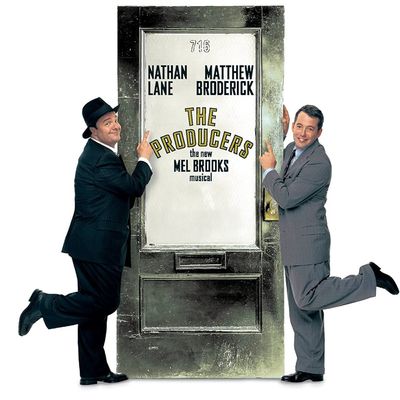
[26:00] Michael Kostroff: Not only because of the fame of the source material, which of course was this legendary film and the creative team, but also with two mega stars in Nathan Lane and Matthew Broderick.
[26:13] Julie Garnyè: And because you've played Max, what are your feelings about what these two did for the show?
[26:21] Michael Kostroff: You know, it was important to have two guys of their caliber because they were really reinventing it.
[26:26] Julie Garnyè: I mean, they really expanded the plot, took it in all kinds of wonderful new places, which you had to do for a musical, you know, to make a musical.
[26:35] Michael Kostroff: Not to mention Katie Huffman, by the way, who is, I think, a very underrated performer. She's an extraordinary triple threat. Extraordinary.
[26:44] Julie Garnyè: And Comic Chops, I mean, I've worked with her. She's insanely good. And I think she has not really gotten her due.
[26:51] Michael Kostroff: But it was very important that it wasn't somebody trying to do an impersonation of the two film guys. And they really brought their own stamp to it.
[27:01] Julie Garnyè: Also Roger Bart, my God. You know, Gary Beach. All of those guys. Gary Beach, my God.
[27:08] Michael Kostroff: So it made a new template for what that show is, you know, for what that story is.
[27:14] Julie Garnyè: And I, you know, I'm of the steal from the best camp. And I stole everything I could, not only from Nathan Lane, but from Lou Stalin, who was my Max Bialystock.
[27:24] Michael Kostroff: I stole everything. In fact, I just want to brag about Lou Stalin. He's just, I adore him.
[27:30] Julie Garnyè: He would pull me aside backstage. He'd say, you know what I figured out on this scene? You don't have to do this. You could just let them drive it.
[27:38] Michael Kostroff: Like he was telling me how to pace myself through the performance. He was telling me how to land certain jokes. He goes, I just figured this out.
[27:44] Julie Garnyè: And he just like really took care of me as his understudy.
[27:47] Michael Kostroff: That's beautiful. Once again, like the mentorship of that.
[27:50] Julie Garnyè: Yes. I will say that nothing prepares you for going on for the first time as Max Bialystock, because it's three hours on stage.
[27:58] Michael Kostroff: You're almost never off stage. It's singing, dancing, yelling, screaming, flipping out.
[28:03] Julie Garnyè: It's so much information, so many words, so many steps, so much choreography.
[28:08] Michael Kostroff: And, you know, nothing prepares you for it, except the terror that says you cannot fail.
[28:14] Julie Garnyè: There's no room for failure because people are paying a bunch of money to come see this thing and it's not going down on my watch.
[28:21] Michael Kostroff: The producers, needless to say, becomes a mammoth hit.
[28:26] Julie Garnyè: Thanks to Julie being there the night that the Times was there. That's why.
[28:31] Michael Kostroff: Thank you, Julie, for really bringing the electricity to that performance.
[28:35] Julie Garnyè: My pleasure. It's my duty for the theater.
[28:38] Michael Kostroff: Absolutely. Absolutely. It famously wins more Tony Awards than any musical in theater history.
[28:44] Julie Garnyè: And I got to tell you, it's never going to be broken.
[28:48] Michael Kostroff: It was held by Hello, Dolly! speaking of Jerry Herman for many, many, many, many years.
[28:52] Julie Garnyè: And then the producers won 12 Tony Awards.
[28:55] Michael Kostroff: And like if Hamilton couldn't break it, like nobody is going to break that record.
[28:59] Julie Garnyè: Mel Brooks very famously pissed off everybody at the Tony Awards by accepting one of the Tonys and saying like, I'll see you later.
[29:07] Michael Kostroff: Because he knew that he was going to be winning more later in the night.
[29:12] Michael Kostroff: He does not suffer from low self-esteem, and I don't think 12 Tonys changed that. But it's comedy. What do you want? The show runs for over 2,500 performances, and Nathan Lane and Matthew Broderick came back. They broke the box office record for most tickets sold at the beginning of the run, and then they came back into the run kind of later on and broke the record again by coming back into the show. So, like, the star power of this musical, but it certainly has succeeded without them. I've seen so many productions of this. Okay, I know of a production that tried to be less Mel Brooks, like they wanted to play the comedy in a different way. Do you think you can do this show without just fully embracing the Mel Brooks of it all?
[30:02] Julie Garnyè: No, it's, you know, if you try to make it politically correct, you kill it. I mean, in fact, they tried to change one word when we went out of town on the road. There's a joke when, you know, there's a long buildup, but Max is talking about his mentor. He quotes him in Yiddish. He goes, I don't know what he was saying, but he was saying, I think what he was saying, when you're down and out, that's when you have to stand up on your own two feet and shout, who do you have to fuck to get a break in this town? Well, they were nervous that people would be offended by that one thing and the producers. That's the thing you're going to be okay about? They changed the Yiddish word for fuck, which is shtup, and the review came out, and they said, oh, what, you think we're too sensitive for the word fuck? And it went right back in.
[30:43] Michael Kostroff: Wow, that's interesting. It's the wrong show to do if you're trying to avoid offense. It's just the wrong show, because it's got racial stereotypes, sexual stereotypes. It's got something for everybody to be offended by.
[31:04] Julie Garnyè: Well, and I was even thinking about how I can get a little sensitive about the keep a gay number, just like when I'm in my feelings and thinking about things. But then I listened to it, like I said, I was going through the cast album, and I was listening to it, and I'll be darned if it didn't completely win me over when they're like, life is better when it's a little bit gay. I'm like, yes, it is. You were right. Even if you weren't making fun of this, and you were taking it literally, I would be a part of this wholeheartedly.
[31:34] Michael Kostroff: Yeah, and I want to just unpack that for a moment, because that number does not make fun of gay people. It makes fun of a director who thinks that he should apply gayness to every story, including Oedipus, including Shakespeare's classics. It's about how bad that director is. The comedy comes from that. Those folks are plenty out, which is kind of unusual for the time. I don't believe that number makes fun of gay people in any way. I went on a few times as Roger Debris, and I always said, it's very, very funny that he's really, really femmy. It's also funny that he thinks he's a visionary that can only do the play if he's inspired by it. That's part of what's funny. He's terrible. He's just untalented. So I think that's what it's really funny about that number.
[32:23] Michael Kostroff: We just did a Shrek episode, and we were talking about why it's okay to make fun of Farquaad because he's short, but it's not okay to make fun of the other fairy tale creatures for being quote-unquote freaks. And it's the delusion of it all. The delusion is what helps us realize the ridiculousness of it, and there's nobody more delusional than the amazing Roger Debris.
[32:47] Julie Garnyè: Yeah, I only went on twice as Roger. We had a wonderful Roger cover, Kevin Ligon. He's brilliant. I never thought I was going to go on, which was fine with me. I love playing Max. And then Kevin was injured. I had given my notice, and then Kevin got injured, and Gary Beef put it for two days off. The stage manager's like, guess what? You're Roger.
[33:05] Michael Kostroff: Oh my gosh, terrifying.
[33:07] Julie Garnyè: I got to be Roger Debris at the Pantages Theater in LA.
[33:11] Michael Kostroff: Oh my gosh, were you corseted? I must know.
[33:16] Julie Garnyè: No, no.
[33:19] Michael Kostroff: That dress has so much boning, I wasn't sure if there was a corset underneath. First of all, okay, so the dress cost like $10,000. They said, do you want us to build you your own? I'm like, no, god no. So I wore Leroy Reams' dress, which fit perfectly. But it is built in such a way that it holds you up and it doesn't weigh you down. It's kind of an amazing work of engineering. Anyway, I'm sure your listeners don't care about how the dress was built, but you know—
[33:45] Julie Garnyè: Are you kidding me? This is literally called a musical theater podcast, my friend.
[33:50] Michael Kostroff: The costumer came up to me. He said, I know that you're nervous about going on for the first time, but here's what you cannot forget. Land and swoop. You got to land and swoop that dress behind you or you're going to trip. He's like, you cannot forget this. You make a cross, you land, swoop that motherfucker behind you because you're going to fall if you don't. I'm telling you, I landed and swooped for all I was worth.
[34:14] Julie Garnyè: You're like, you want to see some landing and swooping, I'll give it to you. Watch the landing and swooping. Watch it.
[34:22] Michael Kostroff: That's fantastic. All right. A tradition here on the show is that we go through the show, and talk through beats, and give people a feeling of the story in case they haven't seen it, so that they get excited to do so. It's almost nearly impossible to do this with comedies that are farcical and complex. I don't know if we will go through B by B like we usually do. However, I would love to just give a brief outline of the show, and whenever anybody has a moment of a favorite line or favorite song, by all means, I want to hear it. The show begins on an opening night of Max Bialystock's latest show, Will It Flop or Will It Go? The musical is Funny Boy. It's a musical about Hamlet. Of course, all of the audience comes out of the theater, and they announce that it's the worst show in town. Then we meet Max Bialystock. How would you describe this dude?
[35:23] Julie Garnyè: Max is a former success, I suppose. He's a down-on-his-luck producer. He doesn't know what's gone wrong, but he really thought that Funny Boy was going to be a hit, and now people hate him, and they want to destroy him. Now, what I love about the producers is that every character that we, every main character, every lead character that we come in contact with, actually, no, I'm going to change that. Every character that we come in contact with has an amazing song to introduce themselves.
[35:51] Michael Kostroff: Of the lead roles, yes.
[35:57] Julie Garnyè: Yeah, but even these side characters, Kevin gets a great introduction, but every character has their own I Want song. Usually, we get one I Want song, and we have so many in this show. We get to see the inner worlds of all of these zany, zany people. The first one, of course, being Max Bialystock, and I can think of no better introduction to this man than The King of Broadway, which shows him to be crass, and hilarious, and deceitful, and delusional, and also charming in a weird way. Desperate, let's not forget desperate.
[36:36] Michael Kostroff: Yeah, desperation, probably. He reeks of desperation. But if this show only had The King of Broadway and all of the one-liners in it, I would say it's a comedic masterpiece, right? What are some of them? You heard of Theater in the Round? You're looking at the man who invented theater in the square. Nobody had a good seat. I love that line.
[37:03] Julie Garnyè: That line is so fantastic. Of the first producer ever to do summer stock in the winter. I love that whole thing. And it's kind of reminiscent of the music man, because all of these ensemble members are around him going like, trouble, trouble, trouble, trouble. It's just such a great introduction to him. Of course, the very famous line, because you talked about it. Who do you have to fuck to get a break in this town?
[37:35] Michael Kostroff: Exactly. Which, of course, once I found out that Harvey Weinstein was a producer on the show originally, it rings a little different now. But also a hilarious line. So Max Bialystock, his show Funny Boy is failing. He has to have an accountant come in and look at the books. It turns out he raised, what, like $100,000 for a play that only cost $98,000. And so this accountant, Leo Bloom, who comes in is like, uh-oh, discrepancy. And Max is like, please, please, please just bury it. I can't. I'm desperate. Just move the decimal points around. You can do it. You can do it. Move a few decimal points around.
[38:20] Julie Garnyè: And Leo Bloom, who is, what, he's a nervous fellow.
[38:29] Michael Kostroff: Riddled with anxiety.
[38:29] Julie Garnyè: Yeah, I think he has real social problems. He doesn't like to leave the house kind of social problems. They're really bad.
[38:34] Michael Kostroff: Oh, sure. He has kind of a blankie, a lioness blankie situation as a full grown. But he does agree. And then just off the cuff says, you know, it's kind of funny in the right circumstances, you could make more money with a flop than you could a hit. And now all of a sudden, ding, light bulb moment for Max Bialystock, like literally light bulb moment. Who is better at making a flop than I am? Let's turn this deal into my biggest money maker yet. In order to do that, a bunch of crazy events happen, which is they have to find the worst musical. What's kind of the list?
[39:15] Julie Garnyè: Find the worst musical that's ever written. Step two, find the worst director in town. Step three, I raised $2 million. One for me, one for you. There's a lot of little old ladies in this town. Step four, hire the worst actors on New York and open on Broadway. And before you can say number five, we close on Broadway, take our $2 million and go to Rio.
[39:33] Michael Kostroff: Oh, my gosh. Way to be off book, Michael Kostroff. That's impressive.
[39:36] Julie Garnyè: Well, I learned it as an understudy. So I still am in a state of constant terror that'll have to go on. So, you know, when I do a production of The Producers, this is an eerie thing. It doesn't matter how many years have gone by. When I go into rehearsals for The Producers, I press play and I go. Like, I know all the words. It's scary. I'm like, surely I've forgotten these. And it's like, nope, comes right out. It's right back in there.
[40:04] Michael Kostroff: Takes like one rehearsal and I'm off book again. But that's because I learned it as an understudy. By the way, I was Kevin the costume designer.
[40:07] Julie Garnyè: Were you?
[40:07] Michael Kostroff: Yes. Yes. I negotiated for that when I saw that purple suit. It was the one thing that I said to my agents. I said, I want that to be part of that track. They built me a wig that went from my brown hair into a blonde swirl in the front. It was the best thing ever. And that purple suit. And I decided to base Kevin on Snagglepuss, the gayest cartoon character ever.
[40:30] Julie Garnyè: Snagglepuss does not get enough love from our queer community.
[40:35] Michael Kostroff: No, no. And he only had a few words. But to this day, when people call me, they go, hello.
[40:44] Julie Garnyè: Hello.
[40:52] Michael Kostroff: It means glitz.
[40:54] Julie Garnyè: Clever, glitz even.
[40:54] Michael Kostroff: That's fantastic. All right. So they find their musical in a beautiful piece of literature called Springtime for Hitler, a gay romp.
[41:03] Julie Garnyè: Wait, I don't even, I can't even pronounce the German.
[41:08] Michael Kostroff: A gay romp with Eva and Adolf at Buchesgarten.
[41:17] Julie Garnyè: Yeah, something like that. That wasn't my line.
[41:17] Michael Kostroff: And it's written by an ex-Nazi by the name of Franz Lipkin. And so they have to go to this dude to like get him to...
[41:23] Julie Garnyè: And I think not an ex-Nazi. I think he's still waiting for it to come back, honestly. He's sort of hanging out until he gets the next call.
[41:29] Michael Kostroff: That's a fair point.
[41:36] Julie Garnyè: Yeah, he's not an ex-Nazi. He's on guard. He's definitely nostalgic for the good old days.
[41:42] Michael Kostroff: And they have to prove to him that, you know, they are going to do good old Adolf Elizabeth Hitler justice with their telling of the story. And they do. And there are dancing pigeons. And it's just absolutely insane.
[41:56] Julie Garnyè: Well, I mean, I love that, you know, in musical theater logic, Franz Lipkin says, the way that you must prove to me that you are loyal to the Fuhrer is by singing and dancing the Fuhrer's favorite tune, the Guten Tag Hop Clop. I mean, naturally.
[42:11] Michael Kostroff: That's how you set up a number.
[42:15] Julie Garnyè: Yeah.
[42:15] Michael Kostroff: So then they have to find the worst director. And of course, the worst director is Roger Debris, and we already talked about him. What a glorious delusional man with a dress that has to...
[42:26] Julie Garnyè: You plant and swoop. You have to swoop.
[42:29] Michael Kostroff: I do want to say, though, because I know that I'm talking to the people who literally wrote the handbook, working with strange personalities as directors is something that happens in the theater. And certainly, the more experienced you are as an actor, the more, shall we say, preferences you make about your working style and who you want to work with. So you're bound to come across a director either that you disagree with or you feel like doesn't know what they're doing. What is the right course of action for an actor at this point? What did you guys find or write about?
[43:04] Michael Kostroff: Well, you know, if Julie would stop dominating the conversation, I'm going to say...
[43:08] Julie Garnyè: Michael, will you please shut up?
[43:14] Michael Kostroff: I want to weigh in on this first because I think, you know, one of the mistakes that I've made over my career is thinking that I get to evaluate the director. I mean, privately, I can evaluate the director. But one of the hard and very unpleasant lessons is, whether the director is good or bad, he or she still wears the director hat. So they don't have to pass your test of talent, regardless of your opinion of their talent. It is always in our best interest to still respect them, follow their direction, and don't go around doing what we...
[44:37] Julie Garnyè: I want to add to that, which is something that I didn't really understand or know until recent years, which is that this idea of self-care, there's a lot of different levels of what people think self-care is. Some people actually abuse that moniker and, "Oh, I need a beach day. That's self-care." That's not self-care. That's not doing your job. That's you not showing up to work. However, again, if you're finding that someone on the creative team is being abusive, you have every right to ask a stage manager to be present for any conversations that you have with that human being. And that is in the book. That is something that's happened to both Michael and I at various stages in our career. And it is really hard to go to management and say, "Hey, I don't feel comfortable with this person and I don't feel safe to do my work and to do it in a way that I can feel free to be who I want to be and express what I want to express."
You know, a lot of writing of the book has been Julie and I sitting down and going, "Okay, how do we really, really define this rule in a way that it encapsulates all the possible scenarios?" It was interesting that along the way, I'll never forget, there was something that I wanted to put in the book that I'm like, "This is a policy." And Julie's like, "No, that's your policy. That's not a universal policy. I don't accept comps. I don't believe in it. I want to always pay for theater." That's very nice, but we couldn't put in a book. You can't force everyone.
[46:22] Michael Kostroff: Right.
[46:23] Julie Garnyè: I couldn't put in a book that's like, "This is a stage actor's handbook. Don't take comps." We did not put, "Don't take comps." What we put in there was, "If you take comps, you must show up." That is common courtesy. That is common decency. That is it. That's Bible. That is it. You have to thank them.
[46:40] Michael Kostroff: The experience.
[46:41] Julie Garnyè: Yeah. That is common. Everyone should be doing that. If you get a comp to a show, you show up.
[46:44] Michael Kostroff: Yeah.
[46:45] Julie Garnyè: Wow, wow, wow.
[46:46] Michael Kostroff: One of my favorite things in a musical, I love it in the Full Monty as well, is a great bad audition montage.
[46:54] Julie Garnyè: Oh, so good.
[46:58] Michael Kostroff: Nothing like it to just showcase the character actors in the ensemble. But they end up hiring in the role of Adolf Hitler, none other than Franz Liebkin himself, right?
[47:09] Julie Garnyè: Correct.
[47:10] Michael Kostroff: Which brings yet another iconic line, "That's our Hitler!" I love that scene though. I love that audition scene. They made for me a bad mismatched toupee and a suit that was just a little too small. And every time I came out, our Max would just lose it. He'd be sitting at the audition table. My goal was always to see if I could get a laugh on my first four words. I'd step forward and they'd say, "Jack Lapidus, what are you going to sing?" And I would go, "I would like to sing." The highest tenory voice I could.
[47:46] Julie Garnyè: And if that got a laugh, it was a good audience.
[47:56] Michael Kostroff: I'm sure.
[47:57] Julie Garnyè: Oh my gosh. Just the highest pitch I could reach.
[48:04] Michael Kostroff: We also have to mention that in the process of all of this work, it was necessary for Bialystok and Blum to find themselves a secretary to help around the office. And they find it in the gorgeous, long-legged Ulla, who is Swedish and has an incredible song, "If You Got It, Flaunt It."
[48:29] Julie Garnyè: What else do we say about Ulla? She's sexually very liberated and it definitely gets her the job. I think in our 1960s fantasy of Swedish women was that they just wanted to have a sauna and have sex. If you went to Sweden, you were just getting laid all the time. There was just no inhibitions about it. And so I think she embodies that.
[48:56] Michael Kostroff: Isn't that interesting?
[48:57] Julie Garnyè: That was like a 60s thing.
[48:58] Michael Kostroff: It was very much a 60s thing. The Swedish women are like...
[49:01] Julie Garnyè: Down to clown.
[49:02] Michael Kostroff: What is it? DTF.
[49:03] Julie Garnyè: Down to clown. All the time.
[49:06] Michael Kostroff: Wow.
[49:07] Julie Garnyè: But you know, and again, it's one of those things that now people get very prickly about like, "Oh my God." Well, I mean, like name one female character in The Producers where the comedy or character doesn't revolve around whether or not they're sexually desirable.
[49:19] Michael Kostroff: The lighting designer.
[49:24] Julie Garnyè: What is her name? But like that's where the comedy comes from is that she's technically not, right?
[49:30] Michael Kostroff: Shirley.
[49:32] Julie Garnyè: What's her name?
[49:33] Michael Kostroff: Markowitz.
[49:34] Julie Garnyè: Shirley Markowitz. It's a great laugh line, but I mean, it's clear. The act ends with maybe one of the most brilliantly blocked musical numbers of all time, which is this little old lady land in which Susan Stroman created choreography for a chorus line of old ladies with their walkers. It's absolutely extraordinary. But the reason that they do it is because that is the fountain of money for Max. He likes to get with these horny old ladies and promise them companionship in exchange for them investing in his musical, right? And so he has just fully invaded little old lady land to make sure that he's raising this $2 million. And that's how the first act ends. It's a great ending of the first act. Everybody's happy. Everything's going to be fine. You've got the script. You've got the director. You've got the worst director, the worst script, the worst actors. It's all good.
[50:32] Julie Garnyè: Right.
[50:33] Michael Kostroff: And they're, you know, or they got the money. They don't have the actors yet. And everybody's happy and singing all at the same time. It's like the Tonight finale in West Side Story in Act One.
[50:44] Julie Garnyè: It's exactly the quintet, you know?
[50:46] Michael Kostroff: No, absolutely. Even the Book of Mormon has a first act finale like this. I mean, it's quintessential musical theater for sure. Everybody's on stage. Act Two begins with like fully mounting the show, yeah?
[50:58] Julie Garnyè: It starts with that face.
[51:01] Michael Kostroff: Oh, of course, that great song, which isn't the story that Mel Brooks, like when he talked to Susan Stroman, like performed that face, like in her living room for her, jumping up.
[51:15] Julie Garnyè: Yes, I believe he jumped on the couch and did the whole thing.
[51:20] Michael Kostroff: But yeah, so Act Two begins, Ula has redecorated the office, painted it all white.
[51:25] Julie Garnyè: Oh, yes, of course.
[51:27] Michael Kostroff: Very Ikea.
[51:28] Julie Garnyè: Very Ikea, and Max goes off to put the money in the bank, and they have a big love duet. And then when Max comes back, she says, you're late. You have to go to auditions.
[51:40] Michael Kostroff: Yeah, so off they go to the auditions. Like we said, Franz is the one who gets the role of Adolf, but unfortunately, he literally breaks his leg during a song, you never say good luck on opening night. You say break a leg.
[51:55] Julie Garnyè: You say break a leg, and then Franz unfortunately literally breaks his leg. So it's like, who on earth is going to step in for the main role of Adolf? Never fear, it's someone even better than Franz.
[52:07] Michael Kostroff: It's Roger Debris.
[52:08] Julie Garnyè: Roger Debris. And Springtime for Hitler, which is also from the movie, is in just even more full, glorious form here in the stage version.
[52:20] Michael Kostroff: You got a goose-stepping chorus, boys.
[52:24] Julie Garnyè: Is it goose-step? Did I make that up?
[52:26] Michael Kostroff: No, you did not make that up. That's a German favorite.
[52:30] Julie Garnyè: The very threatening goose-step.
[52:33] Michael Kostroff: And then Roger, of course, performs Adolf as though he's Judy Garland, and I always love when he sits down at the front of the stage like he's Judy at the palace with the microphone. It's just absolutely brilliant.
[52:44] Julie Garnyè: Which I got to do at the Pantages Theater my only two times playing Roger Debris. Our Nazi tenor, oh my god, hilarious, hilarious person, among other things, did a great Judy Garland, so at intermission I went, sing it to me, sing it to me. He gave me some Judy Garland tips. I said, look, I'm never going to sound like Judy Garland, but I want them to at least know what I'm trying to do.
[53:06] Michael Kostroff: Catch the reference.
[53:07] Julie Garnyè: So he's like, well, by now she would have been a couple of drinks in. She had the whole thing planned out, and he said, it's a straight tone at a fry, you know.
[53:18] Michael Kostroff: I was just a paper hanger.
[53:21] Julie Garnyè: But my favorite advice was, he said, drop a couple of the consonants out, because she's drunk. Just so it's a little floral. So there's a line where she says, got a phone call from the Reichstag, told me I was Führer. So I went, got a phone call from the Reichstag, told me I was Führer. Like just no consonants.
[53:41] Michael Kostroff: Told me.
[53:42] Julie Garnyè: But I mean, you know, it was like, it's all about tone. It's not about intelligibility.
[53:48] Michael Kostroff: Well, also, it was never, like, in my whole career, one of the things I did not have on my list was sitting on the edge of the Pantheon just doing an impersonation of Judy Garland.
[53:58] Julie Garnyè: But there you have it.
[53:59] Michael Kostroff: But there you have it. That's showbiz, kid.
[54:01] Julie Garnyè: Got a phone call from the Reichstag, told me I was Führer.
[54:05] Michael Kostroff: That's fantastic.
[54:06] Julie Garnyè: Now, one of my favorite moments in, like, film history is that cut to the audience, just like gobsmacked with their mouths open. It's absolutely brilliant. And the fun thing about the stage version of The Producers is that we are them. We are actually creating those faces while we're taking it in.
[54:28] Michael Kostroff: Can I just interject one other tribute to Susan Stroman? So in the original movie, 60s, I guess, there's a shot everyone remembers, which is the Busby Berkeley overhead shot of the people marching in the shape of a swastika. And they were like, well, you know, it's on stage, we'll never be able to do that overhead shot. And Susan Stroman said, au contraire. So she brought in a tilted mirror. It's like, it's one of the most, it's like you watch that and you're like, oh my God, they did it.
[54:56] Julie Garnyè: A tilted mirror.
[54:59] Michael Kostroff: And we did it with, there weren't enough people. So we did it with puppets. Like, each of the middle people was a real person marching and they had these.
[55:06] Julie Garnyè: I don't think I knew that.
[55:07] Michael Kostroff: Well, that's why we have these interviews, Jeff. It was a lot of training to learn to work those puppets. The puppets were, they were on rolling racks and they had a device where when I pulled my right hand, both of the right feet kicked up and when I pulled my left hand, both of the left. So we were all goose stepping together at the same time. And it looked like, it looked like a chorus full of, full of, well, of course we're all looking at the mirror, so we don't even notice the rolling racks.
[55:37] Julie Garnyè: We fooled you.
[55:38] Michael Kostroff: But I mean, that's a pretty ingenious invention and good for her for saying, nope, we have to have that. We have to have that.
[55:44] Julie Garnyè: Yeah.
[55:45] Michael Kostroff: Oh, that's so great. I love this song that comes after the opening night, which is where did we go right?
[55:50] Julie Garnyè: Yeah.
[55:51] Michael Kostroff: Because they thought that they were going to have a flop. You know, they did everything they possibly could. And yet now it's this huge smash, which means they have $2 million to pay off. Like how long would, how long would Springtime for Hitler have to run in order to recoup that much money? You know, at the, at this point, I mean, in those days, you know, when tickets were still $12, you know, right, right, exactly.
[56:18] Julie Garnyè: Franz comes bursting into like their office with a gun because he has realized, you know, that Adolf is now a laughingstock.
[56:24] Michael Kostroff: I love, I love when, when Max is like, doesn't he say something like, we're in too deep.
[56:38] Julie Garnyè: So all, all along the journey, Leo says, you know, I think we're getting into deep because too deep. This is nothing. I'll tell you when we're in too deep and they're dancing on a rooftop with a Nazi and they're in this room full of, you know, very, very gay men. And at every point he goes, I think we're getting into too deep. This is nothing. Now they're about to get shot. And they're like, you remember when I told you, I tell you when we're in too deep, we're in too deep.
[57:00] Michael Kostroff: You're reminding me of all these great moments.
[57:06] Julie Garnyè: I forgot.
[57:07] Michael Kostroff: I love that. My gosh. There's just so many great lines.
[57:10] Julie Garnyè: Yeah. Who, who gets arrested?
[57:13] Michael Kostroff: Everybody except Leo.
[57:14] Julie Garnyè: Right.
[57:15] Michael Kostroff: I mean, and why, why does Leo escape? I'm trying to remember.
[57:18] Julie Garnyè: Because he, he hides in a, in a coat on a hanger.
[57:22] Michael Kostroff: Of course.
[57:23] Julie Garnyè: They let, they let Roger and, uh, and Carmen Ghia go.
[57:32] Michael Kostroff: Right.
[57:33] Julie Garnyè: All right. You two can go. Because, and in the midst of this is another great line where they're running around getting shot at. And he says, Darling Creek, back in the closet.
[57:41] Michael Kostroff: Okay.
[57:42] Julie Garnyè: They both go in the closet again. And uh, and then Franz decides he's going to make a run for it. So he hobbles off.
[57:50] Michael Kostroff: There's one good leg and you hear a horrible, horrible crash.
[57:53] Julie Garnyè: That's right.
[57:54] Michael Kostroff: And he breaks the other one.
[57:55] Julie Garnyè: And the cop goes, what happened?
[57:56] Michael Kostroff: He broke his other leg.
[57:57] Julie Garnyè: Um, so, um, yeah, so then they, they, they arrest Max who tries to pass himself off as Irish, which is really fun because all the, all the cops are Irish.
[58:08] Michael Kostroff: Are Irish.
[58:09] Julie Garnyè: So that's not going to fly.
[58:10] Michael Kostroff: Yeah.
[58:11] Julie Garnyè: And so now, so now Max is in prison. Leo has, has like, you know, gone to Rio with Ula.
[58:18] Michael Kostroff: And when Max finds out about that, Max has his, you know, Rose's turn breakdown.
[58:23] Michael Kostroff: And recounts the entire show. It's really, it's really amazing. I've done it hundreds of times. It's an insane number. Since Max is in jail awaiting trial, when trial finally comes, which every good musical has a courtroom scene, right? Yes, yes. Max is in his trial and then Leo shows up just in the nick of time to be a character witness and say that, you know, this is the only man he's ever been able to call a friend. And he sings this really charming song called "Till Him." The judge decides to, you know, because they're such good friends, to not separate the partners, but to send them both to Sing Sing prison for five years. Right. And in true, you know, producer fashion, once they get to Sing Sing, they write a musical called "Prisoners of Love." They ultimately take that to Broadway, correct?
[59:19] Julie Garnyè: Yes. I want to give you one little tidbit because I know you like these.
[59:22] Michael Kostroff: Yeah. In the prison scene, when they're rehearsing "Prisoners of Love," one guy was assigned the task of singing flat. They needed one actor to sing flat so that the actors would, so that the prisoners would sound like not professional singers, you know? So one guy had to sing just under pitch and one other guy had to go in the wrong direction in the choreography. It was very fun.
[59:46] Julie Garnyè: Yeah, yeah, yeah. Oh my gosh. Yeah. So yeah. So "Prisoners of Love," as you were saying, goes to Broadway. And it stars Roger and Ula. Like Ula has now become a Broadway star.
[59:56] Michael Kostroff: Yes. Leo and Max become the kings of Broadway. And I love that they walk off into the sunset like they're Rose and Albert in "Bye Bye Birdie." You know what I mean? Like every little beat has some sort of echo in our musical theater canon.
[1:00:14] Julie Garnyè: Oh yeah. I mean, it's iconic. And I just love that so much. There's so many little tributes all through the show. There's a little bit of a tribute to "Old Man River" and there's a little bit of a tribute to the opening of "Chorus Line" when the audition scene starts and you hear...
[1:00:32] Michael Kostroff: But one of the sweet things is that all through the show, Leo has been trying to put on the hat that Max wears. He wants a hat like that. And he says, no, you can't have that until you're a producer. And at the end of the show, he hands him a hat. It's kind of sweet.
[1:00:46] Julie Garnyè: Yeah. Now you can tell that once again, like we've said that Mel Brooks loves musicals, but we have to shout out Thomas Meehan, who is also credited as being a co-book writer and wrote "Annie"? You know, "Hairspray"? Like this guy understands the structure of musical comedy and you got to shout him out. Did you ever meet him or do you know what he brought to the process at all?
[1:01:12] Michael Kostroff: I got to meet him. I don't really know who did what. It's hard to tell. I just always say that "Annie" is one of the most underrated. It's so well constructed.
[1:01:27] Julie Garnyè: Yeah. It's a classic American musical and people think, oh, it's a kid's show, but it's a classic American musical. Julie, do you like it? Do you like "Annie"?
[1:01:35] Julie Garnyè: I love "Annie." I really love "Annie." And the book is so strong.
[1:01:40] Michael Kostroff: It's really good. And I mean, the songs, I mean, "NYC."
[1:01:43] Julie Garnyè: Charles Strauss, yeah.
[1:01:45] Michael Kostroff: Oh God. It's really underappreciated for its place on the canon. But anyway.
[1:01:51] Julie Garnyè: Michael, you had to have done like a child production of "Annie," right?
[1:01:55] Michael Kostroff: No.
[1:01:55] Julie Garnyè: What? This seems criminal to not have like little Julie Garnyè belting "Tomorrow" on the stage.
[1:02:01] Michael Kostroff: It's not too late. It's not too late.
[1:02:04] Julie Garnyè: Give her a wig. Give her a wig.
[1:02:06] Michael Kostroff: I put three.
[1:02:08] Julie Garnyè: Exactly. Still.
[1:02:10] Michael Kostroff: Well, thank you both so much for doing this with me. I've had such an amazing time. You know, I think that the jury is still out as to what the future of "The Producers" will hold, because comedy changes for sure. And sensibilities change. And I don't know if the comedy of Mel Brooks is going to maybe go away with the Boomer generation. I don't know. I don't know. But I want to know what you think. Do you think that "The Producers" has staying power as a musical? And also, going back to your book, is there anything that you see in the culture of theater that might be changing as well?
[1:02:51] Julie Garnyè: Yeah, okay. Well, I, you know, I always find I defer to Michael when it comes to comedy. He is, I think, a genius and a master at comedy and understands the structure of it in a way that a lot of people don't. So, but I feel like "The Producers," to answer the first part of your question, "The Producers" is such a classic form of comedy, that I think it's going to stand the test of time, is what I'm trying to say.
[1:03:25] Michael Kostroff: Yeah, what was the second part of your question?
[1:03:27] Julie Garnyè: About the culture.
[1:03:27] Michael Kostroff: Yeah, in terms of the culture of theater, I could because as comedy and preferences shift, do you, you know, from writing your book, do you see any parts of our theater culture shifting or changing or going somewhere else?
[1:03:40] Julie Garnyè: Oh, 100%. A lot of it's changing now. You know, some of it for the better, some of it not. And I think that's why we wrote the book, to kind of keep our really important traditions and protocols alive. And to remind people that this is where we come from. And this is, this is what keeps the chaos from happening. But yeah, things are changing. Things are, you know, it's harder to navigate. I think also, like, you know, one of the reasons why we bought the book is sometimes really difficult in this day and age to talk to people about things that they're doing. People use the word trigger a lot. And I think they overuse it, unfortunately. And I think a lot of people are also scared to tell people how things should be done, because they don't want to be misinterpreted in some way.
And so having the book, I think really helps with, you know, what actually like here, like, here's a guideline that I think is going to help everyone. So let's have this book in the dressing room, or let's have this book in the green room. And that way, it's not about, you know, you're doing something wrong, or this is not how we do things. It's more about like, here's a, here's a guide. Here's some mentorship.
[1:04:55] Michael Kostroff: I don't think "The Producers" is going to stand the test of time.
[1:05:03] Julie Garnyè: You don't?
[1:05:03] Michael Kostroff: No. I tend to be more along that lines too. I think we're losing a couple of things right now. One of them is nuance. Like the difference between an abusive director and a director you disagree with, as we discussed earlier. Language you're uncomfortable with, and language that's abusive. Something that harms you, something that bothers you. And I think we're really losing nuance. The nuance between a character who's a racist and a piece that's racist. And I also think we're losing the sense of time travel, which is part of what we do as actors. And right now we are so zeroed in on this exact time in history, where we've decided on a particular language and a set of rights and wrongs that is of the moment.
So I think, I think that it will become along with, "Funny Thing Happened on the Way to the Forum" and a lot of, "How to Succeed" and a lot of other people, because we take place in a time when the races and the genders were not being acknowledged fairly and kindly.
[1:06:08] Julie Garnyè: Well, let me ask you this.
[1:06:08] Michael Kostroff: That's a now. That's happening now, right? And especially now. But do you think down the line that, that might change? Like pendulum, the pendulum is swinging in a certain direction quite heavily at the moment, right? Which is great. That's what, that's what creates change. And we do need some change, right? But like you said, Michael, and I'm completely in agreement with you, there are some facets of theater where we, we do need to time travel. And so I feel like right now, the pendulum is swinging in a certain way where that cannot happen. People don't want it to happen. I think people are going to start to realize that what we do and how we say things and the scripts that are, that were written in the past are actually a gift. And I'm hoping that it does stand the test of time and it does swing back so that people can remember that this is the kind, this kind of comedy is smart. It's really smart.
[1:07:02] Michael Kostroff: I used to think it was frivolous to do comedy, but right after the election that installed the horrible Donald Trump as president, I was doing, and we were all heartbroken and devastated, and I was doing a farce. And the number of people who came up to the stage door in tears and thanked me, I went, this is a ministry. God help us if we stop laughing. Like laughing is actually important. It's not just frivolous. It's not just entertainment. It's actually good for your fucking health. And I feel like part of laughing is doing the unexpected, the forbidden, the thing that is, oh my God, I can't believe they said that. Oh my God, they're doing a musical about Hitler, whatever it is. And being able to have some laughter at our own expense as a species, because if we forget that we're goofy, God help us.
[1:07:54] Julie Garnyè: What I'm walking away from here is the necessity of nuance, right?
[1:07:58] Michael Kostroff: Yes, yes. A hundred percent.
[1:08:00] Julie Garnyè: Nuance should be no surprise to people who profess to be progressive.
[1:08:06] Michael Kostroff: Yes. Uh-huh.
[1:08:07] Julie Garnyè: Like I require that of myself as someone who wants to be progressive, right? I cannot forget the nuance of it all. And while I tend to think that the argument of equal opportunity offender is a little antiquated, especially because it's usually used to defend comedy that is written by straight white men.
[1:08:28] Michael Kostroff: Yes, yes, yes, yes.
[1:08:33] Julie Garnyè: Even though I tend to feel that way, I also have to remember that I am the person that's like, if you don't like gay marriage, then don't get gay married. So if you don't like this comedy, then don't go see it, you know?
[1:08:47] Michael Kostroff: Or see it anyway.
[1:08:52] Julie Garnyè: Or see it anyway. And go to a gay wedding.
[1:08:55] Michael Kostroff: But the point is, it's like to legislate or to force culture, society to behave in one specific way because of your set of ideals, regardless of where you stand on the political spectrum, it lacks nuance and ultimately isn't where-
[1:09:12] Julie Garnyè: It's not liberal.
[1:09:14] Michael Kostroff: Yeah. It's not progressive, that's for sure.
[1:09:17] Julie Garnyè: It's not, yeah.
[1:09:20] Jeffrey Scott Parsons: As always, if you have recommendations for shows you'd like us to cover on "A Musical Theatre Podcast," you can always email me at amusicalpodcasts@gmail.com. Don't forget to follow us on social media. We're on Instagram, we're on Twitter, we're on TikTok, though, to be honest. And I have been kind of saying that we are on TikTok. Yes, we are on TikTok, but it's my personal TikTok account, Jeffrey S. Parsons. However, you'll see the Musical Theatre Podcast photo because let's be honest, that's what my life is all about. The best way to support the podcast is always to give us a nice review and a great rating. So thank you for that in advance. And if you want to go even further, we have bonus exclusive episodes for you waiting on Patreon!
That you can subscribe to for only $1. We also have our TeePublic store full of wonderful theater nerd type designs that you can put on any number of items, our profits of which are given to Broadway Cares Equity Fights AIDS. More than anything, I'm so grateful you're part of this podcasting community where we can have these great conversations. I appreciate you so much.
[1:10:18] Jeffrey Scott Parsons: Hey, Julia, Michael, can you tell us how to follow you? And once again, how do we get your book?
[1:10:24] Julie Garnyè: Sure, I can do that. All of the information is on our website, thestageactorshandbook.com. There's actually a link, like a page that says where to buy, and it has direct links to everywhere you can buy it. We also like to encourage people to go to their local bookshop and have them order.
[1:10:42] Michael Kostroff: And we just want to support local bookstores.
[1:10:43] Julie Garnyè: It helps the store. Yeah, it helps the store if you have them order it. I love that.
[1:10:47] Julie Garnyè: Yep. So one of our goals is that we want this book to become a part of required reading for people's curricula, in particular, classes where they teach acting as a profession, because this is about professional comportment and what to expect. So it's really important to us that this gets worked into classes and syllabi of universities, high schools, that teach this kind of work. And so we have a wonderful educator page on our website, again, thestageactorshandbook.com forward slash educators with an S. And you can get an e-exam free copy of the book. The publisher will send it directly to you once they've confirmed your credentials, and you can peruse the book. Our publisher also does bulk discounts for educators, so you can contact them directly and get both discounts for books for your students. And we'd be happy to come to Hawaii to do a master class.
[1:11:51] Michael Kostroff: Yes, please. Can we please come to Maui to do a master class for you?
[1:11:55] Julie Garnyè: And then also our individual information, because Michael does teach incredible workshops, and I'm also a private voice teacher. So you can find all of those things, that information, on each of our websites. Which will be linked in our episode notes, but go ahead and tell them.
[1:12:11] Michael Kostroff: Mine's juliegarnye.com. Very easy. G-A-R-N-Y-E, juliegarnye.com. Mr. Kostroff?
[1:12:19] Michael Kostroff: michaelkostroff.com. Amazing. All right. Thank you both so much. I appreciate this. Congratulations on the book.
[1:12:26] Julie Garnyè: Thank you.
[1:12:29] Michael Kostroff: Oh my gosh. My pleasure. Everyone out there, thank you for listening. And oh, what should our tag be? Keep it gay. Hello, obviously.
© Broadway Podcast Network, All Rights Reserved