

More than likely this New Year's Eve won't see many wild parties, so we're giving you two! In 2000, two different composers were inspired by the same 1920s poem of excess and epiphany and gave birth to two different musicals that shared a title, characters, and theatre season... Read More
From the show: A Musical Theatre Podcast
Guests
About
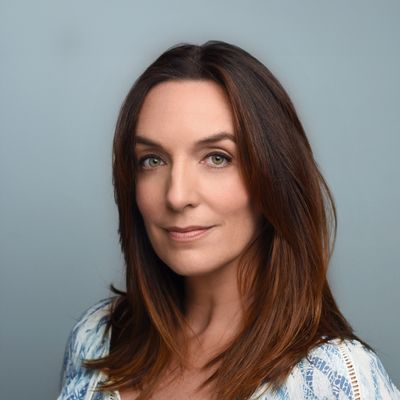
More than likely this New Year's Eve won't see many wild parties, so we're giving you two! In 2000, two different composers were inspired by the same 1920s poem of excess and epiphany and gave birth to two different musicals that shared a title, characters, and theatre season. Broadway star Julia Murney was the leading lady in Andrew Lippa's THE WILD PARTY and has since worked closely with Michael John LaChiusa, who coincidentally wrote his own THE WILD PARTY. She's the ideal guest for this very special episode, and we're honored to have her, so please enjoy responsibly.
Also, be sure to follow all things Julia on Instagram and Twitter.
Take one moment to rate and follow "A Musical Theatre Podcast" wherever you may be listening and share us with your friends!
Join us on Instagram, TikTok and X for more great content. For bonus episodes, subscribe to PATREON! for only $1 a month. And don't forget about our TeePublic Store, our proceeds from which we donate to Broadway Cares/Equity Fights AIDS.
Above all, thank you for being part of this wonderful podcasting community.
Transcript
This transcript was automatically generated and might contain errors.
[0:00] Jeffrey Scott Parsons: The year 2000 was important for many reasons. You had the new millennium. I graduated from high school, which was a very important thing. But more important than any of those, on February 24th, at a theater off-Broadway, a musical that was based on a 1928 poem written by Joseph Moncure March called The Wild Party opened. And then two months later, on Broadway, another musical based on a poem by Joseph Moncure March called The Wild Party also opened. You guys, it's unlike anything else that's really happened in musical theater history. We're talking about it today. And I have Queenie herself to talk to me about it. Hi, Julia.
[0:48] Julia Murney: Well, one of them.
[1:03] Jeffrey Scott Parsons: Welcome everybody to a musical theater podcast where we discuss the cultural and emotional impact of some of our favorite musicals in theater history. My name is Jeffrey Scott Parsons. You can call me Jeff. Like I said, we're covering The Wild Party today. And my guest is Drama Desk Award nominee for The Wild Party. Do you like that? I laugh because no one cares. I cared. Don't let me be clear. I totally care. Dreams are coming true, people. Dreams come true. Dreams come true. It's Julia Murney, everyone.
[1:44] Julia Murney: It's me. It's me. I've been nominated twice for Drama Desk.
[1:50] Jeffrey Scott Parsons: What was the other one for?
[1:51] Julia Murney: The other one was for a play many, many years later for best actress in a play, lead actress in a play, whatever it's called.
[1:58] Jeffrey Scott Parsons: Because you're what? Versatile.
[2:00] Julia Murney: That's it. For a play I did called Falling off Broadway.
[2:04] Jeffrey Scott Parsons: Oh, awesome.
[2:05] Julia Murney: And both times, I knew with 100% confidence that I would not win.
[2:11] Jeffrey Scott Parsons: That's actually really nice.
[2:12] Julia Murney: There was no pressure. Because for The Wild Party year, the nominees were, because the Drama Desks, for those of you who don't know about the Drama Desk, which would be all of you, the Drama Desks combine Off-Broadway and Broadway. There's no delineation. So the nominees for lead actress in a musical were all of the women who were nominated for a Tony and me.
[2:39] Jeffrey Scott Parsons: And it was the year of Aida.
[2:42] Julia Murney: You got freaking Heather Headley.
[2:44] Jeffrey Scott Parsons: And you knew it was Heather Headley down and around. And the year that I was nominated for Falling for Best Actress in a Play, I was up against, among others, Cicely Tyson in the Road to Bountiful.
[2:58] Julia Murney: You're like, give it to Cicely Tyson. We all want to hear her talk.
[3:04] Jeffrey Scott Parsons: 100%. So I very much felt like if I could actually go through life like this, I feel really good and really proud and flattered. But no one's going to really put me on the spot. And I'm not going to be disappointed. If all of those things could just be life, I would be totally down with that.
[3:24] Julia Murney: I love that. We need to look at life like we do the 2000 Drama Desk Awards.
[3:30] Jeffrey Scott Parsons: Which also, as a sidebar, the Drama Desks are sort of the, I guess you could call them like the Golden Globes, the way those are to the Oscars.
[3:40] Julia Murney: Absolutely.
[3:41] Jeffrey Scott Parsons: But for many years, including the year 2000, the ceremony was held in my high school.
[3:49] Julia Murney: In my literal, not the way the kids misuse that word, but literal and actual high school.
[3:56] Jeffrey Scott Parsons: Are you kidding me?
[3:58] Julia Murney: It's not like the Beverly Hills Ballroom.
[4:00] Jeffrey Scott Parsons: No. Well, now they do it at Town Hall is the latest place. That's where the later nomination occurred. But for Wow Party, I remember so clearly, I went with Tay and Adina. We took a car there together. And stepping out of the car in my dress that I had bought, and I was feeling saucy.
[4:22] Julia Murney: Of course.
[4:23] Jeffrey Scott Parsons: To step onto what I like to call the red bath mat, as opposed to the red carpet. And I'm sitting there and I'm like, should I go to my locker and see if my sandwich is still there? This is not the way you make this award show seem like the Golden Globes next to the Oscars.
[4:42] Julia Murney: Sure.
[4:42] Jeffrey Scott Parsons: You can't have it in a high school.
[4:44] Julia Murney: Was there ever a better metaphor for being a theater actor versus a TV film actor?
[4:51] Jeffrey Scott Parsons: Don't kid yourself. Don't kid yourself.
[4:54] Julia Murney: Oh, quick warning to everybody. The Wow Party is very sexual and very adult, I should just say. So if you are, you know, driving your kids around, maybe listen to our episode about Frozen.
[5:08] Jeffrey Scott Parsons: The Wow Party would definitely be R-rated if there were ratings on such things.
[5:13] Julia Murney: Which, can I tell you my Wow Party story?
[5:16] Jeffrey Scott Parsons: Yeah, please do.
[5:17] Julia Murney: Like I said, year 2000, I graduated high school. So I go with my mom and my grandma to New York, like the best present ever, to take little Jeffrey to go see as many Broadway shows as he wanted.
[5:30] Jeffrey Scott Parsons: Sweet.
[5:31] Julia Murney: I got tickets to go see the Lacusa Wild Party on Broadway, but I knew that my beautiful sweet mother from Willard, Utah was not going to like the Wild Party, even though I hadn't seen it. I just knew.
[5:46] Jeffrey Scott Parsons: What's your mom's name?
[5:47] Julia Murney: Carla.
[5:48] Jeffrey Scott Parsons: Carla. It's not for Carla.
[5:50] Julia Murney: It's not for Carla.
[5:51] Jeffrey Scott Parsons: And that's okay. Not every show is for everybody.
[5:53] Julia Murney: Absolutely. And I don't think that she would like be offended and walk out, but she just wouldn't enjoy it. And I wanted her to enjoy something. So I sent her to Miss Saigon around the corner.
[6:04] Jeffrey Scott Parsons: Sure.
[6:04] Julia Murney: Because she had never seen that. And she loved it. And I saw the Wild Party all by myself.
[6:09] Jeffrey Scott Parsons: So I go in...
[6:12] Julia Murney: So I'm like...
[6:12] Jeffrey Scott Parsons: That's an experience.
[6:13] Julia Murney: So I'm 18, never seen a rated R movie in my life. I walk into the Wild Party. I'm excited. I sit down. I knew of Michael John Lacusa because I had always seen the CD cover of Hello Again, which is also very scandalous. And so I was like, ooh, this guy, you know? So I sit down. A guy who I now recognize as a middle-aged gay man sits next to me. And he kind of looks at me like, are you supposed to be here?
[6:42] Jeffrey Scott Parsons: Do you have ID?
[6:43] Julia Murney: Right, exactly. And he's like, where are you from? And I said, Willard, Utah. And he's like, oh, wow. Well, this will be fun. This is the third time I've seen this show. I was like, oh, that's very cool. And he said, FYI, this show doesn't make any sense, but I love it. I was like, oh, interesting. Okay. So we get halfway through the show, and it's a 90 no, no intermission. So we get halfway through and he leans...
[7:09] Jeffrey Scott Parsons: A 90 no?
[7:10] Julia Murney: I've never heard this phrase before, Jeff. Did you make that up?
[7:14] Jeffrey Scott Parsons: No, this is a Sarah Kavner term used on the podcast, and we have since embraced it and spread it freely.
[7:19] Julia Murney: A 90 no. I like it. Okay, continue. Sorry. Halfway through.
[7:23] Jeffrey Scott Parsons: Halfway through the 90 no, he leans over and he's like, this is actually making perfect sense. I was drunk the other two times. And I was like, welcome to adulthood, seeing the wild party and experiencing a wild party right next to me all at the same time.
[7:38] Julia Murney: At that point, what was one of your favorite musicals? What was your go-to?
[7:43] Jeffrey Scott Parsons: I was a big, big Kander and Ebb fan.
[7:46] Julia Murney: Those are my boys.
[7:48] Jeffrey Scott Parsons: Yeah, yeah.
[7:48] Julia Murney: Those are my boys.
[7:50] Jeffrey Scott Parsons: I think because there was something about... Well, there is something about Kander and Ebb that always sounds super traditional. And then you go a little bit further.
[8:01] Julia Murney: Don't sleep on Kander and Ebb. That's right.
[8:02] Jeffrey Scott Parsons: Exactly.
[8:03] Julia Murney: That's right. And I think that that's actually how I feel a little bit in my life too, where I'm religious. I try to be a good person. I'm traditional. But also, how cool. Let's talk about this.
[8:15] Jeffrey Scott Parsons: So as little 18-year-old Jeff, did anyone ever call you Jeffy? Nah, probably.
[8:20] Julia Murney: Oh, yeah. No, my mom calls me Joffy. That's the big...
[8:24] Jeffrey Scott Parsons: Oh, adorable.
[8:26] Julia Murney: So what was your reaction to the 90 minutes of that show that you saw?
[8:34] Jeffrey Scott Parsons: It was the first time I was a little scared watching a musical, which I loved.
[8:39] Julia Murney: Was the first time you saw any kind of nudity in a musical?
[8:44] Jeffrey Scott Parsons: Yes. Yes.
[8:45] Julia Murney: Okay.
[8:46] Jeffrey Scott Parsons: It was. I saw Toni Collette's boobs.
[8:48] Julia Murney: There they were.
[8:49] Jeffrey Scott Parsons: And they were beautiful.
[8:50] Julia Murney: They tried to get me to show mine. I said no. And then when I went to see that one, within two minutes, she dropped her top. And I was like, oh my God, would we have moved to Broadway? Was I supposed to show my boobs? The answer is no. That's not why we didn't go to Broadway. But still.
[9:06] Julia Murney: Yeah. So it was the first time I had seen boobs. But it was scary. It felt very menacing to me. Also, it had this cathartic moment at the end that also made all of that okay. So I had a great time and was thrilled that I saw it. I still have the poster. It's one of the things I'm most proud about seeing. So that was the LaChiusa Wild Party on Broadway. You were the star of the Wild Party off-Broadway. This was like a huge break for you, right?
[9:36] Julia Murney: Oh, yes. Way huge.
[9:38] Jeffrey Scott Parsons: And the only thing that was as big a story as the fact that there were two wild parties happening at the same time was that there was this breakthrough new performance by Julia Murney. And I'm not saying that to blow smoke up your butt. But everyone walked away from that show being like, who is this amazing vocal creature who has appeared in musical theater? You sounded like nobody else. And that score demanded so much of you. So how was it balancing those two things? The fact that there was all of this hoopla about you and all of this hoopla about your quote unquote competition?
[10:16] Julia Murney: Well, I'll say this to start. Doing that show was, to this day, the highlight of my professional career in terms of the timing of it and the way it happened and all this sort of stuff. And part of the reason it's such a highlight is that I learned so many things all on one show, all on one show, because it was my first big thing in New York. It was me originating a role as opposed to replacing. I was the lead of the show. There were other leads, but I was the sort of focal point of the storytelling. I learned what it was like to be in something that was simultaneously the audience. It was like a rock concert. I remember one night at intermission, the rumors started going around backstage that Jennifer Holliday was there. One night that Midler was there. Jennifer Holliday had walked up to the box office and bought a single ticket.
[11:14] Jeffrey Scott Parsons: Wow.
[11:15] Julia Murney: I'm like, no one can tell me this information anymore. I can't know that the goddesses are watching. So we had those audiences, and then we had people walking out all the time. But Manhattan Theater Club's subscription base is older. And while probably liberal, if you interviewed them, you would probably find their liberal bent. This show, this source material, is raunchy. And some people dug it and some people did not. I think also with a subscriber base, you're also dealing with people who have a pair of tickets to every show of that theater season, which also kind of invites a strange mentality of, we're not liking this one, are we? Let's go.
[12:04] Jeffrey Scott Parsons: Yeah. I think people walk out easier somehow.
[12:10] Julia Murney: Interesting. I totally buy that.
[12:13] Jeffrey Scott Parsons: But the thing about Manhattan Theater Club is it's very small. To get out, you have to come down to in front of the stage, basically to exit, even if you're sneaking. So if you're on stage, you are 100% aware that these people are walking out. Now, you can assume sometimes if one person's walking, oh, they're running to the bathroom. If two people are walking in and they have their coats on and their bags, they're leaving your play. They're not interested in what you are serving on the plate.
[12:45] Julia Murney: Wow.
[12:46] Jeffrey Scott Parsons: Which is kind of devastating, but kind of funny if you can twist it the right way. So there it is.
[12:55] Julia Murney: Wow.
[12:56] Jeffrey Scott Parsons: But I personally, I never thought of Wild Party, of our Wild Party, of the Lippa Wild Party as a failure in any way. The one step in the whole process that it didn't make that was the plan from the beginning was it did not move to Broadway. And so to me, I got to do it.
[13:18] Julia Murney: I got to help create it with the creators around me. I had lunch this very day with two women from that show, Jen Cody and Megan Sokora.
[13:28] Jeffrey Scott Parsons: Oh my gosh, how fun.
[13:30] Julia Murney: Yep, I just put that together. And yesterday, I had a lovely walk with Brian Darcy James's wife. So these are people that became part of my life, and I got to do the show. So I don't see where the lose is. I was practical enough in my Capricorn way that I understood why we did not move to Broadway. It's not as simple as, we just love this show. We're going to Broadway. It's millions of dollars. It's a business. And it was a decision that had to be made immediately upon our opening, within four days, in order to get built and into a theater by Tony time cut off for nominations. So the decision got made very, very quickly.
[14:26] And the two big elements that really knocked it out were the New York Times hated us. Now, the New York Times also hated the other one. But no one knew what the New York Times was going to say about the other one, because I don't even think they had begun previews yet. I'm almost positive about that. Because there was no super spy report or anything about what the other one was like. So the two elements really were, we didn't have the Times, and there was another one. And it was confusing. It was simply confusing. There were flowers delivered to the other theater that were meant for someone in our show. No, there was one night, our spot operator came down from his perch at intermission. And a woman walked up to him and went, excuse me, when does Eartha Kitt come to the party? And he was like, hmm, you're gonna be waiting quite a while, ma'am, because she's not in this one. It's confusing.
[15:29] And the party line was just sort of, there's room for everyone. And as you know, or anyone who happens to be listening, who is familiar even just with the recordings, they are wildly different shows that happen to have the same characters in them, and the same opening lines, because they come from the poem. And Andrew and Michael John are both supremely different writers. They have different styles, they have different tastes. So we're talking about Andrew Lippa, who wrote the new songs for Your Good Man, Charlie Brown, if you listened to our Charlie Brown episode a few weeks ago. He started as a middle school teacher, which I didn't know, and then became a musical director of pianist in New York, collaborated with other people on writing songs, he would write the music, they would write the lyrics.
[16:21] And then he finds the poem, the Wild Party poem, it immediately speaks to him. And in this interview, I read of his, he said that he was almost considering it to be like his cats, you know, like Andrew Lloyd Webber just wrote music to the T.S. Eliot poem of cats. And so he wasn't going to look for a lyricist, because he's like, I'm just going to use the poem as is. Then you realize that no one's speaking from first person in the poem. And he realized that we needed to hear what these people were thinking and feeling. So he started writing lyrics. Long story short, too late. Andrew Lippa writes music.
[17:01] Jeffrey Scott Parsons: Thank you for saying that. I always say that. But I wouldn't say to you, because I just met you, and it's rude.
[17:08] Julia Murney: Andrew Lippa writes music and lyrics for the Wild Party. It's the first time he does it, and has done it ever since. The irony of the Drama Desk that year was that our show was the most nominated show at the Drama Desk. We were already closed.
[17:22] Jeffrey Scott Parsons: Wow.
[17:23] Julia Murney: But of any Broadway show, of any off-Broadway show, we were the most nominated. I don't know how many we had, like 10 or 11 or something. And the only one of all of those nominations, he won for music. And honestly, sitting there, that was the only one I cared about. I just wanted Andrew to win something. It's a really interesting time in this period of musical theater, especially New York musical theater. You talked about how The Times hated both versions. And I think that one of the things that both of these musicals have in common is the fact that they were doing something that was a little different, that was pushing the art form somewhere it hadn't necessarily been.
[18:04] In The Lippa Wild Party, you guys had very much like a pop rock score that was pushing the limits in terms of what a musical theater score sounded like. And in The LaChiusa Wild Party, you had a very bizarre structure, a very short show that was unusual for the Broadway scene. One thing I remember Michael John LaChiusa saying is that if you are trying to do something different, you have to have the critics on your side because you're not going to get mass appeal simply because it's different. You need-
[18:41] Julia Murney: Because it doesn't go down smooth. It's not vanilla ice cream. It's like ice cream that has marshmallows and maybe some caramel in it. And some people are like, I don't want that in my ice cream. And some people go, ooh, that sounds tasty. And nobody tries more different than Michael John.
[19:02] Jeffrey Scott Parsons: For sure.
[19:05] Julia Murney: He always shoots for his own moon. He doesn't shoot for the moon that everybody else is shooting for.
[19:12] Jeffrey Scott Parsons: That's beautifully said. His own moon that has its own sense of gravity.
[19:17] Julia Murney: Yeah. And I think a lot of people like to say that his music particularly is not super accessible. I think his lyrics are astounding. Longtime listeners of the podcast, if you listen to our episode about See What I Want to See, you have already met Michael John LaChiusa, who is an incredibly talented writer. Now, I've spent the last week or so reading both scripts and listening to the scores, which I didn't have to listen to too hard because they're in my brain. But I wanted to think of a concise statement as to the dramaturgical differences of these two musicals. And this is what I came up with.
[20:02] The Lippa Wild Party seems like the Olympics of musical theater. It's pushing you to the limits in terms of vocal ability, emotion, even athleticism. There's so much choreography and dancing in the show. And then you've got the LaChiusa Wild Party, which feels to me like an amazing New Yorker article.
[20:30] Jeffrey Scott Parsons: Nicely done. Nicely done.
[20:33] Julia Murney: Both are amazing to watch. And both are very different and serve almost different purposes at times. To have two musicals come from the same source material and go to those two different places, I think says a lot about the power of being an artist, about intention. And I love looking at it for that very reason. The subjectiveness of art. The whole reason they found the poem to begin with, that Andrew and Michael John found the poem, is because it had a re-release with these illustrations by a man called Art Spiegelman, and these gorgeous illustrations. And it was on the new and noteworthy shelf at the Barnes & Noble. This poem from 1928, right?
[21:19] Jeffrey Scott Parsons: Yeah. Nobody knew that poem. No.
[21:22] Julia Murney: It wasn't, oh my God, we studied that poem in high school. No.
[21:26] Jeffrey Scott Parsons: No, there's no way. In fact, looking back at it now, because I had never read it, I sat down, I completely understand what both of them saw in it.
[21:35] Julia Murney: I think those illustrations help as well. That is the truth, too.
[21:39] Jeffrey Scott Parsons: They're stunning. And they're very evocative. And they're sexy. And that's definitely something both of the productions ended up with. Like a sexy sharpness.
[21:46] Julia Murney: For sure. Go Art Spiegelman.
[21:54] Julia Murney: And if you see the illustrations as well, you can't unsee them.
[21:58] Jeffrey Scott Parsons: You're absolutely right. Because it is one of those pieces of literature where you kind of get the feeling that you're reading porn, and yet you're not, right? And it's like literature.
[22:09] Julia Murney: I don't know, I gotta read that poem again. I don't know.
[22:12] Julia Murney: Number one, that's 100% the reason you don't study in school. In fact, when it came out in 1928, it was immediately banned. It wasn't until 1931, I believe, when it finally started being read. And then, like you said, it gets re-released in the 90s, like 95. At that point, it's turned into public domain. And I think that that is the other ding, ding, ding that we haven't talked about yet. Because most...
[22:40] Jeffrey Scott Parsons: It is the ding, ding, ding.
[22:42] Julia Murney: Yeah.
[22:43] Julia Murney: This situation would not have existed without that ding, ding, ding.
[22:47] Jeffrey Scott Parsons: Right, exactly. So many of the musicals nowadays are based on a film. That producing entity had to secure the rights to that film in order to make a musical of it. However, with The Wild Party, when a poem like that is public domain, anybody can do anything with it. And it doesn't matter if someone else is looking into it either. It also means that you don't have to pay anything for the rights. And so it's not as expensive.
[23:13] Julia Murney: Yeah. I mean, it's sort of like all of these weird elements just lined up and made it be what it was, which was a strange, strange journey in terms of having two of them. Now, a hallmark of this show is that we go through the actual story. We go through the storytelling from a cultural and emotional standpoint. And since we're talking about two musicals, I would love if we could real quick go through the story of The Lippa and then briefly talk about how The Lacusa differs. Is that okay with you?
[23:48] Jeffrey Scott Parsons: Sure.
[23:49] Julia Murney: Okay. As you alluded to at the beginning, both Wild Parties begin with a song called Queenie Was a Blonde, which is the opening line of the poem. You don't realize until you go to the poem how much is actually just word for word taken from the poetry. It's incredible. It really was kind of calling out to be musicalized. But in this opening part, we meet Queenie. Talk to me about her because I think she's one of the most fascinating characters we have in musical theater.
[24:18] Julia Murney: So, in the show, she's basically a vaudeville dancer of indeterminate age. She's not a child by a stretch. I mean, the opening line is, Queenie was a blonde and her age stood still. And she danced twice a day in vaudeville. Her boyfriend is Burrs the Clown. He's the big, famous vaudeville clown that everybody loves. Now, there was a time in one of the readings, as the show was being created, where you saw them meet. You saw Queenie as a younger girl with her parents who treated her horribly, which is not that surprising. And having the opportunity for me to get to do that, even though that got cut in my brain, I was like, well, that's the story, though.
[25:12] Julia Murney: It's still there. Nobody else knew what that history was because nobody else who was in that reading was in the show, but I was. So, Queenie and Burrs live together in this apartment and in a city that is not ever quite, it's definitely a city. It could be New York, but it could be Chicago. It could be wherever. And they have a very dysfunctional relationship, I think you could say at best, that is definitely physical, that is definitely drug and drink addled. But when we meet them in the Lippa production, they're sort of at a bit of a breaking point because they're both performers, perhaps. They have these highs, and then you come off stage, and you don't know how to replicate the high. And that's why a lot of people get into drink and drugs and add in that we're talking about the end of the 1920s, right before the stock market crash.
So, obviously, no one knew the stock market crash was coming, but there is this undercurrent, this underbelly, this rumbling of the subway as it's going up, and everything's about to absolutely go off the rails. And that's what happens. And they decide to throw a party and invite all their friends and all their friends come to their apartment. And you meet all of these different...
[26:37] Julia Murney: Like there's a pair of producers and a boxer, a pugilist, and his girlfriend. So all their friends come to the party and they wait for Queenie's sort of best girl, if you will, who is this woman, Kate, who arrives with her new boyfriend that she's just picked up. And he's this mysterious man called Mr. Black. Kate played by the famous Idina Menzel. And nowadays we think of her as this belting introvert because of Wicked and Frozen. But there was a time when Idina Menzel was the party girl. Nobody played party girl like Idina Menzel. And I love that part of her career. It's just so interesting that there are these different chapters of her career. And this is squarely in that party girl phase.
Right. She was definitely in that Maureen, the Maureen-Kate phase. Exactly. And by the way, Burrs is played by Brian Darcy James. And I play Queenie. And what a cast, my gosh. Idina played Kate, and she brings to the party her new boyfriend, who was actually her boyfriend at the time, Taye Diggs. Not a bad looking guy. Nope, nope. And he smells real nice, too. I'm going to tell you. And as these things happen in musicals, Black sees Queenie and he sees her in a way that Burrs doesn't. Kate doesn't. I remind you, everyone in this show is horrible. They're horrible people. Everybody is screwed up in one degree or another. But Queenie also sees Black as a way to really tick Burrs off. And so she spends the evening flirting with Mr. Black.
Kate just basically wants to score some drugs off of whoever is going to give it to her. She doesn't really seem to care. While Burrs is getting drunker and more high. Everyone at the party, it just devolves and devolves. And there's dancing. It all takes place in one apartment in this one night. There are some moments of quiet where there's just Queenie and Black having a conversation. But the entire cast was behind us on a section of the stage, doing what we call the silent movie, where basically they could do anything they wanted. It had to be completely silent. Physically, they could do anything they want. It had to be completely silent, and it had to be in complete slow motion.
[29:15] Jeffrey Scott Parsons: Really? The entire time?
[29:17] Julia Murney: No, just this was during...
[29:19] Jeffrey Scott Parsons: Oh, during those quiet moments. My bad.
[29:21] Julia Murney: Yeah. During the end of Act One, what are those songs? Shoot. Queenie sings... What do I sing? Maybe It's Better This Way. Maybe I Like It This Way. Right. So Queenie sings that, and then Burrs sings What Is It About Her. And during that whole sequence, the whole rest of the cast, nobody leaves the stage the whole show. We're not a... What is it called? Not 90 and done. What's it called?
[29:42] Jeffrey Scott Parsons: Yeah. A 90 no?
[29:43] Julia Murney: Yeah. We're a traditional two-act situation. But with the exception of intermission, nobody leaves stage. Everyone essentially passes out, including Burrs, including Kate. Meanwhile, this is not a large apartment, but of course, it's a musical, so whatever. In the other room, Queenie and Black have consummated this relationship. It's not a relationship, but this moment. And Burrs wakes up from his reverie in a completely silent moment, and suddenly doesn't know where Queenie is and wants to know where she is. He threads through the apartment of all of these bodies lying everywhere because everyone's passed out, and goes into the bedroom, finds them together, pulls a gun on them. There is a very exciting trio that is sung, where he's just... It's sort of like Burrs doesn't care who he kills.
He just wants to shoot somebody. It could be himself. He, at one point, puts the gun to his own head. It could be him. It could be Queenie. It could be Burrs. He just wants to hurt somebody. There's a big fight that ensues. All three of us are in on it, and the gun goes off. And in the staging, in ours, you actually, for a second, don't know who got shot. And then you realize that it's Burrs, and he falls over dead. Queenie makes, for the first time, perhaps, in her life, a selfless decision, and makes Black leave. Because she's like, if they catch you... The Black man just murdered a man in his own home. And she makes him leave. And then she has an epiphany, even with this man that she did love, dead at her feet. She's got to get out of the whole scene. And she picks up her shoes and her coat, and she walks out the door, and that's the end of the play.
[31:26] Jeffrey Scott Parsons: Wow. Just so you know, I usually have to do that on this show, and I know that it is not easy. And you did that beautifully.
[31:34] Julia Murney: Well, especially for something I haven't... I mean, I've left stuff out, but I guess it's supposed to be concise, right?
[31:38] Jeffrey Scott Parsons: Yeah. No, I was completely engrossed.
[31:40] Julia Murney: No, I laughed, I cried, better than cats. Now, a couple things that I want to talk about. In the Lipa version, one of the main themes that pops out to me is relationships. And in particular, this relationship between Burrs and Queenie is highly volatile, downright abusive, right? Let's call a thing a thing. And there are so few musicals that really explore spousal abuse in this way that's not in like a carousel type way. And the hard thing about being in an abusive relationship is that you don't always feel like a victim in the abusive relationship. So then how would you recognize it as one?
[32:24] Julia Murney: Absolutely. I think with Queenie and Burrs, there is something that they're each getting out of the relationship. And from the get-go, we know that it's sex. They're both incredibly adventurous when it comes to that part of their lives. And the sex has always been really great to keep her from thinking of herself as being in a dangerous situation. And like I said, no one would know this, but in that one pass-through that we did where you met her with her family, her father abused her. I'm sure. I'm sure. Once you know that as an actor, you're like, got it. Yeah. That's why-
[33:00] Jeffrey Scott Parsons: The conditioning happened long ago.
[33:02] Julia Murney: And when they met, Burrs was the star. Queenie was in the chorus. Burrs is the star.
[33:07] Jeffrey Scott Parsons: Wow.
[33:08] Julia Murney: It's not like she's the hidden star that the impresario has to- she's okay. Right. She throws a great party, and she's like all this stuff. So the two of them live in this world of, like I said before, just heightened, heightened, heightened. In a theater, everyone wants to be near them, and wants to talk to them, and wants to buy the drinks after the show, and all that kind of stuff. Then in real life, what do you do when you go home? And we're talking about a time period where prohibition was the thing, which may even like push the addictions further.
[34:43] Jeffrey Scott Parsons: Oh, certainly.
[34:46] Julia Murney: I watched this PBS documentary all about prohibition. It was like one of those really long six-hour things.
[34:54] Jeffrey Scott Parsons: Oh, I love those. I love them.
[34:56] Julia Murney: Fantastic. What I didn't realize is that alcoholism in early America was a huge problem. There was a reason for prohibition going into effect. We had just gone through the Industrial Revolution. People were being treated like machines, not humans, and everybody turned to drink, which honestly was really bad for relationships, and a lot of women were abused because of it. Religious women were some of the people on the front lines trying to make prohibition happen because they were tired of being beaten. P.S. I played one of them in a musical by Michael John LaChiusa. I'd like to bring it all full circle for you right now.
[35:37] Jeffrey Scott Parsons: Full freaking circle.
[35:38] Julia Murney: What was that? You're welcome. It's called Queen of the Mist. There is a woman, a real woman who lived, called Carrie Nation. Her signature was that she would walk into bars with an axe and start chopping up the physical bar. Not the people, just the physical bar. What a boss. Carrie Nation. And you played her?
[35:56] Julia Murney: I did. She's a musical Queen of the Mist by Michael John LaChiusa, which frankly, if anyone is looking for the gateway for Michael John in terms of accessibility, I think that is a great one.
[36:15] Jeffrey Scott Parsons: Really?
[36:16] Julia Murney: It's a glorious show about courage and life and regret.
[36:22] Jeffrey Scott Parsons: Wow. I love that.
[36:23] Julia Murney: That feels inspired and synchronistic. Because of all of that, this time period is actually very dark. It's very wild, like the poem and the musical itself. And yet, whenever we talk about the Roaring Twenties, it's always Thoroughly Modern Millie. It's Gentlemen Prefer Blondes. We have so few representations of this kind of dark underbelly of the society and what was going on, except for the wild parties, which I think is a great thing.
[36:40] Jeffrey Scott Parsons: And you were like, well, you can't touch those.
[36:43] Julia Murney: Those are real good.
[36:46] Jeffrey Scott Parsons: Gems.
[36:47] Julia Murney: Gold, for sure. That being said, I feel like every song is kind of a showstopper in this. And how did you do it? Like, how do you sing all of those songs back to back? You've also done Elphaba, which, you know, you have a gajillion songs to sing at the top of your range. But was it exhausting or not?
[36:48] Jeffrey Scott Parsons: That's interesting.
[36:49] Julia Murney: Yes. The other thing that I want to point out is that in both musicals, there is quite possibly no bigger showstopper than Lesbian Love Story, which is written for one of the guests of the party and performed by hilarious Alex Corey. And I will tell you a fun fact about that song. When we did the very first reading in which I did not even play Queenie, but Alex and I were the only two people who were in the show from that reading to the actual production. And the three things that remained all the way through were... Queenie was a blonde? A different character sang it, but that melody and that lyric from the poem was there. Poor Child, The Quartet, and Lesbian Love Story. Oh my God. Those are the three that were there from the drop.
[37:08] Julia Murney: Sure. Yes, I think I had the advantage of age because I was younger. I had nothing to prove because I had no track record. So I also had nothing to lose. Fair enough. And the biggest advantage was that it was written on me over a four-year period. And so there was nothing in there that I hadn't either explicitly or implicitly agreed upon that felt right in my body and my throat. It didn't mean I wasn't tired. It didn't mean... But it just felt so natural in my mouth. You know, so much of what we do in theater is recreate roles that have been done on other... The majority of what people do in theater.
[37:56] Jeffrey Scott Parsons: Yeah, yeah.
[37:57] Julia Murney: And when I replaced in Wicked, that's what I had to do. And that was much harder. Much harder for me. Because it was written right in the meat of where Dee sings and how Dee sings. And I don't sing like Dee.
[38:12] Jeffrey Scott Parsons: Adina, sorry.
[38:14] Julia Murney: Because you're a friend. Well, I also didn't want you to get confused because there's another girl who played Elphaba called Dee Rossioli. So, you know, I just wanted to be clear.
[38:24] Jeffrey Scott Parsons: Who's amazing.
[38:26] Julia Murney: There's also a difference between Queenie, the character of Queenie. She sort of hums all the way through. And every once in a while, she has these spikes and these drops. And then she goes back to humming, like trying to be the hostess in a weird way. Elphaba is like, she's kind of all over the place. She's just screaming at monkeys and screaming at Fiyero. It doesn't know. And it's so awkward in her own skin until she figures out how to hold herself down. Sometimes it's that energy that was actually more exhausting. And the screaming. It was the screaming at the monkeys and the Fiyeros and the etc. I didn't have to scream like that in Wild Party. I sang much more in Wild Party and was much less tired, to my recollection.
[39:08] Jeffrey Scott Parsons: That's really interesting. Thank you for sharing that.
[39:11] Julia Murney: Yeah. Okay. So now, in terms of the La Chiusa Wild Party, basically the same story. We have some different guests coming out of the woodwork.
[39:22] Jeffrey Scott Parsons: Right.
[39:22] Julia Murney: All the same guests are at each party. I remember this part very clearly because of Eartha Kitt. In the Lipa, Dolores is sort of introduced and then is just kind of in the background. And in the La Chiusa, Dolores is Eartha Kitt. So she's clearly not in the background.
[40:25] Julia Murney: The main quartet in The Wild Party is Queenie, Burrs, Black, and Dolores.
[40:41] Julia Murney: Dolores, who is played by Arthur Kaye, is an actress slash prostitute. You're not really sure which should be labeled first because they're very intertwined. She almost becomes this guardian angel for Queenie because she's been everywhere, she's seen everything, she knows everything. She's like, look, if you want to end up dead, you stay in this relationship. Otherwise, get the hell out of this thing. Her wisdom is always what keeps on popping up. The way LaChiusa organized his show, it's less traditional in terms of it being a book musical. It's crafted like an old vaudeville show because Burrs and Queenie both came from vaudeville. They had these cards that would announce the different sections of the show.
It was a little Brechtian in terms of, hey, here's the introduction. Now the guests are arriving and someone would come out and change the sign like they would in vaudeville. While Lippa really looks at relationships, LaChiusa really looks at identity and what masks do we wear to keep us safe or keep us stuck or keep us somewhere. We're told in the beginning, Queenie was a blonde and her age stood still. She danced twice a day in vaudeville. She had gray eyes, lips like coals of glow, and her face was a tinted mask of snow. I think that that is what really got Michael John into exploring that whole idea of masks. Queenie is hiding behind this perfect mask of snow. Queenie, the character, was originally written for Vanessa Williams.
When you think of that, when you think of Vanessa Williams hiding underneath a layer of white and then you pair that with Burrs, who was played by Mandy Patinkin, who was an Al Jolson type clown in that version. He is wearing blackface. You've got Queenie hiding behind white, Burrs hiding behind black. What are they hiding from and when is it all going to come crashing down? Then both of these musicals coming out in the year 2000, what happens the year after? I never thought about that. 9-11. In many ways, the bubble bursts. All of a sudden, white, safe America is kind of thrown into this state of terror that a lot of minorities in this country have experienced on a daily basis. I think even now in this year, we've seen that bubble burst again in terms of social justice.
What are these masks that we're hiding behind? When do you wake up? Hopefully, you're not waiting for somebody to get shot because that was kind of the rock bottom in both of these situations that leads Queenie to either walk out of the apartment or take off her mask, which is what happens in the LaChiusa version.
[43:50] Julia Murney: That was my question. I don't remember what happens at the end. Burrs is shot dead, right?
[43:55] Julia Murney: Burrs is shot. Kind of similarly, there's a struggle. He dies. The party's still going. All of a sudden, we see Queenie in a nondescript location. She's repeating her phrase, Queenie was a blonde and her age stood still, but now she is wrecked. She takes out a handkerchief and just wipes her face off for the first time. What I love about Toni is that she can do the most acting per second of any individual. Have you seen Hereditary, Julia?
[44:32] Julia Murney: I cannot see Hereditary. Mama can't handle the scaries.
[44:37] Jeff Parsons: Please don't then.
[44:37] Julia Murney: I can't. Because it destroyed me. I can neither recommend it nor not recommend it because it's so effective and yet I'll never watch it again.
[44:51] Jeff Parsons: I didn't even attempt to do it.
[44:54] Julia Murney: She is over the top this entire show. We've seen 90 minutes of Toni Collette quite masterfully doing all of this facade acting. Then at the very end, we see her finally take off that mask and she says, this is what it is to live in light. It's one of the first times that you hear this really beautiful major chord on light and the whole stage lit up in a different way than it had been in shadows. In this story is this epiphany of this woman. I think what we can walk away with is, what's it going to take for us to wake up either individually or as a society?
[45:35] Jeff Parsons: That's very interesting.
[45:37] Julia Murney: I really appreciate these pieces. They're both incredibly unusual, very individual, and I think would have a hard time getting produced now. I'm really grateful they were. I know I can only speak, and I can't speak for Andrew, but I can only speak for my side of things. He and I did BroadwayCon together.
[46:02] Julia Murney: Oh, no, it was still this calendar year. Oh, my God. This calendar year is just a nightmare. Anyway, in January, pre-pandy, when I caught what I called the BroadwayCon flu because I got really sick and I have been checked for antibodies because I wondered at one point. I was like, did I have some mild COVID, but I didn't have the antibodies, so I guess it was just the BroadwayCon flu.
[46:30] Jeff Parsons: Just the BroadwayCon flu. Go figure.
[46:30] Julia Murney: One of the things that I did at BroadwayCon this year was with Andrew and it was him and myself and I'm going to God save me. I have to learn to pronounce her name properly because she's extraordinary and because she's a human being. Joaquina Calacango, I'm saying her last name wrong. I know I am. She was in Slave Play, but she was a few years ago, they did The Wild Party at Encores in the summertime at City Center.
[47:00] Jeff Parsons: With Sutton Foster, right?
[47:00] Julia Murney: Correct, and she played Kate. Joaquina played Kate. It was Joaquina, myself, and Andrew. He said at the symposium, he said, honestly, if there's anything I would do at this point, I would lean into how horrible they are because that's kind of part of what it is. It's like, do you see what happens? Do you see how ugly it all makes you when you have no empathy for other people? You have no care for what someone else does or what your actions do to someone else. That's what happens in The Wild Party. Everyone's hedonistic and there's nothing wrong with having a dang good time. There's nothing wrong with it, but it has to have degrees of humanity. It makes me, as an artist and a patron of the arts or whatever, it makes me want to support those people who are willing to go there with it because there's always going to be audiences for the other stuff.
[47:52] Jeff Parsons: Exactly, and it is tricky. Unfortunately, the direction that I think Broadway has become is that musicals have less and less of an opportunity to be something odd or different because everyone, even if they deny it till deep in their bones, they know everyone wants a Wicked, by which I mean everyone wants a show that gets everybody country homes and stability financially and bleep, bleep, blop. Not everything belongs on Broadway. Not by a long shot does everything belong on Broadway for all kinds of different reasons, but it doesn't mean it shouldn't be seen because, again, going back to what we were talking about way earlier about these two men, Andrew and Michael John, both finding this poem and seeing a musical in it, even though they were two very different musicals, it's subjective taste.
[48:51] Julia Murney: I cannot tell you the number of times that someone has said, wait, which one were you in? And I'll say, oh, the Lippa one. And they'll either say, oh, or they'll go, oh, you were in the good one. And either way, I'm like, it's fine. It doesn't matter. They're all right. Everyone is correct. Think of the practice that we get by being theatergoers of developing subjective opinions based on the art that we consume and being ecstatic for others that may be different than ours. Think of the ramifications of that type of practice. I think it's the key to everything. I remember very clearly, I remember being at a dinner party when that Sound of Music that had been on TV, the live Sound of Music, had just been on.
And this discussion began, and I did not know the majority of the people at this dinner party, talking about, they just got nasty. And they were just talking about, they're like, it was just so bad. And so-and-so can't act. And this and went blah, blah, blah. And they just kept going on. And I finally said, may I say something? Actually, they did not do The Sound of Music to you. They just did The Sound of Music. So it seems strange that you're so angry about it. If you don't like it, if you're like, oh, on my bag, and I didn't think so-and-so could act. Anyway, this Beef Wellington is delicious. Because it became this firestorm of how nasty can we be about this? And I said, all I know is that my friends who have kids sat in front of that TV with their children, and the children were completely wrapped. They don't care. Nobody cares. They see these people who sound great, and they're doing musical. And that's what it's for. They're not doing it to someone. They're doing it for someone.
[50:39] Jeff Parsons: Wow.
[50:40] Julia Murney: And that's the difference.
[50:42] Jeff Parsons: Standing O. I love that.
[50:45] Julia Murney: Yeah.
[50:46] Jeff Parsons: Congratulations on being part of Theatre History. And I'm so happy that we got to be introduced to you in a big, splashy way through this show. I remember on like a Divas CD, like compilation disc, there was like Liza Minnelli, Barbara Streisand, Julia Murney singing Raise the Roof.
[51:09] Julia Murney: One of these things is not like the other.
[51:14] Jeff Parsons: Thank you again for doing this with me.
[51:17] Julia Murney: It was my pleasure. And it was my pleasure to be a part of that weirdo history.
[51:25] Jeff Parsons: As always, if you have recommendations for shows you'd like us to cover on A Musical Theatre Podcast, you can always email me at amusicalpodcasts at gmail.com. Don't forget to rate, subscribe, and review our podcast because it helps it be seen and discovered by many people just like you. And don't forget to follow us on Instagram and Twitter at amusicalpodcasts, where we create more great content. Hey, Miss Julia Murney, how do we follow you and everything you're up to?
[51:52] Julia Murney: You could follow me on Instagram. I am Pepamama, P-E-P-A-M-A-M-A, because my dog's name is Pepper.
[52:00] Jeff Parsons: Oh, Pepper.
[52:02] Julia Murney: And on Twitter, I'm at Julia Murney. You could follow me on the street, I suppose, if you saw me, but that would be weird.
[52:08] Jeff Parsons: Wow, that would be creepy, but appreciated. Maybe just social distance.
[52:13] Julia Murney: Just say hi. It's all good. I do want to say Queen of the Mist, which is the Michael John show I was talking about, has a beautiful cast album. I highly recommend that. And in terms of someone looking for something else that Lippa has written, I would definitely take a look at I Am Harvey Milk, which is very beautiful, that he wrote as a commission for, I believe it was the San Francisco Gay Men's Chorus. It's a gorgeous piece. So I just wanted to give those two men some shout outs.
[52:39] Jeff Parsons: That's amazing. Thank you for doing that. Thank you for bringing everyone's awareness to those titles. Thanks for listening, everybody.
[52:43] Julia Murney: And no matter which Wild Party you like, you're all correct. Everybody is correct.
© Broadway Podcast Network, All Rights Reserved