

WEST SIDE STORY might be the most important collaboration in all of musical theatre. There's no way to overstate its layers of storytelling and emotional relevance, but in this episode, we sure try... Read More
From the show: A Musical Theatre Podcast
Featured Shows
About
WEST SIDE STORY might be the most important collaboration in all of musical theatre. There's no way to overstate its layers of storytelling and emotional relevance, but in this episode, we sure try. Join Jeff and director/choreographer Hector Guerrero as they celebrate the original artists behind this iconic show, explore what it means to be a "Shark" in a "Jet" world, and laugh at what happens at the end of the play when the gun doesn't work.
To learn more about Hector, visit his website www.hectorguerrerodance.com and follow him on Instagram and Twitter
Take one moment to rate and follow "A Musical Theatre Podcast" wherever you may be listening and share us with your friends!
Join us on Instagram, TikTok and X for more great content. For bonus episodes, subscribe to PATREON! for only $1 a month. And don't forget about our TeePublic Store, our proceeds from which we donate to Broadway Cares/Equity Fights AIDS.
Above all, thank you for being part of this wonderful podcasting community.
Transcript
This transcript was automatically generated and might contain errors.
[0:00] Hector Guerrero: There is this entry into musical theater mythology. Everybody claims that they saw the production or were in the production or know someone who was in the production where Chino came out to shoot Maria. No wait, my bad. Where Chino came out to shoot Tony and he didn't have the gun or the gun didn't go off and so he decided to throw his shoe and yell, poison boot! I wanted to know if you've ever lived through a poison boot type experience. Actually, I didn't, but I heard of a production. It was actually one of the European productions, the tour, where Maria gets the gun after and she's how many bullets are left in this Chino, enough for you and you, that whole section. And so she was pointing the gun and saying, and you and you, the gun accidentally went off on the jet girl.
And the jet girl just like looked at her and said, bitch, and then just fell to the floor. So that's one of my favorite stories. I wish I was able to witness that. But yeah, that was like one of them. That one jet girl who probably never had like didn't have a line in the entire show. Yeah. Clarice. Was the unexpected victim. That just reminded me, I totally forgot about this. And I'm not going to use names to protect the innocent, but there, there is a story and there were creatives in the room during this rehearsal, like original creative team in the room. Sure. Tony ran to Maria, Tony gets shot. Tony falls to the ground and the poor guy farted loudly. Oh no. Like everybody was trying to finish the scene with like those church giggles. And I mean, like, honestly, the only thing that would have made that whole story better is if Stephen Sondheim yelled poison poot.
[2:17] Jeffrey Scott Parsons: Welcome everybody to A Musical Theatre Podcast where we discuss the cultural and emotional impact of some of our favorite musicals in theatre history. My name is Jeffrey Scott Parsons. You can call me Jeff. Today, we are talking about the legendary West Side Story. One of my top three favorite musicals with a friend and incredibly talented human being. It's Hector Guerrero. Hey, buddy.
[2:35] Hector Guerrero: Hi, Hector. I'm so grateful you're here.
[2:40] Jeffrey Scott Parsons: Yeah, thank you for having me. I love your podcast.
[2:46] Hector Guerrero: Oh, thank you. One of my favorite things to do is to drive and listen to your podcast, especially in LA when there's so much traffic, it just like makes the time fly. So thank you for that.
[2:50] Jeffrey Scott Parsons: Oh, that's so sweet. Tune out. Tune out with Jeff. I'm going to introduce you more fully in a little bit, but I want to like jump right in because I think it will actually help your introduction. If that makes sense. West Side Story, which what do you even say about it? It's like one of the all time greats.
[3:09] Hector Guerrero: Amen. Classic, iconic.
[3:17] Jeffrey Scott Parsons: For sure. It is, I believe, next to Oklahoma, the musical that pushed musical theater further than any other musical. Yeah, especially when it came to the choreography.
[3:25] Hector Guerrero: Yes, that choreography tells a story. As we saw when Jerome Robbins Broadway was on Broadway, there was a whole section of the West Side Story choreography. And you can look at all that choreography and you understood the story perfectly. That was so for those who don't know, that was a show late 80s, early 90s. It was known as one of the most expensive shows because they recreated all of Jerome Robbins hits. Who's this famous director, choreographer, whose shirt I am wearing today. I'm wearing my friend Jerry shirt now available on our T Public store.
[4:01] Jeffrey Scott Parsons: So they recreated all of his famous dances, but in doing so had to recreate all of the sets. So it was like 10 musicals in one. Sets, costumes, and even the rehearsal process, it was months. God, was it six months of rehearsal? I can't even remember. And the cast, 50 cast members too. I mean, it was like crazy. Stacked with talent. Okay, so anyway, Oklahoma, we always think of as being the first show that really fused the musical theater art form in a serious way, taking words, music, choreography, and fully integrating them to tell a story. But I believe it's West Side Story that truly teaches how beautiful and important collaboration could be because the way that these four individuals who will be talking about today operated at the top of their game and still managed to seamlessly fuse their work into everyone else's is a real testament to this art form forever.
[5:02] Hector Guerrero: Completely agree.
[5:07] Jeffrey Scott Parsons: Now, the first guy we're going to talk about is Jerry, my friend Jerry. Now, the reason my friend Jerry is a thing here on this podcast is because I struggle with him as a human. He is responsible for my three favorite shows of all time, Fiddler on the Roof, West Side Story, and Gypsy. Three shows that are very different and yet he directed and choreographed all three of them. In addition to being a creative genius, he's also known for being kind of a horrible human being in terms of the way that he treated people. He very infamously got pulled into Congress to testify for the House on Un-American Activities and he told on a bunch of people and got a bunch of people blacklisted because he was afraid of being outed.
I mean, like the stories kind of go on and on and on. And yet within him lies this creative genius. Now, you have a really interesting connection to him and yet are an amazing human being. So congratulations on that. But you are one of the few people that has been permitted by the Jerome Robbins Foundation to recreate his original choreography for West Side Story. Can you tell us all how that came to be?
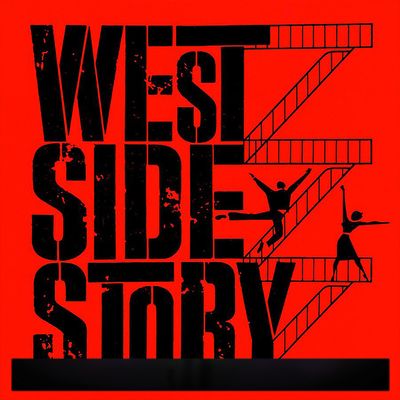
[6:14] Hector Guerrero: Yeah, I was part of the last cast that Jerome Robbins supervised. He was at all the auditions, at rehearsals, and then whenever we were in a new town and we would have a rehearsal before we had opening night in that new town while we were on tour, he was always there to give us notes. And yeah, so I was really fortunate to be in that room with him and just to learn from him. Alan Johnson actually directed and choreographed the production. He's no longer with us. Alan Johnson is very well known for all the Mel Brooks movies. He choreographed The Producers, Young Frankenstein, History of the World. Oh, and he's also, you know, that logo that we have, that was originally for the movie, where the two stick figures on the fire escape. He was the model for the male.
[7:00] Jeffrey Scott Parsons: No way. Who's that artist? Saul Bass. Wasn't it Saul Bass who did the artwork for that?
[7:06] Hector Guerrero: Yeah, and then the female model was Lynn Ross, who was Estella in the company of West Side Story. And Alan Johnson was an original Shark's Wing in the original production. So yeah. So he knew the show pretty well.
[7:22] Jeffrey Scott Parsons: Oh yeah, totally, totally. So he set the production with Debbie Allen when she did it back in the 80s. Check out that YouTube video, people. Oh my gosh. That woman. Fire. Fire. You're absolutely right. Fuego. Oh my God. I love that. Oh, I miss that. So yeah, so I was really fortunate to be in the room with him. I was hired as a shark. I was hired as Inyo. And I eventually became Dan's captain. And it was approved through him. And I wasn't really petitioning for that job. I was just always at all the rehearsals, even when I wasn't called, because I just wanted to learn from the man and be in the room. Because West Side Story was always my favorite movie, movie musical. And it's my favorite Broadway musical.
So to not only be able to do this show, but to do that original choreography and that original direction, and learning it from the man, you know, Jerry was the man. So I would sit there and I would just write things down in my journal, like when he would say stuff. I remember when we were in different cities, and he would come in, and we'd start the top of the show. And a minute into that prologue, he would be, stop, stop, stop. Sometimes we would do things like go over, like try to kick higher or do things like that. He's like, no, no, no, no, it's like this. And of course, he wasn't capable of doing things like full out. But just the little that he would do was so much more storytelling than what we were trying to do, like when we were like batma to our faces, you know?
And now I've been given this gift to be able to share this choreography, because there's only a few of us that are allowed by the Robbins Trust to reproduce this choreography. And I'm the only one in the West Coast. So it's allowed me to set the show a lot here on this side of the United States. So I'm really grateful for that. And I've said it throughout the US, China, and for the Shakespeare Festival. So I've been really, really blessed.
[9:21] Hector Guerrero: Yeah, yeah. And it's so like, it continues to still tell the story, and people still relate to it. You know, especially with stuff that's going on in our world. Like, we still haven't learned our lesson, you know?
[9:31] Jeffrey Scott Parsons: Oh, for sure. Like going back to when I worked with you, when you did the show for me, at Musical Theatre West, remember when you were doing jury duty?
[9:38] Hector Guerrero: Jury duty. It was crazy.
[9:45] Jeffrey Scott Parsons: Oh my gosh, I hadn't even thought about talking about this on the show. But I did jury duty for four weeks leading up to rehearsals for West Side Story. And it was a murder case involving gangs in Los Angeles, where the boyfriend was shot and bled out and died in the girl's arms. Hello. And I was just sitting there as it was unfolding. Like, oh, are you kidding me? We're going into rehearsals right now. And it fueled me in a very real and gritty way that actually sometimes made me a little impatient in the rehearsals, because I was like, you're not getting it.
[10:17] Hector Guerrero: Exactly. Yeah. Anyway, thank you for reminding me of that.
[10:24] Jeffrey Scott Parsons: Yeah, of course. Oh, going back to what you were saying about Jay. So that those are his great qualities, because the man is a genius. I mean, you look at all his work. Every show is completely, completely different, but amazing. And it's, like you said, Gypsy, Fiddler, King and I.
[10:40] Hector Guerrero: King and I. Peter Pan on The Town. I mean, we can go on and on and on. But each show is so, so different, but yet so perfect. I mean, it is perfect. His choreography tells so much of the story. Now his funky qualities, I mean, stuff that happened to me as a shark. The Jets always traveled first class on the plane. The Sharks were always in the back by the restrooms. When we were in Europe, we played a lot of opera houses. And I mean, the Jets were always on the first floor, which made sense because the show revolves a lot around them. They'd have a lot more than the Sharks, especially the Sharkman. Now the Sharkman, sometimes we were on the fifth floor. And then like, the third and fourth floor would be empty. But just to make us feel like nothing, like fifth floor walk up.
[11:37] Hector Guerrero: Fifth floor walk up. Yeah. Nothing like a white man to be like, just in case you missed what it's like to be a minority. I'm going to really drive a home. I live that, you know, I grew up with that. I grew up in East Los Angeles, and there was a lot of crime in our neighborhoods. When I was growing up, it wasn't so much a gang by that time. It was more drug related and violence in that sense. So a lot of the killings were due to drugs. So I mean, I grew up with a lot of kids who were like, no longer with us. I mean, they like ended up being killed and stuff like that. So my parents sent me to an all boys Catholic school, which took like a hour bus ride from my home, because they wanted me as far away as possible from that.
And of course, at that time, I didn't appreciate it. But now looking back, I'm so grateful that they did that for me. But there was probably like 3% Latinos at the school. So I know what that felt like. So I don't need someone to tell me like, oh, I'm going to make you like, and I think if you hire smart actors, they don't need to be put through that. We don't need to be manipulated into giving you what you think we don't know. I don't know. It deserves a conversation, not those weird mind games. And if you don't know, it's like then you guide them. It's like, well, here's some reading material. Or here's some pictures. You know, another thing that I used to like to do a lot was I post pictures of like gang violence in the 50s and stuff. Now I don't do that as much anymore. Because we have so much of like, this hatred in the world. It's like, just turn on the news. Just turn on the TV. You know, we're divisive.
[13:12] Hector Guerrero: Yeah, exactly. Yeah. And divided. Divisive and divided. Yeah, so sad. All right. So we've talked about Jerome Robbins. Let's move on to one of his collaborators, Leonard Bernstein. Now, Lenny, as he's kind of known to everybody, while Jerome Robbins was difficult, Lenny was infamously not difficult. Everybody liked Leonard Bernstein. He's also one of the most, I think, influential people in music in America. He was conductor of the New York Philharmonic for many, many years, and was very instrumental in American composers really being taken seriously in classical music, like George Gershwin, Aaron Copland, those sorts of people. What's fascinating about him, though, is that in addition to being the most famous conductor this country has ever seen, he also managed to write a lot of original music, particularly in musical theater.
On The Town, which we already mentioned because Jerome Robbins choreographed that, Wonderful Town, go figure, Candide, West Side Story, all of these came from his brain. It's pretty incredible that he was able to do both.
[14:23] Hector Guerrero: Yeah. I have a quote from this guy named Maurice Perez, who was one of his assistant conductors of the New York Philharmonic, and I think it goes to show how well he knew music and how that affected his own compositions. He says, Bernstein loved puzzles. Musical quotes, some disguised, some overt, are scattered about his music. My favorite is the lightly disguised paraphrase of the immolation scene from Wagner's Götterdämmerung in the Chorus.
[14:57] Hector Guerrero: That ends West Side Story. And of course, to that, I say I have no freaking clue what that means. But I'm sure it's impressive to somebody. And that is kind of my point is, once again, all of these people were operating on such a high level of their own field, that it's kind of undeniable.
[15:21] Yeah, I mean, he combined lyric opera, opera, show music, vaudeville, jazz, Latin, orchestral. And if you talk to most musicians that perform in Broadway musicals, they'll tell you that that score is one of the most difficult scores that they ever play. So they love playing it because it challenges them. And also, whenever we played Europe, because we played a lot of opera houses, the billing at all these opera houses was Leonard Bernstein's West Side Story.
[15:51] Oh, because he was the in he was the opera house.
[15:54] Yeah, so he got first billing, like an advertisement. Yeah. But like, again, going back to how challenging and how, and that's why I still love listening to that music, because it is so amazing. Like America, the time signature goes from alternating bars, six, eight to three, fours, you know, it's very similar to Guajira, which is a song like in Cuban culture. And then the tempo is a huapango, which is a Mexican folk dance. So I love that he brought all these Latin influences into the song. It wasn't a Broadway version of what someone thought would be Latino music. It's like they brought all these different Latino elements into the music.
[16:36] So it's like a culmination of many Latin cultures.
[16:40] Exactly, which I thought was so amazing that he did that, you know?
[16:43] Yeah, that's great. And I think that that had a lot to do with its influence. Because Tito Puente, which he was a band leader in New York.
[16:50] Yeah, he was a percussionist, he played the timbales. But he was also a band leader, he had his own band.
[16:59] Like Ricky Ricardo? I don't mean to be like, demeaning.
[17:02] Yeah, yeah, totally, totally like that. Like he was very well known like that. So I think his influence on that played a big part in Lenny's America number.
[17:11] Wow, that's really cool. I had no idea. Okay, so that's Lenny Bernstein. Let's go to his lyricist, Mr. Stephen Sondheim.
[17:21] You know, the old hack himself. Sondheim is, of course, a musical theater genius. Early on in his career, despite also being a composer, he was relegated to mainly writing lyrics, and as he did in both West Side Story and Gypsy, and did a beautiful job. He has often expressed some frustration with West Side Story, because Leonard Bernstein was such a poetic, romantic type of artist. And Sondheim was always looking for the opportunity to remind the audience that these are kids, these are people who might not know the English language very well. And so to have like two 16 year olds talking about hold my hand, and we're halfway there. Like, is that exactly what we want these characters to be saying? That being said, I mean, it's based on Romeo and Juliet.
[18:15] Oh my gosh, I didn't even say that. So there's this guy named William Shakespeare. He writes Romeo and Juliet. That's what West Side Story is based on. But like, they wax pretty poetic, those teenagers in Romeo and Juliet. So I don't know. I don't see a problem with it. What do you think?
[18:30] Oh my gosh, that's hilarious. Totally agree with you. Oh my gosh.
[18:35] That balcony sequence in Romeo and Juliet is more flowery than any sort of lyric that they sing in West Side Story. You know, when you're in love, you do and say things that you thought you'd never do or say ever.
[18:48] Embarrassing. It's true.
[18:49] Yeah. And I think most people have experienced that. So that's where they can relate to that.
[18:54] I once went to The Gap and spent a lot of money because I had started dating the manager. And I wanted to impress him. That's really embarrassing to say.
[19:06] There you go.
[19:07] Okay, so that's Stephen Sondheim. Look, he needs no introduction. And I think his work here is brilliant.
[19:13] Yeah, let's talk about how he almost didn't take it. Because he wanted to be a composer lyricist. That's what he wanted to be known as. And so it was Oscar Hammerstein that convinced him.
[19:23] His mentor, yeah. Who was like, you need to work with Leonard Bernstein. And it was his first Broadway show. Because everything that he had written had been either off-Broadway or school-oriented, collegiate. And so this was his first big entry. And wow, what an entry.
[19:41] And he eventually became full lyricist, credit-wise. Because he first went in as co-lyricist, but then Lenny was busy and he wanted to concentrate more on the music. So he gave full credit to Stephen.
[19:53] To Sondheim. That's great. Now, also because Stephen Sondheim was in, we get Hal Prince involved, right? Because he loses its main producer.
[20:01] Her name was Cheryl Crawford. She pulled out because everyone that came to see the show that she wanted backing said that it was just too depressing. So they didn't think it would be a hit.
[20:28] So yeah, it was Stephen who brought in Hal Prince, because he knew Hal Prince. And Hal Prince brought along Robert Griffin. And so they decided to produce the show. So thank God for them. Hal Prince, another genius.
[20:41] Another, exactly.
[20:43] Theatre royalty.
[20:45] Kind of young in his producing career at this point, which gave way to a directing career, which included cabaret and changed theatre forever. Evita! Hello!
[20:56] And I got to work with Hal Prince in Evita. He was a director when I toured with the show. That's another thing. That's another show that's really special to me. It's really quick. It was the first Broadway show I saw. And it was when I got cast in the tour. It was the show that gave me my equity card. So to get my card with that. So it's really, really special to me.
[21:15] Yeah, but that's another genius. That man is a genius.
[21:19] That's incredible. I didn't know that you worked with him.
[21:23] Yeah.
[21:24] What kind of a director was he?
[21:26] Oh, no, he was very loving and came very different than Jerry in that sense. Yeah, it was totally opposite of that.
[21:32] Wow.
[21:36] One more guy that we're going to talk about in terms of this collaboration, this creative collaboration, Mr. Arthur Lawrence, who wrote the book. And I think, in my estimation, this was probably the hardest job of everybody. I mean, which is crazy to say when we're talking about the intricacies of the choreography and music and lyrics and all of that. But the book really is creating the world in which all of these things can coexist. And what Arthur did a really great job in doing was create a world that felt very relatable to 1956, but wasn't a literal 1956 because there's a dialect that he created so that these kids could swear without swearing, which I think he was very brilliant in the way he did it because he made it timeless. Because the thing about like certain words and stuff, then it can start getting dated. But like his language that he created made it timeless.
[22:33] He also wrote Gypsy, go figure. And also became a director and later directed.
[22:38] Yeah, the last job he did was he directed the Broadway revival of West Side Story in 2009. So that was his last directing job.
[22:49] We should probably talk about how Jerry brought the idea of working with Lenny and Arthur back in 47. And he wanted to do a music version of Romeo and Juliet, something like modernize it and the conflict would be between Irish Catholic family and a Jewish family living on the Lower East Side of Manhattan during the Easter Passover. And so then he wrote the story, East Side Story. And then after they looked at it, they realized that it was very similar to Calbee's Irish Rose, which was a Broadway show at the time that was very successful, and it became more successful on tour. So when they realized that it was just that, a musical version of that, that's when Jerry said, like, this isn't gonna work. And he pulled from that project, and then they just kind of scrapped it.
[23:31] It was back in 55. When Lenny was in Hollywood, Arthur was in Hollywood. So they were both there that they got together at the Beverly Hills Hotel. They said it like, hey, we should look at this again. You know, I thought about it because of like all the gang warfare that was happening in East Los Angeles at the time, like the Chicano warfare. So then they thought, well, let's talk to Jerry again. And Jerry was coming into town to choreograph the King and I movie. And that's when they decided like, okay, this makes more sense. Let's do this. But then Arthur was like, well, I don't really know this Mexican culture. But it'd make more sense to like place it in New York.
[24:06] I'm a New Yorker. I can get behind that.
[24:09] Exactly. And the gang warfare there. And so that's what we decided to do that.
[24:14] You can see how the original idea came from, I'm sure, a very personal place. Jerome Robbins was Jerome Rabinowitz, I believe. Arthur Lawrence was Arthur Levine, both of whom changed their names to sound less Jewish in order to work more. And so this kind of conflict between the Irish Catholic and Jewish, I'm sure was a very personal thing. By switching it up, it once again took it into this, I think classic place. And a true American musical in discussing race relations, immigration, and how city life really forces all of that to come to a boiling point sometimes.
[24:52] Yes.
[24:53] The show opens out of town, they do a couple of out of town tryouts, I believe, one of which was in Washington, DC.
[25:00] Yeah. And before they just really quick rehearsals. So normally rehearsals at that time, it was four weeks rehearsals. And Jerry was like, No, I need more rehearsal because there's so much dancing in the show. So he told Hal, it's like, if I don't get more rehearsal, then I'm leaving this project. So Hal allowed him to do that. So instead of four weeks, he gave him eight weeks. And then because again, it was so much choreography, Jerry brought along an assistant, and the assistant was Peter Gennaro. So that's the other thing about Jerry, again, just a very smart man, he knew his limitations. So he brought Peter Gennaro to help with Latin choreography. So we look at the show, parts of the prologue, like the shark section, the which is called the stake when you see that number, like the big, the big, yeah, that kick in the air. That's Peter's choreography. All of America is Peter's choreography. The Mambo in West Side Story is all of Peter's choreography.
[25:57] In Dance at the Gym, right?
[25:59] Yeah. And also I Feel Pretty, he staged that number. And so a lot of people don't know that. So it's important that we give credit to Peter because his choreography plays a big part.
[26:08] And it's very iconic to the show. And he did get credit. It's really tiny, tiny, tiny, tiny, tiny, tiny at the bottom of the advertisement. It says, co-choreographer, Peter Gennaro.
[26:20] Wow. Now looking at these collaborators that we've talked about, Jerome Robbins, Leonard Bernstein, Stephen Sondheim, Arthur Lawrence, I think it's important to mention that all of these guys were gay in their own way.
[26:36] And we don't often look at West Side Story as a piece of LGBTQ history. And yet these really incredible artists worked together to create a masterpiece.
[26:49] Wow, that's great. I've never thought about it. That's, that's nice that you're acknowledging that.
[26:55] Okay, so now let's go to Washington, DC. So they're previewing Out of Town. And it feels like most of the changes that they made prior to Broadway were about the Jets.
[27:06] And enter an email that you sent to me, which is the original opening number of the show. And what it's called, like, Goodnight Moon, what's it called again?
[27:18] It says how long does it take to reach the moon?
[27:21] Yes, which is what to be fair is so 50 space travel huge, right? And they're trying to remind everybody that these are kids. So this song is all of the Jets making chit chat waiting for Riff their leader to show up. You listen to the music, you cut out all the words. And it's basically the music to the prologue, which is how we know the show today.
[27:44] For example, like it goes, how long does it take to reach the moon? Rooney?
[27:51] So what exactly happened? They did the moon or Rooney? Oh, good heavens. Hello, even imagine.
[27:57] And then part of the song to like towards the end is part of the Jets song. Again, those lyrics, my greatest day was the day I was born and the day I was eight and the day I was five. Also the day when I first blew a horn when I first stayed out late when I first learned to drive.
[28:12] Why many words?
[28:14] Exactly. And it's like, who cares?
[28:17] Yeah, right. Oh my gosh, that's so it's so fascinating to look back on it now. And so it was all done through dance, nothing lost, and everything gained.
[28:24] Correct. Hello.
[28:26] As they were able to make these changes to the show, none of these collaborators were of Latino heritage. So what did they get wrong?
[28:35] Well, yeah, it's obviously the show is shown through the eyes of the Jets.
[28:44] One other change that they made, which is very smart of them is that they added the America number because it wasn't their first that the collaborators realized that there wasn't a woman's point of view in the show. So I'm so glad they decided to do that. And not only did they decide to woman's side of you, but a Latina. And in the Latin culture, the female is the pedestal. Yeah, especially when it comes to the mother. And which in if you look at the show, I would consider Anita the mother in this show. So she's put up on this pedestal. So it was great to see that they did that. Now it's tricky in the sense where like the lyrics in America, for example, the show it says, Puerto Rico, you ugly islands, island of tropic diseases.
Now when they did the movie, Rita Moreno was like, I am not going to say that because she felt that that's saying that we Latin people are have diseases and that were dirty. So I refuse to say that. So they changed the lyrics to Puerto Rico, my heart's devotion, let it sink back in the ocean.
[29:51] That's a great lyric.
[29:53] Hector Guerrero: I do want to say about that because I've heard a lot from Latinos. They kind of have this hate relationship, love-hate relationship with West Side Story and especially when it comes to America because they feel it doesn't show Latinos in a good light and especially that song, America. It's like it's putting us down. It's like, no, that's not how I see it. I see it as within your culture, it's acceptable to name call and it's kind of done out of like fun and love. It's like certain cultures, you can use certain words within each other, but if you use that certain word outside of your culture, someone that's not in your family cannot be saying this to you. It's unacceptable. So, that's how I approach it.
[30:35] Jeffrey Scott Parsons: That's a great way to approach it. I can also see how, I mean, every time that I've done West Side Story, I'd say that the audience is predominantly white and so there is something inherently problematic about making a white audience laugh within that family. So, I guess I do see both sides of that. From an acting standpoint, though, I think that's a great piece of direction to give your actors. That's really nice.
[30:58] Hector Guerrero: Thank you.
[30:59] Jeffrey Scott Parsons: Okay. So, the show opens. If I had my druthers, man, I would have loved to have been at opening night of West Side Story on Broadway because it really did blow everyone's minds. It was a new step in musical theater. Now, the funny thing is that the same season that West Side Story came out, so did The Music Man. And when the Tony Awards came out, The Music Man won pretty much everything except for choreography by Jerome Robbins and I think set design. Is that right?
[31:32] Hector Guerrero: Correct. Yeah.
[31:33] Jeffrey Scott Parsons: Now, you have listened to the podcast, so you may have heard me say that when I was younger, I always thought it was ridiculous that The Music Man won Best Musical over West Side Story. And I have since gone back on that and believe The Music Man to be the better show.
[31:48] Hector Guerrero: I'm all like, okay, bye. Done.
[31:51] Jeffrey Scott Parsons: And leave session. But I do still stand by that. That being said, West Side Story, one of my favorite shows over Music Man, but I do think Music Man might be the tighter show. And it's only because, as we'll talk through the show, there are these moments where you can debate back and forth about whether they made the right decision. And when you change things around, there's always something gained and something lost. And so I'm kind of excited to talk about those because I think you'll have some good perspective on it for me.
[32:27] Hector Guerrero: So let's start. Let's start at the top. Now, if you'll allow me, I'm going to now perform the beginning of West Side Story for you. Okay, so the curtain goes up. We see the Jets. They all move on the music, da, da, da, da, da, da, da, da, da. Riff steps forward. Riff dances. Somebody in the audience laughs. And that's the beginning of West Side Story. Because they don't know what to do with these feelings. They're seeing these things told with dance. Even though sometimes the laughter is triggering for us as performers, you kind of got to own that this musical is a little punk rock, and the audience needs an opportunity to adjust accordingly. So that whole prologue takes a matter of like months and months.
So this is before we see the migration of the Puerto Ricanos coming into New York City. It's probably a warm summer day, you know, they're hanging out. Hanging out outside. Riff, when he does that first, that snap, so that snap is kind of like the nervous twitch. Because a lot of times when I'm teaching this, and then when I come back to look at the show after it's running, like, that's not becomes like this whole other like, thing. It's a one act play.
[33:49] Jeffrey Scott Parsons: Exactly. Like, wait, what's going on? Oh, and then let's talk about what they're wearing. They're all wearing blue and yellow. So that's really important, too. Because it creates a mood for the audience when they see all this blue and yellow. The sky, the sea. There's an ease to it. Yeah, freedom, open space, you know. All those moods are created by looking at that color. Then we see Bernardo arrive, and now he's in black pants, black t-shirt, and a red shirt. So we see him in black and red. Maybe his hair is kind of greasy and darker skin. So there's like something foreign. And so let's look at those colors, too. If we look at the religion Orisha from the Yoruba people in Nigeria, West Africa, that religion was brought over to Cuba, Puerto Rico, Brazil, Haiti.
And in that religion, and the reason I'm bringing this up is because in the Latin culture, there's a lot of Catholics in the Latin culture, but there's also a study of Santeria also in a lot of the Latin culture. So there's a god, his name is Alegua, and he is the god of travel. And his colors are black and red. Stop it, like traveling from Puerto Rico to New York. Yeah, so that the color red in that religion symbolizes life and black death. So here we have the beginning and the end coming into America. And then as we see the number progress, then we see it go for like months and months. Then we see more sharks, so the migration is starting to happen over the months. And then we start to see the conflict and the battle.
This prologue is so brilliant, not only because of everything you just told me that I've never heard before in my life. But by the end of the number, we have been fully introduced to these two groups. We've got the Jets, who has their leader, Riff. Other members include the older kids, Diesel, who's the muscle of the group. You got Big Deal, who's the smart Alec. You have Action, who's a hothead. And Snowboy, I guess, is Snowboy kind of in the older kids as well?
[36:04] Hector Guerrero: Yes, he is. You've also got the younger kids in the Jets, Baby John, who's the youngest. You got A-Rab. No, and then you have Guitar also.
[36:12] Jeffrey Scott Parsons: Oh, yeah, of course. Of course, Guitar. Poor Guitar, he sometimes gets cut. Then you've got the Sharks. The Sharks have Bernardo as the leader. His number two is Pepe. Is that right?
[36:17] Hector Guerrero: Mm-hmm. Then next would be Indio, Anxious, Nibbles, and then Chino's the youngest.
[36:25] Jeffrey Scott Parsons: Okay, so you've got these two groups. They start fighting by the end of the prologue after, like you said, this passage of time. It's escalated to full violence. And I think what's really important about this show is it never says that gangs are a bad idea. They are all a family for a reason. They're probably not very welcome in their homes, which are probably too small and too hot for the summer, and so they spend most their time in the street. And then here comes another group who looks very different from them, but probably has more in common with them than they're willing to admit. And then it becomes about this turf war, whose area is whose. That brings authority figures, Officer Krupke, who's a bumbling police officer that never has anything interesting to say, and Lieutenant Schrenk, who is... I've heard you give a description of Lieutenant Schrenk before, and I actually really liked it. What is it that you said? He's kind of maybe close to retirement.
[37:28] Hector Guerrero: Yeah, yeah. He's really over it because it's like, I'm so done. I'm getting close to retirement, so don't give me more heartaches now. I'm so done.
[37:37] Jeffrey Scott Parsons: At the same time, though, he is very racist. And while he hates both gangs, he certainly does seem to hate the Sharks more. He, at the end of the prologue, forces the Sharks to leave and chews out the Jets and says, look, you guys are going to get along, or I'm going to take you both in. And that's that. The Jets are left with all of this, I mean, angst. They just have all of this energy and frustration and really have no idea what to do with it. They don't have the tools. And then we also have to mention anybody's.
[38:12] Hector Guerrero: Oh my gosh. See, now there's something poetic in the fact that I forget about anybody's.
[38:19] Jeffrey Scott Parsons: Yeah, they don't want her around. She's there, but they try to forget about her.
[38:24] Hector Guerrero: So that's great that you forgot about her. As a true Jet should.
[38:29] Jeffrey Scott Parsons: Sorry, sorry, anybody's. A girl wanting more than anything to be in the gang, the guys don't want her around. Throughout the story, she'll prove herself worthy of the gang. And the cool thing, again, about being at all those rehearsals with Jerry when I wasn't called, there was one thing that he told our anybody's is that, you know what, the one person that represents me on that stage is you. Because he always felt like he didn't belong, and he was always trying to fit in. That's revealing. So I like to share that with my anybody's, but I always wait a little longer into the rehearsal process, almost when we're getting towards the end, because I kind of wanted to feel that and go through that journey.
[39:12] Hector Guerrero: On her own. Yeah, before I share that story with her, because I don't want her to continue to feel like she's beaten down. I want her to feel like, okay, no, this is how he felt, too.
[39:20] Jeffrey Scott Parsons: That's beautiful. Riff, the leader steps forward and says, the sharks bite hard. And we need to take care of them in one all out fight. So they're going to challenge them to a rumble. And in order to make the challenge, they have to do it formally, like there's all of these rules of etiquette within, you know, within their gangs, they're going to make the challenge to them that evening at a dance at the gym. Riff wants them to dress up sweet and sharp. And he's going to go get Tony. And I think action is the one who steps forward, Mr. Hothead and says that we don't need Tony, he's not been around forever.
[40:01] Hector Guerrero: Yeah.
[40:05] Jeffrey Scott Parsons: And Riff stands up for him and says, No, Tony is like my brother. We started the Jets and we owe him everything. Then we go to Doc's drugstore, which is where Tony works. It seems like he has graduated a little bit out of this gang life. He's taking responsibilities in terms of getting a job. Doc is this sweet old man who owns a shop and is very patient with the Jets in particular. Riff is talking to Tony and saying you got to come to the dance tonight. We need you. We need all the guys we can get, especially for this challenge and the rumble. Tony's like, forget about it. I'm not feeling this anymore. There's a back and forth until finally Riff is able to convince Tony to come to the dance, because who knows, maybe what you're looking for in terms of something new might be there.
Cue one of the hardest songs to count. Something's coming. Great song, great song for Tony, in which he in a true like I want way is expressing that there is something out of reach. He doesn't know what it is, but it's got to be there because where he is isn't where he wants to be. Anything I'm missing?
[41:14] Hector Guerrero: No, no, you're so right on.
[41:17] Jeffrey Scott Parsons: Okay, next we go to Maria and Anita. Interestingly enough, they also have jobs, working at a seamstress shop?
[41:27] Hector Guerrero: Correct.
[41:27] Jeffrey Scott Parsons: And how would you describe this dynamic? You said that Anita is kind of like the maternal figure of the group.
[41:32] Hector Guerrero: Yeah, she's the mother. And so they're getting ready to go to the dance. And Maria is upset because it's a white dress and she wants...
[41:41] Jeffrey Scott Parsons: So virginal.
[41:43] Hector Guerrero: Yeah. But I love that it's a white dress because she says at the end, it's like, tonight is the beginning of my real life as a young lady of America.
[41:51] Jeffrey Scott Parsons: Yes. So that reminds me of in the Latino culture, how we have a quinceanera, especially in the Mexican culture.
[41:57] Hector Guerrero: Oh, of course.
[41:58] Jeffrey Scott Parsons: So just presenting her. And have you ever been to a quinceanera? She's 15 years old and she's being presented. It's like a debutante or debutante ball.
[42:07] Hector Guerrero: But so much better.
[42:08] Jeffrey Scott Parsons: It's almost like a wedding, but without being a wedding. So she's presented in this big, white dress and stuff. And so here we have her in this white dress. But I love that they also, the costume designer added a little red sash to demonstrate how she's going from child into womanhood.
[42:27] Hector Guerrero: That's beautiful. Real quick. The first time I went to a quinceanera was on my mission when I was an LDS missionary and I was serving among Latino congregations. And so we got invited, because feed the poor missionaries who are knocking doors all day. Come to the quinceanera and eat some food. So we went and I was like, wait, there are production numbers? How much did I not know about this?
[42:52] Hector Guerrero: I used to be in so many when I was younger as a teenager. My parents were like, enough, no more, because they had to pay for the rent of these tuxes because you had to rent a tux. And it's a specific tux that you have to rent. It's not like you just wear it.
[43:05] Jeffrey Scott Parsons: Yeah. The girl picks the tux that you have to wear. So you have to wear that tux. So everything. But there's so much rehearsal because there's a big waltz that's performed at this quinceanera. So you have to go to these rehearsals too.
[43:19] Hector Guerrero: Yeah. It's a big production.
[43:19] Jeffrey Scott Parsons: That's amazing. Oh my gosh. You need to make quinceanera the musical.
[43:24] Hector Guerrero: I'm just saying, make it happen. Okay. Also, Anita is the girlfriend of Bernardo, who is the leader of the sharks. And Maria is the little sister of Bernardo. He comes into the shop. He's ready to take the ladies to the dance. She is being escorted by Chino, right? Who's the youngest. He's kind of the one that Bernardo has picked out to be like, hey, you're going to marry my sis.
[43:48] Hector Guerrero: Because he's being the youngest. He's the one that's the most innocent of the bunch. So that's what he wants him for his sister. Yeah. He can trust him.
[44:02] Jeffrey Scott Parsons: Now, let's go back to colors again. So when Anita takes off her robe, we see that she-
[44:10] Hector Guerrero: Her work robe. Yeah. She in the movie and in the original costume for the Broadway show, she wears this lavender purple colored dress, which again is so important because in the Latin culture, and especially in the Catholic religion, purple represents royalty. And if you know of Catholic traditions during Lent and during Advent, the priest wears purple during that time, which is in preparation for the coming of the king. So again, and sharing this with all my people that are in charge of theater out there, all my producer people, that you hire whenever you're doing a show.
[44:50] Hector Guerrero: WEST SIDE STORY is a musical that has transcended time and continues to resonate with audiences today. The themes of love, conflict, and cultural identity are as relevant now as they were when it first premiered.
[45:20] Hector Guerrero: The collaboration between Leonard Bernstein, Stephen Sondheim, and Arthur Laurents was groundbreaking. They created a work that not only entertained but also challenged societal norms and addressed issues of race and class.
[45:50] Hector Guerrero: The choreography by Jerome Robbins was also revolutionary. He infused the dance with a sense of realism that brought the characters to life in a way that had never been seen before on stage.
[46:20] Hector Guerrero: One of the most powerful aspects of WEST SIDE STORY is its ability to convey deep emotion through music and movement. The score is filled with unforgettable melodies that capture the essence of the characters' struggles and dreams.
[46:30] Hector Guerrero: The story of Tony and Maria is a tragic love story that reflects the harsh realities of life. Their love is beautiful but ultimately doomed, which adds to the emotional weight of the narrative.
[46:40] Hector Guerrero: The rivalry between the Jets and the Sharks serves as a metaphor for the larger societal conflicts that exist. It highlights the impact of prejudice and the consequences of violence.
[46:50] Hector Guerrero: The iconic song "Somewhere" encapsulates the hope for a better future, a theme that resonates with audiences from all walks of life. It's a reminder that love can transcend barriers.
[47:00] Hector Guerrero: The ending of the musical is particularly poignant. The moment when Tony is shot is a stark reminder of the senselessness of violence and the fragility of life.
[47:10] Hector Guerrero: The gun that doesn't work at the end is a powerful symbol. It represents the futility of the conflict and the tragic consequences that arise from it.
[47:20] Hector Guerrero: WEST SIDE STORY challenges us to reflect on our own lives and the choices we make. It encourages empathy and understanding, urging us to look beyond our differences.
[47:30] Hector Guerrero: The legacy of WEST SIDE STORY continues to inspire new generations of artists and audiences. Its impact on musical theatre is immeasurable, and it remains a vital part of our cultural landscape.
[47:40] Hector Guerrero: As a director and choreographer, I find great joy in bringing this story to life. Each production offers a new opportunity to explore its themes and connect with the audience in a meaningful way.
[47:50] Hector Guerrero: The collaboration with the original artists behind this show is something I deeply respect. Their vision and creativity laid the groundwork for what musical theatre can achieve.
[48:00] Hector Guerrero: I believe that every production of WEST SIDE STORY should honor that legacy while also finding ways to make it relevant to today's audiences.
[48:10] Hector Guerrero: The emotional impact of the show is what keeps it alive. It's a story that speaks to the human experience, and that's what makes it timeless.
[48:20] Hector Guerrero: I encourage everyone to experience WEST SIDE STORY, whether it's for the first time or as a returning fan. There's always something new to discover within its layers.
[48:30] Hector Guerrero: The music, the dance, the storytelling—it's all intertwined in a way that creates a powerful theatrical experience.
[48:40] Hector Guerrero: In a world that often feels divided, WEST SIDE STORY reminds us of our shared humanity and the importance of love and understanding.
[48:50] Hector Guerrero: I hope that audiences leave the theatre feeling inspired to make a difference in their own communities.
[49:00] Hector Guerrero: The conversations that arise from this musical are just as important as the performance itself. It's a catalyst for dialogue about the issues it raises.
[49:10] Hector Guerrero: As we continue to produce and reinterpret WEST SIDE STORY, we must remain mindful of its origins and the messages it conveys.
[49:20] Hector Guerrero: The beauty of musical theatre is its ability to evolve while still honoring its roots. Each generation brings its own perspective to the story.
[49:30] Hector Guerrero: I look forward to seeing how future productions will interpret these themes and continue the conversation.
[49:40] Hector Guerrero: Ultimately, WEST SIDE STORY is a celebration of life, love, and the resilience of the human spirit. It's a story that will never grow old.
[49:50] Hector Guerrero: Thank you for joining me in this exploration of WEST SIDE STORY. It's been a pleasure to share my thoughts and insights on this iconic musical.
[59:46] Hector Guerrero: Was he one of the only ones that went to the movie?
[59:49] Jeff Parsons: No, actually, the original A-Rab, Chita Rivera's husband.
[59:53] Hector Guerrero: What?
[59:54] Jeff Parsons: And he was A-Rab in the Broadway show, then he was action in the movie.
[1:00:00] Hector Guerrero: Really?
[1:00:01] Jeff Parsons: So yeah, he's the other one. I'm trying to think who else was original. Those are the only two that went from the original cast to the movie.
[1:00:08] Hector Guerrero: Did they meet on West Side Story?
[1:00:10] Jeff Parsons: Yeah. And Jay was pissed because he wanted the Sharks and the Jets to be separate. Yeah.
[1:00:18] Hector Guerrero: Right. And they're like, somewhere.
[1:00:24] Jeff Parsons: Good for them. That's so cool. I had no idea.
[1:00:28] Hector Guerrero: Yeah. So for the movie, thank God that was recorded because it's on record that we have that choreography. And that section, actually, that's David Winter's choreography, his own choreography. And it's so amazing because you could see David fire the gun. He imagined himself firing this imaginary gun. And laughter seemed to be the natural part of it. It was us, the Jets, against the Sharks. I blew up the world so they would leave us be.
[1:00:54] Jeff Parsons: Wow. An anarchist. There is like a level of anarchy to that dance solo.
[1:00:59] Hector Guerrero: Yeah. And it is kind of crazy when he goes into that laugh, you know? It is. But it's very disturbing. And even the Jets, the reaction should be like a nervous kind of laugh because you're having a nervous breakdown. What's going on?
[1:01:14] Jeff Parsons: Right. This is in the 50s. This is amazing art being made in the 50s.
[1:01:20] Hector Guerrero: Yeah.
[1:01:20] Jeff Parsons: My gosh. Cool. Lack of a better word. The Jets end that number. The Sharks come in. The Jets pretend they're not huffing and puffing after dancing so hard. And the war council proceeds in which they need to decide on a place for the rumble and weapons. And what they decide on is that it's going to be at the park under the highway.
[1:01:48] Hector Guerrero: Under the highway. Yeah.
[1:01:50] Jeff Parsons: And when they decide on weapons, it starts escalating from bottles to knives, guns. And Tony jumps in, you know, having just come off of his balcony date with Maria and says, why do you need weapons? Are you chicken? Why don't you just fight with this skin to skin? Thinking that that will make things less violent and better for him and Maria.
[1:02:18] Hector Guerrero: The two leaders agree that it's going to be a fair fight. And it's going to be Bernardo versus Diesel.
[1:02:26] Jeff Parsons: Who's built like a truck.
[1:02:28] Hector Guerrero: Like a diesel truck.
[1:02:29] Jeff Parsons: Yeah.
[1:02:30] Hector Guerrero: Lieutenant Strength comes in, breaks up the war council, realizes that they've probably decided on a rumble. He makes the Sharks leave. They whistle My Country Tis of Thee, which is a brilliant little detail.
[1:02:42] Jeff Parsons: And that last note.
[1:02:47] Hector Guerrero: That's good whistling. I can't whistle. I always have to whistle in shows and I can't do it.
[1:02:52] Jeff Parsons: Wow.
[1:02:52] Hector Guerrero: Anyone can whistle except for Jeff. Like I can't. He can't do it.
[1:02:57] Jeff Parsons: You know what? That happens a lot because like, in Act Two, when Baby John has to whistle back with A-Rap. It never fails. Baby John and A-Rap for some reason can never whistle. So it always has to be an offstage whistle.
[1:03:10] Hector Guerrero: I have had to stand next to anybody and have her whistle into my microphone because I can't do it. And then I do Peter Pan. I can't whistle Wendy. I do South Pacific. I can't whistle. There's nothing like a dame. Stop making me whistle. I can't do it.
[1:03:28] Jeff Parsons: Anyway, okay. Lieutenant Strength comes in. He starts grilling the Jets really hard about where this rumble is going to be. And he starts pressing all of those buttons like just a mean...
[1:03:40] Hector Guerrero: And that's when we start to learn more about these Jets because he starts saying like...
[1:03:44] Jeff Parsons: How's the action on your mother's mattress action?
[1:03:47] Hector Guerrero: Action, yeah. So stuff like that.
[1:03:49] Jeff Parsons: These poor kids, they're just teenagers. And he's like just trying to push the buttons.
[1:03:54] Hector Guerrero: Riff is reminding them about the cool lesson and they're able to keep it together enough to get out of Doc's Drugstore without letting him know any of the information about the rumble.
[1:04:06] Jeff Parsons: Tony's really excited about the whole fair fight thing. And so he goes to tell Maria at the dress shop that it's going to be a fair fight. No worries. Maria responds by saying, any fight for us is no good. So you have to go to that rumble and stop it completely. This gives way to this little fantasy sequence in which they get married.
[1:04:28] Hector Guerrero: Now, while it may be make believe to them, it feels very real to us.
[1:04:34] Jeff Parsons: Yeah, they definitely are making a commitment.
[1:04:38] Hector Guerrero: And those lyrics, they're one hand, one heart. It's perfect.
[1:04:41] Jeff Parsons: It's a vow.
[1:04:42] Hector Guerrero: During that scene, yeah.
[1:04:43] Jeff Parsons: This song, One Hand, One Heart, is one of the most beautiful songs ever written.
[1:04:47] Hector Guerrero: Yeah.
[1:04:48] Jeff Parsons: Gorgeous. After One Hand, One Heart, we go to the quintet.
[1:04:54] Hector Guerrero: Talk about favorite moments.
[1:04:55] Jeff Parsons: Really?
[1:04:56] Hector Guerrero: Gosh, it just gives me chills listening to the vocals on that and how it keeps building.
[1:05:02] Jeff Parsons: And it's brilliant.
[1:05:04] Hector Guerrero: And once again, Jerome Robbins requiring so much from his dancers in terms of acting and storytelling. Here we have Leonard Bernstein requiring so much from his dancers in terms of music ability. These were a bunch of ballet dancers singing in counterpoint. It's pretty incredible. And it isn't even the end of the first act! Another revolutionary part.
[1:05:24] Jeff Parsons: Yeah, the applause that that gets at the end. Everyone thinks it is the end of that first act. Like, here come the lights up for intermission.
[1:05:30] Hector Guerrero: How do you top that?
[1:05:32] Jeff Parsons: I'll tell you how you top it, with two dead bodies!
[1:05:37] Hector Guerrero: So then we go to the rumble and the jets and the sharks meet up. It's going to be a fair fight until Tony comes in and tries to stop it. Bernardo starts yelling names at Tony, which is honestly, probably the only thing that gets to Riff, right? Riff has been telling everyone to stay cool and then he forgets his own advice as soon as the attacks turn on Tony. So Riff jumps in to defend Tony. It's not a fair fight anymore. They each have knives. You have this crazy knife fight that ends with Riff accidentally being stabbed. He bleeds out and dies in Tony's arms. This is his brother. This is his family. Maybe not literally, but might as well be. He grabs Riff's knife and goes over and kills Bernardo. And then it's all chaos.
[1:06:31] Jeff Parsons: Until the police siren starts and they all run away, disappear.
[1:06:37] Hector Guerrero: Anybody appears to take a completely devastated Tony off stage and also get rid of the evidence, right? She grabs both of the knives.
[1:06:46] Jeff Parsons: And here again, look at that. The woman to come to save the day.
[1:06:50] Hector Guerrero: Wow. Hey, you're exactly right. And for the first time ever in a musical, the first act ends with just two spotlights on two young kids dead in the street.
[1:07:03] Jeff Parsons: Wow. Crazy. Act two starts with I Feel Pretty.
[1:07:10] Hector Guerrero: Now, I think this song has always been criticized. And how do you feel about that?
[1:07:16] Jeff Parsons: Yeah, I know that Stephen doesn't like it. Stephen Sondheim, he's always said that he doesn't believe a young Puerto Rican girl would be saying that. And I know for this new Broadway revival that started and opened in 2020, but had to be shut down because of COVID, they decided not to include I Feel Pretty in the show.
[1:07:41] Hector Guerrero: They cut it all together, really?
[1:07:42] Jeff Parsons: They cut it completely. And the other number that they cut most of it was the somewhere. They kept it kind of like in the movie where it's just the song, but they cut the entire other sections.
[1:07:51] Hector Guerrero: Oh, my heart.
[1:07:53] Jeff Parsons: That's a short second act, by the way.
[1:07:55] Hector Guerrero: Well, they don't have a second act. It goes straight. It's a one act show now.
[1:07:58] Jeff Parsons: So from the rumble, they go straight into Chino telling Maria that Bernardo's dead.
[1:08:04] Hector Guerrero: Yeah. Wow.
[1:08:05] Jeff Parsons: So yeah, so it's but going back to I Feel Pretty. So I think it's important. And it's sad that, again, this production team with no Latin people on that team decided that it was right to cut it, which is taking away power from women. Because those words, I Feel Pretty for Latinas to say that is very, very powerful. Because they're looked at as something foreign, something not as pretty, something different. So for these women to be saying that they feel pretty is very important. And their voices being silenced by this number being cut from the revival.
[1:08:40] Hector Guerrero: So I disagree with that choice. To take away someone's voice like that is a female voice, a Latino voice is not right. It needs to be told. They have a voice and you should listen to it. If you're going to cut something, please don't let it be the characters that are probably less represented.
[1:09:00] Jeff Parsons: Amen. Good job, Jeffrey. Yes.
[1:09:03] Hector Guerrero: Who comes in first after I Feel Pretty? Is it Chino?
[1:09:06] Jeff Parsons: Chino. Chino calls out. And that's when the girls are like, it's Chino, the bridegroom.
[1:09:11] Hector Guerrero: Oh, right. Because they think she's singing about Chino.
[1:09:14] Jeff Parsons: Yeah, exactly.
[1:09:15] Hector Guerrero: So he comes in. And unfortunately, the news he has to give her is that her brother is dead.
[1:09:21] Jeff Parsons: And he was killed by Tony. I love her reaction. She immediately starts praying that it's not true.
[1:09:29] Hector Guerrero: Oh, man, do I connect with that? How many times have I been faced with something that I just like, can we just go back? God, can we please just pretend that?
[1:09:39] Jeff Parsons: Could we start again, please?
[1:09:42] Hector Guerrero: Seriously. But as she's praying, Tony crawls through her window, through the balcony. And how do you feel about this? How do you feel about her so quickly forgiving her brother's murderer?
[1:09:54] Jeff Parsons: It's hard because it's, I mean, she's going through so many emotions. That's the thing is there's so many emotions, the things that we do and say when we're in a high state of emotion are not always, we don't always understand it.
[1:10:07] Hector Guerrero: Yeah, exactly. Logical is a better word.
[1:10:12] Jeff Parsons: So I think that's what she's going through. I mean, her love for him is so, so great. But this is her brother. So there's, it's just like, there's a lot, a lot there.
[1:10:21] Hector Guerrero: Yeah, I'm sure you don't want to be alone either.
[1:10:25] Jeff Parsons: And then he tries to explain himself. So it's like, well, okay, so then there's two sides to every story.
[1:10:29] Hector Guerrero: What they are able to see is a vision of what things could, of how things could be. And thus begins the Somewhere Ballet, which often gets cut. Apparently it did for the most recent revival. So now let's talk about it, because I know it's one of your favorite parts.
[1:10:50] Jeff Parsons: And one of the reasons why you believe in doing the original choreography.
[1:10:56] Hector Guerrero: I mean, if you don't include this, then I don't think the show is complete. So Jerry shared that, in regards to the somewhere number, says we're dead unless the audience feels that there's hope and wish for escape from the tragedy and tension built on that desire. So I know this last time when I said the show was in San Diego, when they had done the show, I think it was 12 years before that, they had cut the number, because most people do. First of all, the music is really difficult. The time signature changes all over the place. So if you don't know how to read music, it can be really challenging for a choreographer and can be very frustrating if you don't know music. And lack of rehearsal. I mean, we have so little rehearsal nowadays.
[1:11:39] Jeff Parsons: Yeah, yeah. And again, I mean, Jerry asked for eight weeks of rehearsal, you know, four weeks. And here, normally for original production, there's normally just two weeks of rehearsal. And it's really less than that, because you have 10 days before you have the designer run through. It's like a week and a half really to finish your show. So it's tight, it's tight. But I told this, the producer, the director of this production in San Diego, I said, you know what, I know you don't know it, I know you cut it last time. It's like, let me just choreograph the number, show it to you once it's done. And if you still feel like it's not furthering the story, or we don't need it, or you want to cut it for whatever reason, I'm going to respect and honor that wish.
But please allow me to do it for you and present it to you before you make that decision. So he allowed me to do that. And after he saw it, he couldn't believe that he cut it the first time. He's like, he's really sad that he did that. And he watched the show every night and the show ran for three weeks. And he said, he would cry every time he would see that number. He said that, and even the cast members that had done that production prior to the production I did, because a lot of the adults in that show, they did their roles again. They would watch it in the wings. And they said, you know what, this show without that number, it leaves you hopeless. Like, that's the only hope you have is with that number.
And it's so beautiful. And it has so many different sections. And again, this is where you have to hire triple threats, because that Tony and Maria have to do this ballet number. It's not like a step touch or like, and there's no way of hiding it, because there's only three couples during that section when they're doing their section of the ballet.
[1:13:18] Jeff Parsons: Yeah. I never thought of this. But, you know, prior to West Side Story, many of the dream ballets were giving insight to what was going on in the characters, you know, hearts, minds, Oklahoma, first and foremost. This dream ballet, the Somewhere Ballet in West Side Story, is not only giving insight to the characters that we're seeing on stage, it also is giving insight to the audience of their own lives. Like you said, it's offering a piece of hope of just imagine, imagine what this could be. And towards the end of the number, it goes into what's called a nightmare section. And then we go back into reality. And it kind of predicts what's going to happen to if we continue to live this way, you know? So, yeah.
[1:14:10] Hector Guerrero: Wow. When the ballet is over, we go back to Tony and Maria, and they have consummated their relationship. They're in bed together.
[1:14:23] Jeff Parsons: Oh, my gosh. See? Okay. No, because normally, that's the way it happens in your mind, because of the movie. Because that's the way it happens in the movie. In the movie, they did the change where they switch Kool and Krupke in their locations in the story. See? And this is kind of what I was talking about in terms of the West Side versus Music Man thing, where, like,
[1:14:43] Hector Guerrero: WEST SIDE STORY is a musical that has transcended generations. Its themes of love, conflict, and cultural identity resonate deeply with audiences, making it a timeless piece of art.
[1:15:13] Hector Guerrero: The collaboration between Leonard Bernstein, Stephen Sondheim, and Arthur Laurents was groundbreaking. They took the traditional musical format and infused it with a sense of realism and urgency that was unprecedented at the time.
[1:15:43] Hector Guerrero: The story of the Jets and the Sharks is not just about gang rivalry; it's a reflection of the immigrant experience and the struggle for acceptance in a new world.
[1:16:13] Hector Guerrero: The choreography by Jerome Robbins is integral to the storytelling. Every movement conveys emotion and character, enhancing the narrative in ways that dialogue alone cannot.
[1:16:43] Hector Guerrero: The iconic songs, from "Maria" to "Tonight," capture the essence of longing and hope, making them unforgettable. Each number serves a purpose in advancing the plot and deepening our understanding of the characters.
[1:17:13] Hector Guerrero: When you think about the ending of WEST SIDE STORY, it’s heartbreaking. The gun not working symbolizes the futility of violence and the tragic consequences of hatred.
[1:17:23] Hector Guerrero: The characters are so richly drawn. Tony and Maria's love story is both beautiful and tragic, highlighting the barriers that society places on individuals.
[1:17:33] Hector Guerrero: The cultural context of the show is also significant. It was created during a time of great social change in America, and it reflects the tensions of that era.
[1:17:43] Hector Guerrero: The portrayal of the Sharks and their struggles is particularly poignant. It challenges stereotypes and invites audiences to empathize with their plight.
[1:17:53] Hector Guerrero: I think what makes WEST SIDE STORY so impactful is its ability to speak to universal themes. Love, loss, and the desire for belonging are experiences that everyone can relate to.
[1:18:03] Hector Guerrero: The musical's legacy continues to influence artists and productions today. It’s a testament to the power of storytelling in musical theatre.
[1:18:13] Hector Guerrero: Each revival brings a new interpretation, allowing the show to remain relevant and fresh for new audiences.
[1:18:23] Hector Guerrero: I believe that the emotional depth of WEST SIDE STORY is what keeps it alive in the hearts of those who experience it.
[1:18:33] Hector Guerrero: The collaboration of its creators was truly revolutionary, and their vision has left an indelible mark on the world of musical theatre.
[1:18:43] Hector Guerrero: As we celebrate this iconic show, it's important to remember the artists who brought it to life and the impact it has had on our culture.
[1:18:53] Hector Guerrero: WEST SIDE STORY is more than just a musical; it's a reflection of society and a call for understanding and compassion.
[1:19:03] Hector Guerrero: The emotional relevance of the story is as strong today as it was when it first premiered.
[1:19:13] Hector Guerrero: It challenges us to confront our own biases and to strive for a more inclusive world.
[1:19:23] Hector Guerrero: I think that’s why it resonates with so many people, regardless of their background.
[1:19:33] Hector Guerrero: The music, the dance, the storytelling—all of it comes together to create an unforgettable experience.
[1:19:43] Hector Guerrero: I encourage everyone to revisit WEST SIDE STORY, whether through a production, the film, or the original cast recording.
[1:19:53] Hector Guerrero: It’s a work of art that deserves to be celebrated and discussed for generations to come.
[1:20:03] Hector Guerrero: The themes of love and conflict are timeless, and they remind us of our shared humanity.
[1:20:13] Hector Guerrero: As we reflect on the show, let’s also think about how we can apply its lessons to our own lives.
[1:20:23] Hector Guerrero: The power of musical theatre lies in its ability to connect us, to make us feel, and to inspire change.
[1:20:33] Hector Guerrero: WEST SIDE STORY is a perfect example of that power, and I’m grateful to have the opportunity to discuss it.
[1:20:43] Hector Guerrero: Thank you for having me on the podcast to share my thoughts on this incredible musical.
[1:20:53] Hector Guerrero: I hope our conversation inspires others to explore the depths of WEST SIDE STORY and appreciate its significance in the world of theatre.
[1:21:03] Hector Guerrero: It’s a show that continues to challenge and inspire, and I look forward to seeing how it evolves in the future.
[1:21:13] Hector Guerrero: The legacy of WEST SIDE STORY is a reminder of the importance of storytelling in our lives.
[1:21:23] Hector Guerrero: It’s a celebration of love, resilience, and the human spirit, and that’s something worth cherishing.
[1:21:33] Hector Guerrero: Thank you again for this opportunity to discuss such an important piece of musical theatre history.
[1:21:43] Hector Guerrero: I encourage everyone to keep the conversation going and to share their own experiences with WEST SIDE STORY.
[1:21:53] Hector Guerrero: Let’s continue to honor the artists who created this masterpiece and the impact it has had on our culture.
[1:22:03] Hector Guerrero: Together, we can ensure that the legacy of WEST SIDE STORY lives on for future generations.
[1:22:13] Hector Guerrero: It’s been a pleasure to share my thoughts, and I look forward to more discussions about the power of musical theatre.
[1:22:23] Hector Guerrero: Thank you for listening, and I hope you enjoy revisiting WEST SIDE STORY as much as I do.
[1:22:33] Hector Guerrero: Let’s keep celebrating the magic of musical theatre and the stories that connect us all.
[1:22:43] Hector Guerrero: Until next time, keep dreaming and keep creating.
[1:22:53] Hector Guerrero: The world needs more stories that inspire and uplift, and musical theatre is a beautiful way to share those stories.
[1:23:03] Hector Guerrero: Thank you for being part of this conversation, and I hope to see you at the theatre soon.
[1:23:13] Hector Guerrero: Let’s continue to support the arts and the artists who bring these incredible stories to life.
[1:23:23] Hector Guerrero: Together, we can make a difference and keep the spirit of musical theatre alive.
[1:23:33] Hector Guerrero: Thank you for having me, and I look forward to our next discussion.
[1:23:43] Hector Guerrero: Remember, the power of storytelling is in our hands, and we can all be part of the narrative.
[1:23:53] Hector Guerrero: Let’s keep sharing our love for musical theatre and the impact it has on our lives.
[1:24:03] Hector Guerrero: Until next time, take care and keep the music alive.
[1:24:13] Hector Guerrero: Thank you for this wonderful opportunity to share my passion for WEST SIDE STORY.
[1:24:23] Hector Guerrero: I hope our conversation inspires others to explore the depths of this incredible musical.
[1:24:33] Hector Guerrero: Let’s continue to celebrate the artistry and creativity that make musical theatre so special.
[1:24:43] Hector Guerrero: Thank you for listening, and I look forward to connecting with you all again soon.
[1:24:53] Hector Guerrero: Keep dreaming, keep creating, and keep celebrating the magic of musical theatre.
[1:25:03] Hector Guerrero: Until next time, take care and enjoy the journey.
[1:25:13] Hector Guerrero: Thank you for being part of this conversation, and let’s keep the spirit of WEST SIDE STORY alive.
[1:25:23] Hector Guerrero: Together, we can ensure that the legacy of this incredible musical continues to inspire and uplift.
[1:25:33] Hector Guerrero: Thank you for having me, and I look forward to our next discussion.
[1:25:43] Hector Guerrero: Remember, the power of storytelling is in our hands, and we can all be part of the narrative.
[1:25:53] Hector Guerrero: Let’s keep sharing our love for musical theatre and the impact it has on our lives.
[1:26:03] Hector Guerrero: Until next time, take care and keep the music alive.
[1:26:13] Hector Guerrero: Thank you for this wonderful opportunity to share my passion for WEST SIDE STORY.
[1:26:23] Hector Guerrero: I hope our conversation inspires others to explore the depths of this incredible musical.
[1:26:33] Hector Guerrero: Let’s continue to celebrate the artistry and creativity that make musical theatre so special.
[1:26:43] Hector Guerrero: Thank you for listening, and I look forward to connecting with you all again soon.
[1:26:53] Hector Guerrero: Keep dreaming, keep creating, and keep celebrating the magic of musical theatre.
[1:27:03] Hector Guerrero: Until next time, take care and enjoy the journey.
[1:27:13] Hector Guerrero: Thank you for being part of this conversation, and let’s keep the spirit of WEST SIDE STORY alive.
[1:27:23] Hector Guerrero: Together, we can ensure that the legacy of this incredible musical continues to inspire and uplift.
[1:27:33] Hector Guerrero: Thank you for having me, and I look forward to our next discussion.
[1:27:43] Hector Guerrero: Remember, the power of storytelling is in our hands, and we can all be part of the narrative.
[1:27:53] Hector Guerrero: Let’s keep sharing our love for musical theatre and the impact it has on our lives.
[1:28:03] Hector Guerrero: Until next time, take care and keep the music alive.
[1:28:13] Hector Guerrero: Thank you for this wonderful opportunity to share my passion for WEST SIDE STORY.
[1:28:23] Hector Guerrero: I hope our conversation inspires others to explore the depths of this incredible musical.
[1:28:33] Hector Guerrero: Let’s continue to celebrate the artistry and creativity that make musical theatre so special.
[1:28:43] Hector Guerrero: Thank you for listening, and I look forward to connecting with you all again soon.
[1:28:53] Hector Guerrero: Keep dreaming, keep creating, and keep celebrating the magic of musical theatre.
[1:29:03] Hector Guerrero: Until next time, take care and enjoy the journey.
© Broadway Podcast Network, All Rights Reserved