

Ruben Santiago-Hudson had dreamed of being in an August Wilson from the first time he was in the audience of Ma Rainey’s Black Bottom... Read More
From the show: And the Award Goes To... Hosted by Ilana Levine
Guests
About
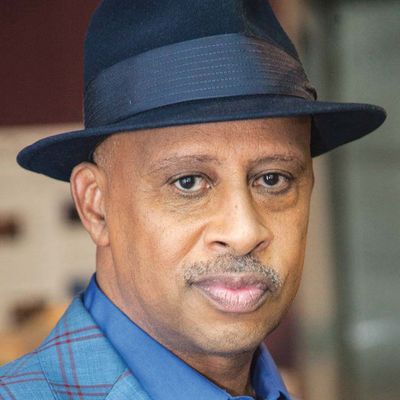
Ruben Santiago-Hudson had dreamed of being in an August Wilson from the first time he was in the audience of Ma Rainey’s Black Bottom. He found himself crying during the play and realized he was not just deeply moved by the play and the actors in it but the tears were connected to this feeling that for the first time in his life he was seeing people on stage who were so familiar to him and he wanted to be a part of that kind of storytelling. It took a few tries but finally he was cast in Wilson’s Seven Guitars and that began a brotherhood and an artistic marriage between Ruben and the great playwright that lasted until the death of August Wilson. It was Wilson who encouraged Ruben not just to act in his work but to be one of the few artists he trusted to direct his work. Since then Ruben has directed his plays on Broadway and adapted Ma Rainey’s Black Bottom for the screen. This is an artistic relationship that will be a part of theater history.
Welcome Tony Award winner Ruben Santiago Hudson to the podcast.
Hosted by Ilana Levine, Produced by Alan Seales, part of the Broadway Podcast Network.
Transcript
This transcript was automatically generated and might contain errors.
[0:00] Ruben Santiago-Hudson: Hi, I'm Ruben Santiago-Hudson, and you're listening to, and the Tony goes to...
[0:23] Ilana Levine: Have you ever dreamed of winning a Tony Award? Did you ever practice your Tony acceptance speech in the bathroom mirror? Did you grow up watching the Tony Awards every year? Do you have a collection of Tony Award shows on VHS tape that you refuse to throw out? Well, then this is the podcast for you. Every week I interview your favorite Tony Award winners, and together we go down memory lane as my guests share intimate and never before shared details about their Tony experience. By the end of every episode, you're going to feel like you just won a Tony. Welcome to, and the Tony goes to... I'm your host, Ilana Levine. Welcome today's Tony winner, Ruben Santiago-Hudson. And the 50th anniversary Tony for the best performance by a featured actor in a play goes to Ruben Santiago-Hudson for Seven Guitars.
First of all, I want to thank God for the many blessings he's given me. I've been very blessed. My incredible wife, who's been such a joy to me, bringing me two beautiful babies. I'd like to thank August Wilson for his glorious celebration of African-American life. Thank you. God bless everybody.
[1:46] Ilana Levine: Welcome, Ruben, to the podcast. I am so happy to have you. I know it's a really truncated version. Unfortunately, we don't have the entire speech to listen to, but tell me what happened after the part we just got to hear together.
[1:59] Ruben Santiago-Hudson: I took my time and I thank Lloyd Richards. I thank my mother for her guidance and for saving me and giving me an opportunity to believe that I really could really matter in this world in a big way or in any way. So it was a much longer speech. I can hear as I listen to it, I can hear the tears, trying to hold back the tears of joy because my voice is usually a little deeper.
[2:29] Ilana Levine: Yeah. Well, can you take us back to the night? Tell me about sitting in the theater as the category was coming up. Did you think you were going to win?
[2:43] Ruben Santiago-Hudson: You know, I don't necessarily think I ever think I'm going to win. I know that I'm worthy of the opportunity to accept the award. I know that I've done the work that I was supposed to do and it's not in my hands after that. So I never necessarily think I'm going to win. I know I'm worthy of it if I do win.
[3:05] Ilana Levine: Yeah. Yeah, absolutely. Can you tell me about how you first met the great August Wilson?
[3:13] Ruben Santiago-Hudson: Well, you know, I was coming off of the road from the Negro Ensemble Company's production of Ceremonies and Dark Old Men celebrating the, I think it was the 40th anniversary of that production, award-winning production at Negro Ensemble Company. And I was cast and we were coming off the road and I kept hearing about this August Wilson in this play called Ma Rainey's Black Bottom. And I just said, you know, I got to see this thing, you know? So I snuck in at intermission, not really wanting or being able to afford the Broadway prices at the time. And I sat down way up in the double mezzanine of the court theater and the lights went down. And when the lights came up, these Black men started talking and it was so familiar to me.
It was like, wow, I was back home. I was back in the rooming house I was raised in. These gentlemen of extraordinary integrity, but great rock and tours and just these beautiful, wise old Black men were talking and it was funny. The banter was going back and forth and I was just enraptured. And I had never seen anything like that on stage. And I noticed after a while my cheek started itching. So I scratched my cheek and it was wet because I was crying. It was itching because it wasn't really itching, it was tears coming out of my eyes. And because I had never felt in a theater so comfortable, so at home. And so I was on a mission to meet this gentleman. And also I had known about Lloyd Richards because he had graduated from Wayne State University, which I had gone and graduated my master's from Wayne State University in Detroit.
So I had already had tried to introduce myself to Lloyd. And now it was my turn to try to chase down August. And that chase went for a long time until I was finally invited into the room for Two Trains Running years later, and which I didn't get. They gave it to a young man named Lawrence Fishburne, who won a Tony Award. And that was a good choice, I guess. And later on, they did invite me again into the room for Seven Guitars.
[5:22] Ilana Levine: Yeah. And I won the role.
[5:23] Ruben Santiago-Hudson: Yes. So you auditioned for Two Trains Running?
[5:29] Ruben Santiago-Hudson: Yes, I did. That was my first time seeing August in the room.
[5:33] Ilana Levine: Tell me what you remember about that.
[5:36] Ruben Santiago-Hudson: I remember that I kept trying to make him draw his attention, but he wouldn't look up. He had his eyes closed. And he was rocking, like rocking as I was doing the scene because I kept checking in with him. And I was checking in with Lloyd and Lloyd was looking at my resume more than anything, not me. And I was saying, man, I'm not going to get this because they're not paying me any attention. And August had his eyes closed, and he was rocking like he was nodding. But when I come to find out when I got to know him much better later on, that what he does is he listens for his rhythms. Does the actor have his rhythms, the music? But I'll tell you something that was very, very, very interesting.
When I did get Seven Guitars, and we were at the Goodman Theater two weeks into rehearsal, August and I, we'd had a lot of conversations about our upbringings and my time that I had spent in Pittsburgh and then Lackawanna, where I was born and raised, which is just like Clareton, Pennsylvania, where my mother's family was from outside of Pittsburgh. But when he walked up to me one day, and he said to me, he had a yellow pad in his hand. He always had a yellow pad. And he said, look at this. Look at this, man. And I said, what? What's that? He said, look here. And he pointed on the pad, and I saw my name there. And I said, man, you misspelled my name, because he put a U in it, R-U-E. And he said, man, don't worry about that. What does it say right there? And it said, same music I have, same song. And he pointed to the top of it, and it was from the audition for Two Trains Running.
[7:07] Ilana Levine: That's incredible. That's incredible. And truly, I mean, talk about him feeling like you hear the music that he hears. I mean, that was the beginning. Well, clearly, that audition, even though you didn't know, was the beginning of what has become just such an incredible partnership. I mean, I call it a love story.
[7:20] Ruben Santiago-Hudson: Well, it was more so not that I hear the music, but I sing the music. When he said same song, it was the way that I talk, my cadence, and my style of language was very similar to what he was used to and where the people that he had learned from, the men and the father figures in his life, and the uncle figures in his life, and women who had come up from the South looking for a better life and a better way of living. But they brought their Southern ways with them, and the languid, melifluid style of Black people from the South. And I naturally had that because that's who raised me, people from Farmville, Virginia, and Tuscaloosa, Alabama, and McKenzie, Alabama. Those people are the people that raised me.
[8:30] Ilana Levine: Now, for people listening who may not know, August Wilson wrote 10 plays, and they were called or are called the Century Cycle or the Pittsburgh Cycle. And basically, he set this task for himself to write a play for every decade of the 20th century, exploring the Black American experience. Is that a fair way to describe what this play cycles were?
[8:53] Ruben Santiago-Hudson: That's quite accurate. I think three plays into his writing, he realized that the first three or four plays were already written in different decades. And so he said, what if I write one in every decade? And so he went on and wrote one for every decade. The one he would complete one, he'd start in on another one, or even before he completed the first one, he would. And sometimes the plays that he was presently writing would lend itself to the next play that he was writing, something that he would take out of one play and put in. Because the same issues prevailed in decade after decade in Black American life, you know, the struggle for freedom, justice, equality, fairness, to be treated as a whole human being, fighting a system that didn't always embrace or accept us.
Those struggles still exist. And then on top of that, he introduced all the wonderful things that make great drama, deceit and jealousy, nobility, love, anger, disappointment. Those are things that are in Chekhov, Shakespeare, Ibsen, and Shaw. So those are the things that make great drama. So he made a point that anything that is in human life is a part of Black life, because our lives are just human life. And that was a big point of his. But just to see how we have to navigate in a different way, our place in America, you know, we have different rules than white people. And when you see an August Wilson play, you recognize that. And none of it is made up. Just like in Seven Guitars, when he talks about Floyd, say they arrested him for vagrancy or laundering or uselessness.
Those were laws that were made up to keep Black people, you know, down and keep them in their place. You know, how can you arrest someone for uselessness? Is there a human being that's useless? No. But these laws, these Black codes, these Black laws, and these, you know, hindered growth and stability in the Black communities, but they were prevalent and they existed. And August brings that to light in his plays.
[11:16] Ilana Levine: So when you finally get into the room with these two incredible artists and creative partners, Lloyd Richards and August Wilson, can you talk, first of all, can you explain a little bit the plot of Seven Guitars and then...
[11:34] Ruben Santiago-Hudson: I would love to hear what the creative experience was of creating a new work by August Wilson and being there from the very, very beginning. Well, first of all, I felt like the luckiest man in the world to dream, wish, and pray for something. And it actually comes true. I wanted to work with August and Lloyd. I needed to take the next step in my education as an artist, as an actor, and with Lloyd Richards in the room as a man, because he was the creator of... He turned boys into men. He would give you a different outlook on life as a human being that really was interesting. And then you have this brilliant artist, August Wilson, who had been given the opportunity for his brilliance to bloom, not his talent, but his talent, which was always there, but for it to morph, to develop into brilliance.
And I just sat there in awe, but it didn't take long for my stubbornness and my hardheadedness and my ways to reveal themselves and fighting for things that I thought was right and adding to what already was there and through my research and through my love of the people and love of the work. And so we had the most healthy and wonderful debates about my character. And August seemed to welcome it. He loved that there was somebody who didn't accept everything the way it was written and had a different perspective about certain moments. And we had the incredible and just wonderful breakfasts and lunches and dinners discussing and debating about certain things and confirming certain things about my character.
So it was a great learning experience for me. And throughout the debates and throughout the rehearsals and throughout the dinners and the beer and in whatever moments that we shared together, we bonded in a way that sometimes was mentor and mentee, sometimes was brother to brother, sometimes was father to son, sometimes was cousin to cousin. And, you know, Lloydy was always, you know, like your real grandfather, your uncle, your dad. But with August, our relationships kind of depended on what day it was and how we felt about each other. Sometimes we wouldn't speak for a week or two because we'd had a harsh debate. He cut my lines that I didn't want him to cut because he felt, you know, so I'd be acting like a kid and he'd be like, and then other times he'd be like, come on, man, let's go get some breakfast, man.
They got some hot biscuits down. Okay, let's go, you know. And we would laugh and talk about, you know, what, you know, who was the best Pittsburgh Steelers running back? Or do I remember this catch that Lin Swan made in the Super Bowl? Or we would talk about boxing. So it was just, it was just wonderful bonding and education for me and also an opportunity to find a lifelong friend.
[14:40] Ilana Levine: Wow. Can you talk a little bit about the play itself and the story of the play and where you fit in it?
[14:51] Ruben Santiago-Hudson: The play starts out at the wake of an incredible blues musician from Pittsburgh named Floyd Barton. And they're sitting around after his funeral and eating and drinking and reminiscing about him and his death. And after which the play begins the journey of how he got to his death, what led to his demise. And so it's like you already know the end, Floyd gets killed. Now you see what led to it. And in the beginning of the play, the real-time play, after the wake thing, Floyd is in jail and he's coming home from being 30 days in jail for loitering and worthlessness is what he got arrested for. And he was supposed to take his girlfriend who's Vera Dotson to Chicago with him to a recording studio prior to him getting arrested.
But what happens is he left her there and he took another woman with him. So that broke her heart. And then he gets locked up in jail. When he comes back from Chicago, his record starts playing on the radio and he comes back to try to win his love, his lifelong love Vera back. But in the meantime, Cainwell, who's my character, reveals his love for Vera. So these two best friends, because Cainwell and Floyd are best friends, are in love with the same woman. And she chooses to go back with the man who broke her heart and not the man who thinks he could be better for her, which is my character.
[16:40] Ilana Levine: Right. And so that's where I fit in. And this is a play that also starred, I mean, so many incredible people, but Keith David, Viola Davis, were these actors that you knew before this production or is this how you met them?
[16:53] Ruben Santiago-Hudson: I met Viola there, but Keith David was, you know, was my brother way before that. Keith and I, I did my first Equity play with Keith, where I got my Equity card.
[17:05] Ilana Levine: Wow. What was that?
[17:11] Ruben Santiago-Hudson: It was called, it was the Fantastics. It was the black version of the historical musical, The Fantastics at Meadowbrook Theater in Michigan. And I had already worked professionally, but they didn't give me my card. I had points, but I didn't have my Equity card. And I came into that as a replacement and part of the deal, I said, is I'll come in and do it in a day, replace this guy, but I need my Equity card. And so they made that part of the deal. And that's where I met Keith David. And I've done more plays with Keith David than any other actor, you know, Ceremonies of Dark Old Men, that tour I was with Keith, Jelly's Last Jam, I was with Keith, you know, so we've been together a long time.
[17:54] Ilana Levine: Wow. He's so extraordinary. How wonderful that you guys have that relationship. When you, you know, Lloyd Richards has, has, you know, he's become bigger than life, you know, he's a legend. And I wonder, and we'll talk in a minute about how you then not just became an actor and a vessel for August Wilson's words, but a director of his work as well. But tell me on like day one of a Lloyd Richards production, how does Lloyd Richards begin the rehearsal process?
[18:20] Ruben Santiago-Hudson: Well, first of all, Lloyd is a small man of stature and a huge man of personality and presence. So that anomaly is like, be like, Oh, my God, how's he so big? And he comes in and he's five foot five. And he'll sit at the end of the table in a very soft high voice say, Okay, welcome, everyone. I'm so happy you're here. Let's open up the script and let's read it. And that's how you would start a Lloyd Richards day. And he would we would read it and then he would say, Okay, that was really wonderful. Let's take five minutes and let's read it again.
[19:03] Ruben Santiago-Hudson: Wow. And sometimes that will go on for a week. Read it, read it, read it, read it, read it until it became part of you and you became part of it. And, and any questions you had, he would answer clearly, strongly, precisely and profoundly. And, and he empowered you and made you feel responsible for every decision that was made that he convinced you to make.
[19:27] Ilana Levine: Wow. And was August at the table at the beginning?
[19:34] Ruben Santiago-Hudson: Yes. Yes. Sitting right next to him. And occasionally, August would just whisper in his ear, and Lloyd would nod. And he would you would never know what he said, because Lloyd wouldn't say it right then. Right. And you don't know when when Lloyd did say something to you, whether that was August said to him or, you know, they had a wonderful, wonderful relationship for so long, you know, and it was just it was just you knew that you were in the presence of something truly amazing, truly wonderful, when you were in the presence of those two incredible, incredible men.
[20:10] Ilana Levine: You know, I want to go back. Did you have to audition for Seven Guitars?
[20:15] Ruben Santiago-Hudson: Yes, I did. Okay, so now you finally there you are, again, you're back at it in the room. Did it feel different that time?
[20:22] Ruben Santiago-Hudson: Yeah. Yeah, it felt different because I had grown two years as an actor as an artist. And also, I was kind of like really determined to to walk away with this role. And I made that point clear from the moment I walked in dressed in a 1940s vintage suit with a gabardine coat on and a big Borsalino hat and two-tone shoes. I walked in looking just like I thought Cainwell should look. Cainwell is a blues harmonica player. And I walked in looking just like him. And it was a gentleman there, a Hollywood star that they had flown in, or had flown himself into audition at the same time. And when I walked in, he immediately looked at me and said, Oh, well, at least you dress for the role. You know, so he went and shot me shot at me. And I looked at him and said, I came to get the role. So I don't know what time your plane is leaving. But hope you don't miss it.
[21:25] Ilana Levine: I assume because you're a gentleman, you prefer not to say who that actor is.
[21:30] Ruben Santiago-Hudson: Yeah, I prefer not to say who that actor is, but only one actor got that role.
[21:34] Ilana Levine: Exactly. Well, let me ask you this. Were all of those garments that you just mentioned, from hat to shoes, already in your closet? Or did you go out and curate this?
[21:40] Ruben Santiago-Hudson: No, I, there was a time when I was doing a soldier's play on the national tour of a soldier's play with the Negro Ensemble Company. I was dressing vintage because the play takes place in the 40s.
[21:56] Ilana Levine: Right.
[21:59] Ruben Santiago-Hudson: You know, it's a World War Two play. So we're talking about 44, 43. And so Cainwell in August Wilson's Seven Guitars is 48, 47. So I had it, you know, I was, you know, I liked it. I like to shop vintage in those days and dressing like I was from the 40s. I had it in my wardrobe. Let me flaunt it, you know?
[22:22] Ilana Levine: Yeah.
[22:22] Ruben Santiago-Hudson: But I'll tell you an interesting part of that. Since Cainwell is a harmonica player, Lloyd asked me, Ruben? I said, yes, sir, Mr. Richards. Can you play harmonica? I said, yes, sir, I can. But I really couldn't that well. I could play a little bit at it, but not really play it. And he said, could you play a blues lick, please? Just a little blues. And I picked up the harmonica. Yes, sir. And I played it and it was terrible. And he says, okay, can you come back in a couple of days and play a little blues? I'd like to hear a little blues. I said, yes, sir. Yes, sir. So I left there and I went to this used CD store and I bought all these blues harmonica players, ran home and for two days, listened to everything, Little Walter, Big Walter,
[23:08] Ruben Santiago-Hudson: I listened to Sonny Boy Williamson. I listened to Terry Bell. I listened to all the great blues harmonica players. And I couldn't do anything that they were playing. And so I just kept playing and playing and playing on it. And I got one little lick from Howlin' Wolf that I could learn, a little riff. And I came in and did that. And it was a very simple lift. And he said, good, good. And that was it. Wow. It was yours to get. And then you became a harmonica player. Yeah, I became a harmonica player. Then I started studying it day and night.
[23:57] Ruben Santiago-Hudson: Yeah, of course. Yeah. When you look back at that time, what are some words that come to mind when you think about Seven Guitars? I just think, you know, it was a pivotal point in my life and my career. It was huge for me, the whole experience, the friendships that I built, the experiences that I had, the opportunity to become a mentee of Lloyd, to be able to sit at his feet, learn from him. My twins were born two weeks, not two weeks, maybe two months before I won the Tony. My father died one month before I won the Tony. So it was just so much that happened to me in my life that would help form the human being that I am today. And so, you know, you cannot define Ruben Santiago Hudson without, you know, talking about Seven Guitars, you know, because and, you know, and to have the award given to me, presented to me by Eli Wallach, who was the Upper West Side of where I live, of New York.
And I used to see him at Zabars, sometime holding court on the corner of 79th and Broadway. And I was, you know, you gave me my Tony. What'd he say? Oh, Santiago, Santiago. Yeah, well-deserved. Thank you. So it just meant a lot to me. And it is part of who I am, the fabric of who I am more than the fabric.
[25:01] Ilana Levine: Well, you met the moment, right? It's such a, it's such a lesson in, you know, people always talk about being ready, preparedness, so that when that moment happens, you can own it. And you did.
[25:56] Ruben Santiago-Hudson: Yeah, well, you know, the old saying, you know, you know, success is opportunity meeting preparation.
[26:12] Ilana Levine: Right. And you're the living example of that. So how, how was it that you went from mentee to being in this very exclusive group of people who direct Mr. Wilson's work?
[26:25] Ruben Santiago-Hudson: Well, he suggested that I directed, I was a director way before I met August, and then I stopped directing for 20 years or so. I just stopped directing because, you know, I was making my living as an actor. And I don't, I don't think I was formed enough to be a director. I didn't know how to solve enough problems and be supportive enough for other actors who I felt were less talented than me. I was not ready. I wasn't mature enough. And so I let directing go for a long time. And, but I always stay curious and I always studied and I always watched every rehearsal or every TV show I did, or every movie I was in, watch what the director did, learned as much as I could question decisions that they made to myself and figured out what decision would I make in those positions.
So one day August asked me, how would I fix something that they were having trouble fixing? And I told, and I told him how, and he said, well, why don't you share that with everybody? And I said, no, I'm not the director, but when I direct it, I'm going to direct it that way. And he said, well, when you're going to direct it? I said, well, when I'm on the list. And he said, you're on the top of the list. And six months later, six months later, he recommended me to direct one of his plays and the rest is history as the cliché goes.
[27:37] Ilana Levine: Wow. Well, I think, you know, when you were talking about August Wilson's, what's in his plays about the Black experience, the thing that is always this incredible through line as I think of plays I got to see or plays of his that I read, and it's just the, this sort of idea of resilience, the incredible resilience of the human spirit and, and the power of that. And, and that really washes over you as you watch these stories unfold. And, and when I think of the things I've seen you in, or that you've directed, um, A, it's so, it's so wonderful to get to talk to you today and hear how even in your, in your conversations, you're just so unbelievably funny. That's just part of it too. Um, and, and so you're always able to bring this incredible humor, um, along with all of the depth of emotion and, and longing and pain.
And, and I just want to take this opportunity to tell you that, that your work just, I speak for everybody listening, but your work and what you bring, uh, to every project and every piece of art you put into the world is just really, really life-changing for those lucky enough to, to be there to see it.
[29:06] Ruben Santiago-Hudson: So you're incredibly kind, you're incredibly kind. And, and, you know, when you talk about it, Tony goes to the, you know, the other production that, that, that, that I was a part of that won the Tony, uh, the revival of the, uh, of Jitney, which we did on Broadway, which also won a Tony for Best Revival, to have that experience again, you know, and feel August shining down, Lloyd, you know, shining down and smiling down. It was equally rewarding, you know, to see other actors be able to reap the benefits of, of those sorts of accolades and, and to feel that the same thing that I had an opportunity to feel, you know, when, when you were- And also to fulfill the dream of having all 10 plays be on Broadway.
[29:50] Ilana Levine: Yes, that was the big one. You, you did it. Like you literally did it. And, and the, the play won the, the Tony for it. And it's such a beautiful thing. And, you know, not everyone is lucky to have the kind of, um, artistic relationship with, with a great writer that you were able to have. Um, and I can hear in your talking about it that you do not take that for granted for a moment. And we feel that, um, so, so thank you for making sure that his work continues to be loved and appreciated and shared.
[30:28] Ruben Santiago-Hudson: And, and before I let you go, um, I have a couple of questions that I sort of end each episode with, which are very light and you'll, you'll know the answer to everyone. Um, so I want to ask, who did you bring with you to the Tony Awards the night that you won? I brought the most beautiful woman in the world. I brought my wife with me. I brought Jeannie with me and she was the one that had to nudge me when, when they called my name. Cause I sat there numb saying, now you need to say my name. And she kind of nudged me and gave me a little kiss and, and, uh, that's who I would have with me in any storm and in any celebration.
[31:06] Ilana Levine: Do you remember what you were wearing?
[31:07] Ruben Santiago-Hudson: Oh, yes. Oh yes. Gregory Hines, who's my best buddy took me, asked me what I wanted to wear. And I said to him, well, you know, I have a suit that Donna Karan is going to give me a black label. She said, I didn't ask you what you, what do you have? I asked you what you want to wear. And I said, well, I think I'm fine with what he said. What do you want to wear? And I said, Armani. And a couple of weeks later, he picked me up and took me to Armani store on Madison Avenue. And he got me a tuxedo through Armani. So I wore an Armani, a shawl collar tuxedo that Gregory Hines took me to get. And when I got the award and I was walking off stage, Gregory was in the wings with both arms widespread and hugged me.
And we fell on the floor and rolled around in his Armani tux, my Armani tux. And one of the greatest memories of my life, you know, and my dear friend Gregory is the one that got that. And he picked the shirt out. If you ever see the video, I have a collarless like tan silk. I mean, not a collarless, but a tie-less Nehru collared silk shirt, Armani that Gregory said, no, I don't wear a tie with a silk shirt. So that was Gregory's doing.
[32:23] Ilana Levine: Wow. Wow. Where is your Tony?
[32:28] Ruben Santiago-Hudson: You know, it's on the shelf with next to the Humanitas, the Christopher, the Clarence Derwent, which was my first award in New York for the most promising new actor on Broadway. And they were right. They were very right to give you that. So in next to the drama desk and next to, you know, a bunch of things that my wife put one row of awards and the rest of them, I took down to my office and some of them are in boxes and some of them like five Obies, four Obies or five Obies are on the wall and downstairs in the office. But in the different other, you know, other critics in the NAACP Image Award, I've been so fortunate that people, not only that I had the opportunity to do the work, but that people recognize the work.
And I've never taken any opportunity to walk on a stage and be recognized that I didn't make clear that this is not individual, that no one, never could I ever do this without all the support and the help and the guidance that I've gotten throughout my entire life from the moment I was adopted and raised in a rooming house in Lackawanna, New York to the moment that I walk on that stage and say, thank you for this. And I thank God and I thank all the people that have all along the way guided me.
[34:01] Ilana Levine: Well, I thank God for you and thank you for being on the show today. What a pleasure and honor to talk with you, Mr. Ruben Santiago Hudson.
[34:02] Ruben Santiago-Hudson: Thank you. Thank you so much.
© Broadway Podcast Network, All Rights Reserved