

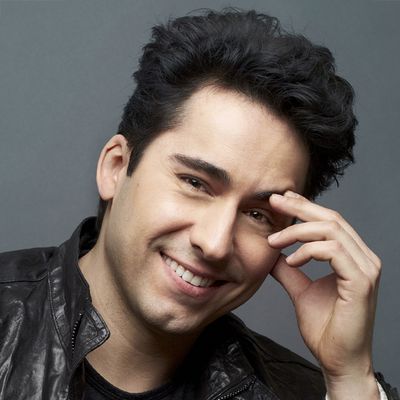
On the night John Lloyd Young won his Tony the stars who announced his category were Harry Belafonte and Glenn Close! During his emotional speech where he disclosed that his mother had died when he was only two years old, Mr... Read More
From the show: And the Award Goes To... Hosted by Ilana Levine
Guests
Featured Shows
About
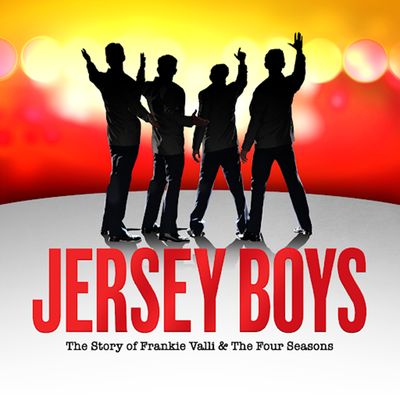
On the night John Lloyd Young won his Tony the stars who announced his category were Harry Belafonte and Glenn Close! During his emotional speech where he disclosed that his mother had died when he was only two years old, Mr. Young went on to dedicate his award to his father and spoke of the struggles they had gone through together. As a Commander in the United States military John's father was not encouraging of his son pursuing a life in the arts but after graduating from Brown University John made his way to New York City where he struggled on his own for ten years before he landed the role of Frankie Valli in Jersey Boys. His story is at times heartbreaking and completely fascinating but ultimately it is the story of an artist who could not be deterred from following his dreams.
Welcome John Lloyd Young to the podcast.
Hosted by Ilana Levine, Produced by Alan Seales, part of the Broadway Podcast Network.
Transcript
This transcript was automatically generated and might contain errors.
[0:00] John Lloyd Young: Hi, I'm John Lloyd Young, and you're listening to And The Tony Goes To...
[0:22] Ilana Levine: Have you ever dreamed of winning a Tony Award? Did you ever practice your Tony acceptance speech in the bathroom mirror? Did you grow up watching the Tony Awards every year? Do you have a collection of Tony Award shows on VHS tape that you refuse to throw out? Well, then this is the podcast for you. Every week, I interview your favorite Tony Award winners, and together we go down memory lane as my guests share intimate and never-before-shared details about their Tony experience. By the end of every episode, you're going to feel like you just won a Tony. Welcome to And The Tony Goes To... I'm your host, Ilana Levine. Welcome today's Tony winner, John Lloyd Young.
[1:12] Ilana Levine: And the 2006 Tony Award goes to... John Lloyd Young.
[1:19] John Lloyd Young: Thank you. I have something else in common with Christian Hoff tonight besides this. I also lost a parent. My mother died of cystic fibrosis before I knew her. I was two years old, and I don't remember her. I do remember, though, when it was just my father and me before he met the woman who would become the mother who raised me before my younger sister, Jillian. It was just the two of us, and he was my whole world. He was an officer in the Air Force, and I always wanted to be an actor, and that put us at odds at certain points. But my girlfriend, Allison, assures me that my struggles were probably harder on him than they ever were on me. So I'm very, very proud to share this with my father. Dad, we're among 6,000 people tonight, but for some reason, I'm remembering that first early struggle that we got through together, and somehow it feels like it's just the two of us again. Thank you.
[2:37] Ilana Levine: Hi, John.
[2:41] John Lloyd Young: Hi.
[2:46] Ilana Levine: That is one of the most extraordinarily moving Tony speeches I've ever heard, and you're talking to someone who's watched every Tony Award from birth ceremony.
[2:53] John Lloyd Young: Well, we've got that in common.
[2:56] Ilana Levine: How does it feel? What comes up for you listening to that?
[3:00] John Lloyd Young: Well, that father that I mentioned is a 2020 casualty, so I just lost my father in August. You can infer from that speech that my experience with my father was sort of like the anti-Lin Manuel Miranda experience. Lin Manuel seems to enter every room riding on the shoulders of his parents, like, here's my son. He's with him everywhere he goes, even if they're not physically there. There are lots of different stories in artists' lives, aren't there? If you've watched tons of Tony Awards, and I've also watched tons of Tony Awards, I had a certain story and a certain thing that, again, I say you can infer. With an Air Force parent and a military, he was actually a commander. His command was to get real and to do something practical.
I've always been a dreamer. Again, like I mentioned with Lin Manuel, his mother was a child psychologist. His father was a political operative. He went to school in New York City. In his high school class, Stephen Sondheim came to visit him. Especially over the last several years when we've looked at and talked about privilege and things like that, we tend to limit our discussions of privilege to racial identities and sometimes maybe socioeconomic. When it comes to privilege in the arts, and so many people will be able to relate to this because a lot of people enter the arts because they want to resolve something emotional or fill some emotional hole. There's also the question of privilege. Were you assisted or dissuaded or even abused by the people who could have nurtured your artistic pursuits?
Where do you start when it comes to that? We're not all equal when we enter this business in that regard. We don't all enter the business on this wave of support and love from our families. Many of us have the exact opposite and we're treading against a current that's very strong. In my case, I'm an Ivy League graduate, even though Jersey Boys would never tip that off. They will not let you put that in the playbill, please. School of Hard Knocks, that's where we went. School of Hard Knocks. My Tony speech, knowing all of this history, and I remember very distinctly watching B.D. Wong accept his Tony for M. Butterfly. I was a little younger than him. That speech to me was a real opportunity to take the high road with my father and invite him to go along with me now on this artistic career that I had clearly succeeded in, finally.
That was a public and high-minded reckoning with a father figure who was problematic when it came to supporting my pursuits. I did it out in the open, out in public, and that is almost embarrassing to listen to that only because it's so honest.
[7:11] Ilana Levine: I get it.
[7:11] John Lloyd Young: There you go. Obviously, you bring something up from several years ago that I haven't heard in a long time, and it still hits some emotions.
[7:25] Ilana Levine: Well, I mean, it's extraordinary. Your ability to be so present in a moment that is so heightened and all that goes into the moment that we just listened to, it's years and years. Then just what goes into being a nominee, just what's asked of you in terms of all of the things that happened before the night. To be as exhausted as you must have been and as present as you were, it resonates very deeply. I thank you for sharing that because there are many people who feel like you do and live in the camp of not having support. The idea that you who sing and act and dance and have this extraordinary talent that is undeniable and singular found your way somehow, against all odds, literally to an audition for Jersey Boys, which became bigger than most things that ever come to Broadway and that in and of itself is a success, right? Just getting there. You're part of an international franchise and you were the center of it. Can we go back to how the show came into your life before you came into our lives with the show?
[8:46] John Lloyd Young: Sure. Now, I have something that involves you. Should we hit stop?
[8:56] Ilana Levine: No, I think we should keep going. One of the things that I said just a minute ago was that I remember distinctly B.D. Wong winning his Tony for M. Butterfly. He's a little bit older than me. I've said this before when it comes to the cast of Rent. I got to New York and the cast of Rent was like the cast of Hamilton now or let's say before the quarantine. I wanted to be on Broadway, all this stuff. Those guys are also about five years old, older enough so that it feels like they're the older brothers that are just going out of high school when you're coming in as the freshmen. You have just this almost like a younger sibling kind of admiration for them. I got to New York out of college in, I think, 1998, somewhere around there.
I had internships in production offices and everything, including the Jujamson Complex above the St. James Theater. I remember passing your marquee, Ilana Levine, and last night at Ballyhoo. I remember passing your marquee and every marquee, that Broadway area when you're on the outside looking in. Every name on those marquees, everyone who...
[10:27] John Lloyd Young: I had their photo on the outside of the theater, everything who was working on Broadway, I was so impressed by, because they were doing it. And it took seven years from my staring longingly at, you know, your cast list outside of your theater, until I was doing my first Broadway show. So I don't think we can underestimate, or we should underestimate, the importance that we have when we're working on Broadway, whether we're in a Tony-nominated role or whatever. And we can't, we shouldn't underestimate our importance to younger people coming up, because we mean everything to them.
[11:19] John Lloyd Young: Yeah. And then, so then let's say you achieve your dream and you win a Tony, whatever. I wanted to make that moment count and mean something to the people who didn't coast into Broadway on a wave of... Nepotism is not always bad. Sometimes it's great to have tutelage from people who really know the business, you know, if you're married. But there are people who come onto Broadway on a wave of connections from their conservatory, or again, like very supportive family. Or I, you know, I was at the Ivy League. I went to school with some pretty rich kids. Like I had some friends who, right out of school, where their parents bought them apartments and set them up in New York. And all they had to do is take classes and audition. You know, I was doing the night shift at like, you know, Morgan Stanley, eating my lunch break at midnight at the McDonald's in Times Square, you know, or Tad Stakes.
[12:19] John Lloyd Young: I've been there. I've been to both of those establishments. There are different paths is what I'm saying. And I wanted to speak to the people who didn't have maybe as much as an easy time coming up.
[12:33] Ilana Levine: Do you think there is anything to the discipline and myopic vision that many people in the military have at their core that you absorbed from your dad that you were able to apply to your own career goals?
[12:59] John Lloyd Young: I think the answer is in your question, which is that, like, yes, that when you're raised by a commander in a military situation, you know, let's say like the hijinks that a high school student would go through in a normal life, you don't think you're, it's like your dad being the attorney general of the, of, you know, when your father is a commander, you can't go out and get a DUI, you know, as a 16 year old without hurting your father's career. So it's almost like being the child of a politician in a way. You have to really, you learn discipline, but you also have to learn certain sort of self-control that is kind of sucks the fun out of it and spontaneity out of things sometimes. But then when you're doing what must need to be done in especially something like a Broadway musical where you have to show up every day and have the same energy for the same, for a big audience in a multi-million dollar enterprise, you know, that, that kind of being raised by a commander really helped, you know.
[14:10] John Lloyd Young: Well, I told you before we started recording that I had regards to you from your stage manager and the thing that he said to me as a man who had been with that show from the beginning is that whether it was your first preview or your last performance, you would never know in terms of your energy, in terms of your focus, your commitment to the part, to the company, that you had been doing it for a long time, that you brought it every single night. And did you feel that way?
[14:47] John Lloyd Young: I'm very, very audience focused. If I hadn't become an actor and singer, I might have become, I might have engaged in politics or trial law or teaching, which, you know, someday I could do any of those things, maybe not trial law. I'd have to go to law school and don't know if I would have the patience for that. But, but I think that because I heard someone say this one time and I, and you're an actor, so you, you'll know, I mean, instantly you could think who falls into which category, that there are two types of performers. There's the, there's the kind that comes out and says, here I am. And there's the other kind that goes out and says, there you are. And I've always been there you are type.
Now I have an ego like any other healthy artist. And so what, if I've achieved really well with the there you are part is sometimes I want a little bit of here I am attention, but mostly I'm more that there you are. And especially when I'm stepping on stage with a new audience, I'm excited for them because most of them are seeing it for the first time. And especially if you're in a hit show and you and your cast have gotten accolades and you or yourself came up as a fan of Broadway, you know what that excitement feels like. And so you want to give them what they're there for and you want, you're happy that they are excited to see your performance that they've heard about. So that never stopped. Every single time we'd go anywhere, do interviews or, or even, or just the show itself, that was always the case. And so, um, I was very excited to bring them what they were there to hopefully see.
[16:40] Ilana Levine: How did you come to this part? Quite literally, how did you become Frankie Valli in Jersey Boys?
[17:00] John Lloyd Young: Well, I had an Italian American grandfather, um, from, you know, he was the fifth, he was the fifth child, the only child born in America to immigrants from Italy and from, you know, Queens, which is not too far from where the Four Seasons were coming up. And the same generation, actually, my grandfather was same generation as Frankie, sort of same height as Frankie and very, you know, very similar. So I had, um, there's this coach and I forget, and maybe you will know, he wrote a book. Um, he coaches people out in LA, an acting coach anyway, very central to his idea. And the book is this idea of blood memory that some characters for us are more accessible than others because they just tap into something that we have in us.
And that in me was the Italian American experience, even though I wasn't raised that way, I didn't have the accent, you know, it was my grandfather. I, you know, I fucking love the guy, you know? So I had this love for the character already because he was similar to my grandfather, Frankie. And my grandfather was a singer, but, you know, uh, an amateur one. He actually was a garment worker in the garment district. So he always used to talk about how he'd come alive when he'd get up from the subway and he'd be there in Midtown Manhattan.
[18:30] John Lloyd Young: Wow. So I tapped, you know, I read the script, I knew about Frankie, but that energy of a guy from that era and that part of the world, I just basically played my grandfather. And you said earlier, you know, when I was coming up as this working class hero, iconic singer from the sixties, you know, portraying him in Jersey Boys was coming a hit. I had a choice, you know, in my bio and the playbill could I, I could say I was a graduate of Brown university, but I figured it would be better for these whole, whole mythology of Jersey Boys and the tri-state area and these Italian immigrants for me to, instead of doing that, to dedicate my performance to my Italian grandfather, Michael Cianciola. And that's what I did.
[19:21] Ilana Levine: Were you someone who grew up listening to this music? Were you, were you like me? Like when I saw the show, I remember thinking, what every single song I know they wrote, like I remember being completely blown away at the number of hit songs that these guys had, had brought into the world. Were you sort of aware of all these songs?
[19:49] John Lloyd Young: I had the same experience as you, when you watch the show, I had the same experience when I was reading the script to do the show. You're like this one too? What? Yeah. Every song came up. Yeah. Because, you know, they're a little ahead of my time. Although weirdly my time, you know, I had three sets of grandparents, all war era, you know, growing up and my favorite music was the war era music, Sinatra and standards and everything. So even though the four seasons were ahead of my time, they also just were sort of missing the mark on what I was listening to, but their, their songs were, as they say in the show, so ubiquitous that I realized when I started to get into the role that, that these songs are really just part of the tapestry of an American life.
[20:42] Ilana Levine: Was this a hard part for you to get? Did they put you through a lot? I mean, I had to jump through hoops.
[20:54] John Lloyd Young: I was still a little green. A year later, they came back. They came back to me, you know, for Broadway, and I think I had about six or seven auditions, which is not too out of the ordinary for a major role in a multi-million dollar enterprise, you know. But it was harrowing.
[21:15] Ilana Levine: So how did it feel when you found out you got it, and how did you find out you booked it?
[21:19] John Lloyd Young: I had just had what felt to me to be a disastrous callback with the choreographer, with Sergio Trujillo, who's, as you know, my reputation is tough, and good choreographers are. Long story short, he ended up becoming my greatest ally, and I have a lot of affection for him. But at that point, I felt like I was down and out. So I went into, you know, I had that callback, and dancing was not my strongest suit then. I'm better now, having gone through it. But I was dejected, and I went out into the Times Square area, just like wandering those same streets. In fact, the same block where I used to pass your marquee for Ballyhoo, and I dipped into that theater memorabilia store that used to have a seat in the back, in the bookstore area of it.
Yeah, 44th and 8th. Yep, and I sat down on that seat, and just, as the Brits say, gutted. And on the in-house radio, this Moody's Mood for Love, this jazz version of Moody's Mood that Frankie Valli sings, it's an integral part in the show where Bob Gaudio discovers Frankie's voice. This song comes on the radio, on the in-house radio there. And I sit down, and I'm thinking, if that's not a sign that I got this, I don't know what is. And I sort of half-believed that it was the sign. And then, within the hour, I had a phone call from my agent saying that I had booked the part. So, out of sorrow came joy.
[23:09] Ilana Levine: And the other thing that happened to you, which is almost unprecedented, is that, and we see that now, there are all these Broadway musicals that are coming out, you know, West Side Story, The Prom. You did the Broadway show, and you starred in the film version directed by Clint Eastwood. That never happens. It happened to you.
[23:36] John Lloyd Young: I wanted it to.
[23:38] Ilana Levine: Well, sure. But it did.
[23:41] John Lloyd Young: Yeah. But, you know, there's duality. So, that's fantastic that it happened. But the other side of it, and I'm just saying this for actors who listen and are like, God, I hope that someday I win a Tony. There's another side to that, being so aligned with something so famous, is that it's hard to get other stuff going as an actor. And most of the time, I think, in a career, you have a choice. You can either work all the time, or you get known for one thing, and then some people have a hard time living that down, you know, those rumors about people from the movie of Grease, being annoyed that they're forever aligned with those characters, you know. Worst things to happen to an actor, in my opinion.
Because I have no other choice, and it's been this way for years and years now, I've chosen to embrace that and see it as a real blessing as an actor, to have done most of my things under the radar, off and off, off Broadway, where no one cared and no one knew. And then my first big thing was this iconic role that now I'm known for. And then the difficulties I allude to on the other side, where it's hard to find other things when you're so well-known as one character, then I've gotten to do all these other things in life that maybe I would have ignored if I were going from Broadway show to Broadway show. And so now I can say I have a really full life with lots of explored territories.
[25:16] Ilana Levine: Right. Did you love playing Frankie?
[25:23] John Lloyd Young: Yeah. And, you know, when you mentioned the movie, the thing I was happiest about getting to do the movie is that I knew it would be a completely different approach because it was on Eastwood. And so this character I knew so, so well, but I was limited to the script on the stage of Broadway, you know, I got to take him out to play in other arenas, even scenes that didn't ultimately make it to the final cut of the movie. You know, I got to exercise this thing I knew really well and take him into different areas.
[25:57] Ilana Levine: Yeah. Literally, literally as well. Right. I mean, get off, you know, a stage and into the real world with this guy. Did you have to audition for the film or did Clint Eastwood come see you in the show?
[26:12] John Lloyd Young: He saw me in the show and ultimately I didn't have to audition.
[26:20] Ilana Levine: Was that bananas?
[26:22] John Lloyd Young: Also unprecedented, probably.
[26:24] Ilana Levine: Were you like, what?
[26:27] John Lloyd Young: No, you know what, though? I did my, I had paid my dues, Ilana. Like, that was five years into the run. I'd gone away, done other things, successfully done other things, tried to do some things, not so successfully, another big role. You know, I could have done the chorus of something, but that would be like Cassie auditioning for a chorus line. You know, like, it's almost like it doesn't fit, like you shouldn't be doing, you know, but I just didn't find another role. So I went back to that. And, and by the time he showed up in there, in that theater, I, at that point, you know, five years in, major hit, I said, if my performance on stage isn't enough for Clint Eastwood, then it's not meant to be.
[27:14] Ilana Levine: Did you know the night he was there? Did you know he was in the audience?
[27:18] John Lloyd Young: I did. And that helped too, that the guy who was going to direct something that could be life-changing for me was there five years in, because by that time, you know, Hamilton, you know, these big hit shows, everybody who was everybody could have our, had already seen us.
[27:33] Ilana Levine: Exactly.
[27:34] John Lloyd Young: I wasn't intimidated by anyone in the audience, even if they had the power to put, I was just proud to do what I was great at in front of him. And if it wasn't for him, then it wasn't for him.
[27:48] Ilana Levine: Right. John, it's all extraordinary the way it turned out for you and this show and the idea that you've gone on to explore your own artistry in so many different ways. I feel really confident that Broadway will lure you back with a new role that you can inhabit with the same passion. And how did you describe it? Blood? How did you describe it earlier?
[28:20] John Lloyd Young: Blood memory.
[28:23] Ilana Levine: Blood memory, which is extraordinary. I've never heard that before. And I really think it's true. And it's funny that you said Ballyhoo, because I very much felt like that when I played that role. Before I let you go, I have a couple of questions that I know you're going to know the answer to. Are you ready?
[28:42] John Lloyd Young: Go for it.
[28:43] Ilana Levine: Okay. Who did you bring to the Tonys?
[28:50] John Lloyd Young: My then girlfriend.
[28:53] Ilana Levine: And what did you wear?
[28:56] John Lloyd Young: We all wore Ted Baker tuxedos because Des McEnough was a big Ted Baker fan at that point. He might have changed designers by now. We all wore Ted Baker tuxedos, white ties on white shirts. Pretty elegant, I think.
[29:15] Ilana Levine: And where is your Tony Award?
[29:19] John Lloyd Young: My Tony Award is in a display case with my other awards for Jersey Boys and now my art pieces. My own art pieces. Some of them. The ones I like. The ones I'm not mad at.
[29:39] Ilana Levine: Somehow I know exactly what you mean. John Lloyd Young, thank you so much for being on the podcast today and for just being one of the great ones. So thank you. Thank you.
[29:54] John Lloyd Young: And thank you for being a stars in my eyes influence when I was coming up.
[30:00] Ilana Levine: I will just tell you briefly that that very billboard, whatever you call it, the huge poster in front of Ballyhoo on the night the show closed, I was with my dad and he asked the people loading out, what are they going to do with that? And they said, throw it out. And that poster, that huge laminated poster, lives in my parents' house in Teaneck, New Jersey. So if you ever just want to come over and stare at it with my mouth agape.
[30:30] John Lloyd Young: Exactly. It's right there for you.
[30:34] Ilana Levine: All right. Be well. Stay safe. And thank you.
[30:37] John Lloyd Young: Thank you.
[30:43] Ilana Levine: And The Tony Goes To is produced by Alan Seales for the Broadway Podcast Network.
[30:49] Ilana Levine: The music and lyrics for the theme song were written by Georgia Femusa.
[30:53] Ilana Levine: Theme song orchestration by Alexander Sage Oyen.
[30:56] Ilana Levine: Episodes are edited by Derek Gunther.
[30:59] Ilana Levine: Thank you to Parody Bill for the graphics.
[31:02] Ilana Levine: And please don't forget to go to the iTunes show page and rate and review the show.
[31:07] Ilana Levine: Thanks for listening.
[31:08] Ilana Levine: Excerpt from the Tony Awards used with permission of Tony Awards Productions.
© Broadway Podcast Network, All Rights Reserved