

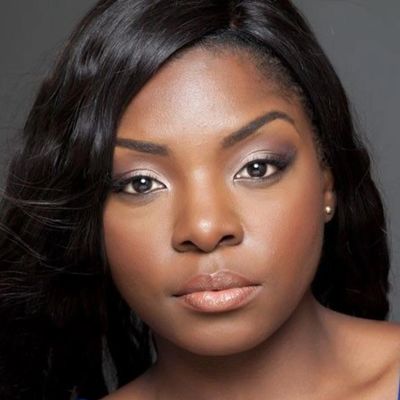
Joaquina is best known for playing Nelly O'Brien in the Broadway musical Paradise Square, for which she won the 2022 Tony Award for Best Actress in a Musical. She was also nominated for Best Actress in a Play in 2020 for portraying Kaneisha in Slave Play... Read More
From the show: And the Award Goes To... Hosted by Ilana Levine
Guests
Featured Shows
About
Joaquina is best known for playing Nelly O'Brien in the Broadway musical Paradise Square, for which she won the 2022 Tony Award for Best Actress in a Musical. She was also nominated for Best Actress in a Play in 2020 for portraying Kaneisha in Slave Play. In addition to her theatre work, Kalukango has appeared in One Night in Miami and When They See Us.
Hosted by Ilana Levine, Produced by Alan Seales, part of the Broadway Podcast Network.
Transcript
This transcript was automatically generated and might contain errors.
[0:00] Joaquina Kalukango: My name is Joaquina Kalukango, and you are listening to And The Award Goes To...
[0:23] Ilana Levine: Have you ever dreamed of winning a Tony Award? Did you ever practice your Tony acceptance speech in the bathroom mirror? Did you grow up watching the Tony Awards every year? Do you have a collection of Tony Award shows on VHS tape that you refuse to throw out? Well then this is the podcast for you. Every week I interview your favorite Tony Award winners, and together we go down memory lane as my guests share intimate and never before shared details about their Tony experience. By the end of every episode, you're going to feel like you just won a Tony. Welcome to And The Tony Goes To... I'm your host, Ilana Levine. Welcome today's Tony winner, Joaquina Kalukango.
[1:09] Joaquina Kalukango: Thank you to Garth Drabinsky, our producers, Moises for leading with love. Thank you to Jason Howland. It is a privilege and honor to sing your music every night and more so of an honor to call you friend. Thank you to my incredible company. This is ours. Look at what we have created. We gave ourselves a voice. Those are the lyrics that Mosse and Nathan gave us. Thank you, Christina Anderson, for centering Nelly's voice in this story. I give thanks to all of the nameless ancestors who have suffered. This song, this show gives power to that. I honor them every day, and thank you to my son. You are the biggest blessing in the world. I love you, Pharaoh, with every fiber of my being. Mommy loves you. Thank you, the Tonys. Thank you, America's Next. Oh, gosh.
[2:10] Ilana Levine: Welcome, friend. Before we started recording, you said you had, in a way, purposely avoided watching it again. What was it like watching that acceptance speech now with a little distance from the experience?
[2:25] Joaquina Kalukango: I still feel like I have anxiety watching it. Why? Why? I don't know. Honestly, it was such a whirlwind. The speech, I never wrote a speech, and my sister kept hounding me for weeks, like, you don't want to be up there without anything to say. And I was like, I'm not going to write a speech, because last time I wrote a speech, and it didn't matter. So I'm just going to forget about it, right? And I don't know what happened in that moment, but I guess the words just came. And I don't know, that day, that specific moment of being there surrounded by my sisters, my best friend, my family, it was so much love. It just felt like everything kind of hit and rushed me at once. And it was a bit overwhelming, but of course, so exciting. And I literally was like, what is, I don't even think I registered what was happening at the moment. It was just like, vomit out some words, you know?
[3:36] Ilana Levine: Well, I mean, I, you know, because you had been nominated for Slave Play, because you had gone through the experience of being nominated, and then your name not being called, were you protecting yourself in case that happened again? Is that why you think you didn't write a speech?
[3:47] Joaquina Kalukango: Oh, absolutely. I was like, I'm not doing that. And honestly, I think I just wanted to be like, I just want to enjoy it. I think by that time, with everything that was happening, this was like a once-in-a-lifetime chance for me. It was my first time, like, leading a musical. And so I knew it was special. So no matter what, the fact that even the first Tonys, it wasn't at Radio City Music Hall. So this was like my first time really going through the Tony experience, the full experience of it. And so I really just wanted to enjoy every moment. And somehow I think writing things down on paper probably would make me, would take away from that. And so I just wanted to be present, I think, more so than anything.
[4:38] Ilana Levine: Can we talk about also what was so epic and iconic that night, and is probably one of the most viewed YouTube clips in history, is your song, Let It Burn, that you sang during the Tony Awards ceremony. And obviously, in retrospect, you have to have some understanding of what that song meant to people, why the reaction was so incredible, was A, your performance, B, it's an incredible song, and C, the moment when something artistic meets a moment in our culture in the way that that song does, everyone feels changed by it. And I, you know, I found through my television screen, the power of that song came through just as much as it did as when I got to see the show on Broadway. So can you talk about what it meant to you? What went through your body and spirit singing that song on the night?
[5:46] Joaquina Kalukango: Oh, I think there were so many things at play by the time we got to perform. Because we knew as a cast, we never, we never got any type of promotion for our show. So we had no performances where people could see us. There was no album out, of course. So this literally was our only moment to kind of showcase our show in a national way. So that was very heavy, I think, on a lot of us. But more so than anything, we felt like the underdogs through, I think, a lot of the season. And so in that moment, I remember just being with my cast members backstage and us praying and us covering our steps. And we said, at the end of the day, all we want to do is just give them the five points in all its rawness.
Let's make this the most truthful moment that we possibly can in the stage, which, of course, you know, it's hard to do when you're not doing a two hour show to prepare you for this moment. You're taking a snippet out. Right. But my cast, literally, they busted out as soon as the curtains opened, full on dancing and singing. I was like, OK, let's go. Let's meet this moment. And to perform in that space, the magnitude. It was also my first time seeing people as I sang that song, because usually the you know, the lights block out the audience so you can really kind of zone out. But this time it was like, no, these are people and we look at them. And I don't think I could. I don't actually remember anything about how I was feeling, to be quite honest, in that moment, other than I prayed before I went out and I said, I'm just going to be as honest and as truthful as I can in this moment.
And there were lots of things that pissed me off, to be honest, before that performance. So I used it. And I think I think this, like you said, the song, it's such a glorious song as a black woman and with my history as an African woman, with my history and my family's history. These words ring true to so many people. And to sing that, I think, on the national stage was is a moment I don't think I fully grasped, to be honest. Yeah, I think I'm still kind of in shock about about it all. But it was a beautiful moment. And I'm so happy it resonated with so many people because when we performed it at the theater, it was always such a spiritual grounding moment in the theater and you could feel the energy.
And so to know that it resonated with people on a TV screen in the same way is, I think, really moving in a testament to Jason Howland and Christina Anderson and everything that they put in creating this piece and our cast, everybody.
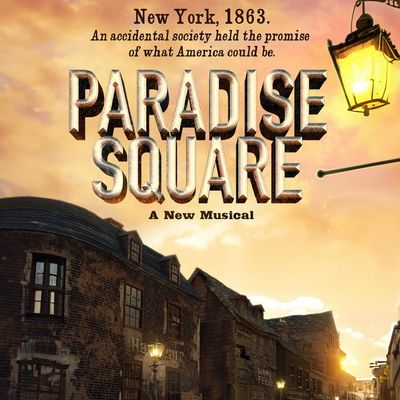
[8:34] Ilana Levine: Yeah, well, it really felt like one of those, you know, when a dress fits just in it's like couture. I felt like this song was made for your instrument, like there was something about the relationship between artist and song that was just really thrilling to be in the presence of, you know, we've we've been blessed to hear you talk so much about the history of the show. You know, for the few people who don't know, it really is about this moment in American history. There were these it's called the draft riots of the 1860s. And it was a part of American history that not enough people knew about. And the show Paradise Square really got to tell the story and teach us about a very ugly moment in history that brought a lot of heroes, right, unlikely heroes to the forefront.
But when you just mentioned your own family's history, I feel like that's not something people have been able to hear a lot about. And I wonder if you could share when you talk about what it meant to you specifically, as a human being who has a certain lived experience, and a familial ancestry. Can you just talk a little bit about your own family's history?
[9:49] Joaquina Kalukango: Sure. My family, my family, my parents are political refugees from Angola. So they came here in the 80s. And Angola, as maybe people don't know that they had a like a 27 year civil war. And it's rife, Angola's rife with colonialism, and all of the traumas that come from that. And so, in thinking about freedoms being taken away, about communities being ripped apart. All of that, I think, rang so true for me as an artist, because it's just DNA, it's in the blood. And it was so important to tell the story, the fact that it was a New York story, you know, I mean, we weren't far from where it happened. And so to be able to tell this piece of history, I think is so important moving forward, because it showed what happened when communities kind of get together, and you don't have to be, community can look like anything, right, and can be made up of so many different people.
And I think that's so important to remember. And there are so many things that try to divide us every day. But when we look back at our history, and remember those moments where those divisions only brought a united people, instead of separated them, I think is an important reminder, as we move forward throughout our years, you know, because it keeps, honestly, history just keeps repeating itself in different cycles. And it's, it can be frustrating. But I think the moments that we can learn from, glean from and move forward and continue to push the button, I think is always going to help us.
[11:34] Ilana Levine: Um, tell me about your journey with Paradise Square. How did this play come to you? There was a lot of news around your show in terms of producer drama.
[11:52] Joaquina Kalukango: How did Paradise Square come to you as a play in your life? Moises reached out to me and my agents with an offer to do this musical. They knew that they were going to have an out-of-town tryout in Chicago and then with the hopes that it would go to Broadway. And so in the file, he sent me the script, a couple of the songs that they had at that time. And I believe a CBS YouTube link of like the cast performing and talking about this piece. And I was so moved. I thought, oh, one, this is a period piece. So I'm like a historical junkie. I love anything. So I was like, I'm hooked. Let's go. And the music was exciting. And I felt it just felt epic and lush and a big cast and something about these worlds excited me.
The fact that this woman, she was a bar owner and a free Black woman at that time, at a time when most of the people that looked like her were enslaved. And so just that playing with those circumstances and also living in this community that's ridden with disease and poverty, but also full of so much hope and creativity and life felt exciting as an artist to play with. So I was coming out of, we were all coming out of, you know, of, of the COVID lockdowns. And I was like, I am so out of shape. I haven't sung anything since, I don't know, The Color Purple, like a long, long time ago before I had a child. So for me, I was like, I don't even know if I can breathe. Like literally I've been, I was holding my breath for two years, you know?
And so for me, I immediately was like, okay, I need to work with a vocal coach. Let's figure this out. Because this was uncharted territory for me. So I got in contact with Joan later and she, we just started going through music and just like drilling my body, had to try to get in shape. I read 15 books about the history of New York at 1863 and specifically African-Americans during that time in community. And then we started rehearsals in Chicago and Chicago is such a beautiful, beautiful city, full of creativity and art. So it was nice to be away and to have that moment to work on it. But it was, it was, the process of creating a new musical is, is, you know, hard. You get new songs sometimes a day or new scenes right before you have to preview them at night, which is, you know, exciting and crazy.
But it was specifically, it was, it was challenging. I think we, we, we had great, many great discussions in our cast about how to make sure that the Irish and the African-Americans at that time were represented properly and what ways we saw fit to make sure that certain moments were seen. And I have never been around like such passionate people. Every day truly was a joy. People were putting their hearts on that stage. I mean, just like the physicalities of our dancers and what they were doing every night with the Irish step dance and the juba was just, it was like watching athletes. You know what I mean? And mind you, I'm just like singing in a corset, so it's okay. It was all right for me, but, but like, they are truly like masterful athletes.
And there was a lot of love in creating this piece. And, and then you run into running out of time. Right. So we had only so much amount of time to work in Chicago and then to try to bring it to Broadway had its own feet. And that was specifically challenging because we only were given like two weeks to implement like a whole new act two with new songs. And so having that kind of crunch time to figure out, okay, this is a completely different show. How then do we create this process now to try to implement this in the middle of a time where everybody's also catching COVID and shows are shutting down. I mean, there was, this was definitely one of the hardest and most chaotic processes I've, I've been a part of for all of those reasons, but also the most fulfilling.
I feel like there's something really beautiful about being in the midst of chaos and you having to figure out how to stand firm within that, how to not get swept up in the tornado. And that was a really, I'm grateful for that lesson moving forward and knowing that I can survive anything. I don't, there's, there's beauty on the other side of it. And of course there were moments where I wanted to quit or, you know what I mean? I wanted to leave and had I, things would have not played out. So I think it was a testament to, to, to staying and to staying and growing and not just staying for staying sake, but staying and growing within that process. You know, Moises Kaufman is known for projects like the Laramie project and, and these very you know, he goes into communities and, and creates plays from the stories of, of often tragic stories that happen and sort of build the pieces around, you know, the real life people and, and then sort of transcribing and creating theater pieces.
This is, this was a very different kind of experience where he's working on an established piece of writing that's not born out of interviews, but, but out of the mind of the playwrights and the, and the, the book writers and the lyricists. What, what was it like, what is his way of, of leading a rehearsal room for something like this? I, I, I joined in, there, a lot of the cast members had been working on this project for years. So I was relatively new. So essentially I was joining something that was already pretty much established. And at least for his process, for me, of course, you know, we read the script, we discuss things, we talk about dialects, we talk about the world. But I also think like this was a, a new and fun challenge for him.
It was his first time, you know, directing a musical and it's an epic one. It's a, it's a huge one. So there was just a lot of time given to choreography and, and music. And I feel like where, where he really stepped in beautifully, I think, was in tech, as most, you know, directors either, they, they start putting together their vision and seeing how things work. But he, he, what I said in the speech was very true. He always led with love. So if anybody felt upset or disturbed or wanted to discuss something, he would just, he would just upset or disturbed or wanted to discuss something. He always gave the grace and the time to have those discussions, to have hard conversations and to hear that and be present and to be accountable for what was happening in the room, I think is a huge testament to his spirit.
Yeah, it was, it was, he's such a lovely person and lovely human being. So we really had a great time. You talked about how you sort of dug in to research this period of time. If, if there were a real saloon called Paradise Square, which was the name of the bar in where, where the, the bulk of this story takes place, where in New York City would that be? If we went on a field trip now to find, you know, five points in this area of New York, where was it in the, in the 1800s? Canal Street, it would be around those areas in Canal. I think it's a, it's like a memorial park now, like a little side, I forgot the exact street, but it's over there in Canal and it's only this little area. And this is the crossways of, and, and I just think about how much, you know, it's all been gentrified at this point.
So there's nothing to really remind you of that moment, except like this little memorial plaque in, in like this little section of a park, which is really mind blowing to just know that, that this history and these people live there and what it's become now. It's crazy. So was the song Let It Burn in the show when you met this show? It was. That became, I mean, people really loved the show. I, you know, when I saw it, when it was done, we all had to kind of just sit in our seats for a while. It was a, you know, the ushers had to kind of tell people it's time to go because there was so much to hold, right? Like it was so, there was something about it where, you know, in musicals sometimes there's, um, there's a way in which characters are kind of ideas of people, you know, sort of prototypes rather than real human beings that we, we know and relate to.
And I thought, remarkably in this, in the play of this musical, we really fell in love with these couples. We really fell in love with these families. And we really, uh, we really felt like we lost friends when, when, when we lost characters in this show and, and, you know, our heart broke because we're watching this couple create a really safe haven for so many people to come and, and, and, and Paradise Square was a home away from home for all of the characters in this play. It's like the Iceman Cometh, right? These plays in which the centerpiece is a bar, but it's the stories of all these people who inhabit it. And it was such, um, a devastating thing to see all of these people living in, in harmony and not to pretend that even in that time before the draft riots, things were perfect.
Obviously they were not, but in Paradise Square, there was a haven where really Irish people and, and, and Black people and, and whoever wandered in, uh, were welcome. And so when there's this moment, I mean, for the few people who don't know, basically there's this moment where when the draft happens, Black people are not allowed to join the draft. And then the Irish people had to go enlist and they were furious that there was this group of people who didn't have to go. And so they turned on that group of people. So Let It Burn becomes the song that speaks to all of that, right? Like the loss and the anger and the fury. And it became a song that people came to expect and word on the street was like, in the middle of the show, there's a standing ovation.
[23:45] Joaquina Kalukango: I think there were two moments that I specifically remember having anxiety. And one, I think it was the week, it was maybe like a Friday or Saturday before the Tonys was won. And the first day back after the Tonys on that Tuesday was where I felt like there's an expectation. And I think that Saturday, I literally remember performing Let It Burn through a panic attack. It was like the longest panic attack I had. It lasted all the way throughout the show to the end of the show. I just had to like release myself from the corset. But I think the beauty in it, I totally had to let that go. And once I was able to recognize what that fear was, I was able to let it go. Because at the end of the day, for me, it's always been about the story.
And so the minute that it started to become about other things, or people would say things, I literally had to like close myself off from that energy and just be present. And so I think that's what helped more so just being present in this moment, using everything up in that story until then. And it was this beautiful, it's always been this beautiful shared energy between us as a cast on that stage and the audience. And it's everybody living in this moment. And I remember my castmates, because I couldn't see what was happening, but they could of where they were positioned. And so sometimes they would tell me stories of just like the waves of emotions that would hit people at different time and what it would do.
And I'm just like, that's the power of theater, of experiencing something at the same time. And I think the minute we get in our heads, or people try to get in our heads about things, it's like, the best thing to do is try to shut it off. Because at the end of the day, I was like, I'm human. So if people don't stay in this next time, it's okay. It's not the end of the world. I've had moments to where like, I full on, like hacked up mucus in the middle of Let It Burn, spit it on the stage, because I was suffering from a sinus infection, and kept singing and they were right there with me. It was like one of the most amazing things in my life. And I remember being like, that's the true rawness of theater and art, you can be as present as that.
So something that you think is an error of mucus getting caught in your throat, and you're not being, take it out, use it and keep it going. And it's beautiful. So yeah, those things I always remember more so than the pressure, the pressure.
[27:14] Joaquina Kalukango: And what did it feel like to record the original Broadway cast album for Paradise Square? And to have that? Oh, we have so many emotions around that. Because we honestly don't know if it's ever going to come out. But it's really the most beautiful soundtrack I've ever heard. And I'm not being biased. I swear the music is glorious and epic and beautiful. And even Jason's way of allowing certain movements and tap dances and hand claps to also be incorporated in the music is genius. It brings that energy of what we were doing on stage. It's beautiful. It's devastating. I want everybody to hear it. And we honestly don't know what's happening with that if that's ever happened. But it has been recorded.
Everyone, I've only been able to hear like clips of certain things. So I haven't heard the whole soundtrack. But I just remember the energy of all of us. There were a lot of first time Broadway people in our show. And so the first time in the studio recording and what that meant. Just being all together. It was so exciting and beautiful. So I hope people get to hear it. I hope it comes out. Oh, it has to. It has to. I will start a Kickstarter myself. If necessary. Because I don't know.
[28:45] Joaquina Kalukango: I know. That's crazy. Well, this, this podcast is going to live forever, as long as there's internet. And so I know there's going to be a time where someone listens to this and goes, Wait, there was there was a time where the cast recording might not have been out. What? So that's good to know in the ever greenness of this conversation that there's going to be a time where this is no longer relevant to the conversation, because it will be out there. I just want to go back quickly before I have to say goodbye to you. When your name was called, who was with you in the theater that night? Who was sitting next to you? On Tony night? Who? Who was there?
[29:35] Joaquina Kalukango: Oh, my ticket list, my sister, my mom, my manager, and my agents, they were all there. And your dress, which you which you spoke about in your speech, and your beautiful hair. Can you talk a little bit about how you decided what you wanted to present that night physically?
[29:58] Joaquina Kalukango: Yes. Um, well, my sister, Rachel, she designed my dress, and we talked about it. I've, I've always trusted her. I think her eye is impeccable. And I told her, I'm one of those people that like, I'm not a safe person. I don't really like to be simple. So I was like, if we're gonna go all out, and this is, this is like my first real Tony's first I said, bedazzle me, let's let's give it to him just all of the epic African royalty realness we can get. And so my shoes like, okay, let's get you some diamonds. Let's do some gold. Let's get it out here and see what we can do. And she blew my mind. I mean, she I told her she wouldn't let me see it beforehand. And mind you, I couldn't use the bathroom the entire time.
Because she was like, you're gonna have to suffer. Okay, for this look, you just got to suffer. And Tish, who's been my hairstylist for a couple of years, I, I like people. I just like artists. And so I feel like with my sister, she's an artist. And she's so creative with her designs. And Tish is the same way with hair. She designed my hair for the Slave Play opening, which was like this huge, ginormous crowd. And I'm always like, well, how can we push the envelope with styles that reflect who I am as African? Can we can we see some versatility in that? And she was like, oh, so she gave me a couple of images of things. She was like, maybe what do you think about this? And I was like, oh, that's kind of cute.
And then she came in the next day, literally glued sewn, woven together everything you could think of these crazy pieces braided my hair beforehand. And I don't think people understand like the amount of time you have to get undressed and perform and then get backdressed. My hair before and before. And the time you're giving back is like five minutes, you know what I mean, to get back into your seat. So we were on crunch time. So big ups to them. But I, I just like pushing the envelope. I like I like people who are free and like to explore and experiment and not be afraid of what it looks like, but to have like bold, beautiful, fun, festive visions. And that's kind of what I wanted to do. I like my hair big and I like my clothes bright. So that's I think what happened.
[32:30] Ilana Levine: You were a goddess. I mean, just an absolute goddess. So beautiful. When they did call your name, you you said earlier, it was kind of it sounded like you were describing an out of body experience as you as you walked up to the stage. Do you have any memory of locking eyes with anyone on your way up or any thoughts that you did have as you as you went down the aisle and onto the stage?
[32:55] Joaquina Kalukango: Oh, goodness. I remember my sister pushing my back and telling me go. Go, go. And then when I got on stage, I saw Cynthia and I mean, like saw her and I saw Daniel and we yes, Cynthia Erivo. And then I saw Daniel Brooks and I lost it. These are, you know, Daniel is my best friend. We went to Juilliard together. We've been friends since we were 17. And so to have this moment with her was I don't think we like we were full on all in tears. And Cynthia, I have to say this. We were we became sisters from The Color Purple. And I reached out to her during this time in the middle of Tony campaign time. I was just like, can you give me any tips to help me deal with leading a show like and doing all of this publicity and everything?
Can you just help me? And she gave me so many notes and tips and was so kind. It every day checked on me. And. I'm just like, I literally was like, I need to send a letter to the people because I was like, how dare you do that to my heart? I probably would have had a heart attack on stage like to have those women just be there in that moment and share that love with me is just. I don't know, I feel like I'm going to cry again. Yeah, it's a once in a lifetime experience. I don't think it could have went any better than that. Like, how does it get better than that?
[34:35] Ilana Levine: You know, before I let you go, if you could just answer this question or fill in the blank. To me, Paradise Square is real.
[34:53] Joaquina Kalukango: Thank you for being on And the Award Goes To. I'm so happy we had this time today. You're such a joy.
[35:03] Ilana Levine: Oh, thank you for having me. And the Tony goes to is produced by Alan Seales for the Broadway Podcast Network. The music and lyrics for the theme song were written by Georgia Femusa. Theme song orchestration by Alexander Sage Oyen. Episodes are edited by Derek Gunther. Thank you to Parody Bill for the graphics. And please don't forget to go to the iTunes show page and rate and review the show. Thanks for listening. Excerpt from the Tony Awards used with permission of Tony Awards Productions.
© Broadway Podcast Network, All Rights Reserved