

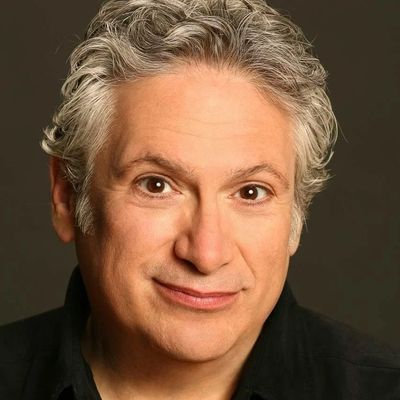
Harvey Fierstein is an American actor, playwright and screenwriter. He is best known for his theater work in Torch Song Trilogy and Hairspray and movie roles in Mrs. Doubtfire, Independence Day, and as the voice of Yao in Mulan and Mulan II... Read More
From the show: And the Award Goes To... Hosted by Ilana Levine
Guests
Featured Shows
About
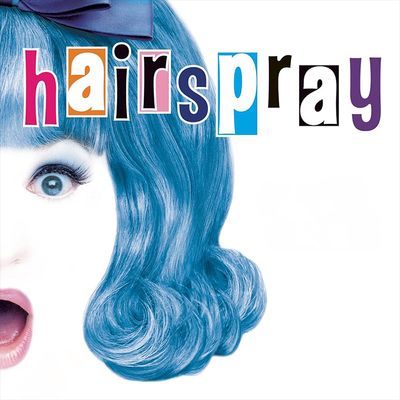
Harvey Fierstein is an American actor, playwright and screenwriter. He is best known for his theater work in Torch Song Trilogy and Hairspray and movie roles in Mrs. Doubtfire, Independence Day, and as the voice of Yao in Mulan and Mulan II. Fierstein won two Tony Awards, Best Actor in a Play and Best Play, for Torch Song Trilogy. He received his third Tony Award, Best Book of a Musical, for the musical La Cage aux Folles and his fourth, the Tony Award for Best Actor in a Musical, for playing Edna Turnblad in Hairspray. Fierstein also wrote the book for the Tony Award-winning musicals Kinky Boots, Newsies, and Tony Award-nominated, Drama League Award-winner A Catered Affair. He was inducted into the American Theater Hall of Fame in 2007.
For his role on the television show Cheers, he was nominated for a Primetime Emmy Award for Outstanding Supporting Actor in a Comedy Series.
Hosted by Ilana Levine, Produced by Alan Seales, part of the Broadway Podcast Network.
Transcript
This transcript was automatically generated and might contain errors.
[0:52] Ilana Levine: Welcome to And The Tony Goes To... I'm your host Ilana Levine. Welcome today's Tony winner Harvey Fierstein.
[1:05] Harvey Fierstein: Thank you. Thank you. Boy am I glad this wasn't a beauty contest. To the other guys, boy you can't compare us. I mean you all are magnificent at what you do on those stages. But I told you Antonio if you're going to come to this country you have to dress like an American. In a dress. God you haven't aged a bit. It really is a dream come true but the team that is Hairspray. Mark Shaman and Scott Whitman and Mark and Tom and Jack and Jerry and the cast. And why don't we have a Tony for ensemble? I mean where is the Tony for ensemble? But I have never felt so embraced by artists in my life and that includes everyone since the moment I said I wanted to do a musical. Joan Lader my singing teacher.
And everyone else who worked on me and with me the designers. Unbelievable. The theater community is just a huge loving family and I am blessed every day of my life to just be part of you people. I adore each and every one of you. I want to have your children and I promise to raise them well. Thank you. Thank you. Thank you.
[2:41] Ilana Levine: Welcome Harvey Fierstein.
[2:45] Harvey Fierstein: But I didn't thank Dick.
[2:48] Ilana Levine: Is that the first thing you thought of just now?
[2:53] Harvey Fierstein: Well actually I thought I could fit in that suit and then I thought I guess because you know because because Dick died a couple of years ago and I'm still I still miss him.
[3:05] Ilana Levine: You and Dick Latessa together in Hairspray. That is one of the most iconic beloved Broadway couplings for the ages. People fell so deeply in love with the two of you. And that was just one small part of all of the amazing things that made this show so special. So I want to go back a little bit. First of all, it's almost 10 years since you won that Tony.
[3:32] Harvey Fierstein: 10? 20. 20. Two decades. Sorry.
[3:39] Ilana Levine: That's right. Time is very strange right now. So let's just go back for a minute and take a little trip down memory lane with Hairspray. Tell me how Hairspray came into your life as an artist.
[3:58] Harvey Fierstein: It was one of those funny things. When we were making the movie of Torch Song for New Line Cinema, John Waters was making Hairspray for New Line Cinema. So they had a party. I'd never met John before though. I was a fan of his work. And so they had a party on a rooftop somewhere and we were all there. So Divine I'd already met and we were sort of acquaintances. And John I'd just met. And it was one of those things when the movie opened it did great. Our movie opened didn't do so good. Life went on. New Line Cinema went on to be whatever New Line Cinema went on to be. And, you know, life goes on. And then, you know, one of these days, I think, well, obviously, you already read my autobiography because you interviewed me about it.
So, you know, I had a long period where I didn't really work. And I was I got sober. I got clean and sober and all that stuff. I got a call from Richie Jackson, who was my manager at that time, saying they're doing a musical of Hairspray. And so that's great. And he said, you should go up for the Divine role. And I said, me in a musical. I love that. You haven't done a musical since I was a kid. You know, I used to write all our shows and musicals back in the ridiculous days, you know, in the La Mamba days. Everything was a musical because, yeah, we were doing, you know, Carmen Miranda. We were doing, you know, we were doing Sound of Music with all guys. And, you know, that's what we did. So we did musicals.
But anyway, so he said, you should go up. I said, great. And then he said, I can't get you an appointment. I said, what do you mean? He said, they don't want to see you. And then I started getting an attitude. I said, they didn't want to see me. They were auditioning. You know, he said, I'll take care of it. And he personally called Shaman. And Shaman said, well, of course we want to see Harvey. Don't be ridiculous. So I get this appointment. I go down there. They're at this long table. You know, those things are like, oh, yeah. There was the director at that time who has. Why am I blanking on his name? Rob Marshall.
[6:19] Harvey Fierstein: Rob Marshall, my darling. Rob Marshall, the sweetest man that ever breathed on this planet. Rob Marshall sitting in the center. Mark and Scott. John Waters. The whole schmageggy of them. And I come in with my pianist because I've been doing one man shows. And I've been doing cabarets and all that. I used to do cruise ships and, you know, the stuff you do when there's no theater jobs. You do all that other stuff. So I had my pianist, Lenny Babish. Pianist to the stars. He was, he was Pudgy. The comedian Pudgy. No. I want to know him. Pudgy was an insult as a woman insult comic. She was the female Don Rickles. She died of cancer, but she used to do. She was hysterical. She was absolutely fabulous.
And he, and he played for her. And that's how I met him at all. Anyway. So two of us come in. And he has, he's brought with him all my music, you know, because we didn't know what, but I figured. I would do a funny. So I did Cole Porter's tale of the oyster, you know, dad, but see, he was a lonely oyster every day getting sad around Moista. So I figured just do that. You know, and so I did that. And I started leaving. And they said to have an up number. I said, do I really start? I said, no, I'm not going to do it. I'm going to do it. And I started leaving and they said, do you have an up number? I said, do I really strike you as the kind of present? What have we got? So you pull out Frankie and Johnny.
I used to do that. The Midwest version of Frankie and Johnny with the dirty lyrics. So we did Frankie and I said, feel free to stop me at any time. Cause this thing goes on and on and on. And they didn't, and they're sitting there laughing at all. And I thanked him very much. And I started leaving. What else do you have? I did everything in my book. I mean, that was an hour long nightclub act. And I did everything in the book and I got out of that room. That was so sweet to me. And I went down to the lobby and a street corner phone. Remember, we used to have pay phones. Remember those things? Yeah. And I called Richie on the pay phone and I said, darling, listen to me. You must call Shaman immediately.
And thank him from the bottom. They were so nice to me. They listened to me sing. They listened to every stupid story I told them. They were so nice to me. Obviously, they just didn't know how to throw me out, I guess. They wanted to make sure that I knew that I was seen. And I said, it was so sweet. And he said, are you done? Are you fucking done? I said, yeah, I'm done. He said, you got the job.
[9:07] Harvey Fierstein: Oh, my God. Oh, my God. And that was it. Wow. So I went in. We did the first workshop. They barely had the first act written. And I walked into the room and Marissa comes running up to me. Now, you know that girl, Marissa? I mean, 20 years ago. We're talking about a ball of fire. I mean, there's so much energy coming at you. It's sort of like being thrown into an oven. She's just that, the heat coming at you from her. And, you know, it was all this excitement. You're going to be my mother. It's like, oh, I was scared to death. And then Rob comes up to me and says, this is your husband. And along comes Dix on a half bent over. And I start laughing because I had fallen in love with him doing damn Yankees.
He played, you know, you got to have heart. So I already loved him. And I had seen him. I mean, I'd even seen him in Follies. I saw him do Follies. He was in the original company of Follies. Anyway, so he comes up to me. And they start teaching us this duet. And he never, not once in all of the years, ever treated me. Well, except when he tried to seduce me, but that's another matter. That's another podcast. Never treated me as a man. Huh? Never. Always treated me as his wife. Always treated me with that kind of respect. Always, you know, opened doors for me. I mean, he was unbelievable. And that attitude of his, that acceptance of him that I was to be his wife, made it all possible. Because the show wasn't really written then.
So it began to be molded around this couple. I mean, they wrote him several songs that didn't work. You know, you do all this kinds of stuff. And the show ends up molded around you. That's what happens, which is why it's always so challenging for somebody when they take over a role. Because the role is always molded on somebody else. And then they have to, even if they're the greatest individual in the world, have to find a way to make it their own. But with Dick and I, it was just this couple that was sort of undeniable. We were just like sort of the moral center of the show. When any of the kids ever got in trouble, whenever they were having a bad day, especially about the business, I sent them up three flights of stairs, straight to Dick's room.
Dick's room was a monastery room. He brought nothing to the theater. I mean, nothing. It was as if he hadn't. I mean, he was there for five years. It was as if he hadn't planned on staying the afternoon. There wasn't a mug in the room. There wasn't a plastic cup. You could have a glass of water. He'd come with his coffee cup or whatever, and he'd put on his costume, and he'd sit there. The man traveled light. Until it was time for his entrance, then he'd come down the elevator, do his thing, go back upstairs, and just sit there. I bought him a television set. He gave it to his daughter. I bought him a stereo. He gave it to his other daughter. You couldn't do – I tried to decorate the room. When we were in Las Vegas, you know how they are in Las Vegas.
There's nothing they can't do for you. I mean, they throw money at you. They throw stuff at you. I mean, they gave us such elaborate gifts. I mean, you'd walk into your dressing room, and you could barely get in for all the gifts. You'd go into his dressing room the next day, and it was all gone because he'd shipped it off to his daughters. So interesting. I mean, now you go to visit someone in their Broadway dressing room, and it looks like you're in restoration hardware, right? Oh, yeah. It's complete. Joe Mantello used to have his – I mean artwork and the furniture matched the artwork.
[14:13] Harvey Fierstein: And then one day he walked in and announced he was leaving. He'd gotten cast in a movie, I could be wrong, probably wrong, a movie, I think it was, I think it was, what's his name, Spielberg movie or something like that. I think it was with John Travolta. I don't know. Some movie never came out. I mean, the short part of the story is it never came out. He left the show. They wanted to have auditions. Marissa, being one of the most loyal human beings you will ever meet on this planet, turned to the producers, turned to the director and said, you have your star right here. He's in the ensemble, Matt Morrison. And she, thanks to her, gave Matt a chance and Matt went on, as we all know, to his own stardom, which is a wonderful thing, but she did that.
So you have some of the background of what it was like. We then had these struggles. I mean, we did a workshop of the first act. Like I said, it wasn't done. They went back, they fixed, they did some more. We had a little bit of a second act. It wasn't working. Margo came to me and said, Harvey, would you join the writing team? And I said, I really don't want to. I really feel like I really want to just act and I don't want to have to take off that hat and sit in the other room and all, because I know what that's like. And once you're in that other room, you never get totally back. So they brought in Tom, which didn't help. Bless him and rest his soul. It did not help. But they wrote a second act.
And I remember we did a workshop of it that was supposed to be our final workshop, like a presentation. Bette Midler was there. And I remember Scott Rudin was there. And I mean, everyone was there for the first act. Many people left before the second act. And the word that came back to me is, I remember was, all you have is a couple of good songs in Harvey. There's nothing else. There's no show. Then we were supposed to go out to Seattle, and then it got really complicated because I couldn't go like that and turned into a whole thing anyway. I silently joined the writing team, you know, ghost writing, whatever that's called. And Mark and Scott never, ever stopped working. I mean, the amount of songs and wonderful songs that were created.
And Jerry Mitchell, I mean, the creativity, the energy that he put into it. I mean, any cast member, I was not in the opening number, but any cast member can tell you the 3,000 versions of the opening number alone. Just, I mean, insanity, and just, but a joyful insanity. Our only problem was early in rehearsal. So we decided to go to Seattle, which was going to be exciting. Once the show, we had a show that we thought would work, finally, and we went into rehearsal. And at the beginning of rehearsal, because of the nature of the show, because of the Black cast and the White cast, we had a situation kind of, as Chita Rivera described it to me, kind of like what they were feeling on West Side Story, where one cast and the other cast almost sat against each other.
That was not our intention at all. It was in West Side Story where they were fighting. That was not, but that is what happened. The Black cast was out in the hall while they were doing, you know, the sock hop dance or whatever. They had nothing to do for days on end. They sat out in the hallway feeling like second class citizens. And Jack O'Brien, being the master director and humanitarian, and also from running a theater company he ran, you know, San Diego, he ran The Globe for so many years, he knew exactly what to do. And he brought everybody together and said, we are actors. We use this stuff. This is what makes it real for us. We're doing comedy and we're doing musical comedy. But that feeling you're having, those feelings, don't let them go.
Use them. Use them in the show. And that really did begin to heighten the, you know, underneath all the spray of hairspray, there is this darkness. And so that was wonderful. We did have to go through that stage to get there. We then went to Seattle, worked our asses off. Very first preview in Seattle, not knowing what the hell we had. I had played with the Seattle Men's Chorus several times, and they bought most of the balcony for that very first performance. So it was all gay men up there, and all fans of mine, which was wonderful to have. And the show started and the audience screaming from the opening number, just screaming. I mean, we were like, looking at each other as we came off and trying to do costume changes, looking at each other like, what's happening?
Is there a show going on that we don't know about? Is there like a circus in town? We were just doing our show, which we, you know, if you've never played in front of an audience, and we certainly hadn't, even in New York, our last dress rehearsal, you know how you do that dress rehearsal and you have friends come? Well, it's not in costume or anything, and it's a piano and a guitar and a drum. You couldn't tell. I mean, you could actually go online and see those little videos. You know, they used to do those little videos, you know, Bruce Glickus and everybody from Broadway.com and all that used to come and do that. And you can see this very little show, little teeny show. And here we are on this huge stage, and obviously filling it, but I really did go out on stage and wonder, were there elephants behind me?
Was there an acrobatic act? I was just screaming. And it went on like that. And I talk about it in the book, when the show is over, we all go backstage, we're all hugging each other and saying, okay, we have work, but obviously something was going right. The assistant stage manager came up to me and said, Harvey, we've got to get back out there. I said, what do you mean? They said, you got to go on stage. I said, oh, did I forget something? I mean, I'm in my gotkas already. And she said, you got to go back. So I mean, I'm in my underwear, I'm in a robe or something. And I go downstairs. And as I get toward the stage, I hear the banging, you know, stomping, feet stomping. And I go out on stage, I'm choking up.
I go out on stage, and the whole audience standing there. It was a great moment. It was one of those magical moments. But of course, they were my friends. So what the hell? But the reality was, you have to go back to the reality.
[21:49] Harvey Fierstein: Yeah. You have to go back to the reality. When I had my legs and body waxed to play the role, I got a staph infection. So I went home every night back to the hotel. I was so sore that I couldn't even put a sheet over my body, just covered in antibiotic cream, with a fan on me all night to even be able to lie down. So you say that all this fabulous excitement is going on. There's the real glamour. And the real glamour is I'm lying there in total pain, couldn't go out to dinner with anybody or anything. Days and days. You know, I think a lot about sort of, you know, I've had the honor and privilege of interviewing you before and, and probably have seen, you know, I don't know, countless, countless performances from Fiddler to Hairspray to, you know, all the different, all the different beautiful things you've done.
It's so interesting because in knowing you and knowing your history, drag early on working with Andy Warhol and Torch Song and sort of originally your experience of, of woman was drag. But when I saw Hairspray, Edna Turnblad is not a drag character. Edna was a woman. I mean, I don't want to put words in anyone's mouth. That was my experience. There was no camp involved. There was no comment. It was seamless, clearly not effortless knowing the weight you had, you know, the fat suits and the wigs and the makeup and the staff infections and all of the waxing. But can you kind of talk to me about whatever language you have? Yeah, about like, what is the difference? Why does it not feel like drag?
[23:39] Harvey Fierstein: Yeah, I knew Divine. And I knew what Divine had done. And Divine had a real way of believing in her characters. She had an innocence that was so magnificent. Of course, she's doing these insane, outrageous characters. And yet you don't really see her lying, do you? She's, there's a truthfulness to everything. So I knew I had to go there. I also knew the size of the show and the camp of it and all that, just that the street kids were going to be doing insanity. I mean, we had songs like Blood on the Pavement. I mean, these are songs that didn't make it to opening night, but about, you know, a kid driving a car and, you know, dying from driving the car. And we had all kinds of stuff that didn't make it.
And I said, and I knew that I had Dick. So what I did was, I got in my car, I live in a small fictional town in Connecticut, which helps. I got in my car, and I went to the mall. And I sat in the food court at the mall. And I watched the big women. And then I went to Lane Bryant. And I watched the women in Lane Bryant. And I said, this is not it. I'm not seeing it all. These women were still, were not embarrassed to be out. I'm missing something here. Edna doesn't leave the house. How do I get in there? I went to a drive-in, to drive-in restaurant, and parked my car where I could see the women drive up, get their food, pull over to the side and eat. And that's where Edna came from.
[25:25] Harvey Fierstein: Wow. I could watch the big women walk. And also 14th Street. Edna would not have been Edna without 14th Street in Manhattan. I did a lot of my work in 14th Street, and I followed these women. But I wanted to know why that woman didn't leave her house. I wanted to feel the way she felt. Not that she was depressive. She had a lovely time in her house. But when her daughter drags her out for Welcome to the 60s, I wanted to know how scared she was. And then millions of people got to see that performance a few years later, when they did Hairspray Live. Right. And what an extraordinary thing. I mean, I know the show's been done, not just in Vegas, all over the globe. But I think that was one of those rare instances where the TV was not as good as it was when it was done.
[26:25] Harvey Fierstein: Version of it really captured so much of the spirit and the love. But also something that happened, which I'll never really get over, was a decision that was made two days before broadcast. The whole thing had been designed to have a live audience. We were out on the street. We were not on a set like many of the other live shows. We were out on the back lot. We had all these buildings and stuff like that. And then they built these places for the audience to be. And so we were expecting an audience, and we'd even rehearsed with some people laughing and all that. So we had that energy. Two days before broadcast, they decided no audience. Why? I can't really tell you. I still don't really understand it.
It was not Kenny's decision. It was Bob Greenblatt, who I adore. It may have come down. It's television. There's nobody that ever takes the blame for television. It was my fault, Harvey. I called everyone and said, let's get rid of the audience. So the only live audience we had left was in the big finale scene, where the audience is actually at the TV station and all that. So you can even hear at one point, when Marty Short and I are timeless to me, you can hear three blocks away the audience laughing at something going on over there. But there was nobody watching us. And there was something. I don't know. I felt it. Right. To not have that energy, it's a very different thing. Because you're out there, and you're performing on the street.
And you knew what that felt like. It felt so great when that audience. And then all of a sudden, they pulled it away. Was it better television? I don't know. When I watched, did you watch the Jesus Christ Superstar? Yeah. With a live audience? I love that. I love that audience running up and down with them and all that. I thought it was fabulous. I think, which ones do they do with live audiences? Some were the Sound of Music No. Right, Grease. Grease, they did for some parts of it. A lot of Grease had it. Yeah. But it wasn't the same network. Yeah. Well, this is what I will say. I had no idea. I mean, obviously, yeah, in thinking back, right, obviously, I would have watched it and known there was no audience there.
But that's just such a testament to how deeply connected all of you were at that point with the characters that you played. Right. But you are making a shift. You know, it's like you're planning on one performance, and then all of a sudden, you're shifting to another performance. You know, movie performance is very different. I feel like they pulled the rug out from under you guys. A little bit. So one of these days, I'll watch it. You see, I haven't watched my Tony's Beach in 20 years. You can see how much I watch of myself. I'm just fascinated with myself. I just stay in dark rooms, like Sunset Boulevard, and wait for my close-ups.
[30:00] Harvey Fierstein: I just want to say that, you know, that cast recording also remains the original Broadway cast recording of Hairspray is really one of the most perfect Broadway cast recordings. Do you ever find yourself after a show is over? And granted, as we said, the show was a long time ago at this point. Do you ever find yourself walking outside with your dog, singing or humming tunes from Hairspray? No. Because I do. Well, here's the thing. I sing other people's shows. But right as you and I are speaking, and of course, I don't know when this podcast goes up, but I've said yes to doing the Holocaust Remembrance Concert this year at Carnegie Hall. So I've been given a song or I chose a song. The first verse is in Yiddish, and the rest is in English.
So these days, when I'm out with the dog or whatever, I'm singing, I'm singing Yiddish as I'm trying to get this song right. And it's the strangest song in the world. They're doing songs written during the Holocaust. This is a lullaby to a child written in the death camp that starts out by singing about the birds flying overhead. And by the time you get to the end, it's about our house has been burned down. I'm standing here while shrieking in horror of God has left us. It's a lullaby done in a tango rhythm. Wow. Those aren't a bunch of things stuck together. So yeah, that's what I'm singing.
[32:38] Harvey Fierstein: So that's what's in your head as we speak today. Yeah, I try. I really try very hard to leave the past in the past. That's what was hard about writing the memoir, because I don't do that. I mean, here, you're looking at my room. Do you see a Tony Award, a poster from a movie, a TV show, anything like that here? No. You see artwork. Well, actually, the two pieces behind me are wall, so that is my past. And the drag queen drawing there, you can see on this side, that's a Wilhelmina Ross, who was a drag actor, who was in my first two plays I ever wrote, and went on to become, he's long dead, but he went on to become part of Warhol's beautiful work. So yeah, you see, I don't live with my past. I live with other people's past, but not my own.
It doesn't help. It doesn't help. I mean, there are certain things you want to do. I tried to rethink this project or that. I'd love to see a new production of Casa Valentina or something like that. I'm always, always dealing with La Cage. But tomorrow is so much more fun. It's why I don't even really love acting in my own stuff, because once I've written it, I've written it. The big questions, I mean, so what dress am I going to wear, or what hairstyle? It's not such a big question. The finding the character is the big question. So I'd much rather act in other people's stuff. But of course, most writers think you don't want to, because you do your own writing. I mean, this is something that Charles Bush and I have talked about, and many other writers, Sam Shepard and I talked about that. A lot of people just think, because you write, you want to write, but it's not so much fun acting in your own stuff.
[34:03] Ilana Levine: Right. What joy to just have to worry about your part in the thing, I would imagine.
[34:06] Harvey Fierstein: And to create a new character that you didn't even know existed in your head. Yeah, yeah. That's what we do, isn't it? And that's the wonderful escape from ourselves. But you do that also when you're writing. You escape. But once you write it, you've written. I do warn people, though, if you're going to write a memoir, there's one thing you better know. When you put it down, the faucet never turns off. And it just keeps coming. And the memories just keep coming. And it opens a faucet of the past that is quite strange. In fact, when I wrote Funny Girl, right in that first scene, when I wrote Funny Girl, I described the opening scene as... I've got the script on the computer right here, I think.
I described the stage as such. Mirrors refract sparks and beams of light back and forth, revealing pieces of brick walls, painted flats, peeling deco wallpaper, and faded furnishings. Figures appear and disappear in shadows. Nothing is permanent. This is a world that can't be trusted. It's theater, it's memory. The ghost light bleeds through the stage curtain, revealing Fanny. So the world of theater is not to be trusted. And that's the feeling I wanted of her sitting down at that table and then remembering her life. And then Michael added that lovely ballet at the end, where the whole life then appears again to her. But she has a line to address it. She says, do you ever feel like your past is watching you?
And that's what happens when you write your memoir. So I said to my editor, he said, you know, do you want to write a second version, second thing? And I said, well, maybe someday. I said, I make notes about what I remember. I said, but I do have the title for it. Bottomless.
[36:01] Ilana Levine: I would love it if you could just finish this sentence for me. To me, Harvey Fierstein, hairspray is a lovely memory.
[36:13] Harvey Fierstein: It's a lovely thing. But, you know, I love those people. I love seeing them. But it's when La Cage aux Folles opened, and this story's in the book, we're standing in the back of the theater on opening night. The audience is going insane. And Arthur Lawrence is crying his eyes out. It'd been a while since he had a hit. And Jerry Herman's absolutely out of his mind. It's been years since he had a hit. And Marvin Krauss, you remember Marvin Krauss before your time? Marvin Krauss was the general manager of the show. And he put his arm around me and said, go away. I said, wait. He said, there are people that will stay here and they'll stay. The show's going to run for years. They'll stay here and they will be part of it and they will live in this show.
And when it's over, they will want revivals and they want this and they will never leave the show. And they probably will never go on with anything else important in their lives. They'll do other things, but go away. Go. You have more to do. Go. And it was the best advice. And that's what I do is when a show closes, I cry my eyes out. Sometimes I even scream and yell and blame producers and directors and audiences and everything else. I mean, what I saw last night, they put up the closing notice for Almost Famous. It doesn't even matter what show. I see that. The first thing that hits me is the heartache, knowing what that cast is going through, whatever you think of the show. You know there are broken hearts everywhere.
But the best thing to do is go on. And even Arthur Lawrence said it to me. He said on opening night of Safe Sex, which was a huge hit at La Mama, when it opened on Broadway, it was just all wrong. Everything about it was wrong. It just didn't work. And he said, go home and start writing the new one. And you did. And that's what life is. Don't sit looking back. Don't glory days, you know. So Harvey Fierstein's Hairspray is a lovely memory. Let's move on. Nina West just finished playing it on the road. You know, my darling friend, Nina, who was on RuPaul's Drag Race, it was absolutely fabulous in the show. Now somebody else is doing it. Hairspray will go on and on and on. And obviously, so do I.
[38:51] Ilana Levine: Harvey Fierstein, thank you for being on. And the award goes to I Love You. Thank you for doing this. Bye, my darling.
[39:02] Ilana Levine: And The Tony Goes To is produced by Alan Seals for the Broadway Podcast Network. The music and lyrics for the theme song were written by Georgia Femusa. Theme song orchestration by Alexander Sage-Oyen. Episodes are edited by Derek Gunther. Thank you to Parody Bill for the graphics. And please don't forget to go to the iTunes show page and rate and review the show. Thanks for listening. Excerpt from The Tony Awards used with permission of Tony Awards Productions.
© Broadway Podcast Network, All Rights Reserved