

“Please let me standing here be a little sign to you from the universe to make the weird art.” Deirdre O'Connell has worked extensively on stage, screen, and television. She began her career at Stage One, an experimental theatre at the Boston Center for the Arts... Read More
From the show: And the Award Goes To... Hosted by Ilana Levine
Guests
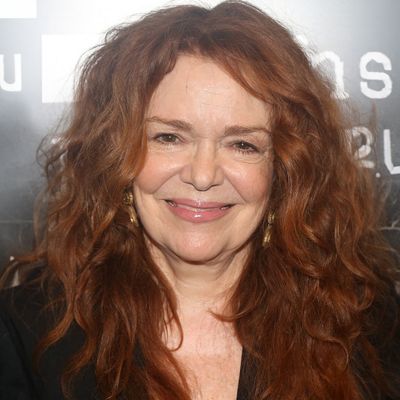
About
“Please let me standing here be a little sign to you from the universe to make the weird art.”
Deirdre O'Connell has worked extensively on stage, screen, and television. She began her career at Stage One, an experimental theatre at the Boston Center for the Arts. She made her Broadway debut in the 1986 revival of The Front Page, and was nominated for the 1991 Drama Desk Award for Outstanding Featured Actress in a Play for her performance in the off-Broadway production Love and Anger. She is the recipient of two Drama-Logue Awards and a Los Angeles Drama Critics Circle Award for her stage work in Los Angeles.
She made her screen debut in Tin Men, with additional film credits that include State of Grace, Straight Talk, Leaving Normal, Fearless, City of Angels, Hearts in Atlantis, Imaginary Heroes, Eternal Sunshine of the Spotless Mind, Wendy and Lucy, What Happens in Vegas, Secondhand Lions, and Synecdoche, New York.
She was a regular on L.A. Doctors and has made numerous guest appearances on series such as Kate & Allie, Chicago Hope, The Practice, Six Feet Under, Law & Order: Criminal Intent, and Nurse Jackie. From 1994 to 2010, O'Connell appeared on six episodes of Law & Order, four of them as Dr. Valerie Knight, Anita Van Buren's oncologist in Season 20.
Hosted by Ilana Levine, Produced by Alan Seales, part of the Broadway Podcast Network.
Transcript
This transcript was automatically generated and might contain errors.
[0:00] Deirdre O'Connell: Hi, my name is Deirdre O'Connell, and you are listening to, and The Award Goes To...
[0:06] Deirdre O'Connell: It's a look back at Broadway's most magical night, and all of the winners reminisce with delight, with their talents and brilliance they always impress, and the Tony goes to my special guest.
[0:23] Deirdre O'Connell: Have you ever dreamed of winning a Tony Award? Did you ever practice your Tony acceptance speech in the bathroom mirror? Did you grow up watching the Tony Awards every year? Do you have a collection of Tony Award shows on VHS tape that you refuse to throw out? Well then this is the podcast for you.
[0:41] Deirdre O'Connell: Every week I interview your favorite Tony Award winners, and together we go down memory lane as my guests share intimate, and never before shared details about their Tony experience. By the end of every episode, you're going to feel like you just won a Tony. Welcome to, and the Tony goes to...
[1:00] Ilana Levine: I'm your host, Ilana Levine. Welcome today's Tony winner, Deirdre O'Connell.
[1:10] Deirdre O'Connell: Oh God, okay. Thank you, thank you, thank you. I am the face of a very large beast that may, and there are too many geniuses to thank. Lucas, Lucas, Lucas, Les, Misha, Dana, for letting us invade your privacy so completely, and every member of the crew, the stage managers, the agents, the producers who took care of me.
[1:38] Deirdre O'Connell: But I want to say one thing. I would love for this little prize to be a token for every person who is wondering, should I be trying to make something that could work on Broadway or that could win me a Tony Award? Or should I be making the weird art that is haunting me, that frightens me, that I don't know how to make, that I don't know if anyone in the whole world will understand? Please let me standing here be a little sign to you from the universe to make the weird art.
[2:15] Ilana Levine: Welcome, welcome, Deirdre O'Connell. That was an extraordinary night, an extraordinary speech, because it, A, created a hashtag, which is make weird art. Can you tell me, as we just watched your acceptance speech together, what feelings, thoughts, memories were provoked by that?
[2:41] Deirdre O'Connell: Yeah, you had said before that everyone feels a little trepidatious about it. It's so funny, right, that we feel trepidations instead of a, yeah, let's look at that moment of triumph. But it's cool to look at it. It's cool to look at it and see me negotiate my way through that terrifying moment. I had very much decided to say that stuff.
[3:10] Deirdre O'Connell: It's funny, I was in a Will Arbery play called Corsicana at the time when the Tonys happened. There was a lot of, the word weird I think was in that play like 50 times. So the word weird was very in my subconscious. I didn't even think about it until after it happened. But I really didn't know what I would say if I won. And then it was one of those, woke up at four in the morning, but got a piece of paper, wrote down that speech, and then said, okay, I have a speech. And brought the little piece of paper to the Tony Awards.
[3:46] Deirdre O'Connell: So it was a pretty pure four in the morning impulse to have something prepared. And I did feel like, well, what is this circumstance? What is this circumstance to be on network television winning a big prize? And what have I felt when I've been the one that's sitting at home watching TV? And I thought, oh, I do often feel very far away from it and confused by it. Confused by how should I be feeling about this? Should my ambition be totally toward I want to be that person who's up there? Or should I continue with what I'm doing? Have I not been ambitious enough? Am I too eaten up by ambition? All those spiritual questions come pouring in when you're sitting by yourself watching TV.
[4:49] Deirdre O'Connell: Watching your friends or people you've never seen or shows you've never seen or shows you love winning that Tony Award. It's a specific thing for actors, especially if you're a person who works off Broadway mostly. So you're sort of living in a parallel universe. Your universes overlap a lot. But they operate very separately. The Broadway world, the way that functions on every level and the off-Broadway world. And yet we all overlap a lot. We all know each other and blah, blah, blah. So it was a funny thing, like how much it sparks. So that was why I wrote that script. I was kind of like, I'm going to write it to the knee that's watched this a million times and said, am I doing enough? Am I doing too little? What do I really want? Am I hiding from my own ambitions? All those questions would come pouring up.
[5:42] Deirdre O'Connell: So it was kind of an answer to that. Like, no, we just got because. And I'm talking so much. This is a podcast.
[5:49] Ilana Levine: Yes, please.
[5:51] Deirdre O'Connell: And because Dana H was made for, you know, with a very specific curiosity on our part about how far can you push this form? How far can you push theater? What can theater do? We had no hope or ambition that we would be on Broadway. It just wasn't part of the part of the thing. We were taking time off from that worry. You know, each of us in our way. So our feeling with it. So our whole thing going in was kind of like we're going to take a couple of years off from that work or in that worry and do this experiment. Do this. And I'm going to be this petri dish. And I'm going to turn myself into a beast who can do this thing that no one will want to see except for the people who love really obscure experiments.
[6:53] Deirdre O'Connell: So that was the fact that that got lifted all the way to that situation made that I was. I really meant it. I meant, like, if you want to go away for two years and learn how to lip sync, do it. Who knows? Hey, you never know. That might be the way you're supposed to be spending your time, not just for your soul, but for your career as well. You know, so, yeah, that separation between your soul work and your career work. I've always felt that that line to be so clear sometimes, not clear sometimes. You know, I've always struggled with it. So this was an example of not struggling with it at all.
[7:32] Deirdre O'Connell: And then having all this stuff before us and me because we had underestimated audiences. Basically, this production, it was you know, it was done in Chicago. It was done in Los Angeles. It was done, you know, at the Vineyard Theater, originally in New York and then Broadway. So not just an audience, like thousands and thousands and thousands of people fell deeply in love or were really open to this experiment that you guys were doing. And I think part of that is obviously that magical combination of actor and part that happens every so often. And it's like chemical and combustible and it's undeniable.
[8:14] Ilana Levine: So can we go back in time a little bit to when you were first presented with Dana H. and what your early memories are of conversations or being handed the script?
[8:28] Deirdre O'Connell: Yeah, the first I got to read the script. So Lucas and I knew each other for a while. We had done a workshop of a play that was a fiction play that still doesn't really exist yet. But he wanted somebody to play a character who is based on his mother. And he had always felt like before we knew each other, way before we knew each other, he had seen a production of Mud at the Signature when he first came to New York.
[9:03] Deirdre O'Connell: So when the stuff that happened to Dana was going on, actually, so that was in the 90s. He had come to see a production of Mud and he had thought to himself, that woman reminds me so much of my mom. So that sort of had stayed with him all these years. And then we became friends and then we worked together and we were we were very compatible and liked each other so much. And our minds kind of work in a similar way. He's a genius and I'm just a regular mind, but the way we like to do the Tetris of how do things work.
[9:33] Deirdre O'Connell: So we knew each other and he had this idea. I don't know. I found out about it through a weird circumstance. It's too complicated to go into, but it just sort of shows to go that we were doing workshops of this other play. And somehow through a mistake, it was an error. A casting director offered me a workshop in Chicago of a play of Lucas's. I said yes. And then a couple of hours later it came back. No, no, no. Whoops. A mistake has been made. You're not being offered this workshop of a play by Lucas.
[10:16] Deirdre O'Connell: So I called Lucas because we were friends and I said, I'm just checking that everything's OK. I just got offered a workshop of a play about your mom, but not the same one we were working on. And then the offer got reneged and I'm confused now, but I'm OK. But I was a little like, did Lucas go, wait a second, I don't want her to do it? Or what was it that happened where Lucas called me and said, no, no, no. It was a complete error. They made a mistake because we were talking about you. And I said, I don't want her to work on it because I have this other play that I'm writing for her. And I need the two plays about my mother to be very separate for me. So if she was working on both of them, it would drive me crazy.
[11:01] Deirdre O'Connell: So that was the first I heard of Dana H. That was years before. And I remember the emotional ride of that because I loved Lucas so much. It was so intense. I was like, I got the job and lost it in two hours. What did I do wrong? You know, I was so confused. And then he explained it all to me and then I was fine and I was like, that makes a lot of sense. OK, we'll continue to work on this play, this fictional play. And this other thing I don't know anything about. Then a couple of years later that he came to me and said, I want you to work on Dana H. And I read it. And when I read it, of course I wanted to do it. I mean, it was just the most amazing piece of writing and tale and voice and window into a person.
And just a fantastic story and a challenge and explained that it was going to be all in lip syncing. He knew exactly what he wanted it to be. He saw it from the beginning. He knew exactly how it worked. And I, of course, thought to myself, well, I'll be able to fight him. I'll be able to make it my own way. I'll just do it a few times and show him that it's better if I do it.
[12:47] Deirdre O'Connell: Well, I mean, that was, I was an idiot. Of course, I wasn't going to convince him, but I did talk to him about it and said, So are you sure? And he said, I'm sure. You have to go into this knowing that I'm sure that that's what it has to be. So I took a deep breath. And then I remember seeing Rumstick Road, this production of that the Wooster Group did in the 80s that Spalding Gray wrote and created about his mother. And it was a play. It wasn't a monologue. It was when he was still writing plays. And there was a moment in that. It wasn't a moment. It was like a four-minute sequence in that play where Ron Votter, one of the great actors that ever walked the face of the earth, lip-synced. It was a phone call.
And I couldn't tell what he was doing. All I knew was that the whole room just changed. And there was a kind of precision going on. And there was also a strange wave of oxygen in the room. It was completely free and completely rigorous at the same time. And I couldn't understand what I was seeing. And I saw the play a bunch of times. And then finally, I was like, Oh, he's lip-syncing. I see what he's doing. And I gradually started to figure out technically what he was doing. But the first time I saw it, it made my stomach drop. And I didn't know why. And so I said, Lucas, you know, one time I saw somebody do this. This was at our little meeting to decide what I was going to do. And I described everything.
And he said, That's exactly what I mean. I know that performance. I know that four minutes. I'm too young to have seen it. But I have a movie of Rumstick Road. And I look at that sequence over and over again because I felt like that was lightning in a bottle or two. I was like, What is he doing? And that's what we want to do for an hour and a half. I'm going to do that. But I was in because I had never forgotten that. And I had never forgotten the mystery of it. And the excitement of watching an actor up against a task that was so precise, but also so strangely freeing. It was, it was, yeah. So then we were in cahoots. Then I was like, Okay, I know what we're talking about. I know that feeling. I don't know if I can do it. And I don't know if I like doing it.
[15:24] Ilana Levine: Well, that is just describing your commitment conversation around the technical aspects of the show. Let's not even, okay, so that is separate from the unbelievably difficult material you would have to be lip-syncing, right? I mean, that's separate from even then. Okay, so that's that. There's that. Oh, there's that. Now there's the story. There's that, right? Great. Got it. I'm open. I'll try. I've seen it. Someone do it brilliantly. I'm inspired. Up for the challenge. I even read, you know, now we have all these different kinds of consultants. When we do work, you had a lip-syncing consultant, I mean, who also helped had like a background in magic, right? Like, I mean, there were all these new creatives that you're meeting because this is such an undone sort of way to do a play.
But then there's the story itself. Um, and so I would love if you could just talk a little bit about, for those who don't know the story, just sort of a thumbnail sketch of what this woman's journey was. And the idea that you were, I mean, just thinking of this boy, now man who's written a play, whose mother went through this and was sort of living in the world and working on theater in New York, while this is going on at the same time, it's also heady and hard to really wrap one's brain around sort of the idea that other people are functioning in the world while this is happening to their parent. It's all hard to comprehend. But can you just talk a little bit about what her name was?
[16:58] Deirdre O'Connell: Higginbotham? Dana Higginbotham. Dana Higginbotham. And she, um, I'll sort of like try to give a thumbnail. She, Dana's mom, raised him basically by herself, although she was remarried at the time when this story begins. And it was, it all coincided with the moment that The Empty Nest was going to begin. Dana had gotten into NYU, he was going to go up to NYU. She and her husband were, were beginning to break up. They were sort of trying to figure out how to do that. She is, was a, is a chaplain working in a hospital as a, in the sort of the social work part of it. Now she works in as a hospital worker, but she at that time was working with people who needed, she would work as a chaplain coming to people who were dying.
She would work as a chaplain coming to people who needed social work help. She did, she did a lot of different things. And she was called in to the, the, uh, mental hospital part of the hospital to work with a guy who, um, the guy who ran that section knew her well. I think they, I think they went to the same church and said, I have a feeling you can help this guy. Um, so that was how she ended up meeting Jim and she was helpful with him. She had a lot of empathy for the guy. He, he had done terrible things and he was a, he was a, uh, he'd been in prison in California for a long time. And he was, he had, he had come up in a, um, a gang from the time that he was a little kid and, um, he, but they connected and he, she felt that he was really looking for a way out of the life that he led, but he also had a lot of mental health problems and he was, um, in, in a lot of trouble and had been a drug addict.
And so it was a perfect storm kind of, you know, when you try to describe like, how could this happen to a person who you can, who's completely relatable, who isn't, who isn't like living on in some sort of, um, living way off the grid. She was not living off the grid. She was, you know, living a regular life. Her kid was off to college now. She's working in this hospital. She befriends this guy and it was this perfect storm of events was happening while her marriage was breaking up. It's Christmas time. Jim comes to her and says, I'm being released today. I think it was Christmas Eve and they haven't found a place for me to go. The halfway house that I was in before I came to the hospital, um, is not going to let me back in.
He had stolen something from somebody or something that month before. And, uh, you know, I say that like, that doesn't matter, but you know what I mean? And so he, he literally had no place to go on Christmas Eve. She calls her husband. Who's also, who's also in the same work. They work with homeless a lot. He says, he comes over, meets Jim says, you know what? Just come stay with us. This is crazy. This is great. It's Christmas. Come stay with us. So Jim does. And, um, Lucas comes home from NYU and they have Christmas together and Jim's, you know, a little nuts, but pretty, but so grateful. And, uh, he's sleeping on the couch downstairs and Jim and her husband seem to be doing well. They're, they're sort of good at taking care of each other.
Her husband's in there with Jim and Lucas goes off back to school. Now it's time to figure out how to help Jim get a place to live, which they do. They, you know, we put down a deposit on an apartment for him. They're, they're trying to help set him up so that he can begin his, and during that time, she and her husband break up. So she's alone in the house. And basically then what begins to unfold is that Jim becomes more and more psychotic. He probably started to use drugs again, and he's very afraid to be in the world. He's a guy who's grown up, grown up in prison, basically. So he doesn't know how to balance a checkbook or pay his rent or make sure that he gets to work on time. He doesn't know how to do things.
And he's very dependent on her and he's very dependent on her for daily advice. And he gets really scared and it comes over to her house a lot. And she's sort of on the horns of a dilemma about she's, she's said that she'll help this guy, yet this is getting too involved. And one thing gradually leads to another. And at one point he kidnaps her. And he basically has a psychotic break, breaks into her house and takes her. And she sort of didn't quite see it coming. It happened very gradually. It's kind of like when you're a lobster and you're sitting in the water, you don't feel it getting hotter. By the time it was completely out of control, it was completely out of control. And he was able to take her and begin to travel with her.
And a lot of what happened at that point was her survival instinct kicking in. How can I? And once you know about this stuff, one of the things you realize is the moment that a person decides to try to get away, whether it's a violent marriage or a kidnapping, is the most dangerous moment. So trying to negotiate, try to find that moment and know that you're going to be in a safe spot and you're going to be able to actually get away in that moment is the key. She did that a few times and failed. Or she got back to her house and he came there. She was just caught up in this for quite a few months. During that time, she didn't want to alarm Lucas. So she would set up that during his vacations, for example, they would be in a motel where Lucas could come and stay and they would spend Christmas at her parents.
But then Jim would come back and get her after that. So there was a way to kind of like play it so that things were okay, but they weren't. And it went on for a while. And she saw a sort of world opened up to her where she saw that she was not able to go to the police because the police were indifferent to her. She has a lot of thoughts about why that might be true. In retrospect, he was probably an informant. He probably had a certain amount of use. He was useful to the police department and not just the police in Florida, but through the police in California. It was part of a huge sting operation that was going on with white supremacists right at that time. So she has theories in retrospect about how it had happened that she was so helpless. But the piece is a lot about anyone who becomes helpless and all the steps that go into becoming that kind of helpless.
[24:36] Deirdre O'Connell: And the amount of shame that you're carrying in terms of being able to get out into the world and say, this is actually happening to me. She finally did get away. And even then, it was a story she couldn't tell very many people, because it's the kind of story that people say, well, that wouldn't have happened to me, I would have gotten myself out of there. And the creating of the piece was, in many ways, the beginning of her being able to get out of that kind of shame. And the creating of the piece was, in many ways, a way to tell Lucas what had happened and for Lucas to acknowledge what had happened and for them to look at each other and see it. And I was just the conduit for all of that stuff.
And it was quite the thing to feel that there was a real, pure event that was going on between those two people and between her and the world and her and her fear of anyone knowing this. For real, for very concrete reasons, afraid of him, of him finding her again. But she's also afraid of the judgment that would compile in her way, which is very understandable. People being like, how could that happen? You must be complicit. You must have wanted that. And all of that, you know, stuff that we project onto somebody who's been a victim in a bizarre way or a victim in a way that frightens us so much that that could happen. You know, I read that Lucas himself didn't do the original interview that the manuscript or the transcript is based on.
He had somebody else do it. Was the intention in recording this, the story, his mom telling the story prompted by questions from this friend of Lucas's, was the intention to interview her in order to create a piece of art from it? Was that always the intent?
[26:55] Deirdre O'Connell: Yes, that she and he, Lucas and Dana both, Dana had for a long time said this, that, you know, she knows her son, she knows his writing. She said, this crazy thing happened to me. There's a play in here. I don't know what it is, but honey, there's a play in here. And he's like, yamma, yamma. And then, so finally, he was like, well, you know what, maybe what I need is not for you to tell me the story, because we know the story. I want you to tell the story to somebody else. I want to record it and I want to listen to it just so that I can, for a second, hear it objectively so that I can begin to understand what I might, what play I might write about it, because I can't, I'm too close to it. I can't see it.
So that was, it was, he just wanted to make a document that then he could listen to, to begin to spark his imagination about this fictional play he was going to write on the subject of this event that had happened to his mom. And he, and according to him, as soon as he heard that first five minutes, he was like, no, I know what this is. I know it's lip syncing. He might have known it was me that should do it. I mean, he's, I think, I think he, the first second he heard the tape, he saw what it was supposed to be. And so then we just spent the next four years creating the thing that he saw in a flash. Just to be really clear, you had no ability to, there was no stop button. There was no tape recorder, you know, hidden under your that you could stop if you needed to, right?
[28:41] Deirdre O'Connell: No, there was no stop button for a while. We were like, maybe we need a stop button. Maybe I need, you know, we didn't know how to make the piece. So we were like, I'll need, I'll need a stop button for drinking water. I'll need a stop button for if they start laughing, I'll need a stop button for, and then the, very quickly it became clear, no, this is a tightrope walk. There should be no stop button. I don't get to drink any water. I don't get to, and you as the watcher understand very quickly what the deal is. So you understand if you interrupt me that I'm not going to stop. And, and, and so it, it became this sort of collaboration between the audience and me. I always felt that from the beginning at that.
And I didn't know that was going to happen. I didn't know that it was going to feel like that, but I think the audience felt very much like, oh, we all have to hold our breath too, for this whole time, for this event to happen, because she's not going to be able to adjust to us at all. So we're just, okay, your hooks too. And that, I am such a weirdo that I tried to lip sync, right? I wanted to see what you had to do. And what I want to say, what I find really remarkable, and this is so obvious, it is nearly impossible for me to lip sync for a sustained period of time, where my mouth makes zero noise, right? Like it's one thing. So, right, I mean, I'm just saying, I'm stating the obvious, but I just wanted to understand, like, so you, you will, well, now you talk about special skill on your resume.
I speak French, I juggle and I could lip sync for two hours and 15 minutes. Was that like, one hour and 14 minutes? Exactly. Well, Kate Winslet now, you know, held her breath longer than any other human underwater, and you have been able to lip sync words for longer than anybody. How, what, how much training, like real time with a lip syncing coach, like, or was there one trick you learned early on? And then you were like,
[30:49] Deirdre O'Connell: a lot of it was that I had to teach the thing, the exact thing you're talking about. Tell me about how you conquered the, the lip syncing, have no sound out of your mouth, what was the key to, that opened up the skill for you?
[31:13] Deirdre O'Connell: Um, let's see, God, it's such a good question. Um, well, I feel like it was almost like a, um, like there were two, there's the right side of the brain, left side of the brain thing, there's the reading off of a page side of the brain, and there's the listening side of the brain. And I had to learn it both ways. And I had to learn the music of it very precisely. But I also had to learn the, the, the meaning of it. So there was like, it was like, there were these two parallel learning problems. And they were not compatible, which was weird to me, because I wouldn't have expected that I would like spend a day on two pages, say, learning it like regular actor, like learning it off the page, then I would feel that I had it, then I would put the earphones in, and try to do it with her voice, and it would be gone.
And I would have no ability to remember what I had learned. Then I would do it the other way around. Where I would learn it, like sound, and then I would try to do it, do it without, without listening so that I could know that I had the words in order. And I couldn't do that. And I just kept running into that wall over and over again until finally that wall started to go away. So it wasn't really like an aha moment. It was more just keep coming at it, keep coming at it. But I, the whole time, I was looking at some texts a few months ago, and I wrote my friend Heidi while I was going on saying this is just not working. I would, there were so many moments of hopeless, like, not being able to stop crying, because I was, I don't think this is working.
I don't think that it's going in my brain. You know, you could be tired when you're trying to learn lines, but to really think it's actually not going in. It was terrifying. That is not a good feeling.
[33:20] Deirdre O'Connell: Yeah. No, it's not a good feeling. So I had to live with that feeling by myself for a long time like that. And so by the time we started rehearsal, I had learned the whole thing. And we did do a lot of changes, but the changes, everything was so slow moving, because every time you technically change something, you know, change the order of one section to the other, it would be, it would be like a full hour of Misha, like, you know, putting it all together. So I would have a lot of time. It wasn't like somebody just handing you the changes in the script.
[34:06] Ilana Levine: Well, it will remain one of the most remarkable theatrical performances that that anyone will have ever seen. And then just the remarkable nature of what the story itself is, and then the kind of incredible beauty of a son finding a way to share and maybe in some ways liberate his mother from, you know, you described shame and a lot of adjectives of that were things that really weighed on her in the world. And it sounds like there was something about this play that also opened up things for her.
[34:35] Ilana Levine: Well, before I let you go, it may sound corny, but can I ask you to indulge me and just finish this sentence for me? Sure. Goes a little something like this. To me, to me, Dede O'Connell, Dana H is.
[35:09] Deirdre O'Connell: To me, Dede O'Connell, Dana H is an act of love.
[35:19] Ilana Levine: And that's how it was received. And, and thus, the Tony that, well, that, that was awarded to someone who did something purely for art. And that was a very thrilling thing to be the person at home watching the Tony's that year, and seeing that kind of commitment and commitment and seeing that kind of commitment and passion for telling stories that has never wavered, and you've done it for a very long time in so many different places with so many different people. But to see the culmination of your integrity and love and empathy and beauty, inner and outer, um, all, all kind of streaming through this unbelievable piece of theater.
[36:06] Deirdre O'Connell: Thank you. Thank you for being on. And the award goes to you.
[36:15] Ilana Levine: Thank you so much. And the Tony goes to is produced by Alan Seals for the Broadway Podcast Network. The music and lyrics for the theme song were written by Georgia Femusa. Theme song orchestration by Alexander Sage Oyen. Episodes are edited by Derek Gunther. Thank you to Parody Bill for the graphics. And please don't forget to go to the iTunes show page and rate and review the show. Thanks for listening. Excerpt from the Tony Awards used with permission of Tony Awards Productions.
© Broadway Podcast Network, All Rights Reserved