

When Ilana, host of AND THE AWARD GOES TO.. had the privilege of talking to John Benjamin Hickey - the winner of The Tony Award for The Normal Heart- it was the day after Larry Kramer had died so it was so timely and beautiful to have this conversation while John was still processing this news... Read More
From the show: And the Award Goes To... Hosted by Ilana Levine
Guests
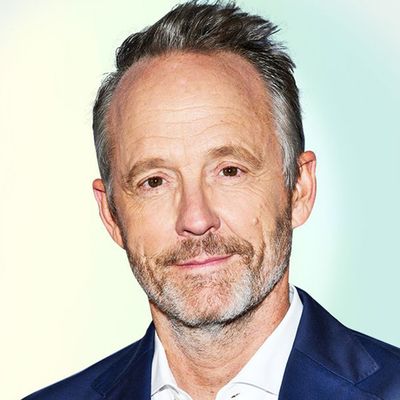
About
When Ilana, host of AND THE AWARD GOES TO.. had the privilege of talking to John Benjamin Hickey - the winner of The Tony Award for The Normal Heart- it was the day after Larry Kramer had died so it was so timely and beautiful to have this conversation while John was still processing this news. John first came to the role of Felix Turner in a reading for charity directed by Joel Grey. The reading was so successful that very quickly a production was mounted this time directed by George C. Wolfe. His friend Joe Mantello encouraged John to take on the role for the original reading with neither of them ever imagining that as best friends they would go on to be such glorious and devastating scene partners in the play when it went to Broadway. With only ten days of rehearsal the play was mounted for a full Broadway production with the original idea that different actors would play the roles with a rotating cast perhaps even with scripts in hand but then a few of the actors started to learn the lines very quickly and it evolved into a more traditional production with Ellen Barkin, Jim Parsons and an all star cast. Plus … some incredible words of wisdom shared by the great director, Mike Nichols.
Hosted by Ilana Levine, Produced by Alan Seales, part of the Broadway Podcast Network.
Transcript
This transcript was automatically generated and might contain errors.
[0:00] John Benjamin Hickey: Hi, I'm John Benjamin Hickey and you're listening to And The Tony Goes To...
[0:21] Ilana Levine: Have you ever dreamed of winning a Tony Award? Did you ever practice your Tony acceptance speech in the bathroom mirror? Did you grow up watching the Tony Awards every year? Do you have a collection of Tony Award shows on VHS tape that you refuse to throw out? Well then this is the podcast for you. Every week I interview your favorite Tony Award winners and together we go down memory lane as my guests share intimate and never before shared details about their Tony experience. By the end of every episode you're going to feel like you just won a Tony. Welcome to And The Tony Goes To... I'm your host Ilana Levine. Welcome today's Tony winner John Benjamin Hickey.
[1:07] John Benjamin Hickey: And the American Theatre Wing Tony goes to... John Benjamin Hickey and The Normal Heart.
[1:16] John Benjamin Hickey: Thank you so much. This is such an amazing honor. Thank you American Theatre Wing and the Broadway League. To be included on a list with these other actors is and to be a part of this season in New York is such an incredible honor. Being a member of the ensemble of The Normal Heart has been the greatest privilege, proudest moment of my career. We love this play. We love doing this play. We love supporting the mighty, mighty Joe Mantello. And this is for all of us. Thank you Joel Gray for bringing me on board and knowing that the time was now. Thank you George C. Wolfe for ever so gently taking us all by the throat and dropping us into the mouth of the cannon. Thank you Daryl Roth for making it all possible.
Wendy Orshan and Jeff Wilson, Heidi and Ron, everyone at 101. Thank you to the aptly named Tim Sage and everyone at Paradigm. Thank you Laura Linney and Michael Engler and everyone at the Big C who all got me to the stage door on time every night. I so appreciate it. Thank you to Loretta Hickey, my mother and my family in Plano, Texas. You better not be watching the Mavericks game. Thank you to all of my friends who are here and who are in here. Thank you to my wise and my wonderful and my exceedingly patient Jeffrey Richman, my partner. But mainly thank you to Larry Kramer, the great badass of the American theater.
[2:42] John Benjamin Hickey: Hi Ilana. Wow. Do you want to say anything?
[2:54] Ilana Levine: I want to say, I'm sure others might have said this, that's the first time I have heard that. The only other way I've heard that is Laura Linney was in Connecticut watching it that night with two of my oldest friends from Texas and she, instead of filming the camera, she turned the camera around and filmed them react to my win and speech. So that's the only way I've ever, I've ever heard or seen it. Wow. It really does take me back and it made me incredibly proud and also made me a little bit want to throw up. What, what is it like if you can recall the moment you heard your name? Like just take me through from your beautiful face sitting in the audience and somehow you had to get your body onto that stage. Can you kind of walk me through what that was?
[3:40] John Benjamin Hickey: Well, in my case, you know, you really do want to win. I mean, nobody, you know, a few very, very, you know, saintly people who don't really care about that. But if your name is in that mix, you of course want to win. And I did want to win and I kind of heard, I'd not been reading any papers or do anything. I was working a whole lot of the time we were doing the play and I was also shooting The Big C. So I really stayed away from all the handicapping for fear of reading something good or something bad. But I had an, uh, like people had said, Oh, this might happen for you. And I wanted it. And then I got there and I sat down in the theater and I was sitting right behind Al Pacino. And my first thought was like, I can't win an award in front of Al Pacino.
He doesn't want to hear me give a speech. And, uh, and I really was like, Oh my God, please call anybody's name but my own. I got really nervous and I'd taken a beta blocker and everything. And my partner turned to me and said, are you okay? Because I'd gone very white. And then Viola Davis came out and she's an old friend of mine. And of course, somebody I love and admire so much. And I was like, Oh, okay, well that would be cool if she called my name. And then she did. And, uh, and I was prepared, you know, I had a little, at least I had the names of the people I wanted to thank, but my regret is, is that I handed, I said to Vi, I don't think I would have said this to anybody. I didn't know.
Um, like if Julie Andrews was giving me the Tony, I wouldn't have said to her, will you hold my Tony while I give my speech? And, and I wish I'd been holding the Tony as I gave that speech. But you know, once I got up there, I had prepared enough to where I didn't come. I wouldn't and didn't completely fall apart because so many people I know who have won over the years have said, had said to me, you're going to get up there and you're going to completely lose your shit. So have it together as best you can. And they were right. I feel like when I watched the speech recently, it was like a speech written on something the size of a postage stamp. Like you had the tiniest little piece of paper.
I had like an index card. That's all I had. And I just had like people's names, like, you know, the producer's name and then Joel Gray's name and George Wolfe's name. And just to kind of gave myself like roadmarks, you know, and when it was the evening was over, I was leaving the theater and somebody who was sitting next to me, not Al Pacino, but somebody who was sitting right near me, came up to me and said, you left this on the floor under your seat. And it was that index card. So I'm glad they returned it to me. I hope I still have it somewhere.
[6:54] Ilana Levine: Oh, I feel like it should be framed like in your bathroom.
[6:56] John Benjamin Hickey: Exactly, exactly. Tell me what playing Felix Turner meant to you.
[7:04] John Benjamin Hickey: Well, I mean, you know, we're having this conversation. I'm not sure when it will air, but we're, it's okay to say that we're having this conversation the day after we received the news that we lost Larry Kramer. I really thought, even in the world that we're living in right now, I really was so profoundly shocked because I seriously thought nothing would ever get him. I just thought he was one of those people who would never die. You know, I think so many of us felt that way. Like nothing will get that guy. Death is not good enough for him. And, or he's too good for death. You know what I mean? So, so losing him yesterday has made me reflect on that play and getting to play that part. And I've been texting with Patrick Breen and Lee Pace and Joe Mantello and Ellen Barkin and a lot of the cast.
And all of us were saying like, it was a perfect experience doing that play at that time with that group of people and having Larry be so omnipresent and being outside the theater every night, handing out flyers about where we are in the fight against this epidemic, this calamity, this pandemic was just, it was like Lee Pace, what we back and said, it was the perfect experience. And, you know, it's so weird because when I say to people that that was the most fun and the best time I've ever had in the theater and there's like, Oh yeah, well that's, yeah, you won the Tony for that. And I was like, God, that's so outside of the, when I think of it, I don't think of that. That's not, you know, that has as much as I loved getting that honor, you know, it kind of had nothing to do.
It had nothing on getting to do that play. And I think we all felt that way. So it was, it was the ride of a lifetime and it was the role of a lifetime. I had such a great, amazing and tragic journey in that play that getting to do that every night, weird. It's weird to say this, but it was so much fun. It was so much fun to get to be in such a sad play.
[9:20] John Benjamin Hickey: Well, I had the privilege of being at the original reading that Joel Gray directed, which was a fundraiser. Talk about that reading and then how that reading turned into the production, which literally felt like to those of us who are friends with you, like a second later, like I felt like I saw the reading and then I was at your opening night with no time in between, which isn't literally true, but almost true.
[9:43] John Benjamin Hickey: Yeah. It certainly felt that way doing it, in my memory, that's completely, it's all been conflated into one kind of very, very hot moment in time. Yeah. And so quickly, you know, I'm not really right for that part on paper. He's like a, you know, Felix Turner is like a young, stylish, maybe I'm stylish. And on, you know, whatever a lot of the ways they describe him in that play, I did not feel that, uh, that's who I was. But who did you see when you say that? Or when you read the character description, like cast it for me, what did you envision in your head?
[10:27] John Benjamin Hickey: Well, DW Moffat, who's an old friend of mine and a great, great actor. And, uh, he played it originally in '84 or '85 at the public with Brad Davis. And he was Felix and he was in his late twenties then. It's always been played as someone in their late twenties, Matt Bomer played it brilliantly in the movie. Oh God, I thought he was just amazing in the movie. And you know, Matt, it's like a matinee idol. He's so, he's so gorgeous and so gifted. So I felt like a, like, Oh, you're kind of asking a character actor to play this part. It was, I think that was, I don't want to take any credit away from Joel because I think it was partly Joel's idea as well. But I think it was Joe Mantello. Who's an old friend of mine hours and had directed me in Love!
Valor! Compassion! many, many years before and other plays, a play with Viola Davis. Um, and he was like, I'm going to do this reading of The Normal Heart. Uh, Joel asked me to do it. And Joe, Joe had basically really stopped acting. I mean, he hadn't done anything since Angels in America. And he said, uh, I think you should do Felix with me. I, I, you know, I don't even know if you're that right for it, but I think we would have a lot of fun being, um, partners in that. And one of the things that I thought we could bring to it. And hopefully we did was there was a chemistry between me and Joe, just being old friends. And they seemed like partners, the way we played it, you know, they seemed like they really did belong together and they were contemporaries and they were, uh, equals. Um, I'm patting myself on the back by saying I'm equal to Joe in acting because he's such a great, great actor, but you know what?
[12:10] John Benjamin Hickey: We're just as far as this being the same age, we were contemporaries. And so we did the reading, and it went really well. And then, I don't know, it was like within the next six months, Daryl Roth wanted to produce it just as a very small kind of almost concert-like experience for the audience. I mean, I think we sort of saw it like maybe like the vagina monologues. We'd all be on concert stands with scripts, and people would be able to kind of rotate. I was shooting The Big C at the time, so I might only have been able to do two or three nights a week. So they hired an alternate actor, Wayne Wilcox, not as an understudy, but as an alternate Felix. But very quickly, once we started rehearsing, and we only had 10 days rehearsal with George Wolfe, Joel wasn't available at that time, because he was doing Anything Goes.
It very quickly became aware to all of us that, oh, this is not just going to be a reading. This is going to turn into a production, because it just so grabbed you by the throat, that play, that it was impossible not to fully invest in it.
[13:22] Ilana Levine: So can you explain that a little bit? Meaning when you first started, you described the idea that sort of love, loss, and what I wore, or some version of different actors coming in and out. Was that going to be on a Broadway stage originally? Was that always the location for it?
[13:42] John Benjamin Hickey: It was always the intention, and the destination was Broadway. And Daryl Moth, wonderfully intrepid Daryl, had raised the money. And I think everybody signed on knowing that it was going to be maybe a rotating cast, maybe not off book, holding books and music stands. And then a couple of us, and I think I might have been one of them, came to it and very quickly were off book. And I think Patrick Green was coming from LA, and he didn't really know that. He really thought it was going to be a music stand situation. And after the first two days of rehearsal, he was like, holy shit, I gotta get my shit together right now. And Joe, I would walk home from 890 Studios to the West Village every night with Joe and Ellen Barkin.
And Joe was like, well, you guys might be off book, but I'm not going to be off book. So I'm just letting you know that when we go in front of an audience for the very first time, I will be holding the script, because there's no way I can learn all this. And not so slowly, but very, very surely, Joe was off book just a few days later. It really was that kind of a thing. And at the end of every, either day or every other day, George would make us sit in a circle, just in chairs in a circle, and read and say the play to each other. And we just learned it. So it turned from one thing into another very, very quickly, because as I said, there was only 10 days of rehearsal, and almost imperceptibly. I think if you had told us that this is the way it was going to be, we all would have fucking freaked out. We would have just freaked out.
[15:30] Ilana Levine: So does, so slowly does furniture appear one day in the rehearsal studio? I mean, it was a very sparse and spare and beautiful set. And all the names on the walls. I mean, it was haunting in its originality and beauty in terms of the design concept. Um, but how did you suddenly slip into blocking and fully realizing this production? And what happened to Wayne?
[15:59] John Benjamin Hickey: We, I remember furniture really didn't completely appear until we got into text at the Golden on Broadway. And there was only two days of text, by the way, usually, for a straight play, there's at least a week of text. Yes. And, and there was only two days of text. So it really was like Williamstown. It was like, it was like summer stock. I remember Mike Nichols ran into Joe very late in our run, like in the last week or so I run a run. And, and he said to Joe's like, Is it falling apart yet? And Mike had seen it and loved it so much. And, and Joe was like, Yeah, I think we're all starting to wobble a little bit and losing our lines. And Mike's like, that's the downside of not rehearsing for three weeks or four weeks.
You get shot out of a cannon and that adrenaline feels great and seems like Oh, look at this, we really don't need that rehearsal. But what you're missing is like a really sound foundation, you know, a structure, which I just thought was really interesting. Yeah. Not advocating only 10 days of rehearsal, right? Terrifying. But we started to see that it was a, like you said, a very sparse thing. But there were chairs, and there was a desk. And there was a hospital bed. Or a gurney at one point, I at the end, it was George's idea that there was no bed for me to die in that I was going to die standing up. And I was like, Okay, well, that happens. And as far as Wayne Wilcox, who's such a wonderful actor, I mean, you know, I think it was a little bit of a bummer because he was like, God, those guys, the big C are really letting you come to work every night.
Yeah, I know, dude, I'm sorry. But I was also in a position where I was like, I'm not missing one moment of this. And Laura Linney was my champion. I mean, Laura, who of course, you know, her life is the theater was like, we're gonna make this happen for you. And, and there were nights where I would get on a train in Stamford, Connecticut, where they were filming that at 636 15, and be at Grand Central at 724 or five, and have to basically run to the theater because you can't get a cab, you couldn't, you know, take the shuttle, I would just get to the theater at like 734. And I was on stage at 740.
[18:30] Ilana Levine: That sounds so stressful.
[18:30] John Benjamin Hickey: Yeah, it was really stressful. It only happened a couple of times. I mean, I've made it a little apocryphal. I'm now, you know, Elaine Stritch has that story where she was in New Haven in New York, where she was understudying Ethel Merman. I've turned it into that for myself. But it was I only that only happened to me a couple of times. Okay, it didn't actually happen. But it could have happened. Yeah, exactly. Exactly.
[18:53] Ilana Levine: So then you guys are, are in the presence of the great Larry Kramer. And I wonder, you know, all of us who got to see the show, got to really experience him standing outside the theater, as you, you know, talked about earlier. But what was it like? Was he in the room with you guys?
[19:14] John Benjamin Hickey: Well, I, I, I can say, I was gonna say, I can say this now that he's gone, but I, I would have said it. I mean, we laugh about it. You know, Larry is a very famous agoraphobe. Is agoraphobe fear of heights? Yeah, right. agoraphobe. I think agoraphobic is fear of heights. Yes. I think that's fear of being out in the outdoors.
[19:42] Ilana Levine: Outdoors. Yeah.
[19:42] John Benjamin Hickey: So Larry was afraid of heights. Yeah, he had agoraphobia. And he had, and he had fear of heights. And so we rehearsed on the fifth floor of 890. So Larry won't go above the third or fourth floor. So we didn't have them in rehearsal. And I don't think that was by design. But I think we felt some sense of relief that we were getting to kind of do it. You'd never want the playwright around 24 seven, you know, especially when it's somebody who's formidable, and as scary as Larry could be. So we rehearsed it without him. And then once we got into the theater, he was there so much of the time and was so he was just amazing, because he was loving what he was seeing. He loved the company. And he loved getting to see his play go to Broadway.
I mean, think about it, you know, he's this play, which was this masterwork, and a play that was defined a kind of a generation had never had never had anything but an off Broadway success. Right. And you know, this was this was after all that talk, you know, for many years, I don't know if you remember, all through the 90s, there was talk of Barbra Streisand was going to direct a movie of it. And it's and it's all fell apart. And so I think Larry thought, well, that this play will I will never see this play have that kind of success in my lifetime. And not only did he see this Broadway revival be so successful, he got to see that wonderful movie.
[21:20] Ilana Levine: So he was agoraphobia, agoraphobia.
[21:27] John Benjamin Hickey: Yeah, I think it's agoraphobia. Anyway, yeah, yeah, I knew it was close to that. But I also knew I was wrong.
[21:31] Ilana Levine: And that's what I love about you. You will admit it. You will admit when you're wrong.
[21:36] John Benjamin Hickey: I get close to it. So yeah, it was amazing to have him there. And then, of course, once previews started, and none of us knew that Larry was going to do that. It's just, we would talk to people who saw the show the night before. And people would start talking about the fact that, you know, when I left the theater, Larry was standing outside handing out flyers about where we are in the fight of this plague. And it was like, this, again, I'm trying to look for the right word meta, whatever thing was like, you saw this play about this character, who was, you know, a Cassandra, like standing on top of a mountaintop screaming his lungs out. And then you left the theater. And there he was the real thing.
[22:30] Ilana Levine: Yes.
[22:30] John Benjamin Hickey: No, I mean, it was just a crazy, a crazy thing for the audience to experience. And as if you didn't already go through enough, watching that extraordinary play, you, you walked outside, and there it was there, the real thing was crazy.
[22:51] Ilana Levine: What was incredible about that moment is as an audience member, you sort of felt slightly, I mean, you've been through something, and then very satisfied with yourself for having seen this play. Yeah. And then you got outside and this person was saying, don't be complacent. It's not enough to see my play. This is still happening. And so he turned theater audiences into activists in that moment. And it was such an extraordinary thing, which was, it's not enough to see other people talking about it. You must still fight the fight. And it was, I mean, it was a little like getting splashed in the face with really cold water, right after coming at you know, you're sobbing, none of us could get out of our seats for a long time.
And I want to know what that was like to be doing, you know, to come out for a bow to an audience that, you know, could not move, because they were so deeply, deeply shook, and saddened and, and blown away by by the performances that felt so real. It felt like watching a documentary. It was an extraordinary thing to behold. It really, it really was, it was such an amazing thing to be a part of that as well. And I just want to say that you articulated that thing about Larry and what he was doing afterwards so eloquently, because Larry, who had a massive ego,
[24:50] John Benjamin Hickey: I think the thing that was so beautiful about Larry was that he was so unapologetic about his anger and his passion. And I think that that was something that really resonated with me, especially in the context of the play and the time that we were doing it.
[25:20] John Benjamin Hickey: I remember when we were rehearsing, there was a moment where I felt like I was channeling him in a way that was really profound. It was like, I could feel his spirit in the room, and it was both exhilarating and terrifying.
[25:40] John Benjamin Hickey: You know, the play itself is such a powerful piece of work, and to be a part of it, especially at that time, was a real honor. It felt like we were doing something important, something that mattered.
[26:10] John Benjamin Hickey: And I think that the urgency of the message, the urgency of the story, was something that Larry instilled in all of us. He was relentless in his pursuit of truth, and I think that’s what made the play resonate so deeply with audiences.
[26:30] John Benjamin Hickey: I remember the first time I read the script, I was just blown away by how raw and honest it was. It was like nothing I had ever read before, and I knew I had to be a part of it.
[27:00] John Benjamin Hickey: The character of Felix was such a complex role, and I felt a deep connection to him. His journey was so heartbreaking, and I think that’s what made it so compelling to play.
[27:20] John Benjamin Hickey: I also think about the relationships that were formed during that time, not just on stage but off stage as well. We were all in it together, and there was a real sense of camaraderie among the cast.
[27:40] John Benjamin Hickey: I remember the first preview, and the energy in the room was electric. It felt like we were all holding our breath, waiting to see how the audience would respond.
[28:00] John Benjamin Hickey: And when the lights came up at the end of the first act, the audience erupted into applause. It was such a relief, and it felt like we had done something right.
[28:20] John Benjamin Hickey: I think that’s what made the experience so special — the connection with the audience. They were with us every step of the way, and it was a shared experience that was truly magical.
[28:48] John Benjamin Hickey: And then, of course, there was the Tony Award. Winning that was surreal. It felt like a culmination of everything we had worked for, and it was such an honor to be recognized for the work we had done.
[29:08] John Benjamin Hickey: I remember standing there, holding the award, and thinking about all the people who had come before me, all the artists who had paved the way. It was a moment I will never forget.
[29:36] John Benjamin Hickey: And to be able to share that moment with my friends and colleagues was something I will always cherish. It was a celebration of not just my work, but the work of everyone involved in the production.
[29:56] John Benjamin Hickey: I think about Larry and how proud he would have been to see the impact that the play had on so many people. His legacy is one of courage and resilience, and I hope that continues to inspire future generations.
[30:16] John Benjamin Hickey: The conversations that came out of the play, the awareness it raised — that was what Larry wanted. He wanted to spark dialogue and change, and I think we did that.
[30:44] John Benjamin Hickey: It’s a heavy responsibility, but it’s also a privilege to carry that torch. I feel honored to have been a part of something that meant so much to so many people.
[31:12] John Benjamin Hickey: And I think that’s what makes theater so powerful — it has the ability to change hearts and minds. It can bring people together in a way that nothing else can.
[31:22] John Benjamin Hickey: I hope that as we move forward, we continue to tell these important stories and honor the voices that need to be heard.
[31:42] John Benjamin Hickey: Because at the end of the day, that’s what it’s all about — connection, empathy, and understanding.
[32:02] John Benjamin Hickey: And I think that’s what Larry’s work embodies. It’s a call to action, a reminder that we all have a role to play in this world.
[32:22] John Benjamin Hickey: I feel grateful to have had the opportunity to work on such a significant piece of theater, and I will carry those lessons with me for the rest of my life.
[32:42] John Benjamin Hickey: It’s a legacy that I hope to honor in my own work moving forward.
[33:02] John Benjamin Hickey: And I think that’s what makes this moment so poignant — reflecting on Larry’s life and the impact he had on so many.
[33:22] John Benjamin Hickey: It’s a reminder to all of us to keep pushing forward, to keep fighting for what we believe in, and to never lose sight of the power of our voices.
[33:50] John Benjamin Hickey: I think that’s the greatest gift we can give to the world — to share our stories and to uplift one another.
[34:00] John Benjamin Hickey: And I hope that we can continue to do that, not just in theater, but in all aspects of our lives.
[34:20] John Benjamin Hickey: Because at the end of the day, we’re all in this together, and we have the power to make a difference.
[34:48] John Benjamin Hickey: I feel so grateful for the journey that brought me here, and I look forward to what’s next.
[34:58] John Benjamin Hickey: Thank you for allowing me to share my thoughts and memories about Larry and the impact he had on my life and career.
[35:08] John Benjamin Hickey: It’s a conversation that I think is so important, and I’m honored to be a part of it.
[35:36] John Benjamin Hickey: I hope that we can continue to celebrate his legacy and the work that he did for our community.
[35:46] John Benjamin Hickey: Thank you.
[35:56] John Benjamin Hickey: I appreciate the opportunity to reflect on these moments and share them with you.
[36:24] John Benjamin Hickey: It’s a privilege to be able to talk about this, and I hope it resonates with others as much as it does with me.
© Broadway Podcast Network, All Rights Reserved