

The first of a four-part program featuring Broadway composer Burton Lane, known for such celebrated shows as FINIAN’S RAINBOW and ON A CLEAR DAY YOU CAN SEE FOREVER, along with songs for over thirty films including ROYAL WEDDING and BABES IN ARMS... Read More
From the show: Anything Goes
Guests
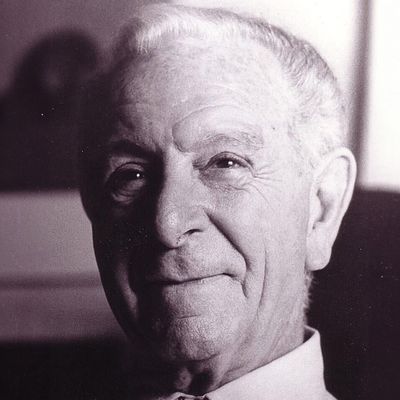
About
The first of a four-part program featuring Broadway composer Burton Lane, known for such celebrated shows as FINIAN’S RAINBOW and ON A CLEAR DAY YOU CAN SEE FOREVER, along with songs for over thirty films including ROYAL WEDDING and BABES IN ARMS. Lane recounts his early songwriting efforts in Hollywood with Frank Loesser and Harold Adamson, Broadway collaborations with E.Y. “Yip” Harburg and Alan Jay Lerner, writing songs for Fred Astaire, and discovering a young Judy Garland.
Featured songs: “Overture from FINIAN’S RAINBOW,” “Something Sort Of Grandish,” “Out In The Open Air,” “Forget All Your Books,” “Everything I Have Is Yours,” “How’dya Like To Love Me,” “The Lady’s In Love With You,” “I Hear Music,” and “Dancing On A Dime.”
Originally produced and broadcast in 1981. For more information go to AnythingGoesPL.com or BPN.FM/Anything Goes. Theme music arranged by Bruce Coughlin. Associate producer Jeff Lunden. Anything Goes – Backstage with Broadway’s Best – is produced and hosted by Paul Lazarus.
Transcript
This transcript was automatically generated and might contain errors.
[0:00] Paul Lazarus: Hi, this is Paul Lazarus. In the 1980s, I produced and hosted a radio series called Anything Goes, a celebration of the American musical theater. Now the Broadway Podcast Network is bringing back these shows. Today, part one of a four-part look at the career of Broadway composer Burton Lane. Lane is best known for his remarkable scores for Finian's Rainbow and On a Clear Day You Can See Forever. This program was originally broadcast in 1981. In olden days, a glimpse of stocking was a look on at something shocking, but now God knows, anything goes.
[1:37] Paul Lazarus: Good afternoon. Today's edition of Anything Goes is the first of two programs examining the work of composer Burton Lane. Mr. Lane's numerous theater and film scores include Royal Wedding, On a Clear Day You Can See Forever, Babes on Broadway, and the classic Finian's Rainbow. Over the years, Mr. Lane has collaborated with most of the great lyricists, including Yip Harburg, Alan J. Lerner, Ira Gershwin, and Dorothy Fields. For the next hour and a half, you'll be listening to a pre-recorded interview with the composer and many of Mr. Lane's delightful songs. I'm Paul Lazarus. I hope you'll join me this Sunday and next. As anything goes, saunters down memory lane.
[2:31] Paul Lazarus: I know you were born in New York in 1912, in February.
[3:01] Burton Lane: Did you grow up your whole life in New York City, pretty much?
[3:04] Burton Lane: Well, my youth was spent in New York, yes. I was born here, I went to school here, although I didn't go very long to school. I think my last year in school was freshman year at high school of commerce. Don't ask me how I got to the high school of commerce. When I was in high school, my freshman year in high school, I got a contract with Remix. I also had a contract with the Shuberts to write a show. I was 15 or 16 years old.
[3:39] Paul Lazarus: How did you get that contract?
[3:39] Burton Lane: A friend of my father's knew Harold Stern. Harold Stern, in those days, not only was a conductor of a band that played during the summer months at Manhattan Beach, but he was also the musical director for the Shuberts. And people had gone to him, these friends of my folks, and said that they knew a young genius. See, I used to be a genius, then I outgrew it and became like everybody else. And he heard songs that I had written, melodies I had written, and arranged for me to play for J.J. Shubert. My father at that time was a builder. He was putting up an apartment house in Brooklyn and the steel girders had just gone up. And one morning, about two o'clock in the morning, I heard the phone ring.
Now we never had phones ring two o'clock in the morning. And I heard my father's voice, very shocked and frightened. Apparently he thought some terrible thing had happened. A steel girder had fallen, had collapsed or something, and somebody got hurt. And it turned out that it was Harold Stern at the Shubert office. This is when they conducted their business. They would start after curtain time, after the shows were over, have a bite, sit down in their office and start conducting business. So this was two o'clock in the morning and they would go on for a few hours, and that's what happened. Harold Stern discussed me with the Shuberts and J.J. Shubert said, I'd love to hear him play. I'd love to hear his songs.
And Stern was calling up to make an appointment for me to play the next night at two o'clock in the morning. At two o'clock in the morning. It didn't seem like anything. I was delighted because it meant I wouldn't have to go to school the next day, or the day after, because I'd have to recover from staying up so late. And I went down there. I was brought there with my first lyric writer, who was a friend of my brother's, and played, I don't know, we had maybe 40 songs or 30 songs written.
[5:56] Paul Lazarus: Really? Even at that age? And that was about 15? You were 15, I guess?
[5:56] Burton Lane: I was 15, 15, 15 and a half, somewhere in that area. And you already had 40 songs?
[6:03] Burton Lane: Well, I used to write 20 a day, you know. Everything sounded good to me then. It's when you get older that you begin to have some perspective and taste.
[6:12] Paul Lazarus: Do you feel a warmish, kind of glowish, kind of peculiarish sensation?
[6:19] Burton Lane: No, it's a sort of quiverish, shiverish, flippity-jibberish sensation.
[6:24] Paul Lazarus: Does it make you feel hummingbirds in your heart?
[6:27] Burton Lane: Butterflies in me feet.
[6:28] Paul Lazarus: Bees in your bonnet.
[6:29] Burton Lane: Stars in me britches.
[6:31] Burton Lane: It makes you want to dance.
[6:32] Paul Lazarus: Well, I hadn't noticed that.
[6:33] Burton Lane: It makes you sing.
[6:34] Paul Lazarus: It does, it does.
[6:37] Burton Lane: Something sweet, something sort of grandish, sweeps my soul.
[6:45] Burton Lane: When thou art near, my heart feels so sugarcandish, my head peels.
[6:55] Burton Lane: So ginger beer, something so dairish, so I don't care-ish, stirs me from limb to limb.
[7:07] Burton Lane: It's so terrific, magnificent, delish, to have such an ambrish, glamourish dish we could be.
[7:20] Burton Lane: Oh, so bright and gloomish skies could be, so bluish bloom life could be, so loving, bloomish, if my ishes could come true.
[7:50] Burton Lane: Thou art sweet, thou art sort of grandish, thou outlandish cavalier.
[8:08] Burton Lane: From now on, we're hand-and-handish Romeo and Guinevere.
[8:17] Burton Lane: Thou art so adorish, toujours l'amour-ish, I'm so cher-cher la femme.
[8:27] Burton Lane: Why should I vanquish, relinquish, reassish, when I simply relish this swellish con-dish?
[8:37] Burton Lane: I might be man-ish-ish or mouse-ish, I might be a fowl or fish, but with thee, I'm eisenhaus-ish, please accept my proposition.
[8:56] Burton Lane: You're under my skin-ish, so please beginish, for it's the begin-ish of the finish of me.
[9:07] Paul Lazarus: Ella Logan and David Wayne from the original cast recording of Finian's Rainbow, performing Something Sort of Grandish, a song by lyricist Kip Harburg, and the subject of today's edition of Anything Goes, composer Burton Lane.
[9:26] Burton Lane: Anyway, we had all these songs, and the Shubits fell in love with it, actually J.J. Shubit. I hadn't met Lee Shubit yet. And we were given a contract to write Greenwich Village Follies, which was going to star James Barton.
[9:44] Paul Lazarus: When did you first sit down at a piano?
[9:47] Burton Lane: Well I started to ... the first time I sat down at piano, I couldn't play. We had a player piano. I used to pump it with my feet. But I started to take lessons when I was about seven or eight, and uncles and aunts of mine said that my father was crazy for having me take lessons. I was too young. And so that was called off. I took a few lessons, loved it, really fell in love with music immediately, and then my lessons stopped, because everybody thought I was too young. So I didn't pick up again until I was about ten or eleven. I was put under contract, and I was kind of following in the strange way in the footsteps of George Gershwin, who also had been under contract to Rameks. In fact I was getting, when I started I got two and a half dollars or more a week than he did, and I was getting seventeen dollars and fifty cents a week.
[10:50] Paul Lazarus: Oh my.
[10:51] Burton Lane: So that was a big deal.
[10:53] Paul Lazarus: Were people like George Gershwin your gods in those days?
[10:57] Burton Lane: Yes. I fell in love with George's music long before I met him. Well in those days there were so many great writers. To go to the theater in those days was I guess the greatest excitement of my life.
[11:12] Paul Lazarus: Do you remember the first show you ever saw?
[11:15] Burton Lane: Yes, it was a show, well the first show I saw was a show, they used to have summer reviews they only would play the summer. And I saw one review called Keep Cool, and the only thing I can remember about it at all is that they had one scene that was supposed to take place during a war where a guy comes out with a sign on his head which said spy. That's the only thing I remember. My first book show that I saw, the first one I ever saw, was a show by Rogers and Hart called Dearest Enemy. And of course Dick and Larry were giants and at that time they hadn't become giants yet but they were on their way. And they had some lovely songs in that show. And of course I just fell in love, madly in love with the theater.
And in those days, to go to a theater and just to hear the orchestra start the overture and begin to hear one original tune, and I say original, I mean original, not what we hear today. It seemed like everybody was, maybe the word to try to impress other people, other people who were also writers, with their invention, their creativeness was a stimulant. And to go to a Gershwin show and just hear the excitement of new rhythms and new music and new harmonies, no tune ever sounded like anybody else's. It was their original stamp. Yeomans, Dick Rogers, George and Ira, Frimmel, Romberg, you know these were giants, and Jerry Kern of course, giants, they were just fabulous composers. And there was a great excitement about the musical theater in those days. The books were terrible, all the books were terrible. But the music was inspiring.
[13:58] Burton Lane: In your eyes, you and your glance, make this romance too hot to handle.
[14:10] Burton Lane: Stars in the night, blazing their light, can't hold a candle to your razzle dazzle.
[14:21] Burton Lane: Got me flying high and wide, on a magic carpet ride, full of butterflies inside.
[14:34] Burton Lane: Wanna cry, wanna groan, wanna laugh like a loon, it's that old devil moon and I, just when I think I'm free.
[14:57] Burton Lane: Wasn't it Ira Gershwin who introduced you to Yip Harburg?
[15:24] Burton Lane: Yes, yes. Well, I met George and Ira, and the family kind of took a liking to me, and I was very young, and they asked me to come around all the time. And they would have open house every Sunday, and everybody in the world would be there. And this was a tremendous experience for me. George had a studio; they lived in a brownstone just off Riverside Drive on 103rd Street. And on the first, second floor, there was a living room, and they had two pianos, two grand pianos in the living room. And then George had a piano up in the studio. But in the living room, I would come there, and George would say, "Have you written any new tunes?" And I'd say yes, and I'd play it, and he would sit down at the other piano and play; we'd play two pianos. And then he would play something he just wrote.
[16:19] Burton Lane: He would just improvise with you?
[16:21] Burton Lane: No, well, he would improvise with me, yes, and then I would improvise with him. And I can't recall those days. I mean, I can't, to try to relive them is almost impossible, so long ago. But they were wonderful. They were just wonderful. And then it was Ira, of course, who introduced me to Yip. And Yip and I started to write a few songs together. But Yip really had to earn a living. He had gone broke in the electrical appliance business. And he was working at that time with Vernon Duke, Johnny Green, Jay Gourney, and me. And we wrote a few songs together, and I would hear the songs he was writing with others. And that's where our friendship and our work started.
[17:15] Burton Lane: The early 30s were really an amazing period for you. You were a teenager, still a teenager, and you had made contributions to four musical reviews that were all on Broadway in the same period of time, basically 1930, 31. They were Three's a Crowd, The Third Little Show, Singing the Blues, and The Earl Carroll's Vanities, which basically you wrote the entire score for with Harold Adamson. Do you recall those days of fond memories? I mean, they must have been great times.
[17:47] Burton Lane: Well, yeah, I tell you, it's hard to remember anything. So much was happening. I remember the excitement I felt being around the Gershwins. That was exciting for me. The work, those work years, those early work years are kind of vague. They're not vivid in my mind. One part I would say is more vivid than the others, and that was when I did some songs with Howard Dietz for Three's a Crowd. I also became the, I was the pianist for the principals in that show, and I wanted to do that because I wanted to see how a show is put together. And because I was so young, Dietz liked to have me around, and Max Gordon, who was the producer of the show, when they had their production meetings, I was always invited to be there. And I loved it because I was learning. It gave me a chance to hear what was going on, you know, behind the scenes, so to speak.
[19:27] ♪ Musical number: "Out In The Open Air" — performed by Arthur Segal ♪
[21:36] ♪ Musical number: "Forget All Your Books" — performed by Arthur Segal ♪
[21:48] Burton Lane: Now back to a pre-recorded interview with composer Burton Lane. How did you team up with Harold Adamson? Because he was your primary collaborator in those early days.
[21:55] Burton Lane: Yes. Well, it was kind of a strange thing. I met some agent, and I can't remember his name now, who wanted me to meet a certain lyric writer and made an appointment for me to be in his office. And I got there, and there was a lyric writer who he had made an appointment with to meet another composer. And when the other guy didn't show up, and the lyric writer I was supposed to meet didn't show up, he said, "Well, you might as well meet each other."
[22:28] Burton Lane: Oh, that's amazing. So Harold and I met. And we started to write a number of songs together. He was a darling fellow. I liked him a lot. He was a very solid, a very sound lyric writer. And we stayed together for many years. It was really with Harold Adamson that you went out to Hollywood.
[22:47] Burton Lane: Right. Was it Irving Berlin who was his company?
[22:51] Burton Lane: His company. That sent you to Hollywood.
[22:54] Burton Lane: Sent us to California for a six-week gamble.
[22:59] Burton Lane: That's what they called it?
[23:00] Burton Lane: That's what it was. It was six weeks. They gave us a, I think we were each getting 75 dollars a week, plus a modest expense account. Very modest, extremely modest. So we got an apartment out there. And through a fluke, within a couple of days that we were there, we found ourselves on the lot at Metro. And the first songs that we wrote and had in pictures were three songs that we had written for Dancing Lady. That was my first big song hit, was Everything I Have is Yours. Actually, we had started that song before we went to Hollywood.
[23:45] Burton Lane: For a show?
[23:46] Burton Lane: No, no, we just were writing songs. And we had it half finished. And the strange thing is, when I got out there, and when we got out there, within a day or two, I called a friend of my brother's. His name was Leonard Spiegelgass. In fact, his name is still Leonard Spiegelgass. Leonard was a writer. And when he heard that I was there, he said, "Well, what are you doing tonight?" And I said, "Well, we haven't any plans." I think it was about two nights after we got there in California. He said, "Well, come on over after dinner. I'm having some guests for dinner." And Harold and I went over there. At that dinner party was a fellow by the name of Alan Rifkin, who was teamed with Pinky Wolfson, if I remember the name correctly.
They had done the screenplay for Dancing Lady. And when he heard some of our songs, he said, "We're in terrible trouble. We need a ballad for our picture Dancing Lady, which is shooting." They were already shooting. And it stars Joan Crawford, and David Selznick is producing the picture. I mean, I knew the name of Crawford, but I didn't know any other name he was talking about. So we played him half the song of Everything I Have. He said, "Gee, that sounds promising." So I said, "We'll go home and we'll finish it." He says, "Can you be out at the studio tomorrow at twelve o'clock? You better be good, because we've been thrown out before, and Selznick gets very mad if we don't bring him something.
We've attempted to get a song into this spot a few times." And he says, "Selznick gets furious if it's bad." So I said, "I don't know whether it's good or bad at this point. We'll try." So we went home that night and we finished the song and brought it out. And they went mad for the song the next day.
[26:02] Burton Lane: How terrific. And this opened up a whole new horizon for us.
[26:05] Burton Lane: Within days of arriving, you'd already established yourself.
[26:05] Burton Lane: We had established ourselves, and then we were invited to L.B. Mayer's, I guess it was his 50th birthday party in Santa Monica, where every star in Hollywood attended that party. And just, you know, like a week and a half before, we were in New York without a dream of ever getting to California. I mean, it was the furthest thing from either one of our minds. And here we are, a week and a half later, not only in Hollywood, but at MGM, at L.B. Mayer's 50th birthday party, surrounded by every star, you know, it's like being in a...
[26:41] Burton Lane: And being about 21 years old, too.
[26:43] Burton Lane: It's like a fairy tale, you know.
[26:46] ♪ Musical number: "Everything I Have Is Yours" — performed by Ruth Edding ♪
[29:54] Burton Lane: I signed a contract to Paramount in 1937 and 1938. And when my option came up at the end of my first, I was there for two years, after the first year, an agent, my agent, brought two writers to Paramount and wanted to get my opinion. He thought they were pretty good and he wanted to get my opinion of what I thought of them before he submitted them. And he brings in Frank Loesser and a writer called Manning Sherwin. Manning Sherwin wrote lovely tunes, but Frank Loesser's lyrics just bowled me over. I just went crazy when I heard his lyrics. And the head of the studio was a good friend of mine, Lou Gansor at that time. Lou had been a songwriter. And I went to the front office and I said, I've just heard a team of writers, the lyrics are sensational, absolutely sensational, and helped get Frank his first contract.
In fact, they both got a contract. They were given a ten-week contract with options to see how it would work out. This is kind of a cute observation, a cute story. There was a shortage of offices and Frank would use my office at Manning Sherwin. I came in the day after they signed the contract and there's a guy measuring Frank for shorts, for shirts, for suits. He went absolutely wild. The minute he had his contract, before that he had been broke, he had been terribly broke. After I had heard him Frank called me up and said, come over to my place, I'd like to show you some lyrics. And I found out then for the first time that he and Sherwin had not been getting along. And it looked like they were not going to continue working together.
And I was sitting there, I had gone there after my dinner, and when suddenly Frank was married to Lynn Loesser at that time. Frank said, have you had dinner? And I said, yes. He said, are you sure you won't join us? And I said, no, I won't have anything. Here's what they had for dinner. They took out an apple and they sliced it in half and they were going to give me a piece of that if I hadn't had mine. They each ate half and one can of baked beans. I mean that's how broke these people were. They were really flat, you know.
[32:44] Paul Lazarus: It's hard to imagine Frank Loesser. And the minute he got the contract he was being measured. Not that he was going to make a fortune, you know, not yet. But the change was so dramatic. It was funny.
[32:57] Burton Lane: It was funny.
[32:57] Paul Lazarus: Was College Swing the first picture that you did write with him?
[33:03] Burton Lane: I don't remember the names of the pictures. It might have been. But we had some success with three or four songs in a very short period of time.
[33:17] Paul Lazarus: Terrific stuff. I mean I love How'd You Like to Love Me, the song that Bob Hope and Martha Raye sang.
[33:25] Burton Lane: Yeah, well let me tell you about How'd You Like to Love Me, because that's kind of a tragic story. There was a performer, I don't know whether you would remember her, and I called Lydia Roberta.
[33:35] Paul Lazarus: Oh, I know the name, yeah.
[33:37] Burton Lane: She was, I don't know, Yugoslavian or Hungarian. She had been in a show which I had seen on Broadway. It was Harold Arlen's first show. And the show, the song she sang was Sweet and Hot. And she used to do a thing with a, sweet and hot, got to be sweet, got to be hot. And it was used in a very humorous way. So when we were given the assignment of writing a song for her, I said we should get something that has a, in it. And we came up with How'd You Like to Love Me, How'd You Like It, so she could get some fun out of it. And we wrote this song, and I was told by the studio to, one day, to go over to her apartment and teach it to her. So I went there, and she lived in a very modest building, and I rang the doorbell, and there was no answer.
And I rang, and there was no answer, and I rang, and there was no answer. I said, see this is, I'm sure I have the right place. Checked it all out, and I went back to the studio. And late that afternoon in the papers, Lydia Roberta was found dead in her apartment at this hour. And that's how Martha Raye took her place in the film. So that was very upsetting, because she was a darling girl, and had such a...
[35:16] Paul Lazarus: Yeah, the recordings of her are, I have a record...
[35:19] Burton Lane: She had such quality, and she was on her way to becoming a big star. So that was the history of that song. Anyway, the song did become...
[35:28] Paul Lazarus: I almost don't want to play the song after that story.
[35:30] Burton Lane: Well, the song became a pretty big song, with Bob Hope and Martha Raye doing it. And it was a marvelous lyric, frankly.
[35:38] Paul Lazarus: You had so many, I mean, there's so many wonderful songs that you two wrote together.
[35:43] Burton Lane: I hear...
[35:44] Paul Lazarus: The Lady's In Love With You, from Some Like It Hot, and...
[35:47] Burton Lane: I Hear Music.
[35:49] Paul Lazarus: Later on, and yeah.
[35:50] Burton Lane: And a lot of people have come to me with, they've heard, it's been on television a number of times, Dancing on a Dime.
[35:56] Paul Lazarus: Yeah.
[35:57] Burton Lane: You know the song?
[35:58] Paul Lazarus: Yes, I do. Yeah, it's a beautiful song, from that film of that name.
[36:01] ♪ Musical number: "How'd You Like to Love Me" — performed by Bob Hope and Martha Raye ♪
[39:00] ♪ Musical number: "The Lady's In Love With You" — performed by Bob Hope and Shirley Ross ♪
[42:07] ♪ Musical number: "Dancing on a Dime" — performed by Johnny Desmond ♪
[43:23] Paul Lazarus: Four songs written by Frank Loesser and Burton Lane in the late 30s, early 40s. You heard Martha Raye and Bob Hope sing How'd You Like to Love Me from the film College Swing, followed by Bob Hope once again and Shirley Ross singing The Lady's in Love with You from a film entitled Some Like it Hot. The last two songs were both from the film Dancing on a Dime and featured Peter Lynn Hayes and the original cast singing I Hear Music, followed by Johnny Desmond from a Ben Bagley-Frank Loesser-revisited album singing the title song from Dancing on a Dime.
[44:10] Paul Lazarus: You've been listening to part 1 of a 4-part look at the career of legendary composer Burton Lane. Associate producer Jeff Lunden. Anything Goes, backstage with Broadway's Best, is produced and hosted by Paul Lazarus. For more information, visit AnythingGoesPL.com. If you enjoyed this episode, be sure to rate and follow us. Thanks for listening.
© Broadway Podcast Network, All Rights Reserved