

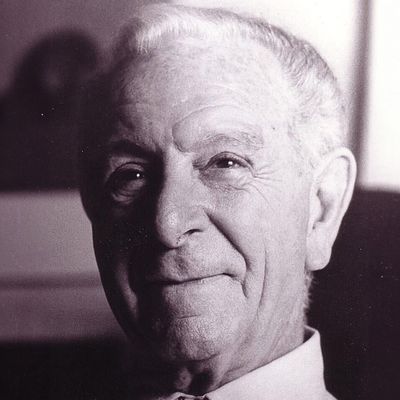
The conclusion of a four-part program featuring Broadway composer Burton Lane, known for such celebrated shows as FINIAN’S RAINBOW and ON A CLEAR DAY YOU CAN SEE FOREVER, along with songs for over thirty films including ROYAL WEDDING and BABES IN ARMS... Read More
From the show: Anything Goes
Guests
About
The conclusion of a four-part program featuring Broadway composer Burton Lane, known for such celebrated shows as FINIAN’S RAINBOW and ON A CLEAR DAY YOU CAN SEE FOREVER, along with songs for over thirty films including ROYAL WEDDING and BABES IN ARMS. Lane recounts his early songwriting efforts in Hollywood with Frank Loesser and Harold Adamson, Broadway collaborations with E.Y. “Yip” Harburg and Alan Jay Lerner, writing songs for Fred Astaire, and discovering a young Judy Garland.
Featured songs: “Give A Girl A Break,” “It Happens Every Time,” “On A Clear Day You Can See Forever,” “Come Back To Me,” “Hurry! It’s Lovely Up Here!” “One More Walk Around The Garden,” and “How Are Things In Glocca Morra?”
Originally produced and broadcast in 1981. For more information go to AnythingGoesPL.com or BPN.FM/Anything Goes. Theme music arranged by Bruce Coughlin. Associate producer Jeff Lunden. Anything Goes – Backstage with Broadway’s Best – is produced and hosted by Paul Lazarus.
Transcript
This transcript was automatically generated and might contain errors.
[0:00] Paul Lazarus: Hi, this is Paul Lazarus. In the 1980s, I produced and hosted a radio series called Anything Goes, a celebration of the American musical theater. Now, the Broadway Podcast Network is bringing back these shows. Today, the conclusion of a four-part look at the career of legendary composer, Burton Lane. Lane is best known for his remarkable scores for Finian's Rainbow and On a Clear Day You Can See Forever. This program was originally broadcast in 1981.
[0:39] Paul Lazarus: Did you first meet Alan Jay Lerner when you began work on the film Royal Wedding in the early 50s?
[0:45] Burton Lane: I met him either going into or out of an elevator in New York.
[0:55] Paul Lazarus: Alan Jay Lerner seems to meet everybody that way.
[0:59] Burton Lane: Just briefly. Somebody said, do you know Alan Lerner? And I said, happy to meet you. And then I did not see him for a number of years, because he had a show that opened three months after Finian's, and that was Brigadoon. Many people had gotten our shows kind of confused with one another. Anyway, I met him very briefly, as I say, and then I didn't meet him again until he came to California. And I was at Metro, and Arthur Freed asked me if I would do a film with Lerner, and I said yes, I would. And we did Royal Wedding. That was the first time we worked together.
[1:40] Paul Lazarus: Is that the first time you'd written for Fred Astaire, too?
[1:43] Burton Lane: No. My first song for Fred Astaire was Dancing Lady, my first picture, which was his first picture.
[1:49] Paul Lazarus: Oh, right. That score for Royal Wedding is also a super score. It really is.
[1:53] Burton Lane: Yeah, there are a lot of good songs in that.
[1:55] Paul Lazarus: Great songs. And really, Alan J. Lerner at his best. Of course, you got the other Oscar nomination for Too Late Now from that score. I'm going to ask you again, what beat you out that time? Do you remember?
[2:09] Burton Lane: A song beat me out that I...
[2:13] Paul Lazarus: This time you weren't so sure, huh?
[2:15] Burton Lane: Well, I don't think it... It was a hit. A hit song beat us out, which you never hear anymore. It's a song called In the Cool, Cool, Cool of the Evening.
[2:25] Paul Lazarus: Oh, of course, yeah.
[2:26] Burton Lane: Hoagie, Carmichael and Johnny Mercer.
[2:28] Paul Lazarus: Yeah, He Come the Waves or something.
[2:30] Burton Lane: It was a good song, but I didn't think it had the quality of Too Late Now, and as a matter of fact, it's a weird thing. Too Late Now never became a big hit, but it has become a standard.
[2:44] Paul Lazarus: Oh, it's a beautiful melody.
[2:45] Burton Lane: And the song, to this day, keeps increasing its performances. It's amazing. There are new recordings of the song, and I think maybe one day it's going to happen. The song certainly has a life.
[3:00] ♪ Musical number: "Too Late Now" — performed by Fred Astaire ♪
[5:56] Paul Lazarus: I love the way Fred Astaire sings You're All the World to Me.
[5:59] Burton Lane: Oh, yes.
[6:00] Paul Lazarus: That's his kind of song, boy. It really is. He just glides through it.
[6:04] Burton Lane: He's marvelous, and he's, I guess, the greatest musical comedy performer there has ever been.
[6:11] Paul Lazarus: Really? Yeah. There's not too much competition for Fred Astaire.
[6:15] ♪ Musical number: "You're All the World to Me" — performed by Fred Astaire ♪
[9:07] Paul Lazarus: And then the longest title, one of the longest titles ever for a film song is How Could You Believe Me When I Said I Loved You When You Know I've Been a Liar All My Life. Where did that come from?
[9:20] Burton Lane: Well, I'll tell you. Alan was staying at the Bel Air Hotel, and I would pick him up and go out to the studio. And I picked him up this one day and he said, you know, Astaire always likes to do a low down, vaudeville type number. I said, right. He said, well I got an idea last night, I think may have something. I said, well what is it? And he tells me this title. And I said, I think it's just wonderful. And I think it should go like this. How could you believe me when I said I loved you when you know I've been a liar all my life. He said, not like that, that. And we wrote the song as long as it takes to sing it. I was driving out to the studio. And he had lyric, which is unusual. Alan is not a fast lyric writer.
He wrote most of the lyric. And he said, let's go up to Freed and play it. I said, well let me get to a piano, at least try it over. Let's run it over, just so I know what we're doing. And we went and we played it over. He said, it's kind of cute. And then we went up to Freed and he listened to it. He said, let's get Fred. And Fred came over. He says, marvelous.
[10:50] Paul Lazarus: These things, you know, these things that come in a spurt like that.
[10:53] Burton Lane: Yeah.
[10:54] Paul Lazarus: And you got to trust them because they really have to.
[10:56] Burton Lane: Well, I'll tell you, I, I, I.
[10:58] Paul Lazarus: Sometimes that works.
[10:59] Burton Lane: When I worked with a new writer and as I worked with Alan, there are certain things that I like to have him understand about me so that we have a real honest to God working relationship. And one of the things I always say to somebody I'm about to work with, I never want you to write a melody you don't like. Because if you don't like it, I'll get something else. But never write anything you don't like. And naturally that, that freedom has to go with both sides. And then I said, now I have a peculiar thing. I said, a lot of times I don't want you to get carried away by enthusiasm. You know, if I hear something, I'll say, oh, it should go something like this. And I've overlooked some good things so, you know, pay some attention. So every time I would say it should go, it should be something like this, he says, no, not something like that, that. And that happened on a number of occasions.
[12:02] Paul Lazarus: Oh, geez, that's funny.
[12:04] Burton Lane: And that was one of them. Because the whole title was like three quarters of the song.
[12:08] Paul Lazarus: Really? This is a wonderful recording you've given me of Bing Crosby and Judy Garland.
[12:14] Burton Lane: Isn't that nice?
[12:15] Paul Lazarus: Where does that come from?
[12:17] Burton Lane: It was a radio program.
[12:18] Paul Lazarus: Oh, a radio program.
[12:19] Burton Lane: And the publisher took it off and sent it to me. I love that recording.
[12:24] Paul Lazarus: I, super.
[12:25] Burton Lane: Bing, you know, they still write sentimental tunes. I heard a real much better one.
[12:30] Paul Lazarus: Really? Gushy and everything?
[12:31] Burton Lane: Yeah, it was just dripping sentiments.
[12:33] Paul Lazarus: What was that?
[12:34] Burton Lane: How could you believe me when I said I loved you when you know I've been a liar all my life?
[12:41] Paul Lazarus: And then on the other hand, we have if.
[12:45] Burton Lane: Well, I guess that's the long and short of it, all right.
[12:47] Paul Lazarus: Oh, you've come up with something there.
[12:50] Burton Lane: Say, how could you believe me when I said I loved you when you knew I've been a liar...
[12:54] Paul Lazarus: That tune doesn't sound sentimental to me.
[12:56] Burton Lane: You've just got a persecution complex.
[12:58] Paul Lazarus: Is that it?
[12:59] Burton Lane: Maybe so, but it's a great boy and girl number, Judy.
[13:02] Paul Lazarus: Fred Astaire and Jane Powell.
[13:03] Burton Lane: They do it real good in that MGM picture, Royal Wedding.
[13:06] Paul Lazarus: I know, Bing.
[13:07] Burton Lane: You know, that song was originally written for me.
[13:09] Paul Lazarus: Oh, were you going to be in Royal Wedding out at MGM?
[13:11] Burton Lane: Mm-hmm, I was before Leo the Lion bit me.
[13:15] Paul Lazarus: He's an old lion, Leo.
[13:17] Burton Lane: His teeth are all gone.
[13:20] Paul Lazarus: He sure has got sharp gums.
[13:22] Burton Lane: Say, me not an old critter up in gums, you?
[13:25] Paul Lazarus: Well, gone he is.
[13:26] Burton Lane: Tell you what, Judy, let you and I do How Could You Believe Me, etc., viz. i.e. viz. and C footnote, huh?
[13:31] Paul Lazarus: Tell him?
[13:32] Burton Lane: Yeah, you be Harry the Heel and I'll be Judy the Jill.
[13:35] Paul Lazarus: Oh, that's a couple of characters.
[13:36] Burton Lane: Okay, babe.
[13:37] Paul Lazarus: All right, start it off, Heel.
[13:39] Burton Lane: Yeah, I can remember it.
[13:42] Burton Lane: Oh, how could you believe me when I said I love you when you know I've been a liar all my life.
[13:50] Paul Lazarus: You've had that reputation since you was a youth.
[13:54] Burton Lane: You must have been insane to think I'd tell you the truth.
[13:58] Paul Lazarus: How could I believe you when you said we'd marry?
[14:02] Burton Lane: Why, you know, I'd rather hang than have a wife.
[14:05] Paul Lazarus: Oh, how could you believe me when I said I love you when you know I'd rather hang than have a wife.
[14:12] Burton Lane: I know I said I'd make you mine.
[14:16] Paul Lazarus: Now, wouldn't you know that I would go for that old lie?
[14:20] Burton Lane: Oh, how could you believe me when I said I love you when you know I've been a liar.
[14:25] Paul Lazarus: You sure have been a liar.
[14:27] Burton Lane: Oh, a bald-faced liar.
[14:29] Paul Lazarus: Oh, a double-crossing liar.
[14:31] Burton Lane: Oh, my doggone cheating liar.
[14:35] Paul Lazarus: You said you would love me long and never would do me wrong.
[14:39] Burton Lane: Faithful you'd always be.
[14:50] Paul Lazarus: Why, baby, you must be loony to trust a lower-than-low two-timer like me.
[15:01] Burton Lane: You said I'd have everything, a beautiful diamond ring.
[15:05] Paul Lazarus: A bungalow by the sea.
[15:11] Burton Lane: But you're really naive to ever believe a fuller baloney phony like me.
[15:22] Burton Lane: Oh, boy, I sure must have lost my head.
[15:25] Paul Lazarus: Can't lose nothing you ain't never had.
[15:27] Burton Lane: Oh, what about the time you went to Indiana?
[15:31] Paul Lazarus: I was lying, I was down in Alabama.
[15:35] Burton Lane: You said you had some business you had to complete.
[15:38] Paul Lazarus: Oh, what I was doing, I would be a cad to repeat.
[15:42] Burton Lane: What about the evenings you was with your mother?
[15:46] Paul Lazarus: I was romping with another honey lamb.
[15:49] Burton Lane: To think you swore our love was real.
[15:53] Paul Lazarus: Oh, baby, leave us not forget our such a year.
[15:57] Burton Lane: How could I believe you when you said you loved me but when you know I've been a liar.
[16:02] Paul Lazarus: A good-for-nothing liar.
[16:04] Burton Lane: Oh, my good-for-nothing liar.
[16:30] Paul Lazarus: Before that, two other songs from Royal Wedding, You're All the World to Me, performed by the original star Fred Astaire, and Jane Powell, also in the original cast, Too Late Now, the song that was nominated for an Academy Award out of that picture. And this is Anything Goes on WBAI in New York. I'm your host, Paul Lazarus, with a look at the career of composer Burton Lane.
[16:54] Paul Lazarus: Okay, I'm going to jump ahead to your work with Ira Gershwin on a film that was not all that successful, Give a Girl a Break, 1953.
[17:03] Burton Lane: Not all that successful. That's really the understatement.
[17:05] Paul Lazarus: Yeah, I was being kind.
[17:10] Burton Lane: I must tell you about Ira. I think this is an adorable story, and it's a true one. It shows you what a sweet, dear man Ira is.
[17:24] Burton Lane: I had known him since I was 15 or 16 years old, and he's just as much a genius in his field as George.
[17:37] Burton Lane: But George was the younger brother, and kind of swept all the attention, which he certainly deserved. But in doing that, he kind of overshadowed Ira.
[17:50] Burton Lane: Ira is a giant as a lyric writer, and a wonderful, wonderful man. But my relationship with him was, again, a man much older than I, my god, or the brother of my god, you know. So he has to be a god on his own.
[18:16] Burton Lane: I got an offer from Metro. An agent called me up and said, so-and-so wants you to do a picture. Do you want to do it? And I said, fine. And he says, well, who would you like to work with? And I said, well, I'd better give you two names, because I know the first man will turn me down.
[18:39] Burton Lane: So he said, well, who's that? I said, Ira Gershwin. He said, all right, give me your second name. Ira had the reputation that if one were to ask him, Ira, what are your plans for the coming year, he would say, well, I've got two pictures to get out of doing. I've got one show to get out of doing. Now, it isn't that Ira doesn't like to work, because he is a very, once he's into it, he really is as professional as anyone could possibly be. But his nature is to take life easy. That's his nature.
[19:20] Burton Lane: So that was, I expected that he would not say yes. And two days later, I get a call from the agent who says, Ira has said yes. Well, I was sailing.
[19:34] Burton Lane: Now, we weren't to start this picture about three, four weeks. So after calling him and telling him how thrilled I was, as that day arrived, and we had an appointment to meet at 2 o'clock, I started to get very nervous. I said, first of all, to know him this long, to have the kind of regard for him that I had, I was now meeting him on a different level, on a work level. So I was really trembling with fear.
[20:10] Burton Lane: So a few hours before I was to meet with him, I took a sedative, calmed my nerves, and then I went over to see him. And there was small talk, and I sat at the piano, and I played a couple of things, and then there was more small talk, and finally I said, Ira, I have a confession to make. He said, what? I said, before I came over today, I was so nervous, because at this time he had already made me feel at ease, I said, Ira, I was so nervous that I took a sedative.
[20:52] Burton Lane: There was a pause, and he put his hand in his pocket, and he took out a pill box. He said, I took one too.
[21:01] Paul Lazarus: Oh, my.
[21:04] Burton Lane: The tragedy is that I would have loved to have done something with Ira that was worthy, I think, of both our talents. The picture we did was a bad picture, badly done. I think we had some lovely songs that came out of that picture, but we never got a recording. It was right in the middle of the BMI ASCAP battle. So that nobody has ever really heard these songs.
[21:36] Paul Lazarus: Yeah, well, I'm really glad that you and Ira at least put them down on acetates, so that we have this.
[21:42] Burton Lane: Well, I didn't put them down. What we did was we went over to Johnny Green's house and made a demo record.
[21:50] Burton Lane: Right, just sang it into the box. Just sang it in, because I was about to leave Metro to contract to Paramount, and I wouldn't be there when they were shooting the film, although I said I would come over and help when they were preparing it, preparing the songs, so that since I couldn't be there all the time, they would at least have a recording of how the song should be sung.
[22:13] Paul Lazarus: Right.
[22:15] Burton Lane: Hey, stunning, cute and cunning, what does it take? You've won me, please don't shun me, give a girl a break.
[22:31] Burton Lane: Hey, single, if we mingle, things will be jank. Yes, to my uttermost, you're the man I'd butter most, give a girl a break.
[22:47] Burton Lane: Why back up, don't I stack up, do I have to draw a chart? Oh, give a girl a break, or you're going to break my heart.
[23:10] Burton Lane: Hey, dreamy, can't you see me? Are you awake? Just latch on and you'll catch on, give a girl a break.
[23:26] Burton Lane: Take over, live in clover, and no mistake. Let's call up a minister, or I'll be a spinister, jumping in a lake.
[23:42] Burton Lane: Hey, gorgeous, yes sir, you're just what I ordered from the start. Give a girl a break, or you're going to break my heart.
[24:02] Burton Lane: Give a girl a break, or else you'll break my heart.
[24:21] Burton Lane: I look and see the stormy skies, you look at me with laughing eyes. December days are like July's, it happens every time.
[24:38] Burton Lane: When trouble brings a tale of woe, the phone bell rings, it's your hello. The room I'm in begins to glow, it happens every time.
[24:55] Burton Lane: Life is good without you.
[24:58] ♪ Musical number: "It Happens Every Time" — performed by Burton Lane ♪
[26:49] Paul Lazarus: Burton Lane at the piano and singing "It Happens Every Time," and with his collaborator Ira Gershwin performing "Give a Girl a Break," the title song from their 1955 film. And you're listening to Anything Goes with a tribute to composer Burton Lane.
[27:07] Paul Lazarus: Of course, not to be on fire with a show you're going to give two years of your life to. It's a waste of time.
[27:15] Burton Lane: Yeah, because there was quite a hiatus between, I guess, Finian's and Clear Day.
[27:22] Paul Lazarus: Well, there were films in between.
[27:24] Burton Lane: Oh, there were lots of work.
[27:26] Paul Lazarus: Yeah, but not enough. I mean, I would have loved to have done a show a year.
[27:31] Burton Lane: Well, you did do, in 1965, another show. Well, this is really the first musical with Alan Jay Lerner, On a Clear Day You Can See Forever.
[27:40] Burton Lane: As far as I know, it had started out with Rogers and Lerner trying to team together, and that didn't work out.
[27:49] Paul Lazarus: Yes, the show was called...
[27:51] Burton Lane: I Picked a Daisy.
[27:52] Burton Lane: I Picked a Daisy, and they did not get along, which was no surprise to me.
[27:59] Paul Lazarus: Yes.
[28:00] Burton Lane: And then I came along, and we didn't get along, which was no surprise to me, or was a big surprise. I don't know. He's a difficult man.
[28:11] Paul Lazarus: Yeah, I can well appreciate that.
[28:15] Burton Lane: But the mere fact that so many good things came out of it really just astounds me, when I think of the conditions under which we were.
[28:26] Paul Lazarus: Was it a difficult collaboration?
[28:28] Burton Lane: The worst two years of my life.
[28:30] Burton Lane: Not kidding.
[28:32] Burton Lane: I...
[28:35] Burton Lane: Tough show.
[28:38] Burton Lane: It's awful tough to go in. I wouldn't want to go into the things that made it bad.
[28:46] Burton Lane: But the fact that it takes two years out of one's life and then you go into rehearsal and work has not been done, five songs written in two years.
[29:00] Burton Lane: I wrote a ton of melodies, and he just wasn't working and doing the work. He was making appointments and keeping them. It's not a good way to work.
[29:13] Burton Lane: On a clear day, rise and look around you, and you'll see who you are.
[29:30] Burton Lane: On a clear day, how it will astound you, that the glow of your being outshines every star you feel part of.
[29:52] Burton Lane: Every mountain, sea and shore, you can hear from far and near, a world you've never heard before.
[30:07] Burton Lane: And on a clear day, on that clear day, you can see forever and evermore.
[30:37] Burton Lane: And on a clear day, you can see forever and evermore.
[31:04] Burton Lane: You feel part of every mountain, sea and shore, you can hear from far and near, a world you've never heard before.
[31:23] Burton Lane: And on a clear day, on that clear day, you can see forever and ever and ever and evermore.
[31:53] Paul Lazarus: John Cullum performing the title song from the Alan J. Lerner Burton Lane collaboration, "On a Clear Day, You Can See Forever."
[32:06] Burton Lane: When Dick Rogers bowed out of the show, and I was asked to come in, Alan brought out a bunch of lyrics to show me that he had written.
[32:18] Paul Lazarus: For Rogers' tune?
[32:20] Burton Lane: Yeah. And I went through all the lyrics, and there was only one that I liked. And I said, that one I like, and I'd like to write it.
[32:30] Burton Lane: And that was "Come Back to Me." I changed the meter of it. I never heard Dick Rogers' tune, but his tune, the rhythm of it was, da-da-dum, da-da-dum, da-da-dum, da-da-dum, da-da-dum, da-da-dum, come back to me. And I went, da-da-dum, da-da-dum, da-da-dum.
[32:52] Paul Lazarus: Oh, I see.
[32:53] Burton Lane: I gave it a more, it had a more dramatic quality. And then I had to change the ending because of the way it worked out.
[33:01] Burton Lane: And I waited a year and three quarters or so for those two lines to finish the song.
[33:08] Burton Lane: Hear my voice, where you are, take a train, steal a car, hop a freight, grab a star, come back to me.
[33:21] Burton Lane: Catch a plane, catch a breeze, on your hands, on your knees, swim or fly, only please come back to me.
[33:35] Burton Lane: On a mule, in a jet, with your hair in a net, in a towel wringing wet, I don't care, this is where you should be.
[33:49] Burton Lane: From the hills, from the shore, ride the wind to my door, turn the highway to dust, break the law if you must, move the world, only just come back to me.
[34:08] Burton Lane: Blast your hide, hear me call, must I fight, city hall, here and now, damn it all, come back to me.
[34:29] Burton Lane: What on earth must I do, scream and yell, till I'm blue, curse your soul, when will you come back to me.
[34:42] Burton Lane: Have you gone to the moon, or the corner saloon, and to rap and to rune, mademoiselle, where in hell can you be.
[34:56] Burton Lane: In a crate, in a trunk, on a horse, on a trunk, in a rose or a fan, wrapped in mink or saran.
[35:10] Burton Lane: Any way that you can, come back to me, come back to me, come back to me.
[35:26] Burton Lane: Hey, buds below, up is where to grow, up with which below can't compare with, hurry, it's lovely up here.
[35:52] Burton Lane: Life down a hole takes an awful toll, what women are sold, they're to share with, hurry, it's lovely up here.
[36:11] Burton Lane: Wake up, bestow yourself, it's time that you disinter yourself, you've got a spot to fill, a pot to fill.
[36:29] Burton Lane: And what a gift package of shower, sun and love, you'll be met above everywhere.
[36:39] Burton Lane: Fondled and sniffed by billions who drift by, life here is rosy, if you're a posy, hurry, it's lovely here.
[37:09] Burton Lane: Climb up geranium, cacophonous of geranium, on the exterior, it's cheerier.
[37:27] ♪ Musical number: "Come Back to Me" — performed by John Cullum ♪
[38:40] ♪ Musical number: "Hurry! It's Lovely Up Here!" — performed by Barbra Streisand ♪
[38:44] Paul Lazarus: One last show I want to talk about is your latest, which is *Carmelina*. From this talking, I'm surprised it even got written. How did you get back together with Lerner after that to do *Carmelina*?
[38:56] Burton Lane: Well, you know, when you're anxious and over-anxious, as I've always been to get a show on, you put a lot of things out of your mind. When I read in the papers that a show Alan Lerner did called *1600 Pennsylvania Avenue* had closed, I think it played three performances in total, and I said to my wife one night, Lynn, in about three months I'm going to get a call from Mr. Lerner. And she said, you're crazy, you're out of your mind. I said, I don't know whether it's going to be three months, I think maybe two months. I think maybe, I don't know, maybe a few weeks. Three weeks, two weeks, I'm going to get a call from Lerner. She says, you're crazy. About a week and a half, I finish the picture and I go back to New York, and I have an answering machine.
And I left my wife off, dropped her off, we had been to a restaurant or something, and I took my car to the garage and I came back. And I walked up, got up to the apartment and my wife says, Bert, I want you to hear something. And there on the machine is a voice, very uncertain, shaky a little bit, stammering, Bert, this is Alan. I have something I'd like to, would you call me? I have something I want to talk to you about. This is as close as I can give you. So I called him and he said, I have an idea for a musical, I'd like to talk to you about it. I said, okay. And he came over the next day and I said, Alan, before you tell me what your idea is, I have to tell you what's on my mind. And I went over the history of *Clear Day*, step by step.
And I said, I'm not about to embark on another one of those. Life is too short. These are conditions I can never live with. So we went step by step. And I said, look, no harm done. If you can't live with the conditions under which I can work, I thank you for coming and I'm very flattered that you wanted to decide to work together again. But if you can't live with it, please don't. I can't live the other way. And he gave me his word of honor on every issue, everyone, without question. Now I wasn't handing down decrees of impossible working relationships. These were very simple things to live with if you had a mind to live, to work. Well, he agreed and then gradually all these promises disappeared and it became impossible again.
He's just not able to. And *Carmelina* was a show I think could have made it had it been treated differently from every aspect. It was a show that had great quality in places, but uneven because of casting and sets of costumes. I mean, all the major decisions, all down the line. Alan has a big reputation. He has a tremendous reputation and he should have it. He's done marvelous work. But today, and then when you're in collaboration, you can't dismiss the people you're working with. You have to, everybody has to have an equal say. So he so dominated the situation that he got the producer he wanted, who was a non-producer. He got the scenic man, he undermined the costume, every aspect of the show.
Casting, he got people in there that were, you know, it's terrible to be alone in this, to be fighting against everything that came up, but I kept doing that. I had to. Luckily, even that enterprise, you still, the two of you managed to pull off some really nice things. I think that trio, *One More Walk Around the Garden*, is a lovely, lovely song.
[44:21] ♪ Musical number: "One More Walk Around the Garden" — performed by Gordon Ramsay, Howard Ross, and Bernie Neve ♪
[47:08] Paul Lazarus: Lovely trio from *Carmelina*, a score by Burton Lane and Alan J. Lerner, featuring the singing of Gordon Ramsay and Howard Ross from the original cast, joined by Bernie Neve for the record. And you're listening to *Anything Goes* with Paul Lazarus, and the conclusion of a tribute to composer Burton Lane.
[48:15] ♪ Musical number: "Glow, Glow, Glow to the Rainbow" — performed by Unknown performer ♪
[49:16] Paul Lazarus: You've been listening to the conclusion of a four-part series devoted to talented Broadway composer Burton Lane. Associate producer Jeff Lunden. *Anything Goes: Backstage with Broadway's Best* is produced and hosted by Paul Lazarus. For more information, visit anythinggoespl.com. If you enjoyed this episode, be sure to rate and follow us. Thanks for listening.
© Broadway Podcast Network, All Rights Reserved