

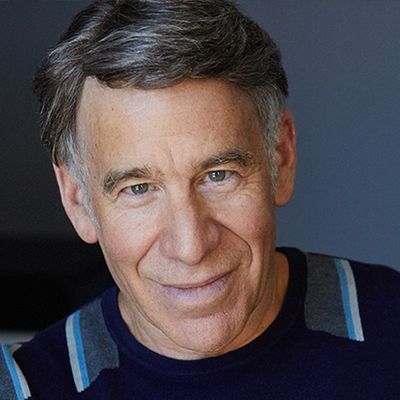
The first of a three-part program featuring Broadway composer/lyricist Stephen Schwartz, known for such celebrated shows as GODSPELL and PIPPIN. In this edition, Schwartz discusses his early days on Long Island, writing songs for BUTTERFLIES ARE FREE, GODSPELL, and shares a song from PIPPIN-PIPPIN, the college version of PIPPIN... Read More
From the show: Anything Goes
Guests
Featured Shows
About
The first of a three-part program featuring Broadway composer/lyricist Stephen Schwartz, known for such celebrated shows as GODSPELL and PIPPIN. In this edition, Schwartz discusses his early days on Long Island, writing songs for BUTTERFLIES ARE FREE, GODSPELL, and shares a song from PIPPIN-PIPPIN, the college version of PIPPIN.
Featured songs: “Magic To-Do” from PIPPIN, “Begging My Lady’s Pardon” from the college production, PIPPIN-PIPPIN, “Butterflies Are Free” from BUTTERFLIES ARE FREE, “Prepare Ye the Way of the World” from GODSPELL, “Day by Day” from GODSPELL, and “Simple Joys” from PIPPIN.
Originally produced and broadcast in 1980. For more information go to AnythingGoesPL.com or BPN.FM/Anything Goes. Theme music arranged by Bruce Coughlin. Backstage with Broadway’s Best – is produced and hosted by Paul Lazarus.
Transcript
This transcript was automatically generated and might contain errors.
[0:00] Paul Lazarus: Hi, this is Paul Lazarus. In the 1980s, I produced and hosted a radio series called Anything Goes, a celebration of the American musical theater. Now the Broadway Podcast Network is bringing back these shows. Today, part one of a three-part look at the career of composer-lyricist Stephen Schwartz. Schwartz is best known for his amazing scores for Godspell, Pippin, Working, and Wicked. This program was originally broadcast in 1980, long before Wicked had even been conceived. Good afternoon and welcome to Anything Goes. I'm your host, Paul Lazarus. Today, I'm pleased to present as my guest, composer-lyricist Stephen Schwartz, whose many shows include Godspell, Pippin, and The Magic Show, all of which ran simultaneously on Broadway, and more recently, The Baker's Wife and Working.
Join us for the next hour and a half as we talk to Stephen Schwartz by way of a prerecorded interview and listen to many selections from his scores. And as a special treat, Schwartz will go to the piano himself to play many of his songs, both rare and well-known.
[1:55] ♪ Musical number: "Magic To-Do" — performed by Stephen Schwartz ♪
[2:53] Paul Lazarus: I wanted to take you back, at first, to the beginnings. Through the misty eons of time. Right, not like birth, but what was, when was the first show, what was your first show ever? Was it high school or college?
[3:06] Stephen Schwartz: Oh no, oh you mean really way back? I always did shows.
[3:13] Paul Lazarus: Really, even as a child you were writing songs?
[3:15] Stephen Schwartz: Oh sure, yeah, shows, bullying the children in the neighborhood to participate in these things that we charged a quarter for.
[3:22] Paul Lazarus: At your house?
[3:24] Stephen Schwartz: Oh yes, in the backyard or down in the basement. I was always enraged when everything wouldn't go just so. One time I insisted on refunding the money because I felt the show wasn't up to snuff. This caused great embarrassment to my parents.
[3:38] Paul Lazarus: Was this in the city?
[3:39] Stephen Schwartz: No, by this time we were on Long Island, in Roslyn.
[3:43] Paul Lazarus: Tell me about the shows you wrote in college a little bit. You wrote virtually a show a year at Carnegie Mellon.
[3:50] Stephen Schwartz: Yeah, they had an organization, not allied with the drama department at all. In fact, slightly at odds with the drama department often called Scotch and Soda, which I think a lot of colleges have organizations like that. Harvard has Hasty Pudding and Northwestern has the Wamayu shows and everything.
[4:11] Paul Lazarus: What was the reaction of people to your stuff then? Obviously they didn't know what you were going to write in the near future and they didn't know you as Stephen Schwartz who wrote Godspell and Pippin, etc. They only knew you as a classmate. How were they reacting to your stuff at that point?
[4:28] Stephen Schwartz: Very well. Everyone seemed to like it and went around singing songs and said they were looking forward to the terrible albums that we used to do of the shows.
[4:40] Paul Lazarus: I know, which I forced you to bring me one.
[4:42] Stephen Schwartz: Yes, there's one song that I went back and listened to the other day and of course was appalled and said, oh no, we can't play this and we can't play that. But there is one song in the original Pippin Pippin, which is sort of interesting. It's a song called Begging My Lady's Pardon and this is still in, of course, the court intrigue days. This is right off the college recording and in it the character who wound up being Irene Ryan, Pippin's grandmother, comes to court to talk to the woman who wound up being Leland Palmer, Fastrata, on his behalf and it's a very sort of bitchy dialogue. I was interested when I listened to it yesterday actually again because it showed that even then I had an attraction to doing musical scenes. I mean the whole thing is a musical scene between the two of them and I just want to add that I was sixteen, no, I was seventeen years old when I wrote this, so people who are listening to it should be forgiving in that regard.
[6:02] Stephen Schwartz: Let me be brief. My dear, you appear sorely in need of a rest. You're creaking in every joint. So I surmise it would be wise if we forget the formalities, dear, and proceed to the point. Dear Queen, I greet you, the same old sweet you. May I point out at court you're not the only one. I would love to sit and chat with you a bit, but alas, my dear, the business I have here is with my son.
[6:46] Stephen Schwartz: Beggin' my lady's pardon, I was surprised in store. Seemingly you don't know that Charles is away at war. I cannot blame you for being dismayed. I simply could cry for you. And though I'm sorry, I'm really afraid. There's nothing that I can do. If I were able, I'd come to your aid. Of this you could have no doubt. If but I could, I surely would, but I cannot and I won't. Now, dear, will you kindly get out? I will not press you. I'll not distress you. It is for Pippin that I journey here today. You must be aware that he's your husband's heir, and I guarantee, I personally will see it stays that way.
[7:44] Stephen Schwartz: Beggin' my lady's pardon, you are not making sense. Pippin has left his subjects, shattered their confidence. Though his decisions seem rather naive, they purr into haunts unknown, leaving the rest of us here to believe he no longer wants the throne. I don't know what he expects to achieve, but his been the crown adieu. What can I say? He's gone away. And I might add, my dear Bertha, I wish you would go away too. Though you abuse me, you quite amuse me. You are a fool, a queen who simpers as she snores. I will now adjourn, but I will soon return. I'll bring Pippin here, and both of us, my dear, will speak with charge.
[8:41] Stephen Schwartz: Beggin' my lady's pardon, this I cannot condone. Since you insist on pushing Pippin upon the throne, I think you can be banished from court, returning on pain of death. Now I suggest you go make your report while you can sustain a breath. Well, let us hear your next witty retort. Or has your amusement bled? Has it indeed? Get to your seat. Hurry and tell the boy if he returns, you will quickly be dead. You'll never get away with this, I'll intervene. My dear, you seem to forget which one of us is queen. Charles will stop you, he'll be back before too long. I'll tell him Pippin's done some grievous wrong. Pippin's done no wrong, he's a harmless pup. I'll make some up.
[9:28] Stephen Schwartz: Beggin' my lady's pardon, we must part, you and I. I won't forgo the joy of kissing you goodbye. But let me point out before we say good day, that beggin' my lady's pardon, I will have my way.
[9:50] Stephen Schwartz: Beggin' my lady's pardon, from an original cast recording made in Stephen Schwartz's college days at Carnegie Mellon, and that from the original score to Pippin Pippin, which later became Pippin. And you're listening to an interview with composer-lyricist Stephen Schwartz. Why did you go for drama at that point? You went to Carnegie Tech obviously for a drama degree, am I wrong?
[10:13] Stephen Schwartz: Yeah, that's correct.
[10:21] Stephen Schwartz: Well, I had been going to Juilliard Prep when I was in high school. I used to come in every Saturday and go to Juilliard Prep, and I'd had an awful lot of music at that point. I'd been taking piano lessons since I was seven, so that was about nine, ten years by that point, and I'd had a lot of theory and two years of composition at Juilliard Prep. But I was very lazy when I was at Juilliard. When I was in high school, I used to play hooky a lot and tell my parents I was going off to Juilliard and then go to see the matinee if I can get it for you wholesale, or I wouldn't do anything all week long, and then I would wind up scribbling out trumpet parts on the train, and I was not a very diligent student.
I regret it now sometimes when my ignorance of orchestration becomes burdensome. I say, if I'd studied then, I would know what the range of the viola was, but it's too late now. Well, I wanted to ask you, because I'm getting you to play Butterflies Are Free later. How did that happen? Was that your first assignment? Yeah, that was in 1969, so it was... I guess I'd been in the city about six months, or maybe a little longer than that, because I was already working with Shirley, and she called me up one day. She was at IFA at the time, and said she knew of the show that was being done, Butterflies Are Free. She was representing delay, and they needed a song for it, because the guy was supposed to be a composer, and she sent me the script, and I read through it.
This guy was... He was blind, and so I did this little folk song, trying to keep all visual images out of it. That was the only sort of interesting thing and fun thing to do, was to try and do a song which had absolutely no visual images in it. And also, it's a very short song, and also to keep it believable that an amateur writer who didn't know too many chords on the guitar, and I knew Keir was going to have to play it, and couldn't really play the guitar, that he had done this song. Of course, being an amateur writer... A lot of people know that song, but don't know that you wrote it, I think. Really? Yeah. I was, of course, delighted. It came along so suddenly, and I did this song, and they called me up and said, we'd like to use this song, and we'll pay you $25 a week if you let us use it.
In fact, someone was going to pay me $25 a week to use this song. It was so extraordinary to me. I was absolutely delighted. I knew the day you met me, I could love you if you let me. Though you touched my cheek and said how easy you'd forget me, you said butterflies are free, and so are we. On that velvet morning when our love was forming, I said it wouldn't hurt me if you left without a warning. I said butterflies are free, and so are we. And you made me understand right from the start I could hold your gentle hand, but never hold your heart. So why the crying? Were our brave words lying? When we both agreed there'd be no tears in our goodbye, and we said butterflies are free. Why aren't we? Why aren't we?
[14:20] Stephen Schwartz: Stephen Schwartz at the piano himself performing one of his earliest songs for a Broadway show, Butterflies Are Free. From what I know of Godspell, it started out at Carnegie Tech, and then people who you had known at school didn't even know that you were being brought in. That's right, and I didn't know who they were. It was very strange, and it came up at quite a low point, actually, in my life. I had been working for RCA Records for a couple of years. I got a job working in their A&R department there when I came to New York. I got that through Shirley as well. And that had just come to an end. I'd been there two years, and by our mutual agreement we left, and I had been doing musical direction for a rock musical that was a catastrophe in New York called The Survival of St. Joan, and that had just opened to blisteringly horrible reviews.
Oh, I had seen the recording of that, and I saw your name on it, and I wasn't even sure. Yeah, I produced the record too. That's right, okay. And anyway, so those things were... I was there, I had no job or whatever, and I went out, Carol and I went out to my folks' house for my birthday, which was... This was in March of 71, and I got a call from somebody who worked for Lansbury & Baruch, and they had heard the score for Pippin about, oh, maybe six months before when I was being trundled around playing the score for people, and they had seen Godspell at the Cafe La Mama where it was being done, not really as a musical. There were some songs in it, a couple of which the cast had written, one of which was by my side, which I like so much I retained for the final show, and also doing some songs that I think they were doing Laura Nero songs and some other things in places.
Anyway, they had seen it there, and they wanted to move it to Off-Broadway, but they thought it should be a musical, and they had remembered the stuff I did for Pippin, and they asked me would I go see it, and... Did you know at the time who was doing it? I had no idea, so we went into the city to Cafe La Mama and saw this, and there were all these people that I'd gone to school with up there doing their little show, so it was very surprising to me. Of course, I'd known John Michael at school, though I had no idea that he'd done this, and... So he, this is John Michael Teblak, right? John Michael Teblak, yeah. He was a couple of years behind me at school. And he was doing it as a, what, a kind of thesis project?
He did it originally, yes, as his, what they call a thesis. I mean, you had to do a play. I think it was his graduate thesis at Carnegie Tech, or his senior project, I forget whether, exactly what it was he was doing it for. I guess it must have been graduate, and that's why I was gone by the time he did it, because I'd been out of school three years by then, or two and a half years by then. So you came and... Yeah, I saw it, and I liked it pretty well. I remember it gave Carol a headache, and I said, no, no, I think it was pretty good. She said, I liked it, but it was hard to tell through the haze of pain. And of course, I would have done anything at that point. I thought it was unbelievable that anybody was asking me to write anything.
And I went the next week to a meeting up at Lansbury and Baruch, and this was in March of 71, and they said, la, la, la, and we're going into rehearsal April 11th, and go home and write the score. So that was five weeks or whatever. So I went home and started writing.
[18:18] ♪ Musical number: "Prepare Ye the Way of the Lord" — performed by Stephen Schwartz ♪
[19:53] Stephen Schwartz: When you wrote Day by Day, did you think that was going to emerge from the score so individually? No, I thought All Good Gifts was the hit in the score. Oh, I'm glad to hear that, because that really was my favorite song. Day by Day was written because I'd always wanted to have an audience sing along. This has gone back to the days when I used to go to Weaver's concerts, you know, and Pete Seeger would say, we're all going to sing on top of Old Smokey together. And I thought that was so wonderful, and they'd never done it in the show, and I always wanted that to happen. The only time I could think of that that actually happened was Once in Love with Amy. Oh, the audience actually sang along?
It actually became a part of the show. Well, we did it with No Time at All, too. I mean, finally, in the next show, we brought down the screen and had the little bouncing ball and tried to get everybody to sing along. But what happened in Day by Day was that I tried to make it so
[20:43] Stephen Schwartz: Simple. And it is just the same thing over and over and over again that by the middle of the song, if you'd never heard it before, you could sing right along. And ultimately, we abandoned the idea of trying to get the audience to sing along because we felt it was early in the show and too pushy and all like that. Though they did all wind up clapping along somehow. But I think that simplicity and that constant repetition is what made it be a hit song.
[21:32] ♪ Musical number: "Day by Day" — performed by the original cast members of Godspell ♪
[24:13] Paul Lazarus: "Day by Day" performed by the original cast members of Godspell. You're listening to a pre-recorded interview with composer-lyricist Stephen Schwartz. You've told me about the shows as you were a kid growing up. Why? I mean, I'm just trying to figure out what makes a kid want to do that. In your case, was there anyone in your family connected with theater?
[24:31] Stephen Schwartz: Nope, I have no idea. My folks, you know, we live near to the New York area, and they used to take me to shows.
[24:45] Paul Lazarus: Do you remember the first show you saw?
[24:48] Stephen Schwartz: Yeah, the first, oh, well, this is, now that you mention it, I can see where it came from. Actually, the first stage thing that I ever saw was the stage show at the Roxy in the days when there was the Roxy. I don't remember the movie anymore that my, I think it was just my mother took my sister and I to see, but I couldn't believe that there were, I just was entranced seeing the stage show. And then shortly thereafter that, a man who lived next door to us was a composer, his name was George Kleinsinger, and he had written a record actually called Archie Mehitabel, an adaptation of the Don Marquis stories, and that was made a Broadway musical in 1950, whatever it was, 54 or 55, called Shinbone Alley. And I did go to see that, so that was the first show that I saw. And then I, you know, I had the bug, so I kept going to see shows, musicals mostly.
[25:42] Paul Lazarus: He's the kind of kid who ran home after seeing a show and sat down at the piano trying to figure out what they were.
[25:47] Stephen Schwartz: Oh sure, of course, yeah.
[25:52] Paul Lazarus: That's interesting that, you know, that you live next door to someone who writes, that interests me because it seems, that seems a pattern for several other people in a lot of ways.
[26:01] Stephen Schwartz: I think that's why finally my parents got me the piano too. I said, you know, I really would like a piano, and I was always over the Kleinsingers noodling on their piano.
[26:11] Paul Lazarus: You weren't pushed to practice, were you?
[26:11] Stephen Schwartz: Oh, pushed to practice? Oh yes. Oh, I had to be wheedled and bribed and cajoled. I hated to practice. My laziness was with me from a very early age. I used to love to play the piano, and I would sit for hours playing the piano, but I really didn't like to practice what I was supposed to be practicing. And I would constantly have fights with my parents, and my mother would say, I would say, that's it then, I'm quitting, I'm not taking piano lessons anymore. And she would say, fine, all right, you call Mr. Harrell, and you tell him that you're quitting, that you're not going to take lessons, and you won't be into your lesson next week. And of course I could never face that, making that phone call. So I'd say, all right, all right, I'll practice. They used to say, if you practice, and I hear for a month that you've done very, very well, then I'll take you to see the revival of South Pacific at City Center. I mean they went through all this.
[27:01] Paul Lazarus: The carrot, the great carrot.
[27:06] Stephen Schwartz: The carrots and sticks, where there was a lot of both of those.
[27:12] Paul Lazarus: Oh, amazing. We talked about Pippin, and how it went through all these various manifestations, and got to Broadway. I was just curious about one thing, because when I saw it, I was fortunate to still see it when Ben Vereen was in it. How was Ben Vereen found for Broadway? I mean, because of Jesus Christ Superstar?
[27:27] Stephen Schwartz: Yeah, I guess Bob had seen him in Superstar, and brought him in. He came in and sang Alfie, and something from Superstar, and he was just wonderful, of course. And we all went back to Stewart's office and said, well, I mean, we've got to write a part for this person. And we wound up combining five roles, actually, and that's when the leading player role evolved.
[27:51] Paul Lazarus: I was wondering about that, because with someone like Ben Vereen, it would seem like it would come after you found him.
[27:55] Stephen Schwartz: That's exactly what happened.
[27:58] Paul Lazarus: That's what I thought.
[27:58] Stephen Schwartz: There was a troupe of players, but there were about four or five roles that Ben wound up taking all of them, and they began to be assimilated into that conception.
[28:07] Paul Lazarus: Did you actually tailor songs to his own abilities?
[28:12] Stephen Schwartz: No.
[28:12] Paul Lazarus: Not really?
[28:13] Stephen Schwartz: No. Frankly, I do it more now than I did at the time. The score was pretty well done by that point, too. And none of the songs that were added were four-band.
[28:25] Paul Lazarus: I've never seen anyone as triple talented as he is. I mean, he literally can do it all. I mean, there are other people that good, certainly, but I don't think I've ever been as impressed with an individual performer as what all the things that he was doing in that show.
[28:40] Stephen Schwartz: Yeah, he's a major talent.
[28:56] ♪ Musical number: "Simple Joys" — performed by Stephen Schwartz ♪
© Broadway Podcast Network, All Rights Reserved