

The second of a three-part program featuring Broadway composer/lyricist Stephen Schwartz, known for such celebrated shows as GODSPELL and PIPPIN... Read More
From the show: Anything Goes
Guests
Featured Shows
About
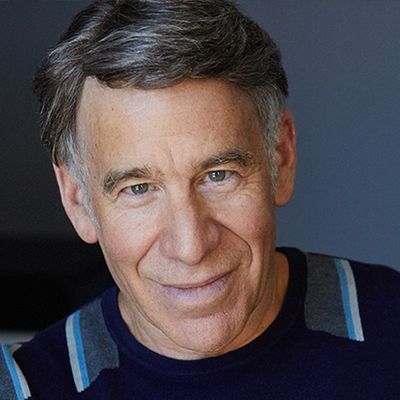
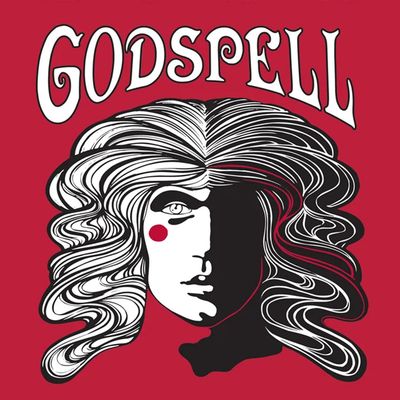
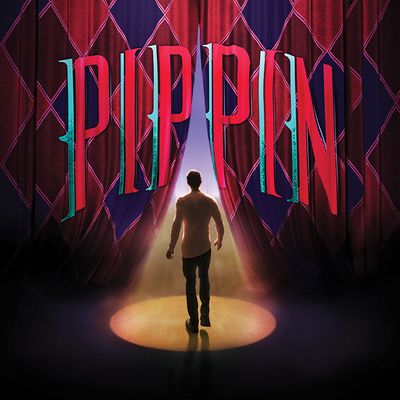
The second of a three-part program featuring Broadway composer/lyricist Stephen Schwartz, known for such celebrated shows as GODSPELL and PIPPIN. Schwartz discusses the creative writing process behind “Love Song” from PIPPIN, as well as the show’s overall popularity and critical reception, and developing songs for a potential film adaptation of THE MAGIC SHOW.
Featured songs: “The Good Times Ladies Rag” from PIPPIN, “Love Song” from PIPPIN, “West End Avenue” from THE MAGIC SHOW, “Where Did the Magic Go” from the proposed film adaptation of THE MAGIC SHOW, and “Millwork” from WORKING.
Originally produced and broadcast in 1980. For more information go to AnythingGoesPL.com or BPN.FM/Anything Goes. Theme music arranged by Bruce Coughlin. Backstage with Broadway’s Best – is produced and hosted by Paul Lazarus.
Transcript
This transcript was automatically generated and might contain errors.
[0:00] Paul Lazarus: Hi, this is Paul Lazarus. In the 1980s, I produced and hosted a radio series called Anything Goes, a celebration of the American musical theater. Now, the Broadway Podcast Network is bringing back these shows. Today, part two of a three-part look at the career of legendary composer-lyricist Stephen Schwartz.
[0:27] Paul Lazarus: Schwartz is best known for his amazing scores for Godspell, Pippin, Working, and Wicked. This program was originally broadcast in 1980, long before Wicked had even been conceived. When Ben Marine was recording his first album, he called me because there was a lot of interest in the Pippin commercial. Of course, it had no lyrics because it was a dance section. He asked if I would think about writing some lyrics for it. So, I did, and this is what came out.
[1:03] ♪ Musical number: "The Good Times Ladies Rag" — performed by Stephen Schwartz ♪
[2:53] Paul Lazarus: Back to a pre-recorded interview with Schwartz discussing his show Pippin and many of the songs from that score, including a song called Love Song, which featured Jill Klaberg and John Rubenstein in the original cast. Why are you especially proud of Love Song? What about that song?
[3:16] Stephen Schwartz: It was something about my sitting down and starting with the emotion of a moment and letting it lead into, it's a sort of in a strange rhythm and it goes in and out of stuff and it has a particular sound that I think is very, I think it's a sound that's like me, that other people don't write that way. It was one of the first times I felt I was getting, and I didn't do it deliberately and sit down and say, I'm going to write something with my own style now, but I feel it is in my style. You can hear it in Lion Tamer, you can hear it in a song which nobody knows yet. There's a song called Man Child Lullaby, which Janie Oliver just recorded that has that, it's a certain kind of feel and whatever that, I don't know, I felt like I was breaking through somewhere when I wrote it. I was really pleased about it. It's also very simple. It's a real simple lyric. The freedom that I had to say la la la la instead of having to do words was something for me.
[4:20] Stephen Schwartz: Sitting on the floor and talking till dawn, candles and confidences, trading old beliefs and humming old songs and lowering old defenses, singing the love song, la la la la la la la la la la, love song, la la la la, private little jokes and silly pet names, lavender soap and lotion, all of the clichés and all of the games and all of the strange emotions, singing the love song, la la la la la la la la la, love song, la la la la, they say the whole is greater than the sum of the parts it's made of. Well if it's true of anything, it's true of love, cause how can you define a look or a touch, how can you weigh a feeling? Taken by themselves now they don't mean much, together they send you weary into a love song, la la la la la la la la la, love song, la la la la, la la la la la la la la la, la la la la la la la la la.
[6:40] Stephen Schwartz: It's interesting to me because Pippin was being listened to in college. I mean, when I was in college, a lot. And it was a really popular record. And it was a popular record among people who didn't particularly listen to show records.
[6:54] Stephen Schwartz: Well, I mean, I'm delighted to hear that, of course. But I think there's a real... See, there's such a split sort of thing that's happened with me. Because I feel that among show people and among especially the business people in New York, I'm really thought of very poorly. And I've never gotten good reviews. And everyone always has said rather negative things about my work in columns or books that are written about it or whatever. And there's just generally a feeling that I sense in New York that I'm just not very good. And thus, when I get these letters from college kids or I... I just had an experience where Working was just done in Utah. And I went out to see it because I'm seeing the first couple of productions to make sure it'll work under... How'd it go? I mean...
[8:00] Stephen Schwartz: It was like your production, though it was not, frankly, anywhere near as good as your production. It was enormously successful, both from the one review that I saw of it. And they did very, very well in terms of the people. They drew big crowds there. So I'm very pleased about that, of course. It indicates to me what I've always believed, that there's a big life for that show that's going to just go on and on. Anyway, when I went to Utah, to be greeted by these people, by these kids, as if I was... I don't know who, you know. Leonard Bernstein or something, is so strange to me and bewildering when I... When I feel like exactly the opposite here in New York, which is essentially my home turf. It's bewildering and difficult to deal with. I think neither reaction is particularly accurate, but it seems to go to extremes.
[9:58] Stephen Schwartz: I'd like to be a lion tamer, sequins and tights and black hip boots. I know I could be a lion tamer, but I guess I'm never gonna learn. Cause when the bloom is off your dreams, you'd best return to your roots.
[10:18] ♪ Musical number: "West End Avenue" — performed by Stephen Schwartz ♪
[10:19] Stephen Schwartz: I made a slight mistake about my conception of what I wanted to do with the score. I somehow felt all the music and the rhymes and everything had to be tricky like the tricks, and sometimes didn't really go well, I think, especially with what the show turned out to be and what the nature of our audience was, and when there was some talk recently about doing a movie of Magic Show, I thought that we should probably replace "West End Avenue" among some other songs we should replace, even though "West End" is a song I really like and one of them I'm proud of, it never really worked in the show because it's just the wrong type of song for that show, and I wrote a much straighter, I would call it, more standard kind of ballad, which actually, I think, may not be as good a song as "West End," but probably will work better.
[13:57] ♪ Musical number: "Where Did the Magic Go" — performed by Stephen Schwartz ♪
[17:51] Stephen Schwartz: The Magic Show opened in '74, and Pippin and Godspell were still running, weren't they, both of them, so you literally had three hits running simultaneously, which has to be an achievement by anyone's standards. Yeah, it was nice, what can I say, you don't think that way, of course, you just work on a show until it's done.
[18:27] Paul Lazarus: I sometimes wonder if people take pot shots at you because of that, because everyone, that sort of quote-unquote, you've got to pay your dues, and Stephen Schwartz never paid his dues because he wrote three shows that were big hits right away, and that's so fallacious, it's just incredible, as if denying someone who's talented the ability to write well in the beginning. I don't understand that attitude, and it seems to me that the subsequent things that you're experiencing now have to do with that success in the beginning.
[19:04] Stephen Schwartz: I don't know, really, it's difficult for me to talk about this, because I'm seeing it from inside me, and it's very difficult to know what's paranoia and what's true. I really feel...
[19:19] Paul Lazarus: I don't think it's paranoia to read what Martin Gottfried wrote in that book, his new book Broadway Musicals, it is obviously...
[19:26] Stephen Schwartz: It's just more and more of the same.
[19:28] Paul Lazarus: It's obviously totally non-objective.
[19:30] Stephen Schwartz: Well, whatever it is, I feel that there are several critics and people in New York who don't like me for whatever reason. Maybe they just don't think I'm very good, and it annoys them to see someone that they don't think is very talented having a lot of success.
[19:50] Stephen Schwartz: Here's an example of what I consider Broadway thinking. It was terribly important to the producers of Working to open in time for the Tony Awards. And that's why Working, despite the fact that I said we're not ready, and despite the fact that the choreographer said we're not ready, and despite the fact that everybody connected with the production said we're not ready, that's why the producers opened it on May 14th, because that was the last day to qualify for the Tony Awards. I can't work in a place that does that.
[20:21] Paul Lazarus: Yeah.
[20:22] Stephen Schwartz: Not when I put two years of my life into a project that I really believed in. I can't then have it short-circuited at the very last moment to open for a television show.
[20:33] Paul Lazarus: Yeah, which is totally a commercial consideration.
[20:35] Stephen Schwartz: Yes.
[20:39] Stephen Schwartz: But you don't need the Tony Awards to have a hit show. Not if you've got word of mouth. Not if you have all you need. You know, so you win them next year. If you're good enough, you win them next year. It certainly did not hurt A Chorus Line to open too late for the Tony Awards the year it opened. If you're as good as that, and that's a good musical. There's absolutely no question in my mind that the idea of Working, regardless of what happened, was clearly the most exciting and inspiring that year. I'd always said that all I could do in terms of doing a show was to try and get something I wanted to see up on the stage. And when people stopped buying that, I would stop doing shows. And really what happened with Working is that finally, even with all the problems and all the things I thought were wrong with the production and all the things that got left in that should have been cut and blah, blah, blah, despite all that, that's the closest since Godspell I've come to being involved in a project that I liked. When I went to the theater, I liked what I saw. Working is an idea that you developed yourself. I mean, it was your idea to do the musical?
[21:46] Paul Lazarus: Yeah, absolutely. I wanted to do it from the minute I heard about the book. Why bring in all the other writers? I mean, I know that was a conscious choice.
[21:54] Stephen Schwartz: Oh, sure. I felt that it was very important to have people talk in their own words and in their own styles. And I knew who I wanted to deal with in the show, which people from the book were, I thought, were important to deal with in the show. And I knew that some of those people I really couldn't write for, not without doing elaborate pastiche. There's no way that I can write for a 45-year-old black parking lot attendant who comes out of black blues without really doing such pastiche that it bothered me to do that sort of thing.
[22:31] Paul Lazarus: Right. So you asked someone like Mickey Grant.
[22:32] Stephen Schwartz: So I talked to Mickey Grant. "Millwork," which is my favorite thing in the show, and probably, even though I didn't write the song, the five minutes of "Millwork" on the stage were the things I'm most proud of having done in my life, at least in my life in the theater. No one but James Taylor could write that song, and that's a really... I couldn't write a song like that with that kind of directness and simplicity and that attitude if my life depended on it.
[23:19] ♪ Musical number: "Millwork" — performed by Robyn Lamont ♪
[26:16] Stephen Schwartz: You're listening to an interview here on Anything Goes with composer lyricist Stephen Schwartz. What about Baker's Wife, because we haven't really talked about that, and yet that record, there are two songs in that record that are two of my favorites of yours. "These Gifts" is just an exquisite number to me that you've written, and "Metalox" is another one. I like both those numbers a lot, just a lot, and I play them constantly, and it's just something... What about that show? Because I think that's some of your best work in that show.
[27:02] Stephen Schwartz: No, I think purely from being a score, that is the best thing that I've done, though it's of course not a rock score by any means. Baker's Wife was like every Broadway horror story combined in one. It was a show that meant to be one thing, and got completely made into another thing in terms of the production. It was cast wrong, and with an extremely difficult person to work with, Topple, who absolutely refused to do the show that was written, and then because Topple was a star, and you were talking about theater party sales and big money, the decision was made by Mr. Merrick that the show would be rewritten to work for Topple. Well, it couldn't be done. I couldn't do it. I couldn't, because I go into a show doing a certain story, and I try and tell it as well as I can and do that, and all I know how to do is just to... I have an idea in my head, which I've discussed with the people I'm working with, and presumably we all have the same idea, and we try and put it on the stage, and you get as close to that as you can.
Then either people like it or they don't, but I don't know how to shift in the middle and say, gee, people aren't coming out whistling this tune, so therefore it's the wrong tune, and I can't even really explain what happened, but that the whole experience of Baker's Wife was like through the looking glass to me. I felt like I was in a strange alien world that I absolutely didn't belong in. I didn't understand the thinking. I realized in Los Angeles that David Merrick did not care at all what was on the stage, as long as it was a hit, and I don't understand that. I don't understand doing a show that way. All I understand is you all decide to do this show because you think it'll be good, and you try and put that show on, and it either works or doesn't. I don't understand thinking that all you care about is whether it's successful or not, and you don't really care what the intrinsic product is.
An interesting experience I had with Working, I'm saying these horribly controversial things, but I thought this was really interesting. I felt that the audience at Working demanded much more from the show than the critics did. In fact, you think that the critics are going to have high intellectual standards and demand a certain level of achievement, and that audiences just want to go to be entertained, and actually the opposite has happened. Audiences want more, and the critics just want to be entertained. The anti-intellectualism of the current crop of New York critics and theater writers is a really surprising and extraordinary development, and I don't think you can really fight it, not at these prices.
© Broadway Podcast Network, All Rights Reserved