

The first of a three-part program featuring prolific composer Alan Menken, who began his storied career in the theater but is mostly known for his work on animated films such as THE LITTLE MERMAID, BEAUTY AND THE BEAST, ALADDIN and ENCHANTED... Read More
From the show: Anything Goes
Guests

Featured Shows
About
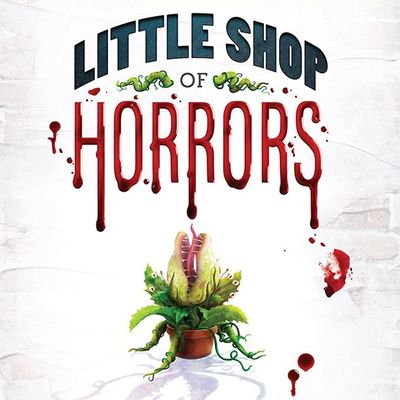
The first of a three-part program featuring prolific composer Alan Menken, who began his storied career in the theater but is mostly known for his work on animated films such as THE LITTLE MERMAID, BEAUTY AND THE BEAST, ALADDIN and ENCHANTED. In this program, Menken discusses his experience working with Howard Ashman on the stage shows LITTLE SHOP OF HORRORS, and GOD BLESS YOU, MR. ROSEWATER. Some of the recordings feature Menken himself singing at the piano.
Featured songs: “Prologue (Little Shop of Horrors),” “Pink Fish,” “Skid Row (Downtown),” “A Little Dental Music,” “Somewhere That’s Green.”
Originally produced and broadcast in 1982. For more information go to AnythingGoesPL.com or BPN.FM/Anything Goes. Theme music arranged by Bruce Coughlin. Anything Goes – Backstage with Broadway’s Best – is produced and hosted by Paul Lazarus.
Transcript
This transcript was automatically generated and might contain errors.
[0:00] Paul Lazarus: Hi, this is Paul Lazarus. In the 1980s, I produced and hosted a radio series called Anything Goes, a celebration of the American musical theater. Now the Broadway Podcast Network is bringing back these shows. Kicking off our third season, this is the first of a three-part program with prolific composer Alan Menken. This program originally aired in 1982, before Menken won eight Oscars for his music in films like The Little Mermaid, Aladdin, and Enchanted. Back in the 80s, we spoke primarily about two of Alan's theater shows, God Bless You, Mr. Rosewater, and Little Shop of Horrors.
[2:38] Paul Lazarus: This is Anything Goes. I'm your host, Paul Lazarus. Sheila Kaye Davis, Bilani Jones, and Jennifer Lee Warren performed the prologue to Little Shop of Horrors. And my guest today is Alan Menken, composer of Little Shop of Horrors, the off-Broadway hit currently running at the Orpheum Theater. Welcome, Alan.
[3:14] Alan Menken: Hi.
[3:22] Paul Lazarus: You were a guest, one of my earliest guests on Anything Goes, Alan, in June of 1979. Since then, among other projects, you've contributed music and our lyrics to God Bless You, Mr. Rosewater, Real Life Funnies, Battle of the Giants, its working title, The Dream on Royal Street, and of course, Little Shop of Horrors, just among some of the many things you've been doing. I thought it'd be fun to start out today by going back to our early interview in June of 1979 and hearing a segment of that.
[3:57] Paul Lazarus: But later on today, we'll be talking about all the shows Alan has written since that interview in 1979 and playing many recordings, most of them actually rare and never played before on the radio. But this is a moment from that interview in June of 1979.
[4:15] Paul Lazarus: You write fluidly in just practically about every medium, because you're writing in the pop field, and you write for Sesame Street, and you also write very heavily theatrical music.
[4:23] Alan Menken: Well, I don't write serious, although I could, I suppose. Okay, I'll take the compliment.
[4:30] Paul Lazarus: No, I mean it as one, too. And I've heard enough of your music to realize that you have an ability to take a style and sort of put it over your shoulders and work within it. And maybe you are unique among some of the other writers that I've heard is that your comic material works very well, whereas a lot of people, when they try to write that comic song, they just cannot pull it off. And one song I want to get you to play later is the one that I heard for the first time at Chelsea Encore Series, Pink Fish.
[4:59] Alan Menken: You know, when I first played that in workshop, Pink Fish is a song that has its roots in theater. It also has its, I learned, there are other lessons to be learned. I mean, the workshop was a place to learn theater. The ballroom and other cabarets were a place to learn how to put over a single song, a single comedy number, or a single, you know, any number. But I really got to study their faces as an accompanist playing in back of singers who were doing my material. Pink Fish I wrote as a piece of special material for a singer named David Summers. And David had come to New York from Texas, and he'd been in a show called The Faggot. We played The New Boy in Town. And he had some good credits.
We needed a number for David, a comedy number. The comedy number that applied to David came out of his experience and would be humorous using David's assets. David is not someone who can deliver a one-liner necessarily. I mean, sure, he can get away with it. But the thing is, David has this ingenuousness, this wide-eyed kind of wonder. And he's anything but Jewish. So I started talking to David about when he first came to New York, what his reactions were. Because we felt in a cabaret act, it's important to pinpoint who this person is that you're seeing. And David did things like went to a bank, and he saw a sign that said Chanukah Club. And he said, how do I join the Chanukah Club? And I got a kick out of that. And I kept thinking, OK, the idea of the song is David does not know what to make of Jewish people. But I can't use the word Jewish. I've got to find a good analogy for Jewishness.
[6:56] Paul Lazarus: And you found that analogy.
[6:58] Alan Menken: And I found the analogy. He had talked about pink fish on a big stale donut. I said, what a funny idea, with a glob of cream cheese. Now, any Jewish audience, if you hear the words, a glob of cream cheese, they're already going to laugh.
[7:14] ♪ Musical number: "Pink Fish" — performed by David Summers ♪
[10:38] Paul Lazarus: Pink fish.
[10:39] Alan Menken: It's an old recording.
[10:40] Paul Lazarus: Yeah, it's wonderful. Boy, it takes me back. In those days, I didn't know how to edit yet. You can still hear. Alan, the show Little Shop of Horrors is about a plant, a very carnivorous plant. How did you arrive at this? In this particular show, you really contributed to music. Most times, or I guess often, you contribute both music and lyrics. But in Little Shop, you did the music for Howard Ashman's lyrics and book. How did you arrive at the musical style for this particular show?
[11:12] Alan Menken: It felt pretty natural to go to a style that was the dark side of the 50s. The Phil Spector Crystals Renaisse Chiffons, kind of the dark side of Greece, I guess. When we first started the project, right after Rosewater, Howard had first mentioned it, and the style was different. We took more of a serious tack on it, kind of like a Brecht-Weill piece, but then it wasn't fun. It was with that first number you played when we came in, Little Shop of Horrors number, that the style sort of dictated itself. So in the show, we moved sort of chronologically through those styles in the 50s, and then sort of emerged in that in act two.
[11:59] Paul Lazarus: Yeah, it's interesting that Motown sound can also be scary.
[12:03] Alan Menken: Yeah. Oh, yes. It's menacing. Yeah. I mean, Howard points out that when you hear this sound of the bom-bom-ch, the ch is like the sound of chains crashing down on something.
[12:17] Paul Lazarus: When did the movie that the show is based on come out?
[12:20] Alan Menken: 61, I believe.
[12:21] Paul Lazarus: Oh, so it is early 60s. I want to play this, what's really, if the other number is a prologue, this might be considered the opening number of the show, or it certainly tells you where you are. The song is entitled Skid Row. Can you set this up a little bit? I mean, the use of the bom-bom-ch, for example, is terrific. And I think before we let people hear this, we should-
[12:44] Alan Menken: Well, the bom-bom-ch on stage is Marty Robinson, who's actually the man who devised the plants and is inside of Audrey II. And when you hear his voice, he's just mouthing, and Ron Taylor from backstage, it does the low basso voice, which is characteristic of these numbers.
[13:04] Paul Lazarus: It's staged in a very interesting way, because the three women are singing the song, and then all of a sudden you hear this low voice come from nowhere, and you realize that the bum on the street is passed out. It's the one who just sang. It's terrific. I mean, I think most of the audience doesn't even see him at first until he stands up.
[13:20] Alan Menken: Well, when I used to conduct a show at WPA, I definitely saw him, because whenever he'd sort of come up and sing the note, he would crash back down, usually bumping into the piano and knocking my music onto me. I was very aware of him.
[13:31] Paul Lazarus: Well, let's play Skid Row Downtown, the opening number from Little Shop of Horrors. And for those of you who haven't seen it, probably the only musical ever where a plant sings on the stage. That's what we've been talking about when we mentioned Audrey II. This is Skid Row or Downtown, featuring the entire company, and this is from the new original cast recording of Little Shop of Horrors.
[14:19] ♪ Musical number: "Skid Row (Downtown)" — performed by the cast of Little Shop of Horrors ♪
[14:56] Paul Lazarus: Welcome to Anything Goes. I'm your host, Paul Lazarus, and today we have a very special guest, the prolific composer Alan Menken.
[15:26] Paul Lazarus: Alan, it's such a pleasure to have you here. Your work has shaped the landscape of musical theatre and animated films.
[15:56] Paul Lazarus: Let's dive into your early career. You started in the theater, and I know you have a special connection to Howard Ashman. Can you tell us about your collaboration on "Little Shop of Horrors"?
[16:26] Alan Menken: Absolutely, Paul. Working with Howard was one of the most rewarding experiences of my life. We had a unique synergy that brought out the best in both of us.
[16:56] Alan Menken: "Little Shop of Horrors" was a labor of love. We wanted to create something that was both entertaining and had depth.
[17:26] Paul Lazarus: And it certainly became a classic! What was the process like for you both in writing the music and lyrics?
[17:56] Alan Menken: It was very collaborative. Howard would often come up with the lyrics first, and I would respond with the music. We had a great rhythm together.
[18:26] Paul Lazarus: That's fascinating. And you also worked on "God Bless You, Mr. Rosewater." How did that project differ from "Little Shop"?
[18:56] Alan Menken: "God Bless You, Mr. Rosewater" was a different beast altogether. It was more ambitious and had a lot of social commentary woven into the fabric of the show.
[19:26] Paul Lazarus: It sounds like a challenging yet fulfilling project. Can you share some of the themes you explored in that musical?
[19:56] Alan Menken: The themes revolved around philanthropy, social justice, and the idea of what it means to be a good person in a flawed world.
[20:26] Paul Lazarus: Those are powerful themes. Now, let's talk about some of the songs from "Little Shop of Horrors."
[20:33] Alan Menken: Sure! One of the standout numbers is "Skid Row (Downtown)." It really captures the essence of the characters' struggles.
[20:40] Paul Lazarus: Let's take a moment to listen to that song.
[20:47] ♪ Musical number: "Skid Row (Downtown)" — performed by Alan Menken ♪
[21:00] Paul Lazarus: That was fantastic! Alan, your ability to convey emotion through music is truly remarkable.
[21:22] Alan Menken: Thank you, Paul. Music has a way of expressing what words sometimes cannot.
[21:52] Paul Lazarus: Absolutely. Now, can you tell us about "Somewhere That’s Green"?
[22:22] Alan Menken: "Somewhere That’s Green" is a poignant song that reflects the dreams and aspirations of the characters.
[22:52] Paul Lazarus: It's such a beautiful piece.
[23:22] Alan Menken: Thank you. The simplicity of the melody allows the lyrics to shine through.
[23:52] Paul Lazarus: Let's hear that song now.
[24:22] ♪ Musical number: "Somewhere That’s Green" — performed by Alan Menken ♪
[24:52] Paul Lazarus: Another incredible performance, Alan. Your music really resonates with audiences.
[25:22] Alan Menken: I appreciate that, Paul. It's always about connecting with the audience.
[25:32] Paul Lazarus: And you certainly do that.
[25:42] Alan Menken: Thank you.
[25:52] Paul Lazarus: We have so much more to discuss, but unfortunately, we’re running out of time for today.
[26:02] Alan Menken: I look forward to continuing our conversation in the next episode.
[26:12] Paul Lazarus: Me too! Thank you for joining us today, Alan.
[26:22] Paul Lazarus: And thank you to our listeners for tuning in to Anything Goes.
[26:32] Paul Lazarus: Be sure to join us next time for more insights into the world of musical theatre.
[26:42] Alan Menken: Thank you, Paul.
[27:02] Paul Lazarus: Until next time!
[27:12] Paul Lazarus: Goodbye!
[27:22] Paul Lazarus: This has been Anything Goes.
[27:32] Paul Lazarus: A proud member of the Broadway Podcast Network.
[27:42] Paul Lazarus: Visit us at AnythingGoesPL.com for more information.
[27:52] Paul Lazarus: See you next time!
[28:02] Paul Lazarus: Bye!
[28:12] Paul Lazarus: Thank you!
[28:22] Paul Lazarus: Goodbye!
[28:32] Paul Lazarus: Thank you for listening!
[28:42] Paul Lazarus: Until next time!
[28:52] Paul Lazarus: Bye!
[29:02] Paul Lazarus: Thank you!
[29:12] Paul Lazarus: Goodbye!
[29:42] Paul Lazarus: This has been Anything Goes.
© Broadway Podcast Network, All Rights Reserved