

The conclusion of a three-part program featuring legendary composer Richard Rodgers, known for OKLAHOMA!, BABES IN ARMS, PAL JOEY, and THE SOUND OF MUSIC... Read More
From the show: Anything Goes
Featured Shows
About
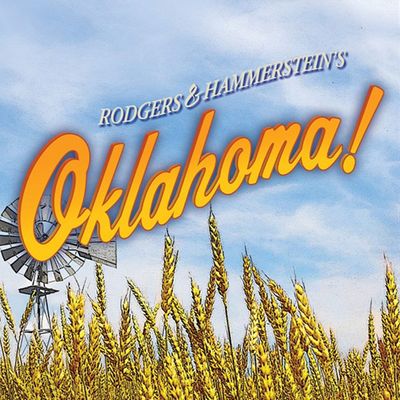
The conclusion of a three-part program featuring legendary composer Richard Rodgers, known for OKLAHOMA!, BABES IN ARMS, PAL JOEY, and THE SOUND OF MUSIC. On what was then the fifth anniversary of his passing, this tribute explores Rodgers entire career focusing on his most noteworthy collaborations with wordsmiths Lorenz Hart and Oscar Hammerstein II. The episode employs rarely heard songs and “off-the-beaten track” performances. Part Three features archival interviews with Rodgers, Sheldon Harnick, Liv Ullmann and George Hearn and a discussion about the origin of OKLAHOMA.
Featured songs: “LONELY ROOM,” “MY GIRL BACK HOME,” “IN MY OWN LITTLE CORNER,” “NO SONG MORE PLEASING,” “YOU COULD NOT LOVE ME MORE.”
Originally produced and broadcast in 1984. For more information go to AnythingGoesPL.com or BPN.FM/Anything Goes. Theme music arranged by Bruce Coughlin. Associate producer Jeff Lunden. Anything Goes – Backstage with Broadway’s Best – is produced and hosted by Paul Lazarus.
Transcript
This transcript was automatically generated and might contain errors.
[0:00] Paul Lazarus: Hi, this is Paul Lazarus. In the 1980s, I produced and hosted a radio series called Anything Goes, a celebration of the American musical theater. Now, the Broadway Podcast Network is bringing back these shows. This is the conclusion of a three-part tribute to Richard Rodgers, who famously collaborated both with Lorenz Hart and Oscar Hammerstein II. Rodgers is perhaps best known as the composer for such shows as Oklahoma, The Sound of Music, and Carousel. This program originally aired in 1984. Back to the interview with Mr. Michaelis, speaking with Richard Rodgers, and this time, moving on to the second part of Richard Rodgers' career with Oscar Hammerstein, and their first collaboration on Oklahoma, which was based on Green Grow the Lilacs.
[0:58] Richard Rodgers: Green Grow the Lilacs came into the picture after By Jupiter, and at that point, the Guild thought that Larry and I would do the show for them, wanted us to. And by that time, Larry was not in condition to work, and I went to Oscar and asked him if he would be interested in doing a musical version of Green Grow the Lilacs with me. He said he would. Then I went to the Guild and said that I wanted to work with Oscar, and that was fine with them. And we started writing what later turned out to be Oklahoma.
[1:27] Arnold Michaelis: Well, now here you really have a complete departure from any work habits that you had established with Larry, because Oscar is such a meticulous and punctual kind of individual, even though he may take an awful lot of time and spend a lot of time in developing a lyric. But this must have really been a completely different planet for you, wasn't it?
[1:46] Richard Rodgers: Oh, yes, a whole thing, a new experience. Almost invariably, I had to write the music first with Larry. But with Oscar, I would say 66% of the time, Oscar did the lyrics first. Still does.
[2:10] Arnold Michaelis: Well, now, you know, in connection with a song like June is Bustin' Out All Over, you're supposed to have written that music between the time Dorothy took your two children to the movies and when she came home.
[2:15] Richard Rodgers: Yes, but possibly Dorothy and the children didn't tell you how much thinking I'd been doing with that title for weeks and months before that afternoon that she went to the movies with the kids. An impression's created that Oscar bleeds over these things for weeks and weeks at a time, then turns the completed lyric over to me, and I dash the tune off in five minutes. Well, it just doesn't happen that way. You have to do an awful lot of thinking for an awful lot of time before I even dream of doing actual notes. I think that the moment of creation should be a spontaneous one. I think possibly the results are better if it comes in a rush. But you can't get that rush going without doing something about it.
It isn't just there, you have to think. There is a thought process. This is not an instinctive thing like sneezing. I've never believed that a great composer had a deep emotional experience at five o'clock on Thursday and at eight o'clock on Thursday wrote 64 deathless bars.
[3:24] Arnold Michaelis: How do you think it happened?
[3:29] Richard Rodgers: Well, I think that this experience at five o'clock on Thursday goes into his personality, becomes part of him, and is eventually expressed if he has a technique. If he has a means of expression, eventually this finds its way out.
[3:43] ♪ Musical number: "Lonely Room" — performed by Howard De Silva ♪
[6:18] Arnold Michaelis: Jake, it really is interesting looking back when you realize the fantastic run that Oklahoma had, which established a record on Broadway, that you and Oscar had so much difficulty in getting back as far. Why do you think that was so?
[6:28] Richard Rodgers: I think that if you look at the lineup of Oklahoma and the people connected with it, there wasn't anything very inviting about it. A tremendous record of failure.
[6:35] Arnold Michaelis: Who are you speaking about specifically?
[6:40] Richard Rodgers: Everybody connected with the show, you'll forgive me, except me. I had had 10 very, very good years with Larry.
[6:52] Arnold Michaelis: You sure did.
[6:52] Richard Rodgers: But everybody else had had 10 horrible years, if they had had any. Well, take it apart, it only takes a second. The Theater Guild had had a list of failures, and this was their last try. This doesn't come from me, this comes from them. I've heard them say it, it's been in print over their names. This was the last gasp for the Theater Guild. So this is not very conducive to an investor to put his money in the show. Oscar hadn't had a hit in almost 11 years. Mamoulian, no success for a long time. I think the last one was Porgy and Bess.
[7:35] Arnold Michaelis: Which was in 36.
[7:35] Richard Rodgers: 36, and this is now 43. Agnes DeMille had done nothing. She was a nice little choreographer, but she'd never done a Broadway show, and that was that. We had no stars. We had a nice boy by the name of Alfred Drake. Very few people had ever heard of him. Joan Roberts, nothing. Celeste Holm, very little.
[7:56] Arnold Michaelis: 12 parts failure and one part success.
[8:03] Richard Rodgers: That's right. So your man with the money looked at this lineup and said, these people have to fail. Then it went even further than that. What was it about? What was then known in radio parlance as a horse opera. This is about cowboys and farmers. Nothing spicy in it. The girls had to wear very long dresses. It also went up to their necks. You defeated yourself on both ends. Well, there was nothing awfully attractive about it. And then on top of that, Oscar and I were working together for the first time. Who knew whether this combination would work or not? They were sure in my case that it wouldn't.
[8:42] Arnold Michaelis: Why?
[8:42] Richard Rodgers: Because I'd had all these years with heart, and suddenly came the split. They knew that I had to fail. Well, it's theatrical, I suppose, fairly human superstition. This scared an awful lot of money away. I know one moving picture company that ran away from it for that very reason. And you can't argue people out of that attitude. Not before the fact. Not before the fact. Post facto, it's a cinch.
[9:06] Paul Lazarus: Richard Rogers speaking with Arnold Michaelis in 1957. Richard Lewine very graciously provided me with a 78 recording of Mary Martin singing one of the cut songs from South Pacific, a song entitled My Girl Back Home, intended for the character of Lieutenant Cable. But I guess because he also had younger than springtime, they felt that his character was firmly established and dropped this number before the show was reviewed on Broadway. And also, I wanted to mention that was Howard De Silva singing Lonely Room from Oklahoma, a song that wasn't released on the original cast LP version of Oklahoma, so has become kind of a rarity. Here is Mary Martin with the Percy Faith Orchestra singing My Girl Back Home.
[9:39] ♪ Musical number: "My Girl Back Home" — performed by Mary Martin ♪
[12:42] Paul Lazarus: A cut song from South Pacific, My Girl Back Home, Mary Martin singing with the Percy Faith Orchestra. Here's a very rare recording of a Julie Andros in a demo recording from the Songs of Cinderella with Richard Rogers at the piano. And here she is singing In My Own Little Corner.
[13:02] ♪ Musical number: "In My Own Little Corner" — performed by Julie Andrews ♪
[14:58] Paul Lazarus: Part 3 of a tribute to Richard Rodgers, focusing on his work with Oscar Hammerstein II.
[15:25] Sheldon Harnick: After Oscar Hammerstein died, Richard Rodgers went on to write many shows with other lyricists, as well as writing a few of his own shows, music and lyrics. This is an interview with Sheldon Harnick that I conducted several years ago, in which he talked about working with Rodgers on their collaboration, Rex.
[15:48] Sheldon Harnick: Well, I was more nervous than I even realized, because in meetings that I've had with Dick Rodgers, he couldn't have been more gracious and more cooperative. And I thought, fine, I'm comfortable with him. I didn't realize how anxious I was until I wrote my first lyric. As it worked out, he wanted me to write all the lyrics first, for whatever reason. So, that's the way we worked.
[16:17] Sheldon Harnick: I wrote the lyric, the first one I wrote, which is one of the prettiest songs in Rex. It's the lullaby, Elizabeth, to the infant Elizabeth. I wrote the lyric in about, I don't know, five or six days, and then I found I was afraid to give it to him. I thought, but this is Richard Rodgers. This is the man who wrote all those wonderful songs with Lorenz Hart, and the man who wrote all those wonderful songs with Oscar Hammerstein, and who wrote songs with himself that were wonderful, from no strings.
[16:46] Sheldon Harnick: So how do I, me, how do I give him this lyric? So I kept playing with it. I kept trying to revise it and make it better, and I hung on to it for about a month, not changing it at all. And finally I thought, well, let's see, at this rate, it's going to take us about six years to do the show, so I better give it to him.
[17:06] Sheldon Harnick: And I turned it in, and he studied it. He called me, his office called about a week later, and he played me. It was a gorgeous setting, and I relaxed, and he relaxed, and we became friends. I found that his ear for a lyric was impeccable. I would bring him things, and he would say, he would point out tiny, subtle little things in a lyric that I didn't even see until he pointed them out, and then I would make the changes.
[17:36] Sheldon Harnick: In that aspect, it was an education. His humor, though, I think more than anything else, was what was so endearing. If I can, oh, I remember one of the things that was so darling. We were auditioning, and in the role, there's the part of the King's, kind of his troubadour, Ed Ivanko played it.
[18:00] Sheldon Harnick: And we wrote a song. Rogers was looking for somebody who was a singer, with a singer's voice, a big voice. Ed Ivanko has that kind of voice, beautiful voice. But an actor came in to audition named Richard Ryder. Ryder has a lovely voice. He's a superb actor, and he has a lovely voice, but for Rogers' taste in this particular case, he wanted somebody who was more overtly a singer.
[18:29] Sheldon Harnick: It's hard to describe. It's a subtle difference, because a Ryder does sing beautifully, but it's the voice of an actor who sings very well, rather than a singer who sings with that kind of big voice. Our director, Ed Sheeran, had worked with Ryder before and said, he's wonderful, he's perfect for the role in every way, and I loved him. And Rogers said, he may be everything you say, but I want a singer, a real singer for this role.
[18:58] Sheldon Harnick: And Ed Sheeran kept pushing for Ryder, I put in my two cents, and Rogers grinned. He said, look, he can come and sing in my home, but I want somebody else in the show. And Ed Sheeran said, ah, but Mr. Rogers, weren't you quoted as saying that the theatre is your home?
[19:19] Sheldon Harnick: And Rogers fired back immediately. He said, no, what I said was the theatre paid for my home. It was so quick, and it was so gracious, I was just charmed by it.
[19:49] ♪ Musical number: "No Song More Pleasing" — performed by George Hearn, V. Volman, and Michael Roth at the piano ♪
[20:57] Ira Weitzman: Ira Weitzman recently interviewed both Liv Ullman and George Hearn, who took part in Richard Rogers' last show, I Remember Mama, and Ira has graciously provided me with a tape of that interview, which also features George Hearn and Ms. Ullman performing one of the moments from that score. Here is that live recording of the interview with Hearn, Ullman, and Ira Weitzman.
[21:17] Liv Ullmann: When I was 14, I fell in love, I know, for the first time. And I remember, you know, what we were listening to was always Blue Moon. And I didn't know then that it was Richard Rogers, but Blue Moon became, you know, for me, falling in love and falling out of love.
[21:45] Liv Ullmann: I did Carousel years ago in Memphis, Tennessee, and met a woman who I later married. And when we were working with Richard Rogers, rehearsing the show, I said, think of all the baritones and sopranos who have met during your shows and fallen in love. And he paused a moment, looked at the ground, he said, it's too great a responsibility, I don't want to think about it.
[22:11] Liv Ullmann: But of course, as you said earlier, not just baritones and sopranos, but people all over the world have fallen in love to his music.
[22:19] Liv Ullmann: Something that amazes me is that Rogers was very, very active through his last show, even though he wasn't that well towards the end. I was wondering if he had any advice for you or any thoughts to give you about doing a musical. Was this your first?
[22:33] George Hearn: This was my first musical. And, you know, my main reason for doing it was, of course, to be in a musical created by Richard Rogers. And to see him from the first day of rehearsals till the day when the show closed was such an experience because that man never left our show.
[22:52] George Hearn: He was there. He saw, I think, almost most of the performances. He came backstage. He didn't speak so much because he was very sick then and couldn't speak. But there was always encouragement, warmth. And I feel meeting such a professional and being part of his work, to me, has been the greatest experience, I think, in my theatre life. And I'm very sad that the show didn't run longer. But I know that it did enrich everybody's life who was in it because of Richard Rogers and his attitude.
[23:34] George Hearn: And the only advice he gave me, I think, he said, you know, trust yourself. I trust you. And I think that was the nicest thing he could say because obviously I am not a singer and I was terribly afraid.
[23:50] Liv Ullmann: Something that people may not realize is that Richard Rogers, together with Oscar Hammerstein, produced the original play that I Remember Mama, the musical that he wrote later on, was based on. And that comes full circle, I guess.
[24:05] George Hearn: It does. And you could sense all the time that he had a special kind of love for this project. And I think we all sensed it, the way he was sitting, watching rehearsals. And later, it was a man just sitting, smiling and loving with his eyes.
[24:27] George Hearn: I don't know what he thought about the end result. I just know that he loved the thought of the project because it must have been close to his heart since he produced it once.
[24:37] Paul Lazarus: We're going to hear a little excerpt of I Remember Mama. George, maybe you can tell us something about where this appears in the show and what I Remember Mama is about for those people who may not have ever seen it.
[24:49] George Hearn: If anybody remembers Mama's bank account, the book, it's a story of a Norwegian immigrant family in San Francisco, large, five children. We started out with four and we ended up with five, or started out with five and ended up with six. We added several along the way. The family falls on hard times. The villain of the piece, which is difficult times economically, he loses a job. And at that moment in the play, right after a party scene celebrating their anniversary, the two of them go out on the porch in San Francisco and it'll rain sitting on the porch and sing this beautiful, understated, very gentle love song of people who have been together for many years.
[25:37] George Hearn: But I think as a love song between a husband and wife, I think it's one of the prettiest I've ever heard.
[25:41] ♪ Musical number: "You Could Not Love Me More" — performed by George Hearn, V. Volman, and Michael Roth at the piano ♪
[28:37] Paul Lazarus: And that concludes this informal tribute to Richard Rogers, five years to the day since he died. And I hope you've enjoyed this program. I'd like to thank Billy Brown, Kevin King, and Steve Cole for providing the Book of the Month Club recordings, Ira Weitzman for his contributions, and most especially Richard Lewine for the many Richard Rogers rarities that he lent me for this broadcast. Thanks for tuning in.
[29:08] Paul Lazarus: You've been listening to Part 3 of A Tribute to Richard Rogers. Associate Producer Jeff London. Anything Goes Backstage with Broadway's Best is produced and hosted by Paul Lazarus. For more information, visit anythinggoespl.com. If you enjoyed this episode, be sure to rate and follow us. Thanks for listening.
© Broadway Podcast Network, All Rights Reserved