

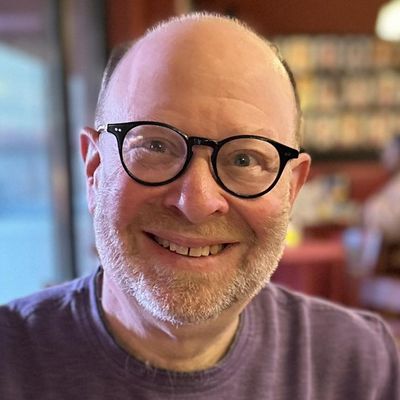
Guest hosted by Jeff Lunden; this is the first of a three-part program paying tribute to acclaimed lyricist Howard Dietz. Dietz is perhaps best known for his collaborations with composer Arthur Schwartz... Read More
From the show: Anything Goes
Guests
About
Guest hosted by Jeff Lunden; this is the first of a three-part program paying tribute to acclaimed lyricist Howard Dietz. Dietz is perhaps best known for his collaborations with composer Arthur Schwartz. Dietz penned the lyrics to numerous hit songs like “Dancing in the Dark,” “By Myself,” and “That’s Entertainment.” In this program, Lunden celebrates Dietz’s impressive oeuvre by playing songs from shows like THE BAND WAGON, THE LITTLE SHOW, and THREE’S A CROWD.
Featured songs: “That’s Entertainment,” “Moanin’ Low,” “I’ve Made a Habit of You,” “I Guess I’ll Have to Change My Plan,” “Lucky Seven,” and “Something to Remember You By.”
Originally produced and broadcast in 1983. For more information go to AnythingGoesPL.com or BPN.FM/Anything Goes. Theme music arranged by Bruce Coughlin. Associate producer Jeff Lunden. Anything Goes – Backstage with Broadway’s Best – is produced and hosted by Paul Lazarus.
Transcript
This transcript was automatically generated and might contain errors.
[0:00] Paul Lazarus: Hi, this is Paul Lazarus. In the 1980s, I produced and hosted a radio series called Anything Goes, a celebration of the American musical theater. Now the Broadway Podcast Network is bringing back these shows. This is the first of a three-part program paying tribute to acclaimed lyricist Howard Dietz. Dietz is best known for his collaborations with composer Arthur Schwartz on memorable songs like "Dancing in the Dark," "By Myself," and "That's Entertainment." This program originally aired in 1983 and was hosted by associate producer Jeff Lunden.
[0:43] ♪ Musical number: "That's Entertainment" — performed by Arthur Schwartz ♪
[3:26] Jeff Lunden: Good afternoon. My name is Jeff Lunden, and I'm filling in for Paul Lazarus. We just heard Arthur Schwartz perform "That's Entertainment," a song which he wrote with the late Howard Dietz from the MGM musical film The Bandwagon in 1953. Mr. Dietz regrettably passed away two weeks ago, and I thought that it would be appropriate to take some time to look at his work. While not as well-known as some of his contemporaries, say the Gershwins, Rodgers and Hart, or Cole Porter, Howard Dietz nonetheless contributed mightily to the Broadway stage, particularly in the field of the sophisticated New York Review. Some of his better-known songs are "Dancing in the Dark," "I Guess I'll Have to Change My Plan," "By Myself," and "Triplets."
Howard Dietz had one of the most interesting careers in show business. He was born 86 years ago in New York City, and attended Columbia University at the same time as other young budding writers like Lorenz Hart and Oscar Hammerstein were attending. He made his first mark contributing light verse to Franklin P. Adams' Conning Tower column in the Mail, a place where other young writers like Ira Gershwin, Yip Harburg, and Dorothy Parker got their start. After a brief stint in the Navy, Dietz got a job as a publicist for Goldwyn Pictures, a job which he was to have there and later at MGM for over 30 years. And if we all know Leo the Lion, the symbol of MGM, that was Howard Dietz's creation. Says Arthur Schwartz, Dietz was the only man I ever knew who led a double life and got away with it.
For over 35 years he held a full-time job as vice president of MGM, and at the same time wrote nearly 600 songs with me. His explanation was, I wrote Broadway shows on MGM stationary. Because Dietz, the MGM vice president, practically commuted from Broadway to Hollywood, we worked on trains, planes, limousines, and once even in Garbo's dressing room. The first show that Howard Dietz wrote was called Dear Sir, and the composer on that show was Jerome Kern. It was a very fast flop. It lasted only 15 performances in the 1924 season. Shortly thereafter, Howard Dietz received a letter from a young lawyer named Arthur Schwartz. I'll read it. It says, My dear Dietz, Beane Cerf, a friend of yours and mine, promised to introduce me to you, but he is such a busy publisher these days, I fear that he has totally forgotten me.
This is what's on my chest. I'd love to work with you on songs for the Neighborhood Playhouse annual show, The Grand Street Follies. I am developing contacts which are, I think, going to lead to something worthwhile. As I told Beanes, I think you are the only man in town to be compared with Larry Hart, and for me that's quite a tribute, because I know almost every line Larry has written. I think three or four tunes of mine will be riots in the Grand Street Follies this year, if they have lyrics such as only Larry and you can write. Don't be too amused at the fact that I am, I speak of tune writing under a lawyer's letterhead. I'm giving up the law in a few months to spend all my time at music.
Signed sincerely, Arthur Schwartz. Dietz replied to it, My dear Schwartz, as I have written a first show in collaboration with a well-established composer, I don't think our collaboration is such a good idea. What I would suggest is that you collaborate with an established lyric writer. In that way, we will both benefit by the reputation of our collaborators, and then when we both get famous, we can collaborate with each other. It's nice to hear from you. Yours, Howard Dietz. So Dietz went on and did not collaborate with Schwartz for another five years. His next contribution to the Broadway stage were additional lyrics to the musical Okay with George Gershwin, while Ira Gershwin was stricken with appendicitis.
And he then worked on the Review Mary go-round in 1927 with Maury Riskind and Jay Gorny. But in 1929, he got a call to do The Little Show, and the composer for The Little Show was none other than Arthur Schwartz, who he had so rudely replied to five years before. We're going to listen to a few of the songs from The Little Show of 1929, and the first song we're going to listen to is a song that Howard Dietz wrote with Ralph Ranger, who was an accompanist in the pit of the show, and it was called "Moanin' Low," and this is Libby Holman performing that song.
[8:41] ♪ Musical number: "Moanin' Low" — performed by Libby Holman ♪
[11:22] Jeff Lunden: Libby Holman performing "Moanin' Low" from The Little Show, lyrics by Howard Dietz, music by Ralph Ranger. But most of the songs in The Little Show were written by Schwartz and Dietz. And Dietz writes in his autobiography, Dancing in the Dark, Arthur and I got along well. He sympathized with my desire to write reviews. They involved short spurts and no plot construction. It was easier for someone who was doing it as a sideline. Sometimes I would suggest a title and even a rhythm with a melody. But more often he would write a tune first. We weren't touchy about criticism. I would say, the tune stinks. He would say, the lyric is lousy. We aimed to please each other. We figured that if we succeeded there were a lot of people like us.
Schwartz was a great judge of lyrics. He had an editorial mind and an ear for the fitness of sound. We took quarters in a hotel, that is to say, hotels. To suggest where our scores were written would sound like a guide to the hostelries of Manhattan. Hostelries would be more like it because the complaints poured in from paying neighbors who were wrestling with slumber while we wrestled with our highly perishable wares. Working into the night, the sound of the piano, however muted, endlessly repeating the same strain, penetrated the walls to an unwilling audience. We worked on borrowed time, waiting for the manager to knock at the door. We became wandering minstrels, moving from room to room, hotel to hotel, the Warwick, the San Maritz, the Essex House. They don't like what I'm playing, said Arthur sadly. That must be it, I replied. They never complain about the lyrics.
[13:05] ♪ Musical number: "I've Made a Habit of You" — performed by Unknown performer ♪
[14:15] Jeff Lunden: I'm on the level, I'm on the wagon. With dissipation I'm through, since I've made a habit of you.
[14:25] Jeff Lunden: Welcome to Anything Goes, a celebration of storytelling through song. Today, we begin a three-part tribute to the acclaimed lyricist Howard Dietz, who is perhaps best known for his collaborations with composer Arthur Schwartz.
[14:55] Jeff Lunden: Dietz penned the lyrics to numerous hit songs, including “Dancing in the Dark,” “By Myself,” and “That’s Entertainment.” In this program, we will celebrate Dietz’s impressive oeuvre by playing songs from shows like The Band Wagon, The Little Show, and Three’s a Crowd.
[15:25] Jeff Lunden: Let’s start with a classic. Here’s “I Guess I’ll Have to Change My Plan.”
[19:39] ♪ Musical number: "I Guess I’ll Have to Change My Plan" — performed by Unknown performer ♪
[21:35] ♪ Musical number: "Lucky Seven" — performed by Frank Luther ♪
[24:45] ♪ Musical number: "Something to Remember You By" — performed by Libby Holman ♪
[27:06] Jeff Lunden: You've been listening to Part One of a three-part tribute to lyricist Howard Dietz, associate producer Jeff Lunden. Anything Goes, backstage with Broadway's Best, is produced and hosted by Paul Lazarus. For more information, visit anythinggoespl.com. If you enjoyed this episode, be sure to rate and follow us. Thanks for listening.
© Broadway Podcast Network, All Rights Reserved