

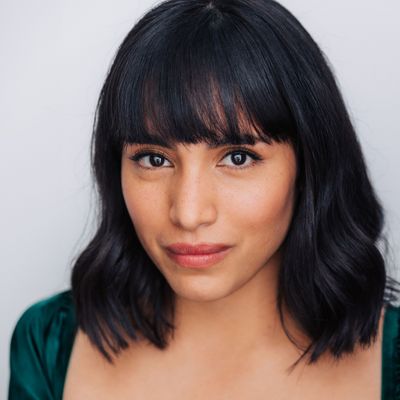
Straight from the underworld comes this Latina actress to share her journey of resilience and pride! 🔥 Belén Moyano, an incredible performer, has been with the Hadestown tour for over two years and she recognizes the incredible relationship between this story and her heritage!.. Read More
From the show: Backstage Talk
Guests
Featured Shows

About
Straight from the underworld comes this Latina actress to share her journey of resilience and pride! 🔥
Belén Moyano, an incredible performer, has been with the Hadestown tour for over two years and she recognizes the incredible relationship between this story and her heritage!
Please visit her Instagram to see what she's been working on!
If you want to know more about our host, please visit his website! Feel free to reach out with feedback or if you want to be part of Backstage Talk!
Follow us on Social Media:
Transcript
This transcript was automatically generated and might contain errors.
[0:00] Martín Acuña: Hi everyone, I am Martín Acuña and you are listening to Backstage Talk.
[0:10] Martín Acuña: Hello everyone, welcome back to another episode of Backstage Talk. Today's guest is an incredible performer that has been on the road with the Hadestown tour for the last two years. I have here with me the incredible Belén Moyano, who is an actor, singer, musician, producer, and activist born in Buenos Aires, Argentina. Belén, thank you so much for being here.
[0:36] Belén Moyano: Yes, thank you for having me and so good to meet you, Martín.
[0:43] Martín Acuña: Yes, yes. It's been a whirlwind because you're on tour right now and we've been like scheduling, rescheduling, and it's been crazy, but that's life on the road. But I'm really, really honored to have you here. Thank you for accepting my invitation.
[0:54] Belén Moyano: Of course. What else do we need to know about you?
[1:02] Belén Moyano: Oh, that's a good question. I love, I'm kind of a big nerd, so I love all things Pokémon. I love collecting stickers. I was like, I don't know what the listeners would like to know. I've been on the road for two years. My husband travels with me, so that's a big part of our life is being traveling artists. I'm trying to think, born in Buenos Aires, raised in the States, the general gist.
[1:35] Martín Acuña: Love it, love it, love it. But let's dive then into why musical theater, why this road to Broadway, why touring with a Broadway company?
[1:43] Belén Moyano: So I started doing theater when I was 13. One of my friends from school, she loved musical theater and I knew nothing about it. And they were having auditions for a children's production of, I think it was Beauty and the Beast. I'm not positive, but she said, do you want to come to auditions with me? And I said, no, I don't know what that means. And she said, all you have to do is just sing a Disney song and that's it. And then you can do the show with me. And I said, okay. So I went to this audition and I sang my Disney song and I didn't get it. And my friend didn't get it either. So neither of us were in the show. So we said, okay. And I said, okay, it's definitely not for me. I think I tried it.
I'm good. And that same year, another friend of mine was in a production, a children's production of The Wizard of Oz. And I went to see it and I said, okay, maybe I'll give this a second chance. It seems so fun. All the kids on stage were having such a blast and telling this really beautiful story. So when another audition came around, it was for a children's production of The Sound of Music. My friend again said, do you want to come? And I said, sure. And so I went, I auditioned and in that one, I got in. And so I got cast as the mean nun, Sister Bertha. And I was playing opposite of our Maria who was like 17 years old and I was a 13-year-old. And so there was a height difference. There was just an age difference, but I had to be mean to her and mad.
And it was my first time getting to explore in that way. And from then on, I kind of caught the theater bug. So I kept doing shows with this children's company. I did some shows in the community. And when it came time, did some shows in school as well, but in school, my main focus, I played the violin since I was young. And that was my thing. I was an orchestra kid. And so I didn't do choir. I didn't do musicals. I just went to orchestra and that was like my artistic outlet. And then I really loved academics. So the choir teacher was the person who persuaded me. She heard me singing in one of these children's productions, um, where it was like a contest that we had in school. I don't even remember.
And she helped me without me asking shift my schedule so that I could do choir as well. And that's how I started my, I guess my singing career. Um, but when I graduated high school, musical theater wasn't what I wanted to do for a living as an immigrant, um, especially first generation. I was also, I'm also the oldest in my family. And so education was so important. And the only way to succeed from what I was told in this country was to continue your education and to do something sensible. Um, so I went to school for engineering, um, originally because I loved math and I was interested in some of those concepts and all that crazy. Uh, but my first semester in college, I didn't quite feel like I fit in with the people I was going to school with.
And the university was hosting auditions for their fall musical. And it was Seussical. And I said, you know what? Like, I want to have an extracurricular activity. Like this sounds fun. I'm going to audition and see if I can just get in the chorus and like, do this after school. Um, and I auditioned and I ended up getting the sour kangaroo, uh, later finding out that a lot of people in the theater department were incredibly mad at me because they said, who is this person that's not in our department comes in brand new gets this role that apparently belonged to other people. And I said, I just came to like, have a good time, but that show, um, was essentially the start of my journey, I would say, because after one of the performances, the Dean of the college of the arts came up to me and he's a man I deeply admire.
Uh, his name is Craig Jessup. Um, and he said, you know, you should consider doing this for a living, like as a career. And I said, no, like art doesn't make money. Yeah. I said, uh, I'm doing something more sensible. And like, my parents would probably be mad if I switched. Um, and he said, okay, well, you know, just consider it. And then on, he essentially offered me my first job because he said, so we have a regional company attached to our university called the Lyric Repertory Theater. And, um, at the time it was called the Old Lyric Repertory Theater, they've changed it since. And he said, and we're looking for someone to do Little Shop of Horrors with us in the summer. So this was the fall and he's like, would you be interested?
And I said, yeah, like that sounds fun. Little did I know that that would be my first paid gig as an actor. And I would get to work with some incredible talent and like people who were far along in their journey and in their careers. Um, but that kind of sparked the interest. So I started looking into the music program, tried music therapy, wasn't for me. And then I landed in the vocal performance department and that was kind of how it went, but I never expected to be an actor. So I just studied singing. My parents were quite upset and my program was very opera based and I was, that was not where my love was. I really loved musicals. And so I was the black sheep of the program who would go back and forth between the theater department and the music department and just try to make that work for me.
Um, until right before I graduated, I had been working at this regional theater. Um, and one of the theater professors, I was starting to get a theater minor cause I was like, I'm taking enough classes to be able to also have this on the side. And he said, you should consider going to grad school for acting. I think you would do so good. And he helped coach me through some things, um, through my pieces. But I, at the same time decided I had a really bad breakup, like my, the last year of college. And it like catapulted me into, I'm a career woman now, I'm not interested in relationships. And so I ended up flying all over the country my last semester, just auditioning for anything I could. I, um, the country, the United States, that is, um, went to Chicago, to LA, to San Francisco, to like the middle of nowhere, just to be seen for stuff.
And, um, the day I received my callbacks for grad schools was the day I booked my very first big girl. I would say my big girl contract. Um, I was cast, uh, at Tuakon Amphitheater, which is a theater down in Utah. Um, and I was cast as one of the leads in one of their three shows. And they brought me there for six months. And so I graduated early so I could start that contract. And then at the end of the contract, they said, where do you want home to be? And at that point, I'd never left Utah. That's where my, when my parents immigrated to the States, that's where they moved. And I went to school in Utah, stayed at the state school, did my life there. And all my friends from that contract were going back to New York. And so I said, uh, New York. Yeah. I was like, why not? And they bought me my plane ticket and that was it. So that's kind of the, that's the beginning stages of the journey.
[9:47] Belén Moyano: So then leading up to now, so I moved to New York City in 2016, um, met my husband pretty early on, which was, uh, wonderful. He's a composer and a pianist, a musical director. And, um, we got married and we're like, okay, we're going to make this work in New York City. Like we're going to see what happens. Um, so I ended up doing a lot of regional work kind of everywhere. Um, but because of my immigration status, I wasn't eligible to join the union. So, um, I had over a hundred weeks at the time of EMC points. Um, and I still couldn't join. And so there were a lot of jobs that were inaccessible for me. I also couldn't leave the country because of my immigration status. And so there were a lot of opportunities where, um, I almost got cast in all these tours and or TV stuff, but that either shot in Canada or had tour dates in Canada and I couldn't go.
And so, uh, it was, it was still, uh, just a difficult journey in that regard. And I think my whole life I've dealt with the fact that I was not an American citizen. And what did that mean for me as an artist? And, uh, being in the arts is just a little bit more difficult and challenging when you don't have that basis. And a lot of people don't know that. Um, so it wasn't until 2019 when I received my permanent residency and I could finally apply to be in the actors union. And, uh, that's when the big audition started coming. And that was the first time I ever auditioned for Hadestown was beginning of 2020, um, for the Broadway company. And, uh, it went well, lots of callbacks and then the world shut down and I was like, Oh, okay.
So finally I, um, it's interesting. Cause I'm, I'm kind of assessing this with, with, uh, with people in my life, with my husband, with my therapist and close friends of like, I finally got the opportunity I wanted, which was, you know, I have my equity card. I'm ready to work at this level that I've always wanted to work for that I feel ready and prepared for, but then the world shut down and that was a, that was a big thing. Um, I'd also, prior to that, I had been accepted to different universities for full rides to do acting as a, as an MFA. But because again, of my immigration status, I wasn't eligible for financial assistance. And so it just wasn't able to pan out. So all these missed opportunities, that's just what my career kind of felt like, where it was like, I was trying to grapple or grasp whatever I could, but there were so many missed opportunities.
Um, so the pandemic happens, you know, we're in lockdown. My husband and I kind of run away from New York. We go live with his family in Arizona. We go to Vermont to live with some family. We go live with friends in DC. And during that time, I have some virtual auditions and callbacks. And that's when I booked Hadestown the tour. So, uh, went and did a show prior to that called American Mariachi, uh, which was so, so.
[13:01] Belén Moyano: We want a home and we'd love to have our stuff in one place. Everything just currently travels in our car. And so we want to give that a break because our car also has a lot of miles on it. And so we're starting to again reimagine like, okay, this feels like my coming out of the pandemic all of a sudden, where there's so much opportunity and I don't quite know what's next. But I can trust that as long as I continue to, you know, A, trust the process, but also just listen to my intuition, that the things that are meant for me will not pass me by. So that's the journey.
[14:15] Martín Acuña: I love it. No, no, no. I love it. I absolutely love it. When I was looking for guests for this season and I stumbled upon your profile, I was like living the dream on one side because Hadestown is one of my favorite shows ever. I've seen it on Broadway twice and every single time it just gets me the feels, gives me chills. It destroys me emotionally, but also brings me up again. And when I saw that Aladdin performer was part of the Hadestown tour, I was like, I need them on the show. And by the time this is out, I will contact also Eddie Noel Rodriguez, who was on the tour too, and then moved to the Broadway company and made his Broadway debut. So, yeah, I mean, I love it. I absolutely love it. And I also love this whole transition from growing up in Utah all the way to where you are right now. I absolutely love it. I want to know how has your heritage influenced your artistry?
[15:36] Belén Moyano: That's such a beautiful question. I mean, being Argentina, having those roots is such a big part of my life and my process. Again, it's like I cannot separate myself from my immigration story. It's just it's going to now I'm a U.S. citizen now, but that's as of recent. But it's going to be such a big part of my journey for forever, because not only have I learned so much having to jump through hoops as an immigrant, but also growing up in a homogenous community where everyone around me was white presenting. There weren't a lot of people who looked like me when I went to see these shows, even children's productions or community theaters or the regional theaters in Utah. There weren't people who looked like me.
And it's interesting because I actually had a professor and I won't name him by name. But when I had an assessment of some sort where I was asking for, you know, advice on how should I continue in this industry or like what would my future look like in this industry? He said to me, you know, Belen, you have to get used to being in the back because I know. Yes, I know. But as a student, I trusted him because I said he knows he's been in the industry. He knows. And at the time, yes. Like if I had continued my journey in Utah, that's where I would be in the back, because those are the kinds of shows that they do. They're not incredibly diverse. That's how they see me. I'm not your typical ingenue because I don't look a certain way or sound a certain way or act a certain way.
And so it took me getting out and moving to New York City to realize, first of all, diversity. Second of all, whoa, I'm going into these rooms. I've gone to work with a lot of new writers and composers and Latinos writing amazing stories and getting to bring that part of myself to it. And that has been such a gift. And I think every single time I start to run into the wall of like, this is too hard. Like I'm getting too many no's. I always go back to. But remember how it felt like to be able to share that part of yourself and to be able to tell those meaningful stories. And that's that's my goal. I think also as a Spanish speaker where I've never gotten to do a production fully in Spanish, it's either been in Spanglish or I've had to do an accent or whatever it is.
But every single time I've gotten the opportunity to work with a Latino company, they're still my best friends. We still talk to this day. We celebrate each other. We hold each other up. It truly is this family dynamic. And I haven't met a lot of actors from Argentina. I think that's the next goal for me where I'd love to create that community. I know a couple of writers in New York who are doing that work and are from my country. But, yeah, I think maybe to answer your question in a nutshell, it's like everything I do is shaped and it goes through this lens that I have, which is I was born in another country and my heritage and my roots are so deep. I have such a deep love for my family and what it means to also to come from a place with a very questionable racial dynamic.
And to and to still be present and get to share that experience with the world. Yeah, I think it's it's been so powerful and so meaningful. And now that I've been on the road as well, I've had a lot of people reach out to me via Instagram who are from Argentina and just like celebrating the fact they also love Hadestown. And they're like, it is so exciting to see someone from our country doing this thing.
[19:51] Martín Acuña: That was exactly my reaction when I saw you. It was like, yes. Or when I saw Eddie, it was like, yes, we made it. Yeah, because it it's it's amazing because it just takes breaking down these barriers. But bringing them down in your mind and and seeing these individuals and saying, wait a second, if they can do it, then so can I. And I think that's that's so powerful. I'm going to be super cliche and cheesy, but you are showing the way the world could be. And that, I mean, I know that for me personally and for a lot of Latin thespians, young people, kids that see this shows on the road on Broadway, travel, have the world, literally have the world to get to New York. It's inspiring. And I know that I speak for them right now saying thank you for your art and your artistry.
[21:01] Belén Moyano: Thank you. With all my cheesiness and all. And that's I think that's what I turn to sometimes where when the going gets tough, I think of little Belen and how she would have felt like to see that. And I say, OK, then we keep going. And if the road for me changes as well, you know, if I decide to go to law school or like do something completely different, taking this. I think the thing that makes theater so powerful is that component of storytelling and getting to share things that are sometimes very difficult. So, I mean, for example, Hadestown, you know, it's a tragedy and the reason that it continues to be powerful today as it did back in Greek Roman times was because the story has something very, very important to share with you.
And it's this idea of hope that spring will come again, that things can be better, that although it keeps turning out the same way, maybe if you keep trying, it'll turn out differently. And it's just so small seeds that when I have those interactions with audience members too, I feel so grateful because I believe in that. And I say, OK, like this is the power of storytelling in this communal environment and in this communal aspect. So, yeah, I feel so very grateful.
[22:22] Martín Acuña: I love that. What is the best thing about being a Latin artist?
[22:27] Belén Moyano: Oh, well, again, getting to work in rooms sometimes that are solely Latinx, like that is that no one else, a director, producer, all the actors, all the musicians, everyone shares your culture in some way. I think that's my favorite thing about being a member of this group, I guess, is that family aspect of it. That brings me so much joy.
[23:01] Martín Acuña: I love it. I love it. One of my last questions is who's your biggest Latin inspiration?
[23:07] Belén Moyano: Right now, it's currently America Ferreira. I actually went to see the Barbie movie yesterday, which I don't think I'm supposed to talk about because we're still on strike. But what she does, it's so fascinating because I always talk about representation, but I grew up, I looked a lot like America when I was younger in body type. And I remember watching, oh, I'm getting emotional because I just I love her so much. I remember watching her, her journey and where she is now is so powerful. And if you haven't seen the Barbie movie yet, she has this incredible speech. I saw it last night, cried. It broke me because I felt so seen. And especially the words coming from her felt so touching and moving. And so she continues to be one of my biggest inspirations and someone that I see reflected in me. So if I could do that for someone else, like, whoa, that would be incredible. But I am so, so immensely grateful for her.
[24:17] Martín Acuña: I love that. I love that. Thank you for sharing that. Last question. What are your top five favorite musical theater shows?
[24:28] Belén Moyano: Top, top favorite show will always be Little Shop of Horrors. It's a good one. That was it's a good one. Yeah. Not only was it my first professional show, but I ended up doing it for almost a year. And I was like, I could literally do this forever. Like any role, anybody, anybody, gender bender, I'll play anything. So I love that. I love Hamilton, of course. Anything Lin-Manuel touches, I'm a fan. And I always say that my favorite musicals have also just haven't been written because there are Latinx writers out there who are creating such beautiful work. And there's a couple that are also in development that I can't wait for them to become my favorite musicals. So I would say those are my favorite two currently. And then the ones that are yet to be written, I'm so excited about.
[25:22] Martín Acuña: I love that. I love that. Belen, thank you so much for being here for your candor, your experiences, your whole journey. Thank you for inspiring not only me, but I know that a lot of people in and out of our community. Thank you so much for being here in Backstage Talk.
[25:39] Belén Moyano: Of course. Thank you again for having me.
[25:44] Martín Acuña: Thanks, everyone, for listening to this new episode of Backstage Talk. Remember to follow us on Facebook and Instagram at Backstage Talk Podcast.
© Broadway Podcast Network, All Rights Reserved