

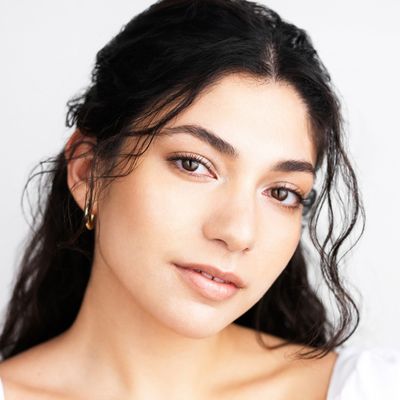
Valeria Ceballos has had great opportunities to showcase her heritage and talent through some iconic Latiné roles, but also on the Dear Evan Hansen Tour! 🤩 Please visit her Instagram to see what she's been working on!.. Read More
From the show: Backstage Talk
Guests
Featured Shows
About
Valeria Ceballos has had great opportunities to showcase her heritage and talent through some iconic Latiné roles, but also on the Dear Evan Hansen Tour! 🤩
Please visit her Instagram to see what she's been working on!
If you want to know more about our host, please visit his website! Feel free to reach out with feedback or if you want to be part of Backstage Talk!
Follow us on Social Media:
Transcript
This transcript was automatically generated and might contain errors.
[0:00] Martín Acuña: Hi everyone, I am Martín Acuña and you are listening to Backstage Talk.
[0:10] Martín Acuña: Hello everyone, welcome back to another episode of Backstage Talk. Today's guest was on the tour of Dear Evan Hansen, the first national tour as the Zoe and Alana cover. I have here with me Valeria Ceballos. She is a Latina from Fort Lauderdale and I am so excited to have her over.
[0:33] Valeria Ceballos: Thank you so much, thanks for having me.
[0:39] Martín Acuña: So, you were just on the road with the first national tour of Dear Evan Hansen. You've been in A Chorus Line at the Wick Theatre and In the Heights at MT Wichita, but what else do we have to know about you?
[0:52] Valeria Ceballos: So, you kind of covered, I was from Fort Lauderdale, Florida. My mom is from Peru and my dad is from Ecuador. They both immigrated here to Florida when they were 18. And so, growing up in Fort Lauderdale was really amazing. It was kind of just like a melting pot of so many cultures and stuff. So, I was very grateful to be growing up in Fort Lauderdale. I didn't really get into theater until probably later in my life, like very seriously. So, I went to college for theater. I got my BA in theater at Florida State University. And after that, I was very determined to move to New York and try to make this a career. So, I had about six months of normalcy before the pandemic and I got some sort of audition season in there.
I got to audition for Dear Evan Hansen the first time, which was very helpful when I auditioned for the second time and I got it. So, yeah, that's a little bit kind of a summary of my career, I guess. For me, yeah, I think a big part of who I am is, like I said, growing up in Fort Lauderdale and having such a close relationship with my family because everyone else is in South America. So, I'm very family oriented and that really has carried on with me throughout my life and through my career.
[2:20] Martín Acuña: I love it. I love it. Do you remember when or which was your aha moment in which you said, I want to spend my life in the entertainment industry?
[2:26] Valeria Ceballos: So, when I first learned about theater, I had already been dancing. So, I started dancing when I was like four years old. My mom like could not stop me from dancing in the living room and she's like, yeah, no more. We're putting you in a dance class and I was so grateful that she did. So, that was my first passion and I was in fifth grade and my teacher started teaching us her lessons in English and stuff through Wicked. She would, she introduced us to the musical Wicked. It was so awesome. We would like break down the lyrics and figure out like what the words meant and like how this was like a metaphor for this and she would just really like, I don't know how she incorporated them into lessons but it was, it was incredible and I could not stop singing those songs.
I had just recently gone into chorus. I didn't even know that I could like really sing until like fourth grade. So, it was just very, everything was very, very new to me and then she was able to take us to the Wicked tour at the Broward Center of Performing Arts which is my local house in Fort Lauderdale and it was, that was a huge aha moment because I didn't realize that I could dance like I've always loved. I could sing which I was just starting to learn to love and I had been acting without even knowing it since I was little because I had always been so expressive as a kid. And then the dancing and the emotions and I would like, I love the storytelling part of dancing so when I saw it on a stage like that it, oh my god, it hit me like a ton of bricks.
I was like, oh my god, it was like the biggest aha moment I think a kid could have. But I didn't know that I could do it. I didn't have any performing arts friends or family. My grandma does opera in Peru that was at her community church and that's like really the only thing that I've ever had like performance-wise in my family. So, I was, I was completely lost and I just did like drama club in high school which was obviously like the best thing I could have and so amazing for me at the time. So, I didn't really have like a second aha moment until I think I got rejected from the BFA program at FSU and I think my, my second aha moment of like, no, I know I can do this but I'm gonna like have to really fight and learn a lot to do it was when I got into the, we have like general auditions for college and they, so that means that they allow anyone in the college even if you're not a BFA or in the theater program at all to audition for the school plays and so I auditioned and I got into A Chorus Line my freshman year of college.
I was not a BFA. I was with all the other BFAs and that was like a, oh, I think, I think I can do this. Like, I think, I think it was just a learning curve. Like, I definitely did not know what I was doing in an audition and so that was like my second like, no, this, this is what I'm good enough to be doing this. I think I just have a lot to learn and that kind of just got all the wheels turning. I was like, okay, this is what I'm gonna do.
[5:53] Martín Acuña: I love that. I love that. And it's so nice that your grandma does opera. I love that.
[6:00] Valeria Ceballos: Yeah, she gets so proud. She's like, I'm like, yeah, just, just like your grandma.
[6:07] Martín Acuña: Yes. I love that. I love that. I love that. So how was this huge Dear Evan Hansen audition process? Like, I want to know before we get into your Latin American heritage.
[6:19] Valeria Ceballos: Yeah. So I, I mentioned I auditioned before the pandemic happened. So basically I, I think I went to an open call. So I do have an agent that can get you appointments into the room a little quicker, but I was also just in the mentality of like, I need to go out and audition. I need to like just try and get into every room. So I hadn't gotten an audition for that yet, but I saw an open call as a non-union actor. And so I woke up at five in the morning, I went to this room, I was able to be seen. And I just did like a quick pop cut. I don't even know what I sang. And that was it. I was like, okay, bye. And then I think months later, that was probably in like September, like October season. And then I think my first audition for them was in February.
So like my official like, like appointment. And so I went through my first initial call. I did a callback slash like, no, it was a callback, a callback. And then a work session, which means that you meet the associate director usually. And the music director was there. And they work with you to kind of see like how well you take direction and how well you understand the characters. Because I had been going in for Zoe and Alana. So those are very drastically different characters. One of them is very, very, very big and bubbly and has a huge personality. And the other one is very muted and grounded and very like into herself. So, or to herself, I should say, not into herself. So that is a big challenge in going into the audition room and trying to like juggle what they were telling you.
Like it was a bunch of notes. It was a really long, it's about like 30 minutes of a session on a, it can be because there's so much material you have to do. So that was a big fee to do. And then I had a final audition and that's with like for the producers, they have this big camera and lights on you. It's really intimidating. And so I didn't get it the first time. And like I said, that was probably towards the end of February and then everything shut down at the beginning of March. So it was kind of like, okay, well I would have been on the middle of the road and then just like had to go home. So then when everything kind of started coming back up, I auditioned again and that was another, like just a random, I like, I sang once in like, let's say August.
I was like, okay, I sang and I didn't hear anything. I was like, all right, fine. I guess I'm not doing this show anymore. It's okay. I'm not good anymore. And then I didn't hear back again until again, like February, I think that was just like the time of the contracts were like starting to be renewed and that they knew that they were looking for someone. So I went in for an initial call and it was probably, it was the worst initial call anyone can go to. Not because of me, thankfully, but because New York is New York and we were, we had to be like at least 12 floors up. I think we were in Pearl Studios in Midtown and there was this hammer that was, what's the hammer that goes into the ground?
Yeah, the big one. The big one, the big one. And it did not stop. And I had to sing Requiem through the entire, it was a sledgehammer. I think that's what it's called. No, I think I'm saying something else. Whatever. It was a big hammer and it was making so much noise the entire time that I sang Requiem. I had a tear going down my face. I was giving them everything. And you just heard like the entire time. And you could just see it on, I had the, an associate director in there. I think I had Ben Cohn, the music director in there and, and Kevin, who was the casting director. And he, they all were just like, I won't sing, nope. It was crazy. And I just, I didn't even look like I, I couldn't even hear.
I pretended like it wasn't there. It wasn't in Zoe's room. I wasn't thinking about it. It was, it was so bad. And they felt so bad. I could see it in their face. They're like, Oh, I'm so sorry. Like, let's just like, keep trying to go. And I was like, yeah, let's just do it. Cause I knew the material so well by now. I hadn't been doing it for so long. I kept all my notes from the first session. So like, I was pretty confident in what I was doing. It just was the circumstances that I had. And Kevin ran after, after me at the room and I was like, I'm so sorry. Like I talked to them if they wanted to like try and move rooms. Cause we're going to move rooms now. Cause after what happened to me, they're like, we should move rooms.
And they're like, we're going to move rooms. But they said that they heard what you, what they needed to, and that like, you don't have to do it again. And I was like, okay. So I was like, I'm not going to do it again. And I was like, okay. So I was like, I hope I did well. And I did. So thankfully I got a callback and I, we did the whole process again. We did the callback, we did the work session. And then the final callback, I was so intimidated and so nervous by these big cameras and lights. I called everyone after that audition and I was sobbing on the phone. I was just like, I didn't get it. I couldn't, I couldn't, I couldn't do it. I was so, I was so like nervous and intimidated. And I, and my imposter syndrome took over and I was like, I don't think they're going to look for me.
I had been, I was 23 or 24 when I first auditioned for the show and I was 25, 26 for this to play 16 and 17. Granted, I still look young. Let me not, I still look young. I got the Latino blood in me, but I was very like intimidated by the younger girls that were.
[12:58] Valeria Ceballos: Oh my god, what a rollercoaster of emotions everywhere.
[13:03] Martín Acuña: Everywhere, yeah.
[13:06] Valeria Ceballos: I want to know, how has your Peruvian-Ecuadorian heritage influenced your artistry?
[13:13] Valeria Ceballos: So specifically for Dear Evan Hansen, I feel like it was so special to have different takes of a Zoe and Alana, especially because when you're on the road, you're going to all these specific places that is different from the demographic in New York. You can get as many tourists as you want, but it's different when you do Dear Evan Hansen in El Paso, Texas. And I think that was really special to me, to carry my heritage along with me across the country. I had one girl, I think we were in LA, and I was playing Alana. It was very early in the run. We'd only been there for like three weeks. And she reached out to me and she was like, I looked at your name and I looked at your bio and I just had, I kind of knew.
She was like, are you Peruvian? And I was like, yeah, I am. And we just spoke to each other and it was just such a beautiful moment, especially so early in the process for me to be like, wow, this is what I'm taking with me. This is what I'm portraying on the stage. So that was really one of my biggest moments outside of like having those shows that are like that I am portraying a Latina. Like that's been basically a lot of my career has been doing In the Heights two or three times. I was going to do In the Heights again. I got I was going to play Nina before I got the tour. And so like that was just kind of like what my career had been playing the Latina Diana Morales. She was also like Puerto Rican.
So to be influenced in a certain in a different way with my artistry in a show that is just not talking about race. It's not talking about the story of our oppression, of anything that's sad or bad. It's just kind of like a story about family and connections. And that was really special and a new thing for my artistry as Peruvian and Ecuadorian. However, on the flip side, I think it's been so special to do In the Heights and to do to play Diana Morales in West Palm Beach and in Florida and to bring that my specific heritage in my culture into those specific roles. Because I there aren't specific roles for a Peruvian woman or an Ecuadorian woman, you know, and especially like being half and half, you know, let's just never I think that's never going to happen. So it is very special to me when I do find the opportunity to find what I have and put that into a role that is not, you know, specific to my countries.
[15:54] Martín Acuña: I love that. I love that. And yes, last year in the other lens in the first lens in musical theater special, we had Mateo Liscano, who was also a cover for several roles, both on Dear Evan Hansen on Broadway and the tour. And he was telling me how during this workshop process when he entered the show, he was able to put his heritage into the Dear Evan Hansen universe characters. And I think it's beautiful how you can bring so much baggage and so much backstory to these characters, given that you have a very different background from the characters from these initially white or other ethnic characters.
[16:43] Valeria Ceballos: Yeah, through or on the show. So I love I love that.
[16:48] Valeria Ceballos: That was definitely very special for that was very special for all of us the past couple of years with people like Mateo that like were able to finally show themselves on the stage. You know, that was such a rare thing for Dear Evan Hansen. And that was something that we fought for very specifically in our year. Because we had Asian-Americans that were like on stage, you know, Lily Thomas, Elena Anderson, they were, it was very special to see them on stage and to see them every single night, because there wasn't a lot of that culture. So that, like you said, it was it was very special the past couple of years to be able to see more of ourselves telling just it's just about family. It doesn't have to be, you know, a big problem with musical theater and the Broadway world is that they kind of stick to what they what has been cast and sometimes what has been cast is in the early 2000s and, you know, diversity wasn't as included. And that's that was really special for us to just finally tell the story with whatever culture and whatever like background that we had.
[17:53] Martín Acuña: Oh, yeah, absolutely. Absolutely. For you, what is the best thing about being a Latin artist, given that you are half and half as you just said?
[18:05] Valeria Ceballos: I think the first thing that comes to mind is the community. Well, sometimes it's frustrating to know, like I was saying, a lot of my auditions are Latin central and that sometimes feels a little like I'm in a box of like, this is what my shoo-in process is like, okay, I'm obviously going to go in for this Latin role. There's something special about going into these Latin calls and walking into the room and, you know, looking around being like, these are all like my people. These are all my family in some sort of way. And even if they're not in all concentrated in one room, it's so special to me to, you know, come into a room and meet someone and say, like, oh, like, I see that last name. Or like, you know, to say something in Spanish and to be like, oh, my God, and then to have like a conversation in Spanish or just to connect in that way to be like, okay, like, we have a special connection.
And that's like what is really special to me as a Latin artist, because I didn't grow up with a lot of like Latin friends. I didn't really like, well, Fort Lauderdale was so diverse. Like, I think a lot of the Latin community was concentrated in Miami and I didn't have a lot of that like that culture surrounded by me. I just had my family. So that's always very special to me to be able to find that artistry around me and to find a new part of like family within each room. Because I've made a lot of friends just literally on the fact that like we're both Latina and we're both struggling. We're both in this audition room and it's like, okay, we're Latina strong, you know, like that. And that's awesome to me.
[19:51] I love that. I love that. Who is your biggest Latin inspiration?
[19:56] Valeria Ceballos: I think it would have to be Krista Rodriguez or Lindsay Mendez. I love them both. I think Krista Rodriguez has been such an inspiration for me as an artist outside of her Latin-ness. And I think her career has been so like influential on me because of one of the roles that she has played. You know, I've also done In the Heights. I've played Wednesday Addams. And so it's been so special to just see her be. I think a lot of things that I've been talking about, it's so special to see her play a Latin role, but also to not play Latin roles. And to see like, you know, at first glance, it's not just always like, oh, of course she's playing this role. It's like she's just talented and she can tell a story. And I think that's always been really special for me to see. And that's played a huge influence on my career.
[21:01] Martín Acuña: I love that. I love that. Valeria, my last question for you is, what are your top five favorite musical theater shows?
[21:10] Valeria Ceballos: I had to really think about this one. OK. Because there's so many. And OK. OK. I think my first one is Waitress. I love Sara Bareilles with all my heart. I've seen that so many times. I sing it all the time. I'm obsessed with Waitress. Second would be Wicked. Will always have a special place in my heart. And I could watch again. I've watched that so many times. It gets me every time. It's such a beautiful story. And there's been so many people to tell the story, which is also amazing to just kind of see a new Elphaba, a new Glinda. I love that part of that type of like show that's been up. I love A New Brain by William Finn. It's I did in college and I had no idea what it was about. I never heard of it.
And I fell in love with it. It's so special. It's so hard to do. It was such a challenging and fulfilling show to do. And I just recently sang it in like a little concert. And it was just so special. Like that that music is just so it's so special and so beautiful to sing. What else did I say? Oh, A Chorus Line. A Chorus Line. Yeah. I again, I'm a little biased because I've done these shows, but it was I. I think A Chorus Line is the perfect musical. I think it has something in it for everyone. I think it's so smart. I think it's so entertaining. It's one of the most perfect shows, in my opinion. It's not too long. It tells a story for every single person, which I think is so special that like there's not a lot of shows that get to highlight a specific person.
And everyone gets their moment. Everyone gets to be a part of the story. And I think that's really special. And In the Heights. Another one that I've done. But In the Heights just has such a special community. I think every time you do In the Heights, you leave with a new family. That is like, without a doubt, the most community that I've ever felt every single time that I've done that. It's such a quick way to to really connect with people and to celebrate with people. I mean, like there's just so much joy and there's so much vulnerability in that show. And I would do it over and over again. You know, if there's another call, put me in. Put me in. I'll do it because I just I can't get enough of that show. And I would eventually love to play Nina or Vanessa or both. So there's definitely plenty of In the Heights left in me to do.
[24:06] Martín Acuña: Yes, I love that. I love that. I love that. Valeria, thank you so much for being here, for sharing your story, for everything. I know that you will keep inspiring young, young Latin thespians. Now that the tour has ended, but in any and every show that you will do, I know you will. So thank you so much for being here.
[24:30] Valeria Ceballos: Thank you. Thank you for having me. It's been such a pleasure.
[24:34] Martín Acuña: Thanks, everyone, for listening to this new episode of Backstage Talk. Remember to follow us on Facebook and Instagram at Backstage Talk Podcast.
© Broadway Podcast Network, All Rights Reserved