

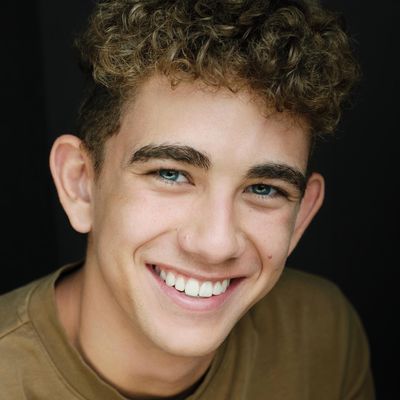
Miguel Gil, an astounding young performer, is taking Broadway by storm, and we are here for it! 🫶🏼 From Venezuela, to Orlando, to New York, Kimberly Akimbo's cast member Miguel always brings his 100% to every work he does, because he understands that for many Latin people, being an artist is a privilege we cannot take for granted... Read More
From the show: Backstage Talk
Guests
Featured Shows
About
Miguel Gil, an astounding young performer, is taking Broadway by storm, and we are here for it! 🫶🏼
From Venezuela, to Orlando, to New York, Kimberly Akimbo's cast member Miguel always brings his 100% to every work he does, because he understands that for many Latin people, being an artist is a privilege we cannot take for granted. 🔥
Tune in to this episode and listen to his journey!
Please visit his Instagram to see what he's been working on!
If you want to know more about our host, please visit his website! Feel free to reach out with feedback or if you want to be part of Backstage Talk!
Follow us on Social Media:
Transcript
This transcript was automatically generated and might contain errors.
[0:00] Martín Acuña: Hi everyone, I am Martín Acuña and you are listening to Backstage Talk.
[0:10] Martín Acuña: Hello everyone, welcome back to another episode of Backstage Talk. Today's guest is Miguel Gil.
[0:18] Martín Acuña: He is making his Broadway debut at the Tony Award winning musical Kimberly Akimbo.
[0:25] Martín Acuña: Born in Caracas, Venezuela but raised in Orlando, Florida, Miguel was a 2021 Jimmy Awards nominee. Miguel, I am starstruck, fangirling hard today, so thank you so much for being here. How are you?
[0:42] Miguel Gil: I'm good, I'm honored to be here. This is awesome and thank you so much for inviting me to do this.
[0:51] Martín Acuña: Very exciting, yes.
[0:53] Miguel Gil: Yeah, it is, it is. This whole season has been a beautiful manifestation of the Latin-ness community, the Latin-ness and the Latin community on Broadway and of course I needed to have you here, so thank you for being here. I know that I just introduced you a little bit and you made your Broadway debut with Kimberly Akimbo, but what else do we need to know about you?
[1:19] Miguel Gil: Hey, that's a great question. So like you said, I was born in Venezuela. I came to the U.S. when I was four and yeah, I'm kind of someone who just kind of stumbled upon theater where I have been, I was a kid who tried all the things, I tried all the sports, my parents put me in any camp that I would be away from home, but eventually I started doing choir, ended up doing theater and then a lot of times I will go back and watch some videos of me from high school, even with, I just did this last week with the cast and that was like, guys, this was me four years ago. I am new to this. I am still so much to learn, so much to grow, but yeah, I love theater, love acting and I'm super, super blessed to be in Kimberly Akimbo. It's been like the best learning experience.
[2:20] Martín Acuña: Okay, but I need to know your road to Broadway because you just mentioned that you were new to this. You've been in the industry or working in doing theater for the last four years and how the hell did you get that fast all the way to Broadway?
[2:41] Miguel Gil: That's, yeah, well, I wasn't someone who, I wasn't like someone who was doing theater and acting when I was really little, but I was always, my mom growing up used to call me like a moving, living jukebox and yeah, that's just because I would be singing anything that was on the radio, but eventually I was always in choir and in middle school, I think it was sixth or seventh grade, the teacher was like, hey, you're going to be in the musical, you're just going to be in the ensemble, but you're in choir, so we need you to do this and I was like, okay, I guess this is happening. So I was, I remember when they used to do it, it was like the whole show would happen and then there would be like kids just sitting on risers in the side of the stage, just like watching the whole show, but standing up to sing the ensemble parts and then sitting back down. So that's what I did all, like pretty much all of middle school. I would come on, say a line maybe or two and then like go back to the like risers.
[3:38] Miguel Gil: But when I got to high school, I got to see, we have in randomly in Orlando, the theater community is super competitive. So I went in my freshman year and I was like, okay, I'm either going to be a basketball player or I'm going to be in theater, which is kind of crazy to think that I even considered that.
[4:01] Martín Acuña: You were Troy Bolton.
[4:07] Miguel Gil: I know, I know, right. But I tried out for the basketball team, I got cut, I was the last kid, like I was, I made it to the end, they cut me. And then I was like, I guess I'll go be a technician for White Christmas, because that's what my school was doing. So I went, I was a technician. And then of course I was there, I was in the building and I got to see the show and I was like, this is awesome. And the theater teacher was like, hey, you're a guy and you're here, you should audition. And I was like, okay, okay. And then eventually, it's kind of funny, this is eventually this will come out and ruin my career, but not really. But that first year we did Kiss Me Kate. And of course I sang Santa Fe, because what else do you sing for Kiss Me Kate?
[5:09] Miguel Gil: But yeah, eventually as I got more into it, I got to see people who were really good. Like I got to see a lot of my close friends now, one of my close friends is named Sam Marzella, who was like three years older than me, was going to go to Carnegie Mellon. And I was just getting into it and I was getting to see people who were super passionate about it and just really talented. And I was like, I want to be a lead. I want to, I want to be as good as them. So I started taking like voice lessons and dance classes. And then by my senior year, I was getting roles, I was getting leads, and then COVID happened. But at that point, I was so, I had worked so hard to get a role that I was like, this is it, this is what I'm going to do.
I love this. And a teacher in high school took the time to just be like, hey, this is a career, you can do this. And really encouraged me to keep going and keep pushing and then got to do the jimmies. It was like a weird process for me, it was all online. And I came in with like my college audition song. But it was still like, I got to meet like people who I've been listening to for the past three years and like people who I was just obsessed with.
[6:38] Miguel Gil: And then I got to audition for the final audition in front of some casting people. And then I went in that summer for a couple shows, did some auditions, and then ended up just going to school. I went to Shenandoah for a year for musical theater. And then when Kimberly was going to Broadway, I had gone in originally, and it was me and Justin for the first callback. And it was just us down to us for the final callback. And then when they moved to Broadway, they called me back in. And it was just one callback. And then that was it. And then I got the job.
[7:02] Martín Acuña: Oh, my God, how exciting. And how's your journey been? Like, how's been working with, I mean, Victoria Clark and the rest of the cast, this amazing group of kids that I mean, when I saw the show, I was mind blown, mind blown by the talent on that stage.
[7:23] Miguel Gil: Yeah, yeah, I was also mind blown. I still am mind blown. Yeah, it was it was super. It was really great. And it was really nerve wracking. And I remember my first day I walked in and I had been, I had moved to New York that week. And all of a sudden, I'm in like, getting to know you circle sitting standing next to like, Victoria Clark and Janine Tesori and like, all of these people and I'm just like, I just got here, please let's slow down. But yeah, it was, I think that I was I was scared to even say a line on stage for a good process of the rehearsal, just because like, you know, um, no one, no one really teaches you how to be an understudy. No one breaks it down and is like, you know, this is how you prepare this is how you work. You should act in in a rehearsal space where you're not actively used, like being used where you're just observing.
[8:34] Miguel Gil: And so like, for me, it was most of the process, the actual rehearsal process before the show was, how do I how do I be an understudy? How do I, you know, and then also like, how do I learn an entire show in three different tracks that's already basically learned for everyone because at that point, they did the off Broadway, so they're just making changes, you know. But a lot of the process was also me watching the show for the first time and like, being emotionally impacted and not being able to take notes because I'm emotionally impacted. But um, I like I, as we have gone through, like I have learned so much, especially from Vicky, Victoria Clark, who, who always, this is like my biggest like, wow, she, every time we I do a run of the show with her, she asks me, is there anything that I could improve or I can I can do better? She's always like looking to learn from everybody around her.
[9:34] Miguel Gil: So that for me was like, I felt, I felt like I my work was up to par, you know, and I felt like, and I just want to be like, wow, I want to be her. I want to be that for someone else in the in a way that feels like she's never going to stop learning and growing from everybody, even if they're younger than if they just got here. So yeah, and everybody in the company is awesome and super encouraging. So I never felt, I've always felt safe, you know, doing the show and trying things and being bad and then learning how to do it.
[10:06] Martín Acuña: Yeah, that was a long answer. But yeah, I know, but I love it. I love it. And how nice from, I cannot call her Vicky, but how nice of Victoria to be like that with you and the rest of the team and always asking for this constant feedback loop to make everyone comfortable. That's really nice. And this is part of the things that I love from the theatre community that we're always like trying to either improve ourselves or take care of who we work with. So I love that. Thank you for sharing that. You mentioned earlier that you moved to the States at the age of four and you grew up in this Venezuelan kind of American household. I want to know how your heritage has influenced your work as an actor, as an artist.
[10:59] Miguel Gil: Yeah, yeah. Well, when we first moved here, I should preface and say
[11:11] Miguel Gil: My parents, I love them to death. They're my best friends. But they didn't know any English. They came here, you know, it was just, it was me, my one suitcase, and then they both got a suitcase, and we moved in with my aunt, and we lived there for a couple months until they could get jobs. It was very much the, you know, all right, we're going to start from scratch in a whole new place. So for me, it was, it was, I think now, as an adult, I'm starting to really appreciate the risks they took, because they were in their 20s still, when they did all this. So it was, it was super brave. It was, it was all for me, you know, which just is like, wow, I have the best parents. But they, they're not artists in any way.
I like they, my mom is a realtor, my dad is like a salesman. So like, growing up, like, I had to like, finding the arts was something that I feel like was super personal to me, that I, it was like my thing, you know, because everyone kind of had their own thing. But for me, that was like, you know, nobody else in my family's doing this. And like, me and my grandma would sing songs together. But like, that was, that was really it, you know. I think that growing up in the Hispanic community as an artist sometimes has its pros and cons, you know, in a way that the pros are like, you know, everybody is very, is going to show up, they're supportive, and they're going to celebrate with you. But also a lot of times, at least for me growing up, it felt almost like not something that I was always super proud of.
And something I had to hide sometimes. For, you know, whatever, like machismo exists. And, and I just wanted to make my parents proud and my family, you know, they want me to be a man. So I was like, all right, like, this is, but this is what I like. So definitely, like, for me, I had to convince my parents a little bit to be like, guys, I want to go to college for this. And I promise you, I can't promise you I'm not going to be broke, because I probably will. And I'm going to work whatever, I'm going to end up getting, you know, a restaurant job or a retail job at some point. It's because that's the reality of being a theater artist or in the industry. You know, you have to, you have to lay some groundwork while you, you know, build your career.
So that took so much trust. But it also, eventually, I saw how much my parents believed in me. Because they took that leap of faith with me. But growing up Hispanic, I mean, growing up Latino, like, you know, the culture, the food, the family, the party, like, it's always, always fun. You know, I love being around family. And I love being around other Latinos. And just like, because I don't know, it's just, it's always a good time. Yeah. Yeah. When we're together, we feel like family, to be honest.
[14:32] Martín Acuña: Exactly. Always. Yeah, yeah, yeah. I love that. I love that. So now that you're in this huge process that your parents took a leap of faith with you being an artist, what is the best thing about being a Latin artist?
[14:46] Miguel Gil: I feel like I can draw from my upbringing just all the time in my work and how I go about things, you know? I think that within being Hispanic and Latino, I think that a lot of times I feel emotions very strongly. And I don't know if that has anything to do with my ethnicity, you know, like my growing up. But I got to see my mom come to a full life sometimes and be very upset. And like, you know, that's just part of like growing up. And like, I got to see that. But like, something that I love is that we feel like all the way about everything. And so I think in my artistry, it reflects how deeply I care about the level of my work, you know? And I also think that it totally has influenced my work ethic in a lot of ways, because like, growing up, all I saw was my parents doing, you know, working all day, both of them, just to like, just to make it, you know?
So like, for me, like, getting to do something I love and not that I, like, I think being an artist sometimes, I think this is societal. But like, it's something that you do because you can, not because you have to, you know? Like, you need to make money somehow. And being an artist is something that you do when you have the ability to do it. But I think that I take that in very, it's very important to me that I try my best to present the best version of me. And my dad always said this, I don't know if it's necessarily the best advice, but he always said, if you're going to do something, just do it the best you can. If not, don't even like, don't even go there. So for me, like, I think that I have to give it my all because otherwise, I'm wasting people's time, I'm wasting opportunities to just, you know, be doing something else. But yeah, I think that for me, being Latino is just really, my work ethic is like the main thing that I feel like is driving me at all times.
[17:07] Martín Acuña: Yeah. I love that. I absolutely love that. And it must be a Latin thing because my dad also gave me that advice when I started college, when anything I do. And also, he's also one of my, like, my closest friend. And he spoils me a lot. So I feel you with those words.
[17:26] Miguel Gil: Yeah, yeah, yeah, definitely. Definitely.
[17:29] Martín Acuña: I love that. So who is your biggest Latin inspiration? Besides your parents, obviously.
[17:36] Miguel Gil: Yeah. Oh, geez. Besides my parents. Let me think. I think that for me, my biggest Latin inspiration, and this is a good question, because in the theater industry, it was really hard for me at first to be like, okay, who do I look up to here who's like me? But then, of course, this might be a little bit of a basic answer, but Lin-Manuel Miranda, like, 100%. And like, I, now, even now, as I'm starting to be a professional in the industry, and like, being in circles where, like, people either have met him or have worked with him, or he's somewhat around, I feel like I've now been around enough people where I'm like, I know someone who knows him. So for me, that's like, a big deal. But no, the way that he was able to really, like, capture the essence of, like, how exciting it is to have a family party, but also how important it is to be a family in our culture, and the food, and just like, how he transformed his love for our culture and put it on a stage is like, such an awesome thing. So like, he's somebody who I like, I would, I hope I get to work with one day. But like, yeah, like, I love In the Heights, like Hamilton, like all of it is just so awesome.
[19:09] Martín Acuña: Yeah, yeah, yeah. Definitely.
[19:09] Miguel Gil: I love that. Miguel, last question. What are your top five favorite musical theatre shows?
[19:16] Miguel Gil: Oh, this is such a hard question. But I love it. I love it. I just, okay, this is my top five. I'm gonna try not to mess this up. This is in no particular order. I want to preface that. Like, I feel like it's hard for me to pick one. So this is good that you said five. But I just got to see Light in the Piazza. And this is a show that I've been listening to for years. And it was so good, lived up to like, all of my hype. And like, I actually like, because Victoria Clark was in the show, I had to research everybody in the show. And like, I definitely saw her bootleg of her doing it. And like, I'm like, such a good show. Love the music, love everything. Okay. I love Sweeney Todd. That one was one that I didn't really like appreciate until I had to like, learn the material for some random audition.
But it's just so good. Such a good musical. Let's see, I actually wrote them down. Okay. What else? What else? I love She Loves Me. I think that it's just the perfect, I love a comedy. I know the first two aren't necessarily super funny, but like, I feel like Kimberly Kimbo, I feel like in my strong suit a little bit trying to be like doing the comedy aspects. And like, I think that show is just gets a perfect, you know, blend of comedy and like, serious drama. But okay. And then, okay, I love Putnam. Putnam is like, maybe the most, I think that's my favorite show to be in. Like, and it's so I had to put in the list because it's just like, so silly the whole time. And then West Side Story. I love West Side Story. And like, you know, just the music, the Puerto Rican culture, like all of it, all of it. Such a good show.
[21:24] Martín Acuña: Yeah.
[21:27] Miguel Gil: Yeah. And it's a classic.
[21:27] Martín Acuña: It's a classic. Yeah. I had to put it in there. I had to.
[21:32] Miguel Gil: Yeah.
[21:32] Martín Acuña: Miguel, thank you so much for being here, for sharing your story, your artistry. You are the future of Broadway. And I am so happy to have you here in this Lansing Musical Theater special. Thank you so much. Thank you. Thank you. And keep inspiring. Keep like this Hispanic Latin community alive in the theater community is so important. But thank you for real. For real.
[22:04] Miguel Gil: Thanks everyone for listening to this new episode of Backstage Talk. Remember to follow us on Facebook and Instagram at Backstage Talk Podcast.
© Broadway Podcast Network, All Rights Reserved