

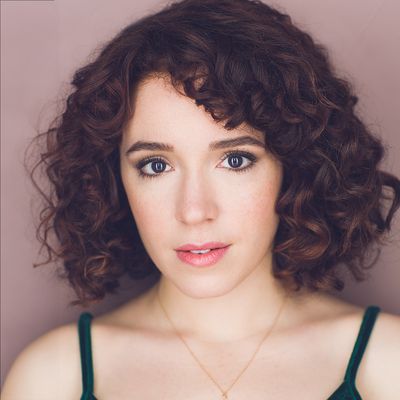
Tri-racial performer, writer, and producer Rebbekah shares a little about her life in the performing arts world. 🔥 Please visit her Instagram to see what she's been working on! If you want to know more about our host, please visit his website!.. Read More
From the show: Backstage Talk
Guests
Featured Shows
About
Tri-racial performer, writer, and producer Rebbekah shares a little about her life in the performing arts world. 🔥
Please visit her Instagram to see what she's been working on!
If you want to know more about our host, please visit his website! Feel free to reach out with feedback or if you want to be part of Backstage Talk!
Follow us on Social Media:
Transcript
This transcript was automatically generated and might contain errors.
[0:00] Martín Acuña: Hi, everyone. I am Martín Acuña, and you are listening to Backstage Talk.
[0:10] Martín Acuña: Hello, everyone. Welcome back to another episode of Backstage Talk. Today's guest is Rebbekah Vega-Romero. She is a tri-racial Latina performer, writer, and producer who resides in New York City with her cat. Rebbekah is also a 2023 Doreen Montalvo Scholarship honoree and a 2023 inaugural fellow for the Latinx Playwrights Circle's Summer Jam Fellowship. Rebbekah, I've been following you for a while, and I am starstruck to have you here in Backstage Talk. Welcome.
[0:45] Rebbekah Vega-Romero: Oh, thank you so much. That's so kind of you. Thank you.
[0:51] Martín Acuña: I just mentioned that you are a Doreen Montalvo Scholarship honoree and part of the inaugural fellowship for the Latinx Playwrights Circle's Summer, but what else do we have to know about you?
[1:06] Rebbekah Vega-Romero: Well, yeah, it's been a big year for me artistically, and I feel really grateful to have those doors being opened for me. Doreen was someone whose career I really admired, especially being a woman in the business. It's like there are certain age markers in your head of like, oh, I should achieve this, buy this, and this, and this, and this, and Doreen proved everybody wrong. And the way that she just made her art, whatever that art was going to be, whether it was being a character in a Broadway show or her cabaret work or making albums, I strive to do that with my work. I always say that as an artist, for me, I live by the Sondheim thing of content dictates form. So yes, I'm an actress, and I'm a singer, and I love musical theater.
Musical theater is my first love, but I'm also a writer. And the way that I write is, I'm not just a poet or just a playwright or a screenwriter or a novelist. It's like whatever idea, where the idea wants to go, I follow the idea.
[2:28] Martín Acuña: I love that. I absolutely love that. And yes, that is a lesson that Mr. Sondheim taught us, and I think a lot of us have taken that as like our gospel. And I just love that. I want to go back to your roots, to your beginning, and ask you, why musical theater?
[2:50] Rebbekah Vega-Romero: So the family legend is that when I was a little kid, I was like really little, like a toddler. My family nickname was Puta. I don't know if you know this about Cuban people, but they have really mean nicknames. And mine was Puta because I would break every rule. From the time I was one, if you told me to do something, I had to do the opposite. So I was notorious for climbing out of my crib. And one night, I climbed out of my crib, and my mother and my grandmother were watching this old black and white movie, Mary Martin's Peter Pan. Yeah, it's Leonard Bernstein who wrote that music. And I hid behind the couch, and I watched the whole thing. And when they found me at the end, I said, Mommy, Mommy, I want to do that.
And she said, fly. And I said, sing. And I had like other influences. My father's sister, my Tia Petucha, was an incredible dancer. She danced at the Tropicana back in the 1950s, and then traveled the world. But no one in my immediate family and no one on my mom's side had been a performer. And I just I loved musicals. I was just really persistent about learning everything I could about them.
[4:20] Martín Acuña: I love that. And what a nice story. I think that we all grew up with Mary Martin's Peter Pan. Yeah, the VHS and it was like, right? Wait, they're flying. And it was. It's a nice movie. Yeah, I love that. I love that. So how has your heritage influenced your artistry? Because you are not only Latin, but also you're a Jew Latin. And you are, as you said, in your bio, tri-racial. So how has this huge baggage influenced who you are as an artist?
[4:59] Rebbekah Vega-Romero: Oh, wow. That's a great question. It's funny, because I feel like there was a time in my life when it felt like baggage or like a burdensome or like, I don't know, everything about my identity has an asterisk. So I can't give you like a simple answer about who I am or where I come from. But I'm in a phase in my life. And I hope it continues, it feels like a new sort of blossoming of like, I'm really grateful for that. I think being Jewish has influenced me artistically in there's a like a core tenet of curiosity is like part of the life philosophy of Judaism. And I was really raised with that of like, find out why and like, follow your interest, you know. And then being Latina, for me, it's music is in my blood.
And there's just the way that I express myself and engage with the world, especially going to visit Cuba. This past January was my first time getting to go home, essentially. That really clicked for me, like, oh, I do view the world in a very Cuban, Cuban American way. Like I have, there's something magical about it. I don't know, I can't find a better word than that.
[6:50] Martín Acuña: Yeah, it is. We, Latin people, and with like this aggregates and all the stuff that we can add and all the yes ands that we put to our stories and our baggage, they are always like enhancing and making this magic bigger. And we have that spice and I love it. And I love that you had the chance to go back to Cuba and experience that side of you and your heritage and like connect in a different way to that. What is the best thing for you about being a Latin artist?
[7:28] Rebbekah Vega-Romero: The word that comes to mind is familia. Like, in the last few years of my career, I've really connected with other Latina artists and that has brought out this whole other side of my work. I don't speak Spanish fluently anymore. I grew up bilingual until I was like seven because my, I couldn't say abuela when I was a baby and it came out buba and everyone in the family called her buba for the rest of my life. So, I grew up bilingual for the rest of her life. My buba couldn't speak English and so I spoke Spanish only with her and she was like my primary caretaker until she moved away. And so, in trying to relearn Spanish as an adult and like I write a lot of bilingual poetry and then like I would start sharing it with like cast members and be like, am I getting this right?
So, like that aspect of reaching out for help and like connecting over something that in the past I felt ashamed of not knowing Spanish. And then one of my now really dear friends who I met doing West Side Story, Maria Cristina Rosales-Lai, she's a star. She played Anita and I was Maria. But she was also working on her Spanish and I just vividly remember the first time we all went to the beach because it was in Florida. She brought flashcards and I was like, I didn't know that I could like do that, you know? But it just like that kind of connection, the same thing with the times that I've been in spaces that have been exclusively for Latine artists to work on their craft. So, I did the Revolucion Latina There Beyond workshop this spring and it was so incredibly inspiring with artists from all over the world, all over the diaspora working together to learn and then to create pieces of art together. And the same thing this summer with the Summer Jam, the LTC Summer Jam, that was, it is continuing to be a wonderful community of writers supporting each other and having that unique connection.
[10:24] Martín Acuña: I love that, yes. And I agree with you. It's all about community and empowering one another to embrace our full Latin-ness. And I just love that. Who is your biggest Latin inspiration?
[10:31] Rebbekah Vega-Romero: Oh my gosh. Well, really all of these people I mentioned. So, and the people who run those organizations, Luis Salgado at Revolución Latina and Daryl Alejandro Holmes who created the Summer Jam Fellowship for the LTC. Just incredible artists and very generous humans. I mean, Celia Cruz, I grew up obsessed with her. And Omara Portuondo, who's in her 90s and still releasing music. That's incredible. Cuban, obviously. Yeah. I have so many more I could go on.
[11:27] Martín Acuña: I love it. I love it. Rebbekah, my last question for you is what are your top five favorite musical theater shows?
[11:33] Rebbekah Vega-Romero: Oh my God. Oh no. I have so much trouble with this question. I love musical theater so much. Oh, but I left this one out. And I can't rank them. And it's always like, oh, the last role I got to do. So, I love West Side Story. West Side Story has given me so much in my life. And it's just, I think it might be my favorite score to sing. It feels good to me to sing. The Fantastics, which is also very near and dear to my heart. I love The Light in the Piazza. I love those big sweeping romantic scores. And I also love Hamilton. And I love all of Sondheim. I really don't want to have to pick just one. But Sweeney Todd, Into the Woods, A Little Night Music is like perfectly written. Like it's like a puzzle piece.
[12:38] Martín Acuña: I love that. And yes, we can keep Sondheim as one show.
[12:43] Rebbekah Vega-Romero: All of Sondheim shows.
[12:46] Martín Acuña: Yeah, I love it.
[12:46] Rebbekah Vega-Romero: Oh, Secret Garden was the first show I ever saw on Broadway. And was just stunning. Yeah.
[12:54] Martín Acuña: Amazing. Rebbekah, thank you so much for being here, for sharing your story. We cannot wait to keep seeing you shine and be successful. Thank you so much for being here.
[13:06] Rebbekah Vega-Romero: Oh my god, absolutely. My pleasure. It was such an honor to talk with you.
[13:12] Martín Acuña: Thanks, everyone, for listening to this new episode of Backstage Talk. Remember to follow us on Facebook and Instagram at Backstage Talk Podcast.
© Broadway Podcast Network, All Rights Reserved