

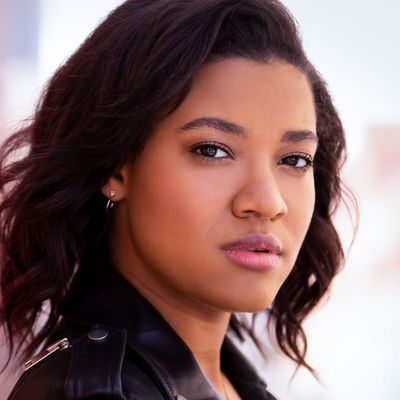
This Afro-Latina queen has made her roar be heard ever since she started performing! 🤩 In this episode, the incredible Shereen Pimentel shares her Broadway journey from The Lion King as the first Afro-Latina Young Nala to her work in West Side Story, the 2020 revival, Into the Woods at New York City Center, and regional productions of Evita... Read More
From the show: Backstage Talk
Guests
Featured Shows

About
This Afro-Latina queen has made her roar be heard ever since she started performing! 🤩
In this episode, the incredible Shereen Pimentel shares her Broadway journey from The Lion King as the first Afro-Latina Young Nala to her work in West Side Story, the 2020 revival, Into the Woods at New York City Center, and regional productions of Evita.
Please visit her Instagram to see what she's been working on!
If you want to know more about our host, please visit his website! Feel free to reach out with feedback or if you want to be part of Backstage Talk!
Follow us on Social Media:
Transcript
This transcript was automatically generated and might contain errors.
[0:01] Martín Acuña: Hi, everyone. I am Martín Acuña, and you are listening to Backstage Talk.
[0:10] Martín Acuña: Hello, everyone. Welcome back to another episode of Backstage Talk.
[0:15] Martín Acuña: As usual with this season, I am fangirling, sweating a lot because today's guest is the one, the only, and the amazing Shereen Pimentel,
[0:28] Martín Acuña: who starred in the 2020 Broadway revival of West Side Story as Maria, where she was recognized for her outstanding performance as an Outer Critics Circle Honorary Best for Best Actress in a Musical.
[0:43] Martín Acuña: She was also last seen as Eva Perón in Evita in Art in Boston, if I recall right. You were with a lot of people that we know, people that we've had in the past in the show, like César Ismaillóa, who was also in Come From Away.
[1:03] Martín Acuña: Other Shereen credits include Rapunzel in Into the Woods at the New York City Center, Guinevere in Camelot at the Mooney, and Young Nala in The Lion King on Broadway.
[1:15] Martín Acuña: So, Shereen, oh my god, this is amazing to have you here. Thank you so much for being here. How are you?
[1:23] Shereen Pimentel: Of course. I'm good, I'm good. I just, I have my time off, I've been able to relax this month, so it's been great to kind of wind down before we go do Evita again.
[1:34] Martín Acuña: I love it, I love it. I know that this second run will be amazing. I guess that by the time this episode is aired, you will already be in D.C. and working through the show?
[1:48] Shereen Pimentel: Probably, yeah.
[1:50] Martín Acuña: But I love it, I love it. As soon as I saw your pictures and the other production photographs from Evita, I was like, this looks first as an incredible, incredible production, and second, this cast.
[2:07] Martín Acuña: Like, we've seen amazing people go through Evita, but this cast was incredible and amazing, and I just love it. But I want to go back to your beginnings in musical theatre and why you chose musical theatre and this road that took you to Broadway.
[2:27] Shereen Pimentel: Yeah, well, as a kid, I think many of us are like, full of energy, and our parents kind of trying to figure out what to do with us, so my parents put me in dance class, and at first I wanted to be a professional ballerina, because I didn't know I could sing, no one in my family can sing, or does any music at all.
[2:51] Shereen Pimentel: So I really was on the dance track when I was really young, and I would always go to the ballet, and maybe around the time I was six to eight, my parents started taking me to musicals, and I saw a few, and one of them in that short span of time was The Lion King, and they had Young Nala, and I thought, I think I can do that, as all kids think that they can do anything.
[3:22] Shereen Pimentel: So I ended up auditioning for the show, and booked the show a year later, and that really changed my mind of what I wanted to do. My mom says that she always knew I would do something in the arts, because it was the one thing that, as a child, I understood the sacrifice that it took to pursue it, without having anybody around me who's done it before, and so she said once she saw that, she knew I would do something, and it ended up being singing, and I picked theater for many reasons.
[4:02] Shereen Pimentel: Watching people do it was inspiring, and watching people take on stories, and take on different lives, and see how they portray life back to us was fascinating to me, and then once I was in The Lion King, being able to now see behind the curtain, and see the actors, and see the life they live, and I wanted to be like them really, really badly, so those two things went hand in hand for me to end up doing theater.
[4:32] Martín Acuña: I love it, I love it. Do you remember your Broadway debut?
[4:38] Shereen Pimentel: A little bit, I do, but it's so different as a kid from being an adult, so I was just excited, and I remember our child wrangler, she brought boxes of tissues to the parents for the debuts, because she knew that the parents would cry, and it was really sweet, but that's all I remember, was that it was exciting, and I had fun. It was so different than something like West Side, and opening that show, but it was still great.
[5:18] Shereen Pimentel: It's another thing, it was just another casual day as a kid.
[5:23] Martín Acuña: Yes, that's the wild thing when you're a kid, you don't really understand what you're doing, so you're just like, I'm here, and I'm going to do this show.
[5:34] Shereen Pimentel: I love that, and do you remember West Side opening night in 2020?
[5:40] Shereen Pimentel: I do, it was a whirlwind of a day, we did the Today Show, so I was up at like 4am that day, to show up, to get my hair and makeup done, to then do the Today Show, to leave, drop some stuff off at the theater, go get my nails done, which took way longer than they should have, because I wanted the most intricate design, so it took me three hours, which changed my entire schedule, and the outfit that I wore that morning, I needed to get it to the stylist, so I was in an Uber, racing back to the theater, get that done, I had some other appointments, come back, we did the Legacy robe, which was incredible, we took a million pictures, obviously, and then we did the show, and it was thrilling to do the show, and at the end of it, I remember, I thought by the end I would be like, sobbing, crying, and I was like, okay, I've kept it together, you're doing such a good job, and then Jesenia looked at me, and I was like, no I'm not, and I started crying, and it was great, and then we got ready for the party, which, because it rained on us, I would always have to take a shower at the end of the show, because the rain has chemicals for cleanliness and all that stuff, so there was no half my hair is done, or half my makeup is done, no, no, I had to go back, take a full shower, and start my hair and makeup from scratch, which took a long time, so I had to know when other people in the building had left, so that I was not two hours late for the party, and then I finally was able to go, and one of my favorite photos that was taken down on the stage, Jenny Anderson was around, and she was taking pictures of everyone, and she was twirling the dress, and I love the photo that was captured from that, and then we got in the car, we ran to the party, I ran upstairs, took a whole bunch of photos, and then after that, it was just a whirlwind of party, meeting new people, taking pictures, talking, all of that stuff, and hanging out with my cast, and we had been in previews for two and a half months, so it really was the culmination of a lot of hard work and a lot of love, so yeah, it's definitely a fond memory.
[8:12] Martín Acuña: I love it, I love it. How has your heritage impacted your artistry?
[8:19] Shereen Pimentel: Yeah, it's really impacted my artistry, so I'm Afro-Latina, and my whole life, I think it's been talking about one or the other, even though it truly is a solid half and half, and you put it together to make one person, and so to start my career in The Lion King, which is a cast of Black people, and I am a Black woman, and then to restart my career ten years later in West Side as a Puerto Rican woman, that I also am, was thrilling, and also I loved for myself, for my own heart, to have both sides represented right at the top of my career, but it's influenced, I think, how I look at the world, obviously, because how I go through the world is different than other people.
[9:18] Shereen Pimentel: It's influenced how I look at other art, so when I was younger, I saw In the Heights, and for me, that was such a big moment. I saw it so many times, honestly, because I was so in love with the show, because I felt that it was the first time that I saw a Hispanic story that I related to, and every single person is different, and every single person came from somewhere else, and I was like, this is so beautiful.
[9:48] Shereen Pimentel: So for me, I take the part of when I was a kid, I saw The Lion King, and I saw myself, and then I saw myself in In the Heights, and I put them together, and walked through my career with that, and with that kind of memory, and now that I move forward, getting the immense opportunity and honestly honor to play Eva Peron in Evita is a big undertaking as a show, but also as myself. I'm not oblivious.
[10:28] Shereen Pimentel: I do not look like Eva Peron, and I think that that's okay, because I think that there is a place for us to have people look like the character in factual and in reality, and then there's a space to have people who have the Latin experience or have specific kinds of experiences that can relate to it, but then at the same time, within the society we live in now in America, have other conversations, and so being able to play this character, the things that I've seen of comments of people being like, she's not Hispanic, and I'm like, I am.
[11:24] Shereen Pimentel: It's very easy to look at a photo of me and decide who I am and what background I come from, and then when that point is made, people say, well, she doesn't look like her, and that's true, but in America, let's talk about colorism. Let's talk about these things, because it's also a fact all over the world, and when they're ready to have that conversation, I absolutely believe that it needs to come to light, but let's have it now.
[11:49] Shereen Pimentel: So that also influences my artistry and my experience. Again, even playing Maria, being the first Afro-Latina to play it, I do a lot of that. I do a lot of firsts. I like doing them, because I really, really like knocking down the door, because I think it's ridiculous that there is a door in the way.
[12:14] Shereen Pimentel: You know, it's so powerful, and for me, it was so powerful to see you in the white dress, in the production of Evita, and being like, wow, because this is not how...
[12:56] Shereen Pimentel: The casting team and the whole creative team took this stance, this very well-stated stance of, we are going to do this a little bit different because this also has an impact in the upcoming generations. And I love that.
[13:18] Yeah, and there's like, there's such a legacy of Evita already. There are such iconic and amazing women who put their mark on this piece, put their mark on this role who I want to fully honor as I do the show. And then because art isn't like, we have museums for paintings. They're beautiful. I love going to museums, but like theater is not a museum. It is in my mind, a living and breathing thing that we take with us and we like learn from those pieces from history. So being able to honor that legacy and then take it the step forward of like who I am and what I'm able to bring and what we've learned in just time and in life, I think is exciting to talk about. And all of Evita is always talking about how like people shunned Eva and told her that she didn't fit and she didn't fit and like just that premise alone, like taking away the history.
Yes, we need to talk about the history, but looking at some of the ideas that come out of something like that has been so much of my own career of people telling me like, yes, you can go here and no, you can't go here and where I can go, even if I fit there. Right. So like she was the first lady and people were still like, no, we don't like the aristocrats were still like, we don't like you. You can't go here. Like you're not allowed. And I think that ideal and that concept is something that I've been able to relate to and have been able to, I think, work out through the show. So stuff like that is just interesting to dabble in.
[15:07] Yeah. Yeah. I love that because it's also, yes, it was a real person, but it's also there is a lot of talent out there that can't portray these type of characters. Like, yes, we had Madonna in the movie or we had Patti LuPone or recently we also had Gabriela Enriquez, which also played Evita, but we also have you and the four of you are so different physically, but they can do this character because of your talent. And I just love that. I absolutely love that.
[15:45] Yeah. I want to know, what is the best thing about being a Latin artist for you?
[15:51] I think it's the community, which I think is the best thing about just like Latin culture in general. Like, I also say I got the best of both worlds, like the Black community, the Latin community, like so rich, so beautiful. It's amazing. So the Latin community in theatre is so, I think, family oriented, which is the same thing with within our culture. So I love that in an industry that can be difficult and in a city that can be hard, you have people that you're able to lean on and people that you're able to kind of share an experience with. No matter where anyone comes from, you're able to band together and it just always feels like home when you go to go into those casts and go into those shows.
And I love that feeling. That's probably the best for me. Also, we have such great music. So many wonderful, wonderful composers who are coming up. Right. I just did the Lincoln Center concert with Jaime Lozano. And like, his music is gorgeous. And so to be able to perform music written by, for him, by a Mexican man, it's like, oh, and it's stunning. It's stunning. So it's stuff like that. Just being able to like have that music, have the community, have them go together.
[17:26] Yeah. I love that. And one of my last questions for you is, who is your biggest Latin inspiration? And as you said, you have the best of both worlds. Yeah. You can also include a Black inspiration over there.
[17:39] Yeah. Well, Latin inspiration for me is Mandy Gonzalez. As I said, I saw In the Heights and it like spoke to every part of me. And Nina was like a big, big character for me. I'm sure no one would be surprised that like I'm an overachiever. So the watching, and I was young at the time, but watching this person portray this character, someone who really strived their hardest, always went for the top of the top and always tried to make something of themselves. And then seeing somebody who like that happened to, and they were failing and they were feeling like they were failing and not knowing what to do was so inspiring.
[18:46] I just saw the Barbie movie for the second time. Love it. But in that America for like talks about like, why can't we be ordinary? Like, why can't why does everything have to be extraordinary? Why do I have to do all these things and I have to balance everything and do all this and within In the Heights like you watch a character who tried to go for all these things and you should strive for your dreams, but if something doesn't work out, that's okay. And like that really, I think, helped me as a young artist to understand that like, you're gonna fall down and it's not all gonna work the way you want it to and that's okay. And so having her play that role, like it just like, it was big for me.
[19:41] And then a black artist. Everyone knows this. Everyone knows this one. Audra McDonald. Love her. I don't know her, but oh, she's amazing. When I was young, my mom took me to one of her concerts and I sat in the audience and I cried and I laughed and I had the most wonderful time and I left the concert and I looked at my mom and I said, that's what I want to do. That right there. This woman took me on a journey. We're not even in a show like she's singing the music that she had put together for her album that at that time and like, I was so inspired by how she captivated an entire audience and how she told stories that were real, like so real to the human experience. And I thought that like, I have accomplished something if that's what I've done.
And on top of that, she has like, probably one of the best voices I've ever heard in my life. So for me, it's those two women. If I could be half of what either of them are, or both of them are, if I can put them together and be half of that, I'd truly be honored. Because as I grew up learning theater and as I grew up appreciating it and admiring these people, that's what inspired me to keep going.
[21:18] I love that. Last question. What are your top five favorite musical theater shows?
[21:24] Yes. The Lion King for nostalgia. Rent. When I was a kid, that movie came out and I was obsessed with it. And then my parents did take me to the Broadway show before it closed on Broadway. Yes. They also said that all the adults stared at me because I was the only kid in there, but my parents still took me because I wanted to go so bad.
[21:50] Love it. And they're very big on like, you know, it has some ideas in there. She won't fully understand them, but one day she will, but she likes theater. We're going to take her. So that's number two, for sure.
[22:07] Third would be my favorite. Sondheim is Into the Woods, which I was really excited to do that with Heather Headley. She's incredible. And my last two, okay, there's too many. There's too many shows to pick from, but I'm going to go with probably my favorite, Angela Webber is actually Phantom. I love Evita. Don't get me wrong. Evita is gorgeous. Please. Someone's going to come out and be like, she doesn't like Evita. I love Evita. But Phantom, so I did get my degree in vocal performance, but I'm not the biggest opera fan. And when I went to Phantom, I was like, I'm not going to like this show. It's going to be so annoying. And they were going to sing opera and like, ugh. Because like, it's just not my jam.
I can appreciate it for its art, but not for me to do. And I went and saw it and I cried. I was like, that's so amazing. So I definitely have to put that hat in the ring. And then I'll close it out with probably Ragtime. It's incredible. Ragtime's incredible. It's one of those albums that you don't want to skip anything. And what they did so beautifully is tell so many stories in one show. And it all fits. And you care about every story and every subplot line and every everything to make this. And I think that's hard in a musical. I think it's easier in a movie sometimes to do, you know, you do what is Love Actually one of those where you like tell all these plot lines and then you get it and it all works. Ragtime did it as a musical and I was like, that worked. And it sounds beautiful. And also Audra did it. So like, I love that.
[24:17] Shereen Pimentel: Thank you so much for being here. This has been a dream come true having you on Backstage Talk. Thank you so much. And we cannot wait to see you continue to shine.
[24:30] Thanks everyone for listening to this new episode of Backstage Talk.
[24:39] Remember to follow us on Facebook and Instagram at Backstage Talk Podcast.
© Broadway Podcast Network, All Rights Reserved