

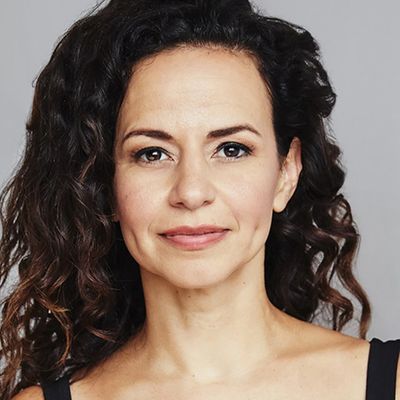
Mandy Gonzalez is a Broadway powerhouse and she’s here to tell her story on the Backstage Talk podcast hosted by Martín Acuña. Mandy and Martín discuss the Musical Theatre industry, looking back to Mandy's days in In the Heights, Wicked, and the revival of Sunset Boulevard... Read More
From the show: Backstage Talk
Guests
Featured Shows
About
Mandy Gonzalez is a Broadway powerhouse and she’s here to tell her story on the Backstage Talk podcast hosted by Martín Acuña. Mandy and Martín discuss the Musical Theatre industry, looking back to Mandy's days in In the Heights, Wicked, and the revival of Sunset Boulevard.
If you want to know more about our host, please visit his website! Feel free to reach out with feedback or if you want to be part of Backstage Talk!
Follow us on Social Media:
Transcript
This transcript was automatically generated and might contain errors.
[0:01] Martín Acuña: Hi, everyone. I am Martín Acuña, and you're listening to Backstage Talk.
[0:10] Martín Acuña: Hey, everybody. Welcome to a very special episode of Backstage Talk, live from BroadwayCon 2025.
[0:20] Martín Acuña: By being in our audience today, you are part of a live recording of this podcast, so please feel free to laugh, applaud, and react along with us.
[0:28] Martín Acuña: Make sure you're also following us at Broadway Podcast Network for the latest updates on what we're up to at BroadwayCon.
[0:34] Martín Acuña: Now, let's turn it over to Martín.
[0:38] Martín Acuña: Hi, everyone. Thank you so much for being here in today's live episode at BroadwayCon 2025, the 10th anniversary of this event.
[0:47] Martín Acuña: This year, for BroadwayCon, we have someone that needs no introduction, that is as iconic as iconic can be defined.
[0:57] Martín Acuña: We probably, if we went to a dictionary, we would find a photo of Mandy besides the word iconic.
[1:05] Martín Acuña: But, Mandy, it is an honor to have you here. How are you?
[1:10] Mandy Gonzalez: Thank you. I'm good, Martín. How are you? I'm thrilled to be here.
[1:13] Mandy Gonzalez: I mean, I was talking to my team earlier today, and they were like, have you met Mandy before? And I was like, no, but I know who she is. I know what she's done. We've talked on Instagram a little bit. So I'm really excited. I'm a little nervous. But, yes, thank you so much for being here.
[1:38] Martín Acuña: So tell us a little bit about yourself.
[1:42] Mandy Gonzalez: About myself? Oh, my gosh. Well, I have been, I guess, in this business working in the theater almost 25 years here in New York. And I am originally from California. I was born a part of two cultures. My father is Mexican-American, and my mother is Jewish-American. And, yes, I went into show business. It's like it all works out. But, no, I fell in love with musicals at a very young age through my grandmother.
[2:16] Mandy Gonzalez: So my grandmother babysat us a lot because both of my parents were full-time. And she would sing show tunes all the time and play music. And I was the only grandchild that really sang back, and I was really loud. And so she loved it because she loved torch singers like Judy Garland, Edie Gourmet, Ethel Merman. And so we would listen to those kind of musicals, and I would sing back. And she said to my parents, Mandy's really loud. We have to get her into lessons, and Mandy has talent. And so that really started my journey in this world that I absolutely love. It was my grandmother who just took me to all my lessons and my singing lessons and my parents being super supportive and buying a singing machine so that I could sing at all the family events. And my brother and sister being also very supportive and sitting and watching, or my brother going to play the arcade games at the mall while I sang in the food court. So, yeah, that was like my upbringing.
[3:18] Martín Acuña: Did you do any theater in high school or while growing up?
[3:22] Mandy Gonzalez: Oh, absolutely. I did theater, I think I started at this dinner theater down the street called the Showboat Dinner Theater down the street from my grandma. And it was a theater in Los Angeles, the valley, close outside of Los Angeles. And you could go and see a show and eat dinner, and they had all-you-can-eat pickles. And I love pickles. Everybody that knows me knows this. And so does my brother, because he had to come to everything because we're 13 months apart. And so we would eat dinner, pickles, and we'd watch a show. And eventually my grandma figured out a way to get me into the show Fiddler on the Roof. And I became the youngest daughter, Bielka. And I remember I had no idea about acting or anything.
I remember just looking at my grandparents as I was singing, And who does Mama teach? And thinking that I was just, you know, this was the greatest thing on the earth. And everybody was, it was just, I found my place, you know, at a very young age. And then I was a part of a theater group called Rock Theater, because we did rock and theater. And I think I was the youngest person in that group. But it was a, I guess it was a community group. You know, my parents paid, it was a monthly fee. And we went twice a week for rehearsals. And we had this incredible director and choreographer, Greg and Julie. And I learned so much about theater, about life, about music. Because I was with people that were older than me.
All these, like, teenagers. It was a wonderful way to grow up. And then when I went into high school, I decided to leave that theater group and do theater at school. And I started as the maid. Consuela the maid. In Father of the Bride. And then that was my freshman year. And then in my senior year, I was Adelaide in Guys and Dolls. So my trajectory went up. And yeah, so that's how it started.
[5:20] Martín Acuña: I love that. Because I always love to ask my casts their first show. Because we always remember it. Mine was Mama Mia in high school. And I will never forget it.
[5:30] Mandy Gonzalez: That's a good one.
[5:31] Martín Acuña: Yeah. I mean, Fiddler is a really good one, too.
[5:34] Mandy Gonzalez: Yeah, I mean, it's a classic.
[5:35] Martín Acuña: Iconic.
[5:36] Mandy Gonzalez: Yeah. Definitely.
[5:38] Martín Acuña: Because after that, you jumped to Broadway. And your first Broadway show was Aida.
[5:43] Mandy Gonzalez: Yes.
[5:44] Martín Acuña: I love that. How was Aida on Broadway?
[5:49] Mandy Gonzalez: Oh, gosh. Well, you know, I had moved to New York in 2000. And I moved with my boyfriend, who's now my husband. Hey, Doug. And we moved. Okay, so after I went to school for about a year to CalArts. And that's where I met my boyfriend slash husband now. And I got a job as a backup singer for Bette Midler. Iconic. Yes, Bette. And so I went on the road with her. And, you know, we played all of the big, because it was her Millennium Tour, so we played all of the big stadiums. And I remember coming to New York and staying at the Plaza Hotel and thinking this is where I absolutely want to be. And then I moved after that. I took whatever money I made and I moved there. But I never stayed at the Plaza Hotel again.
I moved to Brooklyn. And I didn't have anything. I didn't have an agent. I just had this tenacity and this drive to do what I wanted to do. And I went to every open call. I got backstage. I think it was backstage east. You had to get the paper because there was no, I mean, the internet kind of just started. It started, but it wasn't like it is now. You know, I had a flip phone. And I just hit the pavement. You know, I waited with hundreds of people to be seen. But I felt like that's the chance that I had here in New York. Like I had opportunity. And so I did an off-Broadway show at the Vineyard Theater, and that kind of launched my career here in New York. And that was, I believe, in 2001. I don't know.
But that was with another unknown, Nikanani Rose, and the incredible and amazing Judy Kuhn, Ronell Bay, and Wilson Jermaine Heredia. And it was directed by Diane Paulus. It was about Laura Nero and her music. And so Disney Theatrical came to see that show. I think it was Jim Abbott that came to see that show, musical director, orchestrator. And he told them about me and said, there's this person in the show, and she's fabulous. You should have her come in for M. Neris. And so I went in for Princess M. Neris, and I got the job as a standby. And I would be standing by for Idina Menzel. I remember not knowing really what a standby was because I was so new to the theater, and I had a lot of people.
Then I did have an agent. That agent at the time was like, I don't know if you should do this because standby means this and this and this. You won't get to where you want to go. And then I remember talking to Judy about it, and Judy said, well, I was a standby. And I said, oh, you were? And she said, yeah. And I said, oh, okay, I'm taking the job. And that's where we all started, yeah. And so I took the job, and it was really the best thing that I could have done because it taught me so much. I knew nothing. I knew that this is what I wanted to do, and I just had this big dream, but I didn't know about all the different rules of the theater and what I needed to do in order to sustain a career and to be a part of that show.
I didn't go to college for the four years, and so I didn't have all those friends from college that a lot of people have. But at AIDA, that's where I built so many friendships and people that are still with me to this day, a part of my life. So it was the best experience I could have had.
[9:21] Martín Acuña: I love that because I think as performers or as theater makers, we all have a role that shapes and reshapes who we are. I've had many of those. We are going to talk about all of the other roles that we've had. This definitely was the beginning to my shape.
[9:39] Mandy Gonzalez: Exactly. It sets the board game and the rules, and you start to understand how everything works.
[9:45] Martín Acuña: Yeah, and that nothing happens without somebody else, and to show respect to everybody in the theater, that it's about all of us that makes this thing happen. I think that to start, whether you are a standby, whether you are a swing, some of those positions are probably some of the hardest working positions in the theater. So it was a great place to start.
[10:09] Martín Acuña: I love that because your next Broadway show was one of my favorites, probably a favorite of a lot of people here with In the Heights.
[10:16] Mandy Gonzalez: You originated.
[10:20] Martín Acuña: No.
[10:21] Mandy Gonzalez: I'm just like, no.
[10:22] Martín Acuña: No, actually, In the Heights was my next amazing show that everybody loved because everybody loved AIDA. But I actually did a couple shows in between that people were like, no, we don't like it. But it also taught me a lot to shape my career, not to be like, meh. But I have good friends here that are like, don't lie.
[10:43] Mandy Gonzalez: But the next show that I did was a show called Dance of the Vampires, which, thank you. We have a fandom. And I starred opposite of Michael Crawford. I went into that show when I was doing the standby in AIDA. And I remember just being in my Brooklyn apartment and falling to the ground and being like, I made it, this is so great. And I remember singing for him for my last audition for that show. And he stood up and he was like, I'm Michael Crawford. And I was like, and I do terrible accents. But anyway, he's like, I'm Michael Crawford. And I was like, oh my God. And I don't know if that's what got me the job, but I got the job. And it really turned out to be, for me, I was so, like I said, I was so green.
So I didn't know what was, what should have been happening, what the reactions were. I just thought, this is great. And I had this agent at the time who came backstage after the first run through. And she came backstage and she said, well, it's good that you have time to work on this. And I was like, what? What do you mean? It's so great. I don't get it. And it turned out that a lot of people felt that way. And the show, once it opened, it definitely was not a success. And it closed quickly after that. But it still, it really broke my heart. Because it was my first experience dealing with something like that. But it taught me so much about myself. I paid for my parents to come out and stay at a hotel for the opening night.
And then the next day, all the reviews were bad. Not all for me, but they were bad. And all the papers were delivered to the different rooms at the hotel. And they got the paper. And I remember calling them and being like, did you see? And they're like, we saw it. Just feeling, I guess, that Nina Rosario, like a failure, what am I going to do? And how am I going to keep going? So anyway, that show closed. Then I did another show called Lennon, where I met some beautiful friends.
[12:50] Martín Acuña: You played John Lennon.
[12:54] Mandy Gonzalez: I played John Lennon. As part of that show. I did, I did. And that was also, we went to San Francisco. It was a fantastic time. With the entire cast. Will Chase, Julie Deneau, Marcy Hariel, Chuck Cooper. I mean, it was, Terry Mann. It was just amazing. And then, oh, Julia Murney. Sorry. And, yeah, there's people I'm missing. But, yeah, Michael Potts, Patsy. And we just had such a great time. And then we came to New York. And it just wasn't received well. And it also closed. And during that time, you know, when a show doesn't do well, you kind of start to figure out that it's not doing well.
[14:15] Mandy Gonzalez: My dad's in Los Angeles so I was like, I don't know. Like the basement like what is that? But there was just something about it that was so interesting and so I went. I went to... I knew where the drama bookshop was. You know if you're an actor in New York you know where that is. And I remember going in and going to the basement like the Alamo and Pee Wee's Big Adventure. And then Lin Manuel opened the door and I met Lin and I met Tommy. And I had known Alex because I had done a reading for Wicked not as Elphaba but in the ensemble. And so I met him in that. And Bill Sherman and Kiara and they had me sing some music from In the Heights as Nina Rosario. And then they asked me to be a part of that reading which was amazing and that's where I met at the first reading.
I think I sat on the first rehearsal day I sat with Andrea like you all sit around this big table and we were all, you know, when you do a reading nobody knows the music so you have to just kind of read the lyrics that's normally like normally what happens. But Lin Manuel was like well, I know you guys don't know any of the songs so I'm just gonna sing it all and it was like hit it. Alex Lacamoire just kind of started and it was lights up for Washington Heights up at the break of day and I was, I think I held on to Andrea and I was like who is this guy? How can I be a part of this for the rest of my life? I was just like he was just this light, this light bulb and he still is, you know. And it does not surprise me at all that the entire world has fallen in love with him because he's just that, he is that person.
But anyway, that experience completely changed my life in so many ways, you know the people in that show were like my family and I got to represent a first generation Latina on stage and show people what that was like and I still have so many people that come up to me afterwards to say regardless if they're Latino or what but that's my story and that song of breathe helped me get through school or helped me through this really hard time. And so it just means everything. I love that. I did want to ask, bringing or originating this role of Nina in In the Heights for a lot of Latinos, it was a landmark moment for a lot of people of first generation kids in the country. It's a landmark, it's a landmark role. So you just talked about how that role made you feel but what parts of your own story intertwine with Nina's that you could lend as an actor to the character to bring it to life?
[17:01] Mandy Gonzalez: Oh goodness, there were so many things, you know, I'm the youngest of three and my father's family is from Mexico and my father was born here as well as his siblings, but my abuelito and abuelita were, you know, they followed the crop so they followed the crop all around the United States until my abuelito got a job as a foreman at a farm in California and so that's when my father and my father worked too, you know when he was little and my abuelita like right alongside my grandfather and so I knew what where I come from. Yes, you know, I knew the struggle of what my, I saw it of what my grandparents continued to live on that farm and work in the fields pretty much my whole life and then when they got older they worked at an adult assisted living and it was just the two of them and they helped like at 15 adults go through their daily lives and I knew what it meant to struggle because I saw that.
I don't think they ever came to see me in one performance, you know, I think they watched me on TV when I was on Star Search when I was, I think I was 12 and they were very proud. They were like I keep that and you know, they were very proud of me, but you know their whole life was about survival and I was a product of that, you know, and so my father's also his struggle being Mexican American in this country is not easy and my father, you know was drafted when he was 19 years old to the Vietnam War and that's how he met my mom and they met as pen pals and yes, and my mom, I remember him asking her like where she was from and about herself and she said she was Jewish and she was like I don't know what that is because we're, you know, he grew up that wasn't from two different worlds.
And so I, both of my parents worked, you know full-time. My father worked for the city of Los Angeles and my mom worked for the education she worked for a high school. She was a counseling secretary. So she worked at a job where I guess she worked so she could be done by three and so she picked us up from school and you know, she made us our snacks and then dinner and helped with homework and then my father would come home. So I knew what it meant to struggle and I knew what it meant for me to make something of myself and whenever I would do something as a young person I was always thinking about my family and how that would make them look and how I want to be, how I want to represent them and do better, you know because of all of they've given me.
And so I think I brought all of that to Nina and I think you feel that, you know, if you didn't get to see it, I think you feel that in the songs, you know, I know what it means to honor your family and to have a family that loves you so much like my grandparents didn't come to my shows but I can guarantee you they had a box of all of my accomplishments waiting there to look at, you know, and yeah, so I brought all of that and my love of the Orange Groves and those things from my childhood, the smell of the Orange Groves like I brought that to Nina and you can, as you said, you can listen to it in the cast recording. Breathe is one of my favorite songs ever. Whenever I'm overwhelmed or stressed at work, it's a go-to song and it's like a constant reminder of just breathe, let it in and out and you will find among the sea of busyness that we live in you can find that calmness for a couple of seconds to recharge and keep going. So I love that.
[21:38] Mandy Gonzalez: I feel like you want to do everything right and be, you know, all of these things and sometimes life just can get in the way of what, life always gets in the way of what you think it should be and it takes you on this other journey, you know. I think, you know when I sang all of those songs, you know, I had pictures of my grandparents there with me so I would look at them and, you know, yeah. Oh, I feel you with the pictures because on my desk right now at work I do have three pictures, one of my brother and me when we were younger, my grandparents and my parents and another one that is my brother, my dad and me the first time we came to New York. So I do feel that and it's adorable to have those memories right there being like they're there supporting me, even though they're not physically with me.
[23:01] Mandy Gonzalez: Absolutely. I remember when my dad first, I mean my parents, my dad is like very superstitious. So when I first moved to New York and he'll tell you this even like he does, he's a man a few words but he'll tell you this maybe if you ask him, but so he's super superstitious and he said he didn't want to fly with my mom to New York like he would fly on his own but it's also because he's afraid to fly so he flew into Philadelphia. I know it's like, no, he flew into Philadelphia and then he took the bus, my dad always takes the bus, the Greyhound. He took the Greyhound from Philadelphia to Times Square, showed up in Times Square with his suitcases. I was in AIDA and there and the security was like there's this guy outside before there were like roller suitcases and all this stuff like my poor dad and he was just like me, I made it like my mom has been there for like a week, you know.
[23:38] Martín Acuña: So, you know, I want to know obviously we're huge fans of In the Heights. Yeah, what is your favorite memory from that show? I mean there must be a ton, but I'm just very, very curious to be to know that.
[23:54] Mandy Gonzalez: I have so many memories and I think I've talked about some of them. One of my favorite memories is we rehearsed at 42nd Street Studios and I remember singing when you're home with Chris Jackson for the first time and the excitement of what that sounded like and everybody sitting in the room and wanting to listen and taping it on my cassette tape which I still have but now I can't play it on anything. But just that magic of what happens when you're making theater, you know, and singing with Chris and that still is like a feeling of home for me or when I play when Alex plays for me or sings with me because he did sing a lot during our rehearsals. But that's one of my favorite, favorite memories.
[24:51] Mandy Gonzalez: I love that and you mentioned Wicked. Yes, because then you played Elphaba. So it's one of the most demanding vocally and physically roles in Broadway history. Yeah. What was the most challenging part of embodying this character for you?
[25:07] Mandy Gonzalez: Um, well, you know when I booked Wicked at the same time that I had booked In the Heights when In the Heights was going from I think it was going from Off, no, I think it was going maybe from our workshop to off-Broadway. And it was like the same time that never happens where you get two job offers like that for me but it was like, oh my gosh, it was just so amazing and but I ultimately decided to do Nina because it was just part of my soul like had to do it and then I, you know, I was like well maybe we could all come around and then after two years and In the Heights we could to come around and offered me the job again and I couldn't tell anybody but I told Lin-Manuel and you know the creative team and pretty much everybody in the cast because anybody that knows me like I'm definitely a talker.
Yeah, but I pretty much told everybody like I'm the person that you don't want to have secret Santa with because I will tell you like I'm your secret Santa. I'm just that person but I accept that about myself now. But yeah, I didn't tell anybody and then the last show Lin-Manuel came on stage for the bows and he was wearing I think he was wearing a green shirt and a witch's hat. Oh, you know orchestrated this whole thing. So it sounded like the overture of Wicked and I was like, well, I guess everybody knows now. Exciting and they were there for me, you know, my first show as Elphaba. I had my whole family from Heights and they were there for me for Sunset Boulevard as well, like everything that I've done.
But you know, I think the biggest challenge for me for Elphaba is that it was such a big role, you know going, you're on stage the whole time. It's so physically demanding and you don't really know until you begin or at least I didn't know until I actually sat in the audience and watched it after I got the job and took the job and signed the contract and then I sat in the audience. I was like, oh my god. And I remember going to Andrea Burns and just being like I don't know how I'm gonna do it. It's so big and and going to the first rehearsal and you know when you get really nervous and all the sudden you...
[27:29] Mandy Gonzalez: I can't sing because you're so nervous. And I remember, um, what is it? The Wizard and I? Like everything was just, I just freaked myself out. Um, mostly because of the singing. I was so worried about how it was going to sound and what I was going to sound like. And so, uh, Lisa, the assistant director said, you know, there's this treadmill upstairs. You should get on it. No, but she was like, there's this treadmill upstairs and Adina used to run on it. And, um, it really got her out of her head and just allowed her to sing the music. So I was like, I don't know. I don't, and I did it and it really got me out of my head. So whatever, whatever it is like a treadmill or, you know, bouncing a ball against the wall or something like that, it got me out of my head and it was like, oh, right, I can do this.
And then I got to start, I started to relax. I started to stop worrying about how perfect everything needed to sound and, um, and just get into the character. You know, I have a lot of people that'll ask me questions now, like, uh, what do you do if you crack on stage? What do you do if your voice isn't there? What do you do if your voice gets tired? And so much of it is about, well, just get into the moment of what you're doing in that moment. And it doesn't matter, you know, what you sound like. You can hit like the worst note of, but the great thing about the theater is you can do it again the next night. Sometimes. I mean, with Sunset Boulevard, I got Tuesdays. So I'm like hitting it every, every Tuesday.
And let me tell you, it sounds great. Thank you. Thank you. But I, thank you. But I did let go of, um, I was able to learn to let go of my perfectionism as a vocalist during, uh, Wicked because I was a lot more, um, gentle with myself. I think, I don't think I'll ever let go of that perfectionism because that's just part of who I am. But I learned to be a little bit kinder to myself during that process. And, um, I just, I loved, I loved her. I loved Elphaba and I loved, um, playing that role and, um, I love doing that like every, every show. And I absolutely love the film. If you were going to ask me, I loved it. I saw it in, um, I saw it regular and then I saw it, would you call it regular?
I saw it regular. And then I saw it in a 3D and both were fantastic. And Cynthia Erivo just embodied Elphaba so beautifully. They both did. And, um, I just, I was blown away. I can't wait for number two.
[30:10] Martín Acuña: And did you do the singalong version?
[30:12] Mandy Gonzalez: Absolutely not. No, that would just bother me. No, no, no, no, no, no, no, no, no, no. So I went to go see, um, Wicked at the 10 year, I think it was a 10 year reunion for Wicked. Um, and they had all the Elphaba's there and you can look at pictures from that. I look terrible. Like I was not even like, people are going to take pictures of me. Like I just looked like I just showed up and, um, I was a different Mandy than you guys. Forgive me. But, um, yeah, so I went there and, and Lindsay was, uh, Lindsay Mendez was playing Elphaba and I sat there and all of a sudden I started to like break a sweat and I started, it was like one of those, um, actor dreams that you have where people are like, um, Mandy, you're on, I've had these actor dreams, but only about Wicked where they're like, yeah, you're going to be on.
And I'm like, I don't remember it. And they're like, just paint yourself green and get out there and do it. And I'd be like, but I don't know it. And so I started to like sweat. Um, when I was watching Lindsay, I mean, she was so fantastic, but all of a sudden I was like, what if something happens to Lindsay? And like, they come in there like Mandy, you have to go on and I don't remember it. And like, I should have gone over the lyrics. And then I'm like, Mandy, there are like 10 other Elphaba's here. Like what are you doing to yourself? I love that. Like relax. You know what I mean? But, um, it just does, that show does something to you. Once you do it, I'm sure you can ask any Elphaba. There's something in it that just makes you think like, do I still know it? Like, oh my God, it could be any minute, you know? So yeah.
[31:45] Martín Acuña: I love that. So what is your favorite lyric from Wicked? Do you have one?
[31:55] Mandy Gonzalez: Oh, um, oh gosh. I think that it's, uh, well, if that's love, what is the lyric? That's the one. I love that. I love that. Because when I first, um, when I first really dug into those lyrics and I heard that, I was like, oh, that's like, and that fits into so much of anybody's life, but definitely my life of people saying, yeah, if you do this, like, or you think you're going to do this and everybody's going to love you and that's what it's going to be. And it's like, well, if it's a love, it comes at much too high a cost and it's like. So I think that, um, yeah, that's one of my absolute favorites. I love that. Um, your next like big hit on Broadway was Hamilton.
[32:36] Mandy Gonzalez: Yes. As well. Of course it was a big hit. Um, but at the same time you were battling breast cancer.
[32:46] Martín Acuña: Yes, I was. So you were performing eight nights a week while being in treatment.
[32:54] Mandy Gonzalez: Yes. Um, of course illness reshapes. Yeah, literally I'm speechless. Um, but, but also I know it may be a very delicate topic to talk about, even though you're, you're are a survivor, but how did illness reshape the way you performed not only Hamilton, but what came next and right now in Sunset?
[33:22] Mandy Gonzalez: Oh gosh, it shaped a lot of different things. It changed a lot of things for me. Um, when I was diagnosed in October, um, October 22nd of 2019, it was my first mammogram and, um, and yeah, they had seen something and then they wanted me to get another, uh, not to get into this with you guys, but I feel like we're friends. Um, but they had seen something and they wanted to get a further look. A double check. Yeah, a double check. And then, um, you know, you get that call that nobody wants to get, which is that you have cancer. And I remember, um, thinking, you know, about so many things like, what does this mean? And what does this mean for my life? But then it was like, well, how am I going to perform?
How am I going to sing? Will that be taken away from me? And I remember after surgery, um, I hadn't told anybody yet at the, at the company. Um, and then I told the stage manager and it was very hard because, um, at the end of work, I have to lift my right arm and that's where I had my lumpectomy and I had to lift my right arm and I said, I can't lift my arm, you know, because I can't, because I had the surgery and blah, blah, blah. And then she said, um, well, you lift it here and then you lift it here and now I can lift it here. So, um, thank you. So it was, it was definitely a journey. And, um, and after my surgery, I was told that, uh, because of my age and because of my certain testing that I would also have to have chemotherapy and radiation.
Um, and so I began my treatment in January and I felt, I still felt like, well, how am I going to sing? Because I didn't want, cancer could, I was like, cancer can be part of my life, but it's not going to be all of my life. It's not going to become my whole life. Yes. It's not going to become my whole life. And so it made sense to me that the show goes on. I don't know what, I'm sure you guys know because you're all theater people that that was the thing that I could, I had control over. I had control over saying, yeah, I'm going to do the show tonight. And that's, I'm going to push through. And, and I did. And I, eventually I came out and I talked about it because it was important, um, for me to talk about it because when I went in to do all of my genetic testing, I had all of the information from my mom's side about this person had this, this, this person died at this age, blah, blah, blah, blah.
But on my father's side, on my Latina side, I had no information, um, because nobody's talked about it. And so I wanted people to see that it does. Everybody's affected. You know, cancer is not a me disease. It's a we disease and it affects all of us. And so if it helped one person go and get a mammogram so that they could be there for their family, um, for the rest of their lives, then I S I thought that that was worth it. Um, but I wouldn't recommend, um, doing eight shows a week while doing chemotherapy. It's really hard. And then, um, in Ma on March 11th, uh, the show shut down because of the pandemic. And I remember everybody saying, the mayor saying like, don't go out of your house, like stay inside.
Um, but I was a cancer patient and so I had to go out, I had to get treatment and I had to, you know, then take my whole family with me and, um, into the city. And I didn't realize how much I needed to stop once the pandemic hit. I'm sure so many of you have that same feeling of like, wow, I didn't realize how much I was just going on this like hamster wheel to get too deep. But, um, but it's the truth. And when I stopped, it was like, oh, I can just focus on my health and my family and my healing and my healing is still a process. You know, once you are, you know, they never tell you that you're cancer free. I remember talking to my friend, Krista Rodriguez and asking, well, when did you say that you're cancer free?
And she's like, I said it right after the surgery. And I was like, okay, that's when I'm going to say it too. And, um, and so I thought that it was important because I wanted to, um, I wanted to have that, you know, to, to say like, but nobody gives you like a roadmap of, okay, now you're going to feel like this. And then it's over. It's like, you're still healing. Like once I was done with all my treatment, then it was like, oh, I had to deal with pandemic. And then after pandemic have to deal with that effect of having cancer during that time and how traumatic that was. And, um, and then I got the call from Hamilton that said, we're going back. Um, we're going back to Broadway. And do you want to come?
And I was like, yeah, I want to. And then I was like, oh my God, I have to run. I have to start running. And so I started running around my neighborhood, not like a crazy person, but just like running, um, because I wanted to make sure I could fit into the dress. I mean, I'm not to be like, you know, that person, but to be that person, I was terrified like to get into a corset. I was like, oh my God. So I worked out. And then, um, when I got to the theater, when the dress closed, I was like, when they zipped it up and I was like, yes, it was a little tight. It was a little tight, but, um, I was just like, yeah, this is what I want to do. And I want to do it, um, for the next year. And then, and then I'm ready to go, you know, cause I didn't want to close out my chapter at Hamilton, um, with the struggle that I was going through. I wanted to show that like life goes on and, um, in a whole different way.
[39:00] Martín Acuña: Well, and life did went on because you're now part of Sunset Boulevard, which the show in and of itself took my breath away. But I had the chance to see you perform as Norma Desmond this, um, Tuesday, like literally this week. And I was just like, I am gonna get the chance to interview this star this Saturday. Um, I, I do want to see it on Tuesday. Okay. No judgment. The rest of you, I'll see you there. Love that. You still have a chance to see Mandy every Tuesday, every Tuesday, except for holiday weekends. Then it kind of gets weird, but normally it's Tuesdays. What has been the most exciting thing about stepping into this role of Norma Desmond and in such a modern production of Sunset Boulevard?
[40:01] Mandy Gonzalez: I mean, I, I can't tell you what's not exciting. I mean, everything about it was like, yes. Um, except they were like one show a week and I was like, I don't know, like, that's not what I do. Um, but they said, well, why don't you go in and you can meet with the director? And I met with, um, I met with Jamie Lloyd and we did the scene, um, the scene at the end of the first act, which is Go Away. Um, that whole scene, those of you who've seen it, if not, come on Tuesday. Um, but he had the other actor that was reading with me that was really fantastic. He had me, him stand behind me during the scene and to, and I had to continue to act like I was with him and it blew my mind. And I thought that was so cool.
And, um, just Jamie's energy. It was very similar to other people that I've worked with, um, that have that light, you know, there was just something about him and Fabian and Alan that I just gravitated towards. And so when Jamie said, well, what do you think about this whole one show a week thing? I was like, well, if I'm with you, I think it's pretty good. Yeah. And it really has been, you know, I was really lucky to be, um,
[41:15] Mandy Gonzalez: In rehearsals with the company for the first four weeks as their Norma, I really got to know everybody because Tom Francis came in from London, and I got to develop my character with him and with the whole creative team. It really felt like I became part of the company, which is one of my favorite parts of the theater. It has been a trip. I mean, you know, I was rehearsing, and they had this little small TV screen in the rehearsal room, and they had somebody filming me. I remember turning and looking at the TV screen and being like, "Oh," you know, it was really close. Jamie said, "Well, we don't look at the screen." I do terrible accents, but he was like, "We don't look at the screen." I was like, "Okay."
He just said, "You're beautiful, and you don't look at the screen. It's about what you're bringing." I loved that. So I still haven't looked at the screen. Now it's like an even bigger TV from the '90s, but I was just like, "Oh my gosh, it's so raw and vulnerable." I go places that I've never been allowed to go in the theater, and I get to just show every single facet of what I do on stage, you know, in a slip and bare feet. I make sure my toes are done, my nails are done, you know, just in case. I make sure I smell good. It's so vulnerable, but I absolutely love it.
[43:03] Martín Acuña: I do want to pick your brain because, okay, unlike what is going on through your mind, because you spend like seven or ten minutes sitting with your back to the audience while something happens on stage in the opening number. It's terrifying, and I want to know exactly what goes through your mind while you're just sitting still with everyone watching you, and something that you don't know what's going on happens behind you.
[43:27] Mandy Gonzalez: Well, you want to be honest? Yes? Okay, I'll be totally honest since we're friends. The first thing that went through my mind the first time I went on was, "What do I need? What do I say next? What's my line? Why are you so late? What's this? What's the word? What's the song?" I started to go through all the lyrics of "With One Look," and I started to panic. I was sitting up there, and I'm like, "Well, maybe I can just run off and see the dresser real quick and then come back on, and nobody will know because it was my first time on stage doing that." I'm like, "Why would they do this like this? This is horrible." I mean, in "Lennon," I had to be on stage the whole time, and that was also horrible because it was just like watching other people and being on stage.
It was just like, "I don't—it's not fun." But then I decided after that first night of total terror in that moment, I'm like, "Why am I doing this to myself?" I was like, "You know what? I'm gonna go on, and from the moment I sit, I'm gonna be grateful and thankful for where I am in this moment and let go and know that it's all gonna be there and trust in the process of what I've just worked towards."
[44:56] Mandy Gonzalez: It's hard for me because sometimes even when I'm just in my grateful and thankful mood, you know, they're so good on stage, and Tom and everybody's so good that I just start to groove it a little bit with my foot. You know, my foot's bare so I can feel it, and I'm like, "Yeah," you know? And then I just go, "Maybe stop and just focus." It's definitely a challenge every night, but I think it's a great challenge because it gets you ready for what it is that you want to begin to create. It allows you to think, "Am I making this happen, or is this happening?" You know what I mean? I'm not gonna tell you what I've decided, but it's up to you, I guess, to decide for yourselves. In my moment, I've decided what I think in that moment, which also makes it a lot more fun.
[46:06] Martín Acuña: I love that. Now you guys are gonna be watching me on Tuesday like, "Is she moving her leg?" I don't know. When I saw you on Tuesday, I was like, "So I haven't performed in quite a bit," but I just saw you sitting there, and I was like, "Is she running lines? Is she running lyrics? Is she doing this? Is she doing that?" And you were stone still there just posing, and I'm like, "Wow, what a damn challenge."
[46:36] Mandy Gonzalez: Yeah, it's a challenge, but I think that the word "challenge" is good because it sets you up for what you're gonna go through that night, which is uncomfortable. That whole show is a challenge—vocally, physically, like everything on that show.
[46:47] Martín Acuña: Before we start closing, I just want to know, what have you learned about yourself through "Sunset Boulevard"?
[46:55] Mandy Gonzalez: I think I've learned so much about myself, but I think I've learned that I'm enough. You know, that what I bring is enough. Thank you. My story is uniquely mine, and that's what I need to bring onto the stage every night. I think that opens up my Norma to do what she does. The biggest thing that I've learned is that the love of this community is there for me, and that meant a lot to me. You know, it means a lot to me on Tuesdays when you see my big face on the HD, and everybody's cheering for me. It's like, "Oh, you came because it's Tuesday, and you wanted to see Mandy Gonzalez." I tell you, that means a lot to me for that little girl that would sing in her room and dream one day of that, that the Broadway community sees me and knows I'm there.
I love it because when I left the show on Tuesday, one specific lyric—I probably butcher it—but it stayed with me until I got home, and it's, "You were showing us, you're showing the world different ways to dream," and you're doing it every Tuesday night or every time you step on that stage. For me, it was beautiful to be in that room on Tuesday night with a lot of people that I didn't know, but the second that you turned around and you walked downstage, they started clapping. We started clapping, we started whistling, we started cheering you on, and I was like, "These are the people that came for you, for Mandy." So, and I love that theater artists matter. Yes, and we're here, and we're doing the work. To have this opportunity for all of us to have this opportunity, but to love theater the way that you do and to show up, it matters to people like me, so thank you.
[49:02] Martín Acuña: We have space for two audience questions, so I got those right here.
[49:12] Mandy Gonzalez: Well, as you do, absolutely. I will not try to dub it, but yes.
[49:42] Martín Acuña: Okay, that's one. Should we start there?
[50:00] Mandy Gonzalez: Yes, it really just came to me through my agents who said that they were looking for a Broadway actress to do one show a week because the artist that was going to be doing the show wanted to do seven. That's when I was like, "Well, we went through this," but when I was like, "I don't know, I don't know," and then I kind of put my ego aside and was like, "This is a chance of a lifetime, and this is a role of a lifetime, and this music is something that I have always wanted to see, and this is a way to be seen in a different light as an actress." So I went in, and that's how it happened.
[50:54] Martín Acuña: Well, yes, but my position when you hire Mandy Gonzalez is I'm a guest star.
[51:16] Mandy Gonzalez: Yeah, I don't know why you can't. Who knows? Sunset producers, here's an idea. This is all straight from Broadway Con. I mean, you know, who knows what tomorrow brings? But I just am gonna enjoy this and enjoy this ride and be here in my home of New York City right now.
[51:36] Martín Acuña: No, no, I'm just there on Tuesday night. They have a fantastic standby, Rashidra, who's incredible.
[51:42] Mandy Gonzalez: Yes, Rashidra.
[51:47] Mandy Gonzalez: And then they also have an understudy, Emma, who is there in case something happens to Rashidra and she needs to be there. So they are fully staffed. Thank you so much.
[51:59] Martín Acuña: And then we had a green beanie. Oh, biggest takeaway from "In the Heights"?
[52:09] Mandy Gonzalez: Oh, biggest takeaway from "In the Heights"? Hmm, there's so much, I think, but one thing that I absolutely will never forget is our first day of rehearsal for Off-Broadway, and Javier Muñoz said, "Why don't you guys—like we're gonna do a potluck, and everybody can bring something from their culture." Oh my god, oh my god. Javi's parents, I don't think they make it, but they used to make coquito every Christmas, but they made something else for us. We had pasteles, we had something from everybody's culture, and it was all familiar. All of a sudden, it was like, "Oh, I don't have to just be the only one, and I don't have to explain my culture to this person. We just understand it." That was a very needed thing for me and something that I will take with me because of what you're told sometimes in this industry when you are other is that, "Well, we're looking for the girl next door.
We're looking for somebody less ethnic, somebody more dark, somebody lighter." I mean, I've been told everything like that. "You need to have a less ethnic last name in order to play somebody like Norma Desmond on stage one day." In that room, in that moment, it was like, "Oh, we can do this together, and we're gonna change the world." And we did.
[53:53] Mandy Gonzalez: Thank you. When I sing in that moment that you love, I think about all of the beautiful faces from "In the Heights," and I think, "Yeah, we did change the world."
[54:05] Martín Acuña: You did indeed. Before we close, Mandy, I do have one gift for you because the Richard Rogers was a theater that probably felt like home to you. So this is a small pin by Broadway Up Close.
[54:20] Mandy Gonzalez: Thank you.
[54:30] Martín Acuña: Thank you, everyone, for being here for this live episode. Mandy, thank you. I am honored, so much honored. So fun. Thank you, guys, for coming. Thank you, everyone.
[54:41] Martín Acuña: Thanks, everyone, for listening to this new episode of Backstage Talk. Remember to follow us on Facebook and Instagram at Backstage Talk Podcast.
© Broadway Podcast Network, All Rights Reserved