

Lights up! 🚨 Dawn Chiang, our guest on today’s episode, shares with us: 💡 How she ended up doing Theatre. 💡 How it is to travel the world lightning several shows. 💡 The way she gets involved in different projects and how light design can enhance the storytelling... Read More
From the show: Backstage Talk
Featured Shows

About
Lights up! 🚨
Dawn Chiang, our guest on today’s episode, shares with us:
💡 How she ended up doing Theatre.
💡 How it is to travel the world lightning several shows.
💡 The way she gets involved in different projects and how light design can enhance the storytelling.
Find out this and more about Dawn’s experience on Broadway, the New York City Opera and other renowned stages on Backstage Talk’s new episode!! 🔊 Learn more about her here 🤩.
Let me know what you think leaving a review on Apple Podcasts! 👌🏻
Big shout-out and thanks to Juan Hernández and Andrea Martínez for our wonderful intro and outro music!
Transcript
This transcript was automatically generated and might contain errors.
[0:00] Martín Acuña: Hi, everyone. I am Martín Acuña, and you are listening to Backstage Talk.
[0:19] Martín Acuña: Hello, hello, and welcome back. This is the first episode I record on New Year's, even though it's not the first episode I publish on New Year's. And today I have the honor of being with Dawn Chiang. She is a lighting designer for theater and entertainment events. So hi, Dawn. How are you?
[0:45] Dawn Chiang: Hi, Martín. How are you? Happy New Year.
[0:48] Martín Acuña: Happy New Year's. I'm good. I'm having fun, and I'm really excited for what 2021 may bring. How are you?
[0:57] Dawn Chiang: Same, same. Very, very happy to start a new year, and there's going to be lots of new developments coming this year, we all hope and think.
[1:08] Martín Acuña: Yeah, I mean, 2020 was a crazy ride.
[1:11] Dawn Chiang: Yeah.
[1:12] Dawn Chiang: But I know that we have a lot of things in store and more, hoping that the theater and the entertainment industry can get right back on track. So hopefully good things will come to us theater folks.
[1:31] Martín Acuña: Yes, yes. So Dawn, let us know a little bit about yourself.
[1:39] Dawn Chiang: Well, I'm a lighting designer. I work in theater, and I've been doing it ever since I got out of school. And in college is when I discovered theater for real. I'd done a little bit in junior high school and high school, but discovered for real that this was the love of my life, and I wanted to jump in with both feet and see what happens. So I work on plays. I work on musicals. I've worked in opera. I was resident lighting designer for New York City Opera. And that's pretty much what I do. I love it so much.
[2:26] Martín Acuña: And you just said you had experience in high school. Did you start it? I mean, on the first thing you do was lighting, or did you start somewhere else and you transferred to lighting?
[2:44] Dawn Chiang: I transferred to lighting. So my background is 16 years of piano study, including four years at Oberlin Conservatory, and eight years of ballet. So in junior high school, I just, I signed up to be in the chorus for, what did we do first? We did, we did a musical, Oliver, and I was in the chorus for that. And then did another musical during the summer just for fun with some friends of mine in a community production in the region, and that was Brigadine. And then that was about it. I mean, I don't think I, if I knew anything, I maybe knew stage left from stage right, but that was about it. And then fast forward to college and I was a psychology major and I had a friend who was a voice major who said, how'd you like to help finish building some scenery for Don Giovanni?
And I went, yeah, sure. And so I went over and volunteered and I thoroughly fell in love with it. We had, I was in school in Ohio. We had a designer from New York who had come in to do the scenery and a scenic artist who was very accomplished and was a professional painter. He actually restored paintings at the art museum in town. So I fell in love with that. I was watching the show from the wing stage left. I signed up for run crew and I saw everything come together in terms of scenery, lighting, costumes, music. And I went, wow, they do this all on purpose. I want to learn how to do that. And so I added a second major in theater and basically never looked back. So I literally walked in off the street the spring of my sophomore year and never left.
[4:55] Martín Acuña: That's nice. So you have the two degrees. You have a psychology major and a theater major.
[4:55] Dawn Chiang: That's correct. That's correct. And I know that besides lighting design, you also do theater consulting, right?
[5:01] Dawn Chiang: Yes. Tell us a little bit about that.
[5:07] Dawn Chiang: Okay. So I kind of fell into that by accident as well. When I was resident lighting designer for New York City Opera at Lincoln Center, I was attending a national conference, Opera America, that was being held in New York City that year. And one of the speakers was Richard Pilbrow, who is a renowned lighting designer as well as a theater consultant. He founded his own company, Theater Projects, a number of years ago, and they have offices both in London and the U.S. and elsewhere around the world. So I went to hear him speak on a panel about the designing of opera houses. And after the panel, I found him in the lobby and told him how much I enjoyed his talk because his talks were slide presentations.
It was slides then instead of PowerPoints yet. Told him how much I enjoyed his presentation because he was very famous for his slide talks. And so we just started to chat and sat down to lunch, which is where we were all going next. And then a little while after, I got a phone call from his office to come help out on a particular project. And that just started this relationship that's gone on for quite some time. So I would come in and work on targeted projects here and there as needed. So one thing led to another, and that's how I joined Theater Projects, working in consulting.
[6:52] Martín Acuña: It was a snowball project, and it was a snowball effect for everything you've done.
[6:57] Dawn Chiang: Exactly, exactly. So, yeah, one thing and another thing. And so, yeah, so one thing, I mean, one project in between was we did the Lincoln Center Needs Study. So Lincoln Center, if you recall, finished a renovation of their entire campus that finished up around 2014. And before that, Lincoln Center hired an architectural firm and theater projects to do a study of their campus. They knew that because the campus had been built in the 50s and 60s, and they knew that it needed renovation. There were parts of the steps and things like that were starting to crumble a bit. But they also operationally, you know, theaters have progressed a lot since the 60s. So we were tasked with interviewing all of the many resident companies that are part of Lincoln Center to find out where they were, what they needed, and so on and so forth.
The architects were doing the same in terms of the actual building structure. And we put together this enormous report that basically said it was going to cost about a billion dollars to renovate everything. And Lincoln Center went, yep, we'll do that. And they did.
[8:24] Dawn Chiang: And they did.
[8:26] Dawn Chiang: Yeah, I mean, it was an enormous effort. There's some incredible books about how that all came, you know, came about in terms of the actual fundraising and how they, oh, yeah. And by the way, they're still operating. They're not shutting down, at least not yet. They, you know, they continue to perform and operate as these renovations took place. So I was part of that. And then probably the most recent things that I've worked on were two big water spectaculars in Macau and China. So if you've seen or are familiar with O or L'Oreve, the two big water spectaculars in Las Vegas, that director Franco Dragone was asked to do a third water show in Macau, which is about 40 miles west of Hong Kong. And so theater projects were part of the planning and designing of that facility.
So what theater consultants do is figure out what needs you have for a theater. The same way that when an architect is designing a hospital for existence, for example, they will bring in a hospital consultant because of all the specialty needs that are involved in building a hospital. Same thing is true, as you can imagine, for a theater. The loading dock needs to be near the stage. The dressing rooms need to have easy access to the stage and so on and so forth. Facilities like that, the rehearsal room is three stories tall because you have acrobatic ensembles that need to rehearse. They need vertical space and you also need rigging points, you know, up on the ceiling and on the walls and so on and so forth.
So there's a physiotherapy room because you have athletes who are your cast and so on and so forth. So I was part of the project management team for the House of Dance and Water in Macau and also Franco was asked to do a fourth water show in central China and the Han show and I was part of the project management team on that as well. So for Macau, I moved to Macau for a year to help supervise construction and on the one in China I would come in and out. We had a team there for two and a half years and I would come in towards the end when we do commissioning, when we test all the systems to make sure they work.
[11:10] Martín Acuña: That sounds amazing and now that you recall that you went to China for these two shows, I know that this job has taken you around the world several times. What are your favorite memories about it all?
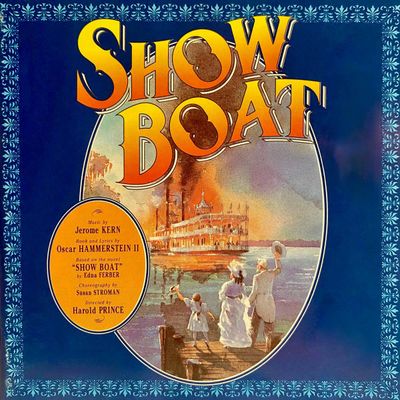
[11:25] Dawn Chiang: Oh wow, Richard Pilgrim was the lighting designer for Hal Prince's production of Showboat and I was the associate lighting designer and we started in Toronto and the year after that we created the second company that came to Broadway with the original cast, second physical set and all that. I mean this was a huge show, there were 60 people in the cast, there were over 600 costumes, there's a montage sequence in act two where in about a 10-minute sequence we're showing the process of time over a few decades and the entire cast is coming on stage, going off stage, coming on stage and all that and every time they go off stage they're changing costume to move to another decade. So there were 12 dressers backstage, changing them like three times to go through this whole process.
It was really quite beautiful. So we ended up having five companies worldwide and I was the lighting supervisor for all of them and our producer also wanted me to go to every city that every production went to, to basically what I called fluff up the light cues to make sure that everything was perfect and ready to go. So over the course of five and a half years I went to 33 cities worldwide to set up the show. I was still designing my own shows as well so I was on a lot of airplanes and at one point there was a three-month period where I was on the road for three months straight. So I remember going to one in Texas, taking care of one U.S. production because we were in Canada, North America, we had three productions in between Canada and the United States.
So I stopped in and took care of one production in Texas and then I flew onward to Sydney, Australia to set up that company. I spent a month in Sydney, Australia lighting that production. Richard was supposed to join me but there was a financial crisis at that time that was affecting Asia so he wasn't able to attend. So I set up the whole production myself and then from Sydney, Australia I flew onward to London to the West End and met Richard there to set up the West End production. So I flew literally around the globe.
[14:20] Dawn Chiang: Yeah, on the producer's dime, it was the first time I'd flown business class internationally. And I remember realizing, wow, they can make comfortable seats for airplanes. This is really cool. I like this. Yeah, so that was incredible to get literally around the world trip. Lighting. It was fantastic.
[14:51] Amit Bhandari: Mind-blowing. I mean, one day you were in Australia, the other one you were back in the States, the other one you were in London. I mean, that must have been crazy.
[15:03] Dawn Chiang: I loved it. It was fantastic.
[15:07] Amit Bhandari: Let's dive into what you do the most, into lighting, design, and production. I want to know your approach to storytelling through light.
[15:21] Dawn Chiang: Okay. Storytelling through light, there's a very natural thing that happens when you're looking at anything. Your eye will always go to the brightest thing on stage or in a photograph or looking out the window. It's just, that's what captures your interest. So that's a very basic principle by which to work. If the singer is singing, that's where we want to look. The chorus may be secondary or the chorus may be invisible until the chorus of the song begins. So then I can start to build up the light on the chorus when they become part of the performance. And then we may drop them back down when we go into the second verse. So it's composing what the look is, where are you looking, and what is the mood of what's going on.
I realize that I tie in very much to what the performer is doing on, performers are doing on stage. And I realized that when I was guest teaching at the university one time, and they were doing a play where the second act opened with a very melancholy version of the song of Oh Danny Boy. So there was a single actor on a low wooden stool who sang this song. And someone, one of my students asked after they saw the show about why did you like that song in such a melancholy way? And I hadn't even realized consciously that I was doing that. I was simply responding to the actor on stage. So I'm like a scene partner. I'm a scene partner to what is going on on stage. And I will respond to you on stage in that way.
And sometimes the best feedback I get is when the actors will tell me, the lighting that you're doing feels so right for each moment and each scene. I can feel that I'm in that place, in that space, and in that moment. Because we're enveloping them in this environment. And so that's also when I know I'm on track.
[17:56] Dawn Chiang: But that's what I'm responding to. I like that you mentioned that lighting designers are a scene partner. I'd like to think about everyone that's involved in the production is a scene partner. And it's this holistic system in which we all have the same goal. Maybe not the same tasks or jobs, but we do have the same goal. And I like to think that a production manager, a stage manager, a dress manager, a lighting designer, a dress designer, they are all scene partners. And they just enhance the performer's performance. And I like to think about it that way. I like that you used that concept of scene partner.
[18:50] Amit Bhandari: I now wanted to know, you just recalled two basics of lighting storytelling. The first one is the mood, and the other one is the audience's eyes will always go to the brightest spot. What are other basics that we have to take into account, not only as designers, but as performers, to build together that production?
[19:13] Dawn Chiang: I mean, there's the more technical side. We use contrast as a way to make things stand out. So there's light and dark contrast, what's light and what's dark. There's also warm and cool contrast. That's another way to pop things out. And a great example of that sometimes are mail order catalogs. And if you ever studied, they oftentimes control the color palette very carefully. And sometimes it's all one sort of color. It may be all in sort of steel gray, all in ranges of that, or it may be warm and cool. You know, if you start actually paying attention to those kinds of things, it's kind of fun. One costume designer I've worked with sometimes would bring in mail order catalogs and turn the images upside down so you aren't reading the content of it, but turn it upside down and have the director respond to the colors that they see to see if any particular types of combinations are where they're going or seem to respond to the way that we're doing this particular production.
I've had some directors create a mood board, the same thing, clipping out images either for magazines or for Pinterest or something just to give you a sense of what they're feeling. It may not be literal of what images would be in the play, but it gives you a sense of that. And sometimes a projection designer I worked with once did that on a show, and I was able to use his mood board that completely informed some of the choices that I made in the light plot and the colors that I used. And so sometimes lighting, sometimes I describe a director as, let's say we're all coming to the director's place for dinner, and one person's coming from the east, somebody's coming from the north, somebody's coming from the west, and somebody's coming from the south, and he gives us all different directions. And we all get there, and we all arrive at the same place at the same time. That's what a director does in very broad strokes. So that's part of it as well.
[22:00] Dawn Chiang: And sometimes the easiest way to tap into what's going on, because we always have design meanings in advance of creating the design, and this is in advance of rehearsal's beginning. We'll often talk about what ultimately turns out to be the speech that the director gives on the first day of rehearsal to the cast. You know, what is this play? Why are we doing this play now? And how does it relate to everyone here in the room? And that's also the same conversation that we have when we start the design, and then get into more specific aspects. You know, we have three different locales that we need to go to, and we need to be able to transition quickly from scene two to scene three, you know, all those kinds of things.
[22:57] Amit Bhandari: You just mentioned that when the design is starting, or when the production is starting, the director gathers all the crew and cast, and explains why they're doing the show they're doing. From your side as a designer, what are those questions that you ask the director to create your design?
[23:25] Dawn Chiang: Well, it really does. I think we all have been taught that the director takes the lead. One designer I assisted early on described directors as a benign dictatorship. You know, the director is leading the way the director wants to go is the way we're going to go. And so, I want to hear what his or her view, you know, perspective is on the production, and see where it's going. Quite honestly, in terms of sequence of when designs are due, set designers usually have their designs due first, because it's going to take time to construct the set, and so on and so forth. Costume is second, and then lighting's third. So, I get to piggyback on a lot of research that my fellow designers have done regarding the period, or the type of locale that we're addressing, and so on and so forth.
So, they've done a lot of that. Sometimes I do my own as well, to supplement that as needed. So, in terms of the big picture, the director's taking the lead. Sometimes there are technical, more technical issues that I need to get into about, okay, we want to have stars in the second act, but there's a trend, a technical transition of getting out of the first act to have stars be available to us, and not see the wires, and so on and so forth. So, that's a conversation, actually, I'll have with the set designer, or how important are the stars? I can definitely create the moon, project the moon, and so on and so forth. The stars would be trickier, and find out that there's a priority. Well, moon definitely, stars is a bonus, but not as important.
And so, those are things that I can find out. And oftentimes, when they go into rehearsals, I'm always in close contact with the stage manager, to find out how it's going, and what the blocking is like. I'll come in and see final rehearsal before we hit tech, but are there parts of the stage that they're using? Oh, yes, they've decided to make entrances from the audience now. Like, okay, I need to light the aisles, that kind of things. And also, productions also kind of fall into two categories in terms of staging. They either hug the perimeter, and you got to get every last, you know, cubic inch right down at the perimeter, or they don't. And so, those are important things to find out as well.
[26:17] Amit Bhandari: What are your pet peeves during tech week? Now that you mentioned that you go to rehearsals before tech, just to get an idea of how everything, and where everything goes. But what are your, as a designer, what are your pet peeves during tech?
[26:43] Dawn Chiang: Well, I don't know if it's a pet peeve, but the most efficient, I mean, there's a huge amount to do, as you know, for actors. Here, we're throwing you on the stage, and now we're putting you in costume. And now you've got to do the quick changes, and going up and down those stairs is taking actually several seconds more than the little pieces of tape in the rehearsal room. So, you got to negotiate all of that. I will say that the best way that tech rehearsals proceed is when the director and the cast have had ample time to prepare, and have all of those, a lot of those issues addressed, or the directors anticipated that. And a lot of times, we have a staging rehearsal without tech, although I get to light over them without dumping them in the dark.
It's their rehearsal. It's not meant for me to stop them, but I can do a lot of lighting in that process, where they do figure out how to time things with people running up and down the stairs, and not getting to the main deck in time. You know, working all those kinds of sequences out, I can get a lot of things sketched in. So, a director who has figured out how the staging all works for them, they're adjusting for sight lines. You know, if you could please step another two feet stage left, so we can see you all the way house left, and those kinds of things. It's interesting. Some directors are more what I call visually literate. They can visualize in three dimensions. So, when they see a set model, they can translate that to the rehearsal room, and those little tape marks that are the stairs, they can understand visually how people on the upper level relate to people.
[28:40] Dawn Chiang: You know where the tricky bits are so let's say we have a script that's a hundred pages long, and we've got two days to work our way through the whole thing before we have to do a run-through. I'll check in with the stage manager to find out do you think it's just like 25 pages, you know, in the afternoon, 25 pages at night, you know, into four segments like that, and they'll go no actually first part is actually pretty fast so we will be able to get through more, but on the evening of that first night, there's that really tricky scene where dot dot dot so we're going to need more time. So they'll know how to allocate it, and then I will tell them I will ask them to prompt me when we need to keep moving and also when we need to prompt the director to keep moving because some directors may get kind of dive into smaller details and burn up a lot of time, which you know we can do at a later moment in the tech schedule, so it's time management.
[30:18] Dawn Chiang: You've been on Broadway, you've been off-Broadway, you've been in Lincoln Center, you've done regional theater. What are the biggest lessons you've learned from all of them? Wow, be prepared. Yeah, you gotta do your homework, you know, and you gotta bring your best, your best ideas in your best way of working always. So time management is part of it, being organized so you have everything at your fingertips? It gets more complicated when you're doing a really big musical and you know I may be programming over a thousand parameters at a time. There's a program, there's a board operator who's actually doing the programming, but I'm talking over the headset about what needs to be done, and so we'll program as fast as I can talk and I'm pretty fast at being able to come up with cues, which is great. It's a developed skill and so being prepared is one of the big ones.
[31:34] Dawn Chiang: When I work on a musical, I notice that I tend to listen to the music over and over and over again until I can play it back in my head at will, kind of like drop the needle wherever. So that may be because of my musical background. I want to have mastery of the music so I understand how it goes, how it feels. I'm not having to intellectualize it; it's part of me, same way that I perform. Yeah, it's in my body just the way that the text is, but it's music especially. So that's important. In musicals, I've learned from Hal Prince and Tommy Tune and some other major directors that transitions are like 50% of the storytelling. So not only as a design team do we have to figure out the best way to get from scene A to scene B, we also have to make it compelling, drive the story forward and that sort of stuff.
[32:45] Dawn Chiang: And I've noticed that all directors and lighting designers, because we're dealing in time, all cues happen in time and we put a timing on each cue whether it's five seconds or one tenth of a second. We're responding to the performance as well and directors are incredibly sensitive about timing in terms of we could take ten minutes out of the show, there's too much air and lighting designers, especially I know that I have become very attuned to that and where we can tighten things up and move things forward. So that's part of it. And then opera just has its own culture and tradition apart from plays and musicals where the maestro is the king and leads the way. And also opera, at least in my experience, productions are often your production of Don Giovanni is going to be compared to productions from 70 years ago, which doesn't happen as much in plays and musicals.
I mean, a little bit, but there's some real hardcore fans out there and also people on staff who will say, oh, well, Callas sung that better. And so it's like this is really odd; they're always referring to the past. That's changing and shifting as well, but it was an interesting phenomenon to see just how prevalent that could be.
[34:38] Dawn Chiang: Which shows do you look up to in terms of lighting design? Oh wow. Well, there was A Chorus Line. Terry Musser did the lighting for that. That was the first show on Broadway that had a computer lighting console, which was amazing, and she lit the original production on 96 dimmers too, which a lot of students are like completely aghast because no one can even imagine most people, a lot of people couldn't imagine doing a major hit Broadway musical on what would be a fraction of a number of dimmers that we use today. But she did and she was always a master of economy and she was one of my early mentors, so that's amazing. Anything that Theron did was brilliant. Jennifer Tipton is a master of dance lighting.
I've worked with her. We actually worked in Joffrey Ballet and also opera. We took a production from Los Angeles, LA Opera to what eventually became Los Angeles Opera to Royal Opera House, Covent Garden, and then it went on to Italy. And then Hamilton, Howell Binkley's lighting on Hamilton, which you can see on Disney Plus right now, is brilliant, brilliant, brilliant. I mean, he was always an incredible lighting designer. He did a lot of dance, he did a lot of major Broadway musicals, and his work was phenomenal. And I'm so grateful that we have a record of that production.
[36:35] Dawn Chiang: I agree, I agree. Hamilton has been a landmark form of contemporary musical theater and I mean, it's everything from scenery to light to the cast to the whole storytelling. It's a landmark and I mean, how lucky we are to be alive right now and to have a digital recording about it. So, yeah.
[37:07] Dawn Chiang: What are you working at the moment? I have a show coming up in the spring, much to my own surprise, that a theater that I work with a lot is planning on doing a production, a live production. We did Talley's Folly this fall that went direct-to-video, no audience, and complied with all the safety protocols required by all of the relevant unions. And so they want to do that again this spring with another play. I have a two-person play, direct-to-video if public health standards allow, and if not, then we'll do it a hundred percent remote. We'll have our first design meeting sometime later this month and find out more about the particulars of that and what is a hundred percent remote mean there?
We all in Zoom boxes and what is my role in that and so on and so forth, but they're hoping to do a direct-to-video and then I have another show in spring of 2022, which was also a great surprise when I got that offer, and I got that offer maybe a month or two ago and I had to like reread the email twice. It said 2022. I went, oh my god, somebody's actually planning that ahead and of course I said yes to that, so it's interesting to see where people are and the contingency plans that they're making to see what happens.
[39:01] Dawn Chiang: Yeah, and there are a lot of people that are at the moment working on stuff for an opening night in one year ahead or two years ahead, so hopefully this pandemic will be over soon when everyone gets the vaccine. But yeah, and hopefully we can go back to the theater soon.
[39:25] Martín Acuña: Oh, I have one last question before we go. So yeah, you've done musicals. What are your top five favorite musical theater shows?
[39:36] Dawn Chiang: Oh my god. Well, let's see, we talked about Hamilton, A Chorus Line, Sunday in the Park with George, just about anything Sondheim, you know, they're the classics from Rodgers and Hammerstein, and there's so many of those, you know, including The Sound of Music, which has been around for ages and ages. And I will also have to put Show Boat since I lived with the music of Jerome Kern for five and a half years. That was a groundbreaking musical in its time. The reason Hal Prince wanted to do that one as a show that was coming out of the 1920s, which were all reviews and follies, everything was very light-hearted, there was no real book to take us through a story, and Show Boat was one of the first that did that and talked about a lot of serious issues like a marriage between a black woman and a white man and how they were cast out because of that, as well as the vaudeville acts and so on in the show.
Jerome Kern also wrote underscoring under scenes. This is in the 1920s, and he wrote all of that in addition to all of the music, and it's beautiful. And I got to live with that music for five and a half years as I, you know, popped around to all the different stop cities that the show went to, and I really came to love and appreciate everything that he brought to music and to musical theater.
[41:51] Martín Acuña: I agree with you, Show Boat was another landmark in Broadway and in musical theater history. Well done. Thank you so much for being here.
[42:07] Dawn Chiang: Thank you so, so much. I really appreciate you having me over, and I cannot wait to see the shows you just mentioned and everything that will come your way.
[42:16] Dawn Chiang: Thank you, Martín, and all the best to you for the coming year. I can't wait to find out more about how your year unfolds as well. Thank you so much for having me on your podcast.
[42:32] Martín Acuña: No, thank you. Yes, be well.
[42:40] Martín Acuña: Thanks everyone for listening to this new episode of Backstage Talk. Remember to follow us on Facebook and Instagram at Backstage Talk Podcast.
© Broadway Podcast Network, All Rights Reserved