

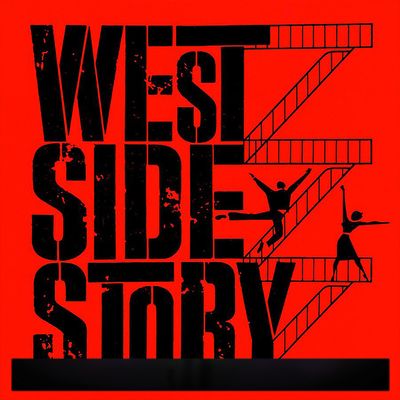
Straight from Broadway’s West Side Story, Marlon Feliz has a wonderful chat with us about her journey as a performer! 😍 She shares: 💃🏻 Tips to self-care as an artist. 💃🏻 Wisdom on how to deal with 8+ shows a week. 💃🏻 Pros & cons touring the world with different shows... Read More
From the show: Backstage Talk
Featured Shows
About
Straight from Broadway’s West Side Story, Marlon Feliz has a wonderful chat with us about her journey as a performer! 😍
She shares:
💃🏻 Tips to self-care as an artist.
💃🏻 Wisdom on how to deal with 8+ shows a week.
💃🏻 Pros & cons touring the world with different shows.
💃🏻 Latinx representation on a Broadway stage and where the industry needs to improve.
Dive into today’s episode and discover this woman’s powerful thoughts! 🤩 Click here to listen 🎧: https://linktr.ee/backstagetalk
Get to know Marlon better following here on Instagram and LinkedIn!
Let me know what you think about us leaving a review on Apple Podcasts! 👌🏻
Big shout-out and thanks to Juan Hernández and Andrea Martínez for our wonderful intro and outro music!
Transcript
This transcript was automatically generated and might contain errors.
[0:00] Martín Acuña: Hi, everyone. I am Martín Acuña, and you are listening to Backstage Talk.
[0:21] Martín Acuña: Hello, everyone, and welcome back to another episode of Backstage Talk. This is your host, and today I have a new guest with me. Here is Marlon Feliz.
[0:34] Marlon Feliz: Hey, Martín. How are you?
[0:36] Martín Acuña: I'm good. I'm good. I'm having a nice, easy Sunday so far.
[0:42] Martín Acuña: Awesome. Well, Marlon, I'll let you introduce yourself a little bit before you started with all the deep questions I have prepared for you today.
[0:53] Marlon Feliz: Yes, all the soul-searching. So my name is Marlon, and I'm a dancer-performer all around in New York City. That's where I'm based. I grew up in Miami, Florida originally. I was born in Santo Domingo, Dominican Republic, so I'm a proud Latina for Latinx. And yeah, my whole dancer-performer story started really from before I could walk. There are memories that my mom tells me about being in the crib and me waking up from a nap and dancing to commercials that would play on the TV, and that they found that so funny and interesting that I couldn't even walk yet, and yet I would manage to sort of pull myself up and hold on to the crib and dance in my crib. So that's really where my whole story starts, with family and with music at home. And yeah, here I am now in Brooklyn.
[1:55] Martín Acuña: You were born in Santo Domingo, and under what age you were there?
[1:59] Marlon Feliz: Really just until I was about a year old. So I unfortunately don't really remember too much about that first year. While I was a kid, we would visit every, I would say, maybe four years. And we did thankfully have a lot of cousins through one of my dad's uncles, sort of an hour north of us on the north side of Miami. And that meant that definitely around the holidays, I was a part of big, big family gatherings. And I really treasure those memories, for sure.
[2:36] Martín Acuña: So you grew up all around the Latin tradition for not only holidays, but lifestyle.
[2:40] Marlon Feliz: Yeah, it's interesting, because I think my parents were already sort of progressive in their own ways. So there very much was Dominican culture present in the household, but they also consciously chose to come to Miami and to build a new life. My mother was already, is really Dominican American. She had spent half her childhood in New York and half, the other half as a teen in college in Dominican Republic. So it was natural for her to come back to the U.S. But it was a new journey for my dad, for sure. But yeah, he's a go-getter. So I feel very much that I was blessed to have the rootedness of a lot of Latino and Dominican traditions and values like family and an appreciation for really enjoying family, like big family parties and holidays and such.
And at the same time, some of the values we love about being in the U.S., about having a real sense of opportunity and being able and that everything is possible if you're willing to work smart and work hard and all those things. So, yeah, I really feel like I got the best of both worlds.
[3:52] Martín Acuña: Certainly you did. And first question, out of everything, how do you think that the Latin heritage you have has affected your way of performing?
[3:59] Marlon Feliz: Well, you know, it's something that I still think about a lot, especially as I've gotten older. I always say that my dad was my first dance partner, because that's very true. I learned how to dance first before I ever stepped in a dance studio. I learned how to dance with my dad, because that's what Dominican families do at parties. Right. So it wasn't until years later, after tons of training and I was sort of like in my first big contract out in the world that I realized that that was the seed of where everything had started, because, you know, once you get into training, you tend to get kind of far away from that, unfortunately. So those traditions inform my love of music, my love of rhythm.
And for me, it has always made dance a social thing, because those partner dances are social dances. They come from community. They come from tradition. So even though I then, you know, after just growing up doing that, I then went into ballet class, modern dance class, jazz class, hip hop, all those things. Looking back now, a lot of the work that I've done makes so much more sense because there was that element of connecting and sharing with people. And it's where I want my work to continue to go, for sure. So it's definitely this, like, I would say, like, foundation underneath it all.
[5:34] Martín Acuña: Awesome. Where did you get your BFA? Because I know that you went into NYU, but I wanted to dive a little bit into the overall journey of you from Miami all the way to New York.
[5:50] Marlon Feliz: Yeah. So I was, you know, it was clear from a young age that I was very physical and had energy and needed to be, you know, active. So I did some gymnastics as a young kid for a couple of years. And then my mom, you know, I sort of at the point where they saw potential in me and said, if she really wants to do this, she has to commit full time, you know, like four or five nights a week. And it's going to be even more intense. I guess at that point, I enjoyed it, but I wasn't ready for all of that. And I apparently told my mother because we had a dance class sort of as part of the program. Apparently, I told her that I thought I maybe liked the dancing better. So she said, OK, well, let's switch you into dance class instead.
And, you know, my parents didn't know much about that. So I just did sort of the easiest thing, which was an after school care dance program, which was through a college student who I don't know if she was volunteering or what that situation was, but it was this sort of young Latina woman. I can't remember where she was from, but she was our teacher and she was studying, I think, her BFA or MFA, maybe like FIU or something. So I started with her and I think it was just like ballet and jazz. And that was just really fun. You know, you were just like in the school auditorium after school. And then I clearly wanted to do more. So I was lucky that Miami has these magnet programs and a lot of middle schools and high schools where you not only do regular academics, but you do these specialized programs that you can audition for or apply for.
So I auditioned for a couple different schools and then I ended up going to South Miami Middle School like magnet dance program, which meant that in addition to my regular courses, I think it was like three days a week, I had two or three hours in the dance program. And that's when I got much more disciplined, for sure, the ballet and modern and jazz training. And I had a really sort of strict and she was a little bit intense kind of teacher, but she was, her name is Miss Valdez. I swear I need to send her a letter one day and thank her for all that she did for me, because even though she was a very strict or demanded a lot, she was super vibrant and very young and just like this beautiful dancer herself. So she was inspiring. And I think I thrived on getting so much information and being pushed because it was it was an encouraging environment. So that was great.
[8:24] Marlon Feliz: And then from then it was like, OK, we're going to do this seriously even more in high school. And I was lucky to be accepted into New World School of the Arts, which I sort of jokingly say, it's kind of like the LaGuardia of Miami. So there's now more high schools that have really phenomenal programs. So this new world is no longer the only one. But at that time, that was like the most prominent, visible one. And that's where my training went even more serious and became very much like concert dance focus that that was traditional and classical ballet and classical modern dance forms like Fortin and Lamone and Martha Graham's, you know, like those classic techniques. So and then from there, it became a real decision junior year about whether I was going to really pursue this as my life stream and make it a career.
And it was terrifying that I just knew in my heart I had to try. Like I just I remember asking myself after a show one day, are you really going to do this? Are we going to do this? I would talk to myself. And I remember just sort of getting one of those inner wisdom messages that just said, you can't not try. That's it. You just have you have to go for it. And my mom was thankfully super encouraging. My parents were supportive and they were also realistic that it was going to be really tough, but they were very much supportive of us going for it. So I then, you know, auditioned around for a couple of college dance programs. I also applied to many schools as a communications major. So it sort of became a question of whether I was going to major or double major or make dance the minor.
That sort of became the more detailed nuanced question. And it just worked out perfectly because I could I had to choose when it came to applying to NYU. I couldn't apply to both. I had to make one the priority. So I said, well, they have a phenomenal dance program. They're very well known for that. So I have to go for dance at NYU. And thank God that was a great audition experience. And I needed a ton of financial aid. And I made that very clear in my interview. And I was able to get that. So I went to NYU and honestly, it was a perfect fit because their BFA program is very much conservatory style. So you're training intensively every day you're dancing and you have these dance academics in anatomy, kinesiology, dance composition, music, dance history, all of those like the full breadth of study that you would get in a conservatory.
And yet I still was able to explore some of the outside academics in the university in order to get a full BFA degree. So I'm like I've always been a nerdy dancer. I always liked my academics as well. So it really suited me. I just felt that there was a good balance there for me.
[11:21] Martín Acuña: Awesome. I understand that balance and that decision process between having to decide if you want to pursue this as a minor, pursue the arts as a minor or as another major or fully commit as a major into the arts.
[11:36] Marlon Feliz: Yeah. Now I want to dive with you like head over heels of your experience being a musical theater performer. Tell me how it all started professionally as soon as you graduated. Yeah, so it actually came a little bit unexpectedly for me because that hadn't really shown up in my training. The dance programs I was in were always very, you know, concert dance focused. I was able to dabble a little bit my senior year in the BFA program at Tisch Dance because somehow through a connection they had in the university, you could choose an elective that was just for smaller credits for a semester with a vocal coach. So I got a taste of vocal training for one semester in that year. And it was something that I definitely enjoyed.
It taught me a bit more about my breath and, you know, my awareness of that system in a different way than dance does. But at that time, it was just sort of an interesting class, right? And I didn't give it too much more thought than that. So I got out of school and I was looking more in the concert dance arena. And then I wanted to sort of break open my possibilities. I wanted to get out of the city and travel. So I started looking at a different audition website and I started seeing all these auditions for cruise ships and for musical theater in addition to the sort of local companies. And I was like, oh, I hadn't really thought about these options because I wasn't trained for those options.
But why not? You know, like, I am grateful that I just have a very I'm very just like hungry, lifelong student. I'm always eager to learn and challenge myself. And I was genuinely excited by the prospect of traveling the world and dancing in a different way for a while. So I did some cruise ship auditions and then the one that I booked ended up being as a dancer slash aerialist for Royal Caribbean, which was, yeah, super wild, something I'd never even thought about. But it was just so badass, like doing aerial work, honestly. And I would love to do more of that. But what was awesome about the production shows on the cruise ship, you know, they weren't particularly, you know, deep. It was like, you know, a jazzy show and a ballroom show and like a, you know, British pop music show.
But they were fun. And I said, you know, it's fine for me for this time to just like step into these shoes for a while. I hadn't done jazz dance at that point in like four years. So it was just like really a fun change of pace. And I was dancing around singers in the show. So they're really song and dance shows and there's singer tracks and there's dancer tracks. But I had never worked around singers before. So you get to know some of those people and, you know, I get to see their talent on stage and how their training is different from mine. And some of them just said, you know, if you're if you're interested, you should just when you get back to New York, just find a teacher. I can give you some suggestions and just start training it.
And they really planted in my mind this idea that, you know, that was very much possible if I wanted to explore that. And I'm grateful for them for that. And I remember them saying, listen, you're a great dancer. They always need great dancers in musical theater. If you can develop your voice enough and be strong enough and comfortable enough to just be able to sing a decent tune, you'll find work. And I was like, awesome. That's the goal, right? I want to be a performer for a living. So then I got back to the city and I started taking some vocal lessons and I just went ham on the musical theater. I just, I swear that those first six months, I didn't know what I was doing. I definitely, I just showed up, which I think is something that I tell people all the time.
Sometimes you just have to just show up and figure it out. But do we really know what we're doing when we're auditioning? Right. Does anybody know? No. You learn how to not know. You learn how to be OK with not knowing what that is. So but they gave me the basics. My teacher helped me get just some, just like two or three very simple audition cuts. So she was really, really wonderful, just like working with her. That was exciting for those six months because I could feel this new level of growth happening for me as a performer. And it was another way of communicating that was exciting. And of course, it was still really scary. But I think that's just the two sides of the same coin, exciting and scary at the same time.
That's how it goes. So that's really how I ended up pursuing musical theater. And then after those, I would say maybe six to eight months of like heavy auditioning with musical theater and doing some vocal training, I booked my first musical, which was a non-union tour of Saturday Night Fever. And that's how I ended up in the musical theater world. I just realized, actually, correction, all of this happened not right after the cruise ship. Right after the cruise ship, I actually auditioned for Palabolas and started working with that. And then I worked with them for a year. And then when I got back from that, from that work a year later is when I sort of had the space to say, OK, what if we try this?
[17:08] Marlon Feliz: Awesome. So you just mentioned Palabolas. This is a company, a dance company. That's right. And I mean, you've got the chance to experience being part of different groups, dance groups. And that's awesome because you either can do pure entertainment dance and pure entertainment shows like you did in the cruise ship. But with this company, it was a more, I don't want to say serious because the cruise ship, I know it needs like a level of professionalism to do that show. But this is a dance company, an established dance company. And it's another completely different environment. How was being part of that company?
[17:54] Marlon Feliz: Oh, it's wild and so enriching. And I'm so grateful for it. So what was interesting for me is, you know, Palabolas, I think now they just go by Palabolas. But at the time, there was sort of distinction. There was Palabolas Dance Theater, which is the formal modern dance company, you know, side of them that was, you know, seven members usually based full time in Connecticut, rehearsing and then touring nationally and internationally. So at the time I came in, they had that arm happening. And at the same time, they had this whole this huge production that they had created with some dancers that mixed their classic modern dance partnering work that they're very much known for with a new form called Shadow Theater or Shadow Dance, where you would perform stories essentially, behind a screen in silhouette, because you would be in front of a projector.
And you can create all these incredible shapes and images using not just your own body, but combining your silhouette with someone else's and contorting yourself into all these wild shapes to make different imagery and also really play characters that were just a bit more characters that you wouldn't be able to play in just regular live theater. So when I came in, they had a Shadowland arm that had already been touring that show, Shadowland, which was their only full length, evening length show. That was one, you know, most of their shows with Palabolas Dance Theater were included maybe six or seven pieces in the evening, right? A Shadowland show, you just saw Shadowland because it was a full hour and a half long journey.
So I ended up being hired for the Shadowland cast. And I was flown to Australia to learn the show in sort of the final leg of that tour at the time. And I wasn't supposed to perform during that time, I was supposed to learn, but then something happened and some performers had to leave. So after a couple of weeks of sort of learning backstage, I had one day to really get it together and I had to perform. And that was my intro to Palabolas, which is like, there was that moment pretty early on of like, okay, you know the basics, like we just got to go for it. Which is a lot of what their energy is. Just like an understudy, you were thrown on stage, you're like, hey, the main performer can't do it tonight, you go.
Yeah, I mean, thankfully, it wasn't like the lead role, that would have been insane. But it was still every character in that show, every dancer had scenes where they were a prominent character. And the character that I was learning, the Circus Queen is what they call her, was very theatrical, and she dominated a scene, she really had to lead the scene with her theatricality. She did less movement than other people in that, but she was like the host of that scene. So and that was my first time doing that kind of work that was really dance theater, that really emphasized character, as much as movement. So yeah, it was this huge learning curve, but I just like tackled it. Right? Because I knew what incredible opportunity that was.
So the majority of my work with Plotless over, I would say, about like five years, was touring Shadowland internationally. And then I sort of was in the city doing other things for a few months. And then I went back to working with them when they were developing Shadowland 2. And I took on a lead role in that show. And we toured that. And then, you know, come in and out of the city between these shorter tours. And then we did some national touring of Shadowland a bit. And some of the last big things that I was able to do with them were this just like full circle moments where I got to learn and step into the lead role of Shadowland, which is called the Dog Girl. People can look up some of those things on YouTube, the dog transformation.
And I had wanted to learn that role and do that role since I had first joined the company. So it was really amazing, you know, to see that progression happen and to have that opportunity a few years down the line.
[22:19] Marlon Feliz: Yeah, so it was a very unique experience working with Plotless because there's just like, there's very few groups out in the world who are doing shadow dance theater. And obviously, no one else is Plotless. So that's a one of a kind experience that I'm really blessed to have had. Yes. And I sort of have to explain to people that I didn't have the sort of typical, the typical dance company experience where you're touring repertory. I did get a chance in a in a sort of a couple of years ago to do some of their repertory pieces and some national shows here. But I didn't have the sort of typical dance company experience, which looking back now, I'm like, well, nothing in my career has been typical. So or just at least to my eyes.
[23:11] Marlon Feliz: It seems that way, that nothing was predictable, everything was a new challenging surprise, and I think that suits my personality a lot, honestly.
[23:21] Martín Acuña: Totally, yeah, I agree with you on that. So, talking about touring the world and touring nationally, what do you think was the biggest lesson you learned as a professional during all of those experiences?
[23:37] Marlon Feliz: A few things. Certainly, as a professional, those touring experiences were my introduction to the eight-show week. So, that was a hardcore lesson in energy management and learning how to take care of yourself and to sustain and build longevity. So, you really start to get clear on what the intention is of what you're doing at any point in the show and how to give it your best effort based on what you have to offer that day. And if you're in a matinee and you have to do an evening and you have two shows tomorrow, that's what the weekend is, you have to learn how to pace yourself. And I don't mean that in a way that's... It's never a lazy thing. There's a horrible phrase I've heard that people sometimes use about when a performer is, quote-unquote, phoning it in, which is like they're there, but they're not really fully present.
I could never accept doing a show that way. But there is a way for you to give just enough energy to do what you have to do without breaking yourself because you have not just a long week to get through, but you have four months to get through. So, that was the big lesson, I think, from that as a professional. And also, I think there was an awareness for me at that point that my career was really no longer just about my own love of dance and performing. It really has to become about the audience and you trying to connect with them and give them the best possible experience. That is where the sense of service comes into play. So, I started to develop that awareness for sure at that point. And then on a personal level, I think... I don't know how much this relates to the professional lessons, but for me, I also think I really learned what it meant to nourish yourself when you're far away from family and friends.
You really have to learn how to practice that and be comfortable with your own company. I would go on long walks through cities on a day off and wander all day by myself and pop into cafes and do things like that. And sometimes I would do things with castmates, but other times you just want a break from your colleagues. So, you really have to learn how to be content with your own company. And at the same time, I think after doing that for a bit, I learned that even that sometimes isn't enough. And you also really have to cultivate and maintain your relationships at home to feed yourself so that you don't get too isolated. You have to make those phone calls back home and call the family and call the friends, even though you're in a different world and it's hard to explain everything that's happening and you're tired and such.
Over time, I realized that I was not good at that and I needed to become much better at really not just keeping in touch, but really staying connected. So, since I've been more stateside in the last few years, I really worked hard to carry that with me.
[26:52] Martín Acuña: You were part of a group of 33 performers that had their Broadway debut with West Side Story, right?
[27:01] Marlon Feliz: Yes, that's right. First, congratulations for that.
[27:09] Martín Acuña: Thank you! As a Broadway-obsessed geek, knowing that someone made the Broadway debut is like goals for me.
[27:18] Marlon Feliz: Oh my god, absolutely. How was your Broadway debut? I mean, it must have been insane.
[27:25] Marlon Feliz: Yeah, it was super surreal. To me, I think there was some level of confusion because on our first preview, which a lot of people know, but I want to state clearly, West Side had a notoriously long preview period of about two months before our official opening night. So, it was in December of 2018 when we did our first preview. I, in my mind, hadn't really considered that my official debut. I knew it was my first time officially performing on a Broadway stage, so I knew that was still a big deal. But we got to the end of the show and I didn't realize this, but our lead actor, Isaac, made a sort of little speech that I guess somebody had set up with him to acknowledge all the debuts that were happening.
So, then we got these applause for making our debuts. And I had this moment of like, wait, oh, this is it? This is the moment? This is the debut? Because I was thinking in my mind that the official debut was in February on opening night. So, I was almost like I was unprepared to see it that way in that moment. And then I looked over and I saw one of the other dancers who was a very moderate, temporary-paced dancer like me, and she was tearing up. And I was like, oh my god, this is the moment. So, I think it took a second for it to really sink into me. It was just surreal. I just sort of had that realization at the end of the show. And it was so many things at once. It was like, wow, we finally got through this extensive rehearsal period and here we put on the show fully for an audience for the first time.
That felt huge. And to feel all the elements come together, all the technical elements, that was a huge thing. And yet, I still knew there was still so much left to go. So, yeah, it was just surreal is the best word I have for it. I think in my heart, the completion of my debut was our official opening night because then it was like, yes, this is the show. We don't change it from here.
[29:31] Martín Acuña: Yeah, but that's what it was like for me in my head. I'm used to not having previews. So, it's just you rehearse and then it's opening night and closing night and bye bye. So, it must have been like a change, a really big change in expectations and in your brain to be like, which of those both nights is really my opening night?
[29:53] Marlon Feliz: Right. It was the first time I had that dilemma because I also did not have previews before. So, definitely, I was like, oh, it was just a wild introduction to Broadway world, really.
[30:09] Martín Acuña: And how was being part of this reinvention of a classic? Because a couple of episodes back, I had Chris Luner that he was a stage manager for the show.
[30:23] Marlon Feliz: Yeah.
[30:23] Martín Acuña: And he was like, this is the millennial version of a classic. And West Side is just basically New York's background music. And I think this is just when you think about New York, the only thing I can think about is Jerome Robbins' choreography in the middle of the street in the opening. So, how was being part of this reinvention of the classic?
[30:54] Marlon Feliz: For me, it was super exciting and it also just made perfect sense as a first Broadway show for me because of all of those themes, because of the New York background. And at that point, New York had really become my adult home. And I was definitely acknowledging in my life already that New York is a really tough place. It's a really exciting place, but it's a really tough place as well. And of course, as a Latina dancer, actress, there weren't a lot of... I hadn't seen a lot in musical theater that really resonated with my own life. And this very much clearly did. So, it was just really exciting for me to sort of come in with an understanding of the place that West Side Story holds in the musical theater canon.
But I didn't have the tight attachment to the classic that a lot of, I think, musical theater diehard fans have. And I really respect that attachment. I just personally, it wasn't that intense for me. I really appreciated the classic, but I had never seen the show live anyway. I had only ever seen the movie. And I'm a person who just loves taking on new challenges and seeing things develop in interesting ways. So, I was really open to seeing how they were going to bring it into the new century. I really do... You can describe it as the West Side Story for the millennial generation. I also think it's a West Side Story for the 21st century. Just all of the elements that were brought in to reflect more of the modern world that we live in.
So, yeah, it was just stimulating, not only in an emotional, satisfying sense and physically as a dancer and as an actor, but it sort of fed minority intellectual side of it too, to see the reinterpretations happening, to watch that work unfold and what decisions are being made. And yeah, so there was just so much to soak in.
[33:12] Martín Acuña: And I think you just said a thing that, for me, is so important right now. And you just said that this show or this new version, this revival of the show, was the moment in which you felt represented in the musical theatre as a Latin performer.
[33:38] Marlon Feliz: I agree with you. And I think that whenever Broadway's back after the pandemic, this is something we must take a couple of minutes to digest and really think about. And it's representation. Because there are a lot of people, Latin people, Asian people, people from abroad the United States that want to be part of musical theatre that don't have the opportunity to feel represented on a Broadway stage. I'm happy to know that in your experience, it did happen. It has happened to me too. And I think that is a chance everyone deserves.
[34:19] Marlon Feliz: Absolutely. I mean, America is, we like to say that it's a melting pot. But all the ingredients in that pot have not always been centered. That's the reality. The classic musical theatre canon, you know, or old glamour Hollywood, those classical arts and entertainment sort of markers. I mean, we just have to say it plainly. They predominantly represent
[35:47] Marlon Feliz: So that's a much bigger conversation that's happening. We've had it, you know, with cast members and, you know, with West Side Story a bit with some leadership. And I hear whispers, I think that's happening and certainly in other productions. So I think everybody is very much, you know, ready to see that work develop when things come back.
[36:15] Martín Acuña: Now, I wonder, I want to throw at you a couple questions that have been on my mind. And it's, what are those things that they don't teach you at school that you learn in real life on Broadway?
[36:26] Marlon Feliz: Well, yeah, those are these are like the life skills, right, that I am very passionate about talking about and I because I didn't get enough of that for sure in school and such. And there's a few things. One of the things is what I mentioned about learning on tour, what it really means to be a professional and that means that, you know, your art is no longer just for yourself. It's now also your job. It's your profession. You are serving the audience and other people with your work. So that comes with a higher level of demand in terms of managing your energy and giving it your very, very best and certain amount of discipline in terms of preparing for every single show to give your absolute best.
So there's that. And then I think that that energy management and such ties into how you're managing your time. I literally just did a workshop at the Actors Fund called Time and Energy Management because I can recognize that that's a skill that needs constant practice, how you're directing or scheduling your day and what and that really comes down to what you're prioritizing and how what you're prioritizing needs to tie into what your ultimate goals are and what you truly value. So learning how to manage, for example, when I first got out of school, auditioning with having side jobs with all for just wanting to have some kind of social life still because I'm a human being. And I think especially as you know, like hustling performers, we tend to sometimes not take the best care of ourselves health wise or take care of our personal lives as well because we're trying so hard to get where we want to go.
But ultimately, that's not a sustainable way of living. We have to we all have to find our balance and that's going to be different from everyone. But finding a way to balance the different aspects of your life is really important. You do need to have time for your health. You do need to have time for your family and you have time for your friends. You need quiet time by yourself to listen to your own inner voice. That's I find that especially as an artist, if you lose that connection to your deep inner voice, things just start to fall apart. It becomes too hard. It's hard enough as it is to be in this industry. And if you lose that spark or the you're sort of like guiding light at a certain point, it's just not worth it.
Right. So you have to, I think, keep feeding yourself at a soul level. And that happens sometimes through the work. Yes, absolutely. I have felt these beautiful spiritual moments on stage, but that's not the only place that you can access that. Right. You can do it through meditation, through yoga practice, through going for long walks, through like if you have a partner looking into their eyes and just like, you know, making time for the person you love. So. Energy and time management as sort of clinical and boring as that sounds on the surface, really are our key to your data, to what your day to day is going to feel like, because you have to manage those things every day, every week, every month.
And then the other huge thing that underlies this, which, you know, I'm jokingly thinking to myself like this is a hill I'm willing to die on talking about this, is really being open and honest about the conversation around money as an artist and how there's this. Well, it's a broader cultural inclination to not want to talk about money. It's still sort of this lingering taboo that it's impolite or inappropriate. But who does it really serve to not talk about money? I don't think it actually serves anyone, except for the person maybe who doesn't have your best interests at heart. It serves them that kind of silence. So we need to talk with each other as artists about how we're using money to sustain our careers and our artistic passions and to sustain ourselves because we're human beings and we live in a capitalist system and we need money to feed ourselves and have rent and all those things.
So those things matter. I think we need to shy away from this idea that, you know, if I'm an artist, I can't care about money. It's the opposite. You need to care because it's going to sustain you and allow you to continue to pursue your art. And it doesn't mean we have to idolize it. Not at all. But we do need to respect it because it weaves itself through every aspect of our life. So that is another huge, you know, I'm not going to, I'm not a financial coach, so I'm not going to try and teach a seminar on that at this moment. But I had to do so much self-learning by picking up personal finance books and picking up certain digital tools to help me understand how to sort of make a budget and have a sense of what I truly needed every month.
And then how do I get beyond just getting by and start to actually build savings? Because we do as humans need to think a little bit more long term. Yeah. So that's another huge thing that on the whole, the industry needs to be more honest about is that that money really matters and that everybody starts from a different place and has different levels of generational wealth or lack thereof. And that comes with, you know, different privileges. So I just I just want to dust off this sort of shame around around money. And we need to talk about it the way we talk about like our health, because they're intertwined.
[42:22] Martín Acuña: Absolutely. One last question before you go, and this is a no brainer. Top five favorite musical theater shows. Go.
[42:30] Marlon Feliz: It's actually really hard for me. And I'll be honest, because there's still so many I haven't seen. That's the real honest. But from what I what I do know, West Side is obviously in that top list. Hamilton, I have not gotten to see it. I haven't been able to see it live, but I saw it on Disney Plus. It just like fills my soul. Hamilton is up there. Honestly, what else have I really wanted? I feel like I need to include things that I really want to see, maybe. I don't know. I definitely had a really phenomenal time doing Saturday Night Fever, so it's always going to have a special place in my heart. I think I maybe just need to leave you with three that I've been connected with that I have been or want to be connected with, because those are pretty top of mind for me.
[43:31] Marlon Feliz: Thank you so much. This has been a wonderful conversation. I've enjoyed it a lot.
[43:36] Martín Acuña: Oh, my God. Same. Thank you so much for inviting me on to chat. We could talk forever about this.
[43:43] Marlon Feliz: Yes. Honestly, I want you to be back in the future and go even deeper on this personal life, professional skills we've talked about, because I think that there are critical points that we need to address in the industry, and we need to address them now. The industry is reinventing itself, and we have all these changes going on around us. Marlon, thank you. Thank you from the bottom of my heart. It's been amazing. Where can our listeners find you?
[44:19] Marlon Feliz: Absolutely. The best way to just be able to follow along with the things I'm up to is through Instagram. That is my name, Marlon the Femme. That's F-E-M-M-E. My inspiration was the Femme Fatale idea. I love that archetype, not going to lie. Marlon the Femme, just because a lot of times when people read my name on paper, they assume I'm going to be a guy. Then I show up and they're like, oh, that's not what I expected. I'm like, hi. I think that was the tongue-in-cheek inspiration for my Instagram handle, Marlon the Femme. Sometimes I do take breaks. I'm not constantly posting, but anything that matters is going to show up there for sure. I'm going to say it here to hold myself accountable. My plan is this year to finally get a website up because I want to have a platform to share more of what I've done in a clean, cohesive way and hopefully develop another way to connect with folks.
You have this wonderful podcast, which I think is so incredible to be able to not just build an audience, but build a community to talk about all these wonderful topics with. I'm thinking a lot about how I might do something of that sort myself, whether it's blogging or podcasting or interview calls. I don't know. But yeah, so stay tuned if anyone's really interested for a possible future website reveal.
[45:52] Martín Acuña: Yes. Well, thank you so much. Big hugs and see you next time.
[45:58] Marlon Feliz: Yes. Thank you. Talk soon.
[46:04] Martín Acuña: Thanks everyone for listening to this new episode of Backstage Talk. Remember to follow us on Facebook and Instagram at Backstage Talk Podcast.
© Broadway Podcast Network, All Rights Reserved