

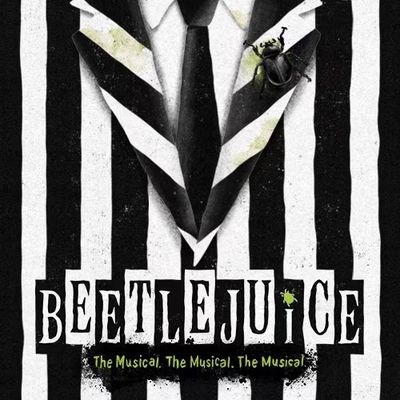
From writing for the stage to film and TV, Steve Cuden has a lot of works under his wing! 👏🏻 Surely we grew up watching his work without even knowing it on The Pink Panther, Gargoyles or Beetlejuice. He has also written a series of books on the craft of storytelling... Read More
From the show: Backstage Talk
Featured Shows
About
From writing for the stage to film and TV, Steve Cuden has a lot of works under his wing! 👏🏻
Surely we grew up watching his work without even knowing it on The Pink Panther, Gargoyles or Beetlejuice. He has also written a series of books on the craft of storytelling. 🤩
In this episode, Steve gives advice on where and how to start writing in the entertainment industry, besides giving us in a quick nutshell his experience. 📚
If you want to know more about Steve, click to visit his website and his work.
Let me know what you think about us leaving a review on Apple Podcasts! 👌🏻
Big shout-out and thanks to Juan Hernández and Andrea Martínez for our wonderful intro and outro music!
Transcript
This transcript was automatically generated and might contain errors.
[0:00] Martín Acuña: Hi, everyone. I am Martín Acuña, and you are listening to Backstage Talk.
[0:18] Martín Acuña: Hello, everyone. Welcome back to another episode of Backstage Talk. Today, I am really excited for today's guest. He was one of the main theory sources and writers I used when I was writing my first musical in college, when I was doing my thesis. I have today with me the great and amazing Steve Cuden. He is a writer. He's been in the entertainment business for the last 51 years, but I am no one to introduce him. So I will let Steve introduce yourself and tell us a lot of what you've done.
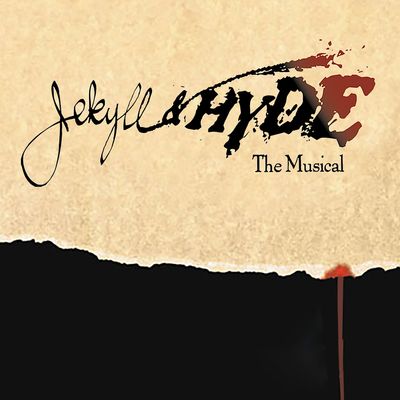
[1:09] Steve Cuden: Oh, well, aren't you kind to have me on, Martín? Yes, this is my 51st year in this crazy business called show. I've done all kinds of things. I have a lot of different tentacles that I have exhibited in my art form. I've not only been an actor and a lighting designer for a very long time, but mostly I've been a writer and a little tiny bit as a producer. I've got 90 screenplay credits in television, or what they call teleplay credits, mostly in animation for kids. So I've written shows like X-Men and Beetlejuice and the Pink Panther and Iron Man and Extreme Ghostbusters and Challenge Showdown, Lunatics Unleashed, Bonkers, all kinds of crazy different shows, about 90 different scripts. And then, of course, I'm probably best known for having created and wrote the original book and lyrics of a musical called Jekyll and Hyde.
It's been on Broadway twice and plays all over the world and has been translated into somewhere around 30 languages. And then I taught for 10 years here in my hometown of Pittsburgh. I moved back home from Hollywood about 10 years ago and taught screenwriting here and still teach, though I recently stepped down from full-time teaching in what they call a retirement. I just call it changing jobs. I'm going back to being freelance again and working on all kinds of great things. So I've had a very full life in the entertainment business, in the entertainment industry, in many different aspects. And when I look back, it's been a very interesting and long and fun career and sometimes a real big struggle.
And we can talk about all those if you wish. But yeah, being in this industry for a very long time is not easy to do. And so I feel very fortunate that I've been able to make a career out of it. And it's been a really wild journey.
[3:28] Martín Acuña: I mean, you've done a lot of things. I'm sure many of us grew up watching your work on TV and we didn't even know. And my first question for you is, how did you start in the business, in the entertainment industry?
[3:44] Steve Cuden: So are you wondering where I was inspired first or what my first job was, but where I was inspired? Well, that goes all the way back to when I used to, as a little boy, I used to go to summer camp. And so when I was about eight or nine years old, I was at summer camp and they put on a production at camp. All boys, there were no girls at this camp. It was back in the sixties. They put on a production of Guys and Dolls. And I can't remember what part I had, but I had a part in it because I was like eight or nine. I was a kid and that was my first taste of what being on stage was like. I had, you know, I'd always been a, I was a, what they called a goob tube kid, or I was one of the first generations of children that were really sucked down the rabbit hole of watching TV.
And so I had a huge influence at that point, just on from television. But then I got this taste of what it was like to do a show on a stage with lights and costumes and singing. And, and, and as I say, that was like a very exotic drug that got into my veins. And once it got in my veins, I couldn't wash it out. And to this very day, I haven't been able to wash it out. Thank goodness. And so that's where I got my first inspiration. And then I didn't do a lot in the theater. I did a little bit until I got to be about 15 years old when I was in my junior year of high school. No, that was my sophomore year of high school here in the States. And I got involved in a children's theater company here in the city of Pittsburgh that no longer exists.
It was a small company called Kidalot Productions. And for the next two years, I did everything. I was, I worked on props and sets and lights and I acted in shows and helped write some of the shows and helped move things around and helped to set the shows up. And I did everything. And it was a full immersion in all aspects of theatrical production and did something like 14 shows in two years for kids, all for children's theater. And that's where the hook really got set. And I was stuck for life at that point.
[6:22] Steve Cuden: Because when I left high school to go to college, I thought I was going to be a dentist. That didn't turn out so well. My dad, my dad was a dentist and my grandfather was a dentist. And I thought I was going to be a dentist, but I was not at all good at the sciences. So I looked around and they had a wonderful theater department where I was. My first three years in college with the University of Wisconsin in Madison, Wisconsin. And I went over and immediately joined the theater department and I knew I was home. That was like home to me and just worked show after show after show and learned everything that I could while, you know, doing it. I think that the theater is best learned while doing it.
Those schools are very important. I absolutely agree with you that theater, every craft in the theater is best learned by doing it. Yes, it's important to study it and it's important to read about it and know the context and the background of things, but you cannot learn how to act by reading. You learn how to act by doing it, by trying. That is a hundred percent correct. And, you know, the entertainment industry is filled with successful people that never went to any kind of school. They've just done it. Unlike a doctor. If you want to be a doctor, you probably ought to go to school. If you want to be a lawyer, you probably ought to go to school. If you want to be an engineer, you probably ought to go to school.
But if you want to be an actor, it helps to go to school, but it's not required. I think education is a very fine thing. The other thing that schooling does, by the way, which some people don't realize or don't think about is that when you're in school, you're learning skills that are not specifically about the theater or for the theater or movies or whatever it is you're studying. You're learning life skills. And when you're working in the arts, when you're working in theater, film, painting, it doesn't matter, writing, you need life skills as well. And school teaches you those. So I think education is a really excellent thing to aspire to.
[8:52] Martín Acuña: Yeah, absolutely. So you started doing a lot of things in the theater, but specifically how did you end up being a writer?
[8:58] Steve Cuden: So I thought to myself when I was a teenager, I, you know, what so many teenagers think, I want to be a movie director. And I also want to be a movie star. Well, I've directed one movie, but I've never acted in any. So those dreams didn't work out so well. So you asked how I became a writer? Well, I was looking around at what do directors do in order to become directors? And aside from directing, which is obvious, many directors learn how to tell stories. And the really good directors are outstanding storytellers, and storytelling is by and large writing. And when you create a story, it's helpful to learn how to write it. And so I started in, here's an interesting thing. When I was in high school and going into college, the last thing in the world that I ever thought I would be was a writer.
I was not much of a reader. I didn't like to write. It was not my thing. But when I went off to school and started thinking about what is it that I need to do to get to my goal, which was to direct movies, I realized I needed to learn how to be a writer. So in school, in college, which at this point, by the way, I've transferred from the University of Wisconsin. And now I'm at the University of Southern California in their theater department. And I took two semesters or a year's worth of schooling in playwriting from a very well-known radio playwright named Norman Corwin. If you look up Norman Corwin, he's one of the most substantial radio playwrights ever. He also wrote a number of movies. But he was just an amazing man.
And he inspired me greatly to think about writing as something for me to do. He never said to me, you should be a writer. What he did was encourage the way that I wrote and my thought process and how I came at it. And Norman was of a generation where the language that was used in those days was much, in my opinion, much higher, much more elevated language than we have today. And he wrote a lot of things that had a political sway to them.
[11:40] Steve Cuden: I have spent most of my life not writing elevated language and not writing political sway. So when you write 90 cartoons, you're not really writing for the intellectual elite, you're writing for a broader audience. And Jekyll and Hyde is not really for an intellectual audience; it's really for a broader audience. And so I took inspiration from Norman, but I didn't follow in his footsteps at all. I followed my own footsteps.
[12:11] Martín Acuña: You started your own trail and look where you are right now. I mean, like I said before, everyone has seen your work one way or another, even if they can't recognize it like, hey, this is Steve's work. Everyone has seen it. And that is just, for me, it's mind blowing.
[12:35] Steve Cuden: Well, it's, you know, it's interesting. When you are admiring the work of painters or filmmakers or writers or composers, when you admire the work, and something that you aspire to, then you try to do something in that vein, whether you're actually emulating or imitating to learn it or whatever it is you're doing. And it has a feeling of being elevated or being above. And then when you are the person who's actually doing the work, and somebody else says, I'd like to pay you for that work, so you become a professional at whatever that is. I have found in my years that people who are professionals and who do it a lot are usually not very impressed by their own stuff. Because they know the hard work that went into it.
And they know that most artists that I know, they look at their work and they think, you know, I could have done that better, or I could have done it differently. And so, it's less impressive to the artist. I'll give you a good example. In my opinion, the greatest composer, lyricist in the history of musicals is Stephen Sondheim. And Stephen Sondheim, famously, there was a number of years ago, there was a revisal of West Side Story. And Leonard Bernstein was already dead. And they were doing this revival of it on Broadway. And there were lyrics in the show that Stephen Sondheim always was troubled by, never thought he didn't get it right. And he changed them. So this famous show that people know, and it's kind of locked in, he changed those lyrics, because he could, because he was not happy with his own work.
That is what I'm trying to express, is that artists don't think, usually don't think of themselves as being great. Sometimes they do. But I think of myself, here's how I think of myself. I think of myself as being a very hardworking person. Yes. Absolutely. I'm not elevated in my own mind at all. I'm just another writer. That's how I think of myself.
[15:02] Martín Acuña: Absolutely. So let's move on to writing for musical theater. Because you've written before for TV, you've written for theater, like straight plays. You've written for film, but specifically you have a book that it's called Beating Broadway.
[15:17] Steve Cuden: Indeed.
[15:22] Martín Acuña: And that is one of the most fascinating books I've ever read, because I think it's just so smart. And it just helps everyone understand and have a specific platform in which to start writing, to start their craft. So in a quick nutshell, what has been the best, the worst, and the most memorable moments of Jekyll and Hyde?
[15:49] Steve Cuden: So creating Jekyll and Hyde was a big, long journey. And the best moments were things like completing a song like Murder, Murder, or like Alive, or Once Upon a Dream, and playing them, and singing them, and knowing in your heart that they work. And can they use some modification or a revision? Yes. But when you finish it, the satisfaction of going, wow, that's actually pretty good, we think. Now we need others to tell us whether it's any good or not. Because by the way, all artists are only as good as what the audience of that art is. Because it does you no good to create something in a drawer. It has to be, you actually have to present it to an audience, right? So the best things were that, creating a song.
I will tell you when we had written the first third of Jekyll and Hyde, Frank Wildhorn and I, my former writing partner, got the chance to play the first third of the show, which was unfinished, first third, for a very famous music publisher named Milt Oaken, who's no longer with us, but he was a really great man. And Milt owned a company called Cherry Lane Music Publishing, which was a very famous independent music publisher for a really long time. He had the first rights to the Beatles catalog for sheet music. He published the sheet music of John Danvers, stuff like that. So we got to play the first third of the show in Milt Oaken's house in Beverly Hills. And Milt fell in love with the show and decided he wanted to produce the show.
And that was a truly exciting and thrilling moment. And he helped to put together a team of a general manager and the general manager then put together a team of director and choreographer and that kind of thing. And we were told we're going to go to Broadway with this show. And this is back in the 80s. This is in 1987. So we started writing Jekyll and Hyde in 1980. And by 1986, we had written two entirely separate versions of Jekyll and Hyde. And then we got to play the show for Milt. And he decided he was interested. And I sat in a theater in New York called the Promenade Theater, which is not it's off Broadway. It's not on Broadway, but it's actually on the street called Broadway, but it's uptown.
And I got to watch the show being cast for Broadway. And that was one of the great thrills of all time. And in that day came a singer who had just won Star Search, which was a TV show where it was kind of a contest. It was like Star Search was a little bit like American Idol, one of the idol shows back in its time. And her name was Linda Etter. And she came in and sang Somewhere Over the Rainbow acapella. And every hair on everybody's body stood up, goosebumps. It was unbelievable. And that was one of the great thrills of writing Jekyll and Hyde. And then the really downside was when a short time after that, there was a stock market crash in New York in the stock market here. And when that happened, all the money backed away.
When the money backed away, the show collapsed. When the show collapsed, I was actually replaced by a more famous writer named Leslie Bricusse. And that was a low point for me with Jekyll and Hyde. And they carried on. And it took Frank and Leslie another nine years to get the show to Broadway in 1997. And I still retain credits. I created the show. And there are a number of songs in the show that I still have credits on. And the great news is it's made an enormous amount of money. And I have a piece of that. So it's all good at this point. And shows like that, any show like that has big highs and big lows if you're going to get to the ultimate goal of big production. And that doesn't necessarily mean Broadway.
You can have a big production in the West End of London. You can have a big production of it in Colombia. To get to that point, which is a goal, is a big deal. Because many shows never get that far. And so it's a crowd pleaser. It's a big hit. Millions of people have seen it at this point. They are supposedly working on a feature film of it at this point. Wouldn't that be cool? So I don't know if that fully answered your question, but those are the really highs and lows for me. It's still thrilling. I'll tell you, not this past year, because obviously we've been dealing with COVID, but the year before in 2019, I got to fly over to South Korea and see the show performed in Korean in Korea, where it had been playing for 14 years.
And that was like, what a thrill that was. What a truly spectacular thrill and a great production of it. They're so good at production in South Korea. You couldn't believe it. Beautiful sets, beautiful costumes, great voices. Terrific. Just terrific.
[21:47] Martín Acuña: Well, if this adds to the thrill of it all, in college, once, this must have been like five years ago, we did a musical cabaret and we staged Murder, Murder. And it was amazing, like amazing. I remember staging that song and finding the lyrics so intricate and so mysterious, and I really enjoyed doing that number.
[22:21] Steve Cuden: Well, thank you. I'll tell you a story about Murder, Murder. So as I say, I started writing it in, I mean, I came up with the idea and Frank and I started writing the show in 1980. And one of the first songs we ever wrote was Murder, Murder. And so that song has been around for 41 years. To me, that's amazing. People still do it.
[22:44] Martín Acuña: Yeah. I mean, I just can start imagining the amount of students that are, even if it's for a warm-up, because it's a nice song for a warm-up. They are doing it all around the States. We are doing it here or we've done it here. So I think that is just amazing.
[23:06] Steve Cuden: Well, every time I see it, I'm grateful that it's still around. It gives me a thrill to see it being performed every time.
[23:19] Steve Cuden: Tell us about the craft of writing. For you, what are the basics of writing, and then the basics of writing a musical? You're talking about storytelling, those basics? Yep. Okay, so humans that want to watch some kind of a performance, whether it's on screen, on a TV, on your cell phone, whether it's on a stage, humans are only interested really at the bottom line of characters who they care about in conflict with other characters that they care about. That's the bottom line of good storytelling, is that it's characters in conflict, it's characters in a struggle. And some people misinterpret the word conflict to mean it has to be a war or a fight or something like that, that's not what it is.
Conflict simply means that someone has a want, a desire, and there's something in the way, an obstacle. So conflict equals desire plus an obstacle. So that could mean that we're both together in a room in a building, and the fire alarm goes off, and we try to get out of the building, and the door's jammed shut, and we can't get out of the door. That's conflict, right? Somebody, you want to go to school, and somebody says, no, you have to clean up your room first, that's conflict. Okay, so it doesn't have to be people punching each other or war, it's just something's in the way of a goal. Storytelling, all great storytelling, all memorable, popular storytelling, is when a character, usually one who is what's known as the protagonist or a hero, has something happen to him or her that sets them on a journey to get to a goal of some kind.
And then for the rest of the story, until that goal is resolved to their satisfaction or to their dissatisfaction, and it has to get to a resolution, then there's nothing but obstacles in the way, non-stop obstacles. So great storytelling is the setting up of a protagonist in search of a goal with non-stop obstacles in the way, until they reach a resolution to that goal. All memorable, popular stories have that in common. There are some terribly tiny exceptions to this, but they're not worth talking about. That is the gist of pretty much every great story. And it's the same for musicals. The interesting thing for me about musicals as I've studied them, because in Beating Broadway, I broke down 40 musicals, 35 famous stage musicals, and five famous movie musicals.
And I broke them down into their narrative beats and plot points and structure, so someone who's trying to create a new musical can see, well, how is this done by others? What structure do they use? Because Beating Broadway is about the storytelling elements of musicals. It's not about writing music. It's not about lyrics. It's about the story, which, by the way, is one of the more challenging things to get right in a musical. Storytelling is usually very difficult. But in the back of the book, there are these 40 musicals to look at. And by looking at the musicals, you can see there's a path, and that path has so much in common with the way that famous, memorable, popular feature films lay out that they're almost interchangeable, which is one of the reasons why so many movies have been turned into musicals and why so many musicals have been turned into movies.
They naturally lend themselves. Plays, by the way, poetry, certain prose, they don't necessarily do the same thing at all. Now, I'll tell you what that means. You can take a play and have it go what we call vertical. It can go straight up. What does that mean? It means you can start with a story idea, and you can start at the beginning of a play, and you can talk about that idea for two hours and never move forward to go anywhere. The best example that I can think of is my favorite play of all time, and that's Waiting for Godot. Daniel Beckett's Waiting for Godot, which goes vertically but never moves forward. It just stays in the same place. Everything that ever happened in the universe is in that play, but it never moves forward.
At the end, they are exactly where they were at the beginning. However, most plays, not all, most plays and pretty much every memorable popular movie and every memorable popular musical must move horizontally. It must move forward like a shark. If it stops, it dies in the water. So, it has to swim forward, and movies and musicals share a bond in the way that they're structured. Protagonists in search of a goal, obstacles in the way, get to a resolution. Movies and musicals share that in common, and this is where I think a lot of new writers of musicals get lost. They think it's about the songs, and the songs are certainly incredibly important, and that's what's ultimately going to sell the show, and people are going to remember the songs. But really, it's the story that compels you to want to watch it, and it has to move forward. It has to. I don't know if that answers the question, but there you have it.
[29:33] Martín Acuña: Yeah, I mean, this episode is being a masterclass, but yeah, it does. What has been the best advice someone has ever given you regarding the craft of writing for the entertainment industry?
[29:41] Steve Cuden: Sure, sure. What I'm about to say is not always doable, but the best thing is to give yourself the room to develop your idea, and I say it's not always doable, because if you start to work in television, it's very fast, and so the assignment comes, and you're shot out of a cannon, and go. You got to go now. You have a deadline. The deadline's in a few days. You got to deliver. Go. If you have the opportunity to develop and spend time sort of soaking in the ideas and developing the ideas, that is the best way to go, and then you have to sit there and do the work. You cannot go out into the street. You can't go down the street to the script store and buy yourself a script to sell to somebody. It only comes about by you doing the work, so somebody once said, I didn't say it, but somebody once said that the formula, the formula to becoming successful as a writer is butt liberally applied to chair.
That is how you become successful. You sit in a chair, and you work. True professionals, by the way, they have their bad days. They have plenty of bad days where nothing wants to come, and where they're uninspired, and they're distracted by other things, and so on. True professionals have to find a way to work through that, because if you're going to be a professional writer, and you're going to write for your life's career, every day is not going to be a dream. Therefore, you have to be willing to put in the work, the brute force.
[31:45] Martín Acuña: Now that you're talking about that writing really needs time and dedication, do you have a specific process or routine for writing?
[31:52] Steve Cuden: I've thought about this, and over time, I've thought about this as I've taught writing. I don't know that I have a truly specific routine that I go through, but there are things that I do every time, but not necessarily in the same order. One of the things that I do is it's better if you can develop your characters before your plot. I was trained, here's another thing, I was trained that when you're thinking about your story, so this is where I start, you're asking me how I start. Before I know what the theme or the premise of my story is, I just come up with the story, and after I've written the first draft of the story, I then look back and think, well, what is the theme and the premise of this?
Then I have to go back to the beginning and make sure it's applied all the way through. Some teachers teach that you must have your theme before you start. Many people in classes, in school, teach that way for writers. You have to come up with a theme and a premise, and you write that. I was trained that if you do that, there's a tendency to get trapped down alleys where you can't get out, and then you've got to abandon everything and start over. So it's better to think, what's the story, so it's better to think, what's the story, I'm just going to tell this story. I don't know really what it's about. I'm talking about underlying, what underplays the story. I'm going to just write it, and then I'm going to figure out what the story is.
The other thing that I do in terms of process is I am a pretty serious walker. I walk a lot, and when I have a problem I'm trying to solve, I find that the rhythm of one foot, one foot, one foot, one foot, one foot, and doing that for a long period, that that rhythm sets my brain into a place where ideas come and can coalesce and can develop. So I like to solve problems while walking. I also solve problems, strangely enough, in the shower.
[34:30] Martín Acuña: Me too, absolutely.
[34:33] Steve Cuden: And a lot of people do. There's a famous writer of mysteries named Agatha Christie, she's one of the most famous mystery writers of all time, and she famously said that she figured out all of her stories while washing dishes. So she'd wash dishes and she'd figure out her stories. Because you're not actually staring at paper or at a screen or whatever you're writing on, you're not staring at...
[35:00] Steve Cuden: And where you're not in a rhythm. It's good to get into a rhythm. And I seek, though it's not always possible to do, I seek, this is the fourth thing I'm telling you, I seek a way to get into what I call, well, I don't call it, everybody calls it the zone. So anybody that's ever been a writer for any length of time knows what I'm talking about, where you get started and you go into some kind of a trance and you're not trying to get there, it just happens. And two or three hours go by before you look up and go, my goodness, three hours went by and it just went by in a flash. That's the zone. And any artist or athlete or musician that can get into that zone knows exactly what I'm talking about.
And it's a wonderful thing because that's where everything is happening. It's all flowing. It's the other way that people call this flow. You're flowing with it. And I have found in this last bit of thought, I have found, and in talking to hundreds of creative people over my life, I have found that there's a commonality to this. And that is I'm not really the generator of these ideas. It's coming through me from somewhere. You can call it heaven, you can call it God, you can call it the universe, you can call it the ether, you can call it whatever you want to call it. But most creative people will tell you that they don't know where their ideas come from. They flow through you into the world.
And part of an artist's job, if you're smart about it, is to allow it to flow through you. If you say, no, no, I'm going to do, I'm going to be the God of everything. You're probably going to cut most things off. So you want things to come through you. And that's maybe easier for me to say than for people to get unless they've experienced it. But that's the truth. I don't know where most of my ideas come from. You know, the great, the great horror writer, Stephen King, who I'm a big fan of. Stephen King, he's been asked, you know, you're a great writer. Why do you write these horror stories? And his response always is, what makes you think I have a choice? And what that's saying is, this is what flows through him.
He's just a vessel for these stories. That's exactly right. He's a vessel, conduit, whatever you want to call it. And that's the way I think of myself as well. It's, it's amazing. I agree with you. I felt that flow through me experience a couple of times on stage and it's, it's just indescribable.
[38:03] Martín Acuña: One of my last questions for you would be, what is the best advice you would give to someone that wants to be a writer?
[38:11] Steve Cuden: So this is easy. And yet it's easy to say and really hard to do. Okay. Best advice. So I always tell students the following, the only difference between a writer and a non-writer is the writer writes. And the only difference between a writer and a professional writer is the professional writer has figured out how to get paid. That's the only, really the only difference. Now there, there are then qualitative differences between the results, but nevertheless, there are good writers and bad writers and working writers and writers who can't find a job. The only difference between a non-writer and a writer is the writer writes and a professional writer gets paid. That's the only difference, right?
That said, there is, I've already said about, you know, the formula for being a successful writers, but liberally applied to chair. The truth of the matter is the only thing that you must do is to write and then write and then write some more. And then after you've written some more than write some more and then continue to write, because here's the truth. If you want to be a great athlete, you can't be a great athlete by saying, I want to be a great athlete. You must go work out. You've got to work the muscles every day. You've got to do some kind of something to work out. In America, we're famous for baseball. We've got baseball teams all over America, right? You have baseball in Columbia. I assume you do.
[40:01] Martín Acuña: Yeah. I think here it's softball.
[40:01] Steve Cuden: Softball. Okay. Same kind of thing before, before every softball season, what did the players do? They might be some of the best players in the world. What is that? What is it that you do or what you call football or we call soccer, right? Before every season begins for football, what did the players do? They go into training. These are the highest paid athletes in your country. They are, they're gods. People, you know, fought all over them. They have their posters on the wall. They worship them. They worship them. They absolutely do. And what do, what do these great champions do before every season begins? They train, they train together as a team. They go through exercises, but they're the greatest athletes in the world.
Why do they need to train? Because that's what makes them great. Same thing for writing. You cannot become a great writer without training and writing, writing and writing, just like a great athlete. It's absolutely akin. So that's my profound advice to anyone that wants to be a writer. It's going to take you a while unless you are unusually lucky and gifted. And that's really rare. Most people don't develop into professional writers until sometime at the earliest in their late twenties, if not well into their thirties or even later. And so, um, my advice is right. You're going to write stuff that is junk. Um, you're going to write stuff that doesn't work. Okay. Move on next, write something else.
The other, the other piece of advice I've given them, I'll be done on advice is, uh, this, if you're familiar with the writer, Annie Lamott, she wrote a great book called Bird by Bird. I highly recommend it to any writer that wants to, you know, anyone that wants to be a writer, um, read Bird by Bird. In it, there's a chapter and the title of the chapter is called shitty first drafts. That's the title. And what she's saying is, which is a hundred percent true is that there's almost no such thing as a good first draft. First drafts are terrible. Generally speaking. So that's part of the craft of being a writer writing is an art and a craft. It's two things, an art and a craft part of part of the craft is to write that crappy first draft, right?
The art comes in how you tell the story and how you refine that draft so that it is viable for the marketplace. That doesn't mean it's good. It's just viable for the marketplace. Hopefully you've written something brilliant. And sometimes people do, and sometimes they don't. And if you look at the long history of great writers, they have books that work and books that don't. If you look at the great long history of great screenwriters or great playwrights or great musical writers, none of them are all success all the time. There's failure along the way. Embrace those failures because the failures are how you grow. So there you go. I gave you an extra piece of advice.
[43:20] Martín Acuña: And I love it. I love it. Thank you so much. Where can our listeners get a hold of you?
[43:27] Steve Cuden: So I'm, you can find me quite easily on Facebook. You can find me at, if you go to www.storybeat.net. That's my podcast. I have a podcast. And there I interview, I do hour-long interviews with artists of all kinds about their creative process. Not dissimilar to what we did here today. And you can reach me through that website, storybeat.net. You can also reach me through stevedecuden.com. And I can be reached that way. And you can also reach me at stevedecuden.com. That's how you would find me.
[44:10] Martín Acuña: Awesome. I have one last surprise question for you.
[44:18] Steve Cuden: Okay.
[44:18] Martín Acuña: You've studied a lot of musicals, not only for your book, but I guess through your years of experience. Which are your top five favorite musical theater shows?
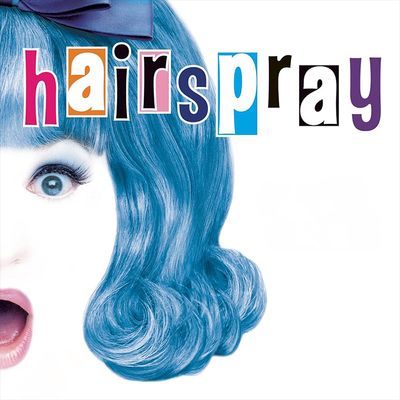
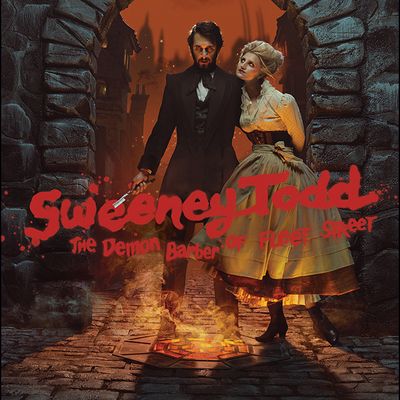
[44:33] Steve Cuden: Top five? Yeah. Well, number one for sure without it that rises above all the others is Sweeney Todd. And if it wasn't for Sondheim, Sweeney Todd, which inspired me and then Frank to write Jekyll and Hyde, there wouldn't be a Jekyll and Hyde. So Sweeney Todd, right? And I love Hairspray. I think it's one of the great musicals. I love Urinetown. Urinetown is one of the most, it's one of the least performed, best musicals ever. And I think one of the problems is the title turns people off.
[45:09] Martín Acuña: Yeah, I agree.
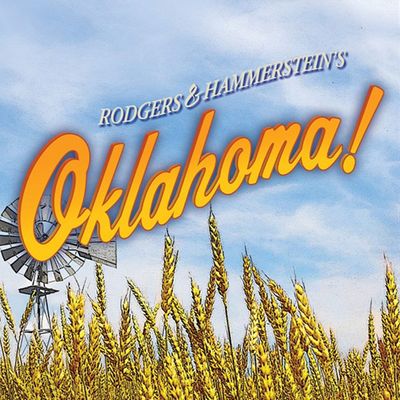
[45:09] Steve Cuden: My Fair Lady is one of the great classics of all time. A true great classic. And then I would say for my fifth, I would say Oklahoma, because it was the first musical really of the modern era. Prior to Oklahoma, it was vaudevillian stuff. And it really, there wasn't really a story being told. I mean, you can go back to Maybe Showboat, which is before Oklahoma. But Oklahoma was where, you know, Oscar Hammerstein II figured out how to tell a musical story the way we tell them today. So there you have five.
[45:59] Martín Acuña: Thank you so much. This has been an absolute master class. I'm honored to have you over. And yeah, thank you so, so much.
[46:06] Steve Cuden: Martin, it's been my pleasure. And I'm so delighted that you asked.
[46:11] Martín Acuña: See you soon. And yeah, thank you again. Thank you so much.
[46:17] Steve Cuden: Thank you.
[46:17] Martín Acuña: Thanks everyone for listening to this new episode of Backstage Talk. Remember to follow us on Facebook and Instagram at Backstage Talk Podcast.
© Broadway Podcast Network, All Rights Reserved