

To start the new year we have the two-time Tony award-winning writer Greg Kotis over on the show! He chats about his creative process with new shows, both plays and musicals, how he approaches character creation, and his award-winning musical Urinetown... Read More
From the show: Backstage Talk
Guests
Featured Shows
About
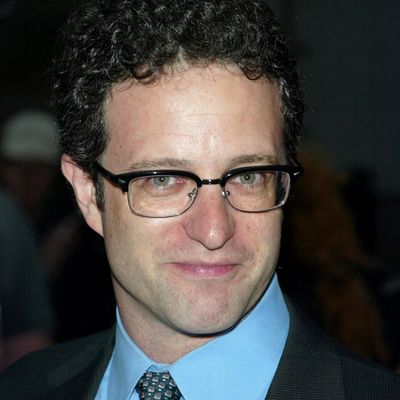
To start the new year we have the two-time Tony award-winning writer Greg Kotis over on the show!
He chats about his creative process with new shows, both plays and musicals, how he approaches character creation, and his award-winning musical Urinetown.
This was a wonderful conversation and I want to do a special shoutout to Stephanie Summerville, thanks to whom I was able to get Greg on the show!
Transcript
This transcript was automatically generated and might contain errors.
[0:00] Martín Acuña: Hi everyone. I am Martín Acuña and you are listening to Backstage Talk.
[0:18] Martín Acuña: Hello everyone. Welcome back to Backstage Talk. Today's guest is a two-time Tony Award-winning author of many plays and musicals, including the book and lyrics of Urinetown, I Am Nobody, The Truth About Santa, The Sting, Lunchtime, Give the People What They Want, and J.B. & Catherine. I have here with me Greg Kotis. His work has been produced and developed in theatres across the United States and across the world, including Actors Theatre in Louisville, American Conservatory Theatre, American Theatre Company, Henry Miller's Theatre on Broadway, the Manhattan Theatre Club, New York Stage and Film, and recently, IKADO in Mexico. So Greg, thank you so much for being in Backstage Talk. Welcome to the show.
[1:12] Greg Kotis: Thank you so much for having me. I'm so happy to be here with you.
[1:15] Martín Acuña: I am honored. So you are a landmark. You are like what a lot of people want to become, and that is a Tony Award author. So tell me a little bit of what made you choose the thespian path in life?
[1:36] Greg Kotis: Oh, well, I started as an actor, like almost many, many people in theatre who become producers and writers and composers and stage managers and, you know, all the other elements of theatre, many of them just through conversations with them, they begin as an actor, and then they find their path, just where they're, where they feel their strengths are and where their interests are. So I began as an actor, I started acting in high school just to meet people and have fun. And then the interest grew into something that I just wanted to do all the time. And I started working with companies in Chicago, where I began my pursuit of theatre as a career, working with companies that specialized in creating either ensemble-based pieces, which was my introduction to writing, or sort of short pieces that would be solo authored.
So anyway, I got a taste for writing with these smaller companies in Chicago. And then I, you know, the path for a lot of people in the United States is you could either stay in a smaller market, and Chicago is a pretty big market. I mean, that's, I don't know if that's the right word for it. Or you move to New York or Los Angeles, if you want to have a better chance of just earning your living through theatre. So then I moved to New York. And I also decided that I needed to teach myself how to write full-length plays. I wasn't thinking about musicals then. If that was, that was an agreement I made with myself is that I would learn how to write. So I didn't study playwriting. I didn't even study theatre.
I studied political science in college. And my thought was just, I'm going to write the plays that I want to write and hope for the best. And Urinetown turned out to be that project, which had a commercial life and allowed me to continue to write. So I feel very fortunate that lightning struck and I had that chance. And I think people in theatre probably know this, and in all creative endeavours, that your chances of earning your living just through your writing or acting, that's a really tough road. So I just feel very fortunate that I was lucky enough to have these years, after Urinetown, to have the income to write full-time, which is what I've been doing. That is great. And I love it. And yes, living off the arts is a very hard endeavour. It's an adventure, but it is a hard endeavour. So tell me a little bit about your journey in musical theatre.
[4:34] Greg Kotis: Well, I wasn't really, I mean, it was really accidental. I worked with a company in Chicago called Cardiff Giant. And one of the ensemble members in that company that I joined was Mark Holman, who's the composer and co-lyricist for Urinetown. So he moved, so he was, he was pursuing, he started as an actor like all of us, and then he realised that he wanted to be a composer. He moved to New York to become a composer, and I moved to New York two years afterwards. And I had this idea for Urinetown, and I pitched it to him, and neither of us were, you know, we had day jobs and we had nothing pressing, so we had time to do it. So since then, so we wrote it, and that took several years for it to go from the French Festival to Off-Broadway to Broadway.
And then we found, oh wow, we have a career all of a sudden. So since then, over the past 20 years, we have been writing musicals together. And usually what will happen is I'll have an idea and I'll pitch it to Mark, and if he likes it, if he responds, then I'll do work on it. I will write it out more or less as a play, and then we will spend a couple of years musicalising and developing and polishing it and then doing readings and then doing backwards auditions and trying to find life for the show. So that's sort of, that's our cycle, is that, you know, we're in the midst of working on something and then we, you know, for an actor, you audition, you can audition several times a year. For writers, for the writers that, like us, we have to spend a lot of time creating a piece and then we go about auditioning it for producers and for theatres.
So our gestation period is much slower, but that's essentially what it is. We write shows and then we try to get people to do them and we push that as hard as we can and then we move on to the next thing.
[6:40] Martín Acuña: I love it. And I want to double click on your writing process, since you just mentioned you and Mark, that is your right hand writing shows, have already stated and have a process going with writing new shows. But I'm guessing on your side, how do you start that approach to writing book and lyrics?
[7:10] Greg Kotis: Well, you know, the initial impulse for a play or a musical, it's mysterious, you know, it's the imagination and oftentimes it's, you know, crossing the street or you're on a walk or you're in the shower, you're doing the dishes and some notion comes, pops into your head. With Urinetown, it was an image of a little girl begging and I thought, oh, what is this, what is this image that I have? Sometimes it's a line of dialogue, sometimes it's just some notion or something that you read or some issue that you're, it could come from anywhere. And then the process for me is kind of to tease it out and maybe essentially to write some, I think there's someone who said, it might be Dorothy Parker or some famous writer said, she doesn't know what she thinks about something until she writes it down.
And that's sort of true for the playwriting or musical writing process, which is you have a notion, but you don't really know if the notion has any strength or is it rich enough to sustain two or two and a half hours of stage time. So I will just put the characters who I think might be part of the story in the same room and have them talk to each other. And that becomes a scene. And then if it's engaging, that will lead to other scenes and other characters and so on in the world of the story expands. So that's like the initial kind of process of starting a new show. And then once it's structured enough, so I try to get it as close to a well-structured play as I can. Then I bring that play to Mark and we read through it.
Sometimes we'll read the scenes, reading all the characters and we try to spot where the songs are. And this is called song spotting or trying to find lyric hooks for songs. So sometimes the lyric hook or the title, it's usually the same thing with a song, will be a line of dialogue, something that's what the character says or the idea underneath the scene. And then that's a year or two years of work where we look at each scene. And then usually Mark will go away and he'll come back with part of a song and say, is this what it is? And then we'll decide if that's it or not. And the song that he writes, then I will contribute to it as a lyricist because I can contribute what's happening in the story and what's happening in the mind of the characters.
And so then I begin collaborating with Mark on the lyrics. And that song probably will affect the path in some ways of the play. So then the play has to be rewritten to receive the song. And then it becomes a very organic process of developing what was a little loose into something tighter and tighter and tighter and more organically and narratively satisfying, hopefully. And I guess that's how we do it. We're in the midst of doing that right now. And another element for us, I mean, for the writers out there, is deadlines are really good. So we usually, when we feel we have something kind of maybe we could maybe kind of finish, we try to create or search for or ask for an opportunity of some kind of deadline, usually a reading, where there's someone waiting for what we have.
And the person waiting could be a director, it could be a cast, it could be, you know, it's sort of, it's a way of keeping ourselves honest. Because without a deadline, without the risk of public humiliation, like if the play sucks, if the musical sucks, everyone's going to know, you're going to know.
[11:57] Greg Kotis: Or what is your approach to character creation on both plays and musicals since you have different tools that it can use to express what is going on in their mind. Because in a straight play it has to be through dialogue in which you get to know the character. In musicals, it is through music and through songs that you can pick their brain easier, if you can say it somehow. So I just want to pick your brain about this part. Yeah, I mean, I guess it depends on the style and the tone of the piece that you're writing. But in a general sense, I think, or at least in the way that we approach it, the characters in a musical, they're a little bit more distilled down to sort of one pure want. Maybe in a straight play there's room for it to be a little bit more nuanced, at least in the way that we approach it.
I mean, I think there's plenty of musicals where there's all sorts of complexity. But I think knowing what the character wants is probably the biggest thing to settle on. And then also knowing what their biggest obstacle is. So like right now we are working on a space musical, and the heroine, the hero of the story is a young lieutenant who's very insecure, but she wants to fulfill her duty as a space soldier. So that's the tension, is she wants to succeed, she wants to do her duty and be a good soldier, but she doesn't believe in herself yet. So I guess that tension of the goal you're striving towards versus the obstacle that's keeping you from achieving it, that's like the key.
[14:01] Greg Kotis: And a lot of the writing strategies that I've settled on come from, so Mark and I both, the company that we were a part of was initially an improv company. So we started as improvisers, and what we were taught as improvisers is you want the characters in the scene to have skewed wants, which means you want to eat dinner, and I want to see a movie. So it's not that I don't want to eat dinner, you don't want a movie, but we have two wants and they're not quite the same. So the scene, if we're improvisers, is how do we reconcile these two wants so that they work together. So in the scene, what happens is that we bring the food into the movie theater and then something like that. It's just sort of off the top of my head.
So when I'm developing characters for a play or a musical, it's trying to understand what they want and then the story becomes how the characters bump up against each other because they're pursuing their own wants, not in spite of, but in tandem with what the other characters want. Obstructive wants would be like, I want to go to dinner, you don't want to go to dinner. And it doesn't give the scene, it's not as a propulsive place, it becomes an argument. So I think motivation, that's the thing to keep in mind. And with characters, I mean, it starts with really these primary color improvisational kind of details. So-and-so is a fireman. So-and-so is a fireman who has 20 children. He's a fireman who has 20 children and he has one arm, whatever.
It's like these details, these broad details that you just see how this character with some element of characteristics, broad characteristics, how that affects how they move through the world while they're pursuing the thing they want to pursue, which is this fireman, he wants to, you know, sing in the opera. So, you know, the scene becomes he's in class and he's being taught by a great virtuoso and together they learn that he has a great voice and he can sing any song that has to do with firefighting or something like that. So, that's sort of, that's my task, is to understand to the best degree that I can who the character is. And if, you know, when I hit a wall, when the script isn't working, when the play isn't working, and it's just stuck in soft sand, it usually has something to do with not really understanding the characters and what they want.
And that's when I will step back and I'll just think, wait a minute, what's going on here? Why is so-and-so doing this? Why is so-and-so expressing themselves in this way? And it's usually a combination of not really understanding what the characters want and also having an idea that this is a story that has to have this event happen. Like there has to be a birthday party or there has to be a wedding or there has to be, they have to arrive back home in a winter storm or something, whatever it is. And so if it often has to do with holding on to wanting an event, and sometimes it's because a song has been written and the song was written six months ago and it's like, we've got to keep the song, but it's not working anymore.
How can I make the story, when we talk about musicals, arrive at the song? And then usually, like right, like one thing that we, you know, Mark and I were talking, we're in the process of developing a new musical for a reading in February, and we have this great closing number, act one finale, and we just realized that the act one finale is great as a song, as a melody, as a musical event, but it doesn't really match what's going on in the story anymore. So we just had to cut it and write something new. And then when you do that, it's really difficult because it feels like you're throwing money out the window. But you usually realize, oh no, it's so good that we did this because we were able to liberate ourselves from feeling obligated to that piece of material. Now we have this other thing that's much more connected to what's going on in the story. So anyway, those are sort of hard lessons that we learned over time.
[19:07] Greg Kotis: I love it. I love it. All of it. I want to go back a little bit into You're in Town, which you won a Tony for. What was this show process like, from writing until taking it into a Broadway house? Well, I mean, the writing process was, it was the first time that I had written the book for a musical. So I didn't really know what it was at the notion of it. And it was the first time that I developed a musical with one other person. We had done something, we'd done a show with a whole ensemble before, but there was a different process. But it was exciting. And it was, you know, at the time, I was a new father, I had a toddler, and we were living in a tiny apartment in the East Village in New York.
And I had been trying to find my way towards some kind of writing career for 10, 14 years, something like that. And when we were working on the show, I kind of came to the decision that I don't think that's going to happen. I don't think I'm going to have that career. I've been working on it for a while, and it hasn't happened. So the deal I made with myself with You're in Town is I just want to write one more show, just to sort of say goodbye to this chapter in my life, and write the best show that we can and have fun with it and not have any commercial expectations, not have any professional expectations, to release myself from the ambition of having a career in theater. And so my idea was we would do it, we would find a place to do it, and declare it a victory, and then I would go and get a real job someplace, and I would stop wasting time writing.
So I think being in that headspace somehow liberated us enough so that we could write something that was authentic and true to our point of view, and something that turned out to be something new. So perversely, not having any particular commercial ambitions for the show apparently allowed us to write a show that did have all sorts of commercial possibility. We did the thing where we sent it around to theaters, we got lots of rejections. Our last chance was just to have it realized was to do it at the New York International Fringe Festival, which started in I think 1997, so we were in the second or third festival. Now it's been going on for 20-something years. So it was relatively easy to get in, and we self-produced it.
We just took money out of our savings account and spent money on it. We pulled a cast together, we did it, and it was good. The leaders of the festival, they encouraged us to get producers to come see it. So we did that, and producers came, and they liked it. So it took a couple of years from the Fringe Festival, which turned out to be the audition for that show, and this was my first commercial experience, so I didn't know what was going to happen. We found that they produced a backers audition, which brought in more producers, and they found a space for us to do it. The whole thing was thrilling because it's really wonderful to be part of a production that has a lot of producorial support.
[22:54] Greg Kotis: Where lots of the hundred thousand things that have to happen for a show to happen are taken care of and you can just concentrate on the writing. And then to meet seasoned, experienced Broadway musical theater performers, that was really exciting because, like, wow, they have unbelievable skills and they can bring the music and the show to life in ways that are amazing. And so the Off-Broadway event was great, completely fulfilling. And then they announced in the summer of, or the spring I guess, or the late summer of 2001 that we were going to move to Broadway. That was crazy. It was all, it was a very whirlwind and sort of like wow, I mean, it was, every day was a surprise. And the thing, you know, I mean the biggest, one of the clearest memories I have was sitting in the audience in the Broadway house.
It was Henry Miller's theater, which is not a huge theater Broadway-wise. I think it's like 800 something seats. So it's, but it was a bigger house than anything that I had ever done to be in, you know, to be working in. And I was just, what I was really scared of is I knew what it felt like for a show to fail in front of like 10 people or 20 people, or how a joke not to land in front of 10 or 20 people, or a song not to work in front of 10 or, so I understood what that felt like. And I just assumed, you know, sitting in the audience, sitting in the audience in the balcony, or in the mess room I guess, I could hear like that rumble of the audience of 800 people sort of selecting to watch the show.
And I was like, man, if it hurts this much for a show to bomb in front of a small house, this, this bombing in front of this kind of house is going to kill me. So I was bracing myself for that. And what I learned was bigger houses are great for comedy, because the chances that somebody's going to find what you're doing funny or effective, just statistically is higher. So all you need is one guy laughing off in the corner to indicate to the rest of the house, oh, that funny thing just happened. And it has a life. Anyway, so that's, that's something that I learned about bigger houses. It's like, you actually do better, the bigger the house, the better, because chances are, someone's going to dig what you're doing.
[25:41] Greg Kotis: I love it. I love it. Okay, what would be a piece of advice or pieces you would give to people that want to start adventuring into writing musicals? Well, I can't offer any sort of career management advice is it's, I'm not particularly good at it myself. I struggle with that. So that I can't answer. But just in terms of creatively, I would say, to develop a discipline in terms of how you work. So I have found that, like, here I have, like, here, I keep like this little diary. And I work in half hour chunks, I'll set a timer. And then I'll write. Yeah. And then when the timer is done, then I get to take a break, and I put a little checkmark. And then I can look at the end of the day, like, oh, I was very productive today.
So that was, that's like a little trick that I just, I find that to be a working writer, or production, I say productive writer, is number one, to choose to have a relationship with your imagination. You know, that's the thing to, it's more easily said than done, but to sort of clear a mental space and an actual physical time, or an actual time, when you're going to engage with your imagination, and that nothing else is going on except you being present and alert to what your imagination is telling you, you know, you watch children play, they don't need to be told to do this, they just do it. So I think with writing, it's the same thing. And the difference of being between being productive and not is that you're going to render it in a form that can be shared with somebody else, rendered in a form that you can consider and to shape and to build.
Just in terms of process, one writer that I really like, her name is Natalie Goldberg. And she wrote a book called Writing Down the Bones. And she says that the key or a key to having a healthy writing life is understanding that you can think of your imagination as a creative mind and a critical mind. And the creative mind is the mind that just kind of spews, just kind of, you know, blurt stuff out. And the critical mind is the one that shapes that blurt into a form that looks like a play or a musical or a song or lyric, etc. So the problem comes when they are too in conflict with each other. If you are second guessing everything that you write, if you are sort of crossing out the same sentence over and over and over again, you're not going to get anywhere.
So with these timed exercises, a half hour might be, it's just creative mind stuff. So what that means is, I will blank out my screen so I can't see what I've written. And then I'll write and I can't look back because I don't know what it is, I can't see it. And then the half hour, you know, usually it's very difficult at first and then you get to a sweet spot where you're very productive and then you get tired. And then the bell goes off and you can look at what you've done and the next half hour is shaping it and editing it. Anyway, so that's one piece of advice is to develop for yourself a discipline, a process, a schedule that works for you. So these are the tools that work for me, but you know, there's lots of them.
That's one thing you can do. You can join writers groups where this is about accountability, where you bring stuff in and you read other people and keep other people accountable. So this is a pact that you can have to find partners that you're simpatico with. That's also like the work of a lifetime. It's like usually, I mean, the people that I'm most connected to creatively are people that I met either in college or not, or in my 20s. And I'm in my 50s now. So if you're just beginning in your 20s, this is a time I think for finding your people. Finding people who laugh at what you laugh at, who are moved by what you're moved by. This is a time for, if you're a writer, to find directors who understand your work and can translate your work to actors.
It's a time for finding actors who can interpret your work. So it's basically kind of finding your club and deadlines. Mark and I spent years in Chicago putting shows on in found spaces, in garages, in basements, wherever. And we would just create something. This is when we were working with a broader group of people and let it be known that the show was happening. Invite people and they would come and you would do it. A piece of advice that I got from a teacher, a guest teacher, he said, don't go to theater school. Don't go to graduate school. Just get your work in front of people and the audience will teach you about your work better than a workshop or a panel. And I think that's kind of true.
It's like that is the, you know, getting your work in front of an audience of any kind is like everything easier said than done. But that's another thing. Just sort of get your work out there some way. And I do believe that work begets work and projects beget relationships and opportunities. And if you are able to, if you have the energy to, if you have the means to, then that's a path towards finding your voice, finding what, you know, it's funny. It's like, I can't, there's stuff that I so admire, humanist sort of grounded, wonderful, rich stuff. And I admire it so much as either a reader or an audience member, but I can't produce it. My imagination doesn't work that way for some reason. It's this broad sort of absurdist stuff where I come up with.
So anyway, that's what I would advise. And as far as like the career management stuff, I don't know. I'm no good at it. So someone else would probably be much smarter to ask about that. I love it. Thank you so much for all that great advice.
[32:19] Greg Kotis: Last question before we wrap up, which are your top favorite five musical theater shows? Oh, well, let's see. I love Sweeney Todd. That's a favorite. I loved Book of Mormon. I love West Side Story. I really have a soft spot for Annie. That's a four. I don't know. I mean, I'm not as well versed in musicals, honestly. Oklahoma, you know, like real classic stand-up I've come to really appreciate. I love it. I love it. Five great shows. Well, Greg, thank you so much for coming over. If someone wants to contact you to work with you to read what you're doing, where can people find you? Well, I have a website, which is gregcotes.com that kind of has stuff. I don't know if there's like a contact there. And I'm represented by a guy named Chris Till, who works for Verve Talent and Literary Agency. So he's someone that's a way of getting a hold of me. I'm on Facebook, but I'm not that active on Facebook.
[33:38] Martín Acuña: Well, that is great. Thank you so much for coming over. I have loved every single second of this conversation and I cannot wait to see where your current projects are going next. So thank you so much for coming over.
[33:50] Greg Kotis: It's my great pleasure. So great to talk to you.
[33:58] Martín Acuña: Thanks everyone for listening to this new episode of Backstage Talk. Remember to follow us on Facebook and Instagram at Backstage Talk Podcast.
© Broadway Podcast Network, All Rights Reserved