

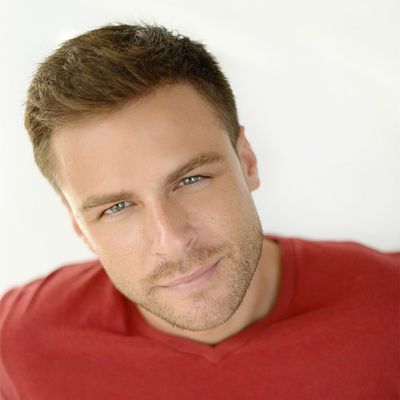
Eric Ulloa is one of the most talented human beings I have ever had the chance to talk to. 🤩 As he says: Latin excellence! 🌟 After his Broadway debut, he has embarked on writing and he is here to share his thoughts on Latinx representation and visibility on Broadway... Read More
From the show: Backstage Talk
Guests
Featured Shows
About
Eric Ulloa is one of the most talented human beings I have ever had the chance to talk to. 🤩 As he says: Latin excellence! 🌟
After his Broadway debut, he has embarked on writing and he is here to share his thoughts on Latinx representation and visibility on Broadway. 🔥
I am so happy to launch this season with him as the first guest! 💪🏻
Transcript
This transcript was automatically generated and might contain errors.
[0:00] Martín Acuña: Hi everyone, I am Martín Acuña and you are listening to Backstage Talk.
[0:16] Martín Acuña: Jonathan Larson asked how can you make someone take off and fly in one of his songs from Tick Tick Boom? And I, for the past two years, have learned one way to do it, through the power of community. Welcome to the Latinx in Musical Theatre special for Season 3 of Backstage Talk, where we will be featuring artists from across all positions in musical theatre, from several Latin American countries and different Latin heritages. I am proud to showcase my Latinx family. I hope you enjoy.
[0:51] Martín Acuña: Hello everyone, welcome back to another episode of Backstage Talk. Today's guest, I am super excited to introduce you to Eric Ulloa. He is a 2020 American Theatre Wing Jonathan Larson Grand Finalist and a 2020 Cleveland Prize Award Finalist. He is also the author of 26 Pebbles, which had its world premiere at the Human Race Theatre Company. This play was featured in American Theatre Magazine, The New York Times, and won the Kennedy Center Citizen Artist Award for 2017. This play, 26 Pebbles, was named one of the top 10 plays of 2017 and one of the top produced plays nationally during the year 2018. Eric is also the librettist of the musical Passing Through, which had its world premiere at Goodspeed Musicals in summer 2019.
He is also the writing assistant of Oscar winner Alex De Nellaris on the upcoming screen adaptation of Jekyll and Hyde, the musical. He also wrote Viva Broadway, Hear Our Voices Special, writing for Luminaries as Lin-Manuel Miranda, Antonio Banderas, Chita Rivera, and many more. He also, because he is a bag of wonders, is the author of the play Reindeer Sessions and is the co-creator of Meet the Alphabets for Nickelodeon Noggin. On the other side of the footlights, Eric was in the original Broadway company of On Your Feet, the story of Gloria and Emilio Estefan. And he also has appeared in the 2016 Tony Awards, the Macy's Thanksgiving Day Parade, and A Capital Fourth. Eric, thank you for being on Backstage Talk. I am super honored to have you over.
[2:40] Eric Ulloa: Oh my gosh, thank you for having me. It's always so embarrassing hearing your own bio. No matter how many times you hear it, you're like, your cheeks always get red. Thank you. But you've done a lot. I mean, you've been on stage, off stage, you write, you perform, you do a lot of things. So I want to ask you, what was your aha moment, or when did you choose the thespian path in life?
[3:04] Eric Ulloa: Oh goodness. Well, so to get to that, so I started off in life, I wanted to be a Disney animator my entire life as a kid. I wanted to animate for Disney. In fact, if you look at my school memories, little workbook that my parents kept and I would fill out every year, I think when I was in kindergarten, it said I wanted to be the President of the United States and an animator. You know, two likely career goals, they were hands in hand. Eventually, the presidency went away, and I wanted to be an animator for years. And then when I was around 13, 14, I took a course in animation, and kind of learned, I thought, I just walk into Disney because my drawing skills, and I'd walk in, and they'd be like, hey, you're in charge of creating the characters, you make the characters.
No, that's not how it works. You work for years and years and years on all like to make the character's arm move a little bit. This was back in the day of like hand-drawn animation. So, you know, a hundred drawings to make Ariel's arm, you know, come out once and I was like, oh no, I am not, that is not for me. I am not that kind of person. I am much more like an ideas guy, and I like to create, and the idea of just doing hundreds of drawings to make an arm move, I was like, no, I can't do this. So, at around 14, 15, I just had no idea what I wanted to do, and I was, don't listen kids, I was skipping class one day in high school. That's the unofficial story, but it's true, but something good came out of it, but don't skip class.
I was nervous I was going to get caught, and so I hid out in the back of the auditorium of my high school, and because they had all these, you know, tons of chairs, and if you're in the back, no one could see you. So, I was hiding out in the back because I was so scared I was going to get caught because I was trying to be a rebel, and I'm not, and I saw them rehearsing their spring musical, which was Little Abner. Little Abner is a show that's rarely done. It's an old 1950s musical comedy based on the famous comic strip from back in the day. I had never heard of theater, musical theater. What was this? You know, I come from a family of Cuban immigrants. We never went to the theater because it wasn't something that was in our sights or, you know, even when I was younger in our economic world, to be honest, and I was like, what is that?
I'm like, so I got a ticket that night and came back and saw the full show, and that was the aha moment. I was like, oh, not only do I want to do that, but very arrogantly, I was like, I can do that. I knew it, and I showed up weeks later to the audition for Fame, the play version, slash the musical. It was a hybrid, and I showed up, I'm not even joking, dressed in a denim shirt with a little bandana tied, just like Antonio Banderas in the Evita movie. Literally the costume, and I sang, oh, what a circus acapella, and the teacher was like, who are you and where have you been? And I just dove in because they created such an open gate for me, and I dove into theater. I just, I loved it, and everything else went to hell.
All I wanted to do, and I really learned that, more than anything, I've always said that I'm a storyteller, I'm a creative, and it was a new way of telling stories I didn't know existed. I love it. I absolutely love it. I mean, you went from badass or tried to want to be badass into a theater guy. I literally, like, outside, I had to skip fourth period, and then I saw, like, a security car drive by, and I went running, running to the back of the auditorium and hiding. What a rebel.
[6:55] Martín Acuña: Yeah, I love it, I love it. So, you started in high school, your journey in musical theater started in high school, and how did you get to Broadway and into writing musical theater?
[7:11] Eric Ulloa: Oh, gosh. So, I went to college at the University of Central Florida, and, you know, people, I often get asked a lot, you know, is college a necessity for performing? And I always tell my story, which, for me, it was. I started very late. I did not start musical theater until I was 16, you know, almost 17, so I only had a little bit under my belt. I was able to, kind of, learn more about what I did and refine my craft those four years. Also, you know, you had an opportunity to audition and maybe be in a, you know, a show per semester, and I was very fortunate. And from my freshman year on, I was in a show every semester, so I had every, you know, six months, whatever, a chance to be in a full production, more stage experience, more, you know, experience just on all, and then in classes on mechanics and acting and voice, you know, studio and everything.
But I also love more than anything, and I think it's a big thing that I always try to tell a lot of students and people in the theater and wanting to be in the theater is that what I learned was the history. And I, to this day, can tell you the most random facts about musical theater history, but they're important because they kind of, they taught me about the fabric of what I was wrapping myself in, you know. And it, the more and more I learned about it, the more and more I don't, I was like, I don't want to just wrap myself in this fabric. I want to be in the fabric. I want to, like, get in there and, like, be a part of this tapestry and create stuff. My senior year, I took an advanced directing class that, like, you had directing class you would take, and then some students that wanted to do it based on the recommendation of the teacher could then be considered for the advanced directing class, which had, like, seven, six students a year, and I was chosen as one.
My professor, Mark Brotherton, who passed away last year, but he was a huge influence on me. He taught me about what I always say. When you're an actor, you always, and not everyone, but most actors focus on looking out from the proscenium, and when you step outside of that, you realize how much is around you in the proscenium. You see the full picture. In fact, whenever I'm on a show of mine and we're doing tech and I see actors that are sitting around talking backstage, I go, get out to the house. Get out there and take a look at the world you live in. Like, take a look at the full picture so that later on when you're sitting upstage and you think you're sitting in the darkness, you're not sitting in the darkness.
There's an amazing light happening on you that's telling a story beyond what you may know. So I try to get them to see the full picture of things, and that's where I started learning the full picture of things. I'm going to go real quick so I don't bore your audiences, but I got to New York. I was very fortunate. One of my first jobs, I came to New York to audition, to meet an agent that was interested in me in college, forgive me, and she sent me out on an audition, was like, you're never going to, you'll never book this, but just go and I want to see how you do. I booked it. And two weeks later, I moved to New York with this huge production of Follies to be in for Sondheim's 75th. I got my equity card right away.
I got my agents right away, a big agency. I met Stephen Sondheim and started what was a nice friendship. I had my first review in the New York Times by Brent Bradley. So really, we jumped into the deep end. There was no kiddie pool to start with, but it was very exciting. It started my career very well. And then to get to the writing comes the part where my career just went and like just stopped. I had a really bad breakup and through it, because it was one of those, everyone has that moment where all your self-confidence goes out the window. And this was this moment and I, my agents would call me, I would be like, what is happening to you? You know, people are calling and saying like.
[11:17] Eric Ulloa: Thank you so much for having me. I'm really excited to be here and to kick off this new season with you.
[11:47] Eric Ulloa: You know, I think it's important to talk about Latinx representation in the arts, especially on Broadway. It's something that has been a long time coming, and I feel like we're finally starting to see some progress.
[12:17] Eric Ulloa: When I made my Broadway debut, it was a surreal experience. I remember stepping onto that stage and feeling the energy of the audience. It was a moment I had dreamed of for so long, and to be able to share that with my family and community was incredibly special.
[12:45] Eric Ulloa: Writing has become a huge part of my journey since then. I’ve been exploring stories that resonate with my background and experiences, and I think it's crucial to bring those narratives to the forefront.
[13:13] Eric Ulloa: The visibility of Latinx artists on Broadway is essential not just for representation, but for the richness it brings to the storytelling. We have so many diverse voices and experiences that can enhance the narratives we tell.
[13:43] Eric Ulloa: I believe that when we see ourselves represented on stage, it empowers us and inspires the next generation of artists. It shows them that they too can achieve their dreams.
[14:11] Eric Ulloa: There’s a unique beauty in our stories, and I think it’s time for the industry to embrace that fully. We need to continue pushing for more opportunities and platforms for Latinx artists.
[14:39] Eric Ulloa: I’ve been fortunate to work with some incredible people who share this vision. Collaboration is key, and I think we can create something truly special when we come together.
[15:07] Eric Ulloa: The conversations around representation are evolving, and I’m hopeful for the future. I think we’re at a pivotal moment where change is not just possible, but necessary.
[15:35] Eric Ulloa: It's about creating a space where everyone feels seen and heard. That’s what I strive for in my work, and I hope to inspire others to do the same.
[16:03] Eric Ulloa: I also think it’s important to acknowledge the challenges we face. The industry has a long way to go, but every step forward counts.
[16:31] Eric Ulloa: I’m excited to see more Latinx stories being told and more artists being given the chance to shine. It’s a journey, and I’m grateful to be a part of it.
[16:59] Eric Ulloa: As we move forward, I hope we can continue to uplift each other and advocate for more inclusive practices in the industry.
[17:09] Eric Ulloa: It’s not just about representation on stage; it’s about creating a culture that values diversity in all aspects of production.
[17:19] Eric Ulloa: I think we’re starting to see a shift in how stories are being told, and that gives me hope for the future of Broadway.
[17:39] Eric Ulloa: I’m really passionate about mentoring young artists and helping them navigate their paths. It’s important to give back to the community that has supported me.
[17:49] Eric Ulloa: I want to encourage them to be bold and to tell their stories authentically. That’s how we create lasting change.
[17:59] Eric Ulloa: The arts have the power to connect us, to challenge us, and to inspire us. I believe in the transformative nature of storytelling.
[18:09] Eric Ulloa: I’m looking forward to what’s next, both for myself and for the Latinx community in the arts. Together, we can make a difference.
[18:19] Eric Ulloa: Thank you for having me on this journey. It’s an honor to share my thoughts and experiences with you.
[18:47] Eric Ulloa: Let’s keep the conversation going and continue to push for more representation and visibility in all areas of the industry.
[19:15] Eric Ulloa: I’m excited to see what the future holds for Latinx artists on Broadway and beyond.
[19:43] Eric Ulloa: It’s a thrilling time to be a part of this community, and I’m grateful for the opportunity to contribute to it.
[20:11] Eric Ulloa: Thank you for being such a supportive platform for these discussions. It’s vital that we keep amplifying these voices.
[20:39] Eric Ulloa: I hope that our conversation today inspires others to join in and advocate for change.
[21:07] Eric Ulloa: Together, we can create a more inclusive and vibrant arts community that reflects the diversity of our world.
[21:35] Eric Ulloa: I’m looking forward to seeing how we can all work together to make that happen.
[22:03] Eric Ulloa: Thank you again for having me. I’m excited for what’s to come!
[22:34] Eric Ulloa: Being a Cuban, God knows when I was 13 years old, my beeper, I'm aging myself, I'll be 40 in a month, my beeper case had a giant Cuban flag on it at 13. And my last name's Ulloa. You can't really escape that. Yes, my name is Eric Michael, but Ulloa, not really passing, no matter how I look. Ulloa is Ulloa. So I've always been very proud of it. I've always kept it deep. I think, you know, we are Latins, when they come here, especially immigrants trying to make it, they're taught to assimilate. And so a lot of assimilation happened in my family, you know, moving from Miami to Fort Lauderdale. I used to joke that I've been to two or three quinceañeras. I've been to 34 bar and bat mitzvahs. If we're going by what I've been around, I am more Jewish than Cuban in my childhood.
So it's been a journey. And then it was when I was in On Your Feet that I really got the full breadth of not only being proud of who I am, but to be loud and proud of who I am and to make sure that I accept nothing less and that beyond me, because I have an inherent privilege of, I think, you know, being white presenting. People meet me and they assume, like I always say, from like Nebraska, and I'm not. I'm from Miami. I'm, you know, I'm from, I'm as Cuban as they get. But because of that, I know the privilege I have to be able to, my, it's, that show struck with me a chord in wanting to put forward the agenda we all seek, which is more representation, fighting for more access, fighting for more opportunity, and that as someone that can weep in and out of the cracks of this business, that can really suck at times, to fight hard and fight passionately for my community.
So to me, representation, you know, it means it's an ongoing journey. And every day it changes more and more. I become more and more vocal about it. And I stomach less and less bullshit about it. And people try to make excuses or, don't you see what I got? No, I see nothing. I see, I see minimal happening. That's what I see. And I expect more and I, and I demand more. So that's what happens. It's a growing journey.
[25:00] Martín Acuña: And how do you think that we can increase Latin visibility and representation specifically on Broadway?
[25:04] Eric Ulloa: Um, well, we have to, well, we need to open, we need to open up. And what I don't see, and this, what I don't see is a lot of Latin producers. I do, I mean, like, no, I can't, I can't think about the top of my head. I'm sure there has to be one or two, you know, and when I say producer, I mean, the lead producer category, like what we would think of as the gatekeepers, the ones that are on that magical list, like at the theater, you know, that, um, I want to see more Latin casting directors because look, we know our own communities, you know, unfortunately, I think a lot of times we have casting directors who are wonderful to our community, but they know 16 of us and there are 600 of us, you know what I'm saying?
Like there's so many more. Um, I, you know, we need to allow for, uh, uh, writers, uh, creators, choreographers, directors to have the, the, you know, the opportunity to create on these stages. You know, I put out that video with, um, Roberto, you know, with, uh, uh, the video, and it was all about the idea that on the last, you know, on the last check-in with, you know, I think it was 2018, 19 season on Broadway, there was, you know, of new shows, zero Latin choreographers, zero Latin writers, one, one, not percentage, one, you know, Latin director. Um, like if the numbers were all like below 5%, even performing things, and I was like, how is this possible? We are the largest growing minority.
We are 20% of this country. How is that possible? You know, and yet, and, and also for producers and the higher ups and the powers that be to know that please do not ask us to like write and create for Broadway and then expect us, like I always say, they always want the musical. We don't all write, you know, um, there, you know, a perfect example, the best play award wasn't, it was the inheritance, you know, and inherently in many ways, white story about it, about the, the, the, you know, the AIDS epidemic and the generation that followed and what was left for us. But inherently because Matthew was a Latin writer, it is a Latin play. It has themes of community, family, um, uh, uh, minority struggles.
Those are all things that come from his experience. You know, his freaking aunt is Priscilla Lopez. You don't get much more Latin pedigree than that. But I think, and that's a two part thing, you know, the powers that be need to see us and know that we can write anything we want, that that is a Latin show, but also our community. And, you know, I, I, for all the love that I give to our community, I have to chastise us a bit. We have to be more vocal about these things. I saw very few people celebrating Matthew's win for best play and we made history. It's the first time a Latin playwright won best play. We got to check one more box on that Tony thing that we, you know, for, for Latins. And, you know, we have to be loud and proud about these things and put it out there.
You see on my Twitter, I always try to repost Latin excellence and just showcase people that are doing great things because we should be doing that. Not just for ourselves. It's not about just us. If it's only about your own career, it's not enough. Like raise up your friends, make sure people know that Latins are all around us doing amazing things. And I think in our own community, we have to do that for others, not just for ourselves. It can't just be self-promotion or you're not doing the work.
[28:36] Martín Acuña: Yeah, I agree with you. We have to absolutely be more vocal and raise up our community.
[28:42] Eric Ulloa: Yes. No one else is going to do it. No one else is going to do it. Exactly. Exactly. So now that you mentioned that traditionally Broadway people expect a specific type of Latin show, like you just mentioned, they want this carnaval, they want this wepa, they want all of this that stereotypically is Latin. And it is, yes, it is part of us, but it's not the only thing we have to offer. What is the most important part for you when you are writing or performing Latin characters, when you are creating them?
[29:19] Eric Ulloa: I think the essence, that to me is always an important thing, is the essence of Latin, the Latin people, the Latin community. What's the, you know, what's the essence of it? You know, family is very important, community is very important, culture, music, food, God help us all, food, number one, as I'm sitting here like on a full stomach from last night's family gathering, food. You know, I think it's just those core principles, I know, you know, the honesty of what our community is. I don't think, you know, there's room for all and there should be room for all because I do think like, if somebody thinks that we're going to all of a sudden go from zero representation to getting to the right place about whatever overnight, just that, no, there's got to be room.
You know, Lin-Manuel has done a beautiful job of allowing the, of showcasing us in many different forms. For In the Heights, which is very much like, you know, like it has, it is fully a Latino story, then we have Hamilton, which has essence of that in there somewhat and in the way it's cast and the diversity of the story, but it's not inherently a Latin story, but it is a Latin story because a Latin person wrote it, so it is inherently has all that in there. For every, you know, encanto, we have tic-tic-boom. Yeah, you know, again, all the things, you know, in tic-tic-boom, there are inherently Latin themes in there because the creator wrote it, you can feel it, if you're a Latin person, you feel it, you can tell.
So, I think just, you know, if we keep on going about things with the essence of who we are, what we represent, and where our hearts lie, then it is essentially, you're building a true Latin representation and character in writing.
[31:11] Martín Acuña: I love it. Eric, thank you so much. I have loved every single second of this conversation.
[31:18] Eric Ulloa: Oh, yeah, my pleasure. I have two last questions. First, where can people find you if they want to work with you, collaborate with you, see if you can end up being a writing partner, where can they find you?
[31:31] Eric Ulloa: Yeah, I'm actually, I'm very good at social media. You can vouch for it. You can find me on Instagram at The Ulloa, T-H-E-U-L-L-O-A, and then on Twitter, somebody had my name randomly, so it's The Ulloa 2, so T-H-E-U-L-L-O-A 2 on Twitter.
[31:50] Martín Acuña: I love it. And final question, what's your top five favorite musical theater shows?
[31:59] Eric Ulloa: Oh my goodness, how dare you, Sophie's Choice Me. Okay, I'm going to comment it from a writing perspective, shows that I think stand the test of time because they're written beautifully. Number one, always, Fiddler on the Roof. Perfect show, perfect show. You can't screw it up. Now, Out of Order, Gypsy, Cabaret, A Little Night Music, random, random throw in there, and I got to tell you, I think maybe Ragtime. I think this is a recent thing. The more and more I listen to Ragtime, I go, damn, that is a damn well-constructed show.
[32:50] Martín Acuña: Yeah. Sometimes those lines, Terrence McNally's lines will catch you off guard.
[32:57] Eric Ulloa: Yeah, absolutely. Eric, thank you so much for being part of the Latins in Musical Theater special here at Backstage Talk. It's been an honor. You know how much I appreciate you, and I cannot wait to see where you are going next.
[33:12] Eric Ulloa: Thank you. I look forward to more and more, and with it, creating opportunities for more Latin artists to come along the journey. That's the most important thing. We have to always keep a hand down and pull people up.
[33:29] Martín Acuña: Thanks, everyone, for listening to this new episode of Backstage Talk. Remember to follow us on Facebook and Instagram at Backstage Talk Podcast.
© Broadway Podcast Network, All Rights Reserved