

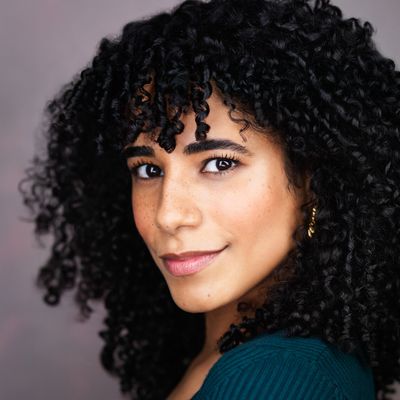
This Latina queen is here to share her journey from her beginnings in Panamá through her Hollywood movie debut and Broadway debut! 🤩 Ilda Mason, a stunning musical theatre performer, also shares what representation and visibility have meant in her career... Read More
From the show: Backstage Talk
Guests
Featured Shows

About
This Latina queen is here to share her journey from her beginnings in Panamá through her Hollywood movie debut and Broadway debut! 🤩
Ilda Mason, a stunning musical theatre performer, also shares what representation and visibility have meant in her career. 💪🏻
Her experiences on Beauty and the Beast, several productions of West Side Story, and Legally Blonde, make Ilda be a Latin icon in this industry. 🔥
Follow Ilda on her Instagram and Twitter to know more about her work.
If you want to know more about our host, please visit his website! Feel free to reach out with feedback or if you want to be part of Backstage Talk!
Follow us on Social Media:
Transcript
This transcript was automatically generated and might contain errors.
[0:00] Martín Acuña: Hi everyone, I am Martín Acuña and you are listening to Backstage Talk.
[0:16] Martín Acuña: Jonathan Larson asked how can you make someone take off and fly in one of his songs from Tick Tick Boom, and I for the past two years have learned one way to do it, through the power of community. Welcome to the Latinx in Musical Theatre special for Season 3 of Backstage Talk, where we will be featuring artists from across all positions in musical theatre, from several Latin American countries and different Latin heritages. I am proud to showcase my Latinx family. I hope you enjoy.
[0:51] Martín Acuña: Hello everyone, welcome back to another episode of Backstage Talk. Today's guest is a native of Panama. Ilda Mason is an actress currently based in New York City. She made her feature film debut as Luz in Steven Spielberg's West Side Story. Her acting career began in Panama on theatre productions such as Peter Pan, A Chorus Line, and Hello Dolly, among others. She also won Panama's Dancing with the Stars second season, and after earning her bachelor's degree in structural architecture, Ilda moved to New York City to fulfill her passion for acting. Her favorite musical is West Side Story, which she has had the joy of being part of four times, her latest while making her Broadway debut in the 2020 revival. Ilda, I am super happy, super honored, starstruck, nervous, and super excited to have you here in Backstage Talk. Welcome to the show.
[1:55] Ilda Mason: Thank you. Oh my god, you're so beautiful. Do not be nervous. I am so happy. So, everything, so starstruck to be talking with you today. So thank you for having me.
[2:06] Martín Acuña: Thank you so much. I just read a little bit about your bio, and you started your acting career in Panama with a couple of productions there, but I want to go a little bit back from that moment and ask you, what made you choose the thespian path in life?
[2:28] Ilda Mason: Well, I would say it started when I was in high school. I was in, I think it was 9th or 10th grade, and we did our first, I did my first ever professional, like, theater gig. One of my mom's friends, may she rest in peace, she was one of the biggest, like, I don't know, like, theater actresses in Panama, and she was doing a production, and she needed someone to play a teen, and she asked my mom if I, you know, and she was like, yeah, I think she would like to do it. So, the play was called Mother-in-law Wanted, mute, deaf, and blind. So that was the first ever professional thing that I did in Panama, and at the same time, one of our seniors in high school decided that he wanted to direct, produce everything, a musical, and it was Grease.
Now, our high school did not have a theater, like, a theater program or anything, so this was huge, and I got cast in it, and it was Grease, and I fell in love with it. I just, that year, I realized how much I loved the stage, and wait, dancing, acting, and singing, and it's not because I was, like, amazing at all those three things. I remember being, like, oh, I don't know if I can sing this properly, but I will never forget, one of my favorite teachers, he taught logic. He was, like, very serious, very serious man, and after he saw the play, he came to class one day, and he was like, Ilda, I would like to congratulate you on your acting. It was superb, and I was like, oh my god, you know what I thought?
I was like, oh, so then maybe I didn't sing well, but, like, that was my first acting review. I had not thought about that in a long time. Now that I'm saying this, I'm like, wow, that's what he said, that he was, like, he enjoyed my acting in Grease, like, and that, you know, like, I, since then, I just knew that I wanted to do this professionally. I, that, and, like, acting for film and TV, and I've always had this very, like, I don't know, visceral experience when going to the movie theaters and just watching the trailers. Like, I get goosebumps. I'm not joking. It's, like, an experience going to the movies. Just, I feel so inspired, but that's how it all started, like, in high school with, like, Grease and Mother-in-Law Wanted.
[5:25] Martín Acuña: I love it. I love it. So tell us a little bit more about your journey in musical theater from those productions back in Panama all the way to West Side Story, the movie, and then West Side Story as your Broadway debut because you worked with a friend of mine, so shameless plug, shameless shout out to my dear friend Kris Luner, who was one of the production managers of this show that unfortunately was shut down due to COVID, but tell us, Ilda, about all that journey from Panama to Broadway.
[6:01] Ilda Mason: Wow. Wow. So I, like I said just now, I was, like, I knew that I wanted to study this, right? I wanted to go abroad. I wanted to do it, and my mom jokingly once said, like, oh, no, please don't leave me. Just, like, once jokingly, and I took that as a sign, and I thought, well, maybe I should, you know, study something as a plan B because this is a hard career. You know, I've never watched the show Smash because I did not want to get scared at what the industry would be like. That's how much I was, like, I know this is going to be tough. I, you know, so I stayed in Panama for four years, studied, graduated from structural architecture, but I honestly believe that everything happens for a reason because those four years in Panama and the work that I did there was what allowed me to then stay here in the United States and work professionally, but before that, I was able to then, like, so I graduated high school, and the very first show that, like, professional musical theater production that I was able to audition for and got cast in was Beauty and the Beast, and I, that was out of this world.
I got callbacks for Belle, which was huge, huge, huge, huge, and not because, like, oh, yes, you get to be the lead, like, or you're being considered for the lead, but because it was the first time that I was just, you know, no one knew me, and that's one of my favorite things about auditioning here is that, like, you know, people, you go into an audition room with a blank canvas. They don't know. You get to show them. I am digressing. I am so sorry, but, blah, so long story short, got cast. Beauty and the Beast was my first musical. I was starstruck and in awe of everyone involved in the production. It was, like, the biggest, most talented actors, actresses in Panama, and I just was so, like, wow, I get to be a part of this. I was eventually cast as an ensemble member, and I was a fork, so that was amazing.
[8:24] Ilda Mason: So, after that, I got to do other productions, like, I got to do, like, Hello, Dolly! and Peter Pan. I mean, that was later when I got to actually play Peter Pan. That was amazing to get to fly, did Legally Blonde. It was a chorus line. That was so incredible. Like, I just remember, like, my theater experience in Panama was mostly just feeling in awe of everyone around me. Then I feel like that's still the case, that fills me with such, I don't know, like, such joy, such inspiration, constantly. I love being in awe of people, and it doesn't need to be, like, oh, this is someone, like, huge, like, Steven Spielberg, you know? It's like, yeah, it's very easy to be in awe of this man, but I feel that same awe with peers and with people that I just, like, see that are special and that have changed my life in ways that they don't even know, but I don't know.
I've just learned a bit from everyone along the way. Then I got to move here, studied two years of acting for film, musical theater and acting for film, and then I got to, very fortunately, my first professional job in the United States was West Side Story at Signature Theater, and again, I felt that that, I mean, first of all, West Side Story, wow, wow, masterpiece, and the people that I was on stage with, like, it was people that had been on Broadway, and there were these, like, I couldn't believe it, and I just felt exactly what I just said, like, in awe, starstruck, and just absorbing everything that I could. I was, I felt so, I don't know, like, incredible because I was also able to, I had this feeling of awe, and, you know, what I just said, but I was also very welcomed, and I felt very, I felt like I mattered because I was the one Latina in that place.
[10:37] Ilda Mason: I was the only person who spoke Spanish, so my point of view was listened to, and I was consulted about some words, accents, names, and stuff like that.
[10:49] So it was so incredible to come all the way from Panama, my first job, to be like, yes, we want your point of view.
[10:59] That to me, my God, that to me is like gold. We want to know about your culture, about your experience. My God.
[11:11] And then I got to tour. I went on tour with Cinderella. I got to go on international tour with Legally Blonde in China.
[11:21] Then I did On Your Feet, the Emilia and Gloria Estefan musical. And then I got cast in the movie.
[11:29] I mean, it sounds so easy. Now that I say like this, like, and then da-da-da-da-da-da-da, obviously.
[11:34] But it's not. It's not. Yeah.
[11:37] But it's not. In between these projects, I think this is very important to mention because it's so easy to then just fall into like, well, that sounds successful.
[11:46] That sounds like an easy ABC way to, you know, to get to be in this production like that.
[11:56] But it takes, you know, many auditions that go nowhere. Many auditions that like almost get there.
[12:04] Auditions that I just flopped. Projects that, you know, periods in which I was not working.
[12:11] I worked as a server, as a waitress in three restaurants while I was, you know, still like I didn't have any savings because I had just gotten here.
[12:19] Like, it's a whole thing. I just wanted to say that. Disclaimer, it is not like.
[12:24] And then I did this. And exactly right after the next day, I did this.
[12:28] The only thing that worked kind of like that was after doing the movie.
[12:33] OK, so, yeah. So did the movie again. Sounds so short.
[12:36] Boom. Even getting the movie was a whole year plus journey.
[12:44] But after we finished shooting the movie, a month later, we started rehearsals for Broadway, which is a West Side Story revival.
[12:54] Yeah. For the West Side Story revival. Thank you. Yes. Which is that was that period of time.
[12:59] That was 2019, 2020. It was just I was like floating in heaven.
[13:04] And I was like, yes, I felt so powerful. And then COVID hit.
[13:10] But everything I know, everything happens for a reason. All those things I did in Panama, I needed for my O-1 visa, for my legal permit to be here and actually work.
[13:20] It took so long to go from like my first professional job here to finally get my equity card to then be able to do a Broadway tour, be on Broadway, to get my green card because I've done those projects, to then be able to be in a movie because I have a green card.
[13:36] Like it's a journey, but it's doable. You can do it. Yes, you can. If I did, you can too.
[13:44] I love it. I want to ask you for your approach to characters and performing in musical theater.
[13:55] Ilda Mason: I think my answer is not going to be as fancy as someone else's might be because most of I have had the opportunity to create characters like Luz in Peter Pan and Pilar in Legally Blonde.
[14:11] However, I would say the majority of my roles have been as an ensemble member in which then you don't have a lot of lines or you're just creating a character out of like almost thin air, which is also really fun.
[14:27] So I have to say that I enjoy creating my characters based off their physicality and how they enter and how my character interacts with other characters on stage, like creating those relationships to then just organically be and just play on stage.
[14:49] One of the things that I enjoyed, I think the most was in Cinderella, in Princess Given-a-Ball, there's a whole village, right? And I was assigned, they were like, I will never forget this.
[15:05] It was like the first day and they were assigning like, okay, so that person, you're going to carry the flowers. Da-da-da, you're going to have the basket with bread. You are going to be with the fabrics. Ilda, you're going to have the fish. And I'm like, okay, what?
[15:21] So I literally had like, you can imagine like baskets and like things with like bread, food and textiles. And there I am literally like a stick that I have to like carry. And from the ends of it are fish. Right.
[15:50] And I made a whole thing about it. Like it was a whole thing. I, because it was just like ad-libbing. I got to like play around and I was like, fish, buy fish. And according to the day of the week, I would sell a different fish.
[16:17] So for Friday was flounder. For, there was Mahi Mahi Monday. Tuna Tuesday.
[16:18] I love it.
[16:35] Yeah, I love it.
[16:37] Ilda Mason: I don't remember Wednesday. But yeah, or it was tuna Thursday. It was like a whole thing. It was a whole thing to the point that like, it was a thing. Like, and people on stage were having fun with it because it was so silly.
[16:37] I love it. And what advice would you tell a younger version of Ilda?
[16:57] This question is so big because I feel like I have it as a mantra. A mantra is something that I wouldn't just say to young Ilda, but Ilda today. And it's very simple, but at the same time, a little difficult to do. It is to not try to be like someone else. That is the easy way to say it.
[17:18] Yeah.
[17:20] What I mean is to be yourself like unapologetically to be fully, full out yourself.
[17:34] Because it's so easy to fall into comparisons into, well, I want to sing like that person. I want to dance like that person. I want to act like this person. I want to sound like, and then it's like, you just end up being a washed down version of yourself because you're trying to be like someone else.
[17:51] I think there's a really, and I call it like magic. Like it's a, there's something inside of us that makes, that we are unique and that should be exploited. That should be celebrated.
[18:04] I think that's what also like that sparkle, that's what then draws people in, what draws audience members in, casting, like directors, you know, people behind the table in those rooms. Like, oh, there's something here. I don't know what it is, but I like this person. And it's just you. It's just you.
[18:27] And I say that it's hard because, of course, like I said, I admire a lot of people and I aspire to be, you know, I have my goals and dreams and aspirations. And it's hard sometimes to then not like, well, I should be like that to do that. But it's not the case.
[18:49] It's very, it's very important to know that each of us has, like, we are all on different journeys. It's, it sounds so simple, but it sometimes isn't. So that's something that I would tell Ilda, you know, when I was, I don't know, when I got here, eight, nine years ago, oh God, nine years ago.
[19:13] And then I was in school and I was just trying to like, well, to sound like this person. And I think that was definitely not helpful. Now I see, looking back, how I did not enjoy just how I sounded in what I could do and what I wanted to do.
[19:31] You know, that's also a big thing to not be like, well, this person sounds great and doing that. So I, well, do I enjoy doing that? Like the easiest thing for me to translate is like, for example, tap. I am not a tapper. I cannot tap to save my life. But it's like, I admire people who tap. However, I'm like, well, do I want to be the best tap dancer? No. Do I enjoy it? No, like it's no, I don't.
[19:59] So, but it's a, an incredible skill. But I, that's just not me. Done. And I feel like that with a lot of things in a lot of things in our lives.
[20:13] Yeah, I agree. I loved that you mentioned earlier about your experience in one of the West Side productions in which since you, they reached out to you to have consultations about Latin culture and pronunciation and names and all of that.
[20:32] I want to now turn gears into Latinx in musical theatre and ask you, what is visibility and representation for you? Because for me, it's just so important to know that part of your story that you were reached out to be a consultant and to really understand how Latins are, how we are.
[20:56] Yeah, that is, that is actually huge, huge, huge, huge. Visibility and representation is, I cannot even emphasize just how important it is and how much it means.
[21:11] Ilda Mason: To me, because I feel like to all of us, even the people who do not even like, like, I know that we talk about it a lot because we are like part of this world, you know, but it's so easy to sometimes like, well, you see what you see on TV and that is and that's what it is. Boom. But we know the truth and we know how, how big of a range, how, how different, how rich our culture, our people are. And it's so, so, so important that we see it on stage, on film, in film and TV because it allows one, the world to actually see and change the stereotypes of what it is to be Latinx. And for us to see what is possible, we can start just believing, oh, I can actually do that too. I can play those roles.
I am not just limited to being, insert here, whichever stereotypical Latinx character you want to insert, you know, it's, it's so, so important. It really does, I think, shape culture and society, like not even just the people who are in the theater, who want to do theater or arts, but the world. There's a, there, we need to see more Latinx characters. We need to see that, yeah, we just need it. Period. And how do you think we can increase that Latinx visibility and representation on Broadway and on Hollywood since you've had the experience on both?
[23:06] Ilda Mason: Well, I think it first takes guts from the people in charge, you know, because for example, West Side Story, the movie, the remake, I, I had like, I have pages upon pages on my journal of how I was like begging the universe, like, please let me do this. I want to be able to, to play my story, you know? And it, it was up to them to be like, yes, we're actually going to cast someone who has lived this experience, who speaks this language, who, et cetera, et cetera, et cetera. That's the first thing. It, it needs to, it kind of has to come from the people who are creating the projects. And it doesn't only have, only have to be like in great, like huge scale, like let's say this massive movie, but depends on like the people who are creating the stories to include these characters, it, to, to create these, these opportunities.
And that goes also for us as performers to then also help in that too. Okay. It doesn't exist. Well, then maybe I can create that character. Maybe I can create that story. I can, and it's a lot of work. It definitely, it takes a lot of work from everyone involved, but I think it's, it's just starting like it. Yeah. It's definitely getting, it's baby steps, but it is. We're going to get there. Yes. We're going to get there. Yeah. Definitely. I believe so.
[24:55] Ilda Mason: And for you, what is the most important part of creating these Latin characters in musical theater? I think the most important thing is that these characters are not caricatures, that they're real people, you know, that these characters are actual real people. It's, I saw a musical in which there was this one distinct, yes, it was a comedy, but it was a distinct caricature of a Latina that I was, that I actually even found offensive. Not only was the character interpreted by a white woman, it was like, the accent was all wrong. It was just all wrong because you know that it was just a stereotype. It was like, well, everyone from Latin America should sound like this. No, it's like, well, no, no. That's something that like, unless you have someone who, unless you take the time, effort, do the research, do the work of like, okay, who does know what this character would sound like, what this character would say, how they would dress, how they would, you know, even with the West Side, this masterpiece, it took time to get it right and a lot of effort from the team of Steven Spielberg, Tony Kushner, Chrissy McCoskell, everyone doing the story to create this movie, this remake as the most truthful version of this story that it could be in every single way.
And whenever I hear the original and I hear at the end of America, ole, I'm like, and why are we saying ole? Why? Because that's a Spanish thing. Why? Okay. That's what I'm going to say about that. But that is just, you know, that was 64 years ago. That's okay. But what I mean, not okay, but like, now we are able to have these voices. Just the fact that you're asking me this question is huge. It's allowing my point of view, my like, humble, small point of view to be out there in the world and for someone to be like, oh, okay, so maybe that is what matters to someone who is from Latin America. That is what visibility is. And it's not just like, okay, let's create another bombshell that speaks, you know, I'm not even going to try because I feel kind of so disrespectful. But yeah, I just think it needs to be real people.
[27:16] Ilda Mason: I briefly want to just say how I was so moved by Alfonso Cuarón's Roma. If you have not seen it, like not you, I know you've seen it, but like whoever has not seen it, please watch that movie. It's that's what it should be. It should be these real people at the center of the stories and not even at the center of the story, but like just real people. We need to show the world the real us. And it's very general. The real us is very broad. And I think that is what people don't understand. And it's okay because I don't blame them. They've been shown a certain version. What needs to happen now is that we need to show all the colors of the rainbow of what it means to have someone who's Latinx on stage, on screen, and then have the, I'm going to say the shock of people being like, but this person is not.
Well, actually they are. And have that moment of education and not, I'm not saying this in an aggressive way, but just like, oh, okay. So then, oh, that's, it could be this. Yes. And it can also be this. Yes. In West Side, we had people from Puerto Rico, from Panama, Cuba, Miami, from everywhere, Dominican Republic. And we looked like we had someone who was blonde, blue eyed, someone who was black, someone who was mixed like me, curly hair. You have gorgeous, stunning, straight hair, tan skin. It's a bit of everything. And we need the world to see that.
[30:05] Ilda Mason: Ilda, I have loved this conversation. Thank you so much. If someone wants to contact you, follow you on social media, send you a business inquiry or something. Where can people find you? So thank you for any business inquiries, inquiry, inquiry, questions. I'm going to say questions. You can reach me at, you can go to my website, Ildamason.com. And there, there's a section for that. I can also be reached, you can follow me on Instagram at Ildamason or Twitter at Live Mariana, Live Mariana. Oh, I feel terrible saying my, my name differently. But yes, I miss a lot of the DMs. I'm terrible with it. So for any inquiries, inquiries, Jesus. And one last question before we wrap up.
[30:53] Ilda Mason: Yes. Which are your top five favorite musical theater shows? Okay, I'm going to have to say I'm going to go with top three because yes, I have a top three. Okay. Number one is West Side Story, Forever and Ever. And I'm going to also include In the Heights because it's a celebration of our Latin American culture. And Legally Blonde, that musical, it's all about girl power, women supporting women. I cannot tell you how much fun I had on stage during end of act one. And I was like, yes, this is it. You can do it, Elle Woods. It's just, yes, top notch. Good. I love it.
[31:00] Martín Acuña: Ildam, thank you so much. You are amazing. I love you. I'm sending all my love all the way from Columbia. Thank you so much for being here. I am honored.
[31:05] Ilda Mason: Thank you so much for having me, Martin. Thank you so, so, so much. I am honored to be talking to you too, as well. It means so much. Thank you so much for your love, for your great well wishes, well wishes, my God, my English, for your beautiful wishes, for your amazing energy, and for your questions. Thank you so much for sharing my perspective and my story.
[31:23] Martín Acuña: Thanks everyone for listening to this new episode of Backstage Talk. Remember to follow us on Facebook and Instagram at Backstage Talk Podcast.
© Broadway Podcast Network, All Rights Reserved