

We did history at BroadwayCon 2022! 🔥 This episode is the translated version of the first-ever Spanish-speaking panel done at the biggest Musical Theatre Convention ever: BroadwayCon held in New York City on July 9th... Read More
From the show: Backstage Talk
Guests
Featured Shows
About
We did history at BroadwayCon 2022! 🔥
This episode is the translated version of the first-ever Spanish-speaking panel done at the biggest Musical Theatre Convention ever: BroadwayCon held in New York City on July 9th. 👏🏻
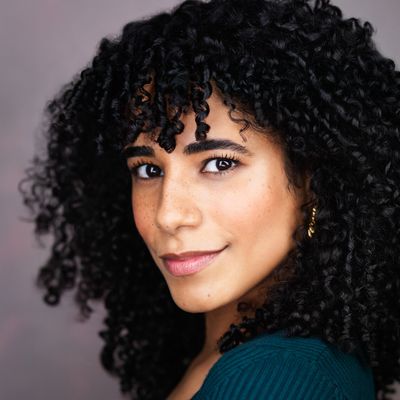
Guests Ilda Mason and James Bruenger-Arreguin joined us to discuss the future of Latinx Storytelling on Broadway. 💙
Latinx stories, dance styles, and music genres are every day getting closer to different types of audiences, and the three of us really think they would enjoy getting immersed in them. 🌎
We also chat about business ideas, so if you're a producer out there and want to work with us, reach out! 😂
Follow Ilda and James on their Instagrams! They are both doing some really cool things!
If you want to know more about our host, please visit his website! Feel free to reach out with feedback or if you want to be part of Backstage Talk!
Follow us on Social Media:
Transcript
This transcript was automatically generated and might contain errors.
[0:00] Martín Acuña: Hi everyone, I am Martín Acuña and you are listening to Backstage Talk.
[0:16] Martín Acuña: Jonathan Larson asked how can you make someone take off and fly in one of his songs from Tick Tick Boom, and I, for the past two years, have learned one way to do it, through the power of community. Welcome to the Latinx in Musical Theatre Special for Season 3 of Backstage Talk, where we will be featuring artists from across all positions in musical theatre, from several Latin American countries and different Latin heritages. I am proud to showcase my Latinx family. I hope you enjoy.
[1:00] Martín Acuña: I am in the company of Ilda Mason and Jamie Granger-Adegui. Ilda was born and raised in Panama, where she began her acting career in shows like Pan, The Beauty and the Beast, The Coruscant, and Hello, Dolly! She also was part of West Side Story 2020 Broadway and Kenneth Spielberg's new movie, New World, a remake of this classic movie. We also have another episode with her previous in our season, so be sure to tune in to listen to her go more in-depth in the West Side process. Also, Jamie Granger-Adegui was born in Mexico, he grew up in Denver, Colorado, and he is a director-producer that lives in New York and is currently working in the creative production office of Villa Theatricals. He is also a fellowship winner with Repertorio Español, another theatre company here in New York. So, it's a pleasure to have you here at Broadway. Thank you so much for having us.
[2:12] Ilda Mason: We're having the best time. Yes, you're amazing.
[2:15] Jamie Granger-Adegui: It's amazing.
[2:15] Martín Acuña: You two are amazing, and we just hopped off the table from recording this in the Spanish version, and this is for our English-speaking audience, so thank you, both of you, for taking the time to re-record this.
[2:30] Ilda Mason: Pleasure. We gotta keep talking to you.
[2:36] Jamie Granger-Adegui: Yes, exactly. If there's any excuse, just to stay with you a little longer. I love the both of you. So, first thing I want to ask you is what do you think the Latin or Latinx situation is currently on Broadway?
[2:49] Ilda Mason: I, you know, I think that we are, as I said earlier, I think that I feel like we're just beginning. We're just beginning. We don't have any Broadway. West Side Story was pre-pandemic, right, so we don't have any Latin stories on Broadway, and so in the past, we have West Side Story, Evita, On Your Feet, In the Heights, right, those are like the four big ones, and so I think that we're just beginning, and I know that there are things in development, but I, my hope is that we can begin to develop more, and begin to develop more because it creates a real sense of authenticity of our stories, of our culture. I believe that being a theme group, culturally, is one where we sing, and we dance, and we share stories, and we share food.
Food is important. If there was like a dinner theater for Broadway, I would be definitely there. It would be delicious. Wait, we have many business ventures. We just need the supply of money. Anyone listening, thank you so much. But to me, I think that we're really just like scraping the surface of what nothing without is. It is on Broadway.
[4:02] Jamie Granger-Adegui: Yeah, I think James' point is so crucial because it's, the fact that you can name like all four top big ones is very telling, and they are big, and they're important. However, even though we have people, Latinx people on Broadway, and important on stage, off stage, anything, we are still lacking those stories. Like we are definitely, we have people who are playing, like we're talking about Wicked and Elphaba, if they have Latinx people playing these big roles, but there's a difference between some, like some Latinx playing, like quote-unquote fitting in this role, rather than a role that's been written, made, telling the Latinx story. And Latinx story, I'm saying this as a huge like umbrella term, because there's so much culture.
Latin America is so big, so rich, so many countries that are so different and beautiful. The music, the styles, the food for a dinner here. It's so, it's, I think the world, the audience would love and really enjoy to witness and be a part of these stories, our stories, and that's what we're missing.
[5:28] Ilda Mason: Yeah, I absolutely agree with the two of you. I did a little research on the current Broadway running shows, and in every big production, there's at least one, two, or three names, Latin names, Latin performers on those shows. So I know, as James said, this is just the beginning of it, the tip of the iceberg. We continue to grow. So James, you're working right now with Repertorio Español, so tell us a little bit about that experience.
[6:03] Jamie Granger-Adegui: Sure, so Repertorio Español is an all-Broadway theater company that focuses on producing work in Spanish, and only in Spanish, which is incredible.
[6:12] Ilda Mason: Outstanding.
[6:13] Jamie Granger-Adegui: It's really, really cool, and they do work of Siglo de Oro, which is the golden age of Spanish plays, and that's like our Shakespeare, right? That's our Spanish Shakespeare. We learn about it in school, and then they also do contemporary plays. So the two-year fellowship this year, we're doing modern today. I don't know, modern, that doesn't feel right. Contemporary, sort of.
[6:35] Ilda Mason: Yeah.
[6:37] Jamie Granger-Adegui: And next year, we'll do a Siglo de Oro play. So this year, it's called Extinction of the Dinosaurs, and it's by Luis Aguilón, who's a Mexican playwright, and it's like a fun, high-jeans comedy, and I just wanted to do something that resonated with what I know as my vocabulary, and my vocabulary as a child, because I grew up with such fundamental television, right? And so, fundamental. And comedy, it's like true comedy, and I think what we do share in Latin cultures is the sense of humor, and television, and stories that aren't Spanish are truncated in a way that American stories, you can have trunks and trunks and trunks, you probably have two alike, the same sort of thing, like the variety of Ugly Bettys I grew up watching, right?
So it's just, it's really cool that I'm working on a play that gives me the opportunity to talk about that, and then next year, I'm working on a play that is Primer Sueño, the first dream of Sir Juan A. Ness, and she was this amazing nun that sort of rebelled against customs, and wrote her stories, and so we're adapting that to the city, which is a really fun challenge.
[7:50] Ilda Mason: That is amazing.
[7:58] Jamie Granger-Adegui: I know that Steven and the producers pushed to have a really authentic Latin people, or Latin sense that maybe wasn't so present in the original production, the original movie, so tell us a little bit about that whole process.
[8:18] Ilda Mason: Well, I would have to say that it started with the audition process. The fact that it was an open audition, the open call was huge. I didn't have an agent. I didn't say that earlier, but I didn't have an agent, and I was able to just audition. My friend sent me the casting call through Facebook or Instagram, like, you have to audition for this, you're gonna be in this movie.
[8:39] Jamie Granger-Adegui: Yeah, it was an open call that I even sent my video from Colombia, and I was like, I'm sure I'm not gonna get this, but why not?
[8:48] Ilda Mason: Exactly, and that is something that is so monumental and huge, and that's a huge part of my experience as an immigrant here. I'm from Panama, I moved to the United States nine years ago, and then I realized how most of it, like, the work is just, or the, quote unquote, luck, is to get the opportunity to try.
[9:10] Jamie Granger-Adegui: Yes, to go to an audition, to meet a casting director, to be in the room.
[9:16] Ilda Mason: That is huge, and this production of Students vs. West Side Story gave us that. 30,000 people auditioned all over the world, and I thanked him and Cindy Toland, who was the cast director, tremendously. They were done listening to me say how grateful I am. I can't even say what I am for that. And Tony Kushner, well, it's a prize winning Tony Kushner. He really put a lot of effort and hard work into making the adaptation of the script as authentic as possible. He surrounded himself with a team of just Puerto Rican people from the cast who would work with him and just make sure that words, names, were accurate. There was a day that we were finishing shooting, and he said that he was worried because he realized that one of the words was wrong, and so they had to change it.
So it's details like that that are not just details. It was so, so, so, so important for us in our culture. Our first day of rehearsal was that learning about Puerto Rican culture. That changed my life. That was amazing.
[10:48] Jamie Granger-Adegui: The latest Latin story that was in the nearest stages was Americano. There was a big off-Broadway musical. What was exciting for me was to see that there were a lot of Latinx names all over the whole production. Not only the cast, which was totally Latin, not only the producers, the directors.
[11:19] Martín Acuña: Also, this is a story about Don Igualdo Villars, who is a dreamer. He came to the States with his parents. He was going to Mexico, but it was undocumented. He didn't know about it until he wanted to go and enlist in the Navy. This story was also written by a lot of Latinx people, like Fernanda Santos. This is not the only story that we are trying to get here. This is just one. This was just announced last week, the collaboration between Antonio Andres and Andrew Lloyd Webber, this ginormous composer in musical theater history and this incredible performer, actor from Spain, that also has musical theater. Antonio Andres spearheaded a movement in Spain about translating shows and bringing them from their original language, in English, all the way to Spanish.
He produced, directed, and performed a chorus line in Madrid and in Barcelona. Last year, they released a cast recording. He also did companies, and we will get adaptations from a lot of shows, from The Phantom of the Opera, Sons of Boulevard, School of Rock, Evita, which is already a Latinx story, and a lot, a lot more. We're going to get Cinderella, which is Andrew's latest work. So, what do you think about this collab? I think it's really, really exciting because I think it's going to, when a show gets translated into Spanish, that process is going to inform the show in such a different way to hear it in Spanish. I think it's going to elevate the piece in many ways, right, because it'll be able to open access for the audience.
We earlier were talking about what it means for an audience to get to enjoy a musical, and for me, my mother, when she comes and sees a Broadway show with me, she can take in the spectacle of it, but she, I can see the language, especially when they sync, sort of go over her head, right, and when she got to see Aladdin in Mexico City, she was, she called me after it and just felt like she was part of it, right, because she could understand it, she could hear it, she could be with the story, and so this translation process is really exciting, but I do think it's really interesting that Andrew Lloyd Webber is pairing up with one of the biggest celebrities of all time, and yet I'm like, they're going to make money, right?
It's like, at the end of the day, it's still a business. What we do is still a business, and I would love for them to use a little of this money that they're going to make to elevate the places that the work is going to be done, right? If you're going to, for me, in many ways, if what you're telling me is Starlight Express is going to be done in Panama, that's going to create such an access, right, for Panama, and there's going to be, people are going to want more shows, people are, they're going to go through that catalog quickly, so it'd be great to elevate the new writers in those places, and in Spain, and in Mexico, and in Puerto Rico, and in todo, in todo, right? I hope that they use those resources and the connections that they make through the process to change, change our landscape.
[14:49] Ilda Mason: Absolutely. I think it's, it's, the key working is disability, the possibility of audiences, and like, you know what, I didn't, I didn't even want to say audiences, I want to say like, people. People. People who have not been to theater, who have never seen a musical, the opportunity for them to see it, because we are at BroadwayCon right now, so we're thinking Broadway, great scale, like, oh my god, Antonio Banderas, Angela Webber, but I think it's so, so, so important to bring it, trickle it all the way down to a local theater town, like, you know, the things that, even though we think, oh, that's, you know, that's not, I don't know, whatever, in certain, whichever, that is where it starts.
My love for theater started in Panama, and we didn't have all the resources that Broadway could have, and yet people who do theater there do it because they love it, and we love it so much that, you know, it brought me to wanting to move here to do it for a living, so I just, like, like you were saying about your mom, like, my mom came to see West Side Story here in New York, and she couldn't understand the movie, so we had to go watch it with subtitles, and it's, it's just the amount of the material and, and art and shows that are out there that people can't see, it may make someone think, like, oh, I don't like musicals, I don't like musical theater, but it's because they've only seen a handful, one that they didn't like, they don't, they don't have the ability, the access to watch and to explore and to, to feel what theater makes us feel, and we saw that one musical that changed our lives forever, so that's, yeah, accessibility, theater, the arts for people.
[16:48] James Bruenger-Arreguin: Yeah, I do think that it's going to be groundbreaking, and it's going to give us another foot in the door to, as, as Hilda just said, to give access to a lot of people, because, for example, my dad saw Wicked, and with all the love that I have for my dad, he was like, why was everyone shouting, and I'm like, they're not shouting, they're belting, so now I know that the Wicked type of show is not for my dad, right, but maybe he would like, I don't know, a company, or maybe he'll like something more like MJ, which he saw and loved, he could have access to a lot of new options, right? Before we close, I have a surprise question for you, which, like, it's not the same question that I tell everyone in the normal episodes, but if you could choose one Latin artist to do a jukebox musical, it can be a bio-musical, it could be jukebox, but non-related to the story of the artist, which one would it be? I have my answer, but I want to listen to yours first.
[18:00] Ilda Mason: This is so rich, because we were, I think, in the last session talking about, like, how grounded our, like, music is, right? Yeah. How it universally connects us, like, we all list 10 different Latin artists that are part of the reason why we love, like, music, right? Theater to me is the conglomerate, musical theater is a conglomeration of cultures, so I'm going to say Selena, in the way that, maybe not like a biopic musical like MJ, per se, maybe like a jagged little pill, take her music, take her energy, and see what you create with it. I would love, like, yeah, I would love this orchestration. Oh my god, yes.
[18:44] James Bruenger-Arreguin: Amor premio orchestrated for Broadway. Like, that would be, I mean, people would be living. I would play that cast recording in the shower every single day. I mean, honestly, now you say that, like, absolutely, we need more, more. So, I was also thinking of Selena, but I, wait, um, I think maybe someone like Juan Luis Guerra, um, because we were talking about, like, the energy, and I don't know, I imagine, like, a Juan Luis Guerra concert, but then I thought, maybe we could do, like, a jukebox, jukebox musical, like, with a lot of different artists, exactly, from all over the place, that we could have, like, Shakira, and Thalía, Juan Luis Guerra, Juan Luis, and, like, I don't know, like, just a bit of everything, um, to just, boom, like, in the audience's faces, like, this is the music that we love from Latin America, and I'm sure that they would fall in love with it, too, the people who have not, you know, heard their music, or.
[19:51] Ilda Mason: They wouldn't be seated, right, like, they would be dancing. Exactly, yeah. It would be a party. It would be a party, yeah, exactly.
[19:59] James Bruenger-Arreguin: My answer, and actually, I never pitched it to Netflix, but they stole the idea, was, like, if it's a biopic musical, or just a jukebox musical, oh, I would love those orchestrations. Yes, yes, I mean, ask Bia Huerta, like, he is bad about musicals, he would love it, he would, we already have, we already have Ari Star, come on, yeah, just get him on a Broadway stage, I mean, he has been in musicals in Mexico City before, he did, um, he did the Rock of Ages, yeah, I mean, wow, I listened to, I could not believe that that's, that that was not music and singing, so, Diego, we're, you receive a call, or call us, we're doing this, um, crazy Broadway dinner theater.
[20:53] Ilda Mason: Yeah, exactly, exactly, and there's a Broadway dinner theater, I love that, yeah, so it's gonna be great, it's a big, big, but in Broadway, it is Broadway, it's a big house, it's a family home, it's a, it's, yeah, call us. Frijoles negros and rice will be Abuela Claudia's, oh yes, and plátano, plátano maduro, and frijoltones, patacones.
[21:19] James Bruenger-Arreguin: Y bebé, y vas a beber, you're gonna drink, you're gonna have a great time. It's gonna be amazing, and pollo, oh, it's gonna be great, oh, you don't even know, it's a feast for the senses, for your tummy, and for your heart.
[21:32] Martín Acuña: Um, I want to take the time to thank the both of you, I really do think that today, we made history as the first Spanish-speaking panel ever done at BroadwayCon, so thank you to the both of you, I love you with all my heart, um, and thank you to the Broadway Podcast Network, and to BroadwayCon.
[21:54] Ilda Mason: Yes, thank you so much for having us, yes.
[21:56] James Bruenger-Arreguin: This was such an amazing evening.
[21:58] Ilda Mason: I can't wait to hear next year's panel, like, I just, I can't wait for next year's panel, thank you.
[22:04] Martín Acuña: Thank you so much for tuning in, and we'll catch you in another episode of Backstage Talk, bye!
[22:16] Ilda Mason: Thanks everyone for listening to this new episode of Backstage Talk. Remember to follow us on Facebook and Instagram at Backstage Talk Podcast.
© Broadway Podcast Network, All Rights Reserved