

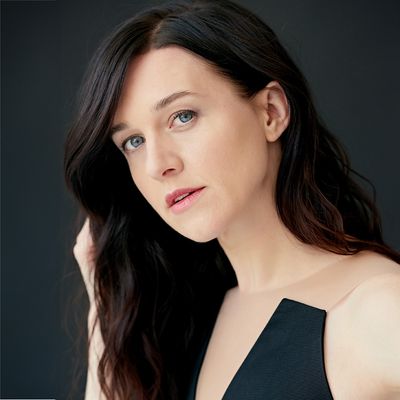
Tony Winner Lena Hall joins Behind the Awards to chat about her new series on Apple TV Your Friends and Neighbors. Lena shares her experience working with Jon Hamm and playing his sister. Lena tells us her Tony nomination/win story for Hedwig and the Angry Inch... Read More
From the show: Behind the Awards with Eila Mell & Bruce Gotlieb
Guests
Featured Shows
About
Tony Winner Lena Hall joins Behind the Awards to chat about her new series on Apple TV Your Friends and Neighbors. Lena shares her experience working with Jon Hamm and playing his sister. Lena tells us her Tony nomination/win story for Hedwig and the Angry Inch. Your Friends and Neighbors is now streaming as well Lena’s Your Friends and Neighbors EP.
Also on this episode - Kecia Lewis's 2024 Tony Win for Hell's Kitchen. NY City Center Encores announces its 2025-2026 Season; Bat Boy The Musical, Directed by Tony Winner Alex Timbers; High Spirits, Directed by Jessica Stone; The Wild Party, Directed by Lili-Anne Brown; and La Cage Aux Folles starring Emmy, Grammy and Tony Winner Billy Porter, Directed by Robert O’Hara.
Lena plays “Ali Cooper” the younger sister of “Coop” played by Jon Hamm. We come to find out she is a singer / songwriter who has had some mental health issues regarding a past relationship and is trying to start over again both in life and in music. Lena’s character gets to perform throughout the episodes, performing original material that Lena wrote, as well as covers of Radiohead, The Thompson Twins and more. She will be releasing an EP and album of her music from the show. Add in the Tony Award winning / Grammy nominated rock and roll voice and fans new and old are very excited. Previously, Lena starred on AMC’s Snowpiercer for 4 seasons opposite Jennifer Connolly after winning the Tony Award for co-starring in Hedwig and the Angry Inch on Broadway opposite Neil Patrick Harris. She originated the role of Nicola in the Broadway musical Kinky Boots Her other Broadway credits include Cats, 42nd Street, Dracula, the Musical and Tarzan, the Musical. Hall has also starred in Off-Broadway productions such as Radiant Baby, Bedbugs!!!, Rooms: A Rock Romance, The Toxic Avenger, Prometheus Bound, Chix6, Little Shop of Horrors, and the 2017 original play How to Transcend a Happy Marriage.
Make sure to check out Eila's book, "The Tony Awards", and all her other amazing books: https://amzn.to/43WMu5Y.
Connect with Eila and Bruce:
Transcript
This transcript was automatically generated and might contain errors.
[0:00] Lena Hall: Hi, I'm Lena Hall and you're listening to Behind The Awards.
[0:30] Eila Mell: I'm Eila Mell and you're listening to Behind The Awards with Eila Mell & Bruce Gotlieb.
[1:01] Bruce Gotlieb: As always, I'm here with Bruce. Hello there.
[1:03] Eila Mell: Hello, Bruce. How are you?
[1:05] Bruce Gotlieb: I'm good. So, what were we just listening to, Bruce?
[1:10] Bruce Gotlieb: That was last year's Tony winner Kecia Lewis for Hell's Kitchen, imploring people to, you know, reach for their dreams and all.
[1:19] Eila Mell: Yeah, well, she did. That worked out.
[1:22] Bruce Gotlieb: Absolutely. Absolutely.
[1:25] Eila Mell: Well, Bruce, a lot is going on this week. We had the Tonys, of course, but now we're moving on to next season and City Center has just announced their season.
[1:36] Bruce Gotlieb: Do you want to let people know what they have going on?
[1:40] Bruce Gotlieb: Yeah, absolutely. It's exciting. They always have, you know, a good variety of different shows and this season is no exception.
[1:47] Bruce Gotlieb: So they always start with, which is typically what they call their gala presentation.
[1:52] Bruce Gotlieb: And this year is Bat Boy the Musical, which will be directed by Tony winner Alex Timbers.
[1:58] Eila Mell: That's very exciting.
[2:00] Bruce Gotlieb: That's going to run from October 29th through November 9th. It was, you know, a cult classic when it was around.
[2:07] Bruce Gotlieb: And so far, a lot of people are excited when the announcement came out yesterday that that was kicking off the season.
[2:14] Eila Mell: It seems like that one's a little bit of a newer one than what they usually do.
[2:18] Bruce Gotlieb: Yes, yes. And then from February 4th through the 15th, we have High Spirits, which will be directed by Jessica Stone.
[2:28] Bruce Gotlieb: And that is an adaptation of Blythe's Spirit. The little blurb that it had said that this music hasn't been heard since the 1964 Broadway run.
[2:39] Eila Mell: So that's, you know, could be exciting for people that know the show or are looking to discover something that they've never heard of before, really.
[2:47] Bruce Gotlieb: Right. That's right.
[2:48] Bruce Gotlieb: And then following that, March 18th to the 29th, we have The Wild Party, which was supposed to be part of this current season.
[2:55] Bruce Gotlieb: But I think scheduling wise, there was an issue and it got wound up getting bumped.
[2:59] Bruce Gotlieb: But it is coming back. It is The Wild Party that was written by Michael John LaChiusa and George C. Wolfe.
[3:09] Eila Mell: So this is the one that Toni Collette was in?
[3:11] Bruce Gotlieb: Yes.
[3:12] Eila Mell: Yeah. OK. So does it say who's directing that?
[3:15] Bruce Gotlieb: That is going to be directed by Lili-Anne Brown.
[3:19] Eila Mell: OK.
[3:21] Bruce Gotlieb: This particular version was also on Broadway was Toni Collette, Mandy Patinkin, Eartha Kitt, Mark Kudisch, Tanya Pinkins, Norm Lewis. I mean, it was who's who.
[3:32] Eila Mell: Yeah. Wow.
[3:34] Bruce Gotlieb: So that's exciting that The Wild Party will be coming back around. Also another one of those, you know, really like cult followings for that show.
[3:42] Eila Mell: I mean, it's such a good opportunity for people to get to see these versions of shows that they have never gotten to see before.
[3:49] Bruce Gotlieb: Absolutely. And they're quick runs. So, you know, you got to grab your tickets and get there.
[3:53] Bruce Gotlieb: And then the June 17th to June 28th, we have La Cage aux Folles coming and that is going to be led by Billy Porter.
[4:04] Eila Mell: Amazing.
[4:05] Bruce Gotlieb: And it's going to feature an all black cast directed by Robert O'Hara.
[4:09] Eila Mell: Excellent. Robert O'Hara, who directed Slave Play.
[4:12] Bruce Gotlieb: Yep. And A Raisin in the Sun, Jelly's Last Jam.
[4:16] Eila Mell: Excellent.
[4:17] Bruce Gotlieb: You know, it's that that should be a really, really fun production. I mean, I could almost or can't really wait to hear Billy sing.
[4:24] Eila Mell: I know.
[4:25] Bruce Gotlieb: I know what I am.
[4:26] Eila Mell: I know. If tickets are available now, they're probably selling out. But I'm guessing it's a little early.
[4:32] Bruce Gotlieb: Well, I know that, you know, subscribers, you know, are able to general public. It looks like they'll have to wait till October to purchase.
[4:41] Eila Mell: And is that for all four shows or do they do one at a time?
[4:45] Bruce Gotlieb: No, it's all at the same time.
[4:47] Eila Mell: OK, well, great.
[4:48] Bruce Gotlieb: Which is good because then you don't have to like, you know, keep checking back and forth, back and forth.
[4:52] Eila Mell: Right.
[4:53] Bruce Gotlieb: You'd have to have like appointments on your calendar just to buy tickets, I feel.
[4:56] Eila Mell: I know. I know. Well, I bet people do with all the shows that open and, you know, sometimes so quickly.
[5:03] Bruce Gotlieb: Absolutely. So these are fun. And, you know, the history, I'm curious to see how it will play out because there has been a history of shows going from encores and then coming and being revived.
[5:14] Eila Mell: So, you know, Ragtime just did it, is the most recent one. We had Into the Woods a couple of years ago.
[5:21] Bruce Gotlieb: Once Upon a Mattress.
[5:22] Eila Mell: Yeah.
[5:23] Bruce Gotlieb: So, I mean, La Cage kind of has that written all over it, but we'll see.
[5:27] Eila Mell: We'll see. We'll see. I mean, any of them could.
[5:31] Bruce Gotlieb: Absolutely. Bat Boy. Really, any of them. You're right. We have to see the reception.
[5:38] Eila Mell: That's right. I think it'll be very interesting to see. I'm excited. And here we are in the throes of the new season.
[5:44] Bruce Gotlieb: I mean, at the time of recording, it's either tonight or tomorrow that Call Me Izzy opens.
[5:49] Eila Mell: Yeah. I think tonight. Yeah, well, it doesn't matter.
[5:53] Bruce Gotlieb: We're officially in.
[5:55] Eila Mell: We're doing it. Yeah. So, well.
[5:58] Bruce Gotlieb: Whether you're ready or not.
[5:59] Eila Mell: I know. I know. I feel like I'm going to have to get ready pretty quick.
[6:04] Bruce Gotlieb: That's right. That's right.
[6:05] Eila Mell: No more basking in the Tonys. We have to move on now.
[6:08] Bruce Gotlieb: That's it.
[6:09] Eila Mell: Now get ready for next year.
[6:10] Bruce Gotlieb: That's right. That's right.
[6:12] Eila Mell: If you're not quite ready to get into theater yet, you can sit in front of the TV and do a binge.
[6:17] Bruce Gotlieb: Yes.
[6:18] Eila Mell: Our guest, Lena Hall, who we have on today.
[6:21] Bruce Gotlieb: She is in Apple TV's Your Friends and Neighbors.
[6:25] Eila Mell: Your Friends and Neighbors.
[6:26] Bruce Gotlieb: She's co-starring with Jon Hamm, and that's completely dropped now.
[6:30] Eila Mell: Yes, you can see the whole thing.
[6:32] Bruce Gotlieb: It's her, it's Jon Hamm, Olivia Munn, Amanda Peet.
[6:35] Eila Mell: It's really great.
[6:36] Bruce Gotlieb: I watched the whole thing. Lena Hall gets to sing in it a lot and play guitar, and she's excellent.
[6:42] Eila Mell: So let's talk to her because, you know, we'll get the skinny on this show.
[6:46] Bruce Gotlieb: Absolutely.
[6:49] Eila Mell: Bruce, I don't know. I mean, I'm super excited.
[6:52] Bruce Gotlieb: I know you are.
[6:53] Eila Mell: Let's just welcome Lena Hall to our show.
[6:56] Bruce Gotlieb: How are you, Lena?
[6:57] Lena Hall: Hi.
[6:58] Lena Hall: Thank you.
[6:59] Lena Hall: Hi.
[7:00] Lena Hall: I'm good.
[7:01] Lena Hall: How are you?
[7:02] Eila Mell: We're great. We're so excited when this opportunity came up to have you on the show because we have just been, you know, following your career for so long.
[7:06] Lena Hall: Oh, really? Well, that's great.
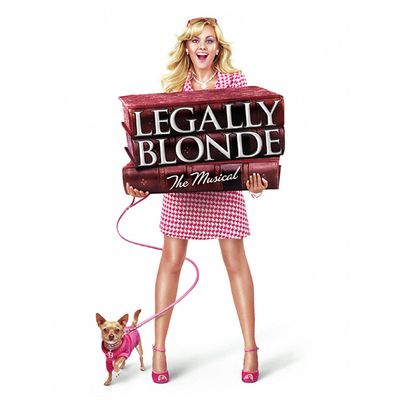
[7:14] Lena Hall: One of the things I think is probably the most fun is I feel like when people are having conversations and discover that, you know, you had already been on Broadway or whatever when you did the Legally Blonde competition.
[7:20] Lena Hall: It's like people's minds get like distorted. They don't know what to do with themselves.
[7:33] Lena Hall: Yes.
[7:34] Lena Hall: Yeah.
[7:35] Lena Hall: I had been in four Broadway shows by then. So it was kind of funny because I kept having to hold my tongue every time they were like, none of you have ever been on Broadway.
[7:42] Lena Hall: And I'd be like.
[7:46] Lena Hall: Yeah.
[7:47] Lena Hall: And I was hoping that our mentor was going to be Patti LuPone or someone like that.
[7:51] Lena Hall: And it was like she had done one Broadway show.
[7:54] Lena Hall: I was like, I could mentor.
[7:56] Lena Hall: Really?
[7:59] Lena Hall: Yeah, it was kind of it was crazy.
[8:01] Lena Hall: But that that's really funny because it keeps coming back.
[8:04] Lena Hall: Yeah.
[8:05] Lena Hall: You know, it's like, no, there's every, you know, every few years there's a revival of Legally Blonde, The Search for the Next Elle Woods and like the next tween, you know, tribe finds it on somewhere, YouTube or TikTok or whatever.
[8:20] Lena Hall: They find it and then they become obsessed with it.
[8:22] Lena Hall: And then they're like, oh, my God, you know.
[8:26] Lena Hall: I never thought in a million years that that would be what would happen when I did this in 2008.
[8:34] Lena Hall: But, yeah.
[8:36] Eila Mell: Did you do it because it was going to be on? Was it MTV or VH1?
[8:41] Lena Hall: Yeah.
[8:42] Lena Hall: Yeah.
[8:43] Lena Hall: Is that why you wanted to do it?
[8:44] Lena Hall: No, actually, I thought I thought because I had auditioned for the show about four times already for all these different roles in the show.
[8:53] Lena Hall: And I got a phone call from a casting director and they were like, hey, Jerry Mitchell requested that you do that.
[9:01] Lena Hall: You do this audition for Elle Woods. I was like, Elle Woods, like, oh, maybe because I'm not right for any of the other roles. Maybe I'm right for Elle Woods.
[9:09] Lena Hall: Like, yeah.
[9:10] Lena Hall: And then and they were like, but you have to audition in a reality show.
[9:16] Lena Hall: I was like, I was like, oh, all right.
[9:19] Lena Hall: Why not?
[9:20] Lena Hall: You know, who cares? Like, what's that going to do?
[9:24] Lena Hall: And and then also in my mind, for some reason, I thought I was like the ringer because I had done four Broadway shows and I'd already auditioned for Jerry a ton.
[9:34] Lena Hall: And like for someone to be like, he requested you. I thought that I was like the shoe in winner.
[9:40] Lena Hall: But like I wasn't like I really was not even close.
[9:43] Lena Hall: Like and also it'd be an interesting, weird, like pretty edgy Elle Woods.
[9:50] Lena Hall: I was thinking about it. I was like, I'm not right for the role.
[9:53] Lena Hall: But, you know, like whatever it was, it was time and it was fun.
[9:58] Lena Hall: And I, I learned a lot about reality television and about, you know, myself and the links I'll go to to like be a lead in a show and the links that I won't go to.
[10:11] Eila Mell: Well, so right now you're the lead, not the lead, but a lead in a show.
[10:17] Lena Hall: Not on Broadway, on Apple TV, Your Friends and Neighbors.
[10:20] Eila Mell: Yeah.
[10:21] Lena Hall: But you do get to be musical in it.
[10:23] Eila Mell: How much fun is doing this show?
[10:25] Lena Hall: I love it. The crew, the cast, everybody is amazing. It's a really happy set.
[10:30] Lena Hall: Yeah. There's not a it's just chill and fun and easy. That's like the vibe on the set.
[10:38] Lena Hall: So you've got a great person leading the charge, which is Jon Hamm.
[10:42] Lena Hall: And he he's one of those that's like just kind of a dream to work with.
[10:46] Lena Hall: He's very professional, but also kind of chill.
[10:49] Lena Hall: And and he knows what he's doing and knows what he wants.
[10:52] Lena Hall: And so that's great. It's really good to have someone like that.
[10:55] Lena Hall: And then Jonathan Tropper is amazing writer, showrunner.
[10:58] Lena Hall: And again, like I can't stress enough, the vibe on set is like really positive, really, you know, like we're all doing something real fun.
[11:05] Lena Hall: It's not, you know, it's not rocket science.
[11:11] Lena Hall: It's not going to cure cancer.
[11:12] Eila Mell: Right.
[11:13] Lena Hall: We're we're here to have fun and to do what we love to do.
[11:16] Lena Hall: And everybody is there doing what they love to do.
[11:18] Lena Hall: So that's I think that's really important to have when you film something like this.
[11:23] Lena Hall: And so we've got a great tribe of people together all wanting to make this the best it can possibly be.
[11:29] Lena Hall: And then, you know, it's just like Apple TV is like top notch.
[11:36] Lena Hall: They treat everyone incredibly.
[11:38] Lena Hall: And they're really when they believe in something, they really, really, you know, support it.
[11:43] Lena Hall: And I find that to be very special.
[11:46] Lena Hall: And I am lucky that I am in this and I'm really lucky that I get to play music in it as well.
[12:00] Lena Hall: The head people are amazing and then everybody in it is amazing. But then I also lucked out on the role and the, you know, the character herself, you know, and then being able to play music as well. So it's just like, yeah, it's like, live in the dream.
[12:15] Bruce Gotlieb: I know. What more could you ask for?
[12:45] Lena Hall: And, you know, for someone who's like a lead of a show, you're getting paid enough where you can sit there and you can wait. But as not a lead, you're not paid enough to sit for a year, but you can't book any other work unless you're lucky. And, you know, for me, I'm very specific. I'm not, I don't know, I would put myself on tape a lot, but I wouldn't get cast in a lot at all. So, you know, for me, it wasn't like I could just book a guest star or just book a movie, you know, it's a lot harder than that. And you're on the hook for the show. So you can't really take, like I couldn't take a Broadway show or I couldn't take, you know, any kind of a long run that maybe I would be able to book easier for work.
[13:28] Lena Hall: So it was kind of, um, it was stressful. It was a struggle, not knowing for a year, you know, if you're picked up or not, but that's, that's, but that's normal. Yeah, that's normal. This was very abnormal. Apple was just like, they saw the show. I think they saw rough cuts of the show or something. And they were just like, yes, yes, we're doing a season two. So I'm again, and then with that, of course, then I'm feeling extremely grateful. I'm really lucky because I get to sit and breathe and I get to do more with the character for further seasons, which is really cool, at least for a season two. So that's, you know, that's also really cool because sometimes you're like, oh, I love this character. And then you don't get a chance to delve into it more, you know, it's like one season, you're kind of scratching the surface.
[14:17] Lena Hall: There's so many characters, especially in TV, there's lots of characters, you're just scratching the surface. So unless you're number one or two, or maybe three on the call sheet, your character is just kind of like gets a surface scratch, you know? And so when you start getting into further seasons, you get to dive into your character a little more and, and, and find out, you know, more, just, it's just like more discovery. It's really fun.
[14:42] Bruce Gotlieb: So for those that haven't had an opportunity to start the binge yet, some people like to wait until all the episodes are out, you know, it depends on the type of viewer you are. What can you tell us about your character?
[15:13] Lena Hall: And just kind of functioning in the world, in the real world. And her brother has been taking care of her and he protects her, you know, with all of his soul. And they've got a great, a great relationship. It's very ride or die. There's a lot of honesty there. And it's, it's just one of those characters where, where you feel for her, because, you know, in a show full of assholes, you have, you have her with, and she is damaged and fragile, but also very strong in her heart.
[15:51] Lena Hall: And knowing who she is and knowing her capabilities and kind of really able to make fun of herself for her, you know, her shortcomings for a normal world. Right. Yeah. She's not, you know, not in any way, shape or form like a less than person, but she's trying to function in a world that is set up for people who function differently than she does. So it's harder for her to grasp the world, you know, especially as a creative. It's also, she just functions differently than the average person than the normal person.
[16:25] Bruce Gotlieb: Right. A lot of creatives, you know, we can relate to that.
[16:29] Lena Hall: Yeah, exactly. Right. Yeah. It's just like the struggle of every day. If you, if you're neurodivergent in any way, there's like, it's a struggle every day, just to function in a world that is set up for a different brain. Yeah. You know, so that's her struggle is trying to just, you know, figure out a way to survive and still be present.
[16:53] Bruce Gotlieb: So when you do a Broadway play, you know, obviously the script is written and then you come in and you do it. But when you're doing a character and a series, you know, you don't know everything that there is about the character. So how do you deal with that as an actor?
[17:07] Lena Hall: I found that. So, yeah, they're completely different ways of, of, of the, like the craft is like completely different. I would say, you know, acting on stage is linear for the most part. And so you get to feel the feels and do all the whole thing and tell the whole story every single night. Whereas with TV film, you go out of order and you don't really know where you're going unless your writers are really ahead of the game and they send you all the scripts beforehand. So I found that with, with, with TV film, it's like the biggest puzzle is really wanting to match something that you filmed like a week ago. It's like, oh, you're entering the scene a week ago and then now you're doing the scene. So you have to like really match what's really going on. It's so much harder than, it's so hard because you're like, what did I even do?
[18:03] Bruce Gotlieb: Right.
[18:04] Lena Hall: You know, it's like, can we watch that? Because I can't even remember. It was a week ago, two weeks ago, could be a month ago.
[18:10] Bruce Gotlieb: Wow.
[18:11] Lena Hall: And if you're in the moment, you're not thinking about what you're doing.
[18:14] Bruce Gotlieb: Exactly. Yeah. Yeah. And so, but the repetition of doing a small scene over and over again is very fun because you can find nuances. And also what's cool about TV film is that you can try different things for every take. You don't have to stick with the one thing. It's just watch out for your hand, your face, because if you're doing something different in the wide and they cut your hands on your face, you know, you're, you're, it doesn't cut well. So it's like, you know, there's certain things that I'm learning within TV film to just like for, for people who are editing, like just to give them a break.
[18:54] Lena Hall: I think it's always fun as a viewer when you're watching something and you're like, that glass wasn't full before.
[19:01] Bruce Gotlieb: Yeah. Yeah. I mean, it's, it's incredibly difficult to like, because you want the scene to be really organic and by making it organic, you want it less staged, meaning like it's nice to be like, what's my, what's, what am I feeling here? You know, and then you do another take and you're like, maybe I'm feeling something different. I'm getting a little more comfortable in it. And then you do another take and then they go to close up after a wide and you're like, well, which one do you want to edit to since I did it three different ways? And so they'll be like, well, we'll take from this one. And that's when I usually watch it back and try and mimic what I do organically. I'm like, right. And they're like, the Pringles cup was actually in your other hand and you're this.
And I'm like, Oh, why did I do this? Props? Like just logistical things. Right. But, but emotionally it's interesting because like, do we know where we're going in life? No, no, no, we can't see in the future. So it's kind of really nice not getting a chance to see what's going to, like what's going to happen because you play the scene much more in the present moment. You're not projecting right into the future. You're, you're playing what you know from the past and you're playing the moment in the scene, which is really nice. And I think it keeps it more, um, just more present in the moment. Right.
[20:23] Lena Hall: So it keeps it more, more now instead of knowing, you know, if I was like, well, I know I'm going to, so I need to plan this. You know, it's like, no, if the writer is any good, which Jonathan Trapper is, he's going to write the, the, the journey into the emotional, whatever you're going to, he's going to write it in a way that you're going to get there. So it's really, for me, very important to trust the writer, trust my director that they've got my back. And if they get what they need, and even if it doesn't feel right to me, if they're like, no, that's perfect. Then to trust their eye because I'm living in it, but they're watching it. So, um, living in it, you don't see the full story, but when someone's watching from the outside, they can. So it's so important to me. I trust my director so much on TV film because there's just like, I, I'm not like, you know, I'm not the one who's figuring out this huge puzzle.
[21:20] Bruce Gotlieb: Right. And you don't know how you're being shot sometimes. So.
[21:23] Lena Hall: Yeah, exactly. Yeah. So, so it's like, well, just, just trust the process essentially, and just be in the moment and be present. And that's all you can do.
[21:32] Bruce Gotlieb: And how cool that you get to do a lot of your work with Jon Hamm. I mean, he's not only do you see him be dramatic, but you also from what we've seen and also from what I've heard from others that he just has this really like just funny side and like doesn't take himself too seriously. And that has to really help. It's got to make it fun, like you said in the beginning, but it also has to help make you feel comfortable and the chemistry between you guys.
[21:56] Lena Hall: Yeah, yeah. A thousand percent. I mean, he's, he's one willing to go off script and improv and just, he'll make you feel comfortable in the scene immediately, which I think really helped with our, our chemistry. I'm someone who's very like open heart. Like I go into, I go, I go to an actor and I say, look, we're, we're a team. We're going to make this happen. Let's go. I'm going to follow your lead. I like to follow the, you know, I mean, I haven't gotten a chance to really like lead a scene because I've always been supporting. Do you know what I mean by that? So, so for me as a supporting character, I, I feel I must, you know, I feel I must be open and willing to go with my partner in a scene.
[22:44] Bruce Gotlieb: Yeah. And so for, for with John, it's just so easy because he's, he's, he's caring. He's warm. He's fun. And he's, he's got a great sense of humor. And so it makes it so easy to just be like, all right, I'm going to follow your lead. And if you're going to go off script and start riffing, I'm going to go ahead and I'm going to answer you and I'm going to keep it going until the director says cut. You know what I mean? And it's like, we're going to find our rapport here. And, and, you know, within the, within the first day of filming, we found such a good brother sister rapport.
[23:22] Bruce Gotlieb: Because you're playing brother and sister. Do you have a discussion with him about the history of your characters?
[23:27] Lena Hall: No, no, we don't really need a ton. I mean, you know, I'm, I've been a little sister, so I know what it's like to be an annoying little sister. Like, I know what it's like, you know, there's not, I think, I think the understanding is we already have the understanding because it's written in the script. Where our parents, you know, the, the, are the, are a big, big issue. Like our mom is a huge issue for us. And Coop is very protective over Allie when it comes to their parents.
[24:01] Lena Hall: And her mental health and their past is that of a brother and sister, that of a very close brother and sister, even though they might be a little further apart in age. It's like, you know, he was always protective of her when she was born because she's just like his little sister. I imagine he would carry her when she was just a baby and he was like five or six or seven years old. And, you know, the parents being like, Oh my God, you're carrying the baby, you know, it's like, but he's like, you know, so just enamored by his little sister. And it keeps him, it keeps him honest and it keeps him, you know, in touch with his heart and his compassion and his empathy for people. Like she keeps him kind of grounded in that, in that way.
[24:48] Wendy McLendon-Covey: Hi, this is Wendy McLendon-Covey and Behind the Awards, we'll be right back.
[24:58] Bruce Gotlieb: Was Hedwig a game changer career-wise for you? I mean, you got to do something very different from anything you had done before.
[25:02] Lena Hall: I'd say Legally Blonde and the Search for the Next Elwes was a game changer. Yeah, Hedwig was a huge, well, it was a huge life change, obviously, because of how big the show was and then the Tony win, like that was a big, big, big life change. But it was also probably the biggest learning curve I had as far as an actor, because not only did I have to be like, it's hard to explain. So not only did I have to be on stage and be present 24/7 on that stage, because you never knew what was going to happen. And I had to be ready and willing and able to fix anything that went wrong on that stage, no matter what. So not only did you have to be like, hyper present, which was a really, really good lesson.
Yeah, you can't, you couldn't go off into the white room. But you also had to be okay with being in the background and dark on stage, just sitting there and listening and being present. So that was the biggest lesson I learned for that show is no matter what you do, even if you are pitch dark in the background, sitting on a chair doing nothing, and just listening, it's important to stay, you know, stay hyper vigilant and hyper present, because everyone's watching, right? Now, it doesn't matter if you cannot just lose, like, just go off, because you know, you have like 15 minutes of sitting here, and waiting for this monologue to go. It's like, no, you are there, you're responding. And you have to remember that this is the first time you're seeing any of what Hedwig is doing unfold.
Right. So, you know, to be a completely silent character most of the time, because, like, that's what was so wild about it is Yitzhak does not speak. Yeah, right. Right. You know, really, at all. It's just there. It's just a presence. And the fact that, you know, I thought there was no way I would even get noticed, because I thought I was just in the dark the whole time. And there was so even a nomination was huge surprise. Yeah. But a win was a shock, because there were all these other women who were having these amazing roles, who were talking in their shows. And I was just this silent thing. Playing a man, you know, it was was also fun. It was fun to bring in so I've got a really like deep history in dance.
I was I was born and raised as a ballerina. And so what was really cool was developing a character physically only. It was like, it was like the voice came and the voice was going to be what it was going to be because it's like, I can only talk solo. And, and I can have a Croatian accent, you know, and that and that's what I'm going to do for voice and how it sounds, but it was all about the physicality of the character. So that was cool to to learn and build the physicality in a way where I was trying my hardest not to give away to the audience that I was female underneath all these clothes, right? You know, to trick the audience to make them think that you're just this crew guy on stage. And then there's a big, you know, reveal at the end.
That's the surprise that was that was the trick. So I spent a really long time with body movement and how I walked and how my hands were and even like facial like, you know, because men are I found a man is a lot less expressive with his face than a woman. Really? There's, there's a lot more going on, you know, well, I mean, there's not a lot going on in the brain, but I'm kidding. But you know, like, it's, it's very on, under the surface, whereas women are much more expressive women, we use our eyebrows more, we express more, we emote more, we're more emotional in general, and we're okay with showing the emotion. So we're much more out there. Yeah. Whereas men are much more internal, just, you know, holding it in, bottling down, sinking the feelings like, won't cry, won't, you know, it's almost like a, it's a repression.
And yeah, and so I, I wanted him to feel so just like in and just boiling and and you just really everything was so relaxed on the face, you know, or or slight with the with his face, because he didn't want to emote the anger that was just like boiling from underneath. And that can that that explodes much later in the show, but you really have to just feel that this person is just kind of there, you know, just kind of there, there's something going on. But it's subtle. And there, you know, that's it, something's gonna happen. But if they're not showing what the true, like the true, you know, bottled up feelings are yet not that was really important for me.
[30:04] Bruce Gotlieb: Wow, that's so interesting. Was there anybody that you based him on physically?
[30:15] Lena Hall: Yeah, my, my ex boyfriend, my boyfriend at the time, you know, he guitarist, he's very he was, he is very creative. And we're friends now, but he's a tortured soul, you know, like, really, you know, and, and I watched him walk, and it was just always kind of down trodden, he'd walk, like, he was carrying 800 pounds on his shoulders, there's always something going on, and it was heavy. So I kind of based the character, kind of physicality around him. And, you know, his inner turmoil going on. But then what was really cool was they did the tour, and they were like, they were like, Hey, we want you to open the tours yet sock. And this is after I had left the Broadway show. And I was just like, I don't know if I can put that character back on because it was such a heavy character to wear on a show week basis.
Like the the freeing part of that character was the very end that final note, you know, the being being Kristallnacht and like coming out and singing the crap out of that. And that was like a big release from all the heavy emotional like baggage that you're carrying during the show. So I was kind of like, I don't think I can revisit yet sock again, because it was such a hard one to do. And they were like, Well, what if you played Hedwig once a week? And I was like, Yeah, all right. All right. I'll do that. Yeah. So then it was the complete opposite. It's like yin and yang. It's really interesting, because we're as experiencing Yitzhak, it's very internal Hedwig is very externally angry. I mean, the whole show is about how Hedwig was wrong.
Yeah, exactly. Yeah. And how she lost her identity. And she had to figure out how to find it and was looking everywhere. And, and desperate to have someone else to fill her identity when it was always she just couldn't find herself again after she lost her identity. And so, you know, playing both roles in the same day was such a fun and interesting, like acting challenge. I swear, like, it went from being I was a singer dancer to feeling more like, Oh, okay, so I'm an actor now, like, because the the learning curve of not only Yitzhak, but then into Hedwig, these learning curves were just like massive. It's like I did my thesis on Hedwig, right? So yeah, I mean, that was when I started considering myself to be as well an actor.
[33:00] Bruce Gotlieb: Did Yitzhak change for you once you started playing Hedwig?
[33:07] Lena Hall: Yes, actually, very much so. There was, well, Yitzhak actually would change whoever was Hedwig. Oh, that's interesting. So yeah, so it was like a different I had to kind of be that I always had to be the Yang to the Yin, right? And so, so anytime someone new came in, it was a different vibe to kind of balance out their, their, you know, their Hedwig, whereas like, Andrew Reynolds was huge and angry and just like she was massive. And so I had to be really bad, you know, like scared. Whereas with like, let's say Michael C. Hall was tragic, like the most tragic Hedwig I ever was with was Michael C. Hall. And where that when I felt really compelled to help and love and just be more generous and like caring and like protective.
It's very interesting how these all came about, like how they all changed and shifted. But when I played when I played Hedwig, it was cool because I got to kind of use everything I learned from seeing all the Hedwigs I had been with and, and kind of create a hybrid of everybody, which was fun. And then now having been Hedwig, it was like Yitzhak's turn to be in the, to be the head of the show, the lead of the show. It felt like when I was doing it, I felt like Yitzhak was Hedwig's understudy and then would get to go on for Hedwig when she was like, I can't, you know, you know what I mean? Like, so it wasn't per show. It was like per week, you know, it felt like, oh, I'm, I'm this way, but you know, but I'll get my chance to shine.
Like, so it changed a little bit. And then I also, it was, I was with Darren Criss and Darren Criss was very different from everybody else in that he was very young and youthful Hedwig, which is much different than everyone else. Everyone else was pretty downtrodden except for Andrew Reynolds was just like the angry Barbie. And Darren Criss for me, because he was so young and youthful, I felt like I was watching Tommy Gnosis play Hedwig. So I, yeah, it felt meta to me because I was like, cause his Tommy Gnosis was just so incredibly beautiful. And he looks like a rock star. Like he looks like a Tommy Gnosis. So it, for me, and he's so young in that too, and that energy. And I was like, oh, it's like Tommy Gnosis is put this show on and is telling the story of Hedwig as Hedwig, which is, which I thought, you know, it was kind of like a, would be a cool meta way to kind of see the show. So it did, it changed everything.
[35:52] Bruce Gotlieb: Do you remember, I know you said you were shocked when you won the Tony. Do you remember where you were when you found out that you were nominated? Did you watch the?
[35:56] Lena Hall: No, I didn't watch this.
[36:02] Lena Hall: I was asleep and suddenly my phone started just blowing up and it woke me up and I was dead asleep and my phone was off but I guess my publicist had called so many times that it started ringing because it was an emergency and I answered it and she's like, what are you doing? Get up! You have to do interviews! I was like, oh my god, what? She's like, you were nominated! You have to do interviews! People are going to call you! I just woke up and they were like, how does it feel? I'm like, it's…what? I just woke up.
[36:43] Bruce Gotlieb: So was it not on your radar? I mean, obviously you knew it was happening, but did you not think that you were going to be nominated?
[36:50] Lena Hall: No, because the way that the Awards seem to work sometimes is like Drama Desks and Outer Critics Awards. They're kind of like the tell of who's probably going to win. And I wasn't even nominated for those. So you would just put it out of your mind?
[37:04] Bruce Gotlieb: So you're like, well, I'm not getting nominated for the next level.
[37:11] Lena Hall: Yeah, no way. Like, why would I be nominated for…if I wasn't nominated for those, why would I be nominated for Tony? I was nominated for, you know, the Outstanding Performer thing, but that was a lot of people. And so that's very different in the drama leagues.
[37:28] Bruce Gotlieb: Yeah, that's not a predictor because they have so many.
[37:31] Lena Hall: So many. And then, you know, and also they do Off-Broadway and all that kind of stuff, so the Outer Critics, so the Drama Desk. But like, usually people say that the kind of the gauge of who's going to win is the Drama Desk and the Outer Critics, and I wasn't even invited.
[37:44] Bruce Gotlieb: Right, right.
[37:46] Lena Hall: You know what I mean? Like, I wasn't nominated and nor was I invited. So it was just like, well, yeah, whatever. It is Neal's show. Like, Neal is the big deal here. And so, you know, it felt like maybe the drama, the drama leagues, it was like, well, let's give her, she does, she works hard, she's great, but like, let's give her a shout out because we feel bad because all the love is going to Neal, right?
[38:10] Bruce Gotlieb: I don't think you get a nomination because anyone feels bad in any circumstance.
[38:14] Lena Hall: No, I mean, you know what I mean? Like, yeah, they're like, she's great, yeah. But, you know, that year I knew Neal was going to win the drama league and I knew he was going to win the Tony. I just knew it. Yeah. Knew it. For me, it was a shock.
[38:27] Bruce Gotlieb: That's amazing. I guess that's the best because you probably didn't feel the pressure the whole award season.
[38:31] Lena Hall: I didn't, no. I just went out and I had a good time. I did tons of interviews. I mean, shout out to my publicist, Lisa. She's awesome.
[38:42] Bruce Gotlieb: We love Lisa.
[38:43] Lena Hall: We love Lisa. Yeah. I've, I've, I've, I've been with her since 2008. Oh, wow. And, um, you know, she's family at this point. And, uh, and so she did an amazing job. She had me doing every interview, everything, everything. And she kept being like, you have to write your speech. You have to write your speech. And I was like, I don't, I'm not going to win. Like, what would I say? I can't like write it. And so I didn't actually really end up writing a speech, but I did write a post on Facebook and I printed that out. And then I had like some names jotted down on a piece of paper and you, you see me pull the piece of paper out because I was like, I was like, I'm, I don't even know what I'm doing.
[39:24] Bruce Gotlieb: The best moments though, when someone's just real, when it's not about the speech, you know?
[39:29] Lena Hall: Right. Yeah. It was just like, wait, what? Yeah. It was just, it was, I mean, I, I hadn't even tried going upstairs in the dress I was wearing because I was not, you know, I was pretty sure I wasn't going to win. I'm sitting in a chair. It's fine.
[39:39] Bruce Gotlieb: Yeah. Yeah. That's a great dress by the way.
[39:43] Lena Hall: Zach Posen. Yeah. I love Zach Posen. Yeah. He did a lot of my really good looks like the Grammys and that and so many, so many.
[39:55] Bruce Gotlieb: So speaking of Grammys, I mean, you, you just, you have this recording career on top of everything else. I don't know how you have time, but you know, I got time. Was that always your dream to do all of these things?
[40:06] Lena Hall: Uh, yeah. I mean, you know, people are always like, well, you got to pick one. And I'm like, well, I mean, no, cause they can go hand in hand, you know, with Snowpiercer I sang and this I'm singing in like, you know, it, it can go hand in hand. It doesn't always have to go hand in hand, but often it can go hand in hand. And while like, I'm not young and I'm not going to be like some like pop star, you know, that comes out of the blue. I do want to do original music and branch out a little more into music because it is something I absolutely like love to do because it's so very personal. It's not, it's very different than doing a Broadway show. Like doing a Broadway show, you've got your audience, you're telling a story start to finish, but it's somebody else's story, right?
Sure. Doing TV show, you've got no audience and it's much more internal. It's much more who you are as a human. It's more like you're living like the characters living inside of you instead of you are the character. It's like the character lives inside of you. So for TV film and you know, and it's not linear, right. But it's not, there's no audience there. So you don't have the symbiotic kind of like give and take of energy that happens. But when you're doing music and it's your music and it's your show, there is this wild, just energy flow that happens in the room and it's so me on that stage. There's no character. I'm being myself. There's no playing for somebody else's words. It's my, you know, it's my words. It's, it's my feelings. Even doing a cover on stage, you'll still get more of me as a human and me, me and at my core than you will for when you're acting, of course, it makes sense.
[41:57] Bruce Gotlieb: But yeah, so, so, you know, I can, I can do them all and I would love to be able to on my time off from doing TV, right. Cause we get, it just, this isn't waves, right. So I have, I have like, you know, six months where I'm doing jack shit or I'm trying to book a movie, but you know, it's kind of hard to do. Right. Right. Right. Everyone's like, why don't you just book a guest star or a movie? I'm like, sure. Right. Yeah. Hold on. Why don't you just book a movie?
[42:30] Lena Hall: So, you know, what I really want to want to be able to do is like go back and forth between the two. So like having a season of filming a TV show and then touring and doing music and then TV and then music and then TV and the music. And I think that, that, I mean, eventually I would love to come back to Broadway, but it hasn't been able to happen. I've tried, I have tried, but I think there are a few other actors who do this. I imagine like Keanu Reeves is one of them, right? He does films and then he does music. And then Juliette Lewis is another one who does it. She does TV, film, music. Like there's just, there's, there's some of us out there who are more than just one thing.
[43:14] Bruce Gotlieb: Right. So many people. And it's a new thing. People have been doing that for decades.
[43:19] Lena Hall: Right. Yeah. But, but a lot of times the industry wants you to, to define, define yourself, quote unquote.
[43:27] Bruce Gotlieb: Right. Right. And it's like, you know, pick one and focus on it. And then it's like, all right, I am picking one TV film, but I'm also a musician in it. So why not do it all? Like, I don't see the problem here.
[43:38] Lena Hall: I don't see the problem here. So yeah. So that's why, that's also why I recorded all the songs from the TV show. Like I recorded my own long versions of them. All the ones that I did on, on, on your friends and neighbors. Is that on Spotify so people can hear it?
[43:53] Bruce Gotlieb: Yeah, it's on Spotify. It's on all of the, all of those streaming platforms. And so, you know, you can hear Allie do it and then you can hear the full version. And I learned my lesson from Snowpiercer. That was the lesson from Snowpiercer was anytime like the season came out in Snowpiercer and I did a song on Snowpiercer, the fans would be like, well, where can I hear this? Where can I hear your version? Where is it? Where is it? So people would start ripping it from the TV show and posting it everywhere. And I was like, oh, interesting. So they want, and that happened enough. I was like, I'll just, I'll just do my own album of it.
[44:28] Bruce Gotlieb: That's great.
[44:28] Lena Hall: And I told the producers, I was like, do you want to release this with me? We'll say it's songs from Snowpiercer. And they were like, no, you can't use the Snowpiercer name. I was like, oh, all right. And they were like, just go ahead and release it yourself. I was like, all right. So I recorded the album and I did some extra songs that were in the TV show that I liked that I didn't sing, but that I thought were really cool that I could do a cool version of. And then I released the album on my own. It's called 1001 because Snowpiercer was 1001 cars long. And then Snowpiercer for season four ended up licensing my cover of one of the songs that I covered. I was like, why are you doing this? That's crazy, but that's the best. I was like, I mean, okay, they have a chance.
[45:15] Bruce Gotlieb: They did. Yeah. Yeah. But that, you know, that was like, to me, that was a little missed opportunity that we didn't really realize could be something good. And then, and then I learned that lesson throughout. I think like everybody learned that lesson throughout. And so when I came into your friends and neighbors and I was like, oh, I'm going to be playing a lot on this show. I'm going to do this. I'm going to be, you know, proactive. We're going to get this done and we're going to get it out there just so people, because when they hear it, they want to go, they want to go listen to the song. A lot of times, like you hear a song on a TV show and you're like, oh, it's that song. A lot of people look for the soundtrack. They just want to hear the music. Right. So, yeah, it happens all the time.
[45:56] Bruce Gotlieb: So, you know, so it was just kind of that it was like, all right, you know, I'll give fans who really want to hear it. They'll be able to find it and hear it.
[46:05] Lena Hall: That's great. And Apple certainly knows how to get music out there. That's for sure.
[46:10] Bruce Gotlieb: Yeah, absolutely. And Apple again, like Apple was like on board. They were super they were super supportive. They let me use your friends and neighbors. You know, they let me use a still from the show, which is like like that's again, lucky Apple's like a plus a plus.
[46:24] Lena Hall: Yeah. A for Apple. I love their phones.
[46:32] Bruce Gotlieb: That's it. Yeah. I mean, they've got great stuff. I'm on an Apple computer. I've got an Apple phone. I've got an Apple TV. I've got, you know, like you've got all the Apple products. Like they're a plus.
[46:40] Lena Hall: Yeah. Well, you're a plus. Thank you so much for joining us. This was so much fun. If you're not watching your friends and neighbors, get V2 Apple Plus and watch. If you don't have Apple, it's really worth subscribing for this show. It's so much fun.
[46:59] Bruce Gotlieb: Oh, yeah. Subscribe to Apple, because also then you can binge Severance. You can binge all the other TV shows. Morning show. Oh, my morning show. There's so many that are really good. So, but, you know, but your friends, neighbors is number one. So do that. Definitely number one. What I like about Apple is that they don't have like a 10000 shows. So every show is really high quality.
[47:21] Lena Hall: Yes. High quality. Very well thought out. Really great. Like the best people. Again, like, you know, a plus like they're the I think that they're the high tier. They're what HBO used to be back in. Right. Sure. In the day. Right. Remember, HBO, everything they put out was just like gold.
[47:39] Bruce Gotlieb: Oh, my gosh. Yeah. There. Yeah. So they're like, it's that now. As far as the streamers are concerned, I think this is the best one.
[47:45] Lena Hall: Yeah. Well, everyone, please watch your friends and neighbors. You know, you can stream it. Nina, thank you so much for joining us. And thank you for having me. We will see everyone next time. I'm behind the awards. Bye bye.
© Broadway Podcast Network, All Rights Reserved