

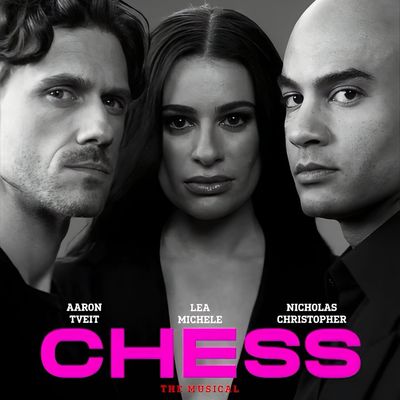
Choreographer/Director Lorin Latarro joins Behind the Awards to discuss the creation of the Chess Revival starring Lea Michele, Aaron Tveit and Nicholas Christopher. Listen for the origin story of getting Aaron Tevit’s paints on and her favorite moment of the show which happens right before One Night in Bancock... Read More
From the show: Behind the Awards with Eila Mell & Bruce Gotlieb
Guests

Featured Shows



About
Choreographer/Director Lorin Latarro joins Behind the Awards to discuss the creation of the Chess Revival starring Lea Michele, Aaron Tveit and Nicholas Christopher. Listen for the origin story of getting Aaron Tevit’s paints on and her favorite moment of the show which happens right before One Night in Bancock. Lorin also talks about her other bodies of work including Heart of Rock & Roll, Joy, Waitress and upcoming Idigo Girls Musical Starstuck as well as Begin Again coming to the Old Globe.
Also in this episode - Behind the Awards takes a field trip to Beaches Tech Day!
A multiple Drama Desk, Lortel, and Chita Rivera nominee, Lorin has choreographed on Broadway with Once Upon A Mattress, The Who’s Tommy, Heart Of Rock And Roll, Into The Woods, Waitress, Mrs. Doubtfire, Les Liaisons Dangereuses with Janet McTeer and Liev Schreiber, Waiting For Godot with Sir Ian McKellen and Sir Patrick Stewart, and Merrily We Roll Along at The Roundabout. Other credits: La Traviata at The Metropolitan Opera, Chess at The Kennedy Center, Lin-Manuel Miranda’s 21 Chump Street for This American Life (Brooklyn Academy of Music), The Public Theater’s The Visitor, Twelfth Night and The Odyssey (Public Works, Delacorte Theater), Oliver, Fanny and God Bless You, Mr. Rosewater (City Center Encores!), and A Christmas Carol (McCarter Theatre). Directing credits include Joy at The Laura Pels Theater starring Betsy Wolfe. Candace Bushnell’s one-woman show, Is There Still Sex In The City at the Daryl Roth Theatre (an NY Times Critic’s Pick), Begin Again with music by Train, Hitchhikers Guide To The Galaxy: The Immersive Experience, Queen Of The Night which garnered a Drama Desk Award, The David Foster and Kat McPhee Show, #DATEME at The Westside Theatre, A Taste Of Things To Come at Chicago’s Nederlander Broadway, Swelling And Irritation by Jodi Picoult and Tim McDonald, Trails by Jeff Thompson, Christy Hall. Rodgers After Hammerstein – 92Y Lyrics and Lyricists, Beth Malone’s Three Part Harmony - Theatre Aspen. Ms. Latarro holds a BFA from The Juilliard School. She holds a secondary degree from NYU Tisch Film and Television Directing Fundamentals. Lorin has traveled to India and Africa multiple times to work with The Gates Foundation in family health and planning, and is the founder of ArtAmmmo.org Artists Against Gun Violence as seen in the NY Times, PBS, “Rachel Maddow,” BBC.
Make sure to check out Eila's book, "The Tony Awards", and all her other amazing books: https://amzn.to/43WMu5Y.
Connect with Eila and Bruce:
- Instagram @behind_the_awards
- Eila @eilamell
- Bruce @cominghomewithbruce
Transcript
This transcript was automatically generated and might contain errors.
[0:01] Lorin Latarro: I'm Lorin Latarro, and you're listening to Behind the Awards.
[0:12] Eila Mell: Hello, and welcome to Behind the Awards. I'm Eila. I'm here with Bruce.
[0:17] Bruce Gotlieb: Hello there. How are you?
[0:18] Eila Mell: Well, I am recovering from our field trip. We had a Behind the Awards field trip to the Tech of Beaches the other day.
[0:25] Bruce Gotlieb: That's right. That's right. We got to enter through the alley of the Golden, Majestic, and Jacobs, which is where all of the hordes of fans of Mincemeat and the Outsiders and, you know, and formerly Gypsy Surgery Beaches will be waiting. I would say patiently, but not so patiently for their pre-bills to be signed.
[0:48] Eila Mell: That's right. Is that the only situation where theaters share an alley like that?
[0:53] Bruce Gotlieb: Yeah. My understanding, at least. So it's a special place.
[0:57] Eila Mell: It is. It's fun because, you know, if you're going, I mean, I remember we were going to visit Kevin, remember? Kevin Solak, our guest from Gypsy, and all the Mincemeat people were there. And, you know, it's just, you don't know who you're going to bump into when you go back there.
[1:12] Bruce Gotlieb: That's right.
[1:13] Eila Mell: So do you want to tell everybody about this experience, Bruce?
[1:17] Bruce Gotlieb: No, I think we're done.
[1:18] Eila Mell: Okay, that's it. We don't want to talk about it. No, it was fun. You got to go in, you know, obviously you go in, you get to see the stage, all the, where, you know, the props are, where the stage manager's perch is, where they're calling the show. You know, the theater looks more like a work zone than it does a theater because, you know, they have plastic and boards on the floor because they're wheeling all kinds of things around. Tables are set up, you know, each department, producers, writers, directors.
[1:43] Bruce Gotlieb: And there's like 100 people working on this show. Yeah.
[1:46] Eila Mell: Yeah, it's, you know, a lot is going on there and they're stopping and starting. It's, you know, they're making sure the show's ready to go and ready to be worked on, ready for an audience to see.
[1:56] Bruce Gotlieb: And they're still tweaking, you know, during that preview period, there are changes still that get made all the time and songs get changed, added, pages get ripped out, you know.
[2:06] Eila Mell: Costumes change, wigs change. And in fact, I got word already that since we were there, they've made significant changes. So, you know, we shouldn't even post pictures from the actual performance that we, the little bit of the performance we got to see because it's going to be different. So, you know, there's no point.
[2:25] Bruce Gotlieb: Absolutely. And our guest is no stranger to ever evolving changes.
[2:31] Eila Mell: Oh yeah. We have director and choreographer Lorin Latarro on with us today.
[2:36] Bruce Gotlieb: And, you know, she shares how things get put together much like this behind the scenes event that we had. Everything kind of has to be orchestrated and there are so many people involved to putting a show up.
[2:47] Eila Mell: Yes. And all that goes into it.
[2:49] Bruce Gotlieb: So.
[2:50] Eila Mell: And choreography plays a huge role in that.
[2:52] Bruce Gotlieb: Absolutely.
[2:53] Eila Mell: Well, let's bring Lorin out.
[2:55] Bruce Gotlieb: Let's do it.
[2:58] Eila Mell: Well, Bruce, I'm so excited and surprised that our guest had time for us because she's so busy, but I'm so excited to welcome Lorin Latarro to our show.
[3:07] Lorin Latarro: Hello.
[3:07] Eila Mell: Hello.
[3:08] Lorin Latarro: I'm so happy to be here. Thank you for having me.
[3:10] Eila Mell: Thank you so much. We're thrilled to have you. You're having quite a season already.
[3:14] Lorin Latarro: It's been a great year. It's been a fun year.
[3:17] Bruce Gotlieb: I mean, everyone is talking about Chess and One Night in Bangkok specifically.
[3:22] Lorin Latarro: Good.
[3:23] Bruce Gotlieb: Good. The whole show is amazing. I will say that Eila and I saw it separately and the people that I went with, we had a similar conversation after as did Eila and I about like, wow, not only is that ensemble working really, really hard up there, but the dance that this show incorporates where other versions didn't before is so exciting, so much fun. So tell us a little bit about how that infused for you to make it more of a dance show than it normally is.
[3:50] Lorin Latarro: Oh, I mean, I've never seen it before, so I never knew what it was really. You know, it could be anything, right? I mean, you could do, you could do anything with Chess because it's that kind of show where it has so much style to it, but we made a choice to stay away from dancing chess pieces and instead try and do other things. But I think, I don't know. I mean, I, you know, honestly, like there were, you know, Michael Mayer and Michael Bennett were the two people who influenced me the most in creating the show. Of course, it's Michael Mayer's vision and it was his show and everything he does is so thrilling and he's so, so wonderful to collaborate with that it was just so dreamy. And of course I had Michael Bennett in the back of my head the whole time too because this is the show he never got to do. And I felt a very large sense of responsibility here to sort of do something that he'd be proud of somewhere up in the sky.
[4:44] Bruce Gotlieb: Check that box off for sure.
[4:46] Lorin Latarro: I hope so.
[4:47] Eila Mell: Growing up, was A Chorus Line a big deal in your life?
[4:51] Lorin Latarro: Yes, it was a big deal in my life growing up. I saw it on Broadway like three or four times and then I was in the revival as a performer. So I got to actually do it, you know, which was amazing.
[5:01] Bruce Gotlieb: And did that use Michael's original choreography?
[5:04] Lorin Latarro: Yes, it was the revival on Broadway that was just a few years back.
[5:08] Eila Mell: There's a great documentary about the casting and the making.
[5:11] Lorin Latarro: Oh yes, I am in it.
[5:12] Eila Mell: Yeah, I'm in it.
[5:13] Lorin Latarro: Yes, yes. Now I have to go back and watch.
[5:15] Eila Mell: I'm going to go get a rewatch.
[5:16] Lorin Latarro: And find you.
[5:19] Eila Mell: So, you know, one question that I have is that, you know, obviously you don't rehearse a show and immediately open it on Broadway. It goes through, you know, a lot of versions before you get there. And so I would think that your choreography goes through a lot of versions as well. What happens to all the choreography that you do that doesn't make it to the final version?
[5:38] Lorin Latarro: Oh, you know, it's as my dear friend Stephen Huggins says, you fold it off and you put it in your back pocket for another day. I mean, it's part of the job. You know, things get cut. We had this big pas de trois that was in Chess and it just, the show was running a bit long and it was at a moment that you wanted to go, go, go and it was just this choral music and it just, it had to go. It had to go. And it was, you know, it's hard to kill your darling as they say, but it's definitely part of the job. And you sort of, one day I'll do a beautiful pas de trois and something.
[6:14] Bruce Gotlieb: Was that Sarah? Who was Sarah Meal supposed to be?
[6:17] Lorin Latarro: It was Sarah Meal and two gentlemen.
[6:19] Bruce Gotlieb: Yeah.
[6:20] Lorin Latarro: Yeah. It would have been beautiful, but yeah, you have to, you have to serve the whole piece, not one moment. That's musical theater. Different than ballet. Different than doing a night at the Joyce.
[6:30] Bruce Gotlieb: Absolutely.
[6:31] Lorin Latarro: So you come from dance companies.
[6:33] Lorin Latarro: I do.
[6:34] Lorin Latarro: Yes, I do. But musical theater was always in your background or not so much?
[6:38] Lorin Latarro: Oh yeah. I was always getting in trouble at Juilliard. Always, you know, everybody else was doing their senior showcase. They were doing the box and cello sonatas and, you know, in the upper room by Twyla and I was doing Two Lost Souls by Bob Fosse, you know, with a jazz trio on stage. I got my buddies to play for me live. You know, always, always, but I did dance for the Graham Company and I danced with Twyla and I danced with Momix, which is an offshoot of Pilobolus, the Pilobolus split into two groups and I got to tour the world dancing for like three years, but Broadway beckoned. And then once I found my home on Broadway, I really, it's just what I love. I love it.
[7:19] Bruce Gotlieb: When you were starting to create this piece, because you were with it with the Kennedy Center piece. So it's been, obviously, this has been kind of brewing for quite some time. Did you find that your dance had to sort of evolve so much?
[7:40] Lorin Latarro: Oh my gosh, so much. Well, the Kennedy Center, you know, I don't even remember the year. Well, I do. I was pregnant. It was 2019. I was very, very pregnant. The last thing I did before I gave birth was 2018. And I mean, so much has changed. And think about the years in between, right? So when we went back and looked at it, Michael Mayer and I really approached it very, very differently. So a lot of things changed, you know, like Murano, for example, at the Kennedy Center, it was this like lovely Tyrolean Italian folk dance because that's what the music sounded like. But then we wanted to approach it much more modernist. So we scrapped that and did something totally different with it, you know, as an example. But we went through the whole thing and changed it. You know, for most of the show, the dancers are very buttoned up, you know, in suits and, you know, and then all of a sudden, One Night in Bangkok comes and, I mean, they couldn't be wearing less.
[8:36] Eila Mell: Do you know going in what the costumes are going to be? And does that influence the choreography?
[8:39] Lorin Latarro: Michael Mayer always had this idea that they were in suits and very sort of androgynous and one thing, one pack of people, you know. So I started looking at these Longo photographs. I'm sure you've seen them, these black and white photographs of men in suits going like, like throwing their bodies. And we put them all around the room. And a lot of the movement in Act One comes from this thing where you're like buttoned up until you can't, until you have to burst from the sort of energy. So a lot of that came from those Longo, very famous photographs. And then Bangkok, it was just like, you know, the idea of peeling off into individuality and into the sort of, you know, debauchery that Bangkok is at night. It was a lot of fun.
[9:25] Bruce Gotlieb: Not to give anything away, but how many takes or attempts did it get for you, for Aaron to jump into the pair of pants?
[9:29] Lorin Latarro: It's so funny. Aaron had this great idea to be like, what if I start undressed and get dressed? Like, what if we, you know, we do the opposite of the. So it was great. So we tried all these, like, you know, we had fancy ways to put a shirt on. And then I was like, how am I going to get these pants on? And then literally I just asked my friend who is a, you know, a gentleman was like six, five. I was like, do you have shorts on under this? Luckily he did. I said, take your pants off, just hold me. I'm going to try jumping in them. And literally on the first try, it was like, oh, that's pretty cool. And then I showed Aaron, he was like, that's pretty cool. It was like this very casual thing. And then of course it's become this wonderful, delicious little event in the show that people look forward to, which makes me so happy, but it just happened. Like, what if we try this?
[10:20] Eila Mell: You know, it's such a great moment.
[10:23] Lorin Latarro: So unexpected until people listen to this, but so not only are you a choreographer, but you are also a director.
[10:30] Lorin Latarro: Yes. I enjoy doing both and I enjoy collaborating in both ways very, very much. And starting to direct has made me a better choreographer, I think, and even more understanding of all of that. And I've got Begin Again coming up at the Old Globe. And I'm right now at Bucks County Playhouse is Starstruck, which is an Indigo Girls musical.
[10:49] Eila Mell: So I have been in a very dreamy rehearsal space with Emily Salyers and Beth Malone and Marianne Stratton.
[10:56] Lorin Latarro: Amazing. It's just, I mean, really dreamy.
[10:59] Eila Mell: Your most recent Off-Broadway, Joy, if we could just for a moment, which was so great, so much fun, so much energy. The night that I was there, you know, the whole place is abuzz. You come walking down to the front of the stage with a microphone and we're all like, uh-oh, because it's never a good sign, right?
[11:17] Lorin Latarro: It's never good.
[11:18] Eila Mell: But you said, I just want everyone to come on this ride with us. We had a song that wasn't working. Tonight's the first night we're putting it in.
[11:25] Lorin Latarro: Oh, you were there that night?
[11:26] Eila Mell: Betsy might have a piece of paper. We're not sure how it's going to go.
[11:30] Lorin Latarro: It was, oh my God, the song was, first of all, like an 11 o'clock number, but it was so amazing. She crumbled up the paper mid-song, whether it was intended because of your direction or not. But it was so, like, rich.
[11:42] Eila Mell: And thrilling, right? To experience that with something like I've never had the experience before, and it was so amazing.
[11:48] Lorin Latarro: Yeah, well, Betsy's amazing. I get to work with all these amazing people. I mean, Lea Michele, Betsy Wolfe, Beth Malone. I mean, it's just been these wonderful, extraordinary women. But yeah, that was a fun night. And she did that all on her own. She crumbled up that paper, and that song is wonderful. If you never came up to the front of the stage, literally nobody would ever know. That's how, like, just crisp it was and ready to go.
[12:11] Eila Mell: Well, that's good. You know, it could have gone any way.
[12:15] Lorin Latarro: So for me, you know, one of the most fun parts about Chess is just the music. It's so thrilling to be in that theater, hearing that music live. How does that energy, just of the music itself, infuse the choreography?
[12:27] Lorin Latarro: The music is so difficult. I cannot explain to you, like, to sit there with the score, and I read music, I play piano. It is so, so complicated. It is like an opera. I mean, it is really, it's like the thing you write when you've written everything else, right? Of course, you know what I mean? And it's thrilling to be inside of it. I will tell you, it is not easy music to choreograph to because of the complexity of the music. I mean, there's barely an eight count in there. You're counting all over the place. And these guys are geniuses, you know? We're all just trying to keep up.
[13:01] Bruce Gotlieb: So, because you're a musician also, do you look at time signatures and stuff and take that into account for choreography?
[13:06] Lorin Latarro: Oh, yeah, absolutely.
[14:20] Lorin Latarro: Can't go now. Michael Mayer has also spent time there. A lot of that constructivist artwork, like the work will set you free, and the red, and the black, and the white, and the linearness of all that really informed us. So much of that, weirdly, if you look at posters from the 80s, that kind of pop sensibility of the 80s, was also that kind of linear, bright colors, strong color blocking, you know, so it all worked together. And now that you, when you described those couple of paintings earlier and now even now, in my memory of going back and like picturing pieces of the show, you can see those and now where they kind of come together. So that's really interesting. Is there any stylistic speaking of the 80s then, for when you choreographed the Heart of Rock and Roll? Is there some influences that they share?
[15:09] Lorin Latarro: Oh, yeah. I mean, Heart of Rock and Roll had so many Easter eggs in it, you know. We had such a good time on that show and I really, it's a shame it didn't last longer because I think it was really delicious. But, oh, you know, just the ridiculous, the whole approach to that show was, you know, we wanted it to feel like those 80s movies in the best way. You know, it was a love letter to the 80s. So there were all kinds of down steps from the 80s sort of, you know, sort of Easter egged in it so that it still felt of today. It didn't want to look like a museum piece. But there was definitely some stuff inside there that if you did those moves in the 80s, you saw them. And the most fun moment in that show was the dance on the bubble wrap.
[15:52] Eila Mell: Was it actual bubble wrap or did you have it made?
[15:56] Lorin Latarro: No, it was actual bubble wrap.
[15:57] Eila Mell: Oh, wow.
[15:58] Lorin Latarro: Yeah, it was actual bubble wrap and we didn't throw it in the garbage. We did recycle it. But it was bubble wrap. We tested all kinds of bubble wrap. Little bubble wrap, big bubble wrap. It's, you know, it was so effective. And then you have to think, I can't believe no one has done this before at this moment.
[16:13] Eila Mell: I know. Well, you know, I mean, when was the last time there was a musical about, you know, in a box factory? Ever probably? I mean, what was good about that is it was organic to the dramaturgy of the story.
[16:28] Lorin Latarro: We've spoken to many, you know, book writers and, you know, of a musical and they always say that for them it's hard to stop, stop evolving and creating. And as a choreographer, do you find that, too, that you're always like, oh, well, if we do this, we're putting it, I guess, kind of to bed.
[16:43] Lorin Latarro: A show never is ready. Rehearsals have to stop. I mean, that's all that happens. You keep going and going and going. No, I think that what happens often is those of you listening, if you're going to see national tours, I think quite often you see a better version of the show because what happens is we do we have to open the show. There's never enough time. The show opens on Broadway. It's frozen. And union rules say that we can't really change something once the show is frozen. We might get in there a little here and there, but nothing really substantial. When you're watching the show, then you're learning so much about it. Now, a year later, here comes the national tour. You're back in rehearsal. So you get to make those changes. So I find that national tours are always tighter and have a few little pieces to it that are more elegant than the Broadway version.
[17:30] Beth Leavel: Hi, this is Beth Leavel. And behind the awards, we'll be right back. Don't go anywhere.
[17:39] Eila Mell: Don't do it. How much of a say do you have in the casting of your dancers?
[17:46] Lorin Latarro: It's always a fun day. It ends up being like, look, we take it very seriously. So I don't mean to make this light, but it's like trading baseball cards. I need a great dancer. My music director, Brian Yusufur, needs a great singer. Michael Mayer needs a great actor who can understudy the lead roles. So I always say to young students, how do I get on Broadway? And I say, if you can sing really well and dance really well and memorize your lines and act and understand the story, that's three out of three. If you've got one out of three, you have less of a shot because you've got to do all three to get in a cast. So that's what it is. It's like, can I have the one dancer who can sing? They're so good.
[18:30] Eila Mell: And so for dance students out there, is it too late if you haven't started dance classes at age four?
[18:36] Lorin Latarro: Absolutely not. I think people think that you have to start so early.
[18:41] Lorin Latarro: Oh my gosh. First of all, I did not start early. I mean, I didn't start really focusing on dance until like sixth grade and not in any intense way in the way that kids go to dance class once or twice a week after school. No, when you want something, you learn and you slowly get better. Slow and steady is the way. And your voice is merely a muscle just like your thigh muscle. Just practice.
[19:06] Eila Mell: That's very encouraging. And I think a lot of people will be happy to know that.
[19:12] Lorin Latarro: Even sixth grade seems early to me. I mean, people can start pretty much at any age, although dance careers can be cut short sometimes.
[19:20] Eila Mell: Well, it's hard to dance in your forties for sure.
[19:25] Lorin Latarro: But then there are the cheetahs who go on and end rankings. It's awesome. It's awesome. Yeah.
[19:32] Eila Mell: So for me, I love the beginning of all that jazz when it's the audition. Do you love those moments too? I mean, does that give you the same thrill or do you see it from a different point of view because it's what you do?
[19:45] Lorin Latarro: No, I love those moments. I love in-person auditions. I don't like this taping business that happened over COVID. It's much more exciting in the room. There's a sense of community in the room. You know, one of my favorite, like when I was auditioning was if I got cut, I treated myself to a piece of chocolate cake and usually it happened with another friend, you know, and you saw each other and it became a community. I love it. And there's so much talent in New York. Everybody's so exceptional. You know, I try and take good care of everybody in those auditions.
[20:15] Eila Mell: And can you also speak to the value of just showing up, just being in the room? Because even if someone's not right for you now, you'll maybe remember them for the next time.
[20:24] Lorin Latarro: Oh my gosh. Every time you're in a room, first of all, you're getting better because you're getting better at your skill of auditioning, which is half the battle. And you're meeting people and seeing people. It happens all the time. I see somebody and I'm like, well, they're not right for this, but oh my gosh, I'm doing this other thing. And, you know, absolutely. Because I mean, people, you know, in your position have so many projects going on at one time. It's not like you just shut them all off.
[20:47] Eila Mell: No, no, of course. And there's only like, you know, six casting agents in New York. So again, it's not just me that you're auditioning for. It's Michael Mayer and it's the casting director. So, so multiply that by like four or five different ways to get another job.
[21:01] Lorin Latarro: Really? Yeah. And audition is just such a great opportunity, whether it leads to that job or not.
[21:06] Eila Mell: Well, I always say it's a free dance class too.
[21:10] Lorin Latarro: That's true. And networking, right? You know, like you said, who knows who? Maybe you could talk to a little bit now that, because you're doing both, not in every project, but where the directing, you know, kind of line ends and the choreography line, like they're definitely blurred a bit in certain productions, but is there just a back and forth baton handoff that happens between the two?
[21:29] Lorin Latarro: When I'm choreographing, I really am close with my director and I am there to support their vision and I am there to offer a million ideas towards their vision or sometimes protesting their vision lightly and then not, you know, and then, or, or offering an idea that is, might be larger than or different than. And, but at the end of the day, the director might go, Oh my God, I love that. Or Nope, we're going to go this way. And that's my job. And I enjoy that very, very much. It's sort of like free practice because it's, I can throw out ideas and there's really no pressure for it to be the idea. Right. But really it has to, I, I, I, and I, I don't, I enjoy this, that I can follow along with somebody's sort of where they're headed.
And that's really the job of the choreographer. And also just the staging of it takes up 90% of my energy. I mean, I'm, you know, up there dancing and moving the bodies and making big, big decisions about once the song starts. I mean, each song is, it's like its own play. I always say each piece of choreography has to have a beginning, middle and an end. It has its own little story. So as a choreographer, you have all these little stories inside the one big story. But as a director, I really trust my choreographers when I'm collaborating. I know how, you know, how much they do and how hard they work, but also I'm finding that it's fun to find what my vision is and, and, you know, my thoughts about a new piece. So, but, but it's wonderful. And one, one hand feeds the other, it all helps.
[23:07] Eila Mell: Yeah. Not that you don't have enough going on, but is dancing on stage still an option for you or you're done?
[23:16] Lorin Latarro: No, no, no, no, never. I am so done. No, no, something really shifted in me. Look, I danced really, I mean, 14 Broadway shows, like I got to do it. It's amazing. I loved every second of it. I never took it for granted. It is other's time now. It is their time to take that stage. It's not for me. I can offer them all the information and all the help and tips, but it's really freeing for me. I love it. I feel like Jonathan Livingston Segal. Like I, I can now get, be a tall blonde. I could be this person. I could be that person. I could do, I can, I sort of, they're all my, you know, avatars in a way. And I, it's their time.
[23:51] Lorin Latarro: So here's a very topical question. All that we have been seeing a lot lately is women who are so skinny that you, you can't even imagine how they get through a day.
[24:02] Eila Mell: You mean the Ozembek, the Ozembek, the big O. I said like the big O I knew was a lot more fun.
[24:08] Lorin Latarro: Yeah, a lot more. But, you know, and, and obviously many, you know, for many years, dancers have fallen into that category of women who had to be impossibly thin. And then that changed. And we're seeing women of all different sizes on Broadway a lot. Are you concerned that we're going backwards in this?
[24:25] Lorin Latarro: Huh? I mean, the Oscars, certainly the other day watching that, it made me feel like, Oh my gosh. I mean, it was like, you know, really apparent. Yeah. I think one of the things that Broadway values and that has really shifted during the pandemic. And I think that casting directors and all of us are very on board with is, you know, celebrating all kinds of body types and all, you know, all kinds of people on stage. And I don't see that going good because it's too much fun. There's so much more freedom now, not having to do that, you know, for the audience too. We don't want to see people who just look one way. And also if, if you're undernourished, because really what we're looking at is not healthy.
It's undernourished. How could you get through eight shows a week? No, you can't, you can't, you know, athletes don't look like that. Female athletes don't know. I never looked like that as a dancer, you know, never. No, I don't think Broadway is going to go back to that. I really don't go.
[25:31] Eila Mell: Well, Broadway is like the one place where everything has to be as real as it can. Cause you're in real time. You're seeing real life people. So yeah. And you do and you're in, you, you said it correctly, like eight shows a week takes a lot of protein power. It really does.
[25:41] Lorin Latarro: Yeah. Good. See all the more reason Broadway is the healthiest version of the arts and that's what will happen. You know, the health industry will catch up to Ozimbic and things will shift.
[25:51] Eila Mell: Oh yeah. I hope so. Yeah. But medicine moves slowly. When you think of choreography, looking at a show that you did like Waitress, which I love and the way that choreography is telling the story, it's not what people think of traditional choreography, like a chorus line or, you know, like, like you're doing in chess, but just the style of body movement and the way that it is lyrically telling this story is so beautiful. Is it almost harder to evoke something like that because it's so stylized?
[26:20] Lorin Latarro: Oh my gosh, that that's so much harder. Yeah. That's so much harder. And I've done a lot of that, you know, even in like Waiting for Godot and Dangerous Liaisons, you know, that kind of real modernist, you know, postmodern sort of movement that leans towards what we call pedestrian movement. It's not pedestrian, but it just comes from a fundamental of a whole different. It's from the Judson Street group. It's like for your dance historians out there. It just comes from the fundamentals that come from walking, running, jumping and modalities of slow and fast and all of that, as opposed to a modality of pas de bourree and grand jeté. So different languages, different languages. I love them both equally.
They're both, you know, babies of mine. And I just try and parse it out for when it is appropriate. Even in chess, you see moments of that a lot, you know, when they're sitting and when they're, you know, there's lots of small little movements that are fun to figure out.
[27:18] Lorin Latarro: Yeah, because in a musical, you need to have energy in your movement, even if it's not a musical number sometimes, because you need to keep that, you know, you need to match the music a lot.
[27:27] Eila Mell: Yeah. Yeah. And I like things that feel heightened.
[27:29] Lorin Latarro: Yeah.
[27:30] Eila Mell: Right. Well, we want to congratulate you because the inaugural Ensemble Awards were announced and chess is right.
[27:38] Bruce Gotlieb: Well, there. Listen, it's great. It's wonderful.
[27:42] Eila Mell: It is. We don't quite understand how they're measuring just because only some of the season has happened, but we think it's great.
[27:49] Bruce Gotlieb: Yeah, all good. And especially for the cast. Anytime you're recognizing ensemble members makes me very, very happy.
[27:56] Eila Mell: Absolutely.
[27:57] Bruce Gotlieb: Yeah. I'm not going to say this in a way that sounds flattering, but I don't mean it in a derogatory way, but do you have to choreograph around sort of big names that you inherit because they're going to bring audience members in and you don't know if they can dance or not?
[28:11] Lorin Latarro: Yeah, but that's what's so exciting to me about choreographing is choreographing with the artist. So it feels, it's not, certainly a performer in a show shouldn't feel like they're, you don't want to look at Nick Christopher and notice that the choreographer put movement on him. That means I'm a bad choreographer. You want Nick Christopher center stage to look amazing and to look like every move he makes is intentional and organic to his body and the way he moves. Luckily, Nick Christopher can do nothing. I mean, it's amazing, but I'm just, I'm just giving that as an example that my job is to take whatever star I have at the center of the piece, you know, and someone like Sutton Foster who can put her head over her, her ear over her head.
I'm certainly going, do you think you can put your other, can we do both? You know, I'm certainly pushing someone like Sutton, you know, to do something like that. But also there's moments where you just needed Sutton to stand and sing a glorious song, which she of course can do. You know, stillness is also choreography. You know, Martha Graham always says that it takes five years to learn how to dance, 10 years to learn how to walk and 20 years to learn how to stand still on stage. So I, you know, it's all very intentional.
[29:31] Eila Mell: So I'm sorry if this is a bad question, but what do you think is your, your signature style? Like if someone knows they're auditioning for a show of yours, what do you think the ask is?
[29:42] Lorin Latarro: I don't know, because I don't really, again, because I have all these little styles that I love, it just, the story, really the story is going to drive my style. I mean, Heart of Rock & Roll look nothing like Tommy and nothing like Chess and nothing like Waitress. Whether that's good or bad, I don't know. You know, I mean, I just, I'm not interested in the same 10 codified dance steps. That's just not what I, that's just not how I work. I think that for people coming in to audition for me, they should really do their homework on what the show is and what they think the show might require.
[30:14] Bruce Gotlieb: Right, bring that energy, tell that story and worry about the dance steps when you learn them.
[30:20] Lorin Latarro: That's 100% right. It's sort of like, do you fit into this universe that this show is talking about, right? How do you fit in and, you know, being a part of the world is really what I'm looking for. Bruce and I have said that Heart of Rock & Roll, we didn't, we didn't have high expectations going in because the word of mouth wasn't great. People didn't know what the show was going to be.
[30:39] Eila Mell: Right.
[30:39] Lorin Latarro: When I saw it and every person that I know has seen it, loved it, was so blown away by what it was. I know, the word of mouth got great once people started going. We just had no box office advance. And that was the year that it was like 46 new Broadway shows. It was so insane.
[31:04] Bruce Gotlieb: I know. I would say that if it opened this season, this season, I think would have been a whole nother ballgame, but who has a magic crystal ball? You don't know.
[31:08] Lorin Latarro: Exactly. You don't know. But now, so in contrast, Chess is the opposite of that, right? It just, everyone couldn't wait for it. So how does that feel, especially after, you know, something, because, you know, I mean, you don't have to say anything, but we thought that you should have really gotten a Tony nomination for Heart of Rock & Roll.
[31:27] Eila Mell: Easily, you should have.
[31:27] Lorin Latarro: But anyway, how does it feel now being in a position where everybody is seeing the show?
[31:31] Lorin Latarro: I mean, I'm just so happy that again, Chess has such huge, you know, there is such weight to everybody feels ownership of Chess. They love the music. Like everybody wants that, you know, they, they all, somebody saw a version in Russia. Someone saw a version in Berlin. That was the best, you know? So I feel very satisfied and happy that Michael and Danny cracked the show in such a way that a made Tim Rice and Ben and Bjorn so happy. And also I just think audiences are loving it. And Nick and Leah and Aaron are, I mean, it is a, for me, I think it is a once in a lifetime thing. I think you will never hear this music sung the way you are seeing it on the stage. It is thrilling. And it is, it's a once in a lifetime thing.
I mean, and, and to me, that's like, you just come for that. And then the fact that Danny Strong did such an incredible job on the book, and hopefully you like the dancing, you know, it adds something. I hope I might just think it's, you know, it's a very special show that way. So I feel very proud of it and happy that it was received well.
[32:39] Eila Mell: Do you have any favorite dances in the show?
[32:45] Lorin Latarro: My actual favorite moment of the show from a choreographic standpoint is called Golden Bangkok. And it is the top of Act Two. It is before One Night in Bangkok arrives and the dancers sort of peel off their clothing and do very sort of probably the hardest choreography in the show. And Kevin Adams, who is our lighting designer, who is a absolute genius, he and I worked really closely together with all of the flashing lights on the boxes to sort of make the dancers appear and disappear. And to me, it is the, out of all the work I did all night long, to me, it is the purest choreographic moment and the most beautiful, tight collaboration with Kevin all night long. So I find it really special.
[33:27] Eila Mell: Now I want to see the show again, just to take that moment in more. For everyone who's listening, if you have tickets, pay attention. And if you already saw it, get tickets again and pay attention.
[33:35] Lorin Latarro: That's right. Top of Act Two. Don't be like Fitzsimmons with your Raisin S or your jacket, just come in and watch.
[33:40] Bruce Gotlieb: So is there anything that you have coming up that you can talk about?
[33:46] Lorin Latarro: Well, I mean, Starstruck, the Indigo Girls musical, hopefully we'll have more lights. We'll see. And Begin Again, which is music by Train. You know Train. It's like Drops of Jupiter is one of their big songs. They wrote a new score to a John Carney movie called Begin Again. It's really beautiful. And it's about art and music and musicians, and it's super cool. And that's happening at the Old Globe in August, September.
[34:11] Eila Mell: That's a great theater, obviously.
[34:11] Lorin Latarro: Yeah, it's really, really great. So those are my two biggies that I'm currently working on.
[34:16] Bruce Gotlieb: At what point do you choose your dance captain?
[34:18] Lorin Latarro: Well, that's another great way to get a job. You know, you prove yourself as a really smart dancer who understands the mathematics of choreography, you will never stop working because we're always looking for really smart dance captains. So I tend to hire a dance captain who I've worked with prior.
[34:31] Bruce Gotlieb: So that's not an audition kind of thing. That's an ask, usually?
[34:36] Lorin Latarro: The dance captain is part of the ensemble. So remember I talked about that, like, singer who can't, the dancer who doesn't sing really well? If that dancer who dances really well is also a great dance captain, that's one more way to get that slot.
[34:51] Bruce Gotlieb: That's right.
[34:51] Lorin Latarro: Okay, it's good for people to know.
[34:53] Bruce Gotlieb: Yeah, yeah, totally.
[34:55] Lorin Latarro: Like I said before, and not just because I'm talking to you, I've said this sentiment to everybody is, you know, the show itself is so exciting because you have the energy of the singers, right? The three of them are nobody's business when it comes to vocal ability. But then the energy of the ensemble, the ensemble is just some of the tightest work I've seen, not only this season, but probably in the past few seasons. They're just locked in, and the dance and the energy is, you feel it as an audience member, no matter where you're sitting, you can be all the way in the back, it doesn't matter.
[35:27] Lorin Latarro: Yeah, they are, that ensemble, every single one of them is incredible. They are really at the top of their game. They are incredible. They work so hard. They have fun backstage. It's a really, the energy in that theater is amazing. Leah and Aaron and Nick have been incredible leaders. Every time I go back there, Leah brought Girl Scout cookies, Aaron brought bagels, Nick brought candy. I mean, it's just the loveliest group of people.
[35:51] Bruce Gotlieb: That's amazing. And that's what you want. You want that type of environment.
[35:54] Lorin Latarro: Yeah, yeah, it's great. That's great. I think it's a real cast of pros, and they've been around long enough to be really grateful when it all does click and work. It's been such a brutal couple seasons with shows closing quickly that I think everybody now understands when you have a show that's running, take it in and enjoy it.
[36:11] Bruce Gotlieb: So what changes as a dancer when you get into tech and all the design elements come into play? How does it change for you doing the movements?
[36:20] Lorin Latarro: Really, what I've learned over the years is that all of the movements have to be done clean and precise before you walk into tech, because tech is not about dance. I get 30 minutes of space to dance, you know what I mean? But even that, most of that work is even done in the studio because we have the little numbers on the edge of the stage and the depth taped up. Really, tech is about lighting and sound and band and costumes. So what I've learned, the hard way, is that whatever's not done in the room doesn't get done in tech. So you better walk into tech with everything done as you want it, because it's really not the choreographer, the dancer's realm.
[37:05] Lorin Latarro: It's thrilling. It's thrilling and it's like, oh, I'm wearing a suit. I rehearsed this whole number in a bra top and jazz pants, and now I'm in a three-piece suit. So once you get past that, and Tom Broker did an amazing job, that suit flexes, it's amazing, but it's still a suit. So there was definitely a few days of, what's happening? And then it all comes back together and then all those elements, the costumes and the lighting, just all make the dance look so much better.
[37:41] Eila Mell: Talking about revivals, if you had, and maybe you do have this list, but if you had your pick of any show you could just pluck out to either choreograph or direct as the next revival, do you have one?
[37:53] Bruce Gotlieb: So then I think I should have said post-tech, because how does it feel once those elements are set as a dancer?
[37:54] Lorin Latarro: I have three, Man of La Mancha, Sweet Charity, and Singing in the Rain.
[38:01] Bruce Gotlieb: All right, yes to all of those.
[38:03] Lorin Latarro: Right? I mean, come on.
[38:05] Bruce Gotlieb: Yeah, really? That's a good list.
[38:07] Lorin Latarro: When you work with a dancer over and over, obviously you get a shorthand.
[38:12] Bruce Gotlieb: Yeah.
[38:13] Lorin Latarro: Do you start choreographing to their strengths?
[38:15] Lorin Latarro: Yeah, absolutely. It's really wonderful when you have this team of, you know, I call them, there are people, Michael O is one of them.
[38:24] Bruce Gotlieb: He's such an athlete, my gosh.
[38:25] Lorin Latarro: Oh my God, he's amazing. I mean, I think the last three or four Broadway shows he's in my show, and at this point I know his strengths so well that I can be at home in my bedroom choreographing and know that like, oh, and Michael O'Byrne can do this or, you know, and I just, we have, I've been very lucky to have a group of people who I call up first and they're really, like, they're thoroughbreds. They're incredible. And we have a shorthand now.
[39:00] Bruce Gotlieb: That's going to be exciting for you too when you're sitting in an audition room waiting for people to come in and then all of a sudden one of these people walk in the door, you're probably like, your eyes probably light up.
[39:03] Lorin Latarro: Yeah, of course, because, you know, again, we're all looking for these amazing dancers who also sing. It's also really exciting for me when a young dancer comes in who we don't know and they blow us away. I mean, that's also just thrilling, right? It's thrilling.
[39:14] Eila Mell: It's thrilling as an audience member too to discover someone who, you know, who is this person? Wow, look what they can do.
[39:21] Lorin Latarro: Because we need the next whatever, whatever that person is, we need it.
[39:25] Lorin Latarro: Yeah, we have a few of those in our cast. There's a young girl named Sydney, there's a young girl named Regine, and they just, you know, right out of college are there. It's great. It's so exciting.
[39:35] Bruce Gotlieb: It's probably also exciting, though, when you have someone who you have worked with over and over and then you still discover that they can do something you had no idea.
[39:43] Lorin Latarro: Oh, absolutely. Even, like, seeing Samantha go on for the lead role and Kat go on and Sean go on, it's like, oh my gosh, these amazing dancers and singers are also these incredible actresses who hold center stage so beautifully. The truth is the cast of Chess, any one of that ensemble, every single one of those people can hold center stage. They are an extraordinary group of actors.
[40:06] Bruce Gotlieb: Wow.
[40:07] Lorin Latarro: Incredible.
[40:07] Bruce Gotlieb: That's a pretty tall order because not a lot of celebrities who come in to do shows, not necessarily the people in Chess, but can do the dance that's required.
[40:12] Lorin Latarro: Oh, absolutely.
[40:18] Bruce Gotlieb: So that, you know, it's a lot and that's high praise.
[40:21] Lorin Latarro: Yeah, we've heard that from, you know, like Chicago, for instance. They have so many people come in and they're always, from what we understand, you know, they have to modify depending on who that person is, what their capabilities are. The ensembles at Broadway hold the art form up.
[40:37] Bruce Gotlieb: Oh, yeah.
[40:37] Lorin Latarro: They are the ones who hold it up. I mean, truly. That's such a nice way to say it, though.
[40:41] Bruce Gotlieb: Absolutely.
[40:42] Lorin Latarro: Well, thank you so much. This has been so fun.
[40:45] Eila Mell: Yes.
[40:46] Lorin Latarro: Oh, thank you.
[40:47] Bruce Gotlieb: Go out and get your tickets for Chess if you haven't.
[40:49] Lorin Latarro: Yes, please. Come see Chess. Come see Begin Again. Don't miss. Don't miss Chess. It's extraordinary.
[40:56] Eila Mell: It really is. And don't miss this cast in Chess because they won't be there forever.
[41:00] Lorin Latarro: That's right. We think the show might last a while, but, you know, you need to see these three, too.
[41:05] Eila Mell: Yes. If you haven't already fallen in love with Lorin's choreography over her, you know, countless credits, this one will certainly do the trick.
[41:14] Lorin Latarro: Thank you so much. And thank you both for taking the time.
[41:17] Bruce Gotlieb: It's our pleasure. And you're welcome back anytime you like.
[41:20] Lorin Latarro: Thank you.
[41:21] Eila Mell: We'll see everyone next time on Behind the Awards.
[41:23] Lorin Latarro: Bye-bye.
© Broadway Podcast Network, All Rights Reserved