

Kenny Leon and his victorious revival! Director Kenny Leon opens up about the hit revival of Ossie Davis’s Purlie Victorious starring Leslie Odom Jr and Kara Young... Read More
From the show: Behind the Awards with Eila Mell & Bruce Gotlieb
Guests
Featured Shows

About
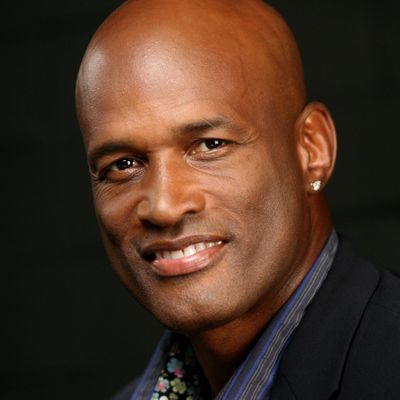
Kenny Leon and his victorious revival!
Director Kenny Leon opens up about the hit revival of Ossie Davis’s Purlie Victorious starring Leslie Odom Jr and Kara Young. Kenny gives us the scoop on his busy upcoming season including Home at the Roundabout Theater, Our Town lead by Jim Parsons & Katie Holmes, and Othello with Denzel Washington & Jake Gyllenhaal. Kenny gives listeners a glimpse into his cinematic directing process for the stage and how he turned the play American Son starring Kerry Washington into a movie for Netflix in 4 days.
Eila and Bruce also discuss Audra McDonald’s Best Featured Actress Tony win for Raisin in the Sun and the Breaking News of her Mama Rose in Gypsy at the newly renovated Majestic Theater.
Kenny Leon is a Tony Award-winning Broadway and television director. His Broadway credits include the Tupac musical Holler If You Hear Me, A Raisin in the Sun starring Denzel Washington (Tony Award for Best Direction of a Play and Best Revival of a Play), The Mountaintop starring Samuel L. Jackson and Angela Bassett, Stick Fly, August Wilson’s Fences (which garnered ten Tony nominations and won three Tony Awards, including Best Revival of a Play), Gem of the Ocean and Radio Golf. He also directed Smart People for Second Stage. Leon's recent television work includes "Hairspray Live!", and "The Wiz Live!" on NBC. He is the recipient of the 2016 Mr. Abbott Award for Lifetime Achievement in Directing and the 2010 Award for Excellence in Directing from the Drama League. Mr. Leon serves on the board of New York's Public Theater and is Artistic Director of Atlanta's Kenny Leon's True Colors Theatre Company.
Make sure to check out Eila's book, "The Tony Awards", and all her other amazing books: https://amzn.to/43WMu5Y.
Connect with Eila and Bruce:
- Instagram @behind_the_awards
- Eila @eilamell
- Bruce @cominghomewithbruce
Transcript
This transcript was automatically generated and might contain errors.
[0:00] Kenny Leon: The only thing I've ever wanted to do in my entire life is be on Broadway. You can ask anyone who knew me when I grew up in Fred Snow. And the fact that Broadway has been so kind to me is something I'll never be able to repay. I'll just keep trying to work and keep trying to do good work.
[0:30] Eila Mell: Hello and welcome to Behind the Awards. I'm Eila here with my guy Bruce.
[0:36] Bruce Gotlieb: How are you, Bruce?
[0:37] Eila Mell: I'm great. How are you, Eila?
[0:39] Bruce Gotlieb: I'm good. So we were just listening to Audra McDonald.
[0:44] Eila Mell: That was her 2004 Best Featured Actress acceptance speech for her Tony Award for Raisin in the Sun.
[0:51] Bruce Gotlieb: Okay, so you and Audra have a very well, hmm. What do I want to say? It's a very interesting relationship because she doesn't know I exist.
[1:04] Eila Mell: Well, but you love her almost more than anyone.
[1:08] Bruce Gotlieb: I'm very jealous of this relationship you have with Audra. There's very few people at the top of that list.
[1:15] Eila Mell: And she is certainly up there.
[1:17] Bruce Gotlieb: She's number one, and can I say you're number two?
[1:22] Eila Mell: Uh sure. I mean, we don't want to offend anybody.
[1:24] Bruce Gotlieb: No, well, they're not up there. You know, it's very strict criteria.
[1:29] Eila Mell: But so it's Audra, then it's Heather Headley.
[1:32] Bruce Gotlieb: That's true. That's right. Is there a definite number three or or no?
[1:36] Eila Mell: I think number three, there's probably a really close proximity. You know, I don't want to call it a tie, but there's definitely, you know, it's tight, it's a tight race for that third spot.
[1:49] Bruce Gotlieb: Okay, so we won't say because we don't know how many there are in that third spot.
[1:53] Eila Mell: There's not many.
[1:54] Bruce Gotlieb: There's not many.
[1:55] Eila Mell: Okay, but there's too many to go into right now.
[1:58] Bruce Gotlieb: So, I mean, I love Audra too. Not in the way that you do, but I do love her.
[2:01] Eila Mell: And I actually got to collaborate with her on my Tony Award book because that's right. First of all, she's interviewed for it, but she wrote the foreword, which was incredible.
[2:14] Bruce Gotlieb: Yes.
[2:15] Eila Mell: And I mean, she's just so sweet. Like she talked about growing up in Fresno and watching the Tonys and how that was her first glimpse into these voices that she would listen to on cast recordings. Like now she could actually see Angela Lansbury and Patti LuPone singing these songs that she would listen to.
[2:33] Bruce Gotlieb: So you know what's funny, and you bring that up is for those of our listeners that follow us on Instagram. We do a lot of behind the scenes clips, acceptance speech clips, you know, different things that are award related. And on one of the recent clips that we posted, which was one of the performances of Thoroughly Modern Millie, I believe it was at the Today Show or Good Morning America, one of those morning shows in their summer series, and a gentleman commented on it thanking us for posting it because he lives in the Midwest, and that's his only glimpse into Broadway are the Tony Awards.
[3:13] Eila Mell: So I thought that was it. I mean, in New York, it just baffles us because it's so accessible.
[3:20] Bruce Gotlieb: Well, right. You and I grew up in New York going to theaters, so we don't have that perspective that most people have.
[3:26] Eila Mell: Yeah, so you know, we're giving other, I guess he was thanking us for because other than the Tonys, now he gets a by following us, he gets some extra little snippets.
[3:36] Bruce Gotlieb: I know, right? It's the Tonys, it's the Thanksgiving Day parade, but you know on the parade, it's not really how it looks in the show.
[3:37] Eila Mell: Well, at least the Tonys not the same.
[3:45] Bruce Gotlieb: Right. The Tonys, you really get a good approximation of what it is to see the show.
[3:49] Eila Mell: Yeah, and I would say that even you know, the Thanksgiving Day Parade's wonderful and all, but even when they do those performances on the morning show, I think that's probably even a better perspective of it because there's less that they have to worry about, right?
[4:04] Bruce Gotlieb: There's less factors involved.
[4:06] Eila Mell: Well, they're not three, you're so much.
[4:08] Bruce Gotlieb: Yeah, exactly. So you know I went to the parade for the first time this year, but I wasn't in the spot where you could see the Broadway performers.
[4:18] Eila Mell: So that was a little bit of a drag, but it was cool being there. I got to sit right up front, so that was nice, but you know, still.
[4:26] Bruce Gotlieb: Yeah.
[4:27] Eila Mell: All right. So you said what Audra won for in this clip.
[4:30] Bruce Gotlieb: Yes. A Raisin in the Sun, best featured actress.
[4:34] Eila Mell: Right. So this is one of her six Tony Awards, which is more than any other performer, and in every category, which also no one has ever done. I mean, that's a feat in and of itself. You know, there are people that are like, well, once you're a lead actress, do you go down to featured? And I say, why not? Get them all.
[4:53] Bruce Gotlieb: Yeah, because it's not necessarily going down, right? It just depends on the part itself.
[4:57] Eila Mell: If it's a great part, what's the difference? I mean, there are shows, musicals especially, where you have characters that come on, do a number, tear the roof off the place, and leave and you never see them again.
[5:09] Bruce Gotlieb: Oh my god. And isn't that the best? Because then you just get to hang out.
[5:12] Eila Mell: That's right. Go take a bow and go home. And sometimes, if you have something early in the show, you don't even necessarily have to stick around for the whole of the battle.
[5:22] Bruce Gotlieb: That's true. That's true. Be home early.
[5:25] Eila Mell: But yeah, so that's one of her six, and you know, it's funny. I saw something posted the other day. Let's talk about the best actress in a Tony race. And they said, but no, not this year, next year. Because you have so many people that would potentially.
[5:45] Bruce Gotlieb: Oh my, I think Paul Wantorak shared that. We need to talk about the Tony Award race for best actress in a musical. No, not this year. Next year. Have you made the list? The cult shows I know. Megan Hilty, Jennifer Samard, Audra McDonald, Helen J. Shawn, Sutton Foster, Katie Braden, Bernadette Peters, Lea Salonga, Casey Levy, Ghosnely Rogers, Robin Arder.
[6:09] Eila Mell: What is happening? Kind of like, wow, this is going to be a good season for women.
[6:13] Bruce Gotlieb: So that's great. And you know, it brings me back to just a few weeks ago when we were doing one of our Tony specials and saying, you know, how do you pick? Because the contention is so fierce. And now already I'm stressed out for next season.
[6:28] Eila Mell: And nothing's even opened yet.
[6:29] Bruce Gotlieb: And nothing's even opened yet.
[6:31] Eila Mell: I know. Except what's opening tonight, Home.
[6:34] Bruce Gotlieb: That's right. Kenny Leon.
[6:37] Eila Mell: We're so and we get to do a deep dive with Kenny about Home.
[6:40] Bruce Gotlieb: Yeah. So that's very exciting. Should we bring Kenny on?
[6:44] Eila Mell: I think we should.
[6:45] Bruce Gotlieb: All right, let's get Kenny.
[6:49] Eila Mell: We are so happy to welcome Kenny Leon to Behind the Awards. Hi, Kenny.
[6:53] Kenny Leon: Hey, it's good to see you.
[6:55] Eila Mell: It's good to see you and not on a Zoom.
[6:59] Kenny Leon: We got the face to face time with Kenny tonight.
[7:01] Bruce Gotlieb: That's good. You know, you know.
[7:02] Kenny Leon: Too many Zooms.
[7:04] Eila Mell: I know. But that's how I know you from our interviews for my two books. Thank you so much that you were in.
[7:10] Kenny Leon: But now we're face to face. Congratulations on the book, especially the Tony Award.
[7:15] Eila Mell: Thank you.
[7:16] Kenny Leon: Great. Well, congratulations on your Tony nomination.
[7:19] Eila Mell: Thank you so much. That's very exciting.
[7:21] Kenny Leon: But you're already a Tony winner, so this is old hat for you.
[7:24] Eila Mell: Well, you know you can always add.
[7:27] Kenny Leon: That's right. It's a nice collection. And I'm sure the feeling never gets old, right? That nomination morning.
[7:31] Eila Mell: I love being nominated. It's a sign of respect in the industry. And it also reminds me to take time to honor all the other great artists who are putting out work there in our universe. So I mean I've seen so many good plays and good musicals this year. I think the diversity is better, I think the storytelling is better, the generational diversity is better. So I'm just a proud member of this Broadway community, so it is indeed an honor to be nominated.
[8:05] Bruce Gotlieb: Well you're such a good speaker. Do you have anything planned just in case?
[8:10] Kenny Leon: No, I know I'll say something about education and our school systems and the fact that we're banning books and that's not good. We're banning plays, that's not good. So I'll probably say something about that, and I'll probably say something about, you know, Ossie Davis, who wrote a love letter to us in nineteen sixty-one that we received in twenty twenty-three, going into twenty twenty-four. So that's all I know. I won't make any other plans because you know why make plans if I might still be in my seat.
[8:47] Bruce Gotlieb: That's right. Clapping for someone else.
[8:49] Kenny Leon: That's right. That's right. But you know, I mean, come on. That's all I mean. But awards they do give you fuel and encouragement to do the work you gotta do. So it's always good to win.
[8:58] Eila Mell: Yeah, it's very good. But I really do believe that the nomination is the award, and then getting the win is just the cherry on top.
[9:06] Bruce Gotlieb: Right, absolutely.
[9:07] Eila Mell: So you don't know this, but I included your speech in the book in the Tony Awards book.
[9:16] Kenny Leon: Oh wow.
[9:16] Eila Mell: Oh, when the play won.
[9:17] Kenny Leon: Yeah, when the play won.
[9:18] Eila Mell: That's the one thing I'm really proud of too. Like four of the revivals that I've directed have won best revival of a play.
[9:26] Kenny Leon: Amazing.
[9:27] Eila Mell: That's incredible.
[9:28] Kenny Leon: That's the whole team. That's the group, you know what I mean. And it also honors those writers who many of them are no longer with us. So that's the real test of time, you know, if the work still speaks to future generations.
[9:43] Eila Mell: Right.
[9:44] Kenny Leon: Yeah.
[9:44] Eila Mell: So let's I want to talk about what's coming up for you, but we have to acknowledge Purlie Victorious because Bruce and I both saw it in person.
[9:53] Kenny Leon: I saw it twice in person, and then a third time when we went to the screening the other day.
[9:57] Eila Mell: Wow. Because now everyone can watch it on PBS, which is incredible.
[10:02] Kenny Leon: Yeah, great. It's on Great Performances now, and I'm so proud of it. And I'm really proud of the entire team. Nine cast members strong, not a weak link in there. You know, I wish there was a Tony recognition for the work that Billy Eugene Jones did.
[10:18] Bruce Gotlieb: Me too.
[10:19] Kenny Leon: J.O. Sanders did. I mean, such good work. But Leslie Odom Jr. and Kara Young, it's just amazing. So to be and then for Derek McLean to get acknowledged for the scenery.
[10:34] Bruce Gotlieb: That is I know I'm a little biased here, but that scenery for a play doesn't get much better.
[10:43] Kenny Leon: No, that's what the play called for that the way that wood spread out and the light came through the wood. And so Derek McLean, I was so proud of him for getting that nomination and the Middle Social for the costumes. And another area that gets overlooked is Adam Onre's light.
[11:01] Bruce Gotlieb: Yes.
[11:01] Kenny Leon: They were very beautiful. And he's a really a young great lighting designer whom I love. So you know and that director to get that Tony nomination, you know that director, you know not so bad.
[11:12] Bruce Gotlieb: You know I mean he is maybe they'll let him do something next season.
[11:16] Kenny Leon: Yeah please let me do something next season.
[11:19] Bruce Gotlieb: I love I love working.
[11:19] Eila Mell: We can tell because you have three shows coming up.
[11:24] Bruce Gotlieb: So Bruce and I have dubbed it the Kenny Leon season because you had already.
[11:24] Eila Mell: Yeah we did an episode of our show talking about all the things that you have coming up.
[11:33] Kenny Leon: Yeah.
[11:33] Bruce Gotlieb: A few weeks ago we were you know talking about obviously Tony's season now and then we said well let's forecast we have a list of things that are coming out and we you know we're looking at the list and I said well it's just Kenny Leon season because it's you know play you know we have project after project.
[11:48] Kenny Leon: Yeah that's great. You know I always you know I'm getting ready to open Home, yes, Sam R. Williams's beautiful theatrical joyous poetic evening of theater and he passed away two weeks ago and yeah so to do that I'm very proud and to do it in the Todd Haynes theater and Todd is no longer with us so that's great.
[12:09] Eila Mell: And then you know to be followed by Our Town with Jim Parsons and that group.
[12:16] Kenny Leon: And Billy Eugene Jones and Katie Holmes and it's just a I mean I couldn't be happier.
[12:23] Kenny Leon: And then Othello with Denzel and Jake Gyllenhaal. So that's gonna be great. But I always it fascinates me how the plays talk to each other. So I'm always interested in how Sam R. Williams speaks to Thornton Wilder and how Wilder speaks to Shakespeare and how they all speak to each other. And you know, um, you know, if Sam R. Williams was born in another time and place, you know, he would get the respect of Shakespeare. I mean, his poetry is great. A lot in Home is directly coming from Wilder's sort of pushing us to use our imagination, you know. So those plays talk to each other, so I'm excited to do all three plays in the same season because they help me conceptualize each play, just because I'm doing all of them in the same year.
[13:13] Kenny Leon: So that's so interesting. So if you were doing Othello next season, it would be a different version of Othello.
[13:18] Kenny Leon: Hundred percent. That's and we will be at different places in the world, right. So I'm always trying to see how the plays speak to living beings, you know. We did Purlie, I'm not trying to do Purlie Victorious and speak to the people in 1961 when Ossie wrote it. I'm saying, what does he have to say to us right now? What does Othello, what does it have to say to us? And Othello's a great coming together. It doesn't happen much in life, but you have an actor who is one of the best actors to ever visit an American stage, Denzel Washington, and he's at the perfect age, the perfect time to do this play. Jake Gyllenhaal, the perfect time in his career to do the play. Kenny Leon, after doing Much Ado and Hamlet in the park, it's the perfect time for me to do this play. I couldn't have done this production five years ago.
[14:20] Kenny Leon: So it's like a coming together of a lot of things. I'm very excited. Now when all those pieces are kind of coming together, the universe is aligning all this for you.
[14:28] Bruce Gotlieb: Yes. Is it kind of all aligning separately together, or is it you, Kenny, calling up and saying, you know what? Yeah, I'll do this, but I need Denzel or I, you know, how does that all kind of manifest itself into one unit?
[14:43] Kenny Leon: Oh my God. I have a little more say so now than I had, say, ten years ago. But I've been working on all of these ideas sort of at the same time. Like Our Town. I have been chasing Our Town for eight or nine years.
[15:05] Bruce Gotlieb: Wow. What is it about Our Town that speaks to you?
[15:07] Kenny Leon: Well, I used to hate Our Town because growing up in the South, growing up in Florida with all of our racial issues in the 70s and 80s, it was a play that was always presented with one culture, one race, in a little small town in the northeast of the United States. So I never opened myself up to the play. I said, that's the play with all the white folks and a ladder, and I don't know what they're talking about. And then during the year that the people in Puerto Rico had the hurricane and the government didn't find a way to give them the support, financial support that they needed. Well, Trump did throw paper towels at them. So okay, you said it. So then my friend Scarlett Johansson called and we spoke about what could we do for those people and we worked with the people from Broadway Across America and the John Corr Foundation and we were like, hey, we're both in Atlanta, you know, we know the people at the Fox Theater, and you're here doing the Marvel movie.
What if we get all of the Marvel, if you can get all of the Marvel casts, you can get Chris Evans and Downey Jr. and Ruffalo and you, and then if I could get a lot of the brown and black actors in Atlanta, which is where I live, and put them in a play at the Fox Theater and raise the money and give it to support the people in Puerto Rico in whatever financial way we can. And we did, we raised almost a million dollars.
[16:53] Kenny Leon: Wow, amazing. And but creatively it helped me understand the play. And I was like, oh, when you put everyone in that play, it's the most beautiful magical play ever. It's a play that explores our time on the planet with each other and let's admit it, none of us are gonna get out of here alive. And that's the deal from the beginning. So it's how you spend your moments and how you plant seeds for the future, um, after you're no longer here, and I was like, this is the perfect play. And now to get to do it in 2024, to get to do it for this generation, you know, last time it was done commercially, it was with Paul Newman, and that was like twenty-five years ago. So I get to do an Our Town for Our Time.
[17:41] Kenny Leon: And so that production probably will look a lot like the culmination of all of my work that's leading me to now. One of the things that's the opposite of Wilder's piece is the cell phone. So that's where none of us are ever present for those moments. For that one moment that you got each day, and you build those moments on top of each other, and you have a full life. Most of us are going through, as I say, if we that means we're going through eighty years or ninety years of life where we only have about ten years of real life when we're present. You know what I mean? So I just think there's a production we can do to remind all of us of like, hey, you know, your kid's gonna be two once. Yeah, you know, your mother's gonna be eighty once, you know.
Be present with them, live life. And so I'm excited, and so excited to have someone like Jim Parsons playing the Stage Manager. You know, Jim is not an old white guy. Right. He's a gay white male, and I want him to lean into that, and it's just gonna be a great production that's gonna include a lot more people than usually are included in that play. It's a play for everyone, it's a play for all of my white friends, all of my black friends, all of my yellow, brown, red, gay, trans. It's for all of us, I think. I hope, and with respect to every difference. Is that did I tell you my core values that I live by is boldness, laughter, respect, and abundance. So it's like I want to do bold things. I want to laugh at least once a day.
I want to respect every racial and sexual difference. And I believe there's enough of everything to go around. There's enough love, there's enough money, there's enough food on the planet. We just got to get it together. So I'm so excited to do Our Town. I don't know what you asked me, but that's what I was talking about. I'm excited.
[19:49] Bruce Gotlieb: That covers so many questions I was gonna ask you, so that's fantastic.
[19:53] Kenny Leon: Yeah.
[19:53] Bruce Gotlieb: And I'm ready to buy a ticket now after that.
[19:57] Kenny Leon: I know.
[19:57] Bruce Gotlieb: That'd be great. Um, so let's talk about Home, because that's in previews now. Is El Scott Caldwell coming to the opening?
[20:05] Kenny Leon: I hope so. We're inviting the original cast.
[20:07] Bruce Gotlieb: Wow.
[20:08] Kenny Leon: And I'm looking forward to, you know, Michelle Shea is a good friend. And um, so I'm hoping that they will come. I'm hoping a lot of other folks will come because Home had an impact on a generation of artists that was just amazing because, you know, like my best friend is Samuel L. Jackson. And he did the national tour of Home.
[20:28] Kenny Leon: Oh wow, before he was Samuel L. Jackson. Right, right. So, you know, so I'm hoping, you know, he'll drop by and this play meant a lot to a lot of folks. And before Sam Ard was executive producer on Fresh Prince of Bel-Air and the Martin Show, he was writing plays, you know. He wrote another play called Brass Birds Don't Sing about two Jewish sisters, you know what I mean? He was just an amazing writer that demands you use your imagination. And so far in the previews, people are liking it. So I'm pleased, you know, people are standing, they're clapping, they're laughing, they're coming to the stage door, stealing tears because the play, what it says to all of us is like, don't betray your core values.
[21:14] Kenny Leon: Say what your core values are out loud and always return to them. Return home. Corvette is, you know, home is always there, whatever that may be. I mean, that's certainly something that we can get caught up in like, you know, you forget and then it's just such a good message.
[21:32] Bruce Gotlieb: Well, Home is just like Our Town, you know, you can forget.
[21:36] Kenny Leon: You forget that what your home is, right, exactly. Then you're not living, then you're just meandering through life. Just like Our Town, you know, it's people just meandering through life just by and Othello is saying the same thing because Othello is about, you know, what's the truth? Who's saying what about you? You know, they're saying that about you, but is that true? How are you living your life? What are you believing? Are other people controlling your life? Are you controlling your own life?
[22:06] Bruce Gotlieb: Yeah. So I know that you have an ongoing relationship working with Denzel Washington. Um, whose idea was it to do Othello? 'Cause I know he wanted to do Raisin in the Sun when he reads.
[22:20] Kenny Leon: Oh, when we did right back then. Uh 'cause we made a commitment a long time ago to work together. Yes. But um, the idea came up together. We were exploring the idea of another play and um had some challenges, you know, just getting the rights for that play. And then we said, well, what you know, well and he would say, well, you know, I'm free January twenty-five. January twenty-five. You know, I said, okay, we can do something. And then we, you know, we looked at two or three plays, three plays, and we slept on them over the weekend and I came back and said, uh, I like this play. And uh he said, let me think about that. And he said, I like that play too. I like that play for me right now. And so we agreed on that.
And then uh I think the next week we were like, okay. Oh, then he said, um, I have an idea for a producer who worked on my son's last show. You uh I said, oh yeah, you're talking about Brian Morland. I'm not, yeah, sure. So we got him involved and then the first thing Brian wanted to know is, okay, now who's gonna play Iago? And then I said I had two ideas that popped to the top of my head. At the very top was Jake Gyllenhaal. And I said, I don't know if he's interested, but that will be my first choice. Had you worked with him before?
[23:48] Kenny Leon: No. And then I talked to Denzel, and then we and Denzel separately both slept overnight and woke up and said we both came to the conclusion like he would be a good guy to go after. Called him and met with him two or three times and he was like, I'm in, man. I'm in. He and then I remember him saying, like, I like things that scare me. And they scare me. I said, me too. Yeah. And uh so yeah, so it's been a great coming together. You know, they just came together naturally, easily. The casting came together easily, so there was nothing hard about it.
[24:27] Kenny Leon: We'll be right back.
[24:28] Bruce Gotlieb: We have to listen to some commercials.
[24:34] Kenny Leon: And you have, you know, two of the best actors working today.
[24:38] Bruce Gotlieb: Absolutely.
[24:39] Kenny Leon: And you know, just an added bonus is that they're gonna sell tickets, so that takes some pressure off, hopefully.
[24:45] Kenny Leon: Um you know what? We also have a great designer on Othello. I Derek McLean. Well, you know, I mean, he's my favorite designer. He's my favorite designer as well. Yeah. So we're coming up with something very good. And you know, the I'm setting the the this production in the near future. Which to me, the near future is 2030. You know, so it's like it's kind of now, but just far enough away from now, so we won't have to bring in the specifics of now. Kind of like a black mirror. We don't have to talk about who's the president or who's not the president. Right. We can but we can surround it with the issues that we all are faced with in the world today.
[25:28] Bruce Gotlieb: That's great.
[25:29] Kenny Leon: Yeah. Is Didi doing the costumes or is that not setting up? And uh Natasha Katz is doing light and design. And I've been waiting for like 20 years to work with her. So finally finally we were like, okay, you're gonna do this, right? So I'm very excited about uh that and Justin uh Ellington is doing the sound. Amazing. Is he writing any music for it? We we're still in discussion. I have an idea, but it doesn't involve new stuff. He has an idea that does involve new. So we just gotta talk about it.
[26:06] Bruce Gotlieb: Okay.
[26:04] Kenny Leon: There'll be a marriage somewhere in between. Yeah. So yeah. And of course I love Day Day. So sets, lights, costume. Okay. That's everything. Yeah. Yeah, yeah. Um just to continue the talk on designers for a minute. I just I love that you have such a wonderful relationship with Alan Lee Hughes, who is such a master. Just so when I interviewed him for designing Broadway, I felt like I was in his class, which was great, because you know he's a professor also. And I just I learned so much um about lighting just from having an interview with him, and it was incredible. He was talking about doing the original soldiers play and then doing the one he did with you and the movie, and it was just very interesting. And I I just love that you work with him over and over. I think that's lovely.
[26:47] Kenny Leon: I call him the GOAT.
[26:49] Bruce Gotlieb: Yeah.
[26:49] Kenny Leon: The greatest of all time of lighting designers, and he is. He has so much knowledge, and he's fast, he's creative. Um so what I try to do, I try to work with uh designers over and over again. But I try to leave room to always work with someone new.
[27:08] Bruce Gotlieb: Yeah.
[27:08] Kenny Leon: So, you know, you know, I might work with Adolie Hughes, but then Adam Hondre, who did Pearly, you know, bring him in, and then you know, I work with Derek, but I also work with uh Norfolk uh Madanano and um Beowulf. Um Beowulf, you know. Uh so I try to work with, you know, try to work with people uh enough so that you have a shorthand, but also invite new people so that they challenge you.
[27:34] Bruce Gotlieb: Yeah, right.
[27:35] Kenny Leon: And actors too, I would think also.
[27:37] Bruce Gotlieb: Same thing, yeah.
[27:38] Kenny Leon: Same thing. Um, you know, I love that you work with Billy Eugene Jones over and over. He's such an I don't want to say underrated, I just the best unknown actor of America.
[27:47] Bruce Gotlieb: Right, he's so good, and he's brilliant and Pearly Victorious.
[27:51] Kenny Leon: Oh my gosh. Brian, uh, I remember who came to see uh some fame I guess I can't call her name, but I had a famous uh director, producer from the West Coast, who was my dear dear friend, Ava Duvernay. Yeah, and uh she said uh she just loved Pearly, you know, and she's just like, wow, who is this guy? Uh Billy Eugene. I said, I've done like so much with him in 20 years. And I said, she said, I want to keep an eye on him. I said, please keep an eye on him. Like he deserves to do film, television, whatever he wants to do, because he says, and and I think that you know, theater is the greatest art form. So I'm always encouraging her to bring the you know film folks to the stage.
[28:32] Bruce Gotlieb: Yeah, absolutely.
[28:33] Kenny Leon: But I think that I I would just love to see him to have more of a balance of TV and film, and you know, and whatever the money is that comes with that, he deserves that because he's given his whole life to regional theater and commercial theater. And he's the real deal.
[28:48] Bruce Gotlieb: Absolutely.
[28:49] Kenny Leon: Yeah, 100%. I can't wait to see what he does with Our Town. But I love that guy. So now is the time for him to get more work.
[28:56] Bruce Gotlieb: Absolutely.
[28:57] Kenny Leon: It's gonna happen. I already I've I've I've seen it. I've uh I've it's gonna happen, you know. It's in the cards.
[29:07] Bruce Gotlieb: So much of what makes Pearly Victorious so much fun to me is the choreography that you really mastered um just in some of these scenes with like the whole cast. And it's just so much fun. And oh it's it's over the top and grounded in reality at the same time. So it's not a moment that feels too big, but it's also so much fun. I'm sure that's uh a definite choice for you. Um so how far did you want to push Pearly Victorious?
[29:37] Kenny Leon: I don't really push it. Always people ask me about like, hey, put your stamp on things. I I try to uh disappear. So what I do, I listen to Assay Davis's rhythm and tempo and his words, and they tell you, it tells you what to do. So with this production, because it's 2023, 2024, you can't give people time enough to think about who they're sitting next to. You have to you have to move it fast enough. That whole production to me was about just get to the church. The church is the last scene in the play. That's what Assay Davis wanted to say to us. All this other stuff is irrelevant. It just gets you there. It just gets you to the church. Okay. So and then I had to balance the comedy and the drama.
And you know, I know I'm tooting our own horn about what a revival is, but Pearly, it's a real revival. You know, it's 61 years since it was done commercially. It's only been only four productions around the country at small houses with that seat 300 people. And it's such a good idea. So it's like to bring that and introduce that to a new generation, that's that's a real revival. And I also think when you make plays, you when you have when you have the play meet the audience, the living audience halfway. So that play allows you to like, hey, we're gonna be funny for five minutes, and then come up out of it, and we're gonna be really serious for two minutes, then we're gonna be funny, then we're gonna be funny.
You know, funny, drama, but so you have to ride that wave. So many, so many plays don't do that. Right. You know, but that play is a roadmap telling you. So if you get the balance right, then folks can hear it, and then they can laugh, then they can hear it, then they can laugh, then they can go home and think about it. You know, there's not a lot of very serious moments in the play, but when they hit, they really hit. And I guess because you have mostly the uh comedy, yeah. So that really we had to get the tone right.
[31:45] Bruce Gotlieb: There's so many things, you know, it's like um I think there's a line that says something about uh you know running freed way more slaves than Abraham Lincoln ever did. That's a funny line but it's probably true.
[31:59] Kenny Leon: Yeah right you know what I mean so it's a lot of satire in there and it's just it's just beautiful. You can have a whole lot of yeah it's there's a whole lot of fun being being being black when ain't nobody else around.
[32:12] Bruce Gotlieb: Yeah.
[32:13] Kenny Leon: Now that sounds but it's really like oh that gets into like being yourself that gets into like even doing slavery time. Well were black families doing while you thought they were living in fear you know so it's a just it's uh uh good political satire and really looks at history in a beautiful way and it challenges going into the future. And like you said it opens up people they leave they feel comfortable leaving and letting it continue to marinate and then have conversations.
[32:42] Bruce Gotlieb: That's right going forward.
[32:43] Kenny Leon: The whole play is just about freedom. Now in this play it was like freedom for black people but it's talking about freedom for everybody. Right. So anybody in our in our country today that is trying to just be free just to be able to identify as themselves that's what the play's about too you know and it's like don't be afraid to allow people to be free.
[33:06] Bruce Gotlieb: Mm-hmm.
[33:06] Kenny Leon: It's you know stop being afraid of that. Right. There's beauty in that there's richness in that there's there even there's even money into into that you know it makes us better. It's so I don't want to start preaching because you know I will.
[33:21] Bruce Gotlieb: And when I was there, uh the whole audience gasped when the set converted into the church. Such a magical moment.
[33:30] Kenny Leon: Yeah. First time I met with Derek and we talked about you know, we always talking metaphors when we first meet and try to come up with a set design. And I said, you know, it reminds me of a uh my friend from Pittsburgh had a line that says uh the truth just stand in the light. And I said, that's what I wanted to happen in that last scene. The truth just stand in the light. And Derek did the rest of that. So he had that that that wood throughout the play, but as the play went on, he opened up the wood and let the light come in, and when the truth came in, the light was there. So I always think of nobody knows we had that conversation, but that was a Derek. It's there. All I hear is the truth should stand in the light. And he did the rest.
[34:13] Bruce Gotlieb: Wow.
[34:14] Kenny Leon: It's beautiful.
[34:15] Bruce Gotlieb: It is.
[34:15] Kenny Leon: It's it is a breathtaking moment. And I'm sure for you, sitting there the first time you saw it had to be that same feeling.
[34:21] Bruce Gotlieb: Oh, absolutely. Like, oh my god, this but this is what I thought, but not realizing the words would translate that way.
[34:28] Kenny Leon: Absolutely. That's why I like working with that um design team because they're so collaborative. You almost I don't even know where some ideas come from, but like Adam has the the lights and he does something to Derek's wood, and then Dede comes in and like, oh, I need to change that that the her top. I need to change her hair. You know what I mean? So it's it's pretty amazing, you know. Theater definitely is the most collaborative art form, and it's a beautiful thing when you just grow together and you see things that you created and you don't even know whose idea it was. That's the goal.
[35:02] Bruce Gotlieb: That's the goal every time.
[35:04] Kenny Leon: Yeah. Um, how did it come about that it would be recorded for PBS?
[35:08] Kenny Leon: That actually we have uh Liz and I talked about that from the beginning, like trying to figure out a way to get this to a wider audience because we knew we were just gonna run into February. So we ran a long time from September to February. Um, but it was actually Leslie Odom Jr. that came forward and says, I'll make this happen. And he made it happen. So whatever the cost was and whatever the leadership in that he made that happen, and then David Horn, uh Leslie and myself got together and sort of help out with the edit and and also with the shooting of things that we wanted captured, like the jumping of the broom or with Les with uh Kara looking out through the screen door, and yeah. So we had a day that we could just shoot pickups with a handheld camera.
So we did that, and then we combined it with the seven cameras we had throughout four performances. We had seven cameras all over the theater, but you know, we had to buy out those seats. So um, so I give all props to making the great performances happen mostly to Leslie, and then secondly, it was just David and I had a great relationship with um doing uh Hamlet and Much Ado. Yeah, that was great performances. So it was so anyway, but all I was all props to Leslie.
[36:25] Bruce Gotlieb: It's important to have those recorded. I remember growing up there were there was House of Blue Leaves that was recorded. I watched that a thousand times, Sweeney Todd, um Our Town, the one at Lincoln Center. There were so many shows, you know, there's only a handful. So if you're someone who cares about that kind of thing, you just you want to consume it and you for us that's also why I think it's it's the it's the uh best revival this year because our goal from the beginning um certainly was not to win Tony Awards, even though that would be nice. The idea was to like we have to put this this script into the hands of actors we have to put the script uh into the hands of uh and and teachers in classrooms we have to revitalize the interest in this particular um story and and by doing great performances now generations and generations get to see it they get to see oh I don't have to be afraid of that we can do our own production right here in our c in our church right here in our school right here in our college right here in our uh regional theater and wherever we may live so I'm excited yeah it's a perfect show for that kind of thing because you don't need you just need actors you don't need anything extensive if you don't have the means for that and the first thing people just need to know about it.
[37:43] Kenny Leon: You know, and sometimes we confuse it with the is a musical of Pearlie, yes, called Pearlie. But Purlie Victorious is the original source. That's what Mr. Davis wrote. He wrote this political satire because it pained his heart to write a serious drama about America at the time.
[38:05] Eila Mell: Is that what he first set out to do, to write it as a drama?
[38:07] Kenny Leon: Yeah, yeah, and he was doing, he was understudying for his, I think, A Raisin in the Sun. His wife was in A Raisin in the Sun, and I see later went in to the play in the Sidney Poitier originated role. But during that time, he was trying to write, and so he found a way to write kind of a serious drama about America in a comedic form.
[38:30] Eila Mell: Yeah, serious comedy. Thank him for that.
[38:32] Kenny Leon: Yeah, and the great performances, it translates to screen really well. Because you do see some earlier things that they filmed on Broadway, whether it be closing shows or what have you, and some of the angles, it might not work well or they're harsh cuts. And this is really like, it looks as though you were filming a live movie almost. Just the way it really gels together is quite seamless.
[38:57] Eila Mell: Yeah. But also, it's a different experience. So even if you've seen it on stage, it's still worth watching the PBS version because of those close-ups that you did. You just see it in a different way.
[39:06] Kenny Leon: Exactly. It's like, you know, I direct in a very cinematic way, but I have less tools. So I'm always trying, oh, I want the audience to look there. I want to look there. So I'm using the human body and where it is and how it moves, how slow or how fast. So I'm trying to control where 100% of the audience is looking at every second of the play. And so I've learned that over time. So when you translate it to another form, it's easier to translate the work that I do. It's easier to translate it to film because it's already in cinematic form.
[39:46] Eila Mell: But what we're able to do with this is get closer. You know, they're looking at Kara in the theater, but I want them to look closer at her. So, oh, I can get a handheld camera right in front of her face and see her respond to Leslie, you know? Or if I want them to look at Leslie, I can send five people upstage, the furthest from the audience. They can run upstage. Everybody's looking at them run upstage, but now we got them ready for we're running back towards you. And I was, oh, that's funny. And they don't run it. And then they come back and they stop and they form a triangle or a V, and Les is at the top of that V. You can't look at anybody else but him. But the momentum of movement also plays with your emotions, and it prepares you to be still. So, you know, those type of things. So I'm directing that way anyway in everything I do, but it lends itself to the cinematic form.
[40:48] Eila Mell: That's right. Do you think in terms of edits when you do?
[40:53] Kenny Leon: Um, so when you do something like Hairspray Live, right? For TV, but it's also a live performance. Are you approaching that differently from if you were just to do Hairspray on stage?
[41:05] Kenny Leon: I'm doing, I direct in the same way, but I'm dealing with different tools. So if I'm doing Hairspray, I'm thinking, okay, and I'm working with a camera director as well. So I'm like, okay, how many cameras do I have? I got 14 cameras. Okay, I need to make sure I get all of those looks with the 14 cameras. That requires movement. So the most powerful thing with that is like when you get in the room as you're rehearsing, so you got a live edit, basically. And so like, okay, okay, okay. I need, I want them to look at Harvey on this. So that I know you want to do that, but that's not where I want them to look. So it's the same thing, except, you know, and then when I go to, like I did Mahalia Jackson film last year, you was like, okay, is that a dolly? You know, how does it move? Is it a crane? Is it a one camera going from side to side? Is it a one-er? Is it a push-in?
[42:14] Kenny Leon: Yeah, I was thinking about Carrie Washington the other day. We did American Son. And Carrie was also one of the producers of the show. I love that show. And her husband was a producer on Purlie Victorious as well. Her husband, who's in A Soldier's Play.
[42:27] Eila Mell: Oh, yeah, no, I'm dead.
[42:33] Kenny Leon: But I remember telling her in rehearsal one day, I said, Kara, I need, it's like the scene, it's like a push-in. I need to, I'm listening to everyone speak, but then I want to be pulled in and focused just on your last four words.
[42:51] Eila Mell: What do you mean?
[42:52] Kenny Leon: I said, okay, if you sit on the arm of the couch at the same time that Stephen Pasquale is walking toward you from behind. If he's walking at the same tempo and pace that you're sitting, you sit, he comes behind you, that's a push-in for the stage. So she's like, got it.
[43:18] Eila Mell: Wow.
[43:18] Kenny Leon: So she knows that if I'm doing Scandal and she knows what a push-in comes in and we get close at the end of the scene. It's the same thing. An audience in a live theater watching you, they're not watching. He starts to move, but you're going lower, so they're pulled in to you, and you can say how much you miss your son. And we got him. You know, so I just, the same tools, I just use them depending on what platform I'm working on.
[43:46] Eila Mell: Did you know at the, was it always the plan with American Son to be able to film it for release?
[43:53] Kenny Leon: We knew from the beginning. I wait, because this is one of the few plays that I've read. I said, this is a film. And it's a play.
[44:01] Eila Mell: Right.
[44:03] Kenny Leon: Sometimes scripts are either a better play or a better movie. When I read American Son, I said it's equally a great film for television, and it's a great stage play. So we need to figure this out. But it didn't come together until near the end. And what's her name? Carrie had a relationship with Netflix.
[44:29] Eila Mell: Yeah.
[44:30] Kenny Leon: And it's like, okay, and we were like, okay, I've already seen it. Yeah. So then it boiled down to, well, how can we do this? So Carrie was like, Look, I got the lines in my head now. So I can do it now, and plus I'm not free next month. And I said, I only have a week that's free.
[44:49] Eila Mell: Oh my gosh.
[44:49] Kenny Leon: So it boiled down to that's literally how we decided. It was like, okay, so it's gonna be a four-day shoot with one day for emergency.
[45:00] Eila Mell: Oh my gosh.
[45:00] Kenny Leon: And that's it. So we shot American Son, the film, in four and a half days.
[45:05] Eila Mell: Wow.
[45:06] Kenny Leon: And all I had to come up with was a cinematic idea in terms of what would translate from stage to film. So I said, oh yeah, we just can go all those things in our head. So at the beginning, we'll start with what she sees in her head, and I can shoot those here, and then we can make outside look like Miami. And it was snowing then, so we had to get rid of the snow and then put the car outside, you know. So yeah, so we were able to, so we knew we were gonna do it, but we really didn't know it until near the end, and then it was defined by how much time we had. So we could have easily said, we need four weeks, we need twenty-one days to shoot this. We're like, we got four. Can we do it in four? Yes.
[45:48] Kenny Leon: And then the, oh man, the cinematography is so great. Think of his name now, but he did all the Creed movies. What's his name?
[45:56] Eila Mell: Um, I'll think of it before this is over, but he did all the Creed.
[45:56] Kenny Leon: Kramer, Kramer Morgan, though.
[46:03] Eila Mell: Yes, yes.
[46:03] Kenny Leon: So I said, Kramer, can we pull this off in four days? He's like, I don't know, that's gonna be honest. He said, Let's think about it. And we're like, what if you use Steadicam and handheld, and we can go as far, so we can divide the play into three parts so we can shoot it with handhelds as far as you can, and then we'll get that part. Then we go and do the second part as far as we can. So we did all of that basically with Steadicam and handheld. It was beautiful. Four and a half days, though. But the thing about that's another people want to like how you feel film and says, Can you shoot it in four days?
[46:37] Eila Mell: I was gonna say that's probably a record.
[46:40] Kenny Leon: It was a beautiful piece. And I remember even after speaking to Eila about it, and that's like even to this day, it still comes up in conversation that Carrie should have had a nomination for that role. Like it just, she did.
[46:51] Eila Mell: Wow.
[46:52] Kenny Leon: The show, it just was so moving, and people gasping at the end. Like I remember sitting there and just the kind of like Purlie, the entire theater having an experience together at the same time that, you know, you directed them to have. They didn't know it, but you were directing the entire audience the whole time.
[47:09] Kenny Leon: But also for me, the excitement was discovering Eugene Lee, who was—
[47:09] Eila Mell: Oh, Eugene, what a performance.
[47:16] Kenny Leon: It's a great actor. Yeah.
[47:17] Eila Mell: Lives in Texas.
[47:18] Kenny Leon: He's always calling, you got anything for me? But yeah, that guy can do anything. Wow. What an actor.
[47:24] Eila Mell: Yeah, yeah.
[47:26] Kenny Leon: I hope to see him doing something similar. And in fact, he was the understudy for Home.
[47:32] Eila Mell: Really?
[47:33] Kenny Leon: On the national tour.
[47:34] Eila Mell: Oh my God.
[47:35] Kenny Leon: Oh, how funny. So it's like, you know, it's all full circle, yeah.
[47:38] Eila Mell: Yeah, full circle. Wow.
[47:40] Kenny Leon: So wait, let's conclude with just me telling you that the younger version of me is so thrilled when I see Bill Timony in your shows because I used to watch him on All My Children every day after school.
[47:56] Eila Mell: Oh, really?
[47:57] Kenny Leon: I didn't know he was on All My Children.
[47:58] Eila Mell: He was a regular on All My Children.
[48:00] Kenny Leon: All My Children is one of my favorite soap operas.
[48:03] Eila Mell: He was Alfred.
[48:06] Kenny Leon: He was Alfred. Remember Jesse and Angie's friend?
[48:09] Eila Mell: Yeah.
[48:09] Kenny Leon: Alfred, that's Bill Timony.
[48:11] Eila Mell: Wow.
[48:12] Kenny Leon: I gotta call him now. You know he's in Our Town with me.
[48:16] Eila Mell: I know.
[48:16] Kenny Leon: How can I tell him that?
[48:17] Eila Mell: Guys are like Angie and, right, and Tad and Jenny.
[48:21] Kenny Leon: Yeah, yeah.
[48:22] Eila Mell: Angie and Jesse were my favorite, but when Jesse and Jenny ran away to New York, there was nothing better.
[48:27] Kenny Leon: Wow.
[48:28] Eila Mell: Yeah, I can't believe you didn't know that.
[48:31] Kenny Leon: That's so funny. So when I met him backstage, I said, Does everyone talk to you about All My Children? He said, You're the first person to mention it to me.
[48:37] Eila Mell: I'm gonna text him today.
[48:39] Kenny Leon: But I just think that's very exciting.
[48:41] Eila Mell: Wow. Well, Kenny, thank you so much for joining us. Always good to see you.
[48:44] Kenny Leon: It's always great having a conversation.
[48:48] Eila Mell: So we're gonna go see Home, hopefully next week, because we can.
[48:54] Kenny Leon: I hope everyone out there joins us seeing Home.
[48:57] Eila Mell: Yeah, watch Purlie Victorious on PBS, and then we've got Our Town coming up.
[49:02] Kenny Leon: Yep. And Othello, and we'll be promoting it and looking for it. So thank you very much for all of the things. Don't forget to check out the Tony Awards.
[49:08] Eila Mell: And the Tony Awards are in the first time.
[49:11] Kenny Leon: That's right. June 16th. It's a party for our industry.
[49:14] Eila Mell: That's right. We're rooting for Purlie Victorious, the whole team.
[49:18] Kenny Leon: Absolutely. Thank you so much.
© Broadway Podcast Network, All Rights Reserved