

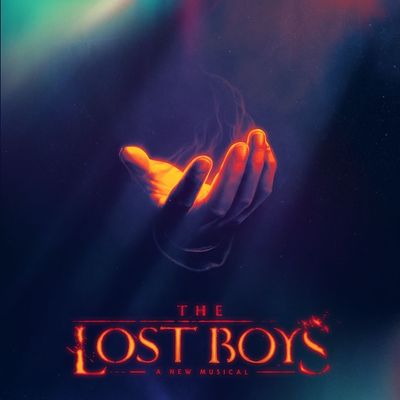
Patrick Wilson, James Carpinello and Marcus Chait join Behind the Awards to discuss producing The Lost Boys for Broadway. This Family driven story lead by Shoshana Bean just happens to be surrounded by vampires... Read More
From the show: Behind the Awards with Eila Mell & Bruce Gotlieb
Featured Shows
About
Patrick Wilson, James Carpinello and Marcus Chait join Behind the Awards to discuss producing The Lost Boys for Broadway. This Family driven story lead by Shoshana Bean just happens to be surrounded by vampires. The trio takes their experience in performing in film adaptations turned broadway musical to really make this production fly. Additionally Patrick Wilson discusses how is experience starring in movies series such as The Conjuring and Insidious gave the team insight on how to bring horror to the stage.
To purchase tickets to Lost Boys - https://www.lostboysmusical.com/
Also in this episode - Laura Benanti and Tituss Burgess Will Host The Tony Awards:Act One
JAMES CARPINELLO (Producer). With over three decades as an actor working in film, television and on Broadway, James is proud to step into his most ambitious role to date as a lead producer of The Lost Boys. Broadway: original casts of Saturday Night Fever, Xanadu and Rock of Ages and most recently the critically acclaimed production of Little Shop of Horrors at the Westside Theatre. For my friends who are family and my family who are friends. Amy, Jackson and Ava, thank you for your unwavering support.
MARCUS CHAIT (Producer) is thrilled to see this 25-year dream become a reality. Producing director and founder of the Film & New Media division for the world’s largest independent publishing company where, over three years, he produced in excess of 4000 pieces of original content before the company was successfully acquired by Pearson/Penguin Books. Executive producer of the film Malevolent (sold to Netflix). Currently managing partner of 66mint. For my family.
PATRICK WILSON (Producer) is a critically acclaimed, award-winning actor whose career spans film, television and Broadway. A two-time Tony Award nominee, for The Full Monty and Oklahoma!, he was also nominated for Emmy and Golden Globe awards, for HBO’s “Angels in America” and Fargo, respectively. Widely recognized for his work in The Conjuring, Aquaman and Insidious franchises, he made his directorial debut in 2023 with Insidious: The Red Door. Co-founder of The Wilson Family Foundation. Love & massive thanks to my family.
Make sure to check out Eila's book, "The Tony Awards", and all her other amazing books: https://amzn.to/43WMu5Y.
Connect with Eila and Bruce:
- Instagram @behind_the_awards
- Eila @eilamell
- Bruce @cominghomewithbruce
Transcript
This transcript was automatically generated and might contain errors.
[0:00] Patrick Wilson: I'm Patrick Wilson. I'm Marcus Chait. And I'm James Carpinello. We're the producers of The Lost Boys and you are watching Behind the Awards.
[0:17] Eila Mell: Hello and welcome to Behind the Awards. I'm Eila. I am here with Bruce. Hi there.
[0:24] Bruce Gotlieb: Hello. How are you doing today?
[0:31] Eila Mell: It's finally warming up in New York, which I can't believe because the weather has been so arbitrary.
[0:37] Bruce Gotlieb: I mean, warming up is a nice way to put it. It's very warm.
[0:41] Eila Mell: I know. It went from freezing to...
[0:42] Bruce Gotlieb: 90.
[0:45] Eila Mell: So hot. Yeah, exactly. And it literally is 90 today.
[0:46] Bruce Gotlieb: Yeah.
[0:49] Bruce Gotlieb: Well, Bruce, you have a little bit of breaking news.
[0:56] Bruce Gotlieb: A little bit of breaking news was announced today at the time of recording anyway. So when everyone's listening to this, it's a couple of days old.
[1:04] Bruce Gotlieb: But Laura Benanti and Tituss Burgess have been selected to host the Tony Awards Act I.
[1:08] Bruce Gotlieb: They've been doing that for the past couple of years on Pluto TV.
[1:17] Bruce Gotlieb: During the full award ceremony on June 7th, they will have this Act I ceremony.
[1:24] Eila Mell: Well, I have to tell you that this whole breaking up the awards into two shows makes me so crazy.
[1:30] Eila Mell: Because it makes it seem like the ones that they don't show on the network are lesser than the other awards.
[1:37] Eila Mell: And it's not true. Every Tony is an equal Tony.
[1:41] Eila Mell: So it's been upsetting to me for years that they've been doing this.
[1:45] Bruce Gotlieb: I don't understand why they can't just get a block of time to do the whole award show.
[1:49] Bruce Gotlieb: I don't know why it was decided upon. I'm sure there are some thoughts behind it that went into it over at CBS.
[1:56] Bruce Gotlieb: But luckily, Pluto has been the go-to for the pre-show.
[2:01] Eila Mell: Yeah, no, that's good. And when you're in the room, you don't know any different. It's all the same.
[2:06] Eila Mell: It doesn't feel like, OK, now the real show is starting. It's all one show.
[2:10] Bruce Gotlieb: But, you know, I think that all that being said, I think that they'll be great. They're both so much fun.
[2:17] Eila Mell: They are both a lot of fun. I feel like they both get, you know, banter.
[2:21] Eila Mell: They both get improv. They get the tasks as a host that, you know, it's not in everybody's wheelset.
[2:29] Bruce Gotlieb: Right. Yeah. No, they'll be great. And they're so funny.
[2:32] Eila Mell: Absolutely.
[2:33] Eila Mell: So, all right, Bruce, who do we have on our show today?
[2:37] Bruce Gotlieb: We are lucky enough to have the trio of producers for The Lost Boys, Patrick Wilson, Marcus Chait, and James Carpinello.
[2:49] Eila Mell: Excellent. And they're all actors turned producers, so that's fun, too.
[2:53] Bruce Gotlieb: Yeah, we go into depth with what it took and why they decided and some of those producer questions that everybody might be curious about.
[3:04] Eila Mell: All right. Well, here we are with the producers of The Lost Boys.
[3:11] Eila Mell: Well, Bruce, today we are so lucky to welcome the producers of The Lost Boys. Patrick Wilson, Marcus Chait, and James Carpinello. Hey, you guys.
[3:21] Patrick Wilson: Hey, how are you?
[3:22] James Carpinello: Hello.
[3:23] Marcus Chait: Good morning.
[3:24] Eila Mell: We are thrilled to have you. Thank you so much for taking some time out of what I'm sure is a fever storm of busyness.
[3:32] Eila Mell: So, I mean, Bruce and I talked, you know, when we knew the show was coming and we said, we think this is definitely going to be a hit because it kind of taps into that outsider's audience.
[3:42] Patrick Wilson: Did you have the same kind of feeling when, you know, the show was just about to come?
[3:46] James Carpinello: I think the hope, I think by outsider's audience, you mean a younger audience, mostly.
[3:53] James Carpinello: And I think one of the things that's the reason that we chose the show to do, what we really felt like with the story being about a mom taking her two boys, really being a coming of age story about these two kids, one of the things that we felt was that we really did reach a real wide demographic.
[4:09] James Carpinello: There were several demographics. So, in some ways, did we anticipate it? No. Did we hope for it? Yes.
[4:16] James Carpinello: And that's what we saw in the show because the characters that we responded to when we were coming up were certainly something that we felt like we saw in The Lost Boys because it wasn't about vampires.
[4:27] James Carpinello: It wasn't so dark. It was actually just about a mom taking her kids.
[4:31] Patrick Wilson: So, the story of all this spectacle and stage-worthy epic tale was really a very small family story.
[4:40] Patrick Wilson: So, we felt like if we could nail that and nail the coming of age story of the teenagers, then we would connect with that younger audience. So, there's the long answer.
[4:48] James Carpinello: It's funny you comp both the outsiders because back when we first went after the rights to get this from Warner Brothers, we pitched it as less a vampire story and we would name the outsiders.
[5:03] James Carpinello: We didn't know at the time that the outsiders were being turned into a musical.
[5:06] Patrick Wilson: Oh, how funny.
[5:07] James Carpinello: For us, it was a show about people trying to fit in, about people who felt like outsiders.
[5:12] Patrick Wilson: So, it was always funny as the show was getting closer to launching and we'd hear people say, oh, this might be the next Outsiders. We're like, oh, that's funny. We actually pitched it as the Outsiders before we even knew that show was coming to run.
[5:22] Eila Mell: Was the reason that you wanted to do this show because it was a movie that you loved growing up?
[5:27] Patrick Wilson: Yeah, I think the three of us for sure. We had a just built-in love of the film.
[5:32] Patrick Wilson: For me personally, I always say this, I grew up in New York, so that defined California.
[5:37] Patrick Wilson: For me, I thought that I'd never been, so I was like, oh, people just ride motorcycles out on the beach.
[5:43] Patrick Wilson: But the three of us have a deep love and respect for what Joel did with the movie, Joel Schumacher.
[5:50] Patrick Wilson: That was really the impetus for it all happening.
[5:53] James Carpinello: Inside of it, we always knew that movie sang in a way.
[5:58] James Carpinello: Back to what you asked before, it's interesting. When you're trying to appeal to whatever it's the Outsiders crowd or the young crowd, I think you have to have a massive representation of youth as well.
[6:10] James Carpinello: We have this ragtag group of kids. We've got the frogs, we've got Sam, we've got Michael, we've got the vampires who are lost in, of course, their own way.
[6:18] Patrick Wilson: All of these young people that are responding to the show have an opportunity, hopefully, which we were very intentional about, about seeing themselves up on stage and represented on stage, which is when I think people respond when they feel a connection, obviously, to these young people in the story.
[6:35] Eila Mell: When you guys decided to collaborate on this and the initial conversations started, was it always the Lost Boys that was the project, or was it we're going to do something and the Lost Boys just happened to fit into that puzzle piece that you were doing?
[6:50] Marcus Chait: We had a production company, the three of us, for a long time where we were always looking for something to do.
[6:56] Marcus Chait: We developed some films together, created a small film. This particular project, I actually wanted to do this 25 years ago and couldn't get the rights to do it.
[7:05] Marcus Chait: Then cut to many, many years later, after the three of us had worked together on some stuff, I brought it to the two of them and said, What do we think about this? I think this now might be a timely thing to do.
[7:15] Marcus Chait: Then we really had to look at each other and say, Is this one worth our time and our energy? Because you have to be all in, right?
[7:23] Marcus Chait: People say to us, What else is on your slate? We're like, This is our slate. You have no idea how much time and energy it takes to do this.
[7:29] Marcus Chait: It really was six years ago when I came to these two and said, What about this? Maybe this is the thing we've been looking for.
[7:35] Patrick Wilson: We all looked at each other and said, Let's dive in and do it. Like James said, we could see where it would sing.
[7:40] Patrick Wilson: We knew that it was living in an elevated world. We thought it was timely.
[7:44] Patrick Wilson: The fact that I couldn't get the rights 25 years ago, but we were able to now, was a blessing in disguise because now it's a period piece.
[7:51] Patrick Wilson: These are a time that we look back on with fondness. The theater-going audience is the primary ticket-buying age as people who grew up either on this film or at least during that time.
[8:01] Patrick Wilson: We have this incredible opportunity to introduce this property to a whole new generation of kids who most of them have never seen this film.
[8:06] Patrick Wilson: They don't know that this film is what launched probably their love of vampires, whether it's the Twilight series or Buffy or any of those more modern-day vampire films.
[8:19] Patrick Wilson: They don't know that Joel Schumacher in this film kind of launched that whole craze. It just kind of seemed like a timely thing for the three of us to do now.
[8:26] Patrick Wilson: Probably 25 years ago, people didn't accept movies being turned into Broadway shows as easily as they do now.
[8:34] Patrick Wilson: As you all know, you've all been in adaptations of movies on Broadway.
[8:39] Patrick Wilson: Back then, that was not what everybody was doing.
[8:42] Marcus Chait: When I had the idea to do this, I was in a very mediocre production of a film-to-stage adaptation.
[8:50] Marcus Chait: I remember thinking, this one doesn't work, but this idea of taking existing IP and trying to do something with it was an interesting one.
[8:57] Marcus Chait: The three of us, James and Patrick can speak to this, have all been in them. In Urban Cowboy, James was in Saturday Night Fever.
[9:04] Patrick Wilson: Patrick was in The Full Monty, so we had all seen the good and the bad of how these things could go.
[9:10] Marcus Chait: It seems like as time went on, people just accepted more and more things were okay to do on Broadway.
[9:18] Eila Mell: James, you and John Travolta have been colliding a little bit lately.
[9:22] Eila Mell: You were hilarious in Vape.
[9:25] James Carpinello: Oh, God.
[9:26] Eila Mell: So good.
[9:28] James Carpinello: Obviously, you were the lead in Saturday Night Fever.
[9:32] James Carpinello: Yeah, I mean, he's an icon.
[9:35] Patrick Wilson: Yes.
[9:36] James Carpinello: Big shoes.
[9:37] Patrick Wilson: They're going to wear it right now.
[9:39] James Carpinello: Yes.
[9:40] Eila Mell: Oh, my goodness.
[9:42] Eila Mell: James also played his son in a major film.
[9:44] Eila Mell: Oh, you did? Which one?
[9:46] James Carpinello: I played twins in The Punisher years ago with Thomas J.
[9:51] Eila Mell: Oh, wow. I hear he's just the nicest guy you could ever meet.
[9:54] James Carpinello: He was lovely, that's for sure.
[9:55] Eila Mell: Yeah.
[9:56] Eila Mell: So I love that the mom is so expanded in this version of Lost Boys.
[10:01] Eila Mell: Shoshana Bean is fantastic. Obviously, you all know that.
[10:05] Eila Mell: And some of the best moments are just the small moments, not the big tech moments, which are amazing, but really the mother and son relationships, which is obviously at the heart of this piece.
[10:17] Marcus Chait: How hard was it to get the right people for those roles?
[10:21] Patrick Wilson: Well, I mean, you know, the history of the role of Lucy is pretty well documented, with Casey being with us for a couple of years and then Shoshana taking over for her and bringing such a different take on the role, which is a real testament to both those women and their abilities, but also to the role.
[10:43] Patrick Wilson: And again, that's really the emotional center of them. It's sort of the ballast point for the whole show.
[10:50] Patrick Wilson: And that was something that we leaned into pretty early on.
[10:56] Patrick Wilson: One of the things that when Marcus came back to us and said, look at the movie again as a possibility. Of course, you go down, we all have our memories of the movie, and then you go through and you look at how the movie resonated to different audiences.
[11:11] Patrick Wilson: And one of the things that kept sticking out was in the Reagan era, the single mom with two boys was a family structure that was not on screen a lot, certainly hidden in a kind of a horror movie, vampire movie, horror comedy, a little bit of action.
[11:30] Patrick Wilson: I mean, it's all over the place in a good way. And that's really at the heart of any real story, certainly in the horror genre, is a family dynamic.
[11:41] Marcus Chait: So the mom was something from very early on we felt like, one, she's going to be the only adult in the room for the most part.
[11:48] Marcus Chait: And part of the reason, too, spoiler alert, that we took away the grandfather was because you needed mom to be the one that had, when the kids seemingly have the answers, the mom is always the sort of balance point for everybody.
[12:03] Patrick Wilson: So that's the long way of saying we always knew that the mom would be this sort of emotional core, no matter how much sort of stage time she had.
[12:11] Patrick Wilson: But when she's there, absolutely vital, especially with these two boys that are careening off into these other directions and Sam trying to save Michael and all of that, too.
[12:20] Patrick Wilson: I mean, I think for us, the benefit, really the surprise, and I think to a lot of New York audiences, we've all known Shoshana's work for a long time, but she has such beautifully grounded moments.
[12:31] Patrick Wilson: I mean, she sings like a dream. We all knew that. And if you really know Shoshana and you really know her work, then you know she's a really, really, really wonderful actress as well.
[12:39] Patrick Wilson: But we all felt like when she started just doing the lines at the table, our first read-through, we thought, oh, this is a whole other thing.
[12:48] Patrick Wilson: And it really speaks to her just as a person bringing her humanity in the role because that's what the genre demands, meaning musical theater genre demands.
[12:58] Patrick Wilson: That's also what the horror genre demands, this absolute truth, because when you take it to a heightened place, it can get big and broad and big, belty notes, but it has to be grounded. And she has such a beautiful emotion.
[13:11] James Carpinello: James Carpinello.
[13:41] James Carpinello: That's where I think we went into this next level. We were all for it. As our designers were bringing it to us, we obviously had to be very careful of not letting the budget get out of control and really sticking to us. We wanted to create a solid business, which is funny to say about a Broadway show, as solid as we could make it. Patrick and James should weigh in, but I don't think that was ever our intent was to create this massive spectacle, which seems to be what people are talking about more than anything else, which is interesting. One of the things that I hear consistently, and you actually brought it up, is that the little moments are very well-focused. I think they've done a great job with that.
You hear consistently, it's so cinematic. Part of that, to me, is that in the massive size of this three-story set, Jen Schriever and Michael, who did the co-lighting design in combination with Dave and Ryan, moments are able to really, like you said, just sort of hone it in and make us feel that we're seeing a much smaller scene. To Marcus's point, it always worked in a development setting with music stands. You watched people have an emotional response. You watched people laugh. You watched people startle and jump with nothing but fluorescent lights. The rest of it is gravy, and you have Dane Laffrey, who is a genius and really, like Marcus said, took full advantage of the palace and the height and the capabilities that we were able to do.
As you know, the palace was raised 30-some feet into the air, so we have a lot of lower space as well as vertical space because of the orchestra pit moving from the floor down below all the way up to the deck. That's how they load everything in. Spoiler alert. It allowed us to do things that, I should say, speak for Dane, that allowed his brain to be able to create something that was specific to that, bespoke to the space. It's so exciting the way the set moves because it moves unlike other sets because of that space that you have below, so you really have three or four levels even that you can work with.
[18:13] Patrick Wilson: Yeah. You have to remember, we all came up in the 80s with shows like Saigon and Phantom. We saw the chandelier fall. We saw the helicopter fly. We saw Pride Rock come out of the ground. We did feel a responsibility to deliver to the audience a certain level of spectacle, for lack of a better word, because that, to us, felt like it had been missing a little bit over the last few years. There seemed a little bit of an opportunity, I won't call it a void, but an opportunity on Broadway to bring back that feeling of, wow, not only did I hear something special, but I saw it was an experience. I think that somebody said in some article, the return of the mega musical. We were like, well, that's what we did, but that is what we grew up on, so there probably is some of that innately in our taste. I know there's a lot that goes into it, but have any of you guys tried flying?
[19:03] James Carpinello: We haven't just because of time. I have been chomping at the bit to get up there, believe me, with chalk bits all from the bridge.
[19:14] Patrick Wilson: Did you just trident above my head?
[19:16] James Carpinello: Yes. I flew for way, way, way too long. I don't need to fly anymore.
[19:23] Marcus Chait: You're good. I can't believe the actor who has to, he's hanging upside down and then he goes all the way up to the very top of the theater. Oh my gosh, that would terrify me, but he is brave.
[19:38] James Carpinello: They trained a lot.
[19:40] Patrick Wilson: Yeah, I'm sure. I'm sure. There's a company in Williamsburg, we should shout them out as well, Fifth Wall, Billy and Gwen, where our choreographers hooked up with Billy and Gwen, and Billy and Gwen did weeks and weeks, if not months, of training for these guys before to get their bodies ready. Remember, they're not just in a harness up in the air, they're singing at the top of their recreation.
[20:00] James Carpinello: I know, and hanging upside down. You take someone like Ali, our Tony-nominated David, he admittedly was scared of heights coming into this. If there's any young actors watching, you get an opportunity, he just decided, he's like, I guess I'm going to have to overcome this. But now he's so beautiful in the air. That was sort of the last stage of their audition, which was kind of getting them in the air, just seeing how comfortable they were, you know, because it's hard enough to do a Broadway show eight times a week, much less these guys are flying, playing instruments, singing, you know, I mean, it's crazy, and running up and down 50, 60 stairs just to get to the stage.
[20:39] Marcus Chait: That's crazy.
[20:44] Norm Lewis: Hi, this is Norm Lewis, and behind the awards, we'll be right back.
[20:52] Patrick Wilson: So we all know that Vampire Musicals have not been successful on Broadway, but I think that what makes this one successful, maybe the first successful one, is because the family is so at the heart of it. Were you nervous because of the legacy of Vampire Musicals?
[21:10] James Carpinello: This was the question much more than like, are you making a spectacle? We didn't have the nervousness of making a spectacle or that. The nervousness, not even nerves, but the talk was about what you're talking about, because we came up during that time. And then when you start to really realize, if you really unpack it, is like anybody, not to call you guys out, but like anybody under the age of like 35 or even 40 has no idea that that's really a thing until they're told, because there hasn't been one in so long.
[21:45] Patrick Wilson: Right. So there's that. Like, why tell them like, hey, just so you know, this is a genre that worked in musical theater. But we also, listen, Mark Kaufman from Warner Brothers would tell you the same thing. What we said when we figured out what this story was, getting back to our original question, was this is not a Vampire Musical. Every one of those other Dracula, Lestat, those are the lead people in those musicals. This is about a family. And we said from the beginning, you know, this is about finding your tribe, finding your people, about who you belong to. And so the vampires at the beginning, we're like, I don't even care if they're really vampires. It's funny to say that now, because we don't really we don't hide it. We don't run from it. But we were sort of like, that's not the center of our story, trying to sing through teeth for two and a half hours. Like that's not our story.
[22:40] James Carpinello: And so it was never once we kind of and Lauren Shuler Donner to her credit. So you know, Dick Donner, Richard Donner, who was going to direct the film, this was really his baby and he gave it to Joel Schumacher to direct it. So when when Richard passed away, you know, Lauren is an incredible producer, foremost female producers in Hollywood. She really kind of holds the keys to the kingdom. So we met her as well. And she and we would say, you know, vampire musicals at work and they're like, she goes, they just haven't been done yet. They haven't been done right, is what she's always said. So she always gave us the confidence. But I think in our heart, we just felt like, I don't think it's a thing.
I think that's a cynical thing for people our age, you know, not to put us on the name bracket. You know, I think it was just kind of a it didn't really affect the work, because if there's one thing we knew, there's so many of these variables as first time producers that we didn't know. But we knew this story. We knew once we dug into this story, we knew this was about a at its heart mom and her two boys. And like all the other stuff is just nonsense and cynicism. And we'll take the audience along for the ride. You guys jump in. Sorry. It's babbling.
[23:54] Marcus Chait: No, I think to your point about what Lauren said about wait till it's done right. Like it would be super easy to say a musical about a psychopathic barber who cuts people up and puts them into meat pies could never work, right? No, it's done brilliantly well. So we just kind of challenge ourselves. Our word was always like undeniability. We just have to make the show so good that it's undeniable. And then it doesn't matter if it's about vampires or frogs or donkeys. I didn't matter to us. And to Patrick's point, when people would ask us, are you nervous about producing a vampire musical? Our response was always, we're not producing a vampire musical. We're producing a beautiful story about a family where there happened to be vampires in it. And again, to Patrick's point, I think that's so different than what was happening in the early 2000s with that run of vampire musicals.
[24:39] James Carpinello: A lot goes into obviously producing a Broadway show. And there are plenty of people out there that are like, I can do that or I want to produce a show. What's one thing that you, I guess, unexpectedly have encountered in this getting involved in producing a show for people who might be listening that have aspirations one day of doing it?
[25:00] Patrick Wilson: I've said this before. There's this misconception out in the world that Broadway producers or producers in general are these deep pocketed sort of, you know, money people who, you know, wield control over the artists. And in fact, it requires a drive and a passion, selflessness. And, you know, I mean, the producers make no money until the show is successful, if the show is successful. So many, many, many, many years of being, in fact, making no money or in the whole to sort of drive the project forward. And so, you know, it's just it's a day in and day out. I always described it as you're pushing this this giant, you know, ball rock boulder up a mountain and you keep pushing and pushing and pushing.
And at a certain point, it sort of starts to crest over the end and goes on its own a little bit once you've brought all these wonderful people together. But yeah, I mean, that's that. And that was something that, you know, I as an act, when I was acting, I would be like, oh, these producers are just blah, blah, blah, blah, blah. And then you're on the other side, you're like, oh, no, no, no, no. We should have a conversation in the industry about what producers actually do and how hard it is and how much we're just trying to keep everyone employed.
[26:22] Marcus Chait: The show is running and viable.
[26:25] Marcus Chait: I had a production company in LA for three years where we produced over 4,000 pieces of content during that time. What you could take from it was the level of organization that you have to have, but they're such different beasts. I would say, yes, it certainly helped because you learn about having to be organized. You learn about having to keep a calendar of tasks and really go down that list and make sure you're checking things off. If you miss something, the ball gets dropped and it could affect so many other departments. But it's such a different beast, film, television, theater, because at the end of the day, we have no control with what actually happens at seven o'clock or eight o'clock at night on that stage.
We hire the best people that we possibly can from the creative team, then through to the actors. But the crazy thing, and I really felt this for the first time during previews, was at the end of the day, you really hand it over to the actors and say, we've tried to give you all the tools. We've given you the fun set to play on. We've given you the best sound equipment in which to sing and an incredible orchestra, but they get to take this and run with it. I remember from our days when I used to be an actor, that always felt really exciting. But as a producer, it can be very nerve-wracking because you don't know what's going to happen every night. Every night, it's a little bit different, which is why people love going to see live theater. I think that's the most exciting thing about it. For fear of upsetting people who love the movie, I am so glad that Laddie is not a character in the play. He was not necessary.
[27:47] Marcus Chait: What from the movie did you feel was important to keep in the play? I mean, it's in there. I think as far as there are certain lines that we felt like really needed to stay because they felt important. Not necessarily kitschy, but important. I think moments that define character, like the bridge, that really was important not really as a spectacle, but as a defining moment for Michael and changing his entire trajectory, taking that leap of faith, sort of blending, spoiler alert, into that other world, so to speak. That was vital, so we needed to figure out how to do that. But our mantra was always, if you're going to change it, it's got to be better. Don't just change things for the sake of changing.
We go back and put some things back in, the you're invited lines and stuff. People are like, we don't need it. No, no, no, no, no, no. We need this. There's a comfort, not even if you've seen the film, but if you're along for the ride, but there's a comfort. It's going to sound strange, but even people that haven't seen the movie that are familiar with vampire lore, there's a comfort in knowing stuff. It's like when you watch Sinners and you're like, oh, he's going to cross the threshold. We all, as lovers of the genre, we know certain things. We get it in horror a lot. You know there's someone behind that door. It's like, so you've got to give in to that. That's the beauty of this. So those moments that we could kind of chart or fight for with the writers and everybody. Fight is a hard word, but obviously a lot of opinions.
[29:51] Marcus Chait: Yeah, so specific stuff. We don't need to get into lines and stuff, but certainly bridge. What else, you guys? I was going to say that we learned really early on through some extensive marketing work from our brilliant marketing team at RDM that they sort of evaluate, they send out sort of a survey to sort of sense brand recognition, right? And so the brand recognition of The Lost Boys was actually much smaller than I think any of us thought. And ultimately that ended up being a gift because you're not beholden to all of the things that people, if you do it, I was in Saturday Night Fever or Back to the Future, where if you don't do every little thing, the fan who is so aware of everything because it's just a massive part of the history and zeitgeist and all this stuff, you're sort of dinged for it, or at least people think you're dinged for it.
A lower brand recognition gave us the ability to focus on, I always say, I wanted it to feel like The Lost Boys as a fan. We're going to take departures and as Patrick said, if the departure is better or necessary for the piece to sing, but if you leave feeling like you saw The Lost Boys, which had scary moments, was funny to some people, was campy to other people, a lot of the audience remembers the film in different ways.
[31:12] Marcus Chait: But also one of the things that we had many conversations about, there's just no way to do on stage, it's like the little things like the maggots and the Chinese food. We were like, oh, we got to have the maggots. We had to have the fax guy. Well, there you go. Spoiler. I think that was a big part of our job, the three of us, because we were all super fans of the film. It was actually a great thing that Michael Arden, our director, is 10 years younger than us. He did not come up on this film and so he was looking at it with fresh eyes. But the three of us felt very protected, not just because we were beholden to the studio. We had to answer Warner Brothers and we couldn't go too crazy, but we would read the comments early on where people were like, why are they turning this into a musical?
They're going to screw it up. It took everything you have to not type back and be like, don't worry. We love the film. We're not going to screw it up. I think it was our job really to say to the team, hey guys, we actually have to have that motorcycle chase. Even if only 12% of the audience knows this movie when they come in, there will be an expectation. To Patrick's point, they have to fall from the bridge for the story and because people expect that moment. I think that that was really a huge part of our job in the development process, making sure we found that balance of what is absolutely necessary to be in there in order to appease the fans and to tell the story properly.
[32:32] Marcus Chait: One scene that's not in the movie is just one of the most beautiful moments in the show where it's that playground scene with Max and Mom. I love that. If you love the movie, you're going to love this because you are going to recognize things and if you don't know it, it doesn't matter at all. I saw the show last week and then just a couple of days ago, I re-watched the movie and I was so surprised at how many specific moments are there that I didn't remember. I grew up watching this movie and I forgot so much of it, so you're completely right. This is crazy, but I misremembered and thought that Sean Astin was the lead in it. That's a real testament to our writers also, to James's point about it feeling like a film.
They would turn in drafts and sometimes we would read lines and say, oh, that's a line from the movie and they would go, no, no, we wrote that line. Our writers did a really great job of understanding. They came up on the film also and were super fans of the film, so they were also very careful to weave that thread. I think that that helped tremendously. The fact that we had writers on board who understood the vibe so well that sometimes it was indiscernible. It's the tone. It's the vibe. That's what Mark's talking about. It's the vibe and the tone.
[33:56] Patrick Wilson: Absolutely. We had them on the other day. The play, the musical, starts out in a real horror moment and it's incredible. Then all of a sudden, the scene ends and immediately we're in the next scene. I'm thinking, what did I just see? It's incredible. Was that a projection? Was it really there? It's so exciting visually. I think that people will be thrilled. It is cinematic in a way. The best moment is, and here's another spoiler, is the coda at the end, the after credit scene. That's amazing. I've never seen that in a Broadway show before. That's Michael Arden. We put it in in previews. As Marcus said, it's all Michael Arden. Then there was an internal debate about, are we really going to do this eight shows a week for the whole time?
We were like, let's pull it out. We pulled it out for a few previews and people went bananas that we had taken it away. Really? Fans of the show. We've now had people come five, 10, 15, 20 times. There was almost a cast revolt as well because they were so obsessed. We tried it, put it back. That's the fun thing about previews. You have the time to do the work and really just see what people respond to. Now you're set up for a sequel.
[35:11] Marcus Chait: That's right. When you guys are obviously going through previews, you learn a lot, but you get to the point where you have to freeze the show. Now that it's been announced that you guys are going to tour, it gives you the ability to go back and take some of the things that you learned that maybe you couldn't instill and do it for the tour. When does that process start? Have you guys already started, the three of you, just earmarking different things you want to do? Because you now also have space constraints. Each place is a little different. You have to fit it into a place in Ohio that might not be the same as it is in Georgia.
[35:49] Marcus Chait: Yeah. I think that will be an ongoing process, truthfully. Once we figure out design concept changes that every show goes through. I was talking to Mike Rego about outsiders and the changes that they had to make for the tour. We were talking about this the other day on a Zoom in a meeting. We all grew up seeing shows on the road because we didn't grow up in New York and how important that is that we get the same experience, the same feeling. Any work that we'll do will probably be as a result of where Dana and Michael kind of land, this is what we're thinking. Because we want that there, obviously, leading the charge on that creative work. I'm sure there will be things that we'll address. That's the fun part about whether it's here or any other production that we'll do. The show's locked right now and we're super, super, super happy with it and audiences are loving it. It'll be interesting to see the dynamics, what shifts we got on the road.
[37:05] Marcus Chait: Michael had a great line that I think he borrowed it from Hal Prince where he said, a show is never done, you just run out of time. I think the fact that when we go into rehearsal for the tour, we get some more time. It'll be a major reconception as far as the physical production. That'll also give us time to say, okay, what were there moments that maybe we want to readdress after seeing them in front of an audience at that point where we do the tour that's a year from now and we'll actually dive into this thing. We'll know a lot more. It's such a living, breathing thing. It's a much different medium than film where you're rushing, rushing, rushing right to the very end when you need to deliver it to the studio.
Midnight, it's got to be in and you're in there cutting. We could take two seconds. I've been there too. It's actually a little bit of an exhale, like it's all good. This will constantly be. I went and saw the Les Mis that was informed more from the film. They lost the chain gang and now they're in the boat. I haven't seen the show in forever, but I went and saw it because I wanted to take Cas put to the show a couple of years ago in London because it's one of my favorite shows. There's no chain gang. They're all, oh, oh, oh. I was like, the movie informed that show. Who knows? That's 30 years later. They're still making changes. I'm sure we will too.
[38:27] Patrick Wilson: Patrick, you obviously have a lot of experience with Hark. Did you bring any of that experience to this show or do you think it's a completely different piece?
[38:37] Patrick Wilson: I would hope so. I absolutely did. Again, it goes back to what there were so many things outside of our skill set and purview as producers. I know, you know, one, we all came up with musical theater, so we felt very comfortable about originating stuff and being even in the room, knowing what works in musical theater level. Yeah, and on the horror side, yeah, I mean, that's something that I not only leaned into, but was pretty vocal about, sure, to be super helpful. That was because every great horror movie is really centered around a family drama anyway, so that's something that I think actually is brought out in a much more beautiful way in our show because the beauty of being allowed to tell a story.
[39:34] Patrick Wilson: When you're seeing characters right in front of you, it's a much different feeling. It was really interesting and it was a fascinating task because you can't structure it the same way, scene by scene, as you would a horror film, setting up scares and that. But tonally, I knew we could get there, which is why the opening, like you mentioned, you usually have two choices in an opening sequence of a horror film, whether it's sometimes you do a backstory like an origin story of the villain, like this is about like, think of Jaws, right? Oh, Jaws got to give his first kill, then we're in the movie, we don't know the threat, you know, or you do the other way and you try to soak. This was sort of the other version of that sort of a tonal scare to set up the feeling of, okay, there's a threat there, we don't actually know the threat, but then that can be woven through, you know, just see his legs come in.
So yeah, that was something that we that I leaned into. And same with the ending, too. You got to book in that with the ending, which is a big change that we made in previews. So yeah, I mean, I'm pretty vocal about I mean, we all are in our skill sets. And I and I have been in that world now for the past, you know, 15 years, which is exciting, exciting to sort of bring, you know, whatever I've learned, mostly from James Wan and Lee Wannell and my, you know, conjuring insidious guys. So I, I think it helped because if nothing else, it was a real different look at theater that you know, but one of the reasons funnily enough, that we even chose Michael is because Arden is because we saw his Christmas Carol, the Jefferson Mays just on on our video, I didn't see it live.
And that to me was like, ah, okay, that he really understands things that I don't see in theater a lot. Everybody's been kind of flirting around even see they're starting like there's, you know, everybody's trying to kind of get into what can you do for on stage? And it's such a, it's a word that not a lot of people dig. So, you know, scary, whatever. But it's that kind of tension. I'm like, it was the big joke in every zoom. I'm like the tension police, because you need to set up things in theater, but then in film and horror films, especially just a little just there's, you don't need to give the audience everything. So that was a constant, right? conversation, we'll say.
[41:49] James Carpinello: Yeah, I mean, don't you think like one of the problems in bringing something like that to stage is that you have different tools that you use to tell the story?
[41:57] Patrick Wilson: Sure.
[41:58] James Carpinello: You know, you have to really get it right.
[41:59] Patrick Wilson: Yeah, yeah. But also, Michael, you know, as you see, with a co lighting designer, so much is done with light, and sound, and space, and absence of sound, that that was something that we really leaned into it in the at the end, it's something that the movie that, you know, and also not to get into the weeds, but usually in a horror film, if you wrap it up, this is no disrespect to the film, but the film ends up a very actiony ending. And that was not going to fly on stage does it pun intended, it just didn't really work. So we needed to kind of want to use the space kind of in like a nod to Phantom and other stuff. So anyway, you have to use the tools that you're in front of you. It's not unlike, it's not unlike Dane building the set, like we just kind of had to sit there and think, all right, we're in this theater.
Let's take out the sound. We're so loud. Like, let's take out the sound. Let's take out the light like, and Michael has such an eye for light clearly as co lighting desire. So that was a major bonus for us.
[43:01] James Carpinello: Yeah.
[43:02] Patrick Wilson: And another nod to Phantom is that you have Ben Crawford in your cast.
[43:05] James Carpinello: Right? How lucky are we?
[43:09] Patrick Wilson: Yeah, very lucky.
[43:12] James Carpinello: To Crawford's point that he was making too, because he won't say it, as far as his how his horror background helped us. And when he talks about the ending of the show, we tried having an action ending to our, you know, we for like a week, and it didn't work. And it was him who sat down and said, we need to kind of like strip this down, because what we're doing is clearly not working. And it was from his for experience that he was like, let's try x, y, and z. And that x, y, and z turned into what you see on the palace every night. So that you can't undervalue what that experience and that knowledge of the genre really brought to the bit.
[44:01] Patrick Wilson: Even in the movie, though, they kind of the action, they do kill the vampires pretty easily in the movie, too. So it's really to have that, you know, kind of like a pack kind of ending wouldn't serve a stage version of it at all. And then again, you bring it back to the family at the end. And that's what you know, how you leave with such a warm feeling.
[44:04] James Carpinello: Agreed. I think the mistake we were making is we that was probably the one place where we were hearkening back to the vampire musicals of the early 2000s. We had vampires flying and singing and trying to kill people. And we're like, what are we doing? This is it's, it was just so the rest of the show is so great. And we get to this point where it's like, you were never going to top what they do in the film. I think that's a great lesson for theater producers is like, don't try to beat what they did in the film from an action perspective, because you're never going to get there. To your point, you don't have the tools. And so we really kind of go back and like, how do we theatricalize? We were never even going to top what we didn't act one, which is wrong.
We said, you know, we belong to someone, not to give anything away. But we've created Michael and his team have created what I think is one of the most beautiful flying sequences you're ever going to see on a Broadway stage. And now the end of the show, we were trying to top that. And that's when we realized we're not going to. So let's completely rethink. And because the lighting is so well done in that sequence, you don't you see no wires. It's just it's so gorgeous. It looks like he's just suspended. Yeah, that took a lot of time and a lot of I'm sure he did work from Justin Bieber and Michael Arden and our lighting team, and a lot of patience from everybody to to let them do their work because that was not the case in the first few previews.
And you would see something. And, you know, of course, we all know they're not flying. Everybody who's sitting there knows they're not maybe the little kids, but but it really is such a it's it's the definition of magic when those lights line up perfectly and you lose those wires, which Jen and Michael have done just an exceptional job combined with Fifth Wall and the FOI people and Lauren and Cree are choreographers. You're like a little kid. I feel it every time. I'm just like, so cool. Yeah, it really is there. I know how everything's working.
[46:04] Patrick Wilson: Right. You know, it doesn't matter. You've created only. Yeah, because it doesn't matter because what we see is so strong in our brains that it just speaks to so much. You know, someone can say anything. But if you pick up on signals because of what you see, you're not going to believe them. So if you believe that they're flying visually, you know, it goes a long, long way. And I think that's something that we're really proud of that moment as producers, because I know when I used to be an actor, especially like in the long run, I'd have to remind myself before the show. This is somebody's first Broadway show they've ever seen. And sadly, this is probably somebody's last Broadway show they're ever going to see.
So we need to do something special. And I think that moment and there's lots of moments in our show, I think, that are special. But in that moment of longest, I can sit back confidently and go, you've never seen that before. You're going to remember that. And that's what we wanted to do was create a memorable evening that people could talk about and tell their friends and tell their family and come back and revisit it. And I think that's, I think we feel really proud, Collector, we've been able to do that. It's one of the things that most theater goers go to, why they go to the theater is to sit in the dark and just have this magical experience, whether someone's flying or not, you know, it doesn't matter, but they want to sit down and they want to be moved and they want to feel something and they'll they'll forgive plenty of things for that moment.
[47:19] James Carpinello: Yeah, that experience. Agreed. Yeah.
[47:23] Marcus Chait: I bet I can walk into the current theater in San Francisco and pick show you the seat I was sitting in. The moment I heard the downbeat of lame is that don't go. The date came up on this on the stage. And I was like, What am I witnessing? And it just you need to create as a producer, I think it's our responsibility to create those moments that are going to live on with the audience for years so that they fall in love with this genre that is with this art form and keep coming.
[47:48] Patrick Wilson: Well, that's what's so special about live theater. You remember it for your whole life, especially if it's your first show. It's not you know, it's not disposable in the way that television movies are because you have to go you have to be there. It's just very different.
[47:57] James Carpinello: Yeah. One last question for you guys. What was all of your first Broadway shows you've ever seen?
[48:02] Marcus Chait: Well, I like I said, I didn't grow up in New York, but my first first national tour that I ever saw this gonna sound really twisted, but I think I was like five years old. And my parents brought me to see Sweeney Todd. Oh, they tell me that I told them. They tell the story that I came out at intermission and open up the program picture of Sweeney. And I said, I want to be him. They were like, but that way you had that hair. That's why I had this way for years. I had this Sweeney haircut subconsciously. Oh, Marcus had that hair in college. You had like a California version of Sweeney. Yeah, that one really lit the spark for me. But I just did sports all through high school. I didn't do theater at all. And my mom picked me up from football practice one day and said we're going on a mother son date. And she took me to see like, junior year. And that's when I was like, Okay, that's what I'm gonna do.
[48:47] Patrick Wilson: You're back. Yeah. How about you guys? James?
[48:53] James Carpinello: Well, we were talking about earlier, my earliest memories are tours. I saw Procter's in Schenectady, New York. Yeah. You know, whether it was Peter Pan or Joseph and the Amazing Technicolor Dreamcoat, but my parents were great. They took me down a lot. I think Les Mis. But certainly I remember Grand Hotel. Yeah, you know, I love that show. 13. Like when I was 16. It was Tommy. I was obsessed with Tommy.
[49:19] Patrick Wilson: Do you remember your first Broadway show?
[49:24] James Carpinello: Yeah, absolutely. I my first Broadway show was Starlight Express. Oh, wow. I have my parents brought us I was 15. And my parents brought brought me and my brothers. I have two brothers to New York. They went and saw into the woods. They set the boys because we weren't really we were all like sporty guys. We're like, man, go watch the people running around on roller skates like. And so yeah, Jake Krakowski was. Yeah. Yeah. So and it was actually a really important moment because I saw we saw Starlight. And then I went across the streets to Times Congregational Church, right. So on on right, 50, 60, first on third, third. Yeah. Which used to be a theater, right? Still a theater. And they were playing and and the Scottish play was playing.
And I happened to look at the cast list. And I was I mean, I like theater, but I wasn't really in it to win it yet. And I saw in the cast of that play. Not that I can't say Macbeth, I'm not in theater, but they were. And Philip Kerr was in the company. This is important because Philip Kerr was this was right after I see Starlight. So I go see Starlight. I go across the street and I see this and I see that's Philip Kerr. Now, when I was a kid, I did a Christmas Carol. I was eight years old. I did Christmas Carol, my first job. And Philip Kerr was Scrooge. He was a regional actor who became the head of Michigan Theater, University of Michigan, not musical theater, theater. But he was the first person that I saw.
So I go see this show. I'm blown away by the melodies. And I had a lifelong love with Starlight. I've seen every production ever. I'm like this closet Starlight freak. So I see Starlight. I go across the street and I see, oh, my God, that's a guy that I did Christmas Carol with when I was eight. And I was like, wait, you can do theater and then come then be a Broadway actor. And it like it was like this. I know someone on Broadway. It was a really sweet moment. So I will never forget that specific day. I still have never seen Philip Kerr since then.
[51:39] James Carpinello: Oh, wow.
[51:40] Patrick Wilson: Oh, wow. Yeah. Yeah.
[51:42] James Carpinello: That's incredible.
[51:43] Patrick Wilson: Every now and again, I would check in on him.
[51:45] James Carpinello: Yeah.
[51:46] Patrick Wilson: That's incredible. So we hope everyone goes to see The Lost Boys. You're going to get so much out of it. It's so much fun. Exciting. If you love horror, and so many people do, go see it. If you don't like horror, you'll still love this.
[52:01] James Carpinello: Oh, for sure. Absolutely. If you've seen it, see it again.
[52:05] Patrick Wilson: Oh, yeah. Bruce saw it early on.
[52:07] Bruce Gotleib: I did.
[52:08] Patrick Wilson: So he's probably, yeah. He's due to see it.
[52:10] Bruce Gotleib: Oh, I am. There are conversations about picking a day. So we'll figure that out.
[52:15] Patrick Wilson: Oh, good.
[52:16] Bruce Gotleib: Yeah. Didn't you see like the second or third preview?
[52:17] Patrick Wilson: Yeah. Yep. Oh, wow.
[52:19] Bruce Gotleib: You got to come back.
[52:21] Patrick Wilson: We cut half an hour out of the show since you saw it.
[52:23] Bruce Gotleib: Yeah.
[52:24] Patrick Wilson: All right. Well, we're going to be rooting for you with the Tonys. We know that you're rehearsing a number. I won't ask which one, but I am excited to see what it is when we get to the Tonys.
[52:34] James Carpinello: And we'll see everyone next time on Behind the Award.
[52:36] Bruce Gotleib: Awesome. Bye-bye.
[52:37] Patrick Wilson: Thank you so much.
[52:38] James Carpinello: Nice to see you guys.
[52:38] Patrick Wilson: Our pleasure.
© Broadway Podcast Network, All Rights Reserved