

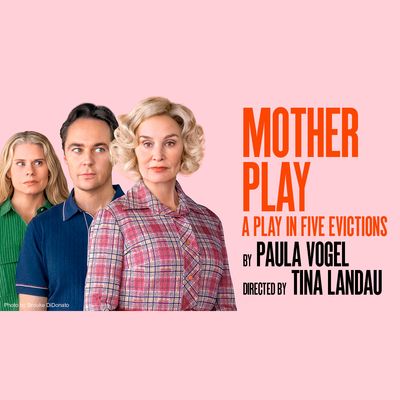
Celia discusses working with Jessica Lang and Jim Parsons and having a role created for her in Paula Vogel’s Mother Play. Celia takes us on a journey of her career including The 25th Annual Putnam County Spelling Bell, To Kill a Mockingbird, and The Gilded Age... Read More
From the show: Behind the Awards with Eila Mell & Bruce Gotlieb
Guests

Featured Shows
About
Celia discusses working with Jessica Lang and Jim Parsons and having a role created for her in Paula Vogel’s Mother Play. Celia takes us on a journey of her career including The 25th Annual Putnam County Spelling Bell, To Kill a Mockingbird, and The Gilded Age. Celia shares what she was doing the morning nominations came out and how she balances being a working actor and motherhood.
Eila and Bruce also discuss Sarah Jessica Parker’s Golden Globe win for Sex and the City and a career that has spanned 50yrs beginning with Annie on Broadway
CELIA KEENAN-BOLGER. Broadway: To Kill a Mockingbird, Glass Menagerie, The Cherry Orchard, Peter and The Starcatcher, Les Misérables, The 25th Annual Putnam County Spelling Bee. Off-Broadway: Parallelogram, The Oldest Boy, Merrily We Roll Along, A Small Fire, Bachelorette. Select Film/TV: “The Gilded Age,” “Bull,” “Louie,” “The Good Wife,” “Nurse Jackie,” “Good Behavior,” “Elementary,” Diane, The Visit, Breakable You. Tony Award, Outer Critics Circle, three Drama Desk Award wins. Member of The Actors Center. NYCLU Michael Friedman Freedom Award recipient. UMichigan graduate. Training to be an end-of-life doula.
Make sure to check out Eila's book, "The Tony Awards", and all her other amazing books: https://amzn.to/43WMu5Y.
Connect with Eila and Bruce:
- Instagram @behind_the_awards
- Eila @eilamell
- Bruce @cominghomewithbruce
Transcript
This transcript was automatically generated and might contain errors.
[0:00] Celia Keenan-Bolger: I'm Celia Keenan-Bolger, and you're listening to Behind the Awards.
[0:05] Celia Keenan-Bolger: You can imagine, well, I'm very unaccustomed to I've never won anything in my life. It's just it's well, it's really it's fun. It's wow, it's great. Um I uh I had money on all the nominees in my category because they're all so good and funny and beautiful and talented, and um, I can't believe it. I I never I'm not a winner. It's
[0:30] Eila Mell: Hello, and welcome to Behind the Awards.
[0:30] Bruce Gotlieb: Hey, Eila.
[0:45] Eila Mell: Hey Bruce, how are you?
[0:48] Bruce Gotlieb: I'm doing great. How about yourself?
[0:50] Eila Mell: Well, I am just off a ferry from Cherry Grove.
[0:53] Bruce Gotlieb: That's right.
[0:54] Eila Mell: So it's been quite a weekend. It was a lot of fun.
[0:57] Bruce Gotlieb: Good.
[0:58] Eila Mell: You know, I went out because we had an event out there, so that was really nice. We were celebrating Sal Piero for those people who know who he is, and those who don't, he started actually the cult phenomenon of Rocky Horror.
[1:11] Bruce Gotlieb: How awesome is that?
[1:12] Eila Mell: Yes, absolutely. So I'm a little tired, but that's okay. I am so ready to talk today.
[1:18] Bruce Gotlieb: Who did we just listen to?
[1:19] Eila Mell: So that was Sarah Jessica Parker. That was her Golden Globe win in 2000 for Best Actress in a TV series.
[1:26] Bruce Gotlieb: I mean, the iconic Sex and the City, right?
[1:29] Eila Mell: Is there a role that, you know, when it comes to TV?
[1:32] Bruce Gotlieb: Yeah.
[1:32] Eila Mell: That is, and it transcends, you know, different mediums. It's fashion, it's TV, it's movies, too.
[1:38] Bruce Gotlieb: And movies, yeah. And Sarah Jessica Parker is one of the few, I would say, handful of actors that was able to start a career as a child and continue to, I would say, level up at every step of the way.
[1:53] Eila Mell: She gets better and better, and her work is so good, right?
[1:58] Bruce Gotlieb: And you never even think that she was a child actor. She just is known for now.
[2:02] Eila Mell: And for those of our Broadway fans that follow us, Sarah Jessica Parker started in a little known show in the 70s called Annie.
[2:10] Bruce Gotlieb: Amazing. I mean, you know that's one of my all-time favorites.
[2:13] Eila Mell: Not because I love the show so much, but just because it represented like everything to me as a kid.
[2:19] Bruce Gotlieb: Sure.
[2:19] Eila Mell: When other kids were listening to, I don't know, whatever top 40, I was listening to the original Broadway cast of Annie after school every day.
[2:28] Bruce Gotlieb: So I mean, that is just huge to me.
[2:31] Eila Mell: And you found this amazing video that you posted on our Instagram.
[2:35] Bruce Gotlieb: Yeah, it's Sarah Jessica Parker when she took over the role as Annie because she started as an orphan and she's being interviewed by some child's up and coming news correspondent, I guess.
[2:45] Eila Mell: Right.
[2:45] Bruce Gotlieb: He's like 10, the same age as her.
[2:47] Eila Mell: He's like 10 from like Brooklyn or Staten Island or something. Thick accent.
[2:50] Bruce Gotlieb: But he's like, but he presents like an adult.
[2:55] Eila Mell: He's very serious too.
[2:57] Bruce Gotlieb: He does.
[2:57] Eila Mell: And she's sitting there with Sandy and they're just having a good chat. She looks a little overwhelmed by him, to be perfectly honest in this video.
[3:04] Bruce Gotlieb: He's a little bit of an intense interviewer. He gets down to the hard questions like, what's your favorite thing?
[3:10] Eila Mell: I believe her answer was rainbows.
[3:12] Bruce Gotlieb: Oh, well, I mean, that is groundbreaking.
[3:15] Eila Mell: It's hard hitting, hard hitting journalism.
[3:17] Bruce Gotlieb: So I don't know if you know this, but like for the past 20 years, pretty much every day of my life, people tell me that I remind them of her.
[3:25] Eila Mell: I can see where they're coming from.
[3:26] Bruce Gotlieb: It's so funny. And then, you know, I did a lot of fashion work.
[3:29] Eila Mell: And so it was the most at that point.
[3:32] Bruce Gotlieb: Sure.
[3:33] Eila Mell: I would get you're a real life Carrie Bradshaw. And I absolutely was never a real life Carrie Bradshaw, but people saw that in me.
[3:40] Bruce Gotlieb: Well, if you ever need a Halloween costume, you could pull that one out.
[3:42] Eila Mell: I know. I just need a big giant flower to pin on my lapel, right? And then I can be Carrie.
[3:48] Bruce Gotlieb: I've considered it many times because you know I hate dressing up in a costume.
[3:52] Eila Mell: I do. Do you remember the reason why?
[3:54] Bruce Gotlieb: I don't know that I do remember.
[3:55] Eila Mell: I have an idea.
[3:56] Bruce Gotlieb: Okay.
[3:57] Eila Mell: Well, it's crazy, but I have this crazy fear that I'll have to go to the emergency room and I'll be dressed up in a costume and I'll be embarrassed.
[4:06] Bruce Gotlieb: You're so funny.
[4:07] Eila Mell: Right, not that. But if you dressed up as something, you couldn't be embarrassed by that either.
[4:13] Bruce Gotlieb: But Right.
[4:14] Eila Mell: But if I had to like be in a situation where I needed to be taken seriously, I wouldn't.
[4:19] Bruce Gotlieb: Yeah.
[4:19] Eila Mell: All right. Fair enough. That's for another conversation.
[4:22] Bruce Gotlieb: That is.
[4:22] Eila Mell: So enough of my neuroses. Let's talk about Celia Keenan-Bolger.
[4:26] Bruce Gotlieb: Yeah.
[4:26] Eila Mell: So we have her in the wings waiting to chat with.
[4:29] Bruce Gotlieb: She is co-starring in the Mother Play with Jim Parsons and Jessica Lang this season.
[4:34] Eila Mell: Which people can still see, and we so encourage you to see it. It is such a good show. Such a I can't say enough things about it.
[4:40] Bruce Gotlieb: I went in not really knowing anything and not having any expectation.
[4:48] Eila Mell: And I texted you right after, and I was like, all right, well, Jessica Lang just stole Sarah Paulson's Tony Award.
[4:54] Bruce Gotlieb: I know. That's what I was gonna say. But also you love Celia Keenan-Bolger.
[4:58] Eila Mell: She was so good. I the all three of them. It was like a masterclass in acting.
[5:03] Bruce Gotlieb: Right.
[5:03] Eila Mell: The third is Jim Parsons, let's just say.
[5:06] Bruce Gotlieb: Even though I'm sure most people know that. It's just really good. And her work, her work over her career is just really impeccable.
[5:13] Eila Mell: She won a Tony Award for To Kill a Mockingbird a couple of seasons ago. She's also a singer. So she's done musicals like Spelling Bee.
[5:20] Bruce Gotlieb: I was just gonna say her breakthrough was Spelling Bee. What a fun show.
[5:23] Eila Mell: Yeah, and even and she also did, which is the ticket of this season, Merrily We Roll Along at City Center with Lin-Manuel Miranda and Colin Donnell.
[5:33] Bruce Gotlieb: Oh wow. Amazing.
[5:34] Eila Mell: Well, let's get around.
[5:35] Bruce Gotlieb: All right.
[5:39] Eila Mell: Behind the Awards is so happy to welcome Celia Keenan-Bolger.
[5:43] Celia Keenan-Bolger: How are you?
[5:44] Eila Mell: I'm great. How are you guys?
[5:45] Bruce Gotlieb: So great to have you here.
[5:47] Eila Mell: We are so excited. I mean, you're a Tony nominee right now. I mean, we're just moments away from the Tonies. How are you doing?
[5:53] Celia Keenan-Bolger: I'm really good. You know, I think when you're in a play that is under two hours and that has an end date already in sight, this of the entire season is reduced enormously.
[6:07] Celia Keenan-Bolger: Yeah, you know your time is going to be your own soon enough.
[6:09] Eila Mell: Yes.
[6:10] Celia Keenan-Bolger: And I think the last time that I was going through this with To Kill a Mockingbird, the play was three hours long. And I knew my contract like wasn't gonna end until November.
[6:14] Eila Mell: Right.
[6:18] Celia Keenan-Bolger: And so I was like, you're gonna get through this, and then you're just gonna keep going.
[6:22] Bruce Gotlieb: Right.
[6:23] Celia Keenan-Bolger: Also, there's I was just talking to a few people last night who came to see the show, and they were just saying, you know, the Tonies dictate so much about whether some shows can stay open. And so there's also that added pressure for a lot of people, which is like we have to get ourselves out there. We have to sell the show so that we can remain, you know, open through the summer.
[6:41] Eila Mell: And I just feel really grateful to be in a position where it's a limited run and a short show.
[6:47] Celia Keenan-Bolger: Yeah. And it's selling so well. You can't even get tickets.
[6:51] Bruce Gotlieb: It's amazing. Congratulations.
[6:52] Celia Keenan-Bolger: Well, I think if you have Jessica Lang and Jim Parsons in your cast, you're just gonna be able to move those tickets. Like, come on.
[7:00] Eila Mell: And Celia Keenan-Bolger, too. We're the niche theater audience member.
[7:05] Bruce Gotlieb: And the Gilded Age fans.
[7:07] Eila Mell: That's right. We are a rabid fan base.
[7:11] Celia Keenan-Bolger: So this play, first of all, was magnificent. All of you were just magnificent. But having a role that was written with you in mind, does that do anything different to your, okay, I have to get into this character and kind of, you know, prepare for a role?
[7:26] Celia Keenan-Bolger: Yeah, I've never, um, I've never had this experience before. And Paula had talked to me about it for a while. Like she said, you know, I'm writing something with you in mind. And I was always like, oh, this is so exciting. And also I was like, don't think about it too much because it probably won't happen.
[7:41] Celia Keenan-Bolger: And then when she sent me this script, and it was, I mean, I don't know why I was so surprised since Paula has written both with How I Learned to Drive and Baltimore Waltz. Like she's definitely written about her own life. But I guess I just didn't imagine that it would be about her family and that I would be playing a sort of composite of her.
[7:59] Celia Keenan-Bolger: And so I think initially I felt pretty scared and pretty intimidated by the whole thing. But I also felt I had worked with Paula at the Sundance Theater Lab. And we just sort of made up one of those promises to each other that we would really, really try to find ourselves back in a room together. Cause I was just completely in awe of the kind of collaborator that she was.
[8:23] Celia Keenan-Bolger: And so I think knowing that going in made it a little bit easier to take some of the pressure off of like you're originating this role. You're supposed to be representing her and her family. And I think if it had been a different writer, it could have been a very different experience. Just that, you know, they would have felt so close to the material and they would have known how it went. And Paula is just, she always she said this on the last thing that I was working with before we started Mother Play, but she just said, you know, I write what I write. And then the second part of the process is me hearing the actors' voices and understanding how to create and craft the play around those voices.
[9:00] Celia Keenan-Bolger: And like what a gift. I think it's like maybe not such a coincidence that we all feel so lived in and so I mean, I think that has a lot to do with Tina. But I also think Paula was able to see the three of us and then really sort of move to our strengths as well, which is like such a gift of a new play.
[9:19] Eila Mell: Absolutely. And what an honor because a playwright of her stature to write something for you.
[9:25] Celia Keenan-Bolger: It's really, I mean, I think about Paula certainly as one of the great American playwrights, but I also think like her legacy, how many other great American playwrights she has taught. And she's like helped bring these voices into the world. Like that legacy to me is almost as significant as her own body of work, which is so spectacular, but that she's really given of herself both as a creator, but also as like a nurturer of creators.
[9:56] Celia Keenan-Bolger: And she's just, I cannot say enough. I will, I will go anywhere and do anything with her. Jim Parsons makes a joke that he's like, he got, you know, the offer.
[10:06] Celia Keenan-Bolger: And he was like, I didn't even read it. If I had gotten it and it was garbage, he was like, I would have just, I would have shown up because I just be with her. And I feel the same way. I mean, it would never, it just would never be garbage. But that's right. Well, but I do feel like the opportunity to work with somebody like her. Also at this point in her career, it just feels very, very special. So, how much of her is in your portrayal? You know, it's funny. I am sort of a combo of her and her brother Mark. The character's name is Martha, because of her brother Mark, who I only met at opening. I didn't get to meet him before the show. You know, I was very attuned to Paula throughout the process and just, you know, we're not that similar.
Tina at one point was like, I think it's, you know, kind of hilarious that it's you, because like I wouldn't really say that you remind me of each other, but there is a spirit that I think Paula has and a way that she moves through the world and a sort of, it's funny because she's so wise and and she's, you know, in her 70s, but there is this sort of, she has this openness and this awe and wonder about the world, and that I feel like her eyes like just will dance when she is writing on the fly or she's watching something. And that, you know, the sort of spirit of someone, I really was like, is there a way that I can try to imbue this character with some of that? And I think honestly, what was so intimidating to me at the beginning was that I was like, I don't know that I'm actually like the ideal person to be playing this part, except that Paula has chosen me.
And so I have to just trust that and sort of let whoever else Martha sort of shows up as whether that's like parts of Mark or or parts of me, you know, how I sort of try to integrate all of those things. But certainly, you know, she had a huge impact in so many ways of how I play that character.
[12:00] Eila Mell: You mentioned your co-stars, Jessica Lang and Jim Parsons. What an absolute treat to work with those two. Had you worked with them before?
[12:06] Celia Keenan-Bolger: Never. I had met Jim a couple of times because he is really good friends with Jesse Tyler Ferguson, who I did Spelling Bee and a little musical called Little Fish together when I first moved to the city. And so we had been social together, and we had actually just been at an anniversary party for Jesse and his husband, Justin. And Jim and I talked for a long time and had such a nice conversation. And then like a week later, I found out that he had been offered that part. And I was like, oh my gosh. And you know, everybody that I talked to was like, you're gonna love him. He's the greatest. He's so nice. And I was like, I can't wait. Jessica Lang, I felt very intimidated by not having met her, but just, you know, her, her, who she is. The legend of Jessica Lang.
[12:49] Eila Mell: Correct.
[12:49] Celia Keenan-Bolger: But we did a reading very early on, almost a year ago, a little more than a year ago. And she was, I couldn't believe how approachable she was and how not fancy. Like she just, I she really seemed so down to earth and so Midwestern in a way, I guess, coming from Michigan, you know, she's from Minnesota. And, you know, she's certainly her taste and her culture and her curiosity feel very cosmopolitan, but her sort of rootedness to something in the ground that is not about like all of the hoopla that I think can be very easy to get caught up in when you're in this industry to have proximity to somebody who is this far along in her career, who to me, she seems so clear to me about what's important. And it really only goes back to the work, to the work and to her family.
[13:42] Eila Mell: I was gonna say the exact same thing. I had the pleasure of interviewing her for the Tony book, and that's what she talked about. The fact that she was so honored to be on Broadway. It meant so much to her, and then her family was there to see it.
[13:54] Celia Keenan-Bolger: Yes, I mean, that is like it was so surprising, but it also it has such an impact on me to be around someone who's operating from that place. Cause I think it is, especially in an award season, it's very easy to get caught up in like, am I at enough events? Am I doing all of this? Like it's it's a lot. And I think to be with somebody who I respect so much, who seems so clear about what comes first and where I think during an award season, like energy management is such, it's like something nobody wants to talk about because there's just this expectation. It's like you go, go, go, go. This is a very important time. But I do think it can lead to like real burnout. It can lead to you not being able to do your show all the time.
It can lead to a kind of like fatigue and sickness in your body. And being around her has just been so informative. I will carry it with me. I mean, her as a person, but also just being on stage with her, with her and Jim. Like, I feel like I the next thing I go into, the next project I get to do, like they're just gonna be with me. I’ll carry them with me forever. It's like really, it's been transformative in that way.
[15:09] Eila Mell: We'll be right back. We have to listen to some commercials.
[15:17] Celia Keenan-Bolger: You could even tell from being an audience member that the connection that you guys have is just as if you guys knew each other forever. You know, you guys are dance. This choreography, not obviously in dance, but the way that you guys are ebbing and flowing with one another, it's just it's as if you guys lived together for many, many years. It's it's so there.
[15:35] Celia Keenan-Bolger: That's such a nice compliment. I also think because the two of them are so famous, I was like, how will my friend Zach Quinto? He's worked with all three of us, and he was like, God, I love all three of you. I cannot imagine you in the same family. This was before we started. When I was like, I think I sort of know what you mean, and that it's it's so curious to me, like why the alchemy of some casts just really comes together and some don't. And I think particularly when you have very famous people, you can just end up having these like brilliant performances, but maybe everybody isn't in the same play, or that the container of the play doesn't exactly hold everyone. And I think honestly, that I attribute almost entirely to Tina Landau, who was very attuned to that thing of like this we we were able to do a workshop before we started actual rehearsals for the production. And so much of the workshop was like about moving the scenery into the different apartments.
[16:39] Celia Keenan-Bolger: So amazing. Oh my God, so much. And what makes a family? She kept saying, like, what how do you know when you are meeting a family? Like what tells you that they are a family? And I was like, that's such a good, interesting question. And then thinking in my life about like when you meet someone's parents and you're like, Oh my God, my friend, like that expression passes through them, or like they do this with their hands, or and she just did all of this physical work. You know, she comes from the viewpoints, like mythology. She's written a book about this sort of kinesthetic physical way that actors can exist with one another that she and Ann Bogart wrote. And so we did some of that. But again, I was like, I didn't know if Jim Parsons and Jessica Lang were gonna be like, Yeah, we're gonna do some theater games for two weeks.
Like, I think plenty of artists that would be like, Yeah, I'm not doing that. Like, get down to work. They were so so open and so ready to like explore that part of it that I really think Jessica just said this in a talk back. She said, you know, the three of us are all we are such physical actors that I think that gave us this foundation, really to like build the family upon.
[17:55] Celia Keenan-Bolger: And that that's even on the nights when one of us is a little bit like I'm tired or whatever, that like we can return to that. And it probably also helps that there are only three of you, right?
[18:05] Eila Mell: 100%.
[18:06] Celia Keenan-Bolger: I mean, in some ways, it's like if you've got one tricky person with three, it's not gonna be great. But also then because there are only three, it feels we feel just so tight and connected to one another. And I really think like the shorthand of how we are able to move through the piece. I don't know if it's like where I am just in my maturity as an actor, or if it is specifically to do with this piece and these actors, but I think I've always felt like there's a kind of map that you have, like an emotional map as an actor, where you're like, at this point in the play, I sort of need to be at this high, and over here I need to be feeling this, or at this emotional state. And you just have these like little tent poles, and whatever happens in between is okay.
And on this project, for whatever reason, like if I've gotten to a place where I'm like usually emotionally or you know, spiritually, I'm I'm at this place. In my head, I would say, like, well, you're not there tonight, so you gotta get yourself there. And on this piece, for whatever reason, I have been able to just say, like, wherever you are is okay. And if you just check in with the two of them, you cannot go wrong. Like, you don't need to do anything except be present with the two of them. And like, what talk about energy management? Like, that's such a gift that you can just show up and be with these two actors that feel like they're such a net for you. I felt that way with Gideon Glick and Will Pullin and To Kill a Mockingbird as well.
But that was like such a different beast in some ways. But I think when you have actors like that that you can check in with and depend on, it makes a long run feel so much more alive and so much less like, how am I gonna do this tonight? You know, it really it's like it's a real a relief.
[19:59] Eila Mell: But also I would think that sense um that they are your safety net creates a sense of family too.
[20:05] Celia Keenan-Bolger: Totally, totally. And that, you know, that family, there's so much dysfunction inside of that family.
[20:11] Celia Keenan-Bolger: But I also think there is so much love and trying to, I mean, we all have acquaintance with that dynamic in our own familial units. And, you know, I think about how much the work that you do before you arrive at a project that you carry with you. And I remember Cherry Jones talking about this a lot when we were doing Glass Menagerie, that she said, you know, this family, the Wingfields are they are just missing each other at every turn. Like they, there's so much love, but they do not know how to love one another properly. And in the back of my head, I thought, you know, I don't know that the Hermans are so different from the Wingfields in that respect. That they're, you know, for all of the ways that we struggle with one another, there is this like deep, deep seated love that also is passing between and through them all the time. That is also part of what makes it just so heartbreaking and hard when they keep missing and when they keep not showing up in the ways that I think they wish the other one would.
[21:12] Celia Keenan-Bolger: Yeah, because it's raw and it's real and it's in front of your face. And I think the play is able to hold up a mirror, not in a bad way, but for you know, the audience is looking at it. And at any moment you can see glimpses of your own, like you said, your own family unit. So I think that's why people get so locked into you guys from this onset, because of that. Because you're like, okay, yeah, that that feels like home.
[21:36] Celia Keenan-Bolger: Yes. I mean, that I feel that even myself that I'm like, this family does not really resemble what I grew up with, and yet the play works on me in such a way that I think exactly what you just said, Bruce, that it's like there are these things that as unique as we all feel inside of our family dynamics. There are these threads that are so powerful that just like they weave themselves through every family. And like where the power dynamics, who takes up a lot of air, who sits back and watches, like we just all, you know, we all have experience inside of that.
[22:11] Celia Keenan-Bolger: And the show is being done by second stage. Um, I'm so appreciative that we have nonprofits like second stage and roundabout and Lincoln Center, where they can take chances on plays. And you know, and I'm sure you as an actor love to have the opportunity to do something that might not be commercially successful. This one happens to be, but you know, you don't know that going in, but you get to do different things and take chances. What does that mean to you?
[22:34] Celia Keenan-Bolger: Right. Well, I think especially with second stage, the idea that Carol Rothman was like, I want to do a new play by a living American playwright on Broadway every year. Like that is sort of revelatory. This idea that she is really trying to make visible these new playwrights or these new plays, and that we're trying to introduce audiences. I think if you have new plays on Broadway, then the plays are more likely to reflect the culture. And if a play reflects the culture, then you in a way are also audience building that you're able to say, like, whatever you might expect from going to a Broadway show, this might be a little bit different because it actually is happening now and is trying to speak to what is happening in the world now.
[23:23] Celia Keenan-Bolger: And I think I similarly feel so grateful for the not-for-profits that are, and you know, this play never it didn't have an out-of-town tryout. It didn't have an off-Broadway run. Like I've never opened a new play on Broadway with this little amount of time. It was, I'll tell you, pretty stressful. But we get it. And especially, you know, second stage is has been like an artistic home for me since I moved to the to the city. I think this is my fifth show with them. And like my first off-Broadway show was at second stage with Jesse Tyler Ferguson, Little Fish. And then I did spelling bee, and then I did my first play. I had never been cast in a play in New York City. Like I had only done musicals and I got to do this crazy Leslie Headland play uptown.
And then I got to do a Bruce Norris play. Like I just, I also it feels so meaningful to me that it's not just that it's like a Paula Vogel play, but that it's happening at second stage, a place where I actually feel like I have this real history.
[24:19] Celia Keenan-Bolger: Yeah. And it speaks to the quality of the work that people like Jessica Lang and Jim Parsons are doing that for not a ton of money.
[24:27] Celia Keenan-Bolger: Correct. I think also like I have to just say, as a parent, it's really hard to have a young kids and do and be a Broadway performer. You miss bedtime like all the time. And being able to be a part of a limited run has such a huge impact on like in just in my family, the other night, my son was like, I love your, I love your job, and I also hate your job. And it's like, you know, that's a real thing. And yeah, but it's it's gonna end, you know, it's like not forever. And I also think I say this to him all the time. I'm like, if you get as much joy in your life as an adult doing your job as I do getting to be an actor, I will feel so happy for your life because I just I can't emphasize enough to him, to the world, how lucky I feel to get to do this.
[25:20] Bruce Gotlieb: Yeah, you get to do your job.
[25:22] Celia Keenan-Bolger: That's how I feel too. It's the best thing in the world.
[25:24] Bruce Gotlieb: Yes.
[25:25] Celia Keenan-Bolger: Oh, it's truly, I think reflecting back to like when I was young, and I think I knew I wanted to do this a very, very long time, but I'm not sure I ever believed that I could make like as an actor. And obviously the awards are so meaningful, recognition is so meaningful. It was never part of my aspirations. Like to win a Tony Award was never part of what I imagine for myself. All I wanted was to be a work consistently as an actor. And that that is my life that I get to have a family in New York City, like it really doesn't, it's never lost on me.
[26:04] Celia Keenan-Bolger: That's so important to just appreciate it. Because when you lose that, then you know, you've kind of lost who you are. Do you do you remember were you watching the nomination? Did you sit down on the couch and like, all right, we're gonna watch, or were you avoiding it?
[26:16] Celia Keenan-Bolger: I was, you know, I every year, except for the first year I was nominated, where I don't even think I knew that the Tony Award nominations were coming out. Like on a bunch of phone calls, and I was like, What's happening? Ever since I've always watched. And this year, like I'll be honest, I think after I won, I sort of assumed that I would just not care anymore, that I would be able to be like, you know, however this goes, it's you've won, you have been nominated four times. Like it's all who cares. And before the nominations came out, I could not believe how much I cared. And I couldn't believe how I was so disappointed in myself. I just felt like, when will it ever be enough? Like you just keep pushing the goalpost and keep pushing the goalpost.
And I think I understand a little bit now, like because different roles ask you to bring different parts of yourself to them. That want for a kind of recognition makes a little bit more sense. Where I was like, you know, this is a part of myself that I haven't shown. And it would be nice for that to be seen or recognized or validated.
[27:21] Celia Keenan-Bolger: But I specifically, because I think I had this longing and also this judgment of the longing, I was like, you're gonna drop your kid off at school. One of the my good friends who is a mom of one of the other um kids in my son's class was like, Do you want to take a karate class with me? I was like, sure, I'll do that. And it was actually it was sort of perfect in some ways because I was I had never done it before. I was like, here I am doing something I've never done. I'm not very good at it. I don't know any of the like moves. I'm I'm like basically like a a straight up beginner. And right before I walked in, my Eugene and manager were like, hey, it's it's happening. And the first thing I said was, are Jessica and Jim nominated?
And they said both of them are nominated. And that to me was like really just from everything we've just talked about. I couldn't imagine going back to work if one of us, I mean, uh of course we would have done it, but it would, it's like I think we feel so aware of how the system does not function if one person isn't there. And the fact that all three of us were recognized, I was just so grateful to the nominators to see that and to put us all together in that. It's yeah, it's the absolute best.
[28:34] Bruce Gotlieb: Well, we are running out of time, unfortunately, but we hope that you'll come back. We love talking to you. It's been so happy. Before we let you go, any new projects or anything people should keep an eye out for that you can talk about?
[28:47] Celia Keenan-Bolger: I mean, I'm about to start filming the third season at the Gilded Age. Fantastic. Which I just got my first two scripts for. We're doing a table read next week. So I'm really excited about that.
[28:58] Celia Keenan-Bolger: And you have a romance, that's very exciting.
[29:01] Celia Keenan-Bolger: It does seem like that is happening, yes. And I've, you know, I've been doing some new, just did a reading yesterday of a new best wool play that who knows if they'll have me or if the timing would out. But it was so extraordinary that if I don't get asked to be in it, I will certainly be there on the opening night to watch it because I thought it was so spectacular. And you know, I think probably for the moment I will try to sort of take a break from eight shows a week for you know the rest of the year just to be back with my family. But that's also we'll film the Gilded Age all the way through January. So that gets to be sort of my next focus. I'm trying to write a little bit myself just to see what that could possibly look like.
I trained during the pandemic to become an end-of-life doula. So I've been sort of working in that space to see how I might be helpful. So trying to, you know, I'm trying to be like Jessica Lang and keep my my world big and stay curious about things that are both inside of my profession and also outside.
[29:59] Bruce Gotlieb: Amazing. Well, we can't wait to see you again. And everyone, go see Mother Play while you can. You will not be sorry. Thank you, Celia.
[30:06] Celia Keenan-Bolger: Thank you folks so much.
[30:09] Bruce Gotlieb: Thank you. And we will see you next time on Behind the Awards.
[30:13] Celia Keenan-Bolger: Bye-bye.
© Broadway Podcast Network, All Rights Reserved