

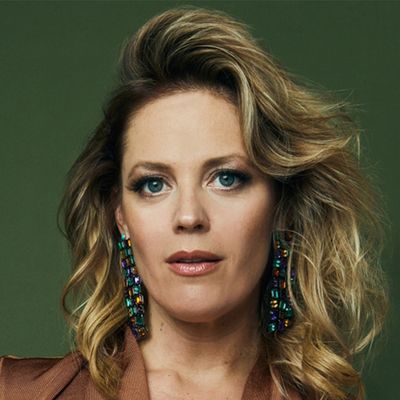
Tony Nominee Elizabeth Stanley joins Behind the Awards to talk about her brand new thriller Disruption now playing at The Pershing Square Signature Center as well as the hit musical Jagged Little Pill. Elizabeth shares what it was like to work with Alanis Morissette on such iconic music... Read More
From the show: Behind the Awards with Eila Mell & Bruce Gotlieb
Guests
Featured Shows
About
Tony Nominee Elizabeth Stanley joins Behind the Awards to talk about her brand new thriller Disruption now playing at The Pershing Square Signature Center as well as the hit musical Jagged Little Pill. Elizabeth shares what it was like to work with Alanis Morissette on such iconic music. Disruption is playing through October 4th and you can catch Elizabeth alongside John David Washington, Conrad Ricamora, Joe Tippett and Irene Sofia Lucio.
Get tickets here: https://www.disruptionplay.com/
Also in this episode - Eila & Bruce see Paranormal Activity on Broadway
Elizabeth Stanley is an award-winning actor, singer, and musician, best known perhaps for her work on Broadway, recently starring in the Alanis Morissette musical Jagged Little Pill, earning nominations for the Tony Award, Drama Desk, and Outer Critics Circle, as well as a Grammy Award for the original cast recording.
Elizabeth has captivated New York theater audiences ever since her Broadway debut as “April” in the revival of Sondheim’s Company directed by John Doyle, and has since played an eclectic array of comedic and dramatic, classic and contemporary leading ladies including roles in the Broadway revival of On the Town(Drama Desk nomination), Million Dollar Quartet, Cry-Baby, and James Lapine’s production of Sondheim’s Merrily We Roll Along (Encores). Last year, The New York Times nodded to her performance as Vera in the City Center’s gala production of Pal Joey as “Best Theater of 2023.”
Other credits include as The Nurse in Hello, Again (Transport Group, Drama League Award), F**king A(Signature Theatre), and starred opposite Vanessa Williams and Santino Fontana in Sondheim’s Anyone Can Whistle in Concert at Carnegie Hall with MasterVoices and recently as Luisa in Maury Yeston’s Nine opposite Steven Pasquale at The Kennedy Center. Elizabeth also starred as Francesca in the First National Tour of Jason Robert Brown’s The Bridges of Madison Country, and as Kira in the First National Tour of Xanadu.
Equally present on screen, Elizabeth appears in Season 3 of Katori Hall’s P-Valley and was a recurring guest star on the FX series Kindred and HBO Max’s Gossip Girl. Other guest appearances include The Equalizer, New Amsterdam, Younger, Blue Bloods, N0S482, FBI, The Get Down, The Affair, Black Box, Made in Jersey, Fringe, and Company (PBS Great Performances).
As a concert soloist, she appeared last season with the San Diego Symphony conducted by Rob Fisher, and in a new symphonic production of Ragtime with The Boston Pops conducted by Keith Lockhart. She has also performed with Colorado Symphony, St. Louis Symphony, Ocean City Symphony, New York Pops Underground, and many solo engagements.
Elizabeth is a graduate of Indiana University’s Jacobs School of Music.
Make sure to check out Eila's book, "The Tony Awards", and all her other amazing books: https://amzn.to/43WMu5Y.
Connect with Eila and Bruce:
- Instagram @behind_the_awards
- Eila @eilamell
- Bruce @cominghomewithbruce
Transcript
This transcript was automatically generated and might contain errors.
[0:00] Elizabeth Stanley: Hey there, this is Elizabeth Stanley and you are listening to Behind the Awards.
[0:15] Eila Mell: Hello and welcome to Behind the Awards. I'm Eila. I am here with my Bruce. Hello, Bruce.
[0:21] Bruce Gotlieb: Howdy. How are you doing today?
[0:23] Eila Mell: I'm good. I'm a little scared because we just saw a paranormal activity. So the thing is, what I love so much about theater now, I feel like when you walk into a theater, yeah, a lot of the time, you know, depending on and we talked about this on our fantasy draft episode when we brought up, like Derek sets, Derek McLean, you're immersed from the minute you that those doors open and you walk in. If he needs lush purple or blue or red, whatever it is, you feel it. Um, and I feel like although he didn't do the set for paranormal activity, when you walk in, the lobby downstairs is beautiful and all the August Wilson, you know, little museum on the walls is fantastic. But then when you go upstairs and you're walking to your seat, it gets increasingly darker.
And right, you know, the ushers have these flashlights that are red lights instead of a white light. So I didn't even notice that I feel like you it, it sets you up to be a little on edge and to be a little a little wary of what may or may not be happening.
[1:42] Bruce Gotlieb: In the best possible way. Yes. Yeah. I mean, I so you know, I love her. No, I was all in for this. And it paid off. I mean, I am not a huge fan of the original paranormal activity movie. I think it's kind of boring. Actually, I didn't think much happened until like the last couple of frames of the movie.
[2:01] Eila Mell: Okay. So this is nothing like that. For me, this is a very strong story.
[2:01] Bruce Gotlieb: You would not have liked that movie. Let me tell you first. I'm more of like, give me a suspense or you know, a psychological kind of thing. A thriller.
[2:13] Eila Mell: Well, I mean, it was building in that way, but just not enough for me. Yeah. Horror, I'm like, a little on the fence. So I was a little concerned going into this, like, how would I feel? Um, I will say, and everybody's talking about it, that, you know, Chris Fisher's illusions are just, I mean, they're top notch. I mean, coming off of Stranger Things, which we loved and was, right, like, the tricks are beyond. When I saw that he was doing this, I remember we were talking on the phone. And I said, Oh, my God, we got to get Chris. He did Stranger Things. And now he's doing this. And that was before we even put in the theater.
[2:58] Bruce Gotlieb: Right? And how do you even top Stranger Things? But he doesn't top it. He goes in a whole different direction. And it's equally good, if not even better. Because it puts you, you know, when you're feeling what the characters are feeling on stage, you're really part of the show, right? I actually, my opinion, I actually think the illusions and the magic call, if you will, that's happening on stage is better than the story itself. It's I just think it's just so exquisite. And my mind, like, you know, you want to figure out the puzzle, right? That's how my mind is. So I want to know how did they do it. But it's so satisfying to watch it. Even though you don't, even though you can't solve that equation. Right? Because you can't know what's coming.
[3:51] Eila Mell: No, you can't. And I think even if we went back, and we tried to look for things, we probably still wouldn't be able to see all.
[3:57] Bruce Gotlieb: No, because having seen Stranger Things multiple times knowing things are coming. So you're like, I know this is happening. Let me see if I can find the setup. You can.
[4:13] Eila Mell: Right? Oh, it's so good. And well, I think the story is great in the play. I really, really like what they did with it. But I think that we can announce that we're going to have Chris Fisher on as our guest are in a couple of weeks that'll come out. We had a really, really cool conversation with him. And I think it's fun to see or to hear his evolution from a child who loved theater and magic, and the ability to meld the two together. I mean, what's better than that? Right to being like the guy that you call now when you have something crazy to do on Broadway. That's incredible. So but we have a wonderful guest who also is dabbling in a show that kind of puts you at the edge of your seat a little bit.
[4:58] Bruce Gotlieb: Oh my gosh, yeah, disruption. It's really really it is edge of your seat kind of thing. And you're trying to figure out the whole time like what is actually going on. Right? So I'm let's bring Elizabeth out and talk about Elizabeth Stanley, come on out.
[5:16] Eila Mell: Welcome to our show, Elizabeth Stanley fancy Tony nominee. Thank you for having me. Hi.
[5:24] Elizabeth Stanley: We're thrilled to have you. Thank you for taking some time out of your busy, busy life. So tell us a little bit about how this piece came to you and your involvement and all that.
[5:34] Elizabeth Stanley: I'm trying to remember what month it was, but I got a, you know, an appointment to do a self tape of it. And I read the script and was really like, okay, this, you know, I definitely couldn't wait to get to the end. And so, you know, some things you audition for, and you're like, okay, well, that'd be fine. But I was really hoping that I got it. So I was like, really delighted when my agent said, Hey, you got that show. So for those that don't know, the play is called disruption. And it's, I agree with you. It's like you're on the edge of your seat. It's, it's very cinematic, too. It could easily be a movie. Yeah, maybe it will be at some point, who knows. But you I for for my money, you have the most fun part because you actually get to have the biggest character arc, you go through the most changes in the play. Are you? Is it your own hair for for the show?
[6:29] Elizabeth Stanley: Yes. I mean, some parts of it are enhanced. But yeah, right. Yeah. Clearly. That's what I was wondering. I said it doesn't look like a wig. But you know, yeah. So let's talk about your character, Jill. Okay, let's talk. She is very buttoned up in Act One. Where does that come from?
[6:48] Elizabeth Stanley: I think that she's just she's holding a lot of stress. And I think she feels like in her relationship, she's the person who has to hold it. And she has two kids who are about to start kindergarten. And they're searching for the right school for them. And she's stressed about it. And I, I think they're not like, super easy kids. So she's feeling that she's also like the breadwinner of their house. Her husband is worse for a magazine that's sort of going under. And, and so she, she's someone who used to work in the nonprofit sector as a lawyer and felt very passionate about her work. And now she's sort of taken like a corporate law job that she feels like she sold out. So she's, she was holding a lot of resentment.
[7:33] Eila Mell: Oh, fun stuff, fun stuff. And she's an overachiever for sure. I mean, that comes up a lot.
[7:38] Elizabeth Stanley: Yes. Right. She's not she didn't just go to law school. She went to Harvard Law.
[7:43] Eila Mell: Correct. Right. She's very fancy. And, you know, her sister played by a Renée Sophia Lucio, who we absolutely love. Yeah, she's just incredible. You know, she feels it too. You know, she feels in the shadow of her sister. And you know, a lot of fun stuff happens because of that, that we find out through the course of the play.
[8:06] Bruce Gotlieb: So as I'm sitting there watching the play, you know, I don't know where it's going to go. I don't know how you're going to transform later. So I'm thinking, look at them trying to make Elizabeth Stanley look plain. There's still that gorgeous face.
[8:23] Elizabeth Stanley: You can't hold her down.
[8:23] Bruce Gotlieb: I don't know that that's true, but it's very true. But I think that's kind of the point, though, that you can see that she doesn't have to be this way. Right. That you see that there's someone underneath. And that doesn't just come from looks. It's you know, it's just you can see that there's more to her. And just this like when we first meet you, I think you're folding clothes and stuff. And she just she seems very tied to the things that she has to do in life, but she's not having any fun. Right. And and her husband wants to have fun. And she sees that.
[8:55] Elizabeth Stanley: Yeah. You know, so is that sort of what you're playing in that first dinner scene, or at least a shade of that?
[9:00] Elizabeth Stanley: Yeah, I mean, I think it's like, you know, she's being very practical. And and she feels like she wishes she didn't have to be the practical one. But she's she's sort of like, I think I feel like she's pointing out the obvious of like, well, we don't have child care. So I don't know how you think we're going to suddenly go out tonight until the wee hours, but also like we have to get up early and do our jobs tomorrow. And we have like important events next week that our kids need to like, be their best selves for. They have these kindergarten interviews. I mean, how crazy is it that we live in a world that kindergarten interviews are such a thing, but yet they are. I know. I mean, I guess people don't have to participate in that. But you know, then maybe they're at a disadvantage. It's crazy. It's that's a whole other podcast.
[9:54] Eila Mell: Yeah, I know. I know. It's so true. But what I loved about the play is that you don't know it's called disruption for a reason, right? Because you don't know where it's going to go. So when it first started, I thought that one character was an actual AI, but somebody else told me that really. And then I mean, I'm sure you remember this. When I was there, there was a medical
[10:21] Elizabeth Stanley: Emergency before the show started. I thought, is this part of the play? You know, and I wasn't the only one who thought that.
[10:30] Eila Mell: And let's call out that your co-star, and he plays your husband in the show, Joe Tippett, he came front of house and went to see if he could help and assist the woman who was having the medical emergency.
[10:43] Elizabeth Stanley: Yep. I mean, what a great guy. He is a great guy. That doesn't surprise me at all that he did that.
[10:49] Eila Mell: Yeah, oh my gosh. So I talked to him about it, and he said, "Well, my dad was a fireman, so I couldn't not do it."
[10:55] Elizabeth Stanley: Yeah, I was brought up, but I just thought that that was really a special thing to do and probably meant so much to her.
[11:02] Eila Mell: Yeah, I hope so. I think she's okay, by the way. I asked afterwards, and they said that the prognosis was good.
[11:10] Elizabeth Stanley: So yeah, when you're on stage in a piece like this that has that kind of edge-of-your-seat energy and people are trying to figure things out as it's going on, is that like a different type of energy that you guys are feeding off of as opposed to, you know, I guess just a regular standard play or a musical or something like that? So does that help you guys drive the story a little bit?
[11:33] Elizabeth Stanley: Yeah, it's very fun. I mean, I think this is probably the most responsive audience for a show that I've been in. It's very fun. Usually, audiences at the theater are pretty quiet, you know? It feels like there's a certain sort of politeness or whatever that's happening, and I love that the audiences feel sort of like, oh, you know, they're really into what's happening.
[11:58] Eila Mell: Yeah.
[11:58] Elizabeth Stanley: So because it takes such a sharp turn at the end that you don't see coming, because you think you know who the bad guy is, and then you really don't. There's like a moral line in the sand that someone crosses and someone doesn't, you know? It's very telling, and it's so for our time right now. Like today, this play is so relevant.
[12:17] Eila Mell: What kind of conversations did you have in rehearsals about AI and things like that?
[12:17] Elizabeth Stanley: I mean, a lot. I feel like, you know, everybody has a sort of loose understanding of it, but I definitely learned a lot, and I was sort of shocked by a lot of the stuff that I learned. It feels murky, right? Because everybody has slightly different feelings about it, slightly different information about it, and it's really—there's a scientific component, there's a moral component. It feels like you can compare it to a lot of things, like you can compare it to the atomic bomb or...
[12:51] Eila Mell: But it is such a different time that we're living in with the entire globe being so connected so quickly with the Internet for a long time now that the conversation feels different.
[12:56] Elizabeth Stanley: And we're also like all using this technology all the time. So I think that causes a lot of conflict within each one of us of like, well, am I participating? Am I complacent? But I'm not really sure what is the right thing to do here because I'm hearing all different opinions about it. And with the Internet and the way that it is with social media, like you can get really siloed in the information you're receiving, and so we have conversations about all of that.
[13:32] Eila Mell: Yeah. Well, it's true. It feels very unregulated, too. So it's like the companies can do whatever they want right now with kind of no repercussions.
[13:42] Elizabeth Stanley: Yeah, yeah, as we see in the play. And even when these platforms first came out, you even went to one of them to use them specifically, or you didn't, and now they're integrated. If you're just doing a Google search, the first thing you see is the AI results. So in a way, you're being brought into it whether you want to or not.
[14:01] Eila Mell: That's right.
[14:01] Elizabeth Stanley: Yeah, but also like, you know, I don't use Siri or Alexa or any of those because I don't want my phone to listen, but it listens to me anyway. We can't control it. You know, you talk about that thing, and then an ad pops up on your phone, right? So, you know, I guess the only way to not participate is to not have a phone, but how can you? You know, I mean, very few people can manage that.
[14:21] Eila Mell: Yeah, I'm as addicted as anyone else.
[14:30] Elizabeth Stanley: Yeah, Andrew, the playwright, was saying that like when he wrote this play, it was just at the beginning of the time when like we were sort of saying, "Are our phones listening to us?" Like we were just learning to ask that question. So that wasn't that many years ago now, and so it's kind of wild that like all of a sudden now we're here where it's like, well, obviously they are. We all know that they are.
[14:48] Eila Mell: It's also interesting because, like you said, and this is true for many plays, they're written at a time before the relevance seemed like it's so relevant that you would think he sat down a week ago and wrote this to have that, like, I don't know, for lack of a better word, crystal ball into like this is gonna be so topical in the future is interesting.
[15:10] Elizabeth Stanley: Did you find that there were then, as you guys were progressing, rewrites to try to like, okay, well, I didn't know this was gonna be this, so now I have to kind of clean up the construct of it?
[15:21] Elizabeth Stanley: I think he had done most of those sort of updates prior to rehearsal starting, so we didn't actually do a ton of rewrites. I think most of the rewrites that happened were around the character of Raven, which I think you know because Nick and Raven are the two that have the most like probably in-depth conversations about the AI itself, whereas like the other couples are really having like relationship scenes that are sort of, you know, AI as a part of it, but it's not—the scenes are not always about that, and they don't really know that they're participating in anything that has to do with AI, right?
[15:58] Eila Mell: Yeah.
[15:58] Elizabeth Stanley: But Nick is the worst friend imaginable.
[15:58] Eila Mell: Yeah, I mean, you know, it's interesting though. I think like he would argue like he really thinks that he is offering his friends an opportunity that he doesn't, you know, hopefully will gain something from it, but I think he would argue like he's not—he wouldn't be doing it if he didn't think it was also like for the good of humanity or for the good of them. So it's interesting that like that's your point of view on it. And I have like Andrew, the writer, was very intent on not wanting to be heavy-handed about saying, "Oh, this is what this is the message everyone should walk away with."
[16:35] Elizabeth Stanley: I think, okay, people have their own strong feelings.
[16:40] Eila Mell: That's interesting knowing that because, yeah, for me it's like he used his friends to further his company. He could have chosen any subjects to, you know, to write with, and they don't know, so...
[16:54] Elizabeth Stanley: Right.
[16:56] Eila Mell: But yeah.
[16:56] Elizabeth Stanley: But okay, that's a fair perspective. But also maybe they benefit financially, but you know, maybe personally they don't benefit, but maybe they do. You know, I guess it depends on your point of view. So your character, do you think she certainly seems a whole lot happier in Act Two?
[17:09] Elizabeth Stanley: Yeah. Well, I mean, I think it's all questionable, right? Like she looks like she's spending more time taking care of herself, and she's saying that she's like really excited about someone that she's dating. But, you know, like I don't know if that's really true. Like I think she's also like divorced and having to co-parent, and her partner lives in California, and her kids are not doing great. And so I actually question whether she's really happier or whether she's sort of in that scene really putting on that she's doing great.
[17:50] Eila Mell: Okay. Yeah. Well, yes, fair point because, you know, she seems so unhappy in Act One, but maybe, you know, maybe working it out would have been the better move and not just blowing up her life.
[18:07] Elizabeth Stanley: Not that she did it, right? Yeah. I mean, I think that this is sort of the question that's anyways, one of my takeaways is like the AI is promising happiness, and like is that really something that you can get from anything outside your own self, right?
[18:24] Elizabeth Stanley: Be like, are there really—is that something that can be predicted, you know? Right? That's something that you can calculate, and AI, it can't think new thoughts. It can only, you know, see what the evidence shows. So that's not something that's quantifiable.
[18:41] Eila Mell: Yeah, I mean, these are all the questions, right? Of like what we understand about AI. Like some would argue, I think, that AI can think its own thoughts, and that's what's a little scary, right?
[18:52] Elizabeth Stanley: Well, right, because you're having almost a conversation with an entity that doesn't exist, but it is a conversation. You don't have to keep—yes, you have to prompt it to respond to you, but it is almost engaging you in dialogue as if you were having a conversation like we are right now.
[19:10] Elizabeth Stanley: Yeah, like my understanding—and forgive me if you're like, "Yes, we know," but this was new to me—that like there's like the original AI, which was like, yes, like fed a ton of data and then, you know, could like process the data very quickly and so was able to hold that but could really only say or do or perform whatever it had been fed. But the newer AIs that they've, you know, created technology that essentially thinks like the human brain but better, so it does in fact like have its own ways, you know?
[19:40] Elizabeth Stanley: I don't understand why we would want to create something that is better than us, you know? That could be a danger to us. It just makes no sense to me.
[19:50] Eila Mell: Well, I mean, I definitely felt that way before I began, but I've done more like listening to things since working on this, and it's sort of interesting, and it definitely challenged me to say like, well, what—yeah, why would people think this was good? And I think that there are arguments in terms of like in the medical world, like being able to cure cancer, being able to, you know, like things that really feel like, well, we've been trying to do this for so long, and we really want to do this, but we haven't yet cracked the code. That I do think there are some advancements in that sense that could be really wonderful, it seems.
[20:29] Elizabeth Stanley: But the argument that I definitely hear is that there is so much potential for that kind of growth and goodness, but there is also the potential for...
[20:42] Elizabeth Stanley: Incredible, you know, sadness and destruction. And so it has to be really regulated.
[20:47] Bruce Gotlieb: Right. Yeah. I mean, I hope that they use it for medical breakthroughs and things like that. Yeah, that's what we should be using it for. But I don't want to see deep fakes and things like that. I think that's dangerous. Yeah. Do you know about the Stop and Shop robot?
[21:00] Elizabeth Stanley: No. So, you know, for those not in the area that we're in, Stop and Shop is, you know, a national chain of supermarkets. And they have this robot that roams around the store. It has a name. I don't know what it is, but it doesn't look anything like a human. But it's but anyway, one day it went outside of the store. And what's notable about that is that it was clearly not programmed to do that. It just it had its own idea to go outside of the store. And, you know, it's scary. You know, the Stop and Shop robot is not dangerous to anyone. But still, it's the idea that it can, you know, think its own thoughts and do things outside of what it was programmed to do.
[21:38] Bruce Gotlieb: Yeah. I know. So all that to say, that disruption is really like an edge of your seat. Very cautionary tale for the times we're living in today. It's so relevant.
[21:52] Elizabeth Stanley: Yeah. But we'd be remiss if we didn't ask you about Jagged Little Pill because come on.
[21:58] Bruce Gotlieb: Oh, my God.
[22:01] Elizabeth Stanley: We've had Sean Alan Krill on our show a couple of times. We adore him. And, you know, your husband in that show. What was it like working on Jagged Little Pill? Was that a favorite album of yours at any point?
[22:15] Elizabeth Stanley: Yes, of course.
[22:16] Bruce Gotlieb: Right. It's so iconic.
[22:18] Elizabeth Stanley: Yeah, it was magical. I mean, it was, you know, so many different things. It was an incredible opportunity for me to create such a juicy role. And then after, like, it had so many layers and with just, like, the world's best creative team with the CD Lover Chicari and Diane Paulus and Diablo Cody and Alanis and Tom Kitt. It was just like a real dream team. And the entire cast was also just really so good. Everyone was so good. And, you know, it was a real gift. And, you know, like in every way, it was creatively so fulfilling. And also, as an artist, like, I'm always really interested in telling stories that feel like they deserve to be told or like it's thought provoking for people. It starts conversations and Alanis is very passionate about the storyline and that it's speaking to, you know, issues that a lot of our people are dealing with.
And so that felt like that, you know, it felt a satisfying feels like the wrong word, but it felt like it's a great feeling to be able to feel like you're participating in elevating conversations and connecting people and making people feel seen.
[23:40] Bruce Gotlieb: Yeah. And a lot of those conversations, you know, were not being had at that time.
[23:45] Elizabeth Stanley: Right. Especially not on stage.
[23:47] Bruce Gotlieb: Right. So, you know, it was a real groundbreaker for those reasons.
[23:51] Elizabeth Stanley: One of my favorite moments in that show scenes, which I'm sure you get all the time, was Uninvited, where it was you, the featured dancer and the couch and amazing lighting. It's just so raw and so vulnerable in so many ways. Was that something that I guess the weight of it all after that song was over? I can't imagine the release that you must have felt after having that moment with such a powerful song.
[24:19] Elizabeth Stanley: Yeah. Yeah. I mean, it's probably my favorite like theatrical experience for me personally on stage, just in terms of the sort of power of that moment. And it really, you know, it's in true like Alanis fashion. It feels like it was just like it was all out on the table, like there was no trying to make anything be beautiful, even though I think at the same time, like LARBI's concept of it was actually quite like creative and artistic. But it was pretty raw.
[24:51] Bruce Gotlieb: Well, it was that it was like the juxtaposition of this beautiful sounding and beautiful looking picture. But what you're talking about is so horrible and, you know, just tragic.
[25:03] Elizabeth Stanley: Yeah.
[25:04] Bruce Gotlieb: I'm sure that you still get a lot of feedback from that show. It really touched so many people.
[25:09] Elizabeth Stanley: Yeah, I'm always very pleasantly surprised when people say they saw it because, of course, it was cut short by the pandemic. So it feels also like, oh, my God, no one got to see it. But so it is kind of a beautiful surprise that yes, people often do say like, oh, my gosh, that show.
[25:24] Bruce Gotlieb: Yeah. Well, you know, I mean, not that this is the way you want people to see it, but there are bootlegs of it out there that people can still say, which I guess is good since it's not running anymore.
[25:37] Elizabeth Stanley: Yeah, yeah.
[25:39] Bruce Gotlieb: Did you get any insight into the music itself from Alanis when you were working on it?
[25:44] Elizabeth Stanley: She was so just like so generous. She really wanted everyone to feel like the songs were in their hands. Yeah. And she wanted something new to be done with them. She didn't want, you know, impression of her. She didn't want them to be saying the same things. So, yeah, I just felt like there was this really obvious when you're working on it, how brilliant the writing is, like how incredible her lyrics are. They were so easy to act like sometimes pop songs are kind of tricky to really make work in a musical because they're not they're not meant to be deep. You know, they're meant to be catchy or easy to sing along to. You know, they repeat the same lyrics a lot. And I think hers can kind of be both like are also quite catchy, but they're they're really deep.
Right. I mean, it was one of the best selling albums maybe of all time. I mean, I don't have the figures in my head, but I remember how big it was. But also it seemed very much at the time like she was going through something and that's why she wrote it. And it's just so beautifully written. And for someone that young to have written that masterpiece, it's incredible to me.
[26:46] Elizabeth Stanley: Yeah. Yeah. And then also, you know, Bruce and I always love that it brings a new audience to Broadway. For sure. I mean, you know, it was I was like sort of surprised at what a huge fan base she had in terms of like age demographic. I thought it was going to be much smaller. But, you know, I would say it was like people who when the album came out were anywhere from like 13 to 40. It seemed like it really resonated with. And so, you know, like it now 20 years later or whatever it is like. And then it was cool because, you know, obviously, like people who are teenagers now like didn't really know it and was really awesome to have them be like, wow, this is so good. Yeah. Oh, yeah. We know. But also the subject matter really covers that age group today, you know.
[27:36] Bruce Gotlieb: Right. So it really spoke to them also. So it's just I mean, I don't it's just such a smart approach to dealing with a story like that. Just, you know, it was just so good. And yeah, it is too bad that the timing of the show happened during the pandemic.
[27:53] Elizabeth Stanley: I know. Mwah, mwah. Right. I wonder, you know, but it certainly could come back. Yeah. Who knows? Right. I mean, I feel like Broadway is is is sort of really unpredictable now. So I like I couldn't pretend to predict anything that's going to happen in the next.
[28:12] Bruce Gotlieb: I know. Exactly. So how long does Disruption run?
[28:12] Elizabeth Stanley: Through October 4th. So there's plenty of time. I mean, people should really I hope they go to see it because they will not be disappointed. And, you know, just so people know, John David Washington is also in the show and he's very, very charming. He's wonderful. And if you close your eyes, you think, is Denzel Washington in the show?
[28:39] Bruce Gotlieb: Oh, really? Oh, that's interesting.
[28:39] Elizabeth Stanley: His voice. I've been watching him.
[28:45] Bruce Gotlieb: Right. Of course. Of course. But his voice is just the same as his father's. But, you know, but he he gives off a completely different vibe that's all his own. Everybody is great in this Conrad Ricamora.
[28:56] Elizabeth Stanley: Yes, I know. Yeah. Is there anything on the horizon after this that you can talk about?
[29:02] Elizabeth Stanley: No, actually, I don't know what's next. So wide open universe. Bring it in. That's right. Yeah. Right. Well, one thing that we know is that you're not going to be free for very long because you were.
[29:13] Bruce Gotlieb: I hope you're right.
[29:13] Elizabeth Stanley: A lot. As well, you should. Thanks. You know, you just you have such a quality. You don't have to respond to this because I'm just saying what I see in you. But, you know, you just you come across as a very real person, but also like so funny. And it's just it's such a pleasure to watch.
[29:38] Elizabeth Stanley: Yeah, thank you. Absolutely. And it's just it's not anything that people can try to do. It's just who you are or who you seem to be. Yeah, that comes through.
[29:50] Elizabeth Stanley: So, well, thanks. I like that version. So I'll take it. Okay.
[29:55] Bruce Gotlieb: We'll have the link to people buy tickets to the show in our show notes. So, you know, go have the edge of your seat night at the theater and watch, you know, the brilliant Elizabeth Stanley. See where she goes. And you never know who you're going to see at the theater because my seatmate was actually someone who I know, but she was the original Patty Simcox in Greece on Broadway.
[30:17] Elizabeth Stanley: I know. How cool is that?
[30:17] Bruce Gotlieb: That's very cool. I know. So and it's I love the space, too. It's just Signature is a great space.
[30:25] Elizabeth Stanley: Yeah, I do, too. I really love it. And so just go you'll have a great time and you're going to see a play that is just going to give you so much to think about and talk about. And I after I saw it, I think I said to you, I just want to sit with it now and just think for a while.
[30:42] Bruce Gotlieb: Yeah. Yeah. It does that to you.
[30:42] Elizabeth Stanley: Yes. In the best possible way. So thank you so much for joining us.
[30:49] Elizabeth Stanley: Thank you. It's so nice to chat with both of you. And we will see everyone next time on Behind the Awards. Bye-bye.
© Broadway Podcast Network, All Rights Reserved