

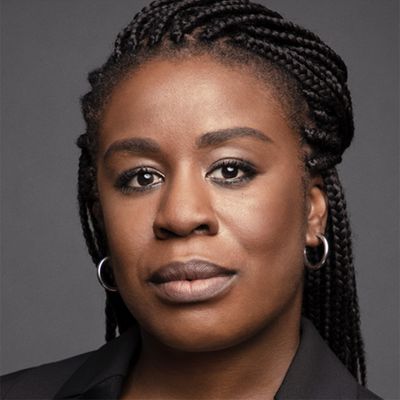
Break out star of Orange is the New Black Uzo Aduba joins us for an in-depth look at her new book The Road is Good. The Emmy Winner also shares starting off in theater, roles she didn’t get and the road that led her to Orange is the New Black... Read More
From the show: Behind the Awards with Eila Mell & Bruce Gotlieb
Guests
Featured Shows
About
Break out star of Orange is the New Black Uzo Aduba joins us for an in-depth look at her new book The Road is Good. The Emmy Winner also shares starting off in theater, roles she didn’t get and the road that led her to Orange is the New Black. Uzo recounts her time with Clydes, Godspell, The Wiz Live and so much more.
Also in this episode - Rue McClanahhan, Yellow Face at the Roundabout Theater featuring our upcoming guest Kevin DelAgula and The Broadway Flea Market.
Uzo Aduba gained wide recognition for her role as Suzanne "Crazy Eyes" Warren on the Netflix original series Orange Is the New Black (2013–2019), for which she won an Emmy Award for Outstanding Guest Actress in a Comedy Series in 2014, an Emmy Award for Outstanding Supporting Actress in a Drama Series in 2015, and two SAG Awards for Outstanding Performance by a Female Actor in a Comedy Series in 2014 and 2015. She is one of only two actors to win an Emmy Award in both the comedy and drama categories for the same role.
In 2020, Aduba played Shirley Chisholm in the Hulu miniseries Mrs. America, for which she won an Emmy Award for Outstanding Supporting Actress in a Limited Series or Movie and the Critics' Choice Television Award for Best Supporting Actress in a Movie/Miniseries. Aduba has appeared in films including American Pastoral (2016), My Little Pony: The Movie (2017), Candy Jar (2018), Miss Virginia (2019), and Lightyear (2022). In 2021, she starred in Lynn Nottage's play Clyde's on Broadway for which she received a Tony Award nomination for Best Featured Actress in a Play.
Make sure to check out Eila's book, "The Tony Awards", and all her other amazing books: https://amzn.to/43WMu5Y.
Connect with Eila and Bruce:
- Instagram @behind_the_awards
- Eila @eilamell
- Bruce @cominghomewithbruce
Transcript
This transcript was automatically generated and might contain errors.
[0:00] Uzo Aduba: This is Uzo Aduba, and you're listening to Behind the Awards.
[0:03] Uzo Aduba: My mother said to me once, some agents had just turned me down. They said I wasn't photogenic and that I would never work on television. That was in 1960. And um she said to me, Oh, Eddie Rue, for heaven's sake, don't you know every kick's a boost? And I've remembered that over the past 27 years. There have been a lot of kicks. And there've been a lot of boosts. I'm not going to mention the people who gave me the kicks. But you know who you are. And you'll be in the book.
[1:08] Eila Mell: Hello and welcome to Behind the Awards. I'm Eila. And always I'm here with my Bruce.
[1:15] Bruce Gotlieb: Hey, Bruce. How are we doing today?
[1:15] Eila Mell: Oh good. Could because uh we got to hang yesterday. But we'll get to that first. Tell us who just listened to the book.
[1:23] Bruce Gotlieb: Oh, that was Rue McClanahhan. I mean, who doesn't love Blanche? I mean, really. Any of those golden girls. I love them all. It really like when you look back and you think about like sitcoms and chemistry, and like they were one of those ones that just worked, you know.
[1:40] Eila Mell: I know.
[1:41] Bruce Gotlieb: No, for sure. So who's your favorite? Because everybody's got a favorite.
[1:43] Eila Mell: I I don't, you know, it's hard to pick, but I guess if I'm like gun to my head, I'm probably going with Dorothy.
[1:53] Bruce Gotlieb: Oh, me too. I that's easy for me. I think she her like one-liners are so funny. I love her. But I think most people like Rose the best. She's just so funny.
[2:05] Eila Mell: I know. She is. But I have to say that I find those dumb characters a little annoying. Although I do love her on the show. She's just not my favorite.
[2:14] Bruce Gotlieb: Okay. Fair enough. Like if I watch All in the Family, sometimes I get annoyed with Edith Bunker, which I know is sacrilegious.
[2:23] Eila Mell: No, I mean, you said it. I'm I'm going there.
[2:27] Bruce Gotlieb: Well, the the thing that I love about this this clip is that, you know, Rue's getting up there and and talking about how I guess people weren't always in her corner. And you know, basically without naming names, she's calling him out, but she says you'll be remembered when she writes her book. So I love that she's, you know, publicly shaming, but in a in a roundabout way.
[2:53] Eila Mell: Yes, it's a pretty pretty big threat there, but I love it. Um it kind of reminds me a little bit, because there's like a little bit of that in the play we saw yesterday, which was Yellow Face.
[3:06] Bruce Gotlieb: Yes, down at the roundabout. Written by David Henry Wong. And with our upcoming guest later this week, Kevin DelAgula, who everybody knows. Well, not everybody, but many, many people know and love from some like it hot. He was Tony nominated. Such a great performance in that show.
[3:25] Eila Mell: Well, so what I learned seeing Yellow Face is that Kevin can do anything because he plays about 25 characters. He's a true like character actor, you know? Each character because a lot of times he came out wearing the same outfit, or maybe he had a jacket on, or it was not, it wasn't like huge costume changes.
[3:44] Bruce Gotlieb: No.
[3:45] Eila Mell: Changes in his vocal intonation and different things that made him differentiate this character from another character.
[3:53] Bruce Gotlieb: Oh my gosh. At one point he plays Mark Lynn Baker, you know, cousin Larry from Perfect Strangers, and he sounds just like him.
[3:59] Eila Mell: Yeah, he did such a good job with that. Crazy.
[4:02] Bruce Gotlieb: I know. And it was a thrill that after the show, which was great, we, you know, we got a moment with him, you know, just to kind of catch up. Um after our, you know, having our interview with him. Um, we got a moment with David uh to just congratulate him on the beautiful show. You know, it was nice to have a moment with the with the team, uh, just to be able to to see them and and speak with them.
[4:27] Eila Mell: Yeah, for sure. And we went to the Broadway Flea Market.
[4:30] Bruce Gotlieb: Yes.
[4:31] Eila Mell: And one of the Francis Ju, one of the actors in the show, was at one of the tables working right there.
[4:37] Bruce Gotlieb: That's right. And he talk about a performance. Wow.
[4:39] Eila Mell: So he plays. So David Henry Huang is a character in this play, played by Daniel Day Kim from Hawaii 5.0 and Lost, and you know, if you've watched TV in the past 15 years, you've seen his exactly.
[4:55] Bruce Gotlieb: So Francis Ju plays his father, and wow, what a performance. I I mean, I really thought that he and Kevin were so strong. And so just made the show even more exciting.
[5:10] Eila Mell: It's really funny too. I didn't expect that it would be as funny as it was. You know, it needed, you know, some shows you go to and they don't have that balance. Um, they get too heavy too quickly, and and this show definitely could be a heavy show, and there are heavy moments because they're because there's some serious themes for sure. So, you know, the humor in there really helps push it forward.
[5:33] Bruce Gotlieb: You you get swept up, no intermission. It feels like it's over and done before it starts. Like it moves so quickly. I didn't pay too much attention to the classification that it was a comedy. I just went in sort of having a general idea of what the story would be and just thinking it was going to be a drama with some light moments, but really it's it's a comedy, a real thing.
[5:56] Eila Mell: Yeah, it's a it's a and it's a comedy with some serious tones.
[6:00] Bruce Gotlieb: Yeah. Which is good.
[6:01] Eila Mell: Yeah. And yeah, the rest of the cast is great. There's really not a weak link on the stage. Everything, everything moves well. The set is minimalistic, but really effective.
[6:11] Bruce Gotlieb: Ryan Eggold is in it.
[6:13] Eila Mell: Yes. Does he only play one role?
[6:15] Bruce Gotlieb: Yeah he and Daniel Day Kim are the only actors in the cast who just play one role. Everyone else changes, and they change a lot and quickly.
[6:23] Eila Mell: Yes. So I think we're recommending this one.
[6:25] Bruce Gotlieb: I think so. I think it was good.
[6:26] Eila Mell: Yeah.
[6:27] Bruce Gotlieb: Yeah, absolutely. So while we were at the flea market, which was chock full of people.
[6:34] Eila Mell: Oh my gosh.
[6:35] Bruce Gotlieb: I think it was the most crowded I've ever seen.
[6:37] Eila Mell: I've ever, ever, ever seen.
[6:39] Bruce Gotlieb: I feel like maybe next year they need uh a like a pre, um, I don't know, maybe you know, like when you fly, you could only certain size bags get to go in the carry-on. I think maybe only certain size bags get to go on people's backs.
[6:54] Eila Mell: Backpacks were the biggest menace at this play market. I got knocked over by so many backpacks. It was a good thing I wasn't wearing heels.
[7:02] Bruce Gotlieb: I mean, people have no sense of spatial awareness to begin with.
[7:07] Eila Mell: Oh my god. Let alone now they're like really knocking you over with this.
[7:11] Bruce Gotlieb: And they don't nobody cares.
[7:13] Eila Mell: There's well, they don't even know because it's behind them. But what about the woman who was pushing you?
[7:18] Bruce Gotlieb: Yes, I had to turn around and say, you can't go because I'm literally standing here.
[7:24] Eila Mell: Didn't you say something like someone standing here?
[7:27] Bruce Gotlieb: I said, I said you can't. I said the reason why you're not moving forward is because I'm standing here. And she looked at me with this look of like, I don't get it. Like, there's a person, like you can't just walk.
[7:39] Eila Mell: Oh my gosh. People get whipped into a frenzy and they lose their minds.
[7:45] Bruce Gotlieb: There were some there were some good um good finds. Uh, you know.
[7:49] Eila Mell: Yes.
[7:50] Bruce Gotlieb: One of my favorite things that I pick up every year. There's a booth that does these mystery playbill bundles.
[7:56] Eila Mell: Right.
[7:56] Bruce Gotlieb: So you get this manila envelope. It's very mysterious. And it's like three boxes and you get a good handful of playbills. And I know you'd appreciate that as a playbill collector yourself.
[8:08] Eila Mell: I love a good playbill. But I only like, see, I don't like the old old playbills because they didn't do headshots in the I really I love the old headshots.
[8:17] Bruce Gotlieb: I find that so much.
[8:18] Eila Mell: You know what? You you would love looking through um some realtors' headshots.
[8:23] Bruce Gotlieb: Oh, because they don't some people don't update them.
[8:26] Eila Mell: Oh, yeah.
[8:27] Bruce Gotlieb: You have like people now from like clearly a 1980s glamour shot.
[8:32] Eila Mell: Filtered feathered hair. It's it's a lot.
[8:35] Bruce Gotlieb: Wow.
[8:35] Eila Mell: Yeah. And then they show up and it's like, who's that? And it's their grandmother.
[8:42] Bruce Gotlieb: Neil Patrick Harris had a booth at the flea market.
[8:45] Eila Mell: He and his husband David, and we got to say hi to Neil because I interviewed him for the Tony Awards book. So that was nice.
[8:51] Bruce Gotlieb: And our friend Jack Knowsworthy was there helping out.
[8:55] Eila Mell: So well, I mean, they needed a little crowd control around that table. They were like, at least four or five people deep trying to just get close enough to the table.
[9:04] Bruce Gotlieb: I know. Well, good for them because I'm sure they raised tons of money for so that's amazing.
[9:10] Eila Mell: And how great of them to do that. It's wonderful. And then, of course, we saw our friends at Broadway Box stop there too.
[9:16] Bruce Gotlieb: Yes.
[9:16] Eila Mell: Um, they were selling some stuff. They had a stack of our uh cards out there so people can have an easy access to our episodes, which we love.
[9:25] Bruce Gotlieb: Yeah, of course. That was great. And oh, we ran into our coworkers, friends at the Broadway podcast.
[9:32] Eila Mell: Yeah, it was work. It was a really good day, really good time.
[9:35] Bruce Gotlieb: It was a fun day, yeah. So let's move on because we have such an exciting guest.
[9:41] Eila Mell: From good time to a good road.
[9:43] Bruce Gotlieb: Yes, exactly. The road is good.
[9:46] Eila Mell: So Uzo Aduba has this wonderful new book out. You can listen to it or you can read it. I read mine. You read yours too, right?
[9:55] Bruce Gotlieb: Yeah. Um, so this is the book that you need if you want to know what it's like to be a new actor in New York.
[10:03] Eila Mell: Sure. I mean, it really it's about much more than that, but it really gives you a sense of what the real deal is, and you know, how to little by little get where you're you know, and it's fun because you, you know, you always hear the phrase like, you know, you don't know how what it's like until you walk in someone's shoes. And this gives you an opportunity to to kind of do that with her, you know, to understand her perspective and you know where she's coming from based on her upbringing and her mom, and you know, just so many things that evolved to to make her and her life and her decisions.
[10:37] Bruce Gotlieb: Absolutely. Again, the book is about much more than only that, but that is a big component of it. And I just found that to be one of the most interesting parts of the book, obviously being a theater person.
[10:47] Eila Mell: Of course. So why don't we bring Uzo out?
[10:51] Bruce Gotlieb: Yeah, she's fun.
[10:52] Eila Mell: So uh everyone, here we go. We are so excited to welcome Uzo Aduba to our show.
[11:01] Uzo Aduba: Hello.
[11:02] Uzo Aduba: Hello, and I'm loving the Muppets happening.
[11:06] Eila Mell: Yeah, yeah. I know. I I'm in like an explosion of pop culture. It's not my decorating, it's someone else in my house. But you know, I can't really do anything about it. But I is known to love an explosion of pop culture.
[11:20] Bruce Gotlieb: Don't get us wrong here.
[11:21] Uzo Aduba: I do. I just maybe not this, but I love the Muppets, so it's it's cool with me.
[11:28] Eila Mell: So that works. Big brown works.
[11:29] Uzo Aduba: It does work.
[11:31] Eila Mell: So, Uzo, let's I have to jump right into it. Congratulations on The Road is Good, your book.
[11:38] Uzo Aduba: Yes.
[11:38] Eila Mell: I have to tell you that I read the entire book in one day.
[11:41] Uzo Aduba: She did.
[11:42] Eila Mell: Wow. I didn't plan on it, but I just didn't want to stop reading it. So I figured, well, I'm in. I might as well keep going.
[11:49] Uzo Aduba: Thanks. I mean, that's what you want, right? You want a book that people can't put down.
[11:54] Eila Mell: Yes. That's the dream. What started that journey for you? What, you know, came to be when you said, all right, let's sit down and write a book.
[12:01] Uzo Aduba: You know what? You guys. Um, to be honest with you, originally it was when I sat down and started thinking about it. I was like, oh, you know, this would be really cool to tell stories about my mom and I, you know, my mom and I were really close. Um, you know, first gem. This is before before, you know, I started uh collaboration with Viking, anything. Like when I'm writing the proposal, I was like, oh, it's gonna be great. You know, I'm gonna tell these stories about being a first gen kid and the daughter of my fierce funky mama, and you know, all these great lessons she taught me, and it's gonna be amazing because my mom and I could talk forever. So she uses like the perfect thing for her and I to be a part of because we're just gonna tell a story for a hundred years, and that's what we're gonna do.
[12:47] Uzo Aduba: And that's what I was excited for and be like, yay, and crazy eyes, whatever. You know, and I was like, that'll be like the fun thing. Um yeah, that's what I was setting out to do and thought was gonna be the book that I was gonna write. Little did I know I was not going to be the book that people were gonna sit down and read.
[13:12] Bruce Gotlieb: Well, there is certainly a component of that, and I feel like I got to know your mom reading the book.
[13:19] Uzo Aduba: Okay, so thankful for that. You know, I have a similar story where my mom was my best friend my whole life. All I wanted was to be with my mom. Yes, it was the best. It really is. I I don't understand people who have contentious relationships with their mothers. It's not my experience, you know. I know not everybody has that experience, and so I'm like, that's fine for you to have this experience. I was actually talking with someone um a little while ago, and they were saying, who had read the book, you know, that they didn't have that relationship with their mom, but they were so happy to get a window into that relationship and that they actually have um daughter, uh daughters, and was were saying how um they were wanting that type of relationship then with their daughter and uh their daughters, excuse me.
And I've been really, I don't know, extra happy to learn what I always knew to be so about my mom was that she was an excellent mom yeah with listening to people say that they you know who had an opportunity to read the book or overhear me tell stories about her you know I'm I'm so glad that people are responding to who she is because that's the woman I always knew her to be just this strong loving gracious possessing a remarkable ability for forgiveness and supportive she loved like just supporting woman she's awesome and she supported not only you but all of your siblings there's five of you so that you know to have that much love to give is an amazing thing.
[14:56] Bruce Gotlieb: And how wonderful for you to share it with all of us to let us in to that to that life and into you know people when you see somebody in your TV or in a movie like you feel like you know them but you're you know being vulnerable and you're letting people into your you know behind closed doors so to speak a little bit.
[15:16] Uzo Aduba: A hundred percent you know and that was a challenge for me because I'm such a private person, you know, I work in in a field where I get to share other people's stories, you know, and my own disappears into the background and it was interesting to now be the center of the story and there's no real hiding, you know, you're just right there. But also how incredibly relieving releasing and cathartic to sort of get to share those parts of myself, and you know, for to let people in uh a little more and get to know more about me and my story, my journey, my road to this moment. The road is good.
[16:00] Bruce Gotlieb: The road is good.
[16:01] Uzo Aduba: The road is good.
[16:02] Bruce Gotlieb: We'll be right back. We have to listen to some commercials.
[16:10] Bruce Gotlieb: So I was really struck by even as a child, and I don't know if you see this in yourself, but I just see that you were so confident and so sure of yourself. Was that did you feel that way?
[16:21] Uzo Aduba: In some places, yes, but then in some places, areas of myself, no, you know. Um there were places of me where I I didn't feel confident where, you know, growing up in my hometown in Massachusetts, where we were the only Afro-black, one of the few black families, only African family until another family moved in a way later. Yeah, that that certainly at points in my life were putting I mean where I was the only, you know, and um learning and figuring out where and how I sit in. That was certainly a journey. And you know, and that was impacted in so many different ways, whether it was with my gap and you know, is a traditional sign of beauty in Africa, whether that was my name, whether that was, you know, at the lunch table with uh other kids who have PB and J. And I open up my lunch bag, not a lunch box, because my mom and dad were like, what does this waste?
You know, a lot of people open up my lunch bag, and everybody's like, what? And then I'm like, it's jalash rice and chicken, and it's delicious, you know, that sort of thing. Um, but going back, you know, that's where my mom really did an incredible job with myself and with my siblings of pouring some of her confidence into our cups, you know, and making us understand, realize that our unique differences were actually what made us special.
[17:56] Bruce Gotlieb: Yeah.
[17:57] Uzo Aduba: And with time and nurturing and seeding of that idea, then I started to stand more strongly, more firmly in my identity of self. And I'm so glad for that, honestly, because the more I think about it, I'm looking at her picture over there right now. Like the more I think about it, and there she is up there, the more I'm really thankful that she did that and proud that she poured into us and poured into me in that way, because I can imagine probably there's a worry that who she is would get erased if we didn't hold on to those parts of ourselves, you know.
[18:43] Bruce Gotlieb: I love that you chose to sit alone in the cafeteria at school rather than hang with a bunch of girls who you didn't believe in anymore.
[18:51] Uzo Aduba: Oh my gosh, yeah. You know, I can remember that like so clearly. Like that is like a core memory stamped on my like green. Um, I can so clearly remember that incident in eighth grade and to my dear friend at the time who was like, come sit with us and I can hear my voice, like and just I don't know. Have my mother's R for sure. You know, like this is something my mother would do, like where I could just hear my voice and me when I said to her, I'm like, rip them all against the You know, like as if I'm doing my own, I don't know, like to be dramatic, like sitting or something. I was just like so, you know, like it's just like I remember that so clearly and not wanting, I don't, and I don't know what made me do it, if I'm being honest.
Like I look back on it, I'm like, why didn't you just sit with those kids? But um just sit over there. But it's like I don't know. I wanted to make a point and I wasn't gonna be pushed or bullied or backed into any sort of position other than the one I wanted to stand in.
[19:58] Bruce Gotlieb: No, those are some huge balls for eighth grade because I was gonna say hardest age.
[20:01] Uzo Aduba: Yeah.
[20:03] Bruce Gotlieb: Stop by myself.
[20:04] Uzo Aduba: It wasn't easy. Let me tell you.
[20:05] Bruce Gotlieb: I'm sure. I was kind of busy work, got a lot of homework done, a lot of extra credit questions. But many others would hide like you know, in a classroom or in the bathroom or someplace. But you know, that's why I say you were so confident, even if you didn't realize you are.
[20:20] Uzo Aduba: Thank you. I feel bonded with you already because like you, I always dreaded the first day of school when they called off the list of names. My name's Eila. No one ever pronounced it right. And I feel like that's right to some degree that shaped me in a way. Do you feel the same?
[20:39] Uzo Aduba: A thousand percent. And like I said in my book, like I always came second. Dan Abramson came first. And my class, and then I then I was like, and they would say, damn, Daniel, Dan, Abramson here. And then there would be this moment where they were staring at the paper, and you can see their mouths like ogling over the word, trying to figure out even where to begin with U Z. Wow, though that letter combination was like, We're already lost, you know. You know, and it's when I was really, really little. It was this thing of like wanting to hide under the covers and disappear and want wishing that you could just be called something else, you know? Um that could make it easier. That didn't make it such a uh an event, you know.
And I know now as an adult I learned my mom was so quick with her answer because my older sister had tried to have done the same thing. Yeah. Your mom's like, we I've been here already. We're not rehearsed and ready, you know. Um but yeah you just want to you want to fit in in whatever way I think as a kid, you know, like so that was one of mine. And also you don't know, you know, are the kids gonna now call me this wrong name all year and tease me and it just happened to me about an hour ago. I had a doctor's appointment and you know I have to listen for whatever they're gonna call and they didn't know how to say my name.
[22:06] Uzo Aduba: Yes. Yeah. But you know what? And you you it's you have the right this is what I say to that now like I now am very much like Nanya Mandama's daughter where it's like teams make sure people get it right that you are main. Right. Eila you said it it's not that hard to get right. It's not chrysanthemum. I know you know and even that we all know how to say I know people adjust but I do use an alias in Starbucks just so I know what to listen for. It makes it much easier.
[22:38] Bruce Gotlieb: I didn't even realize that you weren't a series regular on Orange is the New Black until I read the book even though I watched it from day one.
[22:47] Uzo Aduba: Season one, no. I was I be I was um promoted season two, but season one, not at all. But uh your character was such a force that you just assumed you're part of you know the main cast. So did they write to you as you went on, you know, as the series got into it more?
[23:05] Uzo Aduba: Yeah, they did. So when I first started on the show, I was cast. Um, they had told me that I was gonna do two, possibly three episodes. And I remember it was my first TV job that I'd ever booked. So I was stoked. Yeah, you know, I it could have been half an episode, it would have been plenty for me. You know, totally stoked. I remember finishing that second episode and being walked back to my dressing room by one of the producers, and she said, you know, we'll see you on the next one. And I was like, Oh my god. I didn't get to do that third episode. That was the fullness of all that was like the extent of my thoughts on the whole thing. I was like, I'm gonna get to do that third episode. Like, wow, that's amazing.
No idea that the show was gonna be what the show was gonna be. And then definitely that I did not think I was gonna be on for the rest of the season or seasons to follow. It was beyond my like even just sitting here now, even like recalling, yeah. Like it's just like it's just not something that I even imagined. Like I truly did not and I remember doing that third episode being like, look, can't wait to go to the next thing, whatever the next deck's gonna be. Right. You know, like that was awesome, you know.
[24:22] Bruce Gotlieb: So for people who read your book, they'll know that you were uh that you ran track, right? You're a runner, and so you auditioned for the part of the track star on the show originally.
[24:34] Uzo Aduba: Yes. Because that would make the most sense. But then watching the show, no one would even know that because you were so perfectly cast, even though the, you know, Suzanne is really nothing like you.
[24:45] Uzo Aduba: Yeah. Thank God. No, no, I mean, could you imagine? Because like I still think about it. I thought about it for the longest time in their life. When I got the call for the show, and they said, um, do you remember the part you went out for? And I was like, yeah, the track star. And they're like, yeah, um, well, you didn't get it. And I was like, okay, no problem. They're like, but they'd like to offer you offer. So it's not even like I read Flacreta, like, but the other part. Right. And I was like, well, but here's the thing. Here's the thing. I'm like, okay, great. And they're like, what's the other part? And they're like, crazy eyes. And he's like, when I read the script, I was like, what in my audition? There's not right for the track star, but like the crazy great for them.
[25:32] Uzo Aduba: But yeah. This part over here. They were so right. Yeah. They were correct. They were correct. So wow. Did you come up with the hairstyle yourself or was that a discussion?
[25:43] Uzo Aduba: No, I did. I had worn maybe it was that. I had worn my hair like that in my audition. And you know, that was such a lesson to me that like just come with what you think, you know, like works. And I had I had wanted to take my hair down and I had put it in the twist in the bantu knots so that it would have like a nice twist curl, twist out curl.
[26:06] Uzo Aduba: Oh, okay. But I had been running behind um prepping for the audition. My the girlfriend of mine, we were running lines. I was like, oh, I gotta go. And she was like, Your hair, it's still in the knots. And I was like, it's fine. It takes place in prison. Like I wasn't gonna be it doesn't need to be done. Like, like it's fine, it's whatever. And then they liked them. Um when I came on my first day, I was like, what do you know? I just wear my hair like this. Do you want me to take it out? And they were like, no, we actually really like it like that.
[26:37] Uzo Aduba: Well, it makes perfect sense. You if you came in all glammed up, it would have been wrong.
[26:42] Uzo Aduba: Correct. Correct. The universe was on my side that day.
[26:46] Uzo Aduba: Oh my gosh. We had Adrian Seymour on the show. And she was telling us, Oh, that's my girl.
[26:51] Uzo Aduba: Oh, she's so brilliant on the show. She's brilliant. And she is a phenomenal, first of all, an incredibly human, but she is also uh a phenomenal talent. Phenomenal talent. The range of that girl's talent is far reaching, FYI.
[27:06] Uzo Aduba: I know we all have, but she is exceptional.
[27:09] Uzo Aduba: Yes. Oh my gosh. Some of the best work on the show was when she had the scenes with the rabbi. Loved her. And yep. Yep. Yep. Yep.
[27:17] Uzo Aduba: And she's hysterical, also, by the way. Like dropped in it. And she like you also had not the same story, but also similar, where, you know, I'm going out for this thing and I don't know. And it then unfolded to become what it was, and how amazing that that transformed.
[27:35] Uzo Aduba: I mean, both of you.
[27:36] Uzo Aduba: Yeah, I mean, that was true for so many of us. I mean, a lot of us, that was our first job, yeah.
[27:42] Uzo Aduba: You know, and it was lined up with also the fact that, you know, we think of Netflix now as very different from what Netflix was at the time, you know.
[27:53] Uzo Aduba: So, like, I mean, I was telling so many people, like, people would ask them, like, oh, you know, once you know, I was on the show for the remainder of the season and we're working, and they're like, Oh, where is it gonna air? And I was like, I think it's like a web series. Like, like I don't know. I was like, YouTube? I don't know. Like, like, I don't know where. I don't know. Like, I don't know where it's gonna go, you know.
[28:16] Uzo Aduba: But Orange is the New Black really put Netflix on the map as a place where you could go to watch a series.
[28:23] Uzo Aduba: Absolutely. Absolutely. And you know, we have like the platform of Netflix to thank for like taking a chance on such an incredible show. But we also have like so much love, like Jenji Kohan, who was the show creator, you know, um, and her team that she put together and like the vision that she had for that story was so remarkable and strong.
[28:46] Uzo Aduba: She's just like a remarkable talent. I always always felt like Jenji's a true genius, like a genuine genius that she would write something so unique, so strong.
[28:58] Uzo Aduba: Like I remember reading that pilot, which she wrote when I before I auditioned, and like just being like, Oh, I wish I could be a part of something like that. Like, and I had been auditioning so much that summer and reading tons of scripts, and literally Orange is the New Black was one of two of one hundred, and that's not an exaggeration.
[29:20] Uzo Aduba: Wow, that I had read at that point.
[29:33] Uzo Aduba: Wow. That's crazy. And then you're like one of the biggest parts of the show. And it's wonderful that it's women's stories and that it was so successful.
[29:41] Uzo Aduba: I was so proud of it, still am proud of it.
[29:44] Uzo Aduba: Yeah. You know, like some you just said, so many women's stories. I've never been a part of something that had so many different women a part of one story.
[29:54] Uzo Aduba: I'd been a part of like examples of a singular group of women in a story, or maybe like this group of women and then one person from this other group. You know, like but that so many people were represented from age, size, race, identity.
[30:12] Uzo Aduba: Yeah, you know, that was amazing. And that it was powerful, and that the caliber of everybody in front of and behind were exceptional.
[30:22] Uzo Aduba: And every time I walked by the video village where all of the executives and powers that be and writers, directors, et cetera, sit, were primarily, if not sometimes always, shared by women.
[30:39] Uzo Aduba: That's amazing.
[30:40] Uzo Aduba: That's amazing. And it still stayed with people. I mean, people still talk about it now when you when you're having conversation about binge-worthy shows, or what are you watching, or you know, I need a new show.
[30:50] Uzo Aduba: It's people still say, Oh, well, you watched Orange is the New Black, right? Like, that's like the start point.
[30:53] Uzo Aduba: Like, well, if you haven't, you need to get on it. So it's the gold standard.
[30:59] Uzo Aduba: Yeah. Thank you for that. We'll take it.
[31:01] Uzo Aduba: On behalf of Orange is the New Black. I'll take.
[31:04] Uzo Aduba: Let's take a minute to hear a word from our sponsors.
[31:11] Uzo Aduba: You know, Bruce and I are lifelong New Yorkers, and Orange is the New Black, that cast, that group of people, to me, it's like what New York is.
[31:20] Uzo Aduba: Right.
[31:20] Uzo Aduba: Oh, yeah. For sure. Like you see that experience and that face of the country, face of the world.
[31:28] Uzo Aduba: Every time you step on a subway, every time you're walking down the street, no matter where what part of the city part you're in.
[31:35] Uzo Aduba: You know, it's a it's it's New York is like no matter what swan you exist in, you have to rub elbows with everybody.
[31:47] Uzo Aduba: Yes.
[31:48] Uzo Aduba: Like it's impossible.
[31:49] Uzo Aduba: You it's a possible, right? Don't you think?
[31:51] Uzo Aduba: Like 100% you have to ever at some point.
[31:56] Uzo Aduba: I don't care if you're living at the schmanciest house in Schmantzville, you know, Manhattan.
[32:04] Uzo Aduba: Yeah. You're coming down, you're setting the door to that car.
[32:05] Uzo Aduba: Yes. There very well may be somebody who might bowl you over and be like, I'm walking it. You know what I mean? Like that's you're gonna have to get in with everybody.
[32:18] Uzo Aduba: Right.
[32:18] Uzo Aduba: And yeah, I and I love that about New York. I love the democracy of New York.
[32:24] Uzo Aduba: Absolutely.
[32:25] Uzo Aduba: Who wants to be with one group of people all the time? How boring is that?
[32:27] Uzo Aduba: Yeah, yeah.
[32:30] Uzo Aduba: Well, first of all, it's not New York.
[32:31] Uzo Aduba: Who's this?
[32:32] Uzo Aduba: Yeah, that's right.
[32:33] Uzo Aduba: Exactly. That's why we're here.
[32:35] Bruce Gotlieb: So, you know, obviously our show is on the Broadway Podcast Network, so we have to talk about your Broadway work, which we're huge fans of.
[32:43] Bruce Gotlieb: Clyde's oh my gosh, amazing.
[32:45] Uzo Aduba: So I love Clyde.
[32:47] Uzo Aduba: Thank you. So uh thank you. I'm glad you liked the show.
[32:49] Uzo Aduba: Oh, absolutely. Tell me about that experience.
[32:53] Uzo Aduba: So was that the first time that you were coming back to theater with, you know, a name that everyone now knew?
[32:59] Uzo Aduba: Well, in New York, yes.
[33:00] Uzo Aduba: Okay. I had done a play in the West End before that, um, a few years before that.
[33:06] Uzo Aduba: But yes, that was my first time coming back, and it was a true gift by my one of my favorite playwrights, Lynn Nottage's.
[33:14] Uzo Aduba: She's like my all time.
[33:15] Bruce Gotlieb: Yes.
[33:16] Uzo Aduba: Two time would surprise me.
[33:18] Uzo Aduba: Yes, Lynn. Amazing Nottage, a g another genius, yes, and a woman who has done consistently the remarkable work telling stories about people and worlds that I have entered and know and see and look like.
[33:38] Uzo Aduba: And also telling. And that's that's not even just strictly race-based, even though we have that as a truth, you know.
[33:47] Uzo Aduba: Like I remember Sweat. I remember watching that play, going to see that.
[33:53] Uzo Aduba: And I was like, this is excellent.
[33:56] Uzo Aduba: Yeah. This is such a beautifully written play that was just so well comprised of so many walks of life and telling a new perspective that of the unseen in America.
[34:11] Uzo Aduba: Yes.
[34:12] Uzo Aduba: To ruin the range of her work is breathtaking.
[34:15] Uzo Aduba: It's exceptional. Breath of it, like that skill set that you want in a writer and love in a writer, tough problems from the I mean, it's just like she's so gifted.
[34:25] Uzo Aduba: She is, you know, like she's really remarkable.
[34:28] Uzo Aduba: You're a star, you know.
[34:29] Uzo Aduba: So to get to before when that play came to me, I hadn't even read a page. I just opened it and I saw written by Lynn Nottage's.
[34:40] Uzo Aduba: And I said to my agent and manager, I was like, this is probably a yes, just based on the fact that Lynn Nottage's read this.
[34:50] Uzo Aduba: I'm gonna read it just so I can say I've read it and done my formal, you know, uh due diligence. But I'm pretty confident this will be a yes.
[35:00] Uzo Aduba: Oh, you can're not going to be able to do that. Put this on the calendar. Block me out.
[35:01] Uzo Aduba: Correct, correct.
[35:03] Uzo Aduba: So before I ask you the next question about the show, I just want to point out your amazing castmates, including someone I adore, Cara Young and Roger.
[35:12] Uzo Aduba: Carrie Young, Tony Winner.
[35:13] Uzo Aduba: Tony Winner now, good for her.
[35:15] Uzo Aduba: And Tony nominated for every Broadway show she's ever done.
[35:19] Uzo Aduba: Right. Please give her all the flowers.
[35:21] Uzo Aduba: That is correct. She deserves, but also the amazing Ron Cephas Jones.
[35:25] Uzo Aduba: Oh, yeah. Ron Cephas Jones has been fantastic for had been fantastic for a long time.
[35:30] Uzo Aduba: I had told him on our first day of work. Of course, you know, America at large knows him for uh This Is Us.
[35:38] Uzo Aduba: Um and his beautiful work on that. But I told had told him that I actually knew him because I had seen him at the Laura Pels in The Overwhelming.
[35:51] Uzo Aduba: Okay.
[35:52] Uzo Aduba: Many wins ago with Josh Robards.
[35:55] Uzo Aduba: And um gosh, I I can run through that list of names in a moment.
[36:04] Uzo Aduba: Um, and he was, but he was in that in that piece, and I remember the speech that he gave, and I remember the end of the play, the begging scene where he's begging for his life, and the desperation and the threat he was able to create on that stage of how that this we may see death on, you know.
[36:30] Uzo Aduba: We didn't know what was gonna happen to him.
[36:32] Uzo Aduba: Yeah, was just really quite remarkable.
[36:34] Uzo Aduba: And he brought that same power, that same talent, that same gift, weight to Clyde's, which was wonderful.
[36:41] Uzo Aduba: Yeah, and he's a tremendous, tremendous actor.
[36:44] Bruce Gotlieb: Now, did you feel like you had to be the leader of that cast?
[36:47] Uzo Aduba: No, I don't I I don't think I did.
[36:50] Uzo Aduba: I'd have to ask my castmates if that's how they perceived it. I I didn't feel that as you know, what I felt more than anything was the time we were in.
[37:00] Uzo Aduba: Because it was, you know, right this is the first season after COVID that showed like you could feel frankly the fragility of the medium because um because it requires being in person is very different.
[37:14] Uzo Aduba: I had shot a show and T in during COVID during COVID. You know, it was a very different two shows actually which is very different because you can do it from a distance because the technical mechanics allow for it and it's already distant in terms of watching it because people watch it at home.
[37:29] Uzo Aduba: Right.
[37:30] Uzo Aduba: So it was we were very much aware I felt very aware of the requirement of theater which forces everybody to be in a common space something that we've not exercised for however long up until that point a year and a half and the just the slow crawl of the city you know I you could seal all of those things and sort of I think we were all just trying to remember how to be in that world.
[37:58] Uzo Aduba: Yeah sure you know more than anything.
[38:01] Uzo Aduba: So I don't know if it was so much as a leader and I mean by the way how can I lead if we have you know the decades long career of uh a Ron Cephas Jones also in the space.
[38:12] Uzo Aduba: I think we were really just trying to sew back the same threads.
[38:17] Uzo Aduba: Yeah, you know, more than anything. You know what's funny too is, you know, people find people through different avenues. And you know, when Wiz Live was going on and you were cast in that, I know people were like, "Oh, but can she sing?" And then, you know, the other side of the aisle was like, "Well, but Godspell," and like, you know, bringing that because people don't realize, obviously, unless they know your career, they don't know that you've done musicals. And, you know, they know you from, let's say, they found you with Orange is the New Black. So was that a thrill to be cast and be able to sing again?
[38:50] Uzo Aduba: Oh, it was fantastic. I love any chance I can to say, you know, I went to school for voice performance is my training and background when I have my degree in done at Boston University, College of the Arts, um, fine arts. But um, yeah, so music has always been a part of my life. And because, you know, as you said, Bruce, because people were mostly introduced to my work through Orange is the New Black, I think that's fair to say, most people don't know that part of my story or my life. So I was so happy to sing. I was happy. I knew obviously I knew the Wizard from like, I went and we're talking the Stephanie Mills or the dining rouse. I know. Right. You know, of course. I love it, I know it. And um, was just really stoked to be able to be part of that, you know, uh, history.
[39:41] Bruce Gotlieb: And you did get to sing on Orange is the New Black, at least on one episode, is that right?
[39:46] Uzo Aduba: I did. I did. You know, that's the thing. As soon as our writers or, you know, Genji signed out that you have a party trick of some kind. Because I found out I could skate, and then suddenly I was in the talent show auditioning in shoes, like with ice skating.
[40:05] Bruce Gotlieb: Right, because you could have easily been an Olympic skater.
[40:08] Uzo Aduba: Well, easily if, uh, it could have no way. We could have gone that way, perhaps, you know. Um, but yeah, like they find out anything and then they know they're like, they're gonna put that in. And I mean, that's true for so many in our show, whether that's Danielle Brooks, who obviously also from the musical world, Samira Wiley, um, Adrian, you know, I don't know. A lot of people were showing their various skill sets at points.
[40:40] Bruce Gotlieb: So I this is so odd. I don't know why, but when I picked up the book to read it, you know, I knew you were gonna talk about your career, and I was thinking, I wonder if she, you know, considered or auditioned for the leading player in Pippin when that came back.
[40:53] Uzo Aduba: And you did.
[40:55] Bruce Gotlieb: Amazing. Because I mean, you totally could have nailed that.
[40:58] Uzo Aduba: I would have loved, I mean, I did that so in high school. She remembered using when we call the drama. Yeah, so yeah, yeah. I did that in high school with my favorite time. And the absolute right person, uh, Tony Winner for the role, yeah, Patina Miller, the incredibly talented, phenomenal Patina Miller, excuse me, was right for that part. I went to see it and she was fantastic in it. But yeah, you know, it's that and, and by the way, when I think back on it, just like, you know, you were talking about Orange, for example, I'm like, oh, things happen exactly as they were supposed to happen because that was right before, literally right before I got that job.
[41:40] Uzo Aduba: And even when I had to think about it later, because I was so devastated, I wanted to do that so badly. I was like, I felt like it felt so right for me. And I thought the pieces were all coming together. Even when I thought about it later, when my audition for Orange is the New Black happened, it was the same week that that show, Pippin, was out of tune doing a workshop.
[42:09] Bruce Gotlieb: Oh wow. So you wouldn't have been able to even go.
[42:12] Uzo Aduba: I wouldn't have been able to do it. See, the things happen exactly as they're supposed to. Like that's so to happen. And then I thought about it after that. I was like, oh my gosh. And then when I did my first week of Orange is when they started either the rehearsal, I don't remember now, like it's so long ago. It was like either they said rehearsal or production performance of whatever it was for that show for their out of town triumph. But I think about that, I'm like, this was, it was never yours. Right. It was literally never yours. And thankfully you didn't have to, you weren't put in a position where you then had to make a choice, like which do you go with? You know, if they're both presented to you, thank God you didn't have to make that decision on your own.
[42:46] Uzo Aduba: Didn't have to make that decision. And when, like I said, I mean with like my whole heart. Like when I saw the production, I was like, no, that's exactly right. And she murdered it. You know what I mean? Like full stop, period. She killed it.
[43:05] Bruce Gotlieb: She absolutely did, but you could have also, you know, and there's so many talented people. So there's no one choice. There are so many people that could be great. But yeah, she was absolutely wonderful.
[43:16] Uzo Aduba: You know, I feel like it would be remiss to not talk about how much I learned about Nigeria from reading your book.
[43:23] Bruce Gotlieb: Good. I'm glad to hear that.
[43:24] Uzo Aduba: Yeah. I love that you included those stories and especially your mother's stories from Nigeria, but also your experiences going there. I really, I learned a lot. And it was so interesting. I love those. It almost, you know, it started off as that being part of the narrative, and then it sort of changed where those it became episodic and just wonderful little slices of life. And I love that.
[43:45] Uzo Aduba: Yeah, I mean, Nigeria is in my opinion, it's the best place in the world. I love it. It's such a beautiful country. You know, when you get off the plane and you're descending down the escalator to through customs and getting your bags and everything, there's a big electric sign that says, "You are welcome." That's what people say when they, you come to their homes. You're welcome, you're welcome. And it's the most generous place, I think, that I've ever been. Africa at large has that spirit about it. But people, you can go to any home, whether you have a lot or a little. If people have a bowl of rice, they will offer you three quarters of that bowl and sincerely mean, have all of it.
[44:29] Uzo Aduba: Yeah. When you can meet people who have forget about nothing. They live next door to nothing. That far away from nothing. You know, um, and that's, that's an energy that you cannot fake. You can't replicate. It just is. It's who we are as a people. And I loved going there as a kid and then in my own adulthood and really seeing so much of myself on full display in the culture and the food and the music and the language and the values. I loved everything about it, love everything about it. I love going yearly. I didn't get to go this year. I had a baby back in November.
[45:06] Bruce Gotlieb: So congratulations.
[45:07] Uzo Aduba: Congratulations. Kept me from going, but thank you so much. But um, yeah, I love Nigeria so much. I can't wait to get back.
[45:15] Bruce Gotlieb: And I love that, you know, as you grew as a person, you wanted your family to embrace their traditional clothing where you didn't as a younger person.
[45:23] Uzo Aduba: Yeah, you know, like so much about an American story a lot of the times is about figuring out how to fit in this new America, this new place you live. And, uh, while not trying to forget all of yourself. And you know, my mom was both my parents, frankly, but they were my mom in particular, was really, really intent on making sure we didn't forget who we are. And I'm so thankful for that because, you know, by the time I got to college age of life, I was, excuse me, high school age of life before going into college. I held on to a lot of that. You know, I was really embracing so much of that knowing that so much of who I am and where I come from. And I think this is true for me today, even, you know, as an artist, as a human, Teresa's back that I'm tied to that Nigerian culture, and I'm thankful for that and proud of it.
[46:18] Bruce Gotlieb: Yeah. I'm sure it contributes great part in who you are, just by visiting there and seeing a different way of life.
[46:25] Uzo Aduba: 100%. I mean, I remember I was doing Godspell. And I have an actor friend who is Nigerian also and super talented actor. And I remember when I was doing that show, and she came to me that one of the highest compliments had ever been paid. She came afterwards, and we were talking later backstage, and she said, "I love that performance." And she said, "You know why I loved it? I could feel the channeling of all the aunties, the women by the wood cauldron in the back, cooking the meat, turning the stew." I could see that part of ourselves in that weight. And I remember thinking to myself then, like, first of all, wow, that's very powerful. And I understood it also just from like a creator's point of view, you know, the size of my stance, the weight that I was giving comes out. How I learn how to hold spaces from those women that I know, you know.
[47:30] Uzo Aduba: And um, so I was really, really appreciative. Not to be shallow here, but you look gorgeous on the cover of your book.
[47:38] Uzo Aduba: Thank you. And I'm so glad that you're smiling because I love the story in the book where the school photographer told you that you have a beautiful smile, and you hadn't realized that before.
[47:48] Uzo Aduba: I hadn't, you know, like, and this is again part of Latin McGrin experience, you know, being first gen. It's like you're wedging these different worlds. And one of the things that I have a gap. My mom would call it the Anya Ku gap, like that. Her whole family had it except for her. And I wanted it closed so badly because, you know, 11, 12, 13, whatever it is. Right. You're seeing everybody's getting braces, they're getting these perfect teeth. And that signaled to me that, oh, then this must be ugly. This must not be desirable. And my mom would say, I want to, you know, I want to close my gap. I don't, I don't think it's pretty. And she's like, "Don't you know?" These are like her little lessons.
That in Nigeria and throughout Africa, a gap is a sign of beauty. And I was like, we don't live in Nigeria, lady. We live in Medfield, Massachusetts. What is happening? But then by the time I got to high school, the school, you remember your like school, high school photography pictures for senior year when you like the diploma, you know, like those kind of pictures. The silters, like highly diffused photographs. Awful. I was at that that year of school. And the photographer, you know, we would be talking like this, and I'd be laughing and whatever. And then as soon as he picks up the camera and I'd take my picture, I'd be like, it's a serious face. And I wouldn't, yeah, I wouldn't smile, no teeth, nothing.
And I had been doing that for some time. And he said to me, "How can every time I try to take your picture you close your mouth like that?" And I was like, oh, because I don't like my gap. And he's holding this camera in his hand. And um, he says, "I think you have a beautiful smile." And I didn't change my smile that day. And the picture in the yearbook is definitely closed mouth. Um, but the rest of that school year, I smiled as big as the Grand Canyon. You know, I would smile all the time. I do now. I say that I feel like I'm making her lost smiles because what a shame. Yeah. You know, that little girl didn't smile.
[50:01] Bruce Gotlieb: Right.
[50:01] Uzo Aduba: But I love my gap. I love it, I love it, I love it now.
[50:03] Bruce Gotlieb: That's so wonderful. I know that we are short on time. We could talk to you all day. I want people to know that we've only scratched the surface of what's in the book. There's so much more, really. Um, is there an audio version of the book also?
[50:17] Uzo Aduba: There is an audio book version, and I did the voice for it.
[50:20] Bruce Gotlieb: So go buy the book and download the book. That's your homework, folks.
[50:25] Uzo Aduba: That's right. Uzo, thank you so much. We hope that you'll come back the next time you have a project. We'd love to talk about it. We didn't even get to talk about you playing Shirley Chisholm, who your mom loves.
[50:36] Uzo Aduba: Oh my god, yes. So there's so much to even still talk about doesn't mean that I have to come back.
[50:41] Bruce Gotlieb: Absolutely. That's right. Well, once you're here, you're family. So anything you need promoted, shoot it our way, and we'll put it out.
[50:47] Uzo Aduba: Thank you.
[50:48] Bruce Gotlieb: Thank you. Thank you. Thank you. Thank you all for joining us, and we will see you next time on Behind the Awards. Bye-bye.
© Broadway Podcast Network, All Rights Reserved