

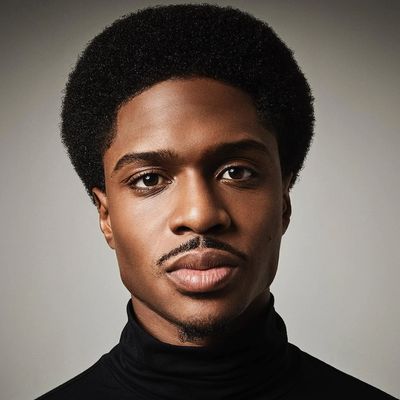
Ephraim Sykes stops by to discuss creating a George for this generation with Kenny Leon. He tells us all about the field trip on the first day of rehearsal to New Hampshire and how his career has been as series of pinch me moments from being in the original cast of Hamilton to playing Seaweed Stubbs in Hairspray Live and being a Temptation in Ain’t Too Proud... Read More
From the show: Behind the Awards with Eila Mell & Bruce Gotlieb
Guests
Featured Shows

About
Ephraim Sykes stops by to discuss creating a George for this generation with Kenny Leon. He tells us all about the field trip on the first day of rehearsal to New Hampshire and how his career has been as series of pinch me moments from being in the original cast of Hamilton to playing Seaweed Stubbs in Hairspray Live and being a Temptation in Ain’t Too Proud. Ephraim shares how getting a scholarship to Alvin Alley changed his career path and what it was like to audition for and tap with Savion Glover to gain the lead role in Pal Joey for NYC Center Center’s Encores.
Also in this episode Richard Gere’s 2003 Golden Globe win for Chicago. Eila & Bruce recount their trip to Our Town now in previews at the Barrymore Theater. Bruce also shares his experience at the Ogunquit Playhouse seeing The World Premier of My Best Friend’s Wedding The Musical Directed and Choreographed by Kathleen Marshall and Lead by Krystal Joy Brown, Tony Winner Matt Doyle, Telly Leung, Lianah Sta. Ana, Morgan Bryant and Zoe Jensen.
Ephraim Sykes made his Broadway debut in 2009, joining the cast of Disney’s The Little Mermaid. He then earned a spot later that year in the Broadway premiere of the Tony Award-winning Best Musical Memphis. Sykes made his Off-Broadway debut originating the role of Benny in the 2011 revival of Rent at New World Stages and later that year, he returned to Broadway as part of the original cast of Disney’s Newsies. He followed this turn up as an original cast member of the 2013 Broadway premiere of Motown The Musical.
In January 2015, Sykes returned off Broadway to The Public Theater, originating the role of George Eacker in the musical juggernaut Hamilton. After receiving wide acclaim, the production transferred to Broadway from July 2015, eventually winning the 2016 Tony Award for Best Musical. Sykes remained with the production until September 2016.
His big break as a leading man came after being cast as David Ruffin in Ain’t Too Proud - The Life and Times of The Temptations. Following tryouts in Berkeley, Washington D.C., Los Angeles, and Toronto, the Broadway premiere opened at the Imperial Theatre in March 2019. Sykes earned his first Tony Award nomination for his efforts, followed by a Grammy Award nomination for Best Musical Theater Album in 2020.
On screen, Sykes is known for playing Seaweed J. Stubbs in NBC’s Hairspray Live! in 2016. He has also appeared in 30 Rock on NBC in 2011, Leave It on the Floor (2011), NBC’s Broadway-centric musical series Smash (2013), as Marvin in Vinyl on HBO (2016), Marvel’s Luke Cage on Netflix (2016), Amazon’s Crisis in Six Scenes (2016), and the movie Detroit (2017).
Make sure to check out Eila's book, "The Tony Awards", and all her other amazing books: https://amzn.to/43WMu5Y.
Connect with Eila and Bruce:
- Instagram @behind_the_awards
- Eila @eilamell
- Bruce @cominghomewithbruce
Transcript
This transcript was automatically generated and might contain errors.
[0:00] Ephraim Sykes: This is Ephraim Sykes, and you're listening to Behind the Awards.
[0:05] Ephraim Sykes: I don't win anything. I never win. Just cat dance. And I didn't even want to do this movie. That's what I know. I'm really I honestly did not expect this.
[0:30] Eila Mell: Hello and welcome to Behind the Awards. I'm Eila. As always, I'm here with Hey Bruce.
[0:36] Bruce Gotlieb: Hey Eila, how are you today?
[0:38] Eila Mell: Good. I'm happy to be recording with you.
[0:40] Bruce Gotlieb: Absolutely. We had an exciting oh, well, before we get to the excitement, uh Richard Gere certainly was excited winning the Golden Globe in 2003 for Chicago.
[0:50] Eila Mell: I find Richard Gere exciting. I don't know about you.
[0:52] Bruce Gotlieb: He even in there says, I didn't even want it, like he didn't want to do the part. It was like they had to convince him, and now here he is an award meta winner. He just goes to show. Sometimes we don't know what's good for us. We need others.
[1:04] Eila Mell: That's definitely true for me. I know that. We had an exciting trip. We were able to go and see Our Town the other night.
[1:10] Bruce Gotlieb: Yeah. So we had seen the rehearsal, which was thrilling. And now we got to see the finished version.
[1:17] Eila Mell: Um how long ago did we see the rehearsal?
[1:19] Bruce Gotlieb: About five or six weeks?
[1:20] Eila Mell: They were about, maybe a little less.
[1:22] Bruce Gotlieb: Okay, so it's uh at least a month though. So there was a good amount of time left to still work on the show.
[1:29] Eila Mell: And when we went to the rehearsal, Kenny Leon, the director, our guest, said that the show wasn't ready yet, but you know, it was at a good point for people to see it, but it wasn't there yet.
[1:39] Bruce Gotlieb: Right. And most people, any average theater goer probably would have sat there and been like, what do you mean it's not ready?
[1:46] Eila Mell: Right. But you know, Kenny being the creative that he is, you know, they're people are meticulous and they want just the right, you know, version out there, obviously.
[1:55] Bruce Gotlieb: Right. It was certainly good enough to have been the actual show when we saw it.
[1:59] Eila Mell: For sure. But um it did it, it went through some changes since we saw it, and it was a very different experience seeing it on stage in uh you know in a Broadway house, as opposed to a rehearsal studio.
[2:12] Bruce Gotlieb: It's just a beautiful production.
[2:14] Eila Mell: It really is. It's touching, they didn't touch the production, the play itself.
[2:19] Bruce Gotlieb: There was nothing altered.
[2:21] Eila Mell: Right. The words are all the same.
[2:22] Bruce Gotlieb: Right, but it feels current as well as it's timeless, wouldn't you say?
[2:27] Eila Mell: Yeah, it preserves, yeah, it preserves its original feel, but it also then updates it a little bit just merely by intonation of some costuming. It just did really, really does seem feel current and timeless at the same time.
[2:42] Bruce Gotlieb: And the cast is really the high point. Um, there's so many great people in it.
[2:46] Eila Mell: Bill Eugene Jones, Jim Parsons, yes, Zoe Joyce.
[2:50] Bruce Gotlieb: We love her.
[2:50] Eila Mell: Um she was so great.
[2:52] Bruce Gotlieb: Yes, Ephraim Sykes, Katie Holmes, yeah, Julie Halston's in it. It's so much fun. So I hope that people will go see it because it's really, you know, it's an Our Town for our time, and it really is.
[3:05] Eila Mell: Yeah, it's special.
[3:07] Bruce Gotlieb: It is an hour and 40, no intermission.
[3:10] Eila Mell: No intermission, yeah.
[3:11] Bruce Gotlieb: You're in and out.
[3:12] Eila Mell: Yes. I always thought of Our Town as a long play, but it this one is not.
[3:17] Bruce Gotlieb: I feel like every other production I've seen has been maybe it hasn't been long, but it's felt long.
[3:23] Eila Mell: Yeah, if that makes sense.
[3:24] Bruce Gotlieb: And not because I'm not enjoying it, because I I enjoy the play. It just it does feel long.
[3:28] Eila Mell: And and this one, for whatever however they did it, because I don't still can't figure out how, it feels short and it feels quick, and fine. I really enjoyed it. You know, it's yeah, it's a lot of fun.
[3:42] Bruce Gotlieb: Um, you can even sit on stage if you want. Those seats are available, and those are pretty good seats.
[3:48] Eila Mell: They are good seats. Bruce will never join you on stage to our listeners, so you know.
[3:52] Bruce Gotlieb: Oh no. If you're inviting her, don't invite her on stage.
[3:55] Eila Mell: No, I don't want to do that. What if I have to go to the bathroom? What if I have to get up for any reason? I don't I don't want to be looked at.
[4:02] Bruce Gotlieb: Yeah, that's not for me. I have very specific seating uh requirements.
[4:08] Eila Mell: You know that first.
[4:10] Bruce Gotlieb: I do, I do. But it is, it could be, you know, it's fun to feel like you're really part of it because you are. I mean, they're right there.
[4:17] Eila Mell: Yes. The stage itself, the set design is very minimalistic.
[4:21] Bruce Gotlieb: Yes, by Bey Wolf for it.
[4:22] Eila Mell: That's right. And the lighting, they have in the theater this like swirl of lanterns.
[4:29] Bruce Gotlieb: Oh, it's gorgeous.
[4:30] Eila Mell: It really goes from the center of the orchestra ceiling and then down to even above the stage. It is just spectacular.
[4:38] Bruce Gotlieb: Yeah, it's really beautiful. I was even looking to see like how many different kinds of, you know, before the show.
[4:39] Eila Mell: Yeah.
[4:39] Bruce Gotlieb: How many different kinds of lanterns there were hanging? And it's just, it's really beautiful.
[4:48] Eila Mell: Now, do you think that's like somebody's job within the lighting design team that they're like, okay, you're gonna go out and you're gonna source.
[4:56] Bruce Gotlieb: No, I think that's vintage. I think that's set design. I think lighting is, you know, what makes it, you know, light up, but the look of it is set.
[5:07] Eila Mell: So that's very so do you think do you think they will send somebody out to go like to vintage or thrift stores or like go source these, or is it like an online, okay? We like these, let's get 10 of them. We'll get 20 of these.
[5:19] Bruce Gotlieb: I don't know. We may have to ask him. Because I think that that could be fun if that's your job to go out and like source these lanterns.
[5:26] Eila Mell: It would be fun. But there's like hundreds. There's so many.
[5:28] Bruce Gotlieb: Yeah, I would think that you have to get like in bulk a bunch of them and then just mix them up.
[5:34] Eila Mell: Right, right. So as we said, the acting is it's top notch.
[5:39] Bruce Gotlieb: It really is. And it grew and evolved since the rehearsal that we went to.
[5:45] Eila Mell: Cause I did. I know I left feeling like, wow, some of these people really grew into these parts a little bit more since we last saw them.
[5:53] Bruce Gotlieb: And and they were at a point where they were really strong even in the rehearsal, but there was room for them to continue to stretch, which is really, really cool.
[6:04] Eila Mell: And seeing it evolve uh from as an audience member is something that's really special too. Because you don't always get that experience. You know, sometimes if you see something early on in previews or or and go back, you might. But because there's so much to see, most of the time you're only going in and seeing a show once.
[6:21] Bruce Gotlieb: Right. And it is what it is.
[6:23] Eila Mell: But it is frozen at this point from an acting perspective, we were told.
[6:28] Bruce Gotlieb: So if you don't know who goes see the same thing we saw.
[6:32] Eila Mell: Right. Even in previews, you're seeing the finished version.
[6:35] Bruce Gotlieb: So if that is the kind of thing that matters to you, you're you're free to go at this point.
[6:40] Eila Mell: That's right. So many of the actors really stood out. Um, you know, we loved Michelle Wilson who plays Mrs. Gibbs.
[6:47] Bruce Gotlieb: Oh, she's so good.
[6:48] Eila Mell: She's so good, right? Richard Thomas, who plays Editor Webb and Katie Holmes.
[6:53] Bruce Gotlieb: But I really also like Donald Weber, who has a smaller part, but really important part of Simon Stimson.
[7:00] Eila Mell: I thought he was fantastic.
[7:02] Bruce Gotlieb: He does so much with it.
[7:04] Eila Mell: He does. Because it's not, you know, if you're Emily or you're George, you know, you know you're on stage majority of the time.
[7:12] Bruce Gotlieb: Right. You know, you're he has just a few moments to be able to capture the audience.
[7:18] Eila Mell: And what he's doing is so raw and so real. Like it's rooted in in something so emotional that even when he's not doing anything or saying anything, just his presence is really, really captivating.
[7:31] Bruce Gotlieb: And then on top of all of that, we get the extra bonus treat of getting to hear him sing.
[7:37] Eila Mell: It's just it's really great and very special. You know, not to give any spoilers, but you do get to hear a lot of people sing that you wouldn't necessarily get to.
[7:47] Bruce Gotlieb: Yeah.
[7:47] Eila Mell: In any other incarnation. And it's it's beautiful, it's haunting. There's so many different little touches that uh Kenny Leon put on this production that is just I don't want to see it any other way.
[8:00] Bruce Gotlieb: That's right. We were able to go backstage after and see some of our friends who are in the show, and who was there visiting a friend.
[8:07] Eila Mell: Oh, yes, young Sheldon himself.
[8:09] Bruce Gotlieb: Young Sheldon was there visiting grown Sheldon.
[8:12] Eila Mell: That's right. So that was sweet. Um, we got to talk to Ian Armitage, who plays young Sheldon for a little bit.
[8:19] Bruce Gotlieb: Such a nice kid. You could tell he really enjoyed it. He was there with his family, just taking in the night at the theater.
[8:25] Eila Mell: He said this was the second time he had seen it because he loves it so much.
[8:28] Bruce Gotlieb: Oh, that's so wonderful.
[8:30] Eila Mell: So if you go, you might see him there. You never know. Maybe hanging around.
[8:33] Bruce Gotlieb: That's right. So I just want to bring something up, not as happy a thing, but so the actor, dancer, Zelda Williams has been missing for a few days. Hopefully, by the time this airs, this is Monday, we're recording, and the episode will come out on Wednesday. Hopefully, he will have been found safely.
[8:52] Eila Mell: But, you know, if anyone knows anything, you know, let the proper people know. You know, it's it's really a sad situation. So hopefully he will turn up safe.
[9:02] Bruce Gotlieb: Yeah, we all have our fingers crossed saying prayers.
[9:04] Eila Mell: Yes. So before we bring our guest out, Bruce, you got to see a brand new play over the weekend. So tell us what you've got to say.
[9:12] Bruce Gotlieb: I went up to Ogunquit, Maine, which I've done many a time, and got to see this year the world's premiere of My Best Friend's Wedding, starring Matt Doyle, Krystal Joy Brown, Telly Young.
[9:28] Eila Mell: It was a lot of fun. Uh Burt Bacharach, Jukebox musical. So if you're if you're familiar with the movie, it follows it right along.
[9:37] Bruce Gotlieb: A couple of little updates just time period wise, where, you know, talking about texting and different things that didn't happen when the movie took place, but it was really, really a lot of fun.
[9:47] Eila Mell: Krystal Joy Brown was the Julia Roberts part.
[9:50] Bruce Gotlieb: Correct.
[9:51] Eila Mell: Correct.
[9:51] Bruce Gotlieb: Matt Doyle was her best friend.
[9:54] Eila Mell: Dermot Mulroney, yeah.
[9:55] Bruce Gotlieb: Dermot Mulroney, yes. You don't have trouble with that.
[9:58] Eila Mell: I know. Everyone confuses him with someone.
[10:00] Bruce Gotlieb: Most people confuse him with uh Dylan McDermott, but not you.
[10:04] Eila Mell: You confuse him with Rupert Everett, who was also in My Best Friend's Wedding.
[10:08] Bruce Gotlieb: Correct. You've gone a different way confusing you.
[10:11] Eila Mell: Yeah, you know, I gotta make my own path.
[10:13] Bruce Gotlieb: That's right. And you who did you say was really good?
[10:15] Eila Mell: Zoe Jensen.
[10:16] Bruce Gotlieb: Zoe Jensen, she plays one of the sisters, and people might have seen her in Six on Broadway. She was definitely a standout. Every time she was on stage, she made the most of it and had the audience just howling.
[10:28] Eila Mell: Good for her. I saw her in Heart of Rock and Roll.
[10:31] Bruce Gotlieb: And I didn't think it's fun in that.
[10:33] Eila Mell: Yeah, she she really was, you know, really making making every moment last uh when she was on stage. It was really, really fun.
[10:40] Bruce Gotlieb: Well, that's what you're supposed to do. Unfortunately, didn't get to run into Kathleen Marshall, but she was at the helm of the production.
[10:47] Eila Mell: You know, I think it I think it could be shaved down a little bit. There were some songs like you could tell they wanted to put in, so they're there. Because they're popular.
[10:54] Bruce Gotlieb: But yeah, but you know, at the same time, it's not necessarily advancing plot. And it was lovely to have them there, but we you know, it edges on three hours. It's like two hours and 45 minutes.
[11:06] Eila Mell: So it's a little long.
[11:07] Bruce Gotlieb: I'm sure it'll be cut for the next incarnation.
[11:10] Eila Mell: Hopefully.
[11:11] Bruce Gotlieb: That's right. But you know, if anybody has the opportunity and their schedule and they want a quick weekend away, Ogunquit Playhouse always does such marvelous productions, and it's fun to see something brand new.
[11:24] Eila Mell: Yeah, I've never been. I will have to go at some point.
[11:27] Bruce Gotlieb: That's right. All right. Well, first, who are we talking to today?
[11:31] Eila Mell: We are talking to the one and only Ephraim Sykes, star of Our Town, George Gibbs.
[11:35] Bruce Gotlieb: That's right. We had such a blast chatting with him here at the rehearsal after his show backstage. And he's giving his, you know, his spin on George.
[11:48] Eila Mell: So it's very exciting. He is just wonderful. He he's just so great.
[11:52] Bruce Gotlieb: Well, let's bring him out.
[11:55] Eila Mell: Why are we talking about him without him here? Let's just get him out.
[11:58] Bruce Gotlieb: That's right. Let's do it. We'll be right back.
[12:00] Eila Mell: We have to listen to some commercials.
[12:06] Eila Mell: We are so excited to welcome Ephraim Sykes to Behind the Awards.
[12:11] Ephraim Sykes: Hello.
[12:12] Ephraim Sykes: Hello, hello, hello. How are you this morning?
[12:14] Ephraim Sykes: I'm good. So I'm good. I'm happy. Grateful. All these things. Sun and shine and the shit.
[12:19] Bruce Gotlieb: Okay. We love cursing. We love anything different.
[12:21] Eila Mell: Okay, great. So please.
[12:23] Ephraim Sykes: Perfect. Got the right one.
[12:24] Eila Mell: Yes. So there's so much to talk about. We are so excited for Our Town.
[12:31] Ephraim Sykes: So you guys just started rehearsals.
[12:33] Ephraim Sykes: Uh-huh. How's that going?
[12:35] Ephraim Sykes: It's going beautifully. This is one of the most beautiful rehearsal processes I probably ever experienced.
[12:41] Ephraim Sykes: Just like such a wholesome, organic, in a real way, like this group is just putting their hearts forward and front. And it's and we're being led in such a beautiful way by Kenny that, you know, it's just there's such beautiful intention behind this show, but also just this process, what we're trying to find as human beings together right now. It's been, it's been, I can't, I barely have the words for it. It's been a beautiful, beautiful process.
[13:03] Eila Mell: So everyone was posting photos on your first rehearsal that day. Where was it? It looked like it was in a park or something.
[13:10] Ephraim Sykes: They took us to New Hampshire where the actual Grover's Corners. And where Thornton Wilder wrote some of the play at and based a lot of you know everything, you know, that in that town. So yeah, they we did a field trip day one of rehearsal, four and a half hours on a bus together. And that's what we went to this town that got shown around and you know, ate and then did our first table read there at the sort of the studio McDowell Center that yeah that he wrote it at.
[13:38] Bruce Gotlieb: Oh my gosh, so you had all that time to bond. That bus ride had to be amazing.
[13:42] Ephraim Sykes: The bus ride. It was crazy. We were like, okay, I guess we're really we're doing this. Hi, nice to meet you. And yeah, four and a half hours going between talking and catching up and finding out who's who and sleeping. You know what I mean? It's very intimate and very fast.
[13:55] Eila Mell: Who did you sit next to on the bus?
[13:57] Ephraim Sykes: I look not luckily, but I have our own thing. We kind of if we you could find it, you're able to get an unloyal teeth, but I was across from one of my good friends that actually in the show with me, Donald Weber, and also Billy Eugene was next to me as well.
[14:10] Bruce Gotlieb: I love Billy Eugene.
[14:12] Ephraim Sykes: Ditto. Yeah. Ditto. And I've been a fan of his for years now. And being in a show with him and doing scene work with him. It's just, oh man, it's really crazy. I literally have to pinch myself. It doesn't quite feel real.
[14:25] Eila Mell: I know. How great was he in Pearlie Victoria's?
[14:28] Ephraim Sykes: He's out of this world. I don't understand how he does what he does. And I was like sitting in the corner watching it, he rehearsals all day, like, don't really.
[14:36] Bruce Gotlieb: I know. All right. So I want to talk about how this project came to you. Now, you know Kenny. We love Kenny too. So was Hairspray Live the first thing that you guys worked on together?
[14:47] Ephraim Sykes: Yeah. That was my first time meeting and working with Kenny back in what, 2016 or something like that.
[14:52] Eila Mell: Oh my gosh, you're so good at it.
[14:53] Ephraim Sykes: Yeah, your Seaweed is great.
[14:55] Bruce Gotlieb: Appreciate it. Thank you, guys. That was a thrill ride, man. That was a thrill ride. And another one that I never would have stopped coming is it. But you know, I'm so grateful for that opportunity, man. Most situations I'll walk in like deathly afraid. And I'm like, I don't know how this is gonna work, but fuck it, here we go. I just jumped. That was definitely the probably the highest jump I've had to do so far.
[15:15] Eila Mell: So was that like doing a Broadway show, or no?
[15:19] Ephraim Sykes: Because it's, you know, it's really a television show.
[15:22] Ephraim Sykes: Yeah, exactly. I think the rehearsal process would sort of akin to a Broadway show in terms because it is a musical, so the way we went about learning and you know, setting it up was, but the performance itself, of course, what we're running around this lot. There's like live audience here, live audience there. So having the live audience kind of helped feel a little bit more like, oh, this is what we do. We're exchanging energy, but also, oh, there's a camera here. I have to, you know what I mean? Like for the people watching at home. So it was just it's a very strange but really cool sort of mashup of these two mediums.
[15:54] Eila Mell: So then how did Our Town come to be? Was that a conversation with Kenny? Was that an audition?
[15:56] Ephraim Sykes: That was a conversation with Kenny and Jeffrey Richards, who actually produced Pal Joey. I did Pal Joey this past fall at Sit Center for their Encores Gala. And yeah, a couple months later, they're like, So we've got this other play that we're trying to that we're going to do. And what do you think about this? And I was like, are you serious? Uh yeah, yeah, yeah. Let me think. No, like it was it was yeah, out of kind of out of nowhere. And again, something I've never would have seen coming, because I've never done a straight play before. So it's just like very new terrain for me. And you know, as I because I come from the dance world originally and all that kind of stuff, so thinking of even thinking of myself as an actor and really doing I have the imposter syndrome. So for them to have enough faith in me to allow me to be a part of this process in such a huge way is just I'm still worried on believing I'm supposed to be here, like it's kind of crazy.
[16:50] Bruce Gotlieb: Well, George Gibbs is one of those classic American roles, yeah.
[16:54] Ephraim Sykes: So it's such a huge honor that you get to play that.
[16:57] Ephraim Sykes: Absolutely, absolutely. Again, pinching myself daily is like what is happening? All right, just breathe, keep going, let's budget. We'll find out what happens in the end.
[17:07] Eila Mell: Is your preparation different? Or you're finding your preparation to be different now, approaching a straight play versus your approach when you're doing a musical?
[17:15] Ephraim Sykes: I think so. Well, I'm literally finding it as we speak, because what I would do to approach a musical, of course, is physically was different, and vocally was different. So what I had to do to prepare for that type of physicality and voice work and all that kind of stuff, it's just a different level. Even when it comes to the character work of it. I'm like, wait a minute. There's so many more layers that we are discussing when dealing with this play. There's so many more layers that you know behind us text, and but no, how can how how else can this be interpreted? And you know what I mean? We're just being I'm being pushed, we're all being pushed so much more deeply, and for me, much more deeply than I normally am when I'm in a musical theater, like you know, the a straight musical setting.
So, with that, of course, it's a different level of mental work for me, structural work as well. I'm finding that I'm having to like, oh wait, you really have to for me I have to do something for my body still. I thought, oh, I don't have to like get up and warm up and would do you know, work out and all that kind of stuff. But it's like, no, you actually do. You might need two more in this instance because somehow awakening your entire body allows you to not be stuck in your head so much and be more. I'm just like, oh wow, okay. So I'm literally learning on the fly right now what this requires. And just yeah, watching and see what feels falling and getting back up and keeping on going, you know.
[18:30] Bruce Gotlieb: And there's so much more text than you get in a musical. In a musical, you get, you know, like a page or two.
[18:36] Ephraim Sykes: Exactly. But here, I mean the whole thing is text.
[18:39] Ephraim Sykes: Yeah, text on text on text. Right. And yeah, we don't. I mean, well, not giving it away, but you know, there's there's a little music here and there, but like it's not like, oh, I'm gonna sing what the feelings are. Yeah, I'm gonna show you what you know this is and allow you to, you know, no, it's like I'm having to do the opposite now. It's just such a it's a new muscle that I'm excited to keep growing.
[19:01] Eila Mell: Yeah, absolutely. Why not do everything? That's what I want.
[19:03] Ephraim Sykes: Right. That's what I've always wanted. Of course. And you have the best teachers, you're gonna be an expert on this play in a couple of weeks because you know, you're just so immersed in it.
[19:13] Ephraim Sykes: Yeah, like I said, you've got I've got some great teachers around me from Kenny to everybody else in this cast who is like Jim Parsons and Katie Holmes, Zoe, your partner, Zoe Deutsch. My partner, I'm just like, they're so good. Everybody's so good. Oh my God. How are we? So it's just it's really cool. It's really cool to be around.
[19:33] Eila Mell: It's so interesting, right? You're working with Zoe George, and you come from your background and she comes from hers, and they're so different, right? She grew up just immersed in Hollywood.
[19:41] Ephraim Sykes: That's so interesting. Is this her Broadway debut also?
[19:44] Eila Mell: Well, not also. You've been on Broadway plenty, but um so you're both learning something new together, which is cool.
[19:51] Ephraim Sykes: Absolutely. Absolutely. So in that way, we're both kind of being able to lean on each other and freak out together and have a moment of like, yeah. Or like just it's all right, you're doing great. Just breathe, just breathe, trust or whatever. We've had a great connection already.
[20:05] Bruce Gotlieb: Oh I'm so enjoying working with us, man. She's out of this world, smart, out of this world talented.
[20:10] Ephraim Sykes: That's so nice to hear, you know, that people are just happy doing their job. There's nothing better. We're finding and it's something that again from the top down, or Kenny has been a great leader in. You know, this play in particular has such a of course it has some very dramatic in it and you know, it's deep in all these ways and painful in a lot of ways. But if we don't approach it from a place of joy, if you don't approach even that, from deep moments and in the emotional moments from a place of joy, we don't learn what we're supposed to learn. We don't feel what we're supposed to feel. We don't grow in the ways the same ways we have to grow. So he's done a great job of establishing in a joyful environment to begin with, one in which we really and we share, literally share our joy.
That's one of the first things we go on there. What did you see today? Like that has nothing to do with this play. Like, no, who are you as a person? What brings you what brought you some joy? Made you think today. And now let's start from there and take that into, you know what I mean? Yeah. It's just again a very beautiful experience so far.
[21:06] Eila Mell: We had Kenny as a guest on our show, and he was saying that the show is really about home. So I'm sure that all creates a sense of home and family.
[21:15] Ephraim Sykes: Exactly. We're like we're actually building and in a real way this family with our cast. And as he's so encouraging us to truly just be ourselves. And everybody in there is so singular and so different that it's just beautiful to watch and pull from and lean on and admire. Um yeah. So this is a beautiful home scene. And having those conversations with one another about things that are outside of the context of the play helps open you up, make you feel comfortable with one another, and probably lends it to being a better performance because you guys are getting more comfortable and trusting one another.
[21:50] Ephraim Sykes: Yeah. Absolutely 100%. I had a bit of a breakthrough, I feel like last week with that. Like again, I sometimes suffer from imposter syndrome and I like will want to hide when I'm like, oh crap, I feel like I'm not good enough or I feel like I'm messing up or whatever. And it makes me like not want to engage sometimes. And it's also we have a huge cast. So it's a lot of energy. And I had to tell myself, like, no, that's you're running in the opposite direction. Like lean into this, and I was able to have a real conversation, like, hey, this is how I'm feeling. This is what I'm going through today. Like, hey, all right, so what else? And this is what I'm going through. We got to share so much and continue to open up when I part of me wanted to close down.
And it was was that opening up and that sharing with the people that I'm working with that, like, all right, now with or we're performing and rehearsing, I know so much more about this person. I have a better feel for them so we can speak in even more real way. It's not performative. We're working to take away the performative nature of what it is that we are doing and like just be very real with each other and let that be the thing that sort of speaks. So it's very much that that getting to know and share and be open and vulnerable with people in our real lives in order to pull this off.
[22:57] Bruce Gotlieb: And that's gonna help so much when you get into performances because you're just gonna have so much trust with these people.
[23:03] Ephraim Sykes: Exactly. Exactly. That's that's what we're working on.
[23:06] Eila Mell: Let's take a minute to hear a word from our sponsors.
[23:13] Ephraim Sykes: Do you remember the moment when you sat wherever, whatever show you went to see or whatever, where you were like, this is it. Like, I need to do this forever.
[23:22] Ephraim Sykes: I that's hard because I've had such a roundabout way of getting, you know? It just kind of like kept stumbling forward in this way. Um, and I kind of was just like, oh, this is where we are. Okay, you know what I mean? Again coming from a dance background, that was kind of my first time having that moment. I remember seeing the Alvin Alley company when I was in my in high school. And that was what made me feel like, oh, there's a place for you. There's something that some of people that look like you that are doing what you love to do at a very high level and getting paid for it, you can potentially use your talent and you know make a living with it. So I kind of went through that door first and just kind of almost almost tunnel vision and just stuck to it.
And then the one the next door that ended up opening up was Broadway. I wasn't looking at Broadway, I wasn't concerned with it. I had no real interest in it, but the sort of the dream that I had for concert dance where sort of that door closed, and I was like, well, crap, I gotta live. So luckily, another door opened. They're like, hey, there's an audition for The Little Mermaid. Come to this. I was like, okay, I'm never do you know what I mean? Just luckily I always staying in church and things like that. And yeah, that became my first Broadway show. And then after that, I was like, come on, these are some great actors. Let me just watch them and let me try understudy. You know what I mean? It's just kind of happy incidents, coincidences like that. And just being willing to say yes, even when I don't know what I'm doing.
[24:54] Eila Mell: Well, I mean, that's the way to learn. You have to just throw yourself in.
[24:57] Ephraim Sykes: That's what it's been. That is what it's been. And you certainly paid your dues and have worked your way up to this moment, which is so huge.
[25:05] Ephraim Sykes: Yeah. That's one thing I I've taken with me always is you know, my parents, Evans Field and all my teachers, like, stay a student, no matter what it is, no matter what the performance is. Yeah, yes, you'll do great, but you'll do even better, and you'll make it your doors will continue to open if you stay studious, like approaching like student always.
[25:21] Ephraim Sykes: So that's what I'm doing.
[25:22] Bruce Gotlieb: So, how old were you when you took your first dance class?
[25:25] Ephraim Sykes: Oh man, I was 11, I think. Eleven or twelve. Actually, yeah, I think eleven. I was in the fourth grade.
[25:30] Bruce Gotlieb: So what was it ballet?
[25:32] Ephraim Sykes: It was ballet, yeah. Everybody starts with ballet.
[25:37] Bruce Gotlieb: You be so I you know it I and I didn't want to.
[25:41] Ephraim Sykes: I was actually, uh, I was at the performing arts elementary school at the time and I was a musician. And one day the dance teacher, the ballet teacher of the school walked into our class, mid-class and was like, hey, we need uh extra little boys to be toy soldiers and rats for the Nutcracker. And I was like, okay, she's like, come on. I was like, so she forces me to go to this audition, which they're teaching this ballet class, this ballet bar, and I've never done it before, but that uh person that was teaching said I was really good at it, got into the show, and then they also gave me a scholarship to go to the ballet school.
[26:11] Bruce Gotlieb: Wow.
[26:12] Ephraim Sykes: So I started doing that at a very early age, and then I started kind of double majoring uh in instrumental music and dance since I was like 11 or 12 years old.
[26:20] Bruce Gotlieb: What instruments you play?
[26:21] Ephraim Sykes: Wow. I was playing the saxophone and the drums. The basics.
[26:24] Bruce Gotlieb: So that teacher changed your life, literally.
[26:27] Ephraim Sykes: Really did? Overnight. Literally did. Wow. One move. Just a wonderful. We forced this kid into this ballet class, and here we are.
[26:35] Bruce Gotlieb: Oh my gosh. So because you're a musician, um, is that what led to Pal Joey?
[26:40] Ephraim Sykes: I guess so, in a way. Um, I'm trying to think how the Pal Joey thing came to be. I think me and Simeon never had never really worked together before. I never was really a tap dancer like that at all either. Um, and me and Tony Goldwyn had never met before, but they I think they had seen me do things like with uh the Temptations and uh Ain’t Too Proud. Yeah. So, uh, when it came to this role, I think they were looking for somebody that could storytell and lead and dance well enough to be able to uh pull off what Savion and Tony together were dreaming this guy to be and be capable of. So I think it came more so out of in with that in mind, I think it came out of my maybe out of my dance background a little bit more so. Uh, because again, I know how Savion was really thinking he wanted this guy to be able to move and express himself even in the theme work of it, not even just songs. You wouldn't know you were in a tap.
[27:31] Bruce Gotlieb: So oh well good to know fake it till you make it, man.
[27:35] Ephraim Sykes: Well, so first of all, with Savion, you're learning tap from the absolute best there is.
[27:41] Ephraim Sykes: Yeah. Yeah. Yeah, that was my first time, my actual audition for that show. I brought my tap shoes and it was just me and him going back and forth like for about 30 minutes. Just now, and he doesn't the way he teaches is very uh not traditional at all. He's not gonna give you a five, six, seven, eight. He speaks rhythm with his feet, and you gotta talk back in rhythm with your feet. Uh, and it was just completely intimidating. Oh, but again, because and I guess in that way going back, the musician in me, because I'm a drummer, he's a drummer too. I was able to talk back to him in a way that he was like, oh, although you're not a tap dancer, you can hear. That's his main thing. Like I don't care how great a tap dancer you are or not, can you hear? And I was like, I can hear that I can do. So that might have that actually there. Maybe you're right about the being a musician. It's really what led me to the Foy thing.
[28:32] Ephraim Sykes: So as a kid I did a show with Savion and I remember being backstage with him. His mom was there. I just yeah yeah it was amazing.
[28:40] Bruce Gotlieb: That is amazing back then he was so great.
[28:43] Ephraim Sykes: Yeah he's the gold man. He really is I mean at such a young age too.
[28:49] Bruce Gotlieb: Yeah it's crazy.
[28:50] Ephraim Sykes: It's crazy man. He came comes from the lineage of Joyce.
[28:53] Bruce Gotlieb: Yeah.
[28:53] Ephraim Sykes: So it's just it's incredible.
[28:55] Bruce Gotlieb: Yeah. Who are your dance heroes or who were they growing up?
[28:59] Ephraim Sykes: Let me see Mikhail Baryshnikov was my probably number one. I was I would wake up seven o'clock in the morning and watch his videos before school. Just to like yeah it was so so inspiring to me man. Um him later it became uh Matthew Rushing the Ailey company and Desmond Richardson. I also was heavy into like, you know if I got the hip hop bug and it was like really into commercial dance. So uh people like Dave Scott and uh there's some guys around here called the Amount Boys that are from New York City that like run things here and like really change the face of the hip hop and commercial dance culture here. This so there's I I I don't know there's a lot of them and there's a lot of my dance heroes that just really blew my mind and made me want to reach as far as I could reach with this thing.
[29:43] Bruce Gotlieb: Do you have any aspirations to be a choreographer?
[29:46] Ephraim Sykes: What? Um what I do it and I I do enjoy doing it uh when I get the opportunity to. It's not something that I'm like passionately searching after right now. I think right now I'm really wanted to again, I've always wanted to do everything, and I feel I'm the newest to the acting. So I'm really like eager and hungry to keep sort of making myself more well-rounded in that way. Like I really want to be a better actor. Uh so that's kind of where my mind is going. And for me, the acting is I can do that for a lot longer than I'll be able to dance.
[30:15] Bruce Gotlieb: Very true.
[30:16] Ephraim Sykes: Um, so yeah, I'm I'm kind of like just really diving into that right now. And uh again, if I when I get the opportunities to choreograph, absolutely. But uh, I think where my head is right now, it's in a different place.
[30:27] Bruce Gotlieb: So, what's your way into George Gibbs?
[30:29] Ephraim Sykes: I'm feeling it right now. I'm starting to uh again get more out of my head and into my body. It can give me a great note uh day one of the after the read through we're just like you don't even have to try as hard to be this 16-year-old kid. You're closer to a 16-year-old than you think you are. And I was like, huh, okay. So let me approach this differently. Like, how did I physically feel? Um the words are written there for you. I don't have to, you don't have to fight for the words, you don't have to cry for the words, you have to like, but like, where was I in my body with my arm too long for my family? Yeah, you know what I mean? And I felt awkward or I was growing into my manhood and you know what I mean. So I'm I'm finding my my feet and grounding that way. That's that's kind of been the approach uh so far.
[31:09] Bruce Gotlieb: And yeah, then let's draw the the mental, the mindset and the words come after I found myself grounded. Before you wound up, you know, being part of this project, had you had any experience with the play before, even just maybe reading it, or is this were you coming in just completely blank slate?
[31:28] Ephraim Sykes: Before I got that call, I had I I honestly had not heard about Our Town. Again, I don't I'm not really I'm not a theater kid like that, so I just didn't come from this world, and especially uh when I got into his all musicals for the most part. Completely. And so yeah, I got you know, this thing, Our Town. I was like, okay, you know, Jeffrey's kind of explaining what this is and what this means. But okay, let me read it. I'll read about it. I was like, holy shit. Like this is this is crazy. This is one one of the most powerful, beautiful, simple things I've ever seen or read or put my hands on.
[32:00] Bruce Gotlieb: So yeah, it's first time.
[32:01] Ephraim Sykes: And the power of the play is its simplicity, don't you think?
[32:03] Ephraim Sykes: Yeah, it really is. It really is. And the point of the play is simplicity. Right. And uh, you know, the power that's in every little moment of our lives that we sometimes are so often skip over.
[32:14] Bruce Gotlieb: Right. I know who's in the cast, but I forget who who were the Gibbs and who, you know, who are the Webbs. So who are who's playing your parents?
[32:20] Ephraim Sykes: Billy Eugene Jones and Michelle Willis and Safia Harris is playing my sister.
[32:26] Bruce Gotlieb: Amazing. So are the four of you spending time at rehearsal together sort of bonding? Does that happen?
[32:31] Ephraim Sykes: Yes, uh, absolutely. Me and us, me and Billy are always sitting pretty close to each other and like just kind of sharing stories. He's got some good Stevian stories too. And me and Safia are really bonding beautifully as well as she's being my little sister. She literally feels like she's a Capricorn like my little sister. She's just like hard on the sleeves, like my little sister, where I'm kind of not that, you know, in this way. And mama feels like mama. Like Michelle, you know, really she just has such a beautiful, warm, open spirit. So it's been really easy and great to connect with them in rehearsal so far.
[33:04] Bruce Gotlieb: Oh, that's so. Hopefully, we'll start to do more outside of the rehearsal space too as we get more.
[33:08] Ephraim Sykes: Yeah, you guys haven't moved into the theater yet. Correct?
[33:10] Ephraim Sykes: No, not yet. Last time I w uh was in the city uh walking down and I saw the marquee up. And anytime you see, you know, the new marquees going up, it gets exciting. It's like, oh, it's really it's coming.
[33:23] Ephraim Sykes: Yeah, that day one bus trip we took, we uh started out right in front of the theater. For a lot of us is the first time staying it in person. It's just like, oh shit, it's real now. Oh my god, these goosebumps.
[33:34] Bruce Gotlieb: So going to New Hampshire, what did that do for you?
[33:37] Ephraim Sykes: I just learned even more about the town. But I think it was also getting to meet the people, some of the people there that like live there in this small little town. You know what I mean? I I kind of come from a small town myself. But just the reminder of like I remember we went to this diner, and these people were like over the moon that they were able to like feed us and talk to us. And you know what I mean? It was just how simple and important and beautiful and joyous, even just sharing a meal can be or cooking for somebody, or you know what I mean? And I got to see sort of where the store was that George and Emily would have had their sort of first date and had the ice cream and like so I kind of could put some sense memory into what we're doing on stage now.
Me and Zoe went over there and like kind of took some pictures and like hung and just stared and you know what I mean. Like we also had this really beautiful moment after the reading of coming outside in the middle of this beautiful sort of wooded area, and it was a gorgeous day, and the sun was setting, and it was just like colors and clouds. And me and her were sitting there or just standing there together doing everything we could not to get back on the bus because we were just like soaking and basking in this air, and it was so fresh, and it was just so beautiful to like sit down and watch a few birds go by and like watch the sunset and watch the moon that was slowly coming up. Again, very very much what this play is all about.
[34:50] Bruce Gotlieb: Right.
[34:50] Ephraim Sykes: Yeah, like I'm someone who never stops, so I never I always miss all those moments. But yeah, so I need a play like that to tell me, you know, slow down. Slow down before it's too late.
[35:01] Bruce Gotlieb: Right. And so we think of George as this 16-year-old kid, but really he has, you know, a full transformation to adult.
[35:08] Ephraim Sykes: Yeah, he does.
[35:09] Bruce Gotlieb: And so see him kind of grow up in in front of us in this way. You know, it's it's rare that you get a part where you get such, you know, such a range of life experiences in the role.
[35:21] Ephraim Sykes: So, you know, I'm sure that's exciting to you as an actor.
[35:24] Ephraim Sykes: Very exciting. Very exciting. Again, there's just so much, so many layers and so much uh depth to it and ways uh that then again, I'm I I'm still grateful for Kenny because he's doing a lot of directors, they'll direct you. He's not only directing, but he's been willing to teach me as well. And uh continue to show me new ways to think about things. So when it comes to this aging, it's not just like, oh, let me sound like I'm in. Like, no, what if it's just you're just more still now? Like there's so many ways of approaching it and why he's doing what he's doing, what he wants, what he's after. Uh it's just it's beautiful to take that whole journey. And again, starting from a place of joy and trying to maintain it even as life fucks up around you. It's just it's a beautiful art to go on on a daily basis. It's a heavy one.
[36:12] Bruce Gotlieb: Yeah.
[36:12] Ephraim Sykes: But uh I'm I enjoy the the weight of it in that way.
[36:16] Bruce Gotlieb: Well, hopefully that's what we do in our real lives too. We, you know, as hard as life gets, we try to bring joy to it.
[36:23] Ephraim Sykes: Yeah, and try you have to. You have to. Otherwise, you know I think it's interesting too. You have you know, most characters do go through an arc. Like when you played Seaweed, there was an arc and he did have a journey, but George's journey feels uh I guess somewhat longer. Like you you the audience gets to spend more time with him, where with Seaweed it ends and you assume, okay, Seaweed's gonna go down this path because I know enough about him to know that. George, it feels like you you're there with you for a longer period of your life, like a longer period of time.
[36:54] Ephraim Sykes: Yeah, literally. It was here where you see him for a little uh maybe a few months of his life, pretty much, maybe a year tops. With George, you were watching him go from 16 to 29 or something. I can't remember that. Um, I gotta look at my notes to what age I'd stopped him at. But back then, that was like, you know, 70 because life expectancies were much different. They're getting married fresh out of high school and having children, and you know what I mean? And especially back then with sort of uh the death that goes into uh birth. Right, uh especially for women, it's just like and it was so common that it's like this is a very dangerous thing that we're committing ourselves to and that we're wanting and uh striving for it.
He wants to be a farmer. Like at 16 years old, this boy with all this talent and beauty and joy, you know, he's a baseball player, he's like the best baseball player in town. He's like, no, what I want to do is I want to be a man, I want to have my own land, I want to have a family and a wife, and like you know what I mean? Like it's just it's very sweet in that way. Like love means the world to him. It's the most important thing to go after. So to watch him go from this kind of sort of bubbly and and nervous teen into like this man that knows exactly what he wants and is working his damnness to be a provider and a protector.
[38:10] Ephraim Sykes: Did you feel, um, I guess somewhat of a similarity to him then, where here's somebody like that has this talent, right? Baseball, you know, and nowadays that person would be striving for, you know, a position on like an MLB team. But did you find, did you feel a similarity growing up with a talent? You know, musically dancing, you know, here this is ingrained in you.
[38:32] Ephraim Sykes: Absolutely. I was a baseball player; that was my main sport growing up. So it just so happened that, like, I was a pitcher too. So I was like, I love this part of him that I get to really tap into. But it's kind of heartbreaking because, of course, in that day, especially black men didn't have a place to go when it comes to baseball. There was no league yet. You know what I mean? So for him, I kind of base him in a way that like that wasn't an option to begin with. So he has to be a farmer, and that's the highest he can sort of, in a way, dream, even though he has a father that's a doctor, which is awful interesting to me. He doesn't want to go that route, right? From in my own life, you know, I remember still when I hadn't seen a dance company that looked like me before.
And I was just like, well, I'm just gonna go to school, maybe, you know, I was also a musician. I could see myself being a drummer on tour for somebody. I wanted to do that really badly. So, you know, that's kind of the route I was thinking of just taking. I got a scholarship to go to Tennessee State; that's where I was headed before two weeks before school started, and then I get a scholarship to Alvin Alley randomly. Like, that's kind of my trajectory changed like that.
[39:31] Ephraim Sykes: And but for me, I also, I'm different from George in a way I never wanted to be the family man. I didn't want to do that thing. So it's cool to kind of, I, although I didn't want it, I understand that and I have a lot of sort of empathy and love for like my cousin, for instance, he's always wanted to be a family. I remember we were in the back of the car riding; we were like 12 years old. He's like, "Man, don't you want to have kids one day?" I was like, "No." I was like, "What do you mean? You got a continuous Sykes legacy, you know?" It's like I never heard of that. Oh, it was right, like, and he really stuck to it. He's got two beautiful children; he's been married, fresh out of college, like he's really a family man that makes him happen.
So I come from a small town like that, a country boy kind of, and yeah, so just to be able to like kind of return to that route and to that the beauty that is having a family and the power that's in it too and the legacy and those kind of things, those sort of ideals. It's interesting to play with them.
[40:22] Eila Mell: You talked about George not having the opportunity, but that's really interesting because you're the first George on Broadway anyway, who can who has that choice to make as the character, right? Because he's been cast white over and over and over and over. So this is how exciting that you get to do something with George that no one really ever could before.
[40:41] Ephraim Sykes: It's very true. It's very true. And in that, I'm so grateful and excited and continue just to learn how to trust myself that I'm already enough. You know what I mean? And again, Kenny has done a beautiful job. Again, the show has nothing to do with race on the outside, but there's so much unspoken thing that we are allowed to know in ourselves and how we just approach things differently as a people. And let that be real and not, you know, let that be what, you know, our family, the Gibbs and the Webbs literally operate like two, even though they're doing the same things. It's two different households, and it's beautiful that one looks different than the other, and one has a different way of eating breakfast or talking to each other. And you know what I mean? And we, it teaches us to celebrate and admire our differences.
[41:30] Ephraim Sykes: So yeah, I'm excited about this.
[41:30] Bruce Gotlieb: Yeah, I feel like it would be boring to cast it the same way.
[41:34] Ephraim Sykes: Absolutely. In today's world. Yeah. It'd still be a beautiful show, but damn it, we've done that so many times.
[41:39] Bruce Gotlieb: Exactly. Right. We've explained this differently.
[41:41] Ephraim Sykes: Yeah, 100%.
[41:43] Bruce Gotlieb: So we would be very remiss if we didn't bring up Hamilton. I mean, you were in the original cast of Hamilton.
[41:49] Ephraim Sykes: Absolutely.
[41:50] Bruce Gotlieb: So were you in it at the public also?
[41:53] Ephraim Sykes: I was.
[41:53] Bruce Gotlieb: Okay. So tell us what that was like when you first started to feel like this was a real cultural movement.
[42:01] Ephraim Sykes: Oh, we knew it immediately. I did, me, I remember the day it was I did one of the readings of it early on, before we even did a workshop of it. And me and Leslie looked at each other before we did like the big read-through, and we were like, she's about to fuck you. Wow. We knew we were like, we had never seen anything like this before. We had never read anything like this before. We had never heard anything like this before. It was the most genius thing I had ever put my hands on. I was like, what are you even talking about? So we kind of knew immediately that it would be majorly impactful, especially on the theater. We did not know how culturally impactful it would be to this country and the world in this way. We, yeah, we didn't know how big it was gonna be. We just knew it was gonna be something.
[42:45] Ephraim Sykes: So yeah, it's really wild to think about, you know, especially to see something grow from sort of the seed like that and be a part of it as it takes over the world in this way.
[42:54] Bruce Gotlieb: Yeah, I mean, I think today there's no more important show, right? And possibly show. You know, it's funny, we sometimes talk about like, you know, shows, you know, in the season that they're in. And I forget the conversation I was having, but I was like, you know, I'm just surprised why, you know, such and such didn't do, you know, better award season, whatever, whatever, and then looking it up being like, oh, Hamilton, that's why. Because there's some other great shows that were out that year, and just Hamilton is his own in its own universe.
[43:28] Ephraim Sykes: Whole other level. Like a whole different level. I think it's continued to change how we even envision not just the shows, but who's in the shows and what the shows are even about, or how they move, how shows sound even. Like it's literally pushed, you know, the pushed theater for it in general.
[43:46] Ephraim Sykes: Yeah. And not even to talk about the country and how we speak about the history of our country and what where we really all come from in a much more realistic way. So it's kind of wild how in the impact of that thing. It's another one that I'm like, I can't believe we did that shit. It's exciting to have something that pushes the envelope and tells things differently. And I feel like that's what you guys are doing now also with Our Town. You're continuing to push that envelope.
[44:11] Ephraim Sykes: Yeah, that's, and that's again a beautiful thing that, and it's again, I keep saying I'm so thankful for Kenny. His vision for this has been stunning. We're all, he starts talking, and everybody's just like, oh, wow, yeah. Yeah, it could also be this. It can also be that. Like, let's envision this world in this way. What's the world we want to create? What's the world that we actually live in every day? When you like, you know what I mean? And let's go from there, because this work is so powerful. Reese's words are so poignant that it can come through so many different lenses. And here's ours. It's the one that we want to give to the world.
[44:42] Bruce Gotlieb: That's beautiful.
[44:42] Ephraim Sykes: Yeah, I absolutely.
[44:44] Bruce Gotlieb: So what's the most exciting part of the process for you right now? Is it discovering the acting more?
[44:51] Ephraim Sykes: Oh, yeah, absolutely. It's very frightening, of course. But like, I'll do something. I'll do it, not wrong, but can't even be like, no, that could be better. And I was like, okay, wow, here's the easy, like try Vince. And it'll be something that I'm like, I've never even thought of it like that. I've never, you know, because I didn't go to acting school. You know what I mean? Like everything that I've learned has been on the fly and just trying to trust my instincts and, you know, all that kind of stuff. But when it comes to this, you know, it's just so many more layers and reasons why things work and don't work, or why things work better than others.
[45:23] Ephraim Sykes: Yeah. So every now and then I'll have like this moment of breakthrough, and it's just like, oh shit, that was, I understand now. Now I'm feeling these things that the actors that I love and admire, and then that I watch, and I'm like, I'm still captivated by them, and I don't know how or why. I'm starting to learn some of the things that, like, are not, I don't want to call them tricks of the trade, but kind of in that way. It's like, no, this is sort of the process. This is the work. And yeah, so every time I have one of these little breakthroughs, it's come after a breakdown. It's very, it's very because I love growth, man. Like I said, I'm a student and I love being able to keep learning, and I'm learning so much on this.
[45:59] Ephraim Sykes: And is the process just going through like what the best choices in the moment? The best choice, also, you know, again, what's your instinct? Um, trust it. Let's try it. How does it work with everybody else? All right, well, let's, if it doesn't work as well, then it's well, what are we trying to say with this? What does this need to feel like? What does this need to? What are we trying to show here? All right, so let's try it from this direction. And everybody should feel flexible and willing to say, okay, restore that out. Let's try something else new. So it's just been, yeah, he trusts that he brought the right people to the table with the right set of instincts, and he's just kind of continues to guide us down this road.
[46:33] Bruce Gotlieb: So is Donald Weber, I know he's in the cast, but is he also your understudy?
[46:37] Ephraim Sykes: No, he's not.
[46:37] Bruce Gotlieb: Okay, so who's your understudy?
[46:40] Ephraim Sykes: My understudy, his name is Daron. He's phenomenal.
[46:42] Bruce Gotlieb: So do you two work together in building this character? How does that work?
[46:46] Ephraim Sykes: Not really. He's more so just, he's walking and writing down everything I'm doing, especially when it doesn't block you. Yeah. And then, um, he's also been somebody that I have, I'm very grateful for because he's very spiritually aware. I tell so when I'm going through something or when I'm striding myself or like I'm doubting, like, hey bro, you're good. Yeah, don't even like he's somebody also willing to always kind of just be there for me, um, sort of mentally and spiritually, which is huge. That is, you know what I mean? So generous, so so generous, man. And, uh, yeah, so I, it's been going that way. Like, he knows that he's not me and I'm not him. So he's like, I would never even attempt to do what you're doing, you like he told me the other day.
So he's like, you are so singular, like the choice that you just made, only Ephraim could have and would have made that choice. And it's fucking phenomenal. And keep trusting that. And I'm looking at you and I'm gonna do that, but I'm not even gonna attempt to do what you just did. I just know why you, you know what you're thinking. And I'm excited to put myself in that position when it's time, you know. I mean, it's going about again in a very holistic sort of way.
[47:50] Ephraim Sykes: So, you know, as an actor, I know that you're working from the inside out, but you can also get cues from the outside, right? So, um, so JD, you're a costume designer who just won the Tony, she's amazing.
[48:03] Ephraim Sykes: Yeah. Have you had conversations with her about how you, so tell me about that? Because I know she likes to take cues from her actors.
[48:11] Ephraim Sykes: Absolutely. She based even the mock, the mock-ups she kind of took from like her own, like most of us have an Instagram where she's like, all right, so how do they have to be dressed in their own life? Let's marry this couple, let's bring Ephraim to this world in this way. So we had a great conversation about like how does Ephraim feel? Like, who is George to Ephraim and how does he move and how does he want to feel and how what does he think is cool? And again, we're just approaching it from that from a different way, not the sort of traditional way of telling the story. So, you know, the boundaries have been expanded, even in the way that they dress too. And again, me being a black man playing this role.
I'm like, well, yeah, you know, I'm thinking this way, or this feels like this for me, where if a white guy was playing there, probably it'll been different because we're coming from a different place. I thought about like, you know, sort of wanting to be because of the time period, maybe an inspiration to what would have become the Negro Leagues, because again, he didn't have a place to go back then, which kind of I think why he took his path the way he took it. So he's like, oh my God, I love that. Let's look for some Negro League inspired thing so, you know, I mean just, yeah man, it's just been a very collaborative process all across the board.
[49:21] Ephraim Sykes: And this way you're gonna feel like George, your George in your costume.
[49:25] Ephraim Sykes: Yeah, exactly. I think that's what makes her such a special designer because she really does want, you know, input from the actors and it feels like it's coming from a, again, a almost more spiritual place like this. We're all bringing the who we are at the core through this performance through our speech even through the clothes that we wear, and I think it all melds and is powerful together.
[49:45] Bruce Gotlieb: Yeah, I think that it's exciting. I think that all these things are just the anticipation of what's gonna be is exciting and I know we can't wait to see it for sure.
[49:45] Ephraim Sykes: We can't wait.
[49:56] Bruce Gotlieb: And we can't wait to come back and congratulate you after because we know you're gonna be amazing.
[50:00] Ephraim Sykes: I appreciate that. As much as we could sit here and talk to you on and on and on, we know that you're running out to get to rehearsal shortly.
[50:07] Ephraim Sykes: Wish me luck.
[50:08] Bruce Gotlieb: You don't need luck; you got it.
[50:09] Ephraim Sykes: Absolutely, you know you're good.
[50:11] Ephraim Sykes: More so with the trains that I can, yeah, well that you always need luck.
[50:15] Bruce Gotlieb: Oh Ephraim, thank you so much for coming on our show. We can't wait for you to have another project after this so we can have you back and talk about that.
[50:23] Ephraim Sykes: Hey, I'll take that. I'll take that. Thank you so much, you guys. We hope everyone will go see Our Town; tickets are on sale now and we will put a link in our story and you can get them and we will see you next time on Behind the Awards.
[50:35] Ephraim Sykes: Bye bye everyone.
© Broadway Podcast Network, All Rights Reserved