

Featured Shows
About
Lorraine Toussaint kicks off Season 5 of The Equalizer this week on CBS alongside her TV Niece Queen Latifah and drops by to chat about her 40 year career of Stage, Film and TV including Any Day Now Co-starring Annie Potts, Orange is the New Black, plus she talks about how Juilliard gave her the training needed to create her own language for Into the Bandlands, and of course her return to the stage after 18 years in Hamlet at the Delacourt as part of Shakespeare in the Park Directed by Kenny Leon.
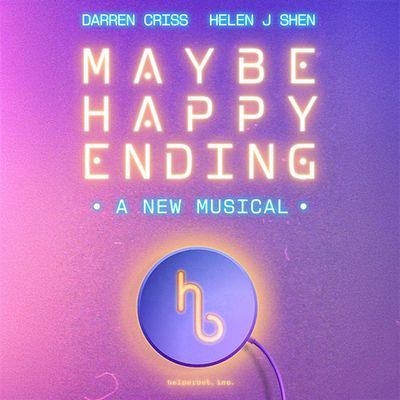
Also in this episode - Eila & Bruce take a field trip to the invited dress rehearsal of Maybe Happy Ending starring Darren Criss & Helen J Shen, Shirley MacLaine Oscar win for Terms of Endearment.
Lorraine Toussaint began her career in theatre, before supporting performances in films such as Breaking In (1989), Hudson Hawk (1991), and Dangerous Minds (1995). As lead actress, she is best known for her role as Rene Jackson in the critically acclaimed Lifetime television drama series Any Day Now, from 1998 to 2002, and her recurring role as defense attorney Shambala Green in the NBC legal drama Law & Order. She later appeared as a regular cast member in the NBC police procedural Crossing Jordan (2002–03) and the TNT crime drama Saving Grace (2007–10).
Toussaint received critical acclaim and an Independent Spirit Award nomination for her performance in the 2012 drama film Middle of Nowhere, written and directed by Ava DuVernay. In 2014, she played the role of Yvonne "Vee" Parker, the main antagonist in the second season of the Netflix comedy-drama series Orange Is the New Black, for which she received critical acclaim and a Critics' Choice Television Award for Best Supporting Actress in a Drama Series. She also played the role of Amelia Boynton Robinson in the 2014 historical drama film Selma, directed by Ava DuVernay. Toussaint later co-starred in the ABC fantasy-drama series Forever (2014–15), the Fox comedy-drama Rosewood (2015–17), the AMC drama Into the Badlands (2018–19), NBC drama The Village (2019) and CBS crime drama The Equalizer (2021–present).
Make sure to check out Eila's book, "The Tony Awards", and all her other amazing books: https://amzn.to/43WMu5Y.
Connect with Eila and Bruce:
- Instagram @behind_the_awards
- Eila @eilamell
- Bruce @cominghomewithbruce
Transcript
This transcript was automatically generated and might contain errors.
[0:00] Eila Mell: This is the Rain to Sand, and you're listening to Behind the Awards.
[0:04] Bruce Gotlieb: I'm gonna cry because this show has been as long as my career.
[0:21] Eila Mell: I have wondered for 26 years what this would feel like. Thank you so much for terminating the suspense.
[0:30] Bruce Gotlieb: Oh my.
[0:32] Eila Mell: I am nervous. I'm not gonna thank everybody I've ever met in my entire life. Although with the way my mind has been going lately, probably everybody I've ever met in my entire life and any other life I might have had had something to do with this.
[1:06] Bruce Gotlieb: I'm here as always with Bruce. How are you today, Bruce?
[1:10] Bruce Gotlieb: I'm great, Eila. How are you?
[1:12] Eila Mell: I'm good. So that's Shirley MacLaine winning her Oscar for Terms of Endearment.
[1:18] Bruce Gotlieb: I love this movie so much. She's so funny getting up there saying that she felt as though, you know, the ceremony was as long as her career.
[1:28] Eila Mell: I know. She's fantastic. I was so thrilled. I think it was a couple of seasons ago when she did an episode of Only Murders in the Building.
[1:37] Bruce Gotlieb: Sure.
[1:37] Eila Mell: It was thrilling. Oh my gosh, it's Shirley MacLaine. I mean everything she does, right? From Sweet Charity to Steel Magnolias. Like, is there anything that she can't do?
[1:47] Bruce Gotlieb: No, she can do anything.
[1:49] Eila Mell: So when my grandmother took me to see Steel Magnolias in the theater, like, you know, a zillion years ago, Shirley MacLaine, I mean, obviously, you know how her character dressed and all. My grandmother didn't approve. She said, I can't imagine why an actress of her stature would want a part like that.
[2:05] Bruce Gotlieb: My grandmother was so funny.
[2:07] Eila Mell: That's funny. The family was scared of her. I went to, um, I don't know, yeah, family party once, and one of like the more distant relatives said to me, "Tell your grandmother I was nice to you." They wanted to make sure they were on our good side.
[2:19] Bruce Gotlieb: Oh, yeah. Do you have a favorite Shirley MacLaine movie or performance?
[2:24] Eila Mell: I don't know. I mean, I guess Steel Magnolias is probably just because I love it, it's such a great movie, and like as an ensemble cast, like they just bounce so well off one another.
[2:34] Bruce Gotlieb: They did.
[2:35] Eila Mell: You know, so I just her character is so just rich with just everything that I love. All the lines are every line is hers.
[2:43] Bruce Gotlieb: I know.
[2:44] Eila Mell: I know. Well, my favorite is Terms of Endearment. It's just such a great movie.
[2:48] Bruce Gotlieb: Yes. But let's talk about our field trip this week.
[2:52] Eila Mell: We went on another field trip.
[2:54] Bruce Gotlieb: We did. We got invited to the invited dress rehearsal for Maybe Happy Ending, starring Darren Criss and Helen Shin. What did you think?
[3:02] Eila Mell: I well, first of all, it was thrilling to go for many reasons.
[3:07] Bruce Gotlieb: Yes.
[3:08] Eila Mell: I was really excited to see Darren Criss, and he's producing this also.
[3:12] Bruce Gotlieb: Yes.
[3:12] Eila Mell: To see Helen Shin, who is someone new who I'd never seen before, so that's exciting. But really, overall, to see a brand new musical that's not based on anything else, just something very original, which has gotten to be a rarity.
[3:28] Bruce Gotlieb: Yeah, and it's got a lot of buzz for that reason. You know, even before the invited dress, there was a little reception that we were lucky enough to attend. And, you know, we had a moment with Michael Arden, who was excited because it's something new and original that's been, we're kind of been working on. He hasn't necessarily been working on it for 10 years, but it's been just evolving for the past 10 years.
[3:52] Eila Mell: And he was really excited for people to see something original. And that I think is, and I think that's part of what the buzz is, aside from, you know, Darren and Helen and the excitement of them being on stage is just that it's something that's not adapted from a piece of work that you already know.
[4:12] Bruce Gotlieb: Yeah. So, you know, I think that and I hope anyway, that people will embrace something that's original, a new idea. Revivals are great, and things based on movies, they can work out really well. I'm super excited to see Death Becomes Her soon. But, you know, going in, not knowing anything is just such an exciting thing for me.
[4:34] Eila Mell: I like, you know, if I could know absolutely zero about a show, I'm happy.
[4:39] Bruce Gotlieb: Absolutely.
[4:39] Eila Mell: Or a movie or anything, a TV show, you know. I just like to have it unfold as it was intended to.
[4:45] Bruce Gotlieb: For sure. Now, I'll say my takeaway from it going in was, you know, aside from the excitement, I thought the tech stuff that they're doing is really, really cool.
[4:56] Eila Mell: It's beyond what you've ever seen.
[4:58] Bruce Gotlieb: Yeah, and I don't even want to give, I don't even want to say some of the things that they're doing because let's not say it's the thrill of it of encountering it at the time. But they're doing really great stuff with the staging using the different lifts that the theater has.
[5:11] Eila Mell: Um, I know you told me a fun fact that you learned about the Belasco is that at one point, we don't know why.
[5:19] Bruce Gotlieb: Yeah.
[5:20] Eila Mell: They the lift on stage, because there's also a lift in front. Um, the lift on stage was large enough to have elephants come up.
[5:28] Bruce Gotlieb: Right.
[5:28] Eila Mell: That's how it was built for that. So elephants could be in the basement. Um, Balasco, the actual Balasco wanted that for some reason. I guess it was a very long time ago. And so the elevators from downstairs can bring up things that are very large, which doesn't happen in most other theaters.
[5:46] Bruce Gotlieb: And they definitely made great use of that for this show.
[5:49] Eila Mell: They did. The lighting is really unique. Uh, the way that they are transitioning, you know, from one area of the stage to another is really creative. So that alone, aside from the fact that you're getting a new musical with these, you know, top-notch stars and all of that, like the tech part of it is really, really cool what they're doing up there.
[6:11] Bruce Gotlieb: Yeah.
[6:11] Eila Mell: So I was lucky enough to be at the tech rehearsal for just a little bit. So what I learned is that they are using this brand new chip that was only ever used before at the Oscars, because it just came out, I think in February when the Oscars were. And that's enabling them to do so much more tech-wise.
[6:31] Bruce Gotlieb: And there were so many tech tables that they actually had to move some upstairs into the mezzanine, which is so much more than for a regular tech. There's just a lot going on tech-wise, and it's just amazing to watch.
[6:46] Eila Mell: Yeah, it's a lot of fun. I think they're gonna have to find a way to like just trim a little because we went and I know it's advertised, what is it, an hour 30, an hour 40?
[6:56] Bruce Gotlieb: Yeah, round.
[6:57] Eila Mell: Um, but when we saw it, it definitely was closer to two hours. So without an intermission, when you creep up on that mark, you can get a little antsy, uh, without just needing to like stretch your legs a little and you know, just kind of get a little bit of a break. But it'll organically, I'm sure, happen as things gel.
[7:16] Bruce Gotlieb: You know, when you're starting the rehearsal process for a show, especially as you get to tech and you're adding all these other elements, naturally, the first time you're doing it is gonna be the longest time.
[7:27] Eila Mell: So and also remember Mike Gaordin said that they had not gotten through it before. So that what we saw was the actual first run. So of course it's going to be tightened up.
[7:35] Bruce Gotlieb: Yeah, organically, I think it'll kind of gel together a little bit. Um, I know we shared our favorite moment or scene in the show where people can take a look out is when they get to the firefly scene. That's all I'm gonna say. But it's really quite special and really sweet moment in the story. And really lovely music in that scene, too.
[7:57] Eila Mell: So, you know, I hope people will check it out just to support new and fresh ideas.
[8:04] Bruce Gotlieb: Absolutely. And the people that were at the show the night that we were there really seemed to enjoy it. Um, everybody was just sort of blown away. They really loved it.
[8:14] Eila Mell: Yeah, so really good energy, really good vibes at the show. I think people are excited. I always find it fun to see something in the really in the beginning, or even if it's an out of town or something, you get an opportunity to see it there and then see it again down the road just to see the evolution because most of the time for most people, you go to see the show once and you don't necessarily revisit it because it's expensive, it's expensive. There's so much to see, right?
[8:41] Bruce Gotlieb: So to get the opportunity to see something evolve is always special too. So I think if you have the opportunity to see it early on and then again later, um, that people should do that too. Why not get to see how it kind of comes into play?
[8:56] Eila Mell: Yes. And I just want to give a shout out to my pal Clint Ramos, who did the costumes. I just want to wear Claire's outfit every day. It's so cool.
[9:04] Bruce Gotlieb: So that's something also that's interesting is that a show with minimal costumes. They four characters. There's four characters, and I think of the four characters, the two secondary characters or secondary actors are the ones that change the most in terms of clothes.
[9:25] Eila Mell: They didn't change at all.
[9:27] Bruce Gotlieb: No.
[9:28] Eila Mell: But it makes sense why if you see the story, why they would wear the same thing every day.
[9:32] Bruce Gotlieb: Right.
[9:33] Eila Mell: And I'm sure as an actor, you know, getting to put on one set of clothes at the top of the show and that's it, is probably quite refreshing for them.
[9:41] Bruce Gotlieb: Probably, but yeah, that's not the trend this season. We've seen a lot of shows with small casts with the supporting people playing a zillion characters and having to make really super fast changes.
[9:52] Eila Mell: Yeah.
[9:53] Bruce Gotlieb: That's been sort of typical this season, which is fun. That's one of the things I do love, is like when you're watching a show and there's a costume change, and isn't it so exciting when you know that there's milliseconds that if this just happened, or they do it on stage, you know?
[10:08] Eila Mell: I know. What about A Beautiful Noise? The very beginning when the costumes change in half a second.
[10:13] Bruce Gotlieb: I know it's always so thrilling to me. And most of the time we don't get to know how it happens because they do try to keep a little bit of the mystique, a little bit of the magic, you know.
[10:22] Eila Mell: Right, yeah. So I love it. I love it every time. All right. Well, who do we have on the show today?
[10:27] Bruce Gotlieb: Speaking of loving, we have the lovely Lorraine Toussaint.
[10:33] Eila Mell: She's been a theater TV film actress for gosh, for decades.
[10:40] Bruce Gotlieb: 40 years, yeah. I mean, everyone knows her from something. Even if you don't know what you know her from, you know her.
[10:45] Eila Mell: Oh, yeah. She's been in everything.
[10:46] Bruce Gotlieb: Oh my gosh. She was on a series with Annie Potts called, was it Equal Justice?
[10:52] Eila Mell: Uh yes.
[10:53] Bruce Gotlieb: So that she was on Orange is the New Black.
[10:56] Eila Mell: She was a super villain called V.
[10:59] Bruce Gotlieb: Yeah. She's in The Equalizer, which is premiering this week.
[11:02] Eila Mell: Yeah, she's playing Queen Latifah's mother.
[11:04] Bruce Gotlieb: Yes. And how many seasons in are we?
[11:07] Eila Mell: Three, maybe.
[11:08] Bruce Gotlieb: I believe so.
[11:08] Eila Mell: And she was in Ugly Betty with Judith Light as her prison mate.
[11:13] Bruce Gotlieb: Oh, yes. I mean, Lorraine has been in everything. She's so much fun.
[11:18] Eila Mell: And then she did Shakespeare in the Park.
[11:20] Bruce Gotlieb: Absolutely.
[11:21] Eila Mell: Oh, yeah. I mean, she's a stage actress too. So I there's really nothing that she can't do. You know, she's one of those people who can just sort of become a chameleon and play any role.
[11:31] Bruce Gotlieb: Yeah, and when you have somebody like that to be able to talk to, it's just it's fun because their career spans so much and there's so many avenues to explore and how things, you know, kind of evolve.
[11:43] Eila Mell: She's great and so much fun. So let's bring her out. Come on out, Lorraine.
[11:49] Bruce Gotlieb: We are so happy to welcome Lorraine Toussaint to Behind the Awards.
[11:54] Lorraine Toussaint: How are you?
[11:55] Eila Mell: I'm really well. Thank you.
[11:57] Lorraine Toussaint: Thank you so much for joining us.
[11:58] Eila Mell: Thank you so much. Lorraine, I don't know where to start because you have so many credits.
[12:03] Lorraine Toussaint: So much. It'll take us a year to go through them all.
[12:06] Eila Mell: So congratulations for that, because in and of itself, right?
[12:11] Lorraine Toussaint: Thanks. You know, um I think I've done so much now. I don't actually remember the first two decades of—
[12:14] Eila Mell: Well, so our show is Behind the Awards, and so I want to point out to everyone that you are an award winner. You have a SAG Award, which is amazing because it comes from your peers. What does that mean to you?
[12:31] Lorraine Toussaint: Oh, that's the best. You know, um, you know, my peers are everything, you know. I have such I I came into this business before celebrity was was the goal, and this really uh I came into it where this really was a uh a time-honored craft. And so um having the sort of stamp of validation from my peers is is is everything because yeah, at the end of the day, you know, you're in the trenches with your peers, and uh that's the fun, that's the fun work. That's the real work, you know. The other stuff is just, you know, sort of the cherry on the on the on the cake.
[13:10] Eila Mell: We'll be right back. We have to listen to some commercials.
[13:17] Bruce Gotlieb: So Bruce told me that we walked past your high school, which I think we actually didn't, but we went past LaGuardia because we were at Lincoln Center. But I'm guessing you went to performing arts, is that right?
[13:28] Lorraine Toussaint: Yeah, a different building back then. Completely different building. That was like seconds um 46th Street, pre-Giuliani cleanup of Times Square, which was very different. Uh that was a very different landscape in the what was it? I I I get lost in decades now. I gather I think that was the 70s.
[13:48] Eila Mell: Oh good lord, the 70s.
[13:46] Lorraine Toussaint: Really?
[13:51] Eila Mell: But that was when performing arts and music and art were two different schools.
[13:55] Lorraine Toussaint: Oh yeah, oh yeah, completely. And there was a rivalry between the two schools. Why, I don't know. And I think I was one of the last groups that was in the old building. And the old building really was magical. We were isolated there, if we were left us alone, and we went absolutely crazy in that old building.
[14:12] Bruce Gotlieb: Yeah.
[14:13] Lorraine Toussaint: It really was like the Fame film. They got that right.
[14:17] Bruce Gotlieb: Were you there when they did Fame?
[14:20] Lorraine Toussaint: I was. In fact, one of the stories in Fame was my story, because they came to the school and interviewed the students and then didn't put us in the movie. Oh but um one of them was my story, which was um one of the characters, it might even have been Erica Gimple, uh, who's uh who became a dear friend actually, um, who got an offer of a big Broadway show, and uh I can't remember if she took it or didn't take it, but in my case, I didn't take it.
[14:55] Lorraine Toussaint: Oh, it was a Liz Suedo's show, Runaways. I took God after 40 something years, I still remember it. Um, Diane Lane, Runaways, I remember Treaty Alvarado. Absolutely. And, uh, at the time, Mr. Escald, the head of that school, the head of the drama department said, if you leave, you won't graduate. You'll have to be gone. We're going to just kick you out. And you have the choice. And I loved it there. I didn't want to not finish high school. Yeah. And he said, he gave me some really sage, uh, sage piece of advice, which was if they want you now, they'll want you more later. Wow. He was right. He was right. It didn't slow you down. No. I hope. Which you never knowed. Right, because you could miss an opportunity and then you never know.
[15:44] Bruce Gotlieb: So you were a drama major?
[15:46] Lorraine Toussaint: I was, yes. In that building, there were only drama majors and, um, dance majors. There was no such thing as musical comedy, uh, back then. Right. Yeah. It was a very serious school. And then from there you went on, uh, also prestigious to Juilliard.
[16:03] Lorraine Toussaint: It seemed a natural stepping stone, and honestly, it was so natural, I didn't realize the prestige of Juilliard. Really? It was just there were two or three schools that at the time were considered the schools to get into. And because I'd just done theater all of my life, that it was not a big deal. I was gonna audition for Juilliard, I was gonna audition for NYU and Purchase. And I was gonna hopefully get into one of them. It turned out I got into all of them. Amazing. No, isn't that crazy? And then I actually didn't want to go to Juilliard. Really? Interesting. Um, you got in Juilliard, you go, no, I don't want Juilliard. Um, because I was a New York City kid, and I actually wanted to go away on a campus.
Oh, I see. I have a different experience. There was Yale at the time, which wasn't very, um, wasn't sort of on par yet. It certainly wow. Um, there was Yale and then Purchase, I thought of because I could leave my mom in Oh. Um, but then you know, you get into Juilliard, you go, you go into Juilliard.
[17:23] Bruce Gotlieb: Yeah, it's a big deal.
[17:24] Lorraine Toussaint: Yeah. So did Juilliard set you up to have a career?
[17:28] Lorraine Toussaint: Oh, yes, Juilliard most definitely set me up for a career. You know, I was, uh, I w, you know, I've never done anything else in my whole life other than acting as a paying career. And that's other things. And I'm doing a lot of other things. But the training at Juilliard was beyond, beyond. You know, it was, it was actually excessive. I mean unnecessarily excessive. I learned things there that I have never used since then or may never till I die. I did a few years ago, I had a wonderful experience shooting, um, Into the Badlands in Ireland. There, she was one of my favorite experiences, uh, in my career, and there I had to create an entire language and phonetically, and I had to write it. And anyway, I spoke to the guys who did the Star Trek languages.
Right. And so we had this phone conference, and when he realized that I was completely geeking out, I mean total geeking out on the idea of creating this brand new language. Yeah. My training at Juilliard some 40 years later prepared me for that because I have an excellent ear. I have almost a pitch-perfect ear for dialects, which is Juilliard. But also now write the languages extraordinary. And so documenting it and getting into the syntax and then the grammar. I didn't just want to learn it by road. I wanted to actually speak the language. So it's part of you. It's so it was part of me, absolutely.
[19:28] Bruce Gotlieb: What an amazing experience to like how many people can say that?
[19:31] Lorraine Toussaint: I very few, I'm sure. Just Lorraine. I wanted to be able to improv in this new language. So in order to do that, I had to create and learn with them a vocabulary and then grammar. And then I wanted curse words. Amazing. And so that was really terrific it from me personally. And again, totally geeking out. So I could, uh, actually speak this language, uh, on camera when no one actually knew what I was saying, but I did.
[20:15] Bruce Gotlieb: Yeah. Has a fan ever come up to you speaking that language?
[20:19] Lorraine Toussaint: Uh, no, no, no, Sarah Nogsky C Diafira D Yora I am Ya is Tikrishi.
[20:28] Bruce Gotlieb: That's amazing.
[20:29] Lorraine Toussaint: It's very intense.
[20:30] Bruce Gotlieb: It was.
[20:31] Lorraine Toussaint: Yeah, yeah. So I have a young person in my life who doesn't want to be spoken about, so I can't say who they are on the show, but they are so impressed that I'm speaking with you because their favorite movie is Nomona. They think it's, and I think it's amazing. And when I told them I was talking to you, they freaked out.
[20:53] Lorraine Toussaint: Oh, I'm so glad. What a special film.
[20:57] Lorraine Toussaint: It was. It really was. And the folks I worked with on it were really quite special. Also, also great, great producers and lovely directors. Um, yeah, that was fun. That was really fun.
[21:11] Bruce Gotlieb: When you do a role in an animated movie, is there a freedom to not having to be physically on screen that you can just use your voice?
[21:19] Lorraine Toussaint: It's harder. It's a very particular skill. Right. And I must say that I've sort of been schooling myself in it and getting better at it, which is really lovely. You know, I have this persona of being sort of very elegant and very, you know, very in charge and all that stuff. Right. Yes, you do. There's a really silly geeky part of me that my daughter, for example, has seen, and I'm gonna turn this one off. That my daughter has seen where she, I do, I used to do all these wonderful voices for her when she was a child. Because, you know, mommy reading bedtime story was really, really fun. Because I would embody all the different characters. Of course. There was this one and there was that one, and there were all these voices that I would use. And so I was actually on the phone, my daughter's 19 now. She says, Oh, mommy, every so often, even as an adult, I talk to her and some of the voices come out, right?
[22:21] Bruce Gotlieb: Oh wow.
[22:22] Lorraine Toussaint: She goes, Mom, you know that's really weird. And I'm thinking then so lucky that she gets to hear that. Yeah, and then she finally said to me, I think it was last week, she says, you know, there's one particular one that she, she goes, no, no, no, no, no, not her. No, no, no, no, no, no. She can't come, she can't out. Let her out. Right. She really said, you know, you should actually use that, use her in one of, uh, in an animation something, but, um, life like with mom as the actress. Uh, must be fun though.
[22:56] Bruce Gotlieb: Well, always on your toes, I'm sure.
[22:58] Lorraine Toussaint: Well, I have fun it must be hard though as a mom to have to travel and be away from her. I was never away from her. I just...
[22:58] Lorraine Toussaint: Oh, that's wonderful you took opposite. I really took her with me every week.
[22:58] Bruce Gotlieb: That's great.
[22:58] Lorraine Toussaint: I went because honestly I said to my daughter, I said, you know, you're gonna have to go to therapy in your thirties because everybody goes to therapy in your thirties and frankly that's what your thirties are for. Really exactly but you will never have the issue of abandonment. You have other issues with your mother. You'll blame your mother for a lot of other things but it will not be abandonment. And so my daughter had a very unusual upbringing and schooling actually because I took her everywhere. I took her on location everywhere I went. Some years she went to school in one place and then some years she was homeschooled and then some, you know, it was a bit of a hodgepodge but she's, she's in university she's made it she's fine.
[23:40] Bruce Gotlieb: Right, I mean I think that's the best kind of education because it's like the anti-mame kind of parenting right where...
[23:40] Lorraine Toussaint: I love that.
[24:13] Lorraine Toussaint: There's education. Exactly and you know, I tell the story, you know, I said to her in middle school, you know, was it was it primary school but one of those schools I said look I'm gonna go shoot Selma. You're gonna learn about the civil rights movement in about what three days in school. So I said to my daughter, come go with me while I'm shooting Selma and sit in the rehearsal rooms while we do all the research on Martin and Abanafi and all the players. And have these great shots of her actually walking across the Edmund Pettis Bridge. And there was she was an extra for one very short evening in the church when Martin did the one of the famous speeches in that Baptist church. She learned about the civil rights movement very different way. Which I thought was more valuable.
[25:06] Bruce Gotlieb: Of course.
[25:09] Lorraine Toussaint: I'm sure she knows more about it than people who just read about it in a book.
[25:12] Bruce Gotlieb: Yeah, she does.
[25:13] Lorraine Toussaint: Yeah, that's incredible. And to be part of a film like Selma that was so big and so important, such a great, and the way the story was told was just beautifully done.
[25:25] Lorraine Toussaint: Yes, when you, when she, you know, she got to meet John Lewis, you know.
[25:28] Bruce Gotlieb: Yeah.
[25:29] Lorraine Toussaint: Wow. John Lewis. She got to, you know, um, she'll look back on these years and go, wow, you know. At times she's going, I want to be with my friends. Right, right. Right. But I mean, she met Living History, John Lewis. She did. She met a lot, she's met a lot of living history. Yeah. I mean, that's so valuable.
[25:49] Bruce Gotlieb: Yeah, it is. And that was not the first time you worked with Ava DuVernay, right?
[25:54] Lorraine Toussaint: No, I love working with Ava. We did Middle of Nowhere.
[25:58] Bruce Gotlieb: Let's take a minute to hear a word from our sponsors.
[26:05] Bruce Gotlieb: So I first became super aware of you. I mean, I had seen you on TV a lot, which I'm sure you never thought that your career would go to TV as much as it did, right? You probably thought you'd have a stage career more so.
[26:15] Lorraine Toussaint: Yeah.
[26:18] Bruce Gotlieb: Yeah. I trained for the stage, yeah.
[26:21] Lorraine Toussaint: Right. Um, but so where I really became aware of your name and who you were was Any Day Now. That was a huge show for you with Annie Potts. How did that come to you?
[26:34] Lorraine Toussaint: That was an offer. I'd done a short-lived show called Leaving LA for ABC the year before with an amazing cast. Oh, and Chris Maloney, Hillary Swank. It was just this amazing cast in this very odd show that was ahead of its time. Yeah. Uh, we lasted six episodes. And then the network said, we don't know what to do with the show about deaths. And then, of course, a year later, Six Feet Under showed up. Of course. And we were literally just ahead of the curve. Right. And those producers wrote this, wrote Any Day Now with me in mind.
[27:14] Lorraine Toussaint: That's amazing. Did you know that they were doing that?
[27:18] Lorraine Toussaint: Well, while I was shooting, um, Leaving LA, there was some talk about, oh, we've got something else we're working on. We've got something else. We're working on you. And, uh, Nancy Mill and Gary Randall, dear, dear friends now. And it turned out to be this extraordinary show, Any Day Now. I didn't, I think that might have actually been my first offer where I didn't have to audition, but had to take a meeting with the show creators at the network. We just sat down at a desk and talked about the show and what I would do with the role, which for a young actress was different. I just, I'd only been, I'd only been accustomed to auditioning for things. Um, I didn't even realize how important that was.
[28:15] Bruce Gotlieb: Yeah, that's a huge moment.
[28:17] Lorraine Toussaint: Yeah, it was. And you, you probably in your training taught you the craft of auditioning, and so that was probably where you were more comfortable because you kind of honed that, and now to be called in on a meeting where you just sit and have a conversation. Did you feel like it was outside your comfort zone?
[28:33] Lorraine Toussaint: No, let's not say it was actually very much in my comfort zone because I could talk about a character till the cows come home. I just didn't, I just didn't know that that was one of the ways that you could get a job.
[28:45] Bruce Gotlieb: Exactly, right. Although I'm sure Annie Potts was an offer too.
[28:49] Lorraine Toussaint: Yes.
[28:50] Bruce Gotlieb: Right. She had done Designing Women.
[28:52] Lorraine Toussaint: She'd done Designing Women. Yeah. So it was like, ooh, there's a whole different way of getting work at. Who knew? He just leveled up. Unbeknownst to me.
[29:04] Bruce Gotlieb: Is stage something that you do when you're not doing films still, or do you not have time?
[29:10] Lorraine Toussaint: I did Hamlet in the park with, uh, New York Shakespeare Festival last summer.
[29:16] Bruce Gotlieb: Amazing.
[29:17] Lorraine Toussaint: Thank you. Was that Kenny Leon's version of Hamlet?
[29:20] Lorraine Toussaint: It was Kenny. He's incredible.
[29:44] Lorraine Toussaint: Terrifying. Well, you're used to being able to stop and start, and you know. Different. Well, you know, I'm also 20 years old. And sort of taking on this sort of iconic Shakespearean role of Gertrude. I hadn't tackled a play in 18 years. And I didn't know if I still had a couple of things. Stamina. It's a very different kind of stamina that is required for that marathon. Um, a very different kind of discipline that was part and parcel of my life. It was in my bones, that discipline. But um hadn't been for almost 20 years. And so tackling text, um, memorizing that, you know, those uh an entire role. I hadn't memorized an entire role in 20 years. I really I kind of wanted to prove to myself that I could.
Yeah. And so I went back to the stages somewhere after being terrified in the rehearsal process, realizing because there was this really interesting now mix of film and television sensibility, bringing that to a theatrical um experience and rehearsal process. I think of text and and um dialogue and character. I think of text and subtext very, very specifically now. And bringing that to the stage experience was really kind of interesting, bringing those worlds together, which I really loved, and now I really love it because I I am a big proponent of subtext. Oh gosh, it's it's it's in the text, you know. And then you if you're very fortunate enough to get really good text, and and you don't often get good text in television.
Right. You you get serviceable text. Um and sometimes not even. And you you make things of this, but it really is so dependent on the subtext. And bringing that sensibility to the Gertrude, I think was successful. And it certainly was personally um very fulfilling to sort of bring this woman to life in a very intimate yet theatrical way. Genre it's a theatrical genre, but I insisted on it also being incredibly intimate without it being small, with the challenge. Well, it can't be small. The Delacourt, I mean, it's this huge outdoor space. Outdoor space, and but also testing the limits and and testing the audience too, in terms of the audience sensibility, and audience will know when you're telling the truth, and it doesn't actually have to be that big, it can be quite subtle if you draw them in early enough and um insist on their attention and their ways of insisting on their attention. And if you've got their attention, then you can take them on a much subtler journey than that medium than you would think that medium affords.
[33:15] Bruce Gotlieb: That's so interesting. I mean, you're certainly no stranger to Shakespeare. Did it come back to you the rhythm and the language right away?
[33:23] Lorraine Toussaint: I love Shakespeare. I love, love, love, love, love, love Shakespeare. It's it's one of the easiest forms of theater to do once you understand the rules of Shakespeare. And there are rules. And if you fight those rules, you're you're gonna lose.
[33:41] Bruce Gotlieb: So what are some of those rules?
[33:43] Lorraine Toussaint: Without being too geeky, there's rhythm, and is it iambic, is it not? Is it prose? Is it verse? Is that line endings? Uh I go back to the first folio and and and check. I'm a real geek. I told you, I go back to the first folio and I check the punctuation because the punctuation in the first folio is different from different editions. And once you understand what Shakespeare means by a comma is different from a period, is different from a colon, different from a semicolon, that's different from sometimes they've changed the line endings from the first folio, which are also clues. So Shakespeare gives you a map. And if you can read the map, um, then that isn't always the content of the scenes, but in the actual text, it's a map.
The map tells you where what the emotional content of that is. And in a speech, what the the the rise of it is, what the rhythm of it is, what the so you've got it, it's like music. It's not like music, it it is music. You must be able to read music in order to play. And um the text for Shakespeare is like a musical score, which doesn't mean you do it like a song.
[35:04] Bruce Gotlieb: No, I get that.
[35:05] Lorraine Toussaint: But all great singers um look at a song and they fill that song with life. So it's it's very much like that for me with Shakespeare. And it's interesting because singers also have to pay attention to punctuation because that also gives you clues about the song and also where you can breathe and things like that. So punctuation is so important. But also you can break the rules only when you know the rules.
[35:29] Bruce Gotlieb: Right.
[35:30] Lorraine Toussaint: That's true. And Shakespeare does invite you to break some rules. You're allowed to break some rules, which are really fun.
[35:36] Bruce Gotlieb: Of course.
[35:39] Lorraine Toussaint: You know what you're breaking and why you're breaking it. So I mean, obviously that's homework that you do before you come to rehearsal, but is that also something that you work on in rehearsal with someone like Kenny?
[35:51] Lorraine Toussaint: No, I I actually no, not at all. This is all I I have an assistant that um will work with me on big projects. Mm-hmm. And for Gertrude, oh my god, the the hours, the hundreds of hours we spent at my dining table with tones and different reference tones as we referenced different um translations, editions, as as I did just just text work. So that I I pretty I examined every single word, every single word that I said, and questioned every word and challenged every word.
[36:33] Bruce Gotlieb: And was that process similar to when you had to create the language for that other project that you did?
[36:38] Lorraine Toussaint: It's very different. Very different.
[36:40] Bruce Gotlieb: Okay.
[36:51] Lorraine Toussaint: No, this this really was when I'm working on on the Shakespearean text, it's a lot of homework a lot I would say 80% homework.
[37:04] Bruce Gotlieb: So then you're super prepared when you show up.
[37:06] Lorraine Toussaint: Oh gosh yes. But prepared to play too you can't play. You can't literally play.
[37:10] Bruce Gotlieb: Yeah if you're if you're still figuring out what you're saying and why you're saying it.
[37:17] Lorraine Toussaint: Yeah yeah and when you got back on stage and now you're now you're playing and you're in your you're in your house, right? Your wheelhouse of what you love. Getting that that refresh of that energy from a live audience was that something that like as soon as it hit you you like you got it back and you're like ah this is what this is what you remembered it to be?
[37:37] Lorraine Toussaint: It was about two weeks of terror first where oh my God there are people out there. You know people who don't do what we do they think that oh you you rehearse and then you perform. In those first couple of weeks you're still actually rehearsing in front of an audience.
[37:55] Bruce Gotlieb: Yeah.
[37:56] Lorraine Toussaint: You're rehearsing and performing at the same time you're still searching and and and at two and I who played Hamlet we were still searching until the very end for moments and and still God it was maddening and and thrilling at the same time but about a third week of a of the nine week run there was a moment when I was when I thought oh right this is what I wrote I remember this magical feeling I remember this and it had to do you live like a monk.
[38:33] Bruce Gotlieb: Right.
[38:33] Lorraine Toussaint: Yeah, done when you do I do when I do a play, I eat it exactly the same almost minute I eat at that time. I nap before the show. At three o'clock, I would go down for a nap. At 4 15, I would wake up. By 4 15, I was eating because I had to be done with by five o'clock. Or 4 30 to 5. It was very like a baby schedule almost. I was like a baby on a on a total schedule. But by the week three, it was thrilling. It was thrilling. I had my legs under me. I had my I had I I was back. I had the stamina. And I was playing the play and was starting to allow the play to play me. Which is what you're you're ultimately hoping for. The nights when the play plays you. And you're you're you're not doing anything except getting out of the way of it.
[39:32] Bruce Gotlieb: Yeah.
[39:33] Lorraine Toussaint: And then it was it was like, oh yes, I'm going to do more of this. Do you remember how to I do remember how to do this?
[39:41] Bruce Gotlieb: So if they call you again, it's a yes.
[39:43] Lorraine Toussaint: Oh God. Oh as New Yorkers, we'll be happy to have you come back.
[39:48] Bruce Gotlieb: Well, let's talk about The Equalizer. I know that we don't have tons of time left, so we have two more big projects to talk about. How much fun is The Equalizer?
[39:56] Lorraine Toussaint: Um, The Equalizer is terrific. Yeah. The Equalizer is right in my wheelhouse at this particular p time in my life. And uh work for me always mirrors my life, and my life always mirrors the work and wish comes first, the chicken or the egg. Um playing this sort of very nurturing, loving, bohemian, cool ish. That if you ask my daughter or not, um character is in my middle years. Right, where there's a terrific freedom that comes in those in these marvelous middle years that uh young people can never imagine. But um that very much mirrors who Lorraine is at this moment.
[40:44] Bruce Gotlieb: Yeah.
[40:45] Lorraine Toussaint: And so uh I'm really kind of indulging aspects of myself in playing Vi, Viola in The Equalizer, and I love the people I work with. I love Leia and I love Queen, and the producers are terrific, and I have a certain amount of autonomy with you know what I wear and what I say, and I it's really collaborative and and mutually respectful. So I have I only have great things to say about that experience.
[41:14] Bruce Gotlieb: And are people ever afraid when they meet you because of the character you played in Orange is the New Black?
[41:20] Lorraine Toussaint: I've heard the most unusual responses and really times. Oh my gosh, you know, uh everything from you know, straight just walking up to my face going, I hated you, I hated you, I win. And with at the time when my daughter was much younger, too, I'd have to go, hello. And this is my daughter.
[41:46] Bruce Gotlieb: Yeah, yeah, yeah.
[41:50] Lorraine Toussaint: Right, let's let's focus this in. But yes, um people as in many for a long time, if still not still sometimes associate me, Lorraine with V with V. And uh she was a scary girl.
[42:07] Bruce Gotlieb: She was.
[42:11] Lorraine Toussaint: But that means you've done your job that people are afraid of you in real life.
[42:14] Bruce Gotlieb: Yeah.
[42:15] Lorraine Toussaint: They believe it.
[42:16] Bruce Gotlieb: Yeah.
[42:17] Lorraine Toussaint: I believed it. So if we if I believe it, they'll believe it.
[42:22] Bruce Gotlieb: For sure. And I'm sure that was so much fun to be in that ensemble.
[42:26] Lorraine Toussaint: That was really thrilling with those women. That was probably, I think Any Day Now was a high point. Um Equalizer is a lovely point, but Orange in terms of the danger in the work.
[42:39] Bruce Gotlieb: Yeah.
[42:39] Lorraine Toussaint: Work was dangerous. Um I mean, V was dangerous. What was really dangerous was the work, the quality of the work we were doing together. Because every day this group of actresses, and I and you know, I hate to be sexist, but I think there was such safety in in the numbers because we were all women each other. And it was not a vanity project. It took 10 minutes to do hair and makeup and wardrobe. I however I however you showed up in the morning, you were ready. You still were frightened you. You hung out the night before, you were good. You don't want to call me hair that day, you were good. But every one of us jumped off the deep end every day with arms wide, spread eagle, off the cliff, trusting that someone was gonna catch us.
[43:32] Bruce Gotlieb: Yeah.
[43:33] Lorraine Toussaint: And long ways caught each other. It's one of the reasons I love those women like family. They're not like family. They are family. I I you know, D Danielle, I gosh, she was nominated for an academy award year. She's great. Just baby and Samira and all of those women, uh, oh my gosh, uh, just are are the best.
[44:00] Bruce Gotlieb: We think you're the best. Lorraine, thank you so much for joining us. We could talk longer, but we know you have things to do, places to be.
[44:10] Lorraine Toussaint: Your stories have been wonderful.
[44:12] Bruce Gotlieb: Oh my gosh, we're going to invite you back. Our audience just loves you, I know. So thank you so much for joining us.
[44:14] Lorraine Toussaint: Thank you so much for having me, your lovely hosts. Then I could chat with you forever.
[44:22] Bruce Gotlieb: So join us next time for Behind the Awards.
[44:24] Lorraine Toussaint: I surely will. Thank you so much.
[44:26] Bruce Gotlieb: Thank you.
© Broadway Podcast Network, All Rights Reserved