

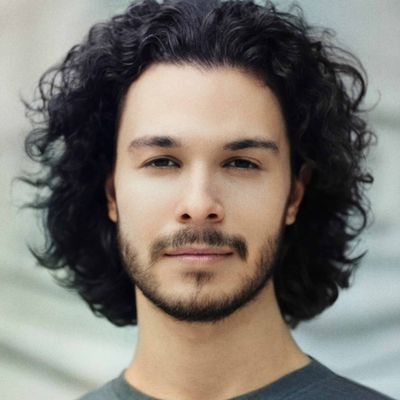
Behind the Awards goes backstage at Our Town to talk with actor Noah Pyzik. He talks about working with director Kenny Leon in this and Purlie Victorious. Noah explains what it’s like being a cast member and also an understudy... Read More
From the show: Behind the Awards with Eila Mell & Bruce Gotlieb
Guests
Featured Shows

About
Behind the Awards goes backstage at Our Town to talk with actor Noah Pyzik. He talks about working with director Kenny Leon in this and Purlie Victorious. Noah explains what it’s like being a cast member and also an understudy. Noah also talks about his career as a producer and growing up as a theatre kid in Michigan.
Also in this episode we discuss seeing Kit Connor and Rachel Zegler in Romeo & Juliet and Whoopi Goldberg’s Best Supporting Actress Oscar for Ghost.
Noah Pyzik is an actor, producer, writer, and historian. He’s performed on Broadway in the Tony Award-winning production of Purlie Victorious and Our Town, and in New York at The Public Theater, Lincoln Center, La MaMa, Playwrights Downtown, The York Theatre, A.R.T./NY, National Queer Theatre, Theatre Row, The Tank, Teatro Latea, Snapple Theatre Center, Faison Firehouse, and Brooklyn Art Haus. He is the recipient of a New York Innovative Theatre Award, an Off-Broadway Alliance Award nomination, and various film festival honors. His upcoming producing credits include Off-Broadway’s Baldwin et Lucien, Botticelli in the Fire, The Zionists, and Foucault in Warsaw. @noahpyzik on Instagram
Make sure to check out Eila's book, "The Tony Awards", and all her other amazing books: https://amzn.to/43WMu5Y.
Connect with Eila and Bruce:
- Instagram @behind_the_awards
- Eila @eilamell
- Bruce @cominghomewithbruce
Transcript
This transcript was automatically generated and might contain errors.
[0:00] Bruce Gotlieb: Ever since I was a little kid, I wanted this. You don't know. My brother sitting there, he says, Thank God we don't have to listen anymore. You can do it now. My mom's home, everybody's watching. I have to thank the people at Paramount. I have to thank Jerry Zucker for taking the time he took before he decided to use me. Because it meant he was sure that it was for me. I had to thank Patrick Swayze, who's a stand-up guy, and went to them and said, I want to do it with her. I want to thank Demi. I want to thank everybody who makes movies. I come from New York. I was a little kid, I lived in the projects. And you're the people I watched. You're the people who wanted made me want to be an actor. I'm so proud to be here. I'm proud to be an actor, and I'm gonna keep on acting. And thank you so much.
[1:08] Eila Mell: Hello and welcome to Behind the Awards. I'm here with Bruce.
[1:11] Bruce Gotlieb: Chris, who are we just listening to?
[1:15] Eila Mell: Oh, that was the incomparable Whoopi Goldberg.
[1:19] Bruce Gotlieb: Oh my god, I love her.
[1:20] Eila Mell: Winning her Oscar for Ghost.
[1:22] Bruce Gotlieb: I love Ona Mae Brown so much. That's such a great part. I will stop and watch her scenes from that movie anytime it's on. I mean, it's a good movie, but she's just great.
[1:35] Eila Mell: She just is even, you know.
[1:37] Bruce Gotlieb: I know, I know. So many people were considered for that role. Do you know some of them?
[1:42] Eila Mell: Go ahead.
[1:43] Bruce Gotlieb: Tina Turner, Patty LaBelle. I mean, but Whoopi just seems the best for it just because she's so funny.
[1:50] Eila Mell: You know, it's funny because you do. You hear about people being considered for parts all the time, and you wonder. You know, oh, would this person have done it or this person? And there are plenty of times where you're like, oh, I could see it. So can you I can't see anybody else playing that role.
[2:05] Bruce Gotlieb: Not in the way that Whoopi did.
[2:07] Eila Mell: No. I mean, she made that movie magic, I think.
[2:11] Bruce Gotlieb: Oh my god, the best is that the bank scene where she's with the children.
[2:14] Eila Mell: I love that. What's the name? Rita Miller?
[2:18] Bruce Gotlieb: Um, I think so. When she doesn't want to give the nuns the check.
[2:23] Eila Mell: Yes.
[2:26] Bruce Gotlieb: But the scene with Lolly and the scene, the very first scene where she gets, you know, possessed by the man, that husband. I forget his name, but oh my god, I love it.
[2:37] Eila Mell: So, Bruce, what did we go see this week?
[2:40] Bruce Gotlieb: Uh, we had the pleasure of going to see our upcoming guest and friend Tommy Dorfman in Romeo and Juliet at Circle in the Square. I mean, listen, this is one hot ticket. Standing room only rush tickets. And they're worth it. Because if you're in standing room, there's a good chance you're gonna be in the show somehow, incorporated. So if you like that kind of thing, get standing room and there was one there's one kid when we were there who standing room and got hugged by Kit as he was going about doing his business on stage.
[3:16] Eila Mell: I know. I think that kid made their Broadway debut doing that.
[3:19] Bruce Gotlieb: Right, spotlight was on him. Can they put that on their resume now?
[3:23] Eila Mell: Uh, maybe. They were in Romeo and Juliet with Kit Connor.
[3:27] Bruce Gotlieb: That's right. I mean, I so I have to say I think Kit Connor is incredible in this. I just, he just is a natural for this role. I didn't know him. I hadn't seen him in anything before this, and I just loved him.
[3:40] Eila Mell: Yeah, yeah. It's not like I was looking for him in this part.
[3:44] Bruce Gotlieb: No, I mean, the cast is really good. The chemistry in the cast is outstanding. You can tell they've gelled together, whether they're doing you know, anything to work on that specifically, but you could just tell that they all get each other.
[4:00] Eila Mell: It looks like a very bonded cast.
[4:02] Bruce Gotlieb: I completely agree. And they're all young. Everyone's all the characters are pretty young. They play them young. Um, it's not the Romeo and Juliet that you imagine. It's really exciting, it's super fresh. There's music, original music by Jack Antonoff. It's just, it's visually, there are moments that just will take your breath away. It's just incredible.
[4:25] Eila Mell: It's a pop of all different experiences, pop of color, pop of sound, you know, visually, it's just excitement. I mean, the whole thing is exciting. There's not a dull moment, which you know can be challenging for Shakespeare because the plays can be long and the language is different from the language, the English that we speak now, so it can be challenging for audiences.
[4:50] Bruce Gotlieb: And they're not changing the text. The text is the text.
[4:52] Eila Mell: Yeah. I mean, maybe some things are cut, which works really well. Um, but the language is the language, and they all handle it really beautifully.
[5:02] Bruce Gotlieb: Yes. And there was one girl who I will point out. We had a show within a show unintentionally.
[5:10] Eila Mell: Yeah, Bruce and I are just watching this girl, and she had to be like what, 18, maybe? If, right. 17, 18. I mean, it looked like her first day out in the actual world. She's sitting amazed. She's sitting front row on the aisle. And on an entrance aisle because certainly in the square, you have people that are entering and exiting from the garages and in the wings. So you can see light is spilling out into her, so we have a great view of her for the whole show. And she clearly didn't know the story of Romeo and Juliet. She was literally sitting on the edge of her seat, grabbing her friend, and the expressions she were making was the funniest thing to us. We couldn't believe. Her jaw spent more time on the floor than anywhere else.
[5:56] Bruce Gotlieb: Oh my gosh. And then anytime Kit Connor would go near her, which was often because he had a lot of exits and entrances right next to her. I mean, I thought she was just gonna lose her shit.
[6:06] Eila Mell: I know I wondered, I almost during intermission felt like I needed to go up to an usher and just say, Do you have a doctor on staff? Because this girl's going to faint.
[6:15] Bruce Gotlieb: She was swooning for sure. I mean, if there's anything more than a swoon, uh, you know, that I don't even know. I feel like swooning is even a little bit of a gentle word.
[6:26] Eila Mell: I know. I know. I mean, it was a real show. It was kind of hilarious. Then we noticed that the woman next to Bruce was also watching her. So it was it was a thing, but she wasn't distracting from the show. She was an added bonus.
[6:39] Bruce Gotlieb: Yes, it's a really, really just a fun, interesting, new take on a classic, and definitely one that should be seen.
[6:51] Eila Mell: Yeah, I think so. Why do a show for the zillionth time if you're not gonna put your own spin on it?
[6:56] Bruce Gotlieb: Yeah, and Sam Gold definitely does that.
[6:59] Eila Mell: Absolutely. We had um we got to meet him at the Tony's, and you know, he seems pretty cool. But there's it's just it's exciting to me that this show is bringing kids, you know, into Broadway, first of all, but excited about Shakespeare. That's wonderful.
[7:15] Bruce Gotlieb: Yeah. I certainly didn't have that as a teenager. Did you?
[7:19] Eila Mell: No, no. I and Shakespeare probably wasn't my like go-to if I was, you know, gonna do anything reading of literature or play or something like that. It wouldn't have been that.
[7:30] Bruce Gotlieb: Right. Now, Romeo and Juliet is one of the Shakespeare plays that I know, probably the best. That in Midsummer Night's Dream, you know, like the more popular ones. Um and this is very different. It's just it's layered in a different way. There's music, I said. Um you'll hear Rachel Zegler sing, which is great. She sounds interesting. It's a lot of fun.
[7:52] Eila Mell: Yes, there's choreography by Sonia Tayeh. It's just it's really good. So, you know, it's maybe people go see it. It's a season for Shakespeare, you know. We have Othello coming up too.
[8:03] Bruce Gotlieb: So it is. I'm excited about that.
[8:05] Eila Mell: But this is pretty much sold out for a long time.
[8:09] Bruce Gotlieb: So enter the ladder lotteries and do the rush tickets.
[8:14] Eila Mell: Yeah, or you know, maybe look at your calendar, maybe not for November. Maybe look at your calendar for January. You might have an easier time scoring a ticket.
[8:22] Bruce Gotlieb: I know, and they'll only get better.
[8:23] Eila Mell: That's right. It's well worth it.
[8:25] Bruce Gotlieb: Yeah. And when is it running?
[8:26] Eila Mell: Through February?
[8:27] Bruce Gotlieb: Uh, yes. So there's not a lot of time to see it, but you know, maybe you'll get there.
[8:33] Eila Mell: That's right. And if you go, let us know what you think. We'd love to hear.
[8:36] Bruce Gotlieb: Always. So today we have.
[8:40] Eila Mell: Who do we have, Bruce?
[8:41] Bruce Gotlieb: Uh, we have Noah Pyzik on our show. We got the thrill because we were able to join him backstage at the Barrymore Theater. We sat in his dressing room and had a little chat with him. And it was a lot of fun. We almost never do in-person interviews just because everyone's schedule is so crazy. But Noah said, no, come in between shows. It'll be cozy, it'll be nice. And you know, he's so lovely. We know him from Purlie Victorious. Um, he made his Broadway debut in that show. And now he's in Our Town. He's super young, and he's just he's killing it. He's already two Broadway shows under his belt, and he's producing shows, and he's been acting forever. So he gives us a little glimpse into you know what it was like growing up surrounded by the arts, because it's been what he's known that he's wanted to do forever.
[9:36] Eila Mell: Yeah, pretty much his whole life. And what he wants to do for the future of arts and things like that. So it's a really fun conversation. And then on our Instagram, you'll see he gave us a little bit of a backstage tour. So we'll um put some of that together so everyone can see that. So yeah, just at Behind the Awards on Instagram. It couldn't be easier. And you can see all the secrets behind behind Our Town, behind the awards at Our Town.
[10:03] Bruce Gotlieb: Right. Behind the scenes, behind the awards.
[10:06] Eila Mell: Right. So let's bring Noah out.
[10:09] Bruce Gotlieb: Sounds good.
[10:13] Eila Mell: We at Behind the Awards are super excited to welcome. And we're on location today. Backstage at Our Town with Noah Pyzik.
[10:21] Noah Pyzik: Hey guys, how's it going?
[10:23] Eila Mell: Good.
[10:23] Bruce Gotlieb: Wonderful. We thank you so much for joining us and making some time in between shows today.
[10:27] Noah Pyzik: Yeah, we're at a two-show day here at the Barrymore. We're in my dressing room.
[10:32] Bruce Gotlieb: How cool. What is that normally? What does that only look like for you?
[10:35] Noah Pyzik: Like Madiney's over. What's your day look like on a two-show day?
[10:39] Bruce Gotlieb: Yeah.
[10:40] Noah Pyzik: The crazy thing in Albering about Broadway is like there's always people coming. You always friends you haven't seen in ten years will just randomly show up. So usually it's greeting people outside, talking, catching up, and then grabbing some food. And honestly, a two-show day, I take a nap.
[10:55] Eila Mell: You do?
[10:55] Noah Pyzik: I started curling here on the floor. I have a little blanket and a pillow and uh...
[10:58] Bruce Gotlieb: We're gonna send you a sleeping show.
[11:02] Noah Pyzik: Sure, sure. Thank you, thank you. It's the only way to get through eight shows a week.
[11:05] Eila Mell: Yeah, I think is to nap on two-show days. And on Thursdays we do understudy runs. So in between that and the evening show, I'll nap.
[11:11] Bruce Gotlieb: Are you understudying anyone in this show?
[11:12] Noah Pyzik: I do. I understudy Wally Joe inside.
[11:15] Bruce Gotlieb: Okay.
[11:16] Noah Pyzik: That's a good stuff up there in your mind. A lot in our brains, yes.
[11:19] Bruce Gotlieb: I don't know how swings on musicals do it.
[11:22] Noah Pyzik: I don't know. Because if you're a dancer swing, it's like, okay, I'm two feet to the left and I turn this way instead of you could run into people, and then the singer swings, it's oh I'm on the third middle harmony, not the fifth. And I I don't know how they do it. My brain doesn't work that way.
[11:35] Bruce Gotlieb: It's a very special talent.
[11:37] Noah Pyzik: Yeah. It's enough to have other people's lives floating around your mind.
[11:40] Bruce Gotlieb: Sure, sure. And to switch in and out. When we do understudy runs, there's doubling up. So I'll do one scene as one person, run off, and then do another scene as another person.
[11:49] Noah Pyzik: Wow.
[11:50] Bruce Gotlieb: So when you're so you're on uh you know, you have a regular role in the show as well as understudying. So when you're understudying, do you watch their performances?
[12:00] Noah Pyzik: During rehearsal, Kenny, we're all there all the time. And so in the rehearsal room, I watched a lot and I washed all through tech. Now that we're running, I can just hear it on the monitor. So I mean you could technically sneak out in the house if you needed to watch something, but I don't anymore, yeah.
[12:15] Bruce Gotlieb: It's in you, right?
[12:16] Noah Pyzik: It's in your body now, you know it. We run it, we run once a week, um, all the understudies, which is great.
[12:26] Noah Pyzik: I mean, you're just a few years out of college, right?
[12:29] Eila Mell: Yeah.
[12:29] Noah Pyzik: And you're already on Broadway. This is your second show.
[12:32] Eila Mell: Amazing.
[12:33] Noah Pyzik: So how did that happen for you so quickly?
[12:35] Noah Pyzik: Well, you know, uh, so I've been in New York for nine years, but I was a child actor in Michigan. I've actually been acting for 21 years.
[12:43] Eila Mell: Wow, consistently.
[12:44] Noah Pyzik: I've done about four plays a year for 21 years, besides COVID, but I was here all through COVID, you know. And then when film started back up again before the year, I was doing a lot of independent film. So yeah, 21 years I've been doing this. New York was always the dream. I watched the Tonies at six years old. I said, I'm gonna move to New York. My grandma was from Washington Heights, so it felt like it was possible.
[13:06] Eila Mell: Yeah.
[13:06] Noah Pyzik: Sure. And my parents supported me. I started doing children's theater at six years old. Kalmazoo, where I grew up, there's an arts elementary school. I have a magnet school, so it's like a writer's elementary school and a science one, similarly to how New York high schools work. So at five years old, I had theater class, singing, choir, band, piano lessons, clarinet, dance once a week.
[13:28] Eila Mell: That's great.
[13:29] Noah Pyzik: So you're fully entrenched at a very young age. I was so lucky to grow up in a community that had arts funding and support. I every year got scholarships to go to theater camp, Shakespeare camp, the blue leg, scholarships for piano lessons, scholarships for voice lessons, choir, jazz band, speech and debate. I was just so blessed to grow up. We had an amazing community theater, Kalamazoo Civic Theater, that's over a hundred years old. In fact, there's a book on that I keep on my dressing table called Drama in Our Time. It's from the 40s, and I brought it in to show to the cast because it has the script for Our Town in it.
[14:01] Eila Mell: Oh, wow.
[14:02] Noah Pyzik: And it says it's one of the few plays that'll probably still be done a hundred years from now. They knew.
[14:05] Eila Mell: That's amazing.
[14:06] Noah Pyzik: And what's also cool is in the front, it talks about the little theater movement and the regional theater movement, which was just starting at that time. And, you know, one of the towns, it says, here are some of the towns in America that have really reputable theaters. It lists like Cleveland and Chicago and Kalamazoo. The theater is over a hundred years old. And that's at nine years old, you can start in the children's theater. And I did that till I was 18. And then I also worked in the adult theater. And I actually saw Our Town as a kid.
[14:34] Eila Mell: Oh my gosh.
[14:35] Noah Pyzik: Sat up in the balcony and watched, and the third act was imprinted in my brain. And now, 20 years later, I'm doing it on Broadway. It's like a full circle moment for you.
[14:45] Eila Mell: Is that an equity theater in Kalamazoo?
[14:47] Noah Pyzik: It's a community theater. It's a 500-seater proscenium. And then they also now have a black box and other stuff. But we do have an equity theater in Kalamazoo too. They've got a symphony, there's so much arts funding there. There's like some old families that have endowments. And um, I was just so blessed to grow up in that community. There's a lot of people in New York that come out of Kalamazoo. A friend of mine, Trinity, was just on the Book of Mormon tour, and she came the other day to see a show, and we haven't seen each other in 10 years.
[15:14] Eila Mell: Wow.
[15:15] Noah Pyzik: And we're both here doing it.
[15:16] Eila Mell: Yeah.
[15:16] Noah Pyzik: That's amazing. And it's fun that you have friends that are, you're all like doing it together. Even though you're in different shows, but you're all like pounding the pavement, getting, you know, getting a chance at these opportunities.
[15:28] Noah Pyzik: I've been saying to everybody, you know, the first couple years out of college, it's all about where's the next job? You know, every actor thinks, will I ever work again? But the past couple years have been about building community. Um, writers, directors, friends that now have worked their way up at nonprofit theaters. And that's why I've started transitioning into also producing. Because I know so many talented people that I can connect and introduce to each other and say, okay, here's a writer who has an idea. Who would be the perfect director for this? When's a nonprofit theater? We could pitch this to you. We could do workshops. So at the moment, now that Our Town, we don't really rehearse besides understudy rehearsal during the day. Now my days are workshops and readings and meetings and, um, obviously still auditions for things. And then to come here at night and do what's now kind of my day job, you know?
[16:21] Noah Pyzik: And just meditate on mortality and love, which the show forces you to be present. And it's just such a great group of people that come to work to every day. And our crew is really great. This theater is so welcoming. And I have really full days. I'm tired. And then I come here and just be grateful.
[16:39] Eila Mell: We'll be right back. We have to listen to some commercials.
[16:46] Noah Pyzik: We were lucky enough to have the opportunity to be in the rehearsal space with you guys. And you could just feel like the camaraderie, the love amongst you guys, and it doesn't feel forced, it doesn't feel fake. It feels like you guys just developed this family, and it's really, really special.
[17:02] Noah Pyzik: That's what Kenny is a genius about. A, he's a genius at revivals. And Kenny Leon, let's just get away.
[17:10] Eila Mell: That's right.
[17:10] Noah Pyzik: Kenny Leon.
[17:11] Eila Mell: Um, guests on our show too.
[17:13] Noah Pyzik: Oh, yeah.
[17:13] Eila Mell: Yeah.
[17:14] Noah Pyzik: Oh, I have to listen to that.
[17:15] Eila Mell: Yes.
[17:16] Noah Pyzik: We had him, uh, right before you guys started rehearsal.
[17:19] Eila Mell: Yeah.
[17:19] Noah Pyzik: Oh, I can't wait. I read his book right before we opened Pearly. I was like, can I take you out for like, I don't drink, but I was like, can I take you out for a soda after the show? And just pick your brain. And I read his book and I asked him to sign it, which is like a cute moment. And I just, he's got so many stories, so much wisdom. I think he's really developed over time.
[17:40] Noah Pyzik: Cause he works a lot, as you know.
[17:41] Eila Mell: He sure does.
[17:42] Noah Pyzik: Like six shows a year.
[17:43] Eila Mell: I know he never stops.
[17:44] Noah Pyzik: And go lives in Atlanta, goes back and forth. He's always on a, he's gotta have a lot of frequent flyer miles. He's just someone described him at our talk back the other day. He's half NBA coach, half spiritual guru.
[17:56] Eila Mell: Sure.
[17:56] Noah Pyzik: You know, NBA coach, because he can be tough.
[18:00] Eila Mell: Sure.
[18:01] Noah Pyzik: I remember the f one of the first things he said to me in Pearly was Noah ruined this scene when he opened his mouth. He can be tough, but he's honest. He even says to people, he's like, let me know now. Do you want to be good or do you want to be great? He's like, if you want to be good, I'll just hide you in the back and you know, you won't mess up the scene. But if you want to be great, I'm gonna push you.
[18:23] Noah Pyzik: And I'll tell you, I went home those first couple weeks of Pearly. I went home and would cry. I was like, I'm getting fired.
[18:28] Eila Mell: Wow.
[18:29] Noah Pyzik: Because I understudied Charlie in Pearly, which I think was why I was in the room. I felt rope. And I got to go on once, which was amazing. I just needed that one to God bless Noah Robbins. I just needed that one time to prove to myself I could do it.
[18:40] Eila Mell: Yes.
[18:41] Noah Pyzik: And it was, I'll never forget any moment of that night. But so that was what I understood. I think that's why I was in the room.
[18:47] Eila Mell: And what an opportunity to be in that room.
[18:49] Noah Pyzik: Well my God. Uh yeah, we'll talk about these casts that I've worked with, but um, but I uh every day my regular role was as the deputy, and I didn't really feel I think they did that because it saved them one person. I mean just one less understudy they had to hire. But I didn't really know what to do with this five-line racist cop. I just don't know.
[19:10] Eila Mell: And all my mentors are like, well, you know, you gotta come up with the backstory, and of course you know all that intellectually, but you have to physically do it at the end of the day. And Kenny would be like, you opened your mouth and you ruined the scene. I was like, okay. And at a certain point he was like, no, I'm gonna, I know I know you have five lines, but I'm gonna cut half of them.
[19:27] Noah Pyzik: Cause they're just, it's distracting. You haven't found it yet.
[19:30] Eila Mell: And how did he help you find it?
[19:33] Noah Pyzik: Um, Kenny makes you find it on your own, which I think is actually genius. It was now the second time around, it's a walk in the park compared to Pearly, because I didn't know. Now I know Kenny's style. He doesn't, Kenny's style is not you go here, you stand here, do it. He makes you do it over and over till you find it.
[19:52] Noah Pyzik: And that's amazing because then you trust. You know, working with both of these casts, you couldn't pay for an education like this.
[19:58] Eila Mell: Sure.
[19:59] Noah Pyzik: Working with someone like Billy Eugene Jones now twice, or Kara Young, Leslie, Michelle Wilson, Jay O'Sanders. The thing I've learned from all of them is this sense of discovery and play, which is why we get into this in the first place. You know, I think a lot of people go to theater school and have that love and passion sort of stand out of them. They break you down, but they don't build you back up. I think, uh, particularly my school and other schools, a lot of people left kind of feeling lost and not having any value because teachers broke them down and didn't build them back up.
[20:30] Noah Pyzik: But Jay and Billy and all these people, Billy specifically, has become a real mentor to me. And he's not afraid in the room. He's not worried that the other actors or the directors are gonna be like, you haven't figured it out yet. You see his process, you see him, but let me try that again a different way. Oh, I don't know about that. Oh, I don't know. I'm gonna go home and work on this. That sense of discovery and play, and well, I don't know what this could be.
[20:56] Noah Pyzik: And um, and Jay O'Sanders told me so many stories of he was, you know, on set for some TV show playing a cowboy, and he's like, instead of what do I think they want from me, what does this script need for me? What do I want to do? What do I want to try? If I was a kid playing cowboys, what would be the most fun decision that I could, how can I play?
[21:17] Noah Pyzik: And I just watching Cara Young in her Tony Award-winning role. Yeah, watching her find. There were some days in Pearl where they're like, you can go home for the rest of the day. We're not gonna use you. And I was like, can I stay and watch?
[21:28] Eila Mell: Sure.
[21:28] Noah Pyzik: You couldn't pay for that education. Go ahead and school, could never come close to watching them find that and doing it a hundred times. Kenny says, uh, repetition is good, but good repetition is better. He's like, he's like, uh, where should we go back from? And he gets you, he's like, if you don't stay in two seconds, we're just gonna go to the top of the show.
[21:46] Noah Pyzik: Oh, wow. Because then you gotta start from the beginning and find your way there. You can't just jump back in. You have to build up to so that it all rings true.
[21:55] Eila Mell: The other thing you were saying about the threat thing about Our Town is that it feels like a family.
[21:58] Noah Pyzik: Yeah.
[21:58] Eila Mell: Kenny took an hour.
[22:00] Noah Pyzik: Well, first off, our first day of rehearsal for Our Town. We drove and spent 10 hours on a bus.
[22:04] Eila Mell: That's amazing.
[22:05] Noah Pyzik: So you have to bond right there.
[22:06] Eila Mell: Oh my god.
[22:07] Noah Pyzik: You just sit next to him on the bus. I said exhibit Eugene Jones because I knew we wouldn't both nap.
[22:13] Eila Mell: And I was like, really? Why the first day?
[22:15] Noah Pyzik: Like, because we don't really know each other, but it was so brilliant. It what a bonding experience.
[22:19] Eila Mell: Sure.
[22:19] Noah Pyzik: And to remind our listeners, because Kenny talked about where exactly you went, because it's very special. There's an artist colony up there called McDowell, where there's a cabin, so writers can go and be in nature. And it's where Thornton went several times, and it's where he finished Our Town, his signatures on the wall.
[22:39] Noah Pyzik: In the cabin where he would saw the bed he slept in.
[22:42] Eila Mell: Wow.
[22:42] Noah Pyzik: And it's a quaint little town, Peterborough, that he based Grover's Corners on. And, you know, there's buildings that are still there from the time when Thornton was there. And the town would welcomed us and they loved us. But yeah, 10 hours for we got back to theater two in the morning.
[22:56] Eila Mell: Oh my goodness.
[22:57] Noah Pyzik: But what's so cool about that is that, you know, everyone has their own subtext, but you all picture the town the same way, because you all saw it.
[23:03] Eila Mell: Absolutely.
[23:04] Noah Pyzik: Well, that and also Kenny said, it's all of our hometowns. He took an hour at the beginning of every rehearsal for everyone to go around and say, what'd you see in the world today? Did you notice any human interaction on the train? Or did you see a piece of art? Or what did you talk about with your family last night? And it was such a great way, you know, when a show like this or any show that the ensemble and the leads all were getting to know each other.
[23:30] Noah Pyzik: You know, if you don't have a big, I don't have a big role in the show, but people got to hear about my life and my heart. And we all did really become really to trust each other, to know each other, so that everyone felt like an equal and stage management and crew and dressers and everybody. We really do feel like a town.
[23:47] Noah Pyzik: And um, and also to take an hour every day. And I think some people were kind of looking at the clock like, oh, are we gonna get to act three today? No. It's a what is the show is about being present and about time and for Kenny to say, no, we have time. It's more important that we are with each other and we breathe and we're present and we don't rush.
[24:09] Noah Pyzik: And we do have time. I thought that was brilliant too.
[24:13] Eila Mell: It is.
[24:13] Noah Pyzik: So you did not do that on Pearly Victorious then?
[24:16] Eila Mell: No, Pearly, we started, um, I think we spent more time. This was a bigger cast. Pearl there was nine people in four understudies. But we would start, yeah, most start most days. What'd you see today? Did you see someone giving directions on the train and then have a lovely, they got to know each other, a lot of stuff like that, or does anyone have a family member that's going through an illness or is in the hospital?
[24:36] Noah Pyzik: I've dealt with a lot of stuff in the past year with people in the hospital. And in Pearly, a real good friend of mine was having issues. And I would pack a bag of clothes, I would do two shows and spend the night at the hospital, go do a show, spend the night, and I would do it for a week.
[24:52] Noah Pyzik: And that really informed all the work that I was doing. I was like, oh my God. Like I worked with the director Bill Castellino on a show at the York off Broadway. He would start every day saying three things. We woke up today, not everybody did. We our feet held our weight. We were able to get out of bed and stand and walk, and not everybody could today. And then we ate a we ate a home cooked or we ate a meal, hopefully, and came to work, and not everybody had that. Not everybody had a roof over their head today. And that's something I meditate on, like doing these shows, you know. That really puts things in perspective.
[25:26] Noah Pyzik: It does. Yeah, it keeps you grounded. Okay, and my mom always says, like, you know, we're not saving lives. She hate the one thing she hates about our industry, like celebrity and sure. People being put on a pedestal or like, you know, don't talk to someone unless they talk to you. She's like, but we're all people at the end of the day. Right. And um, and that's something that really keeps me grounded, is like, you know, we're so lucky. We're so lucky to do what we do.
[25:51] Bruce Gotlieb: Yeah. I mean, this was the dream, and you're doing it. And you're doing it so young. That's amazing.
[25:57] Noah Pyzik: Thank you. Most people don't get that.
[25:59] Bruce Gotlieb: Yeah. Absolutely.
[26:00] Noah Pyzik: I have so many friends that that's why I'm becoming producers. Like, I just want to give people jobs that people that I know are talented. Sure. I want to work with them and I want to see what they can do. And I also, if they some people are getting jobs, but they they're not as fulfilled as they could be. People don't see their whole selves. And um, these Pearlie Our Town are amazing because they have this pedigree and learning so much. But a lot of my work has been downtown in experimental theater, in queer theater. I do a lot of work with National Queer Theater and some other arts collectives. My hope is that at one point those paths will cross.
[26:35] Bruce Gotlieb: True.
[26:35] Noah Pyzik: And I'll get to bring those types of roles to a bigger stage as as myself and my collaborators and writers and directors get older. And I'm producing right now a lot of workshops and readings of shows that I think are what audiences want to see, what a younger audience wants to see. We want to make sure that theater doesn't go the way of ballet and opera that these these art forms are struggling financially and struggling to get a new audience. I mean, I look at what Katz did downtown the associate director, Kubor Howell on that, is directing a show that we're in workshops for right now about James Baldwin and his lover, Nation Happersberger, who I play. A lot of the shows I'm producing are about um historical figures that really I think we could exume and look at through modern lenses.
[27:19] Bruce Gotlieb: That's interesting.
[27:21] Noah Pyzik: Well, I feel like James Baldwin sort of got that a little bit because he was a character in feud.
[27:27] Bruce Gotlieb: Yes.
[27:27] Noah Pyzik: Oh yes. Well, a lot of these James Baldwin in particular gets this sort of this hero treatment.
[27:34] Bruce Gotlieb: Yeah.
[27:35] Noah Pyzik: Where we put people on a pedestal, but we don't necessarily delve into the three-dimensionality of them. Um, we see a persona, and this show, I'm so excited for we have another reading on the ninth and uh big one on the eighteenth at open jar that we're inviting people to. I'm just so excited for people. Everyone that's seen it so far has been like, I care way. Um that's amazing to get that kind of feedback and yeah, it carries you forward to the next date, knowing that people are really absorbing it and soaking it in. Now that Jeffrey Richards get going to this reading.
[28:10] Bruce Gotlieb: We he will be on the invite list.
[28:12] Noah Pyzik: You better believe it. Irene and Sade and Jonathan at National Black Theater, I think become involved in a few a few other organizations. Let's take a minute to hear a word from our sponsors.
[28:29] Bruce Gotlieb: Now you auditioned for Pearly. And then did those relationships that you built there help with our town's casting?
[28:37] Noah Pyzik: I auditioned for our town as well. Um Pearly, I had done the reading they did in spring 2023.
[28:45] Bruce Gotlieb: So how do you get involved with the reading like that?
[28:47] Noah Pyzik: Is that a shit? And they had done a few readings before that, with some of the same cast, some not. And I got the I got the reading only a few days beforehand. It was a two-day reading. And it was very clear to me that I think someone there was a scheduling issue or anything. I don't think I definitely there was someone else that couldn't do it, and there was a scramble to find someone. And luckily for me, I got in the room and I was lucky to be the person that it worked out for. But it was and that the reading went great. And it was, you know, Kara was there and Leslie and and Heather and Vanessa. And when you're doing the same part that you did on Broadway?
[29:23] Noah Pyzik: I was actually playing Charlie in that. Okay. Um they just had stage management read the Dad Beauty and uh and the sheriff. But it was very clear to me, even though that it went well, that I most likely wasn't gonna play Charlie on Broadway. They just wanted some more experience.
[29:38] Bruce Gotlieb: Exactly.
[29:39] Noah Pyzik: And I love Noel Robinson. I've been a fan of his for years. He looks so young, too.
[29:44] Bruce Gotlieb: He looks so young, but he has he's been around a while. I think we saw him in a show at Rattlestick.
[29:49] Noah Pyzik: Yes. That's right. Love that show.
[29:52] Bruce Gotlieb: So good. So he was hot at the moment.
[29:54] Noah Pyzik: He's hot. Oh, he just didn't. He just had a Flight Meet of the Moon, which I saw. He's incredible.
[29:58] Bruce Gotlieb: Oh, that's right.
[29:59] Noah Pyzik: Yes. And what a sweet man. I'm obsessed with him. Um, so it was very clear to me that I wasn't probably gonna play that role on Broadway, but I was like, maybe I maybe I could understudy.
[30:08] Bruce Gotlieb: Yeah.
[30:08] Noah Pyzik: But we had a few months where I didn't hear anything. And I I at first I felt confident, and then as the months went on, I was I I let it go, and I got really sad. And some friends of mine were like, even sadder than I was. They were like, this is not fair. I just I let it go. I was like, you know what? Maybe it's not. I've had a few shows that I came really close to. And you just for whatever reason it doesn't work out. And then right around my birthday in June, I got the call that not only will you understudy Charlie, which is really what I thought I was right for, but then I was playing the deputy.
[30:42] Bruce Gotlieb: That's amazing, because now you're in the cast.
[30:44] Noah Pyzik: Yes. Because being an understudy and not being in the show every night is really hard. I've never done that. And I but I've had friends that have done it. And I think that maybe can be a little hard if you don't feel like you're as much as a part of the company or to show up to work every day and not and watch. And I mean, that's a hard job. Sure. So to at least be in the opening and be in my two big scenes, that was such a gift.
[31:08] Bruce Gotlieb: Yeah.
[31:09] Noah Pyzik: To feel like a part of that company. And what a company. Oh my god. Ozzie Davis's three. Well, funnily enough, or the Barrymore, which is where Raisin in the Sun first was. Ruby D and City Poitier, and Ozzie Davis was the understudy. And this is where he rogue Pearlie. He was understudying and um Raisin in the Sun, and they asked him to write uh Early.
[31:39] Bruce Gotlieb: Wow.
[31:39] Noah Pyzik: So he was writing. I gotta figure out what room he was writing Pearlie in. This is also where um Street Carnegie Desire was, Marlene. There's somewhere in the basement where Marlon Brando hung his punching bag. Brand also worked at the music box. That's where he made his debut. Maddie Smith made her Broadway debut in this theater. Legend. Wow. And um and I, when I was a Frenchman in college, saw um Curious Incident here.
[32:02] Bruce Gotlieb: Sure.
[32:02] Noah Pyzik: And uh Patty Le Poe and Maddie Petinkin did their two person show. Yes, it's such history. And the same with the music box. It's kind of crazy. I remember I music box is where I saw Pippin.
[32:13] Bruce Gotlieb: Oh in high school, ten years before I made my day though. I saw that. Sat way up in the balcony. And the theater felt so big, and now it feels so intimate to me. It's sure strange to see it from the other side.
[32:24] Bruce Gotlieb: Right.
[32:24] Noah Pyzik: It's a much different perspective. Yeah. And now you get to go from that amazing pedigree of a cast to this. That you're you know, you're one of the amazing calendars.
[32:35] Bruce Gotlieb: Oh, I mean, they both of these, and and this one's even bigger, and and this one I feel like I have my footing, and I sure I felt so much more at ease. And you know a lot of people going in just five people from the Pearlie cast, which is such a gift, and um two of our stage managers, Cameron Ben are the same, and so a lot of it's the same people.
[32:53] Bruce Gotlieb: That's really really good for special.
[32:55] Noah Pyzik: Yes. It I feel so much more at ease. It's so nice. Did you grow up watching Big Bang series?
[33:01] Noah Pyzik: I have never seen an episode. You know how funny. But I've admired Jim as an actor from his theater work.
[33:06] Bruce Gotlieb: Yeah. Sure.
[33:07] Noah Pyzik: And um again, another person that you're just I watched Jim on Cold Air recently, and the two of them, it's like two philosophers. Talk about good hearted, thoughtful people. I'm a real big fan of um Dick Cavage shows.
[33:21] Bruce Gotlieb: They're all they're great, yes.
[33:23] Noah Pyzik: Yes. And it's just smart conversations, right? And even the audience is like asked such intellectual questions. I know, it's so different from what we have today. Like uh talk shows today, they've always been about selling whatever project you're working on. And it's funny, like maybe people who aren't in in the industry don't realize, like, oh, if this is a talk show on an NBC Universal, all of the projects that pitch you are universal movies, like all that synergy, you know.
[33:46] Bruce Gotlieb: Yeah.
[33:46] Noah Pyzik: But Dick Cavit and and those types of shows in 45 minute conversations with with Orson Wells, with Betty Davis, and they're talking about Marlon Brandon, they're all talking about life, and uh just it's fascinating.
[33:59] Bruce Gotlieb: Right, they're not limited to just 12 minutes or you know or less of pitching a movie or a TV.
[34:05] Noah Pyzik: When I look at someone like Jim and uh his channel into Thori Wilder. I mean, he's essentially playing Thornton and playing the poetry. And growing up, I loved our town, but I thought of it as kind of this like straight, white, Americana. And what Jim brings to it by just bringing himself to it is bringing out this poetry and this queerness and this discovery of life. Thornton said that he was never satisfied with the production while he was alive.
[34:30] Bruce Gotlieb: Really?
[34:31] Noah Pyzik: Because they made it this Americana thing, and Thornton was really getting it darker issues about America and about humanity. He wrote it six years before Skin of Our Teeth. Was which was much more in your face about anti-war and a warning about society and the family structure and all that. But there's stuff in our town that, you know, Simon Stimson is the town drunk, and everybody says, look the other way, there's nothing we can do about it. And he ends up taking his own life. Right, and maybe they could have. They could have done, and he it they keep coming back to that, and there's so much in this script. And let's just point out how wonderful Donald Weber is.
[35:06] Bruce Gotlieb: Oh my god.
[35:07] Noah Pyzik: In this production. I I said something to Donald the other day, and I was like, it is such a gift to watch someone every night deepen and grow and find new things. And then sometimes he just like the emotion that's sad. It's so raw. I said to him one night, I was like, Were you were you tapped into something for your own life tonight? Like it just felt so I saw a darkness from deep down in his soul that that's not acting. That's tapping into something that you are now a vessel for. It's just it's heartbreaking and it's so in it's so inspiring to see that up close. But even through Kenny's direction, there were some very funny moments with Simon as well. Kenny says always if you have ch a choice between joy and dower, choose joy always. And that that's something I'll use on any project.
[35:56] Bruce Gotlieb: Yeah.
[35:57] Noah Pyzik: So what's your mom do?
[35:59] Noah Pyzik: My mom was a preschool teacher for many years when I was growing up. And my dad um is an architect. He was an architect at Western Machine University for many years. And uh now they live in Portland, Maine, and my dad does like, you know, they're both in their old 70s now, so they're retired, but my dad, you know, to they have to make money, you know. You can't retire in America.
[36:20] Bruce Gotlieb: No, but you said your mom was in the industry, so tell me.
[36:22] Noah Pyzik: No, my mom was a preschool teacher. Okay. For many years, but she played piano and she was a lover of the arts. She grew up going to the Stratsford Stratford Shakespeare Festival in Canada. And um, and so we as kids, like anytime we could get like free tickets to the symphony or see theater for cheaper. I got scholarships for everything and all that.
[36:43] Bruce Gotlieb: Yeah, my my parents were very supportive of exposing us to theater.
[36:46] Noah Pyzik: That's wonderful. So since I read the Tony book and you mentioned growing up watching the Tony, do you have any favorite Tony moments?
[36:54] Noah Pyzik: Oh my gosh, the Tonies were a holiday in our house. Oh yeah. You know, because we did we couldn't come to New York. We didn't have the money to go on vacations like that. We were we were road trippers. We would go to all the national parks every summer, you know. My mom, as a teacher, you know, would have us journal and do book reports and she would she would ask my teachers, like, hey, can you give Noah math homework to do over the summer?
[37:13] Noah Pyzik: Like, were you mad at her? At the time, but now I'm so grateful. Education was so important. I was reading, I'm a voracious reader, and now I'm like an anti-book collector, and I studied history a lot in college. And I'm so thankful for my upbringing.
[37:27] Eila Mell: Sure.
[37:27] Noah Pyzik: And I remember teachers in LS school be like, one day you'll thank your now you hate them, but one day you thank them. And I have such great parents, and I had such good teachers. I'm in the choir in um in our town. I had a full circle moment. I didn't realize this. I was looking for jewelry for opening night. I was like, I had these music note pins that I got in children's choir as a kid. And I was like, oh my God, I did over a decade of choir as a kid, and now I'm in a choir. And obviously those skills are coming into play. Like, oh my god. And so I reached down to all those teachers, and I was like, Thank you. It's just I didn't even re put two and two together that I was in the choir until I found those pins.
[38:01] Eila Mell: That's so sweet. And that's probably so special for them to hear and receive that message of you know, teachers, you know, you go through a lot, especially depending on the age of the child.
[38:10] Noah Pyzik: They do not get paid enough.
[38:11] Eila Mell: Oh, no, teachers do not get paid enough. Let's say that.
[38:14] Noah Pyzik: But to get that message from somebody who's looking back on that time and and and recalling it.
[38:19] Eila Mell: Yeah.
[38:20] Noah Pyzik: Probably meant so much to them. Absolutely. My first grade teacher has stayed in touch with me and she flew out to see Pearlie. And uh that's really special. Isn't that crazy? Um because that I I've known since I was in first grade that this is what I want to do. And all of my teachers knew, and especially the ones that did I mean, you know, sometimes you have teachers that are like, maybe don't go to school for theater. I don't know I don't know if that's a viable career breath, but the ones that did nurture you, um, they've they've seen the work.
[38:46] Eila Mell: Yeah, and I that it's been consistent.
[38:49] Noah Pyzik: Sure. Um, and so yeah, staying in contact with them is really grateful. All right, I'm going back to my question, favorite Tony moments.
[38:56] Noah Pyzik: Oh my god. So the So it is we're a uh a holiday in a house. We used to dress up.
[39:01] Eila Mell: Like we like formal?
[39:03] Noah Pyzik: No, no, no, no, no. So we would go to garage sales as kids and just buy like old fabric. And me and my brother, like I I there was a time I wanted to go into fashion. Like I I think one day I would love to have a clothing line. We would just wrap like random garn f it was like Project Runway. Like, how can I drape something around myself and like make make uh a crazy outfit? Like I remember seeing um definitely Wicked. Um and the thing was every year we would watch the Tonies and the next day we would go to Barnes and Noble, we were allowed to buy one CD. You know, at that time they were probably ten dollars. Right. And then we would listen to it in the car in the parking lot. I remember buying the wicked CD, and I was like, oh, who's this Idenan Menzel girl? I didn't know how to pronounce it. How funny. Spring Awakening was a big one for me.
[39:46] Noah Pyzik: And my parents, thank God, so open-minded, there's a lot of swearing and inappropriate stuff for the show. When Spring Awakening came on tour to Michigan, we went and saw it, and there was an usher that was like, Do you know what this show is about? Like, are you sure your kids are okay to see this? And my parents like, Oh, we're very old. But we talk about all that stuff. My parents were so you know, they were headbies back in the day, you know.
[40:06] Eila Mell: My parents um were civil rights activists.
[40:08] Noah Pyzik: Amazing. That's why Pearlie was a big um felt like a important moment for me. Felt like of any show to do for it to be that show.
[40:16] Eila Mell: Were they able to come see it?
[40:17] Noah Pyzik: They did. They they um they had they living in Michigan, they weren't able to see any of the shows I did in college or off Broadway, but they that was one of the first shows they seen me do basically since high school. It's a very big deal making of Broadway. Jade Deer.
[40:28] Eila Mell: That's amazing.
[40:30] Noah Pyzik: Absolutely. So yeah, they um as kids, we did get out the vote work, and as as early as I could talk, my mom would be on one side of the street knocking on doors.
[40:37] Eila Mell: Yeah.
[40:38] Noah Pyzik: And I'd be on the other side of the street and be like, do you know where your um polling place is? Are you registered to vote? And be like, where are your parents? I've like, oh, she's across the street. She's she's keeping an eye on me. And um to do that at an early age. Like, I remember meeting uh Jennifer Granholm, the Michigan governor, the night she was elected, and there's a picture of me like six years old in a Jennifer Granholm shirt and like doing get out the vote work.
[40:59] Eila Mell: So political activism in my work is really important.
[41:02] Noah Pyzik: I mean, obviously, we have a very important election coming up.
[41:05] Eila Mell: Oh, yes.
[41:06] Noah Pyzik: Very soon.
[41:07] Eila Mell: Oh, yes.
[41:08] Noah Pyzik: Yes. Kenny, um, every day he was wearing his Kamala hat.
[41:11] Eila Mell: I know Broadway for Kamala.
[41:13] Noah Pyzik: We were all involved and we do videos. Actually, today we have to do a video um right before half hour, we're gonna do one. I think theater is where we need to have these conversations.
[41:19] Eila Mell: Theater is where we need to um galvanize is that the right word?
[41:27] Noah Pyzik: Yeah, like uh get people fired out.
[41:29] Eila Mell: Yeah.
[41:30] Noah Pyzik: And I think we have to make sure theater does not become a museum piece. We have to make sure theater speaks to today. And a lot of the work I'm doing downtown, the work I'm producing is work that I don't see like when I moved to New York, I was very aware that Broadway is very expensive. These shows are 20 million dollars. They can't take huge risks. But I remember I had a teacher, John Baker, that was like, let me tell you about all these off-off Broadway theaters, and let me expose you to downtown theater.
[42:00] Eila Mell: And downtown theater was when I moved here where all this challenging radical work was happening.
[42:06] Noah Pyzik: It's always been though.
[42:06] Eila Mell: It always has been.
[42:07] Noah Pyzik: A living theater and all the, you know, when it absolutely first started to get really hot.
[42:11] Eila Mell: Yeah, but I think especially after COVID, and even off Broadway is more expensive, all these companies are downsizing or closing, or they have to, you know, they have to team up. Two organizations have to go together. It's even harder for off off and off Broadway to do radical work because money and also this political state that we're in enough cancel culture.
[42:31] Noah Pyzik: It it feels almost McCarthy era. I'm workshopping a show right now called The Zionists. And as a Jewish person, that's very important to me. And as a person who has, shall I say, um, family members and friends on both sides of the aisle, shall we say? It is a show that does not shy away from very difficult conversations. Conversations that are very triggering for people that affect people's lives. And it I'm really or workshopping it in November, we just had a reading. I really think it could have a big future, and I want it to be seen by a large audience. Because I think people from all backgrounds of life will want to see it.
[43:11] Eila Mell: I mean, a title like that.
[43:12] Noah Pyzik: It's it's certain do uh sure people will be in an uproar. They're like, Well, I need to know what this is. And I post about it on social media, be like, well, well, what's this about? And they're all they haven't even seen it and they're already getting upset about it. And like that's exactly the type of show we need, right?
[43:26] Eila Mell: We do.
[43:26] Noah Pyzik: It's a conversation we all need to have. And I think you know, it's it's not something that generations agree on. So you know, young people seem to feel a much different way than people a little bit older. So I it's definitely a conversation we all need to have together.
[43:41] Eila Mell: Yes, yeah.
[43:41] Noah Pyzik: And as a Jewish person and and as someone who's interested in human rights, it's very close to my soul, and it's that's the type of work I want to be doing. I love, you know, a song and dance. I love theater of all kinds. You know, theater is my favorite thing in the whole world, and I love to see theater, but my real the reason the things that fulfill me are theater that makes people go home and think. And that, you know, it might sound cheesy to say, oh, we can change the world. But art has always been at the forefront of changing minds.
[44:10] Eila Mell: Right.
[44:11] Noah Pyzik: That's why they burn books. It's the way in for so many people because they wouldn't be open to a discussion. But if they see something, that's a metaphor for something else. Because politics, people get tunnel vision. And the second these political discussions happen, it it's very easy to log in and not listen and be in our bubbles and to people get riled up. And I've I'm guilty of that too, of like, no, I know what I believe. But I think theater can soften hearts.
[44:40] Eila Mell: It can make it can be people's way in.
[44:42] Noah Pyzik: And that's why I think we have in our outreach, you know, Pearl and Nartin, we've done a lot of ticket initiatives. We've been really um K Leon's done a lot of work bringing theater to prisons, bringing theater to schools. I've done a lot of work in children's theater. I did a show. I got my equity card when I was in college doing a show called Gatting, which is about kids with disabilities. And we did that for three years off Broadway, and then we ended up touring it to schools in New York, in Jersey, in Connecticut, on Long Island. I mean, thousands of kids saw this show of all ages. It was about learning about people different from yourself, having an open mind, having compassion, um, anti-bullying.
[45:23] Eila Mell: And what a lesson for children to have the or I mean, we have to start.
[45:28] Noah Pyzik: You talked about teachers. I I wanna, as I grow in my career, start scholarships and and do education programs because we have to start with education in this country. You know, with all of this testing and phones and and oh my God.
[45:44] Eila Mell: So much pressure shootings which talks a lot about like and like you said, if you're starting with education, you're starting with children.
[45:50] Noah Pyzik: There's no reason you we can't change the world, right? So that's where we have to start.
[45:54] Eila Mell: Right and start young.
[45:56] Noah Pyzik: And it it works because I remember being in grade school and just the local high school would bring their show to my school, and I still remember these shows, and he sucked.
[46:05] Eila Mell: Yeah.
[46:05] Noah Pyzik: And no, they but they didn't. They didn't. But well, you know, but it wasn't like, you know, like a real company coming local kids, but it made such an impact on me to this day. I remember who was in them and I remember everything. So imagine if you bring and you know it was just like once upon a mattress. But if you bring something that really speaks to people on that level, and and their sponges and emotionally too.
[46:28] Eila Mell: So it's so important that kind of for I believe the children are the future.
[46:31] Noah Pyzik: That's right.
[46:32] Eila Mell: Well and let them lead the way.
[46:33] Noah Pyzik: Sing it, Noah.
[46:34] Eila Mell: Uh listen, Whitney Houston is is one of my my top.
[46:38] Noah Pyzik: Mine too.
[46:39] Eila Mell: Oh, oh yes.
[46:40] Noah Pyzik: Yeah, best.
[46:41] Eila Mell: Yes. Maybe second only to Audrey.
[46:43] Noah Pyzik: Maybe.
[46:44] Eila Mell: Okay. Can we talk about how excited we are for Gypsy?
[46:47] Noah Pyzik: Yes.
[46:47] Eila Mell: Oh my gosh.
[46:48] Noah Pyzik: Yeah, right.
[46:48] Eila Mell: And Jordan.
[46:49] Noah Pyzik: You're the Al Jordan ties Jordan.
[46:51] Eila Mell: Jordan, I'm so good.
[46:52] Noah Pyzik: So happy for her playing June.
[46:54] Eila Mell: Oh my god. We went to see Audra in so many shows and and Jordan, I mean, for me too, but for her, that was like we always used to joke that that was her mom.
[47:02] Noah Pyzik: No, that was our joke and call it and now it literally literally is her mom.
[47:06] Eila Mell: So life is life is awful funny.
[47:09] Noah Pyzik: That's a quote from our town. I've really I've just been saying that over and over. Life is awful funny.
[47:12] Eila Mell: So other than the stuff you work with on workshops and the stuff downtown.
[47:18] Noah Pyzik: The million things you're already the six plays that I'm working on.
[47:21] Eila Mell: And then anything else that our listeners can find you doing in the future?
[47:24] Noah Pyzik: Oh, I'm producing a film festival right now.
[47:27] Eila Mell: Amazing.
[47:27] Noah Pyzik: That's coming up in November. It's gonna be.
[47:29] Eila Mell: Where and when?
[47:30] Noah Pyzik: It's gonna be at an AMC in Midtown. And um we're looking at either November 11th or 8th. It's gotta be on a Monday so that I can go.
[47:38] Eila Mell: So you can go.
[47:38] Noah Pyzik: And uh we got about 30 submissions. We're gonna pick six.
[47:42] Eila Mell: Is there a theme?
[47:43] Noah Pyzik: Well, it was gonna be Halloween themed because it's spooky, and we got a lot of submissions, but we also got submissions in other genres, I think, and also because we want it to be something that we do over and over again and to be, you know, a more inclusive genre. I think we're gonna do about 45 minutes of sort of spooky shorts and intermission, and then 45 minutes of shorts that mostly set around New York.
[48:01] Eila Mell: Fun.
[48:01] Noah Pyzik: And where we're toying with calling it the Metropolis Film Festival, and maybe one year we do it in LA, one year we do it in San Francisco. We're all thinking about like merch and things like you know, absolutely forward thinking, but yeah.
[48:13] Eila Mell: I love it.
[48:13] Noah Pyzik: That's great, yes.
[48:14] Eila Mell: Well, now that you're on our show, your family and we hope to follow you as you do.
[48:20] Noah Pyzik: Anything you need to promote, yeah, let us know, and we'll flood it out.
[48:24] Eila Mell: Of course, of course. And you know, this isn't a one-time invitation to be on our show.
[48:27] Noah Pyzik: Well, there's listen, there's a lot of people in this cast you have to interview.
[48:30] Eila Mell: I know.
[48:31] Noah Pyzik: Specifically, Bill Timony has so many stories.
[48:34] Eila Mell: Well, we have to see if Bill is around.
[48:35] Noah Pyzik: Yeah, let's go check his dressing room.
[48:37] Eila Mell: He's gonna be able to do that.
[48:37] Noah Pyzik: We'll make a video or something.
[48:39] Eila Mell: Yes, yes.
[48:39] Noah Pyzik: All right. Well, thank you so much for being here.
[48:41] Eila Mell: Oh my god, it's been amazing. We hope everyone comes to see our tone on Broadway.
[48:46] Noah Pyzik: When are you running through it?
[48:47] Eila Mell: We weren't until January 19th.
[48:49] Noah Pyzik: How's a week come see us? It's a very special show. As Bruce and I were coming to the theater today to see Noah, we saw many people crying.
[48:57] Eila Mell: I mean, sobbing outside.
[48:59] Noah Pyzik: Oh, we love when they cry. There's on stage seating, and sometimes people are like trying to not draw attention.
[49:04] Eila Mell: Yeah, they're sobbing.
[49:06] Noah Pyzik: And we see them at uh bows, and we sort of nod to them like I think we got. It's okay. Let it out.
[49:10] Eila Mell: Yeah, the rods are all red.
[49:12] Noah Pyzik: I love it. My friend Rory was sobbing when he saw the show, too.
[49:16] Eila Mell: So just putting that there, he likes to hear his name on the shoe.
[49:18] Noah Pyzik: Yeah, that's right.
[49:19] Eila Mell: Shout out.
[49:20] Noah Pyzik: All right, well, thank you so much, Noah.
[49:23] Eila Mell: And we just adore you.
[49:24] Noah Pyzik: I love you guys. Thank you so much.
[49:26] Eila Mell: We will see you next time on Behind the Awards.
[49:28] Noah Pyzik: Bye-bye.
© Broadway Podcast Network, All Rights Reserved