

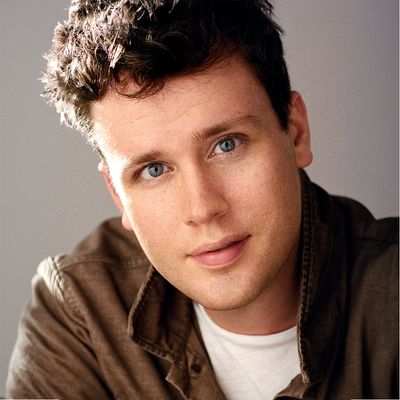
Grey Henson visited to discuss his starring role as Buddy in Elf the Musical on Broadway. Grey talks about working with his co-start Sean Astin who is making his Broadway Debut. Grey also recalls where he was when he received his Tony Nomination for Mean Girls... Read More
From the show: Behind the Awards with Eila Mell & Bruce Gotlieb
Guests
Featured Shows




About
Grey Henson visited to discuss his starring role as Buddy in Elf the Musical on Broadway. Grey talks about working with his co-start Sean Astin who is making his Broadway Debut. Grey also recalls where he was when he received his Tony Nomination for Mean Girls. We learn how his career started in Book of Mormon and how he almost didn’t do Shucked on Broadway.
Also in this episode - Hugh Laurie Gold Globe win for House. Review of A Guide the Homesick and TV Sitcom Actors…how old are they?
Grey Henson is currently starring as Buddy the Elf in Broadway’s limited engagement of Elf The Musical. He made his Broadway debut as Elder McKinley in Broadway’s The Book of Mormon, a role that he performed on the first national tour. He starred as Storyteller 2 in the 2022 Broadway musical of Shucked, which received a Tony Award Nomination for Best New Musical and received Tony and Drama Award nominations for his performance as Damian in the original Broadway cast of Mean Girls. He recently made his Kennedy Center debut in Tick Tick Boom. On television, Grey recurred as Tate in Netflix’s Girls5Eva and on ABC’s Suburgatory. Additionally, he can be seen in Sony Pictures A Journal for Jordan directed by Denzel Washington. He is a graduate of Carnegie Mellon University.
Make sure to check out Eila's book, "The Tony Awards", and all her other amazing books: https://amzn.to/43WMu5Y.
Connect with Eila and Bruce:
- Instagram @behind_the_awards
- Eila @eilamell
- Bruce @cominghomewithbruce
Transcript
This transcript was automatically generated and might contain errors.
[0:00] Grey Henson: Hi, I'm Grey Henson and you're listening to Behind the Awards.
[0:30] Eila Mell: Hello and welcome to Behind the Awards. I'm Eila and, as always, I'm here with my Bruce.
[0:59] Bruce Gotlieb: How are you today?
[1:00] Eila Mell: I'm great. How are you?
[1:01] Bruce Gotlieb: I'm good. So that was Hugh Laurie. We know him in this country as Dr. House, but people in England, you know, know him from a million things.
[1:12] Eila Mell: That's true. I mean, there are some actors that it's funny because I find that actors that are from other places than America do an American accent much better than Americans do any other accent, for the most part.
[1:24] Bruce Gotlieb: I think that's probably true. I know. I get fooled all the time and, you know, I'm from here.
[1:29] Eila Mell: Well, so speaking of actors, I pulled up this thing. I saw it posted and it's not anything that you probably don't already know, but let's just put a spotlight on it first. We're going to play a game. How old was this actor when they did their TV series? Okay, so you have to guess the age because, I mean, you're not going to believe it. Okay, so Redd Foxx, when he did Sanford and Son. You can picture what he looked like on that show, right?
[2:00] Bruce Gotlieb: Yes. I also know the answer to this because we spoke about it the other day.
[2:07] Eila Mell: Okay, well, all right, so that's okay. Well, he's our way in with Redd Foxx, but so how old was he? He looked about 350 years old on the show.
[2:17] Bruce Gotlieb: I believe he was 48.
[2:19] Eila Mell: 48 when he made that show. Okay, you can picture what Tom Cruise looks like now. He's 60-something, so Redd Foxx could have been his great-grandfather. All right, so next, Carol O'Connor as Archie Bunker. How old was he when he was Archie Bunker?
[2:36] Bruce Gotlieb: I believe he was also, I want to say like 38, 42, somewhere around there.
[2:41] Eila Mell: Okay, 48, but still, how old did he look? 90. This is a pretty well-known one. Wilford Brimley in Cocoon. I know, he was like 45 and he looked like he was 80.
[2:53] Bruce Gotlieb: 50. All right.
[2:55] Eila Mell: But he also looked like that through his whole career.
[2:58] Bruce Gotlieb: I know, he never aged. He was forever, you know, what was it, Quaker Oats guy?
[3:04] Eila Mell: Quaker Oats. Quaker Oats and, I mean, who can forget his searing commercials for diabetes? Although my favorite role of his was in, what was it, Our House.
[3:13] Bruce Gotlieb: Oh, right, I forgot all about that, with Baby Shen and Doherty.
[3:17] Eila Mell: And Deirdre Hall.
[3:18] Bruce Gotlieb: And Chad Allen.
[3:20] Eila Mell: And Chad Allen, that's right. All right, Norman Fell when he played Mr. Roper.
[3:25] Bruce Gotlieb: I mean, I was going to say, you know, probably 48.
[3:30] Eila Mell: All right, so we're getting a little older here, 53.
[3:34] Bruce Gotlieb: Okay.
[3:34] Eila Mell: But still, I mean, 70s, 53 is way different from today.
[3:38] Bruce Gotlieb: Julianne Moore is 60 and, I mean, she's hot.
[3:41] Eila Mell: So, all right, this one I thought was shocking. Polly Holiday when she played Flo, you know, Kiss My Grits, Flo?
[3:49] Bruce Gotlieb: Right, right.
[3:50] Eila Mell: How old?
[3:52] Bruce Gotlieb: Give me, oh, 45.
[3:54] Eila Mell: 39.
[3:56] Bruce Gotlieb: Okay, all right. All right, Ann B. Davis as Alice on The Brady Bunch. Your favorite.
[4:04] Eila Mell: I know, she's annoying to me.
[4:05] Bruce Gotlieb: No one can believe that I feel that way, but yeah.
[4:09] Eila Mell: Well, I mean, someone's got to stand on that soapbox, so might as well be you.
[4:14] Bruce Gotlieb: I'm anti-Alice.
[4:15] Eila Mell: I'm going to say 45.
[4:17] Bruce Gotlieb: 43.
[4:18] Eila Mell: All right, Edith Bunker, you couldn't, I mean, this is like the classic description of matronly. Ed Bunker, Gene Staples, and how old?
[4:28] Bruce Gotlieb: 44.
[4:28] Eila Mell: 42, okay. I mean, come on, Demi Moore, 62. Just saying, quite a difference.
[4:36] Bruce Gotlieb: All right, and the last one, Rue McClanahan when she was in Golden Girls.
[4:41] Eila Mell: Oh, I think she was like, I want to say she was also like 44, something like that.
[4:46] Bruce Gotlieb: 51, yeah.
[4:47] Eila Mell: Okay. It just blows my mind, the difference of how people look.
[4:52] Bruce Gotlieb: And some of these are not that, that long ago.
[4:55] Eila Mell: No, no, it's a different time.
[4:58] Bruce Gotlieb: And what's even crazier is that none of them even had gray hair.
[5:02] Eila Mell: So it wasn't just that people color their hair now, it's just like, I guess they gave up once they hit 40, I don't know.
[5:09] Bruce Gotlieb: I don't know, I guess, or maybe they knew they needed to affect a certain look in order to land these roles.
[5:14] Eila Mell: Maybe, but can you imagine if they made the Golden Girls now? They're supposed to be in their 50s, the characters, it would just look like any other show.
[5:24] Bruce Gotlieb: Sex and the City is pretty much the Golden Girls now, right?
[5:27] Eila Mell: And just like that.
[5:28] Bruce Gotlieb: That's true.
[5:29] Eila Mell: Right, that's true, because they were supposed to be in a retirement community down in Florida, which is where a lot of people tend to go to retire.
[5:36] Bruce Gotlieb: Well, that may be the problem.
[5:39] Eila Mell: Maybe. I mean, Estelle Getty was the youngest of the four of them.
[5:42] Bruce Gotlieb: Right, and she looked resilient, yeah, right.
[5:45] Eila Mell: Well, she also, she did have a wig and all that, but still.
[5:50] Bruce Gotlieb: I know, but before that show, she was playing Harvey Fierstein's mother in Torn Song Trilogy, and she must have been pretty young, and she just, she was another one that just always looked old, even young, born old.
[6:02] Eila Mell: That's the category.
[6:03] Bruce Gotlieb: There you go.
[6:05] Eila Mell: So I got to see a show this week. Unfortunately, you were too busy to come with me.
[6:10] Bruce Gotlieb: I unfortunately, it was prior, prior engagement.
[6:14] Eila Mell: Yeah, so I'm only resenting that a little bit, that you have other friends.
[6:18] Bruce Gotlieb: Well, give us a little bit of a review. Tell us about it.
[6:20] Eila Mell: All right, well, it was called Guide for the Homesick, and it's playing at the Daryl, the DR2, which is Daryl Roth secondary, like the smaller black box theater attached to the Daryl Roth theater, where Titanic is.
[6:34] Bruce Gotlieb: Correct.
[6:35] Eila Mell: So you can go and see, you know.
[6:37] Bruce Gotlieb: You can go in the afternoon.
[6:38] Eila Mell: Go and see both. I'd see Guide for the Homesick in the afternoon, and then end with a big splash of Titanic.
[6:45] Bruce Gotlieb: Perfect.
[6:46] Eila Mell: So the play stars two people. It's a two-hander. It's McKinley Belcher III, who I just think is a great, great actor. I saw him in a soldier's play on Broadway, but then he was in this show. I think it was on Netflix called Eric, and I don't remember anything about the show, except how really brilliant he was in it. It was just, you just watch him and you're thinking, who is this actor? He's so good. So I love that. To have the chance to see him do something live was just incredible for me. I was so happy when this came up, and it's a really intimate space, so you're really right there with the actors. He did not disappoint. He plays both characters. Then Uli Schlesinger, he was in, remember Sarah Jessica Parker had a show on HBO Divorce?
[7:39] Bruce Gotlieb: Yes.
[7:40] Eila Mell: So he was in that. I don't know him from anything else, and he was good too. It's the two of them, and they both play two different characters. The play is really interesting. I liked it. I go in, as you know, not knowing anything, so I don't know if I'm seeing a comedy or a drama even in this one, because I hadn't heard much about it before. It's definitely a drama, but there are light moments. It's two people who come together in Amsterdam, two Americans, and they each have their own story. They're meeting for the first time. It's a linear story with episodic flashbacks, so you get to see their stories. They each play a role in each other's story as a different character.
[8:26] Bruce Gotlieb: How interesting.
[8:26] Eila Mell: It is. It was really well done. It sounds like it could be confusing, but it wasn't at all because of the way it was directed. It was extremely clear when they were themselves and when they were the secondary character. It was a lighting change. It was just a tonal change that happened really quickly. It's almost like a TV show with an A story and a B story. You know, you get...
[8:49] Bruce Gotlieb: Sure.
[8:50] Eila Mell: So it was really good. I really, really liked it. 80 minutes about, so you're in and out, no intermission. I guess intermissions are passé for most shows at this point.
[9:01] Bruce Gotlieb: It seems to be a trend for sure.
[9:03] Eila Mell: I mean, I don't mind it. It depends on the type of show that I'm seeing. If I'm seeing something that's maybe more of a drama, I do like that.
[9:11] Bruce Gotlieb: Speed through.
[9:12] Eila Mell: I do too. Because I want to stay engrossed in the action. I don't mind it for a musical either, but if it's a musical, I tend to like a little bit of a break and then see what else is there.
[9:19] Bruce Gotlieb: Yeah, sometimes I do like a break.
[9:24] Eila Mell: And you like to socialize at intermission anyway.
[9:27] Bruce Gotlieb: For sure.
[9:29] Eila Mell: It's fun because at the end, you know...
[9:31] Bruce Gotlieb: Well, some people like to hang around, but I like to go.
[9:33] Eila Mell: At the end, I'm done. I want to run it.
[9:35] Bruce Gotlieb: Right.
[9:36] Eila Mell: I definitely think this show is worth seeing. It's really well written by Kent Urban. So that's my review in a nutshell. It was a nice surprise because again, I didn't know what I was in for and it was really good. And it could easily be turned into a movie.
[9:56] Bruce Gotlieb: Well, that's exciting.
[9:57] Eila Mell: We'll see. Now that you've said it, it might be out there in the ether.
[10:00] Bruce Gotlieb: I know. All right. So speaking of movies, our guest today has been in Broadway shows based on movies.
[10:08] Eila Mell: That's right.
[10:09] Bruce Gotlieb: Right.
[10:09] Eila Mell: He kind of a little bit.
[10:11] Bruce Gotlieb: That's his thing.
[10:11] Eila Mell: But not really. Because he's also done other things.
[10:16] Bruce Gotlieb: Right.
[10:16] Eila Mell: Like Shucked was plenty original.
[10:18] Bruce Gotlieb: But I mean, I think he started in Book of Mormon.
[10:22] Eila Mell: But his first role that he originated was Damian in Mean Girls.
[10:26] Bruce Gotlieb: And everyone knew that movie. Obviously, that's a classic.
[10:30] Eila Mell: And...
[10:31] Bruce Gotlieb: Absolutely.
[10:32] Eila Mell: Tony nominated performance.
[10:34] Bruce Gotlieb: Right.
[10:35] Eila Mell: So he took what was in the movie and he sort of took it to another level.
[10:41] Bruce Gotlieb: And I think that it just seems like that role was just well suited to who he is, maybe.
[10:46] Eila Mell: I mean, he doesn't...
[10:47] Bruce Gotlieb: Sure.
[10:49] Eila Mell: He's not Damian, obviously, in his real life.
[10:52] Bruce Gotlieb: No, but you lend yourself to a character and, you know...
[10:56] Eila Mell: Right. I think he naturally just got the rhythm and the feeling of that character.
[11:01] Bruce Gotlieb: Sure.
[11:02] Eila Mell: And now he's stepping into Will Ferrell's, you know, larger-than-life shoes as Buddy the Elf.
[11:08] Bruce Gotlieb: Right.
[11:08] Eila Mell: Right. I mean, that's such an iconic role.
[11:11] Bruce Gotlieb: And he gets to make it his own.
[11:14] Eila Mell: And people are loving it.
[11:16] Bruce Gotlieb: So that's so nice.
[11:16] Eila Mell: People are loving it. It's playing at the Marquee until the first weekend in January. So there's still time to go run and see it.
[11:23] Bruce Gotlieb: Yeah.
[11:24] Eila Mell: Take kids for the holidays. It's really special. You know, and if you don't know who Buddy the Elf is, but you know, you know, maybe Goonie's a Lord of the Rings, then go see it for Sean Astin.
[11:34] Bruce Gotlieb: That's right.
[11:35] Eila Mell: And some people, you know, there's a whole... Maybe the Rudy crowd isn't typically a Broadway crowd, some of the Rudy fans. So maybe they'll come too, which is great, because then they get to discuss...
[11:44] Bruce Gotlieb: They can bring their kids, and then there's something for everyone.
[11:48] Eila Mell: And they're having, you know, a jolly good time.
[11:51] Bruce Gotlieb: Exactly.
[11:52] Eila Mell: All right. Well, why don't we bring Gray out, Gray Henson, and we can get this conversation started?
[11:55] Bruce Gotlieb: I'm excited for it.
[11:57] Eila Mell: Buddy the Elf himself.
[12:04] Bruce Gotlieb: So, Bruce, are you feeling in the Christmas spirit?
[12:06] Eila Mell: I mean, always. Especially after Thanksgiving, though, because Thanksgiving is my favorite holiday, and I feel like people try to, like, creep on it. So, but now I am.
[12:16] Bruce Gotlieb: Okay, well, so we have the perfect guest, then, for today, because Gray Henson is starring as Buddy the Elf in Elf on Broadway.
[12:24] Eila Mell: Hi, Gray.
[12:25] Grey Henson: Oh, hi. Thanks for having me.
[12:27] Eila Mell: Thank you so much for joining us. We were so excited when the news came out, the casting news, we were both like, oh, my God, that's perfect.
[12:36] Bruce Gotlieb: So perfect.
[12:36] Eila Mell: So how did that come to be?
[12:39] Grey Henson: Well, I heard rumors that it was coming back to Broadway, like, this year. I heard them over the summer, and I've always sort of had in the back of my mind that I should play the role of Buddy. And someone told me, like, 10 years ago that I should do it, and I was a perfect Buddy. And so I've always thought it would sort of fall on my lap, but I'm happy that the timing worked out, because I feel like right now, specifically, I'm really ready to play the role, because it's super demanding. And yeah, it just was one of those really rare, exciting audition processes where it's just so right, and it feels like everything's in the pocket, and it makes sense. And, you know, I'm not the most confident person in the world, but I just walked in, and I was like, this is my role. And, you know, I'm happy that it all worked out that way.
[13:29] Eila Mell: So people obviously have an expectation of what Buddy's going to be like, because the movie is a classic already. So what's your starting off point? Do you start with what people expect and then make it your own?
[13:38] Grey Henson: Yeah, exactly. I mean, I'm familiar with playing very well-known film characters, because Damien in Mean Girls was exactly that, and had so many iconic lines.
[13:55] Grey Henson: Moments from that movie that everybody remembers. And with Buddy, and with this movie specifically, I mean, Elf is, and has become one of the most, like, canon Christmas films, I think, for most people every year. And so his performance is specifically, I think, ingrained in people's minds. And so with that, I've been trying to forget myself what Will Ferrell does with the part. Um, but I think what makes adaptations exciting is that you're watching someone take something that is well known and make it their own. Because if they want to see the movie, people would go watch the movie, right? And so a musical, a musical adaptation or anything, I think is super exciting. But the last thing you want to see is an impression of what somebody did in this famous movie.
It's like the same with deck book concerts, the same with any of these things you want to, you want to see how the inspiration was taken from that initial original piece, but then how it's turned on its head in a way. And at the end of the day, this is the lesson I'm sort of telling students I ever teach is when you try to emulate someone, you have to do that with reverence, but you can't be that person. And so what makes any performer special is that they are specifically unique, like, my POV through Buddy's eyes is going to be so different from anyone else's. So like, why try to do what Will Ferrell did? It was genius. But um, I take a lot of inspiration just because I know the performance like the back of my hand, but I've had to completely forget what he did with it.
And at the end of the day, I'm just trying to inject all of Grey into the card because that's why I got the part because so much of Grey is in Buddy the Elf. People at least that I'm seeing online, people I've spoken to are loving it. They're saying that it's so much fun. It's like, you know, you get shot out of a cannon until it's over, right? It's nonstop.
[15:43] Grey Henson: Yeah, yeah, definitely. I mean, this is the hardest role I've ever played probably will ever play. It is exactly that the top of the show. It's like being shot out of a cannon. And then it's a roller coaster ride of like screaming and cartwheeling and juggling and dancing and singing. And it's just it's wild, but it's, um, it is it's exhausting, for sure. But his energy is always like, you know, 20 has to be it has to it takes all of my everything to play the part. Um, I was talking though, with my friend Erica having said how I did Mean Girls where she played Katie Aaron. And she was basically on stage the whole time that show and I was talking to her about that specific thing. And, you know, I've never played a role where I haven't been needed so much on stage.
I've always played these roles where I can sort of pop in and out and go to my dressing room. And, you know, in a weird way, she was like, that is harder. I think it's easier to be used so much so that you don't have time to check out. Like you start the show, you go on the ride, and then you blink and it's over. And so even though it is a lot, it's nice getting so lost into the show. Because then all of a sudden, it's like two and a half hours have passed and it's over, you know?
[16:59] Grey Henson: Yeah, I saw you guys on The View. That was fun. Although, I you know, listen, on your behalf, I was thinking, well, I want to see a Buddy song. Yeah, we had just done on Good Morning America, we did like a little like tap number thing. I think they've been really generous because the part is so hard. If I were to do a full out performance of one of my songs on top of the eight shows a week, I don't know that I could actually do the eight shows a week. But also the number that they did on The View with Ashley Brown is one of my favorites from the show because it's like that incredible duet. Yeah, where it just like it makes you feel all of the things and so I'm happy they chose that one.
[17:37] Grey Henson: I know. No, it's true. And she's so good. I mean, they're both great. But I haven't seen Ashley Brown in anything since Mary Poppins. So that was exciting. I know. I know. We were we were all so excited when we heard she was cast because I was such a fan when I saw her in Mary Poppins as well. Do you get people who come in, you know, people see different shows for, you know, different reasons or bring them to shows for different reasons. We were talking to people that drag the musical about that, like people that come for Joey McIntyre. So with Sean Astin, you have people that know him forever. Do you get that? Like where people at the stage door for whether it be, you know?
[18:10] Grey Henson: Yeah, the rings or whatever it is. Yes, yes, absolutely. Yeah. I mean, Sean Astin has been in everybody's living room forever, right? Like everyone knows Sean Astin from various things. And yeah, it's funny because I was talking to him yesterday. Our guest rooms right beside each other. And he is the most amazing person. He is painfully nice. He is so, so kind and generous and just happy to be on Broadway. But I was talking to him yesterday. I was like, Sean, forget that you're like really famous, because he's so he's so unassuming as a human. And it's like such a beautiful quality because yeah, he's been famous his whole life. And he's done these specific movies that people are so attached to, right?
And so the fandom is massive. The fandom is huge. And so yeah, of course, we have people that are there just to see Sean Astin as they should, which is why I'm so happy that he was cast. And so we do we do get a lot of reward of the ratings fans for certain Goonies. And I told him we were in rehearsals for this like the first week and I had never seen Rudy. And so on one of my favorite movies, so good. Well, I saw on one of our days off, I watched it. And I'm like, loved it, of course, and was like sobbing my way through it. And I came into work the next day. And I told Sean, I was like, Sean, I am obsessed with you because of Rudy, like I was sobbing because of Rudy, I am Rudy. He was like, I am that person.
And I was like, Oh my god, you totally are. He's like, yeah. And then I was thinking, like watching him, you know, learn to sing and dance to be on Broadway for the first time. Like he's just like, he's a go getter. He is like, I don't even want to use the word underdog because he's not but like that that's sort of the Rudy sorting, like willing to do whatever it takes. Energy is Sean Astin for sure.
[20:02] Grey Henson: Do you ever just look at him and say, Oh my god, your mom was Neilie O'Hara? Yeah, yes. I mean, he has some amazing stories about his entire life. And so yeah, there's there's a there's there are many moments like that where I'm sort of like, wow, I'm sitting on Sean Astin's lap. And you know, he's Samwise Gamgee, you know, like, yeah, but that's it. That's it's cool about. It's cool about meeting people that, you know, are famous or have a have had huge careers because you realize, Oh, like, this is just a person living a life. It was the same way I felt when I met and worked with Chief Face. So of course, it's like I had watched every episode of 30 Rock a million times. I'm such a dirty rock band.
And then meeting her was it was almost just like, Oh, yeah, I know you. I feel like I know you because I've heard your voice so many times. But then like, in a way with Sean, too, she's just an amazing human beyond all of the celebrity, you know, and so it, it's always really cool. I think working with somebody that you've, you're familiar with their work, you know, we'll be right back. We have to listen to some commercials.
[21:04] Grey Henson: Do you remember the moment that you whether it was a show that you saw as a child or whatever that moment where you were like, this is what I need to do for my career? Oh, good question. Um, I've, I've always performed. I started in dance class when I was around three. And then I did my first play. I was a lost boy in Peter Pan when I think I was maybe four or five. And so it was always my hobby, you know, performing. I remember specifically seeing a production of Cinderella at one of the community theaters in my hometown of Macon, Georgia. And I was so taken with Cinderella in that I said for many years that I wanted to be Cinderella when I grew up, which I think I've interpreted to mean I wanted to be on stage and wanted to be an actor.
Um, and so yeah, I've, it's always just been the thing that I have done without having one specific like moments where I decided, Oh, I'm going to pursue this professionally. I just kept following the next step, which ultimately led me to college, which then led me to a professional career. And then each job I've had professionally has come from the job before. So it's a, it's a, it's kind of a, I don't know, like a sad, sad, it's just sort of a boring answer. It's just the natural trajectory of where I've always been heading.
[22:26] Grey Henson: I think you made your Broadway debut in Book of Mormon. Did that come pretty quickly after college because you look so young, it's hard to know when things happen for you. I am not I am not that young. I yeah, I graduated from college in 2012. But halfway through my senior year at Carnegie Mellon, I booked Book of Mormon first national tour. And so that was the year after it came out on Broadway and won a million awards, you know, and a teacher of mine who also taught Rory O'Malley and Josh Gad to original company members of Mormon, he was doing our showcase. And the showcase is basically, you know, where you go and perform for agents and managers and casting directors in New York and LA to try to get jobs after graduation.
And he was like, you're so much like Rory O'Malley, who just was Tony nominated for playing Elder McKinley in Book of Mormon. Let's see if we can get you on audition for that. And so it was the luck of being at that school with those connections to email Rory beginning of my senior year, and basically was like, I've got this kid and Rory was like, send me his headshot resume. And he sent it directly to the casting director, Barry Gardner. And I got a call, I got a call when I was rehearsing for a Brecht play. And they were like, come to New York audition for Elder McKinley, we're casting the first national tour. And so I was in, you know, I was, you know, how old was I 21, I was in like, full college mode, I flew to New York.
And without the jaded sort of New York City actor vibe that so many people end up having naturally, I was just like, ready to do it. And it was another thing like with Buddy, it was like, I was, I just felt so right for the role. And they felt that too. And so over my holiday break, I got the call that I would play the role a month after I started a month after I graduated, we'd start rehearsals for that show. And so the timing was unbelievable, graduated May and then July, I think we've rehearsed for the first national tour of Mormon. And yeah, that's how that's how my professional career started. And that was the first time I ever got paid to be an actor was Book of Mormon. And before that, I've only I only ever get a show for two weeks, you know, maybe. So that was a huge like learning experience for me doing eight shows a week for the first time for four years. I played that role for four years straight.
[24:39] Grey Henson: Wow. Wow. For four years. No, so I toured for two and then they offered me the role on Broadway. And that's where I made my Broadway debut. So same role, but just on the road for two Broadway for two. Wow. Yeah. So what does it take to do eight shows a week? You really can't learn until you do it. There's really no way to prepare. What does it take? You have to build up a lot of stamina. That's the biggest thing. And that's why it's like there's no trick. You just have to start doing it. And specifically, like I'm learning with Buddy, I will feel like my tank is empty and I still have a five show weekend ahead of me. And I've been so shocked, you guys, that I've been able to pull off five more shows when it feels like I have nothing left, because at this point now, my body, my muscles have learned how to do it.
And so I think it's just like the repetition, you just have to start like getting into a groove and then you learn. It's hard. I think mostly the hardest part of doing eight shows a week in the long run of anything, if you're lucky enough to do a long run or something, is the mental obstacles. Because after a while, it feels robotic. You know, what's so magical about watching a live performance is that it feels like the first time and it should feel like the first time. That is the goal. And so after you do something for two or three years, it's so easy for it to feel data. And it's like that's the antithesis of what it is to be creative. Right. And as a young person, that was a hard lesson for me to learn.
I'm glad I did it for four years. I paid off my student loans and I, you know, save some money and stuff. But by the end of that fourth year, I was like really, really unhappy, not because of the show, just because of my mental state, you know. And so that was the biggest challenge. But like there would be little things I would do to help myself out. Like I would sort of say, today I'm just going to focus on this like instrument in the orchestra. Or like this was advice I got from someone who played Christine for maybe a decade, my friend of mine, Sandra Josel. She's like, I would go out and just maybe listen to one part of the orchestra or I would focus on this understudy that was going on and let that really inform my entire show. It's like you have to give yourself a little bit of variety. Otherwise, you do feel like you're in a corporate gig.
[27:02] Grey Henson: Does the audience give you something different to play off of? Totally. And that's actually what was great about touring is that each city was so vastly different. Like some cities with Book of Mormon specifically would react to character storylines, jokes, like another city didn't at all. And so that was exciting. And that made it I always tell people touring is amazing, but sometimes touring makes you feel like you have a false sense of your life moving forward. Because every new city, you feel like you're sort of starting over and you're in a new place and like you're a new version of yourself. But it is that sort of, you know, it becomes a little monotonous. But even on Broadway, though, every audience is different. And the final character in any show you guys know best is the audience. And so at the end of the day, every show will have some sort of different tone because the thousands of people watching are not the same that they were awesome.
[27:51] Grey Henson: Which is why it's so exciting. For Elf with an audience full of kids so much of the time. That must take it to a whole other level. Oh my gosh yes. I've never done a show for kids before and feeling the energy. I mean oftentimes hearing it too can be challenging but more than anything it's like a really good reminder that this is someone's first Broadway show and that it's like a very magical experience. So whenever I become, whenever I start taking myself way too seriously or thinking like oh that's not landing or like I'm you know I'm playing Buddy the Elf and I'm reading this Broadway show I'll like hear a kid laugh at something that they're maybe not supposed to laugh at but they find joyful and it's like immediately takes me out of that sort of mindset and I'm just like oh no this is like I mean we're making so many people so happy right now.
When a kid sees a show for the first time they remember that for their whole lives so you know you're becoming a part of their lives in this small way which is so special. It is I mean like what I told you where I saw this this woman play Cinderella she wanted to be her and so every day at the stage door someone says this is my first Broadway show it's exciting and there's there's a lot of pressure but not in a bad way it's just I sort of um it's a good reminder I think more than anything but yeah it's a very special thing that we're doing.
[29:12] Grey Henson: Let's take a minute to hear a word from our sponsors. Speaking of, we love that show.
[29:19] Grey Henson: Shucked, oh I love Shucked so much. How did that come to be? Shucked came to be because we know it was around for years.
[29:25] Grey Henson: Yeah yeah Shucked was around for a long time I mean they they were trying to get that show on Broadway for I think a decade and I popped in at the very end very end right before they came to Broadway is when I joined. My role Storyteller Number Two was played by Taylor Trench out of town when they went to Utah Salt Lake City. He left the production to go do Camelot and the part opened up and I got the audition and funny enough like I think a few years before when they were doing a different workshop of it the audition came in my inbox and I think I passed on it because which I like I hate passing on auditions I never want to do that but I was going to Georgia to take care of my dad or something I was busy it was a difficult time I think and I couldn't and then when it came back around I was like well nothing was happening and it had been post-pandemic I hadn't been back on stage since Mean Girls and I was itching to get back in there and the script I thought was so clever but then you know on paper I'm like it's a Korn musical the character's name the character's name is Storyteller Number Two which I I joke sounds like you know I'm like Barista Three in Gilmore Girls or something like I was like what is this part is this so stupid and it wasn't really until I went in to audition for Robert Horn and Jack O'Brien and they reacted so like positively to what I was doing with the material that I was like oh this is special and I I think I know how to do this and so once once I went into audition I sort of felt the magic of Shucked and then once we had the audiences see it it was just like amazing like nobody talks about anything I've done more than they talk about Shucked which I really didn't expect I was doing I was doing a concert at Carnegie Hall this past summer and Jennifer Holliday was in it and she came up to me backstage and was like I loved you in Shucked and it was just like it's their mind blowing to me yeah Shucked was such a special is because it's touring now such a special nugget of it on the show and it's I think it's like brilliant in its simplicity and its originality and it's classic it's like a classic musical in so many ways and I think we're really starved for original classic musicals you know so Shucked coming along and being sort of this underdog show that nobody really knew about and people underestimated that's why yeah it did so well.
[31:55] Grey Henson: Yeah the energy that you guys get from the audience on that has to be like really intense I would imagine. Oh that was unreal I mean you really really I didn't like I said that show didn't really fly for me until I had an audience because we were directly talking to the audience the whole time and it was like we were doing stand-up almost and so it was it was hard to understand what the show would be until we had a crowd but once we did it was just like it was amazing I remember we opened the show me and Ashley Carey who played Storyteller Number One we run out at the top of the show and what our backstory is is that we're telling this story I don't want to give away the ending but we're telling this story sort of like last minute like we were called to be on Broadway this is what we did for ourselves and we were like kind of throwing it together and like we're going on unexpectedly and so we run out on stage and we see the audience and have this huge reaction to seeing these people and run downstairs um and then but for closing night the audience was so wild they like were screaming clapping applauding we came out and like I started stopping and I was it was such an emotional reaction I've never had something like that happen on a Broadway stage but it really affected me um because the audience is just dying for that show.
[33:13] Grey Henson: Yeah I can't believe it's not still running on Broadway it should be. I know I know I think they were trying to find a different theater for it maybe something off Broadway because it would do so well there but you know about it's just hard with timing and everything it's hard to figure that out it's a good question so on paper there isn't much and I think that even the creative team sort of didn't really know what to do with them until they found the actors to play them because the narrators used to be like sort of like mountain folk who played like banjos and stuff and then when they wanted them to be more of a modern sort of contemporary like POV that's when it changed and they were casting someone like Taylor Trench and me but like you look at me versus Taylor Trench is a really great friend of mine like we couldn't be more different but I think what they wanted for those parts is they wanted these people to feel just really like singular and unique but also just comfortably themselves because at the end of the day we were sort of playing extensions of ourselves which you know I think often gets written off as being easy or whatnot but like there's nothing harder than having to sort of play a version of yourself on stage that's why I think stand-up comedians have like the hardest job of all time I can't imagine going up as myself trying to be funny like I love hiding behind a character and some lines and preparation in that way.
[34:32] Grey Henson: The characters themselves were sort of nebulous in a way and then they we had to find it along with the creative team I Jack O'Brien who's you know genius always was giving me the note of because all of the lines that I had in Shucked you know he's sort of playing at being funny you know he's like trying on all these jokes that are he knows are ridiculous and silly and bad almost and there's like an awareness he had that nobody else really had that he was being funny and so it's a delicate thing that Jack and I had to work on together and he would always sort of give me the same note where he was maybe one of the jokes you don't know is the joke and and so I would play with that every now and then but there was this at the end of the day for me and my character there was just this deep awareness that he thought he was being that comedian which is why people loved responding to it because it's funny to watch someone think they're being funny.
[35:33] Grey Henson: Yeah for sure but it was hard to develop you know it's it's it was challenging because it wasn't like you said it wasn't all written down on paper we had to sort of manifest all of that on our own you and Ashley were so great together do you think a lot of that came from the chemistry that you had? Oh totally yeah yeah yeah I mean like I said I walked in and they had already all done the show and so I was playing catch-up but um I think Ashley was excited to play around with me and the show because like we were saying these characters so depend on the people playing them and so we did we just leaned on each other the whole time it was really nice be having a I've done that a few times like Mean Girls like Barrett and I Janice and Damian it was like a duo it was it's really nice to have someone you can look at on stage and lean on in that way because you know it can be scary going on trying to be funny on your own nothing is harder or scarier than comedy I think it's it's so much easier to stay on stage and look weepy and feel and right emote blah blah I did this production of Kennedy Center last year starring Brandon Uranowitz and Denae Benton and and it was like the first dramatic role I've had professionally I played Michael and you know everybody afterwards was great you're finally getting to act I was like you guys think this is you know what's hard is like making thousands of people laugh it's funny that's why you know Oscars don't go to comedic performances because people sort of write it off.
[37:00] Grey Henson: Yeah speaking of Mean Girls do you remember where you were when you found out about your Tony nomination? Oh yes yeah I was in my apartment not this one a different one and I didn't really want to expect it to happen and I I didn't actually but there's always a part of you that doesn't want to care you know or predict that it will come because it's just it's a strange thing uh you know award ceremonies can be so weighted and really bring out not great sides of people and yourself and whatnot but I had a few people in my ear telling me that it would probably happen in a way that like I was like oh okay that could be cool and um I was home with my roommate at the time and um watch it happen and got the news and yeah I mean it was so surreal I mean it still is pretty wild that that ever happened I remember thinking the reason that I was recognized is because I was just having a really good time and I was like it was one of those roles where I got to sort of show the essence of who I was through this character and people responded to it and what I regret I guess in sort of retrospect is like allowing the nomination you sort of I really got in my head after that because then I was like oh now I've got to be this Tony nominated actor if that no you were nominated because you weren't thinking of yourself that way so there's mind games that are played when especially I was 28 I had 27 28 when it happened but such a whirlwind putting up a show and then the nominations come out like oh gosh now I've got to like think about my performance that way so for as amazing as it was I think I was probably too young to really enjoy it because it made me so anxious.
[38:37] Grey Henson: Yeah you also have to perform that night for the audience. Yes exactly yeah that night I remember being really strange too but I think awards are special in so many ways I will I will gladly own my name a Tony nominee until the day I died but also it's not something you ever want to care too much about you know yeah it matters and it doesn't matter all at the same time exactly so do you have plans past Elf or is that where can you not say what's coming up next? There nothing's coming up next I have no plans nothing's lined up I I'm auditioning here and there a little bit some sleep on vacation definitely yeah um I am really I've never done a limited run either so sometimes when you start a show you're thinking like gosh am I going to do this for years you know and you you sort of have to think down the line that way but this we have an end day we have four weeks left right now we close on January 4th so it makes it almost more enjoyable because you're just like I want to make the most of it like I'm having the time of my life playing this role I've never I never thought I would be able to lead a show and be a romantic interest to be honest I like I'm getting to live out like my sort of Broadway leading man fantasies through Buddy the Elf which is which is really really really exciting so I'm trying to soak up every second of it but um after Elf no I definitely want a break from musical theater I probably want a little bit of a break from just the schedule and I'm not dying to jump right back into another show but you never know I mean that's what's so crazy about this industry it's so up and down like I could be doing nothing and then all of a sudden I'm playing Buddy the Elf right and it just like my whole life was taken over by the show um so I'm open to whatever.
[40:22] Grey Henson: So well what's great about this show is that it's more than a show it's an event it's a holiday event so people will plan trips around it people will come to New York and this is part of why they're coming exactly yeah it's funny I've never done a Christmas show either our holiday show and it is like it is an extra special dose of joy and magic um and it's New York City and it's a New York City Christmas show so there's there's so many reasons but it's like really special people are getting a holiday experience from the minute they walk up to the marquee because they have that mural you know where they can take selfies before they go in the show and then you guys have those little stand to repeat outside it's it's a whole experience from them from before they even get in to see you guys.
[41:02] Grey Henson: Yeah totally totally and once you get in you know not to give anything away but like you know snow happens and there's just joy and jolly like merry happy gay things to happen so it's just the best it's the best it's like truly it's almost like going on a ride at Disney World I think coming to see Elf on Broadway.
[41:19] Grey Henson: Well I mean that sounds like fun yeah well thank you so much for joining us we hope you'll come back when you have your next show whenever whatever it is I can't wait thank you guys so much for having me of course once you hear your family so we'll happy to promote anything that you have our people love uh we posted some Elf videos on our Instagram and people went crazy so okay we'll uh keep sending them your way hey thank you so much.
© Broadway Podcast Network, All Rights Reserved