

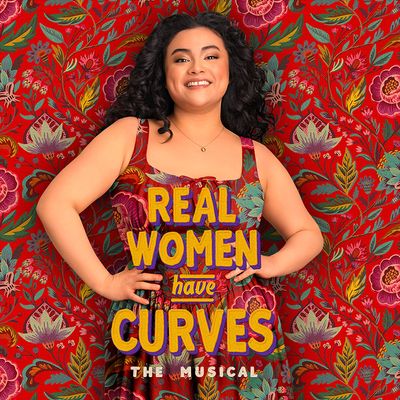
Behind the Awards was thrilled to participate in BroadwayCon 10 and have Producer Jack Noseworthy & Composer and Lyricist Benjamin Valez on their live panel to discuss the new musical Real Women Have Curves... Read More
From the show: Behind the Awards with Eila Mell & Bruce Gotlieb
Guests

Featured Shows
About
Behind the Awards was thrilled to participate in BroadwayCon 10 and have Producer Jack Noseworthy & Composer and Lyricist Benjamin Valez on their live panel to discuss the new musical Real Women Have Curves.
Jack Noseworthy is the co-founder of Truworthy Productions along with Tony and Olivier Award-winning Director/Choreographer Sergio Trujillo. His producing career has been bolstered by 33 years as a stage and screen actor. Jack was honored to make his Broadway debut in Jerome Robbins’ Broadway, which was followed by Cats, A Chorus Line, Sweet Smell of Success, and the original Toronto company of the international hit, Come From Away.
Benjamin Velez is a composer/lyricist born and raised in Miami, FL. A winner of the Fred Ebb Award, Jonathan Larson Grant, Stephen Schwartz Award, and the Kleban Award, his original musicals include BORDERLINE, which opened the 2019 O'Neill MT Conference. Other credits include KISS MY AZTEC, written with John Leguizamo (Berkeley Rep, La Jolla Playhouse, Hartford Stage), a Public Works musical of THE TEMPEST (The Delacorte Theater), and REAL WOMEN HAVE CURVES (ART, and in April, Broadway!).
Make sure to check out Eila's book, "The Tony Awards", and all her other amazing books: https://amzn.to/43WMu5Y.
Connect with Eila and Bruce:
- Instagram @behind_the_awards
- Eila @eilamell
- Bruce @cominghomewithbruce
Transcript
This transcript was automatically generated and might contain errors.
[0:00] Bruce Gotlieb: Hi, this is Bruce with Behind the Awards.
[0:02] Bruce Gotlieb: We are thrilled to bring you a special episode this week.
[0:05] Bruce Gotlieb: It is our live BroadwayCon 2025 episode.
[0:09] Bruce Gotlieb: Our panel gives you early access to the new musical Real Women Have Curves with producer Jack Noseworthy and composer and lyricist Benjamin Valez.
[0:18] Bruce Gotlieb: Enjoy the episode.
[0:27] Bruce Gotlieb: Hello and welcome to a very special episode of Behind the Awards.
[0:33] Bruce Gotlieb: We are live at BroadwayCon 2025.
[0:36] Bruce Gotlieb: Being in our audience today, you're part of a live recording of the podcast, so feel free to laugh, applaud, react along with us.
[0:44] Bruce Gotlieb: Make sure you're also following us Broadway Podcast Network, Behind the Awards as well.
[0:51] Bruce Gotlieb: For the latest updates on what we're up to at BroadwayCon, and we are going to get started because we know you guys have chock full of stuff to do today.
[0:57] Bruce Gotlieb: I am Bruce, this is Eila, and we are Behind the Awards for those of you that aren't familiar with our podcast.
[1:06] Bruce Gotlieb: We are so excited to be here at BroadwayCon, but even more excited to be sitting here with Jack Noseworthy and Benjamin Valez of Real Women Have Curves.
[1:21] Bruce Gotlieb: So guys, this show is coming soon.
[1:24] Jack Noseworthy: It is.
[1:25] Benjamin Valez: Yes.
[1:26] Jack Noseworthy: We start rehearsals next week.
[1:28] Benjamin Valez: We start next week.
[1:29] Jack Noseworthy: Um and we will begin previews on April 1st at the James Earl Jones, the historic and beautifully renovated James Earl Jones with opening night on April 27th.
[1:42] Bruce Gotlieb: Now, the most important question: can people buy tickets yet?
[1:45] Jack Noseworthy: People can buy tickets right now.
[1:48] Bruce Gotlieb: Oh my gosh.
[1:50] Jack Noseworthy: You can go to RealWomenCurves.com or you can even go to our Instagram account, which is R W H H C.
[2:00] Jack Noseworthy: Thank you.
[2:01] Jack Noseworthy: RWHC musical on Instagram, and there's a link to buy tickets.
[2:05] Jack Noseworthy: But yes, absolutely, please buy your tickets.
[2:07] Jack Noseworthy: We're very excited, especially for those early previews, because you'll see what will be happening in that performance, and then if you come back for a later preview, you might find that something has changed.
[2:19] Jack Noseworthy: And it's really exciting to sort of see the progress of the show and how uh Benjamin and Joy are writing and working on music, and then you know how Sergio is directing and changing scenes, and what um Nell Benjamin and Lisa Loomer are book writers who've adapted Josefina Lopez's book, uh, excuse me, play, um, and hit HBO movie.
[2:41] Jack Noseworthy: Um, you'll see how it'll change and how it evolves.
[2:44] Jack Noseworthy: And um, it's it's really exciting.
[2:45] Jack Noseworthy: Those first few previews are just like the energy on Broadway.
[2:49] Benjamin Valez: It's just like there's nothing like it, right?
[2:51] Jack Noseworthy: You know, um it's gonna be my first time.
[2:54] Jack Noseworthy: I'm terrified.
[2:55] Jack Noseworthy: It's also this is a very, I don't know how what's traditionally the the preview window, but it feels like it's a it's a pretty long preview period, so I'm scared of how many changes that we'll we'll be trying, but it's exciting because you're you're never gonna have that experience to have that audience and and and try things out that way.
[3:11] Benjamin Valez: Yeah, no, it it it really is, and we'll be gentle when you pen, I promise for your first time.
[3:16] Jack Noseworthy: I also just want to add that when we when I found out that we were in the James Earl Jones, I was so happy because I'm I'm someone that has a I always get anxious about the lines for the bathroom.
[3:25] Jack Noseworthy: The fact that that's one of the renovated theaters and has lots of bathrooms, I'm so happy.
[3:31] Jack Noseworthy: There's bathrooms on every floor, it's very accessible.
[3:34] Jack Noseworthy: Um that's important.
[3:36] Jack Noseworthy: I have a friend Rory, and he was never happier than when he went to see Bmort Chill because there was a bathroom in the balcony right next to where he was sitting, and he was so thrilled.
[3:46] Jack Noseworthy: He still talks about it.
[3:47] Jack Noseworthy: For those of us small bladder people, it's a problem.
[3:51] Jack Noseworthy: Not at this show, not at this show.
[3:53] Bruce Gotlieb: So, Jack, how did you what what made you uh latch onto this this project?
[3:58] Jack Noseworthy: What made you say, okay, I have to produce this show.
[4:01] Jack Noseworthy: Yeah, thank you for asking.
[4:02] Jack Noseworthy: Um so um I started my company uh called True Worthy Productions with Sergio Trujillo, who's also my husband, um, and we wanted to produce works that were commercially viable but socially relevant.
[4:18] Jack Noseworthy: Um we're both from the commercial theater, um, and and in our TV and film work, both as performers and producers, we really work in um in in you know the commercial world, right?
[4:29] Jack Noseworthy: Um I'd made a couple of independent movies, but mostly I'd done studio movies and television shows.
[4:34] Jack Noseworthy: Sergio's done 15 Broadway shows.
[4:37] Jack Noseworthy: We you know, we danced together, we work together, all in the reign of commercials.
[4:42] Jack Noseworthy: So this idea, but we but we also have a passion for giving back to the community and wanting to represent stories for disenfranchised communities, tell stories of people who we are, right?
[4:53] Jack Noseworthy: Um I'm part of the LGBTQ plus community, obviously, so is Sergio.
[4:57] Jack Noseworthy: Um he's uh a Latin person.
[4:59] Jack Noseworthy: Um, you know, women have been very influential in our lives.
[5:03] Jack Noseworthy: And so I we've done a couple of other things.
[5:06] Jack Noseworthy: We produced a show at the ART called Arabal that uh Gustavo Santalai and John Wideman wrote that I produced that and Sergio directed and choreographed it.
[5:14] Jack Noseworthy: And um, and then when Sergio won his Tony Award for Ain't Too Proud, which was a really exciting moment, um, he spoke so passionately in English and Spanish about wanting to give voice to his community.
[5:29] Jack Noseworthy: And at the time, I was producing, but I was also in the show Come From Away.
[5:34] Jack Noseworthy: So I was doing Come From Away in Toronto, and I was at the gym and I was on the treadmill, and the movie Real Women Have Curves came on the treadmill when I was at when I was at the gym.
[5:42] Jack Noseworthy: I was like, oh my god, I really love this movie.
[5:44] Jack Noseworthy: I remember loving it.
[5:45] Jack Noseworthy: And then I was like, wow, I really like this movie.
[5:49] Jack Noseworthy: Um and so I went home and I did a little bit of research and I discovered that it was a play for us.
[5:53] Jack Noseworthy: I didn't know that.
[5:55] Jack Noseworthy: Um and I and I read the play, and I fell in love with the play.
[6:00] Jack Noseworthy: Um because the play is so funny.
[6:03] Jack Noseworthy: And there it's five women in the factory, and they are managing life's issues um with humor.
[6:12] Jack Noseworthy: And I just thought this is magical.
[6:14] Jack Noseworthy: And to me, what the movie had, and and it was a hit movie and created uh America Ferrera became a star, and then the play brought this gravitas story to it, so the two together to me were a perfect opportunity.
[6:27] Jack Noseworthy: And also I felt like, and I hope Ben agrees, I think he will, um, that the characters just were begging to sing, right?
[6:34] Jack Noseworthy: Which is kind of at the core of why you want to adapt something into a musical that's when it's uh you know it's existing IP, is like what would make them sing.
[6:42] Jack Noseworthy: Um so I we did all that, and and and um I felt like it was in the mission of what our company True Worthy Productions does, which is again um something that has commercial viability but that also has social significance.
[6:56] Bruce Gotlieb: Um Ben, do you want to talk about the songs and this how you made them sing?
[7:00] Benjamin Valez: Sure.
[7:03] Benjamin Valez: Um I mean, should we talk a little bit about the story?
[7:06] Benjamin Valez: Because I don't know how much.
[7:08] Bruce Gotlieb: Absolutely.
[7:08] Benjamin Valez: Yeah, and I think also the you know, being the current climate that we're in, it is even more like it's even more relevant now than it was, it was relevant then, but even more relevant.
[7:21] Benjamin Valez: It's become much more important.
[7:22] Benjamin Valez: Yeah, I mean, the show is set in Los Angeles in 1987 at a garment factory where the women who work there, they're illegal immigrants from different South American countries, and they all they've all come to the states for different reasons, but many of them have been there a long time.
[7:38] Benjamin Valez: And um and Anna, our main character, her family runs the factory.
[7:42] Benjamin Valez: She's the only citizen in her family, and um she has always had these preconceived notions, maybe about why the other women work there, who they are.
[7:52] Benjamin Valez: Um it's the summer after she graduates high school, and they need her help at the factory because they've just gotten their biggest order yet that could change the course of the factory's trajectory.
[8:00] Benjamin Valez: Um they kind of rely on her as the only citizen to be the face of the business.
[8:04] Benjamin Valez: And so she has this pressure to be there for everybody, but she secretly applied to college.
[8:09] Benjamin Valez: She's really she's brilliant and she got in, but she hasn't told her family.
[8:13] Benjamin Valez: And so she's weighing the whole show whether she can actually go pursue this dream for herself uh at the expense of them needing her to keep running the factory.
[8:24] Benjamin Valez: And she also kind of just learns so much about who these women are, why they work there, and the world of that is was just so exciting to to dig into because I think obviously there's so much relevance to today, and and so when we approached how to write songs for it, we wanted to be in conversation with both the present and 1987.
[8:44] Benjamin Valez: We didn't want it to feel like a time capsule show where we're just like 80s jams, and um but if you can imagine, I mean, people who work in a factory, it's not eight hours a day, it's probably a lot more than that, and it's it's hot.
[8:57] Benjamin Valez: They they have the radio playing all the time.
[8:59] Benjamin Valez: There's the percussiveness of the machines of the fan uh because there's no AC and it's Los Angeles in the summer.
[9:05] Benjamin Valez: Um there's just so much sound to try to use inspiration from of how to build into songs, and we had a lot of fun.
[9:11] Benjamin Valez: Like I love uh as a composer trying to create a new sound for for the world of a story using a fusion of other genres.
[9:21] Benjamin Valez: So, like we pulled music uh inspiration from what might have been playing on on the radio in in 1987.
[9:27] Benjamin Valez: Um obviously what we hear as a as a modern sound now, um, where what music the characters maybe grew up listening to where where they came from.
[9:36] Benjamin Valez: Carmen, our one of our protagonists, she had a dream that she wanted to be a mariachi singer, and she didn't get to do that, but she brings that with her wherever she goes, so there's a flair to her, and so all these characters they had different relationships with different styles of music that we tried to fuse into the score, but give each character the kind of their own sound in a way, and it all comes together in is just really fun ways.
[10:01] Benjamin Valez: We had so much fun.
[10:02] Bruce Gotlieb: Um, how close does the story follow the movie?
[10:07] Benjamin Valez: Ah, so so it really is a true adaptation.
[10:10] Benjamin Valez: So, you know, we the play again, the play brought the gravitas of the undocumented worker, and the movie sort of brought this independent feel and like quirky, interesting film.
[10:20] Benjamin Valez: Um they um the movie has a love interest, the play doesn't have a love interest.
[10:25] Benjamin Valez: We added a character to the film called Itzel, excuse me, to our production called Itzel, um, who be who befriends Anna, and that character um has some experiences that help drive the story forward.
[10:37] Benjamin Valez: So um it I I I really describe it as an absolute adaptation, right?
[10:43] Benjamin Valez: We are not putting the movie on stage.
[10:45] Benjamin Valez: We're not just putting the play on stage.
[10:47] Benjamin Valez: We have taken these characters, taking these storylines and made it our own thing so that it is a musical.
[10:54] Benjamin Valez: It'll be a new experience.
[10:56] Benjamin Valez: People will, for anyone that's a fan of the movie, which was kind of like this little sleeper indie hit, they will they'll get the you know what they got from the film, which is really the mother-daughter relationship, um and the camaraderie of the women, right?
[11:11] Benjamin Valez: The women in the factory, which really is at the center of our story is the women in the factory, which is it is in the movie as well, and how Anna, our our protagonist, she sort of doesn't want to be like them.
[11:23] Benjamin Valez: She doesn't want to be like her mother, she doesn't want to be like the women in the factory.
[11:26] Benjamin Valez: And what she realizes is that she really, you know, she would never be who she is without them, and ultimately she's standing on the shoulders of all the women that came before her.
[11:34] Benjamin Valez: There's a really beautiful moment in the show by Ben and Joy Huerta from Jesse and Joy, who's Ben's uh co-composer.
[11:42] Benjamin Valez: Um it's one of my favorite moments in the show, and and um, and the the Anna, who's had all these struggles with her mother, and you know, like many stories that we see now, um, mothers and daughters and women and children and how they sort of manage their lives to become their own person, um, can be challenging and interesting, and we can relate to it.
[12:06] Benjamin Valez: Like I, for some reason, I really I related to this little brown girl arguing with her mother as a as a white gay man, you know, a cisgendered gay man, right?
[12:14] Benjamin Valez: Um I thought, oh, I see myself and this little brown girl from California.
[12:18] Benjamin Valez: Anyway, there's a beautiful moment in the show that these guys have done so beautifully written, is that um she at the end of the show, the mother her mother, Carmen, does not want her to go to college.
[12:28] Benjamin Valez: She does not approve of her going.
[12:31] Benjamin Valez: And I think it's it has a lot to do with not only losing her daughter to how she was helping the business, but also there's this odd thing where she she wants her to achieve her dreams, but she's also a little jealous that it's not her.
[12:47] Benjamin Valez: So it's a really interesting storyline.
[12:50] Benjamin Valez: And and um Anna turns to her at this one particular moment in the show and she says, I got it wrong.
[12:57] Benjamin Valez: You're the hero of my story.
[12:59] Benjamin Valez: And the and Carmen puts a scarf over her that she's been building from all the scraps of the story.
[13:05] Benjamin Valez: Hey, spoiler Richardson.
[13:08] Benjamin Valez: But it's a beautiful moment, I'm sorry.
[13:10] Benjamin Valez: And she says, I mean, it's gorgeous.
[13:12] Benjamin Valez: You're gonna see the show.
[13:13] Benjamin Valez: It's amazing.
[13:14] Benjamin Valez: Because and and and the mother, and you're just like, oh my god, because if you've if I'm a parent, and for anyone that is a uh, you know, that you know you have parents or you are a parent or your child, you just look at that moment and think, oh my god, it was so beautiful, and there isn't a dry eye in the house.
[13:38] Benjamin Valez: It's uh it's my favorite song of the show, and it's tough because we can't do it in any of the promo material because it's the end. But it's it's a beautiful moment, and that's that's a big difference from the film because the film she doesn't get to reconcile with her mother.
[13:50] Jack Noseworthy: I was gonna say that's such an unsatisfying part of the movie that the mother never comes out to say goodbye to her.
[13:56] Benjamin Valez: Well, and and when we went through the process of adaptation, what do we use, what we don't use? I mean, what the story is unique in that it's it's a slice of life story. It's not like uh this happens, this happens, this happens. There's not like constant action driving it, like other kinds of stories. But in a musical, you need reason for people to sing, so it's not just like I'm feeling this now, I'm feeling this now. It you have to find ways to activate them. And so that's a lot of the changes that we've made were to try to make the songs feel earned and exciting and and also varied because you don't want to have a score that's all people thinking about things exactly, be so boring.
[14:34] Jack Noseworthy: Well, I'm still a little mad at the mother. First of all, in the movie, she was not nice to her daughter. She gave her a really hard time, plus she killed Selena.
[14:42] Benjamin Valez: So I'm Luke, the actress Lupe, yeah, she did, right? So, but you have Justina. When I first got hired, um my mom watched the movie and she's like, I don't like the mother. But and that's that's something we we talked about a lot. Um, like how because I think there are there are a lot of immigrant stories where the parents are encouraging the kids to go and overachieve, and this is this is different. And so, how do you make an audience understand why she would be so hesitant to let her daughter go? And and that's why we we really tried to lean into the whole Anna is the piece that holds the business together. Right. So there's obviously the psychological things about the jealousy and not wanting to let go and being scared of what might happen to her daughter there, but also like Anna is a really important piece. So that was a tough puzzle piece, and I think we cracked it, but it it was a challenge to make that feel like what this why is this mother so not letting her daughter fly?
[15:40] Jack Noseworthy: Right. Well, yeah, for so many reasons though.
[15:42] Benjamin Valez: Yeah.
[15:43] Jack Noseworthy: Um, and also probably just a lack of control and and being afraid to let her free into the world, you know, as parents. I guess it it is a scary thought.
[15:52] Benjamin Valez: Yeah, we all have moms like that.
[15:54] Jack Noseworthy: Yeah. When did had you been familiar with the movie or the play prior to signing on to work?
[16:00] Benjamin Valez: I had it. I had it. But um I'm from Miami, and um my dad's Colombian. He didn't come illegally, but I knew a lot of kids in school whose parents were not documented, and they were brilliant. And I I was in school with them, I had no clue until maybe when it was time for us applying to colleges, and they just had way fewer options at the time, and it was really heartbreaking. And so I knew a lot of people like Anna, and that and that was one of my ways in. Um just because it they didn't do anything to not to deserve not getting those opportunities. Their whole lives they've been working hard, and and um I think I mean it's nice that Anna doesn't have that's not a reason why she can't pursue that, but it for for a lot of people that that is, and um that there's just a ceiling when when you don't have papers, and um it was it's a really complicated thing.
[16:53] Jack Noseworthy: And so I just I'm sorry.
[16:55] Benjamin Valez: Well, no, I was just gonna say, like, one of the beauty be the beauties of this piece is I think everyone in the country right now has maybe some preconceived notion of who these people are and why they come um without papers, and uh and our story gives those people characters, like they're not just a group, they're these are all individuals, and we're learning about them, and they all came for different reasons, and they're not what you think.
[17:17] Jack Noseworthy: Yeah. And I and and so um Sergio, uh our director choreographer, um, his story is very relevant, and one of the other reasons why this material was perfect and why I wanted to option it and create it for us is that um so he came to America as an undocumented person. And um, when Sergio and I first met, we were doing a show together called Jerome Robbins Broadway. I was in the original cast, he was a replacement. Um and I played Baby John and he played Chino.
[17:51] Benjamin Valez: Um so but when he came to America, he was performing on Broadway with a uh, you know, as an undocumented worker. And so when he would get called down to get the hem fixed on his pants or the shoe, the rubberized shoes, or the stage manager would call you down. It was called the cage, actually, strangely enough, the cage was downstairs where the stage manager was. And every time Sergio got called down to the stage manager's office, he thought that somebody was coming to take him away. Every single time. So this guy, all he wanted to do his whole life was be in a Broadway show. He's now in a Broadway show, and every time he hears his name called, at every second from someone in management, his first thought is I'm gonna get deported.
So eventually he got sponsored by Debbie Allen and Paula Abdul and Michael Jackson, and he you know got his, he went through the process of getting his green card and and and and which is uh a bit of a storyline in our show as well. One of our characters, we realized that it's Amnesty, and one of our characters actually goes down to City Hall, and she said, They didn't they didn't arrest me, I got my papers. And so um the same thing happened with Sergio, and um, and so he's really driving that story, understanding how someone has a dream and can make that dream come true. If you just, you know, you just you just have to work the system appropriately so that you can make it happen for yourself. And so there's a lot of there really is a lot of American dream in this story, and I think that's why it's relatable to so many different people.
[19:24] Jack Noseworthy: And Sergio was going to be with us today, but can you tell us why?
[19:29] Benjamin Valez: Sure, yeah, we's sure shooting the commercial today, right now. So they're in hair and makeup right now.
[19:35] Jack Noseworthy: So Sergio's down there, so um.
[19:37] Benjamin Valez: But we're so happy to have Ben with us.
[19:39] Jack Noseworthy: They got me instead.
[19:41] Benjamin Valez: Which is great because you can speak for Sergio as well.
[19:44] Jack Noseworthy: And myself.
[19:45] Benjamin Valez: And we have Ben, right?
[19:46] Jack Noseworthy: That's right.
[19:47] Benjamin Valez: So we have him here.
[19:49] Jack Noseworthy: Yeah, that's it.
[19:50] Benjamin Valez: In spirit.
[19:51] Jack Noseworthy: Yeah. Um how long has this been in production?
[19:54] Benjamin Valez: Not production, but you know, since inception to now.
[19:57] Jack Noseworthy: Um I I optioned it in 2019. And then uh very quickly, um we um uh well, I went to Josefina Lopez and she she tells a very funny story. Uh I'll tell that in a second. Um, but I went to uh Josefina, we optioned the story, and then um I'd always heard uh I was listening to Latin uh pop music, and um and I'd always I I've been listening to like podcasts and Latin music and Latin music and and the and I the I heard this uh voice, there was one voice that I really liked, and it happened to be this woman, Joey Huerta. Um, and and for for whatever reason I hadn't heard her sing in English, but she sounded like Karen Carpenter to me when she sings. That was the reference for me. Um and there was something very similar to Karen Carpenter, and then of course to like um um uh Carol King and then Sarah Borellis, right?
And this idea of this female voice that could tell stories, and then I heard this song called Ecos de Amor, which is Echoes of Love, and I heard her singing in English, and I was like, wait, that girl can sing in English too. Um and so well um I was really interested in meeting her, so I I set a meeting, and Sergio and I flew to Mexico City to meet with Joy, and we spoke to her about you know wanting to do this. She said, I've never written a Broadway musical. And then I didn't know if this meeting was gonna last five minutes or 50 minutes or whatever. We sat there for five hours, and she finally said, Well, I you've convinced me that I can write a musical. She said, but I kind of don't want to do it by myself. And we're like, it's okay, all right, we're gonna we're gonna make that happen for you.
[21:40] Jack Noseworthy: And so um I had um I had uh produced events during the the uh during the pandemic, I was a co-producer and the the the um the nonprofit partner on a particular event called Viva Broadway in Viva Broadway. There was a number called um called White People on Boats from a show called Kiss My Ass Tech. And um by John Luegazamo, written by Benjamin Valez, Benjamin Valez, excuse me, and I'd heard that and I'd heard that song, and I saw that, and I was like, I think this guy would be a really wonderful person to meet Joy, and Sergio had known you as well, and so they met, they had a happy musical marriage and relationship together. I mean, we basically confessed our love at the first meeting. And and um and we're like and off we went, and then the pandemic happened.
[22:32] Benjamin Valez: So and we wrote over the pandemic and continued to work, and Lisa Loomer has adapted the book, um, um, and also Nell Benjamin is uh adapting the book of Lisa Loomer, and so the four of them worked, and so from 2019 when we adapt uh, excuse me, when I optioned it, and then um through now, so it's been, I think when we when we start rehearsals, it'll be a period of five years, which is very very fast.
[22:59] Jack Noseworthy: Yeah.
[22:59] Benjamin Valez: Yeah, you normally hear like 10 plus years to get something going.
[23:03] Jack Noseworthy: So and we did our developmental theater production at the ART in Boston, um, which is a place we'd all worked for before. Um, my partners are uh our are Namco, Barry Weissler, Fran Weissler, and Alicia Parker are my partners on this show, and so some good partners.
[23:19] Benjamin Valez: They're very good partners.
[23:21] Jack Noseworthy: Um, and um, and so we're we've all really been been working towards this this big moment, and um yeah, so that's how long. So, Ben, what was the process like working with Joy?
[23:33] Benjamin Valez: So, Joy lives in Mexico City, I live here. We wrote all of our music for the first draft on Zoom, yeah. Um, which you would think would be really difficult. But the nice thing is um when you both write music and lyrics, if you're in the same room, you can't really mute each other, but on Zoom you can. So we would be talking about a song, we'd be like, we'd each be like, um, give me a second, and then we'd mute each other. She plays guitar, I play piano, we would each play around. Technology really helped us because we could send each other voice memos, and it was just a real mind meld of ideas. Like we come from such different musical backgrounds, but we thankfully our tastes aligned because it's it's you never know when you start a new collaboration if you're gonna have the same kind of if you're gonna like the same things, and and when you're you collaborate, you have to agree at some point.
[24:28] Jack Noseworthy: Yeah, right.
[24:28] Benjamin Valez: Um, and it just it was so easy from the get-go. Um Joy's half American, so she's fluent in English, and even though her her pop oeuvre is in Spanish, um she was a wonderful lyricist too, and and and it just really felt natural. And we had a lot of those conversations at the beginning, like, what is the world of this? How do we bring in elements of Joy's sound with also being true to these characters and nodding to the time place, and um we wanted it to feel both contemporary but also like really grounded and earthy in a way. Like these women in the factory, like there's something just real about it.
[25:08] Jack Noseworthy: No pun intended with the title, but like it it's uh they are not pretending to be anybody else other than who they are, and we wanted the sound to feel authentic to that.
[25:17] Benjamin Valez: Um so yeah, it was we also this is a comedy, like there's drama in it, and it's really heart-wrenching at moments, but it has to be so fun. So we we had a lot of fun finding the the rhythms of it.
[25:28] Jack Noseworthy: Um when you're working all day, you have to find ways to keep your spirits up.
[25:37] Benjamin Valez: So that's exactly what Josefina Lopez said to me. Excuse me for interrupting. But she said, um she said, so I've seen versions of my play, she threw out some crazy numbers, like 60 productions of my play um around the country. And it's been done even more than that. It's quite a popular play in regional theaters and high schools, it's done all over the place. And they often have Josefina go see the play, right? They bring the author in. And she said, um, she said, I can tell in the first three minutes if the director thought of this as a comedy or a drama. And she said, Jack, I wrote a comedy. It's supposed to be funny. You know, so even though the women in the factory are having issues, or Anna's having struggles with her mother, they deal with it through humor.
[26:25] Jack Noseworthy: And what these guys have done so beautifully is they've really stayed true to Josephina's uh you know wish in that you know it's funny. I I remember um the we had been in rehearsals and then we were uh we went to that for had the first preview at the ART and the audience was laughing, and we've just been living with the material for so long, you you realize oh it's a joke, but you you you don't necessarily laugh, right? Because you've just been reading it and looking at it and watching it and rehearsal and you forget. But that first audience at the ART when they were laughing, it was so refreshing to be reminded, and it also that first performance, and then as we continue to grow in the ART, which was only four previews, I think. Much different than what we have now.
[27:13] Benjamin Valez: And we put a new song in too.
[27:15] Jack Noseworthy: We did, we did, you're right.
[27:18] Benjamin Valez: Um, but the actors were suddenly they were getting to know and understand the show and the rhythm of the show, and that oh, oh, this is the show we're in. Like, like we were all discovering it together, which we continue to do. But um, but that it's this, you know, musical theater is the most collaborative art form in the whole entire world, and at every level, you know, everyone is communicating, I mean collaborating to make sure that we understand the artistic ambitions so that, you know, the audience has the experience that we hope they will have.
[27:51] Jack Noseworthy: Yeah. Was there ever a point where you had considered Josefina writing the book?
[27:58] Benjamin Valez: Um, not for any other reason than um, I think we felt like it was important to have someone else adapt the material. Um, in this particular instance, you know, Josefina knew Lisa Loomer, the person that we hired, uh, that we brought on to adapt the book, and so she definitely had approval over that. Um, and then of course Nell Benjamin. Um, but we hadn't really considered Josefina writing the book. She um, she definitely gets versions of the scripts. Josefina has um, uh lots of thoughts and um, uh and very positive opinions. It is her, to Josefina, this is the every wish has come true to see this show be turned into a musical and to have it go to Broadway. It is her, it has been her life's mission.
So she was more than willing to say, here's the material, you guys are the pros, you go make it happen. And she's quite available and often has some really interesting anecdotes and um really authentic ways of looking at things that are very valuable to the success of the show. She's been so sweet and generous. Like she came to the first reading that we did, and I had lunch with her after, and she was full of ideas of like this needs to be funnier. This, but it was all helpful because she's lived in this world more than any of us.
[29:18] Jack Noseworthy: Right, it's her world.
[29:20] Benjamin Valez: Yeah, right. Yeah. And the other piece, the other equation, I think, to this show. So not only what you've talked about, but also, you know, just the title alone, Real Women Have Curves. I think people are excited that you're the people that you're seeing on stage are people that look like people in their lives or maybe themselves, so they get to see a reflection um whether or not they have aspirations to be performers, but it's important to do things and tell stories about people that look like everybody.
[29:51] Jack Noseworthy: Yeah, I mean, that was, that's again, I'll go back to our mission, right? Really, like that Sergio and I really telling stories about disenfranchised communities, right? And so it's not only um, you know, uh these wonderfully, incredibly generous and kind brown women, but also the plus-size community is getting represented in a way that perhaps they haven't been before.
[30:19] Benjamin Valez: Right, body positivity and image positivity is something that is more getting more of the spotlight now than it had been.
[30:27] Jack Noseworthy: Yeah, and everyone is all shapes and sizes, and um, and you know, it's really beautiful to see. There's um, there's a, there's a, there's so many great moments in the show, but there's certainly there's one particular moment where all the women are upstage and then they—did you see it in Boston?
[30:35] Benjamin Valez: No.
[30:35] Jack Noseworthy: Where all the women are upstage and they're singing—I'm not gonna get— I won't. He's, I can feel Ben, like he's gonna move this away. But I will say that there's this incredibly magical moment in the show when all the women finally come together as a community, and Sergio has them rush downstage in this one particular moment, and the audience goes wild. And we often got um, um mid-show standing ovations for that number at Boston.
[31:15] Benjamin Valez: All right, buying my tickets right now.
[31:16] Jack Noseworthy: It was very, it was now you've like, I'm afraid to give a spoiler, but um, but it's a really special moment in the show. Does it parallel that moment in the movie where this—in the correct, okay?
[31:26] Benjamin Valez: Yeah, but in song, yeah.
[31:28] Jack Noseworthy: Okay, amazing. But also the way we deal with these themes, I feel like it's just organic to the world. It doesn't feel like we're trying to be heavy-handed with it. Everyone's family and mother has had comments about their weight at some point. It's like we don't try to make it like a this is what this is about, like it's just an aspect of it, and we also try to engage with the idea of curves as a metaphor too.
[31:51] Benjamin Valez: Yeah.
[31:52] Jack Noseworthy: Right. Well, I mean, it's something that so many of us think about every single day and struggle with, myself included. You know, every single day. It's I'm worried about this in my way. It's so ridiculous too, because it really means nothing. But you know, it's definitely something that we feel pressure about as women.
[32:10] Benjamin Valez: Yeah.
[32:11] Jack Noseworthy: Um, but it's not only women that feel it.
[32:14] Benjamin Valez: Yeah, I mean, absolutely not. You know, I mean, certainly having been an actor for so long, I was very conscious about, you know, how I looked or how I didn't look, or if I was in shape or not in shape, or you know, and I, you know, and but uh so it's not unique just to women or—and someone you may perceive is uh, you know, I don't know, perfect, right? Like tall or whatever image of you think perfection is, that person may not feel that they represent that, right? So they have it too. So, you know, it's um, it it's definitely relatable, right? Just and feeling like an outsider, right? You know, we all, we all have a s—we all don't necessarily feel like we fit in. And so that's also interesting too because it's a group of people that perhaps don't fit in. Um, and then um, and yet what I find also this sort of parallel story is that it's women that are—are women or people in general that are—that don't want to be seen, but are dying to be seen.
[33:20] Jack Noseworthy: Yeah, you know, they want to be seen. That's one of my favorite parts because Anna's sister, Estella is a fashion designer, and at the start of the show, her factory, they're really just doing like Insignera dresses and right, it's a family business, right? Yeah, things that are not exciting to her, but she dreams of being a fashion designer. And there's reveals in the show where we get to see the things that she has designed for herself and people with that look like her, and it's just when something's designed for you to look good, anyone can look good if it's designed for you.
[33:50] Benjamin Valez: Right.
[33:51] Jack Noseworthy: Sure. And it's just magical, like what clothes can do. Who's doing your costumes?
[33:56] Benjamin Valez: Uh, Paloma Young and Wilburith uh Gonzalez.
[34:00] Jack Noseworthy: Gonzalez, thank you. Yeah. Excellent. Paloma won a Tony for um, uh, Anne Juliet, and also uh, what's the play where they take everything out of the box? The crazy play about Peter Pan.
[34:14] Benjamin Valez: Do you remember?
[34:15] Jack Noseworthy: Uh, Peter and the Starcatcher.
[34:16] Benjamin Valez: Peter Starcatcher.
[34:17] Jack Noseworthy: Yeah, yeah, thank you so much. Yeah, she won a Tony for that. And then so the team and Natasha Katz, who I think has been nominated for more Tony Awards than anybody in the history of the Tony Awards.
[34:25] Benjamin Valez: And he won them.
[34:26] Jack Noseworthy: Yes, yes. She wins almost every year. And then John Shivers is our Tony-winning sound designer. And then, of course, Sergio Trujillo is our Tony and Olivier Award-winning director choreographer. Um, and our set is by Arnolfo Malerado, who has four shows on Broadway this season.
[34:41] Benjamin Valez: She's so busy.
[34:42] Jack Noseworthy: I can't believe that. Wow, wow, wow. Four shows on Broadway this season. She did Home this past season. It was the first show, it was beautiful. And he's, yeah, four, and he's a Tony nominee uh as well. So it's a pretty stellar team of people.
[34:55] Benjamin Valez: Absolutely. Is this Sergio's first time directing on Broadway?
[34:58] Jack Noseworthy: It is his first time directing and choreographing on Broadway.
[35:01] Benjamin Valez: Yeah, amazing. I mean, obviously, he's a very established choreographer on Broadway.
[35:05] Jack Noseworthy: Yeah. By the way, what did you guys learn about women during this show?
[35:10] Benjamin Valez: Hmm.
[35:11] Jack Noseworthy: A lot.
[35:12] Benjamin Valez: Yeah. I mean, it's obviously we are not the best representatives of this show to talk about that. But I don't know. There's been so much joy in the room when we engage with these subjects. There's a like a relief that finally, like, we want to be like all of our casts, they're just, I was telling you earlier, like, if you just get them in a room and and don't tell them what to say, and it's just unscripted and they're just with each other. I mean, the energy is infectious. You can tell how much they enjoy getting to ping pong off each other. Um, and they just lift each other up. And uh it doesn't mean the whole thing is always easy, but it seeing them work through the material and some of it's challenging, but um, it's there's a catharsis for them.
I think that they're just so proud to be holding the mantle of this story. Um and like obviously, like this is not the first show about women, but like the way that it puts these women on a pedestal is just is so refreshing and beautiful, and I think that they are just excited to get that opportunity to tell the story. It's been really nice to be a witness in it. And I mean as a writer, I like not being in the spotlight. Like I like writing and then having other people bring it to life, and so one of the joys has been to create material that I know is gonna make people shine.
[36:40] Jack Noseworthy: Yeah, I just learned that men are completely inferior to women.
[36:45] Benjamin Valez: Well, we knew that.
[36:46] Jack Noseworthy: Oh my god. I was just, I bow down to you. You give birth. You are uh, you're—we just like I—you are way more evolved than we could ever imagine.
[36:58] Benjamin Valez: Um, does anybody have any questions out there?
[37:05] Audience Member: Yeah.
[37:05] Benjamin Valez: Yes.
[37:06] Audience Member: Just as loud as you can.
[37:09] Audience Member: Yeah, my question is where did, where do you find a lot of the cast? Because I know that one was in Brent and Cuba, which one is Mexican Florencia. And the other one that I think I know is Jennifer Sanchez, who's established. But how did you put all this together?
[37:34] Jack Noseworthy: So how did you get the cast together?
[37:36] Benjamin Valez: We'll share this. So we have two marvelous casting directors. Victor Vasquez, who has a company called X Casting. And it was incredibly important to me and my partners to represent the community properly in every way possible. You'll see our designers, our cast, our composers, our authors, everyone is representing the community in a very specific way that is giving voice to an authentic voice to the show. Victor, who was, uh, I don't want to say primarily, but had his finger on the pulse for the Latin community, Latina community for theater and casting. He does other things as well, but he certainly has that niche there. Um, and so we partnered, but Victor had never done a Broadway show yet, so we partnered him with um, Duncan, um, Stuart, and so the two of them together, who was a very experienced Broadway musical theater casting director.
So we put the two of them together and went on a massive international search for our cast. They put out on their websites and their Instagram, like to people to audition, and then they would go through all the tapes. Of course, Ben knows people that he's worked with before. I have people in my work life. Sergio did, you know, folks that were in the community that week that all came in. But we had a very, very extensive and long casting session, uh, sessions, period, where we looked for the right people to represent these characters authentically on stage. Jennifer Sanchez, as you mentioned, Jennifer's on 10 Broadway shows. She's our most experienced girl in terms of having Broadway shows in, but um, three-quarters of this company will be making their Broadway debut.
[39:35] Jack Noseworthy: Wow.
[39:35] Benjamin Valez: Which is very exciting.
[39:38] Jack Noseworthy: Yeah, yeah, thank you. But that's represent, you know, you know what this is. I can't see, I'm sorry. Can I step up just a little bit?
[39:44] Audience Member: You can, I just don't have my contacts in.
[39:47] Jack Noseworthy: I've been working with them for about 10 years.
[39:49] Audience Member: Oh, that Revolution Latina?
[39:50] Jack Noseworthy: Yeah.
[39:50] Audience Member: Oh, yeah, of course.
[39:53] Jack Noseworthy: Yeah, so Luis Salgata was also instrumental in helping us and suggesting people and really that's why this is so exciting. Yeah, Sergio's on the board of Revolution Latina. We are—that would so that it's like involved in On Your Feet, I know your host.
[40:05] Benjamin Valez: Oh, okay.
[40:06] Jack Noseworthy: So, but it's like that. It's like really understanding that this opportunity, you know, I—it's even hard for me to think that it's a unique opportunity because we've been doing it so long now, so it just feels so natural. But it is a very unique opportunity for this community of people to play principal roles in a Broadway show. But also, there haven't been that many Latin shows that have reached this level, so it's basically like On Your Feet, In the Heights, West Side Story. Yeah, and then there's been uh, outside of New York plenty of really wonderful original Latin shows, but very few make it to Broadway, and so there haven't been a lot of opportunities for the people that we were trying to find to get to shine and have those credits. Um, a lot of the people that we found were not New York-based.
[40:49] Jack Noseworthy: Uh, some were based in LA pursuing other kinds of careers, and it wasn't easy to cast this show, I will say. It took a lot of different rounds, and each time it's like we know that it's gonna be another heavy lift and cost more to do another search, but we had to because we wanted to make sure we found the right balance of people. Um, and I think we really found some incredible women.
[41:11] Benjamin Valez: Yeah, we have, it's really special. Uh, to Brett's point, um, so because the representation of Latin A shows on Broadway has been limited, um, that for this group of women, you know, unless you could play Maria in West Side Story or one of the roles in In the Heights, there wasn't really anything to give you a beacon of hope that you could actually do this for a living. So there's also the fact that In the Heights and On Your Feet are dance shows, and they tend to gravitate towards a certain body type, which this is not that. And so what we've realized now, and so when we were reaching out into the community, we knew, and we have taken on the responsibility and are willing to give opportunities to folks and help give them the tools so that they can establish themselves and learn and develop to be in a position to be carrying a Broadway show.
And I think what's going to happen now is with this show and the success of the show, the pool of people will suddenly become huge. Because now they'll be able to say, oh, folks will start to go to school and learn how to do this and learn, get the skills and develop the talent. And, you know, like they do when they see, you know, I used to like Bobby and Company was the role I always wanted to play. I never played it, but it was like I gotta learn, I gotta learn how to sing that song, you know. And so now we're giving these women the opportunity to think, I gotta learn to sing that song.
[42:54] Jack Noseworthy: And I'll tell a really quick story about our lovely girl Tatiana Cordova, who's playing Anna. She had auditioned for us over a year ago. And, um, she was a little green, she actually graduated from the same college that I went to, the Boston Conservatory. Um, and she came in and she gave a lovely audition, and we remembered her, but, you know, we hadn't found she hadn't wasn't quite there yet. Um, and that young woman, without anyone giving her any help or any assistance or anything, took the material, and she just decided on her own that she was gonna be in this show, and she worked on it and worked on it and worked on it. And then, and no one asked her to, it wasn't like casting said, hey, you're you could be an option.
She just did it, and she was so driven and so focused. And then when she came back a year later, we were like, oh my god, this girl has done a fantastic job. To be honest, I didn't remember seeing her. And it was such a difference, such a huge difference from that first audition. And it was just her own passion and her own desire. And that is what she's bringing to the show. It was magical. That day of auditions, we were like, we don't need to see anybody else. I mean, there were some very talented women there. Absolutely. But Tatiana just brought this spark that was like, "Yorana." And she had studied to be a ballet dancer, and tells the story you might have seen it on the Instagram post where she, and then when her body changed, she, you know, she was knew she wasn't gonna be a ballet dancer.
So Sergio was very, very smart in those auditions because, um, he made everyone dance first for the final callback, and he made her dance with the other most accomplished and best dancer. So the first thing we saw was this magical, you know, um, woman come up and dance, and she had to improvise, and we were like, oh my god, that girl's amazing! I hope she can sing, right? Like, and then, but Sergio knew she could sing because he'd already been seeing her, and sure enough, she just really nailed it. It was a very special moment.
[45:03] Audience Member: So any more questions?
[45:06] Audience Member: Yeah, I was gonna say I did see your show up Boston, and it was amazing.
[45:10] Jack Noseworthy: Thank you.
[45:11] Audience Member: I'm like, this is definitely coming up wrong way, but what changed? I mean, how, what's the process of change between starting off in a place like Boston and then bringing it to the big stage in Broadway?
[45:22] Benjamin Valez: Well, there's a lot, a lot of new songs. Um, I think that, I mean, we felt like the core of it worked, but we wanted to make sure we clarified some of the storytelling. Um, certain characters, like for example, Estella, Anna's sister, she had a song about a lobster in the Boston production that we, it was kind of like a relic from the play. Correct, it was a monologue from the play that we were honoring with the song, and it just didn't feel like it was establishing Estella as someone that you really want to root for, and she is one of our protagonists. So we took that opportunity to kind of re-jigger her character to really make her someone we're equally invested in. Um, because we realized after Boston, I think that show, the approach of that version was like this is the Anna story, and then I think we realized this is the story of Anna, Estella, and Carmen, and these three women in this family, and how they all have different perspectives on this, but together they're just brilliant.
[46:21] Jack Noseworthy: Yeah.
[46:21] Benjamin Valez: And so finding ways to strengthen the conflict between them, um, and have the catharsis at the end pay off more was a big focus of the retooling. Also, just tightening, and um, we learned a lot about what kinds of jokes worked. I think we learned that the camaraderie with the women is the richest part of the show, so like leaning into that more. Um, it's the mother-daughter story, really. That part of it really shined. And I and I'll say, um, so the difference is aside from how many new songs? Maybe four. Um, and then so we have um the tightening, we literally cut 25 minutes out of the show, which is unbelievable, because I don't think when I was watching the show in Boston, I ever felt like wow, the show is running long.
But what the authors have done is they have um, they’ve really turned the iris and focused on telling the story and um, and moving from one beat to the next so that everything has a reason and everything has a purpose, so that you're not leaning back.
[47:30] Jack Noseworthy: It was incredibly important to Sergio and us as the producers that that no one wants to lean back. You want the audience to lean in, right? Lean in and like what is gonna happen next and how do we do that? And a lot of that is sometimes just little internal cuts because some things are nice, but do they really make a difference, right? Like nice is a four-letter word. You know, um, you know, so yeah, so we made a lot of changes.
[47:57] Audience Member: Yes, in the back.
[47:59] Audience Member: Do you ever envision a full circle moment where America Ferrera would adapt to the screen and have a producer right now?
[48:08] Jack Noseworthy: Sure.
[48:12] Audience Member: She's so young in the movie. When you look back now, it's really baby and baby gap.
[48:18] Jack Noseworthy: I mean, she's brilliant, so I'd love her to do anything she wants.
[48:23] Audience Member: In the fun, yes. Um, how would you say the preview process has changed with the rise of out-of-town trials? For example, I mean, because you know, I could remember, you know, 10-15 years ago that you know, you know, producers said, okay, you know, we're bringing this to Broadway, and we have a very lengthy preview period. And a lot of things would change throughout previews because they had, you know, one of the have. But this was before a lot of stuff was out of town and then Broadway. So, uh, I'm just curious, you know, as to the way that you know the process changes with the way things are going, if that makes sense.
[49:06] Jack Noseworthy: So there's two out-of-towns. So you can do a commercial run, an out-of-town commercial run, it's say Chicago, right? Where you're actually you are part of like the Broadway and Chicago series, and you're doing your out-of-town tryout in a commercial run. Or you can do what I call a developmental theater production, which is also out of town, where you're working within a regional theater, pardon me, and you are developing your show within that, it's a, um, uh, you're working within that particular city, understanding what their audience is and learning from that audience. In, you know, this is, this experience for me has been not having to worry about selling tickets when you're at a regional theater company because they are providing you with their, um, you're part of their series, they're part of their program, um, their subscription series for the commercial producer is great.
So you partner with them and you work with them. When you're out of town with a commercial production, you're, you know, you're selling tickets is a big part of the, of the, even if you're part of Broadway and Chicago, you're still selling individual tickets. So I think expense and cost, and if you have an extensive out-of-town try-out period and how you're putting changes in, it just costs a lot of money. Um, and so whereas what you're trying, what we're trying to do here, what we're trying to do is with this particular show, um, is really be um fiscally responsible, right, in terms of producing a show, because I think when you're out of town and you're spending all that money, how is it helping?
How is it helping the show? And we felt like by being out of town in a regional theater, we were putting all our resources into actually working on and creating the show. Now, when you're out of town with a show, I've been out of town with a commercial production of a show that was not a hit on Broadway when it came to Broadway. Um, you're certainly not thinking that. You know, you're thinking you're working on the show and making it better, but the pressures of that commercial run are very different than the pressures of a non-profit theatrical development. Um, does that answer your question?
[51:24] Audience Member: Yes, it does. That's really interesting. Thank you.
[51:27] Jack Noseworthy: Yeah. So I mean, Broadway shows are expensive to produce, but you know, for the audience, they're also expensive to attend. Is there a way that this show, because it could reach so many people, is there a way that people can get tickets that are affordable?
[51:43] Benjamin Valez: Yeah, so certainly, um, there have been some exclusive offers for people, and um, codes have gone out and people for an exclusive offer for, uh, specific prices for the show. Um, we also are developing partnerships with, um, nonprofit organizations. There's also like TDF, and there's ways for folks to get to see the show. It is part of our mission to have the audience be, uh, be represented. Uh, what is on stage be represented in the audience. And so, yes, um, it's a little early in our process right now, but we are establishing, uh, um, relationships with other nonprofits that can help amplify the voice of the show and provide opportunities for, um, for folks that perhaps, um, where the ticket price might be out of range for them, that they would be able to attend the show because of the support of the nonprofit organization in support of the commercial producers as well.
[52:46] Jack Noseworthy: Yeah, that's wonderful because it seems like it's a great show for kids, and hopefully schools will take part in that program.
[52:53] Benjamin Valez: There's some great programs. I don't know if you guys are familiar with like the Wendy Project, which is a TDF program where they have, uh, leaders in our community, um, actors and designers in our community, you know exactly what it is. And they'll be, and they will, uh, go, they have a group of students that they go see four or five Broadway shows with, and then they get to then have a talk back with that leader. They see the show together, and then they get to talk back. Are you part of the Wendy Project?
[53:20] Jack Noseworthy: No, I never heard of it.
[53:20] Benjamin Valez: Um, and um, you would look at me like I'm doing the Wendy Brown. Um, then, and that's a TDF program. There's also a program at the Broadway League called Broadway Bridges, where every, I think it's every 10th grader in New York City. Their mission is for every 10th grader in New York City to see a Broadway show. So those are all programs that all the Broadway shows work with to give opportunities for people, for kids and also adults to see Broadway shows. And so we're very much a part of that community.
[53:45] Jack Noseworthy: Amazing.
[53:47] Benjamin Valez: Well, I think that we have done it. I think everybody needs to go get their tickets to Real Women Have Curves.
[53:54] Jack Noseworthy: Yay!
[53:56] Benjamin Valez: And follow us on Instagram. Thank you for coming to this.
[54:00] Jack Noseworthy: Thank you so much for joining us today. Don't forget to follow, uh, the Broadway Podcast Network, listen to the episode when it airs, follow Real Women Have Curves, buy the awards.
[54:09] Benjamin Valez: All the following.
[54:10] Jack Noseworthy: All the following. Thank you so much, everybody.
[54:12] Benjamin Valez: Thank you for having us.
[54:13] Jack Noseworthy: Thank you.
© Broadway Podcast Network, All Rights Reserved