

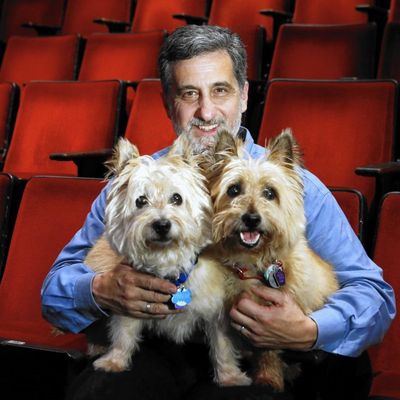
Broadway’s premier animal trainer Bill Berloni joins Behind the Awards to chat about his current dogs starring in Gypsy & Left on Tenth. Bill also talks in depth about how he started his career with the original production of Annie... Read More
From the show: Behind the Awards with Eila Mell & Bruce Gotlieb
Guests
Featured Shows


About
Broadway’s premier animal trainer Bill Berloni joins Behind the Awards to chat about his current dogs starring in Gypsy & Left on Tenth. Bill also talks in depth about how he started his career with the original production of Annie. Bill gives us the inside Scoop about working with Naomi Watts for the upcoming Feature Film The Friend.
Also in this episode - Diahann Carroll’s 1972 Tony Award for Lead Actress in a Musical for No Strings. A review of Vape! A Musical Parody
Bill Berloni of William Berloni Theatrical Animals, who serves as the Head Animal Trainer for the Broadway productions “Left on Tenth” starring Julianna Margulies and Peter Gallagher and “Gypsy” starring Audra McDonald. He currently has 4 dogs on Broadway!!
Bill has 27 Broadway Show Credits to his name from Annie (1977) to The Ferryman (2018).
Bill has over 35 Film credits to his name including THE GREATEST SHOWMAN, ANNIE, CHARLIE WILSON’S WAR, and DISENCHANTED.
Bill Berloni was a 20-year-old apprentice at the Goodspeed Opera House when a producer offered him his big break: a chance to act professionally and gain his Equity Card. In return, all Bill had to do was find and train a dog to play Sandy in the original production of Annie.
Bill found his dog at a local animal shelter – beginning his career-long commitment to using rescued animals. Through a combination of persistence, patience and trial-and-error, he developed his revolutionary humane training techniques – learning how to teach actor and animal alike to create a successful performance. Annie became a huge hit and Sandy became “the longest running dog on Broadway,” never missing a performance in more than seven years.
Since then, Bill and his handlers have provided animals of all species and sizes, found in shelters, humane societies or rescue leagues, for Broadway, off-Broadway, national tours, regional theatres, special events, the New York City Ballet, motion pictures, television and commercials. When their careers are over, the animals return to Bill’s Connecticut farm.
Make sure to check out Eila's book, "The Tony Awards", and all her other amazing books: https://amzn.to/43WMu5Y.
Connect with Eila and Bruce:
- Instagram @behind_the_awards
- Eila @eilamell
- Bruce @cominghomewithbruce
Transcript
This transcript was automatically generated and might contain errors.
[0:00] Bill Berloni: Hi, my name is Bill Berloni. I'm a Broadway animal trainer, and you're listening to Behind the Awards.
[0:05] Bill Berloni: I wanted the I'm like a barrow. I really wanted. If you think I'm not gonna talk about Richard Rogers, you're crazy. I've wanted to be on Broadway for seven and a half years. And he put me there.
[0:32] Eila Mell: Hello, and welcome to Behind the Awards. I'm Eila.
[0:34] Bruce Gotlieb: As always, I am joined by Bruce.
[0:36] Eila Mell: Hello.
[0:39] Bruce Gotlieb: Hello there, Eila.
[0:41] Eila Mell: So we had a fun night the other night. We got to go to the one night only.
[0:47] Bruce Gotlieb: I know a benefit show.
[0:51] Eila Mell: Uh yeah. Reading show, concert, all of that wrapped into one of Vape, the Grease parody musical.
[1:00] Bruce Gotlieb: Yes, which took place at Town Hall.
[1:02] Eila Mell: What a great venue.
[1:04] Bruce Gotlieb: It's a great venue. I've been there a couple of times, and it's there's you know, aside from leg room, there's no bad seat in the house, but it really is no bad seat in the house.
[1:13] Eila Mell: Legroom was an issue, I have to say.
[1:15] Bruce Gotlieb: Yes.
[1:16] Eila Mell: So, you know, I But it was, you know, you're going in, you're knowing that you're getting a parody, which you know you're gonna have a good night, and you know you're gonna laugh.
[1:26] Bruce Gotlieb: And Jack Plotnik is the director. So going in, you know it's gonna be fun.
[1:30] Eila Mell: That's right. Seth Rudetsky was the host of the evening.
[1:33] Bruce Gotlieb: Yes. He was on book reading all of the stage directions.
[1:36] Eila Mell: Yes. You know, making sure that everyone knew where things were in within this story.
[1:42] Bruce Gotlieb: Right.
[1:42] Eila Mell: Um, let's talk about the cast. So it's the traditional Grease characters, Danny and Sandy, played by James Carpanello and Carrie Butler.
[1:52] Bruce Gotlieb: And this is the movie. They're parodying the movie Grease, which not the Broadway show, which is the way to go, because everybody knows the movie.
[1:59] Eila Mell: Right, because there was one point that you know they were about to do Freddy My Love.
[2:05] Bruce Gotlieb: Right.
[2:06] Eila Mell: And uh they stopped they stopped Marty and said, I'm sorry, that song's not in the movie. And she said, but it's my only song.
[2:14] Bruce Gotlieb: And she was great. That was Amy Spanger.
[2:17] Eila Mell: She was so good.
[2:18] Bruce Gotlieb: She was great. And you know, it's funny because you have Aisha Jackson who's playing Frenchie, and she's a vocal powerhouse, and you know, Frenchie doesn't have a song either.
[2:27] Eila Mell: She doesn't have a song. So we wish that Frenchie sang, but she didn't.
[2:32] Bruce Gotlieb: But Aisha was really funny. And not only did she play Frenchie, but she played Blanche, who is one of my favorite characters from the movie.
[2:39] Eila Mell: Right. Uh Dodie Goodman in the movie. So and she did them as very different characters, and she was great.
[2:47] Bruce Gotlieb: Um Rizzo played by Jackie Hoffman, as I think it should be.
[2:52] Eila Mell: As also she doubled as um.
[2:54] Bruce Gotlieb: As Principal McGee.
[2:55] Eila Mell: Oh, oh, right. Principal McGee, right?
[2:58] Bruce Gotlieb: Miss Principal McGee.
[2:59] Eila Mell: Lynch in the play.
[3:00] Bruce Gotlieb: I know. Miss Lynch and the yes.
[3:01] Eila Mell: I know, I know. So who else was in it?
[3:03] Bruce Gotlieb: So the rest of the T-Birds were Jill Perez, Jelani Remy, and Anne Horata, who was both a T bird and a pink lady.
[3:14] Eila Mell: And not only that, she was also creator face.
[3:16] Bruce Gotlieb: And she right, Anne Horada did many things.
[3:18] Eila Mell: Anne Horata was doing work all over the place.
[3:21] Bruce Gotlieb: She was. I think if there was a part that they for some reason couldn't fill, they just said Anne will do it.
[3:26] Eila Mell: That's right. She was great. Um, and so who are we missing?
[3:30] Bruce Gotlieb: Jan.
[3:31] Eila Mell: That was Anne Horada.
[3:32] Bruce Gotlieb: So that's everybody. And then Rachel Drach, which was Teen Angel.
[3:36] Eila Mell: Yes.
[3:37] Bruce Gotlieb: And Joel Perez did a couple of other things. He was Patty Simcox as a puppet, which was pretty funny.
[3:43] Eila Mell: And he was also Vince Fontaine.
[3:45] Bruce Gotlieb: That's right. Yeah. So I think, is there anybody we're forgetting in the cast?
[3:49] Eila Mell: I don't think so.
[3:50] Bruce Gotlieb: I don't think so, no.
[3:52] Eila Mell: It was really funny. It opens up at the beach, and Danny and Sandy meet each other, and um, you know, one is saying that they're falling in love, and the other one's just like, well, we're falling, you know, we're falling in heart.
[4:04] Bruce Gotlieb: I heart you, yeah.
[4:05] Eila Mell: Kind of like each other. And then it unfolds with, you know, Sandy is obviously from Australia, so Carrie Butler's tapping into her Olivia Newton, John Xanadu.
[4:17] Bruce Gotlieb: Right.
[4:17] Eila Mell: Uh muscle memory. And then James Carpinello played uh Tony Monero in Saturday Night Fever on Broadway, so he's doing John Travolta.
[4:27] Bruce Gotlieb: Right.
[4:27] Eila Mell: Which is a funny note. There are jokes about John Travolta and Scientology, which was hilarious.
[4:34] Bruce Gotlieb: I you have um not really sure of you know Danny's sexuality.
[4:42] Eila Mell: Yeah, and Kanicki too. Throughout the piece. One of my favorite lines in the whole thing was when they were doing about to do Grease Lightning, which they changed to what, Green Lightning?
[4:53] Bruce Gotlieb: Yes.
[4:53] Eila Mell: In this. Because it's they're using a Prius.
[4:55] Bruce Gotlieb: Right.
[4:56] Eila Mell: Right. Exactly, which is very funny. But um Kanicki, you know, it was famously Kanicki's song in the play, and so he's about to start singing, and he says, My car, my song, and then um Danny says, My name above the title, my song, which was so funny.
[5:14] Bruce Gotlieb: Which hearkens to the true story of that song was given to John Travolta during the movie.
[5:20] Eila Mell: And then they even said that they had the Knickie character say, okay, I guess in 30 years I'll talk about this on celebrity rehab or whatever show, Jeff Conway was on.
[5:31] Bruce Gotlieb: Right, right.
[5:32] Eila Mell: You have nods to uh Little Mermaid, Marielle.
[5:36] Bruce Gotlieb: Yes.
[5:37] Eila Mell: They decided to explore. I guess. I mean, that would be my one thing that I didn't love so much. I don't think they needed it.
[5:44] Bruce Gotlieb: There was so much to it already.
[5:47] Eila Mell: I don't think you needed the layer of the Little Mermaid. It didn't ruin anything for me, but yeah.
[5:52] Bruce Gotlieb: Well, it was also a layer of like a hybrid. It was Little Mermaid and the movie Splash.
[5:57] Eila Mell: Right, yeah.
[5:58] Bruce Gotlieb: Because uh Sandy's apparently a mermaid.
[6:00] Eila Mell: A mermaid in the in this version in this context.
[6:03] Bruce Gotlieb: Right. Yes, it was it was really a really funny night. And of course, you know, it was a benefit. So it was you know, a staged reading concert. There were some some costumes to give you, help you along the way.
[6:15] Eila Mell: There were some projections.
[6:16] Bruce Gotlieb: Yeah, jackets, so you know who, you know, the T birds and the pink ladies, because you want that. And there were a lot of leather jackets and pink jackets in the audience, too.
[6:25] Eila Mell: Absolutely. Everyone was there for a good time, and it was a lot of fun.
[6:28] Bruce Gotlieb: It was. It was so we'll see if there's any other incarnations of where this goes, but if it just existed for the one night, then you know we're glad we were there for it.
[6:38] Eila Mell: Yes. Absolutely. Exactly. So that's our vape review. And so now, going from a benefit to animals.
[6:49] Bruce Gotlieb: I mean, these are two great things to talk about today. We have Bill Berloni, who is probably the most famous animal trainer on Broadway for sure.
[6:59] Eila Mell: I mean, you know.
[7:00] Bruce Gotlieb: Well, yes, and he is tied into benefits too, because he does a lot with Bernadette Peters' Broadway Barks and other charities that help find homes for animals.
[7:12] Eila Mell: So we had such a wonderful conversation with him just on how he started his career and came into this career path in such an unexpected way.
[7:23] Bruce Gotlieb: And it's really fun to listen to. So all right, let's jump in. Here's Bill Berloni.
[7:31] Eila Mell: So, Bruce, we're having Bill Berloni on, who you know, I've been aware of forever because you know I'm such a huge Annie fan.
[7:39] Bruce Gotlieb: You know I am a huge Annie fan as well.
[7:41] Eila Mell: So I've known Bill's work for it seems like my whole life. Everyone I told, because I was very excited that he was coming on, so I told people, and they all said, Well, you have to have him help you with Oscar. You know, my crazy dog Oscar.
[7:56] Bruce Gotlieb: And I bet he gets that from everybody.
[8:00] Eila Mell: But let's welcome Bill. And I I have a couple of questions for him about my crazy dog.
[8:05] Eila Mell: Hey Bill, how are you?
[8:07] Bill Berloni: I'm fine. Thank you for having me.
[8:08] Eila Mell: Thanks so much for joining us. So, as you heard, you know, I have this crazy dog. He's got trauma, he came from a hoarder's house. You know, he's got some real serious issues.
[8:18] Bill Berloni: But so that's very different from what you do, I'm sure.
[8:21] Bill Berloni: A little bit. Um, although when I'm not working on stage, I volunteer my services for the Humane Society of New York. I'm their director of animal training behavior. So I actually helped them with cases of the animals who are severely traumatized and try and rehabilitate them.
[8:37] Eila Mell: Oh my gosh. Well, I mean, we'll have to talk at another time about that because I've done everything with this crazy dog and nothing seems to work, but that's for another time.
[8:47] Bill Berloni: So, Bill, thank you so much for joining us. Uh, you know, Bruce and I just love Annie. I saw it as a kid, and it was maybe the biggest thrill of my life. I just wanted to see it so much, and then I finally got there.
[9:00] Eila Mell: And I know you know it had a history at the Goodspeed, and so you know, I've done all my Annie homework. How did you get involved in the first place with that? Because that was your first show.
[9:10] Bill Berloni: It was my first show, and it's one of those stories that are kind of theater lore. I'm from Connecticut. I wanted to be an actor, and I spent my summers apprenticing at the Goodspeed Opera House so that I would be around professional actors and designers.
[9:24] Bill Berloni: My first summer there was the summer of 1975. They asked me back in the summer of 76 to work 80 hours a week for no money. And um, it was the season that they did the original production of Annie. It was the third show of the summer.
[9:34] Bill Berloni: So, about around May, they were starting production, and the producer at the time, Michael Price, realized there was a dog in the show, and that New York dog trainers are very expensive. So then he went to all the paid staff members, the carpenters, the prop people, the and they all threatened to quit because he said train the dog.
[9:55] Bill Berloni: And so he needed basically someone he could trick into doing it. So I remember being called in his office for the first time in two years. He complimented my work and asked me if I wanted my equity card and a chance to be in one of the shows at the opera house.
[10:10] Bill Berloni: And I was all of 19 years old. Sitting there, I thought he's brilliant. He recognizes my acting ability. Well, theory, yes, sir, I would love to do it. And he said, all you have to do is find and train the dog for the new show for more money. And I said, Okay. I mean, it's one of the deals that he it took me a week or so to realize what I had agreed to.
[10:31] Bill Berloni: Right. But um sure. And the and the caveat was he gave me $35 into the summer of 1976 to find the dog and feed it all summer.
[10:40] Eila Mell: Oh, that doesn't seem like it would last very long, even in 1975.
[10:44] Bill Berloni: And uh so they um I heard they had cheap dogs at the animal shelter, and I went scouring the uh shelters of Connecticut and found the original Sandy the day before he was gonna be put to sleep.
[10:55] Eila Mell: Wow. I love that kind of story. But what was your dog experience up to that point?
[11:02] Bill Berloni: None.
[11:03] Eila Mell: Okay.
[11:04] Bill Berloni: I wasn't picked from my dog experience. I was picked from my gullibility. Look, I'm an only child that grew up on a farm, and uh my early companions were my dog, my cat, and my rabbit. The only other kids I would see are at my would be at my relatives' houses on a weekend.
[11:21] Bill Berloni: Growing up, I see pictures of myself with these animals, and they were my companions. They weren't my pets. And I remember not being lonely because they would always hang out with me. So I must have figured out as a very young child how to play their games and understand what they were feeling as opposed to holding their tail and having them run away.
[11:38] Bill Berloni: So that sort of other centered thinking in terms of animals, I think is what I brought to the assignment in 1976.
[11:46] Eila Mell: So you find the dog, okay. Now you've completed part of your task. At what point do you realize wait a minute, this actually could be a career?
[11:55] Bill Berloni: Oh my goodness. Um, you know, the show didn't do well at good speed, and I had already enrolled in NYU. I was gonna I started studying with Stella Adler when she was alive at her studio, and six months into my semester there, Mike Nichols' office called.
[12:11] Bill Berloni: And Martin Churn and the original director wanted me to come back with Sandy for the Broadway production. So, like Nichols, Broadway, sure. I'll take a a little diversion from my acting career to uh and studies to to make some money. And the show opened in April of 1976, seven, and I became a world famous animal trainer.
[12:32] Bill Berloni: And you know, I thought, well, this is I'll pretend to be an animal trainer, sure, and I'll make the money. But after I got my third Broadway show, which was the revival of the Richard Burton Camelot, I thought maybe I'm more talented at this than at performing.
[12:46] Bill Berloni: So it took me like three or four years.
[12:48] Eila Mell: So did you develop your own technique?
[12:50] Bill Berloni: There was no Google then to figure out what other people were doing. Um technique in terms of how do you get a dog to do something?
[12:56] Eila Mell: Right, exactly.
[12:57] Bill Berloni: I can't even get my own dog to do something.
[12:59] Eila Mell: Right.
[12:59] Bill Berloni: And so I know I do things if I'm having a good time. And if I'm not, I'm less likely to. So how could I create a situation in which the animals felt safe and they were having a good time instead of someone's living room on stage? And that was the way I approached all of it.
[13:16] Bill Berloni: And the other thing was the day I met Sandy, I couldn't adopt him. And I made a promise to myself that if I ever got another dog, I would adopt it. So hence began my career of using shelter dogs in theater. And that's when I started taking these dogs. Unfortunately, the shelter is the most stressful place they could be. They're abandoned, there's sounds, there's smells. And if they can be okay there, chances are they're gonna be okay on stage. So taking a dog who has a trauma or some other behavioral problem, and then trying to put him into a theatrical setting wouldn't work. Um, so again, learning how to temperament test the dogs that would enjoy being around people that enjoy treats that would enjoy having some fun.
[14:00] Eila Mell: That's the other thing.
[14:01] Bill Berloni: Good casting.
[14:01] Eila Mell: Right.
[14:02] Bill Berloni: And did Sandy have to look a certain way? I mean, obviously, he has to be a certain color. Were there other stipulations?
[14:08] Bill Berloni: In the immortal words of Tom Mann, in the stage direction, Sandy was a medium-sized dog of sandy color, an indistinguishable breed.
[14:18] Eila Mell: Okay, that makes it a little easier.
[14:20] Bill Berloni: Beige colored mud.
[14:21] Eila Mell: Right.
[14:22] Bill Berloni: Now, once the show's over, and now you've had this dog that's trained. Do they go into a foster situation? Are they adopted typically? Or do you have a hotel for all your animals?
[14:34] Bill Berloni: Um again, coming from that, these are my companions. Once we adopted a dog and brought it into our family, whether it worked for years or if it worked for, you know, one show, we give them a forever home. That was never questioned and so from the very beginning.
[14:56] Bill Berloni: And you know, now our farm up in Connecticut could accommodate up to 30 dogs in our home.
[15:02] Eila Mell: Wow.
[15:03] Bill Berloni: And we currently have 25. So we give them forever homes. Um, and they stay with us.
[15:07] Eila Mell: So you have your own shelter?
[15:08] Bill Berloni: More of a sanctuary or an actor's home for performing dogs.
[15:12] Eila Mell: I love that.
[15:13] Bill Berloni: So because there's three groups. There's the young ones who are training, there's the ones who are trained who are paying the mortgage, and then there are the ones who are retired. And so everybody has a place in our home.
[15:28] Eila Mell: Do the trained dogs help train the younger ones?
[15:33] Bill Berloni: For some reason, dogs like learning bad behaviors.
[15:36] Eila Mell: Well then, yeah.
[15:37] Bill Berloni: Uh I see my own house, yeah. I have two dogs, and the older one just teaches the younger one to be, you know, to bark more and just the worst behavior.
[15:49] Eila Mell: It says something about nature, doesn't it?
[15:51] Bill Berloni: Yeah.
[15:58] Kevin Solak: Hi, this is Kevin Solak, and we'll be right back with Behind the Awards.
[16:04] Eila Mell: It's funny you uh you described the different you know categories we had. We were lucky enough to have the cast of uh Left on Tenth on, and we were talking about the dogs that are in their production, and Julianna said, you know, oh well, Nellie's an old pro.
[16:16] Bill Berloni: Did they tell you the story of how the original dog decided she didn't want to be in show business?
[16:23] Eila Mell: No, tell us.
[16:24] Bill Berloni: We don't know this.
[16:25] Eila Mell: And I don't know why the producers kept this quiet.
[16:27] Bill Berloni: It's actually a good story. I mean, we adopted two dogs, one was named Honey, uh, the other was named Charlie, and the Honey dog came from a uh puppy mill situation. She seemed outgoing, but she wasn't used to the world. So we rehearsed with her, rehearsal was great. We got into tech, tech was great, and then the first time the audience came in, she became overwhelmed by the noise and not really sure of it because there's no way to prepare them for that until you get them on stage. And like four shows, she just decided she wasn't having a good time. And I went to Susan Stroman and Daryl Roth and said, we need to replace this dog. And they were like, what are you talking about? We've taken all the pictures and all the ads, and I'm like, she's not having a good time. And she's gonna eventually stop going on stage.
[17:09] Bill Berloni: So they were like, well, what do we do? I said, well, I have a Karen Terry who plays Toto, and she's an old pro. And I was like, she's an old pro. And that's exactly what we did. The second week of previews, um, Nessa came in, Nessa Rose. We did a run through of simple commands, and she went on that night. And in that vein, when little Honey was not going to enjoy the stress of show business, we decided to re-home her in a home where she would never have to be in show business again. You know, and so the point is the producers and everybody supported doing what was best for the animals as opposed to doing what was best for the show.
[17:51] Eila Mell: Well, in turn, it would eventually be best for the show anyway.
[17:54] Bill Berloni: Just maybe not in the show. I mean, they could have made it simpler or easier and just to keep the dog in the show, but then it would have hurt the storytelling.
[18:02] Eila Mell: Right.
[18:03] Bill Berloni: So how many shows do you have going on at any one particular time?
[18:07] Bill Berloni: It could be multiple. Um, it could be. The bulk of my theatrical work now are revivals of Annie, The Wizard of Oz, and Legally Blonde.
[18:20] Eila Mell: And I mean, those are big shows.
[18:22] Bill Berloni: And every Christmas, somewhere's doing a Christmas story. So, you know, like this Christmas, we had Gypsy, Left on Tenth, we had a Christmas story up at the Goodspeed Opera House, and we had a production of Annie in Minnesota. So between regionals and tours and other things, we could have three or four dogs working at one time in theatrical events.
[18:46] Eila Mell: Wow, that's fantastic.
[18:47] Bill Berloni: Right. And let alone TV and commercials and movies, I'm sure you do all that too.
[18:52] Eila Mell: I'm sure the training is different when you're dealing with a dog versus another animal, because I know you've also had your hands in other animals being on stage or TV and whatnot.
[19:02] Bill Berloni: Yeah, I mean, again, training it sort of to me implies domination. And you're controlling something to do something you want. So when I approach dogs, it's like, well, what do you like? Do you like cookies? Do you like being on stage? Do you like playing? Um, and what so when it comes to a different species, it's just again, well, who are you, Mr. Horse, and what are your limitations and what do you like and what stresses you out? Doing the research for that, and then bringing you to the production, say, this is what we could do, horses, so horses, cats, goats, sheep, mite. Each one has their own unique needs. And if you read into it and can work with it, then it's usually successful.
[19:41] Eila Mell: Am I right that there was a goat in The Ferryman? Did you is that what animals in that show?
[19:43] Bill Berloni: No, it was a goose.
[19:47] Bill Berloni: Oh, right, that's right. And a baby and a dwarf rabbit that, you know, was doing the characters' pockets.
[19:53] Eila Mell: So, what happens with the animals when they're, you know, 90% of the show when they're not on stage, who's backstage with them?
[20:00] Bill Berloni: Every show has a trainer who does the full-time care for those animals. You know, it's not just for them, it's not just doing the show, it's the getting to the show, you know, transporting animals right there is stressful, you know. So you have to early and you have to let them calm down again in order to do their performance.
[20:18] Bill Berloni: So again, you say to a dog you want to go for a ride, they're all excited and they stay excited, right? So, you know, like in Gypsy, our little dogs are only in the first three scenes, you know, is important.
[20:30] Eila Mell: Right, right.
[20:31] Bill Berloni: But again, getting them there saying hello to the cats and all that sort of stuff is a four or five hour stretch.
[20:36] Eila Mell: Yeah.
[20:37] Bill Berloni: What's the one animal that you got approached to put in a show or on TV that kind of maybe gave you pause that well, can I can I do this with this animal? And ultimately did it, or said no, thank you.
[20:49] Bill Berloni: It can never be actually maybe both. The one project that they've been after me for years is a musical based on Roy Rogers. They want uh to bring Trigger on stage, and not just a horse on stage, you know, but a horse that could do many behaviors and you know, help tell the story, and trying to explain to the creators and the producers, I'm like, horse? Gee, just look at their excrement habits.
[21:15] Eila Mell: Yeah.
[21:16] Bill Berloni: Right. And only which theater owner is going to allow us for that to happen not only on their stage, but backstage somewhere. It's let's just start right there.
[21:25] Eila Mell: Okay.
[21:26] Bill Berloni: Sure. Um, you know, horses are very uh, you have to be connected with them. So whoever Roy Rogers is, yeah, has to be an expert horseman, or we need a year or two to train them to be connected to this horse. I mean, it was like for years they were asking me these questions, and I was like, there's I I don't believe there's a safe way to do it.
[21:45] Bill Berloni: The other, well, there were actually two cats. And so I learned very quickly to respect the feline um species. They do what they want. And so when I was asked to do The Lieutenant of Inishmore, in which you know a cat had to come out on stage. I had had a few cats, and the cats that we work in show business are cats that think they're dogs. I mean, they have eighty people feline behavior, they're social, they like people, they hang out, you know. So finding one in 10,000 cats like that is what we did.
[22:18] Bill Berloni: So Lieutenant of Inishmore, the cat came out at the end and helped resolve the play's ending. And we had this great cat. His name was Mr. Ed. He did the um off-Broadway run, and then he did six months of the Broadway run perfectly every night. And then the young man who was in the scene with him, his visa was up because he was from the London production. And so he left and his understudy went on.
[22:41] Bill Berloni: And the first night Mr. Ed came out with the understudy, he stopped and he looked at the actor, and I'm like, what is he staring at? I mean, nothing the next night he decided he wasn't going on. He would not do that scene that he had done for a year in a different act.
[22:57] Eila Mell: I'm like, wow.
[22:59] Bill Berloni: But we had we had been working the understudy cat. Um so that the understudy cat took over for the last three months because Mr. Ed decided he didn't like this other actor's talent.
[23:10] Eila Mell: I mean, but is that something? Is that a consideration? Is there a bonding period between the actors and the animals?
[23:17] Bill Berloni: Specifically with dogs, yes. With cats and geese and rabbits, there's a familiarity process. I mean, as a trainer, I've only worked with domesticated animals, not wild animals, because at least animals who are domesticated have some genetic reason to be around humans, and you have to honor that.
[23:34] Eila Mell: And what happens when you get an actress who's allergic?
[23:37] Bill Berloni: Well, sure. Um, you know, how many times have I told Bernie Telsey? Sure, they're not allergic, but and they call dogs. I don't care what you're casting. Um sometimes people aren't always truthful.
[23:54] Bill Berloni: Um tell you perfect story back in the 90s. I did The Seagull that was directed in the park public theater by Mike Nichols, Meryl Streep, whole star-studded cast of actors. And Mike came to me and said, Bill, I want Natalie Portman to ride in on a horse, you know, for her entrance. I'm like, does she does she like horses? Does she know horses?
[24:15] Bill Berloni: Oh, she loves horses. That's what she told me. So they, you know, we get to tech because we they start teching there, and Natalie comes and she's petting my beautiful spirited Russian horse. I said, so Natalie, what's your riding experience? Do you ride a lot? She goes, oh, I've never ridden. I said, oh, but Mike said, 'You love horses.' Oh, I love them. Look at the beauty. And she just went off on the aesthetic. I said, excuse me.
[24:41] Bill Berloni: And I went to Mike. And what's she doesn't know how to ride a horse? And he looked at me, he goes, well, what are you gonna do about it? And uh, well, uh, let me talk to my horse trainer. I mean, so there was a case where lit what and what we did was we trained the horse. I asked Mike if I could be on stage. And we trained the horse to come to me, and we literally put a belt around the horse's neck so Natalie had no control over the horse. And somebody released it and it came to me for some treats.
[25:07] Bill Berloni: But again, in that moment, you're thinking, how do I keep these people safe? How do I keep this horse safe?
[25:12] Eila Mell: Sure.
[25:12] Bill Berloni: Right. So again, it's a very interesting, yeah. You have to have a good bond between the animal and the actor that they're performing with.
[25:20] Eila Mell: Otherwise, it doesn't work.
[25:21] Bill Berloni: And especially when you're doing Annie, you're dealing with kids who are dealing with the animals. So do the kids have to go through any kind of training to learn cues for the dogs?
[25:31] Bill Berloni: Anyone who works with a dog has to go, has to become do the training to become a trainer because it's not just, oh, I'm gonna give you cookies, it's knowing how to read the dog and command it on stage.
[25:43] Bill Berloni: You know, sometimes it's a little slow, sometimes it's too fast, and they have to have to know how to adjust that in real time in front of a live audience.
[25:51] Bill Berloni: And fortunately, I can take any child who's afraid and turn them around because children love to play and do something new.
[25:59] Bill Berloni: Adults, stars, not so easy.
[26:09] Bruce Gotlieb: Hi, everyone, this is Rodney Hicks with Behind the Awards.
[26:13] Bruce Gotlieb: We'll be right back.
[26:16] Eila Mell: How do you um because my my experience, at least around dogs, is most of the time their attention span isn't very long, and there are things that will distract them just in life. So when you have a dog coming on stage for a show, how do you get them to almost block out the hundreds of people that are sitting there and the different noises that come from an audience?
[26:38] Bill Berloni: Saying to a dog you have to ignore all that would be a cognitive thought process, and they don't have cognitive thought process. But desensitization, you know, if for the people who live here in midtown Manhattan, people are walking their dogs down the street all the time. They don't need they're used to the commotion, they're used to the people and taxis and sounds. So that same theory applies to the theater. If you could desensitize them to the audience, to the lights, to the orchestra, then it becomes ambient noise.
[27:04] Bill Berloni: But they're alive and they do get distracted, which is why the actors have to be able to know are they focused or are they looking at the audience? And if they're looking at the audience, make a different sound to get their attention back to continue moving forward. I mean, that's what trainers do. They work with the animal in real time.
[27:19] Bill Berloni: So that works great until the actor screws up. Actor forgets the cue, the dog looks at me off stage and goes, What do I do now? I mean, because unlucky human, they can't cover for them.
[27:34] Bruce Gotlieb: Yeah.
[27:35] Bill Berloni: No, and so and that's I mean, we all make mistakes. You know, we're all alive. And so that's great thing about live theater. But knowing how to continue the show without the audience, without hurting the storytelling is what I've always striven to do.
[27:51] Eila Mell: Well, I would think that having a live animal in a show can only help get a more authentic performance out of an actor because you know, you're dealing with something that's actually happening right there.
[28:03] Bill Berloni: You're so wise. I you're a real theater person. Yeah, because uh again, I've always wondered why why does a dog walking across the stage get people's attention? And what I've come to realize and after studying it is that, you know, we all come to the theater, we all we know the actors are faking it. We know they're not dying, we know they're at love, but we go with it. We, you know.
[28:21] Bill Berloni: But when an animal comes on stage, we go, wait, well, wait a minute. They don't know what they're doing. What are they gonna do? And it brings people to the edge of their seats a little bit. And if you can incorporate that into the play and into an emotional relationship with the actors and the storytelling, it brings the audience into the whole story with different urgency and a different happen next, um, which I think enhances uh the theatrical um performance.
[28:49] Eila Mell: So if they have to become the animal has to become desensitized to the audience, how do you do that? Because the audience only comes in once the show is open.
[28:58] Bill Berloni: Fortunately, I have usually other shows, right? And we can take them to other theaters and you know, have them backstage and hear that sort of stuff. And and even with this one, we were rehearsing in New York, and Daryl Roth got me into some other shows. I mean, literally we went back to the house with these little dogs and and held them. Um and just so that they would I could see how they would react to the applause and to the, you know, and that sort of stuff. But yeah, and and the original little dog was doing okay, but but when she actually got into her stage, she just didn't enjoy it.
[29:29] Eila Mell: Yeah, I guess that happens with actors too. Sometimes they think they're gonna like it.
[29:33] Bill Berloni: That's the thing. I mean, we've known shows where we in during previews, they've replaced actors. You know, it's like sure it's all part of the the living experience.
[29:42] Eila Mell: Does it become more complicated when there are multiple dogs or animals in a show, or do they sort of help each other along?
[29:49] Bill Berloni: No, it it becomes much more complicated. It's because every actor and animal, it's like having a an intimate dance partner. They all have their their ways, and and we have to sort of control that and and honor that. And so when you have you know, Juliana and Charlie and Peter and Charlie and Juliana and Nessa and I mean, then you have four different relationships here.
[30:11] Bill Berloni: You're sort of juggling. Um if one's tired but the other one's active, how do you keep both dogs in the dressing room from you know acting off of each other? So yeah, any acting relationship on stage is complicated. So the more animals we have, the hard the more work we have to do in just keeping that up.
[30:29] Eila Mell: Oh, it must be fun. Like animals don't, it's a great equalizer. They don't care who's a celebrity and who's not. So it I would think that that's a lot of fun just to watch the interaction with the people and the animals.
[30:40] Bill Berloni: It's it it is, and we use animals for pet therapy, right? We go into nursing homes and hospitals. I can't tell you there are times when the actors just are holding the dog, and I know it's not for training. Audrey McDonald, for an example. We did Lady Day at Emerson Bar and Grail with her, and there was a little chihuahua in it, and she loves dogs, and so you know, every half hour before that play, she would ask for the dog to come so she could get into character with the dog. She loves the dog.
[31:06] Bill Berloni: Um, in gypsy, which is this monster of a role, um, obviously she spent time with the dog's name is Tana June. But now she's for ever since we've both been, she's been asking if Tana June can come and nap with her. No, there's no bonding needed. That yeah, you know, but having a little dog that'll curl up with you and just so she could relax her mind, that's as important too, I I believe the performance is, you know, hitting the right mark.
[31:34] Bill Berloni: So watching those real relationships happen is is actually quite nice, and knowing that the animal is providing other maybe emotional support or some relief.
[31:43] Eila Mell: And I'm sure just to see that bond between them on stage is so much better than just a dog who looks like they're doing commands.
[31:50] Bill Berloni: Well yeah. I mean I mean that's the thing. It's like any dog owner, if you saw a dog with its tail between its leg or its ear back, you would immediately recognize that. And and what I say to the actors in theater is like if the if you it looks like you're hurting the dog, it takes people out of the play as as closely as it draws them in, if they feel the animal's not happy, they're like, whoa, what what is that actor doing to that animal?
[32:13] Bill Berloni: And it, you know, it so making sure it's always a fun sort of thing is not just even important for the for the animal but for the show as well. But you're right, because you could watch you have people that go and watch the bloodiest of horror movies in the world and they sit there and they're fine but you do anything to an animal and that that's the line has been crossed.
[32:32] Eila Mell: Oh yeah.
[32:32] Bill Berloni: So I was watching this movie recently it was horrible. There was a scene where a person was put in a a position where they either had to shoot a dog or someone else was going to like hit the dog over the head with a a shovel and I was like I'm not watching. I turned it off. I said I don't have to put myself through this agony. And it was totally, you know, a story but and I knew it wasn't real. I still couldn't watch it.
[32:54] Eila Mell: And so like you have a dog, right? Walking down the street, does your dog walk right by your side and follow you along?
[33:01] Bill Berloni: Well good because some dogs pull some dogs are slow. Some dogs are all over the place. Well if a dog isn't trained to heal perfectly and it looks like the actor's dragging them even though they're not hurting them, yeah that gets people upset. You know, so it's like that's why they have to be trainers. They have to know how to work with whatever the an animal's doing at their time.
[33:20] Eila Mell: Are they also being cued off stage too?
[33:22] Bill Berloni: Yeah. Whenever we need the animal to act independently, then I'm in the wings or a trainers in the wings making that happen.
[33:30] Bill Berloni: So the actors control what happens on stage, and then when the dog acts independently, we're controlling it off stage. I remember the Pippin revival, the actor who played Pippin had his own dog in the show.
[33:41] Bill Berloni: And the dog comes out for two seconds at one point. And it was the I still remember it now, and it had nothing to do with the story. It was just such a thrill to see this little dog come running out. People just love it.
[33:50] Eila Mell: Um because it was real.
[33:53] Bill Berloni: Exactly. Right. How much time do you normally have to get, I guess, an animal ready? Like so for gypsy. Obviously, it was announced the revival was coming. So people who know the show know there's a dog. Is it that point where they contact you? Or you, you know, months before usually usually in the uh planning stages, Broadway producers, general managers, I really know that we need like six months to a year to find the animals and train them.
[34:17] Bill Berloni: So we were contacted very early in 2024 about it. And we talked about I had done the gyp uh Bernard Burnett Peters revival of gypsy, and we had baby lambs in it. And since then, yeah, laws here in New York City have changed drastically for animals. And we we talked about how difficult it would be to have a lamb in the show, a live lamb. And so, you know, we talked them out of it and it's fine.
[34:39] Bill Berloni: And then we were just waiting for rehearsals to start, and then we found out they hired another dog trainer. Okay, well, thank you very much. Until the ant trainer did work out, and a month before rehearsal started, we got the call back. So um, we were fortunate enough to find a little Yorkie in Indiana who had stage experience.
[34:58] Bill Berloni: And uh here with left on 10th, it was a very it was a four-week rehearsal period, including a week of technical rehearsals. So we had two months to prepare for that. But usually for and but they're easy shows, but anything really bounds like legally blonde or Annie, we'd need six months to a year to train a dog from scratch to get them ready.
[35:15] Eila Mell: So um the first show I ever did, I was little and I it was gypsy, and they did not use a lamb because they just couldn't. And so my dog, I had a white poodle, and she was the lamb. And it was so great going to the show with her every day.
[35:31] Bill Berloni: Brilliant.
[35:32] Eila Mell: That was brilliant.
[35:33] Bill Berloni: Why not?
[35:35] Bill Berloni: Well, I mean, I thought my career was over after the last revival of um Into the Woods. I mean, mil why oh, because yeah, brilliant, brilliant poetry, you know.
[35:47] Bill Berloni: Um that was, yes. But it still doesn't replace a live animal. But for Into the Woods, you couldn't have an actual cow.
[35:55] Eila Mell: Are there any dream projects that you're hoping come your way?
[35:58] Bill Berloni: Um, yes, yeah. After after 46 years in the theater doing roles for animals, my wife decided she we should do a play or musical that starred a dog because we felt we could do that. And 20 years ago, she got the uh theatrical rights to because of Wind Dix, which is a children's oh yeah, uh, that was turned into a mediocre film.
[36:21] Bill Berloni: And we've got Dunkin' Cheat to the music, Nel Benjamin did book and lyrics. We've had four out-of-town tryouts. The dog in Annie, the dog has 11 cues, and because of Win Dixie, the dog has 123 Q's, and it takes four trainers to do it.
[36:36] Eila Mell: Wow.
[36:37] Bill Berloni: And we had our last production was at the Good Speed Opera House, interesting enough. Um the summer before the pandemic. When we were looking at the spring of 2020, and so, you know, projects get pushed off, and so that's my dream project to be able to do a show where the dog is actually a star.
[36:57] Bill Berloni: So Bruce and I were talking about Lady and the Tramp, an all dog version.
[37:02] Bruce Gotlieb: That's right.
[37:02] Bill Berloni: Oh, I knew, oh my gosh. I remember when they did 101 Dalmatians. And they actually, I actually what worked with them because my idea was to get two big Dalmatians to play Purdy and Perdita, and then 25 adopted little white dogs that could that are what were full grown to be the puppies.
[37:23] Bill Berloni: You know, and then put them on a treadmill so that when you needed to see a hunter, they were doing circles. That's such a good idea. Touring with 30 dogs or so was pretty expensive, so they decided to not do live dogs. And we all know what happened.
[37:37] Bill Berloni: And um at the end of it, I saw the producer, and I he said, you know, Bill, I should have listened to you. It would have been better if I took the $10 million and had a great party as opposed to with this full thing without dogs.
[37:49] Eila Mell: I'm like, has there ever been a situation where an animal has gone into the audience unexpectedly?
[37:58] Bill Berloni: I mean, the the good thing about theater is that there's there's a proscenium, which provides this physical barrier. That's not to say that I haven't done theater on around. That's not to say that we've done uh, you know, shows where uh the audience is right at the edge of the stage.
[38:16] Bill Berloni: But if an animal is more interested in going to someone else than the people on stage, there's something wrong with what I've done. Um, it is alarming to me how many people during the show will try and distract the dog.
[38:31] Bruce Gotlieb: Well, yeah, really.
[38:32] Bill Berloni: Really? Oh, yeah. Wow. What did they just call the dog and do things that you wouldn't do to Patti LuPone, but no?
[38:38] Bruce Gotlieb: Well, yeah.
[38:40] Bill Berloni: Four times a week, somebody's trying to distract the dogs here in Left on Tenth, you know.
[38:45] Eila Mell: Oh my gosh.
[38:46] Bill Berloni: One of my favorite stories is we were doing Legally Blonde. Bruiser had the first cue. He came out and told the sorority girls where Elle Woods was. And it was a Bartwell cue with Annalie Ashford. Two months into the run, our little dog Chiugo came out and I saw him look towards the audience, and he started to go towards the conductor and out freaked down. And Annalie picked him up and she came off. I said, "What happened?" She goes, "There were people eating fried chicken in the front row."
[39:08] Eila Mell: It was a day.
[39:10] Bill Berloni: And the Seventh Avenue street fair had happened, and they just like brought their food in and sat in the front row. I mean, wow.
[39:17] Eila Mell: That's so crazy.
[39:18] Bill Berloni: It's amazing what people do in the theater sometimes.
[39:21] Bruce Gotlieb: I can't believe it.
[39:21] Bill Berloni: The production report read Bruiser walked towards a conductor. He was lured.
[39:26] Bruce Gotlieb: Right.
[39:27] Bill Berloni: Fried chicken will make people do a lot of things.
[39:29] Bruce Gotlieb: Right.
[39:30] Bill Berloni: Even I will go crazy for fried chicken. But again, the actors are ready. If something goes off cue, they respond to me. They remain proactive as opposed to reactive to a situation like that. I mean, I know that part of why my dog wasn't trained well. We had a trainer, and you know, he didn't, he's come a long way from where he was, but it's just because we love him so much. But part of the reason that like all the commands and stuff like that, because I didn't have the patience to train the dog. I failed. The dog didn't fail. I did. But an actor doesn't have that luxury. They just have to, that's part of their job to do it.
[40:03] Eila Mell: So are you in the rehearsals with them?
[40:05] Bill Berloni: Very much so. I mean, there are separate times set up during a rehearsal period where I work with them for a half hour or so. I mean, dogs only good to work for like 20 minutes at a time in a learning curve. So yeah, we have our own dog rehearsals. And you know, time is money on Broadway. And so carving that time out is one of the considerations the producers have to think about. You don't get the time, it's not gonna happen. Um, so why am I here? So yeah, and um, and that, but then if there's a lot of ego involved. It's like I can't really when I'm training a, uh, like somebody's pet, I can be honest with you. I can't be honest with certain actors, you know. So you have to find something that will work. And you know, um, many directors completely get that because they don't want their stars or actors upset.
[40:55] Bruce Gotlieb: Right.
[40:55] Bruce Gotlieb: Yeah.
[40:55] Bill Berloni: And also it'll affect the performance. But that's like in any department.
[41:01] Bill Berloni: So it's too bad that there isn't like a dog test in the audition process.
[41:06] Bruce Gotlieb: Oh, that would be so well.
[41:09] Bill Berloni: Now that you mention that, um, whenever I do Annie on Broadway or a national tour, there has to be a dog audition before they pick up.
[41:09] Bruce Gotlieb: That's great.
[41:17] Bill Berloni: You know, you get down to the five or six girls, and I go, just give me one session, and you all watch. And I could put the girls through, you know, a certain amount of steps. And not only are the creators looking at their dog skills, but they're watching how they follow directions or watching something new. They watch how they react to a problem. So it's um, a lot of directors find that very helpful when working with children. Especially when you get down to that, like you said, the top five, you're splitting hairs. Who's getting this role? It's gonna be something that really tips the scale that's got to be really small.
[41:49] Bruce Gotlieb: Yep.
[41:49] Bill Berloni: And that could do it. And sometimes, I mean, there have been times where the kids haven't been as good with dogs, but have been great singers and actors. And so we've made the show a little easier for them for the bigger project, you know. So I love that. That's the thing. I'm a collaborator with the writers, the directors, the casting people. Um, to have had an experience with my first show, Annie with Martin Charnin and Tom Meehan and Charles Strouse, in which I was brought in to help create this. It set up sort of a thing moving forward that, you know, this is the way that we do it if you're going to have an animal in a show.
[42:24] Eila Mell: And how incredible that you're still doing Annie. I mean, that's so amazing that the show has endured so many years.
[42:30] Bill Berloni: It's wonderful. It is. Um, you know, and it was done. I remember 1977 it being, uh, sort of off the wall because you know, we were into sort of the British musicals and the big musicals, and here they came along with an old-fashioned musical. And only Mo Nichols and Jimmy Niederlander thought, hey, this might work. And it did because, you know, good shows last. And people love seeing kids and although and the dog. You know, in 2027, it'll be the 50th anniversary of the revival. And I just saying that work, those words just it doesn't seem like it's me. It's gotta be gotta be somebody else to continue to work on a project you love for 50 years. It's really a gift, really.
[43:12] Eila Mell: So that really is. I remember when the original Sandy changed, and there was a new Sandy, and they didn't look exactly the same and bothered me quite a bit at first.
[43:22] Bill Berloni: Sandy never changed. It was the same dog. Sandy did 2,333 performances of the show.
[43:29] Eila Mell: Wow.
[43:29] Bill Berloni: And it must have been the movie or something that I saw a different Sandy, and I didn't like that it didn't look exactly like the original Sandy on Sandy.
[43:37] Eila Mell: Yeah, and um, you know, again, Tom Meehan's medium-sized dog of indistinguishable breed does give some license to it, but it was the color of that first production and the hit, which sort of set the standard because the comic strip dog is actually red with a white muzzle and pointy ears, and the original Sandy was beige and had floppy ears.
[43:56] Bill Berloni: Wow, I don't even remember. I just remember your Sandy as the way Sandy always was.
[44:01] Eila Mell: So funny.
[44:01] Bill Berloni: Not that I grew up with the Annie comics, but still, you know, I certainly knew what Annie looked like.
[44:06] Eila Mell: You may not be able to share, but are there any projects coming up that have dogs that we might not know have dogs in them?
[44:13] Bill Berloni: There's been an idea of kicking around for years, and I've been called back into it, uh, to do a show based on uh Best in Show.
[44:21] Eila Mell: Oh wow, that would be great.
[44:24] Bill Berloni: And then there'd be like obviously five different breed characters and then some other dogs in the background. But then again, having a show with 10 or 15 dogs is a housing nightmare, it's a dressing room nightmare, it's a transportation nightmare. It's, you know, we'd have to, yeah, it's a lot of logistics. And while I think it would be amazing, just like because of Winn-Dixie. I mean, so that one's out there in the spring of this year. There's a film coming out called The Friend. And I've always wanted to do a movie, because I'm not a Hollywood guy, in which the dog was a star, and we were coached uh to train a Great Dane to play a main character. And the film stars Naomi Watts. And we did a nationwide search, we found a Great Dane, and it's going to premiere in March of 2025.
And I think it's gonna change the way we look at the human-animal bond, because that's what the story is about. Uh Naomi Watts is a single woman who inherits a Great Dane from her ex-lover, and she can't keep the dog and gotta get rid of it. And they actually heal each other over the loss of this person. Beautifully done. It went to all the film festivals, it's got major reviews. You know, and it talks about the dog getting an Academy Award, which will never happen.
[45:35] Eila Mell: Wow.
[45:36] Bill Berloni: Because in Hollywood, they don't acknowledge animal trainers or animal performance.
[45:40] Bruce Gotlieb: Right.
[45:41] Bill Berloni: I know. They should.
[45:42] Bruce Gotlieb: They should.
[45:43] Bill Berloni: Yeah. So that's, I'm looking forward to see how the, because we came into it like a Broadway show. I said, I need me, I need to rehearse with Naomi. And for a film, getting a star in to rehearse is like, uh, unless it's a real thing. Uh, but Naomi lives here in Manhattan. She said, "Well, if you come to my house," so for a month before we started shooting three times a week, we'd go over and we'd work with her and this dog. So by the time we got to the set, that bond that I create on stage was there. So what we were filming didn't require trainers. It was just focused on her. And so there's not a lot of cutaways. You see the two of them in the same shot interacting. And I think it's gonna really move people. So that's my 2025 project I'm looking forward to.
[46:32] Eila Mell: That's very exciting. It's right around the corner, too.
[46:34] Bruce Gotlieb: I had a friend who had a Great Dane, and she thought she was a lap dog.
[46:39] Bill Berloni: She just all she wanted to do was just like you are the size of my couch, and you can't physically see me, but...
[46:39] Eila Mell: And that's what I said. You know, Great Danes are gentle giants, they're not known for their agility. So, how do you film an entire film with a harlequin Great Dane that you can't double? I mean, a lot of films we can double golden retrievers or labs or whatever. And so creating the story and the shooting around what this animal and Naomi could do took a lot of planning, but paid off in a way I didn't expect.
[47:13] Bruce Gotlieb: And does that also mean you have less opportunities? Like you have to get it in a certain amount of shots, otherwise the dog is kind of done for the day.
[47:20] Bill Berloni: Yes. Oh, oh yeah. I mean, the shooting order, dictating the shooting order so that the dog's energy will maintain, or the weather, or you know, giving it a break during the day, um, was all part of how we shot this film. And again, taking into consideration the dog's needs as well as the productions.
[47:39] Eila Mell: That's exciting. I can't wait to see that. We're just so excited that you stopped by to talk with us. Really, we've been following you forever. I just think what you do is incredible.
[47:49] Bruce Gotlieb: Yeah, when you think animals on Broadway, you're synonymous with that.
[47:53] Bill Berloni: It's nice to be able to hear the stories of, you know, how it all comes together. And you know, uh, the highlight of my career was I think back in 2010, I was given uh a Tony, I'm the first animal trainer ever to be acknowledged uh for the work that I had done. And you know, by then I was 30 years into my career, and all my friends had gotten Tony Awards. I'm not in a union, so I'm not gonna ever get one or be nominated. And it was just so moving and I felt so great. And I think that was the same year that the artist, the film The Artist came out, that black film that had that little dog.
[48:29] Eila Mell: Sure.
[48:30] Bill Berloni: I remember the Hollywood Reporter calling me for an interview and saying, "You know, Bill, do you think this dog should get an Academy Award?" And I was like, "Of course, they're artists and their people work behind it." I said, "But you know, Broadway is way ahead of you because they've given me an award." So if I were you, Hollywood, I would catch up with some sort of recognition for animal training.
[48:49] Bruce Gotlieb: So yeah, that's right. Hopefully they will at some point.
[48:52] Eila Mell: Theater's always ahead of the curve.
[48:53] Bill Berloni: Yeah, and just before we end, I just want you to tell everyone why it's so important to get dogs from shelters.
[49:00] Bill Berloni: Um, when people ask me why I use shelter dogs, I go, why not? The type of work that we do in which we have to bond with these animals. First off, I couldn't imagine taking someone's pet away from their home and then training it. The dog would miss its family. The dog would be die. And then, you know, what happens afterwards? It just doesn't seem that that would work. I mean, literally, hey, can I rent your dog for a year? You can't say a lot, you can't see it, but I'll give it back to Jake.
[49:27] Bruce Gotlieb: Right.
[49:27] Bill Berloni: You know, and the way that it happened for me in terms of having to find them and then realizing that they've probably saved the lives of, I think, between three and four hundred dogs just in my career. By giving them roles. And so my line is, you know, the dogs that are on stage in Gypsy in this show, anybody could have gone to the shelter and adopted those dogs before I did. There are beautiful animals at shelters that need homes. And so, you know, we hopefully I'm an example that you can find great dogs, you know, and or cats at the animal shelter. So that's why.
[50:00] Eila Mell: It's wonderful.
[50:01] Bill Berloni: Yeah. Why not save a life if you can?
[50:04] Bruce Gotlieb: Absolutely.
[50:05] Eila Mell: Well, thank you. We hope that you'll come back next time you have a show or anytime you want to talk about anything. We love to talk to you.
[50:11] Bill Berloni: Yeah. As your show gets some legs under it, you know, we're happy to chat about it in a little bit more in depth.
[50:19] Eila Mell: Yes, that sounds exciting. And fingers crossed for the Winn-Dixie project. That sounds amazing.
[50:23] Bill Berloni: Um, I'm just the animal trainer, but uh, my wife and I have learned a lot about the how difficult it is and the factors that go into getting a show on its legs. Um, so yeah, hopefully somebody will want to see a show that, you know, stars a kid and adult.
[50:43] Bruce Gotlieb: I mean, who wouldn't that?
[50:44] Bill Berloni: Why not?
[50:45] Eila Mell: I think that's great.
[50:46] Bruce Gotlieb: All right.
[50:46] Bill Berloni: That's exactly.
[50:48] Eila Mell: All right. Well, we will see you next time on Behind the Awards.
[50:51] Bill Berloni: Thank you, everybody.
[50:52] Eila Mell: Thank you.
[50:52] Bill Berloni: Thank you so much.
[50:53] All: Bye-bye.
© Broadway Podcast Network, All Rights Reserved