

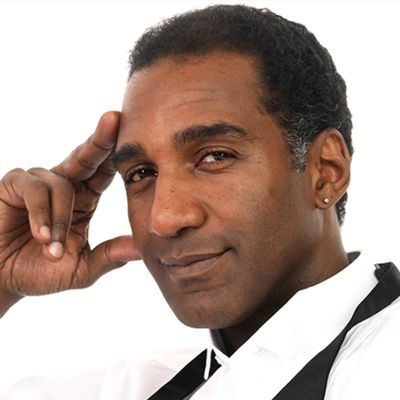
Stage and Screen Star Norm Lewis drops by to give us an early look into his upcoming show Ceremonies In Dark Old Men at St Clements Theater. Norm also recounts his time with A Soldiers Play, Les Miserables and working with Billy Porter on Pose... Read More
From the show: Behind the Awards with Eila Mell & Bruce Gotlieb
Guests
About
Stage and Screen Star Norm Lewis drops by to give us an early look into his upcoming show Ceremonies In Dark Old Men at St Clements Theater. Norm also recounts his time with A Soldiers Play, Les Miserables and working with Billy Porter on Pose.
Link for tickets -https://www.thepeccadillo.com/
Also in this episode - Joe Morton Emmy Win. Review of The Last 5 Years.
Emmy, Tony, and SAG Award nominee, NORM LEWIS (Russell Parker) was recently seen onstage starring in the national tour of the Tony Award-winning production of A Soldier's Play and in Andrew Lloyd Webber's West End Concert of Love Never Dies. He starred in Spike Lee's critically acclaimed, "Da 5 Bloods," and in the groundbreaking FX series, Pose. Additionally, Mr. Lewis can be seen starring opposite Hilary Swank in the feature "The Good Mother," Amazon Prime's newest series, Swarm, and Hulu's, Up Here. He was also seen as 'Caiaphas' in the award-winning NBC television special, “Jesus Christ Superstar Live in Concert!,” alongside John Legend, Sara Bareilles, and Alice Cooper. Mr. Lewis returned to Broadway in the Fall of 2021, starring in Chicken and Biscuits at the Circle In The Square Theatre. He previously appeared in the Broadway revival of Once on This Island and as Sweeney Todd in the Off-Broadway production of Sweeney Todd: The Demon Barber of Fleet Street at the Barrow Street Theatre, receiving the AUDELCO Award for his performance. In May of 2014, he made history as The Phantom of the Opera’s first African American Phantom on Broadway. He has been seen on PBS in the Live From Lincoln Center productions of Showboat with Vanessa Williams, Norm Lewis: Who Am I?, New Year’s Eve: A Gershwin Celebration with Diane Reeves, as well as American Voices with Renée Fleming and the PBS Specials First You Dream – The Music of Kander & Ebb and Ella Wishes You A Swingin' Christmas. He can be seen recurring in the VH1 series, Daytime Divas, also alongside Vanessa Williams. His additional television credits include Women of The Movement, Law & Order, Dr. Death, Mrs. America, Better Things, The Unbreakable Kimmy Schmidt, Bull, Chicago Med, Gotham, The Blacklist, and Blue Bloods, as well as in his recurring role as Senator Edison Davis on the hit drama Scandal. Mr. Lewis is a proud, founding member of Black Theatre United, an organization which stands together to help protect Black people, Black talent and Black lives of all shapes and orientations in theatre and communities across the country. He received Tony, Drama Desk, Drama League, and Outer Critics Circle award nominations for his performance as Porgy in the Broadway production of The Gershwins’ Porgy & Bess. Other Broadway credits include Sondheim on Sondheim, The Little Mermaid, Les Misérables, Chicago, Amour, The Wild Party, Side Show, Miss Saigon, and The Who’s Tommy. In London’s West End he has appeared as Javert in Les Misérables and Les Misérables: The 25th Anniversary Concert, which aired on PBS. Off-Broadway Mr. Lewis has performed in Dessa Rose (Drama Desk nomination, AUDELCO Award), Shakespeare in the Park’s The Tempest, The Two Gentlemen of Verona (Drama League nomination), Captains Courageous, and A New Brain. His regional credits include Porgy in The Gershwins’ Porgy and Bess (A.R.T.), Ragtime, Dreamgirls (with Jennifer Holliday), First You Dream, Sweeney Todd, and The Fantasticks. His additional film credits include Christmas In Tune (starring opposite Reba McEntire), Magnum Opus, Winter’s Tale, Sex and the City 2, Confidences, and Preaching to the Choir. Norm's albums "The Norm Lewis Christmas Album" & "This is The Life" can be found on Amazon.com as well as cdbaby.com.
Make sure to check out Eila's book, "The Tony Awards", and all her other amazing books: https://amzn.to/43WMu5Y.
Connect with Eila and Bruce:
- Instagram @behind_the_awards
- Eila @eilamell
- Bruce @cominghomewithbruce
Transcript
This transcript was automatically generated and might contain errors.
[0:00] Joe Morton: You know, when my category came up, the first thing I looked for was a doormarked exit. I want to thank the Academy, uh Scandal ABC, uh the scrumptious cast that I relish working with uh uh every week. Uh the the crew that worked so hard to make us look so good, the writers without whose words we would have nothing to say. I'd like to thank Linda Lowy, our our casting director, our producers, Betsy Bears, uh Harry uh Mary Howard, uh Tad uh Ted Tom. I'm not I'm not at all nervous while I'm up here.
[0:42] Eila Mell: Hello and welcome to Behind the Awards. I'm here today with my podcast partner Bruce.
[0:49] Bruce Gotlieb: Hello, Eila.
[0:50] Eila Mell: That was Joe Morton for his Emmy Win for Scandal.
[0:54] Bruce Gotlieb: Very scandalous.
[0:55] Eila Mell: I love Joe Morton. I mean, he's good in everything he does, but his character on Scandal was just is delicious the right word? Like deliciously sinister.
[1:03] Bruce Gotlieb: I guess I think that's very appropriate.
[1:07] Eila Mell: So I just couldn't get enough of him. It was even from the moment when he was first revealed, I remember watching the first time around, because I binged it since then. And she comes out, spoiler alert, in one of the episodes, there's all this paparazzi around because something happened. She gets into this limo, and you don't see his face yet, and all you see is Kerry Washington. She goes, Dad, and they cut to him. I think I yelled at my TV because then of course the credits it's over. It's not enough.
[1:40] Bruce Gotlieb: Right, it's not enough, Joe Morton.
[1:41] Eila Mell: Yeah. So last night I was lucky enough to go to The Last Five Years.
[1:48] Bruce Gotlieb: I'm so jealous.
[1:49] Eila Mell: I didn't even know that I want to be talking to you right now.
[1:53] Bruce Gotlieb: I'm sorry, but it was such a treat.
[1:57] Eila Mell: Oh, that's great. I'm so happy that it's good. I loved it. Um, I will say before I dive into what was going on. The tech of it all was really good.
[2:11] Bruce Gotlieb: David Zinn's set design was so um thoughtful.
[2:17] Eila Mell: Um, it is pretty much an open stage, but there are these little like models, maybe like five feet tall or four feet tall, like apartment buildings in the background, like it just really just so well done and and um practical.
[2:33] Bruce Gotlieb: Well, I guess is really the right word too. Everything that David Zinn does is always a treat to see.
[2:39] Eila Mell: Yeah, and the lighting designed by uh Stacey uh DeRoger. I probably am pronouncing her last name wrong, so I apologize, but it was so special.
[2:52] Bruce Gotlieb: Really?
[2:52] Eila Mell: There are moments so The Last Five Years takes place one character starting at the beginning and one character starting at the end, and then the two stories are told in reverse chronological order.
[3:04] Bruce Gotlieb: Do they meet in the middle?
[3:06] Eila Mell: They meet in the middle and then they continue along.
[3:07] Bruce Gotlieb: Oh, cool.
[3:08] Eila Mell: And there are certain points of the show where they're both on stage and there's different lighting on them. They're standing right next to each other and there's no bleed. One's in white and one's in like this warmer amber color. And it literally looks like you could draw a line in between them.
[3:26] Bruce Gotlieb: It was so well done.
[3:27] Eila Mell: That sounds so cool. It was done really, really well. The lighting was really special to me. Sound designed by Cody Spencer. Our friends and former guests, the Cooperman Brothers, Jeff and Rick, they did choreography. DeJ Ayate did costumes. I will say, I don't know how we're picking a best actress.
[3:46] Bruce Gotlieb: Oh boy. Another, another grave.
[3:49] Eila Mell: It was so good.
[3:51] Bruce Gotlieb: Oh, it's getting boring already, all these good performances.
[3:54] Eila Mell: The score, everything sits in like the perfect spot in her voice. You'd think it looks effortless. It's probably not.
[4:02] Bruce Gotlieb: I'm sure.
[4:03] Eila Mell: And this is Adrian Warren, let's just say.
[4:04] Bruce Gotlieb: Adrian Warren.
[4:05] Eila Mell: Of course.
[4:06] Bruce Gotlieb: Tony Winner or E.J. and Warren.
[4:07] Eila Mell: That's right. For Tina. Give her the give her the classification.
[4:10] Bruce Gotlieb: Absolutely.
[4:11] Eila Mell: It's it's so it's just, it's really well done. Um and Whitney White was the director.
[4:16] Bruce Gotlieb: Whitney White was the director, yes.
[4:18] Eila Mell: Good for her. Nick Jonas is good. I will say there have been some clips that they've the shows put out where people have been kind of on him for being too pop sounding or not sounding as good as she is.
[4:30] Bruce Gotlieb: I'm gonna say the clips don't do him justice.
[4:32] Eila Mell: He sounded really his vocal presence was there.
[4:35] Bruce Gotlieb: Oh, great.
[4:36] Eila Mell: They had really good chemistry together. I think he's so famous that he just will get a lot of criticism no matter what.
[4:42] Bruce Gotlieb: I think so.
[4:43] Eila Mell: Listen, she's definitely the superior actor.
[4:46] Bruce Gotlieb: Okay.
[4:47] Eila Mell: You know, it is what it is. He's performing, he's doing, you know, he's doing the job he was hired to do, obviously, but nothing against him or the performance. If we're talking about Tony nomination conversations, I don't know that he's in that. I think he gets outperformed by some others this season.
[5:05] Bruce Gotlieb: Okay.
[5:05] Eila Mell: It flew. It's 90 minutes, no intermission. I swore I was there for like a half hour. Just the pace of the show was so quick.
[5:13] Bruce Gotlieb: Wow.
[5:13] Eila Mell: I went in, you know me. I try to go in with a very moderate expectation.
[5:17] Bruce Gotlieb: I know.
[5:18] Eila Mell: This, aside from Smash, was the show that I was most excited about this season. And I just loved it. And it lived up to every expectation.
[5:26] Bruce Gotlieb: For the most part, good.
[5:27] Eila Mell: I think things that maybe I didn't love were overshadowed by the things that I did.
[5:32] Bruce Gotlieb: Good.
[5:33] Eila Mell: I will say that there were moments throughout the show where Adrian Warren mid-song the audience is applauding.
[5:41] Bruce Gotlieb: Oh wow.
[5:41] Eila Mell: No standing ovations, but that's fine. But there were breaths in the song where people felt so inclined.
[5:48] Bruce Gotlieb: Well, that's always an exciting moment.
[5:50] Eila Mell: It's really fun and exciting to see it. I didn't see the previous incarnation with Norba Leo Butts and Sherry Renee Scott, so I can't do a compare-contrast to what that looked like versus what this looked like.
[6:01] Bruce Gotlieb: Did you see the movie?
[6:03] Eila Mell: I did see the movie.
[6:04] Bruce Gotlieb: How does it compare to the movie then?
[6:06] Eila Mell: Um, I think a little different just because they're different actors. I liked the movie and the interpretation, but I think there's nothing like a live performance.
[6:14] Bruce Gotlieb: Yeah.
[6:15] Eila Mell: And I just I thought the way that they did it, the staging, everything was really, really well done. Now, do I think it's gonna get in in the conversation for best revival? I'm not sure because it's again another heavy race.
[6:28] Bruce Gotlieb: It is.
[6:29] Eila Mell: I don't think it would win, but it could get to get a nomination. The nomination is a lot easier than the win.
[6:35] Bruce Gotlieb: And then again, Avenue Q be wicked, so you never know.
[6:38] Eila Mell: Never ever know.
[6:39] Bruce Gotlieb: Right.
[6:39] Eila Mell: That still should be. And no shade to Avenue Q.
[6:42] Bruce Gotlieb: No, it's a great show.
[6:43] Eila Mell: But when you were looking at it, it was like it was wicked. Who's beating Wicked?
[6:46] Bruce Gotlieb: Exactly.
[6:47] Eila Mell: You would still think that today because of the longevity that Wicked's had.
[6:51] Bruce Gotlieb: So yeah.
[6:53] Eila Mell: But I would recommend it, even if you go just to hear Adrian Warren sing, it's just you can't go wrong with a night of that.
[6:59] Bruce Gotlieb: All right. Well, I'm gonna have to go see it.
[7:01] Eila Mell: Well, 14 weeks only.
[7:02] Bruce Gotlieb: Okay.
[7:03] Eila Mell: Limited run.
[7:04] Bruce Gotlieb: All right. I'll get there. And I will say to those that are listening, whether it's this show or another show, the leg room at the Hudson Theater is the creme de la creme.
[7:13] Bruce Gotlieb: Well, that is the best recommendation.
[7:16] Eila Mell: All right. Well, we have a great guest, someone who actually worked with Joe Morton.
[7:21] Bruce Gotlieb: That's right.
[7:22] Eila Mell: On Scandal. It's NORM LEWIS, who is just, I mean, Porgy and Bess and uh Sweeney Todd. Phantom of the Opera. I mean, you know, the resume. And then Pose and Scandal and you know.
[7:36] Bruce Gotlieb: Let's bring him out.
[7:37] Eila Mell: We have so much to go over, but he's in a new show, so let's talk about that.
[7:41] Bruce Gotlieb: Absolutely.
[7:45] NORM LEWIS: Hi, this is NORM LEWIS. And Behind the Awards, we'll be right back.
[7:51] Eila Mell: Well, Bruce, we're so excited.
[7:53] Bruce Gotlieb: I know. We talked about this off the air.
[7:56] Eila Mell: Um, how excited we were to have NORM LEWIS on our show. Welcome, Norm.
[8:00] NORM LEWIS: Thank you so much. I appreciate this. This is uh awesome. Thank you so much for joining us. We're thrilled. Just um, before we start talking about Ceremonies in Dark Old Men, I have to tell you that I went to see Chicken and Biscuits.
[8:12] NORM LEWIS: Oh, okay.
[8:13] Eila Mell: And I was so happy that you sang even just a little bit in the shower. They think people just expected. I remember when I was watching uh both times even because I rewatched Scandal recently. Uh huh. Um, watching him being like, is he gonna break out into songs? Is there like a senator song gonna happen? It wasn't, but had there been a musical version. I know a lot of shows were doing that uh around that time. Uh that would have been a lot of fun.
[8:39] NORM LEWIS: That's true.
[8:40] Eila Mell: That's true. All right, let's jump right in because Ceremonies in Dark Old Men has such a great legacy. It originated with the Negro Ensemble Company, and it hasn't had a production in what, 40 years, something like that?
[8:53] NORM LEWIS: Something like that. Originally it was 1969, and I think there've been a couple of revivals after that. But uh yeah, originally 1969.
[9:02] Eila Mell: Wow.
[9:03] NORM LEWIS: Yeah. And Douglas Turner Ward played this part, who happened to uh direct the uh Soldiers Play that I was on a couple of years ago, uh the National Tour. So it's all like a family that just kind of stays together with the Negro Ensemble.
[9:18] Eila Mell: Uh Did your relationship with him with the Soldiers Play? Is that how this kind of came to be?
[9:24] NORM LEWIS: You know, it's interesting. I'm not quite sure. Uh I know that uh I'm lucky enough to have been in the legacy of what the Negro Ensemble had put out originally, and I'm just honored to be a part of this production right now. And uh, but but the Negro Ensemble actually is uh co-producing this as well.
[9:42] Eila Mell: So that's amazing.
[9:45] NORM LEWIS: I know that when David Alan Greer did A Soldiers Play, this was Turner Ward came to see that, and he was very, very touched by that, and that was such a special experience for him.
[9:55] Eila Mell: Yeah, unfortunately, I never got a chance to meet him. He had passed away like right before I joined the uh national tour, right before we got started. But his legacy lives on.
[10:04] NORM LEWIS: Was this a show that you knew as a young actor?
[10:07] Eila Mell: No, actually, funny enough, I had no idea until it was presented to me a few months ago that this was even on the radar. Um I've heard of other shows and other plays that the Negro Ensemble have done, but for some reason this one just never made it to my radar, and it was interesting because doing a little bit more research, finding out this was a runner-up to the Pulitzer Prize that same year, and I'm like, wow, this is wow. This is something amazing. I'm I'm glad that I got introduced to this and now in it.
[10:37] NORM LEWIS: Was it an easy yes for you once you read it?
[10:39] Eila Mell: Uh yeah. Oh, yeah. Funny enough, yeah, yeah. Um, again, it's about representation. It's about uh, you know, being a part of a great legacy of writers and you know, and and just uh people who have done this show before, and so I'm just yeah, you know, very excited about it.
[10:58] NORM LEWIS: And Rosalind Cash, she was in the original cast.
[11:00] NORM LEWIS: Right, yeah. So she was amazing.
[11:02] NORM LEWIS: So people can expect when they come to see it, an evening of a more dramatic storytelling. Interestingly enough, this show, I would I I'm not sure if I would categorize it as a dramedy, but there's a lot of humor that's in this show. Um, and even I didn't realize it as I was reading it by myself. But once we did the table read, and now that we're in the throes of the rehearsal process, it's like wow, this is actually there's some major humor in there. It's some like very subtle humor, some physical humor that you're gonna see. So I'm excited to get started with this whole thing. I feel like the best plays are a mix, you know, you can't just say they're one thing.
[11:49] Bruce Gotlieb: Right, right, right, truly. And I like the subtle humor too. I like it being floated out there, and you know, because it's smart.
[11:58] NORM LEWIS: It's then it's smart, and I like that. It's my brand of humor.
[12:01] Bruce Gotlieb: So exactly. So can you tell us about the rest of your cast?
[12:07] NORM LEWIS: Yeah, a lot of these people are new, and it's funny because I, you know, being the old guy now in these shows, it's funny. I've never met these people before. Um, actually there was one particular person I did Jesus Christ Superstar with, and that's Felicia Boswell. Um, and she reminded me because she was like, you know, it's been since 2000 and 18 since we did the Jesus Christ Superstar. She came up to me and she's like, Norm, remember? And I did, I remembered the face, it was familiar, but then she showed a picture of us together. And I said, Oh, she had on a wig. Oh, I remember that wig, definitely. But yeah, Felicia Boswell, Morgan Green, Rice, Michael Wood, Jeremiah Packer, Calvin M. Thompson, and James Foster Jr., who I've known for a while as well.
[12:57] Bruce Gotlieb: Oh, nice. So, do you feel like you have to be the leader of the company because you've worked so, you know, so much more than everyone else?
[13:04] NORM LEWIS: Well, I listen, my name is definitely, you know, there people are using that name. Thank God someone wants to see me. But what I would say is that it's truly an ensemble piece. And we are learning from each other. We are building a little family right now, and it's becoming an amazing thing in such a short amount of time. I think that happens in theater anyway. But when it's when you're dealing with a piece like this, I think it just kind of elevates it, and it's so dense with the material that you kind of rely on each other.
[13:37] Bruce Gotlieb: You talked about representation, which right now, you know, you can't help but know how important that is. Not that it's always important, but right now it's just so important. Do you find that where we are currently is lending itself to how you guys are leaning into the piece or portraying the piece a little bit?
[13:55] NORM LEWIS: Absolutely. And thank you for that question. Yes. D E I. Let's say it. Let's say it out loud. D E I. Yeah. D E I. And I think was it Alicia Keys at their Grammys or something that says it's you don't have to fear it, just respect it. It's just one of those things that is, you know, they're now using certain words to turn negative. And it's not. It's not a negative thing. So DEI is about having a seat at the table. It's about, you know, I listen, I'm kind of digressing, but it's part of what I'm dealing with with Black Theatre United. And we're doing that not only in this world of theater, but it's one of those things that we are partnering with corporations who see the need for this, but they're doing it through the lens of the theatrical community.
Anyway, I'm digressing. But yes, representation is key. And it's, you know, it's one of those things that when I saw Andre DeShields and I saw Ken Page God Rest His Soul, when I saw Robert Guillaume, you know, as the phantom, I didn't actually see him do it, but I saw that he was doing it in pictures and everything. God rest his soul. But it gave me hope that I could do it. So it's about representation. And from my understanding, I've been that symbol for a few people as well, not only in my culture, but other cultures as well.
[15:20] Bruce Gotlieb: Did you ever think you'd see the day where our government was trying to erase people like Jackie Robinson and the Tuskegee Airmen? I mean, it's insane what's happening.
[15:26] NORM LEWIS: No, it is very insane. And so I think though, I think what this has done is awakened a spirit that has been dormant for a while. People have been seeing something else and the flashes of something else, and so I think even on both sides, a lot of people are like, wait a minute, this I thought it was this way, but it's really this way. So I think it can I will continue. And I actually see a positive in this that it will continue to grow and we'll be more cohesive and more unified.
[16:01] Bruce Gotlieb: Well, yeah, if something like that, if people can, you know, get together, unite and care about something, that's an important thing too.
[16:08] NORM LEWIS: So yeah, hopefully that will be the case. Correct me if I'm wrong. This play, the setting of this play is taking place in the 1960s, correct?
[16:16] Bruce Gotlieb: No, 1950s.
[16:18] NORM LEWIS: Oh, 1950s. Okay. Yeah. Got it. Yeah. So we're still in that turbulent time that, you know, that Jim Crow era, yeah.
[16:24] Bruce Gotlieb: Yeah.
[16:25] NORM LEWIS: And it's the beginning, though. I will say this. It has helped me, actually. You know, someone who is of a certain age, that it's helped me realize the transitions and when they started. So my understanding is that during this time, because we're portraying this in 1956. And so I think it's the beginning of people starting to understand that there is a movement getting ready to happen. I think the Black Panthers came out of this era. It was just the beginning of that. And then Martin Luther King, he was around, but he hadn't had the notoriety that he, you know, obviously got later on. But it was, yeah, it was the beginning of those times.
[17:08] Bruce Gotlieb: It's funny that since this play has was written, there's sort of like a genre of barbershop kind of themed entertainment, right? So, you know, I'm sure this is very different from the Barbershop movies, but still, you know, I think people like that kind of setting. And even, you know, Steel Magnolias too, that's sort of is that same kind of thing. And so it's what about that setting lends itself to being so great for theater?
[17:35] NORM LEWIS: Well, it's funny, our story is gonna be a little bit different, but the fact that it is that setting, you know, they say some of the best psychologists are barbers and bartenders. But yeah, we're using this, and you know, this character, Russell B. Parker is someone who wants to be a great businessman, a great barber, doesn't quite make the mark. There's some emotional and psychological problems that he's going through. But yeah, it is kind of an interesting thing. And it's, and as you know, even in the campaigns this past year, a lot of them were set in the barbershop. It's been a place and a hub for people to communicate with each other. And like you said, with Steel Magnolias, even the salons, you know, hair salons, it's a place where people just kind of come to relax to get serviced, and then they can open up.
And the barbershops that I grew up in were very political, very they talked about that, they talked about a lot of sports, there were a lot of arguments, never escalated into fights, but definitely very intense. Both very passionate subject matter towards politics.
[18:49] Bruce Gotlieb: Wow, religion, all that.
[18:51] NORM LEWIS: Yeah. I remember seeing an episode of Everybody Hates Chris, and it was a big thing when the father brought Chris to the barber shop for the first time.
[19:00] Bruce Gotlieb: Yeah, yeah.
[19:00] NORM LEWIS: Yeah. And I think, you know, I'm not sure. I know in my, you know, my particular experience in our culture, it definitely is a place of going there and being able to, you know, it's a safe space. You can talk about anything and say anything and you know, that kind of thing. And I'm sure that that happens in other cultures, but I can only go from my experience.
[19:18] Bruce Gotlieb: Yeah. Well, we need more of those spaces too.
[19:21] NORM LEWIS: That's true. So what does the title mean?
[19:24] Bruce Gotlieb: That's a great question.
[19:26] NORM LEWIS: I'm still trying to figure that out, you know, um, it's ceremonies and dark old men. And it's funny because even when we first accepted this particular play, I kept saying ceremonies of. You know, it would for some reason it just fell more off the tongue. And then once I started reading it, obviously and getting more, oh no, it's ceremonies and dark old men. I am gonna have to like let the audience maybe figure that out for themselves. We are telling a story through the lens of a particular culture, which happens to be African American, and that is gonna be the beginning of trying to figure out the title. Um, but you know, it's we're I think the revelations of finding out who we are, you know, my sons and our relationship, my best friend who I play in the show, and celebrating that relationship.
We both have similar situations where we're both widowers, and then there's an element that comes in to try to help us earn money in a certain way. And his story, and you find out more about him as well. It's beautifully crafted.
[20:37] Bruce Gotlieb: It's slated as a very strictly limited engagement. Is there is there room? Is there room? Is there a goal, or maybe if this is received well and then it could go on from there?
[20:49] NORM LEWIS: You know, no one has discussed anything with me, so I'm kind of like waiting myself, so I'm with you. Yeah, but I feel like people will start something like this. I mean, I don't think that they would bring it back to just kind of give it such a small amount of time. I'm hoping that there might be some future thing with this show. Cause it's dark. It really is a lot, it's a lot. And um, you know, and we're again like I was saying, because we've only been in rehearsal for a short while, and so but we've become so close in that short time. And um, you know, to know that we only have six weeks, yeah, is kind of like oh, oh god, okay. So I think people will hopefully come to see it and maybe have a future.
[21:33] Bruce Gotlieb: Absolutely. Well, we're hoping people will too.
[21:36] NORM LEWIS: Yeah, we already have tickets to see it. We're so excited.
[21:38] Bruce Gotlieb: Yes.
[21:39] NORM LEWIS: Good, good. Yeah, and your set designer, Harry Feiner, was my college professor.
[21:43] Bruce Gotlieb: Oh, you're kidding.
[21:44] NORM LEWIS: Yeah.
[21:45] Bruce Gotlieb: Oh, that's wild.
[21:46] NORM LEWIS: Oh my god, look at the tie into that.
[21:48] Bruce Gotlieb: That's amazing.
[21:49] NORM LEWIS: I know. He designed, you know, so many wonderful shows that I was in, so I can't wait to see what he's doing for you.
[21:56] NORM LEWIS: Yeah, you know, it's interesting.
[21:57] NORM LEWIS: We've only seen sketches, so right now we're doing a lot of the staging on just tape, right? And some furniture or pieces, but seeing the sketches, it looks really fantastic. So, how much of it changes for you when you actually get onto a set? It helps a lot because when you know, coming from a musical theater background, a lot of times choreography really helps you memorize the text or the song or whatever. And this definitely will, you know, because we've been table reading for a little bit and we just started kind of getting it on its feet, and we're not doing any sort of revived version of this in the sense of like when I did A Soldier's Play, everything was pretty much sketched out, and we just kind of had to fall into line and then bring who we are into it.
But with this, this is all new, and even some of the directorial things that are in this script, we go, hmm, I don't know if that will work in this particular instance. So we're trying to figure all that stuff out. But no, it does help a lot because it's like at this point, I have to get up and go to the counter and get the glass and blah, blah, blah. So yeah.
[23:13] Bruce Gotlieb: And the space you're at St. Clement's, which is such an intimate space. And there's really no bad seat, which is wonderful from an audience perspective. You don't have to worry about the raking is great. You don't have to worry about somebody tall in front of you.
[23:27] NORM LEWIS: Exactly. You feel like being in that environment is helping also with the way that the story is told.
[23:35] Bruce Gotlieb: I think so. You know, being in an intimate space. I love doing intimate shows. You know, I did Sweeney Todd at the Barrow Street Theater.
[23:42] NORM LEWIS: Yes. And it was very immersive. And so, yeah, when you can connect with the audience in a way, you know, they're another character. So it really, really helps a lot. And I've been, you know, it's funny, I've been racking my brain. I know I've been to that space before. I just can't remember which show it was, but I was like, God, this is so familiar. But um, but I also, funny enough, when I first moved to New York, it'll be 36 years now. Back in September, it'll be 36 years. My apartment was the apartment building right next door to St. Clement's, and I was like, oh wow, this is amazing.
[24:24] Bruce Gotlieb: Oh yeah. It's so great when there's a full circle moment like that.
[24:28] NORM LEWIS: I love it. Was it a theater at that time?
[24:31] Bruce Gotlieb: Yes.
[24:32] NORM LEWIS: Uh-huh. Yeah. That's great. Well, speaking of Sweeney Todd, I saw you at the opening on Broadway.
[24:38] Bruce Gotlieb: Oh, wow. That was such a fun night.
[24:40] NORM LEWIS: Yeah, I was dressed really weird. I wanted to go see my friend Josh, this guy named Josh Groban. You might have to do it.
[24:49] Bruce Gotlieb: Oh, yeah. Some hack.
[24:51] NORM LEWIS: Some hack. Yeah, yeah. But um, I didn't want to wear any sort of formal attire, and I ordered it was the dumbest thing in the world, but I ordered a sweatshirt that had blood all over it. Yeah. And I just wanted to be silly, but it was a lot of fun. He was great.
[25:08] Bruce Gotlieb: Well, I'm sure people are excited to get you back on the stage because it's been a minute.
[25:14] NORM LEWIS: So for New York at least.
[25:15] Bruce Gotlieb: Yeah. I know for me, my first time I saw you was when you were Javert in Les Mis.
[25:20] NORM LEWIS: Oh wow. And I will say it was the first show I'd seen years ago, and it stayed with me. But you as Javert was the character I didn't even realize existed the first time I saw it. And then you singing "Stars" just changed my life.
[25:35] NORM LEWIS: Oh, you're kind. Thank you so much. Yeah, I was very honored to be a part of that ensemble. And you know, we called it was a quote unquote revival, but it really was just a reboot. That's what we called the link. I think it had closed three years before that, and then just we did the same show.
[25:55] Bruce Gotlieb: Yeah right. That's it.
[25:57] NORM LEWIS: I mean it's like you just blame it.
[25:59] Bruce Gotlieb: Yeah. That's what people wanted anyway.
[26:01] NORM LEWIS: Yeah, exactly. Yeah, but what great music to be able to sing.
[26:04] Bruce Gotlieb: Yeah, yeah, yeah.
[26:05] NORM LEWIS: I was very like I said, I saw the show before I moved to New York. It was on my birthday, June 2nd in 1987, and I was still living in Orlando, Florida, working for a newspaper, and I came up to hang out with a couple of friends. I actually even took the Amtrak all the way from Orlando. I wanted to see what that was.
[26:27] Bruce Gotlieb: Oh, I love that.
[26:28] NORM LEWIS: That's a rough ride, yeah. Well, it was actually kind of cool because I had my own car, you know, my own little slot.
[26:36] Bruce Gotlieb: Well, that's nice.
[26:37] NORM LEWIS: I slept and I ate and I watched the countryside and the whole thing, and I got up. And then I went to someone mentioned something about I said, Well, what shows do I need to go see? You know, that's everybody's question when you are from somewhere else. And my friend mentioned something about Les Mis. I was like, what is a Les Mis? And so I got tickets because I said, um, this will be my payment for you to allow me to stay here. And we went to the show and I was balling, balling first act, balling second act. And I was like, man, I really want to be in that show. Now, again, these were just fantasies because I had not quit my job. I still had not been a professional actor at the time, but I said to myself, I want to be in this show. I want to be in the show. And luckily, you know, some years later, 20 some odd years later, I get to go and be in a Broadway production of the show.
[27:30] Bruce Gotlieb: That's incredible.
[27:32] NORM LEWIS: Yeah. Did you listen? It's great to be a musical theater star, but were there any hurdles in crossing over to non-musical roles?
[27:42] NORM LEWIS: Hurdles. Um, I guess that's a good term. I will say it was more challenging being known as a musical theater guy. And people like, in fact, there was a show that I wanted to do, a piece. I don't want to mention it right now, but there was a piece I wanted to do and to option. And I went to a very famous director and I said, Hey, can you be a part of this with me? And he was like, Well, you should turn it into a musical. And I was like, Oh man, that's completely the opposite of what I wanted to do. So it has been a little bit of a challenge. Luckily, a lot of the non-musical things that I've done have been TV and film. And so I've been lucky to do that. But yeah, to answer your question, this is my third play. Chicken and Biscuits was my first. And that was in 2021 when we came back from the pandemic. And then luckily I got seen and heard in A Soldier's Play. And now this show. And, you know, just to talk about your TV and film, you had such a beautiful arc on Pose.
[28:42] Bruce Gotlieb: Oh, thanks.
[28:44] NORM LEWIS: That was a lot of fun.
[28:46] Bruce Gotlieb: I'm sure.
[28:46] NORM LEWIS: That was a lot of fun working with Billy. And it was interesting too because we had a kissing scene. And we kept doing it from different angles. So we basically kissed a lot that night when he was shooting it. And the funny thing about it though, before we got started, Billy was like kind of nervous about it. I'm like, Billy, it's me. It's me. He said, that's the problem. He said, I see you as my brother. Because we've known each other for so long. But we got through it definitely. And it was really, it's so funny. I've had more women come up to me in different places who've seen the show and it's like, why did you leave him? Yeah, people forget that you're not who you, you know, once it's cut and you go about your life, you're no longer that character.
[29:33] NORM LEWIS: Right, right, right. Yeah. So you know, I know it's still early in the process, but what are you learning from Ceremonies in Dark Old Men?
[29:41] NORM LEWIS: History for one. We are delving into music at that time. We're delving into the politics of that time. We're delving into, like, I just found out that there was the first African-American policeman was someone, oh, I'm forgetting his name now, but it was an he was sworn in 1911 and was there until 1941. And so there was a police African American police presence. There were not a lot of African American policemen, but they were there. They were around because someone had mentioned that. Like who's doing the arresting or who would be on watch while we're doing this illegal activity? And so we did a little bit of research on that. Again about the Black Panther movement, the beginnings of that, beginnings of civil, you know, I don't want to say beginnings of civil rights, but what we know as the civil rights movement. And yeah, so and it's been an interesting, interesting, interesting journey of learning the history that I did not know.
[30:46] Bruce Gotlieb: It's so important though to do that homework because then you know, your subtext is so much more rich.
[30:52] NORM LEWIS: Absolutely. Well, we're so excited to see it. How can people get tickets?
[30:57] NORM LEWIS: Ah, thank you for asking, because that's vitally important. Yes. You need it to the peccadillo dot com. So that's P E C C A D I L L O. So it's T H E P E C C A D I L L O dot com. And you'll find some tickets there. Actually, you'll find there was a television version of this. There's even a video, a little bit of a video on that page as well.
[31:27] Bruce Gotlieb: Oh, how fun.
[31:28] NORM LEWIS: Yeah. That is. All right. Well, performances start April 11th. That's when we pre start previews. Then we officially open April 18th, and we right now will run until May 18th.
[31:41] Bruce Gotlieb: All right. Well, don't miss it. It's just such a special experience to see live theater, but especially in an intimate space because you're going to be right up there, you know, with the actors, and you're going to feel part of it. You know, that's really the advantage of having an intimate space, I think.
[31:59] NORM LEWIS: Yeah. You get a very different experience than being in a big Broadway house.
[32:04] Bruce Gotlieb: So I hope everyone will join us there.
[32:07] NORM LEWIS: Yes. And is there anything that coming up for you that we don't yet know about that you can talk about?
[32:13] NORM LEWIS: That I can talk about. Well, not just yet, but just know that I'm known as Mr. Holiday in New York. I've been now 54 Below every year for Christmas. And we're trying to work out a schedule, so there might be some upcoming announcements dealing with that. We're again it's in the works, so it's not official just yet. You know, maybe, maybe something like that will happen.
[32:37] Bruce Gotlieb: Maybe, yes. And well, you'll have to come back if it does.
[32:40] NORM LEWIS: Yes.
[32:40] Bruce Gotlieb: And we can bring people into that.
[32:42] NORM LEWIS: Absolutely. Absolutely. Well, thank you so much for joining us, and we will see you all next time on Behind the Awards.
[32:49] NORM LEWIS: Thank you.
[32:50] Bruce Gotlieb: Bye.
[32:50] NORM LEWIS: Bye.
© Broadway Podcast Network, All Rights Reserved