

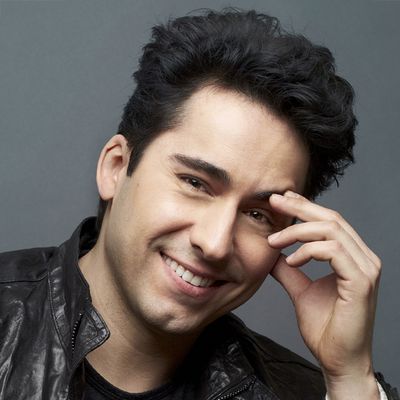
How do you get Clint Eastwood’s attention…Ask a Jersey Boy with a great falsetto. John Lloyd Young told us how to succeed in show business... Read More
From the show: Behind the Awards with Eila Mell & Bruce Gotlieb
Guests
Featured Shows
About
How do you get Clint Eastwood’s attention…Ask a Jersey Boy with a great falsetto
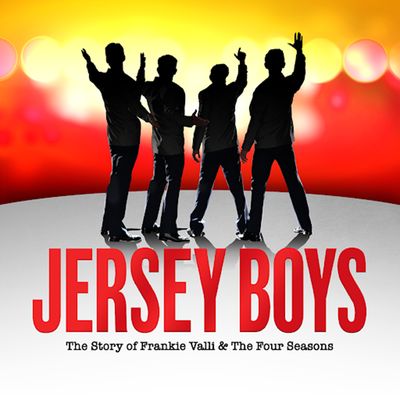
John Lloyd Young told us how to succeed in show business. From seeing Big River as a kid- produced by Dodger Theatricals and directed by Des McAnuff to interning with the production firm and later making his Broadway debut in Jersey Boys helmed by the same director and producers. John Lloyd Young shared what it took to land the role of Frankie Valli in the file version, directed by Clint Eastwood.
What does Barbara Cook, Ertha Kitt and John Lloyd Young have common? The Cafe Carlyle where John Lloyd will be appearing May 14th-18th. John Lloyd Young tells us that he returns to The Cafe Carlyle every year because its a piece of New York City history that is frozen in time.
Also in this episode - Sally Fields Oscar win for Best Actress in a Motion Picture for Places in the Hear in 1985.
Bruce & Eila discuss JT Rogers’ new play Corruption at Lincoln Center’s Mitzi E. Newhouse Theater.
Film, stage and concert artist, John Lloyd Young, is a Tony and Grammy winner, multi-Platinum recording artist and Presidential Appointee. As the original “Frankie Valli” in Broadway’s Tony Award-winning Best Musical, Jersey Boys, Young garnered unprecedented accolades from the New York and national media, going on to become the only American actor to date to win all four major Broadway Leading Actor in a Musical honors for a Broadway debut: the Tony, Drama Desk, Outer Critics Circle and Theatre World Award. Young starred in Jersey Boys on London’s West End, and was hand-picked by director Clint Eastwood to reprise his role in the Warner Bros. film adaptation, becoming one of only a select-few actors in entertainment history to take his Tony-winning role to the big screen.
Over the years, Young has sung selections from Jersey Boys several times at the White House, in the halls of Congress, and to Kennedys, Clintons, Bushes, Obamas, Bidens, Trumps, Pences, the Prime Minister and First Lady, Shinzo and Akie Abe, of Japan and the President and First Lady of Finland, Sauli Niinistö and Jenni Haukio.
As a concert artist, Young has taken his expertly-curated repertoire of classic pop and R&B to filled-to-capacity rooms, thrilling his audiences with a “disciplined one-in-a-million high tenor shading into falsetto that he can direct through the stratosphere” (The New York Times). He has played The White House, Carnegie Hall, Lincoln Center, The Hollywood Bowl, The John F. Kennedy Center for the Performing Arts, the U.S. Embassy in Finland, Mar-a-Lago, Clint Eastwood’s Tehama Country Club, New York’s Café Carlyle, Feinstein’s in NY and San Francisco, Radio City Music Hall, the Macy’s Thanksgiving Parade and New Year’s Eve in Times Square.
Appointed to the President’s Committee on the Arts and Humanities by Barack Obama, Young was sworn in at the Supreme Court of the United States by Justice Elena Kagan. As a member of the Committee, Young represented the United States on the first U.S. Cultural Mission to the Republic of Cuba, along with fellow Committee members Kal Penn and Alfre Woodard, guest artists Usher, Smokey Robinson, Dave Matthews, violinist Joshua Bell, playwright John Guare, U.S. arts officials, including the Chairs of the NEA and the Smithsonian Institution, and members of Congress.
A resident of Los Angeles, Young was educated at Brown University and in Spain at the University of Salamanca. He knows fluent Spanish, conversational and written Mandarin, and sings in several languages, including Spanish, Mandarin, Hebrew and Italian. Trained by world championship title holders and Chinese Shaolin monks, Young holds a brown-belt in Shaolin Temple-style kung fu, and is a student and practitioner of Chinese Chan Buddhism.
Make sure to check out Eila's book, "The Tony Awards", and all her other amazing books: https://amzn.to/43WMu5Y.
Connect with Eila and Bruce:
- Instagram @behind_the_awards
- Eila @eilamell
- Bruce @cominghomewithbruce
Transcript
This transcript was automatically generated and might contain errors.
[0:00] John LLoyd Young: Hi, this is John LLoyd Young, and you're listening to Behind the Awards.
[0:04] John LLoyd Young: But I want to say thank you to you. I haven't had an orthodox career, and I've wanted more than anything to have your respect. The first time I didn't feel it, but this time I feel it. And I can't deny the fact that you like me right now. You don't like me.
[0:34] Bruce Gotlieb: Boy, Sally was excited that day.
[0:36] Eila Mell: She was.
[0:37] Bruce Gotlieb: I mean, her second Oscar.
[0:39] Eila Mell: That's pretty exciting.
[0:41] Bruce Gotlieb: 1985.
[0:42] Eila Mell: Best actress for Places in the Heart.
[0:44] Bruce Gotlieb: Yes.
[0:45] Eila Mell: And hello and welcome to Behind the Awards. How are you doing, Bruce?
[0:47] Bruce Gotlieb: I am good, Eila Mell. How are you?
[0:50] Eila Mell: I'm doing fabulously.
[0:53] Bruce Gotlieb: So who doesn't remember that iconic Sally Field moment, right?
[0:56] Eila Mell: And who doesn't like her? I need names.
[0:58] Bruce Gotlieb: Yeah, who wasn't liking her before? Maybe she just had a bad self-image.
[1:02] Eila Mell: Maybe.
[1:03] Bruce Gotlieb: Maybe.
[1:03] Eila Mell: So she won her first Oscar for Norma Rae.
[1:07] Bruce Gotlieb: Yes.
[1:08] Eila Mell: When she would stand up on the table with the big sign.
[1:11] Bruce Gotlieb: Yeah.
[1:11] Eila Mell: That's right.
[1:12] Bruce Gotlieb: That's how I remembered anyway.
[1:13] Eila Mell: Yeah, and this was her second.
[1:15] Bruce Gotlieb: Yeah, amazing.
[1:16] Eila Mell: I like Places in the Heart. Did you ever see it?
[1:18] Bruce Gotlieb: I did not.
[1:18] Eila Mell: Yeah, I had a thing for John Malkovich.
[1:20] Bruce Gotlieb: Okay.
[1:21] Eila Mell: So I still I think he's great.
[1:23] Bruce Gotlieb: We should get him on the show.
[1:24] Eila Mell: All right. Call him up.
[1:25] Bruce Gotlieb: Alright, I will do that.
[1:28] Eila Mell: So, um, what are we what did we see recently, Bruce?
[1:32] Bruce Gotlieb: We went uh to see Corruption at Lincoln Center.
[1:36] Eila Mell: Yeah, now I will disclose that the playwright and I went to theater camp together years ago to use Dan. And um JT Rogers, and so he is my friend.
[1:48] Bruce Gotlieb: But that is not the reason that I loved Corruption. I just think it's a fantastic play.
[1:51] Eila Mell: I thought it was really good.
[1:54] Bruce Gotlieb: Yeah.
[1:55] Eila Mell: Um, and not really knowing because uh one of the things I think, depending on how um in tune you are with you know political scenes and so forth.
[2:07] Bruce Gotlieb: Right, mm you might go into this play and not realize it actually is a true story.
[2:11] Eila Mell: Well, I didn't know what to expect going in.
[2:13] Bruce Gotlieb: Right. I just knew that it had something to do with Rupert Murdoch.
[2:17] Eila Mell: Because I don't like to know if I can avoid any description of the show.
[2:20] Bruce Gotlieb: I do. I like it to just unfold.
[2:23] Eila Mell: Yes.
[2:24] Bruce Gotlieb: You are a spoil-free zone.
[2:26] Eila Mell: That's right.
[2:27] Bruce Gotlieb: Yeah. I don't want to hear anything. I just want to go and see it as they present it to me.
[2:32] Bruce Gotlieb: Going in, though, when when you sat down, um, from the look of the the design of the playbill to sitting down, it's um uh not a full circle, it's a three-quarter, if you will.
[2:45] Eila Mell: Yeah, right. It's not in the realm, but sort of but close, close.
[2:48] Bruce Gotlieb: But you can tell you were you were in, if not a newsroom, you were definitely within a media frenzy.
[2:55] Eila Mell: Absolutely.
[2:56] Bruce Gotlieb: Yes, it definitely felt like a newsroom right away because there are multiple screens. Michael Jurgen's set has sort of a circle of screens with video going as you walk in.
[3:07] Eila Mell: Um it's just so nice to go to Lincoln Center to see a show anyway. I mean, it's such an iconic even just walking up the steps to go in, it's it's just yes, and dinner at PJ Clark's before, you know, it's just it's fun.
[3:21] Bruce Gotlieb: We made a night of it.
[3:22] Eila Mell: We did, we always do.
[3:23] Bruce Gotlieb: People are gonna think that we're married.
[3:25] Eila Mell: We are very much not married, but you know.
[3:27] Bruce Gotlieb: But it's close as you can be.
[3:29] Eila Mell: That's right.
[3:30] Bruce Gotlieb: Well, we go to a lot of shows together.
[3:31] Eila Mell: We do.
[3:32] Bruce Gotlieb: That's that I think people will understand what our relationship is if we say that.
[3:36] Eila Mell: Of course.
[3:38] Bruce Gotlieb: A woman and a man who are very good friends who see a lot of theater.
[3:42] Eila Mell: Correct.
[3:43] Bruce Gotlieb: I think that's code.
[3:43] Eila Mell: They'll get it.
[3:44] Bruce Gotlieb: They'll get it.
[3:46] Eila Mell: So I was really excited to see Corruption because you know it's my friend's show, but also because Dylan Baker is such a great actor.
[3:54] Bruce Gotlieb: He is.
[3:55] Eila Mell: And I not that it was a smaller part, but I I going in, you know, when you're looking at the um when you're in the lobby waiting for the show to open, there's the the poster.
[4:05] Bruce Gotlieb: Right.
[4:05] Eila Mell: You see all the names.
[4:06] Bruce Gotlieb: The names and he's at the top.
[4:08] Eila Mell: Granted, it's alphabetical. But you're not thinking that. Like I didn't realize.
[4:11] Bruce Gotlieb: So yes, I was expecting his character to be the lead character just because his name was listed first. And you know, we know who he is. He's a great character.
[4:19] Eila Mell: A hundred percent.
[4:19] Bruce Gotlieb: Right. And Saffron Burroughs, who was, you know, great. She was, I think, number two.
[4:24] Eila Mell: So made sense.
[4:26] Bruce Gotlieb: And then, you know, the the play starts, and you you get this unfolding of characters and and all that's going on.
[4:34] Eila Mell: So there's, I think, what, like a half dozen people in the cast, approximately.
[4:39] Bruce Gotlieb: Maybe, maybe ten, maybe a little more.
[4:42] Eila Mell: I don't know.
[4:43] Bruce Gotlieb: Yeah. It's it's a a medium-sized cast.
[4:43] Eila Mell: A medium-sized cast with then, I would say double the amount of characters.
[4:50] Bruce Gotlieb: Oh, at least.
[4:51] Eila Mell: Yeah.
[4:52] Bruce Gotlieb: So almost everyone plays multiple roles in the show.
[4:56] Eila Mell: Except for Saffron Burroughs. She's one character.
[4:58] Bruce Gotlieb: And Toby Stevens, who it's really his story.
[5:02] Eila Mell: It is. I think he was so captivating.
[5:04] Bruce Gotlieb: He's great.
[5:05] Eila Mell: So he was the lead in Oslo, not New York.
[5:09] Bruce Gotlieb: Okay.
[5:09] Eila Mell: He so that was JT's other stuff.
[5:12] Bruce Gotlieb: I was gonna say, are they a package deal?
[5:14] Eila Mell: No.
[5:15] Bruce Gotlieb: Um Jefferson Mays did it on Broadway.
[5:17] Eila Mell: Okay.
[5:17] Bruce Gotlieb: Um but Toby Stevens is wonderful.
[5:19] Eila Mell: And we didn't even realize this, but who is his mother?
[5:21] Bruce Gotlieb: Um do you remember?
[5:23] Eila Mell: I do.
[5:24] Bruce Gotlieb: Um please, Dame Maggie Smith.
[5:27] Eila Mell: Thank you.
[5:27] Bruce Gotlieb: Oh my gosh, that's incredible. I mean, that's you know, stage royalty right there.
[5:32] Eila Mell: All royalty screenworks.
[5:34] Bruce Gotlieb: Yeah, I mean she's a dame.
[5:36] Eila Mell: Really?
[5:37] Bruce Gotlieb: Uh yeah, exactly.
[5:41] Eila Mell: Literal.
[5:41] Bruce Gotlieb: I really like the show. I didn't understand at first that people were playing multiple characters.
[5:47] Eila Mell: It's not it wasn't obvious because the first person who I noticed was doubling was John Bellman, who was fine shocked.
[5:55] Bruce Gotlieb: So funny and shocked.
[5:56] Eila Mell: And so good in this, but very different.
[5:58] Bruce Gotlieb: Yeah, because when he when you're first introduced to him, you're introduced to him as the husband of Rebecca Brooks, who is Saffron Burroughs' character. And then, you know, a scene goes by and then all of a sudden he comes out again.
[6:10] Eila Mell: He's in the very next scene, and he doesn't look that different, and he's not really speaking that much.
[6:15] Bruce Gotlieb: Right.
[6:15] Eila Mell: So you don't know that it's someone else. They did subtle things like you know, a pair of glasses or baseball cap.
[6:21] Bruce Gotlieb: But not with him in this second scene.
[6:23] Eila Mell: Right. It wasn't yeah, some people it was clear, but so you just had to learn the rules of of the play.
[6:28] Bruce Gotlieb: Right. Once you did, then you got it.
[6:31] Eila Mell: And you got it very early on, but it just took a few minutes to sink in.
[6:36] Bruce Gotlieb: And the way that the space is designed and the way that the everything has to move, um, you almost feel like you're a part of it because from every wing.
[6:47] Eila Mell: Yes, um, there's set pieces coming out. There's well, really, there's no wing space. The aisles. The aisles where the audience is, is the wing space, and people come in and out from there.
[6:58] Bruce Gotlieb: Yeah.
[6:59] Eila Mell: You know, so they walk right next to you, which is fun, and set pieces come on and Yeah.
[7:04] Bruce Gotlieb: So on my right, uh, from where I was sitting, you had an alley or a garage that thing set pieces came out of.
[7:13] Eila Mell: Okay, you tables. Did you see that?
[7:14] Bruce Gotlieb: Yes.
[7:15] Eila Mell: Oh, okay. Because I was two seats off. And then you also had the stairs that went up.
[7:20] Bruce Gotlieb: Right.
[7:21] Eila Mell: So you had people coming from up, you had people coming from down.
[7:24] Bruce Gotlieb: Like yeah, it was cool.
[7:25] Eila Mell: Well, that's because Bartlett Shear directed, and he is like, he's a great director, and he's not a choreographer, but the way he directs, it's like choreography, just how he moves things around, and which is so important in a show like this.
[7:39] Bruce Gotlieb: It's very cinematic and it moves quickly, and it's like a thriller. You're on the edge of your seat waiting to see what happens.
[7:46] Eila Mell: Yeah, you have to be paying attention or you'll miss something.
[7:48] Bruce Gotlieb: Right.
[7:48] Eila Mell: And there, yes. Um, the only my only I guess takeaway, or my only thing that I felt like could have been a little uh different was I almost I expected almost a more climactic ending. Um not to give anything away for anyone that you know might be going to see it, but I just it just kind of ended.
[8:10] Bruce Gotlieb: Like the story ended.
[8:11] Eila Mell: Right. It's not like it it was open-ended, but I almost expected some pomp and circumstance along with it, but it just kind of was like, and it's over.
[8:20] Bruce Gotlieb: Well, I think because the events leading up to the ending were so dramatic, and then you know, in real life, you know, they kind of it fizzles.
[8:29] Eila Mell: Yeah, especially in the news cycle.
[8:30] Bruce Gotlieb: Right. There was no big come up in so you know. So how do you portray that? And I think it was done really well. Like everything was pulled together, and I I found it interesting. I know what you mean that it wasn't like this big, you know, like you expect almost like a wow.
[8:44] Eila Mell: It wasn't, but that's just not what the story was.
[8:47] Bruce Gotlieb: Right.
[8:47] Eila Mell: So yeah, that's so anyway. I that was a very fun night.
[8:51] Bruce Gotlieb: It was, and it was a good ensemble piece.
[8:54] Eila Mell: Absolutely.
[8:56] Bruce Gotlieb: But let's talk about someone else. John LLoyd Young, our guest today.
[9:00] Eila Mell: So, Bruce, tell me about him.
[9:04] Bruce Gotlieb: So he is um obviously Jersey Boys fame.
[9:10] Eila Mell: Right, we all know he won Tony for playing Frankie Valli, right?
[9:14] Bruce Gotlieb: Absolutely.
[9:15] Eila Mell: And it's just he's somebody who is the only, I think it's actually still to date. Let me double check this here. I don't want to miss, I don't want to misspeak.
[9:28] Bruce Gotlieb: All right, pull up some Wikipedia or something.
[9:30] Eila Mell: Um, for Broadway debut, uh, the only actor to receive a lead actor Tony Drama Desk Outer Critics Circle and Theatre World Award.
[9:41] Bruce Gotlieb: Wow.
[9:41] Eila Mell: Which is impressive.
[9:43] Bruce Gotlieb: Yeah, that's really impressive. I mean, just to get one of them.
[9:46] Eila Mell: Uh really, just any one of them is impressive, and he's got all of them.
[9:49] Bruce Gotlieb: And to throw in a Grammy to boot.
[9:52] Eila Mell: Yeah.
[9:52] Bruce Gotlieb: Not too shabby.
[9:53] Eila Mell: No.
[9:54] Bruce Gotlieb: So he's half an ego.
[9:56] Eila Mell: Which is amazing.
[9:56] Bruce Gotlieb: It's very amazing. And did you know that he's going to be at the Cafe Carlyle May 14th to 18th?
[10:04] Eila Mell: That's I think we're gonna have to go and see him there.
[10:06] Bruce Gotlieb: Why not? An evening of an evening of being serenaded to.
[10:10] Eila Mell: I know by this wonderful singer.
[10:12] Bruce Gotlieb: Let's do it.
[10:12] Eila Mell: All right, and let's talk to him now.
[10:14] Bruce Gotlieb: Perfect.
[10:18] Eila Mell: So we are behind the awards. We have a guest today who has many awards. It's John LLoyd Young.
[10:23] John LLoyd Young: Hello.
[10:26] Eila Mell: All right. Hello.
[10:28] John LLoyd Young: So we're so excited to have you.
[10:31] Eila Mell: So I had to write down all the awards you have because there's so many I couldn't remember them.
[10:35] John LLoyd Young: All right, so I'm gonna read off the list. You have a Tony Award, which is our favorite award.
[10:40] John LLoyd Young: My favorite too.
[10:41] Eila Mell: A Drama Desk Award, Outer Critics Circle, Theater World, and a Grammy.
[10:47] John LLoyd Young: That's a big deal. I mean, there's you know, they're all fun. They're all fun to get, but you you know, remember it's only one day of your life, so you gotta figure out what to do with all the other days.
[10:57] Eila Mell: Well, that's true.
[10:58] John LLoyd Young: Yeah. Although the rest the rest of your life, you get, you know, you get to look at them and remember.
[11:04] Eila Mell: But I like I have a surprise for you.
[11:07] John LLoyd Young: Why?
[11:09] Eila Mell: So, as the um the grown-up theater kid that I am, I have to thank you for making a book for the next generation of grown-up theater kids because when I was a little, I have something off camera here. I'm gonna show you. When I was a little kid, I used to go to the public library. They had this as a reference copy, and I used to go to the library and spend hours flipping through this book, which is the predecessor to yours, I think.
[11:35] John LLoyd Young: Do you remember this book?
[11:37] Eila Mell: Oh my god.
[11:38] John LLoyd Young: The Tony Award book.
[11:40] Eila Mell: There's a little Big River poster here and some of the show posters, and then you know, there's Matthew Broderick and Biloxi Blues. Anyway, so I was a little kid, you know, Big River, and I grew up to be a kid who did Jersey Boys for Des McAnuff who directed Big River. I mean, this what I was obsessed with this book. And so I found this on uh on Amazon, you know, used it's a great condition, and I had to have it in my library to, you know, as a homage to that period in my life anyway.
[12:10] John LLoyd Young: They're gonna be kids who are obsessed with your book in the same way, and hopefully, you know, 25 years on, they'll feel so much affection for it that it'll be in their library too.
[12:22] John LLoyd Young: And maybe they'll have won their Tony Award. You know, for me, that was only a dream, you know, to look through that book and then things happen. So you never know. You could be the spark that sends someone on their way.
[12:35] John LLoyd Young: Uh well, that's incredible. It well, now you've completely stopped me in my tracks. Thank you so much.
[12:43] John LLoyd Young: Yeah. Well, I can't wait for you to see the book.
[12:45] Eila Mell: Oh, I'm looking forward to it. I really but I really appreciate you for doing it and people like you who want to keep that dream alive for others. So thank you for that.
[12:55] John LLoyd Young: And Des Mackinoff is interviewed in the book.
[12:57] Eila Mell: Of course.
[12:58] John LLoyd Young: There's a lot about Yeah. There's a lot about Big River.
[13:01] Eila Mell: So Yeah.
[13:02] John LLoyd Young: Oh, what's that? Yeah. I was obsessed with that show. Actually, I think eighth grade chorus, we sang one of those. We sang a medley of songs from Big River. It was the big Broadway hit at that time. So I don't mind dating myself at this age, but yeah, it was an eighth grade chorus we were singing from Big River.
[13:20] Eila Mell: Wow. That is so cool.
[13:24] John LLoyd Young: So, you know, the world knows you from Jersey Boys. So how did Jersey Boys come to you?
[13:30] John LLoyd Young: I was, you know, an actor in New York, and I talk about this in my concerts when I tell my, you know, Broadway origin story. That I came to New York knowing, well, like that book, I knew all the classics, and I came to New York with Sondheim on the brain, or maybe Rogers and Hammerstein and prepared to do that kind of Broadway show. And so I was just auditioning for things. It was always a really strong singer. But up until Jersey Boys, I wasn't really getting cast in musicals. I got close to a few things. Remember the Tom Sawyer musical. I remember I got close to the National Tour of Les Miz, which for me was, you know, I thought, oh, I'm really gonna make it. You know, I was in callbacks for Rent.
That was a huge show. Yeah. Things like that. So I got close to musicals, but before Jersey Boys, I was actually I was getting cast as an actor in plays, regional theater things and off-off Broadway. And so I was really getting a lot of training as an actor. And then Jersey Boys came along, and I had those initial auditions, you know, they built it out at the La Jolla Playhouse, and I was probably the top choice in New York, but I didn't know that that had a whole bunch of LA auditions as well.
[14:47] John LLoyd Young: Right. So I lost out to somebody who was a little older than me and more experienced, and but I got pretty close that first time for the regional months later, it had become the most extended show at La Jolla. I was understudying a play at Paper Mill Playhouse that starred John Mahoney, and it was directed by Anna D. Shapiro, who went on to win a Tony for August: Osage County, right? So I was doing, you know, another play. And yeah, then I read in the trades that it was coming to Broadway. It probably playbill.com or something like that. And so I started going up to the black box space. People don't know this, but Paper Mill has a black box space upstairs while the play was going on downstairs, and I went up and started practicing those falsetto numbers again.
And when they came back to Broadway, of course, they had another round of auditions. I'd read that the guy who did it in La Jolla wasn't continuing. So I figured, uh oh, I better get ready because I bet they're gonna come back. And then seven auditions later, I let's say I'm quoting Helen Hayes or somebody, but you don't win a role, you seize a role. And so seven, seven auditions later, I seized the role, and you know, the rest is history.
[16:02] Eila Mell: So was Des at your very first audition, or do you have to get past some gatekeepers to get to him?
[16:07] John LLoyd Young: Des was at the first audition for the regional. You know, I didn't know at the time kind of what the show was gonna be. And they had handed me, they had asked me to come in and audition for Tommy DeVito, you know, who's the muscle of the group. And they and I didn't know until after the first audition that they gave us all a monologue that was a Tommy DeVito monologue, and we all came in and started reading that monologue. That I guess that was the probably the way that they filtered out the people who could do the authentic Jersey kind of energy. Is they started us with a Tommy, I made it halfway through the monologue, and Des said, This is my first audition ever. And Des said, Um, you're a Frankie.
Go out and look at the Frankie sides. And so I read cold for Frankie. And then I remember at the end of the audition, he said something like, Don't take any other jobs, you're a contender. And I was like, Whoa. Wow, and it was from left field because I kind of knew who Frankie was from when I was a kid. When I was a kid, they used to do those time life black and white, you know, they used to sell those time life records of hits from that era. And I remember Frankie, you know, sort of grainy black and white singing Sherry Baby. And so, you know, but then when I, you know, afterward, I was astonished how well it went, and I thought, you know, you kind of have a certain stature, you got the Italian on your mother's side, the Sicilian, and so you got the look, and it actually who knew, but this could be a good fit. So yeah, Des was there.
[17:40] Eila Mell: So the show is obviously called Jersey Boys. Was it called that at that time?
[17:44] John LLoyd Young: It was. By the time they started auditioning us, it was, but it at first it was supposed to be called, I think, Oh, What a Night. Which to me, now that it's such a legendary show, reminds me of, and you would know this because you know Tony history. Um kind of reminds me of when, you know, West Side Story originally was supposed to be called Fancy Free. And I can't imagine how West Side Story would ever be as cool as it was if it was called Fancy Free. So thank God they didn't call Jersey Boys Oh What a Night, because for people who kind of are pejorative toward jukebox musicals, they'd have a lot more ammunition if it was just called Oh What a Night. You know, Jersey Boys is a cool title. And I don't know if you know this, but it was Bob Gaudio's idea on a plane to call it Jersey Boys. And um, yeah, it was Bob Gaudio's idea um when they were writing it, and I think it was a stroke of genius because it's a it's a cool and evocative title.
[18:42] Eila Mell: So it is.
[18:43] John LLoyd Young: Yeah. Yeah. What had your relationship been with Frankie Valli up to that point? You didn't really know him that well, but how well did you know the music and his style of singing?
[18:51] John LLoyd Young: Once I sort of saw the script and was getting close to being in it or being chosen for it, you know, it was a real eye-opener to go through the script and see all the songs and realize I knew all of them, except you know, there were like two dozen songs probably featured in the show, and I knew all of them except for maybe three or four. You know, I've said before that the songs for someone my generation, Jen, uh Jenna, I'm on the young end of Gen X. These songs were sort of part of the tapestry of an American life. And you know, it was just as such a surprise to say, oh, that was a Four Seasons song, or that was a Bob Gaudio song. So I knew most of them. So I mean, that's obviously an advantage going in because you have an idea of what they're looking for. But even still, you never know. You know, you can't, you can only be who you are, right? As the character. I remember my audition songs that I chose.
[19:46] John LLoyd Young: What were they? They were uh Rags to Riches, which is was kind of prescient because that's what they did for me as a struggling actor, you know. And I remember at the end of the Rags to Riches, I flipped up into falsetto. I thought it was a choice. Yeah, but I was auditioning with that song for things like this anyway, and it went up into falsetto. So that's why I chose that. And the other song was um You Got It, the Roy Orbison Tom Petty one.
[20:14] Eila Mell: Oh, okay. Yes, sure.
[20:15] John LLoyd Young: So which was in the, you know, as they say, I kind of learned from these guys because they talk this way, but that that was in the wheelhouse of the stuff for the show. So I remember vividly that those were my songs.
[20:28] Eila Mell: Were they specifically looking for you to come in with music that wasn't traditional Broadway music?
[20:33] John LLoyd Young: I think that once you audition a little bit, you once you get started in New York and do seeking work, you don't need to be told that. But I think because you figure, you know, let me you you fig you learn really quickly, let me choose things that are in the in the world of what this show is going to be. And so knowing that this was a biographical musical, I figured, you know, it probably wouldn't be a good idea to go and do some of my other audition songs like Joanna from Sweeney Todd, you know. So I chose these, but I think they probably gave some guidance. Please sing something from the doo-wop era. I they probably did. I mean, in his voice is so iconic that you at the same time have to, you know, not imitate, but you have to hit that on the head as best as possible.
[21:24] Eila Mell: Did you find that as you were getting ready and prepping for it that it was easy, or that you had to like, all right, now I have to teach myself how every, you know, each was a week to sustain this type of singing, which not a lot of people can do?
[21:39] John LLoyd Young: I think most actors and singers in their private life are pretty obnoxious. You know, like they're like singers are warbling and playing around and being silly. And I remember one of the first shows I written actors or actors who don't sing are similar. I remember one of the first shows I did was at the McCarter Theater in Princeton, New Jersey. I was right out of college. I think I was earning my equity points. You know, I wasn't even equity yet. And there was an actor in it. It was a dramatic adaptation of the Christmas Carol, was no singing. And there was an actor in it who's older than me. And he was uh it just sometimes we'd sit be waiting for the train and he'd just be going into a monologue without being asked to do it and just okay.
Actors and singers are noisemakers and they're always doing something. And so once the once I realized that I was gonna be called upon to maybe pull off Frankie Valli, I knew just from being an obnoxious person going around walking through the house in my underwear, you know, that I had a falsetto because I'd be singing, you know, Chicago, the group Chicago, not the the musical or Super Tramp or whatever that stuff. I would do that all the time. And then there was even some female singers that I'd imitate, like Nell Carter, and I could do it in that key. And so I knew these I'm I wasn't gonna go in in my audition and say, Oh, I can get this out of the park because I can sing Nell Carter, you know. But I knew that I had those notes.
[23:05] John LLoyd Young: The tricky thing was go ahead.
[23:08] Eila Mell: I was gonna say they would have remembered you if you sang Nell Carter in an audition for sure.
[23:13] John LLoyd Young: And looking back, I probably, you know, if I were a little bit more, if I'd been a little bit more self-confident then, you know, that had some Broadway shows under my belt or some of the experiences I've had since, I might have gone in and kind of played around there. But I was, you know, I didn't want to screw up my chances. So I, you know, I saw I stuck with some things that had a lick of falsetto in them, like at the end of that Rags to Riches. I knew it went up into falsetto, because I wanted to kind of give a wink to it and say, You want to hear more falsetto? You know, leave them wanting more. So that's why I chose that. And it was in the right range for some of the Frankie Valli sort of chest voice stuff, but then flipped into falsetto was like, there might be more of this in here. And then, of course, in callbacks, they gave us the hard stuff.
[24:00] John LLoyd Young: We'll be right back. We have to listen to some commercials.
[24:06] John LLoyd Young: The stuff that really separated the men from the boys. I don't know how well you know the show Jersey Boys, but there's a really important moment in Jersey Boys that is essential for whoever is playing it to be believable.
[24:17] John LLoyd Young: It's when Bob Gaudio discovers Frankie Valli's voice, it's in a jazz club, and he's singing "Moody's Mood for Love," you know, that jazz classic in a beautiful falsetto, and he says, "I had to write for that voice." Well, you can imagine that if you're casting the person to play that part, you better make sure they can pull off that moment because it's one of the most important moments of the show. So that was right, that was one of the audition songs that you had to do well, or else you wouldn't go forward.
[24:45] And did you feel like you nailed that right away?
[24:48] Yeah, that's what you know. It was my seventh audition or whatever, and I was exhausted. I think it was for Sergio Trujillo, who was the choreographer, and I wasn't a trained dancer, so he was intimidating, and I didn't do as well as maybe some of the other guys at the dancing part of it. And so I was exhausted and I ducked into that theater memorabilia shop, you know, next to John's, next to the St. James, the theater circle or something that they're called.
[25:19] Yes, that's what it is. At that time in the back room, they had a chair and a bunch of plays and stuff. And so I was exhausted because I had my callback at somewhere right near there, probably the new 42nd Street Studios or something. And so I went into that place. I knew there was a chair there. I carry journals with me every—I always have a journal. So here's my current journal right here, you know. And I took my journal in there and I was just despondent, you know. I figured I lost out because it was the weakest part for me was the dancing. And I was like, there's no way I'm getting this, I'm exhausted.
[25:54] And you know, over the in-house radio there, they play cast albums, and it's usually Broadway music that they were playing. And I sit down in a chair and I'm just—I was like, I don't even want this show anymore. I don't want to do this anymore. I hope I can't—I don't have to have another audition. I'm just stressed out. And I'm writing in my journal, and over the in-house radio comes "Moody's Mood for Love." It's not even a Broadway song. And I thought, and I remember writing in my journal, which is a great thing. I've had journals for 30 years, I can go back and find it, you know. I think I got this part, you know.
[26:28] So because what is it was other than a sign, you know, and why would they play that song in a—at that point, "Jersey Boys" wasn't a thing? Why would they play that song in a Broadway? It was just a sign from God, I think, or at least from whoever was spinning the records at Theater Circle, you know.
[26:44] So yeah. So yes, and that part, you know, I can tell you the dancing part, I did not feel secure. But the acting part and the singing, especially of that part, I was like, wow, I may not be singing in this register a lot because let's be honest, how many Broadway shows ask you to? But wow, that was something I could—I'm really talented at that. And so that part was—I kind of nailed it.
[27:12] The other part that I felt that I nailed later was probably because of all that acting work that I had done before that, you know, I was trying for "Les Mis" and stuff, but I was always like second choice, whatever, it didn't happen. But I also knew how to age the character without makeup because of all the acting stuff that I had done, mostly sort of the Bogart-like viewpoints techniques and things. I knew that if I needed to be convincing as an older Frankie, slow down a little bit, bring your voice down a little bit, lower your speaking voice a little. And I knew these things, and what I was really excited about because they cover such a breadth of time in these guys' lives is that, wow, I'm gonna know how to age him. And I hope they cast me so I can do that.
[27:56] So those things were really strong. The choreography, I was sure I wasn't gonna get it. But yeah, that was my little eureka moment there.
[28:03] That's an amazing moment, though. There are so few of those in life where it's just such a clear sign.
[28:09] Yeah, I mean, I took it as one. And I look, I still hadn't received the call, but I was like, if there are signs in life, this has got to be one. And thank God it ended up being it because it's a nice story now.
[28:22] Do you remember—do you remember still is that moment like if you close your eyes then when you got the phone call, like the exact—like where were you when such and such happened? Like, do you remember that like it was yesterday?
[28:34] Yeah. Did we all have cell phones yet? We probably had flip phones yet. We didn't have the smartphones. I was walking to meet my then-girlfriend and she—with a friend at Amy's Bread and like eighth, sort of in midtown or something. No, this is what happened. I went to visit my agent. She wrote on the audition sheet, "Booked," and she handed it to me.
[29:01] Oh, and I was like, "Oh my God." So I booked it over to Amy's Bread and walked in, put the sheet down on the table in front of my girlfriend or her friend. And that, yeah, I remember that was—it was really exciting. And it was exciting for about 10 minutes, and then I was petrified because all of those falsetto songs, like, how was I gonna do that? Like, I didn't have—who would have been prepared then? No one was prepared then to sing that many songs in falsetto live, eight shows a week.
[29:33] Right. Now in a new $10 million Broadway show where it kind of riding on you, and this was my debut. I was immediately petrified. And okay, how do I get ahead of this so that I can do it? And that was the next stage of it.
[29:49] Did you get a vocal coach then?
[29:51] I did. Our music director, who now is a famous music director, Ron Melrose, had heard of someone from the rock and roll world named Katie Agresta. And she had coached—she was—she cut her teeth in the 80s with people like Annie Lennox, Cindy Lauper, John Bon Jovi, Twisted Sister. I mean, if she could keep someone like—if she could keep Dee Snider singing on the road, then I figured, all right. And Ron figured that she would be someone to meet with.
[30:20] So I had a small stock portfolio from sharebuilder.com. You remember them? And I sold everything. I sold everything because I had to quit my temping job. I sold everything and put it toward studying with her. It was a couple months before we started rehearsals to get ahead of it. And it ended up being such a successful partnership because her technique was based in vocal therapy, kind of fixing the ragged voice on the road. That's what she did for those guys in the 80s.
[30:53] Well, we applied all that stuff before I was singing strenuously, and it was so successful that she ended up being hired by "Jersey Boys" to coach every single guy playing Frankie for all of those years all across the world. And this is before Zoom. This is before this, you know, she would do phone calls with them. And so it turned into her main business. But we started that together, and one of the most successful, let's say, creative partnerships of my life was that technique I worked out with her.
[31:25] And now, all these years later, I'm singing better now than I ever did then, you know, because I have all this experience, but I still use her techniques and her exercises. They're most effective, you know, when you're in a bind and you're a little bit rough, and I have just such a toolbox now of things that are pretty foolproof. And you know, I learned them initially with her.
[31:51] So what's amazing to me is the longevity of "Jersey Boys." It's like never gonna end, which is a very good thing. But did you know that it's because of the original production of "Tommy" that "Jersey Boys" is able to run as long as it is?
[32:06] What I knew from "Tommy," because I was a big fan of the original production in '93, what I knew from "Tommy" was that Des McAnuff would, if any Broadway director could handle a rock and roll story and also male bonding, that Des McAnuff is great at staging male bonding. I can't think of anybody else who's better. You know, he should do a revival of "The Changing Room" or something, one of those, you know.
[32:31] I knew that—well, let's put it this way. It wasn't necessarily because of "Tommy." I knew he was the right fit for a show like "Jersey Boys" that Des was. But I knew that "Jersey Boys" could be one of those shows that you can't beat with a stick. When it was being extended over and over again in La Jolla, California, which was not Four Seasons territory, that's "Beach Boys" territory out there, I figured if this could be a huge hit and it's New York types out in La Jolla, we've probably—when I got cast in it for Broadway, we're probably gonna be a big hit.
[33:10] And then in the midst of it, I realized that this story is so satisfying the way it unfolds in front of you. This show we're in could actually end up being a classic show. And it has been. I mean, it's still running somewhere in the world, like all these years later.
[33:25] It is. It never stops. But so what I can tell you about is that for the Tony book and also another book that I have, I interviewed Michael David, who is the Dodgers' theatrical producers. And what he told me is that so it was the same team that put up "Tommy," and they loved that show. They thought, you know, it was just such a wonderful experience, but it was so expensive to run that they had to close it.
[33:53] Yeah, and so all the mistakes they made on "Tommy," they changed and they learned and they applied that to "Jersey Boys," and they knew at that point how to make a show that could run because they could afford it. I mean, that's the benefit of experience, isn't it?
[34:08] So exactly right. So they ended up being the best producers for that show, and they were really smart producers. I mean, they made sure—here's one thing that maybe was a little bit annoying for the original cast, but was deeply smart from a producing standpoint, and a lot of people don't know this, but when I was a college intern and, you know, coming up, I was an intern for the Dodgers, and they didn't even know my name until I was the star of their show ten years later.
[34:36] So I knew the Dodgers before they knew me, which is a little bit of an advantage because I knew how they operated.
[34:43] Let's take a minute to hear a word from our sponsors.
[34:51] The Dodgers contractually prohibited us, the original cast, from singing any songs from the show outside of the show without written permission. And that had the effect of if you wanted to see this fresh young cast playing the Four Seasons, you had to come see them on stage at our show. The only production in the world in the hit production. You wanted to see us. That's pretty simple. You wanted to hear this kid getting all this buzz singing "Sherry Baby."
[35:19] Right. You couldn't have him at your wedding in your backyard. You had to come and see him on stage. And there were some things where we would, you know, kind of do extracurricular, but usually the people asking for us had to go through the Dodgers, which was to their advantage. And, you know, we wouldn't have had our opportunity if they hadn't had that, like you said, those 30 years of experience knowing how to put over a show like ours.
[35:44] And yeah, it was a little tricky for us because we wanted to do some things extracurricular, but it ended up being really good for us because it made us all a real attraction and a real special attraction. And you had to come to us to see us, which made the show a really, I think they—Michael David said this somewhere. Maybe it was in the "Jersey Boys" coffee table book, you know, that every show does when they're a hit. I think he said something like, "We realized what we had and we had to sync a taproot."
[36:15] And that strict control over the show that they exercised, which annoyed the New York Times and all these places, right?
[36:23] John LLoyd Young: Because they were really protective of their investment. And look, all these years later, it's playing in Vegas still. I mean, there's always been a production for almost 20 years now. So that's to, um, look, you said Michael David of the Dodgers. Uh, he is the Dodgers, you know. So that's because of someone like him, who has just real skill now, you know, he could do it in his sleep. Things that some of these producers now that are coming up are, you know, trying to figure out Michael David can make one phone call and make it happen. But that's the benefit of experience and some real smarts. I mean, he came into it with some real smarts, he and his partners who founded the Dodgers. They're really admirable in what they do.
Now, at the same time, Michael David in his sneakers and beard couldn't go out and do Frankie Valli like I could do. So that's where the teamwork comes in, right? We, uh, that's I was a good assist, I would say. I'm proud of going from intern to star, you know. And I kind of knew how what the Dodgers liked and how they operated and how to serve their business agenda. And then maybe that's the benefit of having been around them in their offices.
[37:35] John LLoyd Young: That yeah, that's such invaluable experience. And who knew? That's amazing. You know, I think it's a, you know, serendipity, or it was meant to be, you know, that for as uneasy a relationship sometimes as actors and producers have, I was around them for a decade before I was starring for them, and you know, we were meant to be connected somehow. The biggest hit of their career and the biggest hit of mine, and we were meant for each other. I don't know if Michael David would say that, but he's my surrogate dad, whether he wants to be or not. So I think I'll take it. We were meant for each other.
[38:17] Bruce Gotlieb: So then you were one of the few people from the original cast that got to be in the movie. How did that happen?
[38:25] John LLoyd Young: By keeping my nose really clean, you know, like never really pissing the Dodgers off too much, got kind of knowing how not to, and um, and really just a singular vision remaining available, even when I wasn't a part of the company, to continue to support it, which I would have done anyway, because I believe in expressing gratitude when you have it and knowing that it's really a special thing to end up in a privileged position to be the star of somebody's show. And so I just, um, I stayed available in a certain way. I stayed connected in a certain way. You know, I even went back five years in and did it again, you know. Uh, once they, you know, they were a big hit then. They didn't have slide projectors doing the projections.
They had LED screens. You know, they didn't have the Sherry Baby jackets that were from HM with some, you know, with some lapel color on top of them. Yeah. They had bespoke custom made jackets when I went back. They were in nice shape. But precisely at the time I went back to do the show was also when the movie started to gain some momentum and Clint Eastwood became attached. And so I had maintained a good enough relationship with all of them to be welcome back at that time. And Clint Eastwood saw me on stage, and I didn't have to audition for him. Um, he cast me from what he saw on stage.
[39:55] John LLoyd Young: And it just, uh, look, those were some dicey years, uh, from when Jersey Boys was a big hit to when the movie happened, because partly because of this book here, you know, I knew Robert Preston's history with The Music Man. I knew that it was a new show, that he was a big star in it. He won a Tony and he went to make the movie for Warner Brothers. And I also knew that Jack Warner resisted him. Jack Warner wanted Bert Lancaster and um, and Meredith Wilson drew a line in the sand and said, We're not making the movie unless it's Robert Preston. And I knew that story. And when Jersey Boys was such a runaway hit, and I also knew how there aren't a lot of guys that are specific enough to play Frankie convincingly, I felt like I, this, I have to be, you know, another Robert Preston story.
This, I want this to be my legacy with this show. I want to make the movie. I don't know what it is, but because you know, because I didn't have a lot of leverage. But, uh, and no one drew a line in the sand and said it has to be John LLoyd Young or I don't know, who would it have been Andrew Garfield or somebody, right? But yeah, it just ended up being Kismet.
[41:07] John LLoyd Young: And but also I was putting it out there and trying to manifest it because it was a childhood dream for me to do something like that. And I had done half of it, you know, I could debut in the show, won the Tony. And if then the next half was doing the movie, and you know, before I got too old and you know, couldn't be convincing on the celluloid. But yeah, I think it was just, uh, I tried to will it into being, and so I did my part and just so wanting it so badly and making sure that if there was someone to talk to who was a decision maker, that I was either in touch with them or let's say not on the outs with them, which is a big part of it too. When you've got somebody like Frankie Valli, who's still alive, trying to make sure that you stay in good graces with them so that they would feel comfortable having you portray them in a very permanent way.
And that was politically kind of tricky, but it was mostly like, I guess, like I said at the beginning, keeping your nose clean, which means knowing what they think the equivalent of keeping your nose clean is. And that, and for, you know, that generation of Italian guy, that's kind of knowing your place. Let's put it that way.
[42:19] Bruce Gotlieb: Uh-huh.
[42:20] John LLoyd Young: And I can do that. It was in the service of something that I really wanted. It was a big goal in my life. And I'm just so grateful I was able to do that.
[42:31] Bruce Gotlieb: Bruce and I are clearing our schedules May 14th through the 18th, because you have a very special event at Cafe Carlyle. Can you tell me about that?
[42:42] John LLoyd Young: Cafe Carlyle is a place that I just really love because I'm a sucker for like tradition. And it's one of those few places in New York that is very much the same as it was when it opened in 1952. Still the same size, got the same murals. And I know my history again, that book, you know, Lissa. So I loved everything about New York, Broadway. I know that, you know, Ertha Kitt used to play there, Barbara Cook used to play there. Um, Elaine Stritch, I saw her last show ever there, you know. Um singing some songs and then yelling at the kitchen to be quiet, you know, since it was, you know, Elaine Stritch to a T. But this is a place where you can put on a tux and sing classic songs.
[43:27] John LLoyd Young: And for me, I do a Broadway set every year in New York at 54 Below. Because it's because that's right in the heart of Broadway. But for me, you when you have a big success, you kind of, if you want it to continue, you ride the horse in the direction it's going. I mean, people have been asking me to sing Frankie Valli songs and then that era for all these years. And it's a really good fit for me. And now it's my standard repertoire. And so this is a place where I can put on a tux and I can rekindle certain the those classic sounds of like Little Anthony and Imperials or Roy Orbison, Smokey Robinson, Jersey Boys. You know, I can't not do Jersey Boys. It's like Patti LuPone not doing well, she's ballsy enough now to not do Don't Cry for Me Argentina, but at a certain point in her, people want it would have been a mutiny for her to not do that.
So I go to the Carlyle every year and just sing these classic songs in a classic setting, and it's just I swoon. So I kind of think sometimes when the artist is feeling all that stuff that the audience does too.
[44:35] John LLoyd Young: So it's a very special, it's a special opportunity to go back in time, maybe. Yeah, it's like one of those places that you imagine the city was, you know, so glamorous back in like old movies and stuff, and you want a little piece of that, and you can actually get it there.
[44:50] Bruce Gotlieb: Oh yeah.
[44:51] John LLoyd Young: And that's where I always without fail, you know, like put on my tux so that you know it feels like the ghosts are coming out of the walls and um and we're transported back to when Ertha Kitt would go out there and do her signature growl three feet away from you. And the other thing that I'm just occurring to me now, it's like three feet away. Everything can be faked nowadays, musically. You can't hide at the Cafe Carlyle. And one of the things that it was that is so great about Broadway is part of the brand promise is live singing. I can sing these crazy otherworldly notes. I give a lot of credit to Des McAnuff, um, Michael David, Frankie Valli for giving me the opportunity to eight shows a week, train my voice in such a way that going out and singing uh four shows or five shows at the Carlyle once a year is a walk through the park.
I can hit the notes in Ooh Baby Baby or you know, like some of those great Roy Orbison songs, because a lot of those he ends in this otherworldly falsetto. I can go out and do that because I learned how. The best training ever was singing Frankie Valli songs eight shows a week two dozen a show. Everything else since then has been easy.
[46:07] John LLoyd Young: So in that space, if you are a fan of live singing like I was with Barbara Cook, do you remember she always used to at the end of a show put her microphone down, walk to the edge of the stage and sing something on a without any amplification and it was gorgeous. Every end of every show and she used to play with just Wally Harper, her pianist and she would put the mic down. It was such a special moment. She put the mic down on the piano she'd walk to the end of the stage and she'd sing a song without any amplification and sh and there it was and there are very few of us I think in the broad world of music who can do that at the Carlyle you can't hide because there's someone three feet away from you and that to me is a special pleasure is to be able to sing those songs exquisitely live right in front of up right in front of you.
[47:01] Bruce Gotlieb: So how do people get tickets for that?
[47:03] John LLoyd Young: How do we get to go? You call the Carlyle and you say I want tickets for the cafe or you go online and I think they have online sales too. Um, you could go to my website, johnloydyoung.com/live that has all of my shows and let's say you can go on the Thursday. There's a separate link for each of the performances at the Carlyle that week May 14th through the 18th. Plus everything else I'm doing. So johnloydyoung.com/live.
[47:33] Bruce Gotlieb: Amazing.
[47:33] Bruce Gotlieb: Well we're gonna be there. We can't wait. We want to thank you so much for being with us. You're such a joy and um you'll have to come back.
[47:42] John LLoyd Young: Yes and thank you so much and and Eila can I have can I have the, you know, the current can I have your new book with the signed copy are you are you gonna give me one?
[47:53] Eila Mell: Absolutely.
[47:54] John LLoyd Young: You want to bring it to the Carlyle I want one it's the next generation of this I've I mean I'm so excited that you wrote that book and I can't wait to see it.
[48:03] Eila Mell: Thank you.
[48:04] John LLoyd Young: And thanks Bruce for being along and this has been fun fun to talk to you guys and I look forward to seeing you in the flesh uh in New York. Thank you for uh telling your stories they're really it's been a trip down memory lane thanks for for doing that for me it's been enjoyable.
© Broadway Podcast Network, All Rights Reserved