

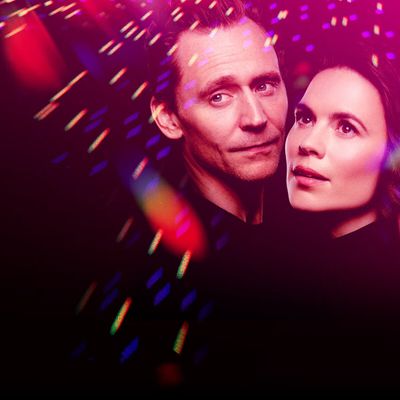
Sunset Blvd Choreographer Fabian Aloise joins us from backstage at Drury Lane Theater where he is currently working on Much Ado About Nothing with Tom Hiddleston and Hayley Atwell to give us the low down on putting the show on its feet... Read More
From the show: Behind the Awards with Eila Mell & Bruce Gotlieb
Featured Shows

About
Sunset Blvd Choreographer Fabian Aloise joins us from backstage at Drury Lane Theater where he is currently working on Much Ado About Nothing with Tom Hiddleston and Hayley Atwell to give us the low down on putting the show on its feet. Fabian breaks down the shows viral TikTok stroll through Shubert Alley. Fabian gives us the close up on working with Nicole Scherziger and collaboration with Director Jamie Lloyd.
Also in this episode - Julie White 2007 Tony win for The Little Dog Laughed and a review of Floyd Collins.
Fabian Aloise - Two-time Olivier nominee for Sunset Blvd. (West End) and Evita (Regents Park). Previous: In Dreams (UK and Toronto), The SpongeBob Musical (London, U.K. and Ireland tour), Cabaret (Paris Lido2), Bring It On (London, U.K. tour), Our House (U.K. tour), Madagascar (UK/global), Wicked (Hamburg). Also London: The View Upstairs, The Rink, Working. Co-director/ choreographer: Kathy & Stella Solve a Murder (West End).
Make sure to check out Eila's book, "The Tony Awards", and all her other amazing books: https://amzn.to/43WMu5Y.
Connect with Eila and Bruce:
- Instagram @behind_the_awards
- Eila @eilamell
- Bruce @cominghomewithbruce
Transcript
This transcript was automatically generated and might contain errors.
[0:00] Julie White: My God.
[0:06] Julie White: Oh my goodness!
[0:08] Julie White: You Tony voters, but a bunch of wacky crazy kids.
[0:14] Julie White: I thank you so much.
[0:17] Julie White: Just to be nominated with this extraordinary list of women.
[0:22] Julie White: I never imagined I would even be on a list like this, unless it was for dinner reservations at Angus.
[0:28] Julie White: I mean, and then to get the Tchotski.
[0:33] Julie White: I can't feel my hands!
[0:45] Julie White: Is that a bad thing?
[0:57] Eila Mell: Hello and welcome to Behind the Awards. I'm Eila, and I am here with my pal, Bruce.
[1:03] Bruce Gotlieb: Hello, Eila.
[1:04] Eila Mell: Hey, Bruce. That was just uh Julie White, her 2007 Tony Win for The Little Dog Laughed.
[1:12] Bruce Gotlieb: Everybody loves Julie White.
[1:14] Eila Mell: She's one of those people that she's just cool.
[1:16] Bruce Gotlieb: She's great.
[1:17] Eila Mell: I mean, I had the opportunity to see her in POTUS and wow.
[1:20] Bruce Gotlieb: Really?
[1:21] Eila Mell: What a performance.
[1:22] Bruce Gotlieb: Oh, I'm so mad that I've been able to do that.
[1:23] Eila Mell: Everybody in that show, but she was so good.
[1:25] Bruce Gotlieb: I know.
[1:26] Eila Mell: I should have seen that.
[1:27] Bruce Gotlieb: I don't know what was wrong with me.
[1:28] Eila Mell: I don't know.
[1:29] Bruce Gotlieb: I know.
[1:30] Eila Mell: Go down to the Lincoln Center in the library and watch it.
[1:33] Bruce Gotlieb: I know.
[1:33] Eila Mell: I want to do that.
[1:34] Bruce Gotlieb: Spend the afternoon.
[1:35] Eila Mell: I know. We just went to see Floyd Collins, and our friend was saying, our friend Scott was saying that he had done that.
[1:41] Bruce Gotlieb: And yeah, I don't know why we don't do that.
[1:44] Eila Mell: It's silly.
[1:45] Bruce Gotlieb: It's right there at our disposal, and we don't use it.
[1:48] Eila Mell: It is. It's it's uh primarily at our fingertips, right?
[1:51] Bruce Gotlieb: That's right.
[1:52] Eila Mell: That's right. Well, I speaking of Floyd Collins, that we we just had the opportunity to see it, so why don't we talk about it?
[1:59] Bruce Gotlieb: I think there's a lot to talk about here.
[2:01] Eila Mell: So what did you think?
[2:03] Bruce Gotlieb: Okay, so I didn't know anything about it going in because you know for the millionth time I like to not know. I like to just have a story unfold.
[2:11] Eila Mell: So I had no idea what it was about.
[2:13] Bruce Gotlieb: Did you know going in what the story was going to be?
[2:17] Eila Mell: I knew the premise of it. I also knew about its off-Broadway, you know, success and other incarnations, but I only really knew very high surface, you know.
[2:27] Eila Mell: The story was about a miner getting trapped in a cave.
[2:31] Bruce Gotlieb: I didn't even understand that that was what it was going in because I, you know, kept myself in the dark.
[2:36] Eila Mell: All right, so we went in, and the stage is sort of completely bare when you go in. You have no indication, you know, a lot of time you sit there with the set for a half hour or so before the show starts, and you you know, you get to understand the world of this play a little bit.
[2:50] Bruce Gotlieb: And for this, there was none of that, which I found intriguing.
[2:54] Eila Mell: How about you?
[2:55] Bruce Gotlieb: Yeah, I mean, uh I I did I was curious how it was gonna develop. The one thing, and I and I've said it before, and that space, the Vivian Beaumont is so grand.
[3:11] Bruce Gotlieb: My only thing was that I felt like this piece might have been better served in a more intimate setting.
[3:18] Eila Mell: Um they did a good job to create some intimacy where needed.
[3:22] Bruce Gotlieb: Yeah.
[3:23] Eila Mell: To me, I think that it needed that. And a lot of shows that are better told intimately, you know, the draw is always like, okay, let's move it from off-Broadway to Broadway.
[3:34] Bruce Gotlieb: Right.
[3:34] Eila Mell: But I don't think every show has to. I don't think, you know, there's nothing wrong with just being successful off-Broadway, and then that just being where where it might stop.
[3:46] Bruce Gotlieb: Uh that being said, I think it's it's great that there's the opportunity for the show to get seen by by more people now that it's having another run.
[3:56] Eila Mell: But as far as the space, I just I thought it could have been served maybe a little bit better that way.
[4:01] Bruce Gotlieb: So interestingly, I felt like the space was cavernous, um, which may have been part of the point. But I agree with you. I felt like Floyd himself got lost on the stage because he was sort of on stage right for most of the show.
[4:17] Eila Mell: And, you know, there was all of this space where he wasn't.
[4:22] Bruce Gotlieb: And the lighting definitely helped focus, you know, where you're supposed to look at, right? That's a big job of what lighting does. And that worked fine for me.
[4:31] Eila Mell: But again, yes, he's confined to a certain area. But I just I thought it was interesting that it was so off to the side and almost it almost felt not as important.
[4:41] Bruce Gotlieb: I don't know, if it were more of the space. And again, he's in a very small confined space. So they're creating that. But I felt like because there was so much extra space on stage, we lost that almost.
[4:54] Eila Mell: I didn't find that I lost it. Um I thought that the lighting and and and Jeremy did, you know, a great job of conveying that atmosphere that you know that he's trapped.
[5:04] Eila Mell: And I didn't personally find that. I thought Jeremy Jordan's giving, you know, the performance of a life, maybe. I mean, I you know, he's being asked to do so much with so little.
[5:14] Bruce Gotlieb: Um, almost like Andrew Durant, you know, he's yes, most of the show having to be in this static stationary position.
[5:23] Eila Mell: Right.
[5:23] Bruce Gotlieb: The difference being Jeremy gets the opportunity to use his voice and an expression on his face and give a little something.
[5:29] Eila Mell: He sounds just glorious in my opinion.
[5:33] Bruce Gotlieb: He does. Um, it's such a strong performance. The other standout performance for me was Taylor Trench, who plays the reporter.
[5:41] Eila Mell: Um, I just thought he was exceptional, really, really special.
[5:45] Bruce Gotlieb: Okay. Um, I liked the show. I thought it was interesting. Uh I thought, you know, really all of the acting, all of the performance I thought were really strong. I thought it was an interesting story. The music was good.
[5:56] Eila Mell: There were some moments where I was like, where it was a little disconnected for me, but for the most part, I thought it served the piece well. I really enjoyed it. I thought it was I felt that I was really kind of captivated by the story and all that was going on.
[6:10] Bruce Gotlieb: Um so for me, I think it would have worked better, not as a musical, actually, because I felt like the music stopped the story a lot of the times.
[6:20] Eila Mell: Uh I don't know. I I struggled with it a little bit more than you did. I liked it, I didn't love it. There was a lot of yodeling.
[6:27] Bruce Gotlieb: Well, how else do you know where you are in the cave?
[6:29] Eila Mell: Okay, good point.
[6:30] Bruce Gotlieb: Good point. I thought that Jason Gaute was excellent too, as Floyd's brother. I thought his singing also was exceptional.
[6:37] Eila Mell: I love when the two of them sang together. I thought those were some really beautiful moments.
[6:42] Bruce Gotlieb: Our guest, Sean Alan Krill was wonderful in it. And oh boy, those costumes are incredible.
[6:49] Eila Mell: Yeah, the pieces that lend it in to be able to uh help tell the story were really special. I think they did some really great tableau work.
[6:56] Bruce Gotlieb: Um absolutely beautiful. You know, how Tina Landau wanted the audience's eye and to see different pictures that she created. I thought were really beautiful.
[7:05] Eila Mell: Yeah, that was masterful. It was really gorgeous. I mean, she used people as art in this show.
[7:11] Bruce Gotlieb: Um plus, you know, the design itself, the colors, it it really, when it had color, it was gorgeous.
[7:19] Eila Mell: So here's my take though. Um, I don't this may be controversial, I don't know. I did not think they needed the character of the sister.
[7:27] Bruce Gotlieb: I really didn't see that that served any purpose to the story and actually just slowed it down for me.
[7:33] Eila Mell: I thought the last 10-15 minutes were torturous. She had a long song then, and it has nothing to do with this actress.
[7:40] Bruce Gotlieb: The actress is very good, Lizzie McAlpine.
[7:43] Eila Mell: It's just the character. I just felt like there was too much of it, and it was it got very slow when she was on.
[7:49] Bruce Gotlieb: And it didn't tell the story. She didn't advance the plot. She could have had a line or two that would have done the same job.
[7:56] Eila Mell: Okay. I don't know that I agree with that. But that's okay. We can fight it out.
[8:01] Bruce Gotlieb: So, you know, I I think it's worth seeing. I think it's a good show, but just not my favorite.
[8:07] Eila Mell: Okay, fair enough.
[8:09] Bruce Gotlieb: But I mean, just go to hear Jeremy Jordan sing.
[8:12] Eila Mell: And Jason Gote also.
[8:14] Bruce Gotlieb: And also Taylor Trench, I agree, is doing excellent, excellent work in this show.
[8:20] Eila Mell: Well, speaking of excellent work, yes. We have the choreographer of the current uh Broadway hit Sunset Boulevard.
[8:27] Bruce Gotlieb: Oh my gosh.
[8:28] Eila Mell: And future London Buzzy show Evita.
[8:32] Bruce Gotlieb: I know. There's so much to talk about with Fabian.
[8:34] Eila Mell: Why don't we just bring him out?
[8:35] Bruce Gotlieb: Absolutely.
[8:36] Eila Mell: All right. We are so happy to welcome Fabian Aloise to our show.
[8:43] Fabian Aloise: Hello, Fabian.
[8:44] Fabian Aloise: Hello, nice to see you.
[8:46] Eila Mell: Thank you so much for joining us. You know, we were looking over all your accomplishments, and you have quite the international career.
[8:53] Fabian Aloise: Yeah, I've been around.
[8:55] Eila Mell: So Wicked is having a moment, and you've done your own version of Wicked. What's it like being on that train?
[9:02] Fabian Aloise: Well, I I just got back from New York actually, and I had a lovely dinner with Steven Schwartz because we've become very good friends over the years.
[9:09] Fabian Aloise: Uh and I, you know, he reached originally reached out to me during lockdown and said, Do you want to do you want to do this non-replica version of Wicked?
[9:19] Fabian Aloise: Um, and I jumped and I was like, Yes, absolutely. Because any chance to work with him is is like the best chance in the world because he's just the nicest human being ever.
[9:30] Fabian Aloise: And so I got to kind of dive into the whys and who's and where's and and rediscover the piece. Um, you know, not just from his work, but kind of re-looking at it from the original Gregory Maguire novel and and really trying to understand everything that wasn't based on what was currently on Broadway.
[9:52] Fabian Aloise: And and in read this and rediscovering that, I think a lot of new ideas were developed with um with the director Lindsay Ponsner and with the designer John Bowser.
[10:02] Fabian Aloise: And it was just uh it was a wonderful, wonderful experience. I would I felt I honestly feel truly privileged that I was able to to work on a new non-replica version.
[10:11] Eila Mell: And where was that tour? Was it in Europe?
[10:13] Fabian Aloise: It was in Hamburg.
[10:14] Eila Mell: It was uh Hamburg, Germany, and I had um I had actually lived in Hamburg for six years uh as a performer years and years ago in the early 90s and early 2000s, and so it was and I lived in Hamburg, and it was a lovely experience to to kind of come to somewhere that had been my home for a very long time and be able to choreograph something in that city.
[10:38] Fabian Aloise: So it was it was amazing.
[10:40] Eila Mell: Oh, that's fantastic. Well, I mean, you're certainly no stranger to these big shows.
[10:46] Fabian Aloise: You don't do anything small, it seems.
[10:48] Fabian Aloise: So uh occasionally, I mean, I do I don't shy away from from fringe theater or whatnot. Actually, my career as a choreographer took off on the fringe, but um, but yeah, I've been I've been truly blessed in the last couple of years to be able to get my teeth into uh bigger productions, bigger venues.
[11:05] Bruce Gotlieb: I can't imagine a show that's had more buzz than Sunset Boulevard has, even you know, coming over from England and now here.
[11:14] Fabian Aloise: For us here, all we saw were these images of Nicole Scherziger coming out with this blood all over her, dressed in sort of a modern day slip dress.
[11:23] Fabian Aloise: We didn't know what was going on.
[11:26] Fabian Aloise: Yeah, that's that's been that's been the norm for us.
[11:29] Fabian Aloise: What what is happening?
[11:31] Fabian Aloise: Yes, yeah.
[11:32] Fabian Aloise: So um tell me about that collaboration with Jamie Lloyd and Nicole Scherziger and Sunset Boulevard.
[11:38] Fabian Aloise: Well, Jamie and I are longtime collaborators now. We started working together years ago on the 24-hour musical at the Old Vic Theater. And then subsequently, uh I when I started doing my own choreography, I reached out to him and I said, you know, would you like to do work together again? And he was working on a new production of Evita at the time. And so we collaborated on that. And then obviously COVID happened and everything went a bit quiet for the world. But when we came back, he had reached out to me about Sunset Boulevard. And initially, I was like, Great, I love the title, how fantastic. Um, what am I gonna do on it? Because you know, it's not really known as a dance-heavy show. And when we started to talk about his uh fever dream version of the show, and with Nicole, it became very apparent to me that the ensemble was going to basically be the show and take us from place to place and navigate this story.
And then obviously working with Nicole uh when we first met, and I had dinner with Nicole just recently in New York, and we were reminiscing on that very first meeting when I pushed her towards a mirror and started making her trace the lines of her face and and both of us feeling very triggered at how close we were to the mirror. But then it became very apparent to me that um we had these sort of two camps of movement that were forming. Uh one was Nicole's sort of very delicate hypnotic movement within the mirror. And so we came up with this this character of a younger Norma that we took all those movements and kind of morphed them and bastardized them into the body of the most glorious human, Hannah Young Chamberlain, and created this sort of hypnotic dance, this immortal being that is in a is trapped in a celluloid that everyone is obsessed with and juxtaposed it with this sort of um quite uh uh anxious hands in pockets, slumped shoulders, beaten down um Hollywood wannabe that literally crawl over each other to get to the front of this perpetual line of purgatory where they're never able to get what they want. And so the two of them kind of fused into what we now know is is our version of the show.
[13:59] Eila Mell: When you're thinking of Sunset Boulevard and your version that you're speaking of, do you find that nowadays with social media, it feels more in in that vein?
[14:09] Fabian Aloise: It feels like because social media, everyone's you can't really do anything without somebody knowing. And screens.
[14:14] Eila Mell: Screens are so important in the show.
[14:16] Fabian Aloise: They are. Was that a conscious effort to kind of bring that in, or was it just a happy circumstance that happened?
[14:23] Fabian Aloise: No, it was a very conscious effort. And uh Jamie had always been a fan of the idea of utilizing the video and videography for the show and and pulling the audience in. So when we when we started to collaborate with Nathan and Joe on the videography stuff, it became this sort of extra character that uh was there to help narrate the story. I think with there's a two-pronged question that you've just asked me. So with regards to the social media aspect of it, I think I think one of the things that Jamie and I agree on is and why we keep continue to collaborate together. And I'm at the Theater Royal Drury Lane right now where Much Ado About Nothing is on. And is when we when we revive something, it's not just kind of like licking a coat of paint on it and and just putting it out there again.
We truly take it apart and try to use the core material as a reason to push the narrative forward. So whilst we whilst we actively pay homage to what it was, we want to create it for a new generation of theater goer goers, not necessarily the generation that that had that privilege of seeing the old older version with um Elaine Page or Patty Lapone. And you know, while we we pay homage to those versions, it's very much not dusting that off and going, here you go. It's about kind of recreating it for a version of theater goers that has been born with an iPad in their hand or Netflix on the TV or been through COVID. And, and you know, all of us were changed a little bit and all of our attention spans are a little bit shorter.
And I think whilst we all kind of relish that nostalgia that comes with a revival, we all want to see it through someone else's eyes, I think. And we crave that. And the beauty of our version, I think, is we all get to see the camera work through the eyes and lens of Shayna McPherson, who we brought over from London, who gets to um dance with the gimbal, and we choreographed everything with her holding the camera. So essentially, what I think is beautiful every time I go to see the show is you're watching this version, but you're watching everything that Shayna is watching. So and you never really kind of put that together unless you stop and think about it. But every every close-up is Shayna's view, you know.
And I think it's what's beautiful is that we've created this conversation between um the person who's being filmed and the person who's doing the filming. And the whole thing has become this constant dance. And whether we put Shayna in the middle of an amoeba and display in New Year's Eve, for instance, we've got an amoeba of dancers that are telling their story, but in the nucleus, we've got Shayna and her camera who's zoomed up on a very private, tender moment between three people. And we kind of utilize these multimediums to tell this story. And it's minimalist, um, but all at the same time maximalist.
[17:34] Fabian Aloise: Yeah. Happening at the same time. And I think I I honestly I just love watching the audience's reactions to to being sucked into this this story, this quite painful story to watch about this woman who's kind of um, you know, thrown away in the prime of her life from an industry that only values youth. And I think it speaks so loudly um in in this version as well, because you know, I was when you're working with Nicole, especially choreographically, you she's she's this vessel of multitude. You know, you ask her to do something, she's like, what? In a split? Yeah, you know, and um, and I think what's brilliant about watching someone like her um manifest a story is it's it's it's this really painful to see someone that is so capable of giving you everything who's been abandoned by Hollywood. And I think that really is quite a potent version of the story.
[18:38] Fabian Aloise: Hi, this is Norm Lewis, and behind the awards, we'll be right back.
[18:44] Fabian Aloise: Also, what's poignant too is that you know, we see her very close up. Um, she's not old. There's nothing about her that's old. Um, she's just not as young as the younger version.
[18:56] Fabian Aloise: So um, you know, I think that also it is part of it that, you know, women are discarded pretty early.
[19:05] Fabian Aloise: A hundred percent. I mean, if you look at actually um when you look at the actresses that originally played Norma Desmond, they they were all roughly around the same age. You know, we're talking about mid to late 40s, and then obviously as actresses come back to to play the role again, like Glenn Close has come back several times to play the role again. They're obviously older. But though those original people, they were all kind of middle four, you know, mid-40s. And I think it's I think in our version, by by placing her in a in a slip and and being so close to her face, um, yes, one could say you see every pore, um, and you see every every line that that life has given you. But on the other side, on the flip side, it's just what you said. You know, we see someone that is still very much in the prime of their life.
[19:57] Fabian Aloise: And beautiful and beautiful, in amazing shape, can do anything anyone else can do.
[20:02] Eila Mell: Yeah.
[20:03] Fabian Aloise: Yeah, but essentially what she isn't and what she will never be is that immortalized being that everyone is obsessed with. And it's that immortality at that particular point of that youthful life that's captured that everyone is obsessed with. I uh it in my belief, Max is obsessed with who she was. Jo falls in love with with that glimmer of who she used to be. Um, she's obsessed with who she was and still very much sees herself and feels herself as that person. And everyone in Hollywood wants a piece of that. You know, they all speak about immortality, and whether they're a writer or a producer or a director or an actor, they want what she's what she has or what she had. And I think it's, you know, in in certain people's hands, it's enough to really drive someone mad. You know, and the saddest part to me is that, you know, had Norma just not had that burden, she would have only gotten better because I think we all get better with age.
[21:07] Fabian Aloise: I think I think that Pete, when you when you take away um possibility or the ability to uh evolve, um it causes trauma to to anybody. I think and you know, if you if you it the people that are allowed to keep going um will only ever get more get better with age, yeah, like a fine wine. But the people that that's taken away from, yeah, that that's a very hard, hard and bitter pill to swallow, I think. And I think that's where the show sits. And I think we've managed to narrate that version of the show as well as possible.
[21:42] Fabian Aloise: And I think speaking of evolution, one of the things with this show in particular, but we're seeing a lot more of it on Broadway now, is the evolution of storytelling and how we tell stories, and whether it's in the musical form or in the choreographed form, just the way that we're doing it is different.
[22:01] Fabian Aloise: And that's part of the buzziness that Sunset Boulevard has had, is that wait a minute, what is this? Because it's not the Norma Desmond, it's not the Sunset Boulevard everyone's used to. The opulent sets and the the costumes and all of that. So But I think also, you know, we have to tap into the psyche of the person that we're telling the story to. And I think I I always say to the company, I deal with body language, and I think choreography is body language and it's narrative and it's and it's potent when you when you connect on a human level. So if you're going to distance the audience um by giving them a sense of something that they know nothing about, then you better be prepared to really pour in a lot of work to come to to help them connect to those characters.
[22:47] Fabian Aloise: But if you start to kind of use similar language, use things that they see day to day, use a vocabulary of a physical vocabulary that they recognize, use a way of narrating that they connect with, then they own the story as much as you do.
[23:06] Fabian Aloise: I think one of the best things that we decided was not to have any props because essentially your the audience's brain fills in the blanks, and then it becomes just as much yours as it is the actors on stage, because if 90% of it is there and that last 10% you're making up with your own brain, then it's connecting to everybody there, but in a different, very visceral way.
[23:31] Fabian Aloise: And I think, you know, we can look at it from the surface and go, it's a very urban contemporary, there's a little bit of hip hop in there. And but essentially, you know, I think one of the things that we do that as for instance, Sutra Gilmore, our brilliant designer, she's designed costumes that, yes, absolutely, you could probably wear out in public now, and no one would stare or think anything because it's quite cool. But the silhouette is very of the era.
[24:01] Fabian Aloise: And you know, even with those onesies and the shorts and the cut of a Joe's leg and you know, it's of that era. So the silhouettes are actually it's twofold. So I think we're giving you everything, you know, when we're doing the car chase, and I've just finished working with the company in New York to kind of clean it, it's very mechanical, and we see the roads that he's driving down, and we see his face trying to navigate that road, and we see the energy of what's happening around him and why he ends up in her driveway.
[24:34] Fabian Aloise: But how does the car move? You know, so essentially we start to kind of make the mechanical, and that takes on a quite an urban feel. But my biggest moments are sitting in the auditorium and watching an audience of today connect with it and see them, see bits of themselves, see things that they love within it.
[25:00] Fabian Aloise: So one of the biggest moments in the show is the beginning of act two when Joe goes out on the street. What was putting that together like?
[25:11] Fabian Aloise: I mean, it was a lot of hours of a lot of work and a lot of nuance. So obviously we had done something very similar in London, but comparatively walking down the strand and walking to Shubert Alley with, I mean, it's night and day, you know, it makes the strand look like a sleepy little village. And so trying to navigate that in New York, and I'm hopeful I'm not no spoilers, but essentially I think it's something that people have seen now on TikTok.
[25:43] Fabian Aloise: We've got the company outside with him, which is an idea that we didn't do in London. So all of a sudden, choreographically, things became more important from a safety level. And I'm just talking about like navigating a curb and navigating staying as a pack and having the same look that they have on stage, so that people in the auditorium are still watching the same company out on the street, and it's not all of a sudden turned into some avant-garde version of West End story just because we're in the streets of Manhattan.
[26:17] Fabian Aloise: And so all of that and being able to look down the barrel of the camera and follow that took a lot of time and a lot of sort of improvisation, but boxing it in so that it's still within the confines of the show and the story that we're telling.
[26:34] Fabian Aloise: Right. And the night that I was there that I saw the show happened to be raining. So you also have the elements you have to contend with on top of that.
[26:41] Fabian Aloise: There's so many elements in Manhattan. I mean, like, you know, it would I would be lying if I said that the weather is the only one.
[26:50] Fabian Aloise: Right. So you've got anywhere you walk in Manhattan, you've got an adventure. And I think that's I've been trying to embrace that adventure and bring it into the St. James is a lot of work, but at the same time so rewarding because essentially I think what we've celebrated is that every single night the audience sees something that's particular to that night.
[27:14] Fabian Aloise: And whether it is the weather, whether it's a siren that you can hear outside as well as inside, whether it's a gust of wind or a curb or a slippery curve, you know, it's something that is special to that moment. So, you know, I think one of the things that theater creators we get to we're lucky enough to do is give everyone a human experience that is live.
[27:38] Fabian Aloise: And I think one of the beautiful things that Jamie and all of us created with that the walk around is that it's very much alive.
[27:47] Fabian Aloise: Yeah, because when you first see it starting, you almost at least I did, you almost think, oh, they pre-recorded this and they're just showing it, but then you have that moment where your brain's like, oh wait, no, no, no, wait a minute. It's actually happening right this minute. It's happening live every single night.
[28:04] Fabian Aloise: There's no pre-recording the show. So essentially, you know, we it's something that we always set out to do, and every single department, like every single department in the theater at that particular moment in time, doesn't matter what department you're in, everyone's focus is on that moment in order to achieve that moment.
[28:23] Fabian Aloise: And I think it's just fills us all with pride to know that this is like a historical Broadway moment, but every single department has collaborated equally to make this moment happen. You know, all eyes are on this moment until he gets onto that stage and finishes it. Every single department is included.
[28:43] Fabian Aloise: It's funny, and I'm gonna out one of Isla's friends, but she had a friend who saw the show in the afternoon and then calculated the timing. So later that for the evening show, she'd be outside to watch it happen from the outside.
[28:57] Fabian Aloise: Yeah. So you get both sides of the coin.
[29:00] Fabian Aloise: Yeah, we have found that a lot of people, once they found out we were doing it, have kind of done that. And what I find remarkable about Broadway and Broadway audiences and the community of Broadway is that, you know, as much as everyone wants to see it and be part of it and even maybe kind of flash into the camera to be part of that night, they're so incredibly respectful of the performers, and they're so incredibly respectful of what's being achieved by the security, by the people on the camera, by the stage management, by every artist that's out there.
[29:36] Fabian Aloise: And I just think that is it's remarkable within a city that is full of life and sometimes crazy as New York is that everyone has this just respect for this craft for this art form. And I just I think it's beautiful.
[29:51] Fabian Aloise: There's a lot of navigating with regards to like crossing the road. And we have things and stipulations in place to make sure that everyone is safe at all times. Both the traffic and the pay, like everything is plays out so that if this happens, this is what we do. If that happens, this is what we do.
[30:11] Fabian Aloise: So, but it's still with everything in mind, and we've put rehearsed version A, B, C with everything in mind, it's still, you know, on the spur of the moment decisions being made, but it's 100% safe for everybody.
[30:28] Fabian Aloise: So we clearly have many colorful people in New York. Has anyone ever tried to participate in the walk around?
[30:38] Fabian Aloise: I think I mean, like, people have definitely tried to participate in the walk around even here in London. And there have been, like, as I said, like the people that you kind of, as you're watching the show in the St. James, the people that are like but not to the per not to the point of disrespecting the performer or disrespecting the show.
[30:58] Fabian Aloise: It's always been something that has just been quite joyful. And I remember at the beginning, you know, we had to decide whether we were even gonna allow people in London to do that. And but it's just so magical when they do because you know, like they're again, they're being very respectful, but they're part of it.
[31:17] Fabian Aloise: And it's just it just uplift everybody in the theater as well. So how could it not be wonderful to witness, you know? It's for me one of the most fun moments of the show.
[31:29] Fabian Aloise: Yeah, I think for me as well. I mean, it's it was work that we all put into the show, but it was it's just magical when when you're sitting there. And I remember when we first did it in New York, and Shayna who does the walk around is the camera operator.
[31:46] Fabian Aloise: And a lot of people don't remember this, obviously, because they're seeing through her lens, but they're not necessarily watching her unless she flashes in front of the mirror, which she does backstage, and then they remember, oh wow, that's still her that's holding the camera. But when she finally did the walk around at the end of that tech session, and we all got it right, and sound was on point, video was on point, the dancers were on point, Tom was on point, Nicola sat in that chair, like everyone and we finished that moment.
[32:16] Fabian Aloise: And I've never seen anything so joyous in my career. Everyone was on top of Shayna, like she had just won the Super Bowl because it was such a feat, and to be able to hold that gimbal and do and maneuver it and do it in such an artistic way. I mean, give her all the awards.
[32:35] Fabian Aloise: I mean, it's just a super she needs yeah, special Tony.
[32:38] Eila Mell: That's right. You're so busy, right? You and as a choreographer, the wonderful thing is once a show opens, you can go on to a new project. You can have many things going on at once. Do you feel like one project communicates with another?
[32:52] Fabian Aloise: Um, it depends. I think sometimes when I work with Jamie, we have a shorthand now after so many years working together. So in that respect, we may reference something that we've done before or say like the idea was this, but maybe we could take it over to this level or quite trying to infuse it into this production.
[33:14] Fabian Aloise: But it's more, I would say it's more a shorthand. I think I personally try my hardest to treat every show as a particular story, and it gets the respect that the one previous had, which is I'm discovering it as I'm as we're creating it.
[33:33] Fabian Aloise: So whilst I can't change my DNA or who I am, and essentially it's always going to be peppered with who what with what I bring to the table. I think I try to do that service to every story is trying to try to see it through the lens of someone new so that it doesn't just become, oh yes, well, that looks like that and that looks like that.
[33:56] Fabian Aloise: I mean, what you're seeing on stage every night here, Much Ado About Nothing is very, very different to what we did on Sunset Boulevard.
[34:11] Fabian Aloise: I mean, I was very lucky enough to work alongside Anne Reinking when I was a young dancer and help her with the maintenance of Fosse and the Fosse legacy. And one of the things that I learned very, very early on was how to create and develop for that particular actor, for that particular character, and for what that body can give, and to embrace it as opposed to trying to put it into a vessel that it will not fit into. We all can try to do that, and I think with rehearsals, given enough rehearsal, you can force something to happen. But I think what's beautiful about choreography, and definitely what I love, is the collaboration between the artistry of what that person brings physically and what you can help develop.
[35:04] Fabian Aloise: So, I mean, again, working with Nicole is very different to working with Tom Hiddleston, is very working differently with Sigourney. You know, they bring different things to the table, but you can always see something magical within them and then try to tap into that, and that's where the creation begins. And that's what I find fascinating as a choreographer. And it's probably what gets you the most success too, both as a performer, as an actor if you're on stage, and you as a choreographer when you guys are collaborating together and you're able to communicate, as opposed to, like you said, just going out there and saying, "This is the steps; either you can do it or you can't." You know, it helps inform the art.
[35:45] Fabian Aloise: I think they take ownership over it because, you know, I'm essentially using their body as a vessel for the language and the body language and choreographic tones of the show. But it's their body. So if they don't understand what it is they're doing or if they don't feel it or embody it, then it becomes slightly detached. The audience won't know that they're not feeling as much, but they won't. So I think, you know, you are, I'm always there to push to the limit of what someone can do, and maybe sometimes they feel like, "Oh, I don't think I can do that." But then, you know, over the years I've become quite keen on going, "Well, maybe we can." And then sometimes I might feel like I'm giving a little push to them to get them up the hill, but once they're at the top of the hill, it's like, "I could always do this. I just didn't realize that there was a whole world up here."
[36:36] Fabian Aloise: But it's still them, and it's still a collaboration, you know, and it's still a dialogue between us. You know, I don't work with canvas and paint. You know, as much as I... it's a live art form. So it's always going to be a dialogue between me and a dancer or me and a group of dancers or me and an actor, because I'm there to tap into what I can see, even if they can't see it in themselves. But I would never work with the idea that that person is some sort of inanimate object or a lump of clay or something like that, because they come with a life experience and a movement language of their own.
[37:18] Fabian Aloise: And yeah, okay, after a while, my DNA is going to end up within the body language, but when true magic is created, it's they've taken ownership of it, and all of a sudden it becomes like I'm a distant memory within that.
[37:39] Eila Mell: Is Mandy Gonzalez doing the same exact choreography as Nicole?
[37:44] Fabian Aloise: No. I created a version of Salome that was very specific to Mandy. You know, there are confines, as in like, you know, you gotta hit this mark, the light is gonna follow you here. You want to make sure that when you do the tango, it's still the tango with Joe Gillis. And that he's able to do the tango and not learn five million tangos. But at the same time, every single Norma that we have, whether it's Mandy, whether it was Caroline, now Rashidra, it's their version of the story. It's just as much theirs as it is Norma, you know, because I think when you're working in perpetual close-up every night, there's nowhere really to hide.
[38:39] Fabian Aloise: So, you know, and I was just working with the company, and even if it's not Norma Desmond and it's another company member, you are the character. You're not there playing a character; you are the character because we're this close to you. So, you know, the audience can smell a lie, like a fark nakar. You know, so you need to give them the essence of the truth. And the only way to tap into that is if you bring yourself to the character as much as possible.
[39:08] Fabian Aloise: So my job is to tailor it and modify it to each individual so that they can confidently narrate that story physically and emotionally.
[39:19] Eila Mell: That's great because not every Norma is going to be, you know, a dancer, you know, like Nicole is a dancer.
[39:27] Fabian Aloise: Well, Nicole has got a lot of facility, but as she's told me on day one, she said to me, "I'm not a dancer." I mean, I think we have a very different idea of what constitutes a dancer or not. But she, you know, she comes with a very big set of abilities. But then would I compare her to someone else in the show that sees themselves as very much a dancer? No, you know, they are different vessels, they are different humans. But one of the best things about working with Nicole is she never says no, you know. So if you say, "I want to try this," she's gonna say, "Yeah, sure, let's go for it," you know.
[40:11] Fabian Aloise: And I think what I'm learning, my own little evolution is those are the sorts of people that I think are magical to work with, you know, the yes-and people, the "let's give it a go, let's try it." Age is just a number. If I can't do it today, I might be able to do it tomorrow. Because that's where the artistry lies, I think. And Nicole just lives by it, lives and breathes it every day.
[40:41] Eila Mell: And every performance she gives is for that evening. So the show you're working on now, Much Ado About Nothing.
[40:48] Fabian Aloise: Yes.
[40:49] Eila Mell: How much dance is in this?
[40:50] Fabian Aloise: Oh. I love... well, Shakespeare lends itself to that. It's wonderful that you have that leeway.
[40:57] Fabian Aloise: Well, I mean, I never really... I was never really grazed with Shakespeare. You know, English wasn't my first language, and so it wasn't at the forefront of my of what I loved. It's something that I had to learn to dive into. And I'm very fortunate now to work with people that it just sits so beautifully in their language and their skill set in their mouths that you understand every single nuance.
[41:25] Fabian Aloise: But again, like Tom and Hayley and the whole company here just embraced the idea that we were gonna do this sort of 90s dance party version of the show. To the point where I've just finished working with them just before I got on with you, and we were cleaning up some stuff, and they just want to embody it all. They want to get things right, they want to do that canon right, they want to do those steps right, you know, they want to make it so clear because the joy lives within the choreography just as much as it lives within the language, and that's what makes it so wonderful to watch.
[42:03] Fabian Aloise: And it just becomes addictive. It becomes addictive to work this way because they're having such an amazing time, you know.
[42:10] Eila Mell: How do you turn that off? Because I was gonna say, it must excite you as a creator to, you know, you speak to writers who are like, "Oh, well, we keep giving them new pages or we're changing lines." Like, how do you turn off the "I want to make it this now" because you're giving me something else?
[42:27] Fabian Aloise: You don't. You don't. Because what you do is you... it's a living, breathing piece of art. So if it feels like it starts to morph into something else, you have to either kind of navigate its way back within the language of like, "What are you trying to say with this?" or "Where are we right now in the story?" Or you need to give it some more life and get some water on those seeds because what might be coming out is even better than what you expected it to be.
[42:59] Fabian Aloise: And I think that's why I love choreography in general, why I love movement direction and theater, because it's never stagnating, it's never just there, it's always living, it's always breathing, and you're in that moment. So if that actor in that moment is, you know, overwhelmed with emotion, that night is gonna be different to the night before, that's gonna be different to the night after. And I think I find it impossible to step away, you know. I very much feel like I've got... I'm kind of like the mama of the production. I just wanna sit there and be with them every night.
[43:37] Fabian Aloise: And yeah, when I come back, there's so much kind of love and camaraderie in every company. It was really hard for me to leave the company in New York. And I just guess that I'm super blessed that I left then and was able to come and be embraced by this company over here. And long may that continue, because that's just magical for me.
[43:57] Eila Mell: So is there anything else on the horizon coming up that you can share that you might be involved in?
[44:03] Fabian Aloise: Jamie and I are collaborating on an Evita. So that's coming. I say it's coming back. It's a brand new version of the show. And so we go into rehearsals in April.
[44:17] Fabian Aloise: So that's exciting.
[44:19] Eila Mell: That's very exciting.
[44:20] Fabian Aloise: It's very exciting to revisit a score that is, I just think it's probably one of my favorite Andrew Lloyd Webber's. No shade to Sunset because I love Sunset Boulevard. But yeah, there's something about Evita that is just amazing. And I think it's gonna be so great to kind of revisit that and get stuck back into that score.
[44:43] Eila Mell: All right. Well, you'll have to come back because I guess it's too early to ask you questions about that.
[44:47] Fabian Aloise: I have many.
[44:49] Eila Mell: So you'll have to come back when that, you know, is more cooked, and you can tell us.
[44:56] Fabian Aloise: I would love to. I would love to. I love to get nerdy about theater because I know I'm a big theater nerd at heart.
[45:03] Eila Mell: I know it's so much fun to dissect.
[45:05] Fabian Aloise: It is.
[45:05] Eila Mell: Well, thank you so much for joining us and congratulations on the huge success you're having this season and, you know, continued success.
[45:17] Fabian Aloise: Thank you very much. I appreciate it. It's been my pleasure talking to you.
[45:20] Eila Mell: Well, we will see you all next time on Behind the Awards.
© Broadway Podcast Network, All Rights Reserved