

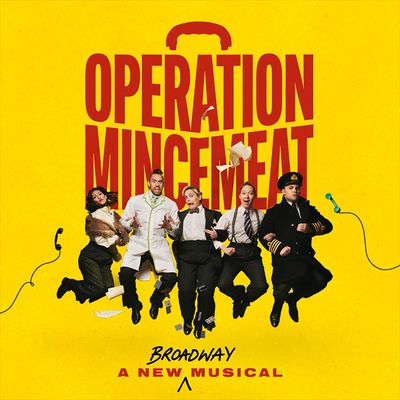
The cast of Operation Mincemeat joins Behind the Awards to do a deep dive of the musical from inception to Broadway. David Cumming, Claire-Marie Hall, Natasha Hodgson, Jak Malone, and Zoe Roberts give us the behind the scenes secrets of the show... Read More
From the show: Behind the Awards with Eila Mell & Bruce Gotlieb
Guests

Featured Shows
About
The cast of Operation Mincemeat joins Behind the Awards to do a deep dive of the musical from inception to Broadway. David Cumming, Claire-Marie Hall, Natasha Hodgson, Jak Malone, and Zoe Roberts give us the behind the scenes secrets of the show. Staring at The Fringe to Oliver Award winning run on the West End this show gives the audience a history lesson of World War II in the most physical comedy way possible.
Also in this episode - Harriet Harris 2002 Tony Win for Thoroughly Modern Millie and a review of Just in Time starring Jonathan Groff.
The year is 1943 and right now we’re losing the war. Luckily, we’re about to gamble all our futures on a stolen corpse.
Singin’ in the Rain meets Strangers on a Train, Operation Mincemeat is the fast-paced, hilarious and unbelievable true story of the twisted secret mission that won us World War II.
Bursting at the seams with the kind of chaos you couldn’t invent, the question is: how did a dead body, a fake love letter, and - of all people - Ian Fleming come together to wrong-foot Hitler?
Make sure to check out Eila's book, "The Tony Awards", and all her other amazing books: https://amzn.to/43WMu5Y.
Connect with Eila and Bruce:
- Instagram @behind_the_awards
- Eila @eilamell
- Bruce @cominghomewithbruce
Transcript
This transcript was automatically generated and might contain errors.
[0:01] Eila Mell: I'm flabbergasted. I have a speech prepared, but I am flabbergasted. My mother once said that my first words were Tony Award.
[0:07] Bruce Gotlieb: Being Texan, she was prone to exaggeration. I think it was something more like, give me Tony.
[0:30] Eila Mell: Hello, and welcome to Behind the Awards. I'm Eila. I am always here with Bruce. Hey, Bruce.
[0:39] Bruce Gotlieb: Hello. Good morning. That was Harriet Harris's win for her 2002 Tony for Thoroughly Modern Millie playing Mrs. Mears.
[0:49] Eila Mell: Everybody loves Harriet Harris.
[0:51] Bruce Gotlieb: She's so great, and she's so funny. Her mother was Texan and prone to exaggeration, but she said her first words were Tony.
[1:00] Eila Mell: Well, allegedly.
[1:03] Bruce Gotlieb: I mean, it's an easy word to say.
[1:06] Eila Mell: I guess so.
[1:07] Bruce Gotlieb: It could be conceivable.
[1:08] Eila Mell: So, we had a treat last night. We got to see Just in Time.
[1:15] Bruce Gotlieb: We did. What an experience. I would say that it is so entertaining. It is a Jonathan Groff concert and a Bobby Darin concert at once.
[1:28] Eila Mell: But a play, you know, every step of the way, too.
[1:31] Bruce Gotlieb: Yeah, there's definitely a story there, but to me, it's more of a concert than a design.
[1:35] Eila Mell: Oh, really? Okay.
[1:37] Bruce Gotlieb: Yeah, that's not to take away from the storytelling, because I think there's wonderful storytelling happening.
[1:42] Eila Mell: But to me, it definitely had that concert feel to it from the ambience, from the lighting.
[1:48] Bruce Gotlieb: You know, the way that it is portrayed definitely is that vibe for me.
[1:53] Eila Mell: Okay, well, that's interesting. I didn't see it that way.
[1:56] Bruce Gotlieb: You know, and I definitely saw concert elements to it, but, you know, it felt very much like a play.
[2:03] Eila Mell: It's just, you know, it's told in such an unusual way.
[2:07] Bruce Gotlieb: Because, well, the book, the book is really well written.
[2:11] Eila Mell: So, we start with Jonathan Groff as himself, not Bobby Darin.
[2:15] Bruce Gotlieb: So, that was really interesting.
[2:17] Eila Mell: And then the use of the space is so much fun. It's totally immersive.
[2:22] Bruce Gotlieb: I think that it relies heavily on the charisma of Jonathan Groff, and there is a lot he delivered.
[2:29] Eila Mell: It certainly does. It certainly does. And he's giving everything he's got up there.
[2:32] Bruce Gotlieb: He's really just embodying this showman in every aspect of it.
[2:38] Eila Mell: I don't know the real Bobby Darin. I didn't grow up watching his movies or watching him perform.
[2:46] Bruce Gotlieb: So, I don't know if he is sort of summoning Bobby Darin.
[2:50] Eila Mell: But it doesn't matter, because I believe the character he's playing so much that it almost doesn't matter to me who the real Bobby Darin is.
[2:58] Bruce Gotlieb: Because I'm totally with him as Bobby Darin.
[3:01] Eila Mell: So, I'm with it. I think he's wonderful in it.
[3:05] Bruce Gotlieb: I can easily see why he got a Tony nomination.
[3:09] Eila Mell: You know, this is the best thing I've ever seen him do.
[3:12] Bruce Gotlieb: And that's a big compliment, because all his work is so great.
[3:15] Eila Mell: Sure, sure. This is speaking to a lot of his strengths.
[3:19] Bruce Gotlieb: You know, obviously, singing and dancing, for sure.
[3:22] Eila Mell: And the acting also is strong. You get the live big band.
[3:26] Bruce Gotlieb: Harkening back to the Variety Show days, they participate, too.
[3:30] Eila Mell: There's a lot of back and forth between Jonathan and all the other players.
[3:36] Bruce Gotlieb: And the audience, too. It's very interactive.
[3:39] Eila Mell: And it really works in that space.
[3:41] Bruce Gotlieb: I wasn't sure how the space would be transformed.
[3:44] Eila Mell: But the Circle in the Square is such a wonderful space to be able to put an intimate show up that you want to grab people with.
[3:52] Bruce Gotlieb: And it's, you know, this configuration of the space felt like a big place to me.
[3:56] Eila Mell: But you got that intimate experience anyway.
[4:00] Bruce Gotlieb: You know, it's just so well done.
[4:02] Eila Mell: Designed by Derek McLean.
[4:04] Bruce Gotlieb: Double Tony nominee.
[4:06] Eila Mell: But this is one of his nominations, along with Death Becomes Her.
[4:09] Bruce Gotlieb: It's such a fun night.
[4:11] Eila Mell: I didn't, again, I didn't know what to expect going in.
[4:14] Bruce Gotlieb: And, you know, so I didn't know off the bat if I would like it.
[4:17] Eila Mell: And I loved it.
[4:18] Bruce Gotlieb: It's just I can't imagine someone not having a good time being there.
[4:22] Eila Mell: Yeah. No, it's definitely a feel good night.
[4:24] Bruce Gotlieb: Getting some great music.
[4:25] Eila Mell: You know, you're getting the songs of Bobby Darin that you do know.
[4:28] Bruce Gotlieb: And then a lot of songs that you don't know.
[4:31] Eila Mell: But obviously, they inform the piece and help advance the storyline.
[4:36] Bruce Gotlieb: So it doesn't feel like it's just a song thrown in for the sake of a song being thrown in.
[4:40] Eila Mell: So I appreciate that.
[4:41] Bruce Gotlieb: Yes. And, you know, let's point out some great supporting performances.
[4:46] Eila Mell: By Gracie Lawrence, Erica Henningsen, Michelle Pach.
[4:50] Bruce Gotlieb: Our guests, Emily Bergel and Cesar Samioa.
[4:54] Eila Mell: So it's just it's such good work.
[4:56] Bruce Gotlieb: Jo Barbara, Lance Roberts.
[4:58] Eila Mell: Everyone there is really, really excelling.
[5:01] Bruce Gotlieb: So I hope that people will go see it.
[5:02] Eila Mell: It's a definite positive review for me.
[5:05] Bruce Gotlieb: Yeah, it's a small cast, which is nice.
[5:07] Eila Mell: So everyone gets a lot to do.
[5:08] Bruce Gotlieb: In a couple of weeks, you'll have our interviews with both Emily and Cesar.
[5:13] Eila Mell: And they tell, you know, their side of, you know, putting the show together, which was a lot of fun.
[5:17] Bruce Gotlieb: And I definitely, you know, would highly recommend people get if they have the opportunity to get there to see it.
[5:23] Eila Mell: But they definitely should.
[5:24] Bruce Gotlieb: It was one of my favorites.
[5:26] Eila Mell: Yeah. Excellent. All right.
[5:27] Bruce Gotlieb: Oh, and let's also point out that there is an ensemble of three who are fantastic.
[5:32] Eila Mell: Oh, yes. The Sirens.
[5:33] Bruce Gotlieb: They're doing all of that, you know, showgirl style dance and that, you know, they're really supporting Jonathan.
[5:40] Eila Mell: And he calls them out right from the onset that these girls are going to be, you know, by his side the whole night long.
[5:46] Bruce Gotlieb: And they certainly are. And they have some really great costumes.
[5:50] Eila Mell: And some of those costume changes for the whole cast are just really quick.
[5:54] Bruce Gotlieb: It's really fun to watch this whole show.
[5:56] Eila Mell: It is. It is. And Jonathan Groff can really dance like real dance.
[6:00] Bruce Gotlieb: Good for him.
[6:02] Eila Mell: Oh, yeah. You didn't know.
[6:10] Bruce Gotlieb: OK, well, speaking of a great cast, we have one of my favorites, Operation Mincemeat.
[6:14] Eila Mell: We have the entire cast.
[6:16] Bruce Gotlieb: Oh, my gosh, that's incredible.
[6:20] Eila Mell: Let's bring them out. I don't want to wait another second.
[6:22] Bruce Gotlieb: All right. Here they are.
[6:31] Eila Mell: Well, Bruce, we see a lot of each other. So, you know very well that I have taken on the unofficial role of PR and supporter and everything I can for Operation Mincemeat.
[6:38] Bruce Gotlieb: Because I love this show so much.
[6:40] Eila Mell: Right. Short of being, you know, officially dubbed the number one fan of the show.
[6:46] Bruce Gotlieb: Pretty much. I know.
[6:48] Eila Mell: Self-proclaimed.
[6:49] Bruce Gotlieb: I know. So but I am so completely thrilled to welcome the entire cast.
[6:56] Eila Mell: Hello, everyone.
[6:58] Cast: Hello.
[7:00] Cast: Hi.
[7:01] Eila Mell: All right. So I'm just going to go in order of where everyone's little square is in our in our Zoom-like meeting here.
[7:06] Eila Mell: So there's Claire Marie Hall.
[7:08] Eila Mell: Zoe Roberts.
[7:09] Cast: Hi.
[7:10] Eila Mell: Jack Malone.
[7:12] Eila Mell: Natasha Hodgson.
[7:14] Cast: Present.
[7:15] Eila Mell: And David Cumming.
[7:16] Cast: Hiya.
[7:17] Eila Mell: Yeah, it's like roll call.
[7:19] Cast: It is.
[7:20] Eila Mell: All right. So there's so much to talk about. But did you ever think that when you started off that this would be an Olivier winning show that moves to Broadway?
[7:27] Cast: Sure. Yeah, that's what we planned on day one.
[7:30] Cast: Amazing.
[7:31] Cast: Amazing.
[7:32] Cast: Take it off. Now we can start.
[7:34] Cast: It's safe to say if we thought we were going to be doing it on Broadway eight times a week, we would have written an easier show to perform.
[7:40] Cast: Certainly shorter.
[7:41] Cast: Yeah.
[7:42] Cast: A little longer.
[7:43] Eila Mell: So there's a very important person who's missing here because it's just the cast. But there's Felix Hagen, too, who is very much part of putting this show together.
[7:49] Eila Mell: So Zoe, Natasha and David, you three and Felix wrote this show initially together. Can you tell me about that, how that came about?
[7:56] David Cumming: Yeah, I'll crack on here. So, yeah, me and Zoe and David have been making comedy together for a while. I'm taking shows to the Edinburgh Fringe and we've had a lot of success there. But, you know, we were we were sort of making these shows. We were getting a bit older and like all of our friends are sort of getting mortgages and having children. We were like, wow, this is we're still out here making our silly comedy shows with our hats. And we kind of thought to ourselves, if we want to really it's a little bit of a do or die situation. And we we've been started putting more music into our comedy shows. But we'd never taken the leap and like, oh, my God, what if we tried to really do this? What if we tried to write a full musical?
So we kind of thought to ourselves now is the time to do it. If we don't do it now, maybe we never will. And we wanted to base it on a true story. I was also in a band with Felix Hagen as discussed. And we knew that we got on really well. We have the same sense of humor and we wrote together really well. So we threw him into the mix and then we were looking for a true story because we knew how much work in writing music. I say we knew how much work we had no idea how much you had no idea. We suspected it would be quite a lot of work. And we really wanted to dedicate ourselves to a story that we felt really passionately about. And ideally something true, because we thought that would just be so much easy to kind of get our spirits and our hearts behind.
And then on a holiday with my family in Norway, my brother turned to me and said, I've just listened to a podcast I think would make a great musical. And I was like, yeah, whatever. You know what little brothers are like. They think they know everything. But I listened to it and it was a Stuff You Should Know podcast on Operation Mincemeat. And my head was completely blown. And I immediately pulled up WhatsApp and I text these guys being like, guys, I think I found the musical. I'm afraid it's a World War Two story. But please, before you say no, no, no, we're not doing a World War Two musical. Please just listen to this podcast, because I think this is the craziest story I've ever heard in my life.
[9:29] Zoe Roberts: Now, had you guys learned or knew? Obviously, it's something that happened in history. So is it something you guys learn about in school?
[9:36] David Cumming: No, no, we don't know it here either.
[9:39] Zoe Roberts: No, we are taught to ad nauseam about World War Two.
[9:43] David Cumming: But with this, this simply never comes up. Perhaps now maybe it doesn't because there's like films they can refer the kids to. But definitely in our education, we were never once taught about any of this at all.
[9:54] Zoe Roberts: And it's very much part of the appeal of this story was that it's a version of World War Two that we just didn't know existed. And it shows that time period in a very different light.
[10:03] Eila Mell: So why the decision to have five actors in the cast? Was that financial? Or was that did that just suit your needs?
[10:10] David Cumming: Hundred percent. Yeah, we we come from a background of kind of self producing self fundraising. You know, when we were making the comedy shows, we were all doing ourselves. And we had kind of four people on stage and one director. And, you know, we kind of went that never going to hold us back. The idea was always let's write the best, most exciting, most cinematic version of any story that we were telling. And then once we get in the room, it's ourselves, the actor selves that have to figure out how to do it. Sucks to be them. But so I think that's why we went into it going, hey, we can't possibly pay any more people to be in this. It was it was such a lot of work and pulling the money together anyway to do this in the first place.
And also, yeah, we've kind of never thought, oh, well, we couldn't possibly with just five. How could you do that? You know, that part of the joy and the fun of it for us is going, how do we tell the story with just five people? Oh, you've got a minute. Put a hat on. Get back on. Get back in the seat. Come on. And so, yeah, again, like we said, it's it's what makes the show relentless and exhausting to perform. I think it's kind of where a lot of the magic comes from.
[11:39] Zoe Roberts: That's literally what you're doing in the show is like running off. And I wouldn't even say a minute later, it's like point three seconds later. You're back in a new whatever.
[11:47] David Cumming: Yeah.
[11:50] Zoe Roberts: Yeah. One of the changes is maybe like two, three seconds, something like that. And then when we were making sure we have a phrase of like, oh, in mincemeat time, that's that's like an hour. Like three seconds, you can do an entire costume change and do a whole monologue and then you're on someone else. I think that's definitely the strength of like us coming from a fringe background and spending years watching, you know, other comedy troupes and other theatre troupes be like, you know, it's basically impossible to send more than four people to the fringe at any one time when you're not incredibly rich and don't have a bunch of connections because you don't have the money. So we definitely grew up watching, you know, the League of Gentlemen and Monty Python and the Mighty Booge, like these kind of troops of people who are very small gangs making huge worlds.
[12:33] David Cumming: I think in some ways that played to our advantage because we didn't come from a musical background, we came from a fringe comedy background. And so we never, we hadn't seen so much music, you know, musical shows that we weren't like, oh, well, you've got to have, you've got to have 20 people or you can't do the number. It was a place of ignorance that ended up serving us well.
[12:51] Claire-Marie Hall: So, Claire, how did you come on to the project? So I like the normal kind of like way of just auditioning. They'd already done one run at New Diorama. So it was like an 80-seater theatre. I'd heard wonderful things about it. I couldn't go and see it because it was sold out. But yeah, by the time I heard about it, there wasn't too much online. I just found a breakdown centre. They wanted someone who could multi-role and do comedy and who could rap and sing. And I was like, OK, I have no idea what this is, but it sounds cool. So yeah, jumped in not knowing much about it. And then when I actually got the songs through for the recall, I was like, this is genius. I want in. Which is great. I've been with it since. Did you rap at your audition?
[13:34] Claire-Marie Hall: I did. I actually did. I did a rap from a Welsh group called Goldie Looking Chain, which was kind of like a bit of a random choice, but it worked, thankfully.
[13:45] David Cumming: She was a real freak in the audition. We were like, yes.
[13:50] Jak Malone: Claire Marie Cole comes in. She's like this tiny, gorgeous little soprano with this beautiful voice and we're like, OK, fine, another soprano. And then she was a weirdo. She was an absolute monster. So we're like, yeah, good.
[14:00] David Cumming: And actually, a lot of the show was with Jack and Freya. The show was kind of built and grown around. It's not just us kind of writing it and shaping it. We get to be on stage with these people and we get to go, you're doing something amazingly funny and weird there. So like Claire's character, Steve, used to be a fleeting appearance. It was kind of like a couple of lines. And once we got it in the rehearsal room, we started going, well, this can't be a couple of lines. This needs more stage time. And now he's kind of an essential, you know, he's key. We love Steve. And so, yeah, it'd be really nice to kind of build a show with these guys as well and for them. I think also the other side of that is that we end up sort of writing our shadow selves into the music.
All of us have, for better or for worse, definitely see elements of ourselves in the characters that we play, because that's what happens when you start writing. You start to embody those characters. So, yeah, it's often humbling when you're like, wow, that's a terrible version of myself that I'm playing.
[15:04] Jak Malone: And Jack, I mean, you have one of the best moments in the show with Dear Bill. That's just a showstopper. It's just such a moment that it really it's the first time where we see this show in a different way. It's so poignant. What's your approach there?
[15:18] David Cumming: Firstly, I really love the character. I've just layered on so much affection for this character because I've loved people like that in real life. Characters who are like very straight legs, who come into any situation and say, hello, just to let you all know, I'm not going to have any, not at all. You won't get me having fun. Yeah. I love those people because of course you're going to have fun. And of course I'm going to make you laugh. We're going to find something. We're going to get there. And I love that. I love unlocking those people. It's really, really, very satisfying. So that's what I sort of based her on is that those type of people. And Dear Bill is the answer to that. Dear Bill is the response to this buttoned up.
I'm all business and I have no heart. And then you get Dear Bill. So I really relish performing it. I relish sort of allowing the audience to have a moment to fall in love with the character the way I have. So, um, it's really wonderful. It's, it's a gift.
[16:17] Claire-Marie Hall: The only suggestion that you're even playing a female character is the glasses. Really? It's just, it's you and you never for a second doubt who she is, who this woman is. Yeah. It's that's something that was clear from the off that that's what we were. We were all going to do. Um, when I remember the first discussions that we had about costume, it was like, yeah, no, there's no wigs. There's no, there's nothing, you know, too overboard like that. We're going to show it with, um, with energy and posture, um, uh, voice. And I, I really, uh, I'm very proud of that. I'm proud of myself. I'm proud of all of us for, for transforming the way that we do and, and tricking people, people in the audience will refer to Hester would refer to me as she, she did this, she did that when she sang that.
And I think, oh, how wonderful that you've, you've, uh, fallen under the spell. I think also like it really is a test of the fact that really what we, we sort of call gender really is just like certain characteristics we believe to be belonging to a certain gender, you know? And like, if someone comes on such as my character, if, if Monty comes, it comes on with charm and charisma and sort of a bullish, you know, confidence you go, that's what men are. Yeah. This, this must be a man because these are the characteristics that this person is displaying when actually, you know, I've got my hair in a bun, I'm wearing a suit, but as you know, as the same with Jack, like we don't do a bunch of work to kind of go, we're going to try and physically make this person look like a different gender.
All we're doing is saying, isn't it funny that if you have these traits, you probably are this gender. And that's the conversation that we don't, we never wanted to put in the show. We wanted it to kind of emanate from the show when you go home and go, well, what an interesting bunch of weirdos that was.
[18:00] Jak Malone: Yeah, it's definitely an interesting social experiment without putting, without telling people they're attending a social experiment.
[18:04] David Cumming: Exactly, exactly. Well, you know, when you see a show the first five or 10 minutes, you're really as an audience member, you're understanding what the rules of the world of this show is. And then once you get it, you're in, it doesn't matter.
[18:16] Claire-Marie Hall: Great. That's what we love to hear.
[18:18] David Cumming: Yeah, it's so well communicated. David, I love the moment that you have. I mean, everyone has their own brilliant moments, really. I just love this show so much. But for me, I think about it so often. It's close to the end of the show when you're on the set of the movie that's being made. And I love that you go back and forth from Chun-Li to, you know, the actor playing him. It's like every second of this show is so well crafted and curated and directed. Tell me about your director, Robert Hastie.
[18:50] Claire-Marie Hall: So we love Robert Hastie. He is the most gracious, wonderful, lovely man you could possibly imagine. And he joined the project on the third, fourth iteration, I think. We joined for the West End.
[19:04] David Cumming: No, Riverside.
[19:06] Claire-Marie Hall: Riverside. Yeah, 2022, 23. I don't even know. What is time at this point?
[19:12] David Cumming: What is time, indeed. So by that point, we'd, so we, for those who don't know, when we first started the show, there wasn't a director, there wasn't a choreographer. It was just it and the cast. And it was just us trying to direct the show from inside the door. In reflection, in mirrors, like what we could find at rehearsals, small sheds, like it was really, really, really grassroots fringe theatre. And we couldn't afford, we could barely afford that. And we definitely couldn't afford it in outside eyes. As the project slowly got bigger, we added ten people. The first one was Jenny Arnold, the choreographer, who helped us kind of finesse the movement of the show. And then Rob joined. And he was really gracious in that a lot of directors might come in and, you know, want to put their stamp on it and make it a quote, unquote, Rob Hastie show.
And so people can see, oh, that's his style. He is not like that at all. He saw the show, fell in love with it via the designer of the show, Ben, who brought him in. And they were both very keen on keeping the essence of what we'd made and just kind of polishing it. And that's been the task that he's excelled in, as he took us through Riverside, then to West End. And he really helped us as writers kind of help the show grow up or grow into its space. And he'd even be like, guys, you've got too many jokes in this moment. Like the audience are done laughing. You've got a hat on a hat on a hat. Just calm it down. And I think all of us would say that he really has pulled out the character arcs for each of us personally, as actors, a lot more than we ever would have done, I think, without his help.
And he's great. He's a genius and he's wonderful. And we love him. I have nothing but lovely things to say about him. And, you know, we are not an easy rehearsal room to be in. You know, when you have four, first of all, there's four writers, Nightmare. The writers are in the show, Nightmare. It's a show they've done for years already, Nightmare. And it's the most precious, the baby of their whole heart, Hideous. And he, you know, many other people, I think, would have been like, this is hell. There's so many voices here. There are so many opinions. You know, we feel so strongly about the characters and the songs and everything. And he just dealt with us and with all the problems and challenges with such patience and grace and genius. So, yeah, we're so blessed to have him.
[21:29] Jak Malone: I think what's been really, really nice about coming to Broadway, actually, is that we felt like the show really grew up when it got to West End. And then the entire creative team, most of whom are making their Broadway debuts. It's not just the five of us on stage that are making our Broadway debuts. It's everyone bar the lighting team who've worked on Broadway before. So it's a huge amount of people taking this step together. But a lot of these people were getting a chance to finesse any things that they didn't quite, that they felt maybe they didn't quite nail in the West End version. And we as writers had this great meeting where we went back to the script and literally went through and being like, OK, in your dream version of the show, when you first wrote this song, what was in your heads?
Like, this is now the time that you can finally let those dreams come true. And it was such a great experience to not, for once in our lives, not have to go, well, obviously, we'd like it to be like this, but we can only afford a single clock. So I guess that's going to have to be the phone that we use. And it was so exciting. And it really feels like this version of the show is what we've always had in our heads all along. And we finally reached it. We're pretty sure that the light outside the theatre, the briefcase light that sits outside the theatre, costs more than the first production of the original.
[22:46] Julia Naito: Hi, I'm Julia Naito, and behind the words, we'll be right back.
[22:51] David Cumming: When you guys talk about the rewriting process, because I know with it, we've spoken with many people, as in previews, you're tweaking, you're seeing what the audience does or doesn't do. How does that change for you coming from the West End production, now coming to America, where your humour could be a little different, and certain things that you might reference, we have no idea what that is. So how does that factor into the transfer to Broadway?
[23:22] Claire-Marie Hall: I mean, we arrived very much ready to tear things apart and rebuild. And I mean, with dread in our hearts at the amount of work that that would have taken. But, you know, people were asking that question from a very early point. We're going, is this going to work for an American audience? Is it too British for Broadway? So we kind of came, I think, very much armoured against the fact that we might have to think quite a lot. And what's been brilliant is actually from the very first preview, we kind of went, oh, we think this is mostly fine, like this is flying. And the comedy is really landing. It was a joy to discover that American audiences love the dumb stuff. Like, God, we tend to like dumb humour.
[24:04] David Cumming: Because we do as well. We love it. It's our favourite.
[24:08] Claire-Marie Hall: All the stupidest bits in the show were landing so well in the physical comedy, I think, because there's such a history of kind of vaudeville and, you know, slapstick and Marx Brothers and Buster Keaton and everything. All of that kind of stuff was, was just feeling like people got it, they got the games that we were playing. So then actually what it gave us space to do was go, like you say, that there might be the odd phrase that wasn't quite landing for an American audience. You know, so we changed the phrase, public schoolboys to private schoolboys. You know, we changed number 10 to Downing Street. And that costs us nothing as writers. There's nothing precious about any of those things. And it just means we go, oh, that would just make everybody's lives easier.
Everybody gets what we're talking about. And so like Dave said, that was the kind of finessing that we ended up doing. And we got time to kind of look at certain scenes and go, is this the clearest it could possibly be? You know, why make life harder for ourselves? And but yeah, it's definitely just been a cranking up of those little bits rather than.
[25:06] David Cumming: …we'd been doing that since we started writing comedy to begin with, which is write a joke, put in front of an audience, do they laugh? It's a brutal sort of job, because you get told very quickly by the audience if something works or not. So it's certainly, we weren't very worried about it only because we'd done it so many times before just because the audience was a different nationality. We'd spent years putting crap in front of the audience and going, is this good? And they'd go, no. Okay, great, thank you. We'll go and rewrite that. We'll make that better, you know, to land where it is now. I think one of the major things we were surprised about is how the show hits slightly differently from a dramatic kind of political aspect.
So in London, the show is very much a story of, remember back in the old days when we had this fight and we fought it and it wasn't that great. Here it feels like there's definitely parts near the end when we're talking more openly about how to combat fascism, where there's a scene where there's two characters, Gene and Chumlee, and in the West End version, that scene is punctuated with quite a lot of very silly jokes and slapstick and silliness between the two of them whilst they're having this conversation. And it felt very clear to us as writers that in America, the audience was far more invested in this political discussion or the drama. And we actually had to remove a lot of the jokes in that moment because it just felt like the audience were like, we don't want to laugh right now.
We're really genuinely invested in what you have to say about this. And that was quite a surprise for us. And, you know, sometimes Claire's line about how to, you know, you've got fascists at the door and if you just follow orders, then they'll have already won. That sometimes gets a spontaneous round of applause from the audience, which has never in the history of the show ever happened until we arrived in America. So it feels like the show has a different, another element to it here that it feels kind of terrifyingly, screamingly relevant in a way that it never quite did in the UK, which is, you know, as writers, a very interesting process to navigate.
[27:09] Natasha Hodgson: Well, yeah, you wrote this before, you know, what's happening in the US, certainly with this government. We are terrified here. Well, half of our country is terrified. Does the Nazi number land differently in New York than it did back home?
[27:27] David Cumming: I think it, yeah, yeah, yeah, yeah. Because it's been in the show since the very first, it was one of our really earliest ideas was because we had such a discussion as writers about, you know, you're doing a World War Two show, how do you represent fascism or Nazis or and what we what we sort of didn't want to do was kind of pepper the show with them as kind of bad guys, you know, kind of evil. But we knew that the sort of the idea of fascism needed to be in there. But what we wanted to do was kind of satirise and also talk about the fact that we get why people go toward it in really, really difficult times, we get that it is deductive and that, you know, so we kind of landed on the number that's at the top of that too, which is this kind of K-pop style Nazi boy band number.
Yeah. And, and it's, I think every time we've done it in the UK, it's been very much like, oh, this is a really funny, dumb, silly version of doing this, you know, we catch everybody applauding, it's great. And then we kind of pull the rug out from under them. But here, when we do that, you know, the number ends, it feels like there's much more tension in the end at the number. I think there's more people sat there going, I don't know how I feel about this while we're performing, you know, half of the people are really enjoying it and having a fun time and kind of slapping a lulch and then you get a discomfort, a very tangible discomfort in the audience. So then at the end of the number, when, when my character kind of confronts them with the fact that they're applauding Nazis, and questions that, I don't know, it gets a huge response, it's much bigger than it ever was in the West End, I think, because all of the people that were sitting there feeling like, yeah, get that relief of like, oh, okay, no, you guys get it, you guys get that this is all really, really difficult and a tricky time to be talking about.
[29:15] Jak Malone: So Jack and Claire, this question's for you guys. Do you come from a traditional musical theatre background?
[29:21] Claire-Marie Hall: Yes, I did. So I kind of like, I trained in musical theatre. And then for years, I was kind of like doing West End jobs, like I got Cosette in Les Mis before I graduated, I was very lucky. And then kind of, yeah, I trailed off, I left the industry for like, a few years, did PR, came back. And this was necessarily, I think, sort of like, I wanted to do more artistic jobs rather than sort of like the big hitting commercial jobs. And then landed this being like, oh, this is fun, this is more than artistic. And it's just turned into this lovely kind of like mixer of the big commercial beats, mix with the artistic things. We've become the very thing you hate. But it's lovely, it's been a real marriage of the two. So yeah, that's me.
[30:00] Jak Malone: I trained in, I studied acting, just straight acting, but I'd always done musicals. So I kind of knew it was inevitable that I would make my way into that world. And yeah, it was kind of the first big thing I did out of drama school. And I was living, I was living in Merseyside at the time where I'm from. And I traveled to London to audition for the show. And then when we did the first one of the show, I stayed just outside of London with relatives so I could do it. And then moved to London for Mincemeat and lived there ever since until Mincemeat took me to New York. So yeah, I'm at Mincemeat's beck and call.
[30:36] David Cumming: But Jack knew us from our previous company, our other comedy shows.
[30:42] Jak Malone: I was very funny because he used to make fan art for the shows that we made.
[30:47] David Cumming: A really, really good fan art.
[30:49] Jak Malone: Annoyingly good fan art.
[30:51] David Cumming: We knew him because he was the guy who would make posters that were better than our actual posters for our show.
[30:56] Jak Malone: Furious, hated it.
[30:57] David Cumming: So annoying. We're like, who is this guy? And then we found out he was going to audition. We're like, oh my God, the guy who makes the great fan art posters is going to audition for the show. How interesting. And then he just came in and blew us away. So it was such a nice process.
[31:09] Claire-Marie Hall: Was it how interesting, like we need to have security on standby?
[31:14] David Cumming: We were like, oh, we'll give it, we'll give him a go. He's been so lovely about our other work. And we'll give him a look.
[31:19] Jak Malone: We draw him, he's so nice.
[31:21] David Cumming: We'll pat him on the head. And he came in, did an audition. He walked out and we were like, well, he's literally better than all of us. So humbling, humbling experience.
[31:30] Claire-Marie Hall: Now, do you kind of hate him a little bit because he gets the big moment in the show?
[31:33] Jak Malone: Yeah, we don't talk. We only talk on Zooms like this.
[31:36] David Cumming: We get the royalty, so it's fine.
[31:42] Claire-Marie Hall: Keep singing it, Jackie baby, keep on singing.
[31:46] David Cumming: No, actually, you know, I was so lucky to run into all of you, except Jack at Dead Outlaw. And Jack, you couldn't be there, I'm guessing, because you were busy performing.
[31:55] Jak Malone: The gala for the Laurie Beechman was wonderful.
[31:57] Claire-Marie Hall: Wonderful night. But now I'm dying to see Dead Outlaw. I missed out.
[32:04] David Cumming: And now you have to go on your own. Like a sado.
[32:06] Claire-Marie Hall: But it's amazing just how, you know, Claire, before we were speaking with her earlier, and she said that, you know, the Broadway community has welcomed all of you. And I'm sure that you feel that.
[32:17] David Cumming: Yeah, it's amazing. The community here is gorgeous. I can't say enough good things about it, can we? We can be overwhelmed by it. We can make some enemies, but, you know, everyone's just too nice.
[32:29] Claire-Marie Hall: I know, we're less competitive than we should be.
[32:31] David Cumming: Now, you guys share an alley, I guess, with the Outsiders and with Gypsy. That must be fun. Do you get to run into people all the time?
[32:40] Jak Malone: We do.
[32:40] Claire-Marie Hall: We do, we do.
[32:41] Jak Malone: We don't actually. We sometimes see our happy Outsiders.
[32:44] Claire-Marie Hall: And Leslie Margarita, we sometimes see.
[32:46] Jak Malone: Oh, yes, our best friend, Leslie Margarita, we love her.
[32:50] David Cumming: We've never seen Audra, but I imagine Audra has her own exit.
[32:53] Claire-Marie Hall: Quite right, it's like a secret tunnel under New York.
[32:58] Jak Malone: She dwells in the sewers, that's what I heard about Audra.
[33:00] David Cumming: That's where she keeps her Tonys.
[33:05] Claire-Marie Hall: Very early on in our time in New York, we got invited to a party, and actually only Tash and I could attend that night, because we were just like, oh, you know, let's go and do something. And that's where we met a large number of the Outsiders cast. And frankly, they are young. They were singing an Alanis Morissette karaoke song, ironically, and we were there being like, I remember this coming out, I love it. And as we see them, and they're like, hey, bro, how you doing? And I'm like, I'm getting all bro with them. And then I walk away being like, that is not me at all. I've never in my life been a bro. I'm glorified.
[33:40] David Cumming: But no, it has to be like, the cast here are so gorgeous. All of the cast in the crews, everyone's so friendly. And I think that's testament to the kind of nightlife culture of New York. I think we are nice in London, but we just unfortunately, circumstances, basically, you go to London, you do a show, everything closes at 11. Like the tube shuts down, the bars close. And so you don't really have the same chance that you have here to kind of have a pocho drink, have a mingled, get some chicken wings and a cocktail, you know, and have a little gossip about the industry in a way that like, it's just so like, it really feels like campus. It really feels like university. Everyone's just sort of mingling together in a way that's just really, I really, I think, you know, when we go back, I would, I really hope that we can like, bring some of that energy back to London with us. Because I think it's a really thing we could learn as West End, you know, as West End or Londoners generally, to be a bit more generous and be a bit more open with our time, like you guys are.
[34:36] Natasha Hodgson: Maybe it was happening in London and we just weren't invited.
[34:38] David Cumming: Yeah, that's true. God, imagine everyone's listening to this being like, we never invited them to the party.
[34:42] Jak Malone: Literally, literally everyone else in West End.
[34:44] David Cumming: But I think, I think also, I think it's something to do with also the, particularly Broadway and New York and just the size of America. Like so many people on these stages have come from very, very far away. And a lot of people understand that they might have arrived in this city without a network, without their friends and family. And that actually the only network you're going to have is the community of people you work with. You don't quite get that in the UK, because even though you might've come from far away, it's ultimately just like three or four hours away on a train. Whereas here is like, no, it'll take me a day and a half to get back home. I can't go see my loved ones. So I think that also plays into the idea of being, of everyone understanding that if you're here, it's, you need the people around you to be those people for you.
[35:23] Jak Malone: If you're here, Audra will beckon you to the sewers.
[35:26] David Cumming: And share her secrets to your exit.
[35:29] Natasha Hodgson: Suggesting that, are you suggesting that Audra leaves? That will be the headline from this interview. Natasha Hodgson claims Audra McDonald lives in the sewers.
[35:42] David Cumming: Our producers are going to be so pleased. They're going to be like, did you say things on the podcast? But yeah, yeah, yeah, don't worry. Hey, all news is good news, right?
[35:51] Claire-Marie Hall: What is the atmosphere like comparatively? I know when fans go to see a Broadway show, after that stage door vibe is, can be intense. Is it the same at the West End?
[36:04] Jak Malone: It's so, oh, it's much better here.
[36:05] Claire-Marie Hall: It's lovely here.
[36:06] Jak Malone: It's a real thing.
[36:08] David Cumming: It's much more organized.
[36:09] Claire-Marie Hall: Yeah. Well, I think, I think partially because you get free playbills. So people all have something to sign. Whereas in the UK, that doesn't happen. You have to probably have brought, like, you have to buy your program. You might get a free, like, you get a free little cast list sheet, which is just a little piece of paper that's like, in tonight's show is this, but it's not something that you'd really get signed. And I also think British people are just a bit more, we love a cue, but we don't have to cue outside stage door. We're just a bit embarrassed. We're a bit like, oh, oh, I wouldn't want to bother them. I wouldn't want, I don't want to bother the actor. Whereas in America, it's like, hey, you're my best friend. Sorry, it was great.
[36:43] Jak Malone: Right. I think also we're very fortunate in that, like, this is obviously our first Broadway experience. So we are certainly, we are the opposite of jaded. We are so grateful and happy to speak to people after the show. We're delighted that anyone still would want to come and see us perform. So having those chats, we'll be like, you know what it means to them. And we talk to people about like, what Dear Bill means and how it resonates with them in terms of grief that they've had, or all the other comedies that they've loved. Like there's so many touch points that people want to share with us, which, you know, you know, talk to us again in 10 years, maybe we'll hate it. But right now we feel very, very happy and grateful to have those conversations.
[37:23] Rodney Hicks: Hi, everyone. This is Rodney Hicks with Behind the Awards. We'll be right back.
[37:29] David Cumming: Did you always plan on having these poignant moments in this show as well?
[37:33] Natasha Hodgson: Yeah, yeah. I think from early on, we were, you know, like we said earlier, when Tash pitched a whirlwind.
[38:39] David Cumming:
[39:09] Natasha Hodgson:
[39:29] Jak Malone:
[39:49] Zoe Roberts:
[40:09] Natasha Hodgson:
[40:29] Jak Malone:
[40:49] Zoe Roberts:
[41:17] Natasha Hodgson:
[41:45] Jak Malone:
[42:13] Zoe Roberts:
[42:41] Natasha Hodgson:
[43:09] Jak Malone:
[43:37] Zoe Roberts:
[44:05] Natasha Hodgson:
[44:33] Jak Malone:
[45:01] Zoe Roberts:
[45:29] Natasha Hodgson:
[45:57] Jak Malone:
[46:25] Zoe Roberts:
[46:53] Natasha Hodgson:
[47:21] Jak Malone:
[47:49] Zoe Roberts:
[48:17] Natasha Hodgson:
[48:45] Jak Malone:
[49:13] Zoe Roberts:
[49:41] Natasha Hodgson:
[50:09] Jak Malone:
[50:13] David Cumming: And like making any shift early on has such a huge knock on a domino effect later in the show because it's so tightly choreographed around who is physically able to get from one side of the theatre to the other. It's a funny mix of artistic practice and practicality. Someone else is like I see that in the finale this line is like you know you've added a couple of lines here is that because you wanted to tell the message I was like we needed nine more seconds. I'm sorry guys we needed we needed someone as I said I need nine seconds and we were like don't worry we got you we'll go write some stuff for that. It's such a practical it's such a testament to that that theatre is all about like the practicalities of what can physically be done in that moment and that whole whole show runs off that like whose hand is free to grab this hat to pass it to throw it to that person but it's it's it's it's more choreographed than you could possibly ever see from outside. I know I would love to see the backstage versions.
[51:10] Claire-Marie Hall: Well and you'd have to hug the walls because you know people are sprinting by. Is the space uh did you have to tweak things for space too like the size of the space that you have in the West End?
[51:16] David Cumming: Luckily this this the size of the Fortune Theatre in the West End is almost exactly the same size as the size of the Golden which was a big decision in whether we were going to come to this space because we learned that adding what is it one one meter it was one bar one bar or something so we'd have to add we'd have to increase the length of every song in order to get people either side of the stage for every meter added add another bar and we were like we can't it's already long it's already long we can't do that and um and so thankfully it is pretty much exactly the same or almost thank thankfully what also means I mean if we ever try to go to larger spaces not sure what we're going to do but that's that's well we get some sprint training going you know I'll have to get on that treadmill but yeah but yeah it's not like express.
[52:00] Zoe Roberts: Yeah so I came to the show twice and Zoe one of the main reasons I wanted to see it again was to see how you got behind that curtain for that quick reveal when you're like behind the bar did you did you figure out I got to see when she ducked out but you it's like real sleight of hand so much of what you're doing you just don't notice what's happening and it's it you're amazed at how fast you can do things like I really it felt like the first time in a split second you were gone but it actually is like maybe four or five seconds and when we were we were we were sort of tinkering with that number um during previews that just for tonight the end of act one which is kind of very complex in terms of the the stagecraft and the switching of costumes and props and it's one that we've amped up for Broadway we've kind of finally got it to our kind of full bells and whistles vision of this gang going on a bar crawl and there were definitely moments in previews where our choreographer Jenny Arnold and our director Rob were kind of you know rebuilding a picture and they would say you know Claire can you do you reckon you can have this item then take it off and drop it off and then come back on with a different item and be here by that time and at the time you were like I just don't know if that's possible now I watch you every single day in that moment stroll into the wings you know in reversals you're like it's not possible but like oh it's fine it mints me time actually it's doable and Bradbar and the studies who are figuring that out I mean they're currently learning their second tracks before they move on to their third track so crazy.
[53:48] Claire-Marie Hall: I also thought the the props to the backstage team that we have helping us do all this it's not just us it did used to be just us yeah but now it is no longer just us and thank the lord for that I want to give a shout out to Ben Stones your designer because number one it's amazing that he's doing both costumes and sets I know that's more common in England but in the US that's not very common yeah but the tricks he does with this show you think it's such a simple set and and costume plot but it's not at all there there's so much to it and then I mean really it explodes in the finale but just I mean just the costumes alone just having to get all of that happening you know in such a short amount of time it's amazing the work he's doing.
[54:29] David Cumming: He works so hard Ben Stones my god I've never known anyone work more god yeah he's similar to Robin that he came on board the show having fallen in love with it watching it and he's also had to kind of inherit our kind of sleight of hand kind of chaos style on stage and again he might go oh I'd really love to put you in this amazing costume at this point with this distance and this and we have to turn around and go that's not physically possible I'm really sorry we need to figure out a different solution or we can't wheel on a big giant bit of set here and have this fully naturalistic because it would have to wheel off again in 30 seconds when we change location so I think he's been incredible in kind of taking what we started with and really elevating it while allowing us to stay really kind of dexterous on stage.
[55:20] Claire-Marie Hall: He's also brilliant because he's added in so much wit into into the costume and you just you don't that's not something you foresee that someone's going to add jokes into your costume but like his work on the is particularly on the Stillsbury costumes everything is everything is a little bit funny and if you look at the finer details they're all they're all in there funny for comedic purposes and I I admire that so much I think to be able to bring that to the table is is unparalleled.
[55:46] Natasha Hodgson: I think my my favorite prop is Spillsbury's martini glass when he sparkly martini glass with an eyeball of fried olive yeah that's ridiculous so unnecessary and so vital I love it I mean I don't know what he actually uses but it looks like it's red glitter and on the cave oh yeah yeah perfect blood glitter.
[56:11] Jak Malone: You guys keep getting in London and now in uh in New York every time we turn around it's another extension has been announced another extension has been announced which is amazing are we this final push is there still room to extend if everybody's in agreement?
[56:24] David Cumming: I think it'll just depend on how it goes I mean we we'd love to keep doing it as long as America will have us you know but it's it's we we I think we're the Brits are natural pessimists yeah we're naturally very uh down on ourselves and so we we definitely came into this thinking we will we will do a few weeks and we'll see how it goes we don't know how it's gonna you know how it's gonna go down whether they'll like it so we we are tentatively optimistic yeah we will get to keep doing it as long as we can but you know it will all come down to how long we can yeah we can convince we can trick people into into spending their hard in the West End we you know we're very soon the the third cast of the West End are about to to take take the stage and then start then the next year like we wouldn't have three yeah like even like you know getting to West End itself was a dream but we certainly in no way did we think the show would last this long at all um so for it to last that long in London is amazing if it could last even half that long in the in in Broadway would be great but it will I think we'll be here for as long as audiences want us to be.
[57:33] Claire-Marie Hall: Is it odd for you guys to you know this is your baby right you have birthed this is it odd for you to now have casts doing the show that you're not actually?
[57:41] Natasha Hodgson: Oh it's so it's amazing you know if we'd if we'd I think it was a fear early on wasn't it because we you know of going does this work without us in it we built this around us and our weird little bodies and faces and brains to such a detail that handing it over felt quite strange but it's thank god you know if we built a show that only existed with the five of us in it it would be a terrible cast so what's what's really lovely is handing it over to new actors and seeing what they do with these roles and I think particularly is not not you know from personal perspective seeing getting women to to do the parts that particularly the the stranger parts that me and Zoe play as in you know we play men and you know we talk to so many female um actors who go finally a lead for an alto who's in her 30s you know like it's that isn't you know I think there's a there's a terrible tradition of playing the ingenue or the crone in musical theatre and that's not always true that's not always fair and there are you know gorgeous exceptions to that of course but I think there is that fear of that dearth of once you get past the romantic heroine age and then you kind of have to wait until your missus love it yeah what do you do between those things and it's really lovely and it's really important to us that we you know with this show and hopefully with other shows that we make create roles for people who kind of go I don't know where I fit in this world but I know that I love and I want to contribute I don't want to do something.
[59:03] Jak Malone: So you know obviously three of you in the cast wrote the show but I'm sure that Jack and Claire had their own contributions to how this show was formed.
[59:08] David Cumming: They fetched us too I think yeah that's good yeah they were the deans I mean genuinely though that those these tracks and these characters are built around these two actors um in the same way that um our characters are built around us and um you know as writers we'd be writing lines because we were like that's gonna sound really funny when Jack says that or or as Zoe mentioned earlier the character of Steve that plays um was basically it was almost a non-speaking part and was in one tiny scene and she's just so funny we were like this guy has to come back like he just has to come back um I think also we don't get enough enough grace to the fact that these two people here are the most patient and generous actors in the whole world the amount of hours and I'm talking hundreds of hours that we would be like great guys we've got a script let's get it up and do it we would get three minutes into reading out the script we'd go okay stop this is terrible stop stop and then the three of us would have a four-hour angry conversation between the three of us going what are we doing this isn't right we have to go away and poor Jack and Claire would just be like okay I guess we'll just stand here and not ever I cannot remember a single time where either one guys we are we doing anything today are we where's the script where are the pages where are the songs they're just hanging out at a nice time I honestly that because I I would if I had been in that I would have been like we're all here we've turned up yeah you've brought my shit yeah yeah so I want to say thank you Jack and Claire because that is it's sort of the unseen emotional work that we always felt like that was never an extra burden on us we were never like oh bloody hell what are Jack and Claire going to do for the next hour while we have this horrible endless conversation you are always just like they need a bit of time yeah I'm sure you can speak you can speak better to that it's good fun.
[01:01:05] Claire-Marie Hall: Did you guys bond during that time my goodness like that's my that's my bestie over there she's I wouldn't be without her I think she's I think we've kept each other sane a little bit I think we all have as a cast but yeah I think I feel like yeah we have a nice bond don't we Claire?
[01:01:10] Zoe Roberts: Yeah we do I turned up on the first day of rehearsals and you brought me like you went out and got me a little cereal bar I think I remember you getting me Jack and we share a birthday I think you guys were talking during yours and Jack was like should we should we have cereal bar break Claire I was like well I mean we we could keep you all day and I want to but sadly I know I can't but I want to say just one thing that you've done something brilliant in the U.S. because the hardest audience to bring in are straight men so if it's a show that women can bring their husbands to it really helps yes and World War II they'll come like the bathroom line of death becomes her the men's line is longer than the women's line so the guy we know that that's how gay a show is but yeah yeah right so I don't know that's not very well but this is really a show that everybody can get so much out of and it's just it's hilarious but it's also some of the most touching moments I've seen in a long time it's just it has everything.
[01:02:13] Eila Mell: Thank you all so much for joining we're in award season now and I know that you're going to all do very well and uh you know Bruce and I will be rooting for you.
[01:02:20] Bruce Gotlieb: Oh thank you thank you so much we feel very grateful thank you yes thank you for the stories and your time to this morning and we hope it continues to rotten forever that went forever at the golden thank you all so much and we will see you next time on Behind the Awards bye.
© Broadway Podcast Network, All Rights Reserved