

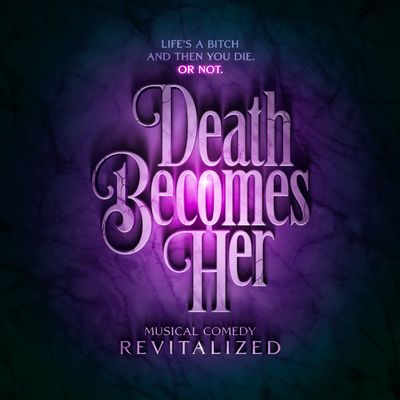
Death Becomes Her Writer Marco Pennette joins Behind the Awards to chat about making his Broadway Debut in this musical comedy. From his TV work on such shows as Ugly Betty, Caroline in the City, and Kate & Allie to being Hal Prince’s intern Marco has stories for days including the touching relationship he had with Linda Lavin... Read More
From the show: Behind the Awards with Eila Mell & Bruce Gotlieb
Featured Shows
About
Death Becomes Her Writer Marco Pennette joins Behind the Awards to chat about making his Broadway Debut in this musical comedy. From his TV work on such shows as Ugly Betty, Caroline in the City, and Kate & Allie to being Hal Prince’s intern Marco has stories for days including the touching relationship he had with Linda Lavin. Death Becomes Her stated 8 years ago with the help of his friend Kristin Chenoweth.
Also in this episode - Isabelle Sanford’s Emmy Win and a review of Stephen Sondheim’s Old Friends starring Bernadette Peters and Lea Salonga.
Make sure to check out Eila's book, "The Tony Awards", and all her other amazing books: https://amzn.to/43WMu5Y.
Connect with Eila and Bruce:
- Instagram @behind_the_awards
- Eila @eilamell
- Bruce @cominghomewithbruce
Transcript
This transcript was automatically generated and might contain errors.
[0:30] Eila Mell: Hello and welcome to Behind The Awards. I'm Eila and I am here with Bruce.
[0:44] Bruce Gotlieb: Hey there, Eila. How are you doing?
[0:46] Eila Mell: I am good. So we're listening to Isabel Sanford receive an Emmy. She was so great. Come on, Wheezy Jefferson.
[0:54] Bruce Gotlieb: I mean, she's wonderful and caught a little off guard. She got stuck with a piece of cheese.
[0:59] Eila Mell: I guess she wasn't expecting to win.
[1:01] Bruce Gotlieb: I mean, she seemed very surprised by her voice.
[1:05] Eila Mell: And that voice, such a signature voice, right?
[1:08] Bruce Gotlieb: Yeah. I mean, there's a few people that you hear and you know who it is. One of them, Nell Carter. She's another one.
[1:16] Eila Mell: Oh, yeah.
[1:17] Bruce Gotlieb: You know, there's just certain voices that just, you know.
[1:20] Eila Mell: I know. I love that. Well, Bernadette Peters, for me, is one of those voices. And we got to see her in Stephen Sondheim's Old Friends the other day.
[1:28] Bruce Gotlieb: Yes. And our friend to the show, Beth Lovell.
[1:31] Eila Mell: Absolutely.
[1:32] Bruce Gotlieb: All her old friends.
[1:34] Eila Mell: Right. That was the reason we went to see. We wanted to see what she was doing, because in our episode with her, I mean, I couldn't wait to see it.
[1:41] Bruce Gotlieb: She made it sound so good. And so any thoughts about Old Friends?
[1:47] Eila Mell: You're the hugest Sondheim fan, right?
[1:50] Bruce Gotlieb: I am not.
[1:51] Eila Mell: Right. So how did you do with the music?
[1:54] Bruce Gotlieb: Oh, fine. I mean, there are definitely some sections that I was like, all right, we could breeze through this. But, you know, for the most part, I thought that it was a really lovely review.
[2:05] Eila Mell: Everyone sounded amazing. The costumes were gorgeous.
[2:09] Bruce Gotlieb: I thought, you know, one of the things you see a review when everyone's, of course, always dressed well. But what I thought was really special that they did here was everyone was dressed for what felt like their body type, their age in life, almost like they went through and they sat with somebody and they kind of curated this look for them.
[2:28] Eila Mell: Yeah.
[2:29] Bruce Gotlieb: You know, Jasmine Forberg, who was in an age appropriate and, you know, for her sequins black dress, it was beautiful on her.
[2:38] Eila Mell: And then you had, you know, Lea Salonga, who was in an equally beautiful and shimmery sequins outfit, but that was appropriate to what she would wear out. And I really appreciated that nod.
[2:50] Bruce Gotlieb: I mean, for me, the most amazing. Well, all Bernadette Peters gowns, but also Bonnie Langford wearing this sequin bodysuit.
[2:58] Eila Mell: Yes. Oh, my God.
[3:00] Bruce Gotlieb: She looked incredible.
[3:02] Eila Mell: Wow. And she needed it because she's doing splits.
[3:05] Bruce Gotlieb: Yeah. I mean, the couple of standout numbers for me were, of course, I mean, Beth Leavel's Ladies Who Lunch.
[3:13] Eila Mell: That was great. I mean, yeah, it was really, really great.
[3:17] Bruce Gotlieb: Everybody ought to have a maid was hilarious.
[3:20] Eila Mell: So that was Gavin Lee. Yes.
[3:23] Bruce Gotlieb: Kyle Selig and who else did it? Oh, Jason Pennycook.
[3:27] Eila Mell: They were so good. I mean, so good.
[3:31] Bruce Gotlieb: And the choreography. I have to say that the staging and the choreography by Matthew Bourne was unbelievable.
[3:37] Eila Mell: I don't typically like a review, so I was a little bit of a bad sport going in thinking, you know, I want to see Beth and I want to see the show. But how good is it going to be? And I really, you know, I do love Sondheim. So that was a plus for me. But, you know, it didn't feel like a typical review for me.
[3:54] Bruce Gotlieb: It was much easier because there was more of a narrative than in other reviews that I've seen anyway.
[3:59] Eila Mell: So I felt like in some cases we were seeing almost abridged versions of shows because there were several numbers put together, you know, in a group of one show at a time, sort of.
[4:12] Bruce Gotlieb: Sure. Sure. The orchestra was magnificent.
[4:16] Eila Mell: You were right on stage the whole time. So you got to appreciate, you know, the scores of each of these numbers.
[4:22] Bruce Gotlieb: I'm not getting married today was probably another standout number.
[4:25] Eila Mell: Joanna Riding from Company. Incredible. She was great.
[4:28] Bruce Gotlieb: She was great in that and she was great in You Gotta Get a Gimmick.
[4:31] Eila Mell: Yeah, she did that with Bernadette and Beth.
[4:36] Bruce Gotlieb: Yes, it was a really good show. If you have an opportunity to get there before it closes, you're in for a treat.
[4:41] Eila Mell: Yeah. And there was more of a set than I expected. You know, I just expected actually kind of no real set.
[4:48] Bruce Gotlieb: But there are set pieces that come in and out to support the scenes from the shows.
[4:53] Eila Mell: It's more the scenes than the songs from the shows, wouldn't you say?
[4:56] Bruce Gotlieb: Yeah. I mean, I don't know if I got that impression of it. I think that the sets definitely helped, you know, for Sweeney Todd, for the West Side Story. You know, they definitely helped with those moments.
[5:08] Eila Mell: Had they not been there, I don't think it would have bothered me, but I appreciated them for sure.
[5:12] Bruce Gotlieb: Well, for me, they definitely created the atmosphere and the experience was heightened. And I appreciated that so much.
[5:20] Eila Mell: Sure. So that made a big difference for me. I love the Sweeney Todd section. It's one of my favorite shows and it's so exciting. I just that music that especially the tale of Sweeney Todd, that opening number is so great.
[5:32] Bruce Gotlieb: I really liked Sunday from Sunday in the Park with George. That's just one of my all time favorite shows. I wish there was more Sunday in the Park with George in this, but, you know, there's only so much time.
[5:44] Eila Mell: That's true. There is. And they already it's already set up as two acts. It's, you know, two and a half hours or so, you know, so unless you're going to be there all night.
[5:53] Bruce Gotlieb: Yeah, I know. I know. And it was a relatively large cast and everyone, most everyone got enough to do. There have been criticisms that people were underused. I'm not sure I felt that way.
[6:06] Eila Mell: What about you? What do you think about that?
[6:08] Bruce Gotlieb: I mean, there were definitely people that had more to do. I mean, there I think there are I think if the cast were smaller, then you would have more featured things for some people because, you know, not everybody had the same lift.
[6:20] Eila Mell: Yeah. And I guess it's just designed that way. So, you know, certainly I could appreciate where that thought process comes from to say that, well, if you did, you know, had five less people, then you may be people that only had a line or two here and there would have a little bit more of a spot to shine.
[6:39] Bruce Gotlieb: They did make it clear from the advertising from, you know, just the way the poster is that Bernadette Peters and Lea Salonga are the leading ladies of this ensemble.
[6:49] Eila Mell: It's very much an ensemble. So they naturally have a lot more to do than most everyone else. But, you know, they're great performers.
[6:58] Bruce Gotlieb: Both of them. But Lea Salonga in this just the songs that she was saying was really so well suited to her voice. It was just such a treat to get to hear in person.
[7:08] Eila Mell: Yeah, absolutely. She's, you know, she's a vocal powerhouse. And, you know, each of them, each of the people that were featured in their respective songs, I thought all of them lent really well to their strengths.
[7:20] Bruce Gotlieb: Yeah.
[7:21] Eila Mell: So that way everyone had that opportunity to really shine.
[7:24] Bruce Gotlieb: And another thing that I didn't see coming was I didn't expect to feel moved by people like Bernadette Peters recreating some roles that she's done in the past.
[7:33] Eila Mell: Sure.
[7:34] Bruce Gotlieb: And it just, you know, your sense of history with these shows, with theater in general, it just it really evokes that. And, you know, so that was an added bonus for me, for sure.
[7:46] Eila Mell: Well, that's one of the things. I mean, nostalgia is a factor that you can't put a price tag on because you evoke certain feelings from a song or a song by a certain person. And that changes your experience as a theater goer.
[8:00] Bruce Gotlieb: Yeah. And also, let's point out that Bernadette Peters does recreate some of the roles we know her for. But then she takes on different roles in shows that she's done previously.
[8:11] Eila Mell: Yeah, for sure.
[8:12] Bruce Gotlieb: So that's fun, too.
[8:13] Eila Mell: Yeah, she's playing Little Red in Into the Woods for a moment.
[8:17] Bruce Gotlieb: Yeah, that's a surprise.
[8:19] Eila Mell: So speaking of nostalgia.
[8:21] Bruce Gotlieb: Yes.
[8:22] Eila Mell: I know that you have a love and admiration for Death Becomes Her.
[8:25] Bruce Gotlieb: I do. I love that movie. Yeah, absolutely. I love Death Becomes Her.
[8:32] Eila Mell: This show also gives you everything that you want from the nostalgia factor.
[8:37] Bruce Gotlieb: Yes.
[8:38] Eila Mell: And then some, because you have the musical just amplifies all of that.
[8:42] Bruce Gotlieb: Right. So it's nostalgic and fresh at the same time, which I kind of love.
[8:47] Eila Mell: And we are lucky enough to have the book writer of Death Becomes Her, Marco Pennette, on our show today. So I think we should chat and just bring him out.
[8:56] Bruce Gotlieb: Let's get Marco.
[8:59] Eila Mell: Well, Bruce, we have a guest on today whose work I love. I mean, so the very first thing in his Wikipedia is Cate Nally.
[9:10] Bruce Gotlieb: And you know how much I love Cate Nally.
[9:12] Eila Mell: You are probably a super fan.
[9:15] Bruce Gotlieb: I know I am.
[9:16] Eila Mell: I was 16. I just want to make that clear.
[9:18] Bruce Gotlieb: Were you really? Oh, my God.
[9:20] Eila Mell: That's amazing.
[9:22] Bruce Gotlieb: Well, welcome, Marco Pennette.
[9:24] Marco Pennette: Hello.
[9:25] Eila Mell: Hi. Thanks for having me.
[9:27] Bruce Gotlieb: Thanks for joining us.
[9:28] Eila Mell: What was your Cate Nally episode? Because I know them all.
[9:30] Marco Pennette: Well, I'll tell you really quick. We had to write a... I went to NYU. And while it was my first year of NYU, we had to write a TV episode as an assignment. I really didn't think TV was my thing. I was going to do theater, theater, theater.
[9:45] Bruce Gotlieb: Right.
[9:46] Marco Pennette: And I wrote the episode and turned it in. And my professor is the one that actually said, you know, this doesn't suck. So maybe you want to walk it up the street to the Ed Sullivan Theater and see if they want it.
[9:59] Bruce Gotlieb: Well, I didn't know how it worked or anything. So I went up to the Ed Sullivan, which is where Colbert, I guess, is done now.
[10:06] Marco Pennette: Yes.
[10:07] Bruce Gotlieb: Yes.
[10:08] Marco Pennette: Looked nothing like it did with Colbert back then. I mean, back when we were there, I mean, Jackie Gleason was the last tenant doing his show.
[10:16] Bruce Gotlieb: My gosh.
[10:17] Marco Pennette: It's a cool trap door in the floor.
[10:19] Bruce Gotlieb: I'll tell this story.
[10:21] Marco Pennette: Cool trap door in the floor of the Ed Sullivan that came up in the bar next door.
[10:25] Bruce Gotlieb: Oh, wow.
[10:26] Marco Pennette: Oh, how funny. But anyway, I walked in and I went to the production office and I was like, I have my script in my hand. Like, I have your next script, guys. Get ready. And there was some surly assistant who just said, we can't take unsolicited scripts.
[10:40] Bruce Gotlieb: So you have to sign a form.
[10:42] Marco Pennette: I was like, sure. Again, I'm, I think, 17, 18 years old. I had no idea how it works. So I went, great. And I sat and waited for them to go get a form. While I was waiting, two producers were just walking by, talking to themselves, talking to each other, rather, and said, we need to find a new production assistant. And I just jumped up. I was like, I'll do it. And they turned around and heard me.
[11:01] Bruce Gotlieb: Wow.
[11:07] Marco Pennette: That's amazing. I started working, you know, I was getting Jane Curran lunch and coffee and just doing what you do in that position. And I think I was such a nudge. They ended up giving me a script to write. Not the script I walked in with.
[11:19] Bruce Gotlieb: Right.
[11:21] Marco Pennette: But they read a few samples and then they gave me a script.
[11:24] Bruce Gotlieb: Wow.
[11:25] Marco Pennette: And it was amazing.
[11:26] Bruce Gotlieb: That is amazing.
[11:27] Marco Pennette: And to answer your very early question, it was the one when Kate and Ali's moms come to visit.
[11:31] Bruce Gotlieb: Oh, cool.
[11:32] Marco Pennette: So it was a Mother's Day thing. Yeah, it was, it was incredible. I mean, just to be that young and to have a produced script.
[11:42] Bruce Gotlieb: But it was a good lesson. Like, the world of TV was not open to me after that.
[11:46] Marco Pennette: Oh, really?
[11:47] Bruce Gotlieb: It was like, I had to go eat at my brother's restaurant after that. Just because the director was interesting. Bill Persky, he's kind of like my mentor there.
[11:55] Marco Pennette: Yeah.
[11:56] Bruce Gotlieb: He said, you can't get us coffee anymore. You've written a script. You're a writer. Go be a writer.
[12:02] Marco Pennette: And kind of like showed me the door in the most loving way.
[12:06] Bruce Gotlieb: Right.
[12:07] Marco Pennette: No, I get it.
[12:08] Bruce Gotlieb: Yeah.
[12:33] Marco Pennette: He was also having a string of not the most successful shows when I was working for him. And then I left, and he did Phantom of the Opera. Maybe it was me holding him back or something. It was all amazing. That was my college education, to be honest. That's what I thought. This is it. I can't learn more. So I would do TV Monday, Wednesday, Friday, and Howl Thursdays, Tuesdays and Thursdays. And it was amazing, amazing school. So I don't even know if that answers your question, but it does. But that's fantastic. Those are your early years. And you're in NYU at the same time. Did you have any time at all off? I was writing spec scripts in high school. I was so driven. Like, this is what I want.
It doesn't make you the coolest kid in high school, by the way, to be writing spec Silver Spoon scripts on your events. I want all those kids that called me a nerd to walk by the theater where Death Becomes Hers. I was like, how can I sit in a silent theater? And it was really weird. It was actually a reunion, a class reunion while we were on previews. And I just said to myself, is this ever going to happen again? That I go to the girl that didn't go to my prom with me and be like, you should go by the Lunt-Fontanne Theater right now. And I ended up being too shy about it. I didn't go. And I regret it.
[14:02] Bruce Gotlieb: Well, I'm sure they know what you're doing.
[14:06] Marco Pennette: I hope so. Not in a braggy sense, but in like, oh, good for him. He always wanted this. Right. But that's a cool move anyway to not show up.
[14:09] Marco Pennette: I hope so. I did ask all my friends that I am close to. They're like, we're not going. We're not going. I was like, oh, I don't want to go and see the guy that punched me in the shoulder when I walked by. Fuck him. Who cares? So how did Death Becomes Her come, the creation or you being on board with the project? Give us a little of that back story.
[14:32] Marco Pennette: So I ended up, I was with Kristin Chenoweth. I think she has a million pals. So that's why I say pals. And she got me a gig helping out rewrite the book, just revise it a little bit of On the 20th Century that she did in 2015. And I went to see Hal Prince again because he had done the original. And I just want to say like, was there anything that you didn't think got there in 1978 or that you wish had been, I don't know, better developed? Looking for hints, you know?
[15:07] Bruce Gotlieb: Right.
[15:07] Marco Pennette: Well, I had a great meeting with him. It was just great to reconnect with him. I brought him the book he gave me when I first met him when I was 13 that he had autographed to me.
[15:16] Bruce Gotlieb: Wow.
[15:16] Marco Pennette: He's like, you still have that? I'm like, I saved this on a flyer before my kids, okay? So he looked at me as I was leaving and he said, so you're still into TV and you're doing, I was like, yeah, but my dream is still to really do a Broadway show. That's where my heart is. And he looked at me and he just said, what are you waiting for? And it really was a little bit of that elevator ride down was like, what am I waiting for? I keep on using shows as an excuse. It's one of those, when you're in the club, I guess, in LA, TV writing, they'll keep on, there'll be another show. There will be another show. So I really had a break away and it's a long way to get to your answer. Sorry. But I ended up then getting my hands on the Universal Studios catalog, the list of every movie they had done because I had a slight connection there.
And, um, I just thumbed through and I found Death Becomes Her. And I thought, wow, I'd been told by the producer, Mark Platt years earlier, he said, you want to do this Broadway thing find, and this is no disrespect to the movie, but he said, find it an imperfect movie. Don't do that movie. Everyone knows every single line. And it's just one of those, you know, I won't use examples, but I had seen Broadway shows where they took the movie script basically. And I felt they put it right up on stage. So that becomes, I felt while it was, it was more of a cult hit room to be developed in some different ways. And I'm not going to say the word improved because I think some people just worship that movie.
[16:56] Bruce Gotlieb: Right. Yeah. People love it, which only helps you love it.
[16:56] Marco Pennette: And I think it does help. And, um, but I went to Universal and they went and I had Kristen by that point, I was like, you have to play Madeline Sharp. Sure. She went, yep. You know, it's like, you know, Lauren and Kristen just says, yeah, do a lot of things. Um, so, so with her, uh, by my side, walking in, getting them excited was pretty easy. And, um, we started developing it. And for two years, there wasn't even a composer or lyricist on it. It was me, the producers and a director who ultimately left. Okay. And they asked me to write it as a play first. And I was like, Oh, I mean, you can imagine Death Becomes Her just as a straight play, right? It's all about that music and everything. Um, so I did it reluctantly.
I think they were testing me a little bit. I've written a musical. I think they just want to see how does it play out? And I guess I passed. Cause then they said, they read my draft and said, okay, let's find composers. And the song process took about eight years, which I know theater people do not bat an eye, but I was from the TV world where I'm like, there's an expression in TV. You don't shoot it because it's right. You shoot it because it's Friday. We're still doing this. I mean, they would ask for changes and I'd be like, so you want, when do you need these? The, I thought they'd be like Tuesday in March, March. So that was what was the most frustrating part. I was like, I think I was just like raring to get going, you know?
And it was the excitement behind the creation of it all. Totally. Totally. But like you said, you guys don't seem surprised that they take this long, but it did. And you know, the experience I'd always hoped and prayed it would be is that little kid lip syncing to Dreamgirls in his bedroom, you know, it was like, oh my God, it's just happening. Although I think I never let myself say it's happening even now it's open and I'm still like, it's not going to happen. It's real. I think I protected myself a little bit. You hear those famous stories that they, oh, they were out of town. The marquee was up and just nothing. Right. So I kind of was, I still walk by the theater. I'm like, yeah, it's there.
You know what it is when friends, not to the malicious, like when good friends walk by the theater and like see my name and stuff and they write me and they call me and they take pictures of it and they say you saw the show. That felt really nice.
[19:31] Bruce Gotlieb: That, that is very sweet. Yeah. It's such a good show.
[19:37] Marco Pennette: So funny. Mom, you're so sweet. Thank you. So what happened that Kristen wasn't able to do it anymore?
[19:41] Marco Pennette: So Kristen got an offer in the process and she obviously knows the process better than certainly than I did. Um, you know, things come and go, things come and go, things go, and she was sticking with it. And we're, we were, um, I think approaching the first reading, but she called with, for us, the very sad news that Steven Schwartz had written Universe Side and like, you know, when someone's breaking up with you and you know it from the first sentence and you just have to look and go through the whole thing. And, um, and she, she was like, that man made me, I mean, he made who I am and loyalty. And so Kristen had to go bye-bye, but luckily Megan Hilty came along and she brings a whole new kind of set of gifts to it. And weirdly, I ran the show Ugly Betty years ago in LA. And I did an episode where Betty went to see a production of Wicked.
[20:37] Bruce Gotlieb: Oh, that's right. That's right.
[20:37] Marco Pennette: And, and we shot it in LA cause Wicked was playing at the Pantages Theater in LA and Megan was Glinda at the time. So before she came to Broadway, there's a tiny part. Yes. She has a tiny part in the episode of Ugly Betty, but it was, we kind of bonded a little there cause I spent three days at the Pantages Theater, you know, shooting a 10 minute sequence was, Oh my God. Uh, you know, but anyway, so it was nice. I kind of knew Megan. So when they mentioned her, I was like, Oh my God, she's incredible. And people, people really love her. The Broadway community loves her. And she's a wonderful actress.
[21:20] Bruce Gotlieb: Yeah. She really is a wonderful, I mean, everyone knows the singing, the dancing, all that, but I really love what she brought to this. I mean, I feel like I've, I really struck gold with all three of them, four of them with Michelle Williams included. Right. Because, you know, I knew Chris, like I told you, Chris Sieber, and I was the one that pitched Jen Samara cause I'd just seen her in Disaster. She's so brilliant. That was so funny. She's amazing. And just to watch them like build this thing. I never really was privy to that. Again, TV, you get five days, but this was months of them layering and layering and editing, and they just did their work so well. And, and I think you see it and kind of different styles, I'd say, but they both just kind of rose to the top. They were, they were, I couldn't be happier. People mention other casts. I'm like, no, this is the cast.
[22:15] Bruce Gotlieb: You know, you fall in love with your, your OG cast.
[22:20] Marco Pennette: Of course. Oh, absolutely. Well, if Megan ever has to leave, Julia Madison could step right in.
[22:24] Bruce Gotlieb: And you know what? Julia did step in. She did?
[22:28] Marco Pennette: At a reading. Still, we were gonna have to send these 200 people away. We're having our first reading and Kristen couldn't do it. Kristen suffers from vertigo sometimes. She got vertigo and we're like, oh my God, we worked so hard. And you're just scheduling everything. And they turned to Julia because Julia has an amazing voice. Whenever we get the demos they would send, I'm like, just do this. Just use those. And so she did it. She was great. We were at an event last week where Julia sang for the gays and she was incredible.
[23:01] Bruce Gotlieb: I knew about, she told me she was doing that. That's amazing.
[23:06] Marco Pennette: Yeah. I mean, that's another number of theirs that I just would play on repeat every time they, when they sent it to me, I was like, oh, this is my favorite. Then they sent me another one. I'm like, oh no, this is my favorite. I was a fan girl through the whole thing, I think. Yeah. Because Chris Catelli ultimately became our director. Yeah. I loved Newsies and his work and Julia Noel. I mean, there's a little bit of, I used, I mean, I'd never written a Broadway musical. Obviously I'd written television.
[23:31] Bruce Gotlieb: Yeah.
[23:31] Marco Pennette: Julia Noel had never written a Broadway musical. He'd written other musicals off Broadway. Right. And Chris Catelli never directed a Broadway musical. So I lost the bad news bears. I'm like, I don't know if this thing's going to get Broadway, but it's a great story if it does.
[23:46] Bruce Gotlieb: Well, it's working. So.
[23:46] Marco Pennette: Well, Chris really did take the reins when he got in there and did great notes on the script and, and his script and, and musically, he was really, really, um, shaping this thing and forming it. Yeah. And that was, um, that was great fun. Again, eight years. Kristen told me Wicked was like 10 years. So that's crazy. And, and I heard the other day that, um, they were talking that Boop was 17 or 18 years. So it's like, I said, I want to do another one of these, but I don't know if I have the lifespan. Maybe you could fast track one.
[24:29] Marco Pennette: No. Well, I've had some meetings like about other projects and I go, well, how fast can we do this? What's this hack? Just care about the time. Like, no, I will devote all my energy to it. I want it to happen. But if it's one of those like that, if we're talking 20 years from now, I'm like, give me a walker to do it with. Um, and Bob Greenblatt told me smash. What'd he tell me? The playbill was 13 years. So it's amazing. But I guess if you, and then those ones that close in a week, I just thinking about it, it's too heartbreaking.
[25:05] Marco Pennette: I would post that. I would say to my husband, I just wanted to be on a marquee. I feel I've done it. And then it would be like, I just wanted to open. I just wanted to run one week. I'm like, what if it's a Tony nomination? I just keep on moving the line, to quote a part of that song. I found myself guilty of that a little bit.
[25:32] Eila Mell: Well, you should. I mean, how often do you get to be in this conversation? So that's amazing.
[25:37] Marco Pennette: I know. And after it opened, I had to go back to LA and start pitching TV pilots again. Cinderella, Back from the Ball, which I don't want to. TV's been great. I had a wonderful time. But you don't want to taste something that's like, oh, this is what I've always dreamt about. And it's really nice when my TV executive friends go and see it and they write me and I'm like, that's kind of nice. And I'm like, you know, remember that pilot that didn't work? Well, at least I did this. I remember sitting in the theater when I went to see Death Becomes Her. And after the opening number, I was like, if this is it, like if this curtain went down and they said, go home, everybody, I'd be like, okay, worth the price of admission.
I'm like, I'm done. I feel that way. I feel because the first two, you have Michelle Williams belting this number out and then it rolls into For the Gaze. And I'm like, yeah. And then there's a book scene. And I was holding my assistant. I was like, oh, god, we got to talk. So I was like, Julia Knowles set me up so high. And then I was like, now they're talking. They're talking. Just please let her laugh. You meet it because the script is so funny. I mean, that's the takeaway from the show, how funny it is. It's so much fun.
[26:54] Marco Pennette: That's what I wanted, though. I really wanted a musical comedy.
[26:58] Eila Mell: Yes.
[26:58] Marco Pennette: Felt like when I was growing up, I grew up in Connecticut. So we would come into the city, like my parents are great about exposing me to theater. And we'd come every couple of weeks to go to TKTS. But there are a lot more musical comedies. I felt at that point. And then there was this not a turn that it became a bad word by any means. But they went into the everyone wants to be Sondheim kind of delicate about saying that there were wonderful shows, but they were a little darker.
[27:29] Eila Mell: Miz came. Right. Yeah.
[27:31] Marco Pennette: Exactly. So I said, I just I felt like my gift that I could bring would be to push it into comedy. I felt like if you asked me and I've had an offer, I've had a chance for a meeting on some dark shows that I keep on calling my agent going, you know what I mean by comedy, right? Like, like this, if you put a gun to my head, I wouldn't do it. So that's nice to hear, because that's really and I mean, again, the delicate way to say it. I mean, the world kind of sucks right now. And I did love that people could there's some escapist humor here for two hours, go and kind of forget things, laugh a little bit. It's still going to be there when you go outside. But maybe it's those two hours you can enjoy it.
[28:21] Marco Pennette: We had it's interesting. We had a performance. We were in previews the night after the election. And I remember standing there in the back watching the audience coming in for that performance. And boy, they were not there to laugh. Yeah. And it was a lot of grumbling. And they sat there. And little by little, you'd hear laughter starting. And by the end, they were cheering. And it must sound corny, but I was really like, I had a little part to do with that to change these 1500 people and let them again, forget their trouble. Right? Yeah. And that was that was probably my favorite performance.
[29:04] Eila Mell: Yeah, it makes a difference.
[29:04] Marco Pennette: Yeah. And then a friend just wrote me who saw the matinee yesterday, the daughter of the director of Kate and Allie, who came funny. Really? I bring my dad and everything. I was like, Oh, that'd be amazing. But she said, I forgot about everything out there. And I was like, that's really nice, because we could use that. And now more musical comedies are happening. I mean, smashes a lot of them. It's a great season. Yeah, really packed. Right?
[29:36] Eila Mell: Do you think if I would have waited one more year?
[29:39] Marco Pennette: Well, believe me, I've done that. I've done that homework. I'm like, if it was only was 1988. Well, I did. Yeah, I'm embarrassed that I've done those. But you never would be human if you didn't. And it's so great to see all these great female performances. I don't remember a season where you just keep on counting. Every time I see a new show, I'm like, well, she's gonna get nominated. Oh, I know. Oh, best actress in a musical. Forget it. That's what I mean. It's like, there's so many great women out there. But I think your ladies have a good chance.
[30:09] Eila Mell: I hope.
[30:10] Marco Pennette: Well, they I think they certainly deserve it. They really, you know, you always hope you get coming from again, television. The last series I did was Mom with Allison Janney. Yeah, I did it for like eight years, because I loved it so much. I never I think it's the longest I've ever did show. I usually get bored and leave after. But um, or it leaves after the arm. But Allison Janney would get a laugh with like, hello. And I feel like Megan, I told Megan and Jen this too, as I get the same vibe from you guys. Yeah, you guys zig where I thought you zag and all in the best way. It's like, oh, I never heard it that way. Right? And I mean, Jen's like a technician. She will if I question like, well, maybe you need the well, I don't know if you need the the because if you do if you emphasize the A and I was like, wow, I was like, okay, and even second guess you do it.
Um, and no one is like her. I mean, she just her performances are really so unique and so brilliant. And Megan on the other hand, it's just like a sponge. She's so up and turns around delivers it. And yeah, they're both so wonderful. And, you know, slightly different ways. The comedy is a little different, but they both really score. So together so well, and they work with their understudies a bit. This is such a hard vocal role. Either one of them is kind of off. Probably other actors in other roles could get through it. Yeah. But they said this is so demanding, it will be a very ugly performance if we tried to do the show. So they've each had to do it with each other's understudies. And I'm like, go get your money back.
[31:56] Eila Mell: Yeah. Wonderful. Well, I had a friend who got her parents tickets to see the show. And Megan was out. So she said, she she told her parents, I can, you know, change the tickets. And they were like, No, no, we're already going. They didn't care. And so then afterwards, her her dad was saying, I can't imagine anybody being better than Kaylee Cronin in this role. Amazing. I thought, you know, I brought friends to it. You know, Megan got sick on our second preview. Yeah, we actually canceled the show. And I mean, it killed her because it was like, we're all ready to go. And all this work. I didn't have anything ready. Kaylee, I think never. I think read the script at that point. I don't know. It's like, she's not thinking I'm going on the second preview.
But a lot of the smoke on the stage, it turns out what was affecting Megan's Oh, wow. But figure that out. Yeah, she come back in and then say my voice is gone again. But Kaylee got to go on that weekend. And I was just like, you took this role after a morning of rehearsal, had never worked on the set as Madeline and she killed it. I don't know how hats off to anyone that can do this. I would watch these things and be like, so you have to learn five of these roles, right? Yeah, I don't know if either of you are performers, but I just like, if you've ever done that, man, you deserve a Purple Heart. I know the hardest job. Because you you have to like, you know, it's so specific the amount the information that you need to recess from your from your files in your brain.
A moment's notice by this guy. Exactly. I had a friend in LA who the LA company of Hamilton, he was understudying like Hamilton, the Washington Brewer, I was just like, and he would call and say, Oh, I'm on for bird tonight. Come over. And I'm like, when you're sitting there, are you looking at Hamilton mouthing his words? And he goes, No, you have to be in the guy you're in. It's totally true. You just do a one man show with all of them. You could. I wish that's me. Or that feels like it might even be easier to do it by yourself. Because you don't have to worry about stepping on some wall. Stand back. Right. The one that Hamilton would be great.
[34:06] Marco Pennette: Hi, this is Marco Pennette. And behind the awards, we'll be right back.
[34:12] Marco Pennette: So I want to go away from Death Becomes Her just for a moment, just because something that you did in Ugly Betty, which is not really spoken about all that much, but so important is you had a kid who is a gay character. It wasn't really said or spoken. But, you know, it's pretty obvious near the end.
[34:28] Eila Mell: Yeah, that's right. He did get a boyfriend. Yes.
[34:35] Marco Pennette: But for but he was very young when the show started. And I just love that choice. And that you had the space to do that.
[34:42] Marco Pennette: Well, we actually talked about that a lot, though. It's interesting because he was so young. Yeah, right. And we didn't know like we were all like in the writer's room, like he wears heels to rehearsals. And he would mark would he was very I remember like in the fourth episode, I wrote Marissa Winokur from Hairspray is a good buddy of mine. And I did an episode where Mark, the character was taking his mom and dad to see Hairspray. Right. And they get trapped in a subway. And Mark so upset his dad, the straight macho guy who did not care about seeing Hairspray was going to miss it. So he started performing it for him. And by the way, oh, we all remember that Markie Delicato before the show. I said, Listen, there's a new show.
Um, it's a song. Good morning, Baltimore. I want you to end up to me. He goes, I got it. Yeah. He did. He made a song. It was like the sermon open like a month. He was very funny. He was really like, usually just a great characters. We hadn't seen him a lot. But we did say, he's so young, is it up to us to put that on him? At this point, maybe, maybe he's not. And you know, we weren't about to ask this kid at 1312 13. So we let it just evolve. And then he I think came to us, or maybe just became more obvious. And he was, you know what he did? He came out to Anna Ortiz, who played his mom on the show. He didn't tell his real mom first. He told Anna, which I thought was very adorable. Actually, she's the loveliest.
We thought, yeah, you know what we having kids are out there dealing with this. And that was really beautiful. I'm just thinking back to it. It was, um, I remember we did a joke where his father trying to butcher him up, gave him a baseball bat. You know, the cleats. And yes, the little white cup. Yeah. Mark unwrapped it and put the cup over his face. And he went, look, opera. I love I just love that joke, actually, so much. I was so proud of that. I was like, I don't think it was my joke was somewhere in the writer's room. I thought it was great. But so we and then we gave him a boyfriend afterwards, because TV does have the power, right? But just the audience you're reaching at that time. Yes, you were reaching a big audience.
And I thought we deserve to go there because there are we did the we did the Patti LuPone episode. Yep. There she played Michael Urie's mom. And I remember, I know Patti a little bit. And I remember calling her agent saying this is the part she's going to reject Michael, when she hears he's gay. And the guy goes, great, great, great. I said, No, I don't want Patti to come here. That all said, say, oh, the gays.
[38:38] Marco Pennette: TV is a very personal experience. It's just different than anything else. Together anymore, everybody's so on their own. There's so much value. And I also, obviously, the night I outed myself to my parents. Well, clearly. Much about Annie, but it was like that came home, like the next day from the city work in the city, he said, I pay scalpers prices. We're going to go on. Wow. But the joke was the scalpers, he paid $14 for my guys. And more than time, I was like, oh, my God, we mortgage the house, doesn't obviously that doesn't exist anymore. Those prices don't exist, obviously. And I just feel, you know, I was even hoping at some point, like, oh, maybe that becomes you're going to have this like Sunday matinee where families can get a break or you couldn't get any traction on it.
Because I don't think the show can afford to run, unfortunately, if it doesn't charge what it charges. But I will say someone that can fix this, though. I hope so. I hope so. Our show is not for little kids like Annie was. But I mean, right. I want 15 or 16 year olds. Oh, they'll love it. But Andrew Lloyd Webber spoke to me about the same exact problem. So if he's not able to figure it out, it's a problem. I can't. But I know. Must have had young people. It had to. But even that was what, 20 years ago now? Not quite 20 years ago. But yeah, I don't know. Oh, my God, I'm so depressed. But I have to say Death Becomes Her is not one of those shows that is prohibitively expensive, though. Let's let's let's get to know.
Yeah, I mean, it's not the 800, 900 dollar tickets that are happening right now, which is crazy. But I think the more we buy those, they'll go up to a thousand. I know. I know. So I don't lose, though. Someone's got to finally say we we can't do this. Right. No, I I mean, I'm saying. Right. Yeah. I mean, a couple dinner in the city, a babysitter. Right. That's their one night a year. They can do that's their anniversary. That's you know, you can't the gone are the days of every couple of months. You want to go see a show? Yeah, let's go see a show. Yeah. That's why I also think the lowest choose Oklahoma. It's a brilliant show. But my point is the experimental stuff that creep in or the God forbid, off Broadway.
I don't know if they take a chance when they can only do this one night. Well, maybe happy ending is something new. So that's great. I saw that day. I love that. Yeah. And I was I was looking around. You're right, because I was looking at the full theater going. This is an Oklahoma. Right. And it's also and it's also bringing a younger audience to theater, too. So I feel like that's got to help a thousand percent. I looked at that audience. I was like, oh, there are people under 40 going to the right. And it's hitting them in a different way that it hits people over that age. So that's great. It's all right. That is true. But we are talking about one show. I still feel we all need to roll up our sleeves.
Very true. I know. I know. Let's because, again, there will always be the Pippins, the South Pacific, the classic, which I like that I'm knocking South Pacific. I mean, it is a classic. Beautiful. And it's bad. There's room for the weird. What do you like? What did I love so much? Next to normal. That's one of my. Yeah, I think it did. It went best musical. Well, it won the Pulitzer. It won the Pulitzer. It didn't run very long. No, but it and it's like, well, you've got to see this. You've got to see this. And I got to meet Tom Kitt one night. Oh, isn't he great? He's the best. Scared him by how thingy I was. I was like, I had to stay in the theater till it was over. It was empty. It was one of those.
He was like, that's really great. That's great. Yeah, but one nice guy. I mean, I don't want to be the downer. It's like it'll keep on going. I feel like it's stronger than it was after covid. I mean, it feels like this is coming back. The theater is definitely having a resurgence, which is amazing. I think it's thriving right now. You mentioned Annie. Now, for me growing up, there was nothing like Annie. And what brought me to Kate and Allie was that Alison Smith was Annie. I saw her do it. Me too. I saw Ava Garcia-Parker, then Annie. No, then Alison. I know that my parents couldn't figure it out. But you skipped Shelley Bruce. I did. Okay, you know something? You know something? I became Facebook to Shelley Bruce and a little shout out to Shelley Bruce for a second.
My aunt, who was like the only theater person in my family, would go into New York with her, like, club of ladies. I don't know what they did. I remember she went and saw Annie. It was the night Shelley Bruce began. Oh, wow. And she was a little like, well, you know, all the sleep had been and blah, blah, blah. And she called me the next day and said, Marco, you know, Shelley Bruce was incredible. Blah, blah, blah. Went on and on about Shelley Bruce. So this poor woman gets sick later in years, my aunt, and very sick. And I actually text Shelley Bruce about this. I said, would you? I don't know. Is there you still have a playbill with your face in it? That I just Shelley Bruce went knows me not as a Facebook friend.
Right. Right. Right. Saying tomorrow into her phone and then my aunt and sent it to her. I was like, who are those people? That's very well. So thumbs up to soldiers. I went to a funeral. And at the at the brunch afterwards, I was sitting next to Shelley Bruce. Sure. She's not my new favorite just because she did that. I know. And I told, you know, we talked a lot about Annie. And I mean, she was cool besides Annie. You know, we talked about other things, too. But she gets the anything. She understands how people feel. I read her book, actually, after she did this for me. And she's had quite the journey herself. Yeah. But again, I just I know I shouldn't be surprised when people do things like this, but I kind of am.
Yeah. I'm like, I, you know, my whole thing about going beyond for, you know, I'll read every writer at an L.A. TV writer. You know, the assistants that are getting us our salads and stuff. They don't want to be writers. Right, of course. And if you don't read those scripts. Yeah. Often some advice or notes or anything. Who's supposed to help them? And how Prince wrote me a note and then gave me a job. I wrote to the director, Jack Hofsis, who directed the original Elephant Man. He wrote me a note of encouragement. I'm a little kid. I wrote Al Hirschfeld, the character. Yeah, of course. Yeah. He was home for an afternoon to watch. I don't feel those people exist anymore. Yeah, people are so guarded now.
That I call HR. You know, yeah, right. Exactly. Al Hirschfeld, due to you. Maybe that's the reason that's really sad, because these people all formed my childhood into my early adulthood. And so I try to pay it forward a little bit, just at least with the scripts that all I can do is read scripts and offer them up like people did. But if we don't do it, I don't know where these people go. Well, thank you for helping me out today. Because it's so much harder. I want to give a shout out to Be Positive because I love that show. I thought that was so great. For Ashford. Oh, my gosh. She's wonderful. She's great. I wrote it for Rebel Wilson. Really? Really. This is based on a kidney transplant that I had.
Yeah, I need a kidney transplant. And my mother's best friend, daughter, who I knew a little bit when I was growing up and stuff. She was just like, I'll give you my kidney. I'll give you my kidney. But she was quite large. She had to lose 100 pounds. I was like, well, let's just keep looking. Because if anyone could lose 100 pounds, they're going to lose. They're not going to, you know, did it. Wow. She did it. And I thought that was a miracle part of the story. Yeah. So to me, it was very important that that was this woman's character. And Rebel did not want to do television. Too bad. Funnily enough, she came to see That Becomes Her. And I'm like, do you remember? I said, she says she remembered.
I don't know if she did. So anyway, I said to Chuck Lorre, who I was doing the show with, I said, and I knew he was a fan of Annalie. He knew theater people. If we do Annalie and she has to kick drugs, I just need someone to give up something to make it sound nice. Right. Right. Right. Luckily, Annalie read it. I remember I went to Chuck's office and there was a bouquet of flowers as big as the three of us together. Thank you so much for this role. And I looked at Chuck and I was like, did you need a cupid? But she was so wonderful. And Tom, as was Thomas Middleditch. Yeah. It was, you know, when you write about something that you're so passionate about, you think the world needs every detail and will hang like you did.
Right. Right. I didn't care so much that this guy needed a kidney and this person. I was trying to do a buddy comedy when you're stuck. Right. The old movie was a What About Bob? The Bill Murray. I do. Yeah. He was just stuck with him. And I thought, you can never get rid of this person that saved your life. Right. Right. Right. Yeah. I was wrong. Maybe the audience was like, oh, that's interesting for one episode. So we only ran like two years, but two years in TV time is not much. Two years on Broadway, I think, is pretty good. But well, it's nice you to say, because I love doing it. Yeah. I mean, Annalie was wonderful. Did you see her, Mrs. Lovett? Of course. And I met her backstage. I'm like, will you do another sitcom? Like, I feel like I want to do another one with her. She's so incredibly talented and not crazies to general, but she just does the work. She makes it.
[50:11] Eila Mell: Welcome back to Behind the Awards. We are thrilled to have Marco Pennette with us today. Marco, you have such an incredible journey in the theater world, and we can't wait to dive into it.
[50:41] Marco Pennette: Thank you, Eila! I'm excited to be here and share my experiences. It's been quite a ride, especially with my Broadway debut in "Death Becomes Her."
[51:01] Bruce Gotlieb: That's amazing! Let's start with your early days. You were an intern for Hal Prince, right? What was that experience like?
[51:21] Marco Pennette: Yes, I was! It was surreal. Hal Prince is a legend, and being able to learn from him was invaluable. I got to see the inner workings of Broadway and understand what it takes to create a successful show.
[51:41] Eila Mell: That's such a unique opportunity. Did you have any specific moments that stood out to you during your time with him?
[52:01] Marco Pennette: Absolutely! One moment that really stuck with me was when he shared his philosophy on storytelling. He emphasized the importance of character development and how every detail matters in a production.
[52:21] Bruce Gotlieb: That's fascinating. Speaking of storytelling, your work on "Ugly Betty" and "Caroline in the City" has been widely recognized. How did those experiences shape your writing for the stage?
[52:41] Marco Pennette: Working in television taught me a lot about pacing and character arcs. I learned how to engage an audience quickly and keep them invested in the story. Those skills translated well when I started writing for the stage.
[53:01] Eila Mell: It's interesting how different mediums can influence each other. Now, let's talk about "Death Becomes Her." How did that project come to fruition?
[53:21] Marco Pennette: It all started about eight years ago when I was chatting with my friend Kristin Chenoweth. We both loved the film, and she encouraged me to adapt it into a musical. From there, it became a collaborative effort with a fantastic team.
[53:41] Bruce Gotlieb: Kristin is such a powerhouse! What was it like working with her on this project?
[54:01] Marco Pennette: Working with Kristin was a dream. She's incredibly talented and brings so much energy to the table. Her insights and passion for the material really helped shape the musical into what it is today.
[54:21] Eila Mell: That's wonderful to hear. And I know you have a special connection with Linda Lavin as well. Can you share a bit about that?
[54:41] Marco Pennette: Linda is a dear friend and mentor. We've worked together on various projects, and her support has been instrumental in my career. She has such a warm spirit and a wealth of knowledge about the industry.
[55:01] Bruce Gotlieb: It sounds like you have a great support system. Now, let's shift gears a bit. I want to hear your thoughts on Isabelle Sanford's Emmy win. What did that moment mean for you?
[55:21] Marco Pennette: Isabelle's win was groundbreaking. She was a trailblazer for so many actors of color, and her recognition was long overdue. It was a proud moment for the entire community.
[55:41] Eila Mell: Absolutely. Representation matters, and her win opened doors for many others. Now, before we wrap up, I want to touch on Stephen Sondheim's "Old Friends." What did you think of the show?
[56:01] Marco Pennette: "Old Friends" was a beautiful tribute to Sondheim's legacy. The performances by Bernadette Peters and Lea Salonga were stunning. It was a reminder of the impact his work has had on the theater world.
[56:21] Bruce Gotlieb: It really was a special evening. Thank you so much for joining us today, Marco. Your insights into the industry are invaluable, and we can't wait to see what you do next!
[56:41] Marco Pennette: Thank you both for having me! It's been a pleasure sharing my journey with you.
[57:01] Eila Mell: And to our listeners, make sure to check out Marco's work and stay tuned for more episodes of Behind the Awards. We'll see you next time!
© Broadway Podcast Network, All Rights Reserved