

For over forty years, Jim Morgan has been one of the most recognizable names in the New York theatre. For twenty years, Jim has served as the the artistic director of the acclaimed Off-Broadway theater company, The York Theatre... Read More
From the show: BEHIND THE CURTAIN: BROADWAY'S LIVING LEGENDS » Podcast
Featured Shows
About
For over forty years, Jim Morgan has been one of the most recognizable names in the New York theatre. For twenty years, Jim has served as the the artistic director of the acclaimed Off-Broadway theater company, The York Theatre. And, for twenty years before that, he was one of their most trusted set designers. Jim's eye for taste and talent has led to some of Off-Broadway's most recent hits including The Musical of Musicals: The Musical, Cagney, Desperate Measures, Souvenir, and Enter Laughing, as well as cultivating the Musicals in Mufti series which gave audiences second looks at The Grass Harp, Grind, The Grand Tour, Regina, and 100 more. Jim pulls back the curtain on his career to discuss how a job interview led to a thirty plus years of employment, what it was like doing Sweeney Todd on a basketball court, and why an incognito Sondheim always gets recognized! Also, Jim shines the spotlight on Janet Hayes Walker, Sheldon Harnick, and the great team of Jones and Schmidt! Become a sponsor of Behind The Curtain and get early access to interviews, private playlists, and advance knowledge of future guests so you can ask the legends your own questions. Go to: http://bit.ly/2i7nWC4
Transcript
This transcript was automatically generated and might contain errors.
[0:00] Robert W. Schneider: Dear friends, we are so sorry about the ads. They are a nightmare in every way, but with your donations, we can get rid of ads someday.
[0:09] Kevin David Thomas: Beautiful Kevin.
[0:10] Robert W. Schneider: Thanks, Rob. Bach and Harnick are smiling as soon as it's a good thing. Friends, yes, we are back with a new plea. Much like those adorable puppets from Avenue Q, we are asking for you to give us your money.
[0:23] Robert W. Schneider: For those of you who have headed over to Patreon to throw a little money our way, we thank you so much from the bottom of our hearts. Your contributions are the only budget we have for this show, and it provided us a new soundboard and better studio space. So a thank you.
[0:23] Kevin David Thomas: Thank you.
[0:36] Robert W. Schneider: And as you know, nothing is more fulfilling than talking to the legends of Broadway and hearing them share their thoughts, wisdom, and talents with all of us. However, it does cost money. And if you want to help us keep the show going, please head over to Patreon.com. That's P-A-T-R-E-O-N.com.
[0:53] Robert W. Schneider: Search for Behind the Curtain, and you can give as little as a dollar a month. And trust me, that dollar will help us more than you will ever know. Plus, for certain monetary donations, you will get to pick your favorite thing and have advanced knowledge of our future guests so you can ask the legends your own questions.
[1:09] Kevin David Thomas: Ooh.
[1:10] Robert W. Schneider: Or you can simply leave canned goods and an original cast recording of How Now Dow Jones outside our doors if you don't want to contribute on Patreon.com.
[1:18] Kevin David Thomas: Truth.
[1:19] Robert W. Schneider: So once again, please head over to Patreon.com. That's P-A-T-R-E-O-N.com to help us out. Thanks.
[1:24] Kevin David Thomas: Thank you.
[1:25] Robert W. Schneider: Hi, I'm Robert W. Schneider.
[1:27] Kevin David Thomas: And I'm Kevin David Thomas.
[1:28] Robert W. Schneider: And this is Behind the Curtain Broadway's Living Legends. Don't forget to follow us on Twitter at Broadway Curtain. And make sure to join our Facebook page at Behind the Curtain, Broadway's Living Legends.
[1:37] Kevin David Thomas: And follow us on Instagram at Broadway Curtain Podcast. Plus, you can always listen to our podcasts on Broadway World in Stitcher.
[1:43] Robert W. Schneider: When we first asked today's guest if he would be interviewed for our podcast, he said, "Oh no, I'm not a legend." Well, we respectfully disagree. His passion and enthusiasm for musical theater, old and new and everything in between, has not only been an inspiration to artistic directors around the country, it has helped keep one of musical theater's most important institutions, the York Theatre, healthy and striving for over 20 years.
[2:05] Kevin David Thomas: That's right. Under his guidance, the York Theatre has given the world such musicals as Desperate Measures, Cagney, Souvenir, The Road to Qatar, Yank, My Vaudeville Man, Enter Laughing, The Musical, revivals of Closer Than Ever, and Ross Child and Sons, plus overseeing the fabulous Musicals in Mufti series that presents week-long revivals of underappreciated musicals such as The Grass Harp, Grind, The Grand Tour, Regina, and over a hundred more.
[2:31] Robert W. Schneider: And of course, the musical, the musical, the musicals.
[2:34] Kevin David Thomas: Musical, musicals, the musical.
[2:35] Robert W. Schneider: Which we will be talking about. That was one of the first shows I ever saw in New York City, wasn't it?
[2:37] Kevin David Thomas: Was it really?
[2:38] Robert W. Schneider: Well, you're gonna get a chance to see it again in a couple of weeks, and we're gonna talk about that towards the end. So to tell us what it was like to work with such legends as Janet Hayes Walker, Comden and Green, Bach and Harnick, Joseph Stein, Stephen Sondheim, and just about every legend of musical theater there ever was, here is producing artistic director of the York Theatre and a legend with loads of humility, James Morgan.
[3:00] JIM MORGAN: Hi.
[3:00] Robert W. Schneider: Hi, Jim.
[3:01] Kevin David Thomas: Hello, Jim.
[3:02] JIM MORGAN: I'm overwhelmed at the introduction.
[3:05] Robert W. Schneider: And set designer extraordinaire, I should also say.
[3:14] JIM MORGAN: Yeah.
[3:16] Kevin David Thomas: Did you ever think that you were gonna be an artistic director?
[3:20] JIM MORGAN: No, that was not in my plans in the least.
[3:23] Kevin David Thomas: Well, what were in your plans in the least?
[3:25] JIM MORGAN: Well, I studied set design in college, but even that was sort of a roundabout thing because I went to University of Florida, I'm from Florida, and went there to major in either graphic design or architecture or landscape architecture. All of those I was very interested in, and they had great programs in. And then I got to the end of my sophomore year where I was supposed to declare a major and hadn't declared one, seemingly couldn't. And I went to a counselor and he said, "But you're working in the theater department, you're making posters, you're building scenery, you're painting scenery. Have you ever thought of majoring in theater?" And evidently I never had. And I realized, I guess, at that moment, with his help, that scene design included all of those things that I was very interested in.
[4:10] JIM MORGAN: So I majored in set design at the University of Florida. And they had a good program. It was not the world's biggest or best program. But it what was great was it was small, and so I had a chance to do things I wouldn't have gotten to do at a bigger program. So I had a good time and moved to New York right out of that, right after that. And that's when I got involved with the York.
[4:36] Kevin David Thomas: So growing up, was musical theater or theater on your radar at all?
[4:41] JIM MORGAN: Musical theater in that my parents, our parents, I have two brothers, had a collection of records of actual LPs of great shows. At the time, Rogers and Hammerstein and Lerner and Loewe and the classics. And my dad loved words. He was a big Shakespeare fanatic, but also Gilbert and Sullivan. All sorts of influences in that area. Mom was a musician, she was trained as a pianist and tried to teach me piano and I resisted. Now I wish I hadn't, but yeah, isn't always, but so both of them contributed. Also, Dad was a wonderful artist. I mean, he drew wonderfully and he taught me about lettering and all sorts of things. So I got a lot of influences from both of them. But musical theater was on my radar, but it wasn't until high school they built a new library in Naples, and from somewhere arrived boxes of LPs, brand new LPs, from I guess Columbia Records or somewhere. It wasn't all Columbia, but anyway, included in it were a lot of shows that I'd never heard of. And I became fascinated with these shows by great people like Mr. President by Irving Berlin.
[6:05] Kevin David Thomas: One of our favorites, yes.
[6:07] JIM MORGAN: And how could Irving Berlin, this great writer, write a show that was not successful and evidently spectacularly unsuccessful. And I didn't know enough then to listen to it and say that's not good. Or I there were songs that I responded to and really loved, and others that I didn't. And I became fascinated with these shows that slipped by the wayside, and that became a big influence on my the rest of my life.
[6:32] Kevin David Thomas: Okay, so you were in Florida, you were in college, you decided to major in theater, right? And so then what happens next for you?
[6:39] JIM MORGAN: Well, our grandmother lived up here. She wasn't actually our grandmother, she was our grandfather's fourth wife, but she was sort of like an auntie Mame character. She didn't want to be called granny or grandma or anything. We called her Zia, which is Italian for grandmother or aunt.
[7:01] Kevin David Thomas: Must be grandmother.
[7:01] JIM MORGAN: I know T in Spanish is aunt. Nice. Anyway, we called her Zia. And then my aunt and uncle lived up here as well. So I had some wonderful connections, and I visited a lot during college.
[7:11] Kevin David Thomas: First Broadway show you ever saw?
[7:12] JIM MORGAN: Ethel Merman in Hello Dolly.
[7:15] Kevin David Thomas: Oh my God.
[7:16] JIM MORGAN: It was pretty spectacular.
[7:17] Kevin David Thomas: Mic drop. That's a great.
[7:18] JIM MORGAN: Yeah.
[7:19] Kevin David Thomas: Okay, good one.
[7:20] JIM MORGAN: Yeah.
[7:20] Kevin David Thomas: And I went with my cousin who had grown up here, who was my basically within seven days 17 days of my age. And she was so bored by it. She had seen lots of shows and had no idea of the import of the moment. And I was just in awe of the show.
[7:39] JIM MORGAN: Oh that I couldn't, yeah. I would have taken her seat. I want a time machine to go back and sit next to you and watch that.
[7:45] Kevin David Thomas: Okay, so Hello Dolly was the first one. So you came up to New York. What else what else were you seeing when you were up here?
[7:51] JIM MORGAN: Well, I'm trying to think. When I graduated from high school, my grandmother gave me my first trip alone to New York. And maybe that's when I saw Dolly. That must be. And then also I think in that same trip I saw Follies. And we have to see if those are the right dates. But anyway, she I went with her.
[8:13] Kevin David Thomas: Yeah.
[8:13] JIM MORGAN: And we came out, and I was really blown away. And she said, "Well, it's not Oklahoma." And she was very sophisticated.
[8:25] Kevin David Thomas: That sounds like something grandma should say.
[8:27] JIM MORGAN: That's about right. It's not snow Oklahoma. It'll do.
[8:31] Kevin David Thomas: So when you were watching these shows, when you were watching Hello Dolly and Follies, were you more focused on what the scenic aesthetic looked like? Were you able to, or were you able to look at the overall picture?
[8:41] JIM MORGAN: I was that's a good question. I think I thought I was there to look at the scenery, and I found myself being taken in by the whole experience. And I think that was the beginning of my interest in writing, not my writing, but people writing shows and how effective they were to an audience. So I think it ended up being the whole experience.
[9:09] JIM MORGAN: And going to see Sondheim shows in that period was fascinating to me because anyway. One of those trips I saw A Little Night Music, and I remember over the years having more and more difficulty taking in the experience of his shows. The night music, I was just blown away, Follies also. Company I saw on tour in Florida. But I remember seeing Pacific Overtures and coming out, and I was sort of stunned, but not really fully accepting. I was trying to take it all in. And I lived on the Upper East Side at that time and walked uptown from the Winter Garden, and I remember getting more excited the more I walked and thought about it, and I would stop and call people from payphones and say, "You're not gonna believe. I just saw this show. You have got to go see it." And it grew on me by the time I got up to East 89th Street where I was living, I was just giddy with excitement.
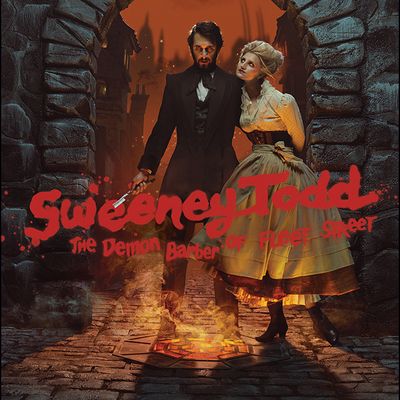
[10:22] JIM MORGAN: And I had the same experience with Sweeney Todd, leaving the theater. I was sort of like, "Hmm, I'm not sure about that. What how am I supposed to take that?" Because it was so big and so the concept was so sort of overwhelming and beautiful, but also off-putting, and it took me a day or two to really get excited about it, and then anyway. It was an interesting learning experience taking in his stuff that is not always immediately accessible.
[11:00] Kevin David Thomas: I think the process time, I think that's real. You have to process it what he gives you. I mean, it's so much so dense that it does that make sense. I mean, one viewing is not enough, really.
[11:10] JIM MORGAN: Yeah, yeah. Wow. And then working on both of when we did our own productions of both of those shows, being able to revisit them, trying not to be influenced by the original, trying to find something new, and there's so much to find in them. That's not a problem. There are so many layers, as been proven by many different productions of them across the world. It's just deciding what your point of view is.
[11:35] JIM MORGAN: But we were early on, we were the first revival of Pacific Overtures and Sweeney in New York, that's right, and found things in them. People said to us after Pacific Overtures, "I never realized there was a story here. I always thought it was sort of a review about the history of Japan or the westernization of Japan." And that we found a love story in Sweeney Todd that hadn't really been obvious in the other that was Susan Shulman's production, and it was pretty brilliant. It sort of took it into the Dickensian world. You it was much more intimate with doing it in the round, which was quite something at the time, and we ended up moving to Circle in the Square.
[11:35] Kevin David Thomas: That's right.
[12:20] JIM MORGAN: Both were wonderful experiences, and Steve was involved. Susan did Company with us, and it almost moved to the supposed to move to the Manette Lane, and for one reason or another ended up not doing it. But it was wonderful working even slightly with him. He wrote a new ending to Pacific Overtures when we did it that brought it up to the present.
[12:47] Kevin David Thomas: Right new lyrics to next.
[12:50] JIM MORGAN: Yeah, yeah. As requested by the director or just on his own?
[12:54] Kevin David Thomas: I think it was a combination. I think they sat down and talked, and I wasn't in the room, so I can't say what was whose exact idea it was, but I think the idea was it had been enough time, it was at least 10 years when we did it, that enough had changed that it needed to be addressed in one way or another.
[13:13] JIM MORGAN: And was it a whole new ending or just tweaking the lyrics? And so it ended up being more than just tweaking, but a new approach. First time you ever met him, he was such an influence on you as a theater goer. What was your first experience like meeting him? I don't remember. It was one of the shows at York. He would come. Oh, it was we did Anyone Can Whistle, the first revival of Anyone Can Whistle. That was the first of his shows I designed. Franz Soder directed it. Um, did a wonderful job. Um, and I was so terrified. Yeah, I'm still kind of terrified. How can we not? Or a better word is in awe. Yes. I I'm never quite sure. Um, how to say how what to say, or how to not say the wrong thing, or what you consider the wrong thing.
I don't think with him he's parsing everything you say and saying he shouldn't have said that. No, not at all. But that's what I imagine yes um there's a wonderful story um one of my favorite experiences with him was um he came to we were doing Musical of Musicals and one section is his is inspired by his work and he called me up and said I'd like to come see your show I hear it's a big hit I want to come in and uh I'd like to uh for people not to know that I'm there and I said we can do that yeah just arrive right before Kurt and I'll put you in the back row and uh I invited Charlotte Moore from the Irish Rep who's a very good friend of his so they would be could be chatty and um he had a guest with him also and I got them a room to be together all three of them to have wine and cheese at intermission in a separate room so he hadn't didn't have to mingle.
[15:08] JIM MORGAN: Anyway so the show starts the first section is Rogers and Hammerstein and I forget what the first line is but almost on the first line you heard this gigantic guffaw from the back of the theater and the whole audience turned around and looked and saw immediately who it was and all the way through Rogers and Hammerstein he laughed and laughed and left then he got to his section which is the next one and dead silence and Charlotte said why aren't you laughing and he said I'm listening and that's all that was said and then it went on to the Jerry Herman and he gaffawed his way through the rest of the show. And that was really wonderful. Afterwards um the audience cleared out, and it ended up just being me and Steve.
And I had a display up in the lobby it I forget what it was called, but it was like 176 pieces of sheet music around the lobby. And you had to find the links between them. It was either the same music publisher or the same lyricist or the same theater or the same poster designer or the same producer, or very a link between each other. It was like a little game, yes. And being the puzzle master of the world, he went around the room with me. We just us in this room. And he found every link. And we got to um we went it goes went from Gypsy to I Hear a Waltz, and he turned to me and said, and he was obviously one of the links there. And he said, I just want to say there is no connection between these two shows.
And there was another one that I was very proud of was going from uh Lost in the Stars to Passion, and it was an implied link of the oh, and each one was a piece of piece of sheet music. So I forget what the song was from Passion, but the song from uh Lost in the Stars was Big Mole. And so it went from That's good and he loved that. Oh, yeah. So having that private puzzle moment with him was very exciting.
[17:24] Robert W. Schneider: Of course. Was there anyone else that you met that you had always admired, or was anyone you were nervous to meet? One of those, I'm gonna change my shirt five times before I meet.
[17:34] JIM MORGAN: Um thinking back um no one comes to mind. I think a lot of them came sort of off the cuff, like, oh Tom Jones is gonna come by today to see the space, and meeting someone, it wasn't like we have a big meeting next week with Tom Jones, and uh happily many of them have been in the in the course of work, in the course of a day's work or a show's work, and I at the moment I can't think of someone I was terrified. Oh, well, meaning Hal Prince. Uh I was in college, and one of my professors wrote him, knew I was interested in design, and he wrote to his office, and as he is with so many people, was very welcoming. Have him come by uh when he's in town, and they set up an appointment, and I was terrified, terrified.
Um, and he couldn't have been nicer. I had poster designs and set designs and just beginning, yeah, very basic stuff. And he said, Well, I really like this. Um, this feels like you've been influenced by someone, I'd stay away from that. That just feels not original. Uh totally supportive. He said, and come back and see me when you come back to town the next time. And uh couldn't have been more supportive.
[18:53] JIM MORGAN: And um so I did, and when I moved up here, I didn't there were various connections like that that had sort of been begun but didn't work out in the first four months that I was in town. And that's when my aunt connected me to Janet Hayes Walker at York. She said, There's this your Zia. No, this is my actual aunt uh Aunt Mary, who just passed away last year. Um, and she said, There's this dear little theater group at the church. Would you like to meet the woman who runs it? And I thought, Oh, it's community theater, that's not what I need. But I was polite and I said yes. And it was York and it was five years old, and they didn't do musicals. But Janet had an incredible background in music and musical theater.
She had a master's in music from New England Conservatory. She'd studied with Naught Boulanger in Paris and had been in seven Broadway shows. She was Barbara Cook's understudy for the entire run of The Music Man. Had met her in uh Plain and Fancy. She was Julie Andrews' understudy in Camelot. She was in Anyone Can Whistle, which was the beginning of our Sondheim connection. So it was pretty amazing. When I found this out, uh I said, Why aren't you doing musicals? She said, Oh, they're just so difficult. But out of that conversation, we started doing one a year, and we had happily the same interest in shows that deserved a second chance. Our first show was uh our first musical was She Loves Me, which now is not looked at as anything that deserves a second chance. But at that point it had been an artistic success on Broadway, but this was the first New York revival of it.
[20:29] Robert W. Schneider: What year was this around?
[20:31] JIM MORGAN: 76, I think. Somewhere in there. So how did you go from an interview to being her right-hand man?
[20:39] JIM MORGAN: Um you've heard of the casting couch?
[20:42] Robert W. Schneider: Yeah.
[20:44] JIM MORGAN: It all comes out. It all comes the real behind the story. When we moved to St. Peter's, uh, I would say that was the first time we had an office and a paid staff, because it used to be run from Janet's bedroom. That always came out wrong because it really was written from Janet's bedroom. But her husband Charlie was the treasurer, and he kept all the the financial records in shoeboxes in their closet. But he was wonderful at what he did. I mean, he and the whole staff was uh volunteer. Designers and actors and directors were paid, uh, whatever one had to be paid on the showcase code at that time. But really, that was sort of the nerve center of the company, even though we were based at Heavenly Rest.
So we just got uh Janet and I were so in sync about theater in general, and um she met me in November of 74 and asked me to do the poster for the next show, which was the uh the School for Wives, and um and then she asked me to to design the set for the next show, which was um Night Must Fall in March.
[22:02] JIM MORGAN: So that was my first New York show, and I became the resident designer and graphic designer, and got more and more involved in helping her make decisions, and she would say, I'm thinking of doing this, what do you think? And I would toss out ideas. When we got into doing more and more musicals, for example, I suggested doing Facade as a as a show. It's it's a series of poems by E. Edith Sitwell with music by William Walton. He set it to music, sort of set them to music for her birthday one year. And my parents, speaking of parents influence, uh had a recording of the music. And it's this jazzy, snazzy suite of songs, of music, no words. So when I got to the University of Florida, I was moseying around the library one day, and I found this book of facade poems by Edith Sitwell.
And I read in the notes that there's music by William Walton. I thought, oh, I know that. You must sing them. Then you come, then I came to find out, no, you don't sing them. It's sort of early rap music. You read them in time to the music. And it's always done with a personage like Hermione Gingold or Tony Randall, or I mean, when they were alive, standing in front of an orchestra doing these performing these poems. And I said, why don't we do them theatrically? Have a cast, do the orchestrations, but uh have a whole group of people performing them. Have and Fran Soder directed it and conceptualized it, but I designed it. And uh there were puppets and projections, and it was a cast of seven, I think.
It was pretty wonderful. It got a lot of attention. Uh it was going to be done, it was almost done on PBS. I forget what happened. And Hal came to see that. And he wrote me a beautiful letter the next day and said, I loved your work on Facade. He I think he'd forgotten that we had met. I don't know. But anyway, he said, I'm working on a project. I'd love for you to come in and talk about it. So I was and um so it turns out the project was Merrily, and he said, I have this idea for a poster. I don't know how to do it. What I and he, I guess he described it to her, or maybe I'd read the script at that time, I forget. And uh he said, I want it to be that moment where on the they're on the roof looking at the Sputnik going by, and it's such a moment of hope.
And I can't figure out how to get the title into the um image. And so I came back I don't know how long, a week later with sketches, and he loved the one of the sign on top of the building, and he said, This solves it so perfectly clearly. And being who I was, and being where we were, now it'd be so easy to do digitally in Photoshop or something, or but the ad agency was very involved, and uh I was off doing summer stock, uh, but they flew me up for the photo shoot on a building down in the village of the West Village, I think, and the cast was there, and it was at sunset, and they just had the basis of a the base of the sign. We oh the other part of it, I suggested he said, How can we get a how can we get it to look photographic?
That's what I want to look real. And I said, Why don't we make a model of the sign? And uh they liked that idea. So a friend of mine who was the um T D at ELT, Equity Library Theater, uh, I talked to him about building the sign.
[26:02] JIM MORGAN: So they built it and it was photographed on stage at ELT, and it was about five feet high, and then they put that into the photograph of the people on the roof, which now, of course, would be really easy to do. It was much more involved. And then it came out in the paper when I was in North Carolina doing summer stock at Flat Rock, and it came out in black and white, and there was something odd. It was like the way it looked the first time, it looked like people were throwing things at the sign. Someone has a sweater balled up that they're about to throw or something, but it looked sort of like a dog, and it became known as the throwing the dog poster. And I think the next time they ran it, they had switched the people so they were aimed the other direction. It didn't look like they were throwing things at the sign. Anyway, I was very uninvolved in the actual putting together of it, but it's my idea, my concept.
[26:57] Kevin David Thomas: That's cool.
[26:59] JIM MORGAN: Well, there's a fascinating follow-up. Two years ago, or three years ago, they did it at Sharon Playhouse. Uh-huh. If that's what it's called now. John Simpkins directed it. No, he didn't direct it, but he was running it. And he said, "We're doing a talk back after this is in the summer. Would you come up and be part of the talk back? Because of York's association with the revival of that. And it would be so great to have your input on that." So that was fine. And in the middle, so I'm on stage with various members of the original cast or people to do with the original cast. And it was David Cady from the original cast. And he said, "Well, I have a little interesting story. When I, after ELT closed, I was walking by and there was this sign like hanging in the doorway.
This it was the logo for Merrily We Roll Along. And I went in and said, 'What is that?' And they said, 'Oh, they used it for the photo shoot. We didn't know what to do with it.'" And he bought it for 250 dollars. He said, "It's been in my storage room for all these years, 20 years or something, and I really need to clean that out. And I'm trying to figure out what to do with it." And I said, "Well, I have a story," and I told them the story of my creating that. Oh, and it was just, "Oh my god, I can't believe that." And it ended up, uh, within the next year, he said, "I tried to give it to Hal Prince. I tried to give it to the Lincoln Center Library, tried to give it to the Library of Congress.
No one either wants it or has room for it. They don't know what to do with it because it's a fairly substantial piece with actual lights in it." Oh my gosh. Um, again, now you could do it so much more simply, but it exists and it needs some work. It's sort of one strut is broken and one letter is sort of coming off. But anyway, uh, it ended up, he gave it to me. It's in one of the dressing rooms at York. He said, "It belongs at York, where it really began," and I look forward to seeing it up in the lobby at some point when it's been repaired. So it's back in one of the dressing rooms just to protect it. But it's kind of this amazing story that a very circular story to have it come back to me.
[29:17] Kevin David Thomas: That's crazy.
[29:19] JIM MORGAN: The other thing, the other interesting side thing was I don't know how soon after Marilee, uh, Forbidden Broadway began, but they used that logo as the basis for the Forbidden Broadway sign, and it was the idea of people being mad at Broadway and making fun of it, and it was people throwing tomatoes at the sign that said Forbidden Broadway in exactly the same layout as the Marilee sign. So that sort of storied experience with Marilee and creating that logo became the basis for Forbidden Broadway as well.
[29:58] Kevin David Thomas: Oh my goodness, it's kind of funny.
[29:59] JIM MORGAN: I had hysterical. I never heard that story. That's amazing. So maybe if we stop by the dressing room and we can go visit it.
[30:05] Kevin David Thomas: Now next time I'm at York, I'm gonna beg you.
[30:08] JIM MORGAN: Please, please, please. Here's ten dollars. Show it to me. I'm hoping someone, there's someone out there who said, "I'll give you a million dollars for that because I love Marrily so much." And then York would be on easy.
[30:18] Kevin David Thomas: You know there is, yes.
[30:19] JIM MORGAN: That's right. And let's go back to the York for a second. What was the original objective of the York theater? What was its mission statement before you got involved when Janet first started it?
[30:28] JIM MORGAN: Well, I asked Janet that, and her idea, and which was the basis of what we did for a number of years, she said it's classics of all kinds. So it was a lot of revivals. Um, all plays. Well, actually, before I'd gotten there, one of their first shows was um that Noel Coward thing of three one X Red Peppers and Oh, I know what you're talking about. I'll think of the title in a minute. But anyway, they, uh, that was early on, but it was something that fit the people they had and all of that. York was made up of a group of actors who had worked together out of town in regional theaters who wanted to be seen in New York in things that they had some control over, and that they could be proud of the quality thereof.
And um, and interestingly, Janet being the driven kind of person she was, she went back to school and got another master's in directing from Hunter, all the while she was appearing in Broadway shows and raising a family, and at times teaching at Chapin, and also she was in Charlie's Choir at Heavenly Rest, which is where all this was taking place. She was an amazing person and just focused, and she knew what she wanted to do and did it. And so she went back to school and got another master's in directing and became the head of this. She, because of her connection with Heavenly Rest, and her husband was the choir master and organist there. Oh, I didn't mention that, who ended up being our treasurer and board member.
Um, she saw the parish hall sitting there a lot, so she went to the pastor and said, "What would you think about a theater group using the parish hall at times?" And he said, "I think that's a great idea. And here's $50 to start it." So that's how York began. And also the name York is interesting. Uh, Charlie had the church choir, which he conducted, but he also had something called the Canterbury Choral Society, which is a volunteer choral organization that presents three or four concerts a year. He passed away two years ago, but um, he conducted all of them until he was no longer here. And um, Janet was in that, but it was called Canterbury after one of the cathedrals in England. And so when Janet was trying to come up with a name for the new theater, she thought of another cathedral in England, the York Cathedral. And so that's how Canterbury and York became the heads of these two organizations.
[33:14] Kevin David Thomas: I did not know that.
[33:16] JIM MORGAN: It got dicey at times about use of space, and over the years it got more and more problematic. There were AA meetings on Monday and Thursday nights, which meant we couldn't have performances on those nights or rehearsals in those spaces. And it really impacted our scheduling, began to more and more. And I began to sort of complain to Janet this is a problem. We need to think about it. And out of the blue, she came back one day and said, "Well, the theater at St. Peter's is available, and I've talked to them, and they are very interested in us coming there."
[33:59] Kevin David Thomas: For our non-New York listeners, where is the church at St. Petersburg?
[34:04] JIM MORGAN: Church of St. Peter's Church.
[34:07] Kevin David Thomas: St. Peter's Church, my apologies.
[34:08] JIM MORGAN: Yeah, it's a Lutheran church at the corner of 54th in Lexington. It's under the City Corp building, which now low it's not called the City Corp building, but officially, but that's what everyone calls it. Big skyscraper. I mean it's like, and they had to tear down the original St. Peter's Church to build the City Corp building. So the deal was we will tear down your church and we will build you a new one. And you have, I guess I wasn't there, but you have lots of say in what it is. So they chose Vignelli, uh, the Vignelis, but really I can't think of his first name. He just died last year or a couple of years ago, um, to design it. Very wonderful designers, and it's a striking, this gorgeous space inside.
I'm uh, and the outside is striking, I will say. Um, but inside is a theater downstairs in the lower level of a 200-seat off-Broadway theater, which um the church opened, I think, late 70s, and uh there were time there were attempts for a while to make it a commercial space. The problem is the lobbyist shared space with the church. And at that time there were very strong restrictions about uh when you could be even in the building. You when we first got there in '92, we had to be out at eleven o'clock every night, which is just impossible for a church, and all sorts of other restrictions, which have eased up incredibly over the years. We now have access to it except very specific times when it's a church.
[35:41] JIM MORGAN: How do you approach designing a set? What is your process?
[35:45] JIM MORGAN: Well, um, a lot of the times it depends who the director is. Um, and it depends on the show, I think, or my feelings about the show. But if it's someone I've worked with regularly, and there's certain directors I've worked with a number of times, and just have an affinity for the process with them. Um, Charlotte Moore, yeah, you do a lot of stuff. And um, Bill Castellino, who did Desperate Measures and Cagney and Inescapade and Storyville with us. Uh, um, Pam Hunt, I just did Born Yesterday with her in St. Louis, just got back two days ago. And uh, but a number of things at York, love working with her, and there are others that I don't mean to offend anyone by leaving them out, but it's wonderful when you have a shorthand with an artistic shorthand.
Charlotte and I often sit down over a drink or two, and I'm famous for the napkin drawings. So I'll say, "Is this what you're thinking of?" She'll say, "Oh, that's it, we're done. See you opening night." It's never quite that simple. But uh, we, it's very easy to get to a point of comfort with those people. Other people, uh, working with someone for the first time, it's sort of feeling uh your way as to you don't want to step on anyone's toes, you don't want to feel, I mean they may be less experienced than I am, but I don't want anyone to feel that I'm leading the discussion, unless they say, "No, I need more from you, give me some ideas." Um, which is fine. Um, it's also feeling really comfortable with the piece.
A new piece is more is trickier because you're maybe putting a stamp on it that will help it or hinder it down the road. So it's being very careful not to be too pushy in a number of ways. Um, but I love, uh, through discussion with the director or other designers and other designers, uh, getting to a point where you say, "I know what this show should be," and what do you think about this? And they respond positively, and then you begin to go in that direction, and it hopefully begins to fall into place when you're all on the same page and are enthused about the direction. We went with that, we did that with, uh, well, uh, Desperate Measures, which I don't know if you've heard is moving off Broadway, moving to um New World Stages.
Great, congratulations. Open at the beginning of June. Thank you. Um, but working on that, it had been done in a small production up in Connecticut, but none of us were involved with it. So Bill and I sat down and talked about what did it feel like. And it ended up being at York, sort of a big barn-like structure, but that it allowed us to go a lot of different places. And one of the things we came up with was signs that period signs, sort of jaunty versions of period signs that flew in to tell us where we were.
[39:07] JIM MORGAN: But we were I threw out the idea of the Wild Wild West TV show, where at the end of every scene the graphic would change. The last image of that scene would become part of a drawing that sort of encapsulated that whole episode by the time you got to the end of it. And you could look back and see, oh yeah, we were in the bar first, and then we were in the barnyard, and then we were at the house or whatever. And that became sort of an idea, and so the signs flew in and remained there for the whole show. But we would go back to those things and they would be those places and they'd be lit up.
[39:47] Kevin David Thomas: Right.
[39:47] JIM MORGAN: So that and also something that Bill had mentioned early on was maybe Laugh-In about people looking through doors and even for the opening number, which is sort of sets up the whole thing. And while that didn't exactly happen, it was an influence throughout a number of the design pieces that became part of the show and maybe become more of it in the new version that we're beginning to work on for New World Stages. So the process, it's about keeping the process supportive and fun. I love, I don't like an unpleasant—who does?
[40:25] Kevin David Thomas: Right.
[40:26] JIM MORGAN: Well, I actually I think there are people who thrive on an unpleasant experience.
[40:29] Kevin David Thomas: Yes.
[40:29] JIM MORGAN: And I'm not one of those people. So I love being able to joke around and have a good time and then end up with a product that we're all really proud of. So for like Sweeney Todd, you not only were doing—were scaling it down, but it was in the round as well. I mean, what challenges were there for that?
[40:44] JIM MORGAN: I mean, that's like, well, we went off—I was inspired by engravings, and I'm blanking on the guy's name, who did a lot of engravings of London in the period of Dickens. The name may come to me. But anyway, so there was essentially a structure at one end, which was the pie shop. Then there were various rolling units that came out in the middle, a couple of platforms really that served for a lot of other places, and things were played on them and around them. But surrounding the playing space were light boxes of windows with sort of murky laundry hanging on clothes lines around them, and you would see the windows lit through the laundry. And what it created was this feeling of are there people up there?
Are they looking? It was sort of the people looking down on what was going on in the playing area. It had a wonderful effect on the atmosphere. Without being specific, there were no cut-out people, but they could be there. And if—and Mary Joe Donninger did the lighting and did a beautiful job. And it suggested a world that was not there in the original, and that's not in the least putting down the beautiful original production. But it gave it a whole different take. And up at the end where the pie shop was, there were big arches of brick that came out of these engravings by whatever his name is. And the poster actually was based on that too.
[42:29] JIM MORGAN: Oh, one of my—sorry, digression. I came up when we were going to Circle in the Square, I came up with the tagline, "Some People Would Kill for a Good Musical." And Steve had been in London for—there was some big scholarship announced in his honor that Cameron Macintosh put together or something, I forget what it was. So he didn't—he wasn't there for the first day of rehearsal. And he came in for some rehearsal we were doing in the theater, and everyone was so happy to see him, and he talked a little about his experience in London. He said, and the ad came out in the Times when I was over there, and Cameron wanted to know who came up with the tagline "Some People Would Kill for a Good Musical." He just thinks it's brilliant. And then when we honored him years later, I didn't have the nerve or the whatever to say, by the way, I'm the one who came up with that. Darn it. But it was just nice to have that. Let the record show, yes, indeed.
[43:37] Kevin David Thomas: When did the Musicals in Mufti series start at the York Theatre?
[43:40] JIM MORGAN: Uh, 1994, which was the same year as that Encores! began, but it was completely unaware. It was Janet's idea. She was inspired by something B.T. McNichol did with us at the Mazer Theater, which Janet used to run in Asphalt Green at 90th and the River. There was a little theater there, and B.T. did a couple of concert things. I think he called it Musicals in Concert. One was The Gay Life. I saw that. I forget there was no—but anyway, this is—I'm not sure when that was. And she said, I think we should do the same thing. It's a way of doing shows that we want to do, but we don't really have the money to do a full production of, and that might not actually be supported by enough of an audience to justify doing a full production.
And she was very focused about it. And she and Charlie and I sat in their apartment. Charlie was in the Navy, and so the word Mufti came to him. Everyone says, where did you get that word? Isn't there a better word? And we've done more to publicize the meaning of the word Mufti than I think anyone in the world. You do. Traditionally, you would say what, street clothes?
[44:54] Kevin David Thomas: Oh, yeah.
[44:55] JIM MORGAN: Yeah. Because in—I always say it's an East Indian word that was picked up by the British Army to mean out of uniform, in civilian clothes. I saw Sergeant So-and-so the other day. He was in Mufti. And I think in Europe and England, it's much more in the vernacular. But Charlie thought it was clever, and Janet and I went with it. I didn't really know the word, but I said, brief. Yeah. I love it. And I think now it's pretty well known, so we don't need to consider changing it. And as the Middle East has become more a part of our lives, the word—a lot of people say, I'm going to your Musicals in Mufti production. Which I guess is the official pronunciation. And it means—in evidently there are many different meanings.
But we use it to mean in without all the trappings of a full production. Very simply staged, simply presented, and basically the costumes are brought from home by the actors, but it's amazing what actors have in their closets. No double meaning intended. There have been shows people think they're full productions, and people have fur coats and stunning gowns and all this, and they said, where did you get that? She had it in her closet. He had it in his closet. It's neat.
[46:24] JIM MORGAN: When did you find out that Janet was going to retire from being an artistic director?
[46:24] JIM MORGAN: Well, she was diagnosed with cancer in '94, I believe, which was the year we did Marilee. And she was given three months to live. And she lived for three years, which is just how she did things. She fought it. But before that, we were on vacation one year, a group of us up in Cape Cod, and she pulled me aside and she said, I just want to say, if anything ever happens to me, would you take over the company as the artistic director? And I said, wow, I'm flattered. I have to say, you know, you often work for nothing, and I couldn't afford to do that because you're asking me to give up design work to do this, but I would love to be able to do it. She said, well, we'll figure it out when it gets to that point.
And I don't know exactly when that was, but I know she was diagnosed in '94, and I'm guessing that was '92 or something. And so during that time, she remained in control of the theater. There's a point where the board came to me and said, we want you to take over, and I said, I will not do that. She's a friend and mentor, and I know that her involvement with the theater is one of the things that's keeping her going. And so I will not do that. I will do whatever I can to help. But—and they understood. And she would go off. I know at one point she went to Mexico for a special cancer serum or something like that, and went to California and went—and people would come to the theater and say, where's Janet?
And we said, well, she's not here for a while. She's—and that's when I started doing the speech because no one knew anyone except Janet, and people would be so pressed. Yeah, there was no face that they really connected. And at that point, I'd been around for 20 or more years. And people, I guess some people knew me, but others—but they vaguely knew who I was. So I started doing a speech just to put another face on the company. And for better or worse, I think it's done that. It also helps get word out to people more directly about things, and people—most people like the personal touch of it and the warmth of it. There are people I know can't stand it, particularly who have to sit through it on a regular basis. Authors hate having to sit through it.
[49:10] Kevin David Thomas: What is one thing that Janet taught you as an artistic director that you still take with you to this day?
[49:16] JIM MORGAN: Creating an environment that is welcoming to both audiences and artists. We pride ourselves on people talk about coming off the elevator. Audiences talk about coming off the elevator and feeling like they're home, that it is a warmth that is unique to us, that there's a personal approach to it all, but also actors valuing actors and artists of all kinds, making them feel welcome. We don't have lots of money to do gigantic things, but if the work is good, you don't need the money. You need—if people feel appreciated, and there's so many people, so many actors who've said, I will do any—if I'm available, I'll do any. You don't even have to send me a script. Just say I'm doing this on this day.
And if I'm available, I'll do it. Because I—in fact, Nick Wyman said at one point when he was president of equity, he said, I love working here, and you don't need to send me a script. I know that you do things for the right reasons. I may not know what they are, I may not know the show, and I may not even know why you're doing it, but I trust that you know why you're doing it, and so you just let me know, and if I'm available, I'll do it. And other very nice things. And I said, can I quote you on that? He said, no, I'm the president of equity.
[50:40] Kevin David Thomas: Yep, yep.
[50:41] JIM MORGAN: All right, so tell us about this big thing that's coming down the pike pretty soon.
[50:45] JIM MORGAN: We're getting a reunion.
[50:47] Kevin David Thomas: Yeah.
[50:48] JIM MORGAN: One of the shows that we helped develop that went on to major success. I began thinking we should revisit it, like for a special event, a one-night gala or something. The Musical of Musicals: The Musical.
[51:07] Kevin David Thomas: Yep.
[51:07] JIM MORGAN: Which we did in readings over a couple of years. One of the actors who was in it originally, Craig Foles, brought it to me. He said, I'm involved in this show, and I think it might be right up your alley. You should read it and see what you think. Well, I read it and I fell in love with it, but it wasn't finished. The Kander and Ebb section was not there, and there were many changes done to other sections. I think the Rogers and Hammerstein was the most complete at that point.
[51:34] Kevin David Thomas: We should pause and just explain, you know, perhaps exactly what this is.
[51:37] JIM MORGAN: It's by Eric Rockwell and Joanne Bogart. And it's five short musicals. It's the same story told over and over in the style of five famous writers or writing teams from the Golden Age of Broadway. It's Rogers and Hammerstein, Stephen Sondheim, Jerry Herman, Andrew Lloyd Webber, and Kander and Ebb. Brilliant.
[52:01] JIM MORGAN: And the story is that old melodrama story. Um, I can't pay the heroine says, I can't pay the rent, and the villain says, You must pay the rent, and she says, But I can't pay the rent. You must pay the rent, and then the hero steps in and says, I'll pay the rent. And it's that story told over and over in the style of these writers. It's very funny, and it's very funny, even if you don't know musical theater. They were very smart in terms of including broad jokes for people who are not right musical theater aficionados. But the more you know, the funnier you will find it because they're in jokes all the way through. As evidence from Sondheim laughing his ass off when he saw it. Yes. And the lyrics are brilliant, hilariously funny.
But to me, one of the most equally brilliant is the music, because you would swear that the music is stolen from the original sources. Like there's a song called Dear Abby, which is the version of Hello Dolly. And it's the same characters going through every story. So Abby is the sort of grand dame who is that part in all of the stories, even told different ways. So she is the big title number is in that song in that show is Dear Abby. And you would swear that it is the notes for Hello Dolly. And it begins to be so ingrained in your head that that's what you sing when Jerry write that. Yeah, yeah. But what was funny, the first preview we did, Ted Chapin from Rogers and Hammerstein was there.
And I said, Oh, good to see you. And he said, Yeah, I'm just here to make sure there are no issues. And he was he loved it, and there were no issues. He was happy to say there were no issues. Um, the one person I think has never, well, I'm not sure Jerry Herman has ever seen it, because it started out, it was a little um, it was making nice fun of his tendencies for at times grandiosity and stuff like that. And it was softened over the run, because we ran for over 500 performances in New York after it moved to New World Stages. Uh, but I don't think he's ever seen it. But I know Andrew Lloyd Weber has never seen it because he is sort of uh he's not treated on he he's just he's not treated with kid gloves.
And one of the things is the um, there's a song which sounds very much like the music of the night. Uh-huh. Only they went back to the original Puccini actual music from Puccini and use that exact those exact notes. So if anyone ever said you've stolen the music of the night, then it is obvious where it actually came from. Oh yes. And uh but there are a number of sort of digs at him that uh I think maybe he didn't respond to. Maybe we should cut that.
[55:15] JIM MORGAN: It's all right. And will this be one night only? One night only. A Monday, April 9th. Oh. Um, there's a big three-course dinner, catered dinner. Uh, it's at all at York, so no one needs to travel anywhere. But uh there's a wonderful catering company called Dish that's run by a friend of mine and the companies, Ryan Corvea, who worked for us years ago and went out and created this company, or is one of the creators of this company, and uh they do wonderful stuff. We're excited to be working with them. And so it's full dinner and then the show, and then a dessert champagne reception following. Amazing. Um, all on Monday, November 9th. And Pam Hunt is directing it, who directed it originally. And that was the other one of the things I'm proud of is finding the right director for it.
Because it's very tricky stuff, and it could be really it it's be very careful to it'd be very easy to overdo it. Yes, to lay it on too thick, and she has the exact right touch about how far to push the style and it doesn't need scenery. The words tell it all. Uh, we may have a few projections just to help know where we are and all of that. But um and it's been a staple of you know community theaters and regional theater since its first. Oh, yeah. Well recording. Um, sadly, the recording doesn't have the opening and closing on it. Um, they had just been finished at the time the recording was being made, and the actors weren't comfortable recording them. It's too bad. And now there's a new opening that we're going to do.
Oh, they wrote for a production in California, I think last year. That's great. Uh, which I've just heard, which is wonderful, which sets it up a little more clearly. But um, the idea is to do it with twice as many people so we have alternating casts. Normally it's four people going all the way through. In fact, when we did it, it was four people, and amongst them were each one was a pianist at times, so there was not a piano player. There were four people, and they all played the piano at one time or another. Some just glancingly, but um we will have a pianist and then eight people doing it. It's very exciting to revisit it. And uh yeah, we ran for a like a six week run, and then we reopened it for the summer at York, three months there, and then it moved to New World Stages, and it ended up running for over 500 performances in New York in New York.
Melanie Herman was the producer. She picked it up and moved it and then helped it happen around the country. For a couple of years, it was one of the most produced, maybe the most produced show in the Samuel French catalog. And it's still done a lot. So uh very proud of that. And an interesting side note, the same season we were originally to do it, uh, we had scheduled what became Souvenir. Right. And uh, but because we were doing The Musical of Musicals: The Musical, um, Steven and Vivian, who created Souvenir, felt that they originally were going to call Souvenir Musical, and they changed the name to Souvenir so it wouldn't be confused with The Musical of Musicals.
[58:34] JIM MORGAN: Interesting. That's incredible. Um, I'm assuming you have no intention of retiring. Well, I I don't know about that. But uh I love what I do, I really do. The fundraising is uh not something I'm particularly enamored of, and I don't think particularly good at. Things happen, and you're grateful when they come together, and whatever you did to help make it happen is is uh to be uh thought of happily, but that's my least favorite part of it. Um but I really do love working with act uh with actors but also writers, particularly writers and directors, helping new shows known as the place where musicals come to life. And I love how that applies to our mission of working with new pieces but also old pieces.
Yes, and I really think there's something to saying where musicals come to life. Definitely, and it actually came from a Jones and Schmidt song um uh from Colette Collage. I do love Colette Collage. Yes, yes, come to life. Yeah. And uh so I love that it that it has that resonance. Yeah. And uh the fact that I think it really encapsulates what we do pretty well with with some with a real positive um feeling. Yeah. I I think there's a posit a positivity to what we do. Uh there are all sorts of things we could do better. Uh uh I know that, but uh I'm proud of what we have accomplished under not the best circumstances. One of the one of the things that would be nice to be able to address is that we have no endowments, so we end up being very reliant on outside funding to make a bigger production happen.
And we've had wonderful um relationships with commercial producers or donors of various kinds who believe in a show. We did one show that was about a math professor at um Princeton who solved a supposedly unsolvable theorem. It's called Fermat's Last Tango, and the authors connected to a math foundation who paid for the entire thing and even gave us extra money to make an actual video uh that is for sale that is able to be sold, which is very unusual. Normally you have an archival video which you have to keep at the theater and you show it to people at the theater, but uh there's an actual video of that show because the Math Foundation believed so much in the educational aspect of this piece.
It's a wonderfully clever, delightful show that uh should be being done. I know it was done in Portugal a few years later. And there's a and there's actually a Portuguese uh cast recording of it, as well as the one that we're amazing. Yeah. Collectors. Collectors. So it's one of the things is being able to find funding to do the shows that we want to do. There are lots of shows out there that have full funding behind them that I don't want to touch. And I will won't list them. Yep.
[1:01:51] JIM MORGAN: But um finding a show that we want to do, I will do everything I can to try and find the money to do it. If I believe in a show and we believe in a show, it's not just about me. Um it's wonderful to be able to give a place for a show to be heard that otherwise not might not be heard in New York. Yeah. I mean, you know, um, you said earlier on that when people come into the York theater, they feel like they're coming into a home. You know, on behalf of Kevin and myself, and I'm sure so many of our listeners who go to the York, it really does feel like home for us. Thank you. Um, and that's and that really is because of I know you've got a whole team, and there was Jen before you, but what you've cultivated and what you've crafted is so special and so unique and so rare.
And I hope that you do it for as long as you want to keep doing it. Well, thank you. And even when you stop, we're gonna say please keep doing it. Exactly. Well, and that there, you know, there may be a point where I should not do as much as I'm doing, and maybe I do an aspect of it. Or maybe I just greet people in the lobby and maybe I just do the speech. Hey, we'll be there. Just do the speech EMS cookie and live your best life. Thank you so much. You're very welcome. Thank you for having me.
[1:03:00] Robert W. Schneider: Please edit appropriately.
[1:03:01] Kevin David Thomas: Of course.
[1:03:03] Robert W. Schneider: Until next time.
[1:03:03] Kevin David Thomas: Bye bye, everybody.
[1:03:04] JIM MORGAN: I'm gonna go by that merrily sign.
[1:03:09] Robert W. Schneider: Good day, Mr. Thomas.
[1:03:10] Kevin David Thomas: Good day, Mr. Schneider.
[1:03:12] Robert W. Schneider: Well, it has happened. We finally hit over 100 iTunes reviews, and we would like to thank each and every person who took the time to do so.
[1:03:20] Kevin David Thomas: Huzzah. Now we want to climb those charts even faster. And that is where you lovely folks who have not yet rated us come in. The process is very simple. On your podcast app, tap the search tab, enter our name Behind the Curtain: Broadway's Living Legends, tap the search key, tap our beautiful logo, tap the reviews, tap write a review, then tap your way into our hearts.
[1:03:44] Robert W. Schneider: Tap your troubles away.
[1:03:46] Kevin David Thomas: That's nice, Rob. Once you are there, you can rate us from one star to five stars. Think of one star as Hervey V Rob, how do you say this name?
[1:03:54] Robert W. Schneider: Herve Villechelle.
[1:03:55] Kevin David Thomas: Oh, dear God. I walked right into that one. Think of one star as Erve Via Jez. And Ima Sumac in Sideshow and five stars as front row seats to the opening night of Gypsy.
[1:04:06] Robert W. Schneider: Buddy Keith me.
[1:04:08] Kevin David Thomas: Yeah, they keep me for the third time. I thought that was pretty good. We want to get good reviews, Rob.
[1:04:13] Robert W. Schneider: We want to get good reviews.
[1:04:14] Kevin David Thomas: Excuse me, Arthur Lawrence. Excuse me for trying to liven up our commercial ads a little bit.
[1:04:20] Robert W. Schneider: Eight-minute long commercial.
[1:04:22] Kevin David Thomas: It's an infomercial at this point. I'm gonna be like that lady that sells you the copper pots. Look at this! You can put 400 pounds of manure in it, and it slides right out. Then you can make an island.
[1:04:35] Robert W. Schneider: You got another line, Kevin?
[1:04:37] Kevin David Thomas: I'm waiting for you to say, plus you can leave your comment and let us know if you'd like me what guests were like.
[1:04:37] Robert W. Schneider: Plus, you can leave a comment, let us know what you are liking, what you're not liking at this point, or what guests you'd like to hear next. So head on over to iTunes and let us know what you think of our little show.
[1:04:51] Kevin David Thomas: Speaking of little, I'll tell you a story about Charles Lawson later. Thanks, guys.
© Broadway Podcast Network, All Rights Reserved